






Natural colours shaping food and beverage innovation
Colours coming from natural sources are vital in food and beverage innovation as consumers seek products that convey authenticity, transparency and trust. Soft, understated shades are gaining prominence, reflecting a desire for visual calm and …
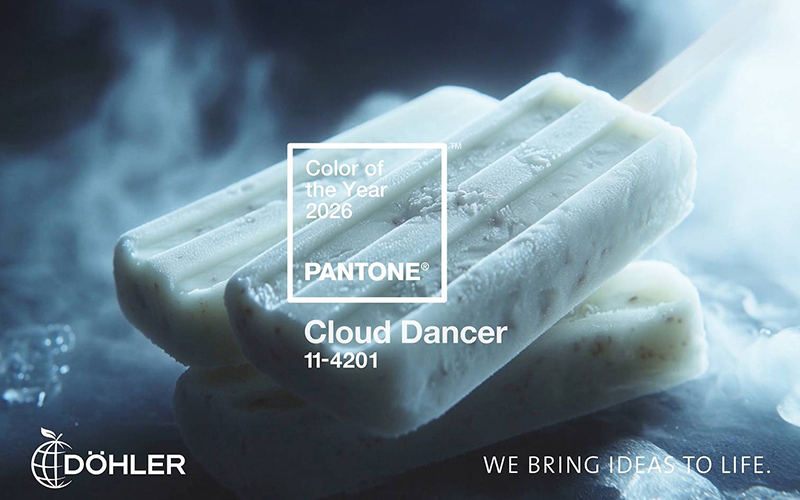
Cloud Dancer – Pantone Colour of the Year 2026
Colours coming from natural sources are vital in food and beverage innovation as consumers seek products that convey authenticity, transparency and trust. Soft, understated shades are gaining prominence, reflecting a desire for visual calm and balance in contrast to an overstimulating everyday environment. Within this context, white and off-white tones are emerging as powerful design elements that signal purity, quality and modern premium positioning.
Pantone’s Colour of the Year 2026, Cloud Dancer, encapsulates this broader movement. Rather than standing alone as a trend, this soft white tone reflects a wider shift towards natural colour aesthetics that feel reassuring, timeless and effortlessly elegant.
Soft white as natural colour trend 2026
Cloud Dancer (Pantone 11-4201) is a refined, gentle white that aligns closely with the growing preference for natural, minimal colour palettes. White has long been associated with simplicity and authenticity – drawing on visual references such as snow, clouds, marble and mist. In today’s market, these associations resonate strongly with consumers who value clean label concepts, reduced visual complexity and credible product cues.
For food and beverage manufacturers, this signals an opportunity to rethink how natural colours are used to communicate product value. Soft whites provide a neutral yet sophisticated foundation that harmonises easily with other colours, flavours and functional messages, without overwhelming the consumer.
Relevance of soft white tones across food and beverage applications
The appeal of natural white shades extends across categories, from confectionery and bakery to beverages. In product design, these tones support positioning around quality, restraint and modernity, while allowing brands to highlight sensory or functional benefits in a clear and confident way. Rather than being decorative, natural white colours become part of the product story – reinforcing expectations around ingredient integrity, processing transparency and premium appeal.
Natural white solutions that translate colour trends into product reality
Turning colour trends into successful products requires application-ready solutions that meet both technical and regulatory demands. Döhler’s portfolio of natural white solutions supports manufacturers in translating soft white aesthetics such as Cloud Dancer into scalable, market-ready concepts.
White Diamond is a bright, natural alternative to titanium dioxide for food applications. It delivers effective whitening for a wide range of confectionery products, including hard-boiled candies and pan coatings, while also providing bioavailable calcium. This enables manufacturers to achieve a clean, premium white appearance while aligning with evolving regulatory requirements and consumer expectations around ingredients.
In beverage applications, Döhler’s premium Cloud Emulsions create controlled cloudiness and a naturally appealing appearance in products that are otherwise colourless or lightly coloured. These natural emulsions offer high stability across applications and deliver intense cloudiness even at low dosages. They can also be combined with other shades to create customised cloudy tones that reflect current design directions.
Supporting manufacturers in bringing natural colour trends to market
With extensive expertise in natural colour solutions and application development, Döhler supports food and beverage manufacturers in translating colour movements such as soft whites and Cloud Dancer into commercially viable products. From clean-label white alternatives for confectionery to stable cloud solutions for beverages, the focus is on delivering premium appearances that resonate with today’s consumers while meeting technical, regulatory and sensory expectations.
By embedding colour trends into practical, future-ready solutions, manufacturers can create products that feel relevant today and remain competitive in a rapidly evolving market.