






Flavour production expanded: GEA builds new large-scale mixing plant for flavor production at Symrise
GEA is constructing a large-scale mixing plant for flavor production for Symrise AG at its main site in Holzminden, Lower Saxony, Germany. Symrise is one of the world’s leading suppliers of fragrances and flavours.
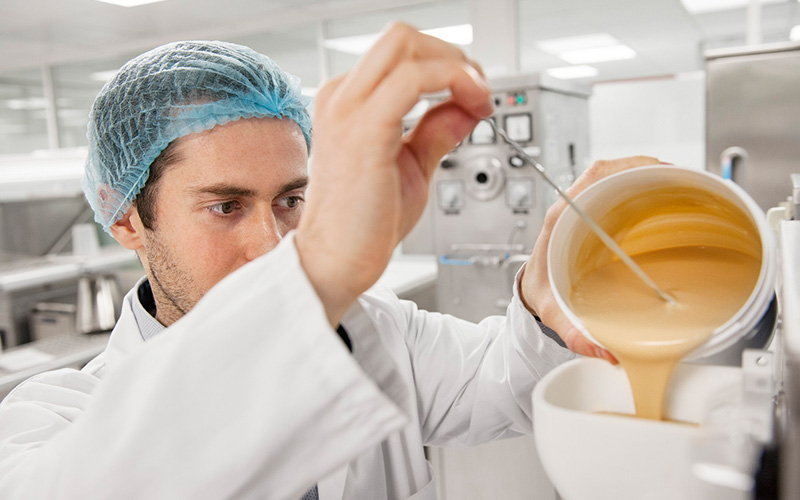
GEA is constructing a large-scale mixing plant for flavor production for Symrise AG at its main site in Holzminden, Lower Saxony, Germany. Symrise is one of the world’s leading suppliers of fragrances and flavours. With GEA’s turnkey process technology, the company is increasing its production capacity, enhancing flexibility and meeting the highest requirements for hygiene and material quality. Installation of the plant has been underway since summer 2025, with commissioning planned for spring 2026.
“The production of liquid flavours is one of Symrise’s core competencies. The new plant increases our capacity by up to 50 % and significantly shortens our delivery times,” says Karsten Zota, Factory Manager Liquid Compounding at Symrise. “This makes us more flexible and enables us to better serve growing customer demand.”
The flavours produced – including vanilla extracts, citrus oils, meat flavours, and menthol-based essences – are used both for internal processing and as ingredients supplied to the food and beverage industry. They appear in a wide range of end products, from yogurt and confectionery to savory ready meals and beverages.
Challenge: Complex raw materials with specific requirements
Symrise processes a wide variety of raw materials at its Holzminden site – from alcohol-based solutions to viscous syrups. This places high demands on technology and safety. Ethanol-containing products require explosion-proof design (ATEX), while powders pose additional dust explosion risks. Substances such as citrus oils are aggressive to certain materials and require special seals. The viscosity range, from water-like liquids to syrupy consistencies, and temperatures between –20 °C and +80 °C demand precise process control. In addition, strong-smelling menthol blends, kosher recipes, and sweet flavours must remain completely separated. The new plant meets these diverse requirements within a fully integrated concept.
Expanded capacity for flavour production
At the heart of the new building is a spacious mixing area where raw materials from the adjacent tank farm or from containers are transferred to the mixing tanks via vacuum conveying. Powders are added through a dedicated filling nozzle. The homogeneous mixtures are then transferred to cooling tanks for maturation or directly to the filling line. The plant is connected to a cleaning and steaming system.
Energy efficiency and sustainability in process technology
The plant features a heat recovery system for CIP return flows, which reuses part of the process energy and reduces energy consumption per batch. Additional measures, such as water-saving CIP cleaning and optimised insulation, further cut water and energy use. Heat recovery not only improves efficiency but also helps meet environmental regulations, as wastewater is cooled to below 30 °C.
Customised design for complex liquid food processing
The diversity of the flavours processed places equally high demands on process control, material selection, and complete product emptying to minimise losses. GEA developed customised solutions, leveraging the flexibility of its components – such as hygienic seat valves with bellows and sampling valves designed to remove even the last product residues. These solutions were designed in close cooperation with the customer and refined through precise 3D planning to integrate seamlessly into the plant’s confined space.