




Reusable packaging emerging as critical infrastructure for Europe’s supply chains
European supply chains are facing increasing pressure from rising costs, labour shortages and evolving regulation. Tosca says these forces are driving a fundamental shift in how companies view packaging …
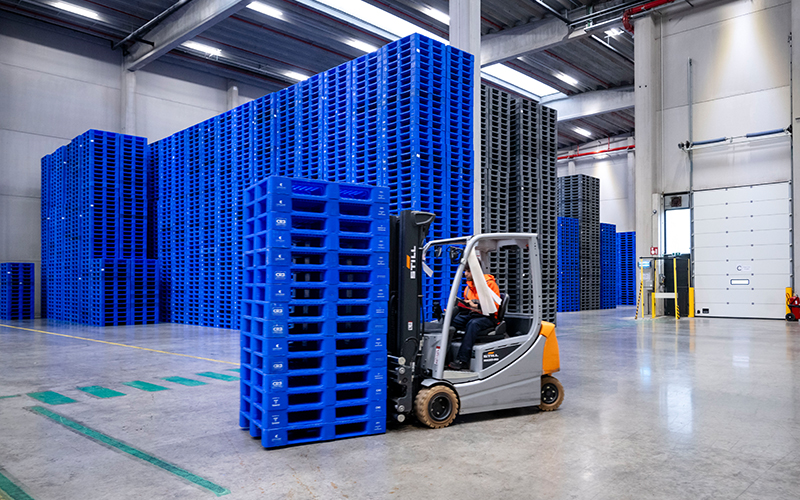
Tosca says reusable packaging is emerging as a critical part of Europe’s supply chain infrastructure, as businesses respond to cost volatility, labour shortages and evolving packaging regulation.
European supply chains are facing increasing pressure from rising costs, labour shortages and evolving regulation. Tosca says these forces are driving a fundamental shift in how companies view packaging – from disposable consumables to reusable infrastructure assets.
Single-use packaging waste remains high, while material price volatility continues to impact operating costs. At the same time, 76 % of supply chain and logistics leaders report workforce shortages.
Regulation is adding further urgency. Extended Producer Responsibility (EPR) schemes and the EU’s Packaging and Packaging Waste Regulation (PPWR) are placing greater emphasis on waste prevention, reuse, durability and lifecycle performance. As these frameworks evolve, businesses face increasing cost exposure and complexity when relying on single-use packaging.
“Packaging has long been treated as a consumable cost, but that model is becoming harder to sustain,” said Laurent Le Mercier, EMEA President at Tosca. “With regulation tightening alongside cost and labour pressures, reusable packaging is becoming core infrastructure. It enables businesses to reduce waste at source while improving cost predictability and operational resilience.”
Moving beyond single-use
Single-use packaging relies on continuous material inputs, manual handling and repeated disposal. In a volatile cost environment, these dependencies are becoming structural risks.
Reusable plastic packaging offers a different operating model. Durable assets circulate across multiple cycles, shifting organisations from cost-per-unit to predictable cost-per-use, while reducing exposure to raw material volatility and ongoing waste costs.
Pooling enables this at scale. Through managed networks, assets are collected, inspected, cleaned, repaired and redeployed, embedding packaging as a service within day-to-day operations rather than a one-off purchase.
Standardisation supports consistency across the supply chain – enabling automation, improving load stability and reducing handling complexity, damage and variability.
Supporting compliance and resilience
As regulatory requirements become more stringent, packaging decisions are increasingly linked to compliance as well as cost.
PPWR introduces new expectations around reuse targets, durability and traceability, while EPR schemes are evolving to reflect lifecycle performance and material impact. For businesses relying on single-use systems, this creates ongoing exposure to rising fees, reporting complexity and potential redesign.
Reusable packaging and pooling systems help address these requirements by reducing waste at source, supporting traceability and enabling controlled, repeatable use across multiple cycles.
In parallel, improved handling consistency and standardisation can reduce operational risk, including workplace injuries and product damage, while supporting more efficient transport and storage.
A structural shift in packaging strategy
With cost pressures persisting and regulatory scrutiny increasing, packaging is becoming a strategic decision rather than a tactical one.
Reusable packaging offers a route to stabilise costs, reduce risk and meet evolving regulatory expectations within a single system – positioning it as a core component of more resilient, future-ready supply chains.
To explore how these structural challenges are reshaping European supply chains, Tosca has launched a whitepaper, The Business Case for Reusable Transport Packaging, which explore these trends in detail.
Download the whitepaper here.