SIG’s fully recyclable and renewable paper straw solution for aseptic carton packs is being launched for the first time in Europe by Intermarché, one of the most popular retail chains in France.
Intermarché is the first company in France to launch paper straws with aseptic carton packs. By offering this solution across its three brands – Paquito, Look and top Budget – it will save 10 tonnes of virgin plastic per year.
The company will be offering the juices and beverages of these brands in combiblocMini packs with SIG’s 6 mm straight paper straw solution – one of several options available in SIG’s paper straw portfolio. The cartons are filled at Antartic, a production unit belonging to Agromousquetaires, a food-processing subsidiary of Groupement Les Mousquetaires.
SIG was the first in the industry to offer a market-ready paper straw solution for aseptic carton packs, enabling customers to meet the urgent need for alternatives to plastic drinking straws – which will be banned across Europe from the beginning of 2021 in line with the Single-Use Plastics Directive.
SIG’s paper straws offer a more sustainable solution that is renewable and fully recyclable. They are an ideal companion for SIG’s fully recyclable carton packs, which are mainly made of renewable paper board.
The paper used to make SIG’s paper straws originates from FSCTM-certified forests and other controlled sources. The blister for the straw has also been redesigned to help prevent litter by remaining attached to the pack to be recycled together.
SIG offers both straight and U-shaped paper straws. Paper straws are available for use with SIG’s combiblocSmall or combiblocMini packs to maintain the convenience of small-size formats for consumers looking for on-the-go beverages.
The innovative structure and diagonal cut make the straw robust enough to pierce the closed straw hole of the carton. Positive results in consumer tests showed no compromises in convenience compared with conventional plastic straws. Customers can use existing straw applicators to attach them to packs.
Elopak, a leading global supplier of carton packaging and filling equipment for liquid food, has launched the Pure-Pak® Imagine, its most environmentally friendly carton to date. The new carton is a modern version of the company’s original Pure-Pak® carton, designed with an easy open feature.
“Increasingly, we see that our Pure-Pak® carton system is the natural solution to the global need to reduce the usage of plastic bottles,” says Elopak’s Chief Marketing Officer (CMO) Patrick Verhelst.
Beverage cartons already have the lowest CO2 footprint among liquid food packaging today. Using renewable, recyclable and sustainably sourced materials, Elopak provides innovative packaging solutions that offer a natural and convenient alternative to plastic bottles and fit with a low carbon circular economy.
“With the launch of Pure-Pak® Imagine, Elopak is supporting the critical causes that represent the issues of our times – but the call to action is timeless,” Verhelst added.
Elopak’s strong focus on sustainability, alongside food safety and consumer convenience, has seen the company record a number of important environmental milestones in recent years. Carbon neutral since 2016, Elopak uses 100 per cent renewable electricity and has reduced emissions by 70 per cent over the past decade. With cartons manufactured from responsibly managed forests and FSC™ (FSC™C081801) certified material, Elopak offers customers 100 per cent renewable cartons that use wood-based renewable plastics, rather than relying on petroleum-based plastics.
“We wish to play our part in the global shift towards a low carbon circular economy and have therefore created the most environmentally friendly carton possible,” Verhelst explains.
“The Pure-Pak® Imagine carton has no plastic screw cap and is 100% forest based made with Natural Brown Board. The carton is fully renewable and carbon neutral, creating the perfect low carbon, circular economy approach,” he continues.
Many will recognize the easy-to-open feature from the 70’s and 80’s before the screw cap was first introduced. The Pure-Pak® Imagine carton’s unique top fin helps guide consumers how to open the carton. In combination with the modern functionality of the easy-pour and easy-fold features, the new carton design sets a new benchmark in reducing plastics.
The Pure-Pak® carton historically is the iconic fresh beverage pack, and with the new shape of the top fin introduced with the Pure-Pak® Imagine, Elopak adds a further important point of differentiation. Shape is the first recognition point for consumers, so this is especially important in markets less familiar with the easy opening feature. The design of the Pure-Pak® Imagine carton will create recognition on shelves across our markets and is applicable to all fresh categories.
“With Pure-Pak® Imagine we aim to help consumers make conscious environmental choices. The carton’s easy opening gives the environmentally-minded consumer a more sustainable pack, with less plastic and more natural renewable materials,” concludes Verhelst.
Clearly and successfully communicating sustainability credentials to consumers is key to developments in food and drinks packaging. This benchmark has been crowned by Innova Market Insights as the Top Packaging Trend in 2020. Innova’s consumer research indicates that consumer expectations around sustainability are higher than ever, pushing companies to prioritize eco-efficiency, especially in reducing food and plastic waste. In response, the food industry is increasingly committing to answering a more mindful consumer’s expectations in this area, while marketing this commitment on-pack.
Innova Market Insights continuously analyzes global developments in food and drinks launches and consumer activities to highlight the trends most likely to impact industry over the coming year and beyond. Its top five trends packaging trends for this year are:
1. The language of environmental sustainability
As consumer expectations continue to grow, companies are increasingly using packaging as a canvas to communicate sustainability. Over the 2015 to 2019 period, over one-third of all food and beverage launches tracked by Innova Market Insights carried an ethical packaging claim (e. g. recycled or recyclable materials). A whole range of different avenues can be used for storytelling to communicate packaging sustainability, which encompasses energy use, renewable materials, plastic free, source reduction and end of lifecycle. The use of trust certifications, marks and logos, such as Plastic Free and Metal Recycles Forever, increasingly used to communicate resource circularity.
2. Plastics come full circle
As circular economy targets loom on the horizon, the incorporation of recycled plastics into packaging is on the rise, with PCR (Post Consumer Recycled) supply partnerships and chemcycling tie-ups rising globally across a range of industries. In the meantime, more bottles are hitting the 100 % recycled plastics milestone, while other formats such as trays and pots are playing catch up with increasingly high percentages of PCR material. As suppliers come up with more recycle-ready mono-material solutions, developments such as NEO plastics can increase energy output at landfills. A rising tide of companies are supporting initiatives aimed at mitigating the impact of plastic pollution, particularly ocean clean up.
3. Packing an e-punch
Continuing strong growth in online retail channels with an associated rise in demand for corrugated board is driving e-commerce packaging. Developments in strong, lightweight recyclable boxes made with minimal resources aim to minimize damage during transit, while still offering a unique and engaging unboxing experience for consumers. There is also ongoing activity in sustainable alternatives to single-use protective filler materials, as well as developments offering a reduced carbon footprint.
4. Internet of packaging
As IoT (Internet of Things) technologies become all-pervasive, QR codes, NFC and blockchain are elevating engagement and transparency. Top reasons for scanning include promotions/rewards, interactive content, product authenticity, supply chain transparency and consumer brand engagement. The use of blockchain, for instance, can offer traceability and transparency, while NFC can be a valuable avenue for digital storytelling.
5. Plant-based packaging
There is an increasing focus on developing biodegradable and compostable alternatives from renewable resources. Cellulose-based packaging has been at the forefront of plant-based innovation, but there are numerous developments in biodegradable/compostable initiatives, led by snacks and confectionery, which accounted for over 60 % of global food and drinks launches with certified compostable claims tracked by Innova Market Insights over the 2017 to 2020 period.
SIG’s Corporate Responsibility (CR) Performance Update for 2019 explores key aspects of the company’s Way Beyond Good ambition, highlights its sustainability stories of the year, and reports progress towards its targets for 2020 and beyond.
„Our packaging has delivered food safely to billions of people all over the world. We want to help shape a sustainable food system that gets the most from what it uses and gives more than it takes,” said Rolf Stangl, CEO of SIG. “To do this, we need to go further than we’ve ever gone before. We took some more big steps forward this year and the increased uptake of our most sustainable packaging solutions shows we’re using growth as a driver for good.”
Highlights in 2019
SIG continues to build on its track record of sustainable innovation and industry firsts. Highlights this year include:
Launching the world’s first Aluminium Stewardship Initiative (ASI) labelled packs and the first aseptic carton packs with all three key materials from certified sources – paperboard, plant-based polymers and aluminium foil
Increasing uptake of SIG’s most sustainable products, such as SIGNATURE PACK and combibloc EcoPlus
Introducing the first paper straws for carton packs – first straight and then U-shaped
Accelerating the timeline to cut greenhouse gas emissions from SIG’s business – by 60 % by 2030 – with a new 1.5°C target approved by the Science Based Targets Initiative
Engaging in new recycling partnerships around the world, including the innovative so+ma programme that is rewarding consumers in Brazil for recycling
Turning food loss into over 9,200 school meals for underprivileged children in Bangladesh in the first year of the Cartons for Good programme run by the SIG Way Beyond Good Foundation
Achieving a Platinum rating from EcoVadis that puts SIG in the top 1 % of businesses for sustainability.
Going further
The CR Performance Update includes a series of stories from the year, which bring to life some of the ways that SIG is realising its ambition to go Way Beyond Good for society and the environment.
The company is focusing on driving progress in the areas where it can make the biggest difference: helping forests thrive, tackling climate change, driving sustainable product innovation, contributing to a circular economy and delivering safe nutrition.
To pursue these opportunities, SIG is building on strong foundations. It is committed to doing business ethically, buying responsibly, supporting its people and keeping them safe, and partnering with communities to help them thrive.
Transparent reporting
SIG’s CR Performance Update is transparent about progress against targets and includes an update on key performance indicators related to the company’s most material social and environmental issues. It also includes direct feedback from SIG’s external Responsibility Advisory Group, together with the company’s response.
The interim CR Performance Update complements SIG’s full CR reports, which are published every other year. It covers the same focus areas and most material social and environmental issues as SIG’s award-winning full CR Report for 2018, which includes more detail on the way we manage these issues. The 2018 CR Report was produced in accordance with the Global Reporting Initiative (GRI) Standards.
Please download SIG’s CR performance update under www.sig.biz/en/
Ball Corporation announced that it has earned the Aluminium Stewardship Initiative (ASI) certification for all 23 of its Europe, Middle East and Africa (EMEA) beverage can plants. This accomplishment is a major sustainability milestone for the company and Ball is the first beverage can manufacturer to meet ASI’s environmental, social and governance principles.
The certification accompanies a commitment to significant carbon reductions by Ball, which is now covering all of its operations in the European Union, Serbia and the UK with renewable energy. Ball previously announced agreements for 100 % renewable energy covering all of its North America operations by 2021.
“We’re extremely proud to be the first aluminium beverage can manufacturer to achieve ASI certification,” said Ron Lewis, President, Ball Beverage Packaging, EMEA. “With their infinite recyclability, aluminium cans are the fastest growing beverage packaging type in Europe. As consumers seek more environmentally friendly products, they can have confidence in aluminium’s strong sustainability credentials such as responsible sourcing. The certification, combined with our renewable energy investments, demonstrates Ball’s commitment to a low-carbon, sustainable economy.”
ASI is a multi-stakeholder initiative that provides assurance of responsible production, sourcing and stewardship of aluminium throughout its value chain. As consumers demand greater sustainability across packaged goods, the Aluminium Stewardship Initiative’s scheme aims to do for aluminium what the Forestry Stewardship Council (FSC) did for paper and wood, making sustainability performance a mainstream, visible issue.
Ball has achieved both ASI’s Performance, and Chain of Custody (CoC) Standard certifications.
The ASI Performance Standard is a measure of how much effort Ball is making across its plants to assess, manage and disclose its environmental, social and governance impacts. These include issues such as life-cycle thinking, recycling, greenhouse gas emissions, water and waste management, biodiversity, business integrity and the human rights of both workers and local communities.
The ASI CoC Standard sets out requirements for the creation of a Chain of Custody for material that is produced and processed through the value chain. In Ball’s case, it links verified practices – certified under the ASI Performance Standard – from mining and remelting to casting, rolling, can manufacturing and filling.
“We’re responding to a greater desire from consumers, across Europe and around the world, for genuinely sustainable and infinitely recyclable packaging solutions,” said Kathleen Pitre, Chief Commercial and Sustainability Officer, Ball Corporation. “We’re working closely with our beverage customers to help them deliver on their sustainability commitments including on responsible sourcing practices. Ball is proud of our achievements in getting certified.”
“We are very pleased to award ASI Certification to, Ball Corporation, the world’s largest aluminium can maker and the first in its sector to have achieved this,” said Dr. Fiona Solomon, Chief Executive Officer, Aluminium Stewardship Initiative. “The ASI’s Performance Standard covers critical issues for the entire aluminium value chain. The programme is focused on responsible production, sourcing and stewardship of this important industrial metal. ASI Certification enables the aluminium industry to demonstrate responsibility and provide independent and credible assurance of performance. Supply-chain certification programs like ASI are becoming increasingly important for customers and stakeholders, who seek assurance that companies’ sustainability practices are genuine.”
With 75 % of aluminium ever produced still in use today around the world, the metal has a vital role to play in creating a truly circular economy. Ball is taking a lead on industry efforts to significantly increase the European recycling rate of aluminium beverage cans, currently at 75 %. Recycling aluminium saves 95 % of the energy required for the production of virgin aluminium, and so helps the global community to meet urgent carbon reduction targets.
The global packaging producer, Ecolean has been awarded the prestigious Gold Medal Recognition 2020 for its sustainability work. The certificate is awarded by the independent and trusted provider of sustainability ratings, EcoVadis. In the overall rankings, Ecolean is placed in the top 5 percent of a total of 60,000 companies assessed from 155 countries.
Ecolean’s high score is based on the company’s strategic work with clear objectives within significant areas of sustainability such as environment, including renewable energy and climate impact and social aspects – as well as via monitoring and transparent reporting of sustainability data of its lightweight packages and filling machines. For Ecolean, this is the first year the company participates in the ratings by EcoVadis.
EcoVadis is an independent provider of business sustainability ratings, which evaluates companies’ sustainability work in global supply chains annually. The assessment focuses on four key areas: environment, labor and human rights, ethics and sustainable procurement. EcoVadis uses international standards such as the Global Reporting Initiative and the UN Global Compact.
About Ecolean
Ecolean develops and manufactures innovative packaging systems for the dairy and liquid food industry. Ecolean’s modern lightweight packaging is consumer convenience and environmental concern in one. Ecolean is a global company with its headquarters in Sweden. Established in 1996, the company has commercial activities in over 30 countries, with China, Pakistan and Russia being its largest markets. Ecolean has 450 employees.
12.000 apple trees the start of new sustainable agriculture
Brännland Cider to establish 10 hectares of commercially viable and productive apple orchards in collaboration with farmers, regional governments as well as national and international stakeholders from academia and business.
Bringing together these stakeholders within the agricultural sector has been ongoing since 2017 in parallel with Västerbotten-based ice cider producer Brännland Cider establishing its ciders in national and international markets.Preceded by trial orchards in the vicinity of the city of Umeå on the Baltic seaboard the company is now scaling up its ambitions.
In December 2019 the Swedish Board of Agriculture granted funding to the project “Commercial productive apple growing in a northern climate – innovation for new climate resilient agriculture in northern Europe” within the framework of EIP-agri, the European innovation partnership for productivity and sustainability within agriculture.
This is a major step in creating an entirely new and unique terroir for ice cider in northern Sweden but of course also opens up a large scope of opportunities for farmers in the north to diversify with positive implications for agriculture, regional food production, tourism and the larger sustainability issues our society as a whole faces. The project aligns to the ambitions highlighted in the EU Green Deal and 2030 UN Sustainability Development Goals, says Andreas Sundgren Graniti, founder of Brännland Cider.
The project is set to run between 2020 and 2023 and will combine traditional cultivation models with more conventional methods, trial a wide base of apple varieties to create an opportunity for northern farmers to diversify, optimize land use, decrease transports and water usage in the region and create a new branch of climate resilient sustainable agriculture. The long term aim also includes stream-lined product development partnerships from the individual farmer to local, regional and global markets.
This project will expand on and put into practice, on a commercial scale, the positive experiences Brännland Cider has made so far in our trial orchards in Burträsk 100 km north of Umeå and at Röbäcksdalen just outside Umeå. It’s not just about growing apples where none have been grown before for the purpose of creating a product of singular quality; we want to see our region blossoming and this is a huge step towards achieving that goal, continues Sundgren Graniti.
A strong team has formed around the mission. The project will be led by Daniel Pacurar from Boreal Orchards who up until now has been instrumental in contributing practical experience and academic knowledge to the trial orchards that have formed the basis for the project. Daniel is a horticultural engineer with a PhD in Agronomy and long experience in R&D and in leading large and ambitious projects within biotech, horticulture and forestry.
We are honored to partner with Brännland Cider in the pioneering work of establishing apple growing in Northern Sweden. It will be an exciting journey. We are going to learn new ways of growing apple trees, creating new terroir expressions for ice cider and generate knowledge that will benefit future generation of apple growers in the north and elsewhere. We are laying the path as we walk it. I am confident that the team´s compounded experience and expertise will secure the successful completion of this project. Brännland Cider is arguably making the best ice cider on the planet. Together we are now laying the foundation of what is going to be an evolution of that fantastic achievement, says Daniel Pacurar, Boreal Orchards.
A recent study by Wageningen University & Research (WUR), Netherlands, analysed the fate of compostable packaging products in a full- scale industrial organic waste treatment facility. The results show that the tested EN13432 certified products break down within a maximum of 22 days. The project was commissioned by the Dutch Ministry of Economic Affairs and Climate Policy (EZK). “The study shows that the tested objects have the same disintegration and degradation rate as regular biowaste or are even faster. We need more research of this kind, conducted by independent and renowned institutions”, says EUBP Chairman of European Bioplastics (EUBP), François de Bie.
Central aim of the study was to gather more empiric data on the question whether the disintegration rate of compostable products is sufficient to be compatible with the current organic waste treatment practices. In an industrial organic waste treatment trial, a set of nine different compostable plastic products, consisting of organic waste collection bags, plant pots, tea bags, coffee pads, coffee capsules, and fruit labels were tested. “We studied how compostable plastics behave in the current Dutch system for the treatment of GFT (i.e source separated municipal biowaste) and came to the conclusion that compostable products can be processed well with GFT“, says Maarten van der Zee, co-author of the study.
After the first waste treatment cycle of only 11 days, the PLA plant pot already completely disintegrated. “This is significantly faster than paper and most organic matter. Even the orange peel and banana skin (the reference materials) did not completely disintegrate and needed more time” de Bie commented on the study. “The PLA tea bag, which is a typical consumer product, also successfully disintegrated within 22 days.”
The study also analysed the composition of the current visual contamination of conventional plastics in compost, and no compostable plastics were identified amongst the plastics that were found in the compost. “The importance of this result cannot be overstated”, de Bie stresses. “All stakeholders involved in the business of organic recycling, be it waste managers, industry, or legislators, now have the proof that certified compostable plastics actually deliver.”
Refresco Europe was awarded the first-ever European Lean & Green Star for their transport operations in their European business. Refresco earned the Star for having transport emissions that are 20 % lower than the industry benchmark. This was achieved by implementing a range of optimization programs in their European operations.
Since 2018, Refresco implemented a number of projects and initiatives, including:
driving with fully loaded trucks as much as possible, including cross-border traffic,
entering into strategic partnerships with transport companies and suppliers to optimize transport efficiency,
and optimizing the production footprint, thus reducing the distance from production location to customer sites.
All of these initiatives were aimed at increasing transport efficiency and reducing transport emissions. Case in point: Refresco Italy introduced a longer lightweight truck with 8 % more loading capacity, and two new external warehouses located closer to the plants. Both initiatives contribute to a permanent and sizable reduction of transport emissions.
Ms. Minna Lyijynen, Refresco Group Sustainability Manager: “We are excited to have received this first-ever European Lean&Green Star. While there are many other elements involved, the way we handle transportation has a large impact on the sustainability of our business. Thanks to our pan-European manufacturing footprint we are able to supply with short transport lines and provide our customers the proximity they need. Our aim is, together with our carriers and suppliers, optimal transport efficiency and minimum impact on the environment. The Lean & Green program is a valuable tool to help us to realize this ambition and improve as we go. ”
Adds Nico Anten, Executive Chairman Lean&Green Europe: “New technologies might help facilitate more sustainable transport, but the most important element in success is a company’s dedication to making it happen. This first-ever European Lean & Green Star is well-deserved and reflects the emphasis Refresco places on making transport more sustainable.”
“The world’s most sustainable company 2019” ranks no. 2 on Corporate Knights’ list for 2020
Today, Corporate Knights, a specialized Toronto-based media and investment research firm, published their annual ranking “Global 100 Most Sustainable Corporations in the World” 2020 in Davos, Switzerland. Last year’s no. 1 in the ranking, global bioscience company Chr. Hansen, cements its position at the top by coming out second on the list for 2020.
A catalyst for change
The renewed ranking in the world elite of most sustainable companies comes after a remarkable 2019 for the 145-year-old company. Highlights of the year included the no. 1 position on Corporate Knights’ list, inclusion on Fortune Magazine’s Change the World List of 50 companies that do well by doing good and the Golden Peacock Global Award for Sustainability presented in London as recently as November.
Another milestone in Chr. Hansen’s sustainability journey was reached when the company announced a groundbreaking agreement with Better Energy of switching 100 % to green electricity from two new solar parks, wind energy and bio gas for its Danish operations by April 2020. Through its engagement in establishing the new solar parks, Chr. Hansen is contributing positively to the transition to green energy in Denmark as a whole. While its Danish operations account for almost half of the company’s total electricity consumption, the model is scalable and can be introduced in other countries going forward.
The background for ranking Chr. Hansen the second most sustainable company in the world 2020:
Chr. Hansen improved its total score against Corporate Knights’ indicators. Although this was not enough for a first place this year, the company is still ranked as the number 1 most sustainable food ingredient company.
Clean revenue: Chr. Hansen has been able to account for and document its direct product impact on the UN Global Goals. 82 % of the revenue directly supports the UN Global Goals, and PWC has reviewed the methodology to document this.
The UN Global Goals are used as a framework to link the impact of the corporate strategy to sustainable development, and the performance is measured and reported on an annual basis.
Environmental performance: Chr. Hansen scored high relative to its peers on its environmental performance, specifically related to energy, CO2, water and waste. Continuously reducing its environmental footprint has been a priority during the past year. During 2019 it led to the partnership with Better Energy where Chr. Hansen committed to switching 100 % green electricity from two new solar parks, wind energy and bio gas for its Danish operations by April 2020
Diversity: Chr. Hansen score high on % of female directors, and also get some points from female senior executives and sustainability pay link
About Corporate Knights and the ranking “Global 100” Corporate Knights Inc., the company for clean capitalism, includes the sustainable business magazine Corporate Knights and a research division that produces rankings and financial product ratings based on corporate sustainability performance. The Global 100 Most Sustainable Corporations in the World is an annual project initiated by Corporate Knights. Launched in 2005, the Global 100 is announced annually on the sidelines of the World Economic Forum in Davos.
9,925 visitors, 201 exhibitors and a total floorspace of 11,400 square meters (gross) – these are the figures achieved by drink technology India (Messe München), co-located with pacprocess and food pex India (Messe Düsseldorf). The growth of drink technology India remains strong. The trade fair that is taking place in a yearly rotation between Mumbai and New Delhi is now well established in the Indian Capital. The supporting program was expanded and addressed all segments and topics of the beverage, dairy and liquid food industry in conferences and seminars. Together with its partners, drink technology India underlines its status as India’s leading knowledge platform.
Dr. Reinhard Pfeiffer, Deputy Chairman of the Board of Messe München, is very pleased with how the trade fair went: “The event’s sizable growth demonstrates the fact that the trade fair has also become the most important industry event for solutions, networking and knowledge sharing at its location in New Delhi.” “This confirms our strategic decision of organizing drink technology India every year at alternating locations—Mumbai and New Delhi—to cover the Indian market,” adds Petra Westphal, Exhibition Group Director at Messe München. Bhupinder Singh, CEO of Messe München India, comments: “The 30 percent increase in exhibition floorspace is proof that companies are responding to the continued high demand in India for machinery for producing, processing and packaging beverages, dairy and liquid food products.”
Richard Clemens, Managing Director of the VDMA’s Food Processing and Packaging Machinery Association, also confirms the importance of the event: “Demand amongst Indian consumers is growing across all segments of the beverage and liquid food industry and is expected to have risen by around 89 percent by 2022 according to market researchers. Indian suppliers are therefore importing systems and machinery in order to be able to meet this demand. This represents a great opportunity for international companies wishing to gain a foothold in the Indian market.”
At drink technology India, international exhibitors accounted for 12 percent, with China being the most represented country, followed by other international exhibitors from Germany, Italy, Spain and Turkey.
Supporting program – A 360 degree view oft he industry’s topics
Avisha Desai, Group Project Director of Messe München India, is pleased with the new value added for customers: “drink technology India has been successful in setting up valuable partnerships with associations from all the industry’s segments. All the areas from the beverage, dairy and liquid food industry were covered by exhibitors as well as by the trade fair’s supporting program.”
The Packaging Design Innovation & Technology Conference was held for the first time at the trade fair. Companies operating in the consumer goods industry presented interesting solutions and thought-provoking impulses relating to packaging design, sustainability, food safety and smart packaging. The supporting program also included the Indian Dairy Association’s Conference, which showcased packaging solutions for the dairy industry, as well as the FSSAI seminar, which highlighted regulations and initiatives as part of India’s “Eat Right Movement”. The Oil Technologists’ Association of India (OTAI) hosted a seminar on oils and fats. Special focus was given to food and non-food-related uses of palm oil. The place2beer and the Buyer Seller Meetings, which were with more than 400 business talks extremely popular again, are now firm fixtures of drink technology India.
drink technology India, pacprocess and food pex India
drink technology India is staged yearly in conjunction with the pacprocess and food pex India trade fairs of Messe Düsseldorf. Exhibitors and visitors can benefit from the advantages given by this unique combination of three trade fairs as this means they can leverage synergies given by the co-location. The three trade fairs cover the entire bandwidth of the beverage, dairy and liquid food technology (drink technology India), packaging and related processes (pacprocess India) as well as food and confectionery processing and packaging (food pex India) all under one roof and is unrivaled in the region.
drink technology India alternates every year between Mumbai and New Delhi. The next drink technology India will take place in Mumbai from December 9 to 11, 2020.
Sulapac and Stora Enso launch a renewable and microplastic-free straw to combat the global problem of plastic waste. The straw has strong usability and works just like a traditional straw. The new straws are available to brands and consumers looking for more eco-friendly solutions.
The first customers include Finnair’s lounges in Helsinki replacing their plastic and paper straws, food delivery platform Wolt, the alcoholic beverage brand company Altia, Hotel St. George, and vegan café Kippo, among the others. The first customers represent different business sectors but have one common interest: to be in the forefront of sustainability. For end-consumers, the straws will be available in January via Biofutura.com, an online store specialised in compostable tableware and packaging, and an online retailer Verkkokauppa.com.
“There’s clearly a large demand for our product that both fulfills the sustainability criteria and has superior usability. Like all Sulapac materials, the straw is 100 % microplastic-free. It is designed to mimic nature; if the straw accidentally ends up in the ocean, it acts like a birch leaf and does not harm the ecosystem,” says Sulapac CEO Suvi Haimi.
The straws are based on Sulapac’s patent pending material innovation. The main components are renewable materials such as wood and plant-based binders. The straw is microplastic-free, meaning that it is designed to be fully biodegradable in different environments. The straw complies with existing waste systems and is designed to be recycled via industrial composting.
“Billions of plastic straws are produced and used every week, creating harmful waste that often end up in the sea. This renewable and biodegradable material can replace fossil-based materials and help combat plastic waste. Our cooperation with Sulapac allows us to explore new types of innovative and scalable materials and widen our offering of renewable solutions”, says Marcus Dehlin, Head of Business Alliances, Stora Enso.
In the first phase the straws will be available in Europe and a global roll out will follow. The straws are produced with machinery originally designed to produce plastic straws.
SVZ, a leading supplier of fruit and vegetable ingredients, is set to showcase an exciting new addition to its 100 % natural, sustainably sourced portfolio at FiE 2019. The company will be presenting its core offering of traceable, high-quality fruit and vegetable purees, juices and concentrates, as well as exciting new products, including authentic strawberry and sour cherry chunky purees.
Chunky puree: bringing more bite to fruit puree
As well as sampling delicious healthy honeyberry shots, visitors to SVZ’s stand at FiE 2019 can find out more about the new chunky purees: the latest addition to the company’s premium portfolio. Minimally processed and retaining pieces of real fruit within a rich, high-quality puree, the new chunky range allows dairy, ice cream and dessert producers to create 100 % natural, clean label products that offer the look, taste, and bite of authentic home-made purees. The size of the fruit pieces in new chunky purees can be individually tailored according to the customer requirements, allowing brands to create a unique texture profile. Chunky purees provide a high-quality and easy-to-use NPD ingredients solution that is ideal for transparent packaging and the ‘healthier choice’ products of premium brands.
Delivering 100 % natural, traceable ingredients
SVZ has remained committed to offering the very best in entirely natural, premium food and beverage ingredients. Today, the company’s extensive portfolio has grown to encompass everything from raspberry and haskap berry puree to cucumber and red beet juice. With its long-standing dedication to building supply-chain visibility and working with suppliers to develop more sustainable farming practices, from the very start SVZ has inspired its customers to harness the power of nature and create the healthy, traceable products consumers increasingly demand.
“The launch of new chunky purees not only opens up a host of exciting NPD possibilities for producers, but equally demonstrates our dedication to serving the ever-changing needs of our customers”, comments Johan Cerstiaens, Commercial Director at SVZ. “From healthy reformulation to minimally processed ingredients for a more authentic, ‘home made’ feel, our ingredients are designed to create exciting taste and texture experiences that satisfy the core demands of today’s consumers. Our commitment to achieving 100 % sustainable sourcing by 2030 additionally means our products don’t just look and taste good, but aim to do good as well.”
Stand 6E110, 3 – 5 December 2019, Paris, France
SIG is a pioneer in the industry to offer a U-shaped paper straw to be used on carton packages. After introducing the world’s first straight paper straw for carton packaging in February 2019, SIG launches a U-shaped paper straw during Gulfood Manufacturing, together with its joint venture partner SIG Combibloc Obeikan. Gulfood Manufacturing is the world’s largest annual food and beverage technology trade exhibition. The new straw uses FSC™ certified paper and is now available globally.
The new paper straw solution supports SIG’s efforts to use more renewable materials. The paper used to produce the straight paper straw and the new U-shaped paper-straws – available with 4 and 6 mm diameter – originates from FSCTM-certified forests and other controlled sources. The wrapper for the straw has also been redesigned to remain attached to the package preventing littering and can be recycled with the carton pack.
In its new sustainability report for 2017/2018 KHS documents its various sustainability measures, successes and targets
In its new sustainability report for 2017/2018 KHS documents its various sustainability measures, successes and targets. The latest publication focuses on saving resources within the company and as regards product and service concepts.
“KHS has always attached immense importance to protecting people, the climate and the environment. In our sustainability report we show which measures we’ve already taken and which we are yet to implement in this respect,” says Kai Acker, CEO of the KHS Group. The Dortmund systems supplier’s third voluntary report is again based on the globally recognized sustainability reporting standard developed by the Global Reporting Initiative and on the sustainable development goals set by the United Nations.
Concepts for the future
“We aim to continue producing holistic systems and solutions for our customers and at the same time protect the environment,” states Acker. To this end KHS intends to lower its carbon emissions in the long term by making considerable savings in energy, materials and resources – and not just within its own company but also regarding its product and service concepts. In this way the Dortmund engineering company is helping its clients to reach their own sustainability targets.
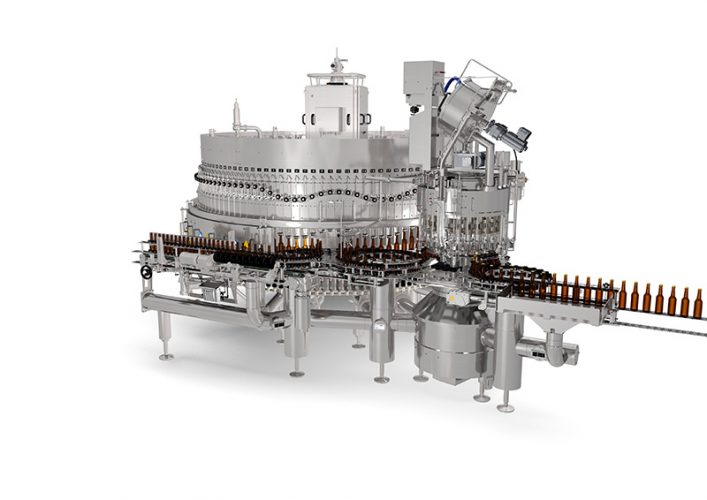
The most recent example of this is the next generation of the KHS Innofill Glass DRS ECO glass filler, distinguished by its lower energy consumption which is reduced by up to 20%. The machine also cuts carbon emissions by as much as 50%. Thanks to digital networking and monitoring the glass bottle filler also provides optimum product quality and higher line availability. “By increasingly applying intelligent products and solutions we can also boost the efficiency of our plant engineering,” Acker explains.
The next generation of the KHS glass filler is just one example of how beer, mixed beer beverages and soft drinks can be processed gently and efficiently while protecting the environment. (Photo: KHS)
Employees a source of innovation
One core component of the KHS sustainability report is the company’s personnel. Besides providing a number of facts and figures the machine manufacturer gives readers an insight into the diverse fields of work covered by its many employees and their specific commitment to sustainability over the past two years. “Our employees are of central importance to KHS. It’s they who are behind every single idea and development and who are largely instrumental in promoting our economic and sustainable actions,” emphasizes Acker. In the future KHS will continue to intensify its development in the context of climate and environmental protection and check into which process steps further measures can be integrated.
As the next step in its sustainability journey, Crown Holdings, Inc. has signed onto the Science-Based Targets initiative, a project that aims to spur corporate climate action in the transition to a low-carbon economy. To join the initiative, Crown will set specific goals for reducing greenhouse gas emissions in alignment with the Paris Agreement of 2015, through which international governments collectively pledged to limit the global temperature increase to 1.5 degrees Celsius.
In preparation for setting these ambitious new targets, Crown’s Chief Executive Officer, Timothy Donahue, has signed the commitment letter confirming Crown will develop new goals to be reviewed and approved by the SBTi committee. Crown plans to announce its goals in early 2020 and report on progress annually. In the interim, the Company continues to work toward achieving its 2020 Sustainability Goals and making additional strides in its ongoing commitment to the RE100 initiative.
“We have made tremendous progress toward our 2020 Sustainability Goals, which include a 10 % GHG reduction goal,” said John Rost, Ph.D., Vice President, Global Sustainability and Regulatory Affairs at Crown. “Committing to and striving to achieve science-based targets is the next natural progression for the Company. Our culture of safety, efficiency and resource conservation as well as the unrivaled sustainability profile of our primary product – metal packaging – will continue to play a critical role in our ability to meet our next set of milestones.”
Ecolean, a global producer of lightweight packaging solutions for liquid food, publishes its second Sustainability Report. The report focuses on Ecolean’s ambition and actions to provide the world with safe and convenient liquid food packaging solutions – with minimal environmental impact.
The world’s demand for innovative packaging solutions are increasing as a result of a growing population, changing consumer demands and a global climate challenge. Ecolean enables optimal packaging solutions by continuously enhancing its product portfolio and through an ambitious strategy for global growth.
During 2018, Ecolean completed the introduction of Environmental Product Declarations (EPDs) for all of its packages. By doing so, Ecolean became the first packaging system supplier in the world to offer this type of verified environmental documents of its entire system. Furthermore, Ecolean took a step closer to its objective to use 100 percent renewable electricity at its production sites by 2030.
“By switching to renewable electricity, we can reduce the climate impact of our production”, says Anna Palminger, Manager Sustainability at Ecolean. ”I’m proud of our results. In 2018, 84 % of the electricity used at Ecolean’s production plants was renewable and 82 % of the total energy used in production originated from renewable sources. We also shifted from natural gas to renewable biogas at our plant in Sweden – meaning that all energy used at that site is now 100 % renewable.”
“Moving forward means further enhancing the life cycle perspective – and will require joint efforts and collaborations with both our industry partners and our customers,” says Peter L Nilsson, CEO at Ecolean. “We think it is important to take steps that drive the entire industry forward in a more sustainable direction, such as introducing EPDs for all our packages. The way ahead is to intensify our collaboration with others such as through CEFLEX (a circular economy for flexible packaging) and local recycling initiatives. This is a significant step forward for Ecolean that reinforces our position as a leading sustainable packaging supplier”.
Premium fruit and vegetable ingredients supplier SVZ is pleased to announce the appointment of Inge van Disseldorp as its new sustainability manager. With over a decade of experience in corporate sustainability, Inge will build on SVZ’s longstanding commitment to environmentally conscious business and focus on implementing the company’s plans to achieve 100 % sustainable sourcing by 2030.
Formerly a corporate responsibility consultant, Inge was most recently responsible for devising and implementing sustainable purchasing practices within the procurement department at Sligro Food Group, the Dutch leader in foodservices. There she worked to align sustainability initiatives with business development goals and was responsible for developing and implementing the company’s sustainable sourcing strategy. As a member of the CSR steering committee, Inge worked to foster a company-wide sustainable ethos as well as creating sustainable business opportunities driving engagement with both buyers and suppliers.
Her primary focus at SVZ will be on improving sustainable sourcing, traceability, biodiversity and agricultural practices, while contributing to a better environment at large. Inge will leverage SVZ’s close relationships with growers to provide the sustainably sourced, traceable products that consumers demand, while also engaging with farmers, addressing the challenges they face and ensuring fair labor practices.
“The potential to make a tangible difference by working closely with farmers and promoting sustainable production right from the source is one of the key factors which attracted me to the position at SVZ,” comments Inge. “I’m looking forward to the challenge of building on SVZ’s industry-leading sustainability credentials and utilizing my deep personal investment in environmental causes to deliver initiatives that meet the needs of customers, farmers and the wider planet”.
Anouk ter Laak, CEO, states, “We are pleased to welcome Inge to SVZ. Her passion for sustainability, both in her career and personal life, make her a perfect fit for the role of sustainability manager at SVZ. For over 150 years, we have upheld the core principles of sustainable sourcing, environmental consciousness and valuing people. Inge embodies each of these values and we are excited to see her in action”.
EXTR:ACT – Driving Value for multimaterial recycling, the pan-European platform created by BillerudKorsnäs, Elopak, SIG Combibloc, Stora Enso and Tetra Pak, all members of the Alliance for Beverage Cartons and the Environment (ACE), has announced the nomination of EXTR:ACT’s Managing Director, Michael Brandl.
Michael Brandl, a German national with a background in engineering, built his career in the dairy industry before joining FKN, the German beverage carton association in 2010. Michael intends to use his considerable knowledge of both the beverage carton industry and of German and European recycling infrastructures to meet the platform’s objectives.
“We strongly believe that Michael’s experience and expertise will drive EXTR:ACT increase the recycling of our packages, scale and boost value for recycling solutions, and secure our long-term sustainability” said Heike Schiffler, President of EXTR:ACT. “With this new initiative, we are confident we will be able to achieve a significant increase in collection and recycling rates by 2025 “.
EXTR:ACT, based in Frankfurt, will foster the recycling of beverage cartons, including the non-paper components such as polymers and aluminium. It reflects the industry’s commitment to the circular economy and complements ACE’s ongoing work. EXTR:ACT will also seek to work in partnership with stakeholders who have similar needs regarding the recycling of composite packaging.
About ACE: ACE provides a European platform for beverage carton manufacturers and their paperboard suppliers to benchmark and profile cartons as renewable, recyclable and low carbon packaging solutions. Engaging with stakeholders and partners seeking high environmental stewardship, it contributes expertise to EU policy, legislation and standard‐setting. ACE members include beverage carton producers Tetra Pak, SIG Combibloc and Elopak; they develop, manufacture and market systems for the packaging and distribution of food, and produce packaging material at 20 plants in Europe. Most of the paperboard used by ACE members in beverage cartons in Europe is produced by Stora Enso in Skoghall (Sweden) and Imatra (Finland), and BillerudKorsnäs in Gävle and Frövi (Sweden), who are also members of ACE.
Topping the 2019 global index of the 100 most sustainable companies, as announced during the World Economic Forum in Davos, Switzerland
One month short of its official 145th anniversary, global bioscience company Chr. Hansen is ranked the most sustainable company in the world by Corporate Knights, a specialized Toronto-based media and investment research firm.
This was announced during the World Economic Forum in Davos, Switzerland, on January 22, 2019, upon the release of Corporate Knights’ 15th annual Global 100 Most Sustainable Corporations in the World ranking. More than 7,500 companies have been analyzed against global industry peers on a number of quantitative key performance indicators. Chr. Hansen scored 100 % on the ‘clean revenue’ indicator, reflecting that the company’s products have clear environmental and certain social benefits, as stated in Corporate Knights’ definition.
The power of good bacteria
“We are extremely proud and humble to receive this amazing honor. I believe that one of the reasons why Chr. Hansen has been ranked as #1 is because the world is beginning to understand the power of good bacteria and the impact it can have on some of the major challenges the world is facing, such as food waste, antibiotic overuse and the need for a more sustainable agricultural sector to feed a growing world population while preserving our planet for future generations,” says CEO Mauricio Graber.
“Chr. Hansen is dedicated to promoting a wider adoption of natural solutions, and we are truly proud of our products which are consumed by more than 1 billion people every day. Having a global reach like that is indeed a great responsibility as well as an opportunity to make a positive difference for people, animals and plants. We are fortunate to have customers all over the world who are with us on this journey – determined to promote sustainable and natural products to the end-user,” Graber elaborates.
“We have, among other things, been recognized for our efforts to measure our impact on the UN Global Goals; 82 % of our revenue directly supports these goals, and PWC has reviewed our methodology to document this.”
Sustainability – an integral part of the business
Chr. Hansen has been supplying natural ingredients to the food industry since 1874. The understanding and respect for nature’s scarce resources has always been an integral part of the company’s DNA.
Today sustainability remains at the core of Chr. Hansen, reflected by the name of the corporate strategy 2022: ‘Nature’s No. 1 – Sustainably’. The strategy focuses on developing natural solutions for the global food, health and agricultural industries in a sustainable manner. The UN Global Goals are used as a framework to link the impact of the corporate strategy to sustainable development, and the performance is measured and reported on an annual basis.
“Working for a better world is deeply rooted in our product portfolio and organizational culture. As a company this gives us a very strong purpose that is closely linked to sustainability, and which our employees fully identify with. They are proud of working for a meaningful cause and contributing to a higher purpose every day,” underlines Mauricio Graber.
“However, we are far from done. We still have a long way to go on our sustainability journey, but we sincerely hope that we can use this accolade to raise more awareness of the power and potential of good bacteria as part of a sustainable solution to a number of challenges facing our planet,” he concludes.
Nestlé announced the creation of the Nestlé Institute of Packaging Sciences, dedicated to the discovery and development of functional, safe and environmentally friendly packaging solutions. This is a step further to achieve the Company’s commitment to make 100 % of its packaging recyclable or reusable by 2025.
Nestlé CEO Mark Schneider said, “We want to be a leader in developing the most sustainable packaging solutions for our food and beverage products. To achieve this, we are enhancing our research capabilities to develop new packaging materials and solutions. Through this, we hope to address the growing packaging waste problem, in particular plastics. We aim to minimize our impact on the natural environment while safely delivering to our consumers healthier and tastier products.”
The Nestlé Institute of Packaging Sciences, which is part of Nestlé’s global research organization, will be located in Lausanne, Switzerland. It will employ around 50 people and include a state-of-the-art laboratory complex as well as facilities for rapid prototyping.
In close collaboration with the Company’s global R&D network, academic partners, suppliers and start-ups, the institute will evaluate the safety and functionality of various sustainable packaging materials. Research focus areas will include recyclable, biodegradable or compostable polymers, functional paper, as well as new packaging concepts and technologies to increase the recyclability of plastic packaging. The new solutions will be tested in various product categories, before they are rolled out across Nestlé’s global portfolio.
Nestlé Chief Technology Officer Stefan Palzer said, “Packaging plays a crucial role in helping us deliver safe and nutritious products to our consumers. The new Institute of Packaging Sciences will enable us to accelerate the redesign of our packaging solutions. Cutting-edge science as well as a close collaboration with globally leading academic institutions and industrial partners will deliver a pipeline of highly performing environmentally friendly packaging solutions.”
Further award for Nature MultiPack™: at this year’s FachPack trade show in Nuremberg, Germany, the KHS Group was presented with the Green Star Packaging Award for its innovative packaging system. Nature MultiPack™, which holds cans together with dots of adhesive, won in the Product category. The Green Star Packaging Award honors environmentally-friendly packaging and recycling and improvements in operational packaging-related processes. Winners of the prize are entitled to participate in the WorldStar Award.
Sustainability and innovation as goals
The pioneering style of packaging combines innovation and sustainability. The Nature MultiPack™ marketed by NMP Systems, a wholly-owned subsidiary of KHS GmbH, groups beverage containers into a stable, easily ‘openable’ or separable pack using dots of adhesive rather than shrink film. In addition to the recent award-winning version for cans, which can be formed into multipacks of 1 x 3, 1 x 4, 2 x 2, 2 x 3 and 2 x 4, PET bottles can also be grouped in this way into packs of 2 x 2 and 2 x 3. A convenient carrying handle, which helps to keep the pack stable, and the individual alignment of the respective containers communicate effective marketing messages. The new packaging has also been designed to withstand transportation and marketing logistics while allowing the consumer to easily remove the individual containers from the multipack.
Materials and energy saved by the Nature MultiPack™
Compared to containers classically packed in film the Nature MultiPack™ not only saves on packaging materials but also on energy; the KHS packaging system requires up to 85 % less material than the conventional multipack and reduces energy consumption during production by a maximum of 67 %.
Sustainability has long been an important aspect of corporate governance at the Hamburg-based ingredients specialist Bösch Boden Spies – for example in its selection of suppliers. Now the company intends to systematize and further expand its efforts. To this end, the raw materials expert has launched an inhouse sustainability initiative. Its cornerstones are membership in the ZNU (Centre for Sustainable Management) of the University of Witten/Herdecke, and the appointment of Dorota Kollien (32), Director Quality Management, as Sustainability Officer.
The Hamburg company already obtained an initial overview of its status quo in matters of sustainability in April by performing the “ZNU Sustainability Check” at company level. It evaluates existing activities and highlights potential for improvement and possible courses of action. Based on these findings, all business processes across the entire value chain will now be reviewed in detail in the months ahead, and optimized and systematized with a view to a more sustainable business management. The aim is to identify areas with optimisation potential and to stimulate a continuous improvement process there, also in dialog with customers, suppliers and service providers. As a trading agency, Bösch Boden Spies wishes to take responsibility and contribute to a more sustainable handling of social, economic and ecological issues.
This initiative is being managed and driven forward by Sustainability Officer Dorota Kollien in close coordination with Managing Director Dirk Schmidt, who oversees this area within the company. Kollien, who heads the Quality Management department at Bösch Boden Spies, is currently undergoing training at ZNU to become certified as a sustainability manager.
Approximately 60 companies in the German food industry are members of the ZNU sustainability network. Bösch Boden Spies joined the network in May 2018.
Ball Corporation published its sixth biennial sustainability report, covering calendar years 2016 and 2017, which details how it addresses systemic challenges in the areas of circular economy, climate change, water stewardship and responsible sourcing, as well as its bold new science-based greenhouse gas emission reduction target.
Commitment to reducing greenhouse gas emissions
In line with the level of decarbonization required to keep the average global temperature increase below 2 degrees Celsius compared to pre-industrial temperatures, Ball is committing to reduce its absolute Scope 1 and 2 GHG emissions by 27 percent by 2030 compared to a 2017 baseline. Per million dollars of value added, this equates to a 58 percent reduction of our carbon intensity over the same period. Additionally, Ball strives to reduce GHG emissions across the value chain – from mining, refining, smelting, casting and rolling, to its manufacturing, logistics and end-of-life recycling – by 25 percent by 2030.
To achieve these targets, the company will follow a three-pronged approach: increase efficiency by saving energy and materials; grow renewables through the purchase of renewable energy; and cut embedded carbon by working with partners to reduce upstream impacts.
In addition to establishing its greenhouse gas reduction target, Ball also achieved a number of sustainability accomplishments during the reporting period:
Reused or recycled 64 percent of the total waste generated, and 39 of its 88 packaging manufacturing plants worldwide achieved zero waste to landfill status by year-end 2017.
Constructed state-of-the-art, sustainable beverage can manufacturing plants in Goodyear, Arizona, and Madrid, Spain.
Saved approximately 34 million kilowatt hours of electricity and 4 million watt hours of natural gas, resulting in 9900 metric tons less of GHG emissions.
Launched STARcan, a next-generation beverage can. If we were to switch our entire production volume of 33-centiliter and 12-ounce standard cans to the STAR format with a weight well below 10 grams, we would save approximately 30,000 metric tons of metal, or the equivalent to nearly 200,000 metric tons of GHG emissions.
Reduced aluminum usage in our beverage and aluminum aerosol packaging businesses by 7,700 metric tons in 2017, which equates to saving 58,000 metric tons of GHG emissions, or the emissions of 12,400 U.S. passenger vehicles per year.
Employees contributed more than 38,000 volunteer hours and donated $5 million in charitable donations in partnership with The Ball Foundation, as well as in-kind product donations for disaster relief, employee donations and the corporate match.
Water is an everyday necessity, associated with life, healthiness and purity. To sustain this image, water packaging should feature simple and recyclable design. Since the impact of plastic packaging on the environment is widely discussed, canned water brands have an important role to play to reduce packaged water’s impact on the environment, says leading data and analytics company GlobalData.
The company’s report ‘ForeSights: Canned Water’ explores the future potential of reusable/recyclable canned water as an alternative to the mainstream bottled products.
According to GlobalData’s Q1 2017 consumer survey, recyclability is the most important factor in environmentally friendly packaging, with 74 % of consumers globally finding it very or extremely important.
Efforts have been made by manufacturers to replace plastic in water bottles with biodegradable materials obtained from various natural sources, such as algae. But could aluminum offer a more straight-forward answer to the problem?
Consumers mostly want reusable containers to be easy to carry, open and close. Other on-the-go packaging benefit preferences include being easy to dispose, reduced carbon foot print and light weight. Only aluminum cans, of all the available water packaging types, fulfill these preferences.
Canned and boxed water have been used in the past for emergency situations, such as natural disasters, rather than commercially. However, a few independent brands, including Noah’s spring water from US-based Varni Brothers and CanO water in the UK, have appeared in the developed world, using aluminum cans and beverage cartons to create more sustainable and safe alternatives of the bottled water.
Aleksandrina Yotova, Associate Analyst at GlobalData, says: “Aluminum cans are the most sustainable beverage package, reportedly outperforming plastic and glass bottles, as well as beverage cartons. They have the highest recycling rate and more recycled content than the other options. Consumers understand the efficiency of aluminum packaging.
“Being lightweight, stackable, and strong, cans allow brands to package and transport more beverages using less material (by weight) than plastic and glass bottles. Since beverage-makers can ship aluminum cans more efficiently, they could make transportation, energy, and cost savings, which translates to a more affordable end product.”
Consumers who make efforts to recycle product packaging as much as possible are likely to see canned water as a viable alternative to bottled water due to its high level of recyclability. According to GlobalData’s 2016 Q3 global consumer survey, the highest ratio of active recyclers is found in North America (78 %) and Europe (66 %).
Yotova adds: “Canned water is a logical extension of the trend for healthy and sustainable living among younger consumers. There are opportunities for manufacturers to target the millennial generation, especially in the developed world, with simple but elegant designs. These consumers want to associate themselves with the good cause of keeping the environment clean.”
Social responsibility has been a growing trend in the FMCG market in recent years as manufacturers, suppliers, brands and consumers strive to limit the negative economic, social and political effects caused by their actions. It is increasingly driven by consumers’ desire to live a more ethical lifestyle that they believe benefits their personal wellbeing, says leading data and analytics company, GlobalData.
The company, in its report ‘TrendSights Analysis: Social Responsibility; Understanding the issues and impacts of socially responsible consumption’ has revealed that interest among consumers in products supporting environmental causes is increasing across the globe.
According to the survey, 59 % of consumers globally said they would consider buying products associated with environmental protection. Brands or products that support poverty, animal welfare, Fairtrade, or gender equality are also likely to be well received by consumers.
Matthew Perry, Consumer Analyst at GlobalData, says: “While interest in products that support environmental protection appears to extend across all generations, Millennials – those born in 1981-1999 inclusive – are driving interest in products that support poverty, animal welfare, and gender equality.
“Meanwhile, older generations show greater interest in Fairtrade products. Producers should consider the varying interest in ethical causes when initiating such projects and target campaigns accordingly in order to maximize their impact and success.”
Premium fruit and vegetable ingredients supplier, SVZ, has announced its commitment to 100 % sustainable sourcing by 2030 by signing the Sustainable Juice Covenant. Dedicated to sustainability and agronomy expertise since its very beginning, in the year of its 150th anniversary, SVZ has vowed to keep strengthening its sustainability credentials, reaching 75 % sustainable sourcing by 2025 before the ultimate goal of 100 % by 2030.
The Sustainable Juice Covenant is a global initiative, coordinated by IDH, the Sustainable Trade Initiative, and supported by AIJN, the European Fruit Juice Association. It aims to make the sourcing, production and trade of fruit and vegetable-derived juices, purees and concentrates completely sustainable by 2030. Sustainable sourcing is vital to protecting the planet and ensuring a brighter world for future generations.
Jobien Laurijssen, Sustainability Manager at SVZ, states: “By signing this covenant we have formalised our continuous commitment to make a positive contribution to sustainable production. This is a true milestone in our sustainability efforts. In order to achieve the formal targets outlined, we have already invested heavily in additional resources within our sustainability and agronomy teams. However, this is not something we can do alone and driving sustainability through the whole supply chain needs collaboration. Through this commitment, we aim to support our customers in their sustainability targets while also creating stability for our growers and setting up long-term projects that can make a real difference.”
Anouk ter Laak, SVZ CEO, adds: “For years we have built our practices on three pillars: sustainable sourcing and agriculture, environmental sustainability and valuing people. We are very proud of the work we have done so far, which have been made possible due to our stringent supply chain control and team of agronomy and sustainability experts. As outlined in the Sustainable Juice Covenant, all of our ingredients – for customers in juice and beyond – will be sustainability sourced by 2030 as we take the next step in our work towards a greener future.”
Prior to this, SVZ’s sustainability initiatives have included investing in a training programme that has promoted best practise among over 3000 farmers and water management initiatives. SVZ is also an active member of both the SAI Platform and Sedex, and has achieved a gold EcoVadis ranking.
You need to load content from reCAPTCHA to submit the form. Please note that doing so will share data with third-party providers.
You are currently viewing a placeholder content from Turnstile. To access the actual content, click the button below. Please note that doing so will share data with third-party providers.