In an early decision, the Supervisory Board of GEA Group Aktiengesellschaft has unanimously appointed Stefan Klebert (60) as Chairman of the Executive Board for a further two years – through the end of December 2028 – and extended his term of office accordingly.
Prof. Dieter Kempf, Chairman of the GEA Supervisory Board: “The Supervisory Board is delighted that Stefan Klebert has agreed to extend his term of office, thus continuing our successful and trust-based cooperation. He has been highly successful in driving the company’s transformation and securing GEA’s entry into the DAX. We are convinced that his strategic foresight and clear direction will guide GEA into its next phase of growth.”
Top GEA executives appointed to head restructured Executive Board areas
As well as extending the CEO’s contract, the Supervisory Board also resolved to expand the Executive Board to six Executive Board areas from 2026. Successful executives from GEA’s existing divisional and functional leadership team have been appointed to head these new areas: Alexander Kocherscheidt (51) is appointed to be Chief Financial Officer (CFO). He will succeed Bernd Brinker (60), who will leave GEA effective 31 October, 2025, by mutual consent. This enables a further reduction in the average age of the Executive Board and an early succession for the CFO position, in line with the overall reorganisation concept. Alexander Kocherscheidt, currently CFO of the Liquid & Powder Technologies Division, joined GEA in 2019 as Head of Group Finance, having previously held various management positions at ThyssenKrupp. He began his career in investment banking at Sal. Oppenheim.
Dr. Nadine Sterley (44) will assume responsibility for the new People & Sustainability Executive Board area, as well as the role of Director of Labor. Her area of responsibility will include the HR, Sustainability, and Legal core functions. To date, she has served as GEA’s Chief Sustainability Officer and Chief Human Rights Officer. Prior to this and since mid-2016, she held various positions within the company. Before joining GEA, Nadine Sterley worked as an attorney at a prestigious international law firm.
Kai Becker (44) will assume Executive Board responsibility for the Pure Flow Processing Division. This restructured division will comprise the Separation & Flow Technologies Division and the components business of Heating & Refrigeration Technologies. The Heating & Refrigeration Technologies Division currently headed by Kai Becker will be dissolved as of December 31, 2025. Kai Becker has worked for GEA since 2004.
Klaus Stojentin (58) will assume Executive Board responsibility for the Nutrition Plant Engineering Division. This restructured division will combine the business of the Liquid & Powder Technologies Division with the Heating & Refrigeration Solutions business of the Heating & Refrigeration Technologies Division. Klaus Stojentin joined GEA in 2003 and currently heads the Separation & Flow Technologies Division.
Peter Lauwers (55) will assume Executive Board responsibility for the Pharma & Food Applications Division, currently known as the Food & Healthcare Technologies Division; the Division’s portfolio will remain unchanged. He has served as Divisional CEO at GEA since 2020, leading Farm Technologies until 2024 and Food & Healthcare Technologies thereafter. Peter Lauwers previously held various senior management positions at Atlas Copco.
All new members of the Executive Board will serve for a term of three years until December 31, 2028, with the exception of Alexander Kocherscheidt, who has been appointed until October 31, 2028.
The Farm Technologies Division will continue to be led by Dr. Andreas Seeringer (44) and will report directly to the CEO.
“The Supervisory Board looks forward to fruitful collaboration with the new Executive Board team,” says Prof. Dieter Kempf. “We are firmly convinced that the new Executive Board members embody exactly the right mix of entrepreneurship, drive, and innovative spirit. They have demonstrated these attributes impressively in their previous roles at GEA. Together, they will make a pivotal contribution to GEA’s continued development as a technology and sustainability pioneer. At the same time, we extend our sincere thanks to Bernd Brinker, who is leaving by mutual agreement, for his important contributions and outstanding commitment. We greatly welcome that Johannes Giloth will support the transition phase of the COO area until mid-2026. We also thank him warmly for his very successful work, which has significantly contributed to the increase in value of GEA in recent years.”
Lean structures facilitate efficiency and rapid decision-making
The creation of the Pure Flow Processing, Nutrition Plant Engineering, and Pharma & Food Applications Divisions at the Executive Board level establishes the basis for the focused and agile management of the company, concentrating on the food, beverage, and pharmaceutical industries. This and the dissolution of the 14-member Global Executive Committee will streamline the leadership structure and facilitate clear and direct management of the country organisations by the Divisions. The new organisation will eliminate the existing matrix structure in the regions. As a result, it will be possible to reduce costs and take decisions even faster and in closer proximity to the market.
The area headed by Chief Operating Officer Johannes Giloth (55) – currently an Executive Board area – will be dissolved with a transition period through June 30, 2026. A centralised procurement function will be retained, in future reporting to the CEO. The other key COO functions will be integrated into the portfolios of the other Executive Board members. Johannes Giloth will be closely involved in the handover of his responsibilities over the coming months to ensure an orderly and smooth transition.
In future, the fast-growing and strategically important markets of China and India will report directly to the CEO in order to foster entrepreneurship and accelerate growth.
GEA CEO Stefan Klebert: “I greatly look forward to working with my new Executive Board team, all of whom I have known for many years and respect both professionally and personally. I would like to thank our Supervisory Board for the trust placed in me and the future Executive Board team. With the new Executive Board and organisational structure, we are establishing an even better foundation for accelerated profitable growth as part of our Mission 30 strategy. I owe special thanks to those colleagues who are leaving for their pivotal input. In particular, the efficiency programs of recent years in the COO area have contributed greatly to growing GEA’s value.”
Supervisory Board Chairman will be proposed for reelection
On the recommendation of the Nomination Committee, the GEA Supervisory Board will propose to the Annual Shareholders’ Meeting 2026 that Prof. Dieter Kempf be reelected as the Chairman of the Supervisory Board for a further year, until the conclusion of the ordinary Annual Shareholders’ Meeting 2027. The ongoing leadership of Prof. Dieter Kempf is intended to facilitate a continuation of the trust-based collaboration within the Supervisory Board and with the Executive Board as the company transitions to the new management and organisational structure. It is also intended to ensure an orderly succession process within the Supervisory Board.
GEA Group AG announced a comprehensive climate strategy. With the corresponding climate targets, GEA is making a clear commitment to achieve net-zero greenhouse gas (GHG) emissions along its entire value chain by 2040. The company has submitted its net-zero commitment and 2030 interim targets to the Science Based Targets initiative (SBTi), the globally recognized, independent body for reviewing climate targets. Validation of GEA’s interim targets by SBTi is expected in the second half of 2021, confirming GEA’s targets are aligned with the latest climate science and are effectively contributing to the 1.5 degrees Celsius target of the Paris Agreement.
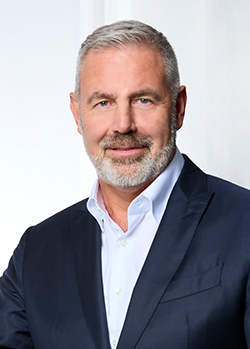
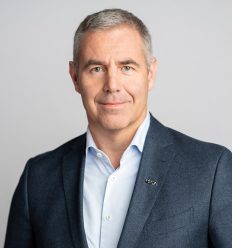
Stefan Klebert (Photo: GEA)
“GEA is taking bold action to support the global transition to a net-zero economy. Our new climate strategy positions GEA as the leader in our peer group. We are pursuing the most comprehensive and ambitious climate strategy in the mechanical engineering industry,” says Stefan Klebert, CEO GEA Group AG. “We are incorporating our entire value chain into this effort, tackling both direct and indirect emissions. And by doing so, we are taking clear action in line with GEA’s purpose: ‘engineering for a better world’.”
By investing globally in Gold Standard-certified projects to generate clean energy from wind, sun, biomass and waste gases, GEA’s own operations are already climate-neutral since the beginning of 2021. Established by the World Wide Fund for Nature (WWF), the Gold Standard certifies climate protection projects that have highest possible positive climate impact. “Carbon offsets for the emissions that we cannot yet avoid is, of course, only the first step on our net-zero journey. That is why we are working to transform our business operations to effectively contribute to limiting global warming,” explains Klebert.
2030 interim targets submitted
In addition to GEA’s 2040 net-zero target, the company has submitted ambitious interim science-based targets across all relevant scopes. Compared to the baseline year 2019, GEA aims to:
Reduce GHG emissions from its own operations (Scopes 1 and 2) by 60 percent by 2030
Reduce GHG emissions from the customer use phase of its products (Scope 3) by 18 percent by 2030
Immediate actions to reduce Scope 1 and 2 emissions
To reduce its Scope 1 and 2 emissions, GEA is pursuing multiple initiatives. First, the company aims to gradually increase its share of renewable power to 100 percent within the next five years. To achieve this, GEA will make use of renewable energy certificates, extend its own green power generation and look into long-term power purchase agreements. Second, GEA will boost the energy efficiency of its global infrastructure with initiatives to modernize office buildings and production facilities, prioritizing the 29 most energy-intensive production sites covering 80 percent of total group wide energy consumption.
Third, over time and where feasible, GEA will green its global fleet of approximately 4,300 company cars. A green mobility policy introduced today stipulates that all new incentive cars for GEA managers in Germany will be 100 percent electric. The company will invest in wall boxes at German GEA sites to support the rollout. “We want to lead by example,” remarks CEO Klebert. “Our transition to a zero-emission fleet – starting with the cars for our management in Germany – shows we are taking clear and visible action.”
Reduction in Scope 3 emissions essential to achieving net-zero target
GEA’s innovative technologies have long played a decisive role in reducing GHG emissions in the various end customer industries it serves, foremost food, beverage and pharma. With the ever-advancing resource efficiency of its production and process technology, GEA enables customers to reach their own sustainability goals. Nevertheless, in direct comparison to GEA’s own GHG emissions, indirect emissions from suppliers and products sold – so-called Scope 3 – make up more than 95 percent of GEA’s overall GHG emissions.
The company’s climate strategy therefore focuses on identifying climate impact hotspots in GEA’s product portfolio and further boosting the energy efficiency of GEA products. GEA’s comprehensive portfolio – ranging from components and industrial machinery to complete processing lines and factories – will be thoroughly analyzed in the coming years. This level of transparency will enable the company to prioritize the climate roadmap and further develop sustainable customer solutions.
“Product innovation will be the key lever to reach our 18 percent reduction target for Scope 3 in 2030. It’s an ambitious goal, but I’m convinced we’ll achieve it; engineering excellence is GEA’s core strength,” comments Klebert. “For instance, we are already equipping customers such as smoothie-producer innocent with machinery that enables the carbon-free production of beverages. Going forward, we will employ such climate-smart solutions on an ever-increasing scale.” In addition to installing new technologies, GEA modernizes existing customer plants to reduce their climate impact as much as possible.
Sustainability as key pillar in GEA’s Factory of the Future
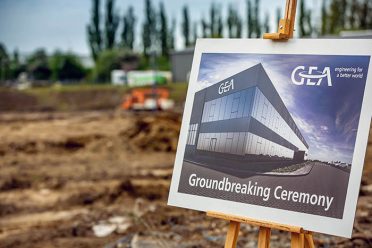
(Photo GEA)
Optimizing our manufacturing footprint, which includes reducing the environmental impact of our sites, is another important factor for achieving GEA’s climate and sustainability goals. GEA laid the cornerstone for a new, climate-neutral production facility in Koszalin, Poland, on May 21, 2021 – a concrete example of how GEA aims to decarbonize its infrastructure. The facility will produce its own energy by integrating photovoltaic panels on the roof and storing power in batteries which can be used to power fleet vehicles. In addition, a combined heat and power (CHP) system will be used to generate electricity and heat, which can be used to heat and cool the site. LED lighting, best-in-class building insulation and low emissivity glass are all part of the factory’s climate-neutral building concept.
Journey towards a comprehensive ESG strategy
GEA’s climate strategy is the first building block of a comprehensive Environment, Social and Governance (ESG) strategy at GEA. Beyond climate protection, this strategy will also take social and corporate governance aspects into account. It will reinforce the company’s commitment to United Nations Sustainable Development Goals (UN SDGs) and become a foundational element of ‘Mission 26’, GEA’s new corporate strategy that is currently under development. ‘Mission 26’ will be presented at GEA’s next Capital Markets Day in September 2021.
At its meeting yesterday, the Supervisory Board of GEA Group Aktiengesellschaft extended the contract of CEO Stefan Klebert (55) by five years until December 31, 2026.
“Over the last two years, Stefan Klebert has led GEA back to a more successful path through targeted measures, highlighting the Group’s great potential for sustainable and profitable growth,” said Dr. Helmut Perlet, Chairman of the Supervisory Board of GEA Group AG. “The Supervisory Board therefore expresses its fullest confidence in him and is pleased to be able to continue our extremely successful cooperation.”
“I would like to thank the Supervisory Board for the trust they have placed in me,” commented Stefan Klebert, CEO of GEA Group AG. “GEA is a fantastic company with a compelling outlook for the future. I look forward to continuing to shape the company’s successful transformation.”
Shortly after Stefan Klebert took over as CEO in 2019, GEA initiated and consistently implemented several projects to improve efficiency. These initiatives, along with the short-term measures to manage the effects of the COVID-19 pandemic, have played a decisive role in ensuring that for the fiscal year 2020, GEA will again achieve significant gains in EBITDA before restructuring measures and the corresponding margin. In particular, the new organizational structure introduced in January 2020 has proven its worth by placing more revenue responsibility and decision-making power in the hands of local management.
Stefan Klebert became CEO in February 2019 and has been a member of the Executive Board since November 2018. On the Executive Board, he is responsible for all five divisions as well as the regions & country organizations. In this role, he also performs the function of Labor Director.
You need to load content from reCAPTCHA to submit the form. Please note that doing so will share data with third-party providers.
You are currently viewing a placeholder content from Turnstile. To access the actual content, click the button below. Please note that doing so will share data with third-party providers.