The processing of the oranges from the 2021/22 season has been high in the major processors in São Paulo State. Although activities usually slow down in January, the orange harvesting is late in the current season – because of the higher share of fruits from the second, third and fourth flowerings.
In January, seven plants of the large-sized processors in SP were in operation, receiving majorly late varieties and early pear oranges. However, activities slowed down last month compared to that in December, due to the end of processing at the plant located in Uchôa. In February, the plant in Conchal is supposed to end activities for the season too – then, there will be only two plants of each one of the large-sized processors in operation.
Despite the fast processing pace, the quality of the oranges is below the expected. Industrial yield (number of orange boxes necessary to produce a ton of concentrated juice), which had been favoured by the lack of rains along the season, is now being reduced by excessive and frequent precipitation – higher moisture favours fruits growth, but raises the volume of water within the oranges, which is not desired by processors.
PRICES – Two large-sized processors purchased oranges in the Brazilian spot market in January, paying from BRL 28 to BRL 30.00 per 40.8-kilo box, harvested and delivered to processor. At smaller-sized processors, prices hit BRL 32/box. Some plants were also processing tahiti lime, paying from BRL 18 to BRL 21.00 per 27-kilo box.
In 2021, orange prices were high in São Paulo State (SP) and in the Triângulo Mineiro. In general, the industry in SP kept the demand high for fruits, and the low production limited the supply throughout the year. Although the remuneration (in BRL per box) had been higher, the profitability for many citrus growers was restricted, given that the limited productivity increased the cost of production per unit even more.
Fundecitrus (Citrus Defense Fund) indicated, in its estimate released in December/21, that the production in the citrus belt may reduce 1.7 % compared to 2020/21, totaling 264.14 million 40.8-boxes. Even with the positive biennial cycle in the 2021/22 season and the higher fruit load, oranges have presented a smaller size, which explains the lower production.
From May to August 2021, rainfall accounted for only 30 % of the regular volume for the period, according to data from Somar Meteorologia/Climatempo. Fundecitrus says that this scenario affected even irrigated orange groves (which correspond to 30 % of the citrus belt), due to the limited water supply in tanks. In some areas, frosts in July worsened the situation. Besides the small-sized oranges, the premature fruit drop was one of the worst in history.
Due to the low supply of fruits, orange juice processors boosted prices compared to the 2020/21 season. In the partial of the crop (from July to December/21), the average price in the spot market was 27.50 BRL/40.8-kilo box, harvested and delivered at the industry, for a nominal increase of 22.5 % in relation to the same period last year.
EXPORTS – As expected, orange juice (volume equivalent to concentrate juice) shipments finished the 2020/21 season with a 7 % decrease in relation to the previous (2019/20). From July/20 to June/21, shipments to all destinations totaled 1.03 million tons, according to data from Secex. The revenue, in turn, amounted 1.54 billion USD, 15 % down compared to the season before.
IN NATURA MARKET – Orange prices hit nominal records in most part of 2021. Increases are attributed to the limited supply in the 2021/22 crop, because of the low volume of rainfall and high temperatures in the second semester of 2020 and the low humidity in 2021. From the second semester of 2021 onwards, the low quality of fruits (due to a long period of dry weather and frosts in July) reinforced the upward trend. In the partial of the crop (from July to December/21), the average price for pear oranges (in natura) is at BRL 39.52/40.8-kilo box, on tree, 20 % up from the average in the same period in 2020, in nominal terms.
TAHITI – The price trend was atypical in 2021. Values were low in the first semester and in some periods of the second part of the year, and peak prices were less intense. From January to December, the average price for tahiti lime was at BRL 25.19/27-kilo box, harvested, 31.3 % lower compared to that in 2020.
Orange1 production forecast update totals 267.87 million boxes
The first 2021-2022 orange crop forecast update for the Sao Paulo and West-Southwest Minas Gerais citrus belt by Fundecitrus – performed in cooperation with Markestrat, FEA-RP/USP and FCAV/Unesp2 – is 267.87 million boxes of 40.8 kg each, differently from the 294.17 million estimated in May this year. The reduction of 26.30 million in relation to the initial expectation corresponds to – 8.9 %. The main reason for this crop loss is the poorer rainfall regime constituting the most severe water crisis ever to hit Brazil for the last 91 years3. The combination of this drought never before experienced by citriculture and successive frosts in July culminated in a gradual crop decline that has been seen as harvests progress and disclose totally atypical figures. Field surveys also show results other than expected for this time of the year for orange planted areas yet to be harvested. In general, oranges are excessively small, and early fruit drop reaches one of its highest rates. These factors make production go back to the same levels of last crop season that totaled 268.63 million boxes, despite fruit load being 12.50 % larger since this is an “on” year. In view of this data and the perspective of climate conditions remaining adverse until harvests end, fruit should present the most critical size and drop rate in historical data. If this scenario is confirmed, there will no longer be an increase in this crop in relation to the previous season, estimated at 9.51 % in May, but rather a smaller volume than the production in the last season (- 0,28 %). …
1Hamlin, Westin, Rubi, Valencia Americana, Seleta, Pineapple, Pera Rio, Valencia, Valencia Folha Murcha and Natal. 2Department of math and science, FCAV/Unesp Jaboticabal Campus. 3National operator of the energy system – ONS. Data for the Parana River basin, encompassing the states of São Paulo, Minas Gerais, Paraná, Santa Catarina, Rio Grande do Sul, Mato Grosso do Sul, Goiás and Distrito Federal.
Symrise has developed a special fragrance raw material from renewable sources: Lilybelle®, a lily of the valley fragrance ingredient with a refreshingly flowery note. It will provide perfumers with novel possibilities for the creation of scents for personal care products, cleaning products and laundry care products. Symrise manufactures Lilybelle® using byproducts from the orange juice industry, so that 83 percent of it is composed from renewable raw materials. The product is also readily biodegradable.
With Lilybelle®, Symrise is expanding its portfolio of special fragrance ingredients to include a sustainable, readily biodegradable fragrance ingredient. It emphasizes the flowery scent of lily of the valley in perfumes, providing ozonic green facets and lightly aqueous transparent accents.. All in all, Lilybelle® brings freshness and a certain lightness to fragrance creations. The scent of lily of the valley flowers has long played an important role in perfumery and is considered timeless due to its transparency, freshness and naturalness. It is used particularly often in men’s fragrances in combination with citrus notes.
Symrise uses byproducts from the orange juice industry
Lilybelle® impresses in two ways due to its scent and its sustainable qualities. In manufacturing it, Symrise uses D-limonene from renewable raw materials, which stems from byproducts of orange juice production. This means 83 percent of Lilybelle® comes from renewable sources, and it is readily biodegradable.
“We have integrated sustainability as a major component of our corporate strategy,” says Susanne Borchert, Senior Marketing Manager at Symrise. “With its high proportion of renewable raw materials, Lilybelle® provides an excellent example of the application of the 12 Principles of Green Chemistry. The increasing consumer demand for products that are manufactured in an environmentally friendly manner shows that we are on the right path.”
The Brazilian orange crop for Marketing Year (MY) 2020/21 is forecast at 390.8 million 40.8-kg boxes (MBx) or 15.94 million metric tons (mmt), an increase of seven percent relative to the current season. Although citrus trees are in the on-year of the production cycle, adverse weather notably affected the production potential for the upcoming season. Total Brazilian FCOJ 65 Brix equivalent exports for MY 2020/21 are forecast relatively stable at 1.050 million metric tons (mt), an increase of 18,000 mt vis-à- vis MY 2019/20 …
The Brazilian exports of Frozen Concentrate Orange Juice (FCOJ) equivalent are currently 17 % lower than that in the previous season, according to Secex. Between July 2020 and February 2021 (2020/21 season), shipments totaled 670.7 thousand tons. Revenue from these exports totaled 985.19 million USD, 27 % down from that in the same period last season.
Among the major purchasers of the Brazilian juice, the European Union was the one that most reduced purchases. From July/20 to Feb/21, shipments to the EU totaled 419.7 thousand tons, 22 % down from that in the previous season. Revenue totaled 626.44 million USD, 32 % down in the same comparison.
Exports to the United States have been more stable, totaling 135.83 thousand tons, very similar to that from the previous season. Revenue totaled 201.62 million USD, 8 % down in the period.
Updated orange1 crop forecast totals 269.01 million boxes
The 2020-2021 orange crop forecast update for the São Paulo and West-Southwest Minas Gerais citrus belt, published on February 10, 2021 by Fundecitrus – performed in cooperation with Markestrat, FEA-RP/USP and FCAV/Unesp2 – is 269.01 million boxes of 40.8 kg each (90 lbs). Approximately 19.27 million boxes of the total crop should be produced in West Minas Gerais.
In this third update on a downward trend, the crop accumulates a decrease of 6.52 % in relation to the initial estimate. In comparison to the previous crop, the reduction is 30.45 %, the worst index of all years in which the crop also withstood the physiological effects of the negative biennial bearing. This crop loss, unprecedented in the history of citriculture, evidences the severity of climatic issues in this season, although production losses due to orange trees that died from drought before harvest have not yet been included. The number of dead trees and fruit unharvested is being determined by a sample survey encompassing 5 % of plots distributed throughout the citrus belt, aiming to update the tree inventory for the next crop season. The reduction in production of the 2020-2021 cycle, caused by this atypical tree mortality, will be presented on the final crop estimate of April 12, 2021. …
1Hamlin, Westin, Rubi, Valencia Americana, Seleta, Pineapple, Pera Rio, Valencia, Valencia Folha Murcha and Natal. 2Department of math and science, FCAV/Unesp Jaboticabal Campus.
In general, citrus prices were high in São Paulo State in 2020. With the lower orange production in the Brazilian citrus belt (São Paulo and the Triângulo Mineiro) in the 2020/21 season due to bad weather conditions, the demand from processors for fruits continued high along the year, which underpinned prices.
According to a report released by Fundecitrus on December 10, crop failure in the citrus belt (SP and the Triângulo Mineiro) should be the worst since 1988/1989, when the series began. In total, orange production should be 30 % lower in the 2020/21 season, totaling 269.36 million boxes of 40.8 kilos each.
INDUSTRIAL PRICES – Although processors began the 2020/21 season with high volumes of juice stocked – 471 thousand tons of Frozen Concentrate Orange Juice (FCOJ) Equivalent, according to CitrusBR –, low orange supply kept the demand for fruits high, which reflects on bidding prices.
On the average of the 2020/21 season, prices in the spot market between July and November closed at 23.51 BRL/box, 17.8 % up from that in the same period of 2019 and 7 % above that in the same period of 2018, in nominal terms.
IN NATURA MARKET – Higher demand from the industry lowered the availability of fruits in the in natura market, since some farmers who usually sell to the in natura market preferred to allocate their fruits to processors, due to the uncertainties caused by the covid-19 pandemic and the attractive prices bid by processors. This scenario added to the weather issues and high demand pushed up orange prices (in natura) all the year. For the variety pera rio, prices hit the highest level of the year in November, when the average was 43.35 BRL/box, on tree, 54.6 % up from that in Nov/19, in nominal terms.
All Oranges 56.0 Million Boxes
The 2020-2021 Florida all orange forecast released today by the USDA Agricultural Statistics Board is 56.0 million boxes, down 2 percent from the October forecast. If realized, this will be 17 percent less than last season’s final production. The forecast consists of 22.0 million boxes of the non-Valencia oranges (early, midseason, and Navel varieties) and 34.0 million boxes of the Valencia oranges. A 9-year regression was used for comparison purposes. All references to “average”, “minimum”, and “maximum” refer to the previous 10 seasons, excluding the 2017-2018 season, which was affected by Hurricane Irma. Average fruit per tree includes both regular bloom and the first late bloom. …
Please download the full citrus crop production forecast: www.nass.usda.gov
The European partners of the IFORED project have started to market the first pink-flesh apples of 2020 and Kissabel® Red will go on sale in October
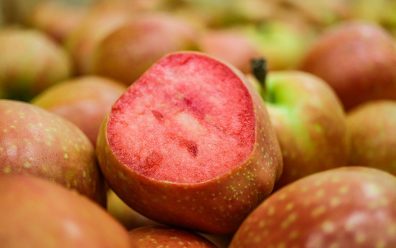
The new European Kissabel® apple season has begun. The project partners in the UK, France and Switzerland started harvesting two coloured-flesh varieties: Kissabel® Orange and Kissabel® Yellow. The first variety features skin with an orange/pink pigmentation, intense pink flesh and a strongly flavoured, refreshing taste, while the second has a yellow skin, pink flesh and a balanced flavour.
With regard to the new season, the figures for the IFORED project’s partners are largely positive, both in terms of quality and interest from customers and consumers.
In the UK, the main feature of the new Kissabel® apples will be their increased sweetness. “The harvest started in mid-September. We are very excited and very positive about the new harvest,” reports Anna Coxe, Head of Technical and Quality at Greenyard. “Our orange and yellow Kissabel® varieties show a very good pigmentation and a very consistent internal colour. Their taste is excellent too, with a sweet, almost berry-type flavour. We had great feedback from retailers – they’ve never seen anything like Kissabel® before and they are looking forward to the new season”.
Kissabel® is the brand that identifies the different varieties of coloured-flesh apple – from pink to intense red (Photo: IFORED)
“We are expecting a great product – apples show overall good quality and are developing a good internal colour. We are expecting great taste too, with high brix levels,” says Hannah Martin, Commercial Director at World Wide Fruit. “Our Kissabel® apples will be available from October – we are enthusiastic about the season and about the project. Kissabel® are truly unique apples that deliver the ‘wow’ factor to consumers looking for something different”.
Similarly in France, the apples’ quality has lived up to expectations. “The new harvest shows continuity from last year – the apples look good on the outside and they have a nice pink colour inside. The taste is delightful too,” comments Marc Peyres, Export Sales Manager at Blue Whale. “Kissabel® are the first red-flesh apples sold in quantity with success – it’s a completely new thing and we are very happy to be part of the project. There are a lot of new varieties on the market, but Kissabel® apples are unique: amazing in the inside, new-looking and with an excellent taste too”.
“We are very positive about this season. Both the outside and inside colours are amazing, the quality is good and consistent with last year,” says François Mestre, co-manager at Mesfruits (France). “We already have big demand from retailers – clients who had Kissabel® apples last year can’t wait to have them again.”
More good news has come from the market in Switzerland. “The harvest seems to be excellent: the size of the fruits is very good and the external appearance is very nice,” reports Christian Bertholet, Category Manager Fruits at La Montagne – Union Fruits Fenaco (Switzerland). “With the beginning of the season, we are sending samples to all our customers and also presenting Kissabel® at an event with major Swiss cooking chefs”. There is huge interest in these new apples.”
After the Kissabel® Orange harvest in September, the first Kissabel® Red apples will arrive in Europe in October: red inside and outside, with an intense flavour and notes of red fruit, mainly grown in Italy and Germany.
Kissabel® is the brand that identifies the different varieties of coloured-flesh apple – from pink to intense red – developed by the IFORED project, an international partnership involving 14 of the world’s largest production and marketing companies.
While whole fruit consumption increased in children between 2003 and 2016, the intake of several important nutrients decreased over time, a new study shows. Adding 100 % orange juice to the diet could help address this shortfall and bolster intake of other key nutrients.
A cross sectional analysis using the nationally representative National Health and Nutrition Examination Survey (NHANES) data on children ages 2 to 18 found significantly higher intakes of whole fruit yet a significant decrease in the intake of folate, riboflavin, thiamin, vitamin C, vitamin D, sodium, potassium, iron and zinc over these time periods.
The FDOC-funded study published in the International Journal of Child Health and Nutrition in July, found that from 2003-2016, the amount of all 100 % fruit juice consumed decreased 44 percent while the percentage of total fruit consumed from whole fruit increased from about 45 percent in 2003 to 65 percent in 2016.
However, the intake of 100 % orange juice (and other 100 % fruit juices) was the likely food source(s) associated with increased consumption of calcium, potassium and phosphorus in certain populations at both time periods (2003 and 2016) and OJ consumers tended to have lower intakes of sugar-sweetened beverages.
The researchers suggest that a possible strategy to decrease inadequate intake of calcium, potassium, and phosphorus is to increase the consumption of 100 % orange juice and other 100 % fruit juice and decrease the consumption of sweetened beverages and coffee/tea.
“Potassium and calcium are under consumed by Americans and have been deemed nutrients of public health concern. These nutrients are important for growing children and 100 % orange juice, particularly calcium-fortified juice, can help enhance the intake of these and other key nutrients,” said Dr. Rosa Walsh, Director of Scientific Research for the Florida Department of Citrus.
Further, vitamin C intake in children has decreased over time and more children have inadequate intake levels. While not linked directly to the decreased consumption of 100 % fruit juice, the results suggest that the increased intake of whole fruit is not adequately addressing vitamin C shortfalls.
Adding 100 % orange juice to the diet, in appropriate amounts as outlined by the American Association of Pediatrics (AAP), can help address the shortfalls or gaps in the intakes of folate, thiamin, vitamin C, potassium and vitamin D in fortified juices. The AAP guidelines suggest limiting portions of 100 % fruit juice to 4 oz. a day for children 1 to 3, 4 to 6 oz. a day for children 4 to 6 and 8 oz. a day for children 7 to 18.
More research is needed to determine the best way to support childhood nutrition. FDOC’s Scientific Research Department has several ongoing projects with researchers to examine the role of 100 % orange juice in the diets of children and adolescents.
Better Juice plan to go full scale with industrial implementation of sugar-reduction tech within a year
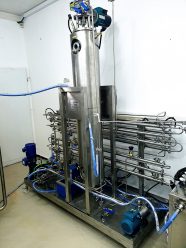
Better Juice, Ltd., the first foodTech startup to develop innovative technology to reduce all types of sugars in orange juice, announces its patent-pending technology is now scaling up. The startup is installing a semi-industrial pilot plant that also will be available for future testing at global partners’ plants. The pilot plant features the company’s sugar reduction process in a continuous flow technology that ensures a consistent, safe, and effective enzymatic process.
Pilot plant (Photo: Better Juice)
Better Juice developed an enzymatic technology that uses all-natural ingredients to convert fructose, glucose, and sucrose into prebiotic dietary fibers and other non-digestible molecules. Better Juice’s new pilot plant system marks a significant milestone in the startup’s commercial scale-up timeline. It is able to reduce up to 80 % of simple sugar in orange juice at a rate of up to 50 liters/hour. Better Juice’s non-GMO technology is designed to target the specific sugar composition in the orange juice to naturally create a low calorie reduced-sugar product that has a delicate sweetness. It is accomplished without using sweeteners or other additives to replace the sugars in the juice.
“We’ve signed collaboration agreements with several global juice producers so far,” reveals Eran Blachinsky, PhD, founder and CEO of Better Juice. “Our goal is to attain full industrial scale and supply to the market within a year. Soon, you will be able to see natural juice beverages with more favorable Nutri-Scores.” Nutri-Score is a new food label system that converts the nutritional value of products into a clear letter and color code on the packaging in Europe.
“Juice and beverage manufacturers are increasingly aware of the need to reduce the sugar levels in their products before new labeling initiative goes into action,” adds Blachinsky. “By using Better Juice technology, this will be easy to achieve.”
Maintaining juice quality through scaleup
The fruit juice industry, like any other, is constantly seeking ways to improve profitability. Adding a new procedure to the juice manufacturing by definition add costs. Better Juice uses a continuous flow technology that will only slightly influence the incremental costs to the overall price.
One of the major hurdles in continuous flow reduction of sugars in natural juices is keeping the process contamination-free even through large-scale production, without damaging the enzymatic activity. Better Juice developed a new device crafted from stainless steel, with aseptic fittings and welding, together with a unique process that guarantees a continuous, safe flow for its enzymatic sugar-reduction process for weeks at a time without interrupting the sterilization stage.
“The scale-up pilot plant is designed for smooth implementation into the standard procedures deployed by the juice industry,” explains Gali Yarom, Partner, COO, and VP of Business Development for Better Juice.
“Better Juice’s new tech process is cost-effective by virtue of its ability to maintain the continuous flow stage,” adds Yarom. “This is a key factor for beverage manufacturers seeking to affordably reduce sugars naturally while maintaining the juice quality and clean label attributes — a real game changer for the juice industry.”
A new study1 published in the Journal of Nutrition and Health Sciences reports that drinking 100 % orange juice following exercise contributes to hydration equally as well as water and sports drinks, positioning the beverage as a viable alternative for post-exercise recovery. The study, conducted by researchers at the University of Kansas and funded by the Florida Department of Citrus, found no differences between 100 % orange juice, sports drinks, or water with respect to taste preference, thirst level, hydration, or gastrointestinal distress following exercise.
Researchers conducted a five-day exercise study with 26 healthy young adults who were moderately trained for endurance exercise. Each day they cycled on a stationary bike for 80 minutes and then consumed approximately eight fluid ounces of commercially available 100 % orange juice, orange-flavored water, or an orange-flavored sports drink. Participants rated the taste of the beverages, thirst levels, and measures of gastrointestinal distress such as reflux or intestinal cramps immediately after the exercise, after drinking the beverages, and after one hour of rest. The researchers measured participants’ hydration status immediately after exercise and after a one-hour rest period.
These findings suggest that 100 % orange juice is a viable post-exercise rehydration strategy, with the beverage receiving positive palatability ratings from study participants when used as a post-exercise rehydration beverage. Additionally, 100 % orange juice was able to satisfy thirst while helping to achieve or maintain hydration following exercise without causing gastrointestinal distress.
“The study showed that people consuming 100 % orange juice were hydrated as well as the participants consuming a sports drink or water. There were no symptoms of serious GI distress with the orange juice despite the carbohydrate content and acidity of the beverage. The results indicate that people can drink orange juice to aid in their rehydration and recovery after exercise,” said Dr. Dawn Emerson, Assistant Professor at the University of Kansas and principal investigator on this study.
An eight-ounce serving of 100 % orange juice provides carbohydrates and is a good source of potassium, an electrolyte, that may provide rehydration and recovery benefits post-exercise. The naturally occurring sugar in 100 % orange juice keeps good company with these and other vitamins, minerals and the antioxidant properties that are all part of the nutrition package 100 % orange juice delivers.
According to the U.S. 2015-2020 Dietary Guidelines for Americans, one cup of 100 % orange juice counts as a fruit serving2 meaning the naturally sweet taste of 100 % orange juice can contribute to an overall healthy diet. Just one-in-ten Americans meet their daily fruit intake as recommended by the Dietary Guidelines, missing out on important nutrients.3 A glass of 100 % orange juice can help close that gap in a convenient, quick way, while also serving as a viable option for post-exercise rehydration.
As orange production is higher this season (2019/20), orange juice inventories should increase again until the end of the crop. According to a report from CitrusBR (Brazilian Association of Citrus Exporters) released on February 18, ending stocks of Frozen Concentrate Orange Juice (FCOJ) equivalent should total 412.83 thousand tons at the processing plants from São Paulo by June 30, 2020. This is the highest volume registered in five seasons (since 2014/15), considering CitrusBR’s historical series.
If this volume is confirmed, it would account for a 63 % increase compared to that in the 2018/19 season (253.18 thousand tons). This scenario was already expected, since orange production in the citrus belt (São Paulo and the Triângulo Mineiro) increased 34.6 % between the last season and the current one, according to Fundecitrus (Citrus Defense Fund).
Of the total volume produced, still according to CitrusBR, 59.7 million boxes (40.8-kilo box) will be allocated to the in natura market and 325.17 million, to processing. The average crop yield is estimated at 270.1 boxes for a ton of FCOJ Equivalent, and the total juice production is forecast at 1.2 million tons.
In August/19, Cepea calculations had pointed to the possibility of inventories to increase at processors to levels similar to that estimated by CitrusBR, at 400 thousand tons.
REFLEXES IN 2020/21 – Although estimates point to a recovery in the volume stocked (the last four seasons closed with lower volumes), the effects on juice inventories in 2020/21 will depend on the amount to be produced in the coming season. However, since citrus growers expect next crop to be at least 30% smaller than the 2019/20, inventories should decrease to lower levels in June/21.
If production decreases, the prices paid to growers by the industry may rise, since demand should remain firm in this segment, despite the high inventories. In the in natura market, quotes may be favored by low supply, since processors should try to purchase the largest possible amount of fruits, to prevent inventories from decreasing to critical levels in June/2021.
MARKET IN FEBRUARY – Orange consumption decreased in the in natura market in the second fortnight of February, due to the rainy weather in some regions of São Paulo State and fruits’ lower quality. However, the low supply of higher quality pear oranges underpinned prices during the month. Between February 3 and 28, pear orange prices averaged 33.06 BRL per 40.8-kilo box, on tree, 8.3 % up compared to that in January.
TAHITI LIME – The harvesting pace for tahiti lime was fast in February in the major producing regions from São Paulo State. Supply, which has been increasing since December, hit its peak last month, and according to agents consulted by Cepea, it may continue high until late March.
Besides that, rains influenced the in natura market too, hampering activities in the field and lowering fruits quality. Moreover, the sales pace was slow in February, due to the carnival season in Brazil.
Thus, in February, tahiti lime quotes averaged 10.24 BRL per 27-kilo box, harvested, the lowest for the month since 2017, in nominal terms, and 14.9 % down compared to that in January.
Updated orange1 crop forecast totals 384.87 million boxes
The 2019/2020 orange crop forecast update for São Paulo and Triângulo Mineiro/Southwest Minas Gerais citrus belt, published by Fundecitrus – performed in cooperation with Markestrat, FEA-RP/USP and FCAV/Unesp2 – is 384.87 million boxes of 40.8 kg each. This figure corresponds to a decrease of 0.11 % in relation to the previous forecast update published in December 2019 and is 1.03 % smaller as compared to the first crop forecast announced in May 2019. Approximately 26.85 million boxes of the total crop should be produced in the Triângulo Mineiro region.
Rainfall remained below normal for most of the citrus belt from May 2019 to January 2020, according to data from Somar Meteorologia. Accumulated rainfall in this period averaged 836 millimeters for all regions, which is 14% or 139 millimeters below the historical average of 975 millimeters (1981-2010). Rainfall shortage was more pronounced in the Central, South and Southwest sectors, including regions such as Limeira, where the accumulated amount was only 690 millimeters, that is, 33% or 341 millimeters below normal. …
1 Hamlin, Westin, Rubi, Valencia Americana, Seleta, Pineapple, Pera Rio, Valencia, Valencia Folha Murcha and Natal. 2 Departament of Math and Science at FCAV/Unesp Campus Jaboticabal.
All Oranges 74.0 Million Boxes
The 2019-2020 Florida all orange forecast released by the USDA Agricultural Statistics Board is 74.0 million boxes, unchanged from the October forecast. If realized, this forecast will be 3 percent more than last season’s final production. The forecast consists of
32.0 million boxes of the non-Valencia oranges (early, midseason, and Navel varieties) and 42.0 million boxes of the Valencia oranges. A 9-year regression has been used for comparison purposes. All references to “average”, “minimum”, and “maximum” refer to the previous 10 seasons, excluding the 2017-2018 season, which was affected by Hurricane Irma. Average fruit per tree includes both regular and first late bloom.
Please download the full citrus crop production forecast: www.nass.usda.gov
Updated orange1 crop forecast totals 385.31 million boxes
The 2019-2020 orange crop forecast update for São Paulo and West-Southwest Minas Gerais citrus belt, published on December 10, 2019 by Fundecitrus – performed in cooperation with Markestrat, FEA-RP/USP and FCAV/Unesp2 – is of 385.31 million boxes of 40.8 kg each. This figure corresponds to a decrease of 0.80 % in relation to the previous update published in September 2019, and of 0.92 % compared to the first estimate of the crop, disclosed in May 2019. Out of the total crop, about 26.88 million boxes are estimated for the Triângulo Mineiro region.
Heavy rains in November on virtually the entire citrus belt eased the drought, but since May total rainfall stood at 17 % below the historical average (1981-2010): 409 millimeters in the average across regions, while historical average is 495 millimeters, according to data from Somar Meteorologia. The driest period was at the beginning of the crop season, from May to August, when the negative deviation reached 32 % in relation to the climatological standard normal. Although rains resumed in the first week of September, this followed a two-week window of dry weather on most of the belt, which characterized the occurrence of an Indian summer. It was not until mid-October that the rainy season began to set in, although the monthly accumulated rainfall rate was still below average. In November, rainfall was abundant and well distributed throughout the month, with accumulations ranging from 95 to 265 millimeters among the citrus belt regions. …
1Hamlin, Westin, Rubi, Valencia Americana, Seleta, Pineapple, Pera Rio, Valencia, Valencia Folha Murcha and Natal. 2Departament of Math and Science at FCAV/Unesp Campus Jaboticabal
Brazilian exports of Frozen Concentrate Orange Juice (FCOJ) Equivalent increased in October for the fourth consecutive month. This season (July to October/19), Brazil has shipped 390.5 thousand tons of the product to all destinations, 19 % more than that exported in the same period last year, according to data from Secex. Revenue, in turn, rose 8 %, in the same comparison, totaling 672.27 million USD.
This result was already expected by agents from the sector, who were based on the needs of bottling plants from the European Union (number one destination for the Brazilian juice) to replenish inventories – it is worth to mention that, last season, national shipments to the EU decreased. This season (2019/20), exports to the EU have already reached 284.3 thousand tons, 25 % up compared to the volume shipped between July and October 2018.
Shipments to the United States continue to decrease – between July and October/19, Brazilian exports to the USA decreased 6 %, totaling only 53.5 thousand tons, still reflecting the 2018/19 harvest offset in Florida as well as perspectives for a positive scenario in the American state in 2019/20.
Brazilian juice exports should continue on the rise in the coming months, due to the higher orange production in the citrus belt (São Paulo and Triângulo Mineiro) and the needs of European bottling plants to replenish inventories. Shipments to the USA, in turn, will depend on the output from Florida (although greening has been controlled, it still damages local groves).
BRAZILIAN MARKET – The demand for oranges was firm in the in natura market in the first fortnight of November, according to Cepea collaborators, pushing up prices. As regards supply, the low availability of higher quality fruits and the reduction in the pear orange harvesting helped to underpin quotes. Between Nov. 1 and 14, pear orange quotes averaged 28.04 BRL per 40.8-kilo box, on tree, 31.1 % up compared to that in the first half of October.
As regards tahiti lime, the volume available in the in natura market of SP is increasing – although most are small-sized fruits, which are traded at lower prices. According to agents consulted by Cepea, the gradual supply increase tends to press down quotes from now onwards. Between Nov. 1 and 14, tahiti lime prices averaged 91.37 BRL per 27-kilo box, harvested, 14.3 % down compared to that in the first fortnight of October.
EXPORTS – Brazilian shipments of tahiti lime continue at record levels, both in terms of volume and revenue, favored by the higher supply between April and May. Between January and October/19, exports of lemon and lime totaled 93.3 thousand tons, 13.6 % up compared to that from the same period last year, according to Secex. Revenue, in turn, totaled 78.5 million USD, 3.2 % higher, in the same comparison. As supply increases in Brazil, which is expected between late November and early December, agents expect quotes to drop and shipments to increase, since lower prices favor the competitiveness of the Brazilian product in the international market.
The Brazilian exports of Frozen Concentrate Orange Juice (FCOJ) Equivalent have been increasing for two consecutive months. This season (July to August/19), Brazil has shipped 199.6 thousand tons of FCOJ Equivalent – to all destinations –, 19 % more than that from the same period last year, according to data from Secex. Revenue, in turn, rose 6 %, in the same comparison, totaling 336.64 million USD.
To the European Union, the number one destination for the Brazilian orange juice, national exports have totaled 140.3 thousand tons, 22 % up compared to that between July and August/18. To the United States, on the other hand, Brazilian shipments have decreased again, by 13 %, totaling only 32.8 thousand tons between July and August/19 – this result reflects the higher supply in Florida in the 2018/19 season and perspectives for a positive scenario in 2019/20.
PERSPECTIVES – Concerning production in Brazil, new estimates for the 2019/20 season released by Fundecitrus (Citrus Defense Fund) on September 10 indicate that the orange harvest in the citrus belt should total 388.42 million boxes (40.8 kilos each). This volume is only 0.12 % smaller than that reported in May, but 35.8 % higher than the amount harvested last season (2018/19).
According to Fundecitrus, lower estimates are based on the smaller rain amounts in São Paulo starting May, which reduced the average weight for the early varieties (hamlin, westin and rubi), from 138 to 136 grams, as well as the size, from 296 to 300 fruits per box.
Still according to the report from Fundecitrus, the harvesting of early oranges has totaled 96 %, against 23 % for pear oranges and 6 % for late oranges. So far, the total volume harvested in the 2019/20 season is at 35 %.
BRAZILIAN MARKET – Tahiti lime quotes increased in São Paulo State in the first fortnight of September, reflecting lower supply, since the fruits still on tree have not reached the ideal maturation and size to be harvested yet. Between September 2 and 13, tahiti lime prices averaged 47.48 BRL per 27-kilo box, harvested, 50.73 % up compared to that in the first half of August.
Tahiti lime exports have reached record volumes this year, largely favored by the higher supply in Brazil between April and May. From January to August/19, exports of lemon and lime totaled 83.1 thousand tons, 9.3 % up compared to that in the same period last year, according to Secex.
Concerning oranges, supply was still low in the in natura market, due to the fast crushing pace in the large sized processing plants from SP. In the in natura market, the demand for oranges was high in the first fortnight of the month. Thus, between Sept. 2 and 13, pear orange quotes averaged 18.99 BRL per 40.8-kilo box, on tree, 4.05 % up compared to that in the first half of August.
The 2019-2020 orange crop forecast update for São Paulo and West-Southwest Minas Gerais citrus belt, published on September 10, 2019 by Fundecitrus – performed in cooperation with Markestrat, FEA-RP/USP and FCAV/Unesp2 – is of 388.42 million boxes of 40.8 kg each. This figure corresponds to a decrease of 0.12 % in relation to the estimate published in May/2019. Approximately 27,14 million boxes of the total crop should be produced in the Triângulo Mineiro region. …
1Hamlin, Westin, Rubi, Valencia Americana, Seleta, Pineapple, Pera Rio, Valencia, Valencia Folha Murcha andNatal. 2Departamentof Math and Science at FCAV/Unesp Campus Jaboticabal.
The harvesting of murcott tangor, which started at a slow pace in the second fortnight of June, is now stepping up in São Paulo State. According to Cepea collaborators, despite the good quality of the fruits, sales in July were below the expected, due to the colder weather in southeastern Brazil as well as the competition with ponkan tangerine – whose prices are usually lower.
However, the demand for murcott tangor increased in late July, surpassing that for other citrus varieties. Besides, most growers from SP have already ended the ponkan harvesting – there is only some volume available in the in natura market, from orchards from Minas Gerais State. This scenario, in turn, should boost the demand for murcott even more.
Despite higher supply in São Paulo, the fast sales pace for murcott tangor favored prices last month. Between July 1 and 31, quotes averaged 34.88 BRL per 40.8-kilo box, on tree, 5.9 % up compared to the average in June.
PERSPECTIVES – Agents believe that the murcott harvesting should last until December, with the crop peak between October and November. The size of the fruits harvested so far is between small and medium, according to growers – due to the higher number of fruits on tree, which hampers growth.
PEAR ORANGE MARKET – Concerning pear oranges, the faster crushing pace helped to control supply in the in natura market. According to Cepea collaborators, this scenario should continue until the beginning of the harvesting for late oranges (mainly valência and natal), forecast to late August/early September.
Still, although pear orange prices are usually at the lowest levels in July, due to the crop peak and lower demand (because of the cold), quotes did not drop so sharply compared to June (only 1 %). The price average in July, at 18.06 BRL per 40.8-kilo box, on tree, dropped 32.6 % compared to that in the same month last year (when the output from the citrus belt was lower), in nominal terms, – but, compared to that in the same period of 2017, quotes rose 12 %.
Better Juice, Ltd., the first foodTech startup to develop innovative technology to reduce all types of sugars in orange juice, and Citrosuco S.A, Brazil, one of the largest orange juice producers worldwide, are teaming up! The new collaboration aims to set up a pilot plant to reduce sugars in orange juice. Citrosuco is providing some of the funding plus technical and operational expertise.
Fruit juices contain vitamins, minerals, and many other beneficial nutrients, but this natural drink comes with three types of sugars. Better Juice’s game-changing enzymatic technology naturally transforms all types of fruit sugars into prebiotic and other non-digestible fibers and sugars.
“Our device use non-GMO microorganisms to convert the sugars, and provides orange juice manufactures a ready opportunity to meet the trends and claims for reduced sugars, all while keeping the juicy flavor of the beverage,” says Eran Blachinsky, PhD, Founder and CEO of Better Juice. “The global orange juices market is valued at dozens of billion US$ with outstanding potential to create better-for-you orange juice beverages.”
“We have been seeking an orange juice sugar reduction technology for some time,” says Alex Marie Schuermans, Product Development and Applications General Manager of Citrosuco. “Better Juice’s solution holds a lot of promise and we are confident that by combining their technology with our know-how, we can accelerate production of the first sugar-reduced orange juice.”
“This collaboration with Citrosuco is a vote of confidence in Better Juice’s leading technology and its capabilities for reducing sugar in orange juice,” notes Blachinsky. “We’re excited to work with this strategic partner and help create juices with low sugar — the latest frontier in sugar reduction.”
“Our proprietary technology can be tuned to reduce between 30 % to 80 % of all the sugars in orange juice,” explains Blachinsky. “Making it easy conform to the minimum 25% reduction required by the FDA, as well as the 30 % reduction required by the EFSA for allowable claims of ‘reduced sugar’ in food and beverage products.”
The startup won the “Most Innovative Technology” award at the 2018 Startup Innovation Challenge at Health ingredients Europe in Frankfurt for its sugar reduction technology, which it developed in conjunction with The Hebrew University in Rehovot, Israel, and The Kitchen Hub incubator, Ashdod, Israel.
The Brazilian exports of Frozen Concentrate Orange Juice (FCOJ) Equivalent in the 2018/19 season are ending and the volume shipped to all destinations is still low – May was the ninth consecutive month of lower sales (this scenario has been observed since September/18).
This scenario, which was already expected by agents, is linked to the lower orange production in the Brazilian citrus belt (São Paulo and Triângulo Mineiro) this season as well as lower demand from the international market, mainly the United States. The exports decrease, in turn, prevents orange inventories of Brazilian processing plants from decreasing to critical levels by the end of the season (June 30 2019).
This season (July/18 to May/19), Brazilian juice exports to all destinations have decreased 18 % compared to the same period in the 2017/18 season, totaling 918.46 thousand tons, according to Secex. Revenue, in turn, has dropped 17%, totaling 1.69 billion USD.
Exports to the European Union, the biggest purchaser of the Brazilian juice, totaled 592 thousand tons, 8 % down compared to that in the same period last year. Revenue, in turn, totaled 1.09 billion USD, 6 % down in the same comparison.
Shipments to the United States had the steepest decrease in the season, of 38 % compared to the previous crop, totaling 190.71 thousand tons of juice. This result is linked to the lower demand from the USA, due to the estimates for the recovery of the 2018/19 crop from Florida as well as lower consumption. Revenue, in turn, dropped 39 % in the same comparison, totaling 331.55 million USD.
ESTIMATES – According to a report released by the USDA on June 11, the orange crop from Florida should increase by 58.4 % compared to the previous, totaling 71.4 million boxes (1.3 % down compared to that forecast in May).
Despite the decrease in the consumption of orange juice in the United States, the demand from the country for the Brazilian orange juice may not decrease too sharply in the coming seasons, due to the effects of greening on American crops in the long term.
BRAZILIAN MARKET – The trading pace was slow in the Brazilian citrus market in the first fortnight of June. However, the volume of oranges in the ideal stage for the in natura market was gradually decreasing in São Paulo, due to the increase in the deliveries to processing plants. Thus, between June 3 and 14, pear orange quotes averaged 18.08 BRL per 40.8-kilo box, on tree, 21.5 % down compared to that in the first half of May.
As for tahiti lime, despite the large volume available for harvesting, the current weather allows the fruits to stay on tree for longer. Thus, growers reduced the pace of activities in the field, aiming to prevent prices from dropping too much. In the first half of June, tahiti lime quotes averaged 13.65 BRL per 27-kilo box, harvested, a slight 20.6 % down compared to that in the first fortnight of May.
EXPORTS – Lemon and lime shipments were positive in May, surpassing, for the first time in the year, the amount exported in 2018. Last month, exports hit a record (revenue and volume) in all Secex series, which started in 1997.
According to Brazilian exporters consulted by Cepea, as the weather delayed the maturation of tahiti lime crops in SP, shipments decreased from March to April, increasing again in May. According to data from Secex, Brazil exported 18.94 thousand tons of lemon and lime in May, almost two-fold the amount shipped in May 2018 and 57% more than that exported in April/19.
One of the large-sized processing plants from São Paulo State started purchasing oranges in the spot market in the first fortnight of May – early varieties from the 2019/20 crop as well as fruits out of the ideal period from the 2018/19 season. Two plants of this large-sized processing plant were crushing oranges in that period, one in Araraquara and the other in Colina.
Bidding prices were around 18 BRL per box, harvested and delivered at the processing plant, lower than that observed until December/18 for mid and long-term contracts, which ranged from 20 to 22 BRL per box – with the possibility of a participation additional in the international juice market. At smaller-sized processing plants, in turn, quotes ranged from 14 to 20 BRL per box in the spot market – depending on both the processing plant and the quality desired.
For mid and long-term contracts, the purchases of oranges from the new crop have been occasional this year, with no fixed prices and deals closed between some of the large-sized processors only.
The citrus farmers consulted by Cepea are concerned about the effects of the higher production expected for the citrus belt (São Paulo and Triângulo Mineiro) in 2019/20 on orange prices.
Higher supply estimates are based on the good development of orange orchards in all Brazilian regions, favorable weather in the second semester of 2018 (with mild heat and well-distributed rains) and the resume of investments. Still, greening should constrain yield at many orchards in SP.
Although higher productivity in 2019/20 may lower the unit cost of production, the new bidding prices are considered low compared to expenses, which may constrain the revenue paid to the growers who will depend on sales in the spot market. Concerning fruit volume, most oranges have already been traded, through contracts – either previously closed or closed in late 2018. However, a high number of farmers, probably smaller-sized ones, may have been waiting for prices to be fixed this year in order to sell their fruits.
THE MARKET IN MAY – Oranges quotes dropped in the first fortnight of May, pressed down by both higher supply and low purchases from processing plants. Between May 2 and 15, pear orange quotes averaged 23.03 BRL per 40.8-kilo box, on tree, 34.5 % down compared to that in the first fortnight of April.
TAHITI LIME – The demand for tahiti lime was low in the first half of May, while supply continued high in the field of São Paulo State – due to the delay in fruit maturation in the first months of 2019. Between May 2 and 15, tahiti lime was traded for 17.20 BRL per 27-kilo box, harvested, 26.8 % down compared to that in the first fortnight of April.
EXPORTS – In the international market, the demand for tahiti lime was firm, due to the higher quality of the fruits available. However, this year, the Brazilian exports of tahiti lime have been lower than in 2018. In April/19, shipments totaled 10.6 thousand tons, according to Secex, 9 % down compared to that in April/18. Between January and April 2019, exports were 20 % lower than in the same period last year.
Archer Daniels Midland Company (NYSE: ADM), one of the leading suppliers for ingredients, has now added new colors to its product range: firstly, micronized color powders made from coloring foodstuffs; secondly, paprika extract for particularly vibrant shades of orange.
The new micronized color powders from ADM are made up of particles that are much smaller than conventional color pigments. This gives the powders a larger surface – in relative terms – and increases their opacity. As a result, they give foodstuffs a highly intensive and striking coloring.
ADM offers its customers micronized color powders for all common color shades. The new solutions complete the previous range from yellow to red, now also allowing additional colorings in green and blue. The raw materials that the ADM developers use are coloring foodstuffs such as safflower, curcumin, red radish and spirulina. The products are available for instant beverages, chewing gum, powder mixtures, concentrates and confectionery. Despite the small particle size, the colors are by no means nanomaterials.
Paprika for bright orange – without any E numbers
The WILD Rainbow Range, ADM’s range of coloring foodstuffs and natural colors, has also been expanded and now includes paprika as a new coloring foodstuff that can be used for all food applications. It is suitable for all pH values and is heat-stable. In contrast to orange carrot, for example, paprika extract does not change its color and become more yellow when heated, but rather retains its original orange.
Paprika can be used to give a bright orange color to various products, including confectionery, snacks, ice cream, baked goods, breakfast cereals and chewing gum. It is actually an original color rather than the result of mixing two separate colors (red and yellow). Both the micronized color powder and paprika extract can be declared as ingredients with no E numbers, which means that they are suitable for clean label products.
The harvesting of the oranges out of the ideal period from the 2018/19 crop was ending in São Paulo State in March, while the availability of the first early oranges from the new season (2019/20) was increasing, helping to supply the market.
Although still low, the availability of the first oranges from the 19/20 crop in the market limited the upward trend of pear orange quotes, observed in the first two months of the year. In March, pear orange quotes averaged 42.23 BRL per 40.8-kilo box, 3.8 % up compared to that in February.
However, most of the early oranges from 2019/20 had not reached the ideal maturation stage demanded in the in natura market, which limited new deals. Concerning the pear and late oranges remaining from the 2018/19 season, only a few growers still had available amounts to sell in the in natura market – and, in general, lower quality also hampered trades.
The low supply scenario in the offseason period resulted from the lower production (almost 30 %) in the citrus belt in 2018/19 – estimated by Fundecitrus at only 284.88 million boxes of 40.8 kilos, according to the report released in February. Thus, in March, pear orange quotes increased sharply compared to the same period last year (in nominal terms): a staggering 46.3 %.
For April (mainly the second fortnight), the agents consulted by Cepea expect the supply of all varieties from the 2019/20 to increase, based on the possible favorable weather to the development of the fruits that are still on tree. Besides, it is worth to remember that crushing is currently at a slow pace at the processing plants from SP, which should allocate all the fruits available to the in natura market in April.
TAHITI LIME – As for tahiti lime, international demand helped to lower supply in the Brazilian market in March. Thus, quotes averaged 16.87 BRL per 27-kilo box, harvested, last month, 11.7 % up compared to that in February.
Demand from processing plants was low and the availability of fruits from the second blossoming was gradually increasing, which may press down quotes in April, mainly in the second fortnight – if the weather favors fruits growth.
Variety-seeking Coca-Cola fans will soon have a new fun-yet-familiar flavor to reach for.
Orange Vanilla Coke and Orange Vanilla Coke Zero Sugar – the first Coca-Cola trademark flavor innovations in over a decade – hit stores in the USA on Feb. 25 in a range of packaging options.
Kate Carpenter, brand director, Coca-Cola, said the 2016 launch of the One Brand strategy – which combined all Coca-Cola variants under a common visual identity and creative campaign – showcases the breadth of the brand. Following the successful relaunch of Coca-Cola Zero Sugar in 2017, the trademark team began to explore additional growth opportunities.
“What we realized is that we had a diamond in the rough when we looked at our flavors portfolio,” Carpenter said. “The growth of Cherry Coke and Vanilla Coke – and their zero-calorie variants – has been really strong in recent years even with very limited marketing support.”
Despite this growth, only 12 percent of Coca-Cola drinkers were reaching for flavors. “This showed us our fans want choice but are getting it outside the Coke Trademark,” Carpenter said. …
The calamondin is one of the most exciting new discoveries that tropextrakt has in store for its customers in 2019. Although it sounds like an exotic, unknown fruit right now, it has the potential to start a new taste trend in foods and beverages that can already be seen in the USA, for example. The calamondin, with its scientific name of “Citrofortunella microcarpa”, conceals powerful potential under its delicate peel with a great variety of flavours: sweet-sour and refreshing, it is reminiscent of mandarin orange, bitter orange, lime and pink grapefruit.
A wide variety of flavours for the food and beverage industry
“The unique flavour of the calamondin is perfect for exotic taste experiences and can make a subtle difference in many foods and beverages”, explains Ingo Kniepert, Managing Director of tropextrakt. “The calamondin, for example, corresponds perfectly with familiar ingredients like orange juice or vanilla.” The refreshing and sweet-sour nuances also develop very well in combination with grapefruit in soft drinks, alcoholic and non-alcoholic beers and many other drinks, including milkshakes. The juice is also suitable for fruity blends in dairy products, ice cream, marmalades, jams, fruit sauces and sweets. Its taste components also come into their own in dressings, chutneys and desserts. The calamondin harmonises well with apple, mirabelle and blackcurrant, and herbs and spices including cinnamon, peppermint and vanilla. Tropextrakt has tested these and other combinations in its own application lab, where special applications for customers in the food and beverage industry can be developed on request.
Year-round harvest – transparent production
The calamondin, a particularly small type of citrus fruit, is a hybrid between the mandarin orange and the oval kumquat. Externally, it resembles a lime, but is much smaller. Unlike other citrus fruits, the calamondin has a thin, delicate peel, which is why the fruit has to be cut from the tree by hand. tropextrakt obtains the unadulterated calamondin juice from Vietnam, where the fruits grow, are harvested and processed into pure calamondin juice in NFC quality all year round. “It’s very important to us that our products are left in their natural state, thus complying with the Clean Label standard”, says Kniepert. tropextrakt imports its raw materials from the producers themselves in order to be able to influence the corresponding quality and hygiene standards on site. Every batch can be traced back directly to one of the 500 family businesses with calamondin plantations. Additionally, the producer guarantees the fruit will be processed in accordance with ISO 2000 and the BRC Food and HACCP standards. Both the Vietnamese producer and tropextrakt are Sedex-certified and have made a commitment to sustainable supply chains. In doing so, tropextrakt also makes a contribution to the small plantations in Vietnam, where calamondin cultivation with controlled labour conditions helps in the fight against poverty.
Less sugar, more minerals and still: 100 percent juice!
From 16 to 18 October 2018, the largest and most important European summit of the fruit juice industry – the Juice Summit in Antwerp – took place. Stefan Reiß, CEO of Green Coco Europe GmbH and co-founder of premium brand Dr. Antonio Martins was invited as a speaker emphasizing the potential and relevance of coconut water / coconut juice to the juice industry in front of about 600 decision-makers. The CEO of the Nuremberg company presents an interesting approach to reducing sugar in fruit juices. Coconut juice is very popular among athletes, vegans and nutritionally-conscious consumers due to its high potassium and low calorie content – making it an ideal blend for juices whose high sugar content no longer seems to hit the nerve of the times.
For some time now, the juice industry has faced immense challenges in terms of sugar discussions. The high sugar content of orange juice & co is increasingly being pilloried. For example, orange juice with about 8 grams of sugar per 100 ml of juice contains as much sugar as cola. For this reason, the 100 % fruit juice loses its healthy reputation not only with relevant nutritionists, but more and more with nutritionally conscious consumers.
“Coconut juice can be a solution here and take out the wind of the issue´s sails. Why not add coconut juice to orange juice and drastically reduce sugar content and calories? The fruit juice content remains in this way at 100 percent. The light and neutral properties of the coconut juice do not mask the taste of the orange juice. According to the latest figures from the market research study by Arizton, I see a potential of 297 million liters for juice with coconut juice by 2023, “says Green-Coco CEO Stefan Reiß, summing up his solution. Coconut juice adds valuable minerals such as potassium, calcium and magnesium to the juice and these can also be declared as such. The juice of the coconut is 11-19 kcal per 100 ml – the lowest calorie fruit juice ever.
A mixing ratio of 40 % coconut juice and 60 % orange juice gives 29 calories per 100 ml, instead of 42 kcal as before. In this way you achieve a reduction of more than 10 calories per 100ml to less than 30 kcal compared to the pure variant – in times of steadily rising numbers of diabetes diseases a step in the right direction. Even in multivitamin juices, adding coconut juice would mean a significant calorie and sugar reduction.
Other facts should encourage the industry to take this path: According to a market study by Arizton, the coconut water market is expected to grow by 25 % per year across Europe by 2023. Coconut juice is no longer a niche product, has established itself as an independent category and can be found in almost every discount. Supermarkets, such as REWE, already have a firm place on the shelves for their own coconut juice brands.
Patented natural process converts sugar to fibers in just one-step
Better Juice Ltd. has developed innovative technology to reduce the load of simple sugars in orange juice. The patent-pending enzymatic technology uses all-natural ingredients to convert monosaccharides and disaccharides (fructose, glucose, and sucrose) into prebiotic and other non-digestible fibers and sugars, while keeping the juicy flavor of the beverage.
Popular juices, such as orange juice and apple juice, have nearly 1 oz. (25 g) of sugar per 1-cup serving (250 ml). Although juice contains the vitamins and minerals you’d find in fresh produce, it’s devoid of most of the natural dietary fiber as an outcome of traditional methods of juicing. In addition to its intrinsic health benefits, fiber also adds to the feeling of fullness.
Better Juice’s process harnesses a natural enzymatic activity in non-GMO microorganisms to convert a portion of the simple fructose, glucose, and sucrose sugars into fibers and other non-digestible natural sugars. The process works on all types of sugars. Yet the process preserves the great flavor and the full complement of vitamins and other nutrients inherent in the fruits. The technology was developed in collaboration with Hebrew University in Rehovot, Israel.
“This natural a non fermentative process occurs without adding or removing ingredients,” says Eran Blachinsky, PhD, Founder and CEO of Better Juice. “It also will not alter the flavor or aroma of the juice.” Better Juice uses an advanced solution that involves just one short and simple pass-through step in the juice-making process, allowing the product to be marketed at a price point comparable to other premium juice products.
”While the process does slightly reduce the sweetness of the juice,” explains Blachinsky, “It actually brings out more of the fruit flavor, making for a better-tasting juice product overall.”
Better Juice conducted several trials with different beverage companies and succeeded in reducing sugars in orange juice from 30 %, up to 80 %. The start-up can now provide proof of concept for orange juice.
Mono-and disaccharides – often called “simple sugars” – are easy for the body to digest and thus quickly metabolized. If the energy they provide can’t be used, it is converted to fat and stored. But when these individual sugar molecules link up, they become prebiotic fibers that are non-digestible. The shorter of these fibers, called oliggosaccharides, are still sweet yet have been shown to bestow a number of health benefits, from protecting against disease to helping manage weight. There are other natural monosaccharides that are not easily digested. These sugars have no glycemic index and low caloric values.
“Consumers, especially children, enjoy drinking natural juices but are not always aware of the less nutritious aspects of juice,” notes Blachinsky. “They want the whole package — great flavor, health, and natural ingredients, including the fibers that are essential part of fruits.”
The company will market an advanced device with the unique technology to fruit juice producers and, eventually, to cafés and restaurants.
The trading pace in the market of in natura orange was slow in Brazil in the first fortnight of October. Besides the lack of high quality fruits, rains in São Paulo State limited harvesting activities and lowered the available supply even more. Demand, in turn, was low too, mainly due to the Brazilian holiday on October 12, when liquidity usually decreases.
Purchasers reduced pear orange acquisitions, opting for lower priced varieties, such as valencia. From October 1 to 15, pear orange quotes averaged 32.90 BRL per 40.8-kilo box, on tree, 6.8 % up compared to that in the same period of September. Valencia oranges, however, were traded at 28.89 BRL per box, 8.9 % up in the same comparison.
Regarding tahiti lime, rainy weather hampered fieldwork and prices rose in the first fortnight of October. From Sept. 30 to Oct. 15, tahiti lime quotes averaged 81.98 BRL per 27-kilo box, harvested, 21.6 % up in the same comparison. Precipitation, on the other hand, should favor fruit growth on tree, based on the estimates for a slight supply increase this month.
2019/20 SEASON – The first purchase offers for the oranges from the 2019/20 crop have started to be reported in the market of São Paulo State. On an ad hoc basis, large-sized processors have bid prices around 22 BRL per 40.8-kilo box, harvested and delivered at processors, with the possibility of a bonus in the sales price of orange juice in the international market. Processors bidding prices have been lower than in the spot market this season (at 24 BRL per box for prompt-delivery).
In general, according to agents from processors, farmers are cautious regarding closing trades in advance, since the next season output is still uncertain. Although blossoming was considered positive in most orchards, the weather will be crucial for a good flower settlement – in the same period last year, many fruitlets were lost, reducing production in the 2018/19 season.
Besides, the result of the Presidential Election in Brazil may influence both the exchange rate and, consequently, the price received by processors for orange juice sales in the international market. The farmers consulted by Cepea that have already been contacted by processors, mainly for renegotiation, say they will wait for a better definition in the coming months to decide whether to sell or not their fruits.
Brazilian citrus farmers believe the next orange crop in São Paulo will have positive results, mainly in the orchards located in southern state, where the weather is more favorable (with rains interleaved with sunny days). Farmers are focused on the central area of the state, where intense heat and smaller rain volumes have already caused fruitlets to drop.
South African biotechnology company, Green Cell Technologies® (GCT®), announced it has signed an exclusive global licensing agreement for the world’s largest orange juice producer, Citrosuco, to make use of its proprietary Disruptor™ technology, intellectual property, processes and applicable trademarks.
Green Cell Technologies’ award-winning, patented Dynamic Cellular Disruption® (DCD®) process, in conjunction with its Disruptor® technology, is busy revolutionising the modern global food and beverage manufacturing industry. Without using harmful heat or chemicals, GCT is able to assist its clients in attaining higher yields, reducing food waste at source and all without denaturing the product. Because the process results in a molecular flow and allows for 99.99998 % of the available active ingredients to be harvested, the company already awarded for its work in the area, believes it is able to provide a commercially viable solution to the world’s future food security needs through its technologically advanced extraction and its New Product Development (NPD) capabilities.
The agreement – for an initial two year period – will see Citrosuco hold the exclusive licensing rights to GCT’s DCD process for the global orange juice and orange-related speciality ingredients market. This gives Citrosuco a significant competitive edge, taking its orange production into the future, streets ahead of conventional processing, while also reducing waste. Additionally, Citrosuco will have the increased ability to formulate products suitable for the growing consumer appetite for natural goods.
The Citrosuco development team commented: “Citrosuco aims to be the best company for natural fruit juices and ingredients in the global food industry. Access to Green Cell Technologies’ machinery and intellectual property will make this more of a reality. We are excited about the prospects this means for us as a global company to develop new products and for the people who will benefit from the added nutritional enhancements this technology can unlock.”
While both companies are necessarily un-specific as to the particulars of what the technology will generate for Citrosuco and what else the company is exploring, it is true to say that many possibilities are being explored and the companies will make further announcements in the months to come.
Roy Henderson, Chief Executive Officer of Green Cell Technologies confirmed the agreement, remarking: “We are delighted to be working with Citrosuco as they are a company that shares our ideals as far as natural foods are concerned, and one that is prepared to invest in sustainable innovation with the aim of being able to provide better foods for more people while minimising negative impact on the environment.
“With the world population growing on a daily basis and the ability to deliver meaningful nutrition diminishing, it is imperative that food processors enter the modern manufacturing paradigm.”
The agreement came into effect on 6th August 2018.
It’s no secret Coca-Cola loves to experiment with exciting new flavors to create something delicious, so in true Coke style we are welcoming winter with a citrusy twist. Say hello to Coca-Cola Australia’s newest limited-edition flavour Coca-Cola Orange No Sugar.
“We’ve seen how much Australians have enjoyed our other limited edition flavours. Introducing a hint of orange flavour was perfect for Australia’s cooler months. We think Coke fans are going to love it,” said Lucie Austin, Coca-Cola Australia marketing director.
“This limited edition flavour has been crafted for Australians and the spirited way we do the winter season – fun and sociable. We’re not afraid to get the woolies on, grab our friends or family and get out and about when it’s chilly. So we’ve created a refreshing and unique drink to match,” Lucie said.
Aside from being refreshing and providing a great citrus alternative to a lemon or lime in your Coke, Coca-Cola Orange is completely sugar free, following the Company’s pledge to reduce sugar in their beverages.
“As we work to innovate with delicious combinations to match the diverse tastes of our customers, Australians will see more exclusive and limited edition flavours in the coming years,” she said.
Don’t waste any time in getting your hands on Coca-Cola Orange No Sugar, as it’s only making a guest appearance for our winter months.
“Coca-Cola Orange No Sugar is here for a good time, not a long time, so get in quick,” Lucie said.
Coke Orange No Sugar is available nationally as a limited-edition flavour from July 23, 2018.
The 2017/18 Brazilian season of juice shipments finished in June with high volumes. As for FCOJ Equivalent (volume equivalent to concentrate juice), the total exported was the highest since the 2009/10 crop, while for NFC (not-from-concentrate-fresh juice), the amount hit a record.
Since the beginning of the season, exports surpassed the volumes registered in the same months of the year before, scenario boosted by the higher production in the citrus belt (São Paulo and Triângulo Mineiro) in 2017/18 and by the higher international demand, especially from the United States.
Secex says that, from July/17 to June/18, total juice (FCOJ Equivalent) shipments to all destinations amounted 1.2 million tons, for an increase of 28 % compared to the season before. The revenue, in turn, rose 29 %, totaling 2.2 billion USD. NFC exports totaled 1.5 million tons, for an increase of 14 % compared to the season before, generating 515.7 million USD, upping 16 % in the same comparison.
To the United States alone, the export increase was 81 % from July/17 to June/18, totaling 315.5 thousand tons of FCOJ. The revenue amounted 561.7 million USD, moving up 76 %. Both volume and revenue to the USA were a record in the 2017/18 season.
To the European Union, sales totaled 720.5 thousand tons of FCOJ, 17 % up compared to the previous season. The revenue, in turn, was 1.3 billion USD, for an increase of 18 % in the same comparison.
MARKET IN BRAZIL – The citrus market registered slow pace of trades in mid-July. Players surveyed by Cepea say that low temperatures and the lack of quality of fruits available in the in natura market hindered negotiations.
However, with the heated demand from processing companies, the supply of early varieties is reduced in São Paulo State, which increases demand for pear orange. From July 2 to 13, pear orange quotes averaged 26.30 BRL per 40.8-kilo, on tree, 3.1 % up compared to the first fortnight of June (1 – 15).
As for tahiti lime, demand decreased, mainly due to high prices and cold weather in São Paulo. Thus, in the first fortnight of July (2 to 13), quotes averaged 28.73 BRL per 27-kilo box, harvested, for a decrease of 21 % in the same comparison.
The 2018/2019 orange crop forecast published on May 09, 2018 by Fundecitrus, in cooperation with Markestrat, FEA-RP/USP and FCAV/Unesp1 is of 288.29 million boxes of 40.8 kg each. This total includes:
55.81 million boxes of the Hamlin, Westin and Rubi varieties;
16.55 million boxes of the Valencia Americana, Seleta and Pineapple varieties;
81.16 million boxes of the Pera Rio variety;
99.80 million boxes of the Valencia and Valencia Folha Murcha varieties;
34.97 million boxes of the Natal variety.
1. Bearing trees
Bearing trees of the varieties which make up this estimate total 175.27 million. Information about bearing trees was obtained from the Tree Inventory for São Paulo and west-southwest of Minas Gerais citrus belt: March 2018 status, defined by the new mapping of groves performed from September 08, 2017 to January 29, 2018 and by counting of trees present in 5% of plots mapped, from January 29 to March 07, 2018
The georeferenced mapping, carried out for the first time at the 2015 Inventory, has been through a complete update for this 2018 Inventory. New high definition orthorectified images were obtained by the satellites SPOT 6&7 from European Airbus Defence and Space between May and August, 2017. In September, 2017 images were made available to survey agents, together with drawings of plots identified in the previous mapping, which were superimposed to the images for easier visualization of areas that should be visited to collect in loco data. Scanning or visual inspection of images were also employed by survey agents before they went to the field to pre-identify citrus groves planted after the previous mapping from 2015 to 2017, which should also be visited.
No information relative to the plot other than their outlines was supplied to survey agents, which required all new data to be collected on: variety, year set, spacing, visual aspect of plants and irrigation system, when present2. Recently collected data relative to the variety and year set that differed from the previous register were audited for validation. Outlines of plots were redrawn to correspond to their present area, whenever their area was changed after plots having been registered in the previous mapping. Field visits identified plots that were abandoned or eradicated after the 2015 Inventory, and those identified in that mapping as being in a similar situation, so that they were also revisited for updating data. A new feature in the current mapping is the delimitation of farms, which more precisely quantifies farms present in the citrus belt…
In addition to the core range of Fanta Orange, Zero Orange, Grape, Raspberry, Blueberry, Sour Watermelon and Strawberry Sherbet, Fanta has launched multi-sensory products that are as much about touch, sound, sight, and smell as they are about taste.
“People really love the flavours but we wanted to up the ante and bring out something totally unique and different to everything else in the soft drink category, to create new experiences for Kiwis to try when they want the occasional treat,” says Fanta Brand Manager Gina Beck.
“We talk about teens wanting ‘omni sensorial’ experiences, which is where they’re looking for something that’s going to awaken all the different types of senses. Early adopters want to experience something new and this range really delivers on this,” she says.
The first entries into the sensory range are Jelly Fizz which come in both orange and raspberry flavours.
To enjoy the omnisensorial experience of Jelly Fizz, for instance, consumers need to shake the can 10 times to activate an almost indescribable, well, jelly fizziness.
“It’s like a delicious, liquid jelly – a soft drink blended with juicy liquid jelly pieces. You can’t really explain it to someone, they have to try it for themselves,” says Gina.
The original Jelly Fizz concept was launched in Japan and Hong Kong about five years ago (known as Furu Furu Shaker) and the local Coca-Cola team felt they could replicate its incredible popularity here in New Zealand.
“The challenge has been how to Westernise the concept of what is a really cool but very different drinking experience,” says Gina.
“We needed to educate teens that it’s okay to shake the can without it exploding, despite it going against everything they’ve ever known about soft drinks.”
While Fanta will no doubt continue its history of innovation, there’s one thing that won’t change: the iconic taste of Fanta Orange.
“Fanta Orange is a really big part of our portfolio,” says Gina. “It has a loyal fan base and that is incredibly important to us.”
Jelly Fizz is available in both orange and raspberry flavours – for a limited time.
After the large output in 2017/18, supply may be limited again in the 2018/19 season in São Paulo State and Triângulo Mineiro. With unfavorable weather during the fruitlet settlement in the first flowering event (the main event), which would become fruits in the next season, losses were observed in three of the four main citrus producing regions in São Paulo.
Northern and central SP should be the most affected, followed by the eastern region of the state. In southwestern SP, however, fruitlet drops in the first flowering event were within normality. Thus, once again, productivity in this area may be high again.
With signs of new flowering events at the end of the year, losses may be softened if settlement is satisfactory. Still, the volume of fruits should be smaller than that from the main event.
The first USDA report for the next Brazilian orange crop, released in December, indicate an output of 320 million boxes of 40.8 kilos in 2018/19 in São Paulo State and Triângulo Mineiro, 19 % lower than in 2017/18. Although it is still early to measure, growers consulted by Cepea believe in an even lower output. The first estimates from Fundecitrus (Citrus Defense Fund), in turn, should be released in May.
Despite forecasts for lower supply of raw material in 2018/19, 93 % recovery of orange juice inventories at processors from São Paulo in June 2018 does not indicate excess in juice supply yet. The large crop will be enough only to replenish low inventories from 2016/17.
Besides, agents should be watchful for lower production in Florida as well. According to the last report released by the USDA (in December), harvesting in Florida should total only 46 million boxes, 33 % down compared to the previous season. In addition to greening, which has affected local production for some crops, hurricane Irma hit the area in September 2017. Local production results will be released in July 2018. Thus, as inventories decrease in the United States, there is need for more importation.
PURCHASES – The first orange purchase proposals in the 2018/19 season were reported in the market of São Paulo in mid-November, 2017. Although occasional, large-sized processors have signaled possible trades around 20.00 BRL per 40.8-kilo box, harvested and delivered at the processor, with participation additional in juice sales prices in the international market. If a larger volume is purchased – or for a period longer than two years –, bids at 22.00 BRL per box have been reported.
However, based on expectations for a smaller crop, citrus growers are cautious regarding closing new contracts, and many of them are monitoring price rises. The values initially bid by the industry are higher than in the spot market this crop, but lower than in the 2016/17 season, when supply was low.
TAHITI LIME – Tahiti lime harvest in 2018 is forecast to be smaller as well. According to Cepea collaborators, besides losses of part of the flowers (due to warm and dry weather), many small-sized fruits were harvested in November and December, which should be ready to be harvested now in January.
The tahiti lime crop peak is forecast for January, since rains in late December and early January may have favored the development and growth of fruits. Thus, prices are expected to remain at low levels until late March, pressed down by higher supply. On the other hand, exportations are expected to increase, as well as the volume of fruits sent to processors.
Turkey produced 4.3 million MT of citrus, including orange, lemon, mandarin, and grapefruit in MY 2016/17.
Turkey is the eighth ranked country in the world for citrus production with a 2.7 percent share. Citrus production in Turkey is 63 percent above the amount that is consumed domestically.
Turkish producers have started to search for new varieties from the other leading citrus producing countries in order to improve domestic production and capture new export markets.
Approximately half of the total citrus production is exported, with an export value of $880 million. Top export destinations are Russia and Iraq, followed by Ukraine.
Turkish citrus exporters would prefer more diversified export markets to avoid complications from any political tensions.
New stage of action wants to mobilize adults and children in urban areas to help fight the disease.
The Brazilian Citriculture Defense Fund is working hard to promote the campaign United Against Greening. Now, the campaign extends to the citrus belt urban areas, areas where, at first, there is no management of the disease. The new stage of the work wants to mobilize the population of these areas, and in rural areas as well, where there are no commercial groves, as it’s the case of small farms and ranches.
In order to do that, Fundecitrus has hired a new team, which is developing actions in these places. One of them is the replacement of orange and lemon trees with other fruit varieties. The teams have visited homes and schools as well, to talk about the campaign. The actions to exchange the plants are carried out through home visits, and have the support of lectures for students and teachers of municipal schools, production of printed materials and cars with sound system to bring information to the community. So far more than 2,000 plants have been exchanged. “Citrus and myrtle plants in towns make it difficult to fight citrus greening on commercial properties. Developing this work in areas with no management is extremely important due to the destructive potential of the disease, “says Fundecitrus agronomist, Mr. Ivaldo Sala, work coordinator.
The teams work in partnership with town halls and companies to exchange myrtles, and orange, lemon and mandarin trees contaminated with citrus greening, which hasn’t received the chemical control recommended, for other fruit and ornamental trees. The psyllid, citrus greening transmitting insect, when feeding on orange, lemon and mandarin trees infected with the disease, it acquires the bacterium and starts to spread it. The insect travels long distances, leaves the urban area and arrives in the rural area, contaminating the groves.
Tickle Water launches ORANGE MANGO at gathering of world’s most innovative new consumer brands, November 17-18 in New York City
Tickle Water presents the next generation of the first and only premium sparkling water created solely for kids to the press at the 2017 Consumer Discovery Show, taking place at Spring Studios in New York City on Friday, November 17 from 10 a.m. – 4:30 p.m. and Saturday, November 18 from 10 a.m. – 5 p.m.
Since launching in 2016, Tickle Water has grown quickly, delivering honest, transparent, clean hydration that parents can feel good about and kids love. Now, with the launch of Orange Mango, there’s a flavor for grown-ups to love.
The Consumer Discovery Show (CDS), curated by FounderMade, builder of emerging consumer brands in the health, wellness, beauty, and food and beverage sectors, will feature an impressive lineup of consumer goods business pioneers, as well as more than 150 inspiring brands that are out to reshape the consumer goods market.
“We’re thrilled the new flavors in our product line strike a chord with adults. As a busy and health-conscious mom, my first goal was to create a trusted, healthy water brand for kids. It’s a fantastic evolution of the brand that adults want a clear and refreshing on-the-go drink that does double duty as a bright zero-calorie mixer for cocktails” said founder and CEO Heather McDowell.
Like all parents, Heather was always on the lookout for alternatives to sugar-laden juice boxes and carbonated drinks. The spark for Tickle Water came when she offered her toddler sparkling water for the first time. “It might tickle,” she told him. He took that first sip, laughed, and said, “Tickle water!” The name stuck. A year later, Tickle Water has become a breakout brand in the highly competitive beverage industry. The idea was simple: create a clean sparkling water experience for kids. It had to be just the right size with a super cool package, have the perfect amount of bubbles and, of course, it had to offer amazing flavors.
Tickle Water’s following among adults has happened organically, the brand quickly becoming a go-to sparkling water for young adults and millennials.
Since its inception in early 2016, Tickle Water has disrupted the flavored sparkling water segment by offering a healthy and enjoyable sipping option specifically for children that quite literally “tickles” their taste buds. Tickle Water is a naturally flavored sparkling water free of preservatives, GMOs, gluten, sodium, sugar, calories and artificial sweeteners. Additionally, all products are certified OU Kosher. The current lineup of all-natural flavors: Orange Mango, Green Apple, Watermelon, Grape, and Natural Sparkling Water are changing the beverage landscape with parents and children alike.
The CDS connects best-in-class consumer brands and product innovators with retailers, distributors, investors and influencers. It’s the world’s gathering place for the confluence of next generation brands looking to drive business, and for the consumer goods ecosystem looking to discover the latest in consumer product innovations.
All major citrus growing regions in Florida were indeed affected by Hurricane Irma which devastated our state for more than 24 hours September 10th and 11th. At this time there are no precise reports giving an accurate measure of the full impact. Please keep this in mind as you read and hear those that are surfacing.
RC Treatt continues to provide contingency for the US operation should it be required, however the good news for our customers is that Treatt USA are already back up and running. We are also happy to remind our customers that we source raw materials from all over the globe, and operate in this manner to provide the best possible quality and service, continuity of supply, and risk mitigation.
Unfortunately we cannot yet say with any certainty exactly how much of Florida’s orange and grapefruit crops were lost or how many trees have been damaged. We do know there will be a reduction in the crop, which was previously forecasted to increase for the first time in five years. We have heard losses for oranges as low as 30 % and up to 80 %. Only time will tell. We anticipate the crop now being somewhere in the neighborhood of 40-55 million boxes, a huge decrease from last season’s 68.7 million boxes.
While we certainly appreciate everyone’s anxiety over the crops, we also recognize that our Florida growers have not only groves to rebuild but also lives, and we offer heartfelt sympathies to these men and women who have an unbelievable amount of drive and resilience.
We must also consider that Mexico was hit by not only Hurricane Katia, which will have an impact on both grapefruit and orange crops, but also with an incredibly strong earthquake measuring 8.2 on the Richter scale. Damages from these natural disasters are also still being assessed.
You need to load content from reCAPTCHA to submit the form. Please note that doing so will share data with third-party providers.
You are currently viewing a placeholder content from Turnstile. To access the actual content, click the button below. Please note that doing so will share data with third-party providers.