GNT has expanded its range of EU organic-certified EXBERRY® colouring foods with new yellow and green shades made from organic safflower.
The organic market is seeing exceptional growth1 as modern consumers pay closer attention to food and drink products’ health and sustainability credentials. In response to the rising demand, GNT has launched two new EXBERRY® organics products.
EXBERRY® organics ‘Fruit & Veg Yellow’ is made from organic safflower and organic apple, while EXBERRY® organics ‘Veg Green’ is made from organic safflower and organic spirulina. Both are compliant with Organic Regulation (EU) 2018/848.
Suitable for a wide variety of food and beverage applications, the new products extend an EXBERRY® organics range that already features red, purple, blue, and orange options.
GNT Europa’s Managing Director, Petra Thiele, said: “EXBERRY® organics can be used to create spectacularly vibrant food and drink while maintaining perfectly clean ingredient lists. We’re delighted to now be able to introduce colouring foods made from organic safflower concentrate to the market, opening up exciting new possibilities for organic brands.”
Based on the principle of colouring food with food, EXBERRY® organics are created from edible fruit, vegetables, and plants using traditional physical processing methods. They are certified organic in accordance with EU regulations and qualify for completely clean and clear label declarations throughout much of the world.
EXBERRY® organics concentrates are also 100 % vegan-friendly, halal, and kosher. In addition, the fully traceable raw materials are grown using sustainable methods by farmers working as part of GNT’s vertically integrated supply chain.
1FiBL & IFOAM ‘The World of Organic Agriculture’ (2022)
Participants in the US can Tweet their best blender breakup line for a chance to win USD 621 for National Smoothie Day (6/21) and a year’s supply of Naked Juice
To celebrate National Smoothie Day on June 21st, Naked Juice introduces ‘Blender Breakup.’ The program launched biginning of June to help people end their messy relationship with their countertop blender because, like all relationships, blenders can be complicated and take a lot of work.
Many people buy blenders in the hopes of becoming at-home smoothie pros, but blending smoothies is a real pain. According to a recent survey by Naked Juice, nearly 228 million Americans say they don’t use their countertop blender for one reason or another, many saying it’s too messy, too difficult to clean, or takes up too much space.
The survey also revealed that approximately 112 million Americans regret buying a countertop blender altogether, and more than 109 million Americans who own one said they use it less often than expected*.
Naked Juice is inviting participants to Tweet their best blender breakup line @NakedJuice with #BlenderBreakup and #Sweepstakes to enter to win USD 621 in honour of National Smoothie Day (6/21) and a year’s supply of Naked Juice. With their messy blender relationship behind them, now consumers can enjoy everything they love about a smoothie, with the convenience and delicious taste of Naked Juice.
“We uncovered an interesting tension on social media where people were sharing how they rarely used their blender and experienced epic blender fails when they did,” said Anup Shah, Chief Marketing Officer, Tropicana Brands Group. “Since Naked Juice offers 100 % real fruit and veggie juice smoothies in a delicious convenient format, we knew we could help out.”
Whether smoothie lovers are looking to enjoy the classic flavour of Strawberry Banana, the tropical deliciousness of Mighty Mango, or incorporate more daily greens with Green Machine, Naked Juice’s suite of products offers the delicious benefits of smoothies without the mess.
The Naked Juice Blender Breakup Sweepstakes will run from June 7 through National Smoothie Day on Tuesday, June 21. No Purchase Necessary.
*Source: The Naked Juice Survey was conducted by Wakefield Research among 1,000 nationally representative US adults ages 18+ between April 25th and May 1st, 2022, using an email invitation and an online survey. The data has been weighted to ensure an accurate representation of US adults 18+.
Kayco Beyond announces the debut of Wonder Lemon™, a first-of-its-kind, 100 % organic cold-pressed juice with zero added sugar. Wonder Lemon will have its first debut at Natural Products Expo West 2022 in Anaheim, California, US. With the demand for organic juices on the rise, Wonder Lemon offers the bonus of fresh and delicious citrus flavour, along with the health and wellness benefits of lemon.
Kayco is a family-owned business with humble beginnings in Upstate New York. Starting only with bottles of the now-iconic Kedem Grape Juice in 1948, Kayco worked diligently to create high-quality, affordable products that meet the most rigorous kosher standards. Now producing thousands of products, distributed in over 30 countries around the world, Kayco remains committed to the standards that defined the company nearly 75 years ago and originally made it one of the most recognized and adored brands in the specialty food business.
Wonder Lemon is the latest product to be released under Kayco’s traditionally high standards. Wonder Lemon is crafted with a blend of 100 % cold-pressed fruits and vegetables with zero added sugar and a delightful reduction of the acidity of the citrus. Cold-pressed juice, as opposed to other forms of fruit juices, is made with a hydraulic press, which allows for maximum extraction of the fruit or vegetable’s juices and nutrients. Especially in the wake of the COVID-19 pandemic, consumers have been growingly conscious of health and wellness, often seeking out food and drinks to help boost the immune system. As such, cold-pressed juices have gained a lot of popularity as a healthy and guilt-free treat. Lemon juice is an especially great choice for health-conscious consumers, as lemons are rich in vitamins A and C, as well as calcium, potassium, and beta-carotene, making them helpful for immunity, fatigue, and mood. Wonder Lemon is a delicious and refreshing way for consumers to get all of these health benefits.
Wonder Lemon is available in three refreshing and delightful flavours: Lemon Ginger, Lemon Mint, and Lemon Basil Jalapeño. Each of the lemon blend flavours are made with only five to six ingredients, with less than 110 calories per bottle and made up of 100 % natural fruits and vegetables. With the pairing of tart lemons with other dynamic flavours, Wonder Lemon juices are sweet and thirst-quenching, and customers can feel confident in knowing that they contain no added sugar, artificial flavours, preservatives, additives, or artificial colouring. Wonder Lemon is great for children and adults alike and can even be great for mixing with other beverages for some extra flavour and nutrients.
The team behind Schilling Cider, a leading cider producer in the Pacific Northwest in the US, announced the launch of Vida Maté, a new line of low-calorie, non-alcoholic yerba maté beverages that seek to transform the caffeine experience. Crafted to elevate the traditional South American “super beverage” with the craft quality of the Pacific Northwest, Vida Maté is made with real fruit juice and a proprietary blend of adaptogens. The result is a refreshing, delicious alternative to sugary coffee drinks and artificially flavoured caffeine-in-a-can. With operations based in Seattle and Portland, the Schilling team is excited to debut this new plant-powered pick-me-up, made exclusively with naturally occurring caffeine.
Vida Maté fits the gluten-free and vegan-friendly lifestyle, offering a boost in vitality and focus through a functional blend of adaptogens: Vitamin B12 for a power boost, L-Theanine for focus, and GABA for stress relief combine to ensure a clean, jitter-free delivery of caffeine with no unpleasant crashes.
Launching with three flavours – Lemon Mint, Mango Lime, and Blackberry Lemonade – Vida Maté is available in 16 oz. cans at thousands of grocery, convenience, and natural food stores across the Pacific Northwest, since March 1, 2022.
“Innovating in healthful, refreshing beverages is our calling,” says Colin Schilling, CEO and co-Founder of Schilling Cider. “This starts with the same quality and techniques we bring to crafting our fresh-pressed apple cider. It’s exciting to push those boundaries into the yerba maté segment. Consumers are demanding delicious, healthier options made right here in their backyard, and we can’t wait to share Vida Maté with our community.”
While other canned yerba maté drinks depend on a formula that involves non-yerba maté derived and synthetically produced caffeine, Vida Maté’s caffeine occurs naturally and comes 100 % from yerba maté. And because Vida Maté is made from real fruit juice, it’s not overly sweet and it’s lower in calories and sugar.
The team at Schilling has long enjoyed traditional yerba maté drinks, before launching their own. Yerba maté is a plant indigenous to South America. The leaves and twigs are dried, dried over a fire, and then steeped in hot water for an invigorating tea.
Royal DSM, a global purpose-led science-based company, reveals its new integrated Food & Beverage operating structure which unifies three areas of DSM’s nutrition business – Food Specialties, Hydrocolloids and part of its Nutritional Products group – to closely align with emerging customer and market needs. The new business group combines the company’s full range of food and beverage ingredients, expertise and science-based solutions that improve the taste and texture of foods, as well as support healthier lives and a healthier planet. The new Food & Beverage organization will focus on helping consumers ‘enjoy it all’ without having to choose between taste, texture and health. This differentiating message will be the cornerstone of a new campaign.
The global food and beverage market is set to continue its upward trajectory as the world’s population grows, placing new pressures on producers in an already competitive space to innovate and get to market quickly. At the same time, the industry is converging with the health and wellness space, and increasingly aligning with consumer expectations for delicious products that support their health alongside environmental and social aspirations. DSM’s strategy aims to support this market advancement through the creation of one Food & Beverage business group that encompasses the ingredients, global and local expertise and solutions provided by its previously distinct Food Specialties, Hydrocolloids and Nutritional Products business areas.
This simplified structure represents the activation of DSM’s announcement in September 2021 that the company will become a fully-focused Health, Nutrition & Bioscience company. By establishing a ‘one-stop-shop’ of ingredients, solutions and end-to-end capabilities, DSM will help food and beverage manufacturers worldwide fast-track product development and achieve efficient production. As a leading provider of vitamins, minerals and other micronutrients, an innovator in enzyme solutions, and a frontrunner in dairy cultures, DSM has unrivalled nutritional science expertise and deep application knowledge which is paired with prominent advocacy for healthier and more sustainable food systems. This is supported by a number of recent acquisitions – including DSM’s acquisition of First Choice Ingredients, a leading supplier of dairy-based savory flavorings – which have enabled DSM to further elevate its taste, texture and health offering for customers. DSM is therefore uniquely placed to help manufacturers overcome the friction that must be navigated to deliver delicious, nutritious and sustainable food and beverage products, so customers and consumers can ‘enjoy it all’.
As an advocate and leader in enabling a healthier and more sustainable food system, DSM’s solutions help boost process efficiencies, reduce food loss and waste and lower the environmental impact of production and consumption – while also enhancing food’s nutritional profile. As part of this, DSM is taking strategic steps in developing specialty proteins that are produced within planetary boundaries, including CanolaPRO®, and supporting producers to be at the forefront of this protein diversification towards a healthier future. DSM’s recent acquisition of Vestkorn Milling, a supplier of pea- and bean-derived proteins, starches and dietary fibers, will also complement and further accelerate this growth. These efforts are part of DSM’s commitment to reach 150 million people with plant-based protein foods by 2030, in alignment with our recently announced series of quantifiable food system commitments.
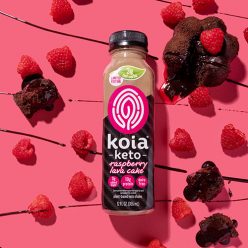
Koia announces Thomas DeLauer, world-renowned ketogenic lifestyle expert, will collaborate with Koia on product development for the keto lifestyle and today, introduces the new limited-edition Koia Keto Raspberry Lava Cake. DeLauer, who has been an avid fan and supporter of Koia’s Keto line, will collaborate with the brand on new plant-based keto innovations and nutrition education.
New limited-edition Koia Keto Raspberry Lava Cake (Photo: Koia)
This plant-forward keto innovation challenges critical believe around the keto lifestyle, showcasing that one can, in fact, reach ketosis healthfully while leading a partial or fully plant-based diet. Koia, being one of the only nutrition shakes on the market to deliver all the 9 essential amino acids needed to replace animal-based protein, provides an ideal solution for those looking to include more plant-based options into their keto regimen. This launch, and investment in the keto space, is a testament to the brand’s continued commitment and mission of making the plant-based lifestyle more accessible for everyone.
When working together on this product, Koia and DeLauer wanted something that tasted indulgent and comforting, so they selected Koia Keto Raspberry Lava Cake as the signature flavour, inspired by DeLauer’s favourite keto-friendly dessert that his wife makes – Chocolate Lava Cake with a raspberry sauce. Raspberries are one of DeLauer’s go-to keto friendly fruits and a key ingredient in his wife’s recipe. The raspberry tartness balances the richness of the chocolate for a delicious flavour that Koia and DeLauer worked closely to capture in this product, with DeLauer tasting many formulations until they landed on the perfect taste.
“Everything we do at Koia is about health, function and taste, so collaborating with Thomas DeLauer is a natural alignment with our brand,” says Chris Hunter, Co-founder and CEO of Koia. “He keeps up with all the latest research in the keto space and really understands ingredients and their functionality. Plus, the fact that the Raspberry Lava Cake is based on his favourite dessert that his wife makes at home, gives the product extra heart.”
Raspberry Lava Cake delivers ideal macro ratios with two high-performing, functional ingredients: macadamia nut milk and pumpkin seed protein. Macadamia nut milk is known to provide a significant amount of palmitoleic acid and is an ideal fat-to-protein ratio (2:1) for enhanced keto support. Pumpkin seed protein is a healthy clean protein source high in zinc, which can support the keto process and recovery. Raspberry Lava Cake contains 3 g net carbs, 8 g C8 MCT oil, 10 g protein, and 0 g added sugar per bottle, the ideal nutrition profile to accelerate ketosis.
Koia’s 100 % plant-based Keto shake line also includes other dessert-inspired flavours like Chocolate Brownie, Caramel Crème, Cookies ‘N Cream and Cake Batter. Consumers can purchase Koia Keto Raspberry Lava Cake, priced at USD 3.99 per bottle, for a limited time at drinkkoia.com.
‘No added sugar’ claims are growing in Europe, with the UK leading the charge as it has the highest proportion (15 %) of European food and drink launches carrying this claim in the past five years, followed by Germany (13 %) and France (10 %). In Poland, ‘no added sugar’ claims have doubled since 2016, reaching 9 % of food and drink launches in 2021.
According to Mintel’s latest consumer research, almost three out of five (59 %) French and German consumers are trying to limit their sugar intake, rising to 65 % of respondents in Poland and 67 % in Spain. However, over half of German (54 %) and (53 %) French* consumers simply prefer eating less indulgent products instead of consuming more ‘light/diet’ alternatives. This is especially true for carbonated soft drinks, with Polish (38 %)** and German (37 %)** consumers being the most likely to agree that ‘better-for-you’ carbonated soft drinks do not feel like a treat.
Neha Srivastava, Food and Drink Patent Analyst at Mintel, said:
“The pandemic has amplified the need for indulgence, influencing consumers’ choice of food and drink. At the same time, the pandemic has seen people place a higher priority on their health by, for example, reducing their sugar intake – but they don’t want to compromise on taste.
“Food and drink companies are starting to pay more attention to cutting sugar from their products. Based on the percentage of granted patents currently active in Europe, France and Germany are among the top five leading countries with the majority of patent grants related to sugar reduction, each accounting for 5 % of all global patent grants. Recent patent activity related to sugar reduction varies from improving the taste of sweeteners to innovating new techniques to reduce the production cost of rare sugars.”
Functional fibre and next-gen stevia could appeal as natural alternatives
Functional fibres in low/reduced sugar food and drink launches are on the rise, increasing globally from 11 % in 2015 to 19 % in 2020. Inulin is the most common functional fibre in low/reduced sugar products, with product launches containing inulin having tripled in the past five years, rising to 9 % in 2020 from 3 % in 2015.
With 63 %*** of Germans concerned about how sugar reduction in food and drink is achieved, combining fibres with sugar to reduce overall sugar content could be an option worth exploring as an alternative. This could also appeal to the 29 %**** of Brits that are interested in more fruit juices, juice drinks and smoothies with high fibre content.
Alternatively, stevia as a plant-based sweetener has the potential to appeal to European consumers as a sugar substitute. In fact, 63 %*** of Germans have no concerns about the amount of plant-based sweeteners (such as stevia) used in food and drink.
Neha Srivastava, Food and Drink Patent Analyst at Mintel, said:
“Consumers are aware of the importance of fibres in maintaining gut health. Brands can leverage this awareness by repositioning them as a multifunctional health ingredient that helps reduce sugar content in food and drink whilst improving gut health.
“Stevia continues to gain traction in food and drink launches because of its naturalness and zero calorific value, but its bitter and lingering aftertaste remains a significant barrier. Recent patent innovations to improve taste issues and physicochemical properties, like purity and solubility, to produce next-generation stevia may help overcome the challenge.
“Innovators are looking for alternative approaches, such as the use of sweet flavouring agents and aromas as a promising option to reduce sugar content in new food and drink products – especially in dairy desserts. This can be a promising option to reduce sugar content by providing sweet perception in brain cells.”
*987 internet users aged 16+ who try to eat/drink healthily, France; 1,955 internet users aged 16+ who try to eat/drink healthily, Germany; 997 internet users aged 16+ who try to eat/drink healthily, Spain; 988 internet users aged 16+ who try to eat/drink healthily, Poland; March 2021 **1,000 internet users aged 16+ in Poland and 2,000 internet users aged 16+ in Germany, December 2020 ***2,000 internet users aged 16+, Germany, June 2020 ****2,000 internet users aged 16+, UK, October 2020 *****1,000 internet users aged 16+, Italy and Spain, September 2020
What will be the next hype after the turmeric latte?
Turmeric latte, or “golden milk”, was 2017’s dairy-based sensation. The golden-hued drink featured on menus of trendy cafés, and also emerged in chilled packaged formats. According to Mintel Global New Products Database (GNPD), hot beverage launches in Europe containing turmeric have more than quadrupled since 2013, growing by 359 % between 2013 and 2017.
Julia Büch, Food & Drink Analyst at Mintel, explains the trend:
“The turmeric latte is inspired by a traditional Indian remedy based on hot milk and turmeric infused with spices such as pepper, cinnamon and ginger. The drink has purported health benefits, but equally, its appeal comes from the photogenic and intense, social media-friendly colour. Milk has not traditionally been a trendy or social media-worthy drink, but colourful, flavourful offerings such as the turmeric latte could change that.”
And there is clear consumer interest in such beverages: 35 % of Germans aged 16-34 would like to see more flavoured milk launches, such as chocolate or spices. Even 77 % of German consumers aged between 35 and 54 say that they like to explore new flavours. The near future will see dairy brands looking to other new colours and textures to create the next trendy, attention- getting and ‘social media-worthy’ dairy drink.
Julia elaborates:
“Future formulations could include fizzy milk, new colors and new textures. Fizzy milk, for example, is already a popular concept in China and other parts of Asia. Colourful matcha or spirulina could be the next buzz-worthy ingredient in the West, where they are currently less known. As Mintel’s 2018 Global Food and Drink Trend ‘New Sensations’ explains, the next evolution will bring texture into the limelight. Already, we can see new foaming ingredients that infuse drinks with an unexpected texture such as the tea macchiato from China – a drink that blends tea with whipped cream cheese.”
Indeed, although matcha has been around for centuries, it is only now booming in Europe. Hot beverage launches containing matcha have increased more than tenfold in Europe between 2014 and 2017 and its vibrant green colour is already finding use in eye-catching matcha lattes. Spirulina is one of Mintel’s Trend ingredients for 2018, and is quickly becoming a trendy ingredient in the food service industry and with blue ‘mermaid lattes’ appearing across Instagram feeds.
Global launches of carbonated soft drinks with dairy ingredients, or ‘fizzy milk’, have also grown over the past five years, albeit from a small base. Asia Pacific currently accounts for 86 % of fizzy milk launched in 2017. The combination of carbonation and dairy can create a creamy texture that is rare in carbonated drinks. This novel texture innovation is primed to be ‘the next big thing’ according to Mintel research’.
You need to load content from reCAPTCHA to submit the form. Please note that doing so will share data with third-party providers.
You are currently viewing a placeholder content from Turnstile. To access the actual content, click the button below. Please note that doing so will share data with third-party providers.