Nestlé has introduced a versatile and cost-effective sugar reduction technology that can be applied across different product categories, with benefits beyond sugar reduction. It can also be used to produce low lactose and skimmed milk-based products, while reducing total sugars.
Using an enzymatic process, it reduces intrinsic sugar in ingredients such as malt, milk, and fruit juices by up to 30 %, with a minimal impact on taste and texture. The sugar-reduced ingredients are then used in recipes for various products. There is no need to add sweeteners or bulking agents to replace the volume of the eliminated sugar.
When the patented sugar reduction method is applied to milk-based products, it also increases prebiotic fibers. First clinical studies have shown that these fibers can support the growth of multiple types of beneficial bacteria leading to a favourable microbiome composition in healthy adults.
Stefan Palzer, Nestlé Chief Technology Officer says, “Sugar reduction across our portfolio remains a top priority. This new technology is a true breakthrough, as we can reduce sugar without adding sweeteners while preserving a great taste, all at a minimal cost increase. In addition, our scientists discovered that the sugar reduction generates prebiotic fibers that support the microbiome, which is an additional benefit. We are now accelerating the global roll-out across formats and categories.”
The sugar reduction was first piloted in cocoa and malt-based ready-to-drink beverages in Southeast Asia and over the past year, Nestlé has already introduced it in factory lines for cocoa and malt-based powdered beverages such as Milo across several countries across Asia, Africa, and Latin America. Since 2021, the sugar reduction technology has been applied to over 200 000 tons of cocoa and malt-based beverages. The roll-out continues, and other product categories such as dairy powders will follow.
The development of novel technologies is part of Nestlé’s continuous efforts to improve the nutritional value of its products, while supporting responsible consumption as part of a balanced diet. The new sugar reduction technology complements a wide range of existing solutions which Nestlé has developed over the years in collaboration with external innovation partners and suppliers. This includes natural sweeteners, sweetness-enhancing or bitterness masking flavours, as well as natural bulking agents such as fibers, cereals and tailor-made dairy and cocoa powders.
Pangea Natural Foods Inc., announced the launch of its latest product, 100 % locally sourced blueberry juice. This refreshing and nutritious beverage is made with exceptional quality and has a remarkable 8-month shelf life.
The blueberry juice is cold-pressed, resulting in a richer and more nutritious product. In addition, Pangea Natural Foods has partnered with a renowned leader in the field of high-pressure processing (HPP). This process allows for the elimination of harmful pathogens without the need for heat or artificial preservatives. As a result, consumers can enjoy Pangea Natural Foods blueberry juice knowing that it maintains its nutritional integrity while remaining safe for consumption.
Looking forward, Pangea Natural Foods continues to prioritise innovation and sustainability, striving to develop products that nourish both individuals and the planet.
About Pangea Natural Foods Inc. Pangea Natural Foods is a Vancouver (CAN) based natural foods company that manufactures and distributes high quality food products that are nutritious and free of GMO ingredients, fillers, antibiotics, hormones, and bioengineered ingredients. Pangea offers a broad range of great tasting, innovative food products that are sustainably sourced and “Powered by the Earth”. Pangea’s signature products include the Pangea Plant-Based Patties, Pangea Old Fashioned Ghee, Pangea Energy Gel and the Pangea Munchie Mix, which are available on the Company’s website and in over 500 leading national retail food stores including Loblaws, Save-on-Foods, Sobeys, IGA Marketplace, Fresh Street Market, Choices Markets, Whole Foods and on select Air Canada and WestJet flights. Pangea has partnered with world renowned food scientists to formulate its high-quality food products. All products are manufactured in-house at its state-of-the-art facility, and then packaged and distributed through Pangea’s retail and wholesale network and also on the website of the company.
The Brazilian orange crop for Marketing Year (MY) 2022/23 is forecast at 410.6 million 40.8-kg boxes (MBx) or 16.75 million metric tons (MMT), a slight decrease of 1.1 percent vis-à-vis the current season, with the resumption of the biennial crop cycle and consequently, a lower fruit load per tree. Meanwhile, orange weight at harvest is projected to increase 3.71 percent in relation previous crop, due to heavy rains throughout the citrus belt since October 2022. FCOJ 65 Brix equivalent production for MY 2022/23 is forecast at 1.125 million metric tons (MMT), a decrease of nine percent from the estimated orange juice production for MY 2021/22, which was revised upward to 1.135 MMT. A larger share will supply the U.S. market to compensate Florida’s juice production, which was damaged significantly by hurricane Ian. …
Intermarché, one of the most popular retail chains in France, demonstrates its relentless commitment to sustainability as it becomes the first in the country to use tethered SIG SwiftCap Linked closures on SIG’s carton packs. This pivotal move covers their entire private label juice portfolio of around 20 SKUs.
The fruit juice for the Paquito own brand distributed in Intermarché outlets is produced by Agromousquetaires, the agro-industrial entity of the Les Mousquetaires group.
Intermarché will also switch to a packaging material from the SIG Terra portfolio, which helps to reduce the use of fossil plastics. The SIG Terra portfolio is a set of more sustainable packaging solutions offering different structural options: without aluminum layer, with renewable materials from the forest, and/or recycled materials.
The polymers in SIG Terra packaging material support the transition to renewable polymers from the forest using a certified mass balance approach. SIG uses tall oil as a forest-based raw material for the production of the polymers. This is a by-product of the paper industry, thus avoiding the use of raw materials from agricultural crops. The polymers are certified according to the certification scheme ISCC PLUS. The ultra-thin aluminum foil used in the packaging material protects the contents from light and oxygen and is certified against ASI (Aluminium Stewardship Initiative) standards.
Intermarché, in its likeminded partnership with SIG, has achieved a first for the French juice market in helping to combat plastic waste leaking into the environment. The move to tethered caps comes well ahead of the EU’s Single-Use Plastics Directive deadline of July 2024 and will also be welcomed by both consumers and regulators. The tethered caps can be easily disposed of and recycled with the rest of the carton pack.
SIG’s tethered caps do not compromise on convenience for consumers, offering an easy pouring and drinking from the pack experience, via a robust double hinge solution. They are also compatible with existing SIG filling machines and closure applicators. This means no major investment is required, demonstrating the flexibility and adaptability needed to reassure customers that SIG’s packaging and filling solutions are a secure investment for the future.
The decision to launch Paquito and MERCI! brand juices with both innovations from SIG, fits perfectly with the company’s priority on responsible action. Intermarché’s socially responsible brand called Les Éleveurs vous disent MERCI! (The Farmers say Thank You!) is all about giving back. Its products offer consumers the opportunity to support farmers with better remuneration. MERCI! is also vehemently committed to the environment, society and animal welfare. MERCI! juices will come in SIG PremiumBloc 1,000 ml carton packs and Paquito in 750 ml and 1,000 ml.
The Brazilian exports of orange juice increased in the 2022/23 season (July/22 – June/23), after fading for two consecutive seasons. According to data from Secex, Brazil exported 1.09 million tons of the product (Frozen Concentrate Orange Juice FCOJ Equivalent) in the 22/23 crop, 9 % up the volume shipped in the previous season. The revenue received from these shipments totaled USD 2.1 billion, a staggering 28 % up, in the same comparison.
Although the consumption of orange juice is not increasing in the major destinations of the Brazilian product – and despite the low national inventories –, the United States had higher import needs in the last years, due to the steep production decrease in Florida – mainly in the current season, 2022/23 –, which had been facing the effects of greening and was hit by hurricanes late last year.
According to Secex, the Brazilian exports of orange juice to the US have increased high this season, totaling 340.9 thousand tons, 69 % higher than the volume shipped in 2021/22. Revenue totaled USD 701.9 million, a staggering 93 % up, in the same comparison. As production is not expected to rise high in Florida in the short term, the US may continue with high imports needs, and Brazil is the number one supplier of orange juice in the world.
In a report released in June, Florida Citrus Department confirmed higher imports to the US: between Oct/22 and Apr/23, the country doubled the volume of FCOJ imported from Brazil compared to that in the previous season; of NFC (Not-From-Concentrate) orange juice, shipments rose 82 %.
EUROPEAN UNION – To the European Union, the number one destination of the Brazilian orange juice, exports totaled 569.6 thousand tons in the 2022/23 season, 8 % less than that shipped in the previous season. Revenue totaled USD 1.13 billion, 9 % up, in the same comparison.
Klaveness Digital announces its latest partnership with Citrosuco, a global leader in orange juice concentrate production, as the company adopts CargoValue to optimise supply chain operations. Citrosuco is the latest to join a growing community of industrial companies taking the lead in how they manage their seaborne supply chain.
In today’s highly competitive market, Citrosuco recognises the value of incorporating advanced technologies to support its standing in the global citrus industry. The company’s dedication to creating top-quality products and embracing environmentally responsible practices has encouraged its pursuit of innovative solutions for enhancing its supply chain.
With the adoption of CargoValue, Citrosuco can now efficiently plan and manage their entire shipping and inventory schedule in one solution with a single source of information, from planning to production, allowing the company to reduce risks and costs. Citrosuco currently has 5 marine terminals located in: Santos (BR), Wilmington (USA), Gent (Belgium), Toyohashi (Japan) and Newcastle (Australia), as well as 5 dedicated ships and 1 multi-cargo vessel.
According to Luiz Fernando Ragonha Jr, the Director of Supply Chain Planning at Citrosuco’s Santos Port Terminal, the adoption of CargoValue by Citrosuco reaffirms the company’s prominent position in the global citrus industry. By embracing this cutting-edge technology, Citrosuco demonstrates its unwavering commitment to keeping pace with the latest industry trends and advancements. The implementation of this solution not only enables Citrosuco to streamline its operations and decrease operating costs, but also plays a crucial role in reducing the company’s environmental impact. By identifying opportunities for more sustainable transportation and storage practices, Citrosuco actively contributes to its CO₂ emission reduction targets, thereby aligning itself with a more environmentally conscious future.
Greater efficiency, cost savings, and sustainability in the supply chain
“By incorporating CargoValue into their operations, Citrosuco demonstrates their forward-thinking approach and commitment to excellence,” said Aleksander Stensby, CEO at Klaveness Digital AS. “We’re excited to partner with Citrosuco to help them achieve greater efficiency, cost savings, and sustainability in their global supply chain.”
Rebellious Kids combines great taste with true function. No sugar, no calories, vitamins A, B12, C, D, E, Zinc, plus sea salt for natural electrolytes from the ocean.
Rebellious Beverage Company, the preeminent functional beverage company, launched its first ready-to-drink line of functional beverages, Rebellious Kids, in an 8-ounce bottle with sports cap, made with post-consumer recycled content. Rebellious Kids is an organic, plant-based plus minerals beverage, that delivers key nutritional support children need with no sugar. Rebellious Kids has 40 % of the daily value of vitamins B12, C, and D and 20 % of the daily value of vitamins A and E, plus zinc, and electrolytes.
“Our move into the healthy hydration space for children addresses an unmet need for parents who want refreshing drinks that they can feel good about serving their kids: no sugar, no calories, clean ingredients, that delivers key functional nutrition, and great taste,” said co-founder and CEO Doug DuMars. “We are re-invigorating a category that has basically been forgotten about. Rebellious Kids is a nutritional beverage solution with a holistic approach to foundational wellness supporting our next generation at home, at school, or during their activities.”
Rebellious Kids are available in 8oz bottles with 4 flavours kids love:
Scrappy Strawberry
Wild Wild Wildberry
Outrageous Orange
Wacky Watermelon
Rebellious Kids and Rebellious Infusions are intent on transforming the trend using a little monk fruit. Research from the CDC1 confirms that children and teens are drinking too much sugar from their beverages, two-thirds drink at least one sugary beverage per day. Since added sugar contributes to weight gain, heart disease, cavities and more, Rebellious can play an important role in overall health.
Available across more than 385 Sprouts Farmers Market stores in 23 states. Sprouts is one of the largest and fastest growing specialty retailers of fresh, natural, and organic food in the United States.
About Rebellious Beverage Company: Rebellious is a preeminent functional beverage company with nutritional beverages that have no sugar, no calories, no Crap! Segments include Rebellious Kids and Rebellious Infusions. The Infusion line consists of 10 flavours within pure function, pure performance, and caffeine free. Each portable packet has no more than 5 ingredients, contains L-theanine for brain health, and up to 200 mg of antioxidants for immune system support. Rebellious is the brainchild of former PepsiCo and Kraft Foods industry veteran, Doug DuMars, and his co-founder, Joe O’Connor. Sprouts is the first major push into traditional retail. Rebellious has consumers in all 50 states in the US, plus Australia, United Kingdom, Europe, Middle East, and India. Rebellious’ customers include professional sports teams, NCAA and high school athletic departments, and hotels.
Shelf life of bottled natural fruit juice (BNFJ) provides relevant information on quality and authenticity for consumer protection. However, existing techniques for monitoring the shelf life of BNFJ are destructive and time-consuming. We report on using laser-induced autofluorescence (LIAF) spectroscopic technique in combination with multivariate analysis for shelf life monitoring of BNFJ. The LIAF spectra data were acquired for nine1 continuous days on three batches of BNFJ samples purchased from a certified retailer. Deconvolution of the LIAF spectra revealed underlying peaks representing constituents of the BNFJ. Principal component analysis (PCA) was able to monitor the trend in the changes of the BNFJ as it aged. Partial least square regression (PLSR) predicted the exact day from the production of the BNFJ accurately at 96.6 % and 98.8 % in the training and testing sets, respectively. We, therefore, propose the LIAF combined with multivariate analysis as a potential tool for nondestructive, rapid, and relatively inexpensive monitoring of the shelf life of BNFJ.
1H. W. Yeom, C. B. Streaker, Q. H. Zhang, and D. B. Min, “Effects of pulsed electric fields on the quality of orange juice and comparison with heat pasteurization,” Journal of Agricultural and Food Chemistry, vol. 48, no. 10, pp. 4597–4605, 2000.
Copyright 2023 Peter Osei-Wusu Adueming et al
A pair of Quintus Technologies High Pressure Processing (HPP) systems will begin operation in Yiqing Food’s new beverage facility in Danjiangkou, Hubei province, China, later this year. Manufactured at Quintus’s state-of-the-art facility in Sweden, the presses are part of a customised turnkey solution provided by liquid packaging expert Jiangsu Newamstar Packaging Machinery Co., Ltd., with both presses scheduled for handover in Fourth Quarter 2023.
Focusing on integrated solutions for smart factories making liquid products, Newamstar selected the Quintus press model QIF 400L-6100, which features a very large vessel diameter of 18.5-inch (47 cm), for its high capacity, reliability, and lower per unit production cost. Each press will perform 10 cycles per hour to meet Yiqing Food’s target of 18,000 bottles of fresh juice per hour.
High Pressure Processing is the ground-breaking food safety technology that uses pressure instead of chemicals and heat to inactivate dangerous foodborne pathogens without compromising the quality or taste of the end product. HPP significantly extends refrigerated shelf life, producing preservative-free foods and beverages that retain their full nutritional benefits.
Yiqing Food, a state-owned food conglomerate, is one of the largest domestic soft drink producers in China. Its new modern and highly automated plant in Danjiangkou includes a premium juice production line that integrates high pressure processing of its upscale mandarin orange juice.
“The Chinese market is seeing a growing demand for HPP products, as processors seek to bolster food safety and brand protection while consumers grow increasingly concerned with healthy, nutritious eating,” says James He, Newamstar’s Chief Executive Officer. “Consumers appreciate the value of fresh, high-end fruit juices and teas that undergo the HPP process, such as Yiqing’s popular mandarin orange juice, which will be made in the Danjiangkou facility.”
The global leader in high pressure technology, Quintus has long been active in the Chinese market, supporting its customers with a well-established service operation across the APAC region. The company opened a China office in January 2018 to better serve its local customers.
The QIF 400L press family incorporates advanced features like frequency-controlled motor drives for energy conservation; “SmartPress” cloud-based press management software; fewer moving parts for reduced downtime; and easy access to all components requiring regular maintenance or inspection. The press’s wire-wound frame and cylinder design for safety and lighter weight reflect Quintus’s legacy as the HPP pioneer.
“These high-performing solutions illustrate how Quintus has maintained the lead in high pressure for almost 75 years,” Mr. He comments.“The QIF 400L presses are supported by a long legacy and meet Yiqing’s needs seamlessly. It is important for us to select the best quality equipment to meet our customers’ demanding specifications.”
“The new generation of Quintus HPP systems helps processors boost production efficiencies through high system availability and controlled service costs,” Jan Söderström, CEO and President of Quintus Technologies, points out. “We are pleased to embark on this new partnership with Newamstar and look forward to working with them as Yiquing Food continues on its growth trajectory,” he concludes.
The Eckes-Granini Group concluded the 2022 business year with satisfactory results and is optimistic about the current year 2023. With a + 7.1 % increase in turnover to 917 million euros (2021: 856 million euros), the supplier of fruit juices and fruit beverages achieved 2022 the highest increase in turnover in five years. Volume sales also developed slightly positive compared to the previous year, rising by 3 million to 808 million litres. Eckes-Granini recorded an increase of + 1.3 % in value-based sales at the retail level during the past business year, accompanied by a decline in volume sales (- 2.1 %) compared to the previous year. This resulted in a stable, unchanged market share of 12 % in terms of value, with a slight increase in volume market share of + 0.2 % to 11.3 %. With regard to the largest markets for fruit juices, nectars, and fruit drinks (FJND) in Europe, market shares were gained in France in particular, but also in the Baltic countries, Finland, and Austria.
Eckes-Granini expands market leadership in Europe
Like all companies in the beverage and food industry, Eckes-Granini had to deal with a tense raw materials situation, freight space shortages and supply chain difficulties during the past year. In addition, there was an unprecedented explosion in the cost of raw materials, partly due to poor harvests, as well as packaging materials, energy, and transport. However, these massive cost increases could some of the additional costs through targeted investments in its brands, successful product launches and decisive crisis management. Tim Berger, CEO of the Eckes-Granini Group, comments on the past business year: “Thanks to our rapid and flexible response to the difficult market environment in 2022, we were able to achieve good sales growth and – viewed across the whole business – an increase in market share. We are satisfied with the result in view of the challenging general conditions. We used the challenges of the past year as a catalyst for the optimization and further development of existing processes and structures. For example, we were able to react effectively to raw material shortages and ensure a consistently high delivery capability.”
Weaker economic environment shapes market performance in 2022
In the food retail sector, the FJND market in Europe 2022 showed a positive trend in value sales with + 1.3 % compared to the previous year. Volume sales, on the other hand, declined by – 3.7 %. While the market dynamics in 2021 were still influenced by the Covid 19 pandemic, the Ukraine war and its consequences had a significant impact on market development in 2022. On the one hand, price increases contributed to the rise in value sales. At the same time, however, consumers‘ willingness to purchase declined, with corresponding consequences for volume sales figures.
Innovations and the expansion of new distribution channels as growth drivers
Eckes-Granini benefited in particular from the successful introduction of numerous product innovations in 2022. Overall, the medium-sized family-owned company achieved 30% of its growth through innovations alone, despite reduced marketing investments. One of these innovations are the hohes C Functional Water in the Water Plus category, which were excellently received by the market. Eckes-Granini was also able to expand the market leadership of hohes C Shots in 2022 and successfully establish the Shot concept in additional countries, such as Austria, Hungary, and Spain, in France under the Joker brand and in Denmark, Sweden and Finland under God Morgon. 2022 also marked the most successful Out-of-Home year in the history of Eckes-Granini. The strategically important business segment of hotel, gastronomy and on-the-go consumption made a comeback in many countries, especially in France, where Eckes-Granini grew significantly. Contrary to market dynamics, Eckes-Granini also succeeded in gaining market share in e-commerce and e-retail, doubling its share of sales within three years.
Eckes-Granini remains committed to people and the environment in 2022
Despite all the challenges, a more sustainable business remains a central focus of Eckes-Granini’s corporate strategy. Following an intensive review, the independent Science Based Targets Initiative (SBTi) confirmed in January 2022 that Eckes-Granini‘s greenhouse gas reduction targets are in line with the goals of the Paris Agreement. Eckes-Granini also actively campaigned for the introduction of the juice deposit, made the switch early on and provided extensive information on the advantages of the recycling system in campaigns. In addition, the family- owned company has supported the Team Rynkeby charity cycling initiative for many years as part of its CSR commitment. In 2022, around 10.4 million euros were collected for seriously ill children and their families. Eckes-Granini was also pleased to receive the Top Employer 2023 award in Germany again after 2022.
Positive outlook for the current year
prices and fluctuating availability remain a major issue. In addition, there are uncertainties in consumption regarding the reaction of consumers to inflation. “Overall, the past year with all its challenges has been an opportunity for us to show that we take our responsibility regarding the category, the food retail industry, and our consumers seriously. We succeeded in livin g up to our role as category thought leader. In 2023, we want to build on this and have already made a promising start to the new business year with numerous new beverage concepts and innovations,” says Berger.
About the Eckes-Granini Group: Eckes-Granini is the leading supplier of fruit juices and fruit beverages in Europe. For the ind e- pendent family-owned company headquartered in Nieder-Olm, Germany (Rhineland-Palatinate), the focus is on committed and competent employees, strong brands in the areas of juices, fruit beverages and smoothies, and a long-term strategic orientation with sustainable value creation. Today, Eckes-Granini operates mainly in Europe with its own national companies and strategic partners and generates annual sales of 917 million euros with a total of 1703 employees. The com- pany’s foundation is formed by the internationally renowned premium bran ds granini and Pago to- gether with strong national and regional brands for juices such as hohes C, Joker and God Morgon. Consumers in 80 countries worldwide and especially in Europe know and appreciate our fruit juices and the variety of fruit drinks.
Natalie’s Orchid Island Juice Company announced today they have introduced two new juice blends: Tomato Reishi, Himalayan Salt, and Black Pepper Juice and Tangerine, Pineapple, Aloe Juice. Both blends are available to order on the Natalie’s Juices website and on grocery shelves in the US.
With Natalie’s Tomato Reishi Juice, Natalie’s is regenerating a generational favourite. This tomato juice is a source of clean hydration that is radical in flavour and low in calories. Mindfully handcrafted with an infusion of coveted holistic ingredients including adaptogens and spices for a robust and delectable sip, this juice is made from only 5 ingredients. Rich in Reishi – known to support the immune system, reduce stress, and improve sleep – this blend is vitality on the vine.
Natalie’s Tangerine, Pineapple, Aloe, Sweet Basil Juice is a vibrant oasis of unrivaled freshness. Handcrafted from only five ingredients, this blend was created to support the mind and body with a natural boost. Prepare to glow from the inside out with this unparalleled combination of vitamin-c-rich oranges and tangerines, paired with immune- supporting pineapples and aloe vera, and a touch of sweet basil.
“At Natalie’s, it is our passion and purpose to produce juices that exceed our customers’ expectations both in quality and value. Our Tomato Reishi blend is an authentic approach to a nostalgic favourite. Made from fresh pressed, wholesome tomatoes, this juice invigorates the consumer’s palette and redefines the standard perception of tomato juice flavour profile,” says Marygrace Sexton, founder and CEO of Natalie’s Juices. “This juice is a living elixir for the epicurious – drink as is or add your boozy accomplice.”
“Producing world-class quality products is what we do best,” says Natalie Sexton, Vice President of Marketing at Natalie’s Juice Company. “Our new blends are designed to support the entire wellness eco-system and provide our consumers with a drinking experience where nostalgia meets authentic freshness.”
One of the fastest-growing sparkling water brands in the US creates the perfect Spiked Lemonade – without the added sugar or synthetic sweeteners.
Spindrift launched Spiked Strawberry Lemonade – the 21+ adult version of their fan-favourite sparkling lemonade. Spindrift Spiked is made with real fruit – and no synthetic sweeteners or additives – Spiked Strawberry Lemonade guarantees all the nostalgia of your favourite lemonade without any of the added sugar.
“Sparkling water at its core is unsweetened, clean, refreshing, and easy to understand. Hard seltzer and hard lemonade have migrated away from the promise of sparkling water and become sugary and artificial-tasting,” said Bill Creelman, CEO and founder of Spindrift. “With the launch of Spiked Strawberry Lemonade, Spindrift is doubling down on our belief that Hard Sparkling Water should be delicious without the added sugar.”
Each can is filled with real, juicy, jammy strawberries, a hint of lemon and lime juice, sparkling water, and alcohol from fermented cane sugar. Whether straight from the can or poured into a cold glass, for deliciousness that you can taste, Spiked Strawberry Lemonade is the perfect beverage to kick off the warmer weather.
With a superior, clean alcoholic base, Spiked Strawberry Lemonade has only 85 calories per can and is the perfect option for those looking for a cocktail that’s packed with flavour and an intentionally low ABV – 4 %. Like the rest of Spindrift’s Spiked line, Spiked Strawberry Lemonade uses a 10-day fermentation process to maximise ABV without additives and an ultra-filtration process that purifies at the molecular level.
Spindrift Spiked Strawberry Lemonade will first be available in late April in both an 8-pack, and within Spindrift’s Staycation 12-pack along with Pineapple, Mango, and Lime in select markets in 21 states in the US. Spindrift donates 1 % of its Spiked sales as part of its commitment to 1 % For The Planet.
Better Juice and GEA report successful pilot trials on clear juices, concentrates for leading fruit juice producers
FoodTech start-up Better Juice, Ltd. announces its highly successful completion of a series of pilot trials for reducing simple sugars in natural berry and other fruit juices. In partnership with GEA Group, one of the largest suppliers for food processing technology, Better Juice hosted several prominent forest fruit juice manufacturers from the EU, the U.S., Australia, and Brazil to give their personal brands a sugar-reduction makeover using their groundbreaking sugar-reduction technology.
The trials were conducted at the pilot unit established last year in GEA’s innovation center in Ahaus, Germany. Accommodating the GEA Better Juice Sugar Converter Skid, the site is equipped with continuous flow columns containing Better Juice’s sugar-reducing beads. During the trials, the team was able to reduce the simple sugar content by 30 % and 50 % across a range of forest fruit juices, including strawberry, cherry, and blueberry, while preserving their characteristic flavours and textures.
“Forest fruit juices contain 10 % or more sugar, with berry and cherry juices comprised of 10 % – 20 % sucrose and the remainder fructose and glucose,” explains Eran Blachinsky, co-founder and Co-CEO of Better Juice. “Our technology reduces the loads of all three of these simple sugars. This will allow more people to enjoy berry-based juices.”
Forming Better Juice’s proprietary sugar-reduction beads are non-GMO microorganisms that naturally convert the juice’s composition of sucrose, glucose, and fructose into prebiotic oligosaccharides and other non-digestible fibers, while retaining their natural complement of vital nutrients.
“By implementing a ‘plug-and-play’ approach, we were able to produce fruit drinks with the same nutritional value and mouthfeel as the original products, with only a slightly toned-down sweetness,” reports Gali Yarom, Better Juice co-founder and Co-CEO. “The feedback was most promising, with several companies expressing a strong interest in continuing to work with us to bring these products to market. We are currently in advanced discussions with several major US-based fruit juice companies to install our technology in their juice production systems. We project sugar-reduced forest fruit juices will reach the shelves early next year.”
The treatment process proved successful for both clear NFC (not from concentrate) juices and dense concentrates as well as pulp-retained juices. A significant number of juice manufacturers worldwide use concentrates to reduce shipping costs by evaporating the water and adding it back in at the destination during bottling.
Forest fruit juices are naturally abundant in pulp, which is why many juice companies strive to retain these fiber-rich fruit solids in their products. Better Juice’s technology has been designed to handle pulp and ensure it remains in the juice, eliminating the need for filtering. This not only helps to preserve the nutritional benefits of the fruit, but also delivers a satisfying texture that consumers love.
“Since the opening of the pilot facility last year, we have hosted dozens of companies from all over the world to test their juice brands on our technology as well as on other fruit-based products, such as jams,” adds Michael Harenkamp, Sales Support Engineer for Non-Alcoholic Beverages for GEA. “We are excited by the emerging demand for naturally sugar-reduced juices in the marketplace. Some of the participants are major global players who have expressed genuine enthusiasm about our combined solution and the prospect of giving their products a new competitive edge with lowered-sugar fruit juices that are still as nutritious and refreshingly delicious.”
The 2022/23 orange season in the citrus belt (São Paulo State and the Triângulo Mineiro) is ending, while the oranges from next season are still green. Thus, the volume of oranges being processed at the plants in SP has been low. Considering large-sized plants, only three of them were processing oranges in March. In the same period last year, the scenario was the same, while in 2021, only one plant was in operation, which confirms that industrial activity is still high for this time of the year.
However, one of these plants is forecast to end activities in April, since orange availability is low. So far, the prices paid by the industry in the spot market have been around BRL 38.00 per 40.8-kg box (harvested and delivered). Considering the oranges from the new season (2023/24), bids have been higher, at BRL 40/box, however, the farmers consulted by Cepea reported some deals at BRL 42/box.
Most of the oranges from the 23/24 season has been sold. Thus, the number of fruits available in the spot market in 2023/24 will be low. However, processors’ needs are high, since their juice inventories are low.
As for the oranges not purchased yet, agents from processors reported that farmers are not rushing to sell them, since quotations have been firm in the table market, which may lead them to send the ripen fruits to this segment. These fruits may also be sent to small-sized plants that produce whole juice, which continue to process fruits and are paying up to BRL 45/box. However, for the production of whole juice, quality requirements are usually higher.
Orange processing in the 2023/24 season is forecast to begin in mid-May at large-sized processors. However, only from June onwards the volume is expected to increase.
The Brazilian exports of orange juice are on the rise in the current season (2022/23). According to data from Secex (Foreign Trade Secretariat), between July/22 and Feb/23, Brazil exported 776.3 thousand tons of Frozen Concentrate Orange Juice (FCOJ) Equivalent, 14 % more than that shipped in the same period of the previous season. Revenue totaled USD 1.5 billion, 34 % higher, in the same comparison.
The higher increase in the revenue than in the volume exported highlights the higher average price paid for the commodity exported by Brazil. Data from Secex show that the quotations for the national FCOJ Equivalent rose 22 % between the last and the current seasons, and for Not-From-Concentrate juice, 7 %.
Exports to the European Union, the number one destination for the Brazilian orange juice, have decreased 2 % this season, while revenue has increased 16 % because of the recent valuations.
To the United States, exports are on the rise. In the current season, 240 thousand tons of the product have been shipped to this destination, a staggering 82 % up from that last season. Revenue more than doubled (+ 110 %), totaling USD 478.7 million. With shipments to the EU being stable and the increase to the USA, the share of the Brazilian juice in the total imported by the USA rose from 19 % in 2021/22 to 31 % in 2022/23.
It is important to mention that America’s high demand for the Brazilian juice is linked to the fact that the 2022/23 orange season in Florida has been compromised by the high incidence of greening and natural disasters, such as hurricanes and frosts.
Happi Glow and Happi Nightcap boast minor cannabinoids paired with functional mushrooms
Cannabis-infused seltzer brand Happi is pioneering a new path in the cannabis beverage space with Happi Glow and Happi Nightcap. These groundbreaking functional beverages are perfect for day and night, respectively. Created with a unique blend of minor cannabinoids and non-psychedelic lion’s mane and reishi mushrooms, these formulas are the first of their kind, with Happi filing a patent application covering the formulation for the products.
Happi Glow is available in a citrusy, bright Blood Orange Ginger flavour. Each can has 5 mg of THC, 5 mg of CBD, 3 mg of CBG, and 2 mg of CBN. Perfect for daytime, Happi Glow boasts the benefit of lion’s mane mushroom, which can help promote calm and focus to keep you clear-headed.
Happi Nightcap is available in Turkish Apple Tea, featuring notes of crisp apple and warm spices. Each can has 5 mg of THC and 5 mg of CBN. Ideal for evening, Happi Nightcap brings together soothing reishi mushrooms with a blend of minor cannabinoids to help you settle into a peaceful slumber so you wake up refreshed.
Each formula is vegan, gluten-free, and made with simple, all-natural ingredients. In addition to Glow and Nightcap, the brand also features two original flavours: Lemon Elderflower and Raspberry Honeysuckle.
Happi Glow and Nightcap are now available at select retailers in Minnesota (US) and online.
The processing of the oranges from the 2022/23 crop is beginning to slow down in Brazil, but it is still higher than the usual for this time of the year. In February, five plants – of the large-sized processors – were operating, the same as that last year but much more than that in 2020 and in 2021, when only a single plant was processing oranges.
According to Cepea collaborators, last year, the orange harvest was delayed, which explained the higher volume being processed in February. However, in the 2022/23 season, late processing is due to rains, which are hampering crop activities – although workers manage to get into the groves to harvest oranges, transportation is being difficulted.
The end of processing is still uncertain. Agents from processors reported that planning has been postponed because of the difficulties in crop activities. So far, some plants are expected to continue to process oranges in March.
A frequent concern among agents from processors is the yield of the oranges being harvested, majorly in 2023. They reported that, with frequent rainfall, the quality of the fruits for juice production has decreased, raising the number of boxes needed to the produce a ton of concentrated juice – higher moisture raises water absorption by fruits.
As for prices in the spot market, they were up to BRL 38.00 per 40.8-kilo box (harvested and delivered to processor) in February, considering large-sized companies. At smaller-sized processors, the prices paid for pear and late oranges reached BRL 40.00/box.
For the new crop (2023/24), whose processing is expected to begin in May/June, bids from large-sized processors have been up to BRL 38.00/box. Agents from processors reported that, despite the increase compared to the first bids for the 2022/23 crop, farmers expected higher prices, and, thus, many of them postponed deals.
ORANGE JUICE – Despite the valuation of concentrated orange juice at ICE Futures in recent months, there have not been major reflexes on processors’ revenue. According to Cepea collaborators, most of the juice is being sold through contracts with fixed prices. Since Jan. 1st, the contract due in March has valued 19%%, closing at USD 3,543/ton on Feb. 23rd.
TAHITI LIME – Tahiti lime processing was high in February but is expected to slow down in March. The company that processes tahiti lime aims to receive lower volumes of the fruit in the coming weeks. In February, two plants were receiving tahiti lime, but from March onwards, only one of them is expected to keep activities going. The prices paid by large and small-sized processors for tahiti lime are between BRL 12 and BRL 14/box.
Made with 100% fruit juice1 to infuse fun into any part of the day – snack time, meal time, or dessert
(Photo: Dole)
Dole Packaged Foods, LLC, released its latest innovation: Dole® Wiggles™ Fruit Juice Gels. A wholesome take on the classic treat, Dole® Wiggles™ Fruit Juice Gels are crafted with 100 % fruit juice1 to bring a new level of fun to meal or snack time throughout the day – because only the fun fruit wiggles.
The new snacks come in three bright, fruit-forward flavours: strawberry, orange, and cherry. They’re not only good for you – they’re also convenient for busy families on the go. Unlike many processed and sugary gelatin snacks currently found on shelves, each Dole® Wiggles™ cup delivers an excellent source of Vitamin C with no added sugar2 and no artificial flavours. Dole® Wiggles™ cups contain no high fructose corn syrup, no artificial preservatives, and are non-GMO and gluten-free.
Dole® Wiggles™ Fruit Juice Gels are sold in packs of four individual 4.3oz cups for an MSRP of $2.99. Wiggles are available at select retailers in the US and online.
1With natural flavors and other ingredients. 2Not a low calorie food. See nutrition facts for sugar and calorie content.
The demand for oranges in the in natura market has been increasing since mid-January. The supply, in turn, is low, especially for out of season pear oranges, which present higher quality compared to others. Therefore, pear orange prices are moving up, operating above BRL 50.00 per 40.8-kilo box (on tree). The average price for pear oranges was at BRL 47.59 per box (on tree) between Feb 13 and 16, for an increase of 3.4 % from that in the week before.
The supply of late fruits is also low, but slightly higher than that for pear oranges, and the ripening level is more advanced, which is leading some purchasers away from trades.
Concerning the tahiti lime, prices are at low levels and have not been enough to cover production costs for most citrus growers. However, in mid-February, players surveyed by Cepea reported a slight price rise because of the firm demand (as the carnaval period was close in Brazil, the demand to prepare drinks usually increases) and of the quality improvement in some areas – fruits that are close to the ideal standard have higher prices. In spite of that, tahiti prices may not recover significantly up to the end of February, since the supply is expected to continue high.
ORANGE JUICE EXPORTS – Brazilian shipments of orange juice continue to increase in the partial of the 2022/23 season (from July/22 to January/23). Secex data indicate that the volume totaled 707.7 thousand tons, 15% up compared to the same period in 2021/22. The revenue totaled USD 1.3 billion, for an increase of 35% in the same comparison.
In 2022, orange prices were similar to those in 2021 in the in natura market. Although the production had increased in the citrus belt in São Paulo and in Triângulo Mineiro, the supply was controlled, due to the fact that more fruits were sent to the industry. However, both the Brazilian economy and the weather were unstable, limiting the consumption in some periods. From January to November, the average price for pear oranges was at BRL 38.93 per 40.8-kilo box (on tree), 1.6 % down compared to the same period in 2021.
As for the industrial segment, values moved up from 2021 to 2022, despite the recovery in the orange production. Juice stocks closed the 2021/22 season at low levels, leading processors to increase the demand for the raw material. From July to November, the average price in the spot market was BRL 31.22 per 40.8-kilo box (harvested and delivered), 8% up in relation to the same period in 2021. It is worth noting that producers were expecting more significant price rises, due to the sharp increase of production costs.
The orange production in the 2022/23 season is likely to hit 314.11 million 40.8-kilo boxes in the citrus belt (SP and Triângulo Mineiro), for an increase of 19.5 % in relation to the crop before, according to that projected by Fundecitrus in December/22. This forecast is related to the favourable weather (regular rainfall). In spite of the recovery, the production may not be enough to have surplus, due to the high demand from the industry, since juice stocks are low.
According to CitrusBR, orange juice ending stocks in the 2021/22 crop (June/22) were confirmed at low levels, 143.1 thousand tons, downing almost 55 % compared to the season before.
Despite the increase in the 2022/23 orange production, the volume in stocks by the end of the crop may not recover. CitrusBR estimates that 2022/23 stocks, in June 2023, are likely to total 140 thousand tons. The industrial yield, in turn, may be lower than in the crop before, and exports are expected to increase, due to the higher juice demand from the US.
JUICE EXPORTS – Orange juice shipments decreased 3 % in the 2021/22 season (from July/21 to June/22) compared to the previous. Exports to all destinations totaled slightly more than 1 million tons, according to Secex. The revenue amounted USD 1.68 billion, 9 % up in the same comparison.
This is the second consecutive crop that shipments move down, and this may be related to the low orange production in São Paulo and Triângulo Mineiro over the last two crops (2020/21 and 2021/22). The revenue increase, in turn, is linked to the higher dollar prices, especially from March/22 onwards. In the partial of the current season (from July/22 to November/22), exports are moving up again, influenced by the firm demand from the United States.
The 2022/23 orange crop in Florida may be the lowest since 1936/37, with the impacts of greening reinforced by hurricanes Ian and Nicole. In December, the USDA updated its production estimate to only 20 million 40.8-kilo boxes, 29 % less compared to that forecast in October and 51 % below the previous season.
The UK Government has announced that it is suspending the tariffs imposed on a range of food and drink items, including orange juice (see the full list via this link).
Success on the latter product comes after the BSDA and the British Fruit Juice Association applied (in July 2021) to get the two commodity codes which make orange juice products more expensive suspended.
During the UK’s membership of the EU, Industry had to submit applications to the bloc to request suspensions, which then had to be assessed by all member states.
BSDA Director Gavin Partington, said: “We welcome the Government’s decision to suspend the tariffs placed on orange juice imports. This will ease some of the cost pressures faced by our members such as on fuel and transport. A 150 ml serving of orange juice counts as one of your 5 A Day and is a cost effective way of working towards the target which – according to NHS data – is currently being missed by all age groups.”
The tariff suspensions are expected to apply for a period from 1 January 2023 to 31 December 2024.
Louis Dreyfus Company B.V. announced the successful development of a new product made from not-from-concentrate (NFC) orange juice, presenting a 30 % reduction in natural sugar content and more than triple dietary fiber content, while preserving original taste (Brix value) and vitamin C level.
Further to a five-year research effort by the Group’s in-house R&D laboratory team of food engineers, chemists and biotechnologists in Bebedouro, São Paulo State, Brazil, LDC has developed a successful process to reduce sugar content in orange juice, in line with the company’s commitment to offer nutritious, high-quality juices that address growing consumer demand.
“Complementing our extensive portfolio of juices and ingredients from Brazilian-grown citrus fruits, this new product represents another positive step in LDC’s strategy to diversify revenue through value-added products, including specialty ingredients and products like this one,” said Juan José Blanchard, LDC’s Global Head of Juice. “Leveraging our global network and partnerships, LDC aims to bring this new product to the global market in collaboration with leading beverage industry players, contributing to the advent of healthy, nutritious juice product options that respond to consumer expectations, while continuing to invest in R&D activities targeting further reductions in sugar content.”
Although commercial roll-out is initially focused on Asia Pacific, with an initial launch planned in early 2023 in China, the new product is available to industry customers worldwide, including in Europe, North America and South America, where the Group sees growing consumer demand for healthy, nutritious, great-tasting diet options.
From now on, JuiSea Shipping will operate a regular shipping service from Ghent in North Sea Port for the export of orange juice to the United Kingdom. North Sea Port thus manages to strengthen its position as a foodport.
JuiSea Shipping is a collaboration of Refresco and Trilobes, both with headquarters in the Netherlands. The orange juice will be loaded on board the 89m vessel MV Marilie in Ghent at Louis Dreyfus Company and Citrosuco. Chartered by JuiSea Shipping, this vessel will sail between Ghent and the port of Portland, UK, 32 times a year, where it will be offloaded for Refresco’s Bridgwater plant. The vessel, sailing under the Finnish flag, will carry both concentrates of orange juice and fresh orange juice.
Global players
For the import and export of orange juice, North Sea Port is home to companies from all over the world. The Refresco Group is the world’s largest independent bottler of soft drinks and fruit juices. It operates with over 10,000 employees at more than 60 production sites in twelve countries. Trilobes specialises in tank construction, terminals and ship cargo systems for liquid bulk. It operates on all continents, for example in Brazil, Belgium and Japan.
Foodport
So from now on, orange juice will also be shipped to the United Kingdom from Ghent. This strengthens one of North Sea Port’s strategic pillars. Indeed, with this shipping service, the port is further developed as a foodport. Brazil and the United Kingdom are therefore of great importance here: in 2021 Brazil was the third most important trading partner for North Sea Port, the United Kingdom the fourth.
The 2022/23 orange crop from Florida is expected to total 28 million boxes of 40.8 kilograms each, the lowest since 1935/36 and 32 % down from that last season, according to the estimates from the USDA.
However, the damages caused by hurricane Ian have not been considered yet. Thus, the recent report has concerned the agents in the citrus sector. The USDA’s next estimates are supposed to be released on Nov. 9th, however, the damages caused by hurricane Ian are not expected to be considered in that report yet, which is supposed to happen in the December’s report.
Thus, local agents believe Florida’s production will be at least 40 % lower than that forecast by the USDA. In 2017/18, when Florida was last hit by a hurricane (Irma), production decreased by 34.6 %, and agents agree that Ian was more destructive than Irma. Besides the damages caused to crops, warehouses and equipment were destroyed too.
In this context, the United States’ necessity of importing orange juice – which was already growing up – is expected to increase even more, which may raise Brazilian juice exports to the country. However, it is important to consider that supply has been low in Brazil, where ending stocks are forecast to be lower than the strategic level (of 250 thousand tons). In August, CitrusBR estimated the ending stocks in the 2022/23 Brazilian season (by June 2023) to total 140 thousand tons, considering higher exports to the USA – however, this increase did not consider the effects of hurricane Ian on Florida crops and production.
So far, imports are following opposite trends in the US, depending on the type of juice: for Not From Concentrate juice (NFC), imports are rising, while for Frozen Concentrate Orange Juice (FCOJ), they are fading. According to Florida’s Citrus Department, from October/21 to August/22, the US imported 9 % less FCOJ than that in the same period of the previous season; however, the imports of NFC juice increased by 43.9 %. On the other hand, ending stocks of both types decreased: 39.5 % for FCOJ and 25.3 % for NFC juice.
Brazil is the US’s major juice supplier. Considering FCOJ, 50.1 % of the total imported by the US in 2021/22 came from Brazil, which was followed by Mexico (42.4 %). Considering NFC juice, 78.6 % of the total imported came from Brazil, against 20.5 % from Mexico.
BRAZILIAN MARKET – The demand for oranges was low in the Brazilian market in the first fortnight of October. According to Cepea collaborators, the unstable weather (with rains and periods of lower temperatures) and the holiday on October 12 constrained consumption. Still, prices remained firm, majorly underpinned by the supply in the in natura market, which is being controlled. For tahiti lime, values faded, due to lower demand. But still, they continued at high levels.
This juice industry report is a first edition of many more to follow, monitoring the progress made and to enhance easy access to successful ways of working.
In this document, members of the IFU and Sustainability Working Group have provided examples of how they see any or all of these areas are addressed. It is essentially a collection of the practical inroads which companies and regions are making in moving towards the fulfilment of the aspirations of sustainability of our industry.
Demonstrating the brand’s willingness to experiment and be at the forefront of the functional beverage sector, Moju said the latest launch speaks to emerging natural electrolyte trends by harnessing the power of pickles. A movement which, the company said, is set to “dominate” the global health and wellbeing sector over the coming year. This salty beverage is already making waves in the nutritional category in the US, gaining significant traction among athletes thanks to its functional benefits, according to the company.
The limited edition, cold-pressed shot is packed full of electrolytes, known for aiding muscle recovery, during and post-workout. Brewed using fresh pickles from UK’s ‘The Pickle House’ company, the shot has a unique, fruity yet salty favour. With 263 mg of natural electrolytes per shot, it feeds your body exactly what it’s craving during your workout.
Fitness fanatics have noticed the power of pickle juice really taking effect, especially when it comes to training longevity and recovery, making the juice the latest training drink of choice.
This is backed up by studies that have proven pickle juice works better than water for reducing muscle cramps. Moju has been a leader in the gut health sphere, making pickle juice an obvious choice for its latest limited edition. Moju has harnessed the pickle fever to create a product that is achieving cult status, supporting Moju’s position as one of the market leaders in the functional drinks sector.
For a limited time only, the Moju Monster Shot is available to purchase from 31st October online at https://mojudrinks.com/ – £19.75 for 12 x 60ml
Dutch company Riedel, a leading producer of NCSD products, is the first in the Netherlands to offer its famous juices in SIG’s innovative on-the-go combismile carton pack. Riedel’s iconic Appelsientje, CoolBest and DubbelDrank juice brands will benefit from the clever design of combismile, which is also paired with SIGNATURE FULL BARRIER packaging material, where the small amount of polymers used are linked to certified forest-based renewable materials via a mass-balance system.
SIG’s combismile carton offers the perfect lifestyle match for Riedel juices and provides busy consumers of all ages with ultimate on-the-go convenience – easy to open, handle, hold, close and store on the go. With a curved, modern shape with easy grip corners, combismile offers consumers handy consumption straight from the pack and is resealable thanks to its innovative one-step closure.
Riedel has extensive expertise in carton packaging, naturally evolving over time in close partnership with SIG. The new 330 ml on-the-go combismile carton pack is a logical development, unifying Riedel’s carton packaging portfolio to offer the most convenient and sustainable choice for consumers.
Carton packs with SIGNATURE FULL BARRIER packaging material reduce the carbon footprint compared to a standard carton pack* even further, as a result of the substitution of fossil polymers with mass-balanced plant-based polymers made from tall oil – a by-product of paper manufacturing. All three key raw materials are linked to certified responsible sources: paperboard is from FSC™-certified forests and other controlled sources; forest-based renewable polymers are certified according to ISCC PLUS (International Sustainability & Carbon Certification) via a mass-balance system; and an ultra-thin layer of ASI certified aluminium protects against light and oxygen. Riedel already successfully uses SIGNATURE FULL BARRIER packaging material for juices in 1,000 ml and 1,500 ml carton packs from SIG.
SIG’s CFA 1824 filling machine for combismileBig combines excellent flexibility with high speed, providing Riedel with the capacity to fill 24,000 carton packs per hour and the ability to fill five different volumes: 200 ml, 250 ml, 300 ml, 330 ml and 350 ml.
*Results based on ISO-compliant life-cycle assessment CB-100732c: https://cms.sig.biz/media/4440/sig_lca_signature_addendum-combiswift-plus.pdf)
Well Juicery Canada is putting youth mental health first by offering Canadians the opportunity to join the movement for wellness at grocery stores. Available exclusively at Loblaw’s across Canada, Well is donating 100 % of the proceeds from any purchase of their 333 ml juices to Canadian youth mental health organisation jack.org from Oct 9th – to 14th in support of Mental Health Day on October 10th.
Well partnered with jack.org in 2021 recognising the strong link to wellness between their brands. With a mandate for making health accessible and delicious, Well’s research shows that adding antioxidants, vitamins, minerals, and phytonutrients to daily food choices can make a positive difference in mental health by providing energy, hydration and eliminating toxins. Suicide is still the leading health-related cause of death for young people in Canada and Well sees an opportunity to support and influence change for current and future generations through their partnership with jack.org.
About Well Juicery Canada Ltd. Well Juicery Canada Ltd. is one of Canada’s only nationally distributed and fully integrated cold-pressed juice, kombucha, and superfood lemonade companies. A 100 percent Canadian-owned company with a mandate of making fresh healthy beverages available to the masses. Well is the only Canadian beverage manufacturer that owns and operates HPP (high pressure) technology at its facility. This food tech locks in freshness and nutritional content and provides for the healthiest, freshest beverages with the longest shelf life in the industry. Well is proud to partner with GoodLeaf whose leading-edge hydroponic techniques produce sustainable, safe, pesticide-free, nutrient-dense leafy greens.
About jack.org Jack.org is Canada’s only charity training and empowering young leaders to revolutionise mental health in every province and territory. Through Jack Talks, Jack Chapters, and Jack Summits, young leaders identify and dismantle barriers to positive mental health in their communities. And through ambitious innovations in youth mental health like Be There, they give people the mental health resources they need to educate themselves. Jack.org is working towards a Canada where all young people understand how to take care of their own mental health and look out for each other. A Canada without shame, where all those who need support get the help they deserve. This movement is powered by tens of thousands of advocates and allies across every province and territory of Canada.
Uncle Matt’s Organic®, #1 selling brand of organic orange juice in the US, announced the launch of two new offerings for kids: No Sugar Added Lemonade Juice Boxes and No Sugar Added Strawberry Lemonade Juice Boxes. The shelf-stable line contains zero added sugars, is sweetened with stevia and boosted with 150 % DV Vitamin C, plus 25 % DV Vitamin D and Zinc for immune support. This lunchbox essential is rolling out now, just in time for back-to-school season, at select retailers nationwide including Whole Foods Market, The Fresh Market and MOM’s Organic Market.
Lemonade Juice Box Fast Facts:
10 Calories per 6.7 oz serving/carton
150 % DV Vitamin C per serving
25 % DV Vitamin D per serving
25 % DV Zinc per serving
Not from concentrate lemon juice and strawberry puree (never concentrated!)
Sweetened with organic stevia
No toxic pesticides, GMOs or artificial junk
USDA certified organic
Certified glyphosate residue free by The Detox Project
According to the American Heart Association, the average American consumes more than three times the recommended amount of sugar. The number for kids is even worse, as they are consuming 81 grams per day, equaling over 65 pounds of added sugar per year. American children are ingesting over 30 gallons of added sugars from beverages alone.
Finding ways to reduce intake without sacrificing on taste is key. When exploring alternatives to table sugar, the American Heart Association has stated that leaning on natural alternatives to sugar, like stevia, may be your best option. Uncle Matt’s Organic® No Sugar Added Lemonade Juice Boxes and No Sugar Added Strawberry Lemonade Juice Boxes contain organic Reb M Stevia, which delivers the desired, sugar-like sweetness that consumers want, with zero calories, and without the health concerns associated with artificial sweeteners.
Uncle Matt’s Organic® No Sugar Added Lemonade Juice Boxes and No Sugar Added Strawberry Lemonade Juice Boxes are now available for an SRP of USD 4.99 (8-pack of 6.7oz boxes). 1 Year Shelf-Life.
The Brazilian exports of orange juice increased in the first months of the 2022/23 season (July and August 2022). According to data from Secex, Brazil exported 175.9 thousand tons of Frozen Concentrate Orange Juice (FCOJ) Equivalent in July/August, 8 % more than that in the same period last year. Revenue totaled USD 332.6 million, 32 % up in the same comparison.
The exports of non-concentrate juice (NCJ) have had the highest increase this season, totaling almost 292.7 thousand tons, with a revenue of USD 108.3 million, 14 % and 24 % up from that in July/August last year. On the other hand, the revenue from FCOJ exports rose higher than that for NCJ, by 36 %, totaling USD 224.3 million in the first two months of the current crop; the volume shipped increased by 6 %, totaling 122.7 thousand tons.
These increases were already expected for this season, considering that, in 2021/22, the Brazilian exports were limited by estimates for low stocks of orange juice.
In August, CitrusBR reported that, in June/22, only 143 thousand tons of FCOJ were stocked, a steep 55 % down from that in June/21. CitrusBR considered a possible increase in the exports to the USA because of the low orange production in Florida, due to the high incidence of greening.
DESTINATIONS – The European Union continues as the number one destination for the Brazilian orange juice, with a share of 62 % in the total exported – in the same period last season, its share was at 64 %. The second major destination for the national juice is the United States, with a share of 21 % in the total, against 25 % in 2021. The share of other destinations increased from 12 % last season to 17 % this season (considering the months of July and August).
The ending stocks of orange juice ended the 2021/22 season at low levels (on June 30th, 2022), according to data released this week by CitrusBR. And even if orange production increases in the 2022/23 season, the volume of juice stocked by the end of the crop is not expected to be high.
According to CitrusBR, the ending stocks of Frozen Concentrate Orange Juice (FCOJ) Equivalent totaled 143.1 thousand tons at the end of the 2021/22 season, almost 55 % lower than that in the previous crop and below the strategic level (250 thousand tons).
CitrusBR estimates juice stocks to total 140 thousand tons by the end of the 2022/23 crop, in June 2023. Despite the increase in the number of oranges allocated to the production of juice, industrial yield is expected to be lower than that last season – it is important to consider that, in the 2021/22 crop, rainfall was not that frequent, which favoured yield.
According to CitrusBR, the Brazilian exports of orange juice to the United States may increase, due to the low orange production in Florida, which is keeping low the American stocks of juice.
This scenario confirms the high industrial demand for oranges in the current season (2022/23). However, next season, the demand from juice processors is expected to continue high – to replenish stocks, at least partially. Thus, juice prices are on the rise abroad.
Cepea estimates that, for the volume stocked by the end of the 2023/24 season (in June 2024) to return to the strategic level of 250 thousand tons, orange processing during that season needs to be around 300 million boxes of 40.8 kilograms, which accounts for an output of 340 million boxes in São Paulo State + the Triângulo Mineiro. This calculation considers stable juice sales, of a million tons, and the average yield of the five previous crops.
However, since the beginning of Fundecitrus surveys, in 2015/16, orange production has surpassed 340 million boxes in only two seasons: 2017/18 and 2019/20. Since then, the area with orange groves has shrunk. On the other hand, groves were renewed in that period, which tends to favour productivity and production.
Orange Juice
Global orange juice production for 2021/22 is forecast 12 percent higher to 1.6 million tons (65 degrees brix). Higher production in Brazil and Mexico is expected to more than offset US and EU declines. Higher consumption will be supported in part by a drawdown of US stocks. Exports are forecast up with the higher production in Brazil and Mexico. …
Starting in mid-July 2022, GEA and Israeli start-up Better Juice will conduct product tests on behalf of beverage manufacturers looking to lower the sugar content in drinks. To provide the service, the new GEA Better Juice Sugar Converter Skid, which the industrial systems supplier developed based on the Better Juice process, has been installed at the GEA Test Center in Ahaus, Germany. With this innovative solution for the juice industry, GEA is raising the profile of the Ahaus facility as a key hub for piloting aseptic processing and filling of sensitive foods and beverages.
Test Center provides solutions for unique product requirements
“We can now collaborate with our customers at the Test Center to strike the ideal balance between a sweet note and reduced sugar content,” says Gali Yarom, co-founder and joint CEO of Better Juice. To that end, the microbiologists from Better Juice will join forces with GEA’s specialist engineers to support and guide companies in running trials. The GEA Test Center at Ahaus will provide laboratory services dedicated to testing all important analytical parameters.
“It’s often necessary to initially demystify innovative solutions like the Better Juice process. That’s why it’s all the more important to make the case for the technology with manufacturers in person,” says Sascha Wesely who leads the Non-Alcoholic Beverages business at GEA. “The Ahaus trials help us optimize process efficiency right from the outset. By running scalable tests under real-life conditions, we significantly cut the time to market.”
A scalable, enzymatic solution to removing up to 80 percent of sugar from fresh juices
Thanks to a patented enzymatic process, this is the world’s first solution that naturally reduces the sugar content of fruit drinks by up to 80 percent, without affecting its nutritional value or authentic taste. The juice flows continuously through a bioreactor containing GMO-free, immobilized microorganisms which convert simple sugars into prebiotic, non-digestible molecules that benefit the intestinal flora. As a result, the GEA Better Juice Sugar Converter Skid succeeds in removing up to 80 percent of the sugar in natural fruit juices, concentrates as well as fruit-based mixtures, such as purees. At the end of 2021, the partners won their first commercial order from a company in the U.S. where, once integrated into production, the system will create juices with much less sugar.
The saying ‘an apple a day keeps the doctor away’ is well known but is there any truth in it? There may be according to a major ‘super study’, published in the Journal of the American Heart Association1, which found that not only apples – but orange juice, onions, carrots, broccoli and cabbage – are associated with lower risk of heart disease and stroke.
Scientists at the University of Toronto sifted through more than 80 unique cohort studies which, overall, followed up 4,031,896 individuals for an average of 11 years. During that time, more than 125,000 cardiovascular events e.g. strokes and heart attacks were recorded.
Author, Professor John Sievenpiper, commented: “Public health policies discourage the consumption of certain fruit sources such as 100 % fruit juice, dried fruit, and tropical fruits because of their sugar content and promote vegetables before fruit. However, we found that that different sources of fruit, including 100 % fruit juice, were associated with comparable cardiovascular disease risk reduction as that of vegetables.
“Public health guidance to limit the intake of certain fruit sources because of concerns related to their contribution to sugars may have unintended harm in preventing people from meeting fruit and vegetable targets for cardiovascular disease risk reduction”.
Looking at the detail, the study found that drinking 100 % fruit juice lowered the relative risk of dying from a stroke by 33 percent while eating fruit in general lowered risk by 13 percent. Vegetables cut the risk of stroke deaths by 6 percent. For heart disease mortality, fruit, vegetables and fruit juices were similarly associated with a relative risk reduction of around 13 – 14 percent.
According to the authors, the most important individual fruits and vegetables for lowering the risk of developing cardiovascular disease were citrus fruits, 100 % fruit juices, apples, allium vegetables (garlic, onion, leeks, chives), carrots, cruciferous vegetables (broccoli, cabbage, sprouts) and green leafy vegetables (kale, spinach, watercress).
Professor Sievenpiper concluded: “Higher intakes of fruits and/or vegetables are associated with improvements in all cardiovascular disease outcomes, with fruit associated with the largest risk reductions.
“Greater benefits may be seen for some fruits and vegetables supporting recommendations for emphasizing specific fruit and vegetable sources in dietary guidelines. No fruit and vegetable sources were adversely associated with cardiovascular disease, including fruit sources of concern, such as 100 % fruit juice and dried fruit”.
1Zurbau A et al. (2020) Relation of different fruit and vegetable sources with incident cardiovascular outcomes: A systematic review and meta-analysis of prospective cohort studies. J Am Heart Assoc 9: e017728. DOI: 10.1161/JAHA.120.017728 https://www.ahajournals.org/doi/10.1161/JAHA.120.017728
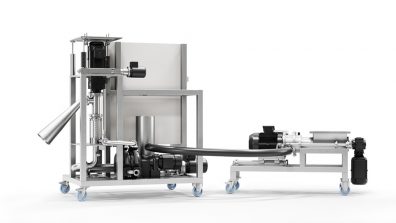
According to a WWF study, 42 percent of all cultivated fruits and vegetables worldwide are thrown away every year – even though they are eminently suitable for further processing. The Swedish company RSCUED wants to change this and has appointed itself fruit rescuers. Their business concept is as sustainable as it is unconventional and requires a special solution. This has now been delivered to them by the technology group GEA. With the innovative vacuum juicer GEA vaculiq, RSCUED can produce high-quality juices in the shortest possible time from raw materials that would otherwise have fallen victim to waste. The icing on the cake: the waste from production is also recycled into valuable fertilizer.
The GEA vaculiq 100 vacuum spiral filter (left) and the GEA MultiCrush milling system are pre-assembled on movable skids and can be used flexibly. (Photo: GEA)
On its way to food recycling, RSCUED has taken a big step forward together with the technical solution from GEA. “The advantages of the GEA skid for us were the very short processing time, efficiency, high product quality and flexibility. We need to be able to respond to seasonal supply just as quickly as to fluctuating incoming goods,” explains Truls Christenson, co-founder of RSCUED. This is because the company receives the fruit and vegetables sorted out for regular trade via donations from wholesalers, supermarkets, farms and delivery services. Private individuals who have larger quantities from their gardens also participate in RSCUED’s appeal.
GEA vaculiq with its vacuum spiral filter delivers the desired flexibility in full measure: The system processes a ton of fruit or vegetables within about twenty minutes and cleaning the system between productions takes just five minutes. Different varieties can thus be turned into high-quality juice in quick succession. And it does so with maximum yield: in the first test phase, RSCUED was able to produce twice as much juice compared to its previously used press. With a capacity of up to 1,800 liters per hour, RSCUED is now able to easily increase its production in the future thanks to GEA vaculiq and is also capable of receiving goods – besides Sweden – from all over Northern Europe.
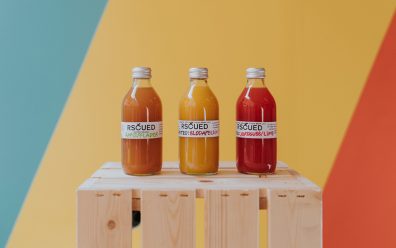
RSCUED juices are becoming increasingly popular with customers. (Photo: RSCUED)
In addition, GEA’s vacuum spiral filter technology was convincing in terms of quality. With this juicing method, the products do not come into contact with oxygen, which is known to have unfavorable effects on vegetables and fruits. In addition, the gentle process preserves all healthy vitamins and secondary plant nutrients. Finally, the juice produced with GEA vaculiq not only looks better, it also tastes fresher and has a longer shelf life. “GEA’s overall concept is therefore an innovative and unique solution for us in the field of sustainable, industrial juice production,” adds Truls Christenson.
All’s well that ends well
And so the circle closes for GEA and RSCUED: The dry mash discharged by the vaculiq plant, together with remaining rejects, is ideally suited as a basis for fertilizer – which, as is well known, promotes the growth of new fruits and vegetables. This fertilizer is finally distributed through a large garden center chain in Sweden.
“When we founded RSCUED as a start-up seven years ago, we had the vision to stop the waste madness. Together with GEA, we have now been able to realize this on a higher level. With the new GEA vaculiq 100 vacuum juicer and the multiCrush milling system from GEA, we are very well positioned and can develop our production excellently”, says Truls Christenson. “And the faster, more flexible and more productive we are at RSCUED – the more we contribute to sustainability for a healthier planet.”
About RSCUED RSCUED was founded in Helsingborg in 2015 as a start-up. The company employs around 15 staff members and expects revenues of EUR 3,2 million in 2022. The company’s purpose is to rescue all kind of fruit and vegetables which would otherwise be wasted. RSCUED receives the fruit and vegetables sorted out for regular trade via donations from wholesalers, supermarkets, farms and delivery services from Sweden as well as Northern Europe. The products are sold via their webshop as well as in selected grocery stores, coffee shops and restaurants and in Sweden. Learn more here: rscued.se.
Minute Maid is shaking up the juice drinks category—literally and figuratively—with the launch of Aguas Frescas.
The Latin American-inspired, noncarbonated beverage is made with real fruit juices and natural flavours, delivering a bold, “Refreshing AF” sensorial experience tailored to Gen Z tastes. Minute Maid Aguas Frescas is available in the US in 16-oz. cans in three fruity flavorus: Hibiscus, Mango and Strawberry. Two additional flavours, Limonada and Strawberry Limon, are available on Coca-Cola Freestyle fountain dispensers.
Recognising that the product’s disruptive proposition demands an equally disruptive marketing plan, all Minute Maid Aguas Frescas messaging features the playful double-entendre, “Refreshing AF”, to appeal to Gen Z consumers.
“Minute Maid AF is step one in refreshing this iconic brand and our messaging to bring it into the 22nd Century,” said Alex Ames, creative director, Nutrition. “It’s not every day you’re lucky enough to find a tagline—or two letters—that can serve as a shortcut to cultural and product relevancy. I’m super proud of our team for being truly disruptive and bringing one of Minute Maid’s most provocative marketing concepts ever out of presentations and into market. It only works because of how truly refreshing this product is.”
Minute Maid Aguas Frescas, which was named a Nielsen Superstar product concept, leverages Minute Maid’s position as the No. 1 fruit drinks/ades trademark with a breakthrough entry into the fastest-growing segment in ready-to-drink juice. A multi-generational Latin tradition, Aguas frescas are delicious, fruit-based waters with a strong multicultural following.
The product will fill a void for Gen Z, which until now hasn’t found a juice brand to quench their collective thirst for diverse, adventurous options. Minute Maid Aguas Frescas is a multi-year, multi-channel platform.
The launch will be supported by a robust sampling campaign to get more than 1 million cans in consumers’ hands, as well as PR, digital and social activations including online video, always-on social media content and virtual product placement in two Gen Z-favorite Amazon Prime shows: “Summer I Turned Pretty” and “The One That Got Away”—a first for The Coca-Cola Company. On Cinco de Mayo (May 5), Minute Maid Aguas Frescas debuted on the iconic Coca-Cola digital sign in New York City’s Times Square. In September, NASCAR Driver Daniel Suarez’s car will be wrapped with Minute Maid AF graphics at the Texas Motor Speedway race in Dallas.
“The juice drinks category is growing aggressively overall, but losing traction with younger consumers,” said Jorge Luzio, group director, Minute Maid. “We need to reinvigorate our connection with this next generation, who are seeking authentic, unique and unexpected experiences. With Minute Maid Aguas Frescas, we’re shaking things up in a big way and sending the message that the brand is here to stay.”
Leading coconut water brand Vita Coco is transporting your tastebuds to the tropics with the launch of its boldest-flavoured coconut water yet. Vita Coco Coconut Juice, the brand’s first juice offering, is available since June 2 right in time for summer sipping.
A refreshing blend of coconut water and a burst of tropical, refreshing flavour, Vita Coco Coconut Juice is a thirst-quenching beverage to help you beat the summer heat. Conveniently canned for consumers who need a quick on-the-go boost, Vita Coco Coconut Juice is available in two bold flavours – Original with Pulp, and Mango – with a sweet, unexpected taste that demands one more sip. It is gluten-free and non-GMO, and 50 calories for Original with Pulp (per 8 fluid ounces) with 10 grams of sugar, and 80 calories for Mango (per 8 fluid ounces) with 17 grams of sugar.
Vita Coco Coconut Juice is sold in 16.9 oz aluminum cans and is available in the US at 7-Eleven stores and other convenience store locations across the East Coast and Southeast for an MSRP of USD 2.49 per unit. Limited 12 pack quantities of Vita Coco Coconut Juice are also available online at www.vitacoco.com.
About Vita Coco Vita Coco is the leading coconut water beverage brand, celebrated for bringing the benefits of coconuts to the world. Championed by informed consumers, health and wellness experts, pro-athletes and celebrities for its nutrient-rich hydration, Vita Coco’s portfolio now includes coconut milk and coconut oil.
Bolthouse Farms, portfolio company of Butterfly, aligns powerhouse juice brands to propel Evolution Fresh forward; Starbucks to focus efforts on the growth of its core business
Starbucks and Bolthouse Farms announced entry into a definitive agreement for Bolthouse Farms to acquire the brand and business of Evolution Fresh. The partners (employees) that support the business will also transition to Bolthouse Farms upon close of the transaction.
Evolution Fresh is a leading producer of primarily organic, cold-pressed, premium juice products. By joining forces with Bolthouse Farms – the No. 1 super premium refrigerated beverage brand and largest carrot supplier to North American retailers1 – Evolution Fresh will have the opportunity to accelerate its growth trajectory while Starbucks focuses its efforts on the growth of the core Starbucks business and its partner and customer experience.
“Evolution Fresh has grown steadily over the last several years as a result of our partners’ hard work and commitment to the brand. We feel there is a great runway and opportunity to take Evolution Fresh to the next level, and Bolthouse Farms’ considerable experience and success in the premium beverage category will allow the brand to continue growing,” said Hans Melotte, Starbucks executive vice president Global Channel Development. “Bolthouse Farms shares the same values and commitment to putting people first in everything they do, which affirms for us that we have found the right opportunity for Evolution Fresh.”
Through this acquisition, Bolthouse Farms will expand its beverage offerings from nutrient-dense, plant-powered juices and smoothies to include a full lineup of primarily organic cold-pressed, premium juices. Starbucks stores in the U.S. will continue to sell Evolution Fresh products.
“Evolution Fresh is a natural extension of the Bolthouse Farms portfolio and we look forward to welcoming the team,” said Jeff Dunn, chairman and chief executive officer of Bolthouse Farms. “At Bolthouse Farms, with the support of Butterfly, we strive to ensure that the acres we grow and beverages we make have a positive impact on the land, on the people who make up our company, and on all people. By bringing Evolution Fresh into our portfolio, we will extend our spirit of ingenuity and innovation, sharing resources and passion for high-quality, nutrient-dense juices to pioneer solutions for today’s food system.”
Butterfly is a leading private equity firm that specializes in the food sector with a particular focus on high-growth, on-trend categories. Through Bolthouse Farms, Evolution Fresh joins Butterfly’s brand portfolio that includes the likes of Chosen Foods, MaryRuth Organics, Orgain, and Pete and Gerry’s Organics.
“We have long admired the Evolution Fresh brand and see tremendous untapped potential in the premium beverage category. By bringing these powerhouse brands together — Bolthouse Farms and Evolution Fresh — we will deliver a robust, high-growth, and consumer-preferred portfolio of juices to market,” said Bill Levisay, president, Consumer Brands, Bolthouse Farms.
The transaction, which is for an undisclosed amount, is expected to close later this year.
About Bolthouse Farms For more than a century, Bolthouse Farms has been known as the innovation leader in growing and distributing carrots and high-quality, nutrient-dense branded products. Employing more than 2,200 people and headquartered in Bakersfield in California’s fertile San Joaquin Valley, Bolthouse Farms is one of the largest carrot growers and distributors in the U.S. and the No. 1 premium refrigerated beverage brand in U.S. retail. Guided by its purpose — Ingenuity Grows Good — the company also produces and sells super-premium juices, smoothies, café beverages, protein shakes, functional beverages and premium refrigerated dressings, all under the Bolthouse Farms® brand name.
1SOURCE: IRI MULO L52 weeks ending May 1, 2022
As observed for other agricultural products, the production costs of citrus farming have increased sharply in Brazil, due to higher inputs prices, majorly fertilisers. This scenario is concerning farmers in Brazil, considering that citrus production was low in the two previous seasons, which resulted in higher costs per unit.
Even if productivity and production increase in the 2022/23 season – compared to that in 2020/21 and 2021/22, because of the slightly more favourable weather –, higher inputs prices are expected to limit a possible reduction in the production cost per unit. Thus, profit margins may be lower than the expected, despite orange valuations in 2022/23 – so far, the ceiling orange price is at BRL 32.00 per 40.8-kilo box, harvested and delivered to processing plant (considering only large-sized processors).
Tight profitability may continue to constrain investments in both crops’ renewal and replating, mainly because shorter-cycle crops, such as soybean crops, are currently more attractive and bring better opportunities to farmers.
Last year, after five consecutive years of stability, the area allocated to citrus farming shrank in São Paulo and the Triângulo Mineiro (citrus belt), according to data from Fundecitrus, which may happen again in 2022.
Lower profit margins may also hamper adequate crop management in the citrus belt. Lower investments in crops’ renewal and replanting added to difficulties related to crop management may reduce orange production even more in the mid-term. Low supply may underpin prices, since the stocks of orange juice at the processing plants in SP are not high, and production needs to be higher for inventories to be replenished.
Citrus market
The domestic demand for oranges has not been high enough to raise prices. According to Cepea collaborators, many purchasers are trying to pay lower prices, putting farmers off selling oranges in the domestic market.
Brazilian citrus farmers claim that, if prices drop lower than the current levels, sales in the in natura market will become unviable. Currently, juice processors are bidding prices up to BRL 32/box (harvested and delivered). Although the values paid by processors include the harvesting and freight, the quality standard required by this segment and the risks of default are lower, making sales to the industry more attractive.
In this scenario, if the demand from processors continues high and prices, attractive, sales to the in natura market are expected to decrease, at least during the Winter and the beginning of Spring, when supply increases, while demand decreases. Also, most oranges have not reached the ideal maturation stage yet, allowing farmers to wait and sell the oranges when the processing activities in the 2022/23 season begin, forecast to late May/early June.
The prices for Frozen Concentrate Orange Juice (FCOJ) Equivalent rose high at ICE Futures in the first fortnight of April, reflecting the current low world supply, majorly in Brazil and in Florida (USA). Between April 1st and 13, the May/22 contract for orange juice increased by 20 %, and in 2022, by more than 30 %, closing at USD 2,650/ton on April 13.
Indeed, orange production (and juice production) in the Brazilian citrus belt (São Paulo State and the Triângulo Mineiro) decreased in the 2021/22 crop, which is practically over. According to a report released by Fundecitrus in the first half of April, the Brazilian citrus belt is expected to harvest 262.97 million boxes (40.8-kilograms) of oranges, 10.6 % down from the first estimates (May/21) and 2.2 % lower than that in the previous season.
This context will influence the Brazilian supply of orange juice, since the citrus belt is the major orange-producing region in Brazil. In February, Citrus BR estimated that, by the end of the season (in June 2022), the national stocks of orange juice (forecast at 127 thousand tons) will not be enough to ensure the world supply until the new crop (2022/23) steps up.
The same scenario is observed in Florida, where production estimates were revised down by the USDA by 19 % compared to the expected in Oct/21, to 38.2 million boxes, 28 % lower than that last season.
Lower production in the current and in previous seasons is reflecting on local stocks. According to the Florida Department of Citrus, from the beginning of the 2021/22 crop, in Oct/21, to March 26, 2022, the stocks of FCOJ were 31 % lower than that in the same period of the previous season. For not-from-concentrate orange juice, stocks were 25 % lower.
In this context, although the United States did not increase imports of concentrated orange juice – which decreased by 4.6 % between Oct/21 and Jan/22, according to the Florida Department of Citrus –, they increased purchases of not-from-concentrate orange juice. Brazil supplied 85 % of all the not-from-concentrate orange juice and 71 % of the FCOJ imported by the USA.
These estimates for Brazil and the USA explain the recent valuations of orange juice at ICE Futures. In both countries, supply is not expected to recover in the coming season (2022/23).
In the Brazilian citrus belt, although orange production may increase slightly, a higher harvest would not be enough to raise stocks and ensure world supply, since the current volume stocked is very low. In Florida, with the high incidence of greening on orchards (which has been lowering the average productivity of orange trees) and the smaller area with orange orchards in the state in the last years, production is not expected to return to the levels observed in previous decades.
Tim Berger (Photo: Eckes-Granini Group)
The past business year was a year of contrasts for the Eckes-Granini Group GmbH a year full of contrasts. The second pandemic year pandemic year and customer conflicts in the food retail sector once again presented the company with challenges, while 2021 also marked the start of the largest transformation in the company’s history. Sales revenue decreased moderately from 873 million euros in fiscal 2020 to 856 million euros (- 1.9 %), while sales volumes also declined, falling by 38 million litres to 805 million litres (- 4.5 %). Germany and France were particularly affected by the decline in sales volumes. Here, differing views on price adjustments led in part to the discontinuation of supply relationships with partners in the food retail sector. As a result, Eckes-Granini posted EBIT of 57.2 million euros (previous year: 71.0 million euros). The decline of 13.8 million euros is attributable to the effects of the pandemic, customer conflicts in the food retail sector and significantly higher costs for raw and packaging materials compared to the previous year. Tim Berger, CEO of Eckes-Granini Group GmbH, looks back on the business year as follows: “Despite considerable challenges posed by Corona, lower sales volumes and massive cost inflation, we succeeded in gaining market share – especially in the Nordic and Baltic countries – and strengthening our position during the past business year. Overall, our sales grew in nine out of ten countries. We also performed well in our international business in European countries and outside Europe.”
Eckes-Granini remains market leader
While the market for fruit juices, nectars and fruit beverages (FJND) was still able to benefit from food stockpiling in 2020, it declined in both value (- 2.1 %) and volume (- 4.4 %) in the second pandemic year. In particular, there was less demand for ambient, non-refrigerated fruit drinks sold via retailers. Accordingly, the 2021 segment recorded a decline of 3.7 % in sales and 5.2 % in volume sales, thus performing somewhat weaker than the market as a whole. In this generally weaker market environment, Eckes-Granini recorded a 0.7 % decline in market share in terms of value (market share 12.2 %) and a 0.8 % decline in volume (market share 11.3 %). The good news is that brands continue to gain market share. The e-commerce segment also continues to grow strongly but is not included in these figures. Eckes-Granini was able to make significant gains here, growing by + 35 %.
Full focus on innovation, digitization, and sustainability
In the area of product innovations, the company got off to a flying start with the market launch of hohes C Super Shots in Germany and Joker Shots in France. The popular hohes C Super Shots are currently leading the two-digit growth of the shot category in Germany (+ 31.1 %). Since the past business year, the Eckes- Granini Group has also been investing heavily in new distribution channels and cooperative ventures, and growth and the acquisition of new customers in e-commerce are developing particularly promisingly.
The Eckes-Granini Group also scored points in sustainability in 2021. With the publication of the first Group-wide sustainability report and the implementation of numerous measures, Eckes-Granini took important steps toward a more sustainable orientation of its business activities last year. To reduce emissions in line with the latest climate science criteria and achieve its ambitious targets, Eckes-Granini has been working with the independent Science Based Targets initiative (SBTi) since 2021.
Successfully heading for the future with a strong growth strategy
2021 marked the launch of the Eckes-Granini Group’s Strategy 2025 and thus the largest transformation in the company’s history. “The transformation in the FJND market will continue and requires new ways of thinking and working – also from us as ‘category thought leaders’,” says Tim Berger. “At the same time, our goals are clearly defined: In 2025, we want to generate one billion euros in net sales and achieve a market share of 15 % in Europe. We successfully laid the foundation for these ambitious goals in 2021 and are now building on them. In the past fiscal year, we succeeded in maintaining our market leadership position despite numer ous challenges and a difficult market environment, growing locally and driving for- ward key innovations. We have thus made a solid and motivated start to 2022.”
About the Eckes-Granini Group Eckes-Granini is the leading supplier of fruit juices and fruit beverages in Euro-pa. For the inde- pendent family-owned company headquartered in Nieder-Olm, Germany (Rhineland-Palatinate), the focus is on committed and competent employees, strong brands in the areas of juices, fruit beverages and smoothies, and a long-term strategic orientation with sustainable value creation. Today, Eckes-Granini operates mainly in Europe with its own national companies and strategic partners and generates annual sales of 856 million euros with a total of 1697 employees. The com- pany’s foundation is formed by the internationally renowned premium brands granini and Pago to- gether with strong national and regional brands for juices such as hohes C, Joker and God Morgon. Consumers in 80 countries worldwide and especially in Europe know and appreciate our fruit juices and the variety of fruit drinks.
The weather has been favouring the development of the 2022/23 orange crop. In general, frequent rainfall (since mid-October 2021) is helping the oranges to grow bigger and, thus, agents expect productivity to recover from the two previous seasons, when the volume harvested was low.
According to Cepea collaborators, the general scenario has been more favourable this year. Although the first blooming was late in some orchards (in mid-September in irrigated orchards and in October in dry land, after the return or rains), the number of flowers was considered positive, complemented by other blooming in the following months. Besides, the fruits set rate was high, favoured by rains followed by sunny days most of the time.
It is important to highlight that the damages caused by the long drought in the last two years (and frosts in some areas last Winter) were not completely offset, however, orange trees are currently more vigorous, leading agents to believe that productivity will be higher this season. Still, agents have distinct estimates about the harvest: some, who are more pessimistic, expect 300 million boxes to be harvested, while others, more optimistic, believe it will hit 350 million boxes. However, most of them expect something between 300 and 350 million boxes.
The only available estimates were released by the USDA in December, indicating the crop in São Paulo and the Triângulo Mineiro to total 305 million boxes (15.5 % higher than that in 2021/22). Agents are waiting for Fundecitrus’s estimates, to be released in May.
It is worth to mention that, despite the production increase, orange supply is expected to be tight in the 2022/23 season, due to the high demand from processors to replenish juice stocks – which are forecast at 127 thousand tons by the end of the 2021/22 season, in June 2022, according to estimates from CitrusBR. Still according to CitrusBR, this volume will not be enough to meet the world demand until the new season steps up.
In that scenario, even if the volume produced is near the expected by the more optimistic, there should not be an orange surplus, which justifies the high prices bid by processors for 2022/23.
This scenario may also limit supply in the in natura market along the season, however, this would not ensure higher prices, since the purchase power of many consumers in Brazil is weak because of the current high inflation and the national economic scenario.
The company will build new storage tanks for not-from-concentrate orange juice, supporting increased commercialization to European markets
Louis Dreyfus Company (LDC), a leading global merchant and processor of agricultural goods, announced the construction of new orange juice storage tanks in the city of Matão, located in Brazil’s largest citrus producing region, in the state of São Paulo. The project aims to increase the company’s production and storage capacity for not-from-concentrate (NFC) orange juice, a product with high added value for the consumer market.
The new investment in Matão, where LDC operates since 1988, will bring NFC storage capacity at the site to 30 million liters, and annual juice production capacity to 300 million liters.
“Increasing production and storage capacity for NFC will allow us to meet growing consumer demand for this high value-added product, especially in Europe, while reinforcing our position among the top three global processors and merchandizers of orange juice,” said Juan José Blanchard, Head of the LDC’s Juice Platform.
This project is the second phase in LDC’s plans to expand commercialization of NFC in Europe, North America and Asia. In 2020, the company announced a new, dedicated fleet for juice transportation that reduces fuel consumption by 40 % and sulfur emission levels by 85 % per ton of product. LDC also increased storage capacity by more than 50 %, and blending capacity by more than 20 %, at its port terminal and processing facility in Ghent, Belgium.
Brazil is the world’s largest exporter of orange juice, a business in which LDC has been active for over 30 years. The company’s operations in the country are fully integrated, comprising more than 25,000 hectares of sustainably grown citrus groves – strategically located in Brazil’s citrus belt – as well as three citrus juice processing plants and an export terminal in the Port of Santos (São Paulo state).
“This project also reinforces the company’s commitment to long-term investment in Brazil, a key origination market for over 80 years,” added Jorge Costa, Global Operations Director for LDC’s Juice Platform.
The new storage tanks are expected to be operational by the end of 2023.
About Louis Dreyfus Company Louis Dreyfus Company is a leading merchant and processor of agricultural goods, founded in 1851. We leverage our global reach and extensive asset network to serve our customers and consumers around the world, delivering the right products to the right location, at the right time – safely, reliably and responsibly. Our activities span the entire value chain, from farm to fork, across a broad range of business lines (platforms) including Grains & Oilseeds, Coffee, Cotton, Juice, Rice, Sugar, Freight, Carbon Solutions and Global Markets. We help feed and clothe some 500 million people every year by originating, processing and transporting approximately 80 million tons of products. Structured as a matrix organization of six geographical regions and nine platforms, Louis Dreyfus Company is active in over 100 countries and employs approximately 17,000 people globally.
In late February, the large-sized processors in São Paulo made their first purchase proposals for the oranges from the 2022/23 crop. Of the three companies in the state, two of them are interested in closing deals, bidding from BRL 30 – BRL 32.00 per 40.8-kilo box, harvested and delivered. The third processing plant was only renewing existing contracts. However, the number of deals closed is still low, since farmers expect prices to rise higher, due to both firm demand from the industry and, largely, higher production costs.
Indeed, data recently released by CitrusBR show that the volume of orange juice stocked by the end of the current season (in June 2022) will not be enough to supply the international market until the middle of next season. According to CitrusBR, ending stocks of Frozen Concentrate Orange Juice (FCOJ) Equivalent in the 2021/22 season are expected to total 126.574 thousand tons – possibly ranging between 115 and 135 thousand tons. It is important to mention that previous estimates (from September 2021) pointed to stocks between 170 and 190 thousand tons, but bad weather conditions (drought and frosts) reduced processing and hampered fruits development and ripening (influencing industrial yield).
If CitrusBR’s forecasts are confirmed, the volume stocked is expected to be much lower than the strategic level, of 250 thousand tons, scenario that may be observed at least until the end of the 2022/23 season (in June 2023) if the number of oranges produced is not high.
Cepea calculations show that, for stocks to surpass the strategic level by the end of next season, the number of boxes harvested in the citrus belt in São Paulo and the Triângulo Mineiro needs to be over 340 million – and of this total, 300 million need to be allocated to the industry. For these results were considered sales of a million tons (slightly lower than the average) and the average industrial yield of the past five crops.
Although it seems juice supply in Brazil will be tight for at least one more season, agents from processors have not reported any significant valuations for the commodity yet. This would be the major reason why bids for the new season have not been higher. On Feb. 23, the May contract at ICE Futures closed at USD 1,993/ton, 2 % down from that on December 30. However, it is important to mention that values at ICE Futures do not reflect real sales prices of processing plants.
One of the facts that may be constraining juice valuations abroad is the fear of bottling plants as for the negative effects of higher prices in Brazil. In the major destinations for the Brazilian orange juice, the United States and the European Union, demand for the product has been fading for some years, majorly because of the wide variety of other beverages, such as flavoured water, energy drinks and other types of juice, for instance.
Kayco Beyond announces the debut of Wonder Lemon™, a first-of-its-kind, 100 % organic cold-pressed juice with zero added sugar. Wonder Lemon will have its first debut at Natural Products Expo West 2022 in Anaheim, California, US. With the demand for organic juices on the rise, Wonder Lemon offers the bonus of fresh and delicious citrus flavour, along with the health and wellness benefits of lemon.
Kayco is a family-owned business with humble beginnings in Upstate New York. Starting only with bottles of the now-iconic Kedem Grape Juice in 1948, Kayco worked diligently to create high-quality, affordable products that meet the most rigorous kosher standards. Now producing thousands of products, distributed in over 30 countries around the world, Kayco remains committed to the standards that defined the company nearly 75 years ago and originally made it one of the most recognized and adored brands in the specialty food business.
Wonder Lemon is the latest product to be released under Kayco’s traditionally high standards. Wonder Lemon is crafted with a blend of 100 % cold-pressed fruits and vegetables with zero added sugar and a delightful reduction of the acidity of the citrus. Cold-pressed juice, as opposed to other forms of fruit juices, is made with a hydraulic press, which allows for maximum extraction of the fruit or vegetable’s juices and nutrients. Especially in the wake of the COVID-19 pandemic, consumers have been growingly conscious of health and wellness, often seeking out food and drinks to help boost the immune system. As such, cold-pressed juices have gained a lot of popularity as a healthy and guilt-free treat. Lemon juice is an especially great choice for health-conscious consumers, as lemons are rich in vitamins A and C, as well as calcium, potassium, and beta-carotene, making them helpful for immunity, fatigue, and mood. Wonder Lemon is a delicious and refreshing way for consumers to get all of these health benefits.
Wonder Lemon is available in three refreshing and delightful flavours: Lemon Ginger, Lemon Mint, and Lemon Basil Jalapeño. Each of the lemon blend flavours are made with only five to six ingredients, with less than 110 calories per bottle and made up of 100 % natural fruits and vegetables. With the pairing of tart lemons with other dynamic flavours, Wonder Lemon juices are sweet and thirst-quenching, and customers can feel confident in knowing that they contain no added sugar, artificial flavours, preservatives, additives, or artificial colouring. Wonder Lemon is great for children and adults alike and can even be great for mixing with other beverages for some extra flavour and nutrients.
The team behind Schilling Cider, a leading cider producer in the Pacific Northwest in the US, announced the launch of Vida Maté, a new line of low-calorie, non-alcoholic yerba maté beverages that seek to transform the caffeine experience. Crafted to elevate the traditional South American “super beverage” with the craft quality of the Pacific Northwest, Vida Maté is made with real fruit juice and a proprietary blend of adaptogens. The result is a refreshing, delicious alternative to sugary coffee drinks and artificially flavoured caffeine-in-a-can. With operations based in Seattle and Portland, the Schilling team is excited to debut this new plant-powered pick-me-up, made exclusively with naturally occurring caffeine.
Vida Maté fits the gluten-free and vegan-friendly lifestyle, offering a boost in vitality and focus through a functional blend of adaptogens: Vitamin B12 for a power boost, L-Theanine for focus, and GABA for stress relief combine to ensure a clean, jitter-free delivery of caffeine with no unpleasant crashes.
Launching with three flavours – Lemon Mint, Mango Lime, and Blackberry Lemonade – Vida Maté is available in 16 oz. cans at thousands of grocery, convenience, and natural food stores across the Pacific Northwest, since March 1, 2022.
“Innovating in healthful, refreshing beverages is our calling,” says Colin Schilling, CEO and co-Founder of Schilling Cider. “This starts with the same quality and techniques we bring to crafting our fresh-pressed apple cider. It’s exciting to push those boundaries into the yerba maté segment. Consumers are demanding delicious, healthier options made right here in their backyard, and we can’t wait to share Vida Maté with our community.”
While other canned yerba maté drinks depend on a formula that involves non-yerba maté derived and synthetically produced caffeine, Vida Maté’s caffeine occurs naturally and comes 100 % from yerba maté. And because Vida Maté is made from real fruit juice, it’s not overly sweet and it’s lower in calories and sugar.
The team at Schilling has long enjoyed traditional yerba maté drinks, before launching their own. Yerba maté is a plant indigenous to South America. The leaves and twigs are dried, dried over a fire, and then steeped in hot water for an invigorating tea.
The processing of the oranges from the 2021/22 season has been high in the major processors in São Paulo State. Although activities usually slow down in January, the orange harvesting is late in the current season – because of the higher share of fruits from the second, third and fourth flowerings.
In January, seven plants of the large-sized processors in SP were in operation, receiving majorly late varieties and early pear oranges. However, activities slowed down last month compared to that in December, due to the end of processing at the plant located in Uchôa. In February, the plant in Conchal is supposed to end activities for the season too – then, there will be only two plants of each one of the large-sized processors in operation.
Despite the fast processing pace, the quality of the oranges is below the expected. Industrial yield (number of orange boxes necessary to produce a ton of concentrated juice), which had been favoured by the lack of rains along the season, is now being reduced by excessive and frequent precipitation – higher moisture favours fruits growth, but raises the volume of water within the oranges, which is not desired by processors.
PRICES – Two large-sized processors purchased oranges in the Brazilian spot market in January, paying from BRL 28 to BRL 30.00 per 40.8-kilo box, harvested and delivered to processor. At smaller-sized processors, prices hit BRL 32/box. Some plants were also processing tahiti lime, paying from BRL 18 to BRL 21.00 per 27-kilo box.
SIG announced the launch of SIGNATURE EVO, the world’s first aluminium-free full barrier packaging materials for aseptic carton packs. SIGNATURE EVO extends SIG’s lower-carbon aluminium-free packaging materials – already available for plain white milk – for wider use with oxygen-sensitive products such as fruit juices, nectars, flavoured milk or plant-based beverages.
SIGNATURE EVO is the latest evolution in the SIGNATURE portfolio – SIG’s innovative offering of the most sustainable packaging materials available for aseptic carton packs.
SIG led the industry with the first ever aluminium-free solutions for aseptic cartons. By eliminating the need for an aluminium foil barrier layer, combibloc ECOPLUS cut the carbon footprint of SIG’s standard packaging material by 27 % when launched in 2010. SIGNATURE 100 cut this further in 2017, offering a 58 % lower carbon footprint than SIG’s standard packaging material by linking the polymers to 100 % renewable forest-based materials via a certified mass-balance system1.
With more than 1.9 billion packs now sold with these aluminium-free long-life packaging solutions for liquid dairy products, SIG has built on this success to create the first full barrier aluminium-free solutions for aseptic cartons.
SIGNATURE EVO packaging materials are expected to offer a similar carbon footprint reduction to combibloc ECOPLUS, to be confirmed through an independent, critically-reviewed life-cycle assessment. Like all SIG packs, SIGNATURE EVO is fully recyclable in existing recycling streams.
With barrier properties comparable to standard aseptic cartons that include an aluminium foil barrier layer, SIGNATURE EVO packaging materials ensure that even oxygen-sensitive products are protected over long periods of time without the need for refrigeration. This enables customers to bring the environmental benefits to many more food and beverage categories.
SIGNATURE EVO will initially be launched in the combiblocMini portion-sized format before being extended to other formats. It is suitable for both oxygen-insensitive products like plain white UHT milk and oxygen-sensitive products like fruit juices, nectars, flavoured milk or plant-based beverages.
SIGNATURE EVO enhances opportunities for customers to differentiate their products with an aluminium-free pack that offers both on-shelf appeal and stand-out environmental credentials.
In the future, it will also be available in more options such as SIGNATURE EVO 100 – SIG’s full barrier solution for aseptic carton packs linked to 100% renewable forest-based materials.
1Results based on ISO-compliant life-cycle assessment CB-100732c for Europe.
In 2021, orange prices were high in São Paulo State (SP) and in the Triângulo Mineiro. In general, the industry in SP kept the demand high for fruits, and the low production limited the supply throughout the year. Although the remuneration (in BRL per box) had been higher, the profitability for many citrus growers was restricted, given that the limited productivity increased the cost of production per unit even more.
Fundecitrus (Citrus Defense Fund) indicated, in its estimate released in December/21, that the production in the citrus belt may reduce 1.7 % compared to 2020/21, totaling 264.14 million 40.8-boxes. Even with the positive biennial cycle in the 2021/22 season and the higher fruit load, oranges have presented a smaller size, which explains the lower production.
From May to August 2021, rainfall accounted for only 30 % of the regular volume for the period, according to data from Somar Meteorologia/Climatempo. Fundecitrus says that this scenario affected even irrigated orange groves (which correspond to 30 % of the citrus belt), due to the limited water supply in tanks. In some areas, frosts in July worsened the situation. Besides the small-sized oranges, the premature fruit drop was one of the worst in history.
Due to the low supply of fruits, orange juice processors boosted prices compared to the 2020/21 season. In the partial of the crop (from July to December/21), the average price in the spot market was 27.50 BRL/40.8-kilo box, harvested and delivered at the industry, for a nominal increase of 22.5 % in relation to the same period last year.
EXPORTS – As expected, orange juice (volume equivalent to concentrate juice) shipments finished the 2020/21 season with a 7 % decrease in relation to the previous (2019/20). From July/20 to June/21, shipments to all destinations totaled 1.03 million tons, according to data from Secex. The revenue, in turn, amounted 1.54 billion USD, 15 % down compared to the season before.
IN NATURA MARKET – Orange prices hit nominal records in most part of 2021. Increases are attributed to the limited supply in the 2021/22 crop, because of the low volume of rainfall and high temperatures in the second semester of 2020 and the low humidity in 2021. From the second semester of 2021 onwards, the low quality of fruits (due to a long period of dry weather and frosts in July) reinforced the upward trend. In the partial of the crop (from July to December/21), the average price for pear oranges (in natura) is at BRL 39.52/40.8-kilo box, on tree, 20 % up from the average in the same period in 2020, in nominal terms.
TAHITI – The price trend was atypical in 2021. Values were low in the first semester and in some periods of the second part of the year, and peak prices were less intense. From January to December, the average price for tahiti lime was at BRL 25.19/27-kilo box, harvested, 31.3 % lower compared to that in 2020.
The current number of flowers in the orange orchards in São Paulo – which will give origin to the fruits from the 2022/23 season – is considered satisfactory in most citrus-producing regions within the state. In general, while in irrigated orchards blooming was observed from September onwards, in non-irrigated orchards, flowers were only observed in October, after the late arrival of rainfall.
Agents have been concerned about the possible effects of the lack of rains this year on the vigor of orange trees, since low moisture may hamper fruit set, increasing the rate of fruitlet fall in irrigated orchards and, largely, in the orchards in dryland.
According to forecasts from the National Oceanic and Atmospheric Administration (NOAA), there is a 90 % chance of La Niña forming in Brazil until the end of 2021. If this is confirmed, rainfall in the coming months may be lower than usual in the southeastern region of the country. However, La Niña is forecast to be weak in Brazil.
This scenario may have a negative influence on the output from the 2022/23 season, since the development stage of plants in the coming months demands good amounts of water. With estimates for low ending stocks of orange juice in the 2021/22 season, the output from 2022/23 needs to be high in order to ensure comfortable inventories for world supply.
Cepea calculations show that, for ending stocks in the 2022/23 season (June 2023) to return to the strategic level of 250 thousand tons, the output next season needs to surpass 330 million boxes of 40.8 kilograms each. In this context, the average productivity would have to be around a thousand boxes per hectare, which has only been observed in seasons favored by the weather.
You need to load content from reCAPTCHA to submit the form. Please note that doing so will share data with third-party providers.
You are currently viewing a placeholder content from Turnstile. To access the actual content, click the button below. Please note that doing so will share data with third-party providers.