After weeks of dry weather, rains were registered in many citrus areas in São Paulo state in mid-July. Although the volume of rainfall was not homogeneous among regions (rains were registered especially in the south and in the southwest of São Paulo state), it brought a certain relief for citrus growers, who were concerned with the dry weather that had already been affecting the trees.
The rainfall was more significant in the southwest of SP state; thus, flowers may start blossoming. In areas where rains were less abundant (or they were not registered), more humidity is necessary for the flowers to blossom.
As for the tahiti lime, the recent rainfall is not likely to increase the supply in this moment, but it may favor the harvest and the quality in the coming weeks.
Juice exports decrease in the 2023/24 season
Brazilian shipments of orange juice dropped in the 2023/24 season (from July 2023 to June 2024), after increasing in the previous crop. Brazil exported 1 million tons, downing 8.1 % compared to the season before (data from Comex Stat). The revenue totaled USD 2.7 billion, for an increase of 25 % in the same comparison. The export decrease is mainly related to the low volume of juice in stocks in Brazil.
Processing activities
The orange processing continues to move at a fast pace in São Paulo state. Some players from the industry surveyed by Cepea say that the crushing is more advanced this season, and that the processing activities of early varieties are likely to reduce this month. Last year, the processing finished only in the second fortnight of September; however, in 2024/25, activities are expected to end in July or in August.
A recent study reveals that natural sugars found in fruit juice appear to support physical recovery after exercise
Cloudy apple juice was found to recover the intestinal barrier function more quickly than other drinks – this helps to support recovery
The body’s stress makers reduced more quickly in recovery after drinking fruit juice when compared with other beverages
The study, led by Dr Patrick Diel, shines a light on the potential health benefits of fruit juice for fitness enthusiasts
Drinking fruit juice could help the body recover more quickly after intense physical activity such as long-distance running, according to a new study.
The peer-reviewed study, published in international journal, Nutrients, found that while added sugars can have a negative impact on the intestinal barrier after exercise, the naturally occurring sugars and polyphenols (plant compounds) found in fruit juice seem to support a more balanced recovery.
While it’s common to reach for a sugary sports drink during or after exercise, scientists have known for some time that added sugars can cause problems with the intestinal barrier – a critical part of our immune defence. A leaky intestinal barrier can lead to harmful bacteria crossing from the gut into the blood which stimulates inflammation. This, then, increases the risk of overtraining syndrome and metabolic conditions such as endotoxemia – where the body has a toxic reaction to bacteria.
The study, led by Dr Patrick Diel, was set up to find out whether fruit juices caused the same inflammatory effect as sugar-sweetened drinks.
The researchers looked at the gut health of runners before and after an ultramarathon. They compared the impact of drinking diluted cloudy apple juice with a test drink which mimicked a typical sugary sports drink. This contained identical amounts of sugar but not the polyphenols and other fruit complexes naturally found in juice.
The researchers found that, while both exercise and sugars can disrupt the intestinal barrier, the natural compounds found in fruit juice eased these effects*. Runners who drank the cloudy apple juice after the race recovered their intestinal barrier function more quickly than those who drank the sugar-sweetened test drink*.
Another part of the study on amateur runners found that drinking diluted cloudy apple juice after running influenced a protein called CD14 suggesting that the juice supported the body’s immune system. Furthermore, the study showed that runners who drank fruit juice reduced their stress markers more quickly compared with those who drank the sugar-sweetened test drink.
Dr Patrick Diel from German Sport University in Cologne, said: “The research comes at a timely moment for anyone inspired to get more active in the run up to the Olympic games, and these findings offer a fresh perspective how to best replenish our bodies. Simply diluting cloudy apple juice and drinking it after playing sports or exercising seems to be an easy and healthy option which supports both gut health and immune function”.
Award-winning dietitian, Dr Carrie Ruxton said: “To properly recover after exercise, our bodies need healthy carbohydrates. In light of these findings, I would encourage athletes, fitness enthusiasts and causal gym-goers to add a serving of around 150ml of cloudy apple juice to their sports bottle and top up with tap water for a low cost and effective sports drink. Not only will this mixture keep us hydrated, it also provides energy-giving natural sugars and polyphenols to promote optimal recovery.”
As with any dietary change, it is important to drink juice in moderation and as part of a balanced diet. However, these studies suggest that when it comes to supporting the body after an Olympic-inspired workout, cloudy apple juice is the perfect health hack.
*Valder, S. et al. Effect of Sugar- and Polyphenol-Rich, Diluted Cloudy Apple Juice on the Intestinal Barrier after Moderate Endurance Exercise and in Ultra-Marathon Runners. Nutrients 2024, 16, 1353. https://doi.org/10.3390/nu16091353
Stephan Büttner (Photo: AGRANA)
In the first quarter of the 2024/25 financial year (the three months ended 31 May 2024), AGRANA, the fruit, starch and sugar company, generated operating profit (EBIT) of € 32.3 million, a significant reduction of 49.1 % from the first quarter of the prior year. Revenue eased slightly, by 2.3 %, to € 944.3 million. “After the robust results of the full year 2023/24, as expected we had a weaker start to the 2024/25 financial year. The significant decline in profit resulted from the highly challenging market environment in the Sugar and Starch segments, where sales prices fell. Business in the Fruit segment was better, leading to a significant increase in Fruit EBIT,” says AGRANA Chief Executive Officer Stephan Büttner.
Results in each business segment for the first quarter of 2024/25
FRUIT segment
The Fruit segment’s revenue in the first quarter was € 415.6 million, up 3.6% from the same period one year earlier. The increase occurred both in the fruit preparations and fruit juice concentrate businesses and resulted from volume growth.
EBIT of the segment as a whole grew to € 27.0 million in the first three months of the financial year (Q1 prior year: € 24.4 million). In the fruit preparations activities, EBIT was significantly above the year-ago level. The improvement was attributable partly to a positive business performance in the Europe region (including Ukraine) and in Mexico.
STARCH segment
Revenue in the Starch segment in the first quarter was € 265.5 million, a reduction of 16.3% from the year-earlier comparative period (Q1 prior year: € 317.1 million), when the war in Ukraine had led to powerful increases in market prices. Owing to the decline in raw material and energy prices, market prices for the segment’s products decreased noticeably year-on- year, which impacted the selling prices obtained for the entire Starch portfolio. Ethanol sales prices, for instance, fell by about 25 % amid a substantial drop in Platts quotations.
At € 9.4 million, EBIT in the Starch segment was down very significantly year-on-year. A key reason for this was the margin decline in starch and saccharification products driven by significantly lower sales prices for core and by-products.
SUGAR segment
Sugar segment revenue was € 263.2 million, up 6.2 % from the first quarter of the previous year. The negative effect of lower sugar sales prices was more than made up for by higher sales volumes. The trajectory of the sugar market was most recently driven by the sugar imports from Ukraine and the expectation of increased EU sugar production in the 2024/25 campaign.
The Sugar EBIT result in the financial first quarter was a deficit of € 4.1 million, a pronounced deterioration from the year-earlier period. This reflected especially the significant fall in sugar selling prices, which was steepest in the regions heavily affected by the imports of Ukrainian sugar.
Outlook
For the full 2024/25 financial year, AGRANA expects a significant reduction in operating profit (EBIT) compared to the previous year. Group revenue is projected to show a moderate decrease.
Total investment across the three business segments in the 2024/25 financial year, at approximately € 120 million, is to be moderately below the 2023/24 value and in line with budgeted depreciation. About 12 % of this capital expenditure will be for emission reduction measures in the Group’s own production operations under the AGRANA climate strategy.
In this publication confructa medien GmbH present beverage innovations from all over the world with specifications like ingredients, company, country, claims, packaging and launch price. What has hit the shelves in the international beverage sector? Which companies and products are the main driving forces in the market? Which trends have become apparent?
The international (non-alcoholic) beverage product review WORLD OF FRUITS 2024 has been published and is available for free download!
As the industry shifts its focus to the new crop, growing conditions for the next apple season in Poland were initially favourable, with fruit maturation occurring three weeks earlier than usual. However, a cold snap between April 2020-2023 significantly affected the orchards. This freeze occurred while the apple trees were still in bloom, and despite strong flowering, the frost caused damage across all apple varieties.
Following the freeze event in April, Poland experienced a second cold wave in May, accompanied by hailstorms in the latter half of the month. While it is difficult to assess the full extent of the damage, market players estimate the crop yield will be no more than 3 million tonnes, significantly lower than the anticipated 5 million tonnes. Consequently, apple juice concentrate production is expected to be around 200,000 MT for 2024/25 MY, down from 2023/24 MY which was 265,000 MT.
The apple crop in Turkey in the 2024/25 MY is also expected to be smaller year-over-year by at least 15 %, according to market sources. This decrease is attributed to heavy rainfall and lower yields following three years of high yields, with one market player noting that “the trees are tired.” Demand for Turkish apple concentrate has been strong from US buyers in recent months. …
The international (non-alcoholic) beverage product review WORLD OF FRUITS 2024 has been published and is available for download!
In this publication confructa medien present beverage innovations from all over the world with specifications like ingredients, company, country, claims, packaging and launch price. What has hit the shelves in the international beverage sector? Which companies and products are the main driving forces in the market? Which trends have become apparent?
The volume of orange juice exported by Brazil in the partial of the 2023/24 season (from July/23 to May/24) remains below that registered in the same period of the previous crop. According to data from Comex Stat, Brazil exported 914.9 thousand tons of orange juice, for a decrease of 8.9 % compared to the same period last season.
The revenue, in turn, totaled USD 2.47 billion, moving up 22 % this season in relation to the previous. The main reason for the increase in revenue was the higher price paid per ton of juice, which rose due to the low availability of the commodity in Brazil, according to agents consulted by Cepea.
OJ shipments to the European Union amounted 489.79 thousand tons from July/23 to May/24, downing 8.2 % against the same period of 2022/23. The income, in turn, rose 27 %, at USD 1.35 billion. To the US, exports dropped 11 % in relation to that in 2022/23, at 293.64 thousand tons. The income verified between July/23 and May/24 was USD 737 million, 9 % up against the same period last season.
Domestic market
Prices of oranges allocated to processing activities have been moving up since March, when contracts involving the 2024/25 season have started to be closed. In early June, values of the fruit traded in the spot market in São Paulo state hit BRL 85.00 per 40.8-kilo box, harvested and delivered, a new record of Cepea series, which started in 1994, in real terms (averages were deflated by the IGP-DI).
Price rises are related to both the higher demand and the limited supply. As for the demand, the industry needs to purchase the raw material, because orange juice stocks are very low. Concerning the supply, the fruit output may be small again in São Paulo and in Triângulo Mineiro.
Consumers shift to natural beverages, immune-boosting benefits of fruit juices fuel growth
The North American fruit juice sector is undergoing a substantial growth period, with market size swelling to USD 39.6 billion as of the year 2023. Industry forecasts are robust, predicting a continued expansion at a compound annual growth rate (CAGR) of 4.5 % from 2023 to 2032, culminating in an expected market value of USD 59.1 billion.
The surge in market growth is primarily driven by rising health awareness among consumers, who are now gravitating toward natural beverage options like fruit juices. These shifts in consumer preferences are linked to the numerous health benefits attributed to fruit juices, including their vitamin and mineral content, antioxidant properties, and their role in bolstering the human immune system.
Moreover, advancements in technology that allow for the introduction of organic preservatives enhance the appeal of fruit juices. When coupled with modern packaging solutions that cater to consumers’ increasingly busy lifestyles, it’s clear that the market is riding a wave of both practical innovation and heightened product awareness.
Consumer Trends
The shift in consumer behavior denotes a significant move away from carbonated drinks toward healthier options. The adoption of fruit juices as a method to improve metabolism and manage cholesterol levels is also noteworthy. Moreover, consumers are showing an inclination towards convenient consumption methods, which is another factor propelling the market growth.
Market Segmentation
The North America fruit juice market report covers a detailed analysis of the market segmented by type, flavour, and distribution channel, along with projections at both the regional and country levels. Market segments include 100 % fruit juices, nectars, juice drinks, concentrates, powdered juices, and others. Popular flavours profiled include orange, apple, mango, mixed fruit, and more, while the distribution channels investigated are supermarkets and hypermarkets, convenience stores, specialty food stores, online retailers, and others.
Market Outlook
In conclusion, the North American fruit juice market is set for promising growth in the coming years, with consumer demand for healthier beverage options being a prime catalyst. Companies within the market are responding with innovative products that meet the evolving needs and preferences of consumers, positioning the industry for sustained expansion through 2032.
Caribe Juice, maker of WTRMLN WTR®, #1 selling cold pressed watermelon juice brand in the US, announces the launch of WTRMLN® ADE, a first-of-its-kind, clean cold-pressed ultra-hydrating lemonade that harnesses the hydration superpower of real watermelon in a delicious and refreshing lemonade. Each 12 oz bottle packs a whopping 600 mg or more of electrolytes, on par with shelf stable sports drinks, thanks to its high concentration of naturally electrolyte-rich watermelon, and touts 100 % DV Vitamin C, No Added Sugar, and half the calories and sugar of traditional lemonade. WTRMLN® ADE is available in 3 popular flavours: Lemonade, Strawberry Lemonade, and Limeade.
“Everyone loves the taste of watermelon, but many consumers do not realise that watermelon is naturally packed with extraordinary amounts of electrolytes, especially potassium, as well as L-Citrulline, an amino acid that aids in muscle recovery post-workout, and lycopene, an antioxidant powerhouse,” said Luis Solis, CEO of Caribe Juice. “Having just wrapped up our second year in a row of double-digit growth, now is the perfect time to lean into Wtrmln momentum with new innovation.”
WTRMLN® ADE is a full flavour sport lemonade that delivers thirst-quenching benefits to help consumers hydrate faster and recover more efficiently than regular water without all the junk ingredients found in most sports drinks. Like all WTRMLN® products, the base is cold pressed watermelon juice, which delivers one of the cleanest sources of hydration on the planet. Combined with lemon and other real juices, the result is a super-hydrating delicious lemonade that delivers the key functional benefits found in watermelon, such as clean electrolytes, vitamins and antioxidants.
WTRMLN® ADE will be available in retailers such as Target, Stop & Shop, and Whole Foods (starting September) as well as regional accounts throughout the Northeast and West Coast in the US.
Research into ultra-processed foods (UPF) and their role in today’s diet is becoming an increased focus for healthcare professionals. But with a range of studies emerging and differing opinions on the matter, it can be confusing for consumers to navigate what the broad term really means.
A recent study highlighted some of these misconceptions when almost half of respondents (45 %) said they wouldn’t be able to define or identify an ultra-processed food or beverage, and the same amount said they don’t know the difference between ultra-processed and minimally processed products.
Orange juice was highlighted as one of the most common misconceptions amongst Brits in the study, with 21 % believing the drink was ultra-processed, despite being minimally processed. In the same study, 19 % even said they avoid buying orange juice as they worry it sits in the UPF category.
Award-winning nutritionist and health writer, Dr Emma Derbyshire says: ‘Some of the misunderstandings around ultra-processed foods are resulting in consumers avoiding certain products which contain healthy benefits. Products like 100 % orange juice are essential in a balanced diet and provide essential vitamins and minerals, such as Vitamin C and potassium, needed to help meet an individual’s nutrient needs.”
Top 5 orange juice truths:
Unlike ultra-processed products, 100 % orange juice contains no added sugars and cannot be diluted with water under European law
Fruit juice counts as one of your 5-a-day fruit and vegetables – a convenient and nutritious way to up your fruit intake
The high levels of vitamin C found naturally in fruit juice help the immune system to combat symptoms of common colds and illness and support normal skin health
Fruit juice contains potassium, which supports normal blood pressure
Drinking orange juice helps your body absorb iron from plant foods
Tropicana has launched a new range of its Multivit Boost juices to stores across the UK. The three fresh juices expands Tropicana’s functional juice offering as consumer health trends continue to evolve with a post pandemic demand for immunity support products and ingredients.
Tropicana Multivit Boost is now available in its best-selling Multifruit plus two new juices, all in 850 ml Pure-Pak® cartons. Launched in April 2024 and rolling out across UK’s key retailers are the new varieties; Smooth Orange and Mixed Berries juice for immune health support.
Each serving of Tropicana Multivit Boost offers 100 % of daily Vitamin C requirements, along with essential vitamins B1, B2, B6, E, with an added inclusion of vitamin A in the Mixed Berries and Multifruit flavour. According to Tropicana, these added vitamins play a crucial role in supporting normal energy-yielding metabolism, maintaining healthy skin and vision, and protecting cells from oxidative stress. A single portion of each variety provides one of the recommended five servings of fruit and vegetables a day.
The orange processing of the 2024/25 season may be intensified in May. Three of the major processors and other two small companies (tool) have been operating at the moment. At least three more units are expected to start activities still in early May.
In the same period of 2023, only three units were operating, and a fourth company started crushing in the second week of the month. This scenario indicates a higher intensity of processing activities this year. Although current volumes are not high yet, players from the industry say that some companies have started operating in order to avoid fruit losses in a year of low supply.
Prices at companies remain firm, reaching BRL 70.00 per box for fruits of the new season. In cases of higher volumes, values can be even higher.
Due to the increase of industrial activities, the downward trend of orange prices in the in natura market, verified in April, is likely to slow down, since producers will have the industry as an option to sell the product. In April, the average for the in natura pear orange, of BRL 91.28 per 40.8-kilo box, in tree, was 3 % lower than in March.
The demand for oranges, in turn, is expected to decrease in May, because of the supply of ponkan tangerine. Moreover, possible milder temperatures in the Brazilian autumn tend to reduce the consumption.
Tahiti lime
The rainfall favoured the development of the tahiti lime in São Paulo state, increasing the supply.
The European Fruit Juice Association (AIJN) welcomes the approval by the European Parliament of the Packaging and Packaging Waste Regulation (PPWR).
Aimed at addressing pressing sustainability concerns surrounding packaging materials, and especially waste, within the European Union, the outcome of the vote reflects a careful equilibrium between environmental imperatives and industry considerations.
The Agreement found between the EU Council and EU Parliament negotiators, adopted now by the EU Parliament represents a significant departure from the initial proposal put forth by the EU Commission. Regarding reuse for example, where the initial draft outlined specific non-alcoholic beverages subject to reuse targets, the text approved by the EU Parliament adopts a more encompassing and equitable approach. Under the revised PPWR, a single reuse target now applies to all beverages, whether they are alcoholic or non-alcoholic. This shift eliminates the need for a predefined list of products, thus ensuring that no item is excluded from the sustainability mandate (except for a few exemptions which are explicitly justified within the text).
Another important aspect of the outcome of the negotiation is the redistribution of responsibility for meeting these reuse targets. Unlike the original Commission’s proposal, which placed the burden both on manufacturers and final distributors, the version of the Regulation approved by the EU Parliament assigns responsibility to final distributors.
Specifically, the Regulation mandates that distributors making alcoholic and non-alcoholic beverages available on the market within a Member State must ensure that at least 10 % of these products are offered in reusable packaging within a system designed for re-use. This change will enable greater flexibility for all actors in delivering products in reusable packaging.
Moreover, the new target set for reuse represents a first step towards promoting circular economy principles within the packaging industry, all while acknowledging the industry’s needs. With a target of 10 % by 2030 and an indicative target for 2040, actors across the value chain, including consumers all around Europe, can adapt to increasing levels of reusable packaging and reuse systems. This ensures that the transition is mindful of the practical realities and requirements of businesses within the sector. This balanced approach promotes a steady transition towards a more circular economy, where resources are conserved, waste is minimized, and environmental impact is reduced. By January 1, 2034, the Commission will review the implementation of the 2030 targets, considering technological advancements and practical experiences. This assessment will evaluate the effectiveness of the targets in fostering sustainable packaging, feasibility of achieving 2040 targets, relevance of exemptions, conduct life-cycle assessments of single-use and reusable packaging and assess the need for setting new targets for the reuse and refill of other packaging categories. This review mechanism allows for adjustments based on results and real practices, ensuring that future ambitions for 2040 are informed by concrete evidence and practical experience.
Finally, the approval of PPWR underscores the critical role of packaging in preserving product freshness and quality while minimizing environmental impact. It highlights the imperative for sustainable packaging solutions that reconcile ecological stewardship with operational efficiency. In recognition of the unique challenges faced by highly perishable beverages, they are exempted from meeting this targets in the Regulation includes exemptions for such items.
AIJN believe the European Parliament’s vote on the PPWR reflects a balanced and pragmatic approach that seeks to reconcile environmental goals with the operational realities of the industry. As the Regulation progresses towards implementation, AIJN is willing and ready to engage in ongoing dialogue and collaboration to ensure effective compliance and meaningful progress towards a more sustainable future.
The European Fruit Juice Association (AIJN) announced that the EU Parliament has approved the Revision of the Fruit Juice Directive, marking an important step in the development of the fruit juice and nectar industry.
The Association welcomes the Revision of the EU marketing standards for the so-called ‘breakfast’ directives, aimed at bolstering existing marketing standards related to honey, fruit juices, jams, and milk. Specifically, the revision of the Fruit Juice Directive, in force as such since 2012, represents a step forward, bringing the directive in line with contemporary concerns and industry demands. Throughout this process, AIJN has actively collaborated with EU institutions to ensure comprehensive consideration and representation of industry perspectives.
Serving as the cornerstone of meticulous legislation, the European Fruit Juice Directive ensures the highest standards of safety and quality for fruit juices, while also offering comprehensive information to consumers across Europe regarding the composition, nature, and authorised processing methods of fruit juices.
The latest revision address several aspects and bring great innovation to the sector:
Introduction of the reduced-sugars fruit juice category: We welcome the introduction of the new category of “reduced-sugars fruit juices”, in line with the objectives of the Farm to Fork strategy, offering more choice of products for consumers. More specifically, three products are added, “reduced-sugar fruit juices”, “reduced sugar fruit juices from concentrate” and “concentrated reduced sugar fruit juices”. Future products can only be called “reduced sugar fruit juice” if at least 30 % of the natural sugars have been removed and they maintain the essential characteristics of the fruit juice from which they come.
Information on sugar content: In Europe, consumers may not always be aware that fruit juices do not contain added sugars. Both institutions agreed that additional transparency is needed. To this effect, they have allowed industry to use the voluntary statement that “fruit juices contain only naturally occurring sugars”.
Inclusion of coconut juice: Reflecting the evolving market trends and consumer preferences, coconut has been included in the Directive’s Annex V, accompanied by a specified Brix level of 4.5. Additionally, coconut water is acknowledged as synonymous with coconut juice.
Authorisation of additional substances for clarification: The directive now accommodates the use of plant proteins derived from wheat, peas, potatoes, and sunflower seeds for fruit juice clarification, ensuring alignment with contemporary practices.
While AIJN wait for the formal adoption at the Council and the Directive’s entry into force, it is foreseen that the European Commission will be tasked with elaborating a Delegated Act on Reduced-Sugar Fruit Juices, examining the feasibility of origin labelling of the fruits used in fruit juices, and developing implementing acts for fruit juice analysis methods.
In response to these endeavours, AIJN reaffirms its dedication to responsible collaboration, advocating for policies that prioritise consumer health and sustainability in the industry.
Berjé Inc. announced the acquisition of Global Citrus International (GCI) and Acelim del Peru – two Peruvian growers and producers of essential oils and fruit products with extensive operations in Peru and strong collaboration with Citrolim SA de CV, based in Mexico. With this acquisition, GCI and Acelim will become part of the Berjé Inc. family of companies, and will be renamed and operated as Citrolim Peru and Acelim.
GCI and Acelim are respected and preeminent growers, processors, and suppliers of lime-based products, including fresh limes, lime essential oils, lime juice, and lime peel. The renaming as Citrolim Peru will facilitate the integration and alignment of these operations into the world-renowned Berjé family of companies, further expanding the position as international producers within the flavour and fragrance industry.
The volume of orange juice exported by Brazil in the partial of the 2023/24 season (from July/23 to March/24) was below that registered in the same period of the previous crop. According to players from the industry, the low availability of the commodity in the Brazilian market may be limiting shipments. As for prices of the juice sold to the international market, they moved up.
The 2023/24 season in Brazil is expected to finish (in June/24) with reduced orange juice stocks at the industry. As a result, some players are unwilling to export large amounts in order to avoid having zero stocks by the end of 2023/24.
According to data from Comex Stat, Brazil exported 812.2 thousand tons of orange juice in the partial of 2023/24, for a decrease of 7.7 % compared to the same period last season. The revenue totaled USD 2.08 billion, moving up 23 % this season in relation to the previous and close to the total registered in the crop before (USD 2.14 billion up to June/23).
OJ shipments to the European Union amounted 419.9 thousand tons from July/23 to March/24, downing 7.7 % against the same period of 2022/23. The income, in turn, rose 26 %, at USD 1.1 billion. To the US, exports dropped 4.4 % in relation to that in 2022/23, at 265.7 thousand tons. The income verified between July/23 and March/24 was USD 667.1 million, 18 % up against the same period last season.
Market in Brazil
The market of the tahiti lime in São Paulo closed March with firm prices. Players surveyed by Cepea say that this is related to the low supply, since rains affected the harvest. As a result, the monthly price average was BRL 31.17 per 27-kilo box, harvested, 55 % up in relation to February.
As for the orange, prices also closed March at higher levels. The supply was low (due to the offseason period and to the good demand from the industry) and the demand in the in natura market was firm, because of high temperatures. Therefore, the price average was BRL 93.56 per 40.8-kilo box, on tree, upping 7 % in relation to February.
Pomegranate Fiber offers added nutrients to a variety of food applications, continuing POM Wonderful’s commitment to better-for-you ingredients
POM Wonderful, a worldwide leader of California-grown pomegranates and No. 1 pomegranate juice in North America, announced the addition of Pomegranate Fiber to its growing specialty ingredients lineup. The Pomegranate Fiber, which is upcycled from POM Wonderful pomegranate husks after juicing, is a GRAS, fiber-dense powder that can be used in a variety of food applications, including crackers, sauces, dressings, baked goods and plant-based food.
Pomegranate Fiber is made under POM Wonderful’s growing Specialty Ingredients division, which provides raw ingredients to suppliers across the food and beverage industry. Pomegranate Fiber has numerous culinary benefits — it can help draw out flavour and colour, and in baked goods, the powder enhances browning, which ultimately reduces cook times. It has soluble and insoluble fiber plus antioxidant goodness and polyphenols.
Pomegranate Fiber is made from upcycled materials using the husk of pomegranate fruit. POM Wonderful uses a proprietary method to press whole pomegranates to create POM 100 % Pomegranate Juice. After the initial press, the husks are then pressure extracted to create POMxL, a concentrated liquid extract that is also part of POM’s specialty ingredient line-up — the remaining pomegranate husk is dried and milled to create Pomegranate Fiber.
“We are thrilled to add another specialty ingredient to our line-up that is versatile and upholds our commitment to nourishing naturally,” said Jason Horvath, sales manager for POM Wonderful Specialty Ingredients. “With the Pomegranate Fiber, we are providing better-for-you options to the food and beverage industry while continuing our work towards a zero-waste future.”
The addition of the Pomegranate Fiber comes on the heels of POMxL’s Upcycled Certification, further underscoring POM Wonderful’s commitment to sustainability and product innovation.
Sustainability is at the forefront for POM Wonderful. In 2020, POM Wonderful launched the Innovation Challenge, offering $1 million in funding and development resources to innovators who could develop an economical and environmentally friendly solution to upcycle its 60,000 tons of pomegranate husks. In 2022, POM Wonderful transitioned all its 16oz bottles of POM Wonderful juices to 100 % rPET (recycled plastic)* and completed work on its solar farm, which provides more than 90 % of the company’s electricity needs for its Del Rey, California processing facility.
To date, The Wonderful Company and its owners, Stewart and Lynda Resnick, have invested more than $1.3 billion in environmental sustainability initiatives to help fight climate change. This commitment includes the historic $750 million gift from the Resnicks to the California Institute of Technology (Caltech) in support of the school’s environmental sustainability research.
*Excludes cap
Brazilian orange juice processors finished 2023 with low stocks. A report released by CitrusBR in March indicates that the volume was 463.94 thousand tons (equivalent to concentrate juice) on December 31, 2023, being 6.7 % higher than that on the same day last year, but the second lowest in history (the series has started in 2011).
Considering that the industry is practically in the offseason period, and, therefore, they have been using stocks to supply the international market, the stocked volume is likely to decrease month after month. This scenario brings concerns about the global supply, since Brazil is the biggest world exporter, and, although there are no forecasts for the next crop (2024/25) yet, the orange production may not increase compared to the current season.
CitrusBR has not projected the ending stocks for the orange juice industry this season. However, data from Cepea indicate that stocks may finish the season higher than in the previous, especially because of the decrease in exports.
Taking 2023/24 initial stocks, of 84.75 thousand tons (CitrusBR), processing of 267 million boxes (discounting the 40 million boxes of the in natura market of the total volume projected by Fundecitrus), the same juice yield of the previous crop and the 6 % decrease of exports (from July/23 to February/24), the amount in stocks by the end of the 2023/24 season (on June 30, 2024) would be only 94.5 thousand tons, 11 % more than in the same period last year.
In spite of the projection of an increase compared to the last season, it is worth noting that 2022/23 ending stocks were the lowest in recent history.
Production
The rainfall in orange producing areas in São Paulo state has been favoring the 2024/25 season. Players surveyed by Cepea say that the good humidity has been positive for the fruits, allowing to anticipate the harvest of early varieties, which have started to be offered in the in natura market in February and may be intensified in March.
Louis Dreyfus Company (LDC) announced the exclusive launch in the French market of its new fresh fruit juice brand, Montebelo Brasil, in collaboration with Laiterie de Saint-Denis-de-l’Hôtel (LSDH) for commercialisation, bottling and distribution. This initiative aims to establish Montebelo Brasil as a market reference among fresh (or chilled) fruit juices in France, while ensuring traceability of oranges, from Brazilian groves to selected retail shelves.
Inspired by its eponymous Brazilian plantation, certified by the Rainforest Alliance, the development of the Montebelo Brasil brandis part of LDC’s strategic vision to extend its reach further downstream in the value chain, while offering distribution solutions to its customers and partners. It also reflects LDC’s focus to further diversify its Juice Platform portfolio with sustainable, traceable and high-quality products directly to end consumers.
“Our ambition for this project is twofold: to offer a 100 % natural product while ensuring traceability of the oranges, thereby establishing a connection between LDC as citrus producer in Brazil and the end consumer. Our commitment also addresses the demands of increasingly discerning consumers who are concerned about the origin and journey of the products they consume,” said Aurélien Grisval, Head of Downstream Market for Juice, LDC.
The Montebelo Brasil line includes eight fresh fruit juices:
Two pure orange juices (with and without pulp);
Two lemonades (yellow lemon, and a blend of yellow and green lemon); and
The following product range developed in collaboration with renowned Brazilian chef Tabata Mey: Pure mango, pineapple and lime juice; Coconut water, mango, pineapple, lime pure juice; Orange, maracuja, lime nectar ; and a lime maté beverage.
“We are proud to launch this new brand, which embodies our expertise as a global agricultural merchant dedicated to serving our customers, and our commitments as a responsible citrus grower in Brazil for over 35 years,” said Georges-Edouard Duriez, Head of Development and Strategy for Juice, LDC.
France was a natural choice for the brand launch, with its dynamic retail juice market that, per capita consumption, ranks second globally, with approximately 1.1 billion liters consumed annually, and for the opportunities offered by the chilled juice category in terms of value.
“Beyond the clear commercial opportunities, this launch in France, birthplace of the Group and homeland of its founder, Léopold Louis-Dreyfus, has profound significance for LDC. Making this launch a success will be a wonderful way to honor this legacy,” concluded Georges-Edouard Duriez.
Montebelo Brasil fruit juices are already available throughout France at Monoprix stores and Carrefour hyper and supermarkets in 1-liter and 250-milliliter bottles, and will soon be available at over 2,000 other outlets.
New study finds that 100 % fruit juice:
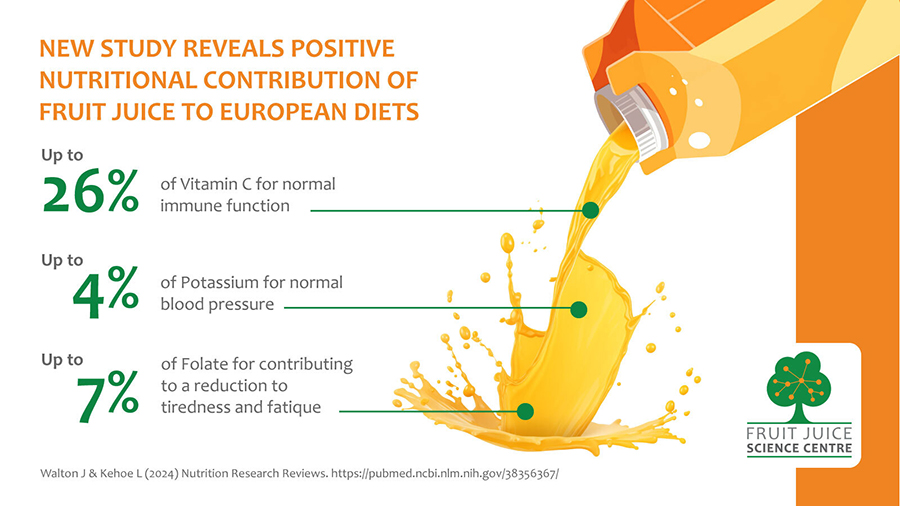
Accounts for up to 26 % of children’s vitamin C intake, and up to 19 % in adults
Contributes up to 4 % of daily potassium, which supports normal blood pressure
Provides up to 7 % of daily intake of folate which supports a healthy pregnancy
Only contributes up to 14 % of free sugar in people’s daily diets, compared with up to 92% from products containing added sugar such as soft drinks, biscuits, sweets, chocolate and cakes
(Photo: Fruit Juice Science Centre)
Drinking 100 % fruit juice has a negligible impact on daily calories but accounts for up to a quarter of children’s vitamin C intake and is an important source of other vital nutrients, according to a new study1 which highlights the importance of juice in a healthy diet.
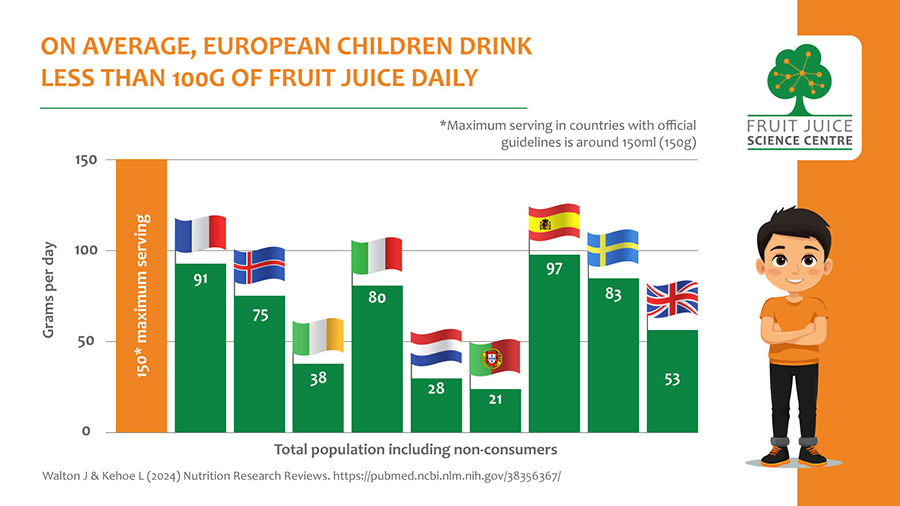
Because fruit juice contains natural sugar, some policy makers and researchers have expressed concern that it could lead to weight gain, if consumed regularly. But a new analysis of national dietary surveys across 14 European countries for which data were available, found that people who drink fruit juice consume on average just 137 g per day, lower than the recommended serving size of 150 – 200 ml2 that exists in some countries.
This equated to just 20 – 40kcal per day, or 1 – 2 % of a child’s or adult’s average daily energy intake, which would not be expected to have an impact on body weight.
In contrast, the average daily serving of 100 % fruit juice across each age group across Europe was enough to make a significant contribution to daily intakes of vitamin C, which is vital for immune function and boosts iron absorption.
The study, published in the journal, Nutrition Research Reviews, found that fruit juice was responsible for 4 – 20 % of daily vitamin C intake in infants, 6 – 26 % in children, 8 – 20 % in teenagers, 8 – 19 % in adults and 6 – 19 % in older adults.
The study’s lead author, Dr Janette Walton from Munster Technological University in Cork, said: “Fruit juice is a major contributor to vitamin C intakes in children and adults. Given that too few people eat the recommended 5-a-day of fruit and vegetables, fruit juice is a convenient and nutritious food in the diet”.
The researchers also found that fruit juice accounted for 2 – 4 % of daily potassium, which supports normal blood pressure and has been found to be lacking in people’s diets according to the European Food Safety Authority (EFSA), and 1 – 7 % of daily intake of folate which supports a healthy pregnancy and is commonly too low in the diets of most women of childbearing age.
Meanwhile, the natural sugar in 100 % fruit juice, which comes entirely from the fruit, contributed to just 2 – 14 % of free sugar in people’s daily diets, compared with 48 – 92 % which is estimated to come from “optional” products containing added sugar such as soft drinks, biscuits, sweets, chocolate and cakes.
(Photo: Fruit Juice Science Centre)
Unlike sodas, nectars or other drinks, 100 % fruit juice never contains added sugars and cannot be diluted with water under European law.
Dr Walton continued: “Our findings showed only a modest contribution of fruit juice to free sugars. In contrast, a recent review found that sweet foods and drinks with added sugars are the major sources of added sugars across Europe, contributing half to more than 90 % of intakes).
“This highlights the importance of targeting sugar reduction strategies for discretionary/’top-shelf’ foods which are not recommended in food-based dietary guidelines. Unlike fruit juice whose composition is controlled by law, these types of products can be legally reformulated to reduce their sugar content”.
More broadly, the authors of the study highlighted the lack of data on 100% fruit juice consumption in many countries in Europe, such as Germany, which they said makes it difficult to set Europe-wide policies without an accurate view of normal consumption levels.
1Walton J & Kehoe L (2024) Current perspectives and challenges in the estimation of fruit juice consumption across the lifecycle in Europe – PubMed (nih.gov) 2Equivalent to 150 – 200 g since 1 gram = 1 ml.
A survey carried out by independent audits firms with each of CitrusBR members, and subsequently consolidated confidentially by an external audit, found that the global inventories of Brazilian orange juice, converted into FCOJ Equivalent, held by CitrusBR members on December 31st, 2023 were 463,940.92 tons. Although representing an increase of 6.7 % in comparison to the 434,943 tonnes from the previous season, this number is the second lowest figure in the historical series. The disclosure of final processing data and industrial yield on fruit will be done by CitrusBR later in 2024.
The next ERBSLÖH Juice and Fruit Wine Seminar is just around the corner and there are still a few places left!
From Thursday, 21 March to Friday, 22 March 2024, the ERBSLÖH Juice and Fruit Wine Seminar will take place in Rotenburg an der Fulda (Germany) – this year in cooperation with Bucher Unipektin AG!
Please download the full programme. (Photo: Erbslöh)
ERBSLÖH Geisenheim GmbH is a medium-sized and internationally active company in the Rheingau. Since 1964, the company has focussed on beverage technology. With its innovative products and processes, ERBSLÖH focuses on the needs of its customers. In addition to the fruit juice processing sector, the company also offers solutions for the wine, beer and spirits industries. Yeasts, nutrients or enzymes – ERBSLÖH is up to any challenge.
Bucher Unipektin AG is a competent partner and supplier of individual machines and complete systems for solid-liquid separation, filtration, juice treatment and concentrate production. The beverage technologies are mainly used for the production of fruit juices and purees as well as in beer filtration.
The seminar’s lecture programme will cover various interesting topics, with experts from theory and practice talking about their experiences in the industry. Among others, Dr Michael Welte from Bucher Unipektin AG will report on dealcoholisation technology. Stefan Wenghoefer from ERBSLÖH Geisenheim GmbH will give an overview of plant proteins as a gelatine alternative. Dr Christof Steingaß from Hochschule Geisenheim University will speak about the production of pineapple juice using innovative technologies and Petros Kapasakalidis from Hellenic Juices will talk about the different quality aspects in the production of citrus essential oils.
The full programme, all information about the two-day seminar and the opportunity to register can be found on the ERBSLÖH website at www.erbsloeh.com
Scientists in Germany have discovered a new ‘super’ apple juice which has the potential to improve heart health by boosting blood flow1.
Researchers at Hochschule Geisenheim University, near Frankfurt, have found a way to maximise polyphenols in apple juice by using a novel squeezing method called a spiral filter press which actively takes out oxygen by vacuum-driven pressing. Moreover, they ensured that oxygen is excluded from all other processing steps, therefore reducing nutrient deterioration.
The new study, published in Food Research International, found that this new method boosted polyphenol content by four times as much as regular apple juice. Polyphenols are natural plant compounds found in fruit, red wine, and cocoa which are known to have a range of health benefits for the heart and brain.
A 280 ml serving of the new apple juice would be enough to provide 100 % of the ideal intake for a key group of polyphenols, called flavan-3-ols, which help promote a healthy blood flow. The ideal intake of 400 – 600 milligrams per day for cardiovascular health was proposed by an international consortium of scientists in 20222.
The British Heart Foundation estimates that there are 7.6m people living in the UK with heart or circulatory diseases3. Meanwhile, data from the 2021 census show that 32 % of adults suffered from high blood pressure (hypertension) and 3 in 10 of those (29 %) were undiagnosed; equating to approximately 4.2 million adults with undiagnosed hypertension4.
Lead author of the paper, Professor Ralf Schweiggert, commented: “Apple juice is already a source of polyphenol compounds, but you would need to drink several glasses to reach the levels recommended by scientists for heart health effects. The new juicing method that we’ve investigated takes the polyphenol content to a new level by minimising the nutrient losses we typically see during juicing.”
Co-Researcher of the study, Stefan Dussling, said: “Nutrient losses are commonly due to the presence of oxygen which quickly degrades some of the nutrients in apple juice like flavan-3-ols or vitamin C. This would happen when we juice apples at home or buy a ready-made product. We hope that the new juicing method will be used more widely in the future to help people get more of these beneficial natural compounds simply by drinking one glass of juice”.
According to market insights provided by Fact.MR, a renowned market research and competitive intelligence provider, the global apple juice concentrate market is anticipated to reach a valuation of USD 4.67 billion in 2024. The market is poised to witness a steady growth with a projected Compound Annual Growth Rate (CAGR) of 5.5 % between 2024 and 2034.
Apple juice concentrates, known for their versatility, have become a prevalent ingredient in a wide range of food and beverage products. The rising consumer inclination towards natural and healthier beverage options is fueling a robust demand for apple juice concentrates on a global scale. Noteworthy within the market is the ongoing trend of continuous product innovation. Leading manufacturers are actively engaged in developing organic and non-GMO variations of apple juice concentrates. Additionally, they are exploring novel flavors and blends to cater to the diverse preferences of consumers.
The key segments highlighted in the Apple Juice Concentrate Industry Research Report include growing consumer awareness and an increasing demand for clean-label products. Manufacturers are responding to these trends by placing a strong emphasis on environmentally friendly and transparent supply chain practices in the production of apple juice concentrates. This reflects a broader industry commitment to sustainability and responsible sourcing.
Key takeaways from market study
The global apple juice concentrate market is forecasted to reach USD 8.01 billion by the end of 2034.
Apple juice concentrate sales in the United States are predicted to rise at a CAGR of 4.9 % from 2024 to 2034.
Preference for organic products and a rich culinary culture is generating lucrative opportunities for apple juice concentrate producers in Germany.
Demand for apple juice concentrates in Japan is estimated at a market value of USD 120.6 million in 2024.
Organic apple juice concentrate sales are projected to reach USD 3.06 billion by the end of 2034.
“Rising trend of healthy food habits is boosting the demand for apple juice concentrates as natural and nutritious food ingredients,” says a Fact.MR analyst.
Winning strategy
Leading apple juice concentrate companies are focusing on continuous product innovations and forming strategic alliances to stay competitive. Product differentiation, sustainable practices, and agility in responding to market trends are key factors shaping market competition.
The landscape of the apple juice concentrate industry is marked by a diverse array of participants vying for substantial market shares and consumer attention. This includes not only prominent multinational corporations but also regional producers.
Established brands with a rich history command a strong presence in the market. Their enduring reputation, expansive distribution networks, and dedicated consumer following contribute to a competitive advantage and significant revenue streams.
In 2019, Coca-Cola India, a subsidiary of the renowned beverage conglomerate Coca-Cola, introduced a groundbreaking beverage product called Minute Made Apple Sparkle. This innovative addition was meticulously crafted using the finest Kashmiri apples and fell under the overarching brand name Minute Maid.
Key manufacturers of apple juice concentrate are Juice Generation, Hain Celestial, CEDAR Juice, Juice Warrior, Rauch Fruit Juice, Tree Top, and Huiyuan Juice.
Many German consumers highly value product quality and authenticity, creating an opportunity for apple juice concentrate producers to cater to this preference. By emphasizing premium quality and transparent sourcing practices, producers can tap into the demand of a consumer base that appreciates genuine and traditional appeal.
In Germany, the environmentally conscious consumer demographic actively seeks products with sustainable and eco-friendly production practices. The trend towards sustainability is particularly evident in the rising demand for organic apple juice concentrate products. Producers meeting this preference for organic options are not only aligning with consumer values but also securing substantial profit shares in the German market.
In the United States, an increasing awareness of health and wellness is fueling a demand for natural and healthier beverage choices. Apple juice concentrates, being versatile and widely used ingredients, align with consumers’ preferences for nutritious options.
The adaptability of apple juice concentrates in various food and beverage applications is another factor contributing to their steady demand. These concentrates serve as sweetening agents, extracts, flavor enhancers, and base ingredients in a wide range of products, including juices, sauces, and bakery items.
Mupy, a reference brand for soy drinks with fruit juice, and SIG, a leading solutions provider of packaging for better, recently signed a partnership for SIG to provide carton packs and filling services to Mupy via a copacker.
Mupy is projecting growth for the coming years and packaging solutions from SIG will play an integral part in achieving their target of doubling turnover by 2025. Mupy, under the new management of Alexandre Moreno, had revenues of 115 million reais and produced 11.7 million liters of soy drinks with fruit juice in 2023.
In order to achieve future growth with soy and juice beverages, Mupy relies on the high speed and flexible filling machines from SIG. The efficiency rate in the production process is very high, with a waste rate of just 0.5 %. In addition, SIG’s filling machines provide maximum flexibility and make it possible to fill products of different categories and viscosities in different volume sizes on one and the same filling machine.
Mupy offers its soy and juice drinks in the flavours grape, pineapple, apple, passion fruit, strawberry, orange, and peach in two SIG carton formats: SIG MiniBloc 200 ml and SIG MidiBloc 1,000 ml.
The combination of juice and soy milk allows Mupy to diversify its product offerings within the juice or plant-based drinks category, catering to a health-conscious market while at the same time tapping into the growing demand for plant-based alternatives, thereby enhancing market competitiveness and meeting the evolving preferences of consumers.
The South American market for plant-based products has been growing in recent years, according to The Good Food Institute Brazil (GFI). The plant-based drinks market grew by 15 % in 2022 and is expected to have an average annual expansion of almost 12 % by 2027. According to data from Bloomberg Intelligence, Brazil is the largest consumer of plant-based foods in Latin America, followed by Mexico, Chile and Argentina.
Today’s consumers are seeking more balanced and nutritious beverage options. The beverage blend of soy and juice offers a unique fusion of fruity flavours from the juice, the creamy texture of soy milk and notable health benefits of soy. Soy is a rich source of plant-based protein, making the beverage an excellent option for individuals looking to increase protein intake. Additionally, soy contains essential amino acids, fiber, and various vitamins and minerals, contributing for instance to immune health. The combination of the nutritional advantages of soy reinforces the appeal of the juice for both health-conscious consumers and producers aiming to offer a wholesome beverage option.
Renata Kasahara, Head of Marketing America South at SIG: “With our agile and flexible filling system, customers are well positioned to respond efficiently to any trend that is shaping the market.”
Consumer demand for plant-based products has been driven by the search for a healthier diet and products that are more sustainable. “Carton packaging is among the most sustainable packaging options. 75 % of its composition is paperboard from renewable sources and at SIG, 100 % of the paperboard we source is FSCTM-certified. All of the aluminum we purchase for SIG aseptic carton packs is certified against the Aluminium Stewardship Initiative Standards and we produce all our cartons with 100 % renewable electricity. In other words, opting for SIG means responsibly sourced and sustainably produced packaging to meet the demands of Mupy’s consumers”, Renata adds.
With success in 2023, Mupy’s ambitions for the coming years are high. Alexandre Moreno, the company’s CEO, is optimistic about 2024: “In 2023 we grew by more than 22 % compared to 2022 and our plan is to double our turnover by 2025. For this, the partnership between Mupy and SIG is fundamental.”
Contrary to concerns – oft repeated on social media – that the manufacturing process destroys the nutritional value of shop bought 100 % orange juice, researchers from leading universities in Spain and Italy have found levels of polyphenols – valuable bioactive compounds linked to health – are similar in home-squeezed and shop-bought juice.
The study, published in the International Journal of Food Sciences and Nutrition*, compared the most popular shop bought orange juices in the UK, Germany, France and Spain against freshly squeezed ‘Navelina’ oranges. It found that while home squeezed juice contains more vitamin C than shop-bought equivalents, this degrades significantly over time and is expected to reach shop bought juice levels after a week.
The study also established that shop bought orange juice contains 94 % of European recommendations for daily vitamin C intakes – set at 90 mg for men and 80 mg for women – meaning only a minor impact on consumers from a nutritional standpoint.
Vitamin C, found in fruits and vegetables, is essential for human health since it can’t be synthesised by the body and is involved in many biochemical functions including immunity, neutralising free radicals, iron absorption, bone formation and synthesis of collagen. Low intakes can be noticed as poor wound healing and gum inflammation.
Lead scientist in the study, Dr Cristina Viguera from the Department of Food Science and Technology at CEBAS-CSIC, said: “Our research indicates that there’s limited nutritional advantage to spending time home squeezing oranges when you can obtain similar levels of polyphenols and most of the vitamin C you need from a good quality shop bought version.
“We also found that shop bought orange juices preserve their bioactive compounds during storage and the brand, country or manufacturing process made little difference to the polyphenols or vitamin C. Overall, orange juice is still a rich source of vitamin C whether it’s freshly squeezed or purchased”.
*Salar et al. (2024) Comparison of vitamin C and flavanones between freshly squeezed orange juices and commercial 100 % orange juices from four European countries. https://pubmed.ncbi.nlm.nih.gov/38230429/.
The AIJN (European Fruit Juice Association) announced a change in the Presidency. Javier Lorenzo Benavides, CEO of Eckes-Granini Ibérica, representative of the Spanish Fruit Juice Federation, member of the AIJN Board of Directors since April 2016, took over the Presidency on 1 January 2024 for a two-year term. Javier was born in Madrid in 1962. He has a degree in Psychology and a Postgraduate Degree in Psychology for Industrial and Business Organisations. He has been working in the consumer goods industry for more than 30 years. He worked throughout his professional career in companies such as P&G, Gillette and Reckitt Benckiser before joining Eckes-Granini in 2011.
The position of treasurer has also been handed over. Thomas Brandstaetter, current Managing Director of the company Zipperle and representative of the Italian Fruit Juice Association has taken over from Thomas Mertens from the German Fruit Juice Association.
The non-pretentious, 100 % juice that’s disrupting the status quo in the juice aisle.
Introducing Revl Fruits™, a new premium juice brand. Revl Fruits was born to fill the “joy gap” in the premium juice market – a market that often asks consumers to compromise value and taste. Revl Fruits is the joyful, bright, flavour-bursting antidote to its dusty counterparts with attributes consumers desire – 100 % juice, 25 % less sugar* no GMOs or added sugar.
Crafted with a splash of coconut water, Revl Fruits’ 100 % juice range is meant to be enjoyed morning, noon, and night, served chilled, or included in your favourite concoction. The four flavours include:
Boldly Cran™: Packed with cranberries’ bold, tangy essence and naturally low sugar, Boldy Cran spotlights the naturally rich flavour of cranberries.
Tart Cherry: Tart Cherry is a celebration of this vibrant fruit. Each sip delivers the distinctive tartness that cherry enthusiasts crave.
Berry Wild: A fusion of nature’s most vibrant superfruits, cranberry, pomegranate, and açaí, Berry Wild is crafted to perfection and straight-up yum.
Truly Tropical: Featuring an enchanting blend of pineapple and mango, Truly Tropical will take you on a vacation with each sip.
Revl Fruits was designed with the planet in mind; it’s one of the only shelf-stable juices available in a 32 oz. Tetra Pak® carton. More than 70 % of the weight of the carton is made of paperboard, and the cap is made of bio-based plastic derived from plant-based renewable materials.
“For a long time, consumers have been forced to choose between products that fit their wellness lifestyle and meet their sustainability values while conceding on taste, joy, and value,” said Christina Zwicky, Head of Brand Marketing for Revl Fruits. “Revl Fruits believes that premium juice doesn’t have to mean heavy glass bottles, excessive pricing, a boring experience, or lackluster taste. Revl Fruits allows consumers to celebrate the joy of juice without the compromise.”
Recently, Revl Fruits flexed its brand ethos in a way that was as bold as its fruit. In LA, a town known for constantly changing health and wellness fads, Revl Fruits launched two billboards that declared that “good juice shouldn’t cost $15.” The billboards remarked on the cultural truth that good-for-you premium juices are becoming prohibitively expensive to the average consumer, further widening the compromise shoppers must make between value and wellness.
Depending on flavour, Revl Fruits SRPs are between $4 – $8. All flavours are available on Amazon.com, select Save Mart locations, and Gelson’s Market, and will be rolling out to additional retail stores in the US throughout 2024.
*Revl Fruits juices have at least 25 % less sugar (21 g sugar per 8 FL OZ) compared to the leading brand of 100 % juice (28 g sugar per 8 FL OZ)
About Revl Fruits™ Revl Fruits™ is a premium juice brand designed to be refreshingly different. The premium juices are available in four varieties: Boldly Cran™, Tart Cherry, Berry Wild, and Truly Tropical. Revl Fruits™ was designed with the planet in mind, with Tetra Pak® packaging made from mostly plant-based materials. All products contain a splash of coconut water, are 100 % juice, have 25 % less sugar than leading competitors, and have no GMOs or added sugar. Revl Fruits™ is a product of Ocean Spray Cranberries, Inc.
Ingredion leads investment round to accelerate start-up’s advanced technology for naturally reducing sugar
FoodTech start-up Better Juice, Ltd., announced its collaboration with Ingredion, Inc., a leading global provider of specialty ingredients to the food and beverage industry. Ingredion Ventures, Ingredion’s venture investment arm, will lead the Series A funding round for Better Juice which will fast-track penetration of its breakthrough sugar reduction solution into the US juice market.
Better Juice’s innovative sugar reduction technology removes simple sugars in juice-based beverages, concentrates and other natural sugar-containing liquids. The Company developed an enzymatic technology, which converts sugars into non-digestible compounds, such as dietary fibers and non-digestible sugars, while maintaining the natural profile of vitamins, minerals and organic acids in the final product.
“This important partnership step is truly exciting,” enthuses Gali Yarom, co-founder and co-CEO of Better Juice. “It dovetails perfectly with the Better Juice strategy to penetrate the North American market. Ingredion was impressed by our non-GMO technology, and its uses in a wide variety of applications. This move will open doors to leading food and beverage companies seeking sugar-reduction solutions for their products.”
“The Better Juice technology adds a completely new dimension to our portfolio of sugar reduction solutions for food and beverage brands on a mission to meet increased consumer demand for less sugar,” says Nate Yates, Sugar Reduction Business Leader at Ingredion. “This technology also provides manufacturers with more options to successfully reduce sugar without compromising on great taste or nutrition.”
Clean-label conversion
The environmentally friendly clean-label conversion process applies proprietary beads composed of non-GMO microorganisms which produce enzymes. These enzymes convert the juice’s composition of fruit sugars including sucrose, glucose, and fructose into better-for-you prebiotic fibers and other non-digestible molecules. This enables sugar reduction by 30 to 80 percent.
“This alliance will accelerate our go-to-market journey,” explains Eran Blachinsky, PhD, co-founder and co-CEO of Better Juice. “Ingredion’s capital support will allow us to extend the technology to other liquids with natural sources of sugar, such as milk, beer, and wine.”
This achievement follows Better Juice’s well-established partnership with GEA Group, one of the largest suppliers of food processing technology.
Better Juice primed for commercialisation
Better Juice’s solution has successfully advanced to commercial scale in the U.S. In recent years, it demonstrated its full proof of concept in collaboration with juice manufacturers in the U.S. and Asia. These companies are now poised to progress to the next stage of commercialisation. Better Juice is now fully prepped for market entry, with a capacity to process 250 million liters of sugar reduced juice per year.
Since 2022, the groundbreaking GEA Better Juice Sugar Converter Skid is included in GEA’s test center in Ahaus, Germany. Better Juice collaborates with GEA for manufacturing the bioreactor, and together they install the technology in customers’ facilities.
“Better Juice has achieved important milestones in the past two years and has positioned itself as the leading company for reducing simple sugars from natural sources,” notes Amir Zaidman, VP of The Kitchen Hub. “The timing is perfect for serving the rapidly expanding trend of consumers striving to cut down on simple sugars in their diet.”
About Ingredion Ingredion, Inc. (NYSE: INGR), headquartered in the suburbs of Chicago, is a leading global ingredient solutions provider serving customers in more than 120 countries. With 2022 annual net sales of nearly $8 billion, the company turns grains, fruits, vegetables, and other plant-based materials into value-added ingredient solutions for the food, beverage, animal nutrition, brewing, and industrial markets. With Ingredion Idea Labs® innovation centers located around the world, and approximately 12,000 employees, Ingredion co-creates with customers to fulfill its mission of bringing the potential of people, nature, and technology together to make life better.
In 2024, orange prices paid to citrus growers in São Paulo/Triângulo Mineiro may remain at high levels. The supply may continue to be lower than the industrial demand, keeping the availability limited in the in natura market.
So far, there are no solid aspects that allow to project the volume that will be harvested in the 2024/25 season; however, the orange juice supply may not be enough to meet the demand, especially because of the expectation of low juice stocks in June 2024.
CitrusBR says that the volume in stocks by the end of the 2022/23 season (in June/23) was only 84.745 thousand tons equivalent to concentrate juice. Cepea calculations based on the orange production forecast by Fundecitrus indicate that the volume in stocks by the end of the current season (2023/24, in June/24) may not be higher. This scenario may be reinforced in case exports continue intense and the productivity remains below-average.
Therefore, it would be important if the orange volume harvested in São Paulo and in Triângulo Mineiro is above the average over the last years in order for the processed volume to meet exports and allow a recovery in stocks by June 2025. However, challenges faced in the second semester of 2023 (greening and heat waves) may bring difficulties for a good harvest in 2024/25.
It is worth noting that Brazil does not have major competitors regarding the global orange juice supply. Mexico, an important supplier for the US market, has been facing difficulties in the production, especially because of the dry weather, while Florida has been facing the impacts of greening. In this scenario, a decrease in the Brazilian availability might affect the world orange juice supply.
Investments
Although the profitability scenario had been positive in 2023, major investments in São Paulo are not expected for 2024, due to the high incidence of greening. The planting can continue firm in Triângulo Mineiro, but the availability of soil and water for irrigation are limited.
2023 was a very positive year for the citrus activity in São Paulo state and in Triângulo Mineiro concerning prices received by citrus farmers. Orange values were at firm levels during the year in both the in natura market and at the industry – in this segment, quotations hit record levels in real terms, allowing a year of good profitability.
This scenario is explained by the lower supply compared to the demand, despite the fact that the 2023/24 production is on average. Orange juice stocks started the season at low levels, and there was the need to purchase the raw material in order to prevent a significant decrease of stocks at the end of the current season. Moreover, the orange juice demand is firm in the international market, especially from the US, country that has been registering limited production for years due to greening (HLB) impacts.
In November, prices of orange to the industry hit real records, considering Cepea historical series, which has started in October 1994 (monthly values were deflated by IGP-DI October/23).
Orange production
The 2023/24 orange season in São Paulo state and in Triângulo Mineiro may decrease 2.2 % compared to the previous, according to Fundecitrus. The total volume is forecast at 307.22 million boxes, 0.7 % smaller in relation to the first estimate, released in May.
The decrease is related to above-average rains, which increased the incidence of blossom-end rot, to the negative biennial cycle (except in the north), the lower volume of flowers verified in some late variety trees and to the intensity of greening.
It is important to mention that this volume is below the need of the industry to meet the international demand and increase juice stocks, which are very low. According to CitrusBR, the volume in stocks hit the lowest level in 12 years, totaling only 84.745 thousand tons of volume equivalent to concentrate juice by the end of the 2022/23 season (June/23), downing 40.7 % compared to the previous crop. These critical numbers arise serious concerns about the global orange juice supply.
Tropicana introduces “Tropcn”, a new limited-edition packaging – now with the letters “AI” removed from their name – to celebrate the leading orange juice brand’s1 natural ingredients, highlighting the fact that there is nothing artificial, and never has been anything artificial, in Tropicana Pure Premium orange juice. America’s favourite OJ2 has been made from natural oranges, picked at the pinnacle of ripeness, and squeezed within 24 hours to create 100 % juice for more than 75 years.
Each week, there seems to be a new development in artificial intelligence. Each new AI advancement seemingly brings us closer to the artificial world and further from the natural. Consumer intrigue, and even concern, is high. In fact, searches for “What is AI?” increased by 643 % from 2022 to 20233. So, to celebrate the natural ingredients and nothing artificial in Tropicana Pure Premium orange juice, Tropicana is heading to the biggest consumer electronics event, CES 2024 (January 9-11), to release a limited-edition package of “Tropcn” Pure Premium orange juice.
“Our limited-edition run of ‘Tropcn’ orange juice bottles represents our ongoing commitment to delivering the highest quality 100 % orange juice to Americans,” said Monica McGurk, CEO of Tropicana Brands Group’s North American business unit. “Since 1954, Tropicana has been at the forefront, innovating ways to bring fresh-tasting orange juice from natural oranges to breakfast tables nationwide. Artificial just isn’t in our DNA.”
Not attending CES 2024 in Las Vegas? Tropicana has hidden bottles of “Tropcn” across participating Kroger Family of Stores in the US. If you find a bottle in the wild, scan the code and enter for a chance to win a trip to the original orange juice state, Florida.
Tropcn was created in partnership with Tropicana’s creative agency of record, Cramer-Krasselt, PR agency of record, MullenLowe PR, and social agency of record MullenLowe US.
1Source: IRI MULO+C, L52 Weeks, YE 2Source: IRI MULO+C, L52 Weeks, YE 11/26/23 11/26/23 3Mason Frank International
bound4blue and Louis Dreyfus Company (LDC) announced a commercial agreement for the manufacture and installation of four eSAILs® on LDC’s chartered juice vessel, MV Atlantic Orchard, in collaboration with Wisby Tankers AB, Sweden.
Chartered by LDC and owned by Wisby Tankers, MV Atlantic Orchard will be retrofitted with four 26-meter-high eSAILs®. The installation of the eSAILs® is planned for 2024 and, depending on vessel routing, is expected to reduce annual fuel consumption and CO2 emissions by at least 10 %.
Being one of the key actors in the advancement and execution of maritime decarbonization solutions, bound4blue developed its cutting-edge eSAIL® system based on wind-assisted propulsion technology known as a suction sail. By harnessing wind power to propel vessels, this technology achieves a substantial reduction in fuel consumption and pollutant emissions. The eSAIL® system leverages a thick aerodynamic profile and intelligent suction mechanisms to enhance propulsive efficiency, yielding seven times more lift than an airplane wing.
The decision to implement this technology was based on a third-party assessment study carried out by Lloyd’s Register, which evaluated a range of solutions and identified bound4blue’s suction sails as the most promising.
The Mintec Benchmark price (MBP) for apple juice concentrate medium acidity is currently assessed at EUR 1900/MT, up 8.5 % m-o-m and 28.8 % y-o-y.
Apple production in Europe has been revised by The World Apple and Pear Association (WAPA) to be no more than 11 million tonnes down 4 % from the initial forecast. Poland, Europe’s top apple producer, is expected by the industry to yield around 3.3 million tonnes in 2023, 700 000 tonnes lower than WAPA’s August forecast.
Processing is reaching completion with most processors finished for the season. Market sources said that Polish apple juice concentrate production will be around 230,000 tonnes. Demand is strong throughout Europe, but supply is limiting trade and subduing the market, according to market sources, most apple juice is concluded under contracts. Many buyers were expecting a drop in price as the processing season came to an end, yet this never occurred.
China has also had a challenging apple season with a lower crop than normal. According to market sources, the industry expects apple juice concentrate production in China to reach approximately 300,000 tonnes in 2023, which is well below typical levels that often exceed 500,000 tonnes. Market sources have said that some of China’s juice has been imported into Turkey and blended domestically. Market sources suggest bullish expectations for the industry in upcoming months as supply and demand dynamics tighten.
Avantium N.V., a technology company in sustainable chemistry, is collaborating with Albert Heijn to make packaging more sustainable. To this end, Avantium’s 100 % plant-based and circular material PEF (polyethylene furanoate) is being used for various forms of packaging. Refresco, a global independent beverage solutions provider for Global, National and Emerging (GNE) brands, and retailers, produces Albert Heijn’s new fruit juice bottle made out of PEF. This will be the first PEF application to be introduced in Albert Heijn stores, once Avantium’s commercial plant for PEF is operational. Albert Heijn is the first supermarket chain in the world to introduce PEF packaging for own-brand products.
“As a beverage solutions provider, we are continuously looking for innovative ways to produce soft drinks, fruit juices and other drinks. Reducing, recycling and making packaging more sustainable is an important element of our strategy. With PEF we are able to offer an alternative sustainable packaging solution to our customers. We are therefore pleased that Refresco, Avantium and Albert Heijn are now working together to bring this new fruit juice bottle to market.”, says Alexander van Assouw, Managing Director Refresco Benelux.
Avantium’s PEF is a 100% plant-based and fully recyclable polymer with a wide range of applications including bottles and packaging, films and textiles. In addition to its sustainable packaging benefits, Avantium’s PEF has superior barrier properties, extending the shelf life of beverages and food. Avantium is currently constructing the world’s first commercial plant in Delfzijl for 5 kilotons of FDCA (furandicarboxylic acid), the key building block for PEF, with commercial production expected to start in the second half of 2024. Thereafter, PEF production will be further scaled up to plants of 100 kilotons and more for large-scale production of FDCA and PEF through technology licensing.
The revision aims to help consumers make informed and healthier decisions on agri-food products such as honey, fruit juice, jam, jellies and marmalades.
On 12th December, Parliament adopted its position on the revision of the so-called ‘breakfast’ directives with 522 votes in favour, 13 against and 65 abstentions. The proposal updates rules on the composition, name, labelling and presentation of certain ‘breakfast’ foodstuffs.
Clear labelling of country of origin
MEPs agree that the country where honey has been harvested must appear on the label. They add that for fruit juices, jams, jellies, marmalades and sweetened chestnut purée the country of origin of the fruit used must also be indicated on the front-label. If the honey or fruit used originates in more than one country, MEPs want the countries of origin to be indicated on the label in descending order according to the proportion they make up of the final product.
To limit fraud, MEPs want to set-up a traceability system for the honey supply chain to track product origin. They also want the EU to form a reference laboratory for honey to improve controls and to detect adulteration through systematic testing.
Sugar content labelling
MEPs propose that the label ‘contains only naturally occurring sugars’ should be allowed for fruit juices. To meet the growing demand for low-sugar products, reformulated fruit juices may be labelled ‘reduced-sugar fruit juice’.
New techniques that remove naturally occurring sugars in fruit juices, jams, jellies or milk should not lead to the use of sweeteners to compensate for the effect of sugar reduction on the taste, texture and quality of the final product, MEPs say. They add that labels of the reduced-sugar foodstuff must not contain claims regarding positive properties, such as health benefits.
Next steps
Parliament is now ready to begin talks with EU governments on the final shape of the law.
Background
The revision of EU marketing standards for certain ‘breakfast’ directives was proposed by the European Commission on 21 April 2023 to update current standards that are more than 20 years old.
The combination of low orange supply and firm demand over the last weeks, due to high temperatures, has been keeping prices on the rise in both the in natura market and at the industry.
Orange prices have been hitting records in both segments – as for fruits to the industry, the current average is a real record, considering the Cepea series, which started in October 1994 (monthly prices were deflated by IGP-DI October). Even with an average crop, orange juice stocks at processing companies are low, resulting in a fruit supply that is lower than the demand.
In November, pear oranges are traded in the in natura market at BRL 58.90 per box, 45.9 % higher than in November last year (in real terms) and the highest of Cepea series, in nominal terms. In real terms, the current average is the highest since March 2019 and the fourth biggest considering the months of November.
Prices for pear orange and late varieties sent to the industry, in turn, have averaged BRL 49.04 per box in November, soaring 60.3 % compared to November/22, in real terms, and the highest of the series.
The supply in Brazil is expected to be lower than the demand at least until the end of the crop. The following season can still register a limited availability, considering that current OJ stocks may not recover at the end of the 2023/24 crop. In case the 2024/25 season continues on the average, stocks may present a new decrease. Therefore, if the crop is below-average, the situation can be critical.
Elopak has announced plans to build its first U.S. production plant with the latest state-of-the-art technology for better and more efficient production. The plant will produce Pure-Pak® cartons for liquid dairy, juices, plant-based products and liquid eggs. The new production facility will be located in Little Rock, Arkansas and is expected to start production in H1, 2025.
It represents a significant investment for the region of around USD 70 million including the land, the building and the equipment.
Following the investment announcement in June 2023, the company has evaluated different financing opportunities and concluded to own and fully finance the plant on the balance sheet. Hence, the nominal cost of the investment will be recognized in the balance sheet instead of the discounted value of the lease payments, increasing the reported investment by around USD 15 million. This is economically more profitable for Elopak compared to partly leasing, which was assumed in June. Further, around USD 5 million is added to the investment to further optimize the scope of the project and support further long term growth.
Since the announcement in June, we have signed contracts with some of our existing customers in the region, further strengthening the investment case.
The new plant will create more than 100 permanent jobs in the region for engineers, printers, operators, logistics specialists and other support groups.
“This is our first converting plant in the U.S. and a landmark investment for our company. North America is a key building block for our future growth and we are very excited to expand our presence in the region. I would like to thank all parties involved for enabling the next step in our North American growth journey” says Thomas Körmendi, CEO of Elopak.
Offshoot Brands, a visionary entity fostering plant-forward brands like Love Beets, Genuine Coconut, and Veggie Confetti, and Canadian-based LOOP Mission, a formidable force against food waste and producer of cold-pressed juices, announce their exclusive partnership into the US market, blending sustainable, innovative beverage options with a powerful environmental ethos.
On an endeavor to reduce food waste and champion sustainability through innovative product lines, Offshoot Brands welcomes LOOP Mission to its portfolio, where it will lead sales and marketing initiatives for the beverage brand across the expansive US market. This collaboration ensures the amplification of LOOP’s mission to valorise rejected food, while simultaneously aligning with Offshoot’s ambition to bring more sustainable options to the retail landscape for consumers.
LOOP Mission operates with a distinctive and sustainable business model, partnering with major food industry entities to utilise perfectly edible products, which, due to aesthetic imperfections or shelf-life limitations, are discarded before reaching consumers.
Select LOOP Mission products will now be available for US retailers, expanding the avenues through which consumers can access sustainable, high-quality beverage options.
LOOP Mission will harmoniously integrate into Offshoot Brands’ portfolio, embracing and extending the brand’s existing values and commitments to sustainability. Offshoot Brands, which is actively working with farms to attain certified regenerative status and employs whole crop utilisation to mitigate food waste, sees LOOP Mission as an embodiment and extension of these practices.
This partnership is a stride toward further amplifying Offshoot’s existing sustainability initiatives, with prospects to potentially intertwine resources and minimise waste across all brand lines.
Millions of Brits could be more susceptible to winter cold and flu as they are not stocking their fridges and cupboards with the right food and drink due to not knowing the vitamins and minerals that can help improve their immunity, a new study has revealed.
A survey of UK adults by the Fruit Juice Science Centre and Savanta ComRes found that while most (84 %) correctly identified vitamin C as a key nutrient for optimal immunity, many weren’t able to identify the other vitamins and minerals which can help guard against winter illnesses.
When asked which nutrients can help natural immunity, fewer than four in 10 (38 %) correctly identified Iron, commonly found in foods such as red meat, lentils and spinach, while even fewer (32 %) chose vitamin E, which is contained in nuts and seeds, grapefruit juice and red peppers.
Selenium (9 %), found in eggs and poultry, and folate (8 %), found in many green vegetables and 100 % orange juice, were other immunity-boosting nutrients that few consumers know can help guard against flu. Copper (7 %), often found in shellfish and beans, was the least recognised of nutrients with government-backed immunity claims.
Despite three quarters (76 %) of Brits knowing that diet impacts natural immunity, this lack of understanding around vitamins and minerals means many are unsure which food groups they should be consuming. Only half (51 %) identified that 100 % fruit juice and smoothies can support immunity, with 46 % selecting fish and proteins such as beans and eggs. Just one in five (21 %) identified meat as a good source of the key immunity nutrients, iron and zinc.
The research also demonstrated the lasting impact that Covid-19 has had on our approach to winter illness. 55 % of Brits expect to catch a cold or flu this winter, which equates to more than 22 million people. Of these, 45 % will self-isolate if they develop a cold or flu, while 43 % will wear a mask.
Concerningly, more than a third of Brits (35 %) said they would still go into work despite being ill, raising the prospect of offices becoming hotbeds of sickness, while a quarter (26 %) said they wouldn’t wash their hands more frequently if they caught a winter illness.
Leading nutritionist, Dr Emma Derbyshire, commented: “Winter illnesses will hit many of us this year as we return to normal social situations yet it’s clear from this new survey that some are taking their eye off the ball on handwashing and staying at home to avoid infecting others. Whilst having a healthy diet can’t stop viruses, it can help us get over respiratory illnesses faster by supporting our natural immunity. An easy first step is drinking a daily glass of orange juice – just 28% of consumers understand it doesn’t contain any added sugar – which is a convenient and effective source of vitamin C and folate, both proven to support normal immune function”.
Emma Derbyshire’s five nutrition tips for winter immunity are:
Drink a daily glass of 100 % orange juice to naturally boost your intake of vitamin C and folate.
Aim for at least 5 daily servings of fruit and vegetables for their vitamin A content.
Choose wholegrain breakfast cereals, bread and rice as the fibre will promote friendly species of gut bacteria – a first line of defence against winter illnesses.
Have one serving of oily fish weekly which is rich in calming omega-3 fats and immune-supporting vitamin D.
Take a handful of Brazil nuts as a snack as these are high in selenium.
Elopak is rolling out a new filling machine with exceptional hygiene levels that gives fresh products a shelf life of up to 60 days. This machine is supported by a HEPA air management system, which is the result of extensive research and testing.
The next-generation filling machine is designed by Elopak and produced by the company’s long-term partner Shikoku. The HEPA filter system, stainless steel components and dual-step heating and sealing processes ensure the highest levels of hygiene, helping to extend the shelf-life of fresh products.
The machine’s self-cleaning and sterilisation features allow efficient switches between products, reducing food waste. The machine is versatile and fills gable top cartons from 250 ml up to 1.136 ml in Pure-Pak® carton formats.
In addition to improving hygiene standards, the machine has an upgraded safety design for operators. Hands-free cleaning and magnetic doors further ensure the operator’s safety and reduce the margin for human error.
The machine is designed to fill cartons with fresh and extended shelf-life dairy products, fresh and extended shelf-life juices, water, and plant-based drinks. All products with or without particles.
Patrick Verhelst, Elopak’s Chief Marketing Officer said: “Our new filling machine is manufactured to meet the highest quality and hygiene standards. It sets a new standard for fresh products by extending the shelf life to 60 days. A longer shelf life means less food waste in addition to making it easier for the consumer to choose environmentally friendly containers for their fresh milk or juice products.”
The newest juices blend adaptogens with the highest-quality produce, furthering the brand’s mission to provide authentically crafted juices to consumers in the US
Natalie’s Orchid Island Juice Company, the world-class juice brand known for crafting clean-label, mindfully sourced artisanal blends, announced the introduction of two tomato-centric blends: Red Tomato Reishi and Green Tomato Lion’s Mane. The expansion of Natalie’s Holistic Juice Portfolio is a natural evolution for the brand that has been handcrafting unrivaled juices for more than 30 years. Both blends are available to order on the Natalie’s Juice website and at Kroger, King Soopers, Fry’s, Ralphs, Smith’s, Fred Meyer and QFC in the US.
Tomatoes are a nutritional powerhouse, packed with vitamin C, potassium, fiber, folate and the antioxidants lycopene and beta-carotene. Diets rich in tomatoes have been shown to provide a range of health benefits, including a reduced risk of heart issues, lower risk of cancer and better skin health. Not only are tomatoes healthy—they are versatile and delicious, as proven by Natalie’s regeneration of the generational classic juice.
To recognise and celebrate both red and green varieties of the amazing tomato, Natalie’s created two first-of-their kind, fresh-pressed tomato juices that provide a clean source of hydration and support the entire wellness ecosystem. These blends each harness the power of thoughtfully sourced adaptogenic ingredients, alongside carefully selected non-GMO produce, including:
Tomato Reishi: Fresh-Pressed American Red Tomatoes, Reishi Mushrooms, Black Pepper, Himalayan Salt and Lemon
Tomato Lion’s Mane: Fresh-Pressed American Green Tomatoes, Tomatillos, Pineapples, Lime, Lion’s Mane Mushrooms and Himalayan Salt
The global NFC (not from concentrate) juice market is experiencing significant changes in consumer preferences, with a strong shift towards healthier and more natural beverage options. This trend is driving notable advancements in the food and beverage industry as consumers seek out less processed and more wholesome juice choices.
The global NFC juice market value is estimated to rise from USD 2.6 billion in 2023 to USD 3.8 billion by 2033. Over the assessment period, global sales of NFC juices are predicted to increase at a CAGR of 8.2 %. Demand in the market is expected to remain high for organic NFC juices. This is due to rising end-user preference for natural and organic fruits and juices. The target segment is projected to hold a market share of 58.1 % during the forecast period.
The NFC juice market is set to witness a robust growth trajectory during the forecast period. This is due to increasing consumer demand for healthy and sustainable food options. Today, consumers are willing to pay a premium for NFC juices. This is because they perceive them as healthier, and more nutritious than traditional juices made from concentrates or other processed sources.
NFC juices are often seen as a way to support local farmers and reduce carbon footprints, as they require less transportation and storage than imported concentrate products. This is also encouraging their adoption and fueling market demand. In a new development that is sure to shake up the beverage industry, the NFC (Not from Concentrates) juice market is poised to redefine consumer expectations when it comes to fruit juice. This innovative approach to juice production promises a fresh, unadulterated taste experience that rejuvenates the market.
Consumers are increasingly seeking authenticity and transparency in their food and beverage choices, and the NFC Juice market is perfectly poised to meet these demands. NFC juices offer a purer and more wholesome alternative to traditional juices which are often made from concentrate and mixed with additives. Companies are diversifying their product lines to meet changing consumer preferences and cater to different tastes and dietary needs. For example, some companies now offer functional NFC juices fortified with probiotics, protein, or fiber, while others offer lower sugar or low-acid varieties.
Certain NFC juice brands are also prioritising sustainability by sourcing fruits from local, eco-friendly farms and using environmentally responsible packaging. This is anticipated to bode well for the market.
Key takeaways from the NFC Juice Market Report:
The global NFC juice market is expected to reach USD 3.8 billion by 2033.
Global demand for NFC juices is likely to soar at 8.2 % CAGR over the forecast period.
Based on product type, the fresh fruit NFC juices segment is estimated to reach a valuation of USD 577.5 million by 2033.
By product claim, the organic segment is expected to hold a market share of 58.1 % during the projection period.
The United States market is expected to register a CAGR of 5.0 % through 2033.
Germany NFC juice industry is projected to thrive at 10.0 % CAGR during the forecast period.
“The global NFC (not from concentrate) juice market is witnessing a refreshing trend towards pure, unadulterated juice options. Consumers now seek transparency, traceability, and a connection to the source of their beverages. This market’s commitment to natural flavours and sustainability aligns perfectly with evolving consumer preferences for healthier, more authentic choices. It’s a positive shift that reflects the growing demand for genuine and eco-conscious products, Nandini Roy Choudhury, Client Partner at Future Market Insights”
The launch of Ocean Spray® Zero Sugar marks the first national brand to introduce a zero-sugar product with no artificial sweeteners in the shelf-stable juice aisle.
Ocean Spray Cranberries, Inc., the agricultural cooperative owned by roughly 700 farmer families, has announced the launch of Ocean Spray® Zero Sugar Juice Drink, the first beverage from Ocean Spray with bold flavour, 0 g of sugar, and no artificial sweeteners*.
Ocean Spray® Zero Sugar Juice Drink will be available in two flavours, Ocean Spray’s iconic Cranberry flavour and Mixed Berry, a new flavour to the brand’s beverage portfolio. Made with real fruit juice and sweetened with stevia*, Zero Sugar is an excellent source of Vitamin C.
“From full flavour blends to refreshing diet and now bold zero sugar, Ocean Spray is committed to developing product innovations that continually meet the needs and desires of consumers who are seeking out more options for their juice drink,” said Trinh Le, Vice President, Next Generation Beverages and Omni-Channel Marketing at Ocean Spray. “We’re excited to be the first brand to introduce this new innovative product in the shelf stable aisle and continue our legacy of beverage innovation.”
Ocean Spray® Zero Sugar is the latest in the brand’s developments to create more health-conscious options for today’s shoppers. Earlier this year, Ocean Spray launched another “better-for-you” juice line, which includes Immunity Cranberry Blueberry Acai, Immunity Orange Mango, and Ocean Spray® Revitalize Cranberry Pineapple Juice Drink. These function-forward beverages are made with real fruit juice, no artificial sweeteners*, and zero added sugar.
Ocean Spray® Zero Sugar Juice Drinks will be available in the US at grocery stores and Walmart in November 2023
*Contains stevia leaf extract, which has been further processed
REBBL®, the original organic and plant-powered functional beverage brand, launched WELLNESS, its debut line of juice-based functional beverages and the first juices ever made with Aquamin™ calcified sea algae – a super ingredient clinically proven to support bone, joint and gut health¹. Offered in two refreshing varieties, Tropical Greens and Berry Roots, both WELLNESS juices are available at Whole Foods Market locations in the US.
REBBL WELLNESS packs a punch with 4,700 mg of Aquamin™ calcified sea algae to deliver over 73 essential minerals in every bottle. Derived from red algae, Aquamin™ offers a range of research-backed benefits, from improving digestive health and gut microbiome to helping combat inflammation to support joint and bone health.
Ideal any time of day for delicious hydration, WELLNESS juices are formulated without added sugar and are light and refreshing while supporting immunity-boosting nutrition with 100 % organic fruits and greens.
WELLNESS Benefits:
Supports gut, bone, and joint health*
Calcified sea algae from Aquamin™
Organic and non-GMO
Vegan and gluten-free
80 calories or less
No added sugar
No artificial flavours
Zinc for immune support
WELLNESS Tropical Greens
Made with only the highest quality ingredients straight from the source, a blend of tropical fruits, including pineapple, orange, passionfruit, nutrient-dense spinach, and cucumber with a twist of lime, delivers a bright and refreshing taste any time of day.
WELLNESS Berry Roots
Formulated with zinc gluconate to support immunity, Berry Roots offers a blend of antioxidant-packed blueberry, raspberry, and strawberry with beets and carrots that produces a sweet, revitalising flavour with nourishing benefits.
¹Published research: McClintock et al, 2020, Attili et al., 2019, Aslan et al., 2019, McClintock et al., 2018 *These statements have not been evaluated by the FDA. This product is not intended to diagnose, treat, cure, or prevent any disease.
Abstract
The health effects of 100 % fruit and vegetable juices (FVJ) represent a controversial topic. FVJ contain notable amounts of free sugars, but also vitamins, minerals, and secondary compounds with proven biological activities like (poly)phenols and carotenoids. The review aimed to shed light on the potential impact of 100 % FVJ on human subject health, comprehensively assessing the role each type of juice may have in specific health outcomes for a particular target population, as reported in dietary interventions. The effects of a wide range of FVJ (orange, grapefruit, mandarin, lemon, apple, white, red, and Concord grapes, pomegranate, cranberry, chokeberry, blueberry, other minor berries, sweet and tart cherry, plum, tomato, carrot, beetroot, and watermelon, among others) were evaluated on a series of outcomes (anthropometric parameters, body composition, blood pressure and vascular function, lipid profile, glucose homeostasis, biomarkers of inflammation and oxidative stress, cognitive function, exercise performance, gut microbiota composition and bacterial infections), providing a thorough picture of the contribution of each FVJ to a health outcome. Some juices demonstrated their ability to exert potential preventive effects on some outcomes while others on other health outcomes, emphasising how the differential composition in bioactive compounds defines juice effects. Research gaps and future prospects were discussed. Although 100 % FVJ appear to have beneficial effects on some cardiometabolic health outcomes, cognition and exercise performance, or neutral effects on anthropometric parameters and body composition, further efforts are needed to better understand the impact of 100 % FVJ on human subject health. …
Sponsored Post – “From: Italian Alps” is the quality promise of VOG Products, the fruit processing company from South Tyrol. A unique supply chain supports their promise. The benefit for customers: seamless traceability and tight controls from cultivation to the final product – be it juice, purée, finished products or chunky products like steamed apples and frozen products.
With around 300 sunny days every year and cool nights, the alpine valleys of South Tyrol and Trentino are an ideal location for fruit cultivation – particularly for the cultivation of apples, which enjoy the best climatic conditions. The farmers attach great importance to dealing with land and its resources respectfully and sustainably. The dedicated producers combine the know-how they have acquired over decades with the latest findings from research and practice. The producers are organised in cooperatives and producers’ organisations that work together in a perfectly meshed structure.
“From: Italian Alps” describes the many quality features (Photo: VOG Products)
The quality promise “From: Italian Alps” describes the many quality features and strengths of the unique VOG Products supply chain:
The raw material originated in the orchards of the company’s own members (100 % traceability).
Short distances: VOG Products processes fruit from the immediate surrounding area.
The apples are cultivated in an integrated or organic production way. The producers have pledged to uphold guidelines that guarantee exemplary agricultural production and go above and beyond the legal stipulations (e.g., the Agrios guidelines). The organic goods processed by VOG Products are certified by recognised associations (Bioland, BioSuisse, Naturland and Demeter).
Sustainability is part of VOG Products’ DNA, which is ensured by certification from the orchard to the final product (FSA certification)
Ripened by the Mediterranean sun and picked by hand: in South Tyrol and Trentino, apples are cultivated under ideal climatic conditions and harvested at the optimum time.
“Along the entire production chain, nothing is left to chance. Our FROM quality promise covers everything from fruit cultivation to the final product and includes the entire supply chain,” said Christoph Tappeiner, CEO of VOG Products. “We know where the fruit come from and which production steps they have gone through.”
Certified sustainability
VOG Products rely on the highest quality standards, which are safeguarded through certifications from incoming goods to the final product. And the sustainable FROM products can be certified by the FSA upon request. VOG Products has passed the Farm Sustainability Assessment in collaboration with producers’ organisations, cooperatives and producers with the highest possible sustainability standard: gold.
Around the globe, the SAI (Sustainable Agriculture Initiative) platform checks the sustainability of agricultural operations against a compact, verifiable standard. This makes it easier for distributors and producers to procure safe, sustainable products transparently and more efficiently. Alongside social, ecological and economic aspects, the platform also collect data on compliance with human rights, working conditions and social standards.
About VOG Products VOG Products is owned by three producers’ organisations from South Tyrol and Trentino and 17 fruit cooperatives from South Tyrol. Their member base is composed of around 6,000 producers, most of whom are small family-managed enterprises devoted to maintaining and farming their orchards. More information at: www.vog-products.it/en/from
The higher demand for orange juice from the United States raised the Brazilian exports of the commodity in the first two months of the 2023/24 exporting season (July and August). The average price paid for the national juice increased in that period too, influenced by low inventories and the lower output in Brazil. The higher volume exported and the valuation of the Brazilian juice abroad resulted in a significant increase in the revenue of exporters.
According to data from Secex (Foreign Trade Secretariat), Brazil exported 182.9 thousand tons of Frozen Concentrate Orange Juice (FCOJ) Equivalent in July and August, 4% more than the volume shipped in the same period of 2022. Revenue totaled USD 397.9 million, a staggering 20% up in the same comparison.
As for the types of juice exported, shipments of Not-From-Concentrate (NFC) orange juice increased 19 %, and revenue, 25 %; of FCOJ, the volume exported decreased 3 %, while the revenue rose 17 %. The different performances of the exports of these types of juice are linked to the higher demand from the US for NFC juice, whose volume sent to the North-American country rose a staggering 51 %.
The United States
For one more season, the US have been importing orange juice from Brazil. In the first two months of the current season (23/24), the US imported 50.5 thousand tons of FCOJ, an increase of 38 % compared to that in the same period of 2022/23. Revenue totaled USD 113.2 million, 57 % higher, in the same comparison.
Lower orange production in the US because of the 2022/23 crop of Florida – which has decreased 62 %, according to the USDA – and lower supply from Mexico, the second major supplier of orange juice to the US, led the country to raise imports from Brazil.
European Union
To the European Union, Brazil exported, in July and August, 112.6 thousand tons of orange juice, a slight 3 % up from that last season. Revenue totaled USD 241.9 million in the two first months of the season, 14 % higher, in the same comparison.
Crop Estimates
According to data released this week by Fundecitrus, the 2023/24 harvest in the citrus belt (São Paulo State + the Triângulo Mineiro) is expected at 309.34 million boxes of 40.8-kg each, stable compared to that estimated in May but 1.5 % lower than the output from last season. It is important to highlight that this volume is a lot lower than the industry’s needs to meet the demand from abroad and replenish inventories, which are currently very low.
A survey carried out through independent auditing of each of the companies associated with CitrusBR and also consolidated by external auditing revealed that the total oranges processed in the Sao Paulo and Minas Gerais Citrus Belt in the 2022/23 season was estimated at 265,292,217 boxes of oranges of 40.8 kg of which 243,967,550 boxes were processed by CitrusBR members and close to 21.3 million boxes were processed by non-members.
With the final estimated juice yield on fruit of 280.58 boxes of oranges to produce one metric ton of FCOJ equivalent in aggregate for CitrusBR members and non-members, the final estimate for total orange juice production for the 2022/23 season was of 945,529 metric tons of FCOJ equivalent …
Tahiti lime prices have been firm in the citrus-producing regions in São Paulo State since mid-June. However, in the first fortnight of August, quotations skyrocketed. Supply has decreased even more steeply, while demand is beginning to warm up – it is important to consider that this year’s winter has been warmer than the average.
Between August 1st and 15th, the average price for tahiti lime closed at BRL 76.70 per 27-kg box (harvested) a staggering 111.87 % up from that in July and 106.85 % above the average in the first fortnight of August of 2022, in nominal terms.
Some growers managed to sell the box for BRL 100.00 in the first half of August. With prices at high levels, many growers harvested all the fruits they were able to, in order to ensure a good revenue, offsetting at least part of the financial losses from the peak of harvest, when quotations were lower than BRL 10/box.
Cepea, collaborators believe that prices will continue high for some time, since supply in SP is only expected to resume rising after the return of rains, which usually occurs in September.
According to Cepea collaborators, in general, fruits quality (peel, amount of juice and size) is considered good, being higher in irrigated orchards – where fruits are growing bigger.
EXPORT – Domestic valuations have influenced the export value for the Brazilian tahiti lime. However, agents believe shipments will decrease soon, since sales in Brazil are expected to get good remuneration and thus reduce the attractiveness of the international market.
It is important to mention that this year’s shipments are currently at record levels, at 103.4 thousand tons (lemons and limes), 0.7 % higher than that from the same period last year, according to data from Secex (Foreign Trade Secretariat). Revenue is at USD 99.25 million, 4.4 % higher, in the same comparison.
You need to load content from reCAPTCHA to submit the form. Please note that doing so will share data with third-party providers.
You are currently viewing a placeholder content from Turnstile. To access the actual content, click the button below. Please note that doing so will share data with third-party providers.