The festive period is the most popular time for couples to conceive according to the Office for National Statistics1
As the seasonal baby boom begins, nine out of ten women will have marginal or low levels of folate – a vital nutrient which protects the foetus2
According to the NHS, expectant mothers can need up to 10 times more folate during pregnancy than the average adult to help their baby develop normally3
Dietitian, Dr Frankie Phillips, shares three simple but effective dietary tips for expectant mothers to boost their folate levels
Research by the University of Southampton has highlighted a concerning trend: nine out of ten women will have marginal or low levels of folate and other vital nutrients around the time of conception.2
Folate, also known as vitamin B9, can be found in a range of food and drinks and is essential during pregnancy to prevent neural tube defects, like spina bifida. The average adult needs 200 micrograms of folate a day, but pregnant women need at least double this dose due to the demands of pregnancy. According to the NHS, some expectant mothers can even require up to 10 times the average adult recommendation.3
This common deficiency can extend into late pregnancy, potentially impacting the health of both mother and child. According to healthcare professionals, symptoms of a folate deficiency can include fatigue, pins and needles, mouth ulcers, and a sore red tongue.2
A developing baby needs folate to make healthy new cells, and to make genetic materials (DNA and RNA). Deficiency in the early stages of pregnancy can harm the neural tube which protects the spinal cord – affecting more than 1000 pregnancies a year in the UK. More generally, the health benefits of folate include encouraging the production of red blood cells in bone marrow, which is vital during periods of growth and development such as pregnancy, infancy and adolescence.
As the winter months herald the season of festive celebrations, they also mark the beginning of the most popular time of year for conception, evidenced by September’s leading birth rates.1 Dr Frankie Phillips, a registered dietitian with over 20 years’ experience, highlights the importance of optimal nutrition during family planning and pregnancy.
Dr Frankie Phillips comments: “Folate is needed for many important processes in the body, including helping form healthy red blood cell and contributing to the reduction of tiredness and fatigue.A 150ml glass of 100 % orange juice is a recognised source of folate and a convenient, affordable way to help achieve daily nutrient requirements.”
For women who think they may be suffering with low folate levels, Dr Phillips recommends a few simple but effective ways to incorporate more folate into your diet.
Three steps to incorporate folate-rich food and drinks into your diet:
Drink a daily glass of 100% Orange Juice: Whether you buy a bottle from the shop or crank up the juicer at home, pure orange juice is a great source of folate and provides essential minerals like potassium, magnesium, and iron, according to a new Spanish study.4 Just one glass of orange juice a day is a recognised source of folate.
Include Leafy Greens: Incorporate folate-rich leafy greens such as spinach, kale, and broccoli into your diet to support foetal development and overall health. Try adding a handful of spinach to stews or curries and stir-frying broccoli stems with lean beef and soy sauce.
Add Legumes to Meals: Include peas, lentils, chickpeas, and beans in your diet, as they are excellent sources of folate. For example, just one cup of cooked lentils contains 90 % of the daily recommendation. Legumes are also rich in protein, fibre and antioxidants.5
Researchers, Dr Montana Camara and Dr Laura Dominguez, who recently published a study on the vitamin and mineral content of orange juice, noted: ” Folate is an essential mineral supporting foetal development by helping to release energy from the mother’s diet, and promoting normal development of the nervous system, especially during conception and pregnancy.”
Their study found that packaged fruit juices were a good source of folate, potassium and vitamin C.
The possibility of a small orange supply was reinforced due to the decrease of the number of companies operating in São Paulo state in late November. In the last two crops, when the supply was already below the normal standard, major processing companies started to reduce the pace of activities only between January and February.
In January 2024, only six plants were operating, against tem in the same period last year. At the end of November, there were seven units in activity. Players surveyed by Cepea say that there might still be a certain volume of raw material for the industry to continue processing up to February 2025, but March is still uncertain.
To make matters worse, the low supply is being verified together with low quality. According to players surveyed by Cepea, the brix-acid ratio is unsatisfactory, concerning both producers and players from the industry, since it affects the efficiency of processing activities and the quality of the final product.
The lower juice yield is especially linked to the scarcity of rains during the development of the fruits, which reduced the amount of juice in the fruit. As a result, more oranges are necessary to produce the same amount of juice.
Sponsored Post – On the 11th of December the general manager of ASPIS Hellenic Fruit Juice, an international company reaching over 70 countries across the world, will share his experience dealing with microbial risks in their production lines and how to limit them.
The Alicyclobacillus is a global microbial threat to the beverage industry, while noninfectious to humans it leads to product spoilage and can bring about product returns and brand damage if not detected properly. To avoid these risks, the industry established proper testing protocol, however these standards measures can be slow and will immobilise batches of products for days or even weeks at a time.
On the 11th of December, Mario Chronis, general manager of ASPIS Hellenic Fruit Juice, is invited by Diamidex to host a webinar and share his experiences regarding this microbial risk. In this 30-minute presentation he will tackle all the Alicyclobacillus related questions from the impact this microbial risk has on the product to the solution chosen by ASPIS to fight it and improve their lab workflow, all based on a real-world case study. He will be joined by Alexandre Muller, Diamidex lead innovation manager on the Alicyclobacillus project, who will be able to present the many advantages of the solution and answer technical questions during the 15-minute Q&A session at the end of the webinar.
PROFEL, the European Association for preserved Fruit and Vegetables, and AIJN, the European Fruit Juice Association, held a breakfast event at the European Parliament, to mark the start of the new EU mandate.
Kindly hosted by MEPs Herbert Dorfmann (IT, EPP) and Christine Schneider (DE, EPP), the event allowed both sectors to present themselves and demonstrate the benefits of fruit juices, frozen and canned vegetables, canned fruit and compotes in terms of health and sustainability. Prof. Javier Gonzalez, Professor at the University of Bath, validated the important role juices and preserved fruit and vegetables play towards healthier diets. Ms Betty Chang, from EUFIC (European Food Information Council), presented findings on the state of consumer awareness of the benefits of these products. Mauro Poinelli from DG AGRI wrapped up the event, stressing the need to communicate better on the health benefits, and mentioned the role EU promotion programmes and the School Fruit scheme as important instruments.
The ability to access and afford nutritious and sustainable foods is a challenge for many consumers, particularly in the current economic climate and declining purchasing powers. Fruit juices and preserved fruit and vegetables offer valuable solutions by enabling consumers to meet their nutritional needs1 in a healthy and cost-effective way. Fruit juices and preserved fruits and vegetables provide essential vitamins and minerals in a form that is quick and easy-to-consume. They retain much of their nutritional value and can be stored for long periods so can be available throughout the year.
AIJN President Javier Lorenzo and PROFEL President Jan Ingelbeen welcomed the exchange with decision makers: “We call for the recognition of the important role our sectors play in the transition towards sustainable food systems and healthier diets. The common aim has to be to increase the EU citizen’s consumption of fruit and vegetables, in all their forms.”
1Currently consumers across the EU are a long way from achieving the WHO’s minimum recommended daily level of 400 grams per day per capita. In a Eurostat study from 2019, a staggering one in three people (33 %) in the EU reported not consuming any fruit or vegetables daily, and only 12 % of the population were consuming the recommended intake.
koalimo is the latest energy drink innovation, combining the naturally energising qualities of guarana and the sustainable sweetness of cocoa fruit juice.
koawach, specialists in organic, fair trade, and climate-neutral cocoa and guarana products, have created a one-of-a-kind beverage. The result is koalimo – the first caffeinated soft drink made with cocoa fruit juice, available in three refreshing flavours that redefine the energy drink experience:
Sun Burst – a tangy and refreshing taste of grapefruit
Citrus Wave – a zestful lime infusion for a rejuvenating kick
‘At koawach, we’re thrilled to launch koalimo as a sustainable and refreshing alternative to traditional energy drinks, harnessing the unique potential of the cocoa fruit,’ says Daniel Duarte, Founder of koawach. ‘This is a drink that brings together bold flavor, natural energy, and real impact for both people and the planet.’
Each flavour is lightly sweetened with cocoa fruit juice, an upcycled product that benefits both people and the planet. By using the often-overlooked cocoa fruit pulp, koalimo helps provide an extra income stream for small-scale farmers in Ghana and promotes upcycling – making a sustainable impact in the cocoa industry.
The refreshing essence of cocoa fruit is complemented by the energising kick of guarana, delivering 75 mg of natural caffeine per can – comparable to leading energy drinks but with a much simpler, cleaner ingredient list. Moreover, koalimo contains significantly less sugar than typical energy drinks (up to 3g per 100ml), making it a more natural and healthier choice.
koawach has teamed up with Koa, a Swiss-Ghanaian startup that upcycles cocoa fruit pulp, to create the innovative beverage—an effort born from two distinct but aligned brands.
‘We’re incredibly excited for this new koa-llaboration between koawach and Koa—a true match made in heaven!’ says Anian Schreiber, Co-Founder and Managing Director of Koa. ‘With koalimo, koawach has created a drink that brings together exquisite flavour, energising functionality, and a positive, sustainable impact on people and the planet.’
Koalimo will be available in over 1,100 dm stores across Germany and online at koawach.de starting in late November 2024.
Although it is the offseason period for the tahiti lime, quotations decreased in early November. The downward trend is related to both the size and the quality of the fruit, which are below expected by the sector. However, it is worth noting that price levels are still high.
According to data from Cepea, tahiti lime prices averaged BRL 95.59 per 27.2-kg box in mid-November, downing 16.17 % against late October.
It is worth noting that the price average for the tahiti lime was at BRL 117.94/box last month, 72.2 % more than in September and moving up 71 % against October last year, in nominal terms.
Season in Florida
The 2023/24 orange season finished in September in Florida. The Citrus Department of that state in the Unites States indicated in October that local juice stocks, as observed in Brazil, finished the season at low levels.
The limited orange supply has been frequent in the US, considering that the country has become majorly an orange juice importer since the advance of greening in Florida.
It is worth noting that Brazil is the major orange juice supplier for the US market. The fact that the Brazilian industry faced both low supply and high prices in the 2023/24 season (which limited exports) might have prevented a recovery of stocks in Florida.
Annual cost savings potential: € 80 – 100 million
AGRANA Beteiligungs-AG’s Supervisory Board approved AGRANA NEXT LEVEL, the new Group strategy presented by the Management Board. The implementation of the measures it details will significantly increase AGRANA’s competitiveness in the future and is the company’s response to challenges such as economic uncertainty, geopolitical crises, high raw material volatility and increasing cost pressure. The strategy focuses on system change and profitable growth, and aims to reduce the company’s dependency on market volatility as well as increase its basic profitability.
The core element of AGRANA NEXT LEVEL is the transformation of the AGRANA Group into a streamlined, strategic holding company with two strategic business units: “Agricultural Commod- ities & Specialities” and “Food & Beverage Solutions”. This reorganisation will enable the Group to pool its expertise in a targeted manner and make greater use of existing synergy potential both in terms of markets and costs. The resulting annual savings potential, which will be fully effective from the 2027|28 financial year onwards, amounts to approximately € 80 – 100 million and is an integral part of AGRANA NEXT LEVEL.
All the details required to realise the savings effects resulting from AGRANA NEXT LEVEL will be worked out in detail by the end of the current financial year 2024|25 and then implemented step by step.
Stephan Büttner (Photo: AGRANA)
AGRANA CEO Stephan Büttner: “AGRANA NEXT LEVEL is our roadmap through a multitude of challenges that will affect our employees, customers, suppliers and owners alike. The trans- formation of our company is designed to make our organisation more effective and agile in future. With this new strategy, we’re responding to current challenges while also proactively shaping our future. We’ll achieve cost and market synergies, which will strengthen our profit- ability and increase our scope for future profitable growth. By systematically implementing our portfolio strategy and focusing on innovation, we’ll lead AGRANA into a successful future.”
In addition to structural transformation, sustainability remains a central component of AGRANA’s NEXT LEVEL strategy. We’re on track to achieve net-zero emissions (Scope 1+2) by 2040; and Scope 3 by 2050 at the latest. “This commitment is not only part of our social responsibility, but also a strategic imperative to remain competitive in the long term. We’ll have invested more than € 600 million in sustainable technologies and energy efficiency by 2040 to ensure that AGRANA meets the requirements of the Paris Agreement on climate change,” emphasises CEO Büttner.
The new role of the holding company
In future, AGRANA Holding will focus on the strategic direction of key areas, including strategy and transformation, human resources management, IT, procurement and operations excel- lence. Operational services are being combined to ensure efficient management of the Group. Consolidating similar functions and streamlining structures avoids redundant processes and ensures simpler, more efficient workflows.
A new role for the divisions
In order to combine the competencies of the AGRANA Group effectively and to align them with the market as well as create cost synergies, the company’s structure will be transformed into a more functional and permeable business model. While four companies (divisions) will remain under the holding company, they will be strategically combined into two business units, “Ag- ricultural Commodities & Specialities” (sugar, starch, fruit juice concentrate) and “Food and Beverage Solutions” (fruit flavour, brown flavour & spicy preparations, flavourings, syrups, sauces) to better meet the different management requirements.
“Agricultural Commodities & Specialities” will focus on cost efficiency, from raw material pur- chasing to production due to the broad standardisation of products and high competitive pres- sure. This business unit will build on its strength of having a regional footprint with its proximity to raw materials and proven expertise in raw material management.
In future, the low margins resulting from the dependence of raw material processing on agri- cultural cycles, climate and market conditions will be counteracted by optimising processes and technologies. The structural similarities between sugar and starch production offer great synergy potential, which AGRANA will be exploiting by aligning production and maintenance processes, as well as by intensifying technology transfer (for example, in emission-reducing energy systems).
In “Food and Beverage Solutions”, management focuses on developing innovative solutions for and with industrial customers. Here, AGRANA can draw on its market leadership in fruit preparations with a global footprint, worldwide customer proximity and innovative strength. The focus is on customer-specific, value-added products and the co-creative development of customised solutions with customers in the food and beverage industry. This higher level of innovation will lead to products with stronger margins and better opportunities for differenti- ation in global markets. In particular, the “Ice Cream”, “Food Service” and “Flavours” customer segments will be further promoted. The existing collaboration between AGRANA Fruit and AUSTRIA Juice in product development will be intensified, for example by using AUSTRIA Juice’s flavour expertise for dairy products.
“AGRANA NEXT LEVEL is not just the name of our new strategy; it’s the philosophy for the future of our entire organisation. The strategy was developed by the AGRANA management team with the support of external expertise and the diligent work of an internal project team, to whom I’d like to express my sincere thanks. We’re taking many valuable things with us from our almost forty-year company history and we’re leaving some things behind us as we enter a new era. Knowing that we have a strong team of many outstanding colleagues, we’re confident that the transformation we’ve begun will be a success story and that we’ll continue to succeed as we chart our course into the future,” concludes CEO Stephan Büttner.
Sponsored Post – Looking to expand your production capabilities? Get high-quality equipment at a fraction of the original cost with two premium used machinery lines from Assets For Sale.
Our partner Assets For Sale has two used machinery lines for sale for a fraction of the original price:
Refurbished KHS Aseptic Filling line: Overhauled in 2021, this aseptic solution meets the highest standards for safe, hygienic filling processes, perfect for juice and soft drink manufacturers focused on quality.
(Photo: Assets For Sale)(Photo: Assets For Sale)(Photo: Assets For Sale)
Asiros Complete Fruit Juice Concentrate and Puree Production Plant: High quality and complete production process equipment for Fruit Juice, Concentrates and Purees, for semi-finished bulk and powder production and/or bottled ready end product.
(Photo: Assets For Sale)(Photo: Assets For Sale)(Photo: Assets For Sale)
Visit AssetsForSale.com for full specifications or to connect with our team for further inquiries.
Regular rains and mild weather were registered in late October in the citrus belt of São Paulo state and Triângulo Mineiro, the biggest orange producer for the juice industry. This scenario has helped to bring a relief for trees that were affected by the lack of rains and high temperatures.
2024/25 season
Even with the return of rainfall, the current orange crop has presented low quality. Still, rains in October may improve the quality of fruits that are still on the trees. It is worth noting that the orange crop has started in June this year and may finish between December and January/25. As for tahiti lime (the main season starts between November and December), weather conditions may favor the development, since fruits are currently below the standard.
Exports
The revenue obtained by Brazilian exporters with orange juice shipments in the partial of the 2024/25 crop (from July/24 to September/24) totaled USD 905.3 million, for an increase of 42.3 % compared to the same period of the last season (USD 636.1 million), according to Comex Stat.
The volume of orange juice exported by Brazil, in turn, continues decreasing, as it has been verified since the 2023/24 crop. From July to September/24, Brazil shipped 207.5 thousand tons of orange juice, downing 27 % in relation to the same period in 2023.
The lower volume exported is linked to the limited supply. Weather adversities have been hampering the production for five consecutive seasons, which resulted in restricted inventories of juice.
Around 450 industry leaders discussed innovation, sustainability, and collaboration in the global juice sector.
The Juice Summit 2024, held in Antwerp on 16-17 October, concluded with great success, bringing together around 450 participants from around the world. Jointly organised by AIJN (European Fruit Juice Association), IFU (International Fruit and Vegetable Juice Association), and SGF International (SAFE- GLOBAL-FAIR), this year’s summit once again reinforced its reputation as the premier global platform for the fruit juice and nectar industry. With dynamic discussions, insightful keynotes, and forward-looking sessions, the summit explored the critical challenges and opportunities shaping the future of the juice industry.
Key themes addressed during Juice Summit 2024
At the Juice Summit 2024, keynote speakers offered valuable insights into the industry’s future. Elwin De Groot from RaboResearch addressed global economic challenges, emphasising the need for innovation and adaptability. Following him, Elopak CEO Thomas Körmendi focused on the growing importance of sustainable packaging, urging the industry to make strategic, eco-friendly choices for long-term success. Following the keynotes, four panel discussions tackled key issues. The first a session focused on consumer behaviour, including an analysis of psychological drivers, particularly during times of crisis such as inflation and health concerns. Leaders shared actionable insights on how businesses can adapt to emerging consumer trends, providing fresh opportunities to revitalise product offerings and better meet evolving consumer needs.
Another key issue addressed was the citrus greening disease affecting the orange industry in South America with consequences on availability and price. The session stressed the importance of collaborative efforts between growers, researchers, and industry stakeholders to safeguard the future of orange juice production.
Sustainability was another key theme at the summit, particularly during the session on the evolving Packaging and Packaging Waste Regulation, exploring how the juice sector can thrive in a circular economy, and analysing both the challenges and opportunities presented by this regulation.
The final session took a broad view of emerging markets of apple juice production and global citrus industry trends. The summit ended with a presentation on building resilient food systems, outlining adaptive strategies for handling climate change, economic volatility, and global disruptions in agriculture.
Looking ahead: a united industry for a sustainable future
The Juice Summit 2024 concluded with a strong emphasis on adaptability, innovation, and sustainability as critical drivers for the future of the juice industry. Kees Cools, President of IFU, remarked, “The Juice Summit offers a great information and dialogue platform to all segments of the global juice supply chain in support of solutions for the many challenges the industry faces today.” Joachim Tretzel, President of SGF, added, “The unique blend of commercial and technical subjects during the Juice Summit offers many opportunities to jointly exploit new routes to future success.” Javier Lorenzo, President of AIJN, echoed these sentiments, stating, “The future of the juice industry lies in our ability to work together, share knowledge, and drive innovation”.
The next edition of the Juice Summit is scheduled for early October 2025, before Anuga 2025, with further details to be announced in the coming months.
For more information and to stay updated on future events, please visit The Juice Summit Website.
SAMBAZON, a leading supplier of certified fair trade and organic Açaí, announced that its Açaí Superfruit Juice is now available with 50 % less sugar. Responding to consumer demand for lower sugar alternatives, SAMBAZON reformulated its popular juice using natural sweeteners like Agave Inulin to maintain its signature taste while significantly reducing the sugar and calories.
“Consumer feedback was clear-even loyal SAMBAZON buyers like the new product just as much as the original,” said Vicki Isip, Chief Marketing Officer at SAMBAZON. “We’ve optimised the flavour and sweetness to match our best-selling Original Açaí Juice while using natural ingredients to deliver a great-tasting product with all the nutritional benefits.” The new formulation retains all the antioxidants and vitamins of the original, but with 50 % less sugar and 29 % fewer calories. The relaunch also features a refreshed look, including the new SAMBAZON logo and transparent packaging that showcases the quality of the juice.
SAMBAZON’s revamped Açaí Superfruit Juice with less sugar is available in 32oz bottles at Whole Foods Market, Publix, and other retailers in the US in the refrigerated juice section.
About SAMBAZON® Founded in 2000, SAMBAZON, an acronym for Sustainable Management of the Brazilian Amazon, was the first company to introduce “Certified Açaí” to the world, supplying Organic and Fair Trade certified Açaí products such as Smoothie Packs, Ready-to-Eat Açaí Bowls, Juice, Energy drinks and Açaí Bites from a proprietary supply chain, and pioneering transparency from the “Palm of the tree to the Palm of your Hand.” SAMBAZON’s Fair Trade certification has helped to protect the Amazon Rainforest and its rich biodiversity and has helped to positively impact thousands of local growers by donating over $1 million to build or renovate healthcare centers, community centers, and schools. SAMBAZON Açaí Bowls retail concepts are available for franchising and licensing, transforming quick-serve restaurants for various segments such as Universities, Healthcare, Stadiums, Airports, and Neighborhoods.
Zotefoams, a world leader in cellular materials, announced that ReZorce, its sustainable mono-material barrier packaging range, has been named winner in the Product Innovation category at the 2024 Reuters Sustainability Awards.
This year, 700 entries from 50 countries contested 17 categories judged by an international panel of business leaders, academics, designers and changemakers in the field of sustainability. ReZorce won the Product Innovation category ahead of 13 other shortlisted entrants including other aseptic liquid packaging board (LPB) beverage cartons and packaging innovations.
Currently available aseptic beverage cartons – used for products such as fruit juices which are not refrigerated – are produced from composite layers of wood fibre, aluminium and polymer bonded together (LPB). Unlike ReZorce, these composite materials cannot be recycled through mainstream processes. ReZorce on the other hand has a mono-material design which leads to excellent performance in standard Material Recovery Facilities (MRFs). The resulting recyclate can be reused, including in the core of ReZorce cartons, bringing the prospect of circularity to the 250 billion unit-per-annum beverage carton market for the first time.
Zotefoams is currently in the latter stages of developing ReZorce for beverage carton applications and is preparing for trials with a north European supermarket chain.
During the Awards ceremony on October 1, judge Danielle Holly, Associate Director of the Aspen Institute, commented, “The judges thought [ReZorce] was an excellent and practical step towards fully recyclable packaging for widely used food and beverage formats. It’s exciting, it’s disruptive and it will really deliver an immense impact in everyday lives. Well done for pioneering it!”
Ronan Cox, Zotefoams Group CEO, comments, “We are delighted that ReZorce has been recognised on the global stage in this way. Entrants to the Reuters Sustainability Awards include some of the world’s best-known and most-admired companies and it is an honour for Zotefoams to stand alongside them.
“It is also telling that the judges recognised the need for wholesale change rather than incremental improvement in pack formats such as aseptic beverage cartons.
“This award which follows recent success in the Deutsche Verpackungsinstitut’s German Packaging Awards, serves as further confirmation that ReZorce is a much-needed product with a bright future. We are 100 % focussed on translating these award achievements into on-shelf success, as ReZorce looks to finally bring a truly sustainable solution to the aseptic carton industry and beyond.”
Two iconic Australian businesses with household brands that have been in the pantries of Australian families for decades are merging, together with the powdered milk business of a third Australian founded business Nature One Dairy to create a market leading Australian food and beverage company with significant scale.
Former Asahi Beverages Group CEO and current SPC Director Robert Iervasi has been appointed the Managing Director of the merged business, which will own and operate three business divisions, namely SPC, The Original Juice Co. and Nature One Dairy.
SPC is an iconic Australian brand and is the largest producer of fruit, tomato, baked beans and spaghetti processing, packaging, and canning in Australia. It holds some of Australia’s most recognisable household food brands such as SPC, Ardmona, Goulburn Valley, ProVital, Pomlife, the Good Meal Co, and Street Eats – feeding Australian families for more than 100 years.
The Original Juice Company is a well-known Australian food processing company specialising in chilled fruit and vegetable juices. Founded in 1988, it has maintained a commitment to sourcing local fruit and producing fresh juice daily for over 30 years. Using a mix of conventional and custom-developed equipment, OJC manufactures high-quality juices, fibres, infused fruits, and fruit waters for both domestic and international markets.
Nature One Dairy is a Singapore registered, Australian-founded dairy company that manufactures and sells premium infant formula, nutritional formula and milk powder products. With an established sales and marketing footprint in Australia, China and other Asia Pacific markets, products are sold under the Nature One Dairy brand. The Nature One Dairy international market presence provides a platform for further inorganic growth for the combined business through product diversification and access to the Asian distribution market.
Together the three businesses create a substantial Australian based and owned global food and beverage companies that will continue to support Australian producers and execute on a global growth strategy.
The 2024/25 orange crushing was moving at a good pace at juice processing companies in São Paulo state at the end of September. According to players, the pear orange has been the most processed variety; however, the harvesting pace has been progressing, and the participation of late fruits (such as valencia and natal) has been increasing.
The harvesting is more advanced due to the higher share of fruits from the first blossoming. Data from Fundecitrus (Citrus Defense Fund) indicate that 64 % of oranges produced in this season account for the first blossoming, higher than the last four crops (36 % of the fruits, at most). Thus, the crushing pace is likely to reduce earlier this year – the second blossoming considers fruits that will be harvested from October on, according to Fundecitrus.
In addition to that, greening (HLB – Huanglongbing), above-average temperatures and the dry weather also accelerate the harvesting. As for greening, one of the symptoms of the disease is the early fruit drop, and producers may harvest in advance to avoid losses. Weather conditions, in turn, accelerate the ripening and may result in early fruit drop.
The share of late fruits in processing activities is likely to be higher in October, but the amount of pear oranges allocated to juice production can still be relevant.
Stocks
Cepea calculations, based on data released by CitrusBR on Sept. 19, indicate that Brazilian orange juice stocks may not recover during the current crop (2024/25), ending this season technically zero. Not even the forecast of improvement in industrial yield (due to below-average rainfall) and limited exports will be enough to compensate for the decrease in the volume of fruit processed.
According to CitrusBR, the stocked quantity of the commodity was 116.7 thousand tons at the end of 2023/24 crop (on June 30, 2024), being 37.7 % higher than that on the same period last year, but the third lowest in history (the series has started in 1988/89).
Almost 9 in 10 (89 %) parents across the UK are concerned that their children aren’t getting enough vitamins and minerals in their everyday diets, according to a new study.
The study, which surveyed parents across Great Britain, suggests the rising cost of living is partly to blame, with over 1 in 3 (38 %) saying food and drink rich in vitamins and minerals can be expensive to buy. The survey also revealed almost half (47 %) of British parents have no clear idea what foods or drinks their children are consuming at school – making it difficult to ensure they are maintaining a healthy, balanced diet.
However, the study also revealed a lack of awareness among parents about the levels of essential vitamins and minerals in everyday staples such as fruit juice – which are inexpensive and easy to consume as part of children’s daily routine.
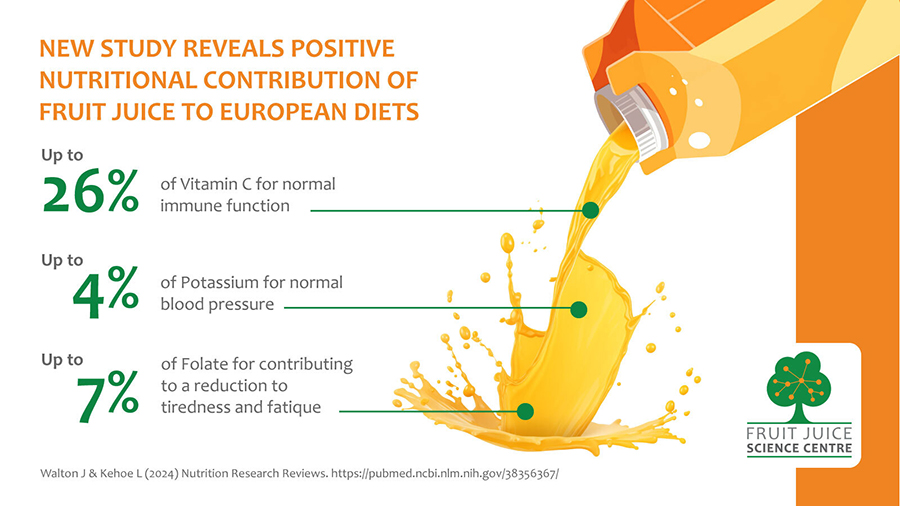
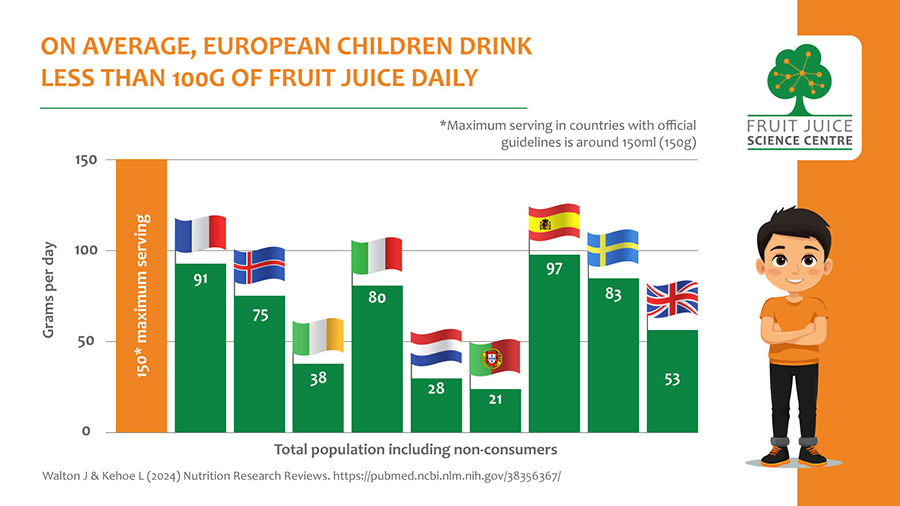
Fruit juice is an easy, affordable way for children to get a head start on key nutrients*: for example, a standard 150 ml glass of orange juice provides more than 90 % of the recommended vitamin C intake. A recent study published in the journal, Nutrition Research Reviews, found that 100 % fruit juice currently provides over a quarter (26 %) of the vitamin C intake for children across the UK, with the average child consuming just two to three small glasses a week.
While most Brits recognise that orange and other fruit juices are a good source of vitamin C – essential for a healthy immune system, skin health, and helping to increase iron absorption – the research revealed that many parents are unaware of the added health benefits provided by fruit juice which contains vitamins, minerals and plant bioactives.
For example, 9 in ten parents are unaware that orange juice contains folate – proven to support normal immune health and helping to reduce tiredness and fatigue. The majority of UK parents (87 %) also don’t know that orange juice contains potassium, a mineral which supports normal muscle function – helping children to stay fit and active.
The study revealed the small amount of calories in a typical small glass of fruit juice – just 20-40 kcal per day or 1-2 % of a child’s average daily calorie intake. Almost half (46 %) of parents across the UK mistakenly think fruit juice contains added sugar, despite the fact that 100 % fruit juice never contains added sugars, colours or preservatives and cannot be diluted with water under UK and European law.
Leading nutritionist and dietitian, Dr Carrie Ruxton, said: “Children’s health remains a top priority for parents across the country. However, with continuing financial pressures and uncertainty around kids’ food consumption at school, parents are finding it hard to keep track of what their children are eating and encourage healthier food choices.
“Although promoting and maintaining the health of your kids may feel like stressful at times, there are easy, affordable ways to ensure your children are fighting fit, and armed with all the vitamins and minerals they need. A simple first step is ensuring your kids have a daily glass of orange juice, which not only provides up 90% of the vitamin C recommendation per day** but is packed with a wide range of nutrients and antioxidants to support immunity, energy levels and active lives.”
Carrie Ruxton’s top five easy, quick and affordable ways to keep children healthy are:
Drinking Daily Juice: Giving children a daily glass of 100 % orange juice with breakfast will naturally increase their intakes of vitamin C, folate and potassium to support normal immune health and muscle function. It doesn’t matter whether you buy a carton of fruit juice or squeeze it at home – both are rich in vitamin C.
Fibre-tastic: Fibre is an essential nutrient to encourage the growth of beneficial gut bacteria and promote healthy digestion. An affordable way to weave this into your kids’ diets is to swap sugary breakfast cereals for wheat biscuits or bran flakes, or add peas, beans or sweetcorn to evening meals.
Taste the rainbow: Aim to give your kids five portions of fruit and vegetables every day. Try adding blended or grated veg into pasta sauces, or bananas to sweeten desserts. Buying frozen veggies and fruit is an affordable way to preserve key ingredients for longer.
Delicious Dairy: Yogurt drinks and desserts are often a good source of calcium and vitamin D for children, which are important for growth and maintaining strong bones. They are also relatively affordable when brought in multi-packs.
Get fishy: Giving children a portion of oily fish each week will provide inflammatory omega-3 fats to improve brain function, alongside key bone strengthening nutrients such as zinc and selenium. Tinned fish such as tuna is affordable, has a long shelf life, and is an easy after school meal served with pasta, sweetcorn and mayonnaise.
*Walton J & Kehoe L (2024) Current perspectives and challenges in the estimation of fruit juice consumption across the lifecycle in Europe – PubMed (nih.gov). ** Salar FJ et al. (2024) Comparison of vitamin C and flavanones between freshly squeezed orange juices and commercial 100% orange juices from four European countries – PubMed (nih.gov)
Perricone Farms, a premium craft juice company with deep roots in California’s citrus industry, announced its acquisition of Natalie’s Orchid Island Juice Company, an award-winning juice company based in Fort Pierce, Florida. The merger unites two of the highest quality and most trusted names in the juice industry, strengthens both brands, and enhances the ability to serve customers with excellence in quality and customer service in the US.
The combined company will be able to take advantage of bi-coastal production facilities, improve its delivery capabilities, expand product offerings, and leverage its additional scale to ensure juices reach customers with the same uncompromising quality they have come to know and love.
“We are excited to add Natalie’s to the Perricone Farms family. Natalie’s commitment to producing the highest quality products, combined with unmatched customer service, aligns with the core values we have been providing in the marketplace for years. Working together, we will be stronger and will be able to provide greater value to our customers,” said Bob Rovzar, CEO of Perricone Farms. “This exciting merger offers new opportunities for growth and expansion, including entrance into new markets, developing innovative products, and strengthening relationships with customers, suppliers, vendors, and partners. Together, Perricone Farms and Natalie’s are now better equipped to ensure the continued success and growth of both brands.”
Over the decades, Perricone Farms and Natalie’s Juices have become industry experts at procuring and producing the highest quality juices. By unifying these two entities, we strengthen our undisputed reputation for being the best premium juice provider in the food service and retail channel.
“The impressive growth that has driven the success behind the Natalie’s brand for the past 35 years has been built on the brand loyalty and relationships we have established with our customers and consumers. We are forever grateful for the opportunity to serve them with the nation’s best-tasting juice—not because it was our job, but because we loved doing it,” said Natalie’s CEO, Marygrace Sexton, who founded the award-winning juice company, named after her daughter, over 35 years ago. “We are excited for the future and the opportunities this partnership will provide our cherished Natalie’s family. Natalie’s has been built to last and will be providing you with authentic juices on a world-wide scale for generations to come.”
With the foundations for both companies built on a shared vision and values that have existed for generations, the combined company will remain devoted to a legacy that has been rooted in tradition and a commitment to exceeding expectations in quality and customer service.
Perricone Farms, a premium craft juice company with deep roots in California’s citrus industry, announced its acquisition of Natalie’s Orchid Island Juice Company, an award-winning juice company based in Fort Pierce, Florida. The merger unites two of the highest quality and most trusted names in the juice industry, strengthens both brands, and enhances the ability to serve customers with excellence in quality and customer service in the US.
The combined company will be able to take advantage of bi-coastal production facilities, improve its delivery capabilities, expand product offerings, and leverage its additional scale to ensure juices reach customers with the same uncompromising quality they have come to know and love.
“We are excited to add Natalie’s to the Perricone Farms family. Natalie’s commitment to producing the highest quality products, combined with unmatched customer service, aligns with the core values we have been providing in the marketplace for years. Working together, we will be stronger and will be able to provide greater value to our customers,” said Bob Rovzar, CEO of Perricone Farms. “This exciting merger offers new opportunities for growth and expansion, including entrance into new markets, developing innovative products, and strengthening relationships with customers, suppliers, vendors, and partners. Together, Perricone Farms and Natalie’s are now better equipped to ensure the continued success and growth of both brands.”
Over the decades, Perricone Farms and Natalie’s Juices have become industry experts at procuring and producing the highest quality juices. By unifying these two entities, we strengthen our undisputed reputation for being the best premium juice provider in the food service and retail channel.
“The impressive growth that has driven the success behind the Natalie’s brand for the past 35 years has been built on the brand loyalty and relationships we have established with our customers and consumers. We are forever grateful for the opportunity to serve them with the nation’s best-tasting juice—not because it was our job, but because we loved doing it,” said Natalie’s CEO, Marygrace Sexton, who founded the award-winning juice company, named after her daughter, over 35 years ago. “We are excited for the future and the opportunities this partnership will provide our cherished Natalie’s family. Natalie’s has been built to last and will be providing you with authentic juices on a world-wide scale for generations to come.”
With the foundations for both companies built on a shared vision and values that have existed for generations, the combined company will remain devoted to a legacy that has been rooted in tradition and a commitment to exceeding expectations in quality and customer service.
The 11th edition of the Juice Summit will take place on 16 and 17 October 2024 in Antwerp
The Juice and Nectar Industry is set to convene at the Juice Summit 2024, jointly organised by AIJN, the European Fruit Juice Association, IFU, the International Fruit and Vegetable Juice Association and SGF International (SAFE – GLOBAL – FAIR).
Since its launch in 2013, the Juice Summit has grown into the leading event for the juice industry, attracting over 450 participants every year. This highly anticipated gathering will bring together industry leaders, innovators, and stakeholders from all around the world to explore the latest trends, challenges, and opportunities in the global juice sector.
The Juice Summit 2024 will offer a unique opportunity for insightful dialogue and building valuable connections. Attendees will gain insights from prominent speakers, engage in thought-provoking panel discussions, and participate in interactive sessions focused on key industry themes.
Key highlights of the Juice Summit 2024:
Inspirational keynotes: Hear from leading figures in the juice industry, including Elwin de Groot, Head of Macro Strategy at Rabo Research and Thomas Körmendi, CEO of Elopak Group.
Networking Opportunities: Connect with industry colleagues, potential partners, and thought leaders to foster new collaborations and exchange ideas.
Session highlights:
Understanding Consumer Minds, Market Trends, and Research-Driven Strategies: Explore consumer behavior, market dynamics, and expert perspectives on the new sugar-reduced juice category.
Main threats and new approaches for a healthy orange industry in Brazil: Explore challenges like citrus greening, economic pressures, and environmental factors, along with innovative strategies to protect the orange industry.
The PPWR (r)evolution: How the juice business can thrive in a circular economy? Learn about the evolving regulations and how the industry can adapt to thrive in a circular economy.
Supply Chain & Demand: Analyse the complexities of balancing supply and demand in the juice industry, focusing on logistics, forecasting, and the impact of global market fluctuations.
To secure your place at the Juice Summit 2024 and view the full agenda, please visit The Juice Summit. Early registration is encouraged, as spaces are limited and expected to fill quickly.
Company’s largest-ever campaign will support zero sugar, full-flavour line rolling out in the US this fall
Zero sugar juices are known for having zero flavour – until now. Welch’s, the leading name in bold fruit flavours for over 150 years, is changing the game with the launch of their new line of zero sugar juices that don’t compromise on flavour.
“We heard from our more health-conscious consumers that they wanted a zero-sugar juice option that didn’t compromise on flavour, and the options currently in the juice and refrigerated aisles just weren’t delivering on that ask,” said Scott Utke, Chief Marketing Officer at Welch’s. “Our team worked tirelessly to innovate a line of zero-sugar juices that are bursting with the bold, fruit flavours Welch’s is known for, and we believe this new line is a game-changer for consumers who are mindful about the choices they are making when it comes to sugar.”
In September, Welch’s largest-ever marketing campaign, “You Gotta Sip It, To Get It,” will kick off to support the new line of zero sugar juices. From social to streaming, custom integrations to sponsorships, and sampling to experiential events – the campaign will appear across various consumer touchpoints. Highlighting the puzzling moments in life that make our heads tilt in curiosity. However, once one tries Welch’s Zero, these bewildering moments transform into a refreshingly flavourful experience – reinforcing the notion that “You Gotta Sip It to Get It!”
Welch’s Zero Sugar is available in two refreshing refrigerated flavours: Passion Fruit and Grape (59 oz cartons), and three delicious shelf-stable flavours: Tropical Punch, Strawberry, and Concord Grape, offered in multi-serve (64 oz) and single-serve (10 oz) sizes. Crafted with the same commitment to quality and flavour that has made Welch’s a trusted household name, each serving is bursting with vibrant, real fruit flavour with 0 grams of sugar and provides an excellent source of Vitamin C (20 % of DV).
All flavours of Welch’s Zero will be available in juice aisles and refrigerated sections at retailers in the US starting September 1.
The 2024/25 crop-year for orange juice exports (from July/24 to June/25) has started in July and shipments, which had been moving down in 2023/24, continued to move at a slow pace. This scenario was already expected, since the supply is limited in Brazil, due to the confirmation of a smaller orange production in São Paulo state and in Triângulo Mineiro. At the same time, Brazilian imports of in natura orange and tangerine rose in July.
Orange juice exports
According to Comex Stat, Brazil shipped 53.4 thousand tons of orange juice in July, downing 38 % compared to the same month in 2023. The limited supply boosted quotations. As a result, the revenue totaled USD 198.9 million in July/24, for an increase of 9 % in relation to July/23.
NFC orange juice shipments amounted 164.2 thousand tons in July/24, and the revenue totaled USD 96.45 million, upping 3 % and 55 % against July/23. As for FCOJ exports, the total was 23.6 thousand tons (-59 %), and the revenue was USD 102.4 million (-15 % in one year).
In natura citrus fruits imports
In natura orange imports are at record volumes this year, boosted by the low domestic supply and high prices of national fruits. According to data from Comex Stat, from January to July, 34.8 thousand tons were imported, 87 % up in relation to the same period last year. Expenses amounted USD 24.7 million, 72 % more this year against the previous.
As for tangerines, the volume purchased by Brazil in the partial of 2024 totaled 14.5 thousand tons, 96 % more than in the period from January to July last year. Expenses are at USD 15.65 million (+89 %).
Domestic market
Quotations of citrus fruits surveyed by Cepea may continue to increase in August, sustained by expectations of a limited supply for all varieties. This scenario can be verified despite the orange season peak.
The orange harvesting is moving at a good pace in the citrus belt, but most part of the produce has been allocated to the juice industry. Factories continue with high prices to purchase the raw material, leading many producers that typically operate in the in natura market to allocate oranges for processing activities. Therefore, not even the low demand, due to mild temperatures, was able to press down quotations.
Data released by the USDA in late July reinforced the scenario of limited world supply for the 2023/24 orange season (or 2024/25 in the Southern Hemisphere). Despite the slight increase in the production estimate compared to the crop before, the total volume may continue at historical low levels. Moreover, the decrease in Brazil, major global producer of both orange and juice, may not be counterbalanced by other suppliers.
The USDA indicates that the 2023/24 world crop is projected at 47.4 million tons, upping 1 % compared to the season before. In Brazil, the output may decrease 1.2 %, to 15.3 million tons – equivalent to 375 million 40.8-kg boxes. However, the decrease indicated by the USDA might be underestimated. In São Paulo and in Triângulo Mineiro, the production is likely to drop 24.4 %, according to Fundecitrus, and there are doubts whether a possible increase in other states would compensate the low volume produced in the citrus belt.
Orange juice
In spite of the slight rise in the global orange production, the orange juice output is projected at 1.5 million tons, 3 % down against the season before. The decrease is related to the lower availability of fruits to process in Brazil, which represents more than 70 % of the global OJ production.
The Brazilian output is calculated at 1.1 million tons, downing 9 %, and national exports are likely to decrease in the same intensity, since almost 100 % of the Brazilian production is sent to the international market.
Tahiti lime
The global production of lemons and limes in 2023/24 is estimated to move up 2 %, reaching 10.1 million tons, boosted by the higher output in the European Union and in Turkey.
It is worth noting that these numbers consider lemons (Sicilian, for instance) and limes (such as the tahiti lime). Among major producing countries, only Mexico produces significant volumes of tahiti lime (which is produced and exported by Brazil). Mexican shipments are likely to reduce 7.5 %, which can keep the focus of this country on supplying the US, opening more room for the Brazilian tahiti lime in the European market – Brazil has been hitting records in exports year after year.
Revl Fruits™, the adult juice box* with flavours that bring you back to your childhood with just one sip, wants to encourage fans to “Grow Up Never” and take back all the joys of being a kid by saying goodbye to the boring constraints of adulthood. To further this inspiration, starting today, the brand is giving fans the chance to win the cushiest of cushy summer jobs – Global VP Of Water Park Inflatables.
Inspired by the fun-filled freedom and laid-back nature of a summer job that many of us remember, the Global VP of Water Park Inflatables will get to slam their laptop shut and embrace the last morsel of summer. In addition to bragging rights, the winner will receive USD 50,000**, a lifetime supply of Revl Fruits Juice*, and the opportunity to be in charge of, being in charge of nothing – except drinking 100 % juice and floating around in a pool of their choice.
“As we rolled out Revl Fruits earlier this year, we noticed one common sentiment from consumers – many haven’t enjoyed juice since they were kids because of sugar. With no added sugar, mouthwatering flavours, and a splash of coconut water, our fans told us they finally felt free to sip on juice, and the flavours brought them back to their childhood with just one sip. It got us thinking – what other ‘kid only’ things have we given up?” said Christina Zwicky, Head of Brand Marketing for Revl Fruits. “The motto of ‘Grow Up Never’ was inspired by these consumers and will continue to be our north star for our marketing efforts. I’m excited to showcase this first step with the introduction of our Global VP of Water Park Inflatables contest and offer our fans the opportunity to experience the joy of being a kid and celebrate the last moments of summer.”
Fans can hang on tight to the last bit of summer before reality sets in and apply to the “job” now through August 14 by recording a video explaining why they’re an adult that’s never grown up and why they won’t take this job seriously as a boring adult would. To enter, tag @RevlFruits on Instagram or Tik Tok with #GrowUpNeverContest and submit the video on growupnever.com.
Revl Fruits, 100 % juice, brings joy to juice again with no added sugar or unnecessary additives. These four mouthwatering flavours are the perfect poolside sips:
Boldly Cran™: Packed with cranberry juice’s bold, tangy essence, Boldly Cran juice spotlights the naturally rich flavour of cranberries.
Tart Cherry: Tart Cherry juice is a celebration of this vibrant fruit. Each sip delivers the distinctive tartness that cherry enthusiasts crave, earning it PEOPLE Magazine’s Best New Juice of 2024.
Berry Wild: A fusion of nature’s most vibrant superfruit juices – cranberry, pomegranate, and açaí – Berry Wild is crafted to perfection and straight-up yum.
Truly Tropical: Featuring an enchanting blend of pineapple and mango juices, Truly Tropical will take you on a vacation with each sip.
Depending on the flavour, Revl Fruits™ SRPs range between USD 4 and USD 8, and all flavours are currently available in the U.S. at Kroger, Target, Publix, and Amazon.
*Oh, you thought we meant alcohol? Nope. No alcohol included **NO PURCHASE NECESSARY. Open to legal residents of: The U.S. & D.C who are at least 18 or the age of majority in their jurisdiction of residence, whichever is older. Contest runs 12:00 ET on 7/31/24 to 11:59 pm on 8/14/24. Void where prohibited. Limit one (1) entry per person. See Official Rules at www.growupnever.com. Prize Definition: USD 50,000″salary” is a one-time payment of USD 50,000.00 to the winner. In addition to a lifetime supply of Revl Fruits™ Juice which equates to one (1) carton of 32 oz Revl Fruits™ juice per week for the winner’s lifetime or until USD 11,000.00 in Revl Fruits™ juice products or equivalent 32 oz. juice products have been awarded to the winner, whichever occurs sooner, in the form of manufacturer coupons to be mailed to the Grand Prize winner’s address. SPONSOR: Ocean Spray Cranberries, Inc.
After weeks of dry weather, rains were registered in many citrus areas in São Paulo state in mid-July. Although the volume of rainfall was not homogeneous among regions (rains were registered especially in the south and in the southwest of São Paulo state), it brought a certain relief for citrus growers, who were concerned with the dry weather that had already been affecting the trees.
The rainfall was more significant in the southwest of SP state; thus, flowers may start blossoming. In areas where rains were less abundant (or they were not registered), more humidity is necessary for the flowers to blossom.
As for the tahiti lime, the recent rainfall is not likely to increase the supply in this moment, but it may favor the harvest and the quality in the coming weeks.
Juice exports decrease in the 2023/24 season
Brazilian shipments of orange juice dropped in the 2023/24 season (from July 2023 to June 2024), after increasing in the previous crop. Brazil exported 1 million tons, downing 8.1 % compared to the season before (data from Comex Stat). The revenue totaled USD 2.7 billion, for an increase of 25 % in the same comparison. The export decrease is mainly related to the low volume of juice in stocks in Brazil.
Processing activities
The orange processing continues to move at a fast pace in São Paulo state. Some players from the industry surveyed by Cepea say that the crushing is more advanced this season, and that the processing activities of early varieties are likely to reduce this month. Last year, the processing finished only in the second fortnight of September; however, in 2024/25, activities are expected to end in July or in August.
A recent study reveals that natural sugars found in fruit juice appear to support physical recovery after exercise
Cloudy apple juice was found to recover the intestinal barrier function more quickly than other drinks – this helps to support recovery
The body’s stress makers reduced more quickly in recovery after drinking fruit juice when compared with other beverages
The study, led by Dr Patrick Diel, shines a light on the potential health benefits of fruit juice for fitness enthusiasts
Drinking fruit juice could help the body recover more quickly after intense physical activity such as long-distance running, according to a new study.
The peer-reviewed study, published in international journal, Nutrients, found that while added sugars can have a negative impact on the intestinal barrier after exercise, the naturally occurring sugars and polyphenols (plant compounds) found in fruit juice seem to support a more balanced recovery.
While it’s common to reach for a sugary sports drink during or after exercise, scientists have known for some time that added sugars can cause problems with the intestinal barrier – a critical part of our immune defence. A leaky intestinal barrier can lead to harmful bacteria crossing from the gut into the blood which stimulates inflammation. This, then, increases the risk of overtraining syndrome and metabolic conditions such as endotoxemia – where the body has a toxic reaction to bacteria.
The study, led by Dr Patrick Diel, was set up to find out whether fruit juices caused the same inflammatory effect as sugar-sweetened drinks.
The researchers looked at the gut health of runners before and after an ultramarathon. They compared the impact of drinking diluted cloudy apple juice with a test drink which mimicked a typical sugary sports drink. This contained identical amounts of sugar but not the polyphenols and other fruit complexes naturally found in juice.
The researchers found that, while both exercise and sugars can disrupt the intestinal barrier, the natural compounds found in fruit juice eased these effects*. Runners who drank the cloudy apple juice after the race recovered their intestinal barrier function more quickly than those who drank the sugar-sweetened test drink*.
Another part of the study on amateur runners found that drinking diluted cloudy apple juice after running influenced a protein called CD14 suggesting that the juice supported the body’s immune system. Furthermore, the study showed that runners who drank fruit juice reduced their stress markers more quickly compared with those who drank the sugar-sweetened test drink.
Dr Patrick Diel from German Sport University in Cologne, said: “The research comes at a timely moment for anyone inspired to get more active in the run up to the Olympic games, and these findings offer a fresh perspective how to best replenish our bodies. Simply diluting cloudy apple juice and drinking it after playing sports or exercising seems to be an easy and healthy option which supports both gut health and immune function”.
Award-winning dietitian, Dr Carrie Ruxton said: “To properly recover after exercise, our bodies need healthy carbohydrates. In light of these findings, I would encourage athletes, fitness enthusiasts and causal gym-goers to add a serving of around 150ml of cloudy apple juice to their sports bottle and top up with tap water for a low cost and effective sports drink. Not only will this mixture keep us hydrated, it also provides energy-giving natural sugars and polyphenols to promote optimal recovery.”
As with any dietary change, it is important to drink juice in moderation and as part of a balanced diet. However, these studies suggest that when it comes to supporting the body after an Olympic-inspired workout, cloudy apple juice is the perfect health hack.
*Valder, S. et al. Effect of Sugar- and Polyphenol-Rich, Diluted Cloudy Apple Juice on the Intestinal Barrier after Moderate Endurance Exercise and in Ultra-Marathon Runners. Nutrients 2024, 16, 1353. https://doi.org/10.3390/nu16091353
Stephan Büttner (Photo: AGRANA)
In the first quarter of the 2024/25 financial year (the three months ended 31 May 2024), AGRANA, the fruit, starch and sugar company, generated operating profit (EBIT) of € 32.3 million, a significant reduction of 49.1 % from the first quarter of the prior year. Revenue eased slightly, by 2.3 %, to € 944.3 million. “After the robust results of the full year 2023/24, as expected we had a weaker start to the 2024/25 financial year. The significant decline in profit resulted from the highly challenging market environment in the Sugar and Starch segments, where sales prices fell. Business in the Fruit segment was better, leading to a significant increase in Fruit EBIT,” says AGRANA Chief Executive Officer Stephan Büttner.
Results in each business segment for the first quarter of 2024/25
FRUIT segment
The Fruit segment’s revenue in the first quarter was € 415.6 million, up 3.6% from the same period one year earlier. The increase occurred both in the fruit preparations and fruit juice concentrate businesses and resulted from volume growth.
EBIT of the segment as a whole grew to € 27.0 million in the first three months of the financial year (Q1 prior year: € 24.4 million). In the fruit preparations activities, EBIT was significantly above the year-ago level. The improvement was attributable partly to a positive business performance in the Europe region (including Ukraine) and in Mexico.
STARCH segment
Revenue in the Starch segment in the first quarter was € 265.5 million, a reduction of 16.3% from the year-earlier comparative period (Q1 prior year: € 317.1 million), when the war in Ukraine had led to powerful increases in market prices. Owing to the decline in raw material and energy prices, market prices for the segment’s products decreased noticeably year-on- year, which impacted the selling prices obtained for the entire Starch portfolio. Ethanol sales prices, for instance, fell by about 25 % amid a substantial drop in Platts quotations.
At € 9.4 million, EBIT in the Starch segment was down very significantly year-on-year. A key reason for this was the margin decline in starch and saccharification products driven by significantly lower sales prices for core and by-products.
SUGAR segment
Sugar segment revenue was € 263.2 million, up 6.2 % from the first quarter of the previous year. The negative effect of lower sugar sales prices was more than made up for by higher sales volumes. The trajectory of the sugar market was most recently driven by the sugar imports from Ukraine and the expectation of increased EU sugar production in the 2024/25 campaign.
The Sugar EBIT result in the financial first quarter was a deficit of € 4.1 million, a pronounced deterioration from the year-earlier period. This reflected especially the significant fall in sugar selling prices, which was steepest in the regions heavily affected by the imports of Ukrainian sugar.
Outlook
For the full 2024/25 financial year, AGRANA expects a significant reduction in operating profit (EBIT) compared to the previous year. Group revenue is projected to show a moderate decrease.
Total investment across the three business segments in the 2024/25 financial year, at approximately € 120 million, is to be moderately below the 2023/24 value and in line with budgeted depreciation. About 12 % of this capital expenditure will be for emission reduction measures in the Group’s own production operations under the AGRANA climate strategy.
In this publication confructa medien GmbH present beverage innovations from all over the world with specifications like ingredients, company, country, claims, packaging and launch price. What has hit the shelves in the international beverage sector? Which companies and products are the main driving forces in the market? Which trends have become apparent?
The international (non-alcoholic) beverage product review WORLD OF FRUITS 2024 has been published and is available for free download!
As the industry shifts its focus to the new crop, growing conditions for the next apple season in Poland were initially favourable, with fruit maturation occurring three weeks earlier than usual. However, a cold snap between April 2020-2023 significantly affected the orchards. This freeze occurred while the apple trees were still in bloom, and despite strong flowering, the frost caused damage across all apple varieties.
Following the freeze event in April, Poland experienced a second cold wave in May, accompanied by hailstorms in the latter half of the month. While it is difficult to assess the full extent of the damage, market players estimate the crop yield will be no more than 3 million tonnes, significantly lower than the anticipated 5 million tonnes. Consequently, apple juice concentrate production is expected to be around 200,000 MT for 2024/25 MY, down from 2023/24 MY which was 265,000 MT.
The apple crop in Turkey in the 2024/25 MY is also expected to be smaller year-over-year by at least 15 %, according to market sources. This decrease is attributed to heavy rainfall and lower yields following three years of high yields, with one market player noting that “the trees are tired.” Demand for Turkish apple concentrate has been strong from US buyers in recent months. …
The international (non-alcoholic) beverage product review WORLD OF FRUITS 2024 has been published and is available for download!
In this publication confructa medien present beverage innovations from all over the world with specifications like ingredients, company, country, claims, packaging and launch price. What has hit the shelves in the international beverage sector? Which companies and products are the main driving forces in the market? Which trends have become apparent?
The volume of orange juice exported by Brazil in the partial of the 2023/24 season (from July/23 to May/24) remains below that registered in the same period of the previous crop. According to data from Comex Stat, Brazil exported 914.9 thousand tons of orange juice, for a decrease of 8.9 % compared to the same period last season.
The revenue, in turn, totaled USD 2.47 billion, moving up 22 % this season in relation to the previous. The main reason for the increase in revenue was the higher price paid per ton of juice, which rose due to the low availability of the commodity in Brazil, according to agents consulted by Cepea.
OJ shipments to the European Union amounted 489.79 thousand tons from July/23 to May/24, downing 8.2 % against the same period of 2022/23. The income, in turn, rose 27 %, at USD 1.35 billion. To the US, exports dropped 11 % in relation to that in 2022/23, at 293.64 thousand tons. The income verified between July/23 and May/24 was USD 737 million, 9 % up against the same period last season.
Domestic market
Prices of oranges allocated to processing activities have been moving up since March, when contracts involving the 2024/25 season have started to be closed. In early June, values of the fruit traded in the spot market in São Paulo state hit BRL 85.00 per 40.8-kilo box, harvested and delivered, a new record of Cepea series, which started in 1994, in real terms (averages were deflated by the IGP-DI).
Price rises are related to both the higher demand and the limited supply. As for the demand, the industry needs to purchase the raw material, because orange juice stocks are very low. Concerning the supply, the fruit output may be small again in São Paulo and in Triângulo Mineiro.
Consumers shift to natural beverages, immune-boosting benefits of fruit juices fuel growth
The North American fruit juice sector is undergoing a substantial growth period, with market size swelling to USD 39.6 billion as of the year 2023. Industry forecasts are robust, predicting a continued expansion at a compound annual growth rate (CAGR) of 4.5 % from 2023 to 2032, culminating in an expected market value of USD 59.1 billion.
The surge in market growth is primarily driven by rising health awareness among consumers, who are now gravitating toward natural beverage options like fruit juices. These shifts in consumer preferences are linked to the numerous health benefits attributed to fruit juices, including their vitamin and mineral content, antioxidant properties, and their role in bolstering the human immune system.
Moreover, advancements in technology that allow for the introduction of organic preservatives enhance the appeal of fruit juices. When coupled with modern packaging solutions that cater to consumers’ increasingly busy lifestyles, it’s clear that the market is riding a wave of both practical innovation and heightened product awareness.
Consumer Trends
The shift in consumer behavior denotes a significant move away from carbonated drinks toward healthier options. The adoption of fruit juices as a method to improve metabolism and manage cholesterol levels is also noteworthy. Moreover, consumers are showing an inclination towards convenient consumption methods, which is another factor propelling the market growth.
Market Segmentation
The North America fruit juice market report covers a detailed analysis of the market segmented by type, flavour, and distribution channel, along with projections at both the regional and country levels. Market segments include 100 % fruit juices, nectars, juice drinks, concentrates, powdered juices, and others. Popular flavours profiled include orange, apple, mango, mixed fruit, and more, while the distribution channels investigated are supermarkets and hypermarkets, convenience stores, specialty food stores, online retailers, and others.
Market Outlook
In conclusion, the North American fruit juice market is set for promising growth in the coming years, with consumer demand for healthier beverage options being a prime catalyst. Companies within the market are responding with innovative products that meet the evolving needs and preferences of consumers, positioning the industry for sustained expansion through 2032.
Caribe Juice, maker of WTRMLN WTR®, #1 selling cold pressed watermelon juice brand in the US, announces the launch of WTRMLN® ADE, a first-of-its-kind, clean cold-pressed ultra-hydrating lemonade that harnesses the hydration superpower of real watermelon in a delicious and refreshing lemonade. Each 12 oz bottle packs a whopping 600 mg or more of electrolytes, on par with shelf stable sports drinks, thanks to its high concentration of naturally electrolyte-rich watermelon, and touts 100 % DV Vitamin C, No Added Sugar, and half the calories and sugar of traditional lemonade. WTRMLN® ADE is available in 3 popular flavours: Lemonade, Strawberry Lemonade, and Limeade.
“Everyone loves the taste of watermelon, but many consumers do not realise that watermelon is naturally packed with extraordinary amounts of electrolytes, especially potassium, as well as L-Citrulline, an amino acid that aids in muscle recovery post-workout, and lycopene, an antioxidant powerhouse,” said Luis Solis, CEO of Caribe Juice. “Having just wrapped up our second year in a row of double-digit growth, now is the perfect time to lean into Wtrmln momentum with new innovation.”
WTRMLN® ADE is a full flavour sport lemonade that delivers thirst-quenching benefits to help consumers hydrate faster and recover more efficiently than regular water without all the junk ingredients found in most sports drinks. Like all WTRMLN® products, the base is cold pressed watermelon juice, which delivers one of the cleanest sources of hydration on the planet. Combined with lemon and other real juices, the result is a super-hydrating delicious lemonade that delivers the key functional benefits found in watermelon, such as clean electrolytes, vitamins and antioxidants.
WTRMLN® ADE will be available in retailers such as Target, Stop & Shop, and Whole Foods (starting September) as well as regional accounts throughout the Northeast and West Coast in the US.
Research into ultra-processed foods (UPF) and their role in today’s diet is becoming an increased focus for healthcare professionals. But with a range of studies emerging and differing opinions on the matter, it can be confusing for consumers to navigate what the broad term really means.
A recent study highlighted some of these misconceptions when almost half of respondents (45 %) said they wouldn’t be able to define or identify an ultra-processed food or beverage, and the same amount said they don’t know the difference between ultra-processed and minimally processed products.
Orange juice was highlighted as one of the most common misconceptions amongst Brits in the study, with 21 % believing the drink was ultra-processed, despite being minimally processed. In the same study, 19 % even said they avoid buying orange juice as they worry it sits in the UPF category.
Award-winning nutritionist and health writer, Dr Emma Derbyshire says: ‘Some of the misunderstandings around ultra-processed foods are resulting in consumers avoiding certain products which contain healthy benefits. Products like 100 % orange juice are essential in a balanced diet and provide essential vitamins and minerals, such as Vitamin C and potassium, needed to help meet an individual’s nutrient needs.”
Top 5 orange juice truths:
Unlike ultra-processed products, 100 % orange juice contains no added sugars and cannot be diluted with water under European law
Fruit juice counts as one of your 5-a-day fruit and vegetables – a convenient and nutritious way to up your fruit intake
The high levels of vitamin C found naturally in fruit juice help the immune system to combat symptoms of common colds and illness and support normal skin health
Fruit juice contains potassium, which supports normal blood pressure
Drinking orange juice helps your body absorb iron from plant foods
Tropicana has launched a new range of its Multivit Boost juices to stores across the UK. The three fresh juices expands Tropicana’s functional juice offering as consumer health trends continue to evolve with a post pandemic demand for immunity support products and ingredients.
Tropicana Multivit Boost is now available in its best-selling Multifruit plus two new juices, all in 850 ml Pure-Pak® cartons. Launched in April 2024 and rolling out across UK’s key retailers are the new varieties; Smooth Orange and Mixed Berries juice for immune health support.
Each serving of Tropicana Multivit Boost offers 100 % of daily Vitamin C requirements, along with essential vitamins B1, B2, B6, E, with an added inclusion of vitamin A in the Mixed Berries and Multifruit flavour. According to Tropicana, these added vitamins play a crucial role in supporting normal energy-yielding metabolism, maintaining healthy skin and vision, and protecting cells from oxidative stress. A single portion of each variety provides one of the recommended five servings of fruit and vegetables a day.
The orange processing of the 2024/25 season may be intensified in May. Three of the major processors and other two small companies (tool) have been operating at the moment. At least three more units are expected to start activities still in early May.
In the same period of 2023, only three units were operating, and a fourth company started crushing in the second week of the month. This scenario indicates a higher intensity of processing activities this year. Although current volumes are not high yet, players from the industry say that some companies have started operating in order to avoid fruit losses in a year of low supply.
Prices at companies remain firm, reaching BRL 70.00 per box for fruits of the new season. In cases of higher volumes, values can be even higher.
Due to the increase of industrial activities, the downward trend of orange prices in the in natura market, verified in April, is likely to slow down, since producers will have the industry as an option to sell the product. In April, the average for the in natura pear orange, of BRL 91.28 per 40.8-kilo box, in tree, was 3 % lower than in March.
The demand for oranges, in turn, is expected to decrease in May, because of the supply of ponkan tangerine. Moreover, possible milder temperatures in the Brazilian autumn tend to reduce the consumption.
Tahiti lime
The rainfall favoured the development of the tahiti lime in São Paulo state, increasing the supply.
The European Fruit Juice Association (AIJN) welcomes the approval by the European Parliament of the Packaging and Packaging Waste Regulation (PPWR).
Aimed at addressing pressing sustainability concerns surrounding packaging materials, and especially waste, within the European Union, the outcome of the vote reflects a careful equilibrium between environmental imperatives and industry considerations.
The Agreement found between the EU Council and EU Parliament negotiators, adopted now by the EU Parliament represents a significant departure from the initial proposal put forth by the EU Commission. Regarding reuse for example, where the initial draft outlined specific non-alcoholic beverages subject to reuse targets, the text approved by the EU Parliament adopts a more encompassing and equitable approach. Under the revised PPWR, a single reuse target now applies to all beverages, whether they are alcoholic or non-alcoholic. This shift eliminates the need for a predefined list of products, thus ensuring that no item is excluded from the sustainability mandate (except for a few exemptions which are explicitly justified within the text).
Another important aspect of the outcome of the negotiation is the redistribution of responsibility for meeting these reuse targets. Unlike the original Commission’s proposal, which placed the burden both on manufacturers and final distributors, the version of the Regulation approved by the EU Parliament assigns responsibility to final distributors.
Specifically, the Regulation mandates that distributors making alcoholic and non-alcoholic beverages available on the market within a Member State must ensure that at least 10 % of these products are offered in reusable packaging within a system designed for re-use. This change will enable greater flexibility for all actors in delivering products in reusable packaging.
Moreover, the new target set for reuse represents a first step towards promoting circular economy principles within the packaging industry, all while acknowledging the industry’s needs. With a target of 10 % by 2030 and an indicative target for 2040, actors across the value chain, including consumers all around Europe, can adapt to increasing levels of reusable packaging and reuse systems. This ensures that the transition is mindful of the practical realities and requirements of businesses within the sector. This balanced approach promotes a steady transition towards a more circular economy, where resources are conserved, waste is minimized, and environmental impact is reduced. By January 1, 2034, the Commission will review the implementation of the 2030 targets, considering technological advancements and practical experiences. This assessment will evaluate the effectiveness of the targets in fostering sustainable packaging, feasibility of achieving 2040 targets, relevance of exemptions, conduct life-cycle assessments of single-use and reusable packaging and assess the need for setting new targets for the reuse and refill of other packaging categories. This review mechanism allows for adjustments based on results and real practices, ensuring that future ambitions for 2040 are informed by concrete evidence and practical experience.
Finally, the approval of PPWR underscores the critical role of packaging in preserving product freshness and quality while minimizing environmental impact. It highlights the imperative for sustainable packaging solutions that reconcile ecological stewardship with operational efficiency. In recognition of the unique challenges faced by highly perishable beverages, they are exempted from meeting this targets in the Regulation includes exemptions for such items.
AIJN believe the European Parliament’s vote on the PPWR reflects a balanced and pragmatic approach that seeks to reconcile environmental goals with the operational realities of the industry. As the Regulation progresses towards implementation, AIJN is willing and ready to engage in ongoing dialogue and collaboration to ensure effective compliance and meaningful progress towards a more sustainable future.
The European Fruit Juice Association (AIJN) announced that the EU Parliament has approved the Revision of the Fruit Juice Directive, marking an important step in the development of the fruit juice and nectar industry.
The Association welcomes the Revision of the EU marketing standards for the so-called ‘breakfast’ directives, aimed at bolstering existing marketing standards related to honey, fruit juices, jams, and milk. Specifically, the revision of the Fruit Juice Directive, in force as such since 2012, represents a step forward, bringing the directive in line with contemporary concerns and industry demands. Throughout this process, AIJN has actively collaborated with EU institutions to ensure comprehensive consideration and representation of industry perspectives.
Serving as the cornerstone of meticulous legislation, the European Fruit Juice Directive ensures the highest standards of safety and quality for fruit juices, while also offering comprehensive information to consumers across Europe regarding the composition, nature, and authorised processing methods of fruit juices.
The latest revision address several aspects and bring great innovation to the sector:
Introduction of the reduced-sugars fruit juice category: We welcome the introduction of the new category of “reduced-sugars fruit juices”, in line with the objectives of the Farm to Fork strategy, offering more choice of products for consumers. More specifically, three products are added, “reduced-sugar fruit juices”, “reduced sugar fruit juices from concentrate” and “concentrated reduced sugar fruit juices”. Future products can only be called “reduced sugar fruit juice” if at least 30 % of the natural sugars have been removed and they maintain the essential characteristics of the fruit juice from which they come.
Information on sugar content: In Europe, consumers may not always be aware that fruit juices do not contain added sugars. Both institutions agreed that additional transparency is needed. To this effect, they have allowed industry to use the voluntary statement that “fruit juices contain only naturally occurring sugars”.
Inclusion of coconut juice: Reflecting the evolving market trends and consumer preferences, coconut has been included in the Directive’s Annex V, accompanied by a specified Brix level of 4.5. Additionally, coconut water is acknowledged as synonymous with coconut juice.
Authorisation of additional substances for clarification: The directive now accommodates the use of plant proteins derived from wheat, peas, potatoes, and sunflower seeds for fruit juice clarification, ensuring alignment with contemporary practices.
While AIJN wait for the formal adoption at the Council and the Directive’s entry into force, it is foreseen that the European Commission will be tasked with elaborating a Delegated Act on Reduced-Sugar Fruit Juices, examining the feasibility of origin labelling of the fruits used in fruit juices, and developing implementing acts for fruit juice analysis methods.
In response to these endeavours, AIJN reaffirms its dedication to responsible collaboration, advocating for policies that prioritise consumer health and sustainability in the industry.
Berjé Inc. announced the acquisition of Global Citrus International (GCI) and Acelim del Peru – two Peruvian growers and producers of essential oils and fruit products with extensive operations in Peru and strong collaboration with Citrolim SA de CV, based in Mexico. With this acquisition, GCI and Acelim will become part of the Berjé Inc. family of companies, and will be renamed and operated as Citrolim Peru and Acelim.
GCI and Acelim are respected and preeminent growers, processors, and suppliers of lime-based products, including fresh limes, lime essential oils, lime juice, and lime peel. The renaming as Citrolim Peru will facilitate the integration and alignment of these operations into the world-renowned Berjé family of companies, further expanding the position as international producers within the flavour and fragrance industry.
The volume of orange juice exported by Brazil in the partial of the 2023/24 season (from July/23 to March/24) was below that registered in the same period of the previous crop. According to players from the industry, the low availability of the commodity in the Brazilian market may be limiting shipments. As for prices of the juice sold to the international market, they moved up.
The 2023/24 season in Brazil is expected to finish (in June/24) with reduced orange juice stocks at the industry. As a result, some players are unwilling to export large amounts in order to avoid having zero stocks by the end of 2023/24.
According to data from Comex Stat, Brazil exported 812.2 thousand tons of orange juice in the partial of 2023/24, for a decrease of 7.7 % compared to the same period last season. The revenue totaled USD 2.08 billion, moving up 23 % this season in relation to the previous and close to the total registered in the crop before (USD 2.14 billion up to June/23).
OJ shipments to the European Union amounted 419.9 thousand tons from July/23 to March/24, downing 7.7 % against the same period of 2022/23. The income, in turn, rose 26 %, at USD 1.1 billion. To the US, exports dropped 4.4 % in relation to that in 2022/23, at 265.7 thousand tons. The income verified between July/23 and March/24 was USD 667.1 million, 18 % up against the same period last season.
Market in Brazil
The market of the tahiti lime in São Paulo closed March with firm prices. Players surveyed by Cepea say that this is related to the low supply, since rains affected the harvest. As a result, the monthly price average was BRL 31.17 per 27-kilo box, harvested, 55 % up in relation to February.
As for the orange, prices also closed March at higher levels. The supply was low (due to the offseason period and to the good demand from the industry) and the demand in the in natura market was firm, because of high temperatures. Therefore, the price average was BRL 93.56 per 40.8-kilo box, on tree, upping 7 % in relation to February.
Pomegranate Fiber offers added nutrients to a variety of food applications, continuing POM Wonderful’s commitment to better-for-you ingredients
POM Wonderful, a worldwide leader of California-grown pomegranates and No. 1 pomegranate juice in North America, announced the addition of Pomegranate Fiber to its growing specialty ingredients lineup. The Pomegranate Fiber, which is upcycled from POM Wonderful pomegranate husks after juicing, is a GRAS, fiber-dense powder that can be used in a variety of food applications, including crackers, sauces, dressings, baked goods and plant-based food.
Pomegranate Fiber is made under POM Wonderful’s growing Specialty Ingredients division, which provides raw ingredients to suppliers across the food and beverage industry. Pomegranate Fiber has numerous culinary benefits — it can help draw out flavour and colour, and in baked goods, the powder enhances browning, which ultimately reduces cook times. It has soluble and insoluble fiber plus antioxidant goodness and polyphenols.
Pomegranate Fiber is made from upcycled materials using the husk of pomegranate fruit. POM Wonderful uses a proprietary method to press whole pomegranates to create POM 100 % Pomegranate Juice. After the initial press, the husks are then pressure extracted to create POMxL, a concentrated liquid extract that is also part of POM’s specialty ingredient line-up — the remaining pomegranate husk is dried and milled to create Pomegranate Fiber.
“We are thrilled to add another specialty ingredient to our line-up that is versatile and upholds our commitment to nourishing naturally,” said Jason Horvath, sales manager for POM Wonderful Specialty Ingredients. “With the Pomegranate Fiber, we are providing better-for-you options to the food and beverage industry while continuing our work towards a zero-waste future.”
The addition of the Pomegranate Fiber comes on the heels of POMxL’s Upcycled Certification, further underscoring POM Wonderful’s commitment to sustainability and product innovation.
Sustainability is at the forefront for POM Wonderful. In 2020, POM Wonderful launched the Innovation Challenge, offering $1 million in funding and development resources to innovators who could develop an economical and environmentally friendly solution to upcycle its 60,000 tons of pomegranate husks. In 2022, POM Wonderful transitioned all its 16oz bottles of POM Wonderful juices to 100 % rPET (recycled plastic)* and completed work on its solar farm, which provides more than 90 % of the company’s electricity needs for its Del Rey, California processing facility.
To date, The Wonderful Company and its owners, Stewart and Lynda Resnick, have invested more than $1.3 billion in environmental sustainability initiatives to help fight climate change. This commitment includes the historic $750 million gift from the Resnicks to the California Institute of Technology (Caltech) in support of the school’s environmental sustainability research.
*Excludes cap
Brazilian orange juice processors finished 2023 with low stocks. A report released by CitrusBR in March indicates that the volume was 463.94 thousand tons (equivalent to concentrate juice) on December 31, 2023, being 6.7 % higher than that on the same day last year, but the second lowest in history (the series has started in 2011).
Considering that the industry is practically in the offseason period, and, therefore, they have been using stocks to supply the international market, the stocked volume is likely to decrease month after month. This scenario brings concerns about the global supply, since Brazil is the biggest world exporter, and, although there are no forecasts for the next crop (2024/25) yet, the orange production may not increase compared to the current season.
CitrusBR has not projected the ending stocks for the orange juice industry this season. However, data from Cepea indicate that stocks may finish the season higher than in the previous, especially because of the decrease in exports.
Taking 2023/24 initial stocks, of 84.75 thousand tons (CitrusBR), processing of 267 million boxes (discounting the 40 million boxes of the in natura market of the total volume projected by Fundecitrus), the same juice yield of the previous crop and the 6 % decrease of exports (from July/23 to February/24), the amount in stocks by the end of the 2023/24 season (on June 30, 2024) would be only 94.5 thousand tons, 11 % more than in the same period last year.
In spite of the projection of an increase compared to the last season, it is worth noting that 2022/23 ending stocks were the lowest in recent history.
Production
The rainfall in orange producing areas in São Paulo state has been favoring the 2024/25 season. Players surveyed by Cepea say that the good humidity has been positive for the fruits, allowing to anticipate the harvest of early varieties, which have started to be offered in the in natura market in February and may be intensified in March.
Louis Dreyfus Company (LDC) announced the exclusive launch in the French market of its new fresh fruit juice brand, Montebelo Brasil, in collaboration with Laiterie de Saint-Denis-de-l’Hôtel (LSDH) for commercialisation, bottling and distribution. This initiative aims to establish Montebelo Brasil as a market reference among fresh (or chilled) fruit juices in France, while ensuring traceability of oranges, from Brazilian groves to selected retail shelves.
Inspired by its eponymous Brazilian plantation, certified by the Rainforest Alliance, the development of the Montebelo Brasil brandis part of LDC’s strategic vision to extend its reach further downstream in the value chain, while offering distribution solutions to its customers and partners. It also reflects LDC’s focus to further diversify its Juice Platform portfolio with sustainable, traceable and high-quality products directly to end consumers.
“Our ambition for this project is twofold: to offer a 100 % natural product while ensuring traceability of the oranges, thereby establishing a connection between LDC as citrus producer in Brazil and the end consumer. Our commitment also addresses the demands of increasingly discerning consumers who are concerned about the origin and journey of the products they consume,” said Aurélien Grisval, Head of Downstream Market for Juice, LDC.
The Montebelo Brasil line includes eight fresh fruit juices:
Two pure orange juices (with and without pulp);
Two lemonades (yellow lemon, and a blend of yellow and green lemon); and
The following product range developed in collaboration with renowned Brazilian chef Tabata Mey: Pure mango, pineapple and lime juice; Coconut water, mango, pineapple, lime pure juice; Orange, maracuja, lime nectar ; and a lime maté beverage.
“We are proud to launch this new brand, which embodies our expertise as a global agricultural merchant dedicated to serving our customers, and our commitments as a responsible citrus grower in Brazil for over 35 years,” said Georges-Edouard Duriez, Head of Development and Strategy for Juice, LDC.
France was a natural choice for the brand launch, with its dynamic retail juice market that, per capita consumption, ranks second globally, with approximately 1.1 billion liters consumed annually, and for the opportunities offered by the chilled juice category in terms of value.
“Beyond the clear commercial opportunities, this launch in France, birthplace of the Group and homeland of its founder, Léopold Louis-Dreyfus, has profound significance for LDC. Making this launch a success will be a wonderful way to honor this legacy,” concluded Georges-Edouard Duriez.
Montebelo Brasil fruit juices are already available throughout France at Monoprix stores and Carrefour hyper and supermarkets in 1-liter and 250-milliliter bottles, and will soon be available at over 2,000 other outlets.
New study finds that 100 % fruit juice:
Accounts for up to 26 % of children’s vitamin C intake, and up to 19 % in adults
Contributes up to 4 % of daily potassium, which supports normal blood pressure
Provides up to 7 % of daily intake of folate which supports a healthy pregnancy
Only contributes up to 14 % of free sugar in people’s daily diets, compared with up to 92% from products containing added sugar such as soft drinks, biscuits, sweets, chocolate and cakes
(Photo: Fruit Juice Science Centre)
Drinking 100 % fruit juice has a negligible impact on daily calories but accounts for up to a quarter of children’s vitamin C intake and is an important source of other vital nutrients, according to a new study1 which highlights the importance of juice in a healthy diet.
Because fruit juice contains natural sugar, some policy makers and researchers have expressed concern that it could lead to weight gain, if consumed regularly. But a new analysis of national dietary surveys across 14 European countries for which data were available, found that people who drink fruit juice consume on average just 137 g per day, lower than the recommended serving size of 150 – 200 ml2 that exists in some countries.
This equated to just 20 – 40kcal per day, or 1 – 2 % of a child’s or adult’s average daily energy intake, which would not be expected to have an impact on body weight.
In contrast, the average daily serving of 100 % fruit juice across each age group across Europe was enough to make a significant contribution to daily intakes of vitamin C, which is vital for immune function and boosts iron absorption.
The study, published in the journal, Nutrition Research Reviews, found that fruit juice was responsible for 4 – 20 % of daily vitamin C intake in infants, 6 – 26 % in children, 8 – 20 % in teenagers, 8 – 19 % in adults and 6 – 19 % in older adults.
The study’s lead author, Dr Janette Walton from Munster Technological University in Cork, said: “Fruit juice is a major contributor to vitamin C intakes in children and adults. Given that too few people eat the recommended 5-a-day of fruit and vegetables, fruit juice is a convenient and nutritious food in the diet”.
The researchers also found that fruit juice accounted for 2 – 4 % of daily potassium, which supports normal blood pressure and has been found to be lacking in people’s diets according to the European Food Safety Authority (EFSA), and 1 – 7 % of daily intake of folate which supports a healthy pregnancy and is commonly too low in the diets of most women of childbearing age.
Meanwhile, the natural sugar in 100 % fruit juice, which comes entirely from the fruit, contributed to just 2 – 14 % of free sugar in people’s daily diets, compared with 48 – 92 % which is estimated to come from “optional” products containing added sugar such as soft drinks, biscuits, sweets, chocolate and cakes.
(Photo: Fruit Juice Science Centre)
Unlike sodas, nectars or other drinks, 100 % fruit juice never contains added sugars and cannot be diluted with water under European law.
Dr Walton continued: “Our findings showed only a modest contribution of fruit juice to free sugars. In contrast, a recent review found that sweet foods and drinks with added sugars are the major sources of added sugars across Europe, contributing half to more than 90 % of intakes).
“This highlights the importance of targeting sugar reduction strategies for discretionary/’top-shelf’ foods which are not recommended in food-based dietary guidelines. Unlike fruit juice whose composition is controlled by law, these types of products can be legally reformulated to reduce their sugar content”.
More broadly, the authors of the study highlighted the lack of data on 100% fruit juice consumption in many countries in Europe, such as Germany, which they said makes it difficult to set Europe-wide policies without an accurate view of normal consumption levels.
1Walton J & Kehoe L (2024) Current perspectives and challenges in the estimation of fruit juice consumption across the lifecycle in Europe – PubMed (nih.gov) 2Equivalent to 150 – 200 g since 1 gram = 1 ml.
A survey carried out by independent audits firms with each of CitrusBR members, and subsequently consolidated confidentially by an external audit, found that the global inventories of Brazilian orange juice, converted into FCOJ Equivalent, held by CitrusBR members on December 31st, 2023 were 463,940.92 tons. Although representing an increase of 6.7 % in comparison to the 434,943 tonnes from the previous season, this number is the second lowest figure in the historical series. The disclosure of final processing data and industrial yield on fruit will be done by CitrusBR later in 2024.
The next ERBSLÖH Juice and Fruit Wine Seminar is just around the corner and there are still a few places left!
From Thursday, 21 March to Friday, 22 March 2024, the ERBSLÖH Juice and Fruit Wine Seminar will take place in Rotenburg an der Fulda (Germany) – this year in cooperation with Bucher Unipektin AG!
Please download the full programme. (Photo: Erbslöh)
ERBSLÖH Geisenheim GmbH is a medium-sized and internationally active company in the Rheingau. Since 1964, the company has focussed on beverage technology. With its innovative products and processes, ERBSLÖH focuses on the needs of its customers. In addition to the fruit juice processing sector, the company also offers solutions for the wine, beer and spirits industries. Yeasts, nutrients or enzymes – ERBSLÖH is up to any challenge.
Bucher Unipektin AG is a competent partner and supplier of individual machines and complete systems for solid-liquid separation, filtration, juice treatment and concentrate production. The beverage technologies are mainly used for the production of fruit juices and purees as well as in beer filtration.
The seminar’s lecture programme will cover various interesting topics, with experts from theory and practice talking about their experiences in the industry. Among others, Dr Michael Welte from Bucher Unipektin AG will report on dealcoholisation technology. Stefan Wenghoefer from ERBSLÖH Geisenheim GmbH will give an overview of plant proteins as a gelatine alternative. Dr Christof Steingaß from Hochschule Geisenheim University will speak about the production of pineapple juice using innovative technologies and Petros Kapasakalidis from Hellenic Juices will talk about the different quality aspects in the production of citrus essential oils.
The full programme, all information about the two-day seminar and the opportunity to register can be found on the ERBSLÖH website at www.erbsloeh.com
Scientists in Germany have discovered a new ‘super’ apple juice which has the potential to improve heart health by boosting blood flow1.
Researchers at Hochschule Geisenheim University, near Frankfurt, have found a way to maximise polyphenols in apple juice by using a novel squeezing method called a spiral filter press which actively takes out oxygen by vacuum-driven pressing. Moreover, they ensured that oxygen is excluded from all other processing steps, therefore reducing nutrient deterioration.
The new study, published in Food Research International, found that this new method boosted polyphenol content by four times as much as regular apple juice. Polyphenols are natural plant compounds found in fruit, red wine, and cocoa which are known to have a range of health benefits for the heart and brain.
A 280 ml serving of the new apple juice would be enough to provide 100 % of the ideal intake for a key group of polyphenols, called flavan-3-ols, which help promote a healthy blood flow. The ideal intake of 400 – 600 milligrams per day for cardiovascular health was proposed by an international consortium of scientists in 20222.
The British Heart Foundation estimates that there are 7.6m people living in the UK with heart or circulatory diseases3. Meanwhile, data from the 2021 census show that 32 % of adults suffered from high blood pressure (hypertension) and 3 in 10 of those (29 %) were undiagnosed; equating to approximately 4.2 million adults with undiagnosed hypertension4.
Lead author of the paper, Professor Ralf Schweiggert, commented: “Apple juice is already a source of polyphenol compounds, but you would need to drink several glasses to reach the levels recommended by scientists for heart health effects. The new juicing method that we’ve investigated takes the polyphenol content to a new level by minimising the nutrient losses we typically see during juicing.”
Co-Researcher of the study, Stefan Dussling, said: “Nutrient losses are commonly due to the presence of oxygen which quickly degrades some of the nutrients in apple juice like flavan-3-ols or vitamin C. This would happen when we juice apples at home or buy a ready-made product. We hope that the new juicing method will be used more widely in the future to help people get more of these beneficial natural compounds simply by drinking one glass of juice”.
According to market insights provided by Fact.MR, a renowned market research and competitive intelligence provider, the global apple juice concentrate market is anticipated to reach a valuation of USD 4.67 billion in 2024. The market is poised to witness a steady growth with a projected Compound Annual Growth Rate (CAGR) of 5.5 % between 2024 and 2034.
Apple juice concentrates, known for their versatility, have become a prevalent ingredient in a wide range of food and beverage products. The rising consumer inclination towards natural and healthier beverage options is fueling a robust demand for apple juice concentrates on a global scale. Noteworthy within the market is the ongoing trend of continuous product innovation. Leading manufacturers are actively engaged in developing organic and non-GMO variations of apple juice concentrates. Additionally, they are exploring novel flavors and blends to cater to the diverse preferences of consumers.
The key segments highlighted in the Apple Juice Concentrate Industry Research Report include growing consumer awareness and an increasing demand for clean-label products. Manufacturers are responding to these trends by placing a strong emphasis on environmentally friendly and transparent supply chain practices in the production of apple juice concentrates. This reflects a broader industry commitment to sustainability and responsible sourcing.
Key takeaways from market study
The global apple juice concentrate market is forecasted to reach USD 8.01 billion by the end of 2034.
Apple juice concentrate sales in the United States are predicted to rise at a CAGR of 4.9 % from 2024 to 2034.
Preference for organic products and a rich culinary culture is generating lucrative opportunities for apple juice concentrate producers in Germany.
Demand for apple juice concentrates in Japan is estimated at a market value of USD 120.6 million in 2024.
Organic apple juice concentrate sales are projected to reach USD 3.06 billion by the end of 2034.
“Rising trend of healthy food habits is boosting the demand for apple juice concentrates as natural and nutritious food ingredients,” says a Fact.MR analyst.
Winning strategy
Leading apple juice concentrate companies are focusing on continuous product innovations and forming strategic alliances to stay competitive. Product differentiation, sustainable practices, and agility in responding to market trends are key factors shaping market competition.
The landscape of the apple juice concentrate industry is marked by a diverse array of participants vying for substantial market shares and consumer attention. This includes not only prominent multinational corporations but also regional producers.
Established brands with a rich history command a strong presence in the market. Their enduring reputation, expansive distribution networks, and dedicated consumer following contribute to a competitive advantage and significant revenue streams.
In 2019, Coca-Cola India, a subsidiary of the renowned beverage conglomerate Coca-Cola, introduced a groundbreaking beverage product called Minute Made Apple Sparkle. This innovative addition was meticulously crafted using the finest Kashmiri apples and fell under the overarching brand name Minute Maid.
Key manufacturers of apple juice concentrate are Juice Generation, Hain Celestial, CEDAR Juice, Juice Warrior, Rauch Fruit Juice, Tree Top, and Huiyuan Juice.
Many German consumers highly value product quality and authenticity, creating an opportunity for apple juice concentrate producers to cater to this preference. By emphasizing premium quality and transparent sourcing practices, producers can tap into the demand of a consumer base that appreciates genuine and traditional appeal.
In Germany, the environmentally conscious consumer demographic actively seeks products with sustainable and eco-friendly production practices. The trend towards sustainability is particularly evident in the rising demand for organic apple juice concentrate products. Producers meeting this preference for organic options are not only aligning with consumer values but also securing substantial profit shares in the German market.
In the United States, an increasing awareness of health and wellness is fueling a demand for natural and healthier beverage choices. Apple juice concentrates, being versatile and widely used ingredients, align with consumers’ preferences for nutritious options.
The adaptability of apple juice concentrates in various food and beverage applications is another factor contributing to their steady demand. These concentrates serve as sweetening agents, extracts, flavor enhancers, and base ingredients in a wide range of products, including juices, sauces, and bakery items.
Mupy, a reference brand for soy drinks with fruit juice, and SIG, a leading solutions provider of packaging for better, recently signed a partnership for SIG to provide carton packs and filling services to Mupy via a copacker.
Mupy is projecting growth for the coming years and packaging solutions from SIG will play an integral part in achieving their target of doubling turnover by 2025. Mupy, under the new management of Alexandre Moreno, had revenues of 115 million reais and produced 11.7 million liters of soy drinks with fruit juice in 2023.
In order to achieve future growth with soy and juice beverages, Mupy relies on the high speed and flexible filling machines from SIG. The efficiency rate in the production process is very high, with a waste rate of just 0.5 %. In addition, SIG’s filling machines provide maximum flexibility and make it possible to fill products of different categories and viscosities in different volume sizes on one and the same filling machine.
Mupy offers its soy and juice drinks in the flavours grape, pineapple, apple, passion fruit, strawberry, orange, and peach in two SIG carton formats: SIG MiniBloc 200 ml and SIG MidiBloc 1,000 ml.
The combination of juice and soy milk allows Mupy to diversify its product offerings within the juice or plant-based drinks category, catering to a health-conscious market while at the same time tapping into the growing demand for plant-based alternatives, thereby enhancing market competitiveness and meeting the evolving preferences of consumers.
The South American market for plant-based products has been growing in recent years, according to The Good Food Institute Brazil (GFI). The plant-based drinks market grew by 15 % in 2022 and is expected to have an average annual expansion of almost 12 % by 2027. According to data from Bloomberg Intelligence, Brazil is the largest consumer of plant-based foods in Latin America, followed by Mexico, Chile and Argentina.
Today’s consumers are seeking more balanced and nutritious beverage options. The beverage blend of soy and juice offers a unique fusion of fruity flavours from the juice, the creamy texture of soy milk and notable health benefits of soy. Soy is a rich source of plant-based protein, making the beverage an excellent option for individuals looking to increase protein intake. Additionally, soy contains essential amino acids, fiber, and various vitamins and minerals, contributing for instance to immune health. The combination of the nutritional advantages of soy reinforces the appeal of the juice for both health-conscious consumers and producers aiming to offer a wholesome beverage option.
Renata Kasahara, Head of Marketing America South at SIG: “With our agile and flexible filling system, customers are well positioned to respond efficiently to any trend that is shaping the market.”
Consumer demand for plant-based products has been driven by the search for a healthier diet and products that are more sustainable. “Carton packaging is among the most sustainable packaging options. 75 % of its composition is paperboard from renewable sources and at SIG, 100 % of the paperboard we source is FSCTM-certified. All of the aluminum we purchase for SIG aseptic carton packs is certified against the Aluminium Stewardship Initiative Standards and we produce all our cartons with 100 % renewable electricity. In other words, opting for SIG means responsibly sourced and sustainably produced packaging to meet the demands of Mupy’s consumers”, Renata adds.
With success in 2023, Mupy’s ambitions for the coming years are high. Alexandre Moreno, the company’s CEO, is optimistic about 2024: “In 2023 we grew by more than 22 % compared to 2022 and our plan is to double our turnover by 2025. For this, the partnership between Mupy and SIG is fundamental.”
Contrary to concerns – oft repeated on social media – that the manufacturing process destroys the nutritional value of shop bought 100 % orange juice, researchers from leading universities in Spain and Italy have found levels of polyphenols – valuable bioactive compounds linked to health – are similar in home-squeezed and shop-bought juice.
The study, published in the International Journal of Food Sciences and Nutrition*, compared the most popular shop bought orange juices in the UK, Germany, France and Spain against freshly squeezed ‘Navelina’ oranges. It found that while home squeezed juice contains more vitamin C than shop-bought equivalents, this degrades significantly over time and is expected to reach shop bought juice levels after a week.
The study also established that shop bought orange juice contains 94 % of European recommendations for daily vitamin C intakes – set at 90 mg for men and 80 mg for women – meaning only a minor impact on consumers from a nutritional standpoint.
Vitamin C, found in fruits and vegetables, is essential for human health since it can’t be synthesised by the body and is involved in many biochemical functions including immunity, neutralising free radicals, iron absorption, bone formation and synthesis of collagen. Low intakes can be noticed as poor wound healing and gum inflammation.
Lead scientist in the study, Dr Cristina Viguera from the Department of Food Science and Technology at CEBAS-CSIC, said: “Our research indicates that there’s limited nutritional advantage to spending time home squeezing oranges when you can obtain similar levels of polyphenols and most of the vitamin C you need from a good quality shop bought version.
“We also found that shop bought orange juices preserve their bioactive compounds during storage and the brand, country or manufacturing process made little difference to the polyphenols or vitamin C. Overall, orange juice is still a rich source of vitamin C whether it’s freshly squeezed or purchased”.
*Salar et al. (2024) Comparison of vitamin C and flavanones between freshly squeezed orange juices and commercial 100 % orange juices from four European countries. https://pubmed.ncbi.nlm.nih.gov/38230429/.
The AIJN (European Fruit Juice Association) announced a change in the Presidency. Javier Lorenzo Benavides, CEO of Eckes-Granini Ibérica, representative of the Spanish Fruit Juice Federation, member of the AIJN Board of Directors since April 2016, took over the Presidency on 1 January 2024 for a two-year term. Javier was born in Madrid in 1962. He has a degree in Psychology and a Postgraduate Degree in Psychology for Industrial and Business Organisations. He has been working in the consumer goods industry for more than 30 years. He worked throughout his professional career in companies such as P&G, Gillette and Reckitt Benckiser before joining Eckes-Granini in 2011.
The position of treasurer has also been handed over. Thomas Brandstaetter, current Managing Director of the company Zipperle and representative of the Italian Fruit Juice Association has taken over from Thomas Mertens from the German Fruit Juice Association.
The non-pretentious, 100 % juice that’s disrupting the status quo in the juice aisle.
Introducing Revl Fruits™, a new premium juice brand. Revl Fruits was born to fill the “joy gap” in the premium juice market – a market that often asks consumers to compromise value and taste. Revl Fruits is the joyful, bright, flavour-bursting antidote to its dusty counterparts with attributes consumers desire – 100 % juice, 25 % less sugar* no GMOs or added sugar.
Crafted with a splash of coconut water, Revl Fruits’ 100 % juice range is meant to be enjoyed morning, noon, and night, served chilled, or included in your favourite concoction. The four flavours include:
Boldly Cran™: Packed with cranberries’ bold, tangy essence and naturally low sugar, Boldy Cran spotlights the naturally rich flavour of cranberries.
Tart Cherry: Tart Cherry is a celebration of this vibrant fruit. Each sip delivers the distinctive tartness that cherry enthusiasts crave.
Berry Wild: A fusion of nature’s most vibrant superfruits, cranberry, pomegranate, and açaí, Berry Wild is crafted to perfection and straight-up yum.
Truly Tropical: Featuring an enchanting blend of pineapple and mango, Truly Tropical will take you on a vacation with each sip.
Revl Fruits was designed with the planet in mind; it’s one of the only shelf-stable juices available in a 32 oz. Tetra Pak® carton. More than 70 % of the weight of the carton is made of paperboard, and the cap is made of bio-based plastic derived from plant-based renewable materials.
“For a long time, consumers have been forced to choose between products that fit their wellness lifestyle and meet their sustainability values while conceding on taste, joy, and value,” said Christina Zwicky, Head of Brand Marketing for Revl Fruits. “Revl Fruits believes that premium juice doesn’t have to mean heavy glass bottles, excessive pricing, a boring experience, or lackluster taste. Revl Fruits allows consumers to celebrate the joy of juice without the compromise.”
Recently, Revl Fruits flexed its brand ethos in a way that was as bold as its fruit. In LA, a town known for constantly changing health and wellness fads, Revl Fruits launched two billboards that declared that “good juice shouldn’t cost $15.” The billboards remarked on the cultural truth that good-for-you premium juices are becoming prohibitively expensive to the average consumer, further widening the compromise shoppers must make between value and wellness.
Depending on flavour, Revl Fruits SRPs are between $4 – $8. All flavours are available on Amazon.com, select Save Mart locations, and Gelson’s Market, and will be rolling out to additional retail stores in the US throughout 2024.
*Revl Fruits juices have at least 25 % less sugar (21 g sugar per 8 FL OZ) compared to the leading brand of 100 % juice (28 g sugar per 8 FL OZ)
About Revl Fruits™ Revl Fruits™ is a premium juice brand designed to be refreshingly different. The premium juices are available in four varieties: Boldly Cran™, Tart Cherry, Berry Wild, and Truly Tropical. Revl Fruits™ was designed with the planet in mind, with Tetra Pak® packaging made from mostly plant-based materials. All products contain a splash of coconut water, are 100 % juice, have 25 % less sugar than leading competitors, and have no GMOs or added sugar. Revl Fruits™ is a product of Ocean Spray Cranberries, Inc.
You need to load content from reCAPTCHA to submit the form. Please note that doing so will share data with third-party providers.
You are currently viewing a placeholder content from Turnstile. To access the actual content, click the button below. Please note that doing so will share data with third-party providers.