Use of 1H-NMR as a screening tool to assess the quality and authenticity of fruit juices
This new 25 page review outlines how Nuclear Magnetic Resonance (NMR) spectroscopy coupled with multivariate statistical techniques are applied for the rapid quality and authenticity assessment of fruit juices. It explains the science behind the technique, how it can be used as a rapid screening tool, method validation, the ability to differentiate different types of juices (variety and country of origin) and determination of some components.
The document is available to IFU members and subscribers in the Methods of Analysis section of the IFU website.
During the production of clear beverages a lot of processes are carried out to reach and maintain stability within the recommended shelf life. Technological processes to avoid haze formation in clear fruit based beverages start normally with an enzyme treatment to degrade pectin and in case of apples and pears also starch with pectinases and amylases. In the juice stage, mechanical treatment steps like flotation, racking, decanting, and centrifugation are used to clarify the product. Additionally, colloidal stabilisation is done with classical fining (gelatin/plant proteins, silica sol, bentonite) or polyphenol removing with active carbon, adsorber resins, or PVPP. …
Amid the COVID-19 outbreak across Europe the European fresh fruit and vegetable sector has increased efforts to ensure a continuous and diverse supply of safe, high quality fresh fruit and vegetables for consumers in Europe and around the world. With at-home consumption increasing as the outbreak develops, ensuring consumers can maintain a healthy, balanced diet with access to fresh fruit and vegetables remains a top priority for the European fruit and vegetable sector.
Freshfel Europe together with its members has been closely monitoring the implications of the COVID0-19 outbreak for the fresh fruit and vegetable supply chain across Europe. Now officially declared a pandemic by the World Health Organisation (WHO), the closure of border crossings in Europe for people has delayed some operations in the fresh produce supply chain. However, all possible measures have been taken across the chain to maintain supply of high quality fresh produce. With the closure of restaurants and cafés in many Member States, consumers are increasingly reliant on the availability of fresh fruit and vegetables in retail outlets for at-home consumption. The fresh fruit and vegetable sector is holding discussions with public authorities to guarantee a ‘fresh corridor’ to fast-track trucks transporting highly perishable fresh fruit and vegetables to guarantee timely supply. This includes securing vehicles and drivers in a timely manner in the right locations and introducing protocols to ensure trade flows. Discussions are also being centred on securing resources for the upcoming picking season, such as having enough employees picking in orchards and working in packing stations and further down the supply chain.
Measures are being taken by all European fresh produce companies to provide the highest protection to workers in the supply chain. Non-essential staff are working from home, distances between essential operating staff have been increased, the highest hygiene precautions in pack-houses and wholesale markets are being taken and truck drivers are being isolated to decrease the risk of shortages of these crucial personnel in maintaining operations. In retail outlets staff and consumer safety is of the highest priority. Precautions have increased to ensure the highest level of safety for essential staff re-stocking shelves to meet heightening demand for products and for consumers expecting safe, high quality fresh products.
The highest levels of food safety and hygiene are being met by operators in the fresh fruit and vegetable supply chain amid the COVID-19 outbreak. While the European Food Safety Authority has stated that there is no evidence that transmission through food consumption could occur, the sector reminds consumers to follow the precautionary recommendations issued by the WHO on good hygiene practices during any food handling and preparation. This includes washing hands, using different chopping boards and knives for raw meat and cooked food and avoiding potential cross-contamination between cooked and uncooked foods. All these efforts by the sector are facilitating consumers in continuing to have a healthy balanced diet rich in fruit and vegetables throughout the outbreak.
To download the complete programme please click the image.
Erbslöh Geisenheim GmbH has issued an invitation to the latest International Juice and Fruit Wine Seminar in Rotenburg an der Fulda (Germany) on 26 and 27 March 2020. For the third time the Göbel’s Hotel Rodenberg will provide the perfect setting for specialist presentations on beverage research and process technology in fruit and vegetable processing. More than 120 experts from the fruit juice and cider industries are expected. The Rheingau company is organising the seminar in cooperation with leading processing industry suppliers and renowned applied research institutions. The programme includes a wide range of presentations on topics such as “Processing of particularly difficult apples”, “New research and analysis findings”, “Filtration”, “Fermentation”, and “Sensory aspects when manufacturing purées and citrus products”. The event will end with a moderated tasting of innovative, premium quality fruit wine products.
What can fresh produce companies do to combat climate change and to protect the people who work in their supply chains, while at the same time maintaining viable, profit-making enterprises? With sustainability becoming an increasingly urgent challenge in so many different areas, FRUIT LOGISTICA has published the most far-reaching investigation ever undertaken into the environmental and ethical sustainability challenges faced by today’s fruit and vegetable business.
Entitled Do The Right Thing (Right) and produced by RaboResearch Food & Agribusiness, the FRUIT LOGISTICA Trend Report 2020 outlines the most important sustainability issues for the industry, including key areas of concern like water conservation, food waste, packaging, chemical use, energy consumption and treatment of workers.
It also sets out what has become a compelling business case for a range of sustainable practices, as well as offering compelling examples of how producers, distributors and retailers are treating people and the planet better by making important changes to the way they operate. Finally, it presents a proposed roadmap towards making sustainability an integral part of any company.
“There is a strong business case for sustainability, including a reduction of risks and establishing a long-term position as a trusted partner for internal and external stakeholders,” says report author Cindy van Rijswick. “There are, of course, challenges too, which the industry must address.”
Available as a free download from the FRUIT LOGISTICA website, Do The Right Thing (Right) incorporates information and insight from across the global fruit and vegetable marketplace, making it a valuable resource for anyone working in the industry.
AGRANA, one of the leading food and industrial goods groups from Austria, is increasing its focus on innovations and investing around € 3.4 million at two R&D sites in France and Austria this year. The annual R&D expenditures of the AGRANA Group amount to around € 20 million. AGRANA employs a total of approximately 300 personnel in the area of research and development.
In a highly competitive environment, the strategic objective of AGRANA is to differentiate itself from competitors by means of new product developments in its fruit, starch and sugar business segments.
Fruit preparations: new development centre in France
For its fruit preparations business, AGRANA maintains 17 development centres around the world which work on new formulations, special ingredients and raw materials as well as new application areas for existing products. Five of these so-called New Product Development Centres are located in Europe, namely in Gleisdorf (Austria), Ostroleka (Poland), Serpukhov (Russia), Vinnytsia (Ukraine) and in Mitry-Mory (France), where the development centre has recently been upgraded for € 2.6 million, including the addition of 700 m2 of laboratory space (see image).
“AGRANA is the global market leader in fruit preparations. That’s why it is important to be an innovator and not a market follower with me-too products. In our role as a first mover in regional markets, we try to pick up on new development trends as early as possible. We develop products in close collaboration with our customers in order to reflect local market requirements and these latest trends. Our global network of product developers enables us to launch over 1,000 new fruit preparation products on the market every year”, explains AGRANA CEO Johann Marihart.
In response to specific regional demands and the latest nutritional trends, the portfolio of fruit preparations ranges from top quality fruit purées and inclusions for dairy products, ice creams and bakery products to the latest solutions for plant-based spoonable and drinkable yoghurt products. In addition to fruit preparations, AGRANA also offers brown flavours such as caramel, coffee or vanilla as well as products with inclusions (e.g. chocolate balls).
€ 800,000 invested in expansion of the AGRANA Research & Innovation Centre (ARIC) in Tulln
The AGRANA Research & Innovation Centre (ARIC) in Tulln is the main research and development subsidiary within the AGRANA Group. On an area of around 4,000 m2 at ARIC, 85 employees work on research projects related to fruit, starch and sugar. ARIC is currently undergoing expansion work, with the aim being to create a further 300 m2 for research purposes by the end of the year. The investment volume amounts to € 800,000.
In its fruit segment, AGRANA conducts research into the development of innovative natural stabilisers for fruit preparations as well as processes for sensitively handling fruit ingredients. The aim is to optimally maintain the natural properties of the fruit.
In the starch segment, AGRANA works in accordance with its specialities strategy on the development of special applications. Current focus areas related to food starches, for example, include the development of organic and clean-label products which have not been chemically modified. In the case of technical starches, the focus is on the development of special starches, such as those for use in tile adhesives or green glues as alternatives to synthetic adhesives, as well as on compostable starch-based films.
In the sugar segment, the focal point of work ongoing is on the development of new, environmentally-friendly and energy-saving processes and process steps in the area of production as well as on maximising the efficiency of sugar beet utilisation and the optimal exploitation of by-products, such as extracting betaine.
ZoCal popsicles, sorbet and ice cream will change what it means to eat healthy
ZoCal, the California-based frozen desserts company that has created the world’s first zero and ultra-low calories desserts, announced the release of its premier line of frozen treats, including the first-ever zero calorie Popsicle and Sorbet bars.
ZoCal is a treat like no other in its commitment to use real, high quality ingredients such as whole milk, real fruit, and the rare sugar allulose. The result is desserts with:
NO/Ultra-Low calories
NO Sugar or sugar alcohols
NO fat
NO cholesterol
Good source of Vitamin C and E
ZoCal Sorbet
Each five-pack of ZoCal sorbet bars comes individually wrapped in a reusable glass jar. These bars are unbelievably smooth and also boast zero calories. Like all ZoCal products the sorbet bars have no Sugar or sugar alcohols. They are made with real fruit and only have 1g net carb per serving. MSRP: $5.99 for a jar of 5 bars.
Available flavors are:
Strawberry Lemonade
Blueberry Acai
Orange Creamsicle
Passion Fruit
Zocal Ice Cream
ZoCal Ice Cream is made with real whole milk, natural ingredients, no Sugar or sugar alcohols. The result is real ice cream that ranges from 60-80 calories for the entire pint. MSRP: $6.49 per pint.
Available flavors are:
Cotton Candy
Key-Lime Pit
Burnt Caramel
Cookies and Cream
Banana Cream
Mint Chip
Strawberry
Vanilla Bean
ZoCal Popsicles
ZoCal Popsicles come in six all-natural flavors. With zero net calories, the act of eating them actually burns calories. MSRP: $6.49 for a box of 5.
Available flavors are:
Cherry Hibiscus
Lemonade
Fruit Punch
Orange
Strawberry Guava Lemonade
Passion Fruit
About ZoCal™ ZoCal™ is the first to the market line of zero-calorie and extremely low calorie desserts. ZoCal™ was founded by award-winning food scientist, Dr. Jareer Abu-Ali. After spending over twenty years working with some of the world’s largest food companies, he launched ZoCal as a company that would take the negative health implications out of desserts while retaining all its delicious indulgences.
On 4 February, the World Citrus Organisation (WCO) held its first official meeting at Fruit Logistica, Berlin. Following its presentation in October 2019 during Fruit Attraction, WCO members discussed the overall trends of the global citrus market and the draft Statutes of the organisation, which will define the future structure and functioning of WCO. The WCO will be the first and only global platform for dialogue and action among the citrus producing countries worldwide.
During the meeting, the relevance of such a platform was highlighted in the light of the latest world citrus trade and production trends, as presented by CIRAD, the French Agricultural Research Centre for International Development. Participants from Argentina, Bolivia, Brazil, Chile, Dominican Republic, Egypt, Israel, Italy, Morocco, Peru, South Africa, Spain, Tunisia, Turkey, Uruguay and the USA also reaffirmed the consensus of the sector on the need for a global discussion platform. Prospective members have now until mid-March to register following their internal procedures. Other citrus producing countries are also invited to join the organization, as well as private entities interested in the fresh and processed citrus markets, which can become affiliated members of WCO.
During the meeting, WCO founding members also re-confirmed the mandate of the organisation:
Discuss common issues affecting citrus producing countries.
Exchange information on production and market trends to prepare for the next decade to come.
Foster dialogue on policy issues of common concern.
Identify and promote Research and Innovation projects specific to the citrus sector.
Liaise with public and private stakeholders on citrus-related matters to highlight the importance of citrus producers and the need for a fair return.
Promote the global consumption of citrus.
Freshfel Europe, the European Fresh Produce Association, whose Secretariat is based in Brussels, Belgium, will coordinate and administer the WCO. CIRAD was also appointed as market analyst expert to advise the Organisation with analysis of trends for the citrus industry globally.
Following the Berlin discussions, the statutes of the organisation will go through a period of final consultations. WCO will then resume work on the collection of production and marketing data for this season. Discussions are also ongoing with a view to organise a first World Citrus Conference either in late 2020 or in 2021.
Use of polyphenols in the analysis of fruit and vegetable juices and purées
Anthocyanins and flavanone glucosides have been used for years as part of the authenticity assessment of red/black and citrus juices, typically using IFU 71 & 58 respectively. These components comprise only a small selection of the polyphenolic compounds that are available to the analyst for the assessment of juices. The generalised use of polyphenolic compounds as a means of detecting mixtures of juice was developed by Wade’s group at Procter and Gamble in the late 80’s. This procedure works well in juices where there is a reducing environment, such as citrus juices, and produces stable peak profiles. However, in systems with active polyphenol oxidase (PPO) enzymes, such as apple, pear and bananas, some peaks can be lost, due to oxidation and subsequent polymerisation, so these profiles tend to be less stable.
Unlike the chromatograms seen with the anthocyanin procedure, which often only contain a few peaks , traces for the polyphenols are much more complex and generally contain many more peaks. Due to the complex nature of these chromatograms, it is generally impossible to use reference libraries for positive peak identification due to small shifts in retention times between chromatographic runs. This means that control samples should be run with each batch of test samples for comparison purposes unless positive identifications can be made by using more specific detectors, such as diode array (DAD) and/or ideally mass spectrometer (MS), where a positive identification can be made either from an accurate mass measurement or by specific “mother/daughter” transitions.
This recommendation has been published and is available via the IFU website under Methods of Analysis
SVZ, a leading supplier of fruit and vegetable ingredients, is set to showcase an exciting new addition to its 100 % natural, sustainably sourced portfolio at FiE 2019. The company will be presenting its core offering of traceable, high-quality fruit and vegetable purees, juices and concentrates, as well as exciting new products, including authentic strawberry and sour cherry chunky purees.
Chunky puree: bringing more bite to fruit puree
As well as sampling delicious healthy honeyberry shots, visitors to SVZ’s stand at FiE 2019 can find out more about the new chunky purees: the latest addition to the company’s premium portfolio. Minimally processed and retaining pieces of real fruit within a rich, high-quality puree, the new chunky range allows dairy, ice cream and dessert producers to create 100 % natural, clean label products that offer the look, taste, and bite of authentic home-made purees. The size of the fruit pieces in new chunky purees can be individually tailored according to the customer requirements, allowing brands to create a unique texture profile. Chunky purees provide a high-quality and easy-to-use NPD ingredients solution that is ideal for transparent packaging and the ‘healthier choice’ products of premium brands.
Delivering 100 % natural, traceable ingredients
SVZ has remained committed to offering the very best in entirely natural, premium food and beverage ingredients. Today, the company’s extensive portfolio has grown to encompass everything from raspberry and haskap berry puree to cucumber and red beet juice. With its long-standing dedication to building supply-chain visibility and working with suppliers to develop more sustainable farming practices, from the very start SVZ has inspired its customers to harness the power of nature and create the healthy, traceable products consumers increasingly demand.
“The launch of new chunky purees not only opens up a host of exciting NPD possibilities for producers, but equally demonstrates our dedication to serving the ever-changing needs of our customers”, comments Johan Cerstiaens, Commercial Director at SVZ. “From healthy reformulation to minimally processed ingredients for a more authentic, ‘home made’ feel, our ingredients are designed to create exciting taste and texture experiences that satisfy the core demands of today’s consumers. Our commitment to achieving 100 % sustainable sourcing by 2030 additionally means our products don’t just look and taste good, but aim to do good as well.”
Stand 6E110, 3 – 5 December 2019, Paris, France
The cooperation agreement aims for a long term cooperation in the area of safety, quality and authenticity of fruit juices
A cooperation agreement between Arab Beverages Association (ABA) and Sure-Global-Fair (SFG), represented by Mr. Al Harthi, Chairman of the Arab Beverages Association and Mrs. Alexandra Heinermann, General Manager of SGF International respectively, was signed between opening two sessions to finalize the proposed long-term partnership in the area of safety and quality assurance, as well as in protection of the positive image of fruit juices and related products.
The cooperation agreement was signed within the frame of the ninth edition of the Arab Beverages Conference (ABCE 2019) which began October 27th, 2019, in Dubai, UAE, under the theme ‘Challenging the Future!’ as senior industry experts from around the region meet to explore ways to move the sector forward in the years ahead. The Arab non-alcoholic beverage industry is one of the fastest growing sectors in the Middle East region and has witnessed rapid development in the past three decades to become extremely competitive with its counterpart industries in different parts of the world.
The co-operation will support the fair competition regarding fruit juices, nectars, fruit containing drinks and products, intended for use in the Arab countries´ domestic market (local productions and imports). It includes mutual supporting membership, the inclusion products intended for the Arab market in its International Raw Material Assurance (IRMA) audit and testing services, in order to assist the Arab beverage sector and supporting and consulting on international standards.
SGF and ABA look forward to a fruitful cooperation for the benefit of the fruit juice sector in the Middle East.
Research shows that a balanced nutrition and adapted physical activity program can improve body function and more specifically maintain muscle mass, which is key to prevent sarcopenia and preserve a good quality of life.
Pronativ® is a native whey protein particularly adapted to improve nutritional quality of supplements. Thanks to a qualitative amino acid profile especially with high leucine level and fast absorption, it stimulates the muscle protein synthesis.
You can help your senior consumers find a new way to consume protein in a tasty product with High Protein Fruit Gel made with Pronativ®.
The IFU (International Fruit and Vegetable Juice Association) has, once again, awarded one company from the juice industry and one person for his long standing active support of the juice industry: Tetra Pak received the “IFU Award for Innovation” for their production concept solution combining UV and filtration technology, Mr. Hans Jürgen Hofsommer received the “IFU Award for Significant Contribution”. Both awards were presented during this years` Juice Summit Gala Dinner in Antwerp, Belgium.
Mr. Hans Jürgen Hofsommer is the founder of GfL laboratory in Berlin, dedicated to serving the juice industry with expert analysis. He has been a long standing member and supporter of IFU being the Methods of Analysis (MAC) chair in the 1980’s and 1990’s developing the extensive catalogue of IFU methods of analysis. He truly is a dedicated contributor to the juice industry.
Maria Norlin accepted the award on behalf of Tetra Pak and gave the worlds` first presentation on this technology combining UV and filtration at the IFU Technical Workshop in Athens earlier this year.
Maria Norlin has worked at Tetra Pak Processing Systems since 2008 across different areas of expertise, such as technical product management within Mixing, Blending, Dosing, as well as product management within Heating.
Maria is currently leading a team of food technologists and product managers responsible for developing and managing the Tetra Pak JNSD Processing Portfolio and technology expertise. She has a Master of Science in Chemical Biology, with a focus on Bioprocess Engineering from Linköpings University, Institute of Technology in Sweden.
Tetra Pak`s technology utilises sterile filtration in conjunction with heat processing for juice, nectar and still drinks which reduces energy consumption by 2/3rds.
Portuguese food and beverage company Sumol+Compal has launched its premium brand Compal in Tetra Pak’s sleek, fresh new Tetra Stelo™ Aseptic 1000 Edge with Bio-based WingCap™ 30.
The uniquely-designed package will allow Sumol+Compal to bring to market a range of popular juices distinguished by an easy-grip carton, one-step opening and with a smoothly-rounded, slim shape. The new Tetra Stelo™ Aseptic package also helps brands like Sumol+Compal differentiate themselves from competitors, better share information about the brand and its products, and attract new customers.
Diogo Dias, Head of Marketing of Sumol+Compal said: “With a large and smooth-bodied branding surface, the Tetra Stelo™ Aseptic package offers a contemporary look to rejuvenate our brand and add a novelty element to this everyday product, also enhancing on-shelf differentiation. Its lighter weight and FSC™ certification are totally aligned with our vision to contribute to a more environmentally friendly world.”
Now more than ever consumers are looking to buy from brands that share their values, companies today are competing to make product information and company values more accessible, and to connect with consumers wherever they are—whether that’s at home, at work, or on the go. Therefore, in addition to offering customers like Sumol+Compal a sleek, fresh design, Tetra Pak has designed the Tetra Stelo™ Aseptic carton in a way that offers brands a large, continuous surface perfect for branding, storytelling and the nutrition information that today’s consumers demand.
Alejandro Cabal, VP Packaging Solutions, Tetra Pak, said: “In our fast-moving world, communications and marketing are becoming ever more challenging. In order to be able to drive value to consumers, brands need all the tools in the marketing mix, and, as such, packaging becomes a key feature in any desired product. The Tetra Stelo™ Aseptic carton package is a part of a consumer solution that our customers can use to share their story, helping consumers pick products and have a better experience from using them.”
As part of Tetra Pak’s ambition to deliver packages that contribute to a low carbon circular economy, the Tetra Stelo™ Aseptic is recyclable, FSC™ certified and has the option for customers to use a plant-based cap made from polymers, which are derived from sugar cane. With an increasing number of consumers now recognising the FSC™ label and opting for plant-based products, the package meets the needs of the environmentally conscious consumer.
Duarte Pinto, CEO of Sumol+Compal said: “We are delighted to pack our products in the new Tetra Stelo™ Aseptic. It is an environmentally sound package, thanks to its light weight and cap made from sugar cane, a renewable resource. It offers excellent functionality for consumers to hold and pour from because of its ergonomic shape. Compal is the first brand to launch products in Tetra Stelo Aseptic worldwide, true to the spirit of innovation to make our products stand out and offer consumers the best experience every day.”
The new range of packages starts at 1000ml, with new sizes being added to the family soon. The Tetra Stelo™ Aseptic 1000 Edge with Bio-based WingCap™ 30 is already available in Portugal, and will be rolled out in Poland, Romania and Brazil markets.
At this year’s Anuga trade fair, held between 5 and 9 October, Doehler will present a diverse portfolio of innovative, natural ingredients and applications which combine plant-based nutrition, sugar reduction and functionality with unique Multi-Sensory Experiences®.
Unique Multi-Sensory Experiences®
When it comes to food and beverages, consumers are above all looking for products with unique taste sensations along with healthy, natural ingredients, new textures, brilliant colours, an exquisite mouthfeel and ultimately the emotional enjoyment that comes from Multi-Sensory Experiences®. Doehler will present innovative concepts at its stand which, based on the comprehensive portfolio of natural ingredients, include natural flavours and colours, to dry ingredients and innovative sweetening solutions, create a perfectly harmonious mixture of taste, appearance and texture to appeal to all the senses.
Refreshing beverages which are less sweet, yet full of flavour, are in great demand. Doehler has therefore developed reduced sugar concepts for lemonades and co., comprising well-known classics up to innovative beverages. The diverse selection of natural sweetening solutions can be perfectly tailored to the respective desired taste profile through countless combination options.
Innovative Sweetening Solutions
Beverage concepts that are less sweet and have a more exciting flavour diversity are becoming ever more popular amongst consumers. The Refreshingly Light Soda provides a pure fruit taste, combining the sour, yet fresh flavour of lemon with a hint of sweet peach and is presented in the trend colour of coral. At under 5 g per 100 ml, the sugar content is low, while a juice content of at least 8% is that much higher. Consumers looking for a lemonade with a more “grown-up” taste profile should try our Light Brewed Soda with its special flavour notes of brewed ginger and brewed lime. Thanks to a natural sweetening solution using a stevia tea brew, the drink has a sugar content of just 4.1 g per 100 ml.
Water Plus – Plus added naturalness, variety or health
Everyone is talking about Water Plus, a series of innovative beverage concepts with a hint of flavour and healthy added value! Discover applications such as Fruit Infused Water in lemon & apple or raspberry & mint flavours, or the fruity-tart taste sensation of Botanical Waters, created by adding lemon juice containing rosemary and coriander extracts, at the Doehler stand. The Energising Water with the exotic flavours of mango and passion fruit, as well as caffeine, ginseng and guarana extract, provide a natural energy boost in addition to the multi-sensory experience.
Driving Nutritional Excellence
Ever more consumers expect the food and beverages they consume to have a natural, functional added value as well as vibrant appearances and excellent taste. Doehler will therefore present a selection of innovative and diverse concepts based on Health Ingredients. These include herbal and fruit extracts, plant-based proteins, and vitamins and minerals.
The Plant-Based High Protein Drink, also available in vanilla flavour, is a perfect alternative to milk while also providing plant-based proteins for a balanced diet. Our Protein Ball is a delicious and healthy in-between snack with apricot ingredients which supply the body with plant-based proteins. The same goes for our Protein Bars which use 100% natural fruit powders to create a first-class banana or raspberry flavour and which also have a high plant-based protein content.
Alongside the innovative food applications, Doehler also has beverage concepts with functional added value. Many consumers require an additional source of energy which can easily be integrated into their active lifestyle. The next generation of energy drinks developed by Doehler are perfectly suited here and impress with their natural ingredients and low calorie content. The spectrum ranges from a Guayusa Energy Drink and a Cold Brew Coffee Energy Drink to a cola-flavoured Zero Sugar Energy Drink.
Hall 8, Stand A010
Louis Dreyfus Company (LDC) and Luckin Coffee (Luckin) have signed an agreement to establish a joint venture (JV) to develop a co-branded Luckin Juice business in China. The signing ceremony in Singapore was attended by Zhengyao Lu, Chairman of Luckin Coffee, Margarita Louis-Dreyfus, Chairperson of Louis Dreyfus Holding B.V., Ian McIntosh, CEO of LDC, and other members of senior management from the two companies.
The business will focus on co-branded Not From Concentrate (NFC) orange, lemon and apple juices, for which LDC masters the full value chain from its farms to customers at destination, and plans to build its own bottling plant in the future. It also plans to bottle and brand other fruit and vegetable juices. Luckin Coffee stores will play an important role as sales outlets, while the business also plans to market its juices via other channels.
“China is the fastest-growing NFC market globally and, together, Luckin and LDC see a significant opportunity to offer high quality, sustainably-developed NFC juices to the Chinese consumer. We are pleased to be partnering with one of the world’s largest citrus fruit growers and juice suppliers to launch a co-branded Luckin Juice and continue our ambitious growth plans,” said Jinyi Guo, Luckin Coffee Senior Vice President and Co-founder. “There are strong synergies between our leading-edge marketing and consumer approach, and LDC’s great juice supply capacity, global reach and strong value chain expertise. Through the joint venture with LDC, Luckin is extending upstream toward production, giving greater product quality control along the whole process and the ability to offer better products, a better experience and services to consumers, to further meet their diverse product needs. In the future, Luckin Coffee will further reduce costs to meet the needs of broader consumers and increase their consumption frequency.”
Accelerating our strategic alliance with Luckin Coffee through this new JV is very positive,” said James Zhou, LDC Global Vice President and regional head for LDC North Asia. “This fits perfectly with our corporate strategy to move further downstream toward the end consumer, in particular through partnerships, and with our growth ambitions in China. LDC has been in the juice business for over 30 years and this is an excellent fit with our Juice Platform’s strategy. Our areas of expertise are totally complementary, with LDC’s know-how in managing a sustainable juice value chain and Luckin’s knowledge of the Chinese consumer, marketing and digital platform know-how, and established consumer base. We have all the ingredients for a true win-win situation.”
Founded in 1851, LDC is one of the world’s leading merchants and processors of agricultural goods. It is also one of the world’s largest juice production and supply companies, committed to producing high-quality fruit juice products, with sustainably-grown fruit from Brazil and other global sources, with built in traceability. LDC has been active for more than 40 years in China, where it operates today across the value chain in a wide range of commodities, including grains, oilseeds, cotton, sugar, rice and juice, in almost every province in the country. Luckin Coffee is committed to providing customers with high-quality, cost-effective and convenient products, through in-depth cooperation with top suppliers in various fields.
Abstract
Although there is strong evidence that consumption of fruit and vegetables is associated with a reduced rate of all-cause mortality, only a minority of the population consumes 5 servings a day, and campaigns to increase intake have had limited success. This review examines whether encouraging the consumption of fruit juice might offer a step toward the 5-a-day target. Reasons given for not consuming whole fruit involve practicalities, inconvenience, and the effort required. Psychologically, what is important is not only basic information about health, but how individuals interpret their ability to implement that information. It has been argued that fruit juice avoids the problems that commonly prevent fruit consumption and thus provides a practical means of increasing intake and benefitting health through an approach with which the population can readily engage. Those arguing against consuming fruit juice emphasize that it is a source of sugar lacking fiber, yet juice provides nutrients such as vitamin C, carotenoids, and polyphenols that offer health-related benefits. Actively encouraging the daily consumption of fruit juice in public health policy could help populations achieve the 5-a-day recommendation for fruit and vegetable intake.
Sales of UK manufactured fruit and vegetable juice surge 17 % year-on-year while beer sales fall 16 %
Food industry remains the largest UK manufacturing sector, contributing £71.8bn in sales overall
Sales of UK manufactured goods hit a record £390.1 billion, up 2 % year-on-year
The manufacture of fruit and vegetable juice was the fastest growing sub sector in the UK food industry, growing 17 % from £654 million in 2017 to £768 million in 2018 – according to analysis of the latest ONS PRODCOM data by Santander1.
Research2 shows that more than half of people aged 16 to 24 consume juice drinks at least once a day. Consumption of smoothies has seen the biggest increase among all fruit juice drinks with Brits spending £112 million alone on these last year alone3.
Sales of UK manufactured beer have meanwhile hit their lowest level in a decade at £3.1 billion – down from £3.7 billion the year before – as young people increasingly turn to alcohol free alternatives. Beer sales reached their peak in 2009, when Brits consumed £4.8 billion in beer.
Food and drink remained the largest UK manufacturing sector in 2018, reporting sales of £71.8 billion – a 3 % increase on 2017. Overall UK manufacturing sales hit a record high of £390.1 billion in 2018 – an increase of £9.4 billion (2.5 %) from the previous year.
Andrew Williams, Head of Food & Drink Sector, Santander UK, said: “Food and drink manufacturing is vital to the health of the economy and the UK is widely seen as a global leader in product innovation. The last decade has seen the food and drink industry shaken up with huge shifts in consumer buying habits – from growing interest in veganism to juice and smoothie diets. Manufacturers are having to respond quicker than ever to develop new products to meet customer demand – a pattern which is likely to continue as Brits explore the latest food fads.”
Ice cream was the second fastest growing food manufacturing sub sector, increasing 14 % from £383 million to £437 million in manufacturing sales value. An unusually hot summer and a shake-up of manufacturers’ product offering, including allergy-friendly and low-calorie options, boosted sales across the UK. The rise of consumers adopting a plant-based diet saw sales of vegan ice cream jump by 26 %.
Despite the surge in sales of fruit and vegetable and ice cream, British staples of cheese (£7.8 billion), bread, cakes and pastries (£6 billion) and processed meat (£7.9 billion) held their place as the foods with the highest sales in the UK overall. UK manufacturing remains the ninth biggest in the world, contributing over 45 % of all UK exports.
Santander has a dedicated team working with a range of food and manufacturers – from coffee experts to Cornish sea salt producers – to help establish trade links with international buyers. As part of helping manufacturers grow their businesses, the team of experts regularly organise international delegations for businesses to meet potential buyers and suppliers in countries around the world. Last year the team took 64 businesses on trade missions to 10 countries, with a further 40 businesses being linked up with partners around the world through inward ‘meet the buyer’ events and virtual meetings.
1 Santander analysis of the ONS PRODCOM data tables published on 1st July showing manufacturing sales by industry and industry sub-sector for full year 2018. Santander analysed the data to find the fastest growing sectors. 2 Kantar survey of 1,233 respondents, March 2019. https://drlkaenwvxlk9.cloudfront.net/Uploads/b/t/b/10charts_juicessmoothies_digitalpdf_487400.pdf 3 The Grocer report on juices and smoothies, 23 February 2019. https://www.thegrocer.co.uk/category-reports/super-juice-juices-and-smoothies-category-report-2019/590446.article
The total cherry production forecast in Turkey in Marketing Year (MY) 2019/20 is 865,000 metric tons (MT), which is 41,000 MT more than MY 2018/19. The peach and nectarine production forecast for MY 2019/20 is 830,000 MT, 40,000 MT more than MY 2018/19. Stone fruit exports are increasing due to abundant production and strong demand from the Russian and EU markets. Turkey has begun exporting fresh sweet cherries to China for the first time. This report covers cherries, peaches, and nectarines. …
Maspex Wadowice Group, one of the biggest food manufacturers in Central and Eastern Europe, continues its close partnership with SIG, as it rejuvenates its popular juice brand Tymbark, using the innovative combidome carton pack. This is the first time the unique carton bottle has been launched in Poland.
Looking for stand out on-shelf differentiation, Maspex has realized the opportunity to refresh consumer appeal for its natural Tymbark fruit juice range, with a packaging innovation never been produced in Poland before.
Consumer preference
A recent consumer survey showed a clear preference for combidome, with the carton performing four times better than a competitor package. Participants in the survey highlighted the convenient grip and centrally located spout that ensures an outstanding pouring experience – a feature highly valued by consumers.
With a heritage that spans 85 years, the Tymbark brand is renowned for premium taste and quality, not only in its homeland of Poland but in many other European countries. The brand’s premium juice range requires a perfectly matched packaging solution, to impact on consumer purchasing decisions by standing out on shelf and providing clear usage benefits.
Maspex has a close relationship with SIG that goes back 20 years, which ensures the right product and packaging decision is made. This time combidome has been chosen for Maspex’ renowned Tymbark juice range.
As increasingly mobile consumers become more discerning about quality and convenience, packaging is playing more of an essential role. SIG relentlessly aims to drive Product Innovation and Differentiation, working in partnership with producers like Maspex to offer product and packaging solutions which perfectly match food and drink developments.
combidome convenience and on-shelf appeal
combidome perfectly complements Tymbark’s juice range, with its sturdy yet slim shape and modern design. The carton’s in store appeal, including a shelf ready tray, provides a point of difference to busy shoppers, clearly depicting the product’s premium quality and image. combidome also ensures safe product protection and consumers can benefit from its strong environmental credentials, plus secure reclosing and storage.
The European Commission’s latest EUROPHYT – Interceptions annual report provides an overview of interception notifications received in 2018 and evaluates the main trends over the period 2013-2018.
This annual report shows that in 2018 there were 1,712 interceptions by Member States and Switzerland due to the presence of harmful organisms, an increase of 16% from the previous year. Despite this increase, there is a reduction of 30 % in the number of interceptions since 2013.
The main non-EU country commodities intercepted due to the presence of harmful organisms were fruit and vegetables, particularly peppers, mango, basil, eggplant, citrus and various gourds. Regarding the organisms, the increase over previous years can be attributed to increased interceptions of Thrips, an increase in nematode interceptions from Belarus and increased Citrus Black spot interceptions from Brazil and Argentina. Regarding commodities, wood packaging material and cut flowers also contributed significantly to the interceptions but with no significant change on previous years. There is also a noted increase in interceptions of seeds imported without required certification.
Background: EUROPHYT- Interceptions is the Commission’s rapid alert system for plant health used by EU Member States and Switzerland. Members use the system to notify the presence of harmful organisms and other plant health risks found in EU-bound consignments during import controls. The system is also an effective policy support tool for risk assessment and risk management. Based on EUROPHYT data, a Non-EU trade Alert List is published each month on the Commission’s Health and Food Safety website.
Research from Swansea University has found how plastics commonly found in food packaging can be recycled to create new materials like wires for electricity – and could help to reduce the amount of plastic waste in the future.
While a small proportion of the hundreds of types of plastics can be recycled by conventional technology, researchers found that there are other things that can be done to reuse plastics after they’ve served their original purpose.
The research, published in The Journal for Carbon Research, focuses on chemical recycling which uses the constituent elements of the plastic to make new materials.
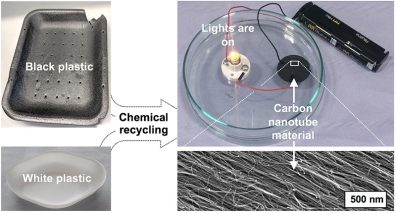
While all plastics are made of carbon, hydrogen and sometimes oxygen, the amounts and arrangements of these three elements make each plastic unique. As plastics are very pure and highly refined chemicals, they can be broken down into these elements and then bonded in different arrangements to make high value materials such as carbon nanotubes.
Conversion of plastics to carbon nanotube materials (Foto: Swansea University)
Dr Alvin Orbaek White, a Sêr Cymru II Fellow at the Energy Safety Research Institute (ESRI) at Swansea University said: “Carbon nanotubes are tiny molecules with incredible physical properties. The structure of a carbon nanotube looks a piece of chicken wire wrapped into a cylinder and when carbon is arranged like this it can conduct both heat and electricity. These two different forms of energy are each very important to control and use in the right quantities, depending on your needs.
“Nanotubes can be used to make a huge range of things, such as conductive films for touchscreen displays, flexible electronics fabrics that create energy, antennas for 5G networks while NASA has used them to prevent electric shocks on the Juno spacecraft.”
During the study, the research team tested plastics, in particular black plastics, which are commonly used as packaging for ready meals and fruit and vegetables in supermarkets, but can’t be easily recycled. They removed the carbon and then constructed nanotube molecules from the bottom up using the carbon atoms and used the nanotubes to transmit electricity to a light bulb in a small demonstrator model.
The research team plan to make high purity carbon electrical cables using waste plastic materials and to improve the nanotube material’s electrical performance and increase the output, so they are ready for large-scale deployment in the next three years.
Dr Orbaek White said: “The research is significant as carbon nanotubes can be used to solve the problem of electricity cables overheating and failing, which is responsible for about 8 % of electricity is lost in transmission and distribution globally.
“This may not seem like much, but it is low because electricity cables are short, which means that power stations have to be close to the location where electricity is used, otherwise the energy is lost in transmission.
“Many long range cables, which are made of metals, can’t operate at full capacity because they would overheat and melt. This presents a real problem for a renewable energy future using wind or solar, because the best sites are far from where people live.”
The compliance of the declared filling volume is an important topic for all bottlers. On one hand the legal minimum values must be met and on the other hand overfilling means considerable economical loss.
The simple transfer of the juice in a graduated cylinder is quite inaccurate as the scale of such a cylinder is too wide and do not give an exact result. Additionally there will always be some remains in the bottle. Therefore this method is not precise enough for this task.
The usual continuous check of the filling volume in a filling line is done by weighing the full bottle and subtracting the average weight of empty bottle and cap. The weight of the juice can be transferred into volume by the division with the average density of the juice. This can be done automatically, but contains the risk of slightly incorrect results, as the weight of the packaging and the density of the juice normally vary within a predefined range.
This new method describes a more exact way to determine the filling volume (net volume) in a laboratory.
It is now available in the Methods of Analysis section of the IFU Website!
Brazilian exports of Frozen Concentrate Orange Juice (FCOJ) Equivalent decreased 19 % in the 2018/19 crop – compared to the previous season), as expected. Between July/18 and June/19, shipments totaled only 982.24 thousand tons, according to Secex. As for the revenue, it totaled 1.8 billion USD, 19 % down in the same comparison.
The volume exported from Brazil in the 18/19 season was the second smallest in the last 20 years of Secex historical series, only larger than that from 2016/17, when the Brazilian citrus belt harvested a small crop – which, in turn, resulted in the lowest inventory of all times, according to data from CitrusBR (Brazilian Association of Citrus Exporters).
The bad performance in 2018/19 was linked to two factors: lower orange supply in the Brazilian citrus belt (São Paulo and Triângulo Mineiro) and a decrease in the international demand, mainly from the United States. Lower exports, however, prevented juice inventories at Brazilian processing plants from decreasing to critical levels at the end of the season (June 30 2019).
According to a report from CitrusBR, in June/19, inventories at Brazilian processing plants closed at only 224.51 thousand tons, which is considered low compared to that in recent years – inventories in June/19 were only lower than in 2010/11 and in 2016/17.
Brazilian shipments to the United States decreased a steep 38 % compared to that last season, totaling only 196.4 thousand tons. Revenue, in turn, dropped 39 %, to 340.96 million USD. Besides lower consumption in America, this result is linked to expectations for a crop recovery in Florida in 2018/19. According to a report from the USDA released today, July 11th, Florida should harvest 71.6 million boxes of 40.8 kilos, 59 % more than in 2017/18.
To the European Union, the biggest importer of the Brazilian orange juice, shipments totaled 643.74 thousand tons, 11% down compared to that last season. Revenue, in turn, reached 1.19 billion USD, 9 % down in the same comparison.
BRAZILIAN MARKET IN JULY – The cold weather in São Paulo State reduced citrus consumption in the first fortnight of July. According to Cepea collaborators, despite the occasional frosts in some producing regions (mainly in southwestern SP), there were no losses at orchards. Between July 1 and 15, pear orange prices averaged 18.07 BRL per 40.8-kilo box, on tree, stable (-0.05 %) compared to that between June 1 and 15.
Concerning tahiti lime, besides lower supply (due to the harvesting end for the fruits produced in the first semester of 2019), rains pushed up quotes in the first half of July. Between July 1 and 15, tahiti lime quotes averaged 25.19 BRL per 27-kilo box, harvested, a staggering 84.5 % up compared to that in the same period of the previous month.
Premium fruit and vegetable ingredients supplier SVZ is pleased to announce the appointment of Inge van Disseldorp as its new sustainability manager. With over a decade of experience in corporate sustainability, Inge will build on SVZ’s longstanding commitment to environmentally conscious business and focus on implementing the company’s plans to achieve 100 % sustainable sourcing by 2030.
Formerly a corporate responsibility consultant, Inge was most recently responsible for devising and implementing sustainable purchasing practices within the procurement department at Sligro Food Group, the Dutch leader in foodservices. There she worked to align sustainability initiatives with business development goals and was responsible for developing and implementing the company’s sustainable sourcing strategy. As a member of the CSR steering committee, Inge worked to foster a company-wide sustainable ethos as well as creating sustainable business opportunities driving engagement with both buyers and suppliers.
Her primary focus at SVZ will be on improving sustainable sourcing, traceability, biodiversity and agricultural practices, while contributing to a better environment at large. Inge will leverage SVZ’s close relationships with growers to provide the sustainably sourced, traceable products that consumers demand, while also engaging with farmers, addressing the challenges they face and ensuring fair labor practices.
“The potential to make a tangible difference by working closely with farmers and promoting sustainable production right from the source is one of the key factors which attracted me to the position at SVZ,” comments Inge. “I’m looking forward to the challenge of building on SVZ’s industry-leading sustainability credentials and utilizing my deep personal investment in environmental causes to deliver initiatives that meet the needs of customers, farmers and the wider planet”.
Anouk ter Laak, CEO, states, “We are pleased to welcome Inge to SVZ. Her passion for sustainability, both in her career and personal life, make her a perfect fit for the role of sustainability manager at SVZ. For over 150 years, we have upheld the core principles of sustainable sourcing, environmental consciousness and valuing people. Inge embodies each of these values and we are excited to see her in action”.
Freshfel Europe is holding its 2019 Annual Event in connection with The London Produce Show and Conference on 5-6 June in London, UK. With the Annual Event programme now finalised and registrations open, Freshfel Europe is anticipating animated discussion on this year’s theme, ‘Building opportunities for fresh produce in an unpredictable business environment’.
Freshfel Europe, the representative association of the fresh fruit and vegetable sector at EU level, will gather its members from across Europe in London at the Annual Event to discuss strategies for dealing with the current uncertain business environment. Following the Statutory Annual General Meeting and a review of 2018 activities, Freshfel Europe will debate two focus topics, the latest promotion ventures from across Europe endeavouring to stimulate fresh fruit and vegetable consumption and the future UK trading relationship
Jo Ralling from The Food Foundation will kick off the morning Freshfel Public Conference session with a detailed presentation on The Food Foundation’s promotion efforts and its successful Peas Please campaign. This will be followed by an explanation by Dan Parker, also from The Food Foundation, on the UK’s latest promotion campaign Veg Power targeted at children. Freshfel Europe will also be giving a preview of its pan European promotion campaign in collaboration with Aprifel as well as other current EU promotion campaigns focusing on fruit and vegetables and health.
After a networking lunch participants will attend the joint UK Fresh Produce Consortium-Freshfel Europe Seminar on Trading with the UK. A key discussion point during the seminar will be how future market access may evolve for trading with the UK. Speakers include experts from the UK regulatory authority, market analysts and fresh produce industry traders.
The 2019 Freshfel Europe Annual Event is open to non-members and more information and details on how to register are available here. The London Produce Show and Conference full programme is also available here.
As part of its 2020 strategy to strengthen its naturals capabilities and its presence in the high growth markets of Asia Pacific, Givaudan announced that it has reached an agreement to acquire Golden Frog, a Vietnamese flavour company.
Golden Frog manufactures natural flavours, extracts and essential oils for the food and beverage industry. It offers a wide range of natural ingredients including herbs, spices, fruit and vegetable extracts and essential oils from the great biodiversity of Vietnam. With headquarters and manufacturing facilities in the Ho Chi Minh area, Golden Frog employs 156 people and caters to the needs of the ASEAN markets.
While terms of the deal have not been disclosed, Golden Frog’s business would have represented approximately CHF 10 million of incremental sales to Givaudan’s results in 2018 on a proforma basis. Givaudan plans to fund the transaction from existing resources and is expected to close in the second half of 2019.
The range, which now includes DuPont™ HOWARU® premium probiotics, is specially designed for fermented plant-based products, responding to key health, wellness and taste and texture trends
DuPont Nutrition & Biosciences (DuPont) announced a new cultures line that contains its premium HOWARU® probiotics which are specially designed for fermented plant-based products to deliver clinically backed health benefits. The DuPont™ Danisco® VEGE cultures range offers desired taste and texture profiles in non-dairy applications. New additions to this range – HOWARU® Dophilus VG, which contains Lactobacillus acidophilus NCFM® and HOWARU® Bifido VG, which contains Bifidobacterium lactis HN019™ – have highly documented, positive results in human studies for digestive health and well-being.
Available in single strain form, this range is non-dairy, non-animal, non-allergen, non-GMO, and is suitable for vegan diets. It also is easy to integrate with existing cultures used in plant-based fermented food and beverage formulations.
“Digestive wellness is one of the top global trends for 2019. As consumers continue to make health and wellness part of their daily routines, they’re looking for benefit-focused options,” said Sonia Huppert, Global Product Leader, Plant-Based Products, DuPont. “Digestive health is an area where consumers can feel the benefits immediately. Symptoms like bloating and irregularity are treated with diet changes and with new products. Innovations in fermentation and probiotics can truly deliver solutions in this area.”
DuPont conducted a research study with Global Data Insights to ascertain consumer perception of probiotics. When asked the impact respondents believe that probiotics have on health and wellness, 46 percent of the nearly 12,000 respondents in Europe said probiotics had a positive effect, and 65 percent of respondents in the United States responded positively.
Validated by robust clinical trials, the HOWARU® brand is a high activity, premium probiotic product with high performance, high stability and high functionality as its hallmark traits.
These cultures not only respond to important wellness trends, but also to the increased demand for plant-based foods and the constant desire for great taste and texture. DuPont™ Danisco® VEGE cultures were developed for a wide-ranging variety of plant-based raw materials, such as soy, peas, coconut, almond, nuts, oat, maize, rice, fruits and vegetables, to satisfy consumer taste and texture expectations – from typical and appealing fresh, clean and mild flavors to new, pleasant unexpected flavors.
“We have the broadest portfolio for plant-based fermented foods and beverages and a deep passion to not only help deliver the food experience consumers desire, but also to bring the health benefits they’re continually seeking,” said Didier Carcano, Global Marketing Leader, Cultures, DuPont. “We aim to continue investing in this area, growing our probiotics expansion efforts and working with our customers to create essential health solutions for growth opportunities across the globe.”
New Zealand Kiwifruit Growers Incorporated (NZKGI) supports the Ministry of Social Development’s (MSD) declaration of a labour shortage for the kiwifruit industry in the Bay of Plenty and the extension of the labour shortage in the Hawkes Bay. The BOP declaration announced is for the period 15 April until 27 May 2019.
There is a current shortfall of over 1,400 vacancies in the Bay of Plenty’s kiwifruit industry which is expected to increase to 3,800 at harvest’s peak around mid-April. There was a shortfall of 1,200 vacancies at the peak of harvest in 2018.
NZKGI CEO Nikki Johnson says, “The industry has been working hard to attract labour for this year’s harvest. NZKGI has been running a media campaign to promote work in our sector and early signals indicate that this has gone some way in reducing the number of vacancies.
“However, it is vital to our industry that there is enough seasonal labour for harvest, and we currently don’t have enough people to pick and pack the intended crop. So it is entirely prudent and good risk management for MSD to take this step in support of our campaign.
“We would encourage people – kiwis and visitors – to come and enjoy working in an industry that exports an iconic piece of kiwiana overseas.”
Kiwifruit industry employers have been working closely with the Ministry of Social Development (MSD) to place New Zealanders in vacant roles. Between January and April 2019, MSD has placed nearly 500 job seekers into the kiwifruit industry. Despite this more workers are still needed. The declaration of a seasonal labour shortage allows overseas visitors who already hold visitor visas to apply to vary the conditions of their visas for working in kiwifruit in the Bay of Plenty.
Overseas visitors are encouraged to visit the New Zealand Immigration website where detailed information about varying the conditions of a visa can be found.
To date over 90 % of this season’s total kiwifruit crop is yet to be harvested. It is forecast that a similar amount of fruit is required to be packed this year in comparison to last year. This includes an increase of 12 % of SunGold kiwifruit which requires packing in a short period of time.
Johnson says NZKGI seeks to employ New Zealanders as a first priority, especially kiwis who live in regions with orchards and packhouses. Work and Income has given help to people that need transport from other parts of BOP and other Work and Income clients who would like to access this should contact their local office for support. “However, because of the low unemployment rate this is not always possible, and other sources of workers, such as those from the Recognised Seasonal Employer (RSE) scheme and backpackers, are also required.”
She says the industry continues to have robust discussions with Government around increasing the number of workers available under the RSE scheme, as well as other avenues to meet demand during harvest.
NZKGI has recently secured co-funding and employed a labour coordinator to connect employers with workers over harvest and analyse current and future labour demands of the kiwifruit industry, and will use this information to deal with industry growth projections. A University of Waikato report forecasts that the kiwifruit industry contribution to the Bay of Plenty’s GDP will increase 135 % by 2030 to $2.04 billion and require 14,329 new kiwifruit jobs.
The kiwifruit industry is an important contributor to the local Bay of Plenty economy, currently contributing $867 million to the regions GDP and employing 10,762 FTE in the year 2015/2016. The last declaration of a labour shortage for the kiwifruit industry was made in 2018 when the unemployment rate in the Bay of Plenty was 5.9 %[1]. The current unemployment rate is 4.8 %[2].
[1] As of December 2017. Source: Infometrics
[2] As of December 2018. Source: Infometrics
Döhler Group and Zumos Catalano Aragoneses S.A. (ZUCASA) have reached an agreement on the acquisition of the majority of shares in ZUCASA by the Döhler Group. With immediate effect, Döhler will manage ZUCASA’s juice production facility located in the Huesca region through its subsidiary Döhler Fraga S.L.
For Döhler, this transaction marks another great step forward in one of Europe’s largest fruit production areas. Customers will benefit from a more diverse offering in the stone fruits segment as well as in apples and pears; furthermore, the combined businesses will offer greater efficiency in a global market with regard to customised all-in-one solutions.
ZUCASA’s extensive expertise and ability to provide fruit and vegetable juices, purees and concentrates for food and beverages, combined with the broad product portfolio and the comprehensive industry knowledge of the Döhler Group, will create unique synergy effects. In the coming years, Döhler Group aims to set a benchmark within the sector and develop a plan of expansion and sustainable growth within its business model.
About ZUCASA: Zumos Catalano Aragoneses S.A. is a producer of juices, purees and sweet fruit concentrates, vegetables and plants located in the region of Fraga (Huesca), with operations at the heart of Spain’s largest production area of sweet fruit between Huesca and Lleida. It has facilities spanning more than 24,000 m2 over an area of 168,000 m2, with capacity to store 32,000 m3 of natural fruit juices, purees and concentrates. ZUCASA began production in 2010 with three lines for processing fruits and vegetables: two of which for purees and a third for juices. Currently, it employs an average of 50 workers on permanent contracts, reaching 150 workers during high season. The company’s commitment to quality in production has been confirmed by the international certifications BRC, IFS, SGF, Kosher, FDA and others, which in turn have enabled it to expand internationally, with more than 60 % of revenues coming from exports.
Lion NZ announced that it has acquired Kiwi drinks brand, Teza Iced Teas. The purchase forms part of the company’s wider ambition to grow its non-alcoholic beverage portfolio and cater to the increasingly diverse social occasions of New Zealanders.
Sitting alongside the likes of GoodBuzz Kombucha, Hopt and Mac’s Soda, Teza will join Lion’s growing non-alcoholic division, Drinks Collective, which earlier this month also announced a new strategic partnership with flavoured sparking water start-up, Vista.
Teza Iced Teas is part of the Greenstone Drinks Company and was the first real-brewed iced tea in New Zealand. The product is made with batch brewed organic leaf tea, fruit juices and botanicals. Sold in 325 ml glass bottles, the brand offers several unique flavours including Feijoa & Lime Blossom and Lemon & Mandarin.
Stefan Gray, General Manager, Drinks Collective says: “The iced tea market is in strong growth globally so we’re incredibly excited to welcome Teza Iced Teas into the Drinks Collective. The brand’s premium offering complements our existing range nicely and will help us deliver greater choice and convenience for consumers across more social occasions. We’ll be leveraging our networks to make the brand more readily available nationwide and the Teza Grassy Tea Bush Van will also be making a return to the streets of NZ.
“I think typically people associate Lion with alcohol products and don’t realise what an amazing non-alcoholic beverage offering we have – from coffee and juices to low sugar sodas and Kombucha. We have big plans to grow the Drinks Collective as part of our commitment to meeting the evolving world of sociability and by 2025 at least 10 % of Lion’s sales will come from our non-alcoholic range,” adds Gray.
Lion’s Drinks Collective will take full control of the Teza brand and associated assets, with the founders, Joe Gehrke and Daphne Raj, now living in Australia where they are focused on growing their company, Greenstone Drinks Co. They will still be involved in the brand via an agreement which will see them distribute Teza for Lion in the Australian market through Greenstone Drinks Co.
Teza founder Joe Gehrke, says, “We created Teza when we moved home from our stint in the UK. We noticed a real gap in the market for a premium, more natural iced tea offering and are proud of the growth we’ve achieved for the brand so far, including Australia, Japan, and South Korea. We’re thrilled to pass the Teza brand on to Lion who has a proven track record of nurturing and growing strong brands in the Kiwi market. Under Lion, Teza can be taken to the next level.”
Odwalla is bringing a smooth, tasty twist to the kombucha craze.
Odwalla Smoobucha, which hits stores in the U.S. after a buzzed-about unveiling at Natural Products Expo West tradeshow in Anaheim, Calif., blends the great taste and texture of fruit smoothies with the boldness of pasteurized kombucha.
Three flavors – Citrus & Guava, Berry & Ginger and Apple & Greens – offer a unique mashup of flavor and function, with 40 percent less sugar and fewer calories than leading smoothies. The cleverly named beverage also includes 500 million colony-forming units of “good” bacteria, an excellent source of fiber that helps support digestive health and delivers 100 % daily value of antioxidant Vitamin C. Odwalla Smoobucha, offered in 15.2-oz. bottles, can be enjoyed as a nutritious, on-the-go snack.
Odwalla also is introducing two limited-edition flavors inspired by the vibrant essence of spring. Hot Tropics and Mint to Be Berry offer a refreshing blend of 100 % juice, coconut water and trendy botanical ingredients such as jalapeño and mint.
The EU Member State’s experts endorsed – on 22 February – in the context of a Standing Committee a European Commission’s proposal to prolong the emergency measures with specific import requirements for citrus fruits from Argentina, Brazil, South Africa and Uruguay, and strengthened the import requirements for citrus fruits originating in Brazil, to prevent the introduction into and the spread within the European Union of citrus black spot (CBS). This measure sets out specific growing and inspection requirements for citrus fruits originating in those countries that had recurrent interceptions of CBS at the entry into the EU, with the aim to ensure that the fruits arriving to the EU are free from this disease.
The Decision on the prolongation and reinforcement of this emergency measure will be formally adopted by the European Commission in the coming weeks.
For more information on emergency measures on import of plants and plant products, see SANTE’s webpage.
Determination of Acetic Acid (enzymatic method)
This method has been revised and has been loaded onto the IFU website. It now includes precision data.
General information
This method serves to determine the acetic acid content of a fruit and vegetable juices & purees. Provided that it meets characteristic performance, this enzymatic method can also be carried out using an automatic analyser.
Principle
Acetic acid (acetate) is converted in the presence of the enzyme acetyl-CoA synthetase (ACS) with adenosine-5′-triphosphate (ATP) and coenzyme A (CoA) to acetyl-CoA.
Acetyl-CoA reacts with oxaloacetate to citrate in the presence of citrate synthase (CS).
The oxaloacetate required for reaction (2) is formed from malate and nicotinamideadenine dinucleotide (NAD) in the presence of malate dehydrogenase (MDH) (3). In this reaction NAD is reduced to NADH.
The determination is based on the formation of NADH which is measured by the increase in absorbance at 340, 334 or 365 nm. Since a preceding indicator reaction is used, the amount of NADH formed is not linearly proportional to the acetic acid concentration.
To deliver new beverage options to consumers seeking healthier alternatives, Danone Waters Brazil has partnered with Crown Holdings, Inc. to launch its newest brand, 4U by Danone. Debuting in the Brazil market in November, the 4U line features two carbonated juices and two flavored teas, all made with 100 % natural ingredients. Two different sizes of sleek style cans from Crown, along with special ink finishes and colorful imagery, offer vibrant, eye-catching package designs that reflect the healthy, fresh blends of the 4U beverages.
With an uptick in global awareness for health, wellness and sustainability, the beverage market has seen a growing consumer preference for alternative, more natural options. The 4U brand helps Danone address this burgeoning market within Brazil and diversify its portfolio, which includes dairy products and water, and reach new consumers.
The launch of the 4U line brings four new flavorful beverage options to the market. Danone’s carbonated juice, developed under the sub-brand True 4U, is available in White Grape and Citrus and packed in 269 ml (9.1 ounce) sleek style beverage cans. The sub-brand Tea 4U features two flavors, Black Tea – Hibiscus and Berry and Lemon Grass and Citrus, and is available in 310 ml (10.5 ounce) sleek style cans. All four beverages are completely natural, containing no preservatives or artificial coloring.
Danone chose the beverage can for its durability, recyclability and decorative options. The format’s premium appeal, portability and increasing popularity in the Brazilian market were also important factors. Danone collaborated with Crown due to the Company’s reputation for sustainable products and practices and its close relationships with partners.
“Placing Danone on the forefront of Brazil’s growing natural beverage market required a strategic packaging partner that could accurately capture the new 4U brand and help us make our mark in this product sector,” said Rafael Ribeiro, Head of Marketing and Sales at Danone. “Collaborating with Crown allowed us to venture into uncharted territory and bring an exciting, fresh product line to our customers with the confidence that our brand would be represented in a high-quality, sustainable format.”
For added shelf appeal, Crown used two distinct sizes of its sleek style cans. Part of the Company’s diverse product portfolio, the sleek style cans bring a level of exclusivity to the brand and provide greater differentiation between the carbonated juice and tea varieties. The cans’ graphics feature bright colors to convey the bold flavors and fresh ingredients of the natural beverages. An all-over matte finish has been applied to the Tea 4U cans, creating a tactile experience for consumers.
“It is always an honor to help our customers bring a new concept to market, and we were thrilled to support Danone with the launch of the 4U line,” said Altair Frulane, Commercial Director at Crown Embalagens Metálicas da Amazônia S/A, a subsidiary of Crown. “Our collaboration with Danone involved careful ideation and planning that resulted in a striking product that is true to the brand’s messaging and goals. It is this type of project that allows our expertise and creativity, both regionally and globally, to shine.”
Having made the strategic decision to secure resources and due to the resulting backward integration, Chimaco SA, the Nicaraguan sister of the Swiss company Frutco AG, has succeeded in successfully cultivating 60 ha of organic passion fruit of the genetically protected „Chiamco Variety“ on its 200-ha farm „Gemasteppe“.
In addition, Chimaco SA agronomists manage the company’s own demo plantation, on which contract farmers are trained in the proper and sustainable cultivation and care of the plants in conventional passion fruit cultivation. They support the growers with technical know-how and agricultural expertise throughout the entire duration of the cooperation. Currently, 200 ha of sustainably cultivated fruit (60 ha of which are organic) are available for processing. In the medium term, this will be expanded to approx. 1,000 ha, with the Swiss group guaranteeing to purchase 100 % of the growers’ produce. The area under cultivation will always be a mix of the group’s own farmland and third-party, medium-sized growers. This, together with the company’s own processing of the fruit by Frutco de las Americas SA in Chinandega fully ensures the maintenance of a fully sustainable supply chain and guarantees stable prices over several years.
Frutco de las Americas SA’s new factory building — a 100 % subsidiary of our holding CT Finance AG — has been completed and is located in a duty-free zone directly in the centre of the cultivation area, near the Pacific port of Puerto Corinto. The work on the interior is in full swing. The fully-automated Rossi&Catelli production plant by CFT in Parma will be shipped to Nicaragua in early 2019. Frutco de las Americas SA is set to start production in Q2 2019.
With “taste” being such a trending focal point at SIAL Paris 2018 many visitors were keen to discover our passion fruit exotic juice and food preps
Passina’s new branding and natural passion fruit-based food products attracted the attention of crowds of international food stakeholders at SIAL Paris 2018. Almost 160,000 visitors attended the international food trade fair.
“Our clients and partners understood our new concept and approach towards branding in the face of the intense competition the sector faces today. We know that collaboration is key to developing new products”, said Dr Pablo Hafner, Passina Group CEO.
Exploiting the innovation of passion fruit-products
“We have our own R&D department and are also partnering with various research organisations, mainly in the US and Europe. We are now in the research phase and want to launch nutritional supplements based on passion fruit in 2019”, added the CEO.
International experts in the food industry can discover the new applications through recipes prepared by the R&D team for the show:
Tastings of passion fruit juice, smoothies and dips.
Concept cards adapted to different sectors: juice & food preps, confectionery and cosmetics.
Besides adding an exotic and savoury touch to dishes, passion fruit and its ingredients offer a range of health benefits, such as:
Adding low-calorie, enriching fibres to dietetic snacks (from seeds).
Reducing sleep disorders and restlessness through herbal teas (from leaves and extracts).
Anti-inflammatory effects.
Digital presentations displayed at the Passina stand presented the company and its new brand identity. Passina attracted potential collaborators from various sectors and new business partnerships emerged during the busy fair. “We have seen positive outcomes from sales, R&D, and project managers within the food and nutritional supplement sectors”, said Hafner.
This all forms part of the ongoing development of Passi AG, including the sale of the non-passion fruit business to Döhler Group. The sale is currently being evaluated by the antitrust authorities and is conditional on their approval, with the outcome expected to be announced by the first half of November 2018.
INTERVITIS INTERFRUCTA HORTITECHNICA to feature a Distillers’ Forum for the first time / Talks, sensor technology seminars and tastings
INTERVITIS INTERFRUCTA HORTITECHNICA, International Technology Trade Fair for Wine, Fruit Juice and Special Crops, will be held in Stuttgart from 4 to 6 November 2018. The varied accompanying programme will also contain for the first time a Distillers’ Forum with an associated tasting area. Starting at 10.00 on Sunday, 4 November 2018, sensor technology seminars and talks on liqueur, gin and fruit brandy will each be held in succession in the Oskar Lapp Hall (Hall 6). The length of these moderated seminars and talks will be between 45 and 60 minutes. Suitable marketing strategies will also be discussed based on well-known campaigns. The seminars and talks are being organised by well-known distillers such as the KOVAL Distillery from Chicago and Manufaktur Geiger, as well as recognised experts such as Dipl. Lebensmittel-Ing. Dr. Klaus Hagmann. Pre-registrations are required for the sensor technology seminars which are subject to a charge and have a limited number of participants. You can find all the programme information and registration formalities at: www.ivifho.de/rahmenprogramm. Fruit brandies, gins, whisk(e)ys and liqueurs can also be sampled in the tasting area on all three days of the trade fair.
About INTERVITIS INTERFRUCTA HORTITECHNICA INTERVITIS INTERFRUCTA HORTITECHNICA takes place together with the International German Winegrowers’ Congress every two years at the Stuttgart Trade Fair Centre. As an international technology trade fair for wine, fruit juice and special crops, it covers the entire process chain from cultivation and harvesting technology, processing and process control, and filling and packaging technology through to organisation and marketing. The German Winegrowers’ Association (DWV) acts as the professional supporter of the INTERVITIS INTERFRUCTA section and organises the International DWV Congress. The German Agricultural Society (DLG) is the professional supporter of the HORTITECHNICA section.
Döhler Group and Passina Group have reached an agreement on the acquisition of Concentra Europe BV with its Dutch and German subsidiaries by Döhler Group. The proposed transaction has now been filed with the relevant antitrust authorities and is conditional upon their approval.
This transaction marks a step where customers will benefit from a more complete offering and improved efficiency of the combined businesses in a global market that is characterised by volatility, as well as the challenges and opportunities of supply and demand. Döhler Group and Passina Group believe that this step has created a path towards further growth in the market, while simultaneously strengthening their respective positions, specifically as reliable suppliers of tropical and natural plant-based ingredients for the global food & beverage industry.
Concentra Holding AG, owner of the brand name Passina, will focus its future activities on its core business; the production and commercialisation of passion fruit products, including passion fruit juices, concentrates and derivatives. Maintaining its high quality standards, it will place additional focus on the development of innovative new products and solutions.
The world market for aseptically packed products amounted to 152 billion litres in 347 billion packs during 2017, according to the new Global Aseptic Packaging report from leading food and drinks consultancy Zenith Global Ltd and packaging experts Warrick Research Ltd. Volumes have risen by 2.7 % a year since 2012, with South East Asia achieving the fastest annual growth rate of 7 %, followed by China on 6 %.
Beverages such as fruit juice accounted for 39 % of aseptically packed products, with white drinking milk responsible for 38 % and other dairy/food products making up the remainder. Aseptic filling has also become established for soups, sauces, tomato products and baby foods.
“While European companies still dominate the global aseptic filling equipment industry, the Chinese market is increasingly supplied by Chinese equipment manufacturers, some of whom have also successfully entered other Asian markets,” commented David Warrick, Director at Warrick Research Ltd. “Volumes have been static in much of Europe, contrasting with rapid growth in many Asian countries,” added Arunkumar Anbalagan, Senior Insights Analyst at Zenith Global Ltd.
Other findings of the 2018 Global Aseptic Packaging report include:
There are over 16,000 operational aseptic filling systems worldwide, serviced by more than 30 suppliers.
The largest markets for aseptic packaging are China and South East Asia. China is set to become the leading country by 2022, followed by South East Asia and West Europe.
Value added dairy products are a fast growing area of demand for aseptic filling systems. In some regions, fillers are used for both ambient and chilled dairy products.
Environmental issues have become more important in many regions. Developments include the introduction of electron beam sterilisation as an alternative to chemical sterilisation. Demand is increasing for re-use or recycling.
By 2022, Zenith and Warrick estimate that the world market will reach 176 billion litres and 410 billion packs. The majority of additional demand will come from South East Asia as well as China.
The American Beverage Association (ABA) announced that Katherine Lugar, president and chief executive officer (CEO) of the American Hotel & Lodging Association (AHLA), will join ABA as its new president and CEO later this year. Lugar will succeed Susan K. Neely, who successfully led ABA for 13 years. Neely was named president and CEO of the American Council of Life Insurers (ACLI) in May 2018.
Lugar will leverage deep public policy and advocacy experience on behalf of ABA and its member companies, which make and sell some of the world’s most popular and innovative non-alcoholic beverages. As president and CEO of AHLA, Lugar transformed the lodging industry’s largest association in her five-year tenure, tripling revenue and membership, strengthening the association’s core mission on advocacy, championing the industry’s voice with policymakers and achieving historic highs for the industry political action committee (PAC) placing it in the top two percent of all association PACs.
Lugar previously served as the Retail Industry Leaders Association’s (RILA) executive vice president of public affairs, where she ran a number of successful, high-profile issue campaigns. Prior to RILA, Lugar led government relations for Travelers Insurance, served as vice president of legislative and political affairs at the National Retail Federation (NRF) and worked on Capitol Hill. She currently is chair-elect of the board of the St. Baldrick’s Foundation for pediatric cancer, a member of the executive committee of the Bryce Harlow Foundation and a member of the U.S. Chamber of Commerce’s Committee of 100.
The non-alcoholic beverage industry employs more than 250,000 people with a direct economic impact of more than $182.6 billion. The industry manufactures a variety of beverage choices in a wide range of calories and package sizes, including bottled water, 100 percent juice, juice drinks, sports drinks, soft drinks, ready-to-drink teas and energy drinks.
Brenntag North America, Inc., part of Brenntag Group, one of the global market leaders in chemical distribution, announces a new collaboration with Silvateam for the exclusive distribution of Pectin in United States & Canada.
Silvateam has dedicated over 160 years to plant-based extracts. Located in Northern Italy, Silvateam produces products used in a large range of applications such as food, beverages, and animal health and nutrition.
Brenntag North America has been appointed the exclusive distributor in North America for the distribution of the Silvateam Pectin Line:
Aglupectin™
“We are excited about our new relationship with Silvateam and the continued expansion of our value- added, functional ingredient options. The combination of our Food & Nutrition team, new food application lab, and Silvateam’s technical expertise position us well to provide quick solutions to our customer’s formulation questions when using pectins,” stated Larry Davis, Marketing Director, Brenntag North America.
Brenntag will focus on Silvateam’s versatile, clean label, pectin products. Pectin is a natural product widely used for its gel formation, thickening, and stabilizing properties in a variety of applications. Applications include fruit juices, jams, marmalades, dairy, confectionary, and bakery.
“Silvateam is a fast-growing company with an excellent reputation in the industry. We are excited to work alongside Brenntag North America to promote our range of specialty pectin,” said Alessandro Di Mase, CEO of Silvateam. “Brenntag’s strong technical expertise, service orientation, and sales team offer the market our tailor-made solutions for texture, mouthfeel, viscosity, flavor release, and suspension.”
With a month to go before ASIA FRUIT LOGISTICA opens its doors in Hong Kong, Asia’s premier fresh fruit and vegetable show is gearing up for its biggest and best edition yet.
Exhibitors from 46 different countries have signed up to showcase their products and services at the show, which returns to AsiaWorld-Expo Center in Hong Kong on 5-7 September.
Some 27 national pavilions will feature at ASIA FRUIT LOGISTICA, including Argentina, Australia, Britain & Ireland, Canada, Chile, China, Costa Rica, Ecuador, Egypt, France, Germany, Greece, Italy, Korea, Malaysia, Mexico, the Netherlands, New Zealand, Pakistan, Peru, South Africa, Spain, Taiwan, Turkey, Ukraine, the US and Vietnam.
Visitors can look forward to taking in a rich array of global offerings, with exhibitors spanning all continents, and every sector of the value chain.
What’s on the programme?
Well over 13,000 top-level buyers from than 70 different countries are expected to attend ASIA FRUIT LOGISTICA.
Visitors can get a valuable head-start by attending ASIAFRUIT CONGRESS. Asia’s premier fresh produce conference is the curtain raiser to the trade show, taking place on 4 September, the day before ASIA FRUIT LOGISTICA at the same venue.
Leading figures from the fresh produce business and the wider business world provide expert insights into the key market trends and opportunities across Asia. Attracting more than 400 high-level industry professionals from 40 different countries, ASIAFRUIT CONGRESS offers first-rate networking opportunities.
On the show-floor at ASIA FRUIT LOGISTICA on 5-7 September, visitors can take part in two walk-in hall forums – ASIAFRUIT BUSINESS FORUM at Hall Forum 1, and COOL LOGISTICS ASIA and SMART HORTICULTURE ASIA at Hall Forum 2.
The Russian sector of commercial orchards currently yields fresh fruit of the food embargo: the producers strive to build up harvests and gain the market share previously occupied by imports. A strong driver to this trend is government support for starting orchards. Specifically, the Russian Ministry of Agriculture has boosted subsidisation fivefold in 2015 – 2016. As reported by Alexander Tkachev, Russian Minister of Agriculture, a total of 72k ha will be established before 2020. 2017 registered 3.3bn RUB of subsidies for orchard start and aftercare with 15.2k ha of orchards laid.
An increase in fruit and berry yields and acceleration of the entire industry’s growth is fostered by introducing innovative solutions, attracting investment, building rootstock nurseries, and developing state-of the-art machinery. All these factors can be enabled only through the combined efforts of all industry stakeholders, who will be brought together at the industry meeting place “Orchards of Russia”.
The Forum and exhibition “Orchards of Russia 2018” (5 – 6 June 2018, Moscow) is a thought-provoking international platform tailored for unlocking investment in Russian commercial orchard and viticulture industry, discussing industry development strategies, sharing best practices, and placing new win-win contracts.
At present, the forum expects a total of 250 representatives from the entire value chain, including C-suite executives of the industry leaders, such as Belgorod apples, Beliy Sad, Glazunovka Gardens, Mengir, Nash Sad, and Plodovoye, along with policymakers, investors and top engineering companies. In general, the expected attendee line-up is represented by the following categories: 30 % of commercial orchard enterprises, 30 % of farm enterprises, 20 % of Russian and international investors, 15 % of service providing companies, and 3 % of regulators. The positions of delegates include: Governors, Ministers and their deputies (10 %), Presidents and VPs (28 %), CEO and their deputies (30 %), and divisional directors (30 % as well).
The forum will be bringing top players of the sector together to evaluate the financing and investment landscape of the industry, share insights to improving efficiency, reducing costs, product storage and processing, and other critical issues.
Moreover, it will highlight more than 60 investment projects in viticulture and orchard industry with 2019 – 2020 deadlines across Russia: Sad-Gigant Ingushetia, Yuzhnye Zemli, Chernozemye Berries, to name just a few. A special focus will be put on Meetings with Investors for project initiators and investors to discuss cooperation opportunities in a relaxed setting.
Frost protection, multiple-risk insurance, new regulations on agriculture, and the abrogation of the spirits monopoly. Currently: fruit growers, agronomists and distillers all over Europe have a lot to talk about. From February 23 to 25, 2018, Fruchtwelt Bodensee will give visitors a glimpse of a wide range of approaches to current problems and answers to the industry’s pressing questions. Experts will be on hand to offer overviews of the latest developments in methods, trends and technologies for the global fruit-growing market. A first-class program of events to accompany both the fruit-growing exhibition and the international distillery day will provide in-depth examinations of current issues in the industries. Other topics that will be spotlighted include direct marketing and agrotourism.
“In times of market turbulence, it becomes all the more important to stay informed and exchange ideas and information. Fruchtwelt Bodensee provides an outstanding platform for that purpose, and it comes at just the right point in time,” says Messe Friedrichshafen CEO Klaus Wellmann. He is convinced that “this event will chart the course for the coming season.” Fruchtwelt Bodensee has undergone significant development, combining a comprehensive array of products on offer with a quality conference program, and early signs indicate that the next edition will be a great success. “Compared to the same stage in organizing the 2015 event, this time we have 20 percent more registrations, meaning we’re expecting around 370 exhibitors to attend the eighth edition of Fruchtwelt Bodensee,” reported project manager Petra Rathgeber. One topic that the exhibition will spotlight is direct marketing, she announced. “The new area, “My Farm Shop”, is off to a good start, with numerous exhibitors to present solutions for shop construction and fittings, vending machines, and products for farm shops.” Furthermore, various presentations on the topic are in planning.
Current Affairs: The 38th Bodensee Obstbautage Fruit-growing Conference at Lake Constance
For fruit-growing specialists, the highlight of the event will be the 38th Bodensee Obstbautage. The West Foyer and the Conference Center will be devoted to a variety of technical presentations and discussions. “The topics of this year’s Bodensee Obstbautage are directly on point with regard to the developments currently occupying fruit growers, producers and marketers alike, namely protecting cultures from undesirable weather effects and taking precautions to safeguard their companies’ financial security,” explained the organizers of the event, Eugen Setz of the Obst vom Bodensee regional marketing association, Dr. Egon Treyer of the Bodenseeobst growers’ organization, and Dr. Manfred Büchele of the KOB Bavendorf (Lake Constance Competence Center for Fruit Growing).
Big Picture: Climate Change and Its Consequences
Following heavy losses due to frost in early 2017, the subject of climate change has taken center stage at the Bodensee Obstbautage conference. At the top of the agenda: political demands, suitable models for multiple-risk insurance, and a tax-free risk balancing reserve. The minister of agriculture of the state of Baden-Württemberg, Peter Hauk, will be in attendance at the opening of the exhibition on Friday to offer remarks on some of the most urgent initiatives coming from the industry. Dr. Matthias Görgens of the Obstbauversuchsanstalt (fruit-growing research center) in Jork, who has been examining the effects of climate change for many years, will open the event with a presentation on this crucial subject. Models for multiple-risk insurance will be presented by Michael Lösche of the insurance agency Vereinigte Hagelversicherung and by Klaus Mugele, vice president of the farmers’ association of Baden-Württemberg. And Heinrich Huber, director of the Hagelschutzkonsortium insurance agency of South Tyrol, will share some insights into the workings of his agency and its past experiences with multiple-risk insurance. Talks by Dr. Gianni Chiogna from Bolzano, Italy, and Marc Sellwig of the KOB Bavendorf will discuss the technical details of using water sprinklers for freeze protection as well as alternative freeze protection techniques.
Enriching: Vacationing on Farms
The topic of vacationing on farms will be given its own series of talks. On the Saturday and Sunday of the exhibition, an extensive body of information on developing this alternative source of income will be made available to interested visitors. Dr. Hermann Gabele from the District Office of Bodenseekreis district will kick off the series with a presentation on “Farm Vacations: A Method of Reducing Financial Risk for Agricultural Businesses?” Then Irmgard Hofmann, also of the local District Office, will lay out the roadmap: from the initial idea through the planning and financing stage to the implementation. The talk after that will handle the aspects of marketing, quality assurance, and networking in the agrotourism segment. Further presentations will handle tax issues as well as the topic of how to make a farm a safe environment for children.
Landmark: Introduction of Transborder Projects
The KOB Bavendorf will be on hand to provide visitors to Fruchtwelt Bodensee with information on four projects that it is currently working on in cooperation with partners from other fruit-growing regions of Europe. Dr. Christian Scheer, an expert on plant protection from the KOB, will present on “Low-residue Production: Model Sites for Advancing Integrated Plant Protection Strategies”, while Dr. Lars Lehmberg will report the latest results in the project to prevent losses due to drosophila suzukii (commonly called the spotted wing fruit fly). In addition, the KOB will give a talk on direct and indirect strategies for combating Marssonina leaf blotch, a fungal disease which defoliates apple trees.
Pioneering: Project to Prevent Damage to Fruit During Storage
Storage damage can lead to considerable losses after the fruit has been picked. Greater knowledge of the causes of the damage and the proper handling of fruit during harvesting and storage can help significantly reduce these losses. KOB expert Dr. Daniel Neuwald will report on a project to communicate sustainable strategies to eliminate sources of damage. The approach involves developing a practical multimedia system to make the accumulated body of knowledge available via an online platform and an app. The database will be accessible free of charge starting around the middle of 2018.
High-proof: Heady Questions at the International Distillery Day
There will be a lot to talk about at the 2018 International Distillery Day, which will be held during Fruchtwelt Bodensee. The focus will be on two urgent topics: the new alcohol tax law, which will go into effect at the beginning of 2018 and abrogate the spirits monopoly, and the planned revision of the EC regulation on spirits. This dual focus will be reflected in the program, with Werner Albrecht of the German Federal Ministry of Food and Agriculture illuminating national and EU-wide spirits regulations while Klaus Lindenmann, managing director of the distillers’ association of the state of Baden, will provide information on the new regulatory provisions affecting distilleries starting in 2018. However, other subjects will be handled, as well, for example in Jürgen Friz’s seminar on calculating fire costs for indemnity purposes and in Ulrich Jakob Zeni’s talk on modern presentation of fruit brandies. In Hall B2, exhibitors will be showing off the latest products relating to distilling and distilleries.
Opportunities: Digital Networking in Agriculture
Digital networking is steadily advancing and promises to become a major topic in agriculture, too. At their exhibition stand, representatives of the machinery syndicates in Tettnang, Linzgau, and Lindau will be showing potential opportunities in the area of “smart farming”, both in the future and those already available today, as well as the requirements for agricultural entrepreneurs of the future. Questions of labor law are also on the agenda, with presentations on regulations on road haulage and its effects on agriculture as well as risk assessment with regard to workplace safety and occupational health.
Ticket prices and opening hours
Fruchtwelt Bodensee will take place from Thursday, February 23, to Sunday, February 25, 2018. Opening hours will be from 9 a.m. to 6 p.m. on Friday and Saturday and from 9 a.m. to 5 p.m. on Sunday. Day tickets cost 11 euro. For more information and an overview of the program of talks, visit: www.fruchtwelt-bodensee.de
A deep understanding of China’s fruit market is significantly necessary before you tap into China. And Fruit Expo will represent you how promising China’s fruit market.
To Join Hands with Alibaba to Expand Online Fresh Produce Market
Fruit Expo 2018 works with Alibaba-China’s Largest E-commerce will lead you to promising Online Fresh Produce Market.According to “2017 China E-commerce Market Data Monitoring Report”,by the end of 2017, it is estimated that the trade volume online of fresh foods will reach 165 billion yuan, up 80.5 % from 91.39 billion yuan in 2016. By 2019, prediction volume will reach 350.6 billion yuan.
Major Fresh Produce Markets to Increase Offline Market
Fruit Expo is settled down in Guangzhou in which the largest port of China for imported fruits locates. There are many well-equipped large fruit wholesale markets in Guangzhou and surrounding cities.For example,Jiangnan Fresh Produce Wholesale Market covers an area of 400,000 sq.m, trading and distributing 60 % of China’s imported fruits. In 2015, the trade volume of fruits and vegetables was 5.1 billion kilograms, with a total value of 24.8 billion yuan.
Preview of Fruit Expo 2018
Supported by over 100 worldwide professional media, Fruit Expo 2018 is going to be staged on a show floor of 23,000sq.m, hosting 400+ exhibitors and 15,000 visitors.
Exhibition Scope:
Fresh Fruit: fresh fruits, fresh cut, organic product, etc.
Processed Fruit: frozen fruit products, dried fruits, fruit cans, fruit juice, fruit jam, preserved fruits, nuts, highly processed fruits, etc.
Fruit Processing Equipment & Technology;
Cold Chain & Logistics;
Fruit Growing & Post-harvest Handling;
Fresh Retail & Related Technology; etc.
You need to load content from reCAPTCHA to submit the form. Please note that doing so will share data with third-party providers.
You are currently viewing a placeholder content from Turnstile. To access the actual content, click the button below. Please note that doing so will share data with third-party providers.