At today’s Prognosfruit Conference in Constance, the World Apple and Pear Association (WAPA) unveiled its highly anticipated forecast for the 2026/2027 season. This annual event, co-organised with the BVEO (Bundesvereinigung der Erzeugerorganisationen Obst und Gemüse e.V.), is Europe’s leading forum for the apple and pear sector, attracting industry leaders from across the EU and its neighbourhood as well as delegates from the USA, China, and the Southern Hemisphere. The Conference discussed the outlook for the new season and the future of the sector.
The Prognosfruit Conference kicked off today in Constance (Germany), organised by WAPA with the support of BVEO, the German F&V Producers Organisation. The Conference is returning to Germany, commemorating 50 years of uninterrupted editions, which were first held in this region in 1976. Since then, the Conference has been a meeting place for the apples and pears sector for networking and exchange at the start of every new season. This year, more than 200 delegates from across Europe and beyond are gathering for the 3-day event.
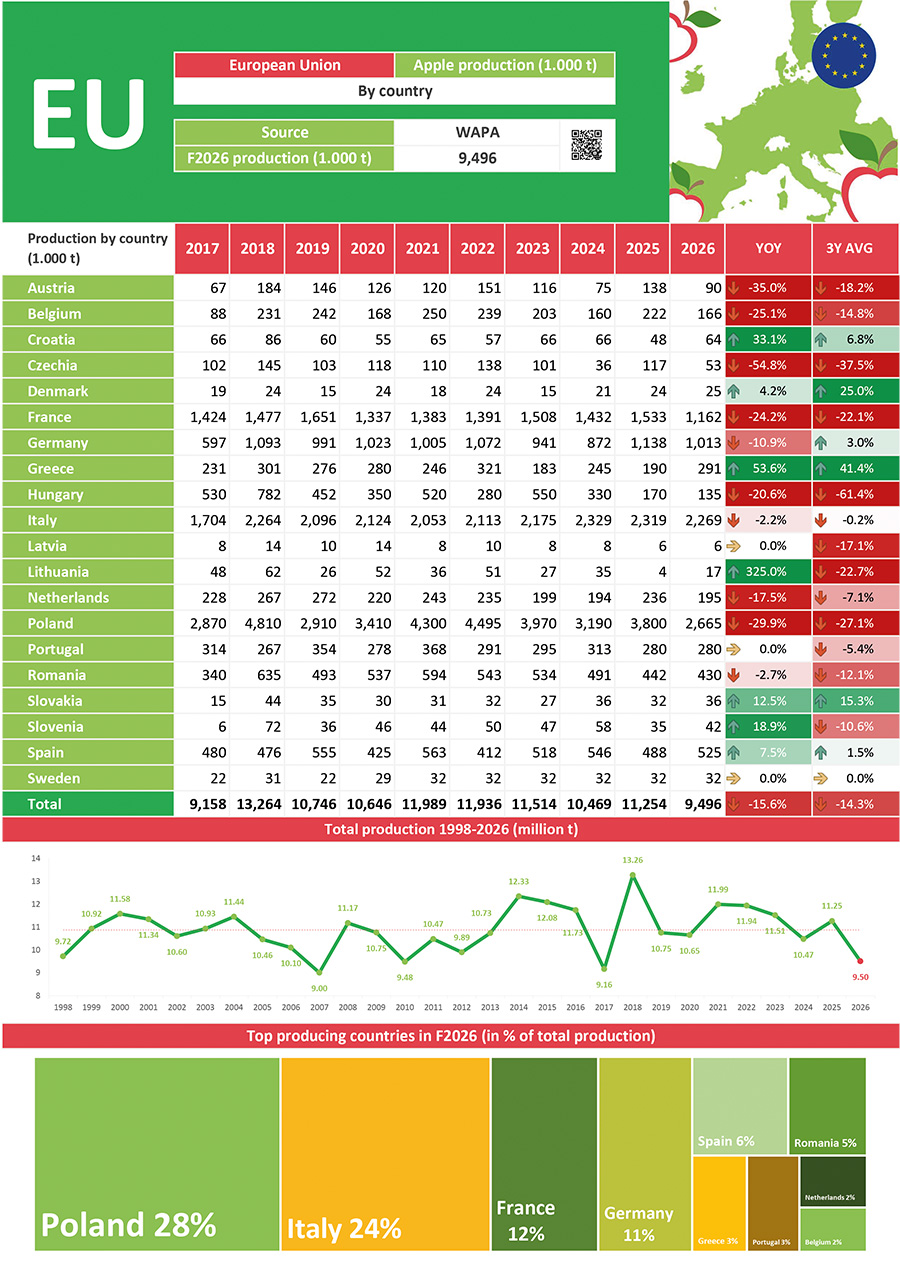
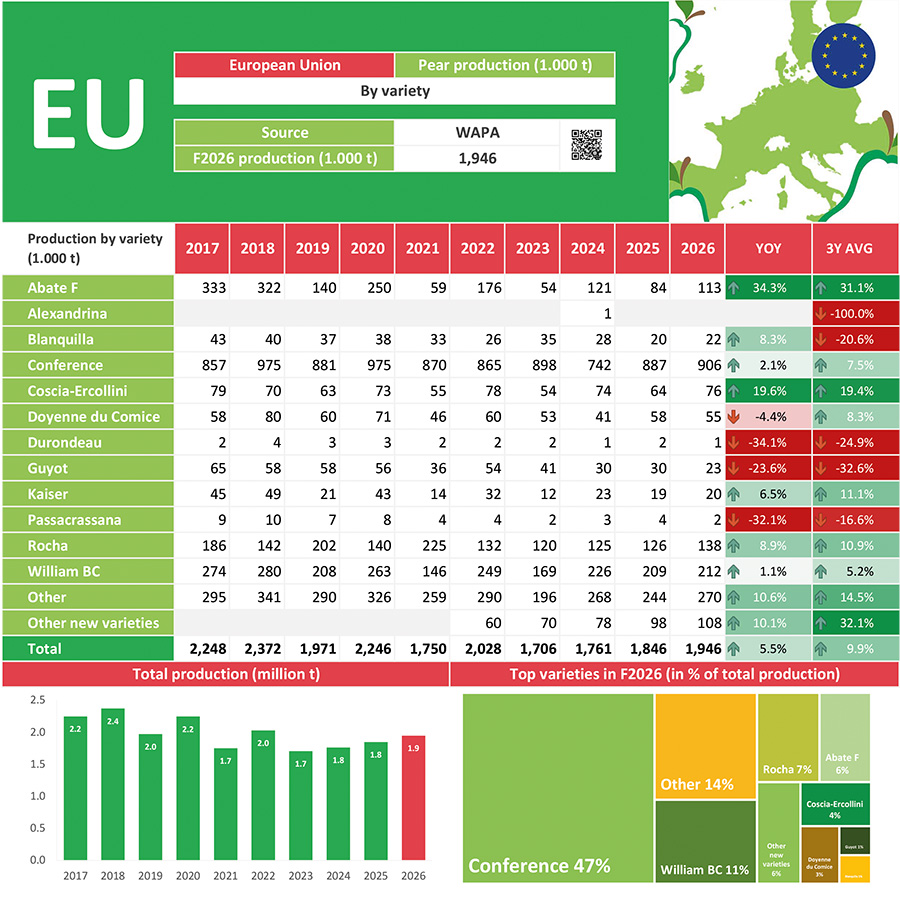
At today’s Prognosfruit 2026 Conference, WAPA released its annual forecast for the 2026/2027 apples and pears season. In 2026, based on the first estimate released today, the apple production in the EU for the top-producing countries is estimated to decrease by 15.6 % compared to last year’s final figure and is set at 9,496,047 t. This year’s crop is also 14.3 % below the average of the previous 3 years. Regarding the main varieties, Golden Delicious production is set to shrink by 11.1 % to 1,809,982 t. Gala, the second-largest variety, is also expected to decrease by 8.9 % to 1,362,797 t, along with Red Delicious (-5.3 % to 496,522 t) and Idared (415,559 t, -19.7 %). On the other hand, the EU pear crop for 2026 is estimated to grow by 5.5 % compared to last year, with a forecast of 1,946,482 t. The total volume is also 9.9 % above the 3-year average, but remains below the orchard potential. Italy’s production is expected to increase by 17.4 % to 347,325 t, while the Dutch estimates are 9.6 % higher than last season’s. Belgium’s pear forecast, on the contrary, is 7.2 % below the 2025/2026 season. In 2026, Conference pear production is estimated to reach 905,693 t (+2.1 %). William BC pear production should also increase by 1.1 % to 211,606 t.
The drop in apples reflects growing pressure on growers from an increasingly complex growing business environment and extreme weather conditions, which are both having a direct and measurable impact on yields across the continent. “This year’s figures are a strong reminder that production cannot be taken for granted,” Philippe Binard, WAPA General Secretary, said when presenting the forecast. “We may be reaching the limits of what current tools and practices can absorb for the competitiveness of the sector, with production and yields impacted by climate events, rising costs and shrinking toolbox to secure yields and quality”. Luc Vanoirbeek, Chair of the COPA-COGECA Working Party on Fruit and Vegetables added: “Political support has not kept pace with the speed at which climate change is affecting our orchards, and other growers are facing increasing constraints to respond. This is not just a question of yield; it’s a question of competitiveness, and ultimately of food security. Food sovereignty in Europe demands giving growers the conditions they need to produce, including stronger incentives and a framework for reinforcing cooperation among growers to respond to the proliferation of challenges within an uncertain political, geopolitical, climate and market landscape”.
This year, climatic conditions have been a perfect storm in different growing places, from deep February frosts to late April, prolonged heat waves and drought, punctual hailstorms and heavy rains. As Prognosfruit is taking place, several production areas are still impacted by adverse temperature and drought conditions. WAPA will continue monitoring its forecast data and assess evolving conditions with members.
The lower crop, as noted in the EU, is also recorded in other places in the Northern Hemisphere, namely in the UK, the USA and India. China’s first forecast indicates stability compared to last year, while Turkey is recovering production after the damages experienced last year.
Prognosfruit’s journey will continue next year on 3-5 August 2027 in Zagreb, Croatia.
Apple forecast (Photo: WAPA)Pear forecast (Photo: WAPA)
Symrise AG, a leading global supplier of flavours and fragrances, as well as cosmetic and functional ingredients, delivered a solid performance in the first half of 2026, with organic sales growth improving through the second quarter despite a still soft macroeconomic environment. Accelerated organic sales growth was supported by continued strength in Food & Beverage, Consumer Fragrance and Aroma Molecules, well supported by rebounding momentum in North America and Asia Pacific.
For the first six months of 2026, Symrise reported sales of €2,539 million and an organic sales growth of 2.0 %. Organic sales growth accelerated to 4.5 % in the second quarter. H1 adjusted EBITDA was €553 million with an adjusted EBITDA margin of 21.8 %. Profitable sales growth and efficiency measures supported earnings development, partially mitigated by investments in the ONE SYM transformation and logistics costs driven by ongoing geopolitical tensions in the Middle East. Adjusted Business Free Cash Flow was up by 450 bps and reached €347 million, corresponding to a margin of 13.7 %.
Symrise continued to execute its ONE Symrise Strategy and further sharpened portfolio quality by submitting a binding offer for Floral Concept. The envisaged acquisition will strengthen Symrise’s position in Premium Naturals within Fine Fragrance. At the same time, the company accelerated the next phase of its ONE SYM Transformation program to drive faster progress towards higher profitable organic sales growth. Symrise is increasingly focused on accelerating the delivery of efficiencies and strategically reinvesting these savings into growth opportunities across the business.
Dr. Jean Yves Parisot, CEO of Symrise AG, said: “We saw increasing momentum in the second quarter, driven by disciplined execution across our businesses and strong demand in Food & Beverage, Consumer Fragrance and Aroma Molecules. We also will strengthen our portfolio through the planned acquisition of Floral Concept. We will leverage our proven Naturals capabilities, built through the acquisition of Diana and successfully established in Food & Beverage, to further expand our offering in Fine Fragrance and create differentiated solutions for our customers. At the same time, we continued to accelerate the next phase of our ONE SYM Transformation to further enhance commercial excellence, innovation and digitalization to support faster profitable growth. Based on our first half performance and current momentum, we remain confident in delivering our 2026 outlook and creating durable long-term value.”
Taste, Nutrition & Health
In the second quarter of 2026, the Taste, Nutrition & Health segment delivered organic sales growth of 4.9 %. Reported sales increased to €782 million compared with €748 million in the prior-year quarter.
The Food & Beverage division delivered market-leading mid-single-digit organic sales growth, driven by high-single-digit organic sales growth in Savory and Naturals, and mid-single-digit organic sales growth in Sweet.
The Pet Food division reported a slight organic sales decline, reflecting continued Nutrition price normalisation.
For the first half of 2026, Taste, Nutrition & Health achieved organic sales growth of 3.2 %. Reported sales amounted to €1,530 million compared with €1,527 million in the prior-year period. The segment increased adjusted EBITDA to €375 million and improved the adjusted EBITDA margin by 10 basis points to 24.5 %.
Advancing ONE Symrise strategy and accelerating ONE SYM transformation
As part of its active portfolio management approach, Symrise announced the planned acquisition of Floral Concept, a premium naturals house based in Saint-Cézaire-sur-Siagne, Pays de Grasse, France. The transaction will strengthen the company’s position in the attractive premium naturals market and will create an opportunity to extend its success story of naturals in flavours into fragrances. This contemplated acquisition thus matches the company’s strategy of focusing on differentiated, higher value growth opportunities.
Symrise continued to accelerate the execution of its ONE SYM Transformation program. The Company is strengthening its value chain through prioritised commercial excellence, innovation, operations and supply chain management. At the same time, Symrise is building a more scalable operating structure through standardised processes, clearer process ownership and increased digitalisation across the organisation. The company reinvests efficiency gains generated by its transformation program to support future growth opportunities while maintaining its margin ambitions.
The 2025-2026 Florida all orange forecast released by the USDA Agricultural Statistics Board is 12.9 million boxes. The total is comprised of 4.77 million boxes of non-Valencia oranges (early, mid-season, and Navel varieties), up 70,000 from the April forecast, and 8.15 million boxes of Valencia oranges, up 650,000 boxes from the April forecast. The forecast for all Florida grapefruit production is now at 1.35 million boxes. Of the total grapefruit forecast, 100,000 boxes are white, and 1.25 million boxes are red varieties. The Florida all tangerine and mandarin forecast is now 460,000 boxes. Lemons in Florida at 900,000, are unchanged from the previous forecast …
Please download the full citrus crop production forecast: www.nass.usda.gov
Negotiations for the 2026/27 orange season between citrus growers and the industry advanced more effectively in late June. The period was characterised by progress in contract renegotiations and by the first more frequent purchases of fruit for processing. In addition, weather conditions limited the pace of harvesting in key producing regions of São Paulo state.
As for the industrial market, both the number of short-term contracts for the current season and spot market trading have been increasing. Between June 22 and 25, orange prices paid by the industry averaged BRL 29.53 per 40.8-kg box (considering short-term contracts and spot market transactions). These values are significantly lower than those observed at the beginning of 2025/26 negotiations, when spot market prices were close to BRL 45.00 per box, and also below the contracts established at the start of the 2024/25 season, at BRL 50.00 per box.
It is important to highlight that the prices reported by Cepea for early and mid-season oranges destined for processing in São Paulo state currently take into account short-term contracts for the 2026/27 season and spot market transactions.
As for supply, weather conditions limited harvesting activities at the end of the month. Recent rainfall in São Paulo state has slowed the pace of harvest and reduced field operations.
Concerning the in natura market, prices continued to decline amid the gradual increase in the supply of ripe fruit.
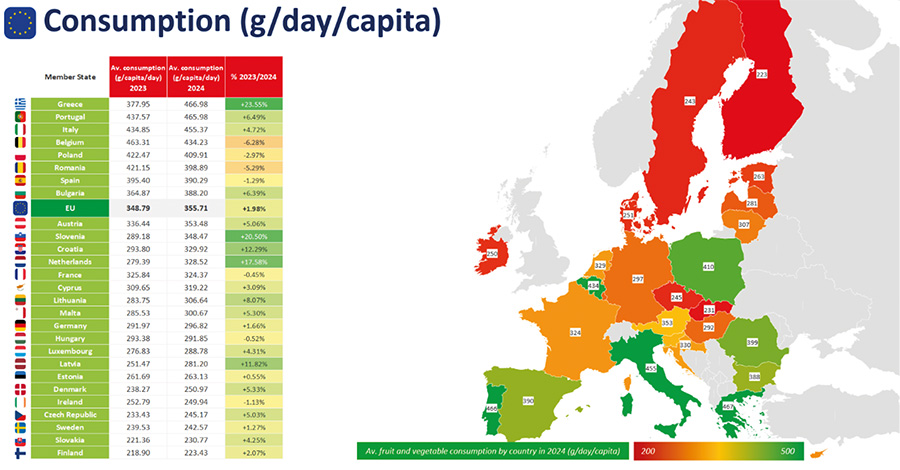
Freshfel Europe’s latest edition of the Consumption Monitor indicates that the EU fresh fruit and vegetable consumption in 2024 slightly increased to 355.71 grams per day per person, which is 1.98 % above the 2023 average but still well below the minimum daily goal of 400 g per capita recommended by the WHO. Looking at the long-term trends, the consumption levels have been stagnating, and the sector has failed to capitalise on the short-lived increase that started during the coronavirus pandemic, which has been curbed by the economic crisis that impacted the purchasing power of consumers. Freshfel Europe underlines the essential features of fresh fruit and vegetables based on their strong and undisputed health benefits and their low environmental impacts. Fruit and vegetables are part of the solutions to societal concerns, and consumption should be stimulated to benefit both the health of EU citizens and the planet.
Freshfel Europe has released its latest edition of the European Fresh Produce Consumption Monitor. The report provides a comparison of consumption trends in the EU-27 as a whole and in each Member State based on official statistics from EUROSTAT and FAOSTAT. In the past two decades, the Freshfel Europe Consumption Monitor has become increasingly important in evaluating the trends of fresh fruit and vegetable production, trade, and consumption in Europe. The report has used a consistent methodology throughout the years and has become a unique reference document for the sector and decision-makers looking at the business development and the evolution of the daily diet of fresh produce in Europe.
This year’s edition shows that the 2024 average fruit and vegetable consumption in the EU slightly increased to 355.71 grams per day per person, which is 1.98% above the 2023 average but still well below the minimum daily goal of 400 g per capita/day recommended by the WHO. The Freshfel Europe Consumption Monitor shows that only 5 countries in the EU reach the recommended goal of at least 400g of fresh fruits and vegetables/day/capita, leaving a great margin for improvement to stimulate consumption.
The report was presented during Freshfel’s annual Consumption Trends Webinar, which highlighted the urgent need to reverse the stagnation of fruit and vegetable consumption across Europe. Despite growing awareness of the health and sustainability benefits of fresh produce, average consumption remains well below both WHO recommendations and the different national dietary targets. Increasing consumption will require a comprehensive strategy addressing education, communication, accessibility, and changing consumer lifestyles.
The webinar also emphasised the growing influence of ultra-processed foods, which benefit from powerful marketing, branding, and consumer engagement strategies, and often appropriate the assets of fresh fruit and vegetables. Freshfel Europe called for a stronger consumer-focused approach for fresh produce, including improved promotion, better retail visibility, greater convenience, and more effective storytelling around the sector’s health, taste, and the importance of the sustainability benefits of fresh fruit and vegetables.
Sustainability is generally viewed positively and associated with fresh produce, but it is rarely a primary purchase driver: consumers are increasingly motivated by health, taste, quality, and value for money, while convenience has become a major driver of purchasing decisions, boosting demand for ready-to-use, easy-to-prepare, and meal-solution products.
Looking ahead, Freshfel Europe reiterated the priorities of its 2026–2030 Manifesto, advocating a “Fresh First” approach that places fruit and vegetables at the centre of food, health, and sustainability policies. The fruit and vegetable sector and public authorities should join forces to build a sustainable consumption attitude based on the benefits of fresh fruit and vegetables for the planet, the climate, and the health of consumers themselves. There can be no compromise on the urgency of actions needed to address the consumption challenge, most specifically among the youngest generation.
The Freshfel Consumption Monitor is freely available for Freshfel members but can be purchased by non-members for 2.500 €. For all queries, please contact Gil Kaufman at g.kaufman@freshfel.org.
The daily average fresh fruit and vegetable consumption increased in 2024, with an average of 355.71 g/day/capita, which is still a long way from the 400 g/day/capita recommended by the WHO (Photo: Freshfel)
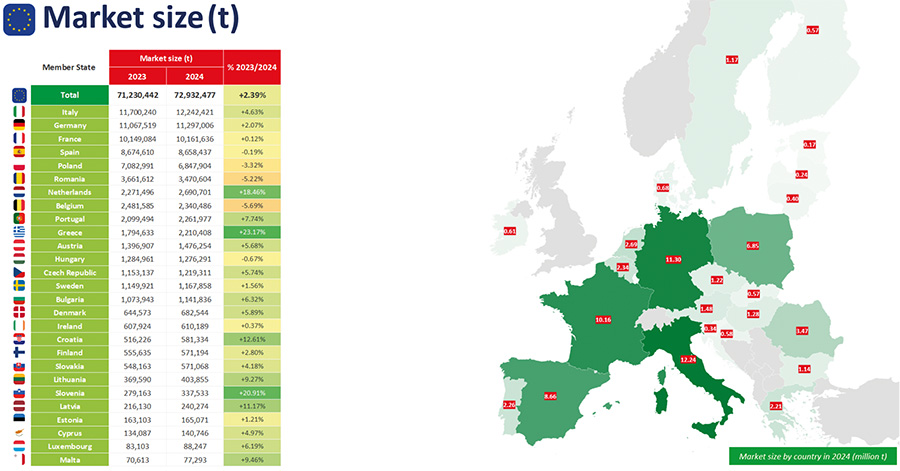
The EU fresh fruit and vegetable market size also increased to 72,932,477 t (Photo: Freshfel)
Global fast-moving consumer goods (FMCG) brands are using FIFA 2026 as more than a sponsorship moment – leveraging it to launch limited editions, collectible packs, gamified promotions, and emotion-led storytelling. The new launches are shaping a clear commercial playbook to drive sales while building new habits, first-party data, and repeat purchase behavior around the tournament. This is substantiated by a 2026 Q1 global consumer survey1, in which 58 % of global consumers say enjoyment or uniqueness most influences their food and drink choices, and 57 % say the same for health and beauty products, according to GlobalData, a leading intelligence and productivity platform.
Kshama Raj, Consumer Analyst at GlobalData comments: “Across snacks, beverages, personal care, beer, spirits, and quick-service, brands are moving beyond logo placement and leaning into product innovation. Limited-edition Lay’s flavours, Golden Wonder snacks, and Dove collections show how the World Cup is being used to create scarcity, prompting consumers to try them now rather than later.”
GlobalData’s survey1 shows 62 % of global consumers try new flavours and fragrances as soon as available and 64 % enjoy sharing these discoveries with others, highlighting a strong word-of-mouth potential.
Packaging is becoming a key growth lever. Bitburger’s limited-edition cans in Germany’s colours and Don Julio 1942’s World Cup-inspired bottle show how collectible, fan-themed designs turn packs into media assets – boosting shelf standout and repeat buys. Design is now a core part of the sales strategy, not an afterthought.
Gamified promotions are also on the rise. QR codes, receipt uploads, instant wins, sweepstakes, and ticket draws are making everyday purchases interactive. Brands like Walkers, Powerade, and McDonald’s are using scannable packs and online games to connect products to digital platforms, capture data, and extend engagement beyond the aisle.
Emotion is playing a bigger role. Coca-Cola’s suspense-led storytelling and Dove’s confidence message show that the strongest World Cup campaigns sell shared moments – belonging, joy, and fandom – not just product benefits. For many brands, the tournament is a way to own the match-day emotional journey.
Raj adds: “The big win is owning the occasion – snacks for watching, beverages for refreshment, personal care for pre- and post-game routines, and spirits for celebrating. The best offers plug into rituals, not just the shelf.” In FIFA host markets (Canada, Mexico, and the US), consumer spend intent at leisure venues is higher: 37.2 % say their food and drink spend is very/quite high compared with 34.7 % globally1.”
For FMCG brands, the playbook is clear: drive urgency with limited editions, boost repeat buys with collectible packs, capture data with digital mechanics, stay relevant with match-day use cases, and build affinity with football-led storytelling.
Raj concludes: “There’s a lot of whitespaces opening up fast cross-category bundles, host-country flavours, watch-party packs, digital collectibles, and premium souvenir products can turn tournament buzz into long-term loyalty.”
1GlobalData’s 2026 Q1 Global consumer survey, sample size of 22,900 respondents
interpack 2026 made the energy of an entire industry truly tangible. Once again, it became the global meeting place for the processing and packaging industry and impressively demonstrated how concrete transformation is already being implemented in technology, materials and processes.
interpack 2026 sent a clear signal: the packaging industry is more closely connected, more innovative and more dialogue-oriented than ever before. This momentum was immediately visible in the exhibition halls. High visitor traffic, intensive discussions and a consistent international presence shaped the atmosphere. Everywhere, it was possible to experience the determination with which companies are working on solutions for the future. Ideas were discussed, tested and decisions were made. The entire value chain was presented in live.
From 7 to 13 May, 2,804 exhibitors from 65 countries and trade visitors from 161 countries came together in Düsseldorf on the fully booked exhibition grounds. Of all visitors, 75 percent came from outside Germany, including 28 percent from outside Europe. Around 100 additional companies were represented at components, the supplier trade fair held in parallel. This made interpack 2026 the largest edition in its history in terms of exhibitors, underlining what was clearly felt in the halls: this was an event with exceptional impact.
“That was a top interpack. Busy halls, intensive exchange and concrete projects showed the strength of this global community. interpack is the most important meeting place for the industry worldwide, and this edition impressively confirmed that,” said Thomas Dohse, Director of interpack, at the close of the trade fair.
For seven days, concrete solutions and partnerships took centre stage. Many discussions led to projects and investment decisions. The trade fair thus confirmed its role as the leading platform for the global processing and packaging industry – with strong visitor attendance, particularly from the food and pharmaceutical industries, as well as a high quality and density of leading and innovative suppliers.
Market growth – industry under pressure
interpack 2026 took place at a time when the industry is undergoing transformation. Demand for packaged products continues to rise, but requirements for materials, production systems and supply structures are changing. A key focus at the trade fair was the European Packaging and Packaging Waste Regulation (PPWR), which marks a turning point for the industry in many respects.
interpack made one thing clear: companies are not responding in isolation, but systemically. Exhibitors presented solutions in which materials, machines and processes are increasingly considered together and coordinated with one another. In this way, interpack confirms its role as an economic driver for the industry: this is where projects are initiated, investments prepared and economic momentum generated.
Systems, materials, skills
Automation, data-based applications and flexible plant concepts have arrived in industrial practice and were presented at interpack as concrete applications of smart manufacturing. In the field of materials, the focus was on innovative solutions that work under real-world conditions and meet regulatory requirements. Future skills became tangible wherever connected and data-driven systems require new competencies in production. Personal proximity, shared experiences and open dialogue gave interpack a special intensity.
Specials provide additional impetus
interpack also set important accents beyond the exhibition stands. The enhanced specials complemented the trade fair activities and brought in additional perspectives. The interpack Spotlight Forum, SAVE FOOD Expert Talks, Women in Packaging, the Start-up Zone and Young Talents Day showed how broadly the industry’s transformation is being discussed – from technology and sustainability to diversity, start-up culture and the promotion of young talent, as well as qualification and future skills.
What remains is more than a successful trade fair. It is a clear signal: the industry faces major challenges and is meeting them with innovative strength, cooperation and the will to actively shape the future. Added to this is a special combination of international density, technical depth and a palpable spirit of new beginnings that characterised this interpack.
The next interpack will take place in 2029. The date will be announced shortly.
New findings show younger generations are reshaping the category by choosing drinks that signal identity, emotion and intent
Keurig Dr Pepper released its State of Beverages 2026 Trend Report, highlighting how beverage consumption is evolving in an era of more choice than ever. Released in celebration of National Beverage Day in the US, the report shows Gen Alpha and Gen Z (Gen A/Z) leading a shift toward more expressive and experience-driven beverage choices. In fact, 58 % say they choose beverages that reflect their identity.
“The beverage industry has always been dynamic, but Gen Z and Gen Alpha are driving a more profound shift in the role of beverages in everyday life,” said Tim Cofer, CEO of Keurig Dr Pepper. “Increasingly, beverage choices signal identity, mood and values. As a result, occasions are becoming more social and intentionally curated, with drinks helping to define experiences, express individuality and bring people together in new ways.”
The data also reveals that younger consumers are rotating across more flavours, functions and categories, reflecting greater exploration and higher expectations for beverages that meet different emotional and functional needs.
“Younger consumers don’t think in terms of a single ‘go to’ drink anymore,” said Katie Webb, Senior Vice President of Marketing Transformation, Innovation & Insights at Keurig Dr Pepper. “Younger generations are exploring more unique flavours, switching between beverages throughout the day and seeking options that can balance both function and feel-good.”
The report highlights these five big trends in beverages:
Drinks as Self-Expression
For younger consumers, what’s in their cup is becoming a statement of identity. Nearly six in ten Gen A/Z consumers say their drink reflects who they are (58 % vs. 41 % of Millennials+), and they’re twice as likely to choose brands that signal something about them. That’s fueling a surge in exploration, with strong interest from younger generations in unexpected flavours (58 %), globally inspired options (57 %) and limited-edition drops (56 %).
Drinks Are Setting the Mood
Beverages are no longer just part of the moment – they’re helping define it. Gen A/Z consumers are 58 % more likely to choose drinks based on mood or occasion. Their moments are more social and on-the-go, with Gen A/Z more likely than Millennials+ to enjoy beverages with food (65 % vs. 57 %), with others (59 % vs. 50 %) and away from home (42 % vs. 30 %). As beverages increasingly shape the moment, 63 % of Gen A/Z want beverages that feel entertaining or inspiring (vs. 54 % Millennials+).
Go-To Drinks Are Out. Rotation Is In.
One go-drink no longer does it all. Gen A/Z have more emotional and functional needs per drink occasion (5 vs. 4 Millennials+) and rotate across more categories each week (6 vs. 5). Flavor is a major draw, with strong preferences from younger generations for fruity or juicy options (81 %), sweet or indulgent choices (75 %), citrus-forward flavours (72 %) and bold profiles (64 %). Even coffee is evolving, with nearly three-quarters of Gen A/Z coffee occasions including flavour – almost double that of older generations.
A New Definition of Wellness
Among Gen A/Z, wellness is less about restriction and more about what drinks can deliver, with 71 % looking for function-forward beverages. By contrast, Millennials+ are 48 % more focused on reducing sugar and 51 % more focused on managing intake. Younger generations are especially drawn to options that support mental focus and sustained energy and over-index across functional and performance categories, including being 60 % more likely to consume enhanced water in the past day, 50 % more likely to consume protein beverages weekly, 2x more likely to consume energy drinks weekly and 75 % more likely to consume sports drinks weekly compared with Millennials+.
Social Media Is the New Beverage Aisle
Digital channels are playing a larger role in trial and discovery. 63 % of Gen A/Z say what they see friends, creators and social feeds drinking influences their choices (vs. 48 % Millennials+). They’re also nearly twice as likely to buy from brands that personalise recommendations (51 % vs. 29 % Millennials+), signaling rising expectations for curated, algorithm-driven choices.
Cofer continued: “At KDP, we’re not just tracking the evolution of the category, we’re helping define it. That means designing brands that invite expression, fuel discovery, expand the idea of wellness beyond health claims and show up in moments that go far beyond the physical shelf.”
The KDP State of Beverages 2026 Trend Report was derived from a variety of quantitative and qualitative data sources, including national surveys from YouGov, Ipsos and Morning Consult, as well as KDP’s own proprietary data. For the purposes of this report, generations are grouped as Gen A/Z (ages 13–29) and Millennials+ (ages 30+).
The Prognosfruit Conference is Europe’s leading annual event for the apple and pear sector, gathering growers from across Europe and beyond. Prognosfruit 2026 will take place in Constance, Germany, from the 5th to the 7th of August 2026, with a milestone for the event, celebrating 50 years of uninterrupted editions of Prognosfruit. Registration is now open, and stakeholders and journalists are welcome to register via the Prognosfruit website.
Prognosfruit, the leading annual event for the apple and pear sector, will take place in Constance, Germany, from the 5th to the 7th of August 2026. Prognosfruit 2026 is organised by WAPA in cooperation with BVEO (Bundesvereinigung der Erzeugerorganisationen Obst und Gemüse e.V.). Registration is now open on the Prognosfruit website.
Since 1976, Prognosfruit has released the annual forecast of apple and pear production for the upcoming season, with a conference organised in a different country each year. In 2026, the three-day event during which the report will be released will see representatives of the sector gather to discuss the Northern Hemisphere situation as well as global perspectives for apples and pears. Following the Prognosfruit Conference on August 6, the delegates will have the opportunity to participate in juice production and fruit research visits.
“We are proud to host Prognosfruit in one of Europe’s important fruit-growing regions. Lake Constance offers the perfect surroundings to discuss the future of the apple and pear sector.” BVEO Managing Director Dr. Christian Weseloh stated.
The programme of Prognosfruit 2026, the online registration form to attend the conference, and the link to book your accommodation in Constance are all available on the Prognosfruit website. Register by 7 June 2026 to take advantage of the Early Bird Fee and book your accommodation by 22 June 2026 to take advantage of the discount rates for selected hotels in Constance! Due to the “Konstanzer Seenachtfest”, the renowned lakeside festivals taking place on 8 August 2026, the city of Konstanz experiences a high demand for accommodation at the beginning of August.
Overview of Prognosfruit 2026
Wednesday, 5 August 2026: Welcome reception at Castle Mainau, Island of Mainau by Lake Constance
Thursday, 6 August 2026: Prognosfruit 2026 Conference, at the Bodenseeforum Conference Centre in Constance
Thursday, 6 August 2026: Gala Dinner at the Konzil Constance
Friday, 7 August 2026: Technical visits to the Widemann Bodensee-Kelterei in Barmatingen for juice production and to the Kompetenzzentrum Obstbau Bodensee (fruit research station) in Ravensburg/Bavendorf
1 – 2026-2027 orange crop forecast
The 2026-2027 orange crop forecast for the São Paulo and West-Southwest Minas Gerais citrus belt, published on May 08, 2026, by Fundecitrus in cooperation with full professor (retired) at FCAV/Unesp1, is 255.2 million boxes of 40.8 kg (90 lbs) each. This production is divided as follows (figures in parentheses indicate the variation in production as compared to the previous crop):
47.38 million boxes of the Hamlin, Westin, and Rubi varieties (+2.4 %);
19.25 million boxes of the Valencia Americana, Seleta, Pineapple and Alvorada varieties (+9.1 %);
83.20 million boxes of the Pera variety (-4.8 %);
80.71 million boxes of the Valencia and Folha Murcha varieties (-22.8 %);
24.66 million boxes of the Natal variety (-33.5 %).
Approximately 26.77 million boxes are expected to be produced in the Triângulo Mineiro (+4.2 %).
Overall, the projected volume represents a decrease of 12.9% compared to the previous crop season, whose final number was 292.94 million boxes, maintaining production within a small range of the last ten years, as shown in Graph 1. Compared to the average volume produced in the last decade, the current crop shows a decrease of 14.6%.
The outlook for a smaller crop compared to the previous crop season is due to the lower number of fruits per tree and to the increase in the premature fruit drop rate, which outweigh the positive effect of the higher fruit weight and the larger number of bearing trees …
Operating income grew 19 %; comparable currency neutral operating income (Non-GAAP) grew 12 %
Operating margin was 35.0 % versus 32.9% in the prior year; comparable operating margin (Non-GAAP) was 34.5 % versus 33.8 % in the prior year
EPS grew 18 % to $0.91; comparable EPS (Non-GAAP) grew 18 % to $0.86
The Coca‑Cola Company reported first quarter 2026 results. “We’ve had a strong start to the year,” said Henrique Braun, CEO of The Coca‑Cola Company. “Our performance this quarter reflects our unwavering focus on staying close to the consumer, executing locally and managing complexity. Yet there’s so much more we can do as we navigate a dynamic environment. Our team is motivated by the opportunity to build on the company’s great foundation.” …
Total orange production1 for the 2025-2026 crop season ended at 292.94 million boxes
The 2025-2026 orange crop for the São Paulo and West-Southwest Minas Gerais citrus belt, published by Fundecitrus, carried out in cooperation with full professor (retired) from FCAV/Unesp2, concluded with 292.94 million boxes of 40.8 kg each (90 lbs), divided as follows:
46.23 million boxes of the Hamlin, Westin and Rubi early-season varieties;
17.65 million boxes of the Valencia Americana, Seleta, Pineapple and Alvorada early-season varieties;
87.44 million boxes of the Pera mid-season variety;
104.53 million boxes of the Valencia and Folha Murcha late-season varieties;
37.09 million boxes of the Natal late-season variety.
Of the total, about 25.69 million boxes were produced in the Triângulo Mineiro region.
Production this season was 26.9 % higher compared to the previous crop, which reached 230.87 million boxes, and 6.9 % lower than the initial forecast released in May 2025. Climatic and phytosanitary factors, within the context of a more delayed harvest, contributed to higher fruit drop rates and to reduced fruit weight compared to the initial forecast. The 2025-2026 crop was marked by a later harvest pace compared to previous crop seasons due to the high proportion of second-bloom fruit and to harvesting at optimal maturity. In this context, most of the Pera variety was expected to be harvested after the onset of heavier spring rains; however, nearly half of its production was harvested under dry conditions, as rainfall only intensified midway through October. Moreover, below-average rainfall throughout the period also adversely impacted the weight of the late varieties Valencia, Folha Murcha, and Natal, which were harvested through mid-January and did not reach the expected weight of the initial forecast. Furthermore, the premature fruit drop rate in this crop reached the highest level observed over the past 11 crop seasons, driven by increased greening severity, higher incidence of citrus leprosis, water deficit, and the occurrence of strong wind gusts throughout the production cycle …
1Hamlin, Westin, Rubi, Valencia Americana, Seleta, Pineapple, Alvorada, Pera Rio, Valencia, Valencia Folha Murcha, and, Natal. 2Department of math and science, FCAV/Unesp Jaboticabal Campus.
All oranges 12.2 million boxes
The 2025-2026 Florida all orange forecast released by the USDA Agricultural Statistics Board is increased 200,000 boxes to 12.2 million boxes. If realised, this will be 1 percent less than last season’s revised production. The forecast consists of 4.70 million boxes of non-Valencia oranges (early, mid-season, and Navel varieties) and 7.50 million boxes of Valencia oranges. A 7-year regression was used for comparison purposes. All references to “average”, “minimum”, and “maximum” refer to the previous 10 seasons, excluding the 2017-2018 season, which was affected by Hurricane Irma, the 2022-2023 season which was affected by Hurricanes Ian and Nicole, and the 2024-2025 season which was affected by Hurricane Milton. Average fruit per tree includes both regular bloom and the first late bloom …
Döhler will present its portfolio of natural ingredients, ingredient systems and integrated solutions at Djazagro 2026, the leading trade fair for the food and beverage industry in Algeria and North Africa. The exhibition brings together key regional manufacturers, industry experts and decision-makers, offering a central platform for innovation exchange and partnership development.
North Africa’s food and beverage market is evolving rapidly, shaped by growing consumer demand for affordable products that combine great taste with a more natural and healthier positioning. This shift is driving clear formulation requirements, including sugar reduction, natural colours and flavours, fruit-based systems, robust shelf life and strict compliance with halal and food safety standards.
With its strong global footprint, advanced R&D capabilities and vertically integrated sourcing network, Döhler translates these market needs into scalable, market-ready solutions. Going beyond single ingredients, the company supports customers end-to-end – from market insights and concept development to formulation, scale-up and industrial production – enabling faster innovation cycles, reduced complexity and reliable product performance in highly competitive environments.
Focus at Djazagro 2026
At Djazagro, Döhler will showcase application concepts tailored to the Algerian market, combining Multi-Sensory Experiences with Nutritional Excellence while ensuring economic feasibility and process efficiency.
Key highlights include:
Juice drinks featuring reduced sugar formulations, locally adapted flavour profiles and functional positioning with fruit, botanicals, vitamins and fibres targeting immunity and digestive wellbeing.
Soft drink concepts including clean-label carbonated soft drinks as well as energy, hydration and gut health solutions, supported by natural flavours, colours and optimised sweetening systems.
Functional dairy drinks delivering nutritional and digestive benefits alongside indulgent taste profiles, complemented by bakery applications based on natural ingredient solutions.
All showcased concepts are built on integrated compounds and systems designed to support rapid product development and industrial scalability, allowing manufacturers to launch cleaner-label, lower-sugar and functionally enhanced products without significant process adjustments or cost increases.
What do consumers want, and what foods and beverages drive growth? Market research gives us some answers. The current 2026 Top Ten Trends from Innova Market Insights once again show that foods and beverages that promote physical and mental wellness are very much in demand from consumers – especially if they offer the perfect taste. Foods adapted to the individual requirements of consumers are popular, as are affordable or sustainable offerings. With new ideas for high-sales food & drink concepts, Hydrosol helps manufacturers address the trends of tomorrow.
High protein remains the Top Trend
“Powerhouse Protein” for overall wellbeing is the most important trend for this year, according to Innova Market Insights. Consumers are looking for protein-rich products, ideally enriched with vitamins and minerals, that support mental fitness as well as gut health and the immune system. Healthy aging, weight management, and athletic performance are further important criteria. Hydrosol has developed multiple concepts to meet these expectations, including a stabilising system for meal replacement drinks. The system ensures stable emulsions with creamy mouthfeel and high satiation effect. The final product features high protein content and can also be declared as a source of fiber.
Wide range of delights
The many facets of indulgence are at the focus of the second Innova Top Trend: “Layers of Delight.” It is based on four pillars: comforting moments, mood enhancing, rich sensory enjoyment, healthier enjoyment. Familiar flavours are in demand as are new creations, and Hydrosol offers the right inspirations for both. For example, with one of the stabilising systems from the Stabisol series dairies can make a trendy matcha latte. The system provides high stability and a pleasant mouthfeel. It can be combined with plant proteins and offered in a range of flavours. Another advantage is that there is no sedimentation during storage.
Individual moments
Convenience is a common denominator in the expectations of different target groups that Innova addresses together in the Top Trend “Made for Moments”. Whether small portions for single households or family packs, consumers are looking for varied formats in snacks, fresh meals, and individual portions. The choice of new flavour sensations should be at least as varied. DIY ice cream in pouches is one example. The product is easy to make on a UHT line with the help of a new Stabimuls series compound. After filling into pouches it can be sold in stores in liquid form, or deep-frozen just before consumption, for example at a kiosk. Creative compositions in various flavours can be made to meet customer demand. Thus, these DIY ice creams give dairies access to a new category.
Jumex announced that its functional hydration beverage, Hydrolit +Advance, has been recognised as a 2026 Product of the Year USA Award Winner in the Hydration category, as voted on by 40,000 American shoppers in the US in partnership with Kantar. Renowned as a globally established seal of approval, Product of the Year is the largest consumer-voted awards program centered around product innovation.
Jumex created Hydrolit +Advance to meet the growing consumer demand for a high-performance hydration beverage that goes beyond basic rehydration. Unlike many mainstream sports drinks, Hydrolit +Advance includes choline to support cognitive performance and mental focus. The enhanced formulation positions Hydrolit +Advance within the fast-growing functional hydration segment, offering retailers a differentiated option in a competitive set.
Hydrolit +Advance contains five essential ions, including sodium, calcium, potassium, magnesium, and zinc, to restore hydration balance, B Vitamins (B3, B6, B12) to support energy metabolism and overall wellness, and natural caffeine to provide clean, focused energy without a heavy crash. Available in four flavours, including Mango, Fruit Punch, Orange, and Berries, Hydrolit +Advance combines flavour-forward innovation with functional credibility. It is designed to replenish what the body loses through sweat, stress, and everyday activity, supporting active lifestyles, busy schedules, and daily hydration needs.
From cherry to chai spice, Tastepoint’s trend experts reveal ten flavors poised to stand out this year.
Tastepoint by IFF, a leader in innovative flavour creations and taste solutions, has identified ten flavours expected to shape the North American food and beverage landscape in 2026. These predictions spotlight flavours anticipated to trend in retail, food service and beyond throughout the coming year.
“To continue delivering product development solutions that meet consumers’ unique and changing needs, we stay attuned to industry and market trends, keeping a pulse on what’s relevant now and in the future,” said Nicole Potash, Tastepoint general manager. “Our annual flavor trend predictions reflect a vibrant mix of influences, from nostalgia driven classics to global favorites gaining momentum in the US, as well as bold new combinations. We hope this year’s list provides brands with valuable insights and fresh inspiration to create products that excite the senses and spark imagination.”
At the intersection of science and creativity, Tastepoint draws on decades of experience to guide brands in developing trend-driven food and beverage products that ignite inspiration and delight consumer palates.
Each year, Tastepoint forecasts ten flavour trends based on data-driven market analysis, food service menu tracking, social listening and changes in consumer behaviour. The 2026 list offers insights across categories including confectionery, beverages, dairy, culinary, snacks and bakery. It reflects key trend movements such as nostalgia and better-for-you and identifies global flavours expected to gain traction in North America.
The top 10 flavours to watch in 2026 are:
Mandarin: Already popular in juices and sparkling beverages, this citrus favourite is poised to expand into cocktails, coffee, frozen novelties, salad dressings and sauces.
Cherry: The sweet and tart flavour of cherry delivers a powerful sense of nostalgia and is expected to lead the way in new beverage launches and appear in snack bars and mixes, confectionery, and dairy applications.
Sweet Corn: Historically a staple dish worldwide, sweet corn is seeing renewed interest. Driven by the popularity of Mexican street corn, or Elote, and other global favourites, its versatility continues to expand.
French Onion Soup: A timeless comfort food, its deep, savory profile is projected to move into new menu applications.
Cola: With its iconic flavour profile currently experiencing a resurgence, cola is expected to move beyond beverages and into unexpected categories such as ice cream and bakery.
Limoncello: As consumers seek authentic, premium experiences, this quintessential Italian liqueur is expected to influence new categories, from baked goods to ready-to-drink teas and coffees.
Sweet Heat: Often known as “swicy”, the crave-worthy combination of sweet and spicy flavours is gaining traction, expanding beyond culinary and snacks, into ice cream, cocktails and beyond.
Pancake: This comforting, sweet flavour is predicted to break free from breakfast and appear in a wide range of new formats fit for scoop shops or late-night snacks.
Tiramisu: Offering a decadent, layered flavour experience, tiramisu-inspired products are well positioned to appear in categories beyond the bakery space.
Chai Spice: With chai’s rise as a global favourite, its sweet-and-spicy profile is gaining popularity in food and beverage applications. Its aromatic depth offers a comforting yet elevated alternative to traditional warming spices.
Cloud Dancer – Pantone Colour of the Year 2026
Colours coming from natural sources are vital in food and beverage innovation as consumers seek products that convey authenticity, transparency and trust. Soft, understated shades are gaining prominence, reflecting a desire for visual calm and balance in contrast to an overstimulating everyday environment. Within this context, white and off-white tones are emerging as powerful design elements that signal purity, quality and modern premium positioning.
Pantone’s Colour of the Year 2026, Cloud Dancer, encapsulates this broader movement. Rather than standing alone as a trend, this soft white tone reflects a wider shift towards natural colour aesthetics that feel reassuring, timeless and effortlessly elegant.
Soft white as natural colour trend 2026
Cloud Dancer (Pantone 11-4201) is a refined, gentle white that aligns closely with the growing preference for natural, minimal colour palettes. White has long been associated with simplicity and authenticity – drawing on visual references such as snow, clouds, marble and mist. In today’s market, these associations resonate strongly with consumers who value clean label concepts, reduced visual complexity and credible product cues.
For food and beverage manufacturers, this signals an opportunity to rethink how natural colours are used to communicate product value. Soft whites provide a neutral yet sophisticated foundation that harmonises easily with other colours, flavours and functional messages, without overwhelming the consumer.
Relevance of soft white tones across food and beverage applications
The appeal of natural white shades extends across categories, from confectionery and bakery to beverages. In product design, these tones support positioning around quality, restraint and modernity, while allowing brands to highlight sensory or functional benefits in a clear and confident way. Rather than being decorative, natural white colours become part of the product story – reinforcing expectations around ingredient integrity, processing transparency and premium appeal.
Natural white solutions that translate colour trends into product reality
Turning colour trends into successful products requires application-ready solutions that meet both technical and regulatory demands. Döhler’s portfolio of natural white solutions supports manufacturers in translating soft white aesthetics such as Cloud Dancer into scalable, market-ready concepts.
White Diamond is a bright, natural alternative to titanium dioxide for food applications. It delivers effective whitening for a wide range of confectionery products, including hard-boiled candies and pan coatings, while also providing bioavailable calcium. This enables manufacturers to achieve a clean, premium white appearance while aligning with evolving regulatory requirements and consumer expectations around ingredients.
In beverage applications, Döhler’s premium Cloud Emulsions create controlled cloudiness and a naturally appealing appearance in products that are otherwise colourless or lightly coloured. These natural emulsions offer high stability across applications and deliver intense cloudiness even at low dosages. They can also be combined with other shades to create customised cloudy tones that reflect current design directions.
Supporting manufacturers in bringing natural colour trends to market
With extensive expertise in natural colour solutions and application development, Döhler supports food and beverage manufacturers in translating colour movements such as soft whites and Cloud Dancer into commercially viable products. From clean-label white alternatives for confectionery to stable cloud solutions for beverages, the focus is on delivering premium appearances that resonate with today’s consumers while meeting technical, regulatory and sensory expectations.
By embedding colour trends into practical, future-ready solutions, manufacturers can create products that feel relevant today and remain competitive in a rapidly evolving market.
In the lead-up to the trade show, the FRUIT LOGISTICA Briefing 2026 showcased the transformative power of AI in the fruit and vegetable industry. According to industry experts, significant opportunities exist to improve efficiency, quality and sustainability.
Prior to the commencement of FRUIT LOGISTICA 2026, a 60-minute session was held in which leading experts discussed the impact of artificial intelligence (AI) and automation on the entire value chain. The FRUIT LOGISTICA briefing, which took place on 20 January, is now available to watch on demand.
‘AI is a game changer that will significantly impact production, quality control, logistics and even retail,’ says David Ruetz, Messe Berlin’s Senior Vice President. ‘The industry is at a crucial turning point.’ This is precisely why FRUIT LOGISTICA, an international platform for innovation, knowledge exchange and practical solutions, is more important than ever this year.
AI has long since become part of everyday life in the industry
Mike Knowles, the managing director of Fruitnet Europe and author of the 2026 FRUIT LOGISTICA Trend Report, emphasises the dynamic nature of this development: ‘AI is permeating the entire business and reshaping it.’ It is no longer a matter of visions of the future or theory, but of technologies that are used every day. The labour shortage and pressure to be more sustainable and cost-efficient are accelerating this change significantly.
“Currently, AI is having the greatest impact on smart production and quality control,” says Knowles, summarising the findings of the trend report. He highlights the particular potential of demand forecasting in the retail sector, explaining that accurate planning reduces losses, optimises the flow of goods and increases profitability and sustainability. The crucial question for the future is whether entire value chains will be able to operate fully automatically.
Data is the key to scaling
The discussion, moderated by Chris White, Chairman of the FRUIT LOGISTICA Advisory Board, also highlighted the challenges, particularly with regard to data quality, scaling up, and acceptance.
Bradford Warner, Global Head of Digital & Data at AgroFresh, believes that the key to a successful AI foundation lies in the database. In predictive harvest models in particular, it is crucial that the data is clean, consistent and compatible across borders. “AI only creates real added value when it delivers reliable, accurate results in terms of quality, profitability and sustainability,” he says. It is only then that acceptance among customers and decision-makers will increase.
Elad Mardix, the Chief Executive Officer and co-founder of Clarifresh, has observed a significant increase in expectations. ‘The tolerance for error is very low, partly because many technologies have not been successful on a large scale in the past.’ Decision-makers can only be convinced if the benefits are clearly measurable. Clarifresh uses AI for more precise quality control, which is significantly more accurate, objective and consistent than human judgement. The result? Around a quarter fewer complaints in retail. The long-term goal is to remove humans from the control process entirely.
Conversely, Wouter Kuiper, Chief Executive Officer at Kubo Greenhouse Projects, relies on a combination of experience and technology. For him, the key lies in the interplay between human intuition and AI. He explains, “Artificial intelligence can use large data sets to identify the most subtle details, calculate scenarios in advance and highlight risks at a very early stage.” He says that the decisive factor is actively embracing change: those who continue to develop will benefit, regardless of their company’s size. AI is therefore not just a topic for large corporations, but a genuine opportunity for smaller producers too.
Trend Report 2026 highlights competitive advantages through AI and automation
The 2026 FRUIT LOGISTICA Trend Report illustrates how artificial intelligence and automation are transforming the global supply chain for fruit and vegetables. These technologies offer the industry greater efficiency in production, more precise quality control, improved forecasting, optimised logistics, and reduced waste and resource consumption. The report highlights practical applications such as smart greenhouses, predictive harvest models, AI-supported quality assessment and logistics optimisation. The report also demonstrates the potential of autonomous systems, non-destructive quality analysis and modern cold chain management.
2026 tends to be one of the most challenging year for the citrus sector in Brazil. Although the 2025/26 crop presents a good volume of production, close to 300 million boxes of 40.8-kg, this potential has been partially affected by the high rate of fruit droppage, due to greening and citrus canker, in addition to unfavorable weather conditions in important developmental stages.
At the same time, the demand for orange juice is low in Europe, hindering trades of the commodity in current price levels. As the pace of trades is slow, juice stocks tend to increase at processing companies, reducing the need of the industry to buy new fruit loads. Therefore, the competition between juice sellers and purchasers intensifies, while the industry is more careful about purchases.
A possible recovery of the OJ consumption tends to be gradual. Price drops to final consumers progress slowly, and the demand in the Northern Hemisphere tends to be more limited, due to the winter period. Therefore, in the summer 2026, the demand may increase again, favoring a reaction in OJ sales and in the consumption of inventories.
Concerning oranges, the 2025/26 season is likely to finish with a volume that is slightly lower than 300 million 40.8-kg boxes in the citrus belt of São Paulo and Triângulo Mineiro. Still, the crop has been leading to a recovery of inventories, since it presented high-quality fruits. As for the 2026/27 season, greening and citrus canker concern producers, boosting production costs and limiting productivity gains.
As for the development of the 2026/27 crop, the heterogeneous weather among regions tends to result in distinct conditions in producing regions.
Döhler will exhibit at Marca Bologna 2026, Italy’s leading international trade fair for private label products, taking place on 14–15 January at BolognaFiere. The company will showcase a curated selection of beverage and snacking concepts designed to support retailers and brand owners in developing future-ready private label portfolios.
The concepts on display reflect the key trends shaping today’s retail market, including low- and no-sugar products, functional benefits, plant-based alternatives and non-alcoholic beverages, amongst others. They demonstrate how innovative ingredients and integrated solutions shape successful private label products that meet consumer expectations for better human nutrition.
Trend-driven beverage concepts for modern private labels
Visitors to the Döhler stand can explore a broad spectrum of ready-to-drink and functional beverage concepts, combining appealing taste profiles with contemporary positioning. Highlights include light juice drinks such as Multifruit Yellow and Multifruit Red, developed with reduced sugar while maintaining a refreshing sensory profile.
Tea-based innovation is represented by a sparkling Matcha-Lemongrass drink with natural caffeine, offering a balanced combination of flavour, functionality and energy. The growing demand for alcohol-free indulgence is addressed through Nocaholic mocktails, including Lime-Mint Virgin Mojito and Aperol 0.0 %, alongside a wine-mix RTD concept featuring passionfruit and peach on a wine base.
Further beverage innovations include energy drinks in flavours such as White Peach and a sugar-free Cherry-Cranberry variant without taurine, as well as sports and hydration drinks like Orange with natural caffeine and Strawberry-Watermelon with coconut water. Plant-based drink concepts such as Pistachio-Chocolate and Oat-Matcha complete the beverage portfolio, highlighting indulgence within a plant-based positioning.
Healthy snacking with added consumer value
In addition to beverages, Döhler will present healthy snacking concepts that align with clean label expectations and mindful consumption. These include freeze-dried fruits as well as a selection of nut spreads such as pistachio, peanut and coconut, offering versatility across private label snack ranges.
Supporting private label innovation
All concepts showcased at Marca Bologna 2026 are designed to inspire customised private label developments that balance taste, nutritional considerations and consumer relevance. Döhler’s expertise spans formulation, sensory optimisation and scalable solutions, supporting partners in translating trends into successful retail products.
BIOFACH 2026 showcases the future of organic: global diversity, young voices, and bold concepts for sustainable food systems.
Nuremberg will once again host the international organic community at BIOFACH from 10 to 13 February 2026. The world’s leading trade fair for organic food, BIOFACH provides a comprehensive overview of current developments all along the value chain, together with forward-looking ideas and new inspiration. The key theme of the BIOFACH Congress is “Growing Tomorrow – Young Voices, Bold Visions”. This focuses on topics such as food sovereignty, sustainable agriculture and societal change, supported by established players and a new generation of movers and shakers.
“BIOFACH 2026 shows how varied, international and future-oriented the organic sector is,” observes Dominik Dietz, Director BIOFACH at NürnbergMesse. “By giving the Congress a focus on young voices, innovative formats and a strong international network, we create inspiration for sustainably transforming both nutrition and agriculture.”
BIOFACH Congress: “Growing Tomorrow – Young Voices, Bold Visions”
With its key theme of “Growing Tomorrow – Young Voices, Bold Visions”, the BIOFACH Congress 2026 is dedicated to the viewpoints of young people who are assuming responsibility worldwide and taking the organic movement forward with new ideas. “A multi-generational approach is essential if we are to deal with the major questions regarding the future that we currently face,” says Tina Andres, Chair of the national organic association BÖLW. “At BIOFACH 2026 the floor belongs to the young, committed people who are assuming responsibility and shaping the future right now.”
In addition to the key theme, visitors to the Congress can look forward to specialist formats such as the Trade Forum, STADTLANDBIO and the collaborative “SustainableFutureLab”.
Exhibitors and a wide range of products: Global organic expertise
BIOFACH 2026 demonstrates the entire range of the organic world, from international market leaders to young companies. The event expects about 2,200 exhibitors who will present their organic products in a total of nine exhibition halls. There is a special focus on India as the Country of the Year. With its dynamic organic strategy and growing export expertise, India is a strong partner for global organic development.
Additional special exhibition areas such as Experience the World of PLANETARY HEALTH offer space for product presentations and exploring the topic in greater depth. “The Planetary Health Diet provides an answer to many of the crises we currently face,” notes Matthias Beuger of the Association of Organic Food Producers (AöL). “So it is in its rightful place at the heart of this exhibition area. In theory, there are now enough models for keeping consumption within the limits the planet can support. But how does that actually look on our plates? Examples of best practice are on display, from cultivating pulses and quality story-telling to the taste experience of a cooking show. Experience the World of PLANETARY HEALTH turns “food fit for the future” into reality.”
Supporting programme: Trends, innovations and interaction
The supporting programme at BIOFACH 2026 creates space for personal meetings and inspiration. It is directed at trade visitors at all points along the value chain, from cultivation to processing, trade and out-of-home catering, and offers a wealth of formats that focus on current trends, innovative concepts and practical solutions.
A rich variety of products and services is aimed at trade representatives in particular. In addition to the Trade Forum at the BIOFACH Congress, features such as the Meeting Point BIOimSEH and its accompanying Organic Experts Lounge offer them a central platform for interaction, product presentations and networking. “After 30 years of development, organic products are an essential part of the mainstream,” asserts Erich Magrander, publisher of bioPress. “Organic products can now be seen in all marketing channels, from the specialist trade to discounters. But full-range suppliers can do more. With the Meeting Point BIOimSEH, BIOFACH provides businesspeople with a platform for exchange for comprehensive organic marketinghere, sales representatives can talk to organic experts, get to know each other, network, and discover product presentations that go beyond the usual offerings. The accompanying Organic Experts Lounge offers plenty of space for discussion rounds, panels, lectures, and information events. This is where organic suppliers can use trade to build bridges from the field to the shelves, and ultimately to the consumers’ plates.”
The INNOVATION STAGE in Hall 4A offers presentation slots for new developments and innovations. Young companies can also improve their visibility and gain access to potential partners. The BIOFACH Start-up Pitches in 2026 will once again give many newcomers in the organics field the opportunity to introduce themselves. In the crowning finale, three start-ups will present their plans to a high-calibre jury of experts. In 2026 the five-member jury will consist of Alexander Stabel (Alnatura), Bärbel Ulrich (dm-drogerie market), Frank Künzel (dennree), Selda Morina (REWE Start-up Lounge) and Tillman Schulz (Food investor & Bohlsener Mühle).
Immediately adjacent to the INNOVATION STAGE will be the New Products Stand, where new products and developments will await discovery. This is where visitors will have the opportunity to vote for their favourite product to receive the Best New Product Award. International start-ups will present their creative products and ideas in the “International Newcomers” pavilion, while the sponsored “Young Innovators” pavilion will be the place to experience innovative skills at a national level. The range of products and services will be complemented by the NextGen Campus in Hall 9.
At the Alternative Packaging Solutions pavilion, exhibitors will display their sustainable ideas in the area of packaging. Initiatives and NGOs will also have space to introduce their projects and network with industry players. A special area will be dedicated to the subject of organics in out-of-home catering, illustrating practical approaches to community catering.
As we look forward to 2026, a fundamental shift is already underway in product identification. The standard one-dimensional barcode is giving way to the dynamic 2D barcode, accelerated by the GS1 Sunrise 2027 initiative. The transition to QR codes and GS1 Digital Link is also driven by evolving regulations, consumer demand for transparency, the industry’s push for operational efficiency and the growing need for brands and private labels to establish a direct line of communication with shoppers.
Markem-Imaje, a global leader in product identification and traceability solutions, is deeply engaged in supporting this transition across Europe and beyond. Rémy Fontanet, Solutions Business Development Manager at Markem-Imaje, comments on the three trends driving rapid uptake of next-generation 2D barcodes.
1. Transparency is now a baseline expectation
“This year we saw a major UK retailer, Tesco, begin trials of next-generation QR codes powered by GS1 Digital Link to improve the accuracy of date codes, reduce food waste, help prevent the sale of out-of-date products and better inform consumers. The pilot demonstrates exactly why brands and retailers are accelerating adoption.
“Consumers increasingly expect instant, unique, verifiable information about the products they buy. They want to understand where an item comes from, how it was made, and what is in it. 2D barcodes can provide this depth of information transparency in a single scan, helping retailers and brands build trust through content that extends far beyond what can be physically displayed on the pack.
“According to Syndigo’s State of Product Content 2024, half of consumers abandoned a potential purchase because they could not find enough information, while 35 % returned a product because it did not meet expectations based on its description.
“GS1 Digital Link offers a direct way to meet this rising demand for clarity and trust.”
2. Sustainability and waste reduction are still high on the agenda
“The second major trend is sustainability. New EU rules, including the Digital Product Passport (DPP), will require brands to share more detailed information on-pack, covering ingredients, sourcing, environmental performance and recycling guidance. Static labels alone cannot meet this requirement, but 2D barcodes can. 2D barcodes offer the most effective way to provide accurate, batch-level or even serialised, unique information for each product, without overcrowding packaging.”
“Consumers also continue to prioritise sustainable behaviour. Mintel reports that 73% of UK shoppers try to act in a way that is not harmful to the environment. Having recycling information at your fingertips through a quick scan with your smartphone will facilitate waste handling. In addition, with smart 2D, you can include best-before dates and recall information in the connected code and block it at the Point-of-Sale or automatically lower its price when the product is about to expire, hence, increasing sales volumes and avoiding food waste.”
3. Health and wellness are shaping a new era of product data
“The third trend shaping adoption in Europe is health and wellness. As concerns around ultra-processed foods increase and the use of weight-management therapies becomes more mainstream, consumers are seeking more specific, real-time nutritional insights.
“Providing clear and complete information via a QR code allows consumers to make more informed choices and helps credible brands differentiate themselves. The clean label movement reinforces this. Innova Market Insights data shows that 35 % of European food and beverage launches carry a clean label claim, with strong consumer demand for ingredient transparency. Nearly two-thirds of shoppers reconsider purchases based on the ingredient list, and more than half say honesty is their top priority.
“2D barcodes can provide unique product or batch-level nutritional data, allergen updates and even direct access to recall information. For brands, this creates an opportunity to strengthen trust and loyalty by offering verified product data at the moment it matters most: the point of choice.”
Explore the latest lifestyle shifts and consumer trends that will shape the future of food and beverage in 2026
Innova Market Insights provides a forward–looking analysis of the lifestyles and behaviours impacting global food and beverage choices. By leveraging megatrends analysis, insights from consumer research, observations from global trendspotters, and monitoring category trends and innovations, Innova implements a top-down bottom-up strategy to identify consumer trends and their drivers. For both food and beverage brands and ingredient and flavour companies, this consumer trends 2026 analysis offers opportunities to adjust marketing strategies, propel innovation, and obtain a competitive advantage.
Understanding the macro context
In 2026, consumers are faced with numerous external pressures and a volatile world. They are navigating financial pressures, growing geopolitical tensions, economic uncertainty, and mounting climate concerns. For example, anxiety is widespread, with half of global consumers saying they feel very or a little anxious about the world around them. Consumer trends reveal that Boomers and Gen Z are the most anxious, while millennials are more positive. In the past 12 months, 85 % of consumers globally also report feeling stress. The issues closest to home dominate, as personal finances are the number one cause of stress, followed by health, work, and school.
How are consumer lifestyles shifting?
Innova’s consumer trends 2026 research highlights the enduring lifestyle shifts that are influencing the global food and beverage market. Consumers are increasingly taking a proactive approach to well-being, with 1 in 3 consumers exercising to help manage stress. Additionally, conscious consumption is top of mind, as consumers are making choices that benefit both their wallets and the planet. Flexibility and digital living are also essential to consumer trends, and evolving work patterns and online platforms are enabling more fluid lifestyles. Therefore, the boundaries between work, home, and leisure are becoming blurred. Consumers, as a result, are looking for opportunities to exert greater control over their lives and find methods for escape and release.
Trend #1- Relaxed Sociability
The desire for healthier and more flexible lifestyles is fueling the shift to more relaxed social occasions and spaces. Consumer trends show that 59 % of consumers are choosing more casual ways to socialise, rather than formal, nighttime gatherings. Thus, the home, restaurants, nature, and the countryside are growing in popularity. Food remains a key factor in social bonding, and casual artisanal foods mirror the preference for more informal social occasions.
The role of coffee shops in socialising consumers is also growing. According to consumer trends research, their importance has grown by 22 %, largely driven by millennials, Gen Z, and consumers with higher incomes. This highlights the increasing popularity of “third spaces,” which are places outside of work and the home where people can build connections, foster a sense of community, and even promote wellness. In addition, the demand for alcohol-free alternatives is growing as consumers are looking to balance well-being with social enjoyment.
Trend #2- Time for Me
Consumers are actively choosing to spend more time alone, prioritising moments of self-care and opportunities for physical and mental restoration. Globally, 1 in 3 consumers say that spending time alone helps when they are stressed, and 29 % report that indulging in a food and beverage experience fits “me time.”
For example, one of Innova’s trend-spotters indicates that “Rather than going out for drinks or karaoke with friends, [consumers] now prefer to spend quality time at home,” making the intentional choice to treat themselves by cooking a nice meal or watching a movie. To relax and unwind, 47 % of consumers say they like to listen to music, and many also consider watching relaxing content or engaging with relaxing food and beverage as elements of “me time.” Therefore, for brands, there are numerous opportunities to create products or experiences that support consumers’ routines and preferences for carving out intentional time alone.
Trend #3- Vitality & Longevity
Aging populations and widespread access to health information are two key elements that are propelling the demand for long-term health and longevity solutions. For consumers, sleep, weight, and energy are the top physical health concerns. In fact, consumer trends research reports that 57 % are taking action to address concerns about their energy levels. Nevertheless, younger and older consumers have differing priorities when it comes to healthy aging, with Gen Z and millennials valuing disease prevention, looking fit, and staying energised. In contrast, Gen X and Boomers prioritise maintaining mobility, physical fitness, and keeping an active mind, as well as preventing disease.
Additionally, the market for longevity and vitality products is divided between more scientific, “lab-based” approaches and slower, more traditional forms of wellness. For instance, traditional approaches often include ancient remedies like Ayurveda and Traditional Chinese Medicine (TCM). Brands interested in targeting vitality and energy can also turn to holistic solutions for opportunities to address both mental and physical energy needs that emphasise enduring vitality versus quick fixes.
Trend #4- My Tech Mate
Digital tools and generative AI are quickly being adopted by consumers to enrich and simplify many elements of their lives. 36 % of global consumers say they have a positive perception of AI, with younger generations demonstrating the most enthusiasm. In addition, 57 % of global consumers agree or strongly agree that they are interested in learning more ways to utilise AI. A large percentage even go as far to say that it even helps stimulate their creativity.
In the food and beverage market, AI is especially useful to streamline the meal preparation process for consumers. For instance, apps can help users track and meals, provide a nutritional analysis, and give expert advice to consumers. Recipe finders can also generate meal ideas based on ingredients a consumer has at home, and smart kitchen appliances can automate elements of the meal preparation and cooking process. As a result, there is an opportunity for brands to leverage technology as a tool to enable simplicity and serve as a source of inspiration for consumers.
Trend #5- Simplified Life
Globally, consumers are seeking ways to simplify their routines and achieve a balanced lifestyle. 29 % of consumers say that mental well-being has motivated them to simplify their lives, and 31 % point to spending time outdoors or in nature to help reduce stress. Limiting screen time to mitigate digital overload, connecting with nature, and choosing simple and comforting food and drink options are also key elements of this consumer trend.
When it comes to food and beverage, 1 in 4 consumers share that making healthy decisions is a cause of stress. Therefore, brands can gain a competitive edge by offering consumers products that promote ease, clarity, and reassurance. For example, fresh meal delivery kit services highlight a food experience that offers both convenience and simplicity for consumers looking to avoid complexity at mealtimes.
The „2025/2026 Tree Inventory and Orange Crop Forecast“ presents the results of the eleventh survey on the tree inventory of São Paulo and west- southwest Minas Gerais citrus belt carried out by Fundecitrus in cooperation with full professor from the department of Math and Science at FCAV/Unesp from August 2024 to May 2025. The report is based on full remapping and in-field data collection from August 2024 to May 2025 and reflects a notable rebound in orange production following years of challenges …
The 2025-2026 orange crop forecast for the São Paulo and West-Southwest Minas Gerais citrus belt, published on May 09, 2025, by Fundecitrus in cooperation with full professor at FCAV/Unesp1, is 314.60 million boxes of 40.8 kg (90 lbs) each. This production is divided as follows (figures in parentheses indicate the variation in production as compared to the previous crop):
49.48 million boxes of the Hamlin, Westin, and Rubi varieties (+ 31.49 %);
19.86 million boxes of the Valencia Americana, Seleta, Pineapple and Alvorada varieties (+ 27.31 %);
90.51 million boxes of the Pera variety (+ 21.16 %);
114.58 million boxes of the Valencia and Folha Murcha varieties (+ 50.78 %);
40.17 million boxes of the Natal variety (+ 49.05 %).
Approximately 26.93 million boxes are expected to be produced in the Triângulo Mineiro (+ 80.3 %).
Overall, the projected volume represents a significant increase of 36.27 % compared to the previous crop season, whose final number was 230.87 million boxes, bringing production back into the average range of the last ten years, …
1José Carlos Barbosa, (voluntary) Full Professor at FCAV/Unesp.
At its meeting yesterday, the Supervisory Board of GEA Group Aktiengesellschaft extended the contract of CEO Stefan Klebert (55) by five years until December 31, 2026.
“Over the last two years, Stefan Klebert has led GEA back to a more successful path through targeted measures, highlighting the Group’s great potential for sustainable and profitable growth,” said Dr. Helmut Perlet, Chairman of the Supervisory Board of GEA Group AG. “The Supervisory Board therefore expresses its fullest confidence in him and is pleased to be able to continue our extremely successful cooperation.”
“I would like to thank the Supervisory Board for the trust they have placed in me,” commented Stefan Klebert, CEO of GEA Group AG. “GEA is a fantastic company with a compelling outlook for the future. I look forward to continuing to shape the company’s successful transformation.”
Shortly after Stefan Klebert took over as CEO in 2019, GEA initiated and consistently implemented several projects to improve efficiency. These initiatives, along with the short-term measures to manage the effects of the COVID-19 pandemic, have played a decisive role in ensuring that for the fiscal year 2020, GEA will again achieve significant gains in EBITDA before restructuring measures and the corresponding margin. In particular, the new organizational structure introduced in January 2020 has proven its worth by placing more revenue responsibility and decision-making power in the hands of local management.
Stefan Klebert became CEO in February 2019 and has been a member of the Executive Board since November 2018. On the Executive Board, he is responsible for all five divisions as well as the regions & country organizations. In this role, he also performs the function of Labor Director.
You need to load content from reCAPTCHA to submit the form. Please note that doing so will share data with third-party providers.
You are currently viewing a placeholder content from Turnstile. To access the actual content, click the button below. Please note that doing so will share data with third-party providers.