Total drinks industry merger and acquisition (M&A) deals in Q2 2019 worth $2.11bn were announced globally, according to GlobalData, a leading data and analytics company.
The value marked an increase of 74.6 % over the previous quarter and a drop of 44.1 % when compared with the last four-quarter average, which stood at $3.78bn.
Comparing deals value in different regions of the globe, North America held the top position, with total announced deals in the period worth $2.01bn. At the country level, the US topped the list in terms of deal value at $2bn.
In terms of volumes, Europe emerged as the top region for drinks industry M&A deals globally, followed by North America and then Asia-Pacific.
The top country in terms of M&A deals activity in Q2 2019 was the US with 18 deals, followed by the UK with seven and Spain with four.
At the end of Q2 2019, drinks M&A deals worth $3.32bn were announced globally, marking a decrease of 87.2% year on year.
Drinks industry M&A deals in Q2 2019: Top deals
The top five drinks industry M&A deals accounted for 98.2% of the overall value during Q2 2019.
The combined value of the top five drinks industry M&A deals stood at $2.08bn, against the overall value of $2.11bn recorded for the quarter. The top announced drinks industry M&A deal tracked by GlobalData in Q2 2019 was E. & J. Gallo Winery’s $1.7bn asset transaction with Constellation Brands.
In second place was the $300m acquisition of Dogfish Head Brewery by The Boston Beer and in third place was Cafento Coffee Factory S.L’s $33.58m acquisition of Java Republic.
The $21.62m asset transaction with McLeod Russel India by Luxmi TeaLimited and Lalique Group’s asset transaction with The Glenturret for $20.39m held fourth and fifth positions, respectively.
Ecolean, a global producer of lightweight packaging solutions for liquid food, publishes its second Sustainability Report. The report focuses on Ecolean’s ambition and actions to provide the world with safe and convenient liquid food packaging solutions – with minimal environmental impact.
The world’s demand for innovative packaging solutions are increasing as a result of a growing population, changing consumer demands and a global climate challenge. Ecolean enables optimal packaging solutions by continuously enhancing its product portfolio and through an ambitious strategy for global growth.
During 2018, Ecolean completed the introduction of Environmental Product Declarations (EPDs) for all of its packages. By doing so, Ecolean became the first packaging system supplier in the world to offer this type of verified environmental documents of its entire system. Furthermore, Ecolean took a step closer to its objective to use 100 percent renewable electricity at its production sites by 2030.
“By switching to renewable electricity, we can reduce the climate impact of our production”, says Anna Palminger, Manager Sustainability at Ecolean. ”I’m proud of our results. In 2018, 84 % of the electricity used at Ecolean’s production plants was renewable and 82 % of the total energy used in production originated from renewable sources. We also shifted from natural gas to renewable biogas at our plant in Sweden – meaning that all energy used at that site is now 100 % renewable.”
“Moving forward means further enhancing the life cycle perspective – and will require joint efforts and collaborations with both our industry partners and our customers,” says Peter L Nilsson, CEO at Ecolean. “We think it is important to take steps that drive the entire industry forward in a more sustainable direction, such as introducing EPDs for all our packages. The way ahead is to intensify our collaboration with others such as through CEFLEX (a circular economy for flexible packaging) and local recycling initiatives. This is a significant step forward for Ecolean that reinforces our position as a leading sustainable packaging supplier”.
Frost & Sullivan’s latest analysis, Global Food and Beverage (F&B) Packaging Market, Forecast to 2030, reveals that the need to reduce material usage and develop more sustainable, durable and lighter-weight packaging solutions with lower production costs are key drivers supporting steady market development. Utilizing innovative packaging materials, advancing processing and additives through technological improvements and an uptick in eCommerce distribution will further augment market expansion. While revenue is expected to increase modestly, recording a compound annual growth rate (CAGR) of 1.2 % from 2018 to 2030, unit shipment by weight is set to decrease in the short term due to a sustained drive for lighter-weight packaging.
“With rising concerns around plastic pollution and stringent government regulations, manufacturers are seeking alternatives to plastic packaging. This is resulting in an uptick in use of paper and aluminum-based packaging or other non-plastic materials such as biodegradable foods or resin,” said Christopher Shanahan, Global Director, Chemicals, Materials and Nutrition, Frost & Sullivan. “Paper and aluminum are both recycled at high rates and are seen as viable alternatives to plastic with biodegradable plastic films becoming more common as new degradable resin is adopted.”
To differentiate themselves in a well-established, highly consolidated, and competitive market, packaging material suppliers are focusing on specific products such as flexible materials, rigid plastics, and coatings for sachets and pouches. Minimizing packaging costs is a priority so there is strong competition among manufacturers to provide the most cost-effective solutions to customers, including eco-friendly, lightweight products.
“Although manufacturers have already reduced the thickness of bottles and other packaging, they are now looking toward further down gauging and design improvements to make packaging more cost-effective,” observed Shanahan. “For instance, designs such as droplet-shaped bottles have been shown to increase volumes without expanding the package weight.”
F&B vendors can make the most of key opportunities in the market by:
Exploring environment-friendly sources of plastics, such a plastic derived from corn, or natural products such as banana leaves.
Creating novel packaging solutions with advanced materials.
Utilizing the same type of packaging material across several applications to reduce production and processing costs.
Exploring emerging markets such as APAC, the Middle East, and Africa.
Reducing material and transportation costs by decreasing the thickness of packaging materials.
Frost & Sullivan’s recent analysis, Global Food and Beverage Packaging Market, Forecast to 2030, explores the factors and trends that have shaped the food and beverage packing landscape, the challenges that lie ahead, and the opportunities that can be tapped. The market is analyzed in terms of different packaging material segments, including flexible materials, rigid plastics, glass, metal, and other packaging materials used for containers and closures.
Abstract
Although there is strong evidence that consumption of fruit and vegetables is associated with a reduced rate of all-cause mortality, only a minority of the population consumes 5 servings a day, and campaigns to increase intake have had limited success. This review examines whether encouraging the consumption of fruit juice might offer a step toward the 5-a-day target. Reasons given for not consuming whole fruit involve practicalities, inconvenience, and the effort required. Psychologically, what is important is not only basic information about health, but how individuals interpret their ability to implement that information. It has been argued that fruit juice avoids the problems that commonly prevent fruit consumption and thus provides a practical means of increasing intake and benefitting health through an approach with which the population can readily engage. Those arguing against consuming fruit juice emphasize that it is a source of sugar lacking fiber, yet juice provides nutrients such as vitamin C, carotenoids, and polyphenols that offer health-related benefits. Actively encouraging the daily consumption of fruit juice in public health policy could help populations achieve the 5-a-day recommendation for fruit and vegetable intake.
An Austrian winery with 160 years of tradition has launched a spritzer in a can. ‘Kiss Me’ white wine spritzer, from Weingut Johann Müllner, comes in an on-trend slimline can with a stunning contemporary design. However, in the perfect marriage of modern and traditional, the Sauvignon at the heart of the drink comes from a Krems estate which has produced fine wines since the 19th century.
Spritzer is second only to beer on the chart of Austria’s favourite beverages, but until now it has not been available in such a portable, convenient and sustainable format. Weingut Johann Müllner has chosen Ardagh Group’s 250ml aluminium wine can to extend its packaging formats beyond the bottle and thereby bring the spritzer to new markets. In a can, Kiss Me will particularly appeal to discerning consumers who appreciate the importance of tradition and quality in their wine, but are looking for a light, convenient single-serve beverage they can drink on the go.
The can’s head-turning design is based on a multicoloured illustration by pop artist Oxana Prantl, sophisticated modern branding which reflects the premium product. Two of Ardagh’s range of finishes, Matte Impact and Premium Print 1.0, raise the aesthetic to the next level. The matte finish offers both visual and haptic enhancement, making Kiss Me stand out against the standard glossy can on the shelf, while Premium Print 1.0 brings crisp detailing and colour contrast to the artwork. The overall look is sharp, modern and unique, perfect for Kiss Me’s status as the only canned spritzer in Europe.
The Grüner Veltliner at the heart of Kiss Me is a delicate Sauvignon, the product of the cool microclimate of the Kremser Berglagen. Dry, fruity and light with the classic, delicate Veltliner spiciness, it has notes of green apple and citrus with a background of minerality that is pleasantly fresh. Carbonated water is added to this premium wine to bring an exciting sparkle and reduce the alcohol content to a light and refreshing 5.5% ABV. In a spritzer, the carbon dioxide carries the taste, which makes it essential that the packaging is completely airtight. The aluminium can guarantees this and is also lightproof, further preserving the exceptional taste and providing a minimum shelf life of one year.
Johann Müllner represents the fourth generation of Müllners to run the company. He says, ‘Since our estate is steeped in tradition, we are extremely proud to offer the famous Austrian national drink in a can. Recognition of our premium spritzer is essential, so we’re really happy that the superior design and finish of the wine can upholds our brand, as well as helping us achieve sustainability by being fully recyclable.’
Ardagh’s wine can range comprises single-serve sizes of 200ml, 250ml, and a new 187ml format which represents a quarter of the standard 75cl bottle. Beverage cans are light to transport and easy to fill, stack and store, as well as being infinitely recyclable.
Kiss Me is currently available in Krems, in Vienna, and in a rapidly expanding range of outlets throughout Austria, including petrol stations, souvenir shops and transport hubs, as well as from trade beverage suppliers. Tie-ins with major Austrian sporting events and ski resorts are planned, and export to international markets will follow.
The Brazilian exports of Frozen Concentrate Orange Juice (FCOJ) Equivalent have been increasing for two consecutive months. This season (July to August/19), Brazil has shipped 199.6 thousand tons of FCOJ Equivalent – to all destinations –, 19 % more than that from the same period last year, according to data from Secex. Revenue, in turn, rose 6 %, in the same comparison, totaling 336.64 million USD.
To the European Union, the number one destination for the Brazilian orange juice, national exports have totaled 140.3 thousand tons, 22 % up compared to that between July and August/18. To the United States, on the other hand, Brazilian shipments have decreased again, by 13 %, totaling only 32.8 thousand tons between July and August/19 – this result reflects the higher supply in Florida in the 2018/19 season and perspectives for a positive scenario in 2019/20.
PERSPECTIVES – Concerning production in Brazil, new estimates for the 2019/20 season released by Fundecitrus (Citrus Defense Fund) on September 10 indicate that the orange harvest in the citrus belt should total 388.42 million boxes (40.8 kilos each). This volume is only 0.12 % smaller than that reported in May, but 35.8 % higher than the amount harvested last season (2018/19).
According to Fundecitrus, lower estimates are based on the smaller rain amounts in São Paulo starting May, which reduced the average weight for the early varieties (hamlin, westin and rubi), from 138 to 136 grams, as well as the size, from 296 to 300 fruits per box.
Still according to the report from Fundecitrus, the harvesting of early oranges has totaled 96 %, against 23 % for pear oranges and 6 % for late oranges. So far, the total volume harvested in the 2019/20 season is at 35 %.
BRAZILIAN MARKET – Tahiti lime quotes increased in São Paulo State in the first fortnight of September, reflecting lower supply, since the fruits still on tree have not reached the ideal maturation and size to be harvested yet. Between September 2 and 13, tahiti lime prices averaged 47.48 BRL per 27-kilo box, harvested, 50.73 % up compared to that in the first half of August.
Tahiti lime exports have reached record volumes this year, largely favored by the higher supply in Brazil between April and May. From January to August/19, exports of lemon and lime totaled 83.1 thousand tons, 9.3 % up compared to that in the same period last year, according to Secex.
Concerning oranges, supply was still low in the in natura market, due to the fast crushing pace in the large sized processing plants from SP. In the in natura market, the demand for oranges was high in the first fortnight of the month. Thus, between Sept. 2 and 13, pear orange quotes averaged 18.99 BRL per 40.8-kilo box, on tree, 4.05 % up compared to that in the first half of August.
Determination of the ascorbic acid content of juice products using titrimetric procedures (provisional)
There are many different approaches available to measure ascorbic acid (Vitamin C) in beverages (fruit juices and drinks) and this topic is reviewed in IFU recommendation No 5 which was published some years ago.
Although it would be recommended to use IFU 17a, which is an HPLC method, to measure this compound in fruit juices/purées and nectars, there are times that a quicker method is required. This compound can be estimated using a simple redox based titration, which is suitable for a juice QA/QC type environment. Here either iodine or dichlorophenol indophenol (DCPIP) can be used as a titrant. Both these materials (I2 & DCPIP) will oxidise ascorbic acid, and the titration end point is detected by a noticeable colour change in the solution. The volume of titrant at this end point is then used to calculate the level of ascorbic acid in the sample.
It is now available in the Methods of Analysis section of the IFU Website www.ifu-fruitjuice.com
The 2019-2020 orange crop forecast update for São Paulo and West-Southwest Minas Gerais citrus belt, published on September 10, 2019 by Fundecitrus – performed in cooperation with Markestrat, FEA-RP/USP and FCAV/Unesp2 – is of 388.42 million boxes of 40.8 kg each. This figure corresponds to a decrease of 0.12 % in relation to the estimate published in May/2019. Approximately 27,14 million boxes of the total crop should be produced in the Triângulo Mineiro region. …
1Hamlin, Westin, Rubi, Valencia Americana, Seleta, Pineapple, Pera Rio, Valencia, Valencia Folha Murcha andNatal. 2Departamentof Math and Science at FCAV/Unesp Campus Jaboticabal.
thyssenkrupp is investing in the safety of fresh food products by building Germany’s biggest center for high-pressure processing of food in the town of Quakenbrück, Lower Saxony. Construction of the center in Quakenbrück’s business and innovation park will commence in early 2020. From the start of 2021, up to 26 metric tons of food products daily will undergo gentle and reliable preservation at the roughly 630 m2 facility, which is being built at a cost of around 3 million euros.
Nowadays, more and more people attach importance to a healthy diet with fresh, natural produce. Using thyssenkrupp’s high-pressure pasteurization (HPP) process, food can be preserved gently without the need for heat or chemical additives. High pressures of up to 6,000 bar eliminate contaminants such as pathogens, fungi and yeasts, significantly slowing and in some cases even preventing decay while retaining valuable ingredients.
Christian Myland, CEO of Uhde High Pressure Technologies: “Quakenbrück is one of the most important research and technology centers for the German food industry, making it the ideal location for our project. In the future, food manufacturers will be able to come to our service center to see the advantages of high-pressure processing for themselves. HPP technology will help them serve the rising demand for natural, additive-free products.”
The new service center will be able to process a wide range of food products including juices, purees, dairy products, meats, seafoods and many more. It will be built in the direct vicinity of the German Institute of Food Technologies (DIL), with which thyssenkrupp cooperates on research and development. The DIL is one of Europe’s leading food industry research and development facilities. Cooperation will focus among other things on microbiological testing and the development of completely new long-lasting, clean and wholesome food products based on HPP technology.
Protein is an essential macronutrient, but latest research from the world’s leading market intelligence agency Mintel reveals that a staggering 85 %* of Indians aren’t able to correctly identify the key sources of proteins.
Moreover, a significant number of Indian consumers aren’t fully aware of the actual benefits of the macronutrient. While over one-third (36 %) associate protein with being beneficial for bone health, just a quarter (24 %) are aware that proteins help in building muscles and a fifth (19 %) with weight loss.
Even among consumers who are aware of protein sources, Mintel research reveals that a third (32 %) strongly agree that it is hard to know if they are getting enough protein from their daily diet.
Natasha Kumar, Food & Drink Analyst, India, at Mintel, said: “Our research indicates that the majority of Indian consumers are unable to correctly identify the sources of proteins, while a significant number aren’t aware of the actual benefits of the macronutrient. As such, there is a clear need for companies and brands to help consumers differentiate between the various protein sources and their associated health benefits. Companies and brands should not only emphasise the quality of protein consumption but the quantity as well as how it relates to the recommended dietary daily allowance of protein.”
Move away from fad diets
Meanwhile, Mintel research also reveals there is an opportunity for companies and manufacturers to move away from fad diets, and instead, target the general consumer with food and drink products with added proteins. While a fifth (21 %) of Indian consumers say that they have tried a high-protein diet in the past, over two-thirds (68 %) either agree or strongly agree that high-protein diets are just a fad.
“Packaged food and drink products with added protein should be targeted at the general consumer and not just those who follow a high-protein diet. Companies and brands need to take advantage of the behavioural changes of increasingly health-conscious Indians who incorporate high or added protein packaged food and drink into their everyday diets. Given that most consumers question whether they are getting the recommended allowance of protein in their diets, one way to appeal to the masses would be to include these claims in products that Indians already consume in their daily lives,” Natasha continued.
Introducing high-protein food and drinks in mass categories
Finally, Mintel research highlights that over one in four (27 %) Indian consumers strongly agree that there aren’t enough high-protein packaged food and drink products. Indeed, research from Mintel Global New Products Database (GNPD) indicates that just 5 % of food and drink products launched in India between 2016-2018** featured high/added protein claims. Of this, 84 % were food products and the rest (16 %) were drinks. However, the growth of high/added protein claims is being driven by drinks, increasing from 8 % in 2017 to 25 % in 2018.
“Currently, high or added protein claims exist in very niche categories like cereal bars and meal replacement drinks, which tend to have smaller audiences in India. Companies, brands and manufacturers will stand to benefit from expanding these claims to more prevalent categories like milk, yoghurt, biscuits and snacks, all of which have a larger consumer base. Such added claims can also be essential in converting more consumers to packaged food from fresh food. For instance, added protein claims in yoghurt can be a way to lure consumers to opt for a packaged option over fresh homemade yoghurt,” concluded Natasha.
For the first time in its corporate history, Symrise is setting up its own application labs in Nigeria. The global fragrance and flavoring manufacturer based in Germany will open the new facilities in Lagos, the largest city in the West African country, on September 4, 2019. “This will strengthen our presence and underpin our growth goals in the region,” says Rudy McLean, managing director at Symrise South Africa, building on the current sales office in Nigeria.
In the labs, local Symrise experts will work on flavors for various application areas, in particular for beverages, sweet applications and savory foods, as well as fragrances and cosmetic ingredients. The company wants to meet the preferences of regional customers as closely as possible with this local expansion. “With these application labs, we can create products in the market for the market,” says McLean. “We can deepen our understanding of the preferences and needs of local people and – where possible – use local raw materials.”
The history of Symrise is closely connected with Nigeria. With its Scent & Care and Flavor & Nutrition segments, the company has been active in the African country for more than 30 years. During this time, Symrise has worked intensively to familiarize itself with the local markets. Beyond this, the local team has built close and lasting relationships with customers. The goal of the new application labs is to incorporate customer preferences and market requirements in product development locally and with speed. To achieve this, Symrise will employ three new lab specialists in Nigeria.
With more than 190 million inhabitants, Nigeria is by far the most populous African nation and a key regional economy. “With this new investment, we are enhancing our local footprint and intensifying our long-term commitment to Nigeria and the region,” says McLean.
The conference provides a genuine and dynamic forum for all industry players and their suppliers
Antwerp, Belgium – 1&2 October 2019 – Hilton Antwerp 4
Organised by AIJN, IFU and SGF, the Juice Summit is now a global, annual conference which guarantees the presence of renowned industry leaders and experts of the European and international juice industries. Over the years it has become a key conference delivering exceptional insights in important topical dossiers as well as providing a unique networking opportunity.
The Summit is a two-day conference with presentations and panel discussions covering a wide variety of topical issues which determine the business environment of today, as well as challenges for tomorrow. The speakers and panelists will also share their understanding and vision of the future for the fruit juice industry with participants. Key policy fields like CSR, health and nutrition as well as insights on global market developments will be on the programme. This year the organiser have the honor of having 3 prominent keynote speakers :
James Quincey, CEO & President of Coca Cola
Prof Jan Rotmans from Erasmus Universiteit Rotterdam
And Marius Robles, Co-Founder of FOOD BY ROBOTS
With over 550 participants from over 40 countries, the conference takes place in the most exclusive venues in Antwerp. All practical information and registration process can be found via the following link : www.juicesummit.org
Tate & Lyle, a leading global provider of food and beverage ingredients and solutions, announces that effective October 1, 2019 or as contracts allow, the Food & Beverage Solutions business in North America will implement price increases of up to 12 % on specialty food starches, fibres, specialty and high intensity sweeteners, and stabilization and functional systems.
These adjustments are required following increase in costs to produce the affected products.
BillerudKorsnäs invests in the area of recycling as it acquires a minority holding in the innovative company Recycl3R. The company has developed a digital solution to increase recycling rates of single use packaging. A product that can be used globally.
The investment is made by BillerudKorsnäs’ wholly owned subsidiary BillerudKorsnäs Venture AB, which invests in young and innovative companies with solutions that will influence the future for packaging.
Waste production is one of the largest environmental problems that society faces today, and solving it is a big challenge. In Europe alone we produce 240 million tons of waste, and only 44 % is recycled. BillerudKorsnäs shares our vision of solving this global challenge and is an excellent partner and investor for Recycl3R, says Ivan Gonzalez, environmental lawyer and Co-founder of Recycl3R.
Recycl3R builds a database with information about what packaging material different consumer products consist of. They also understand the different recycling regulations and requirements around the world. This knowledge is used to guide consumers to the nearest recycling station and help them recycle correctly. The solution also makes it possible for producers and distributors to give consumers incentive to recycle more with gamification and by connecting value such as deposits or loyalty points to the different packaging materials.
The team behind Recycl3R has a background in environmental consulting, and the system was developed partly within the European “TagitSmart” project. It has caught the interest of international retailers and brands with a mission to get more material back into recycling streams. Carrefour Spain has successfully implemented the solution and more customers and markets are in the pipeline.
Packaging recycling is an area that we believe will be increasingly important in order to solve the environmental challenges ahead. Sustainability and digitalization connected to packaging are strategic focus-areas for BillerudKorsnäs Venture, and Recyc3R presents a very interesting opportunity based on their combined expertise in both areas, says Martin Neselius, Venture Manager at BillerudKorsnäs Venture.
There are already steps taken towards more legislation and restrictions regarding single use products, and we believe this development will continue. There is still a lot of work to do in order to ensure that more packaging enters the recycling stream and is recycled into new products. Recycl3R’s product supports increased and cleaner recycling streams for this purpose”, says Martin Neselius.
Euromed’s natural ingredient ABAlife™ shows beneficial effects on glucose metabolism
A recently published human study from the University of Sydney, Australia, evaluated the efficacy of ABAlife™ on glucose metabolism blood parameters1. The abscisic acid (ABA) standardized fig extract has been shown to improve glucose tolerance, assist insulin release and may help to lower post-prandial blood glucose levels, besides having anti-inflammatory and adaptogen properties too2. ABAlife™ is a patented extract from Euromed, a leading manufacturer of therapeutic botanical extracts, and available for dietary supplements.
In the randomized, double-blind crossover study, the researchers investigated the effects of two different ABA doses in fig extracts (100 mg and 200 mg) on post-prandial glucose and insulin responses in healthy subjects. Figs have one of the highest ABA concentrations found in nature. A 200 mg dose of ABAlife™ added to a glucose drink lowered overall blood glucose and insulin levels and peaks between 30 and 120 minutes post-dose, and significantly improved glycemic index (GI) levels compared with a reference glucose solution alone. The GI indicates how fast and efficiently the body can metabolize a carbohydrate meal.
The lower dosage was also effective on GI but did not reach statistical significance. Both dosages, however, were able to significantly lower the post-prandial insulinemic index (II), which shows how much insulin the body releases in response to a meal. The data displays a clear dose-response reduction of GI and II.
This initial study suggests that ABAlife™ may be a beneficial dietary supplement in terms of helping to maintain healthy blood sugar levels and an adjunctive treatment for chronic metabolic disorders such as prediabetes and type 2 diabetes. According to the International Diabetes Federation, 66 million people in Europe have diabetes. Prevalence is rising among all age groups, mostly owing to increases in lifestyle-related risk factors such as unhealthy diets and physical inactivity. Sugar boosts the level of glucose in the blood and causes the pancreas to release insulin. Higher insulin levels lead to the storage of dietary calories as fat, which can result in overweight and obesity – both risk factors for diabetes. A second, larger acute clinical trial is currently ongoing, and a chronic administration study will start next year.
1ABAlife™ is a whole fruit extract that’s produced from figs according to the highest quality standards of Euromed and purified using a carefully controlled process to achieve a high, standardized ABA content. The ingredient delivers the scientifically proven health benefits of ABA while avoiding the additional calories associated with eating figs. 2Atkinson FS et al.: Nutrients. Abscisic Acid Standardized Fig (Ficus carica) Extracts Ameliorate Postprandial Glycemic and Insulinemic Responses in Healthy Adults. 2019 Jul 31;11(8). pii: E1757. Zocchi E, Hontecillas R, Leber A, et al. (2017) Abscisic Acid: A Novel Nutraceutical for Glycemic Control. Front. Nutr. 4:24. doi: 10.3389/fnut.2017.00024
Global bioscience company Chr. Hansen to expand and strengthen its research & development facilities north of Copenhagen to meet the increasing demand for natural and sustainable products.
Chr. Hansen has entered into a cooperation agreement with PensionDanmark on a significant expansion of its main office campus and research & development facilities in Hoersholm north of Copenhagen, while Catella Corporate Finance A/S has been financial advisor. The project includes the establishment of a modern innovation campus with laboratories for an additional 250 scientists.
The aim is to create future-proof facilities for research & development sustaining Chr. Hansen’s strong position as preferred supplier of natural ingredients and microbial solutions to the global food, health and agricultural industries.
In addition to the labs, a major new application center will be established where Chr. Hansen, together with customers from all over the world, can test and tailor-make new and innovative products in a realistic production environment.
“This is truly an exciting project for Chr. Hansen, who has been growing steadily over the past years” says CFO Soeren Westh Lonning. “With this investment we will ensure room for growth and innovation gearing ourselves for the future, which looks promising for a company that offers natural and sustainable solutions to some of world’s most important challenges such as reducing food waste, feeding a growing world population and reducing the use of chemicals.
A modern, flexible workplace with state-of-the-art labs in inspiring surroundings will help attract the talents we need to stay at the forefront and proceed on the sustainability journey. Moreover, it will contribute to strengthening our long-term position as a leading bioscience company,” he notes.
Financially strong partner with focus on social responsibility
Given the magnitude and strategic importance of the expansion to Chr. Hansen, it is critical to have a strong partner for the execution of the construction project. PensionDanmark, one of the 50 largest pension funds in Europe with currently EUR 31.5bn under management and serving 734,000 members, was found to be the best match.
“At Chr. Hansen we direct our efforts to what we do best, which is developing, producing and selling natural ingredients and microbial solutions. We have a constructive dialogue with PensionDanmark and feel confident about leaving the construction project to them,” states Lonning.
“We are proud that Chr. Hansen, who has been ranked as the world’s most sustainable company, has chosen us as their partner on this project. Over the past decades PensionDanmark has gathered solid experience as professional construction investor and co-developer on many large sustainable construction projects. This experience has given us the knowledge and competencies to execute special building projects together with our clients that meet their every demand,” says CEO Torben Möger Pedersen, PensionDanmark.
“We are a financially strong partner and we have a mutual interest in always keeping agreements on quality, on time and on budget. At the same time, it is important for us to demonstrate social responsibility and put demands on sub-contractors when it comes to ethics and sustainability in all processes, materials and working conditions. In this way we share the same values as Chr. Hansen,” Torben Möger Pedersen stresses.
(Photo: Chr. Hansen)
In the middle of nature
The first ground will be broken next year, and the new buildings are expected to be finished late 2022.
The project focuses on making Chr. Hansen’s campus a modern and future-proof center for innovation, knowledge sharing and customer support, and an inspiring and efficient workplace for the employees, with better opportunity for cross functional teamwork. This is true for the many specialists that work there on a daily basis, as well as all the colleagues from other sites all over the world who visit Hoersholm.
In the architecture and layout of the new campus, it has been a priority to fully exploit the access to daylight and the surrounding green area in close interaction with nature, well in line with the fact that nature is the source of the company’s products.
Chr. Hansen moved to the location in Hoersholm in 1988 after more than 90 years at a downtown Copenhagen address. The company was established in 1874 and has more than 3,700 employees in over 30 countries. Every day more than one billion people consume a product that contains a natural Chr. Hansen ingredient.
Coca-Cola has rolled out a new energy drink – Coca-Cola Energy – in Vietnam as part of the company’s larger focus to evolve into a complete beverage company and offer the Vietnamese consumers a wide range of drinks to cater the different lifestyles and occasions, says GlobalData, a leading data and analytics company.
According to GlobalData’s 2018 Q4 Consumer Survey, around 41 % of Asia-Pacific (APAC) consumers prefer to experiment with new kind of soft drinks and around 40 % of them are willing to pay more for better quality soft drinks.
Shagun Sachdeva, Consumer Insights Analyst at GlobalData, says: “Soft drinks brands have been coming across increased competition amidst intensifying scrutiny of sugar-sweetened beverages and corresponding consumer efforts to make healthier choices. Against this backdrop, they are mapping out the wellness considerations for the products they are offering to attract a niche market of specialists such as sports enthusiast and athletes, whilst also appealing to the mainstream of active lifestylers.”
An analysis of GlobalData’s Market Analyzer reveals that APAC energy drinks market is expected to grow at a compound annual growth rate (CAGR) of 7.9 % from US$24.7bn in 2018 to US$36.2m in 2023. The Vietnamese energy drinks market is expected to reach US$1.46bn by 2023 from US$1.34bn in 2019.
Sachdeva adds: “Energy drinks have become a key thrust for Coca-Cola to rejuvenate growth in the APAC soft drinks market. The company is quick to understand that soft drinks category needs an image makeover. As a result, it is breaking the long-standing lead in Carbonated Soft Drinks (CSDs) by expanding its range of drinks portfolio to tap the correct set of active and time-scarce consumers and embracing innovation to sustain a highly competitive marketing profile.”
The other factors contributing to the emerging growth of the Vietnam energy drinks’ market are improving economic climate, socio-political stability and likelihood of stringent regulations as the Ministry of Finance has proposed a new sugar tax of 10% on sugary drinks from 2019.
Sachdeva concludes: “The launch comes at a time when most of the beverage companies are going beyond soda and there is growing competition in the carbonated market following the influx of countless other carbonated brands. Even though, Coca-Cola is already offering energy drinks under the brand name Monster, the company’s decision to launch energy drinks under its trademark will reinforce local identity, foster reassurance, create emotional resonance among the consumers and further deepen brand’s equity in Vietnam.”
In June 2019, the inventories of Frozen Concentrate Orange Juice (FCOJ) equivalent at Brazilian processing plants closed at 253.18 thousand tons, 26.2 % smaller than that in the 2017/18 season, according to data from CitrusBR (Brazilian Association of Citrus Exporters).
This volume is considered small in light of historic inventories – in recent years, inventories were only lower than that in 2010/11 and in 2016/17. The worse performance of Brazilian juice exports in 2018/19, therefore, prevented juice inventories at Brazilian processing plants from decreasing to critical levels.
CitrusBR should only release data about the ending stocks from 2019/20 and 2020/21 (June/20) next year. However, according to Cepea calculations, inventories should bounce back at the processing plants from São Paulo in 2020/21, due to the large 2019/20 crop in the citrus belt.
Considering initial inventories at 253.18 thousand tons in June/19, the demand in the in natura market, between 50 and 60 million orange boxes (the remaining production is allocated to crushing), and the increase in exports, to around 1.05 million tons, Cepea estimates inventories to be around 400 thousand tons by June/20, much higher than the current levels.
Although this scenario points to high inventories (the last four seasons ended with lower inventories), the effect on orange quotes in 2020/21 will depend on the volume to be produced next season. If production is average or high, the season tends to end with large volumes stocked again, which may constrain remuneration to growers as well as price rises for orange juice.
According to Fundecitrus (Citrus Defense Fund), the annual orange production in the Brazilian citrus belt has been oscillating between high and low. However, it is still early to forecast the 2020/21 season, since flowering is still beginning in some groves from SP – but, considering the long drought, flowerings may be favored.
With the higher juice supply in 2019/20, shipments may bounce back from 2018/19. The needs of European distributors may favor exports, but higher demand from the United States will still depend on Florida’s production.
BRAZILIAN MARKET – The high price levels for tahiti lime hampered new deals in the in natura market from SP in August. According to agents, supply was low, since, until the end of the month, the fruits still on tree had not reached the ideal size and maturation stage to be harvested.
Drier weather limited fruits growth, which should underpin tahiti lime prices in September. Between August 1 and 31, quotes averaged 30.03 BRL per 27-kilo box, harvested, 20.1 % up compared to that in July.
In the in natura market of pear oranges, the trading pace was slow and demand decreased in August. However, low supply underpinned prices. Thus, pear orange quotes averaged 18.26 BRL per 40.8-kilo box, on tree, in August, 1.1 % up compared to that in July.
Aligned with the updated strategy, the changes will make resources available to investment in new growth opportunities, industries and markets.
Novozymes announced organizational changes to drive stronger growth and deliver on its updated corporate strategy, Better business with biology. The strategy, as announced on June 16, will drive higher sales and earnings growth over the three-year period 2020-2022, and beyond.
Changes will free up resources which will be made available for reinvestments where they have higher impact. This also means that 280 – 330 employees will be laid off globally, of which 123 are in Denmark. Layoffs will happen across divisions, functions and regions and in accordance with local processes and requirements. In addition, a number of employees will be transferred to new roles inside the company.
“Better business with biology allows us to drive more value from the existing business and free up additional resources to invest in new strategic opportunities. We will also invest more in commercial activities and innovation, especially in the emerging markets,” says Peder Holk Nielsen, CEO at Novozymes. “To achieve this, it regrettably means that we need to lay off employees across the organization.”
Focus and investments
Novozymes is the world leader in biological solutions and its financial performance is solid, but the business has faced headwinds.
Better business with biology sets the future strategic direction of the company. The outcome of the strategy has shown that DKK 200-300 million can be freed up from existing portfolios, from simplification and from efficiency improvements. This allows for significant reinvestments in the company and it supports Novozymes’ long-term growth potential.
“We will focus our R&D efforts on fewer projects with higher impact. At the same time, we explore new strategic opportunities where we continue to meet increasing customer needs and solve global challenges, such as clean water, human health and food availability,” says Peder Holk Nielsen.
“The changes we announce today are not easy and we will do our best to support colleagues who have been laid off,” Peder Holk Nielsen concludes.
As announced on June 16 in the strategy update, the restructuring and related charges are included in the full year financial outlook.
Sales of UK manufactured fruit and vegetable juice surge 17 % year-on-year while beer sales fall 16 %
Food industry remains the largest UK manufacturing sector, contributing £71.8bn in sales overall
Sales of UK manufactured goods hit a record £390.1 billion, up 2 % year-on-year
The manufacture of fruit and vegetable juice was the fastest growing sub sector in the UK food industry, growing 17 % from £654 million in 2017 to £768 million in 2018 – according to analysis of the latest ONS PRODCOM data by Santander1.
Research2 shows that more than half of people aged 16 to 24 consume juice drinks at least once a day. Consumption of smoothies has seen the biggest increase among all fruit juice drinks with Brits spending £112 million alone on these last year alone3.
Sales of UK manufactured beer have meanwhile hit their lowest level in a decade at £3.1 billion – down from £3.7 billion the year before – as young people increasingly turn to alcohol free alternatives. Beer sales reached their peak in 2009, when Brits consumed £4.8 billion in beer.
Food and drink remained the largest UK manufacturing sector in 2018, reporting sales of £71.8 billion – a 3 % increase on 2017. Overall UK manufacturing sales hit a record high of £390.1 billion in 2018 – an increase of £9.4 billion (2.5 %) from the previous year.
Andrew Williams, Head of Food & Drink Sector, Santander UK, said: “Food and drink manufacturing is vital to the health of the economy and the UK is widely seen as a global leader in product innovation. The last decade has seen the food and drink industry shaken up with huge shifts in consumer buying habits – from growing interest in veganism to juice and smoothie diets. Manufacturers are having to respond quicker than ever to develop new products to meet customer demand – a pattern which is likely to continue as Brits explore the latest food fads.”
Ice cream was the second fastest growing food manufacturing sub sector, increasing 14 % from £383 million to £437 million in manufacturing sales value. An unusually hot summer and a shake-up of manufacturers’ product offering, including allergy-friendly and low-calorie options, boosted sales across the UK. The rise of consumers adopting a plant-based diet saw sales of vegan ice cream jump by 26 %.
Despite the surge in sales of fruit and vegetable and ice cream, British staples of cheese (£7.8 billion), bread, cakes and pastries (£6 billion) and processed meat (£7.9 billion) held their place as the foods with the highest sales in the UK overall. UK manufacturing remains the ninth biggest in the world, contributing over 45 % of all UK exports.
Santander has a dedicated team working with a range of food and manufacturers – from coffee experts to Cornish sea salt producers – to help establish trade links with international buyers. As part of helping manufacturers grow their businesses, the team of experts regularly organise international delegations for businesses to meet potential buyers and suppliers in countries around the world. Last year the team took 64 businesses on trade missions to 10 countries, with a further 40 businesses being linked up with partners around the world through inward ‘meet the buyer’ events and virtual meetings.
1 Santander analysis of the ONS PRODCOM data tables published on 1st July showing manufacturing sales by industry and industry sub-sector for full year 2018. Santander analysed the data to find the fastest growing sectors. 2 Kantar survey of 1,233 respondents, March 2019. https://drlkaenwvxlk9.cloudfront.net/Uploads/b/t/b/10charts_juicessmoothies_digitalpdf_487400.pdf 3 The Grocer report on juices and smoothies, 23 February 2019. https://www.thegrocer.co.uk/category-reports/super-juice-juices-and-smoothies-category-report-2019/590446.article
Absolut, Planet Earth’s Favorite Vodka, introduced Absolut Juice™ – the new must-sip spirit of the summer.
Made with superb Absolut Vodka and natural flavors from your favorite seasonal fruits – Absolut Juice™ offers a brand-new way to sip-with-a-spritz in two delicious favors, Strawberry and Apple. With no artificial flavors, five percent real fruit juice and 99 calories per serving1, Absolut Juice is perfect for mixing simple or craft-quality cocktails – like the summer-approved Absolut Juice & Club Soda with 20 % fewer calories than a glass of rosé2.
1 Per 1.5 Fl. oz. serving. Average Analysis: Calories 99k; Carbohydrates 3.5g; Protein and Fat 0g. 2 Absolut Juice Edition 1.5 Fl. Oz. Serving (with 3 Fl. Oz. Zero Calorie Soda Water): Calories 99; Carbs 3.5g; Protein and Fat 0g Vs. Rosé Wine 5 Fl. Oz. Serving (Per USDA Nutrient Database): Calories 126; Carbs 5.76g; Protein 0.6g; Fat 0g
The total cherry production forecast in Turkey in Marketing Year (MY) 2019/20 is 865,000 metric tons (MT), which is 41,000 MT more than MY 2018/19. The peach and nectarine production forecast for MY 2019/20 is 830,000 MT, 40,000 MT more than MY 2018/19. Stone fruit exports are increasing due to abundant production and strong demand from the Russian and EU markets. Turkey has begun exporting fresh sweet cherries to China for the first time. This report covers cherries, peaches, and nectarines. …
After decreasing last season, the Brazilian exports of Frozen Concentrate Orange Juice (FCOJ) equivalent started the 2019/20 crop (July/19 – June/20) on the rise. In July/19, Brazil exported 96.3 thousand tons of FCOJ equivalent, 3 % more than that in the same period last year, according to data from Secex.
The revenue from exports to all destinations, on the other hand, dropped 5 % compared to that in July/18, to 166.16 million USD in July/19. This result reflects the price drops for orange juice, which averaged 1,672.00 USD per ton in July/19, 11 % lower than in July/18 (Secex).
For the coming months, Brazilian juice exports are expected to continue on the rise, due to the higher orange production in the citrus belt (São Paulo and Triângulo Mineiro) as well as higher needs of European processing plants. Concerning shipments to the United States, the increase in the demand from that country for the Brazilian juice will depend on Florida’s production, since greening still damages local groves.
Exports to the European Union, the number one destination for the Brazilian orange juice, totaled 78.4 thousand tons in July/19, 16 % up compared to that from July/18. To the USA, on the other hand, Brazilian shipments totaled 9.7 thousand tons in July/19, a steep 45 % down compared to that in the same period last year – which still reflects the supply increase in Florida in the 2018/19 season.
INVENTORIES – The decrease in the volume shipped in 2018/19 prevented the inventories at Brazilian processing plants from hitting critical levels in June 2019. According to a report from CitrusBR (Brazilian Association of Citrus Exporters) released in June, inventories at Brazilian processing plants would be at only 224.51 thousand tons, which is considered low compared to the average (in recent years, inventories were lower than that only in 2010/11 and in 2016/17).
BRAZILIAN MARKET – In the Brazilian market of oranges, prices remained stable in the first fortnight of August, due to the slower crushing pace at the large-sized processing plants from SP. In the in natura market, however, the demand for pear oranges was lower, but higher for murcott tangor. Thus, between August 1 and 15, pear orange quotes averaged 18.25 BRL per 40.8-kilo box, on tree, 1 % down compared to that in the first half of July/19, while murcott tangor quotes averaged 36.42 BRL per box, on tree, 9 % up in the same comparison (due to an increase in supply).
combidome makes Polish debut
Maspex Wadowice Group, one of the biggest food manufacturers in Central and Eastern Europe, continues its close partnership with SIG, as it rejuvenates its popular juice brand Tymbark, using the innovative combidome carton pack. This is the first time the unique carton bottle has been launched in Poland.
Looking for stand out on-shelf differentiation, Maspex has realized the opportunity to refresh consumer appeal for its natural Tymbark fruit juice range, with a packaging innovation never been produced in Poland before.
Consumer preference
A recent consumer survey showed a clear preference for combidome, with the carton performing four times better than a competitor package. Participants in the survey highlighted the convenient grip and centrally located spout that ensures an outstanding pouring experience – a feature highly valued by consumers.
With a heritage that spans 85 years, the Tymbark brand is renowned for premium taste and quality, not only in its homeland of Poland but in many other European countries. The brand’s premium juice range requires a perfectly matched packaging solution, to impact on consumer purchasing decisions by standing out on shelf and providing clear usage benefits.
Maspex has a close relationship with SIG that goes back 20 years, which ensures the right product and packaging decision is made. This time combidome has been chosen for Maspex’ renowned Tymbark juice range.
As increasingly mobile consumers become more discerning about quality and convenience, packaging is playing more of an essential role. SIG relentlessly aims to drive Product Innovation and Differentiation, working in partnership with producers like Maspex to offer product and packaging solutions which perfectly match food and drink developments.
combidome convenience and on-shelf appeal
combidome perfectly complements Tymbark’s juice range, with its sturdy yet slim shape and modern design. The carton’s in store appeal, including a shelf ready tray, provides a point of difference to busy shoppers, clearly depicting the product’s premium quality and image. combidome also ensures safe product protection and consumers can benefit from its strong environmental credentials, plus secure reclosing and storage.
The keto diet trend doesn’t appear to be slowing down – in fact, it’s projected to grow even more over the next five years1. Smoothie King – the world’s leading smoothie brand inspiring guests to live a healthy and active lifestyle – is the first smoothie chain to answer the need of carb-conscious guests who are seeking a keto-friendly blend with the launch of new Keto Champ™ smoothies.
Keto Champ™ smoothies are blended with high-fat, high-protein ingredients like almond butter, collagen MCT blend, cocoa and almond milk, and contain no artificial colors, flavors or preservatives. With less than 10-net carbs per 20 oz. serving, Keto Champ™ smoothies support the health and wellness journey of guests following the ketogenic diet.
Available in two tasty blends, Keto Champ™ smoothies contain high protein and fats that help to curb cravings and leave guests feeling fuller longer. They are also an excellent source of fiber and calcium, and a good source of iron:
Smoothie King® Keto Champ™ Berry: Blended to perfection with wild blueberries, whole raspberries, almond milk, almond butter, 100 % cocoa and Smoothie King’s keto protein blend, the Keto Champ™ Berry contains nine grams of net carbs per 20 oz. serving, with 31 grams of fat and no added sugar.
Smoothie King® Keto Champ™ Coffee: Providing an extra caffeine boost with almond milk, cold brew coffee, almond butter, 100 % cocoa and Smoothie King’s keto protein blend, the Keto Champ™ Coffee contains seven grams of net carbs per 20 oz. serving, with 31 grams of fat and no added sugar.
Keto Champ™ smoothies are available in all Smoothie King locations in the US.
Valid at all participating Smoothie King locations during store operating hours on August 20. Maximum one 20 oz. smoothie per customer.
Diageo announced the acquisition of a significant majority shareholding in Seedlip, the world’s first distilled non-alcoholic spirits brand. Seedlip was launched by Ben Branson in 2015 to solve the dilemma of ‘what to drink when you’re not drinking®’. Ben set out to change the way the world drinks and continue his family’s 320-year-old farming legacy. Ben will remain actively involved as a shareholder and director and will work with the Seedlip team and Diageo to continue to support Seedlip’s future success.
In June 2016, Seedlip announced a minority investment from the Diageo-backed accelerator programme Distill Ventures. Independently run, Distill Ventures receives funding from Diageo to support entrepreneurs as they launch and grow innovative drinks brands. Seedlip is the first non- alcoholic brand acquired by Diageo through Distill Ventures.
In the last three and a half years, Seedlip has grown from Ben’s kitchen to a presence in more than 25 countries. Seedlip’s three variants (Spice 94, Garden 108 and Grove 42) are stocked in over 7,500 of the world’s best bars, restaurants, hotels and retailers, including the majority of the world’s 50 best cocktail bars and over 300 Michelin Star restaurants.
The industry is being disrupted by significant trends with consumers, products, brands, and distribution. As niche players eat up more of the market share, established companies must evolve to stay competitive.
From the traditional powerhouses to new entrepreneurial start-ups, non-alcoholic beverage companies are operating in a whole new world as the industry is undergoing monumental shifts. For example, with an eye on health-conscious consumers, PepsiCo purchased the sparkling water company SodaStream in 2018, and after Coca-Cola moved into the tea market a decade ago with its organic, fair-trade Honest Tea subsidiary, the company is dipping its toe in the rapidly growing coffee segment by buying Costa Coffee in 2019. Meanwhile, new entrant Boxed Water is nudging plastic bottles off the shelves with its paper-based packaging.
With today’s consumers thirsty for healthy and eco-friendly options, massive changes are coming. …
Sensient Flavors presents its 2019-2020 ‘Trends to Taste’ report
Sensient Flavours presents a new collection of ‘Trends to Taste’ flavours. The range of six state-of-the-art flavours is based on the company’s latest insights into consumer interpretations of the past, present and future. The flavours not only give final applications a new aromatic kick; but also inspire insight and achievable innovations that can help narrow the gap between a brand and its consumers.
Where does the story of your product belong – the past, present or future? By addressing this question, Sensient Flavors is offering food and drink manufacturers the latest insights into consumer attitudes. Published annually, the ‘Trends to Taste’ forecast encompasses the company’s syndicated research and horizon-scanning capabilities in pursuit of one clear goal ̶ capturing the latest consumer trends and transferring them into a flavoursome, aromatic language.
Its team of flavourists has examined current consumer perception of past, present and future times. For each dimension, they identified both positive and negative feelings, which are strong drivers of consumer behaviour. By turning these insights into a flavour collection, the company has created six avant-garde offerings that mirror specific consumer attitudes to each time dimension, and help drive stronger product performance in the marketplace.
Engaging the past
While some of us associate the past with positive feelings of nostalgia, stability and comfort, others use yesteryear to make changes to their future. To reflect the emotions of the former, Sensient Flavors has developed a new variation of Poudre Douce – a warm and comforting medieval spice blend for use in various foods from roasted meats to bakery items. By contrast, Romeu e Julieta ̶ a flavour combination of traditional tropical fruity guava paste and subtly sweet cheese ̶ was designed to create both a new sensory experience, as well as acknowledge the feelings of the latter group of consumers.
Controlling the present
More and more people consider the modern world to be immersive – an interactive experience to be explored. For these shoppers, the flavour expert presents the aroma of Timut Peppercorn – a plant highly appreciated by Himalayan natives for its versatile properties. Characterized by peppery notes in combination with zesty fruit aromas, it helps create tailored products that tap into interactive indulgence.
However, there are also an increasing number of people who are rather overwhelmed by today’s multi-sensorial stimulation. For this group, Chocolate Toadstool with deep earthy umami and decadent chocolate notes helps create authentic products to satisfy a taste for diversion and escapism.
Imagining the future
Today, future visions of a near-perfect society sit alongside dystopian predictions that necessitate a return to a simpler existence, and regionally focused eating. In addressing the utopian idea, Sensient Flavours embraces the ancient description of utopia as a land of “milk and honey”, where honey means the sweetness of dates. Against this backdrop, the manufacturer presents Silan – a harmonic combination of brown dates with a slight bitter edge tempered with creaminess.
Acknowledging the dystopian vision, the flavour company presents Fermented Yaupon, reminiscent of roasted tea enhanced with floral notes. As North America’s only caffeine-containing plant, Yaupon promises a natural caffeine buzz and, thanks to fermentation – an age-old process used in the preservation of food and beverages – this offering also has a slightly sour edge.
$15 million investment to strengthen Donaldson’s material science capabilities
Donaldson Company, Inc., a leading worldwide manufacturer of innovative filtration products and solutions, broke ground on a $15 million Material Research Center at its corporate headquarters in Bloomington, Minnesota.
As customers’ equipment and technology advance, Donaldson’s engineering, technology and operations staffs continually develop original solutions that anticipate and exceed these evolving requirements. The company currently holds more than 1,800 active U.S. and international patents, has over 100 technical laboratories and employs hundreds of engineers, scientists and technicians.
Research and development investments like the Material Research Center help Donaldson attract the technical talent necessary for Donaldson’s success in innovation and commercialization of materials and technologies.
With the addition of the Material Research Center, Donaldson will add six researchers and engineers to the company’s headquarters population of 1,100 employees. The architect for the planned 17,000-square-foot building is TKDA and the construction company is Gardner Builders. The Center is scheduled to open in November 2019.
This National Science Week, Australia’s national science agency, CSIRO, has revealed how a secret recipe to get Black Soldier Flies in the mood could help tackle local food waste crisis.
Working with Canberra-based start-up Goterra, CSIRO’s farming experts have been testing lighting, temperature, moisture, surface texture and diet in a bid to find the perfect combination of conditions that will encourage flies to mate.
By boosting egg-laying, Goterra will be able to breed more insects to eat through food waste and turn it into compost – reducing landfill, emissions from transporting food to landfill, and enriching soil with nutrient-rich fertiliser.
This is just one of a number of CSIRO projects designed to kick-start the growth of a new Australian industry that will use insects to tackle challenges like food waste and create a more sustainable source of protein for human consumption.
Farming insects sustainably requires less land and water, while still maintaining a high protein production.
Working alongside the University of Adelaide, CSIRO is now expanding its partnership with Goterra to investigate which native Australian insects are the best nutritional choices for human consumption.
CSIRO’s Australian National Insect Collection will help identify native species of insects that are potential candidates for the edible insect industry in Australia, and work with local Aboriginal communities to understand traditions around witjuti grubs, bogong moths and green tree ants, which are known for their zesty citrus-tasting abdomens.
Later this month, CSIRO will host an international symposium on edible insects, and begin work on an industry roadmap to identify unique Australian opportunities to grow a local insect industry.
CSIRO Chief Executive Dr Larry Marshall said solving our national challenges of food security and environmental sustainability called for precisely the kind of innovative science and technology we celebrate during National Science Week.
“CSIRO has been at the forefront of agricultural and food innovation in Australia for over a century, so it’s fitting that today we’re using that expertise to grow a new local industry using native Australian resources like insects,” he said.
“Growing a new industry is a complex, multidisciplinary challenge, but with CSIRO’s expertise spanning farming, insects, nutrition, economic and environmental forecasting, and collaboration with industry, government and universities, we have a strong track record for turning excellent science into real-world solutions.”
While working with CSIRO, Goterra CEO Olympia Yarger had the Australian soldier fly Hermetia olympiae named after her, and said working with an organisation as diverse as CSIRO meant her business could develop in multiple directions.
“We were inspired to start the business out of passion for insects and a belief in harnessing them to work for us, whether that’s as a source of food with edible insects, or to process food waste using larvae,” Ms Yarger said.
“Our solution is focused on technology to create opportunities to use insects as a biological service. We’re building the technology to breed the insects and transport them to wherever there is a need, creating a mobile and versatile alternative to everything from sources of protein to landfill.”
Goterra accessed CSIRO expertise with funding from the CSIRO Kick-Start Program, which matches start-ups and small/medium businesses with research and development activities. CSIRO’s partnership with the University of Adelaide is part of CSIRO’s Industry PhD program, which offers science PhD students experience working on real industry challenges.
Delivery Hero SE and DEG – Deutsche Investitions- und Entwicklungsgesellschaft mbH are partnering with BIO-LUTIONS International AG by investing in the international expansion of the company.
BIO-LUTIONS International AG, the Hamburg-based manufacturer of ecological packaging and disposable tableware made from agricultural residues, announced that they have secured €8.3M with Delivery Hero SE and the KfW subsidiary DEG among the key investors.
Following the successful establishment of a production plant in India, BIO-LUTIONS has seen a surge in demand for its sustainable products, including the interest of large global retailers. The green tech start-up plans to use the new funds to kick-start its global expansion, first by increasing production in India and second by building new production facilities in Europe and Asia.
BIO-LUTIONS was founded in 2017 by Eduardo Gordillo and Stefan W. Dircks and has co-developed a patented technology that makes it possible to produce packaging and disposable tableware from a variety of agricultural residues without the need for additional binding agents or chemicals. The use of agricultural residues – which are globally available and until now have mostly been disposed of for a fee as waste products – significantly reduces raw material costs. This, for the first time, enables a sustainable product to compete with disposable plastic products in terms of price.
In addition to this, BIO-LUTIONS acts according to a model of positive social and ecological impact in India, by sourcing its raw materials such as sugar cane leaves and banana stems from local smallholders. This offers farmers an additional source of income and thus helps to reduce poverty among the rural population. The use of agricultural residues also reduces air pollution by providing an alternative to the incineration of crop residues.
BIO-LUTIONS Founder and CEO Eduardo Gordillo stated: „A partnership with two internationally operating firms such as Delivery Hero and the DEG, makes it possible for a young company like BIO-LUTIONS to realise their expansion strategy. This important step enables BIO-LUTIONS to sustainably build our team, our production sites and our customer portfolio. It is an honour and a privilege to work with these renowned companies moving forward.”
Christiane Laibach, spokeswoman for DEG’s management commented: “We are delighted to continue to support BIO-LUTIONS, a young, innovative company on its way. Our investment today follows our initial investment into the company in form of our Up-scaling programme. We see great promise in the production of alternatives to plastic packaging made from plant residues”.
Emmanuel Thomassin, Chief Financial Officer at Delivery Hero added: “Participating in the financing of BIO-LUTIONS helps us to further implement our long-term strategy – with BIO-LUTIONS we have a new and important addition to our portfolio which has high social and ecological value.”
Cloudy Apple Juice: Influence of Raw Material, Processing and Storage
Cloudy apple juice is one of the most popular juices consumed. As the nature and stability of the cloud particles are an important quality feature for the consumer this review considers the composition of those particles and the various factors that influence the cloudy nature of the juice which should help manufacturers obtain consistent appealing products. In order to maintain the natural reputation of juices with the use of additives to control cloud stability this document provides an important scientific reference for the physical steps that can be taken.
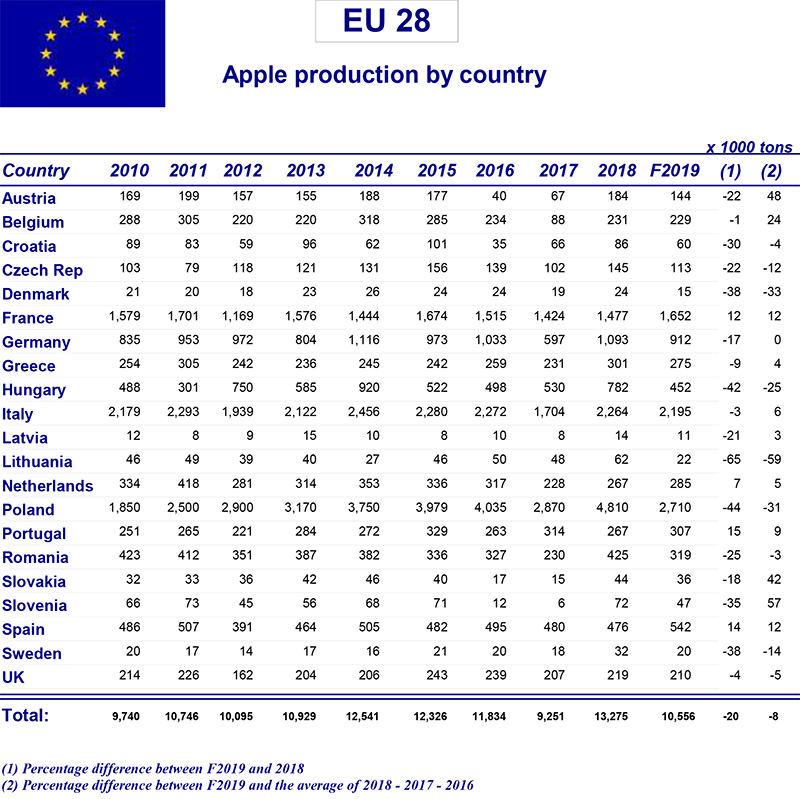
The 2019 European apple and pear crop forecast estimates that most European countries are expecting a rather low apple and pear crop for the coming season. On 8 August 2019, close to 300 representatives of the international apple and pear sector met at the Prognosfruit Conference in Alden Biesen, Belgium. During the conference, the 2019 European apple and pear crop estimate was released. This year, the apple production in the EU is set at 10.5 million T as a result of climatic events and the alternation of last year’s bumper crop. This is a decrease of 20 % compared to last year’s record high crop and of 8 % compared to the average crop of the three previous years. The pear crop is predicted at 2 million T, a decrease of 14 % compared to 2018. Nevertheless, comparisons with previous years need to be handled with much caution, given last two years’ exceptional variation.
Apart from crop alternation after a bumper, this year’s crop estimation has been influenced by several factors, including in particular a mild winter, a cold and wet May, late frost, a sunny and warm June, heat wave and drought in July, abrupt changes in temperature, and low blossoming. However, these events were scattered, and their impact differs significantly between regions. Additionally, for pear, the overall low figure is mainly due to a decrease in estimation of Italian pears which caused the overall forecast to be the second lowest of the decade. The drop was mainly the result of low blossoming, influenced by the high crop, heat of last season and rain.
A general comment for apple is that the crop in the Eastern part of the EU has been affected by the cold snap in May, with losses of 44 % of last year’s record high in Poland. In most apple producing countries, however, there were moderate decreases or stabilisation of the crop. France, Spain and Portugal are recording an increase of their crop. In terms of quality, there might be issues with sunburn and sizing. For pear, there are estimations of moderate to more serious decreases in all major pear producing countries, except for a small increase in Spain. Overall, there are still overhanging stocks on the market, but the late start of the season by up to two weeks might contribute to a better balance of the market.
The crop estimation needs to be held against a complex market situation, given the ongoing consequences of an increasingly more challenging global trading environment. Therefore, efforts to boost consumption need to be continued. WAPA will continue to monitor the developments of the Northern Hemisphere crop and will issue updates when appropriate.
GNT Group has developed a new and improved range of EXBERRY® liquid and powdered red Coloring Foods that are free of added sugar. They offer higher color intensities and contain just two raw materials, helping food and beverage manufacturers achieve shorter, cleaner ingredient lists.
Available globally, the new reds deliver colors that are 50 % more intense, which means they can be used in lower dosages to achieve the same effect, resulting in reduced cost-in-use. All are natural and derived from fruits and vegetables grown by GNT’s select group of dedicated farmers.
The new EXBERRY® reds range includes shades such as “Vivid Red”, “Purple Plum”, “Veggie Red” and “Brilliant Pink”, made from fruits and vegetables including carrots, blackcurrants, radishes, blueberries and sweet potatoes. All are suitable for vegetarians and vegans, Kosher parve approved and Halal compliant.
Sonja Scheffler, Product Manager at GNT, said: “These improved powdered and liquid reds highlight how we are always looking to evolve our EXBERRY® Coloring Foods portfolio to deliver optimized appearance and performance at a lower cost without sacrificing quality.”
EXBERRY® Coloring Foods are coloring ingredients obtained from fruits, vegetables using gentle, physical processes such as pressing, chopping, filtering and concentrating. The products retain the characteristic properties of the source material and the concentrates are not selectively extracted. Consequently, they are not classed as food additives but foods with coloring properties and, therefore, qualify for cleaner and clearer labelling declarations. Made with GNT’s own innovative processes, they can impart almost any color shade to foods and beverages and are ideally suited for industrial use.
To ensure the highest level of quality and year-round availability, GNT controls the entire EXBERRY® supply chain, with cultivation and harvesting monitored by GNT’s agricultural engineers.
Important information for food & beverage manufacturers:
EXBERRY® Coloring Foods are produced from fruit and vegetable concentrates. According to US Food & Drug Administration (FDA) regulations, any amount of sugar in fruit or vegetable concentrates above that normally found in an equivalent volume of 100% juice must be labelled as added sugar.
While EXBERRY® Coloring Foods are derived from fruit and vegetables, in the USA all color ingredients are classified as food additives, regardless of their original source.
Always check local regulations before making labelling claims, or contact GNT for further information tailored to your requirements.
Kreider Farms, Central Pennsylvania’s (US) favorite producer of farm fresh milk, ice cream, premium eggs and more, announced the launch of their new line of unique hemp iced tea drinks – Chiques Creek Hemp Tea.
These specialty beverage products are available in select regional retail outlets and online at the brand new ChiquesCreek.com website, designed by EZMarketing of Lancaster. The three currently available flavors—all made from a blend of hemp seed oil and natural flavoring with no artificial sweeteners—are:
The Original Recipe – showcases the earthy flavor of hemp
Passionfruit + Mint – a refreshing tropical blend
Peach + Lemon + Dandelion – a complex blend of earthy, fruity and tastefully bitter notes
Chiques Creek Hemp Tea does not contain CBD or THC, as the FDA has not approved these additives for food and beverage use yet. As regulations change, Kreider Farms may explore recipe alterations in the future.
“Since the recent passing of the Farm Bill, we are excited to see hemp being reintroduced to agriculture,” said Khalee Kreider, Marketing/Social Media Specialist at Kreider Farms. “With its rich history in Lancaster County and our proximity to East Hempfield Township and the Chiques Creek waterway, we thought this was the perfect opportunity to launch a cutting edge product consumers can get excited about.”
Lancaster County – home of Kreider Farms – has a long history of successful hemp production, and the Chiques Creek brand pays homage to the burgeoning revival of this culturally important farming tradition. ChiquesCreek.com features an educational Hemp Q&A page that shares how the hemp plant shaped Pennsylvania.
Named for the refreshing creek that flows through Kreider Farms’ company headquarters, Chiques Creek is more than a delicious tea—it’s a celebration of Lancaster County heritage.
The harvesting of murcott tangor, which started at a slow pace in the second fortnight of June, is now stepping up in São Paulo State. According to Cepea collaborators, despite the good quality of the fruits, sales in July were below the expected, due to the colder weather in southeastern Brazil as well as the competition with ponkan tangerine – whose prices are usually lower.
However, the demand for murcott tangor increased in late July, surpassing that for other citrus varieties. Besides, most growers from SP have already ended the ponkan harvesting – there is only some volume available in the in natura market, from orchards from Minas Gerais State. This scenario, in turn, should boost the demand for murcott even more.
Despite higher supply in São Paulo, the fast sales pace for murcott tangor favored prices last month. Between July 1 and 31, quotes averaged 34.88 BRL per 40.8-kilo box, on tree, 5.9 % up compared to the average in June.
PERSPECTIVES – Agents believe that the murcott harvesting should last until December, with the crop peak between October and November. The size of the fruits harvested so far is between small and medium, according to growers – due to the higher number of fruits on tree, which hampers growth.
PEAR ORANGE MARKET – Concerning pear oranges, the faster crushing pace helped to control supply in the in natura market. According to Cepea collaborators, this scenario should continue until the beginning of the harvesting for late oranges (mainly valência and natal), forecast to late August/early September.
Still, although pear orange prices are usually at the lowest levels in July, due to the crop peak and lower demand (because of the cold), quotes did not drop so sharply compared to June (only 1 %). The price average in July, at 18.06 BRL per 40.8-kilo box, on tree, dropped 32.6 % compared to that in the same month last year (when the output from the citrus belt was lower), in nominal terms, – but, compared to that in the same period of 2017, quotes rose 12 %.
The European Commission’s latest EUROPHYT – Interceptions annual report provides an overview of interception notifications received in 2018 and evaluates the main trends over the period 2013-2018.
This annual report shows that in 2018 there were 1,712 interceptions by Member States and Switzerland due to the presence of harmful organisms, an increase of 16% from the previous year. Despite this increase, there is a reduction of 30 % in the number of interceptions since 2013.
The main non-EU country commodities intercepted due to the presence of harmful organisms were fruit and vegetables, particularly peppers, mango, basil, eggplant, citrus and various gourds. Regarding the organisms, the increase over previous years can be attributed to increased interceptions of Thrips, an increase in nematode interceptions from Belarus and increased Citrus Black spot interceptions from Brazil and Argentina. Regarding commodities, wood packaging material and cut flowers also contributed significantly to the interceptions but with no significant change on previous years. There is also a noted increase in interceptions of seeds imported without required certification.
Background: EUROPHYT- Interceptions is the Commission’s rapid alert system for plant health used by EU Member States and Switzerland. Members use the system to notify the presence of harmful organisms and other plant health risks found in EU-bound consignments during import controls. The system is also an effective policy support tool for risk assessment and risk management. Based on EUROPHYT data, a Non-EU trade Alert List is published each month on the Commission’s Health and Food Safety website.
Better Juice, Ltd., the first foodTech startup to develop innovative technology to reduce all types of sugars in orange juice, and Citrosuco S.A, Brazil, one of the largest orange juice producers worldwide, are teaming up! The new collaboration aims to set up a pilot plant to reduce sugars in orange juice. Citrosuco is providing some of the funding plus technical and operational expertise.
Fruit juices contain vitamins, minerals, and many other beneficial nutrients, but this natural drink comes with three types of sugars. Better Juice’s game-changing enzymatic technology naturally transforms all types of fruit sugars into prebiotic and other non-digestible fibers and sugars.
“Our device use non-GMO microorganisms to convert the sugars, and provides orange juice manufactures a ready opportunity to meet the trends and claims for reduced sugars, all while keeping the juicy flavor of the beverage,” says Eran Blachinsky, PhD, Founder and CEO of Better Juice. “The global orange juices market is valued at dozens of billion US$ with outstanding potential to create better-for-you orange juice beverages.”
“We have been seeking an orange juice sugar reduction technology for some time,” says Alex Marie Schuermans, Product Development and Applications General Manager of Citrosuco. “Better Juice’s solution holds a lot of promise and we are confident that by combining their technology with our know-how, we can accelerate production of the first sugar-reduced orange juice.”
“This collaboration with Citrosuco is a vote of confidence in Better Juice’s leading technology and its capabilities for reducing sugar in orange juice,” notes Blachinsky. “We’re excited to work with this strategic partner and help create juices with low sugar — the latest frontier in sugar reduction.”
“Our proprietary technology can be tuned to reduce between 30 % to 80 % of all the sugars in orange juice,” explains Blachinsky. “Making it easy conform to the minimum 25% reduction required by the FDA, as well as the 30 % reduction required by the EFSA for allowable claims of ‘reduced sugar’ in food and beverage products.”
The startup won the “Most Innovative Technology” award at the 2018 Startup Innovation Challenge at Health ingredients Europe in Frankfurt for its sugar reduction technology, which it developed in conjunction with The Hebrew University in Rehovot, Israel, and The Kitchen Hub incubator, Ashdod, Israel.
Customers will be offered a broad Cargill range of food ingredients and solutions for various applications to make their business a success
Caldic and Cargill have reached an agreement making Caldic Ingredients Deutschland GmbH the exclusive distribution partner for Cargill’s starches, sweeteners and texturizers for food applications in Germany and Austria. The collaboration with Cargill will expand Caldic’s offering to customers in food markets such as bakery, convenience, confectionery, dairy and beverage.
Caldic Ingredients Deutschland GmbH is part of the Caldic Group, serving the Food segment, as well as Life Science and Industrial applications. In recent years, Caldic and Cargill have successfully developed customer relationships and enabled food manufacturers to win in their markets in various other European countries.
reasons to initiate this partnership. “We are very pleased with this agreement, because Cargill and Caldic are both aiming for leadership positions in their chosen market segments”, says Stephan Neis, Managing Director of Caldic Ingredients Deutschland GmbH. “When it comes to developing innovative solutions with a service-oriented character, we are clearly aligned with Cargill. With an extended on-trend product portfolio, tailored manufacturing and state-of-the-art application services there is no doubt we will take our full-service distribution model to the next level.”
Alain Dufait, Managing Director for Cargill Starches, Sweeteners & Texturizers business in Europe, adds: “Caldic has an excellent customer approach and a strong organization in Germany. We have been impressed by Caldic’s way of developing solutions for their customers and their entrepreneurial spirit. We are enthusiastic about this partnership, because it will allow us to expand our solutions to the German and Austrian food market.”
Demand for flavoured milk beverages is seeing steady growth worldwide, and the product variety in the markets is correspondingly large. There are trendy flavours like cappuccino, coconut and walnut that also appeal to adults, plus the classic cocoa beverages and milk drinks with vanilla, strawberry or banana flavour. In addition to tasting good, they address a wide range of consumer wishes, from low fat and reduced sugar to lactose free to high protein. With the new Stabiprime MFD range from Hydrosol, it’s easy to make all kinds of milk beverages.
Stabiprime MFD consists of carefully selected hydrocolloids. These stabilising systems are soluble in water as well as in sweet whey. They are easy to use, and make it economical to produce milk mixed beverages. In addition to the proven system with carrageenan, Hydrosol also offers a gellan alternative, Stabiprime MFDG. Its advantage is that it enables milk beverage filling even at high temperatures, up to 40°C. The main property of Stabiprime MFDC with carrageenan is that it lets manufacturers make stable products without high-pressure homogenisation, preventing sedimentation even with cocoa. Thanks to the special combination of hydrocolloids in both Stabiprime MFD versions, producers can make high-quality milk beverages easily and profit from the worldwide growth in this category.
Research from Swansea University has found how plastics commonly found in food packaging can be recycled to create new materials like wires for electricity – and could help to reduce the amount of plastic waste in the future.
While a small proportion of the hundreds of types of plastics can be recycled by conventional technology, researchers found that there are other things that can be done to reuse plastics after they’ve served their original purpose.
The research, published in The Journal for Carbon Research, focuses on chemical recycling which uses the constituent elements of the plastic to make new materials.
While all plastics are made of carbon, hydrogen and sometimes oxygen, the amounts and arrangements of these three elements make each plastic unique. As plastics are very pure and highly refined chemicals, they can be broken down into these elements and then bonded in different arrangements to make high value materials such as carbon nanotubes.
Conversion of plastics to carbon nanotube materials (Foto: Swansea University)
Dr Alvin Orbaek White, a Sêr Cymru II Fellow at the Energy Safety Research Institute (ESRI) at Swansea University said: “Carbon nanotubes are tiny molecules with incredible physical properties. The structure of a carbon nanotube looks a piece of chicken wire wrapped into a cylinder and when carbon is arranged like this it can conduct both heat and electricity. These two different forms of energy are each very important to control and use in the right quantities, depending on your needs.
“Nanotubes can be used to make a huge range of things, such as conductive films for touchscreen displays, flexible electronics fabrics that create energy, antennas for 5G networks while NASA has used them to prevent electric shocks on the Juno spacecraft.”
During the study, the research team tested plastics, in particular black plastics, which are commonly used as packaging for ready meals and fruit and vegetables in supermarkets, but can’t be easily recycled. They removed the carbon and then constructed nanotube molecules from the bottom up using the carbon atoms and used the nanotubes to transmit electricity to a light bulb in a small demonstrator model.
The research team plan to make high purity carbon electrical cables using waste plastic materials and to improve the nanotube material’s electrical performance and increase the output, so they are ready for large-scale deployment in the next three years.
Dr Orbaek White said: “The research is significant as carbon nanotubes can be used to solve the problem of electricity cables overheating and failing, which is responsible for about 8 % of electricity is lost in transmission and distribution globally.
“This may not seem like much, but it is low because electricity cables are short, which means that power stations have to be close to the location where electricity is used, otherwise the energy is lost in transmission.
“Many long range cables, which are made of metals, can’t operate at full capacity because they would overheat and melt. This presents a real problem for a renewable energy future using wind or solar, because the best sites are far from where people live.”
SIG set for growth with new state-of-the-art production plant in China
As the Asia-Pacific region continues to be one of the major growth engines for aseptic carton packaging, SIG has announced investment in the region with the construction of a second production plant in Suzhou, China.
To meet current and future customer demand, the new 120,000 square meter plant is expected to be operational in early 2021 and will be situated at the Suzhou Industrial Park (SIP), close to the company’s existing production facility and Tech Centre. With a total investment of EUR 180 million, the new plant will ensure exceptional delivery on outstanding opportunities in the Asia-Pacific region, where most countries continue to grow significantly. The plant is expected to achieve world-class environmental, safety and operational performance right from the start.
The new production facility is testament to SIG’s strong partnership with SIP and the local government, as well as its unparalleled commitment to deliver world-class packaging, service and the most modern solutions to the rapidly growing Asian markets and to China in particular. SIG’s recently opened cutting-edge Tech Centre in Suzhou supports customer collaboration in the development and implementation of innovative product concepts and market-ready packaging solutions.
Across Asia, millions of people are only now starting to consume packaged food and beverages. The rise of new consumers, driven by increasing income, changing lifestyles and new consumption habits, represents a huge opportunity for aseptic carton packaging with its long shelf life without the need of a cooling chain.
At the same time, young and growing populations are adopting modern lifestyles in urban areas, with more on-the-go consumption, an increasing awareness of health and wellness, and a growing demand for high-quality nutritional food and beverage products.
The compliance of the declared filling volume is an important topic for all bottlers. On one hand the legal minimum values must be met and on the other hand overfilling means considerable economical loss.
The simple transfer of the juice in a graduated cylinder is quite inaccurate as the scale of such a cylinder is too wide and do not give an exact result. Additionally there will always be some remains in the bottle. Therefore this method is not precise enough for this task.
The usual continuous check of the filling volume in a filling line is done by weighing the full bottle and subtracting the average weight of empty bottle and cap. The weight of the juice can be transferred into volume by the division with the average density of the juice. This can be done automatically, but contains the risk of slightly incorrect results, as the weight of the packaging and the density of the juice normally vary within a predefined range.
This new method describes a more exact way to determine the filling volume (net volume) in a laboratory.
It is now available in the Methods of Analysis section of the IFU Website!
The difficult economic conditions and uncertainties such as the unresolved trade conflict between China and the USA increasingly affected Krones’ business in the first half of 2019. After strong growth in the first quarter (by 10.3 %), revenue from April to June increased by 0.7 % year-on-year. In total, the company’s revenue from January to June 2019 improved by 5.5 %, from €1,790.8 million in the previous year to €1,889.3 million. Adjusted for acquisitions and currency effects, growth was 1.8 %.
The slowdown in the economy and the uncertain economic outlook are also affecting investment confidence among Krones’ customers. The company experienced weak demand in parts of its portfolio between April and June 2019. However, Krones was largely able to compensate for this due to its broad product range. Order intake from January to June 2019 increased by 1.2 %, from € 2,014.8 million to € 2,038.6 million. Adjusted for acquisition effects, the contract value of orders increased by 0.4 % in the first six months of 2019.
High costs and unfavourable product mix impact profitability
Earnings before taxes (EBT) decreased year-on-year in the first half of 2019, from € 112.7 million to € 47.9 million. The EBT margin dropped from 6.3 % to 2.5 %. Krones’ profitability was impacted by high material and labour costs. The product mix also had an adverse effect on earnings. In the second quarter of 2019 in particular, revenue was lower than expected on products with a large proportion of own value added, such as machines and lines in plastics technology. That led to capacity underutilisation in this area. Another major reason for the lower earnings is that revenue in parts of the high-margin after-sales business was above 2018 but below budget in the first half of 2019. Krones generated consolidated net income of € 33.3 million from January to June 2019 (previous year: € 76.9 million). This corresponds to earnings per share of € 1.06 (previous year: € 2.45).
Krones has improved the ratio of average working capital to sales over the past four quarters. The ratio decreased from 28.8 % in the previous year to 26.0 %. Free cash flow went down to – € 259.4 million (previous year: – € 56.2 million). Krones having a negative free cash flow in the first half year is a seasonal effect and is nothing out of the ordinary for the company’s business.
Krones expects better earnings in second half year
The Executive Board has taken further action to offset the negative impacts on earnings. This includes among others a recruitment freeze and measures to reduce material costs. We are progressing well with the expansion of our global footprint. The new plant in Hungary, for example, is fully on schedule and on budget. Krones will start producing there in the course of this year and will generate positive earnings contributions from the Hungarian plant from 2020 as planned.
Krones expects, in line with previous year, that especially in Q4 the production capacity utilisation will increase as well as the high-margin life-cycle services (LCS) business. Therefore Krones expects better earnings in the second half of 2019 than in the first six months.
In total, the company expects growth of 3 % in 2019. The EBT margin is expected to be around 3 %. For its third performance target, working capital to revenue, Krones expects a figure of 26 %.
Krones working on structural measures and adheres to mid-term targets
The strategic measures launched to date, such as the price rises and expansion of our global footprint so far, are not enough for the earnings targets to be attained on a long term basis. The Executive Board is therefore currently working on further structural changes for a sustained increase in profitability. These changes focus on reducing complexity, rapid response to market needs and shaping an even more customer-centric business organisation.
Krones is maintaining its mid-term targets. Depending on the overall economic situation and developments in the company’s markets, the Executive Board expects average annual revenue growth of 3 % to 5 % excluding acquisition effects, an EBT margin of 6 % to 8 % and working capital at 22 % to 24 % of revenue.
Krones has published the complete Interim Report for the first half of 2019 online at www.krones.com
Currently, the method No. 12 – revision 2019 of the International Fruit and Vegetable Juice Association (IFU) is the accepted worldwide reference method for the detection of Alicyclobacillus spp. However, the verification of Alicyclobacillus in the lab is relatively time-consuming. In case of enrichment the results are available at the earliest after 10 days, but usually after almost two weeks.
An alternative method is the Soleris® ACB-109 (Neogen Corporation) which offers faster results which are just as reliable. This has been verified by a validation according ISO 16140-2:2016 (comparison of alternative against reference methods).
Via a two step enrichment of a 10 g sample, Alicyclobacillus can be detected already within two to four days using the Soleris ACB-system. For this purpose the sample is enriched for 2 days in BAT bouillon according to IFU No. 12 and afterwards transferred to the Soleris-Vial. To eliminate false positive results a molecular-biological rapid PCR test by Milenia Biotec GmbH will be used, directly out of the Soleris-Vial.
(Photo: Milenia Biotec GmbH)
Positive or negative – all important parameters for the evaluation of the sample are promptly provided:
Alicyclobacillus spp./10 g
negative/positive
Alicyclobacillusacidoterrestris/10 g
negative/positive
Potential guajacol formation
negative/positive
The Soleris ACB-system together with the PCR confirmation delivers the results quicker than the IFU No. 12 and is a reliable method for the qualitative verification of Alicyclobacillus spp. in fruit juices and concentrates.
Kayco introduced Wonder Melon, a watermelon juice it said builds on consumer demand for the summer staple. Wonder Melon is made from 100 % organic cold-pressed juice with no added sugar, artificial ingredients or artificial colorings.
The healthy drink comes in two varieties. Watermelon Cucumber Basil is a concoction of real watermelon juice, lemon juice, apple juice, cucumber juice and basil, with only 80 calories per 8.45-ounce bottle. Watermelon Lemon Cayenne has real watermelon juice, lemon juice, apple juice and a dash of cayenne and just 100 calories per 8.45-ounce bottle.
Both juice varieties are Non-GMO Project Verified, Fair Trade Certified, certified USDA organic and certified OU kosher. The suggested retail price of the juice is $ 3.99 per 8.45-ounce bottle. Wonder Melon is available in the US in the refrigerator section at Shop-Rite, Fairway, Best Market and many independent grocers, and is also available through Amazon.
CFO Michael Andersen leaves the Executive Board of Krones AG with immediate effect by mutual agreement.
Krones AG would like to thank Michael Andersen for his strong commitment over the past three and a half years. The operative CFO functions will be temporarily executed by CEO Christoph Klenk until a successor has been found.
Sales revenues of organic foods in Europe continue to rise. In addition to traditional drivers like the dry foods category, which includes cereals, trend categories like protein bars and shakes are also growing. “The growing demand for organic products is becoming more and more obvious in health and fitness-related categories,” reports Marc van Essen, Sales Director at SternLife. “So we offer a large part of our range in organic versions as well. From vegan protein bars and protein shakes to breakfast and fitness shakes to smoothie powders, we provide high-quality functional food made with organically grown raw materials, with a difference you can taste.”
SternLife is one of the leading suppliers of functional lifestyle and sports nutrition products. From an extensive range of organic raw materials, the company also develops exclusive organic product lines for major brands. The raw materials can be from animal or plant sources as desired. For example, protein sources can be pea, rice, hemp, sunflower and pumpkin, or milk and whey. “Continuous consumer and market research is fundamental to the successful development of our product concepts. We have a very good knowledge of which organic raw materials are in demand at any given time,” notes SternLife Product Manager Lüder Holsten, adding, “That means we can always implement the latest product trends for our customers.” The proper combination of raw materials is at least as important in order to achieve high bioavailability and thus high product functionality. SternLife developers and technologists examine these aspects very carefully in applications testing.
With regard to the organic market, functional bars are of special interest. Few organic offerings exist, and demand is rising rapidly. SternLife has therefore developed a wide selection of exciting concepts for the entire range of bars, from Pure to Deluxe. Whether chocolate coated or uncoated, with sprinkled bits or filling, whether vegan or conventional, SternLife has many possibilities for individual product lines with protein content up to 30 % (vegan) or more (conventional).
In the powder category, customers can have SternLife create custom organic shakes for different target groups and occasions, working from a wide portfolio of raw materials. Powders can be conventional or vegan; the vegan powders can contain up to 60 % protein while meeting all sensory requirements. In additional to raw materials from organic agriculture, SternLife naturally also offers UTZ and RSPO-certified raw materials, combined individually to customer order.
The Beviale Family, the NürnbergMesse Group’s global network for the beverage industry, is adding another event to its portfolio. Beviale Mexico will open its doors in Mexico City’s Centro Citibanamex for the first time from 29 to 31 July 2020. Beviale events feature a specialised programme spanning the entire process chain for beverage production, from raw materials and technologies to components and logistics as well as marketing ideas. The programme also covers all segments – alcohol- free and alcoholic beverages and liquid milk products: water, soft drinks, juice, beer, wine and spirits, such as the Mexican specialties tequila and mezcal. Mexico City will have lots to offer the world of beverages in 2020: A congress will begin the day before the exhibition, although the real kick- off will happen in April when ACERMEX (Asociación de Cerveceros Artesanales de México) stages a beer festival. The Mexican craft beer association is a partner of Beviale Mexico.
“We are very pleased to be able to offer another comprehensive beverage exhibition in our international portfolio by adding Beviale Mexico,” notes Andrea Kalrait, who is in charge of the Beviale Family. “More than 124 million residents and good consumer trends make this market appealing to beverage manufacturers. We cannot wait for the first Beviale event in the Americas.”
Mexico is an attractive economic market with stable growth in key industries, including beverages and packaging. The food industry is among the country’s fastest growers. According to the Mexican Chamber of Commerce, Mexico’s beverage sector breaks down into 60 per cent alcoholic and 40 per cent alcohol-free beverages. Soft drinks, water and beer are the main revenue earners. Mexican families spend about four per cent of their money on alcoholic drinks. Seventy per cent of families prefer to drink beer, but national and international spirits are also popular. For instance, tequila revenues jumped 15.7 per cent in the first half of 2018 alone compared with the same stretch in 2017, according to the industry information service Información Sistematizada de Canales y Mercados (ISCAM). Developments in the Mexican craft beverages segment are following the global trend, which is clearly reflected in the growth posted by smaller breweries but also by spirits makers. According to ACERMEX, Mexico had 1,400 breweries in 2018 – and this number is rising. From a global standpoint, Mexico is also in the premier league when it comes to beverages: Mexico is the world’s fourth-largest beer producer with beer production of 110 million hl (2017), coming after China, the US and Brazil. Mexico even takes first place globally when it comes to bottled water with per capita consumption of 254 litres, ahead of Thailand and Italy (International Bottled Water Association).
The focus is on Central and Latin America
The steadily growing beverage market is creating stronger demand for beverage equipment. Beviale Mexico views itself as an intermediary between national and international beverage manufacturers and suppliers to the beverage industry. Kalrait feels that significant opportunities exist for international exhibitors in particular: “The political climate and still low exchange rates lead us to believe that beverage production will continue to grow in Mexico. Another factor that is certainly interesting for equipment suppliers is that engineering is not very developed at all in the country and beverage manufacturers import nearly all of their equipment. With Beviale Mexico, we are offering the industry a promising platform to reap the rewards of growing consumer spending and to find partners to ensure that technology and components are produced in the country.”
With great international experience, Mengoli spent 5 years with General Electric and was at the top levels of Tetra Pak for 15 years.
On 1st June, Giulio Mengoli became the new General Manager of the SACMI Group. His appointment was made official by the Board of Directors of the parent company, SACMI Imola.
A native of Padua, 49 years old, Giulio Mengoli has a long international experience, having held top positions in France, the United States, Brazil, Sweden and Italy.
The meeting with SACMI came in November 2018 and for 7 months Mengoli acted as General Manager of SACMI Business Units, immediately working alongside the present management to define the governance and strategic planning of the Group.
Giulio Mengoli takes over from Claudio Marani, who has led the SACMI Ceramics Division since 2000 and has been the Group’s General Manager since 2016.
“With the appointment of Mr. Mengoli as head of the SACMI Group – observed the president of SACMI Imola, Paolo Mongardi – we want to give a clear signal in the direction of further consolidation of the Group’s international vocation and strengthening of its leadership in all sectors of activity”. In the medium term, in addition to the development of core sectors, SACMI’s priorities include the issues of digital transformation and the circular economy, “to offer products and services that are increasingly customised and in line with the real needs of production and of the market”.
You need to load content from reCAPTCHA to submit the form. Please note that doing so will share data with third-party providers.
You are currently viewing a placeholder content from Turnstile. To access the actual content, click the button below. Please note that doing so will share data with third-party providers.