The 2019-2020 Florida all orange forecast released today by the USDA Agricultural Statistics Board is 67.7 million boxes. The total is comprised of 29.7 million boxes of non-Valencia oranges (early, midseason, and Navel varieties), unchanged from the June forecast, and 38.0 million boxes of Valencia oranges, unchanged from the June forecast. The forecast of all Florida grapefruit production is down 1 percent at 4.85 million boxes. Of the total grapefruit forecast, 790,000 boxes are white and 4.06 million boxes are the red varieties. The Florida all tangerine and tangelo forecast remains at 1.02 million boxes. …
Please download the full citrus crop production forecast: www.nass.usda.gov
In MY 2019/20, EU citrus production is projected to lower 11 percent to 10.4 MMT. This production forecast is four percent higher than previous estimates. Unfavorable weather conditions in Spain, the EU’s main citrus producer, accounts for the projected drop in overall production. The decline in EU citrus production may encourage EU imports while EU citrus exports remain flat in response to higher domestic EU demand. Strategic export markets destinations for EU citrus continue to be Canada, the Middle East, and China. In MY2019/20, U.S. tariffs related to the World Trade Organization Case against EU aircraft subsidies will likely impact Spanish exports of clementines and lemons. During the Covid-19 pandemic, domestic demand for citrus held strong as consumers looked for foods to strengthen the immune system. As of the date of this report, EU citrus exports have not been directly impacted by the pandemic. …
Until May, only one of the large-sized processors was crushing oranges from the 2020/21 crop in São Paulo State (in Araraquara) and in June, three more plants started activities, one in Colina and the other two in Matão.
Although there were more plants crushing oranges in June and processors had started crushing the fruits purchased through contracts, the crushing pace was still slow compared to that in previous crops, due to the crop delay in most citrus-producing regions in Brazil, except for northern São Paulo, where fruits development was more advanced.
Most processors were crushing their own fruits or those previous purchased, however, one large-sized processors was purchasing oranges in the spot market. Bidding prices for pear or early oranges were ranging from 21.60 BRL and 24.00 BRL per 40.8-kilo box, harvested and delivered to processors, depending on fruits yield – when less than 290 boxes are needed to produce a ton of concentrate orange juice, remuneration is higher.
The volume of fruits available in the spot market this season is expected to be low, since the attractive prices paid to growers (up to 26.00 BRL/box) tend to increase the preference for purchases through contracts. It is worth to mention that, according to agents from processors, only a few growers have not traded their fruits from the 2020/21season yet.
BRAZILIAN MARKET IN JUNE – Sales were low in the in natura market in June, due to the colder weather in São Paulo. As restaurants are not working and schools are closed, the demand for larger-sized fruits was higher, resulting in a surplus of smaller-sized oranges. Although these fruits may be allocated to processors, pear oranges quotes did not rise last month. Between June 1 and 30, pear orange prices averaged 25.26 BRL per 40.8-kilo box, on tree, stable (-0.1%) compared to that in May.
As regards tahiti lime, agents reported a slight reaction in the demand in late June – both domestic and international. Besides, the harvesting pace was controlled, in order to avoid price drops. Thus, amid lower supply, prices increased in June. The average price for tahiti lime last month closed at 29.49 BRL per 27-kilo box, harvested, 9.9% higher than that in May.
Let’s start with some good news: BrauBeviale will take place this year! The event concept has been modified due to the current circumstances. In consultation with the relevant authorities, safety and hygiene concepts were developed to ensure a safe and effective trade fair experience for all participants. This year, the international capital goods fair for the beverage industry will therefore take place at Exhibition Centre Nuremberg from 10 to 12 November as a “BrauBeviale Special Edition”. This decision was taken in close consultation with our exhibitors, visitors and partners and therefore specifically meets their requests for the organisation of a physical platform before the end of the year to facilitate dialogue and foster business.
“The decision to hold BrauBeviale this year was not just down to us as the organiser but was taken in close consultation with our exhibitors, visitors and partners,” explains Andrea Kalrait, Executive Director BrauBeviale at NürnbergMesse. “The message that we kept getting in our discussions was that our customers still wanted to have their annual gathering in 2020, all the more so as it was probably the only opportunity for such a meeting this year, not just at national and European level but internationally. So I am really looking forward to welcoming as many visitors as possible in person to our event in Nuremberg!”
The key theme of the current three-year BrauBeviale cycle is the future viability of the beverage industry. This year in particular, which has also forced a lot of companies in the beverage sector to face unprecedented and difficult challenges, the future viability of the industry is more important than ever. The BrauBeviale Special Edition is therefore very much about showing solidarity. As a partner to the entire beverage sector, this year’s event will send out a message and provide an attractive, successful and at the same time safe platform to allow industry stakeholders to share information, network and join forces to emerge from this difficult situation in a stronger position.
BrauBeviale Special Edition – tailored hygiene concept
Andrea Kalrait explains the principle behind the Special Edition: “Naturally, protecting our customers is always a top priority for us, so together with the relevant authorities we developed a safety and hygiene concept tailored to BrauBeviale, to ensure the greatest possible degree of safety for all trade fair participants.” The main protection objectives and the cornerstones of all measures implemented are to make it possible to observe current social distancing rules and facilitate contact tracing and good hand hygiene. The supporting programme was also adapted to meet these requirements: The Craft Drinks Area, BrauBeviale Forum and brau@home will make the necessary adjustments to the way they communicate and provide information so as to ensure the safety of the participants.
“Except for stand parties, things can happen in the usual way but subject to the prescribed conditions that we are all familiar with meanwhile from our daily routines,” says Andrea Kalrait, summing up the concept for the BrauBeviale Special Edition. “There will be a one-way system to direct visitor flows through the halls. Wherever it is not possible to observe social distancing, masks must be worn, and the exhibition stands have to comply with the necessary safety and hygiene standards. In addition, the contact details of all exhibitors and visitors will be collected to ensure the necessary traceability. Because we cannot use the same hall configuration as last year, I encourage all visitors to do a bit more preparation for their trade fair visit this time round.” An obligatory part of this preparation will be to register in advance online. To make sure that the admissible number of visitors per day is not exceeded, only day tickets will be available this year. So each visitor has to decide on a specific day and then register for it. The tickets are available on mobile devices and allow contactless access to the exhibition grounds.
There is positive news from Beviale Family in China about the successful restart of the trade fair business. This is not just pointing the way forward for the exhibition industry worldwide, but also for Nuremberg as a trade fair venue and consequently, for BrauBeviale. CRAFT BEER CHINA took place in Shanghai from 1 to 3 July 2020 and was a professional event that did an excellent job in implementing the necessary distancing and hygiene rules.
Online option: the regular industry gathering on the internet
Considering the current travel restrictions, BrauBeviale has also undertaken to enable trade visitors and companies to participate in the BrauBeviale Special Edition even if they cannot come to Nuremberg in person. Alongside work on implementing the modified event concept at the exhibition centre, preparations are also in full swing for the digital dialogue platform “myBeviale.com” (www.mybeviale.com). It will dovetail the analogue and digital worlds and will also be available to the BrauBeviale community the whole year round after the trade fair is over. For the event the BrauBeviale Forum programme, among other things, will also be put online. Thanks to this online option, trade fair participants will have the opportunity to watch and even interact with interesting presentations live from their homes. In addition, it will be possible to live-stream contributions by high-calibre speakers who are not able to attend the event in person. “So I urge all of you to make a firm note of the dates 10 to 12 November 2020 in your calendar and take your place at the industry’s regular gathering! Whether in person at the Nuremberg venue or in virtual space from your PC at home, we have a wide-ranging programme to offer you!” says Andrea Kalrait in an appeal to all industry players.
In the first quarter of the 2020/21 financial year (ended 31 May 2020), AGRANA, the fruit, starch and sugar company, achieved a slight increase in both revenue and operating profit (EBIT) despite the COVID-19 crisis. AGRANA Chief Executive Officer Johann Marihart comments: “The key factor in the solid Group EBIT was a very significant profitability improvement in the Sugar segment compared to the same quarter last year. EBIT in the Starch segment was moderately below the year-earlier level, with the decline due mainly to a short-term slump in bioethanol prices at the beginning of the COVID-19 pandemic, which have since recovered again. Ethanol sales remained stable in volume terms despite the lockdown, thanks to the firm export market for bioethanol with high CO2 reductions and to the sale of 10 million litres into the disinfectant sector. In the Fruit segment, earnings were significantly below those of one year ago. Thus, the performance of the fruit juice concentrate activities was down as a result of the prior-year harvest and there were COVID-19-related decreases in the fruit preparations business.”
Results in each business segment in Q1 2020|21
FRUIT segment
Revenue in the Fruit segment, at € 303.7 million, was off slightly from one year earlier. Revenue from fruit preparations fell somewhat, as a result of lower sales volumes. In the fruit juice concentrate business as well, volumes were the reason for a moderate revenue decline relative to a year ago. EBIT in the Fruit segment was € 16.0 million in the first three months, a reduction of 26.6 % year-on-year. The causes of the deterioration lay primarily in the fruit juice concentrate business, which notably saw reduced delivery volumes in combination with lower contribution margins of apple juice concentrates produced from the 2019 crop.
STARCH segment
The Starch segment’s revenue of CHF 204.4 million was slightly below the year-earlier level. The COVID-19 crisis had a negative impact on sales volumes of saccharification products, and initially also led to a drastic fall in bioethanol prices amid the lockdown and the sharp drop in demand for petrol. However, over the rest of the financial first quarter, bioethanol quotations rebounded again due to the resurgence in private transport. At € 17.0 million, EBIT of the Starch segment was moderately below the year-earlier amount. In the period under review, weaker market demand dampened prices and put pressure on margins.
SUGAR segment
The Sugar segment’s revenue of € 144.5 million in the first quarter was up significantly from one year before. Both higher sugar selling prices and increased sugar sales volumes led to this growth. Although EBIT was still negative at a deficit of € 1.0 million, it marked a substantial improvement compared to the same quarter of the previous year due to a more benign sales price environment.
The detailed financial results are provided in the interim statement for the first quarter of 2020|21 at www.agrana.com/en/investor.
Better Juice plan to go full scale with industrial implementation of sugar-reduction tech within a year
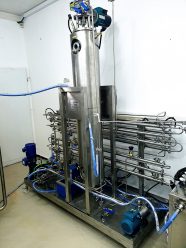
Better Juice, Ltd., the first foodTech startup to develop innovative technology to reduce all types of sugars in orange juice, announces its patent-pending technology is now scaling up. The startup is installing a semi-industrial pilot plant that also will be available for future testing at global partners’ plants. The pilot plant features the company’s sugar reduction process in a continuous flow technology that ensures a consistent, safe, and effective enzymatic process.
Pilot plant (Photo: Better Juice)
Better Juice developed an enzymatic technology that uses all-natural ingredients to convert fructose, glucose, and sucrose into prebiotic dietary fibers and other non-digestible molecules. Better Juice’s new pilot plant system marks a significant milestone in the startup’s commercial scale-up timeline. It is able to reduce up to 80 % of simple sugar in orange juice at a rate of up to 50 liters/hour. Better Juice’s non-GMO technology is designed to target the specific sugar composition in the orange juice to naturally create a low calorie reduced-sugar product that has a delicate sweetness. It is accomplished without using sweeteners or other additives to replace the sugars in the juice.
“We’ve signed collaboration agreements with several global juice producers so far,” reveals Eran Blachinsky, PhD, founder and CEO of Better Juice. “Our goal is to attain full industrial scale and supply to the market within a year. Soon, you will be able to see natural juice beverages with more favorable Nutri-Scores.” Nutri-Score is a new food label system that converts the nutritional value of products into a clear letter and color code on the packaging in Europe.
“Juice and beverage manufacturers are increasingly aware of the need to reduce the sugar levels in their products before new labeling initiative goes into action,” adds Blachinsky. “By using Better Juice technology, this will be easy to achieve.”
Maintaining juice quality through scaleup
The fruit juice industry, like any other, is constantly seeking ways to improve profitability. Adding a new procedure to the juice manufacturing by definition add costs. Better Juice uses a continuous flow technology that will only slightly influence the incremental costs to the overall price.
One of the major hurdles in continuous flow reduction of sugars in natural juices is keeping the process contamination-free even through large-scale production, without damaging the enzymatic activity. Better Juice developed a new device crafted from stainless steel, with aseptic fittings and welding, together with a unique process that guarantees a continuous, safe flow for its enzymatic sugar-reduction process for weeks at a time without interrupting the sterilization stage.
“The scale-up pilot plant is designed for smooth implementation into the standard procedures deployed by the juice industry,” explains Gali Yarom, Partner, COO, and VP of Business Development for Better Juice.
“Better Juice’s new tech process is cost-effective by virtue of its ability to maintain the continuous flow stage,” adds Yarom. “This is a key factor for beverage manufacturers seeking to affordably reduce sugars naturally while maintaining the juice quality and clean label attributes — a real game changer for the juice industry.”
This year’s Food ingredients Europe co-located with Health ingredients Europe will be organised in accordance with Informa’s AllSecure health and safety standard, developed in response to COVID-19. As one of the world’s leading events organiser, Informa Markets will employ enhanced measures to ensure the highest levels of hygiene and safety. Informa Markets is confident that the show will take place as planned from 1-3 December at Messe Frankfurt, Germany, with strong support from the Fi and Hi Europe communities.
AllSecure is an industry-wide standard that has been developed in close cooperation with partners, such as the Global Association of the Exhibition Industry (UFI), venues, suppliers and relevant authorities for exhibition organisers to adopt and provide reassurance to attendees that events are being held in a safe and controlled environment. For Fi Europe co-located with Hi Europe, in particular, the Informa Markets team is in close contact and constant consultation with the City of Frankfurt, the State of Hesse and Messe Frankfurt.
Informa AllSecure is how the industry-wide standard will be adopted at Informa events and features some 35 detailed protocols, covering Cleaning & Hygiene Countermeasures (prior to stand build, again before event opening and during the duration of the event), Phyiscal Distancing following the Crowd Density Standards as set by the State of Hesse, Communication across all channels and platforms, and Protect and Detect in collaboration with the local health authorities.
Leading coconut water brand Vita Coco is debuting a new line of functional coconut water with MCT next spring.
Vita Coco Boosted blends coconut water, coconut cream, coconut MCT oil, B vitamins and tea extract to give consumers a new, modern way to get their fix of all-day energy, without the jitters or crash. The new product will be available in three, delicious cafe flavors – Vanilla Latte, Coconut Chocolate and Chai – with 40 milligrams of caffeine and less than 5g of sugar per drink. Unlike other MCT drinks on the market,Vita Coco Boosted has no added sugar or added sweeteners.
As consumers continue to seek out holistic ways to increase their energy and focus, Vita Coco is leveraging energy-boosting coconut MCT oil to create a coconut water beverage that meets consumers’ needs.
“We’re always looking to find new innovative ways to leverage the goodness of coconuts to provide consumers with relevant products. We all need more energy and focus now more than ever, and the launch of Boosted could not be better timed,” said Michael Kirban, co-founder and CEO of Vita Coco. “MCT as a functional ingredient is growing rapidly, and our unique combination of coconut water with coconut MCT oil offers consumers an accessible, versatile product that can be enjoyed as a sidekick to your coffee, an addition to your smoothie or any time you need a pick-me-up.”
Vita Coco Boosted will launch regionally and will be available for $3.29 for a16.9-oz TetraPak in select retail stores and on Amazon in March 2021.
Chr. Hansen Holding A/S has today appointed Lise Skaarup Mortensen as new Chief Financial Officer (CFO). Lise is an experienced international leader with a strong track-record and a passion for leadership who joins from a position as CFO at Microsoft Germany
Lise Skaarup Mortensen (52) has a strong financial background with many years of experience in large international companies and has for the past eight years been with Microsoft in international senior leadership positions in India and Germany. Prior to joining Microsoft, Lise has held senior level positions within the fields of finance and strategy at IBM, AP Moller-Maersk and BG Bank.
Lise Skaarup Mortensen will start at Chr. Hansen on October 1, 2020, after which there will be a short transition period until current CFO Søren Westh Lonning leaves, expected by the end of October. Lise will join the Executive Board after the transition period is completed.
Lise Skaarup Mortensen is a Danish national, currently living in Munich. She will relocate back to Denmark to take up this position. Lise holds a master’s degree in Business Administration & Economics from the University of Aarhus, Denmark.
The acquisition of PrecisionBiotics Group will advance Novozymes’ activities in the area of biological solutions for human oral and gut health – one of the growth pillars in the strategy Better business with biology.
Novozymes announced that it has acquired PrecisionBiotics Group Limited. Based in Cork, Ireland, PrecisionBiotics Group holds a leading position within probiotics for human gut health and is well positioned with several clinically backed products already in the market.
“This acquisition fits well with our strategy, Better business with biology, where we have focus on human health as one of our opportunities for growth. With this investment, we take another important step in implementing the strategy and setting a foundation of growth for our business,” says Ester Baiget, President and CEO of Novozymes.
Combining the power of probiotics and enzymes
PrecisionBiotics Group has strong expertise within clinical development, upscaling and commercialization and is well situated in Cork, Ireland, home to a leading academic society within human gut health.
“We welcome employees in PrecisionBiotics Group to Novozymes. PrecisionBiotics Group brings in complementary technologies, a similar science-based approach and a matching culture. With our unique expertise within discovery and enzymes and PrecisionBiotics’ strong capabilities and network within probiotics for human health, we will be in a unique position. It’s a position where we can expand market opportunities and develop new and highly efficient products,” says Ester Baiget.
“By becoming a part of Novozymes, we will get a global presence across businesses and new capabilities within science and discovery of new strains. This will help us to grow by developing new products where we can combine enzymes and probiotics,” says Barry Kiely, CEO and co-founder of PrecisionBiotics Group.
When combined, enzymes and probiotics synergistically work hand-in-hand to address health benefits from different angles in more powerful ways.
“Novozymes is a strong company based on science with a global market presence and a purpose to find biological solutions for better lives in a growing world. We look forward to speeding up the development of our pipeline and to a global roll-out of products to accelerate growth,” Barry Kiely says.
Novozymes has established OneHealth to market solutions within human health under one umbrella. The aim is to help people live healthier and better lives by use of probiotics and enzymes.
SIG announced another milestone in its ambition to go Way Beyond Good for society and the environment by offering ASI-certified aluminium as standard for all SIG packs in Europe.
SIG is the first in the industry to obtain certification to both the ASI (Aluminium Stewardship Initiative) Performance and Chain of Custody standards and is the only aseptic carton producer to offer ASI-certified aluminium in its packs.
The first ASI-labelled cartons were launched by customers such as B-Better® (from Unilever’s Better Future Platform), Riedel and DRINKS3 in 2019. Now, ASI-certified aluminium will come as standard for all SIG packs in Europe.
The IFU Methods of Analysis Commission have completed and published a new recommendation R20, which is available to access for members via the IFU website www.ifu-fruitjuice.com selecting the top menu bar “Methods of Analysis”.
Dimethyl dicarbonate (DMDC, trade name Velcorin®) is used for the cold sterilization of beverages. The use in juices is approved for selected countries such as USA, Mexico, Brazil or Australia and New Zealand. In the EU and according to the Codex Standard the use as a food additive in juices is not listed. DMDC is degraded quickly after application and therefore it is not directly detectable in the finished product. It’s detection can only be carried out indirectly via analysis for its decomposition products which in an aqueous matrix are compounds that may be seen in soft drinks. These components (MeOH & CO2) are only conditionally suitable for a clear detection of its use. In the presence of methanol or ethanol, small amounts of dimethyl carbonate (DMC) or ethyl methyl carbonate (EMC) are also produced. These two compounds can be used as indirect proof of treatment of a product with DMDC. This recommendation reviews the detection method.
BENEO has announced the expansion of its chicory root fibre and rice starch ingredient portfolio with two new organic solutions. The launch of the new additions, comprising an organic waxy rice starch, Remyline O AX DR, and organic chicory root fibre, Orafti®Organic, paves the way for BENEO to strengthen its market leading position.
Consumers worldwide are increasingly seeking out organic products, with figures showing they have become more important to 1 in 4 consumers in the last year1 and many willing to pay a premium price for them2. This rising demand has been driven by the growing consumer perception of organic products as healthy and natural, and therefore an intrinsic part of a healthier lifestyle. Organic products and ingredients are also considered a vital element for ethical and sustainable purchasing behaviour, a key trend being seen within the food and beverage industry. Around the world, there are high expectations for organic products, with a compound annual growth rate of 2 % and 2.6 % in value predicted between 2019 and 2022 in Europe and the USA respectively3, the two largest organic markets.
The addition of BENEO’s new organic waxy rice starch, Remyline O AX DR, completes the existing portfolio of rice starches with the availability of organic solutions for both regular and waxy rice starch. Launching globally from July onwards, Remyline O AX DR is the first of its kind to be brought to market, opening up new possibilities for product development. As a waxy rice starch, it contains no amylose and therefore delivers better stability and less syneresis, making it easier to maintain a stable texture throughout a product’s shelf life. Remyline O AX DR is suitable for fruit preparations, as well as meat and poultry applications. Technical trials by experts at the BENEO-Technology Center have shown positive results for these applications, as well as for improving the texture of creamy desserts and yoghurts.
Commenting on the launch of Remyline O AX DR, Marc-Etienne Denis, Commercial Managing Director Specialty Rice Ingredients at BENEO stated: “The launch of BENEO’s new organic waxy rice starch is an important milestone for us as it means we can now offer our customers organic variants for both our waxy and regular rice starches. We see great potential for this new solution, especially within meat and poultry, as consumers worldwide place special emphasis on organic products when buying meat.”
BENEO’s new Orafti®Organic, is a carefully grown and selected organic variant of its popular chicory root fibre and yet another first to market. It is regionally grown and harvested by certified organic farmers in Belgium. Inulin and oligofructose remain the only proven plant-based prebiotics available, according to ISAPP (International Scientific Association for Pro- and Prebiotics). Available to customers from September onwards, Orafti®Organic enables manufacturers to add natural prebiotic fibres that will improve taste and texture, while also allowing for fat and sugar reduction in products across key applications such as dairy, cereals, bakery and confectionery.
1HFI 2019 2HFI 2019 3Global Data 2019
Despite the initial scare for the beer and cider market, expectation is that new 2022 forecasts, which falls short of the original baseline expectations, could have been much worse, says GlobalData, a leading data and analytics company.
According to the company’s recent (June 5) COVID-19 adjusted forecasts, the global beer and cider market will recover to 2019 value by 2022, reaching US$630.4bn in 2022; this represents a difference of -US$55.4bn against the previous baseline value of that same year*.
Aaron Bryson, Consumer Analyst at GlobalData, comments: “The substantial shrinkage is a reflection of the damage caused by a nonexistent foodservice channel throughout much of the year. In contrast, consumer confidence, which was initially decimated but rebounded relatively quickly, saw consumers retreating to the comfort of their own home with their favorite brands of beer and cider, as opposed to at the local pub.”
According to GlobalData’s Week 10 COVID-19 tracker consumer survey, published on June 3, 43 % of global respondents still expect the situation to get worse over the next month in their respective countries*2. Despite this, consumers purchasing habits in relation to beer and cider have largely been maintained. The same survey found that 45 %*3 of respondents have been purchasing the same amount or more beer, since the outbreak of COVID-19. In contrast, only 28 %*4 of respondents stated that they had reduced or stopped buying beer since the outbreak.
A similar story is seen with cider. The survey found that 33 %*3 of respondents had maintained or increased the volume of cider they purchase, and 28 %*4 had also reduced or stopped purchasing cider, since the outbreak.
Bryson continues: “The original concern displayed at the beginning of the outbreak had limited longer impacts upon beer and cider sales. A key reason being that, at home drinking is part of a routine for certain consumer cohorts in which they derive both pleasure and comfort. Something which most people have been looking for since the outbreak.”
Whilst the outlook for the beer industry is expected to lag behind pre-COVID-19 expectations, the immediate fallout, which posed a challenging landscape for big and small players alike, has largely leveled out. Consumers have shown a preference to fall back on familiar brands which they derive enjoyment from, with a willingness to pay a premium price, instead of switching to cheaper alternatives.
*GlobalData’s COVID-19: COVID-19 Impact Market Model – Consumer Goods – June 5 update – value US$ *2GlobalData’s Coronavirus (COVID-19) Tracker Consumer Survey – Week 10 (June 3) – global – a bit/lot worse responses combined GlobalData’s Coronavirus (COVID-19) Tracker Consumer Survey – Week 10 (June 3) – global – *3started buying/same/more/significantly more/stockpiling responses combined, *4 buying slightly lower/significantly lower/stopped altogether responses combined Data is adjusted weekly following COVID-19 developments, therefore subject to change
Revolutionised process treats beverages in two separate streams using a combination of Pasteurization, Filtration, and UV technology
Tetra Pak launched a new, first-of-its-kind low-energy processing line for juice, nectar and still drinks (JNSD) to take beverage processing to a new level of efficiency. Innovatively using a unique combination of Pasteurization, Filtration and UV Light technology to treat beverages in two separate streams, which are aseptically blended together into the final beverage.
Instead of pasteurizing the whole volume of the product, the new production line separates out water and pasteurizes only the concentrate. Water is treated separately with Filtration and UV Light which requires a lot less energy. In the new JNSD line customers reduce energy consumption up to 67 % and water consumption used for cleaning-in-place, sterilisation and product change-over is cut up to 50 %.
Maria Norlin, Subcategory Manager JNSD & Other Beverages, Tetra Pak said: “We realised that we needed to rethink JNSD processing and find a more sustainable solution, that at the same time still provides a high level of food safety & quality assurance for our customers. The launch of our new low-energy JNSD processing line, ‘Best Practice Line for JNSD with Aseptic Blending’, illustrates how we are innovating with traditional processing methods in pursuit of more sustainable and efficient solutions. Our decision to split the existing JNSD line into two separate processing streams for treatment allows us to offer our customers processing options that can help them achieve their climate goals, and enables the industry to contribute towards global sustainability efforts.”
PepsiCo, Inc. published its 2019 sustainability report, highlighting progress toward its sustainability goals and reaffirming the company’s agenda to help build a more sustainable food system.
“Today’s global environmental and societal pressures are bringing into sharp focus the need for systemic change,” said Ramon Laguarta, PepsiCo’s CEO and Chairman. “These challenges not only require deeper commitment from the private sector, they also require demonstrated and sustained action. As a global food and beverage leader, we have a responsibility to use our scale and influence to help tackle long-term challenges, including addressing the threats to our food system which have been further strained by the unfolding pandemic. We’re making significant progress that I’m very proud of. We know it will take even more, however. From how we grow food and make products, to inspiring positive change – we are committed to help build a better future for people and the planet.”
The 2019 Sustainability Report shares progress across the priority areas where PepsiCo believes it can have the most meaningful impact: agriculture, water, climate, packaging, products, and people. Highlights include:
Delivering Safe Water Access: PepsiCo believes water is a human right and its philanthropic arm The PepsiCo Foundation has helped more than 44 million people in underserved communities around the world gain access to safe water through distribution, purification and conservation programs since 2006, far surpassing its goal to reach 25 million by 2025. Building on the success of these programs, PepsiCo has set an ambitious new target to reach a total of 100 million people by 2030 and will focus its near-term work on water distribution, sanitation, and hygiene programs to bolster public health in the wake of COVID-19.
Sourcing Ingredients through More Sustainable and Resilient Agriculture: On farms around the world, PepsiCo is working to improve farmer livelihoods, while raising standards for efficient resource use, environmental consciousness, and worker rights. Through the company’s Sustainable Farming Program (SFP), in 2019, nearly 80 % of PepsiCo’s farmer-sourced agricultural raw materials, like potatoes, whole corn, oranges, and oats were verified as sustainably sourced, meeting the SFP’s robust criteria, progress towards meeting its goal to reach 100 % by the end of 2020.
Accelerating Climate Action: PepsiCo reduced its absolute GHG emissions by 6 % across its global value chain in 2019. In April 2020, PepsiCo affirmed its plans to accelerate action on climate change by signing the UN’s Business Ambition for 1.5°C pledge, joining other leading companies in committing to set science-based emissions-reduction targets across its entire value chain, aimed at limiting global warming to 1.5°C, while also developing a long-term strategy for achieving net-zero emissions by 2050. This builds on PepsiCo’s announcement earlier in the year that the company is shifting to 100 % renewable electricity through a diverse portfolio of solutions for direct operations in the U.S., its largest market. Nine countries in PepsiCo’s European business operations already use 100 % of their electricity from renewable sources.
“As we look to the decade ahead, global efforts to mitigate climate change and support a more sustainable and inclusive future are more crucial than ever,” said Simon Lowden, PepsiCo’s Chief Sustainability Officer. “From providing access to safe water in underserved communities, to working with farmers to grow crops more sustainably, to innovating around packaging, we remain focused on our long-term agenda. It will require agility, collective action and collaboration, and as we think about our approach, we’re determined to embrace an important lesson of COVID-19: The world can mobilize quickly when working together toward a shared goal. We know building a more resilient food system is possible, and we’ll continue working with partners around the world to catalyze change for a better tomorrow.”
The report and downloadable assets are available here.
The company announces commitment to reach net zero greenhouse gas (GHG) emissions in its own operations by 2030, with the ambition to achieve net zero GHG emissions for the entire value chain by 2050
Tetra Pak reconfirms its strategic priority in driving the sustainability transformation by setting an ambition for net zero emissions across the value chain by 2050, supporting this with an intermediate 2030 target of net zero carbon emissions across its own operations. The company will also set emissions reduction targets in line with 1.5°C according to the Science Based Targets (SBT) initiative across scopes 1, 2 and 3.
Tetra Pak was founded on the idea that a package should save more than it costs, with sustainability always at the core of how the company operates as a business. Since 1999, the company has been collecting data on energy use and greenhouse gas emissions from across the organisation on an annual basis, with its GHG accounts audited by an independent third party since 2013.
Lars Holmquist (Photo: Tetra Pak)
Lars Holmquist, Executive Vice President Packaging Solutions and Commercial Operations at Tetra Pak, said: “We have consistently delivered on our climate goals, right from the first goal set in 2002, again in 2005 and we are on track to meet our 2020 goal. In 2017, we were the first company in the food and beverage industry to have our climate impact reduction targets approved by the SBT initiative. More recently, we joined the European Alliance for Green Recovery, the first pan-European call for mobilisation on post-crisis green investment solutions. Today, we’re once again leading the way by setting ambitious net zero emissions targets that will drive transformation right across our sector and the entire value chain. The planet’s greatest environmental challenge demands nothing less from us.”
Tetra Pak will focus on four key areas to reach net zero GHG emissions across its own operations by 2030, and to realise its 2050 ambition along the entire value chain:
Lowering energy-related emissions through energy conservation, improvements in energy efficiency, installing on site solar photovoltaics (solar PV) and purchasing renewable energy. Since 2011, Tetra Pak has invested over €16 million in energy efficiency, preventing energy use from increasing by 23% over this period. To date the company has installed approximately 2.7 MW of solar PV (or about 8000 panels), delivering low carbon electricity whilst saving operational costs. A member of the RE100 initiative, Tetra Pak has gone from 20% use of renewable electricity in 2014 to 69% in 2019, and it is on track to achieve its 2020 target of 80%. This journey included the installation of solar panels across its operations and the purchasing of renewable certificates, with the company being one of the first to do so in countries such as Thailand and South Africa.
Partnering with suppliers and other stakeholders along the value chain to significantly reduce carbon footprint. Tetra Pak is working with suppliers to cut upstream carbon emissions, including setting ambitious renewable energy targets and increasing the use of renewable and recycled materials, which are critical to make a low carbon circular economy possible.
Accelerating the development of its low carbon circular packaging and equipment portfolio and working to help customers achieve their emission reduction targets. A step change in investment levels in sustainable innovation is helping the company to realise its ambition of a fully recyclable package made solely from renewable or recycled materials as well as to offer processing and packaging lines with minimal carbon footprint.
Developing sustainable recycling value chains, via collaboration with customers, waste management companies, recyclers, municipalities, industry associations and equipment suppliers. Tetra Pak’s vision is that all beverage cartons can be collected for recycling, and zero beverage cartons become litter or are sent to landfill.
Lars Holmquist concluded: “Ten years ago we set a climate goal to cap our 2020 impact across the value chain at 2010 levels, while growing the business. This helped us save 12 million tonnes of GHG emissions to date. We believe that our ability to set and demonstrate progress in line with science and societal expectations, our innovation drive and the collaborative approach across the value chain put us all on the right path to achieve our new ambition.”
SIG’s fully recyclable and renewable paper straw solution for aseptic carton packs is being launched for the first time in Europe by Intermarché, one of the most popular retail chains in France.
Intermarché is the first company in France to launch paper straws with aseptic carton packs. By offering this solution across its three brands – Paquito, Look and top Budget – it will save 10 tonnes of virgin plastic per year.
The company will be offering the juices and beverages of these brands in combiblocMini packs with SIG’s 6 mm straight paper straw solution – one of several options available in SIG’s paper straw portfolio. The cartons are filled at Antartic, a production unit belonging to Agromousquetaires, a food-processing subsidiary of Groupement Les Mousquetaires.
SIG was the first in the industry to offer a market-ready paper straw solution for aseptic carton packs, enabling customers to meet the urgent need for alternatives to plastic drinking straws – which will be banned across Europe from the beginning of 2021 in line with the Single-Use Plastics Directive.
SIG’s paper straws offer a more sustainable solution that is renewable and fully recyclable. They are an ideal companion for SIG’s fully recyclable carton packs, which are mainly made of renewable paper board.
The paper used to make SIG’s paper straws originates from FSCTM-certified forests and other controlled sources. The blister for the straw has also been redesigned to help prevent litter by remaining attached to the pack to be recycled together.
SIG offers both straight and U-shaped paper straws. Paper straws are available for use with SIG’s combiblocSmall or combiblocMini packs to maintain the convenience of small-size formats for consumers looking for on-the-go beverages.
The innovative structure and diagonal cut make the straw robust enough to pierce the closed straw hole of the carton. Positive results in consumer tests showed no compromises in convenience compared with conventional plastic straws. Customers can use existing straw applicators to attach them to packs.
The Brazilian exports of Frozen Concentrate Orange Juice (FCOJ) Equivalent (2019/20 crop) are ending, and the volume sold to all destinations continues higher than that last season.
From July/19 to May/20, Brazil shipped 1.03 million tons of juice, 13 % more than that exported in the first 11 months of the 2018/19 season (913.4 thousand tons), according to data from Secex. Revenue, in turn, rose by 1 % (in the same comparison), totaling 1.7 billion USD.
To the European Union, specifically, Brazilian juice shipments totaled 723.7 thousand tons, 23 % up compared to that in the same period last season (587.7 thousand tons). Revenue amounted 1.2 billion USD, for an increase of 10 %. To the United States, Brazilian exports have decreased by 19 % this season, to 154.5 thousand tons, and the revenue downed 25 %, to 248.96 million USD.
Low demand explains the decrease in the volume sent to the US, due to the forecast for a recovery in the 2019/20 season in Florida for the second consecutive year. The state has faced several problems involving weather and plant health this season and in previous crops.
However, due to the covid-19 pandemic, juice sales in the American retail market have increased significantly – data from Nielsen indicate that, this season (from October/19 to April 11, 2020), the volume sold was 6.1 % higher than that in the same period of the crop before.
In this scenario, local juice stocks are being consumed. Although inventories are higher than that in the season before, projections indicating an increase in stocks are lower than those at the beginning of the year.
BRAZILIAN MARKET IN JUNE – The trading pace for citrus was weak in the first half of June, but the volume of oranges available in the in natura market was lower, since processing plants were receiving fruits in that period. Therefore, the average price for pear oranges in the first fortnight of the month was 25.25 BRL per 40.8-kilo box, 4.7 % down compared to that in the first half of May.
Players surveyed by Cepea reported higher sales of ponkan tangerine in São Paulo between June 1 and 15. Thus, the harvesting of this variety stepped up in that period, so that growers could take advantage of the high price levels, although fruits have not reached the ideal maturation stage yet.
At its ordinary meeting following yesterday’s virtual Annual General Meeting, the Supervisory Board of Symrise AG elected Michael König (56) as its new Chairman. Michael König succeeds Dr. Winfried Steeger (70), who, as previously announced, is stepping down upon reaching the retirement age specified in the Supervisory Board’s Rules of Procedure. The Hildesheim District Court had appointed Michael König to the Supervisory Board, effective as of 15 January 2020, following the departure of Dr. Thomas Rabe. In addition, the Annual General Meeting elected Peter Vanacker (54) as a new member of the Supervisory Board.
Michael König, the new Chairman of the Supervisory Board of Symrise AG, said: “On behalf of the entire Supervisory Board I would like to thank Dr. Steeger for his commitment and the trusting working relationship. At the same time, we are pleased to welcome Peter Vanacker to the Supervisory Board. With his many years of management experience both in Germany and internationally, he represents an outstanding addition to our Supervisory Board.”
Dr. Heinz-Jürgen Bertram, CEO of Symrise AG, added: “Over the past eight years, Dr. Steeger was always available to support the Management Board with his extensive knowledge and expertise. On behalf of the entire company, I would like to express my sincere thanks for the excellent cooperation. At the same time, I look forward to working with Michael König and Peter Vanacker. They have both built impressive track records during their successful careers in different industries. Their strong interest in the long-term development of businesses, with a special focus on innovation and sustainability, will greatly benefit our company.”
Michael König is the CEO of the publicly traded Elkem ASA, a leading global supplier of silicone-based high-performance materials based in Oslo. Prior to this, he spent four years as CEO of China National Bluestar, a supplier of new chemicals and animal nutrition products, and 25 years in various management roles in Germany and China with Bayer AG.
Peter Vanacker is the President and CEO of Neste Corporation, one of the world’s leading manufacturers of sustainable product solutions, such as renewable fuels for road and air transportation and renewable hydrocarbons for the chemical industry, headquartered in Finland.
Dr. Winfried Steeger was appointed to the Supervisory Board of Symrise AG in 2012 and served as its Chairman from August 2019 onward.
Elopak, a leading global supplier of carton packaging and filling equipment for liquid food, has launched the Pure-Pak® Imagine, its most environmentally friendly carton to date. The new carton is a modern version of the company’s original Pure-Pak® carton, designed with an easy open feature.
“Increasingly, we see that our Pure-Pak® carton system is the natural solution to the global need to reduce the usage of plastic bottles,” says Elopak’s Chief Marketing Officer (CMO) Patrick Verhelst.
Beverage cartons already have the lowest CO2 footprint among liquid food packaging today. Using renewable, recyclable and sustainably sourced materials, Elopak provides innovative packaging solutions that offer a natural and convenient alternative to plastic bottles and fit with a low carbon circular economy.
“With the launch of Pure-Pak® Imagine, Elopak is supporting the critical causes that represent the issues of our times – but the call to action is timeless,” Verhelst added.
Elopak’s strong focus on sustainability, alongside food safety and consumer convenience, has seen the company record a number of important environmental milestones in recent years. Carbon neutral since 2016, Elopak uses 100 per cent renewable electricity and has reduced emissions by 70 per cent over the past decade. With cartons manufactured from responsibly managed forests and FSC™ (FSC™C081801) certified material, Elopak offers customers 100 per cent renewable cartons that use wood-based renewable plastics, rather than relying on petroleum-based plastics.
“We wish to play our part in the global shift towards a low carbon circular economy and have therefore created the most environmentally friendly carton possible,” Verhelst explains.
“The Pure-Pak® Imagine carton has no plastic screw cap and is 100% forest based made with Natural Brown Board. The carton is fully renewable and carbon neutral, creating the perfect low carbon, circular economy approach,” he continues.
Many will recognize the easy-to-open feature from the 70’s and 80’s before the screw cap was first introduced. The Pure-Pak® Imagine carton’s unique top fin helps guide consumers how to open the carton. In combination with the modern functionality of the easy-pour and easy-fold features, the new carton design sets a new benchmark in reducing plastics.
The Pure-Pak® carton historically is the iconic fresh beverage pack, and with the new shape of the top fin introduced with the Pure-Pak® Imagine, Elopak adds a further important point of differentiation. Shape is the first recognition point for consumers, so this is especially important in markets less familiar with the easy opening feature. The design of the Pure-Pak® Imagine carton will create recognition on shelves across our markets and is applicable to all fresh categories.
“With Pure-Pak® Imagine we aim to help consumers make conscious environmental choices. The carton’s easy opening gives the environmentally-minded consumer a more sustainable pack, with less plastic and more natural renewable materials,” concludes Verhelst.
All Oranges 67.7 Million Boxes
The 2019-2020 Florida all orange forecast released today by the USDA Agricultural Statistics Board is 67.7 million boxes, down 3 percent from the May forecast. The total includes 29.7 million boxes of the non-Valencia oranges (early, midseason, and Navel varieties) and 38.0 million boxes of Valencia oranges.
Please download the full citrus crop production forecast: www.nass.usda.gov
The KHS Group has invested €20 million in modernizing its headquarters on Juchostraße in Dortmund, Germany. In a bundle of measures underway since 2015 the company has built a huge, approximately 4,300-m2 production shop and fully renovated another. As one of the world’s leading providers of filling and packaging systems for the beverage industry KHS is thus ensuring that it stays competitive in the long term.
The last construction machines will disappear in the spring, marking the end of the extensive process optimization and other measures at the KHS production site in Dortmund. According to plant manager Dr. Joachim Konrad these were absolutely essential to strengthen KHS’ competitiveness. “As a company active worldwide we find ourselves in a competitive situation and want to carry on manufacturing in Germany. We’ve therefore further digitalized and automated our infrastructure and processes in Production.”
Here, key elements of the modernization included extending the production area and renewing the machine park. At its production site on Juchostraße KHS has erected a completely new production shop. In an area measuring 4,300 square meters the systems supplier has now created conditions that enable the relevant technology for container and pack conveyors to be merged and order processing to become more efficient. KHS has also modernized one of the oldest production buildings on the company premises. With an investment volume of six million euros for this project alone the engineering company has not only renewed the shop floor and roof; it also optimized its Sheet Metal Manufacturing Department housed in the hall, incorporating new technology that includes a faster, more efficient fiber laser, a combined punching/laser machine and a larger, fully networked sheet metal warehouse.
This yields many benefits for KHS customers in the beverage industry, among them leading brands from around the globe. “Demands are becoming more complex. Like when you configure a new car nowadays, we can customize our filling and packaging systems to suit the precise requirements of the respective customer,” states Konrad. “We cater for the huge individualism of each customer with our cleverly compiled, standardized product modules that allow systems to be designed and constructed in automated processes.” Production sequences have again been considerably simplified during the course of numerous optimization measures.
Strong signal to the regional economy
Local employees also profit from the site’s extensive modernization. KHS has now renewed the factory canteen and various office complexes, including the workstations in various company departments. With around 1,200 personnel the company in Dortmund manufactures machines for labeling, pasteurization and bottle washing, among other equipment, plus container conveyor technology for industrial beverage production.
For KHS, the modernization is a big commitment to the production facilities on Juchostraße, says Konrad. “The Dortmund plant is extremely important to the KHS Group, also because of its standing as our international company headquarters. With our investments we’re making it fit for the future. This sends out a strong signal to the regional economy.”
KHS also aims to make local commitments above and beyond this. The enterprise is helping to devise a Science 2.0 master plan that the Dortmund council adopted in November of last year. In the field of production technology KHS is engaged in an exchange of expertise together with representatives from other companies and the TU Dortmund. “We’re pleased to be doing our bit for a strong regional economy and can apply our practical experience in this area. As a large industrial employer we also benefit from well-trained specialist workers,” Konrad concludes.
Tate & Lyle PLC, a leading supplier of food and beverage ingredients and solutions, announces a set of ambitious new environmental targets and commitments. These targets are aligned to the delivery of Tate & Lyle’s purpose, Improving Lives for Generations, a key pillar of which is to care for our planet and protect its natural resources for the benefit of future generations.
Tate & Lyle’s new environmental targets are, by 2030, to deliver:
30 % absolute reduction in Scope 1 and 2 CO2e emissions, with an ambition to reach 20 % reduction by 2025.
15 % absolute reduction in Scope 3 CO2e emissions.
100 % of its waste to be beneficially used, with an ambition to reach 75 % by 2025.
15 % reduction in water use.
In adopting these targets, Tate & Lyle commits to:
Eliminate use of coal from its operations by 2025.
Establish its Scope 1, 2 and 3 CO2e emissions reductions as Science-Based Targets.
Maintain sustainable acreage equivalent to the volume of corn Tate & Lyle buys globally each year, currently 1.5 million acres, and through partnerships accelerate the adoption of conservation practices.
These new targets and commitments build on the steps already taken to enhance Tate & Lyle’s sustainability across its entire value chain. For example, in September Tate & Lyle announced a landmark sustainable agriculture programme in partnership with TruterraTM (formerly Land O’Lakes SUSTAINTM) to help growers in the US Midwest understand the impact sustainable practices can have on their crops and their profitability, and to adopt them.
To demonstrate its commitment to the new environmental targets, Tate & Lyle has linked the pricing of its US$800 million revolving credit facility, extended in May 2020, to the delivery of its new Scope 1 and 2 CO2e emissions, beneficial waste and water reduction targets.
Nick Hampton, Chief Executive at Tate & Lyle, said: “There has never been a greater need for businesses to address the climate change crisis. One of the key pillars of our purpose of Improving Lives for Generations is to care for our planet and with our new environmental targets and commitments we are taking decisive action to protect our planet’s natural resources for the benefit of future generations.”
Anna Pierce, Director of Sustainability at Tate & Lyle, added: “These stretching new targets demonstrate our steadfast commitment to integrate sustainability into our day-to-day business activities, processes and culture.”
Consumers’ health status, personal interests and life priorities continuously change with age. Demanding lifestyles of Thai consumer combined with early signs of ageing often trigger middle-aged consumers to become more concerned about their health, nutrition and resulting in increased interest in using functional food/drinks.
Latest research from Mintel, the world’s leading market intelligence agency, highlights that for 84 % of Thai consumer health is a top priority, and even more so for consumers aged between 25-44. Among millennials aged between 25-34, over a quarter (28 %) of consumers rely on products with added nutritional benefits to balance out their indulgence intake and 34 % of consumers in the same cohort seek out the latest information on health and nutrition information.
Pimwadee Aguilar, Associate Director for Food & Drink, at Mintel said:
“The degree to which consumers choose to engage with functional food and drink products varies depending on life stage and lifestyles. The increase in health awareness often takes place after the first signs of health decline. As simple signs such as facial fine lines usually appear at around the age of 25, it is at this stage when consumers are really motivated to review their diet and attempt to improve it either through conventional foods, supplementation or medicine.”
“With consumers seeking convenient ways to make up for their imbalanced lifestyle, brands in the food and drink space have an opportunity to tap into this need state to help consumers feel at their best despite their busy schedule. To find success in functional food and drink business, brands need to develop products that provide customised benefits to fulfill the needs of different demographic groups.”
Performance enhancement is the key target benefit
Thai consumers are looking for ways to improve performance and delay the degeneration of health. Mintel research highlights that the top three benefits consumer look for in functional food and drink products include brain health (62 %), eye health (55 %) and skin health (53 %)and that boost energy. However, 53 % of consumers prefer getting nutrients through regular food and drink rather than through those with fortifications and this increases to 66 %, among consumers aged 45+.
“Despite the significant demands for functional food and drinks with benefits for brain/eye health and energy, within the last three years the Thai market has experienced very stable growth in product launches that cater to these needs. With new ingredients and product varieties that can deliver these benefits, there is still a large opportunity for business growth. In Thailand, ‘naturally functional’ ingredients or products are perceived to be better than ‘added nutrition’ among consumers. Brands can appeal to consumers, especially adults with food and drink products with functional benefits from natural sources as they convey ‘healthiness’ more strongly than those with synthetic ingredients. Product formats such as beverage powders and yogurts which can easily fit into many meal occasions, and presents an opportunity to penetrate exceptionally well with consumers as they contain ‘familiar, real-food’ qualities. Energy drinks and those with electrolytes, on the other hand, are consumed less, mostly due to their ‘overly processed’ image. To win consumer acceptance, manufacturers need to develop products which provide functional benefits, yet maintain ‘real food’ look and taste,” said Pimwadee.
Beauty inside out
Consumers want to look their best, even amidst busy lifestyles, as Mintel research reveals that over half of consumers look for skin health (51 %) and over a third of consumers seek products that aid weight loss (37 %). The interest is high, especially among female consumers, in functional food and drinks products that offer for skin health (63 %) and weight loss benefits (45 %). Finally, Thai consumers say they are aware and have consumed collagen (73 %) and antioxidants (72 %).
“Urbanisation has resulted in consumers leading hectic lifestyles which often increases their chances of physical and mental burnout and premature ageing. As a result, early signs of ageing on the face and body are triggering consumers, especially females, to seek solutions to delay the decline. Collagen and antioxidants are the most popular functional ingredients among consumers as they seek ‘quick fixes’ to improve physical appearance and delay ageing. Food and drink can play an important role in beauty as ingredients for healthy skin such as collagen are seeing high awareness and usage. It is essentials for brands to lead in educating consumers about ingredients and benefits the product delivers and offer convenient, effective and tasty beauty and weight management solutions to consumers,” concluded Pimwadee.
The Digital trade fair for the fresh produce industry, a three-day event for professionals with B2B meetings and buyers from all over the world, will take place from 8 to 10 September 2020, hosted by the Natlive platform. An absolute novelty in the trade fair scene of the industry.
Macfrut 2020 goes Digital. From 8 to 10 September 2020, Italy’s international showcase for the fresh produce industry will offer business opportunities through a digital platform that will bring together buyers from all over the world, opening up new international markets for the sector. This innovative project makes Macfrut the first digital trade fair for the fruit and vegetable industry.
The uncertainty surrounding the current health emergency has made it difficult to organise the traditional trade fair, now in its 37th edition, in the usual way. Italy is striving to reaffirm its leading position in the sector, and this approach is in line with the current possibilities offered by state-of-the-art technology, which provides a unique opportunity for the fruit and vegetable sector.
Hence the launch of Macfrut Digital, a professional, simple and effective virtual trade fair for the fruit and vegetable sector, which will be fully online. This virtual event will not replace the physical one, but given the current situation it is intended to give all professionals involved the opportunity to do business in the global market. Thanks to this interactive platform, exhibitors will be able to interact with the buyers and sector professionals who will “participate” in this three-day virtual event.
How Macfrut Digital will take place
All visitors, from all across Italy and from all over the world, will be able to access and participate in this three-day virtual trade fair by using a personal device (PC, tablet or smartphone).
This system has three strengths: it is effective, since it allows participants to reach out to a large number of customers and markets directly from their workstation; it is simple, since it uses a platform that has been designed also for computer illiterate people; and it is inexpensive, free of charge for visitors and affordable for exhibitors.
But let’s go into detail. Macfrut Digital will consist of two areas: the Exhibition and the Forum. To log in, please register on macfrutdigital.com (registration is free of charge). Once logged in, visitors will be able to view an interactive map broken down by product sector and explore all the virtual “stands” to find out more about an exhibitor’s product range, request information, and hold and live stream B2B meetings.
There are plenty of advantages for exhibitors: an agenda of scheduled meetings with buyers and the opportunity to interact, also face-to-face with live streaming, with professionals from all over the world.
More than 500 buyers, invited by the organisers, will be selected in collaboration with the ICE-Agency (Italian Trade Agency), with which Macfrut has been working together with excellent results for many years through its well-established network of foreign sales agents.
Buyers and business meetings are therefore at the heart of Macfrut Digital. Moreover, the costs for exhibitors are rather low: a virtual stand costs from 1,000 euros (the package includes a video presentation, a multimedia brochure, B2B live streaming, and an agenda of meetings with buyers).
In addition to covering the business side, Macfrut Digital will host Technical Forums. The international trade fair for the fruit and vegetable sector has always been an event rich in content and technical insights on key topics in the industry. As part of this long-standing commitment, during these three days Macfrut Digital will host a series of live-streamed conferences, which can be viewed on the Natlive platform, after registering free of charge. The topics covered will include innovations in horticulture, innovations in the greenhouse sector, Acquacampus and innovations in irrigation, and the Biostimulant Forum. The platform will also be available to exhibitors for dedicated events.
Watch the interview with Renzo Piraccini, President of Macfrut, where he presents the Digital Trade Fair:
You are currently viewing a placeholder content from Default. To access the actual content, click the button below. Please note that doing so will share data with third-party providers.
The 2019-2020 Florida all orange forecast released by the USDA Agricultural Statistics Board is 69.7 million boxes, down 1 percent from the April forecast. If realized, this will be 3 percent less than last season’s revised final production. The total includes 29.7 million boxes of the non-Valencia oranges (early, midseason, and Navel varieties) and 40.0 million boxes of Valencia oranges.
Please download the full citrus crop production forecast: www.nass.usda.gov
Cibus has been postponed to next year from 4 to 7 May 2021 in Parma – Meanwhile Fiere di Parma and Federalimentare have announced an international Forum on 2-3 September 2020 in Parma addressing the restart of the agri-food sector – The innovative online platform “My Business Cibus” designed for international operators to facilitate the matching between trade operators and the Authentic Italian Food is ready to go
The 20th edition of Cibus, the International Food Exhibition, has been rescheduled for next year, from 4 to 7 May 2021. The decision, taken by Fiere di Parma and Federalimentare, has been mutually agreed with ITA – Italian Trade Agency and the businesses of the Italian agri-food supply chain. An international forum entitled “CIBUS FORUM – FOOD&BEVERAGE SECTOR AND COVID: FROM TRANSITION TO TRANSFORMATION” will be held in Parma in September, later this year. While in the next few days, an innovative digital Sourcing and Business Matching platform, called “My Business Cibus” will be launched.
Regarding Cibus, initially rescheduled for September 2020, we recognized the absence of the necessary conditions able to guarantee the qualitative and quantitative outcome of the incoming program, especially in terms of international trade operators, and as a consequence to meet the expectations of our exhibitors, stakeholders, and institutional partners. Considering the role of Cibus as the reference event for the promotion of the “Authentic Italian Food&Beverage” in the eyes of the international community of agri-food players, a downsized edition of the 20th International Food Exhibition does not seem an acceptable solution.
“CIBUS FORUM – FOOD&BEVERAGE SECTOR AND COVID: FROM TRANSITION TO TRANSFORMATION” will take place in Parma from 2 to 3 September 2020. To what extent have consumer behaviors changed since the COVID-19 emergency? How will the labor market be reorganized? What actions will need to be put in place to recover production and export of the agri-food sector? Industry stakeholders and national and international experts will meet for a collaborative consultation on future scenarios.The Forum will be held at the Fiere di Parma exhibition centre, in a pavilion that in light of Covid-19 has been restructured specifically to host a limited number of guests and key speakers in a safe way and in compliance with the most advanced safety & security standards. Cibus Forum will also be streamed live.
While waiting for the next edition of Cibus, Fiere di Parma together with Federalimentare, have set up an innovative online platform, “My Business Cibus”, which will allow commercial operators to carry out thorough searches and select all Cibus exhibitors’ products, including the latest innovations. All the products that the companies publish on their websites have been indexed and grouped. This will give national and international buyers the possibility of choosing, in an easy and quick way, from amongst almost 200,000 products offered by 3,000 companies. The online tool will be operational from 12 May 2020 (www.mybusiness.cibus.it).
Prime season for US and Turkish cherries, low harvest for Spanish nectarines and Italian apricots
Tridge, a global sourcing platform and market intelligence hub for food buyers and suppliers have reported that the US and Turkish cherry market is expected to have a prime harvest season due to optimal growing conditions, whereas Spanish nectarines and Italian apricots are experiencing difficulties as a result of the Covid-19 pandemic. With harvest season commencing for many stone fruits, data collected by Tridge reveals which countries are experiencing highs and lows.
Winner: US fresh cherries
The US fresh cherry market is set to remain steady at 450k tons due to prime weather conditions for production, offsetting a biennial off-year decline in cyclical tart production. Washington, California, and Oregon are the primary sweet cherry producing states, accounting for almost 90 percent of the quantity nationwide. Domestically, the cherry season starts as early as April in California; and can finish as late as August in Montana.
Recent years have brought a number of challenges to cherry growers in California, with weather conditions and temperature fluctuations affecting dormancy. 2018 saw a decrease of 58 % in boxes produced (4 million boxes) compared to that of the previous year (9.5 million boxes) due to a freeze during bloom. And, record rains diminished the harvest to 5.25 million boxes in 2019 which was around half of the year’s original forecast.
From 2017 to 2019, tariffs implemented by China contributed to slow exports and production. However, early this year, China lowered the rates on Californian cherries by 30 % as part of the new tariff exclusions for US agricultural products; and, US suppliers are expected to start increasing shipments.
Winner: Turkey fresh cherries
Turkish cherries have had success with harvests in the past few years and despite minor logistical hiccups from the coronavirus, Turkey is expected to continue the positive streak.
The weather has been optimal for stone fruit production in the past few seasons, and 824K tons of cherries were produced in 2018/2019, up by 24.5K tons from the previous season. Forecasts for the MY 2019/2020 season were even higher, at 865K tons of cherries.
Strategically, Turkey has leaned towards satisfying the demands of the export market. Cherry farmers have been selective in planting high-yield trees, as well as planting sweet cherries over sour ones which are higher in-demand.
Turkey’s top export market for stone fruits, Russia, has increased Turkish stone fruit imports the most over the past year, with growth in value of 44.2 % for cherries. Turkey has managed to appeal to consumers worldwide with its attractive prices, an advantage made possible by low labour costs and high supply. Furthermore, Turkey’s currency has been steadily devalued against other currencies. Turkey’s cherry prices in the global market have decreased by 18.9 % within the past year.
The Turkish stone fruit sector remains largely unaffected by the coronavirus. Unlike other major producing countries such as Spain, Turkey has not suffered from severe labour shortages, as production is mainly done with domestic labour rather than seasonal workers. Exports to Russia will experience some delays due to increased border checks, but the impact is expected to be minimal.
Struggler: Spanish nectarines
The harvest season for Spanish nectarines and peaches has started in the regions of Murcia, Catalonia, and Aragon, and is expected to finish late May. Spain shows a consistent export season from March to October, with the peak period between May and September.
However, the yield for the Spanish nectarine market is projected to be 508 million kg, which is a 20 % decrease in volume compared to last year. Suppliers are expecting a further decrease in harvest volume due to labour shortages from Covid-19. While Spain has not implemented any major restrictions, it is estimated that up to 40 % of the workforce will be impacted as migrant workers from Morocco, Belarus, and Ukraine are not allowed to enter the country.
Spain is the biggest exporter of nectarines and peaches, with its main export markets including Germany, France, Italy, and the UK. With export volume totalling 829.4K tons in 2019, the demand for the fruits has increased by 23 % this year. Yet, increased demand and labour shortages have seen the wholesale price of nectarines surge by up to 43 %, which could soften the blow of the smaller harvest. For example, the white nectarine has increased from EUR 1.50 to EUR 2.13, while the yellow nectarine has increased from EUR 1.50 to EUR 2.15.
Struggler: Italian apricots
Italy is the second-biggest exporter of apricots, reaching an export volume of 56.3K tons in 2019. The expected production for 2020, however, has been hampered by frosts that occurred in late March and early April, with production in Northern Italy affected the most. The Northern Emilia Romagna region has seen the biggest estimated production decrease of almost 90 % compared to last year.
The total Italian production volume for 2020 is expected to be 136K tons, a 56 % decrease from approximately 307K tons in 2019. While suppliers have seen increases in demand from Central and Northern regions, there has been very little demand from the South. Apricot producers are also left with more obstacles to overcome as a decreased number of workers has left the farms with a shortage of labour to harvest the fruits.
Hoshik Shin, founder and CEO at Tridge, said: “While there are many external factors that can determine the success of a harvest season, normally the primary influencer is the weather. US cherries are an excellent example of how hot or cold conditions can determine harvest results – optimum harvest conditions translate to greater production volumes which in turn helps meet the demand for the commodity”.
“Unfortunately, some harvest seasons have been negatively impacted due to Covid-19, meaning that labour shortages are contributing to decreases in harvest levels. This means that low prices cannot be easily maintained”.
Using an online sourcing platform that offers market intelligence can help mitigate the impacts on buyers, as it enables them to find alternative suppliers to meet their needs. Suppliers can also benefit from the data provided by platforms such as Tridge, as it can give historic insight into the harvest conditions of previous years as well as provide predictions for future seasons.
About Tridge Tridge is a global trade ecosystem where buyers and suppliers of agricultural and food products can find everything they need to understand their markets with just a simple search. Using a combination of the latest digital technology and the latest insights gathered through a human network, they provide a very powerful global-scale platform for buyers and suppliers to connect and do business with each other more confidently.
New distribution partnership brings nanobubble technology to farms in Chile & Peru
Moleaer, the world’s leading nanobubble technology company, is expanding into Latin America, having formed a new distribution partnership with Kapicua to bring its innovative, patented technology to the region’s agriculture industry.
Nanobubbles, 2500 times smaller than a grain of salt, enhance agricultural productivity by providing a multitude of benefits that range from improving water quality, creating a healthier root zone and increasing crop yield. Healthy roots promote healthy plant growth, enabling plants to better handle environmental stress.
Kapicua has been trialling Moleaer’s nanobubble technology since 2019 in Chilean agriculture, focused on blueberry crops. These trials have proven that injecting billions of nanobubbles into the plant watering system increases crop growth and agricultural profitability. Now, Moleaer’s nanobubble technology will be widely available for farmers throughout the region.
Benjamin Labbe, Agricultural Engineer, Kapicua said: “We’re proud to partner with a sustainably-focused technology company that is committed to providing world-class solutions to increase productivity for farmers. Through our partnership, we’re increasing access for farmers in Latin America to nanobubble technology. Moleaer’s nanobubbles will provide farmers with a cost-effective, chemical-free solution to improve crop growth and decrease time-to-harvest rates.”
Cristian Gwinner, Fruit Area Manager, Elemental Foods said: “Since implementing Moleaer’s nanobubble generator, we’ve observed an increase in oxygen levels in our irrigation water. Last season we saw an 11 percent increase in fruit size and overall quality of our blueberries by using oxygen nanobubbles to improve water quality. Our plants have had much better vegetative growth, with improved vigor that has produced better fruit size.”
Nick Dyner, CEO, Moleaer, said: “Farmers throughout North America and Europe have already seen an improvement in water quality, root development and increased productivity after using our nanobubble technology within their irrigation systems. We’re excited to now bring our patented technology to Latin American farmers through our commercial partnership with Kapicua.”
Moleaer’s nanobubble generators have already been installed in over 75 greenhouses across North America and Europe improving plant health and harvest yields across a variety of fruits and vegetables.
In April, the citrus growers from São Paulo State fastened the harvesting pace of the 2020/21 orange crop. Although supply was not high, the volume harvested was enough to press down citrus quotes in the in natura market during the month. Besides, the demand for oranges decreased in April, due to the social distancing advice – because of the coronavirus pandemic –, constraining fruits sales to restaurants and other food services. Supply should continue higher than demand in May, which has been concerning citrus growers about prices.
As regards early varieties (rubi, hamlin and western, for instance), deals have been closed since March. However, only in late April these fruits were near the ideal maturation stage, when baía oranges started to be supplied. Sales and the harvesting of these varieties should step up from May, but the crop peak should occur only in June, when crushing is supposed to start. In April, the average price for hamlin oranges was 25.02 BRL per 40.8-kilo box, on tree, 18.7% down compared to that from March.
For pear oranges, the gradual decrease in the demand pressed down quotes in April. Thus, the average price for this variety was 8.15% lower than that from March, closing at 32.47 BRL per 40.8-kilo box, on tree. According to Cepea collaborators, the harvesting of the first pear oranges in the 2020/21 crop should step up from the second fortnight of May, once crops development is late and phased. However, some growers preferred to anticipate the pear orange harvesting, aiming to take advantage of the price levels – these citrus growers fear that prices may drop sharply in May, due to forecasts for higher volumes of early oranges in the market.
As regards processors, although supply is forecast to increase in May, crushing should be lower early in the month. This scenario has led the early fruits to be exclusively allocated to the in natura market. On the other hand, late oranges harvesting (valencia, natal and folha murcha) should end in the coming weeks.
2019 was the ninth consecutive year of growth for packaging machinery manufacturers from Germany. According to the Federal Statistical Office, the approximately 250 mainly medium-sized companies produced packaging machinery worth around 7.3 billion euros, an increase of 2 percent. The production of beverage packaging machines increased by 4.3 percent to 2.3 billion euros. The production of other packaging machines increased by 1.2 percent to just over 4.9 billion euros.
While the production figures for packaging machinery in the first three quarters of 2019 still showed a total increase of 8 percent, they fell in the fourth quarter by 10 percent below the previous year’s figure. The slowdown in demand in the second half of the year was already affecting the German production.
Europe remains largest sales region
Half of all German packaging machinery exports went to European countries. The delivery volume reached a value of 3 billion euros and was thus 3.1 percent above the previous year. Asia purchased machinery and equipment worth just over 1.1 billion euros (plus 16 percent) and North America worth 886 million euros (plus 8 percent). Deliveries to Africa amounted to 351 million euros (plus 1 percent). Less positive was the development of the export business to Latin America, the Near and Middle East and Australia-Oceania. Exports fell by a double-digit percentage.
USA largest single sales market
With an export volume of 786 million euros (plus 7 percent), the USA remained the largest single sales market for packaging machines made in Germany in 2019. China is in second place with 451 million euros (plus 23 percent), followed by France (309 million euros, plus 3 percent), Poland (296 million euros, plus 9.5 percent) and the United Kingdom (248 million euros, plus 18 percent). Exports to Russia increased by 5 per cent to 203 million euros. This puts the country in eighth place among the ten largest export markets, after Spain (234 million euros, up 24.5 percent) and the Netherlands (219 million euros, up 29.1 percent).
Outlook: Everything open
It is currently impossible to estimate or quantify how the packaging machinery industry will develop in 2020. Due to the weak order activity in the second half of 2019 and, in particular, the drop in foreign orders, the German Food Processing and Packaging Machinery Association already assumed in its November 2019 forecast that production of packaging machinery would decline in the current year. “The extent of the decline caused by the outbreak of the corona crisis and the consequences associated with it will only become really clear in the coming months,” says Richard Clemens, Managing Director of the VDMA Food Processing and Packaging Machinery Association. Companies are increasingly feeling the effects of the corona pandemic. In addition to disruptions in the supply chain, especially in Europe, disruptions on the demand side in particular have increased further. Not only are fewer orders coming from Europe, but also from Asia and North and Latin America. Order intake in the first quarter was down 19 percentage points year-on-year. If this trend continues, it will continue into the coming year. “However, we are optimistic that demand will recover quickly following the easing of government restrictions. The increasing global demand for hygienically packaged and safe food and pharmaceutical products is a major contributor to this,” says Clemens.
Crop loss of 25.6 % in relation to previous crop is due to lower nutrient reserves in plants and adverse climatic conditions
The 2020-2021 orange crop for the São Paulo and West-Southwest Minas Gerais citrus belt is estimated at 287.76 million boxes of 40,8 kg, according to the online announcement made May 11 by Fundecitrus. This number is 25.6 % smaller than the previous crop of 386.79 million boxes, and 12.5 % below the average crop size for the last 10 years. Approximately 20.56 million boxes are expected to be produced in the Triângulo Mineiro.
Expected yield is estimated at 790 boxes per hectare, as compared to the 1,045 boxes per hectare in the previous crop.
“It is a small crop, considering the productive potential of groves, but that is due to the biennial production cycle of orange trees”, explains Fundecitrus general manager Juliano Ayres. “Since the previous crop was large, nutrient reserves this year are smaller. In addition, climatic conditions were adverse during fruit setting and the first phase of fruit growth”, he states.
Influence of the climate and late blooms
Crop loss was caused by a reduced number of fruits per tree in comparison to the previous crop. The large production in the previous season increased the consumption of nutrient reserves in plants, which became scarce and triggered the phenomenon known as alternate bearing. Furthermore, the climate was also a negative influence: high temperatures in September and October 2019 affected the setting of newly formed fruit.
Adverse climatic conditions were also seen in March and April 2020, affecting fruit at a more advanced stage of development. According to data from Somar Meteorologia, the accumulated rainfall volume in that period was not even half the historical average (1981-2010), which restricted fruit growth.
245.15 million boxes of the estimated production are of fruit from the first and second blooms (85.2 % of the total), 34.64 million boxes are of fruit from the third bloom (12 %) and 7.97 million boxes are of fruit from the fourth bloom (2.8 %).
Dry weather in March and April 2020 restricted the growth of fruits that should still be small at harvest. Oranges are expected to weigh 159 grams at harvest.
Alternate bearing in regions
Yield per sector this crop season, as compared to last year’s, shows significant variations among locations. The Northwest sector, encompassing the regions of Votuporanga and São José do Rio Preto, ranks first in yield drop. 492 boxes per hectare expected to be produced in that sector represent a drop of 46.7 % in relation to the 2019-2020 crop. Next comes the North sector (regions of Triângulo Mineiro, Bebedouro and Altinópolis), with an expected yield of 686 boxes per hectare (-35.9 %); then the Central sector (regions of Matão, Duartina and Brotas), with 721 boxes expected per hectare (-30.1 %); the South sector (regions of Porto Ferreira and Limeira), with 781 boxes expected per hectare (-16.5 %); and the Southwest (regions of Avaré and Itapetininga), where 1.185 boxes should be harvested per hectare (-2.7 %) (see the graph below).
“The greater drop in yield expected for this current crop, the larger the increment observed in the previous crop. This is one evidence of the biennial production cycle of orange trees, showing that usually the fruit load one year is inversely proportional to the fruit load in the previous year, causing variations in yield per hectare that alternate with the crop seasons”, analyzes PES coordinator Vinícius Trombin. “But the main reason for crop fluctuations is the climatic change that often occurs from one year to the next. In regions with more stable climate, such as Avaré and Itapetininga, yield variations are smaller”, adds the survey coordinator.
Recovery of orange juice consumption
The São Paulo and West-Southwest Minas Gerais citrus belt is the largest worldwide producer of orange for processing. According to PES methodological coordinator and Professor at USP and FGV Marcos Fava Neves, the 2020-2021 crop and the inventory volume are now balanced due to the recovery of the demand for juice, heated up in major markets as a result of the COVID-10 pandemic.
“In view of an attempt to boost immunity, the citrus sector sees an increasing consumption of orange juice. It is an extremely nutritious liquid food”, he states.
Citriculture and sustainability
This year, based on methodology developed by Embrapa Territorial, PES has estimated the area of conserved woods on citrus farms: 182 thousand hectares throughout the citrus belt. On average, there is one hectare dedicated to conservation on farms for every 2.52 hectares of citrus groves. Data was obtained from cross-checking the information collected in the field by Fundecitrus with data from the Rural Environmental Registry (CAR).
“This work shows the important role of citriculture in environmental conservation and biodiversity, with large conserved areas integrated within farms”, says Trombin.
Methodology
For the estimate, orange trees were counted one by one in 2,557 plots and fruits from 1,590 trees were harvested throughout the citrus belt. “The reduced number of samples due to COVID-19 caused minor impact in the general survey result, which can be verified by the error of ±2.65% in the average number of fruits per tree”, PES methodology analyst and Professor at the department of engineering, math and science at FCAV/Unesp José Carlos Barbosa states.
The Crop Forecast Survey is carried out by Fundecitrus in cooperation with Markestrat, school of economics, business administration and accounting (FEA) of the university of São Paulo (USP) and the “Júlio de Mesquita” school of agricultural science and veterinary medicine (FCAV) of the São Paulo state university (Unesp).
Barentz International, a leading global distributor of life science ingredients, has expanded its activities in the dynamic world of taste and nutrition. The company proudly announces its acquisition of Chicago-based Ingredients Inc – a very successful family business in the USA, and a leading developer and supplier of high-quality ingredients to food and beverage, pet food and nutraceutical manufacturers.
Highlights:
The acquisition diversifies Barentz’ sources, enabling it to deliver a wider range of high-quality ingredient solutions in the USA market.
Ingredients Inc and Barentz share a proven track-record in developing, formulating, manufacturing and producing ingredients and custom-blends for their clients. Both companies add value by developing new ideas and innovative solutions through their expertise and network of specialized application laboratories.
With headquarters in Chicago, and serviced by a network of warehouses, Ingredients Inc strengthens Barentz’ national USA coverage.
The coronavirus pandemic is leading to a surge in demand for organic and sustainable foods. Retailers across the globe are experiencing hefty sales increases for organic products. Ecovia Intelligence expects the sales lift to continue in the coming years.
Online retailers are reporting the highest sales growth. Whole Foods Market, the world’s largest natural food retailer, has started limiting the number of its online grocery customers because of unprecedented demand. In the UK, Abel & Cole reported a 25% increase in sales orders, whilst Riverford is reporting a demand surge. Nourish Organic, an Indian online retailer, experienced a 30 % sales rise last month.
Physical retailers are also benefiting from emergency measures introduced by various governments. Organic and health food shops have remained open in many countries; they are attracting new shoppers, whilst existing customers are spending more. In France, some organic food shops are reporting sales increases of over 40 %. COVID-19 is raising consumer awareness of the relationship between nutrition and health. Consumers are buying more organic and healthy foods as they look to boost their personal immunity.
The surge in demand is however bringing supply issues. The organic food industry is now global with international supply networks that are coming under pressure. Many of the raw materials used by European and North American organic food companies are produced in Asia, Latin America and Africa. Lockdowns are disrupting supply chains. For instance, India is a major source of organic tea, herbs, spices & related ingredients. Emergency measures introduced in March have halted food processing and exports.
Ecovia Intelligence expects demand for organic & sustainable foods to remain strong after consumer fears subside. Previous food and health scares caused an initial sales spike followed by sustained demand for organic products. For instance, the BSE crisis in 2000 escalated demand for organic meat products in Europe; sales remained buoyant in subsequent years. Similarly, SARS led to a spike in demand for organic foods in China (and Asia) in 2004. The melamine scandal in 2008 bolstered demand for organic baby food in China. Within a few years, the Chinese market for organic infant formula became the largest in the world.
Organic foods were first introduced on a large-scale in the early 1990s. It took over 15 years for global organic product sales to reach USD 50 billion in 2008. Ten years (2018) later, they surpassed the USD 100 billion mark. With COVID-19 changing the way we shop and eat, the next leap to USD 150 billion could be within the next 5 years.
About Ecovia Intelligence Ecovia Intelligence (formerly known as Organic Monitor) is a specialist research, consulting & training company that focuses on global ethical product industries. Since 2001, we have been encouraging sustainable development via our services portfolio: market research publications, business & sustainability consulting, technical research, seminars & workshops, and sustainability summits.
The EU legislation requires the setup of an EU catalogue of varieties of fruit plant propagating material and fruit plants based on Member States’ national catalogues. Today the Commission’s new Fruit Reproductive Material Information System (FRUMATIS) for the management of these national catalogues went online.
FRUMATIS provides information on the identification of the variety, its registration, the registration validity period, intellectual property rights, and optional information such as the breeder and maintainer of the variety. FRUMATIS is an easily consultable database aiming to increase the confidence in varieties marketed throughout the EU. The estimated value of fruit plant propagating material and fruit plants produced in the EU is above € 760 million. Two billion plants are produced on a surface of over 11.400 ha in the EU.
FRUMATIS currently lists more than 14.000 varieties of fruit plant propagating material and fruit plants. This new system allows Member States to manage themselves the publication of their national catalogues on the Commission’s website. FRUMATIS uses semantic technologies that allow it to connect to publicly available structured data sources. The Commission intends to create a central hub of catalogues of agricultural and vegetable species, fruit genera/species and vine varieties.
The latest research from Mintel* reveals the online grocery market is forecast to grow by 33 % in 2020 to reach an estimated value of £16.8 billion, up from £12.7 billion in 2019. This phenomenal rise follows four consecutive years of slowing growth: in 2019 growth fell to a historic low of just 2.9 %. The market is set to be worth £17.9 billion by 2024, growing by 41 % over the five year period.
Online shopping behaviour as a whole
This comes as Mintel reveals a dramatic change in online shopping habits over the COVID-19 lockdown period, habits that Mintel believes could prove lasting. In the very early days of the spread of the coronavirus in the UK, before social distancing measures were announced, 7 % of Brits increased the total amount of online shopping (both food and non-food)**. In the space of fewer than two months, online shopping has seen a dramatic boost with the number of consumers who say they’ve increased their online shopping rising to 36 %***.
Meanwhile, 50 % of Brits have tried to limit the time they spend in-store, while a further 9% have used click-and-collect more ***.
Nick Carroll, Associate Director of Retail Research at Mintel, said: “Over the course of just a few months, COVID-19 has had a seismic impact on Britain’s grocery sector. The pandemic is giving a significant short-term boost to online grocery services, as shoppers look to avoid stores and limit their contact with the outside world. However, the impact will last beyond the crisis. Shopper numbers in the online grocery market have plateaued in recent years as retailers struggled to get new customers to try these services. The outbreak is bringing a new audience to online grocery, and this should boost the market long term with strong growth forecast through to 2024. While there is currently a significant disruption to the online grocery market, with some retailers not accepting new customers, this will ease in the short-term as more capacity is brought online.”
Over 65s still face challenges shopping online
The current guidelines, which ask those aged 70 and over to remain at home, mean that older shoppers are more heavily reliant on having groceries and other goods delivered. But while some older Brits are experienced in ordering online, they are by far the minority. Less than three in 10 (28 %) UK internet users aged 65+ were online grocery shoppers prior to the COVID outbreak****. However, Mintel’s latest research shows that 37 % of over 65s have increased the amount of online shopping they’ve done since the outbreak began***.
But while some Brits are going online for their grocery requirements, many are relying on the kindness of friends and family – as a quarter (24 %) of consumers aged under 44 say they have been helping friends/family and/or neighbours with their shopping.
Nick Carroll, Associate Director of Retail Research at Mintel, said: “Older generations that had previously shied away from online grocery have, effectively, been forced to change their habits in the face of social distancing measures. While there has been a rise in online grocery shopping among the over 65s, the reality is a significant number of consumers in the older age groups have no experience shopping online for groceries and/or are not digitally native. There is a real need to ensure access to online grocery deliveries for older consumers. We’re seeing some retailers already thinking of easier ways to order goods, including phone orders for next-day delivery.”
* Mintel’s latest estimates as of 23 April 2020; subject to change based on ongoing research and economic shifts. ** Research conducted 28 February-13 March *** Research conducted 16-23 April **** Research conducted in December 2019
Innova Market Insights’ latest report on global flavour trends in the food and beverage industry highlights how it is no longer just about tantalizing the taste buds with a range of adventurous, innovative and reimagined flavours, but increasingly about how flavour use can complement and develop the storytelling behind products and brands. In fact, 56 % of consumers in a global survey agreed that stories around a brand influenced their purchasing decisions.
Consumers are increasingly captivated by the stories behind products and brands, and flavours have a key role to play in this, making Storytelling the first of Innova Market Insights’ Top Ten Flavor Trends for 2020. Other important trends include the rise in plant-based alternatives, wellness associations, macronutrient influences and flavours supporting textural developments.
Innova Market Insights Top Five Flavour Trends for 2020 are:
1. Storytelling
Increased consumer interest in the origin of their food and beverage products is resulting in ingredient provenance proving its worth as a key element of brand storytelling. Over 40 % of global consumers wanted to know the story around a brand because they wanted to learn where the ingredients were from, according to an Innova Market Insights survey. Storytelling strategies include a focus on authentic tastes, flavours and recipes, as well as uniqueness through ingredient provenance and artisan/small batch processing.
2. The Power of Plants
The use of plant ingredients and plant-based recipes is soaring across a range of food and drinks categories, with an Innova Consumer Survey finding that 3 in 5 global consumers are increasingly incorporating plant ingredients into their diets. Plant ingredients can provide a healthy and colourful touch, with the use of a multitude of vegetable flavours for a healthy halo, including on-trend purple potato as part of the purple vegetables trend.
3. Wellness Flavours
Pursuit of healthier lifestyles is not only driving the plant-based trend, but also the demand for flavours targeting more general wellness, both mental and physical. Botanical flavours are increasingly popular for relaxation, stress reduction and sleep enhancement, featuring ingredients such as lavender, CBD/cannabis and turmeric. Floral flavoured drinks increasingly have mood associations, being seen as potentially relaxing or energizing.
4. Macronutrient Challenge
Consumer perceptions of macronutrients in relation to health are also evolving. There is a need to maintain taste profiles while reducing sugar, calorie and/or fat content, with sugar seen as a particular priority. Active ingredients are also impacting product flavours, with high protein options, such as cheese, seeds and nuts, as well as the association of ‘source of vitamins’ claims with fruity flavours.
5. Tapping into Texture
Consumers are increasingly recognizing the influence of texture on eating and drinking experiences, with 7 out of 10 global consumers agreeing that texture makes food and beverages a more interesting experience. Meanwhile, 6 out of 10 said that texture claims influenced their purchasing decisions. As part of this, there is growing interest in flavours that create a richer texture experience, such as honeycomb and toffee, while the industry continues to experiment with nuts in a wide variety of applications, including crunchy flavors and smooth bases.
The other top trends identified by Innova Market Insights are:
6. Hello Hybrids
7. All Time Favorites
8. Triggering the Taste Buds
9. Brown Flavours
10. Flavours Unlimited
Tetra Pak has announced its acquisition of South African based asset management company Gaussian to enhance its existing outcome-based solutions1 for customers.
The acquisition is a result of a longstanding relationship between Tetra Pak and Gaussian. The companies have previously collaborated to develop and deploy plant-wide performance analysis services. These include benchmarking and opportunity analysis to identify cost saving and efficiency opportunities, delivered through services such as Tetra Pak® Plant Secure launched in 2018.
Tetra Pak’s customers will now have access to solutions based on industry physical asset management best practices. This enables them to maximise the value they can create in their factories through an informed ‘data-driven’ approach towards increasing efficiencies and reducing costs.
Roberto Franchitti, Executive Vice President Services, said: “Tetra Pak Services aims to be the world’s leading provider of Services to the Liquid Food industry, at the forefront of technology to help our customers excel in quality and performance. The acquisition of Gaussian is a perfect addition to the Tetra Pak Services portfolio; their industry leading suite of tools, analytical and simulation capabilities means we can help our customers optimise their operations and competitiveness even more than ever. I am very excited by the opportunities this acquisition brings both for Tetra Pak Services and for the industry in general.”
Dean Griffin, Director Gaussian commented: “Having worked closely with Tetra Pak for a number of years, the decision to join the company was a natural one. We see more opportunities opening up by combining our respective areas of expertise. Tetra Pak’s unrivalled experience within the F&B industry and our knowledge of strategic modelling means we will be able to offer real business improvements for Tetra Pak’s customers.’
Founded in 2015, Gaussian has extensive international experience in asset management. The firm has delivered its services to a range of sectors including mining, power, infrastructure and fast-moving consumer goods (FMCG). Gaussian also played a leading role in drafting ISO 55000, 55001, 55002, the first set of international standards for asset management.
1Outcome-based solutions provide quantifiable and measurable value to Tetra Pak’s customers. This is achieved through services that improve plant efficiency, optimise processes, reduce costs and as a result generate growth opportunities.
Jufico, a leading German baby-food producer, will be the first to launch its organic brand FruchtBar® in fully recyclable monomaterial pouches without aluminium (Pouch5®) into the German market. Pouch5® was developed by Gualapack, world leader of premade spouted pouches, and is the first pre-made spouted pouch available in high barrier recyclable monomaterial. The 5 new references will hit the shelves from May 25.
German consumers are well-informed and sensitive to recyclability, and in Germany separate collection and recycling infrastructure of flexible packaging are among the best in the world. Jufico, under the brand FRUCHTBAR® , has indeed captured the momentum and the needs of the market in terms of circular economy, spearheading the recyclable revolution with Pouch5®.
Gualapack Pouch5® is available in 2 versions: for hot-filled and pasteurized shelf stable products, and for cold filling /dairy applications. Pouch 5® guarantees product protection equivalent to conventional pouches thanks to its high oxygen and water vapor barrier.
Pouch5® is certified by Interseroh Dienstleistungs-GmbH for its recyclability. Interseroh is an environmental service provider and is best known for its dual system with the yellow bag / yellow bin. Interseroh’s highly scientific criteria for testing a wide variety of packaging have been developed together with bifa environmental and Fraunhofer IVV institutes. With a score of 20 out of 20, Pouch5® achieves the best possible rating and is proven “very good” for recyclability.
In recent years Gualapack has developed a vast portfolio of sustainable solutions to actively reduce the footprint of packaging. Thanks to the vertical integration of technologies such as extrusion, lamination, printing, pouch making, injection molding and filling equipment, Gualapack can offer proven and market-ready packaging solutions that provide effective answers to the industry, the environment, consumers and legislators.
Pouch5® was recently adopted by Nestle (Gerber®) in the USA and Nestle (Piltti®) in Finland.
Freshfel Europe has released its Impact Assessment of the implications of the COVID-19 pandemic for the European fresh fruit and vegetable sector, including recommendations for policy-makers. In conjunction with its members, Freshfel Europe compiled the 88-page COVID-19 Impact Assessment to accurately outline the effect the pandemic has had on the sector over the last few months and what implications this may have in the short, medium and long-term for the supply of fresh produce to consumers.
Freshfel Europe’s COVID-19 Impact Assessment, which covers the effects of the pandemic on the European fresh fruit and vegetable sector until the beginning of May, provides an in-depth analysis of the implications of the health crisis for each stage of the supply chain. Freshfel Europe General Delegate Philippe Binard explained, “While the sector has been able to provide a continuous supply of fresh, safe and healthy produce to consumers during the pandemic, Freshfel Europe’s COVID-19 Impact Assessment reviews the key challenges that the sector has been confronted with over the last two months. This includes workforce, availability and protection, new logistics constraints, market performance as well as an analysis of the economic impact and added costs for the supply chain due to the pandemic”.
The COVID-19 Impact Assessment offers specific recommendations for policy-makers for each stage of the supply chain as well as for the fruit and vegetables sector as a whole. Further support will be needed for the sector to safeguard its competitiveness in the coming months and to secure the supply of fresh fruit and vegetables to consumers throughout 2020 and beyond.
Freshfel Europe’s COVID-19 Impact Assessment is available to download here, including a fact sheet summarizing the document’s main elements.
Over the years, Prognosfruit has become the leading annual meeting point for the European apple and pear sector. Each year the conference gathers around 300 leaders from the apple and pear sector in a different European country in early August. Prognosfruit is an opportunity not to be missed to debate the latest sector developments and be informed on the annual apple and pear crop forecast.
For the first time since the initiation of Prognosfruit in 1976, the organizers of the 2020 edition have had to take the difficult decision to regretfully cancel this year’s conference. Prognosfruit was scheduled to take place later this year in Belgrade (Serbia) from 5-7 August 2020.
The global COVID-19 pandemic has prevented Prognosfruit from being organized this year under normal conditions. So far, there is no indication when the current travel restrictions within the European Union and on the external borders of the European Union will be lifted. Furthermore, at the time of the conference some quarantine rules might still be in place as well as other restrictions on transport and social distancing.
It has been agreed with Serbia Does Apples, the local organizer of conference planned conference in 2020 in Belgrade, that Prognosfruit 2021 will take place in Serbia.
In the meantime and regarding the 2020 forecast, WAPA will release the apple and pear forecast as usual. The modalities of disclosing the 2020 forecast will be announced in July.
SIG announced that it will fund breakthrough research into more sustainable materials at EPFL, the Swiss Federal Institute of Technology in Lausanne, Switzerland, as part of a joint initiative with Nestlé, Logitech and other industry partners to tackle environmental challenges associated with plastic waste.
Driving research into sustainable materials
Together, the corporate partners have committed to provide 5 million Swiss francs over 10 years. The funding will support a new Chair for Sustainable Materials research within EPFL’s Institute of Materials.
The Chair, to be appointed as a tenure-track Assistant Professor, will be responsible for developing and implementing a new research programme on sustainable materials at EPFL, one of Europe’s most vibrant and cosmopolitan science and technology institutions.
Research areas of interest will address critical questions such as the overall environmental impact of materials, the exploration of bio-based, bio-degradable and recyclable materials, including high-performance paper-based barrier materials, that could help to address environmental concerns about plastic packaging.
Supporting customers with sustainable solutions
Beverage cartons are fully recyclable and have a much lower environmental footprint than many alternatives for long-life food and beverages such as milk, juice or soups. They are made mainly from renewable paperboard, but small amounts of polymers and aluminium foil are usually needed as barrier layers to contain and protect liquid food products, and for caps and closures.
SIG already offers an innovative aluminium-free aseptic packaging for dairy products, known as combibloc EcoPlus, and its SIGNATURE PACK solution uses a mass balance approach to link the polymers used in the carton to 100% renewable, forest-based feedstock. The company is now working to create an aseptic pack made out of 100% renewable materials – without mass balancing or aluminium – that can be used for a range of products, including juices that are more sensitive to light and oxygen.
Supporting research into more sustainable, high-performance barrier materials will help SIG drive progress towards this goal as it works in partnership with customers to bring food products to consumers around the world in a safe, sustainable and affordable way.
The Symrise Group remains on track for growth in the fiscal year 2020. In the first quarter, sales were up by 8.0 % to € 917.1 million (Q1 2019: € 848.8 million). All segments contributed to this positive development and posted gains despite the challenging global economic conditions under Covid-19. In organic terms, sales were up 2.3 % after strong comparative figures in the prior-year quarter.
“The Covid-19 pandemic is proving a tough test for the global economy. Symrise has put measures in place at all of its locations to provide employees and partners with optimal protection against the virus. We continue to be fully operational and are making every effort to supply our customers with the reliability they are used to. In this context, our employees’ flexibility and enormous commitment play a decisive role,” said Dr Heinz-Jürgen Bertram, CEO of Symrise AG. “This crisis again underscores the resilience and balance of our business model. With our broad range of product solutions for foods and beverages, personal care and hygiene, we serve especially in these times the needs of everyday life. In addition, we are demonstrating social responsibility by using our technological skills and resources to produce disinfectants by the ton and deliver them free of charge to municipalities for use in public institutions.”
Flavor grows with savory products and beverage applications
In the Flavor segment, which supplies flavor ingredients for foods and beverages, sales increased by 2.2 % to € 322.6 million (Q1 2019: € 315.6 million). Adjusted for exchange rate effects and after a strong prior-year quarter, organic growth in the segment amounted to 1.6 %.
In EAME, the highest growth rates were recorded in applications for beverages and savory products, especially in the national markets in Germany, Eastern Europe, the Middle East, and South Africa. Sales in applications for sweets were slightly below the prior-year quarter.
In the Asia/Pacific region, sales growth in the beverages application area was in the high single-digit percentage range and reached even double-digit growth rates in savory applications. The national markets of Singapore, Indonesia, Vietnam and Bangladesh developed particularly pleasing. By contrast, the currently weaker demand in China had a negative impact on the overall positive regional development.
In North America, the application areas for beverages and sweet products were slightly below the strong prior-year level. The savory business achieved solid growth with regional and global customers.
Business in Latin America developed very dynamically and achieved high single-digit percentage growth for sweet products. At the same time, sales for beverage and savory products grew in the double-digit percentage range. Demand for beverage application products was particularly strong in the national markets of Brazil and Uruguay.
Confident for the current fiscal year
Symrise continues to be fully operational worldwide and has sustained supply capability. Due to its global presence, its expanded portfolio and broad customer base, the Group considers itself to be robust and reliably positioned even in this demanding market environment. Symrise expects that the Covid-19 crisis will temporarily change consumer behavior in parts and lead to a shift in the portfolio. A large number of the products that are currently in greater demand address essential daily needs in connection with nutrition, personal care and hygiene.
After a solid start into the year, Symrise remains confident for the current fiscal year. While the development and impact of Covid-19 is difficult to assess at present, the Group continues to expect to grow faster than the relevant market, supported by the very diversified competencies, in the course of the year.
The longer term goals until the end of 2025 remain in effect. Symrise aims to increase its sales to
€ 5.5 – € 6 billion. The Company intends to achieve this increase through annual organic growth of 5–7 % (CAGR) and additional targeted acquisitions.
Messe München will organize the International Motor Show (IAA) for the first time in September 2021. As a result, drinktec is changing its event calendar: the world’s leading trade fair for the beverage and liquid food industry will be held three weeks later from October 4–8, 2021, at the Munich exhibition grounds.
Messe München newly acquired International Motor Show organized by the German Association of the Automotive Industry. This decision will mean that the world’s largest automotive trade show will be held every other year in Munich starting in September 2021. “During the final round of negotiations, the engineering association insisted that the motor show be held in September,” said Dr. Reinhard Pfeiffer, Deputy Chairman of the Executive Board of Messe München. “We were forced to adjust our event calendar as a result.” “We are really happy that we were able to work out a new date for drinktec in close cooperation with the trade fair’s Advisory Board.”
Volker Kronseder, the head of the drinktec Advisory Board, said: “Of course, at first we were not thrilled about having to reschedule. We then got together in the advisory board, which represents a cross-section of all areas of the industry, and discussed various optional dates. We eventually found an alternative date that was supported by a broad consensus.”
Richard Clemens, Managing Director of the Food Processing and Packaging Machinery Association of the German Engineering Federation, said: “Following this intense and constructive discussion with all market experts, we were able to find a new date for drinktec that really underscores its importance as the world’s leading trade fair for the beverage and liquid food industry.”
Preparations for drinktec 2021 are moving forward on schedule. Interested companies may continue to register online at www.drinktec.com.
New date—important information for exhibitors
All companies that have already completed the online registration process (for exhibitors) for the old date (September 13–17, 2021) do not have to do anything.
The drinktec team will send individual stand proposals to them by the end of June 2020–along with a reminder about the new trade fair date. A registration for the new date (October 4–8, 2021) will become binding when a company accepts the stand proposals.
The acquisition of HSO Health Care GmbH cements Chr. Hansen’s long-term commitment to its probiotics business, and the fast-growing category for women’s health, where scientifically proven probiotic solutions are becoming increasingly popular among consumers.
Chr. Hansen Holding A/S and HSO Health Care GmbH entered into an agreement, under which Chr. Hansen will acquire HSO Health Care. The acquisition of the Austria-based B2B company specializing in probiotics for women’s health will strengthen and expand Chr. Hansen’s global microbial platform. This acquisition is aligned with the strategy of pursuing bolt-on acquisitions that fit into the microbial platform, as outlined in the Nature’s no. 1 strategy. The transaction will be finalized later this week.
A scientific approach to common urogenital discomforts
Urogenital discomfort is a concern for women all over the world who are increasingly looking for intimate care products based on natural ingredients. This has driven the category for women’s health to be among the fastest-growing in the probiotics market.
Highlights
Women’s health is one of the fastest growing probiotic segments, with an estimated market CAGR of more than 15 % since 2015, which HSO has outperformed substantially
Good fit to Chr. Hansen with easy integration and strong potential synergies
Strengthens and expands Chr. Hansen’s microbial platform by adding HSO’s branded portfolio Astarte™, a global award-winning line of patented probiotic products for women’s health
Clinically documented and using four specific strains, Astarte™ has a powerful selling proposition and a strong brand position and is sold in multiple channels
Strengthens our women’s health offering by combining Astarte™ with Chr. Hansen’s UREX™ products, creating a portfolio that can be leveraged globally and expanded into new adjacencies within women’s health
Expected 2020 revenues of approximately EUR 15 million, with an EBITDA margin above 40 %. Strong double-digit organic growth expected from 2020-2025
Chr. Hansen’s outlook for 2019/20 is unchanged
Financial implications and outlook
The acquisition is fully aligned with Chr. Hansen’s capital allocation principles, and does not impact the ability pay out an ordinary dividend of 40 – 60 % of net profit. The purchase price will be financed from existing available cash and bank facilities, and the acquisition has no impact on the 2019/20 outlook. Under the terms of the agreement the details of the transaction will not be disclosed.
Despite providing an uninterrupted supply of fresh fruit and vegetables so far to European citizens confined at home, the COVID-19 pandemic has continued to destabilize the European fresh fruit and vegetable sector, threatening long-term food supply. In a letter sent to European Commissioner for Agriculture Janusz Wojciechowski Freshfel Europe has requested urgent financial assistance and flexibility in CAP tools to provide much needed stability to the fresh fruit and vegetable sector. Currently, growers are grappling with significant cost increases estimated to be at least €500 million per month. The sector has also lost access to the food service sector representing 25 – 30 % of the market supply and EU fresh fruit and vegetables exports to third countries worth € 5 billion per year are also confronted with significant difficulties. As the pandemic evolves, it will continue to bring with it further economic stress for the sector and threaten the financial sustainability of fresh fruit and vegetable supply.
Freshfel Europe’s letter to European Commissioner Wojciechowski warns that the European fresh fruit and vegetable sector cannot sustain the increased level of production and logistic costs resulting from the COVID-19 crisis without endangering fresh fruit and vegetable supply in the long term. Financial support is essential in conjunction with other measures, such as flexibility in management of CAP tools, to allow the sector to continue balancing additional costs related to COVID-19 with economic sustainability. Remarking on the huge financial burden being carried by the sector, Freshfel Europe General Delegate affirmed that, “Added costs in orchards and packing houses are estimated at least € 0,05 cts/kg and a similar amount of € 0,05 cts/kg is also to be considered to be added as extra charge in intra EU transport”. Collectively this represents about € 500 million given the volume produced and shipped monthly. Mr. Binard also highlighted that the sector should be considered an essential sector to secure access to protective tools and measures that would enable the return to normal operating conditions as early as possible. This would include access to hydrogel, masks and testing and allow the sector to be in a position to remove social distancing measures. With the availability of all seasonal workers this would these changes would facilitate orchard activities and logistics operations to run at normal high efficiency rates to ensure supply.
As the COVID-19 pandemic continues to unfold Freshfel Europe maintains that further necessary measures under the CAP must be taken at European level to avoid a food supply crisis later in the year and secure that the sector can continue to provide Europe’s supply of fresh fruit and vegetables at affordable prices to consumers in the coming months. Freshfel Europe has also recommended to Commissioner Wojciechowski that in light of the far reaching implications of the COVID-19 crisis to also review different policies connected to agriculture and fruit and vegetables specifically, such as research and innovation, organic reform, promotion policy, international trade policy and the forthcoming Farm to Fork Strategy. Evolving conditions in regard to insurance and credit insurance and equal access to liquidity should also be analyzed.
Orange supply should continue to increase in São Paulo State in April. Although some oranges among the early varieties were traded in March, this month, availability should grow, offsetting the low supply of pear oranges in the market. Still, supply should not be considered high, since flower settlement in the first flowerings was reduced.
Thus, the upward trend of orange prices, observed until March, has been interrupted. Demand, in turn, should be affected (positively and negatively) by the covid-19 pandemic – on the one hand, citrus fruits are supposed to strengthen immunity, on the other hand, the demand for school meals, company meals and from food services should continue low.
It is also important to mention that the oranges from SP should reach the ideal maturation stage this month, which may allow these fruits to stay longer on trees while demand is low. However, growers tend to opt for closing deals at this time of the year, before availability grows too much (possibly pressing down quotes), from May.
Besides, crushing is currently at a slow pace at the processing plants from SP, and should step up again only in May, when early varieties start to be crushed. Thus, this month, oranges should be allocated exclusively to the in natura market and small-sized processors. However, as the market has been oscillating and uncertain, due to the changes caused by the pandemic, orange prices may rise again, changing the scenario forecast by growers.
TAHITI LIME – As the fruits from the second flowering have ripened, supply should continue high between April and early May. Quality should be high, reflecting the regular rains in March. Still, it should be lower than that available in the first quarter of the year (crop peak period). In this scenario, a considerable supply with fruits within the required standard may continue to favor exports if international demand keeps firm.
In the first quarter of 2020, the Brazilian exports of lemon and lime were records for the period. According to data from Secex, Brazil shipped 34.7 thousand tons of these fruits, a staggering 46 % up compared to that in the same period last year. Revenue, in turn, totaled 25.9 million USD in January, February and March, 42 % higher in the same comparison.
Pursuing its Buy & Build strategy, EOL Packaging Experts (EOL) has made a second add‐on acquisition by investing in BMS Maschinenfabrik GmbH (BMS) in Pfatter, Regensburg District. EOL, composed of A+F Automation + Fördertechnik GmbH (A+F) in Kirchlengern and Standard‐Knapp, Inc. (S‐K) in Portland, Connecticut, has thus gained an important partner in German‐speaking countries. This step will further strengthen the group’s positioning in Europe and boost its growth sustainably.
EOL Packaging Experts, an international group that provides end‐of‐line packaging machines and systems, has invested in BMS. This investment fits perfectly into the EOL group’s strategic planning and aim to be a market leader in end‐of‐line packaging solutions for the food and beverages industry. Together with A+F as a leading provider of integrated and innovative systems solutions for secondary and tertiary packaging, as well as S‐K as a leading manufacturer of end‐of‐line packaging machines in the US market, BMS will in future complement the group as a provider of systems for innovative sorting installations, state of the art end‐of‐line solutions, and flexible repacking solutions. Within EOL’s global sales and service structure, A+F, S‐K, and BMS will equally benefit and complement each other in the market area and the product portfolio as well as in production and machine technology, digitization, service, and project management.
SIG’s Corporate Responsibility (CR) Performance Update for 2019 explores key aspects of the company’s Way Beyond Good ambition, highlights its sustainability stories of the year, and reports progress towards its targets for 2020 and beyond.
„Our packaging has delivered food safely to billions of people all over the world. We want to help shape a sustainable food system that gets the most from what it uses and gives more than it takes,” said Rolf Stangl, CEO of SIG. “To do this, we need to go further than we’ve ever gone before. We took some more big steps forward this year and the increased uptake of our most sustainable packaging solutions shows we’re using growth as a driver for good.”
Highlights in 2019
SIG continues to build on its track record of sustainable innovation and industry firsts. Highlights this year include:
Launching the world’s first Aluminium Stewardship Initiative (ASI) labelled packs and the first aseptic carton packs with all three key materials from certified sources – paperboard, plant-based polymers and aluminium foil
Increasing uptake of SIG’s most sustainable products, such as SIGNATURE PACK and combibloc EcoPlus
Introducing the first paper straws for carton packs – first straight and then U-shaped
Accelerating the timeline to cut greenhouse gas emissions from SIG’s business – by 60 % by 2030 – with a new 1.5°C target approved by the Science Based Targets Initiative
Engaging in new recycling partnerships around the world, including the innovative so+ma programme that is rewarding consumers in Brazil for recycling
Turning food loss into over 9,200 school meals for underprivileged children in Bangladesh in the first year of the Cartons for Good programme run by the SIG Way Beyond Good Foundation
Achieving a Platinum rating from EcoVadis that puts SIG in the top 1 % of businesses for sustainability.
Going further
The CR Performance Update includes a series of stories from the year, which bring to life some of the ways that SIG is realising its ambition to go Way Beyond Good for society and the environment.
The company is focusing on driving progress in the areas where it can make the biggest difference: helping forests thrive, tackling climate change, driving sustainable product innovation, contributing to a circular economy and delivering safe nutrition.
To pursue these opportunities, SIG is building on strong foundations. It is committed to doing business ethically, buying responsibly, supporting its people and keeping them safe, and partnering with communities to help them thrive.
Transparent reporting
SIG’s CR Performance Update is transparent about progress against targets and includes an update on key performance indicators related to the company’s most material social and environmental issues. It also includes direct feedback from SIG’s external Responsibility Advisory Group, together with the company’s response.
The interim CR Performance Update complements SIG’s full CR reports, which are published every other year. It covers the same focus areas and most material social and environmental issues as SIG’s award-winning full CR Report for 2018, which includes more detail on the way we manage these issues. The 2018 CR Report was produced in accordance with the Global Reporting Initiative (GRI) Standards.
Please download SIG’s CR performance update under www.sig.biz/en/
You need to load content from reCAPTCHA to submit the form. Please note that doing so will share data with third-party providers.
You are currently viewing a placeholder content from Turnstile. To access the actual content, click the button below. Please note that doing so will share data with third-party providers.