On the occasion of the two-day conference of the European Commission on the Agri-food promotion policy review (12-13 July 2021), Freshfel Europe is calling on European authorities to build on the momentum of the policy developments emerging from the Green Deal, the Farm to Fork Strategy, and the EU Beating Cancer Plan to promote fresh fruit and vegetables as part of the solution to climatic and health challenges. The aim is to shape an even stronger, more efficient, and better-funded policy to support European fresh fruit and vegetables to boost fresh fruit and vegetables consumption over the minimum WHO threshold of 400 gr/capita/day while also improving the competitiveness of EU fresh produce for exports to third-country markets.
The momentum to significantly stimulate production, trade and consumption of fresh fruit and vegetables is stronger than ever. COVID-19 pandemic has led consumers to include more fresh produce in their diets to boost their health and immune system. The United Nation’s celebration of 2021 as the International Year of Fruits and Vegetables is the perfect time for Freshfel Europe and the fruit and vegetables sector to speak up for the fresh produce sector and highlight the health and environmental benefits of fresh fruit and vegetables. The strong policy initiatives that started in 2018 through the Tartu Call for a Healthy Lifestyle and signed by three European Commissioners further contribute to the momentum. The Declaration has now been converted into more concrete policy initiatives where fruit and vegetables are considered as part of the solutions to current societal challenges, such as climate change and non-communicable diseases. This is well reflected in the ambitions and strategy of the Green Deal, the Farm to Fork Strategy, the EU Beating Cancer Plan, the upcoming reform of the fruit and vegetable School Scheme, and, most importantly, the current discussion on the reform of the promotion policy with clear views of Freshfel Europe on the relevance of this policy for fresh produce.
Freshfel Europe General Delegate Philippe Binard stressed: “More than ever before there is a momentum to change things significantly. Fruit and vegetables are only granted 3 to 4% of EU agricultural policy budget while contributing to 20% to the European agricultural value. In comparison, the meat sector received up to 53% of coupled agricultural support and milk and dairy 21%. It is time to spend agriculture budget more in line with societal expectations both from a health and environmental perspective” He added: “Fruit and vegetables are among the food baskets the products that best respond to these two ambitions. As the European Union is moving towards sustainable food production and consumption model, fruit and vegetables are an important component contributing to secure this ambition”.
For more than 20 years the sector has embarked in sustainable methods of production, using Integrated Production Method, precision farming and good agriculture practice, strict controls of plant protection usage, rigorous water management, minimizing packaging and many other initiatives to cope with environmental, social and economic sustainability. On the climate and environmental side, fruit and vegetables production are among the agriculture category with the lost CO2 emissions, good record in regard to energy and water usage, protection of biodiversity and restrictive usage of plant protection products and fertilizers. On the health side, the diversity of fruit and vegetables contributes to a healthy diet, full of fibres, vitamins, and nutrients which are important assets for an healthy lifestyle and prevention of many diseases based on a wealth of scientific studies.
It is to be reminded that figures demonstrate that fresh produce are primarily consumed locally and in season, as more than 60% of the fresh produce are consumed in the European Member States where they were grown, while trade -both intra EU and international guarantees the full diversity of the assortment and year-round supply. The efforts of growers to protect their crops and the good temperature control of the supply chain also contribute to minimize food lost and food waste.
The support for a strong promotion policy and the education of consumers towards a more plant-based diets was echoed by Freshfel Europe representative Simona Rubbi (CSO and Chair of the Civil Dialogue Group of Promotion and Quality of the European Commission) during the two days conference on the review of the promotion policy: “It is important for fruit and vegetable to rely on a strong and well-funded promotion policy. Today, the fresh produce sector receives around 30 Mio € of financial support every year for the promotion of EU fresh produce on the domestic market as well as on third-country markets. 15% of the EU promotion budget is therefore dedicated to fruit and vegetables”. She noted: “This is obviously insufficient if the ambitious objective of the EU is to radically change the diet and move towards a more sustainable and plant-based diet. This move should also keep in mind the benefit of a balance and diverse diet including other agriculture product. Securing half of the plate with fruit and vegetables and move over the minimum of 400 g per capita/day for all consumers is the objective. It will be a win-win solution, for the planet and for the health of its citizens alike and for the sector as this will imply to increase the fresh produce supply by close to 15 mio T”.
Freshfel Europe will continue to take the lead towards a more favourable policy-making for fresh produce. It is time to deliver and build on the current momentum by supporting the transition towards a sustainable system and shaping the new policies that best respond to the challenges of the sector. Finding ways to best position fruit and vegetables at the centre of a healthy and sustainable diet should be the main priorities of public and private stakeholders. It should be based on the strong partnership within the supply chain from production, to trade and down to retail and other food services segments and guarantee by the excellence, the quality, the freshness, the convenience and the diversity of all fresh fruit and vegetables made available to consumers on the European markets.
The pandemic has shifted consumer views towards their health across the globe. New research results show that this pursuit for health will have an influence on the energy product market, as consumers demand healthier alternatives to boost their struggling energy levels. The survey was conducted on behalf of BENEO with 5,000 consumers across Spain, France, Germany, Poland and the UK.
Improving mental wellbeing, overall mood and physical energy levels were some of the most important health aspects that gained momentum as a result of the pandemic. According to BENEO’s research, almost 1 in 3 consumers in Europe have been juggling with feeling tired and a lack of energy during the pandemic. In order to improve energy levels, half of those surveyed said that they have been looking to food and drink products to help them make it through the day. This figure rises even more amongst younger adults (18 – 34-year-olds), with 8 out of 10 young European consumers seeking out energy-boosting products (increasing to 85 % in the UK). The demands of parenting during a pandemic have also left their mark, with 7 out of 10 European consumers with children saying they have turned to food and drink to boost their energy levels (growing to 82 % in the UK).
As well as fatigue being an increasing issue, the pandemic has also made people more aware of the fragility of health and the need to look after themselves. More than ever before, consumers are making the link between their diet and their health, with 63 % making an increased effort to eat and drink healthier in the future because of the pandemic. Also, staying fit and active and having a balanced diet have been major concerns during the pandemic and 2 in 3 consumers now see a healthy diet as key to controlling their future health.
A common way of boosting energy is via energy drinks, which have a wide appeal – being consumed by parents, young adults and gamers to name but a few. However, in light of the current trends, many consumers are looking for products in these categories with healthier attributes, more natural ingredients or benefits of sustained energy. At the same time, awareness is growing amongst consumers that some types of sugar are healthier than others. Today, 1 in 2 consumers see sugars or carbohydrates that have a lower impact on blood sugar levels as enticing. Additionally, 2 in 3 consumers find BENEO’s Palatinose™ balanced sugar appealing because it supports a healthier lifestyle and provides sustained energy. This makes a compelling argument for the continued development of healthy alternative energy boosting products.
Myriam Snaet, Head of Market Intelligence and Consumer Insights at BENEO commented: “This survey quantifies the trend we have been seeing played out throughout the pandemic. The safeguarding of mental health and physical energy has now become key to European consumers. This higher interest in health and nutrition also links itself to an increased focus on preventative health, where blood sugar management can play a role. What is particularly interesting about this study is the significant size and diversity of the target group that is more interested in claims relating to balanced blood sugar levels. With such a broad appeal for healthy lifestyles, manufacturers who incorporate the balanced sugar, Palatinose™, into their products will be well set to make the most of this trend both today and in a post-pandemic world.”
Palatinose™, BENEO’s alternative sugar, is fully yet slowly digested and provides full carbohydrate energy but in a balanced and sustained manner, keeping blood glucose response under control. It occurs naturally in honey and is derived from sugar that is naturally extracted from sugar beets. Being low glycaemic, Palatinose™ enables manufacturers to create products that deliver energy in a more balanced way, while improving blood sugar management.
The 2020-2021 Florida all orange forecast released by the USDA Agricultural Statistics Board is 52.8 million boxes. The total is comprised of 22.7 million boxes of non-Valencia oranges (early, midseason, and Navel varieties), unchanged from the June forecast, and 30.1 million boxes of Valencia oranges, up slightly from the June forecast. The forecast of all Florida grapefruit production is unchanged at 4.10 million boxes. Of the total grapefruit forecast, 620,000 boxes are white, and 3.48 million boxes are the red varieties. The Florida all tangerine and tangelo forecast remains at 890,000 boxes …
Please download the full citrus crop production forecast: www.nass.usda.gov
Sponsored Post – Large industrial fruit processors such as central kitchens and food factories, often use fruit peeling machine. Replacing manual peeling with peeling machine is a common trend since it can save labour fee and improve speed. However, many small fruit juice bars still peel fruits by themselves. Small kitchens do not have neither enough space to install a large machine, nor budget to purchase an expensive unit. There are some compact, low-priced peeling machines in the world. However, most of them are too cheap, easy to brake, too slow… except for the ASTRA KA-700H.
KA-700H “Peel-a-ton” is a compact, industrial peeling machine designed for use in limited process space. The machine can peel more than 20 kinds of fruits, in speed of 400 peeling per hour. Choose your fruit, insert the fruit, and GO! Easy to operate with simple navigation, allowing uncomplicated training for any level of employee.
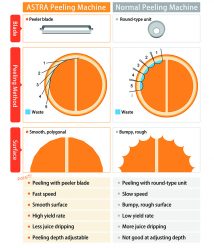
The largest difference between the KA-700H and other common peeling machine is that KA-700H peels with peeler blade, while the others peel with a rotating round-type blade unit. This difference might seem small, but this makes varieties of merits for every customer.
Astra vs normal comparison (Photo: Astra Inc.)
Peeler blade peels the fruit surface to a smooth polygonal shape, while the round-type unit creates a bumpy, rough surface. In other words, Peeler blades makes higher yield and less waste. The peeling speed is faster, since the peeler blade can peel larger area than the round-type unit. Also, the KA-700H is good in adjusting the peeling depth. For those who peel lemons might know that the aroma of lemon is mostly included in the yellow surface of the lemon skin, not in the white part. KA-700H is possible to peel just the very surface of lemon, which is the reason why this unit is highly evaluated from the Limoncello distilleries.
KA-700H is already used in 20+ countries, mainly in the fresh-cut fruits and fresh juice industry. As ASTRA Inc. sees the booming opportunity in the markets, the company is now looking for distributors in many areas.
A new study suggests substituting 100 % fruit juice in the diet in place of beverages containing added sugars may lower health risks for cardiovascular-related disease, including type-2 diabetes and coronary heart disease.
Researchers performed a modeling analysis simulating the substitution of 100 % fruit juices for fruit and sugar-sweetened beverages in more than 34,000 Dutch participants ages 20 to 70. The findings, published in Public Health Nutrition, support previous research and hypotheses suggesting that substituting fruit juice for sugar-sweetened beverages would be associated with lower cardiometabolic risk with no change in risk when fruit juice was substituted for fruit.
When more than three-quarters of sugar-sweetened beverages in the diet were replaced with 100 % fruit juice, researchers found the risk for diabetes was lowered by 17 % when compared to the lowest substitution level of less than one-quarter. A similar substitution analysis found the risk for coronary heart disease was reduced by 12 %. Substituting 100 % fruit juice for whole fruit resulted in no change in risks. These calculations were made while considering other factors such as age, sex, educational level, physical activity, smoking, family history of diabetes, healthy diet index, alcohol, coffee, fruit intake, body mass index, and waist circumference.
“100 % fruit juice is frequently equated to sugar-sweetened beverages because of similar sugar content, but this study suggests their effects on diabetes and heart disease risk could be very different,” said Gail Rampersaud, Florida Department of Citrus registered dietitian nutritionist. “Substituting nutrient dense 100 % orange juice for sugar-sweetened beverages may be quite beneficial toward enhancing the intake of key nutrients, meeting daily fruit recommendations, reducing the intake of added sugars as recommended by the Dietary Guidelines for Americans, and reducing the risks for some health conditions.”
Other research supports findings that the consumption of 100 % orange juice or 100 % fruit juice is not related to risk of metabolic syndrome or diabetes and may have beneficial effects on cardiovascular health. Eight ounces of 100 % orange juice is an excellent source of vitamin C and a good source of potassium, folate, and thiamin. Oranges and 100 % orange juice are the primary dietary sources of the polyphenol, hesperidin, which may have beneficial effects on blood pressure in some individuals.
Refresco, one of the world’s largest independent bottlers for retailers and A-brands in Europe and North America, today announces it has entered into an agreement to acquire HANSA-HEEMANN. This transaction is subject to regulatory approval.
HANSA-HEEMANN, headquartered in Rellingen, Germany, is a family-owned, independent beverage manufacturer with five production sites spread across Germany. Its operational excellence, industry expertise and integrated value chain enable HANSA-HEEMANN to offer customers best-in-class service. The vast majority of HANSA-HEEMANN’s volume (60 %) is in mineral water, with the remaining 40 % of its volume in carbonated soft drinks (CSD). HANSA-HEEMANN serves three different market segments: private label, own brands, and contract manufacturing for A-brands. HANSA-HEEMANN employs over 800 people with an annual revenue of approximately €300 million.
Strategic rationale
Today’s announcement is a continuation of Refresco’s successful buy-and-build strategy which is a key driver of the company’s ongoing growth and value creation. With this acquisition, Refresco further enhances its position in terms of product and brand portfolio, and geographical coverage.
Acquiring HANSA-HEEMANN will bring Refresco:
Diversification of its business with additional products and capabilities, while maintaining a well-balanced business mix and customer base
Strong brands such as Fūrst Bismarck, hella and St. Michaelis
Expansion of its offering in water and CSDs
Increased presence in Germany, now offering nationwide coverage to retail customers
Acceleration of its operational excellence through HANSA-HEEMANN’s know-how in the water category
A changing market
Water is the largest category within the non-alcoholic beverage market. The landscape is highly competitive and rapidly changing with many smaller local and regional players who maintain a strong foothold. Branded players with a wide range of water products are looking for opportunities to grow with retail discounters.
In addition, the focus on sustainability continues resulting in for example, increased demand for recycled PET and reduction in operational carbon footprint.
Within this highly competitive and changing market, the acquisition of HANSA-HEEMANN will enable Refresco to enhance its presence in Germany – not only broadening relationships with German retailers, but also improving transport efficiencies and reducing CO2 emissions. Furthermore, Refresco will be able to leverage its global scale to further drive change in improving the sustainable use of resources.
Mella Frewen, FoodDrinkEurope Director General, said:
“The EU Code of Conduct marks a significant step towards delivering more sustainable food systems in Europe. The past few months have been intense with a wide range of stakeholders providing input into the process. Participants came from across the entire food chain including international organisations, NGOs, trade unions, and the European Commission.
As the organisation of the largest manufacturing sector in the EU, we take our responsibilities very seriously and aim to show leadership in the transition towards more sustainable food. We were therefore privileged to take the chairmanship of the Task Force developing the Code, but credit must go to all contributors for this collaborative effort.”
Marco Settembri, FoodDrinkEurope President and Nestlé CEO for EMENA, said:
“The real hard work begins now. By signing up to the Code the industry is committing to drive actions that will contribute to healthier living, a greener planet and a thriving European economy.
“In order to take everyone along on the food sustainability journey, including the SMEs that make up 99 % of Europe’s food and drink sector, we count on continued support from the European Commission and other public authorities. We invite all stakeholders to continue this collaboration towards our common goal of sustainable food systems where progress is real and where Europe can become the gold standard for sustainable food.”
FoodDrinkEurope will now promote the Code among its network and work with its members to make it a success.
Over the last days and weeks, a diverse array of press and media outlets have featured information about the amended version of the packaging act in Germany entering into force. In particular, there is confusion about the contents of the amendments, which will enter into force in three stages. To create transparency regarding the changes that relate to the duties of the Zentrale Stelle Verpackungsregister (Central Agency Packaging Register – ZSVR), an overview of key amendments is available here. Further information can be found in the ‘Overview of amendments‘ knowledge base.
The Brazilian orange crop for Marketing Year (MY) 2020/21 is forecast at 390.8 million 40.8-kg boxes (MBx) or 15.94 million metric tons (mmt), an increase of seven percent relative to the current season. Although citrus trees are in the on-year of the production cycle, adverse weather notably affected the production potential for the upcoming season. Total Brazilian FCOJ 65 Brix equivalent exports for MY 2020/21 are forecast relatively stable at 1.050 million metric tons (mt), an increase of 18,000 mt vis-à- vis MY 2019/20 …
Seed-round, led by iAngels, will propel production and technology to reduce sugars in fruit juice
Better Juice, Ltd., the first company to reduce all sugars from natural juices, announces it has raised US$8M in seed-round investment. This new influx of support was led by iAngels, Israel and includes investors: Maverick Ventures, Israel; Food Tech Lab TFTL, Spain; The Kitchen Hub, Israel, as part of the Strauss Group and IIA; NEOME, Israel; Schestowitz Group, Israel; and Semillero, Puerto Rico.
The start-up’s enzymatic technology uses all-natural ingredients to convert fructose, glucose, and sucrose into prebiotic dietary fibers and other non-digestible molecules. Reducing up to 80 % of all sugars, Better Juice’s non-GMO technology is designed to target orange juice’s specific sugar composition to naturally create a low-calorie, reduced-sugar product with a delicate sweetness. Better Juice opened a pilot plant in January 2021, an important milestone in the startup’s commercial scale-up timeline.
Better Juice will use the investment to build its first full-scale manufacturing plant in Israel to serve the growing demand. The high-tech plant will increase production capacity by 40-fold while generating up to US$50M sales annually. The company will use the funds to expand the sales and marketing teams to support its commercialization stage.
“We are excited to complete this investment round with the support of leading venture capital and CPG companies from around the globe,” says Eran Blachinsky, PhD, founder and CEO of Better Juice. “This investment will enable us to accelerate our growth and expand into other product lines, such as ice cream, soft drinks, and jam.”
About Better Juice Better Juice was founded in 2018 by Eran Blachinsky, PhD, in collaboration with the Hebrew University, Jerusalem. The company was incubated in The Kitchen Hub – Strauss Group’s foodtech and IIA incubator, and received early funding from Maverick Ventures, Israel and other global partners.
The promise of endlessly recycled PET plastic is one step closer today, as the Consortium – Carbios, L’Oréal, Nestlé Waters, PepsiCo and Suntory Beverage & Food Europe – announces the successful production of the world’s first food-grade PET plastic bottles produced entirely from enzymatically recycled plastic.
Each Consortium company has successfully manufactured sample bottles – based on Carbios’ enzymatic PET recycling technology – for some of their leading products including: Biotherm®, Perrier®, Pepsi Max®* and Orangina®.
Today’s announcement is the culmination of nearly 10 years’ research and development by Carbios to create a new process and supercharge an enzyme naturally occurring in compost heaps that normally breaks down leaf membranes of dead plants. By adapting this enzyme, Carbios has fine-tuned the technology and optimized this enzyme to break down any kind of PET plastic (regardless of color or complexity) into its building blocks, which can then be turned back into like-new, virgin-quality plastic.
Carbios’ patented enzymatic PET recycling process enables a wide variety of PET plastics to be recycled into virgin quality, food grade rPET. PET plastics that would otherwise go to waste or be incinerated, can now be brought back into a continuous circular system of recycling. And this can be achieved at high speed – breaking down 97 % of plastic in just 16 hours – 10,000 times more efficient than any biological plastic recycling trial to date (peer-reviewed article in Nature).
Together, these brands will work to scale this innovation to help meet the global demand for sustainable packaging solutions. In September 2021, Carbios will break ground on a demonstration plant, before launching a 40,000 tons capacity industrial facility, by 2025.
Enzymatic recycling overcomes the issue of degradation in conventional recycling and can be used on any type of PET plastic. Because Carbios’ recycling process works under mild conditions, it also lowers the carbon footprint of PET waste treatment by saving 30 % of CO2 emissions compared to a conventional end of life mix of incineration and landfill, taking virgin PET production substitution into account.**
The successful completion of these initial food-grade bottles is a major milestone in the Consortium’s validation of Carbios’ technology. This partnership is part of a growing trend amongst brands to collaborate across industries to tackle these global challenges, working towards a world of circularity, where we limit the production of virgin plastic.
Carbios will license its technology to PET manufacturers worldwide, accelerating the global adoption of enzymatic recycling for all kinds of PET based products.
*Pepsi Max® also known as Pepsi Black or Pepsi Zero Sugar in other global markets. **Preliminary Life Cycle Assessment of Carbios PET recycling process, 2021
Better Plant Sciences Inc. announced that it has added five 355 ml cold-pressed juices and two 60 ml juice shots under the Jusu brand. With this new product launch, Jusu now has a total of 14 cold-pressed juices based on proprietary blends available for sale.
“The new additions round out our portfolio of juices so we can meet different needs and preferences. We’ve got our super-green vegetable-only juices, lighter, fruit-based green juices, root juices, lemonades, and now we’ve got more exciting fruit flavours and shots”, says Ashleen Montgomery, Director of Research and Development at Better Plant. “As always, our juice is cold-pressed and pasteurized using HPP. This allows us to ensure food safety without the use of preservatives or heat while maintaining the nutritional quality of the juices.”
The juices are sold individually or as part of a 1, 3 or 5-day cleanse, and have a 60-day shelf life.
The growth of the cold-pressed juice market is driven by growing dietary and health concerns, and a rising number of people skipping breakfast and looking for an on-the-go alternative which gives them nutritional benefits.
The global cold pressed juice market is predicted to grow to $ 4.65 billion between 2020 and 2028, largely driven by a rising health consciousness among millennials, according to a report by Market Research Future.
The juices will be available for purchase at the Jusu Bar location in Cadboro Bay, Victoria, British Columbia and through Jusu’s direct-to-consumer platform and are available for wholesale purchases throughout Canada.
The new flavours are:
Mustang Cel-y: celery and lemon juice
Shake it Off: clementine, grapefruit and orange juice
Purple Rain: apple, blueberry, cranberry, lime and fresh mint juice
Strawberry Fields: apple, strawberry, lemon and fresh mint juice
La Bamba: green apple, pineapple, cucumber, lemon and fresh mint juice
Highway to Well: orange, ginger, lemon and cayenne pepper
Genie in a Bottle: ginger, lemon and turmeric
About Better Plant: Better Plant harnesses plant intelligence and leverages modern science to offer sustainable, plant-based products that are better for health and better for the earth. It makes and sells over 90 proprietary products, all made with 100 % natural ingredients, under the brands Jusu, Urban Juve and Wright & Well. It has a direct-to-consumer platform for refrigerated goods that offers easy online ordering and convenient home delivery in select cities in Alberta and BC. Better Plant operates Jusu Bar, a quick serve restaurant alternative in Victoria, BC, which serves up fresh, healthy, and nutritious options with a focus on Jusu cold-pressed juices. Jusubar.com offers home delivery of refrigerated plant-based beverages consisting of cold-pressed juices and packaged juice cleanses. Through its Shopify enabled eCommerce sites getjusu.com and urbanjuve.com, Better Plant sells plant-based personal care products, including skin care, hair care and body care. Jusu also has a line of plant-based all-natural home cleaning products that are sold to cleaning companies, retailers and sold directly to consumers. Better Plant also offers operational, financial, and other services to companies with businesses that align with Better Plant’s mission to help create a better world. Better Plant incubated NeonMind Biosciences Inc., which sells medicinal mushroom infused coffees and is developing drugs with psychedelic ingredients to treat obesity and to suppress appetite.
Paul Graham, GB Managing Director at Britvic, has been appointed as the new President of the British Soft Drinks Association (BSDA) trade body following election at its AGM.
Paul takes over from Nichols CEO Dr Marnie Millard OBE, who led a number of initiatives during her time as President, including the BSDA’s role as a founder-member of Circularity Scotland Ltd, a scheme administrator for Scotland’s deposit return scheme (DRS).
Paul joined Britvic in September 2012 having worked in a range of commercial roles across all trade channels for United Biscuits and Mars Confectionery. He was promoted to his current position in July 2013 and was appointed Vice President of the BSDA in 2020.
He said: “I am delighted to be elected as the new BSDA President. I aim to continue the outstanding work of Marnie and past presidents on making further significant progress on a wide range of soft drinks-related issues, not least helping our partners in the hospitality sector get back on their feet after an extremely challenging year.
“As a founder-member of Circularity Scotland, the BSDA continues to work closely with the Scottish Government to develop its DRS, which is currently due to be introduced in 2022, although we are eager to see the Scottish Government review this date to help ensure delivery of a well-designed DRS system in Scotland that works for consumers and businesses.”
William Watkins, Founder and Owner at Radnor Hills, has been elected to replace Paul as Vice President of the BSDA. William founded Radnor Hills in 1991 on his family farm based on the Welsh borders. The business now produces more than 350 million products per year.
The BSDA represents UK producers of soft drinks, including carbonated drinks, still and dilutable drinks, fruit juices and bottled waters. Membership includes the majority of Britain’s soft drinks manufacturers as well as franchisors, importers and suppliers to the UK soft drinks industry.
One of the fastest growing demands relates to better-for-you food and drink products with a natural and balanced level of sweetness. Symrise has done a deep dive into consumption behaviors and focused on revealing the diversity of sensorial preferences. It has conducted studies to guide the development of new taste solutions that meet the latest consumer taste preferences. The resulting solutions balance the taste of a reduced sugar level from cookies to cocktails while keeping a maximum level of indulgence in different ways, for different consumers.
Established and new labelling systems like the UK’s traffic light system or the Nutriscore are helping consumers to navigate their purchase. “The desire for a healthy weight and more natural sweetness in products has led to an increasing number of people looking for sugar-reduced products. These should taste good and, ideally, contain fewer calories,” says Dr. Dariah Lutsch, Sensory & Consumer Insights Research Manager of the Flavor Division at Symrise. “A purchase simulation shows that 75 percent of consumers would choose reduced-sugar versions within nearly all product categories”, adds Lutsch.
This refers to a study on sweet taste perception in Europe, Africa and the Middle East Symrise has recently carried out. It has found that multiple routes exist to reduce the sugar level while at the same time meeting taste preferences.
Route #1 – tastes as sweet as the full sugar version and 33 % of respondents prefer it.
Route #2 – tastes similar and less sweet and 20 percent of consumers prefer this route.
Route #3 – The third group of about 22 % behaves more adventurous. They are looking for a new unique flavor composition and accept a difference in taste compared to the full-sugar version.
Ideal sweetness for soft drinks
With a further study on the ‘Ideal Level of Sweetness’ in 2019 for Cola CSD (carbonated soft drinks) in Germany, Symrise wants to determine the optimal sweetness level with different sugar contents from 106 g/l to 75 g/l sugar. The study re-confirmed the findings and also revealed that consumers perceive a sample with 75 g/l as lacking in sweetness. Knowing that sugar reduction in beverages impacts the overall taste profile and sweet taste dynamics from mouthfeel, Symrise conducted a second study and tried to increase the consumer liking of sugar-reduced products by applying Symrise taste balancing solutions with Symlife®. The team succeeded in dramatically increasing the overall liking of sugar reduced cola versions 85g/l and 75g/l by adding the taste solution of Symrise.
Regardless, which route consumers prefer and which target consumer food manufacturers would like to reach, Symrise supports their customers in reducing calories in a range of beverage products – from ice tea to CSDs – and offers the final taste profile consumers love across all three scenarios.
GEA Group AG announced a comprehensive climate strategy. With the corresponding climate targets, GEA is making a clear commitment to achieve net-zero greenhouse gas (GHG) emissions along its entire value chain by 2040. The company has submitted its net-zero commitment and 2030 interim targets to the Science Based Targets initiative (SBTi), the globally recognized, independent body for reviewing climate targets. Validation of GEA’s interim targets by SBTi is expected in the second half of 2021, confirming GEA’s targets are aligned with the latest climate science and are effectively contributing to the 1.5 degrees Celsius target of the Paris Agreement.
Stefan Klebert (Photo: GEA)
“GEA is taking bold action to support the global transition to a net-zero economy. Our new climate strategy positions GEA as the leader in our peer group. We are pursuing the most comprehensive and ambitious climate strategy in the mechanical engineering industry,” says Stefan Klebert, CEO GEA Group AG. “We are incorporating our entire value chain into this effort, tackling both direct and indirect emissions. And by doing so, we are taking clear action in line with GEA’s purpose: ‘engineering for a better world’.”
By investing globally in Gold Standard-certified projects to generate clean energy from wind, sun, biomass and waste gases, GEA’s own operations are already climate-neutral since the beginning of 2021. Established by the World Wide Fund for Nature (WWF), the Gold Standard certifies climate protection projects that have highest possible positive climate impact. “Carbon offsets for the emissions that we cannot yet avoid is, of course, only the first step on our net-zero journey. That is why we are working to transform our business operations to effectively contribute to limiting global warming,” explains Klebert.
2030 interim targets submitted
In addition to GEA’s 2040 net-zero target, the company has submitted ambitious interim science-based targets across all relevant scopes. Compared to the baseline year 2019, GEA aims to:
Reduce GHG emissions from its own operations (Scopes 1 and 2) by 60 percent by 2030
Reduce GHG emissions from the customer use phase of its products (Scope 3) by 18 percent by 2030
Immediate actions to reduce Scope 1 and 2 emissions
To reduce its Scope 1 and 2 emissions, GEA is pursuing multiple initiatives. First, the company aims to gradually increase its share of renewable power to 100 percent within the next five years. To achieve this, GEA will make use of renewable energy certificates, extend its own green power generation and look into long-term power purchase agreements. Second, GEA will boost the energy efficiency of its global infrastructure with initiatives to modernize office buildings and production facilities, prioritizing the 29 most energy-intensive production sites covering 80 percent of total group wide energy consumption.
Third, over time and where feasible, GEA will green its global fleet of approximately 4,300 company cars. A green mobility policy introduced today stipulates that all new incentive cars for GEA managers in Germany will be 100 percent electric. The company will invest in wall boxes at German GEA sites to support the rollout. “We want to lead by example,” remarks CEO Klebert. “Our transition to a zero-emission fleet – starting with the cars for our management in Germany – shows we are taking clear and visible action.”
Reduction in Scope 3 emissions essential to achieving net-zero target
GEA’s innovative technologies have long played a decisive role in reducing GHG emissions in the various end customer industries it serves, foremost food, beverage and pharma. With the ever-advancing resource efficiency of its production and process technology, GEA enables customers to reach their own sustainability goals. Nevertheless, in direct comparison to GEA’s own GHG emissions, indirect emissions from suppliers and products sold – so-called Scope 3 – make up more than 95 percent of GEA’s overall GHG emissions.
The company’s climate strategy therefore focuses on identifying climate impact hotspots in GEA’s product portfolio and further boosting the energy efficiency of GEA products. GEA’s comprehensive portfolio – ranging from components and industrial machinery to complete processing lines and factories – will be thoroughly analyzed in the coming years. This level of transparency will enable the company to prioritize the climate roadmap and further develop sustainable customer solutions.
“Product innovation will be the key lever to reach our 18 percent reduction target for Scope 3 in 2030. It’s an ambitious goal, but I’m convinced we’ll achieve it; engineering excellence is GEA’s core strength,” comments Klebert. “For instance, we are already equipping customers such as smoothie-producer innocent with machinery that enables the carbon-free production of beverages. Going forward, we will employ such climate-smart solutions on an ever-increasing scale.” In addition to installing new technologies, GEA modernizes existing customer plants to reduce their climate impact as much as possible.
Sustainability as key pillar in GEA’s Factory of the Future
(Photo GEA)
Optimizing our manufacturing footprint, which includes reducing the environmental impact of our sites, is another important factor for achieving GEA’s climate and sustainability goals. GEA laid the cornerstone for a new, climate-neutral production facility in Koszalin, Poland, on May 21, 2021 – a concrete example of how GEA aims to decarbonize its infrastructure. The facility will produce its own energy by integrating photovoltaic panels on the roof and storing power in batteries which can be used to power fleet vehicles. In addition, a combined heat and power (CHP) system will be used to generate electricity and heat, which can be used to heat and cool the site. LED lighting, best-in-class building insulation and low emissivity glass are all part of the factory’s climate-neutral building concept.
Journey towards a comprehensive ESG strategy
GEA’s climate strategy is the first building block of a comprehensive Environment, Social and Governance (ESG) strategy at GEA. Beyond climate protection, this strategy will also take social and corporate governance aspects into account. It will reinforce the company’s commitment to United Nations Sustainable Development Goals (UN SDGs) and become a foundational element of ‘Mission 26’, GEA’s new corporate strategy that is currently under development. ‘Mission 26’ will be presented at GEA’s next Capital Markets Day in September 2021.
More than four in ten consumers have increased their purchases of functional foods, beverages and supplements since the start of the pandemic, a major global survey has found.
Kerry, the makers of clinically proven immune health ingredient Wellmune®, surveyed 13,000 people across 16 countries to provide manufacturers with insights into the impact of COVID-19 on purchasing behaviours.
Forty-four per cent of respondents globally said they had bought more dietary supplements since the outbreak of the pandemic, while 42 % had increased their purchases of functional or fortified foods and beverages.
Respondents were presented with a list of health areas and asked which were reasons for buying healthy lifestyle products. Globally nearly six in ten (58 %) chose immune system support, significantly more than the numbers who picked healthy bones and joints (46 %), digestive health (43 %), heart health (40 %) and improved energy (39 %). Immune health was the top health benefit sought by consumers in each of the 16 countries surveyed.
As many as 39 % of consumers had used an immune health product over the past six months and a further 30 % would consider doing so in future, suggesting a total potential immune health market of 69 %.
John Quilter, Kerry VP of Global Portfolio – ProActive Health, said: “Interest in health and wellness has never been higher and we wanted to give the industry new insights into changing purchasing habits. One of our key findings was the scale of the impact of the pandemic on demand – not just for immune health products, but for functional foods, beverages, and supplements overall. Consumers were adopting increasingly proactive, holistic attitudes to health, wellness and nutrition long before 2020 but the pandemic has massively accelerated this trend.”
The survey also reveals the food and beverage categories where immune health is a particularly powerful purchase driver. One in three (33 %) consumers said they would be interested in purchasing fruit and vegetable juices if they contained ingredients that promoted immune support. Many other categories were also seen as a good fit for immune health benefits, including spoonable yogurt (31 %), dairy-based drinks (28 %) and hot beverages (24 %).
Smurfit Kappa’s Bag-in-Box division has announced the completion of a significant EUR 12 million investment in a new flexible material production facility at its plant in Ibi, Spain. The new state-of-the-art production facility commenced operations, on a phased basis, earlier this year and will be one of the most advanced Bag-in-Box manufacturing plants in Europe.
The investment has resulted in the addition of an extra 4,300 m2 production area which will be equipped with high-tech and advanced machinery which allows for more specialisation in the manufacture of film. The new machinery will allow the plant to complete the full production cycle of Bag-in-Box packaging solutions, from start to finish. This integrated production model means not only quicker and more efficient service to customers, but also a considerable reduction of the environmental impact – up to 21 % less estimated CO2 emissions for the current flexible materials portfolio.
Commenting on the investment, Thierry Minaud, CEO of Smurfit Kappa Bag-in-Box, said: “This strategic investment represents an important step for Smurfit Kappa Bag-in Box Spain. In addition to introducing innovative technology to create a fully integrated plant for Bag-in-Box production, it will allow us to increase our production capacity to better respond to market demands.”
Victor Juan, Film Manager at Smurfit Kappa Ibi added: “These new facilities will accelerate the development of new, more sustainable films with the highest performance to meet the needs of our customers for high quality Bag-in-Box packaging solutions, and further strengthen our commitment to the environment.”
The Ibi manufacturing plant in Spain has been in operation for 45 years. The number of employees at the plant has more than doubled since it was acquired by Smurfit Kappa in 2007.
The volume of orange juice stocked at Brazilian processors in the 2020/21 season (June 2021) is expected to be higher than the strategic limit (250 thousand tons). On the other hand, in the 2021/22 season (June 2022), the volume stocked may be lower than that.
As regards the 2020/21 crop, a report released by CitrusBR (Brazilian Association of Citrus Exporters) on June 9 indicates that the inventories of Frozen Concentrate Orange Juice (FCOJ) Equivalent may total 310.759 thousand tons in June 2021, 34 % down from that in the same period of the 2019/20 season, but 14 % up from that previously estimated (in February 2021).
In the 2021/22 season, although oranges still need to ripen, juice inventories are likely to decrease, despite the possible recovery of production forecast by Fundecitrus (Citrus Defense Fund).
Although this scenario is not a threat to world supply in the 2021/22 season, it has been concerning agents about availability in the following season (2022/23), since production would have to be higher in order to avoid a lack of juice. However, with the recent area reduction in the Brazilian citrus belt, production should hardly surpass 350 million boxes. Thus, the prices paid to orange farmers in Brazil are likely to continue at high levels, at least until next season.
ORANGE AREA IN BRAZIL – The crop forecast survey released by Fundecitrus in late May surprised agents from the Brazilian citrus sector. The area allocated to orange groves in the 2021/22 season had its second largest decrease – in terms of both hectares and percentage – since the beginning of the PES project, in 2015/16.
In the 2021/22 season, the area allocated to orange groves might total 379.4 thousand hectares, 16.262 hectares smaller (- 4 %) than that in the previous season.
According to Fundecitrus, one of the reasons for this decrease is the drought, which is becoming more and more severe in Brazil, majorly in the current season. Thus, area reductions were more significant in the citrus-producing regions of São Paulo that had low rainfall in the last couple of years, with the worst effects observed in non-irrigated, condensed and rootstock groves, which are not that drought-resistant. In these groves, productivity decreased sharply last season, and many plants died. Besides, the current high prices of some commodities, such as corn, soybean and sugar, have attracted farmers.
This area reduction should considerably lower the productive potential of the citrus belt to around 340 million boxes of 40.8 kilograms in years of good productivity (1,000 boxes per hectare, on average).
BRAZILIAN MARKET IN JUNE – The weak demand for oranges in the in natura market of SP along with the current low temperatures pressed down orange prices in the first fortnight of June. However, expectations are for limited price drops or even price rises as processing steps up, reducing supply in the in natura market, largely of early varieties.
Symrise AG has opened its state-of-the-art development, application, and sensory laboratories in Dubai. The company has invested about 1 million Euro into the facilities to decode, design, and deliver winning taste solutions for leading food and beverages brands that consumers love. To meet the demands of its partners and to accommodate its growing team, the company recently moved to the iconic Gold Tower Building in the Dubai Multi Commodities Center (DMCC), Dubai’s dedicated hub for global trade, business and specialist industries in JLT. Symrise AG has been operation in the Middle East for many decades leading to the first opening of its first sub-regional offices in Dubai in 2005. Since then, the company has seen double-digit growth year on year with its partners across the Middle East region.
The new sub-regional centre spreads across 10,500 sq ft and occupies the entire lower penthouse level/36th floor of the Gold Tower. The contemporary workspace has been designed in line with the company’s four pillars of sustainability in mind; footprint, innovation, sourcing and care. It is working towards achieving carbon neutral status, to support the Symrise AG global objective of halving its greenhouse gas emissions by 2025 and reaching climate positive operations from 2030 onwards.
The facilities are designed to take customers on a journey, and support the development of consumer-led winning concepts and taste solutions for high-growth categories, beverages, culinary, dairy, snacks, and confectionery.
The premises will allow the company to support diverse working styles and is split into a variety of working and meeting areas, for Symrise Middle East’s expanding cross-functional teams to interact and collaborate in a bright, modern, and dynamic working environment. The dedicated application and sensory laboratories will help the teams – from marketing, sensory and consumer insights to regulatory, technical, and commercial to continue achieving in the field of flavour and nutrition evaluation.
The sensory booths, where panellists taste, evaluate, and describe flavours in application, features state of the art equipment and programs that help design solutions meeting customers’ expectations.
Commenting on the move, Dirk Bennwitz, President Flavour Europe, Africa & Middle East, said: “We feel very excited to embark on the next phase of our business growth through our new sub regional center. This will help us further consolidate our strong foothold in the Middle East & Africa sub region. Our investment in the new hub, our human resources, and the ultramodern creation, development and application facilities will allow us to identify and decipher game-changing industry trends and deliver innovation to our customers across strategic categories and the future of food segments: functional beverages and plant protein.”
Singer and songwriter Ellie Goulding has acquired a significant stake in the premium British hard seltzer brand SERVED.
Ellie was introduced to Ryan and Dean Ginsberg, the co-founders of SERVED through mutual friends and says she “immediately fell in love with the brand – not only because it’s the best hard seltzer I’ve tasted by quite some margin, but also because this is a brand driven by care and respect for the natural world at this crucial point.”
“I’ve always enjoyed a social drink with friends, but I also lead a busy lifestyle and I am passionate about my health, fitness, and the environment. Served is a brand that allows me to have it all – a delicious and refreshing alcoholic drink without all the calories, sugar and bad stuff.”
Ellie, a global goodwill ambassador for the UN Environment Programme since 2017 adds, “We are going to take on some of the biggest brands on the planet, but do it our way. We refuse to compromise on quality nor the health of the natural world. We use ‘wonky fruit’ as an intervention on food waste, the most innovative ecological packaging materials we can think of and we will support habitats, people and animals on the frontline of the nature crisis. We will continue to be 100 % transparent. Oh, and we’ll do all this while having fun and building an awesome brand with awesome people.”
“We are thrilled to welcome Ellie as a co-owner of SERVED and excited to build a global brand alongside her. Ellie embodies everything that we stand for at SERVED, and she will be an integral part of the brand as we continue to grow” says Dean Ginsberg.
SERVED is already available in the UK with high-profile listings including Selfridges, Harvey Nichols, Planet Organic and WHSmith – and will continue to expand its retail footprint alongside significant growth in key international markets including Ireland, France and Spain. Regarding their expansion, Ginsberg continued “we are excited to be working with such great partners who share our enthusiasm and vision for the brand, and we look forward to introducing SERVED to more people up and down the country and across Europe this summer.”
SERVED is crafted in Herefordshire, where Ellie grew up, by infusing sparkling spring water with wonky fruit and pairing this with their own ServedPureTM spirit. The result is a refreshing 4 % ABV plant-based, gluten-free hard seltzer with a crisp, fresh flavour, and a touch of natural sweetness. Designed for the modern health-conscious consumer, SERVED only contains 57 calories and zero sugar.
Committed to reducing food waste and environmental impact as much as possible, SERVED Hard Seltzers are packaged in fully recyclable cans, use wonky fruit that would have otherwise gone to waste, and contain no artificial additives or sweeteners. Committed to inspiring the industry as a whole todo better, 5 % of profits from each can sold are invested towards environmental projects and saving critically endangered species around the world.
Following today’s (16 June 2021) news that Ronaldo’s dismissal of Coca-Cola at a press conference temporarily cost the brand $4bn off its market value;
Khalid Peerbaccus, Senior Consumer Researcher at GlobalData, a leading data and analytics company, offers his view:
“While the power of product placement cannot be denied, Ronaldo’s rejection of Coca-Cola in favour of a bottle of water – and the temporary impact this had on the market value of Coca-Cola – could also be due to the ambiguity that some consumers may have toward carbonated drinks.
“Ronaldo’s decision to shine the spotlight on water rather than Coca-Cola is one that may resonate with *57 % of consumers globally who say that, in the current situation, a product’s health and wellbeing claims has the greatest influence on their purchase choice – as well as a further **28 % who admit that this somewhat affects their decisions. That Ronaldo is a prominent sports figure further adds weight to his promotion of water over the soft drink, as many view and trust him as a symbol of health that is necessary for his athletic accomplishments.
“The temporary drop and subsequent recovery of Coca-Cola’s market value is an important reminder of the power of celebrity endorsement, or lack thereof: particularly when a product has, in recent years, received ‘bad press’ as with high-sugar fizzy drinks.
“The move has already spurred a similar instance where Paul Pogba removed a bottle of Heineken beer from display at a press conference. While these acts may temporarily impact the market value of brands due to impressionable fans of the players, the long-term impact on these well-established brands is yet to be seen. What it does highlight is that the placement of such products at sporting events is at odds with the perception of health that the athletes embody.”
*GlobalData survey asked how the product/service impacts my health and wellbeing. Combined responses: ‘Always’ or ‘Often’ in the current situation **GlobalData’s 2021 Q1 Global Consumer Survey – Global
All Oranges 52.7 Million Boxes
The 2020-2021 Florida all orange forecast released by the USDA Agricultural Statistics Board is raised 1.0 million boxes to 52.7 million boxes. The total includes 22.7 million boxes of the non-Valencia oranges (early, mid-season, and Navel varieties) and 30.0 million boxes of Valencia oranges. …
Please download the full citrus crop production forecast: www.nass.usda.gov
Current beverage labeling regulations appear to fall short of helping parents identify the ingredients, sugar and juice makeup of beverages they purchase for their children, a recent study published in Pediatric Obesity suggests. This has researchers calling for changes to beverage labeling regulations to increase transparency and help consumers choose healthier beverages.
The experimental online study included over 1,600 parents who had healthy children aged 1 to 5 years old. Parents were shown product label information for commonly consumed children’s beverages, including flavoured waters, 100 % fruit juice, and juice drinks and other beverages containing added sugars or non-nutritive (artificial) sweeteners. Some parents were shown only front labels, while some were shown both front and back or side labels which included the Nutrition Facts panel and other information. Study participants then answered questions concerning the sugar and percent juice content of the beverages.
About one-third of participants indicated they were not confident they could identify the added sugar and juice content of beverages. Only about half of study participants (48 percent) said they looked at the Nutrition Facts panel all or most of the time when choosing beverages for their children.
Overall, participants frequently underestimated the percent of juice in 100 % fruit juice. Even though the percent juice was stated on the package front for the 100 % fruit juice product in the study, only 51 percent of parents who were shown only the package front correctly identified the juice percentage. When exposed to additional information on the back and side panels, 37 percent still could not correctly identify the percent juice and 40 percent incorrectly said that 100 % juice contained added sugars.
Conversely, participants frequently overestimated the amount of pure fruit juice in sugar-sweetened juice drinks and beverages. For an added-sugar product that looks similar to 100 % orange juice but contains only 5 percent juice, almost all participants (98 percent) could not accurately state the amount of pure juice just by looking at the front of the label and, on average, estimated that the product contained 45 percent pure fruit juice, 40 percent higher than the actual juice content. Fewer than half of participants who additionally looked at back/side labels could correctly identify the percent juice content and, on average, estimated that the beverage contained 24 percent pure juice. For beverages that are not 100 % fruit juice there is no requirement to identify sweeteners or juice content on the front label.
“The results are striking and this study suggests that labels for 100 % fruit juice and fruit beverages or drinks are not working as intended and for many parents may result in misunderstandings and confusion when trying to choose healthful beverages for their children,” said Gail Rampersaud, registered dietitian nutritionist in the Scientific Research Department of the Florida Department of Citrus. “Consumers need more education coupled with labels that are clearer and easier to understand,” added Rampersaud.
The results suggest that lack of knowledge and clear labeling may lead parents to choose less healthy added-sugar beverages over 100 % juices, such as 100 % orange juice. The researchers suggest that the Food and Drug Administration allow label declarations that will increase transparency concerning juice percentage and sweetener content, particularly on front of package, to help consumers make healthful beverage choices.
This summer Finns can drink beer brewed with wild herbs, food waste and even goose feces. The new beers by a local microbrewery Ant Brew celebrate the European Green Capital year of the city of Lahti and share an important message of a wasteless circular economy.
The Finnish city of Lahti is known for their pioneering environmental action, and for their open-minded co-operation with local people. Now the European Green Capital 2021 joins forces with the local microbrewery Ant Brew by crafting a new beer series. The Wasted Potential beers are brewed with wild herbs, local food waste, like bread, berries and fruits – and even goose droppings.
The poop is used in a food-safe way to smoke malt to create a unique stout beer. The goose droppings are gathered from local parks, where geese are causing a messy problem. Now, the local parks get cleaner and the special edition summer beverages are perfect for a picnic in the park – a true two birds with one stone type of solution.
The beers showcase how all waste can be utilized. City of Lahti aims to be completely wasteless circular economy city by 2050, and at the moment 99% of the city’s household waste is already repurposed.
A taste of potential that was not wasted
A sustainable future demands effective use of resources and innovative ways of recycling. Lahti has several well-known breweries, so what would be a better way to celebrate our environment this summer than locally brewed beers, says Saara Piispanen, Head of Communications of Lahti European Green Capital.
The beer that uses goose droppings in the malt smoking process will be released later in the summer. First to be released is a wit-style beer inspired by waste-free circular economy: brewed with orange peels from a local market’s juice pressing station, and fruit purees that have exceeded their best before-date.
This series of beers is our way to create important discussions about food waste, utilization of waste, urban farming, and local and wild food among beer enthusiasts. Working with the Lahti Green Capital has been great. We are constantly developing ways to utilize new ingredients in brewing, and are not afraid to think outside of the box, says Ant Brew’s Kari Puttonen.
Our environment and circular economy are important for us, and we want to discuss these topics in interesting ways. Together we can create solutions that are eco-friendly and represent sustainable consumption, says Piispanen.
The makers of plant-based functional supplement beverages are hoping to disrupt the functional shot category with the launch of their new line of powerful superfood decoctions.
Launched this spring, URBL is a line of premium plant-based functional supplement shots created by the startup Pebble Roots Inc. The release of their new beverage line comes at a time when functional drinks and shots are exploding within the health and wellness community.
Inspired by the principles of Ayurveda and Traditional Herbal Medicine (THM) and reinforced with evidence-based nutrition science, URBL shots are unique “superfood decoctions” created by extracting healing compounds from the stems, roots, bark, and other parts of botanical ingredients and formulating them into three unique products with different ingredients, different functionalities, and completely different flavour profiles – spicy, green, or a tad sweet.
The current line of products includes “URBL ROAR,” featuring ashwagandha, one of the most potent Ayurvedic adaptogens, to help consumers adapt to a variety of physical and psychological stressors; “URBL SHIELD,” a memory boosting and liver protecting shot with brahmi and milk thistle as the key botanicals; and “URBL GLOW,” a collagen booster made with amalaki and turmeric root, providing antioxidants and anti-inflammatory benefits.
“Unlike sugar-rich, high-fructose fruit juice shots with excessive amounts of ginger and pepper added only to overemphasize effectiveness, URBL is a botanical nutraceutical packed with 24 varying superfoods to boost your physical as well as mental health – a comprehensive immune support,” said Suhas Verma, the founder and CEO of URBL.
URBL is the first and only product of its kind to be licensed by Health Canada as a Natural Health Product (NHP). URBL products are manufactured in a state-of-the-art GMP and NSF certified manufacturing facility, with every production batch run through more than 15 types of contamination and allergen tests to ensure the supplement beverages are of the highest quality.
URBL is 100 percent non-GMO and gluten-free. It is naturally sweetened with honey and is free of preservatives, caffeine, added-sugar, stevia, allergens, and anything artificial.
URBL’s 2 ounce shots are also shelf-stable and can be easily stowed and consumed, making them perfect for an active, on-the-go lifestyle.
“Whether you’re a fitness buff, yogi, adventurer, corporate jet setter, or a busy mom, you’re going to fall in love with your URBL boost,” Verma said. “Let URBL fuel your daily adventures.”
Kerry, one of the world’s leading taste and nutrition companies, has announced the opening of its new taste facility in Latin America, which will serve mainly Mexico, Central America, the Caribbean, and the Andean region.
Located in Irapuato, Mexico, the new state-of-the-art facility will significantly increase Kerry’s capacity in the region and further support customers in delivering local and sustainable taste solutions.
This new site expands Kerry’s offerings across a number of food and beverage categories, including refreshing and alcoholic beverages, snacks, meat, dairy and bakery. It will also play an important role in enabling Kerry’s ambition to bring sustainable nutrition solutions to more than two billion people by 2030 around the globe. Aligned with the company’s commitments under its Beyond the Horizon strategy, the facility incorporates world leading processes and technologies that will support the company’s environmental goals. These capabilities, combined with expertise across sustainable innovation, marketing insights, research, development and applications, and sensory science, will enable Kerry to co-create with customers, exciting products that will be consumed across the region.
“COVID-19 has impacted consumer behaviour and taste preferences across Latin America, and companies need to be in a position to understand and respond to these evolving dynamics. This new taste facility allows us to deliver on consumer demands across the region and we look forward to working with customers to bring innovative taste solutions to satisfy consumer needs and create a world of sustainable nutrition,” said Marcelo Marques, President and CEO of Kerry Latin America. Commenting on the announcement, Edson Cortes, Taste Lead for Kerry Latin America, added: “Mexico boasts 35% of the taste market in the Latin America region and presents solid opportunities for growth and innovation. With sustainability at the core of our Taste portfolio, this site will also enable us to deliver tailored solutions for customers in the regions. This important investment positions Kerry as the leader in the flavours market in Latin America as we seek to consolidate our position in the market and deliver great taste solutions with our customers.”
About Kerry Kerry, one of the world’s leading taste and nutrition companies, provides sustainable nutrition solutions for the food, beverage and pharmaceutical industries. Every day over one billion people around the world enjoy food and beverages containing Kerry’s taste and nutrition solutions. The company has offices in 31 countries, 149 manufacturing facilities and employs 26,000 people globally, including over 1,000 food scientists. We aim to be our customers’ most valued partner by delivering food and beverage products that meet their consumers’ individual taste, nutrition and wellness preferences, while enhancing their lives and contributing to a more sustainable world.
The 2021-2022 orange crop forecast for the São Paulo and West-Southwest Minas Gerais citrus belt, published on May 27, 2021 by Fundecitrus, in cooperation with Markestrat, FEA-RP/USP and FCAV/Unesp, is 294.17 million boxes (40.8 kg or 90 lb). Total orange production includes:
51.37 million boxes of the Hamlin, Westin and Rubi varieties;
16.87 million boxes of the Valencia Americana, Seleta and Pineapple varieties;
84.66 million boxes of the Pera Rio variety;
107.07 million boxes of the Valencia and Valencia Folha Murcha varieties;
34.20 million boxes of the Natal variety.
Approximately 26.09 million boxes are expected to be produced in the Triângulo Mineiro.
As compared to the final forecast of 268.63 million boxes in the previous crop, the current projection represents an increase of 9.51 % although it is still below the average of 35 million boxes for the last ten crop seasons, which corresponds to a drop of 10.53 % …
Elopak is today announcing a new tethered cap solution for its iconic Pure-Pak® cartons – the Pure-TwistFlip™.
The tethered cap is the latest sustainability-focused innovation announced by Elopak. The closure remains attached to the carton throughout its entire lifetime, helping to tackle the serious problem of marine littering by ensuring that the cap is disposed of properly. It is also Elopak’s lightest screw cap to date, helping to reduce the use of plastics.
As cartons can be recycled with the tethered cap attached, the Pure-TwistFlip™ offers up an exciting new option for brands looking to meet the growing consumer demand for sustainable packaging, without compromising on convenience or product integrity.
Commenting on the announcement Elopak CMO Patrick Verhelst stated, “We are delighted to share the news that our tethered cap solution is now ready. Sustainability is a central driver of our innovation efforts at Elopak, in which we are continually seeking to raise the bar and improve on past performance.”
“We have invested heavily in developing more environmentally friendly packaging solutions that meet the same high standards our customers are used to, and at the same time offer them a way to package their products in a manner that fits with a low carbon circular economy. By combining Elopak’s Pure-Pak® carton with the Pure-TwistFlip™ cap, brands can now choose a package that both helps prevent marine littering and reduces the use of plastics.” he continued.
Beverage cartons have strong environmental credentials when compared with alternatives such as plastic bottles. Even with a regular cap studies have shown that in the case of UHT milk, cartons result in 70.7 % less CO2 emissions and in the case of fresh milk 83.6 % less CO2 emissions in comparison to disposable PET bottles .
Elopak supplies renewable, recyclable, and carbon neutral Pure-Pak® cartons. The new Pure-TwistFlip™ cap can be combined with any existing Pure-Pak® carton to provide an original Elopak packaging solution that prioritizes the environment, consumer convenience and safety. The innovation is expected to launch to the market in Autumn 2021.
Elopak already offers customers a number of sustainability-focused innovations such as Natural Brown Board cartons which are renewable, recyclable and have a lower CO2 footprint owing to reduced wood consumption and the elimination of the bleaching process.
Elopak also offers cartons without a cap. The Pure-Pak® Imagine is a modern version of the company’s original Pure-Pak® carton launched in June 2020. Designed with a new easy open feature, it contains 46 per cent less plastic and is 100 per cent forest-based.
A UN Global Compact participant, Elopak has been carbon neutral since 2016 and in 2019 was one of the first companies in the world to formally pledge to cut Greenhouse Gas (GHG) emissions in line with criteria set by the Science Based Targets initiative aimed at keeping the global average temperature increase below 1.5 C.
Although energy drinks have witnessed steady year-on-year (YOY) growth in the US recently, Coca-Cola has decided to discontinue its Coca-Cola Energy brand after 17 months in the market, in a bid to sharpen its product portfolio – a move that highlights the gap in the market for hybrid innovations, writes GlobalData, a leading data and analytics company.
Holly Inglis, Beverages Analyst at GlobalData comments: “Coca-Cola Energy’s launch in the US was long awaited; despite the US market size, it was one of the latter markets to begin sales after many regions in Europe. At a time where the energy drinks market is flourishing, it is interesting that Coca-Cola has chosen to pause sales of a potential future cash cow.”
According to GlobalData, the US energy drinks market grew by 10 % in 2020* and was buoyed by a flurry of innovations such as Monster Mule ginger flavoured drink or Moonlight Wingman Smart Energy. Despite COVID-19 lockdown restrictions throughout the year, the category remained a key purchase choice for many consumers across the country.
In GlobalData’s latest survey, 73 %** of US consumers stated that energy boosting ingredients are nice to have, or essential to purchasing decisions. Interestingly, this comes at a time where health and wellness trends are prevailing and where energy drinks have, in the past, come under scrutiny for high sugar and unfavourable additive content. Manufacturers have worked to offset this by adding functional claims or unique flavour innovations to their beverages.
Inglis continues: “GlobalData’s survey found that 82 % of US consumers stated that immunity boosting ingredients have a positive influence on their purchasing decisions***, reinforcing that there is opportunity for beverage manufacturers to innovate energy drinks products that combine health and wellness claims with energy-boosting ingredients. The US energy drink market is highly competitive, so it is important that producers stay ahead of the curve in terms of beverage trends. It is plausible that Coca-Cola’s energy drink line risked falling behind in the long-term, due to a lack of flavour dynamics and health-halo claims.”
Despite COVID-19 restrictions across much of 2020, the US energy drinks market grew by a sizeable share and is expected to maintain a similar fate in 2021. Consumption from home is the new norm, and producers will continue to innovate retail offerings that promote this trend. Continued drive towards digestive health will persist, reflecting high potential for hybrid innovations that combine natural energy boosting ingredients with added vitamins and gut health claims.
*Data taken from GlobalData’s Annual Soft Market Analyser – US **GlobalData’s Q1-21 Consumer Survey Results – North America ***GlobalData’s Q1-21 Consumer Survey Results – North America – Combined responses: “Essential / Key driver of purchase” and “It is nice to have”
All Oranges 51.7 Million Boxes
The 2020-2021 Florida all orange forecast released by the USDA Agricultural Statistics Board is unchanged at 51.7 million boxes. If realized, this will be 23 percent less than last season’s revised final production. The forecast consists of 22.7 million boxes of non-Valencia oranges (early, mid-season, and Navel varieties) and 29.0 million boxes of Valencia oranges. …
Please download the full citrus crop production forecast: www.nass.usda.gov
Plastipak, a global leader in the design, manufacture and recycling of plastic containers has announced a major investment in recycling at its manufacturing site in Toledo, Spain. The new recycling facility will convert PET flake into food-grade recycled PET (rPET) pellets suitable for direct use in new preforms, bottles and containers.
The new facility will be co-located with the current preform and container manufacturing plant facilitating additional carbon savings through the elimination of resin transport. The new recycling plant will produce 20,000 tonnes of food-grade pellet per year and will commence production in the summer of 2022. The project will create approximately 14 new jobs and include additional manufacturing and warehouse space.
Pedro Martins, Plastipak’s Executive Managing Director Europe, explained “The investment in a new recycling facility in Spain will support both Plastipak and our customers in fulfilling our commitments to corporate social responsibility. The project comes in advance of minimum levels of recycled content mandated by the Single Use Plastics Directive, and will support brand owners to reduce their financial obligations under the planned Spanish plastics tax.”
This will be Plastipak’s fifth global location producing recycled PET (rPET) and confirms Plastipak as the largest producer of bottle-grade recycled PET in Europe. With three long-established rPET facilities in Europe (France, Luxembourg and the United Kingdom), Plastipak already produces well over 130,000 tonnes of recycled PET in Europe. Plastipak also operates a HDPE and PET recycling plant in the US.
On 12 May 2021, the World Citrus Organisation celebrated its first Annual Meeting online, following the official creation of the organisation last year. During the AGM, the WCO Secretariat presented the consolidation of the production and export forecasts for the forthcoming Southern Hemisphere citrus season 2021. This preliminary forecast is collected from member industry associations in Argentina, Australia, Bolivia, Brazil, Chile, Peru, South Africa, and Uruguay.
The WCO held its Annual meeting ending a first year of activities. The Co-chairs of the association, Jose Antonio Garcia (Ailimpo) and Justin Chadwick (CGA) agreed to state: “The full first year of operation allowed the organisation to quickly build a representative association and provide the benefits and value to the members”.
During the meeting, the preliminary forecast presented shows that the 2021 citrus Southern Hemisphere crops is expected to reach 22.7 million tons, which represents an increase of 3.18 % compared to the 2020 crop. Export is expected to increase by 12.72 % to 3.8 million tons. Philippe Binard, Secretary General of WCO stated while presenting the data : “following the outbreak of the COVID-19 pandemic, a positive trend of consumers’ demand for fruit and veg. was noted, in particular for citrus fruit, widely recognised for its high nutritional value, notably in terms of vitamin C content. The large volume available is positive news as it will meet the increased demand”. On the processing side, a total of 13.4 million tonnes of citrus are expected to be destined to the juice market, which constitutes a slight increase of 1.26 % compared to the previous year. It is however worth noting that Brazil’s data provided for the forecast remains preliminary, with the official Brazilian data expected to be confirmed in the coming weeks.
By citrus categories, the soft citrus showed the greatest increase in production, by 10.57 %, with a significant increase in export volumes of over 20 % to 1 million tonnes of export. Orange production remained broadly stable (+ 1.93 %), whilst lemon (+ 2.37 %) and grapefruit (+ 6.44 %) showed greater increases. Exports are also expected to increase for all varieties, orange (+ 11.55 %), lemon (+ 7.20 %) and grapefruit (+ 9.56 %). Eric Imbert (CIRAD- Technical Secretariat of WCO) indicated: “The Southern Hemisphere citrus export continues to grow in particular for lemons and easy peelers. The Southern Hemisphere today represents 27 % of the global citrus market.” During WCO’s AGM, members also reviewed the past season’s results with a focus on the impact of the covid pandemic, and analysed the estimations for the current season.
In addition, during the meeting, Natalia Santos, Deputy Secretary General of WCO announced that: “Members decided to set-up a formal working group on health & nutrition. This will enable better knowledge- exchange among members on citrus nutritional assets and will also contribute towards a better understanding of the health attributes of citrus. The first meeting of WCO’s Health & Nutrition focus group will take place in the second semester of 2021”, she added.
Beverage Partners International (BPI) has the great pleasure of announcing that moving forward, it will offer a licensing and distribution opportunity for SUMOL+COMPAL, a world-leading market player in the fruit beverages category.
SUMOL+COMPAL is the largest juice producer in Portugal, with a global footprint in more than 68 countries around the world. The proud owner of a varied portfolio of 16 brands, the company’s offering is split across 6 different segments: juices and nectars, soft drinks, water, snacks, vegetables and alcoholic drinks.
Moshy Cohen, CEO, BPI, commented: “We are very proud to partner with S+C in their rapid international expansion. S+C is a company with unique know-how in the juice based beverage market, and excellent brands that can significantly improve the capabilities and competitive advantage of BPI’s bottlers across the world.”
Nadia Franco, S+C, Head of New Business, Int’l, added: “Sumol and Compal have great momentum in international markets. Both brands present superior products and unique positioning that perfectly fit the most important consumer trends.
“We are excited to join BPI and present licensing opportunities for it’s bottlers and distributors network across the world. We love our business, our brands and what we do. We want to keep doing better. We improve continuously and we think positively.”
Complementing a healthy lifestyle
SUMOL+COMPAL bases its ethos on inspiration it draws from fruits, vegetables and water, all indispensable natural sources of nutrition, hydration and pleasure. The global market for juice-based beverages, both fruit and vegetable-based, is projected to continue to grow thanks to innovation in the category alongside consumer demand for products that enable a healthy lifestyle.
The drive for Health and Wellness is providing huge opportunities for pioneering beverage industry players. Rising interest in non-alcoholic drinks options and beverages that complement a healthy lifestyle means that SUMOL+COMPAL offers a dynamic opportunity within the beverage category, targeting consumers with tasty, nutritious fruit and vegetable ingredients via established brands and exciting flavours.
Flagship brand COMPAL is the market leader in the Juice category in Portugal, with over 60 % market share in the country as well as a global presence, owing its loyal consumer following to its delicious and nutritional juices and nectars – picked at the perfect moment to ensure the final product is always rich in nutrients, and keeps the flavour and aroma of freshly-picked fruit.
SUMOL, meanwhile, is a slightly sparkling drink made with real fruit juice and pulp. With a wide and unique range of fruit flavours and a 62.4 % market share in Portugal, it is perfect for consumers looking for refreshment without compromising on their health and wellness lifestyle.
Meeting demand for healthy, low calorie beverages containing real fruit and vegetable ingredients, SUMOL+COMPAL’s natural products provide a unique offering that plays into its consumer for individualised products, with a unique range of fruit flavours available in its striking and iconic branded packaging.
With four grams of prebiotic fiber from sunchokes and no sugar or caffeine, Gist works symbiotically with the body
Gist, a thoughtfully created prebiotic sparkling beverage brewed with only five organically certified botanical ingredients, launched today. Created with plants, not extracts, Gist is redefining what it means to be a clean beverage.
Each can of Gist has four grams of prebiotic fiber, 14 percent of the daily recommended value, from sunchokes (also known as Jerusalem artichokes). There is no sugar or sweetener and zero caffeine. It’s cold-brewed with steeped herbs that infuse its unique flavours, offering healthful benefits and a natural sweetness.
Lizzy Haucke (Photo: Gist)
Lizzy Haucke, who founded Gist in 2020, has embraced a clean lifestyle for decades and approached the creation of Gist as she does her own life: with intention and a “come as you are” philosophy. As an entrepreneur, mom, dancer and Pilates practitioner, Lizzy wanted a go-to beverage that aligned with her values, while positively impacting her body and everyday life.
“I wanted a drink that was good for my health — not a negative or even net zero,” said Haucke. “As I explored options, I was disappointed by the ingredient list of so-called ‘clean’ beverages. They were full of ingredients I wouldn’t want myself or my family consuming. So, I started cold-brewing different herb combinations in my home kitchen to find the right flavor and ingredient combinations.
“I’m really proud of what we’ve created because Gist is exactly what many people like me have been looking for. It’s not only clean, but also approachable, meeting people wherever they are on their well-being journey. Drinking a Gist every day is one of the small steps I take that, over time, adds up to the life I want to live and how I want to feel living it.”
Gist Flavours + Ingredients
Gist is sold in sleek 12-ounce cans and initially available in two distinct flavours: Chamomile with Rosemary and Ginger with Rooibos.
Chamomile with Rosemary has a light, floral and herbal flavour profile and is brewed with golden chamomile flowers and a refreshing hint of rosemary. Sweet and easygoing, the five ingredients include: carbonated water, organic chamomile flower, organic rosemary, organic Jerusalem artichoke inulin and organic lime juice.
Ginger with Rooibos is sweet, spicy and rich. Robust without being overwhelming, the brewed ginger root and honey-sweet rooibos tea are an energizing combination. Ingredients include: carbonated water, organic ginger root, organic rooibos tea, organic Jerusalem artichoke inulin and organic lime juice.
‘No added sugar’ claims are growing in Europe, with the UK leading the charge as it has the highest proportion (15 %) of European food and drink launches carrying this claim in the past five years, followed by Germany (13 %) and France (10 %). In Poland, ‘no added sugar’ claims have doubled since 2016, reaching 9 % of food and drink launches in 2021.
According to Mintel’s latest consumer research, almost three out of five (59 %) French and German consumers are trying to limit their sugar intake, rising to 65 % of respondents in Poland and 67 % in Spain. However, over half of German (54 %) and (53 %) French* consumers simply prefer eating less indulgent products instead of consuming more ‘light/diet’ alternatives. This is especially true for carbonated soft drinks, with Polish (38 %)** and German (37 %)** consumers being the most likely to agree that ‘better-for-you’ carbonated soft drinks do not feel like a treat.
Neha Srivastava, Food and Drink Patent Analyst at Mintel, said:
“The pandemic has amplified the need for indulgence, influencing consumers’ choice of food and drink. At the same time, the pandemic has seen people place a higher priority on their health by, for example, reducing their sugar intake – but they don’t want to compromise on taste.
“Food and drink companies are starting to pay more attention to cutting sugar from their products. Based on the percentage of granted patents currently active in Europe, France and Germany are among the top five leading countries with the majority of patent grants related to sugar reduction, each accounting for 5 % of all global patent grants. Recent patent activity related to sugar reduction varies from improving the taste of sweeteners to innovating new techniques to reduce the production cost of rare sugars.”
Functional fibre and next-gen stevia could appeal as natural alternatives
Functional fibres in low/reduced sugar food and drink launches are on the rise, increasing globally from 11 % in 2015 to 19 % in 2020. Inulin is the most common functional fibre in low/reduced sugar products, with product launches containing inulin having tripled in the past five years, rising to 9 % in 2020 from 3 % in 2015.
With 63 %*** of Germans concerned about how sugar reduction in food and drink is achieved, combining fibres with sugar to reduce overall sugar content could be an option worth exploring as an alternative. This could also appeal to the 29 %**** of Brits that are interested in more fruit juices, juice drinks and smoothies with high fibre content.
Alternatively, stevia as a plant-based sweetener has the potential to appeal to European consumers as a sugar substitute. In fact, 63 %*** of Germans have no concerns about the amount of plant-based sweeteners (such as stevia) used in food and drink.
Neha Srivastava, Food and Drink Patent Analyst at Mintel, said:
“Consumers are aware of the importance of fibres in maintaining gut health. Brands can leverage this awareness by repositioning them as a multifunctional health ingredient that helps reduce sugar content in food and drink whilst improving gut health.
“Stevia continues to gain traction in food and drink launches because of its naturalness and zero calorific value, but its bitter and lingering aftertaste remains a significant barrier. Recent patent innovations to improve taste issues and physicochemical properties, like purity and solubility, to produce next-generation stevia may help overcome the challenge.
“Innovators are looking for alternative approaches, such as the use of sweet flavouring agents and aromas as a promising option to reduce sugar content in new food and drink products – especially in dairy desserts. This can be a promising option to reduce sugar content by providing sweet perception in brain cells.”
*987 internet users aged 16+ who try to eat/drink healthily, France; 1,955 internet users aged 16+ who try to eat/drink healthily, Germany; 997 internet users aged 16+ who try to eat/drink healthily, Spain; 988 internet users aged 16+ who try to eat/drink healthily, Poland; March 2021 **1,000 internet users aged 16+ in Poland and 2,000 internet users aged 16+ in Germany, December 2020 ***2,000 internet users aged 16+, Germany, June 2020 ****2,000 internet users aged 16+, UK, October 2020 *****1,000 internet users aged 16+, Italy and Spain, September 2020
EXTR:ACT, the European platform to improve and increase the recycling of beverage cartons and similar fibre-based multi-material packaging in Europe, is pleased to provide an update on the successful and innovative steps taken by different companies to recycle the non-fibre components of beverage cartons throughout Europe. As of today, the below projects allow roughly 50,000 tonnes of non-fibre components of beverage cartons to be recycled annually.
EXTR:ACT expects ongoing activities in recycling to separate the valuable non-fibre components (so-called PolyAl rejects) from beverage cartons after having gone through the process of fibre extraction in the paper mill. The current European projects for PolyAl-recycling include:
Ecoplasteam’s recycling plant in Italy
ReconPolymers in the Netherlands
Plastigram in the Czech Republic
Palurec in Germany, which is operated by the beverage carton manufacturers.
“With these projects, roughly 30 % of the European volume of these PolyAl rejects will now start being recycled in new material cycles, where, for example, the recovered plastics and aluminum can be used in different applications as a substitute for virgin material,” said Michael Brandl, Managing Director of EXTR:ACT. “Further expansion of these processing options is expected for the near future, underscoring the investment and innovative solutions being explored to ensure that the beverage cartons placed on the EU market remain the most sustainable packaging solution as outlined in the industry’s 2030 Roadmap.”
The recycled plastic components can be used in products such as plastic pipes, boxes or panels, while the aluminum will be compounded and used in products such as motorblocks, metallic varnish, and other materials.
The Roadmap, launched by EXTR:ACT’s industry partner ACE (The Alliance for Beverage Cartons and theEnvironment), highlights the industry’s commitment to having 90 % of all beverage cartons collected for recycling, and to have at least 70 % of all beverage cartons recycled by 2030. The Roadmap also outlines the industry’s commitments and targets for delivering the most sustainable packaging for resilient food supply systems which is renewable, climate positive and circular. The continuous expansion of recycling capacities will further strengthen the positive contribution of beverage cartons to the environment.
ABOUT EXTR:ACT Founded in 2018, EXTR:ACT is the European platform dedicated to increase the recycling of beverage cartons and similar fibre-based multi-material packaging. Focused on the technical process of such multi-material recycling from start to finish, EXTR:ACT works with the entire value chain to ensure that multi- material packaging is designed with the life cycle in mind and is able to be collected, sorted, recycled and reused in varying markets.
Groundbreaking micro-algae formula eliminates allergies while providing complete nutrition
Sophie’s Bionutrients, a Singapore-based next-generation sustainable urban food production technology company, announced that it had developed the world’s first-ever pure micro-algae-based milk replacement that promises to eliminate allergies making it safe for consumption for people with lactose-intolerance.
The milk alternative dairy replacement was made with Sophie’s Bionutrients signature micro-algae protein flour with the same essential amino acids as micro-algae. The flour is then homogenised with water to create the dairy-free milk alternative.
The dairy alternative is comparable in nutritional value to cow’s milk. However, the protein value can be elevated by up to 50 percent by altering ratios in the water-soluble micro-algae flour. The sample alt-milk produced has a similar texture to nut-based milk. However, it can be further refined to mimic the creamy texture of dairy.
Sophie’s Bionutrients is the world’s first food tech company to use microalgae and patent-pending technologies to develop 100 % plant-based and sustainable alternative protein with the core vision that micro-algae is the superfood of the future.
“We believe in harnessing the power of nature to build a sustainable, greener future through environment-friendly alternate food solutions. We believe that micro-algae is the best place to help us achieve this. It is the superfood of the future. Through further refinement with food and beverage producing partners developments like this one, the world’s first allergen-free micro-algae milk, we believe we can transform the way we live, produce and consume food for the better,” said Eugene Wang, Co-Founder & CEO of Sophie’s Bionutrients.
Eckes-Granini Group GmbH can look back on a challenging business year in 2020, which was strongly influenced by the global COVID-19 pandemic. With an EBIT of 71 million EUR and an EBIT margin of 8.7 %, business results fell short of expectations in the past year, but the international corporate group for non-alcoholic fruit beverages nevertheless draws a satisfactory conclusion. Compared to the previous year, the company managed to almost maintain its EBIT margin, which was 8.9 % in 2019. Total turnover fell from EUR 921 million in the 2019 financial year to 873 million EUR in 2020 (-5.2 %), while sales volumes also declined in 2020, falling by 10 million litres to 843 million litres.
Tim Berger (Photo: Eckes-Granini Group)
“The past business year was without a question a challenge for all of us. However, together we have managed to respond to this extraordinary situation with great flexibility and willingness to perform. We have maintained our supply chain and production throughout the year and expanded our market leadership in Europe. The COVID-19 pandemic will continue to affect us in 2021. This year, we will set the strategic internal course for sustainable growth “after Corona”,” says Tim Berger, CEO of the Eckes-Granini Group.
After an initially promising start to the first quarter of 2020, the spread of the COVID-19 pandemic led to a massive setback in the out-of-home business from March onwards. In almost all European countries, restaurants and hotels were completely closed for months due to the Corona restrictions. Accordingly, Eckes-Granini suffered losses of up to 50 % in the out-of-home business in some markets.
Strong food retail partially offsets losses in the out-of-home business
The demand for fruit juices and fruit beverages developed positively in 2020. In contrast to previous years, which saw a declining trend, the FJND (Fruit Juice Nectar Drinks) market developed positively in 2020, both in terms of value (+2.2 %) and volume (+1.5 %). In particular the chilled-juice and ambient-juice segments were able to grow. With a growth of 3.9 %, Eckes-Granini grew almost twice as fast as the market in terms of value and was thus the growth driver in the FJND category again last year. In the food retail segment, the Eckes-Granini Group increased sales by 3 %, driven in particular by higher demand as a result of the ongoing Corona pandemic. Overall, the good results in food retail helped to compensate, at least in part, for the drastic decline in the out-of-home business.
Ongoing health awareness among consumers offers growth potential
The rising demand for fruit juices is also attributable to the continuing strong health trend among consumers. This is reflected in the positive development of the
Eckes-Granini Benefit Ranges, which have won over consumers with their additional health benefits. In Germany, Hungary, Austria and Lithuania, for example, the hohes C PLUS range grew by a total of 10 %, thus outpacing the overall growth of Eckes-Granini brands (+5.9 %) in these markets. The juices in the God Morgon Benefit range also benefited from this trend, with growth of 5 %, as did the shots of the Eckes-Granini brands Rynkeby, Brämhults and Marli.
In solidarity through the pandemic
The difficult situation in the out-of-home market was not the only challenge Eckes- Granini was facing in the pandemic year 2020. Ensuring smooth processes along the supply chain, in production and in operations also demanded a great deal from employees in terms of flexibility and commitment. Nevertheless, in the midst of the global crisis, it was important for the Group not to lose sight of its long-standing business partners and the situation in the communities in which Eckes-Granini operates. In an effort to mitigate the impact of the pandemic, Eckes-Granini supported restaurant owners Germany, Austria and France, among other countries, with donations. Under the umbrella of the Group-wide “Corona Relief Fund”, all eleven national subsidiaries of the Eckes-Granini Group also donated some 500,000 litres of fruit juice to people in systemically important professions and to charitable institutions from April to September 2020. And in the pandemic year, the international charity cycling initiative Team Rynkeby also collected 8.7 million EUR for seriously ill children despite many restrictions with regional country tours. Eckes-Granini has been a main sponsor and partner of the charity cycling race since 2016.
Sustainable management was also a priority in 2020
In the past business year, Eckes-Granini achieved a number of strategic milestones on its way to becoming one of the world’s most sustainable fruit juice producers by establishing an in-house sustainability team. The orange juices of Brazil, granini and God Morgon have carried the Group’s own “Sustainably Grown” label since last year and are produced from 100 % sustainably grown oranges. Through its cooperation with ClimatePartner, Eckes-Granini has also come closer to its goal of successively reducing all greenhouse gas emissions caused directly or indirectly by its own business activities and offsetting them through a compensation project in Portel, Brazil.
Setting the course for future growth
“We have set ourselves a lot of goals for 2025. At the top are innovations strictly oriented to the wishes, expectations and needs of consumers. The current beverage market offers Eckes-Granini numerous growth opportunities, which we will explore. Our goal is to significantly increase our sales revenues and market share in Europe and beyond by 2025″, says Tim Berger, CEO of the Eckes-Granini Group. To this end, the Eckes-Granini Group will continue to develop and expand its strategic brands and existing channels in a targeted manner over the next five years and invest substantially in dynamic growth categories. There will be a clear focus on channels that promise profitable growth, especially e-commerce.”
You can find further information and download the business report at: https://bit.ly/3xK2s2G
About the Eckes-Granini Group: Eckes-Granini is the leading supplier of fruit juices and fruit beverages in Europe. For the independent family-owned company headquartered in Nieder-Olm, Germany (Rhineland-Palatinate), the focus is on committed and competent employees, strong brands in the areas of juices, fruit beverages and smoothies, and a long-term strategic orientation with sustainable value creation. Today, Eckes-Granini operates mainly in Europe with its own national companies and strategic partners and generates annual sales of 873 million euros with a total of 1708 employees. The company’s foundation is formed by the internationally renowned premium brands granini and Pago together with strong national and regional brands for juices and fruit beverages. Consumers in 80 countries worldwide and especially in Europe know and appreciate our fruit juices and the variety of fruit beverages.
Britvic acquires Plenish, plant-based drinks business
Portfolio comprises plant-based milks, cold-pressed juices and functional shots
The transaction strengthens Britvic’s offer in the high-growth plant-based milks and organic juice categories
Britvic announces the acquisition of Plenish, the plant-based milks, cold-pressed juices and shots company, and one of the most exciting brands in its category in Great Britain. Plenish joins Britvic’s portfolio of market-leading brands and strengthens the Group’s offering in the fast-growing plant-based segment.
Founded in 2012, Plenish offers a range of plant-based milks and plant-powered juice drinks all made from the highest quality, organic and sustainably sourced ingredients. The products are carried by major national grocery retailers. Plenish’s sales are further boosted by highly effective marketing and a sophisticated direct-to-consumer sales offer.
Kara Rosen set up Plenish in 2012 after looking for alternative solutions to deal with a recurring health issue. A native New Yorker, Kara moved to the UK and soon realised that there were no cold-pressed juices in the British market free of sugar. Kara decided to make her own juices and nut milks using mainly green vegetables from organic origin. Since then, Plenish has become one of the fastest growing plant-based milks brand in the UK, while its juice-led direct-to-consumer business continues to grow at over 100+ % pa. The transaction is closely aligned with Britvic’s strategy of building a portfolio of soft-drinks brands for every consumer occasion and its focus on accessing new spaces in the soft drinks category. Britvic has a long track record of successfully leveraging its scale and capabilities to grow its brands, and it will draw on this experience to fulfil the full potential of Plenish.
Britvic recognises the opportunity presented by the fast-growing plant-based drinks segment, with plant-based milks set to achieve retail sales values of over £500m by 2024. The non-soya plant-based milks market has grown more than tenfold over the past decade and it is fast becoming a mainstream category, with consumers favouring healthier, plant-based products over dairy.
The transaction also serves to strengthen Britvic’s Healthier People, Healthier Planet sustainability agenda. The Group is committed to ensuring its products help consumers enjoy life’s everyday moments, as part of a healthy, balanced lifestyle. Healthy nutrition is at the core of Plenish’s brand with a range of products containing the highest quality natural ingredients with low calories, that are certified organic by the Soil Association. As an accredited B-Corporation and a certified carbon negative business, Plenish’s approach to environment will contribute positively to Britvic’s Healthier Planet commitments.
Natural energy and performance recovery brand, Resync, announced the newest Resync beverage, the first vegan ready-to-drink multisystem support drink on the market. The Resync beverage offers a convenient and delicious way to support the heart, immune and digestive system all in one eleven-ounce sparkling beverage.
The Resync beverage brings together the most critical ingredients to support the primary functional systems of the body, including immunity-boosting vitamin C that provides 555 % of daily value; seven grams of plant fiber and prebiotics to strengthen gut health; 200 mg of phenolic antioxidants to aid proper heart and immune system function; and a plant-based nitric oxide blend to support the heart and provide natural energy.
“Although the idea for the Resync beverage predated Covid-19, the pandemic became both my motivation and demand-based rationale to create the first vegan- and one of the healthiest overall-ready-to-drink beverages on the market,” said Resync, LLC founder and CEO Barbara Depta. “It is important to me that my premium line of natural energy and recovery improvement products support a moderately-active senior just as much it does my pro-athlete clients. The Resync beverage, as well as the entire line of Resync products, are both suitable for and accessible to everyone, anywhere, anytime.”
The functional support provided in one eleven-ounce can of Resync beverage brings together what would normally require three separate and distinct consumable products for the heart, immune and digestive systems. The aronia citrus flavour of the Resync beverage was born of the combination of natural ingredients: aronia berries, one of nature’s most powerful antioxidants; red beets, which are packed with fiber, folate, manganese, potassium, iron, and vitamin C for improved blood flow; and high-quality red spinach, which supplies nitric oxide, a critical molecule in our bodies that aids in increased blood flow and energy.
In the creation of her product line, Depta discovered that nitric oxide, delivered on the cellular level through the vascular system, could help provide nutrients to the entire body to support energy, heart health, and brain functionality, while supporting healthy inflammatory response due to exercise. It supports many essential reactions underneath the skin and has the potential to relax and widen blood vessels, allowing for more effective and efficient blood flow, nutrient delivery throughout the body. The plant-based nitric oxide blend is the primary element of every product in the Resync line.
Resync RTD can be purchased on Resync’s website at resyncproducts.com. The eleven-ounce cans are sold in packs of 12 for $69.99, or $59.49 with a monthly subscription.
The Resync beverage joins a full line of natural energy and performance support drinks and blends developed on the basis of scientific research, with registered dietitians, and performance testing. Resync uses third party testing certification for their supplement line, including NSF Certified for Sport and BSCG, to ensure all products are safe and free of banned substances. The full line, which offers Resync Recovery Blend and Resync Premium Collagen Peptides, is non-GMO, gluten free, sugar free, contains no artificial sweeteners, and is keto friendly. Resync is the trusted brand of registered dietitians, doctors, coaches and athletes around the world.
About Resync Barbara Depta created Resync in 2017 while she was traveling as a structural balance coach with one of the top NFL teams. Her goal was to develop products that didn’t exist for professional athletes and anyone who wants clinically tested, plant-based blends to sustain their energy, recover better post physical activity -products to help people feel their best, refuel their bodies, and support every layer of their connective tissue health.
With the anticipation of the drought and rainfall below the average in the first quarter of 2021 in São Paulo (SP), the development of the oranges from the 2021/22 season is below the expected, majorly in non-irrigated groves. At the current stage of groves development (fruit enlargement), moisture is crucial, which is warning farmers about the volume to be harvested this season.
So far, it is believed that production will be small, but larger than that in the 2020/21 season (due to the weather in the second semester of 2020 and its effects on flowering and settlement).
Besides the number of fruits, which is not forecast to be high, citrus farmers have been concerned about quality issues that may occur because of low moisture. The top complaints are related to size (since fruits may take longer to reach the ideal size) and wilted oranges (riper fruits), largely pear and early oranges. On the other hand, until the end of April, fruit drop, which may also be worsened by the lack of rain, was not significant, according to farmers.
In order to avoid higher quality loss, some farmers may accelerate the harvesting, even if the oranges have not reached the ideal size and ripening, which may hamper sales and constrain price rises.
INDUSTRIAL YIELD – On the other hand, industrial yield may be favored by the lack of rainfall in citrus-producing regions, since less boxes of oranges may be necessary to produce a ton of concentrated juice.
Delivers double-digit net sales and earnings growth Raises full-year net sales guidance and reaffirms EPS guidance
Keurig Dr Pepper Inc. reported financial results for the first quarter ended March 31, 2021 and increased its outlook for 2021 net sales growth to 4 % to 6 %, from the Company’s prior net sales guidance of 3 % to 4 %. KDP also reaffirmed its guidance for full-year Adjusted diluted EPS growth of 13 % to 15 %.
Net sales in the first quarter of 2021 advanced approximately 11 % on both a GAAP and constant currency basis, with each of the Company’s business segments reporting strong growth. GAAP diluted earnings per share more than doubled to $ 0.23 and Adjusted1 diluted EPS grew to $ 0.33, a double-digit increase versus year-ago.
Commenting on the announcement, Chairman and CEO Bob Gamgort stated, “We delivered an exceptional first quarter, driving double-digit net sales and earnings growth, behind outstanding in-market execution. Looking forward, we see an improving, but volatile, macro environment marked by increasing consumer mobility and rising inflationary headwinds. We remain focused on delivering our business plan, with increased net sales growth expectations and growing confidence in achieving our Adjusted diluted EPS growth target of 13 % to 15 % for the year, and we plan to reinvest any earnings upside in the business to drive future growth.”
First Quarter Consolidated Results
Net sales for the first quarter of 2021 increased 11.1 % to $ 2.90 billion, compared to $ 2.61 billion in the year-ago period, driven by strong growth in each business segment, particularly Coffee Systems. On a constant currency basis, net sales advanced 10.8 %, reflecting higher volume/mix of 10.3 % and favourable net price realization of 0.5 %.
KDP in-market performance in the quarter remained strong, with retail dollar consumption2 advancing 9.4 % across the Company’s cold beverage retail base, with particular strength in CSDs3, premium unflavoured water, teas, juice drinks, apple juice, vegetable juice, mixers, and coconut water. This performance reflected the strength of Dr Pepper, Canada Dry, A&W, 7UP, and Sunkist CSDs, CORE hydration, Snapple teas and fruit drinks, Clamato vegetable juice, Motts apple juice, and Vita Coco. On a two-year stacked basis, consumption of KDP’s cold beverage portfolio increased 17 %. …
1Employee compensation expense and employee protection costs are both included as the COVID-19 items affecting comparability in the reconciliation of our Adjusted Non-GAAP financial measures. 2In 2021, reflected pay for temporary employees, including the associated taxes, as well as incremental benefits provided to frontline workers such as extended sick leave, in order to maintain essential operations during the COVID-19 pandemic. In 2020, primarily reflected temporary incremental frontline incentive pay and benefits, as well as pay for temporary employees, including the associated taxes. Impacts both cost of sales and SG&A expenses. 3Included costs associated with personal protective equipment, temperature scans, cleaning and other sanitisation services. Impacts both cost of sales and SG&A expenses.
The IFU Technical Webinars are the virtual equivalents of the IFU Technical Workshop in 2021, which had to be cancelled as a live event due to the COVID pandemic. The IFU Technical Workshop is the meeting point for the national and international juice industry, including R&D, quality, laboratories, suppliers, universities, etc. By holding virtual events rather than a live event, the association look forward to welcoming even more participants to the webinars!
Due to the continued short-term uncertainty around the COVID situation, the IFU has been forced to once again postpone the live 2021 Technical Workshop event which was due to be held in Parma on 14th June. This event is rescheduled for June 2022 and the association has transferred the program for this year into a series of 4 on line Technical Webinars as follows:
25th May 2021 – Quality
27th May 2021 – Authenticity & Safety
1st June 2021 – Health & Nutrition
2nd June 2021 – Sustainability & Legislation
(Photo: IFU)
Tickets The ticket for all 4 webinars is EUR 249 for non-members, EUR 149 for members. www.ifu-fruitjuice.com
The Interprofessional of Lemon and Grapefruit of Spain has also requested “the application of ethylene in citrus” in organic production “because unlike what happens in other fruits or vegetables, does not induce ripening but only to change the color of the skin”.
Both comments have been submitted as part of the consultation period that the European Commission has opened on the draft regulation authorizing products and substances to be used in organic production.
The Interprofessional Association of Lemon and Grapefruit of Spain (AILIMPO) has submitted a proposal to the European Union for the food industry BIO products to replace the use of citric acid (E-330) by organic lemon juice “for being a totally effective and natural alternative“. The proposal has been presented by AILIMPO in the framework of the consultation period that the European Commission has opened on the Draft Implementing Regulation authorizing certain products and substances for use in organic production and establishing their lists.
(Photo: Zumo)
“We have requested the elimination of the authorization of this substance (citric acid E-330) as a preservative in food additives because it is perfectly substitutable in the processes by organic lemon juice whose main component is natural citric acid, whose production in Europe fully guarantees its availability “, said from AILIMPO, while recalling that Spain is a community leader in production and processing of lemon.
AILIMPO, in favor of using ethylene in organic citrus
In addition, AILIMPO has also submitted an observation to be able to use ethylene. The draft regulation establishes an important limitation for its use in organic citrus. This substance is used so that, once the internal maturity of the fruit is reached, the skin changes its green color to the characteristic color of the species and variety. This process is called degreening.
Since its use is restricted to organic citrus as part of a fruit fly prevention strategy, it could not be used for degreening. However, “the application of ethylene in citrus, unlike what happens in other fruits or vegetables, does not induce ripening but only to change the color of the skin,” clarified from AILIMPO whose position is not to limit the use of ethylene in organic citrus.
“AILIMPO has an important commitment to sustainability as is being made visible through the Welcome to the Lemon Age campaign,” they remind. The organic production of lemon and grapefruit has great relevance in its activity, hence the involvement of interprofessional in defending the interests of this sector. Therefore, AILIMPO has already moved this position also to the European organization FRESHFEL EUROPE, the Spanish Ministry of Agriculture, Fisheries and Food, the citrus Autonomous Communities, and the Councils of Organic Agriculture involved in order that their contributions to this draft implementing regulation take into account the considerations of the sector.
Below are the links to AILIMPO’s contributions to the public consultation of the Regulation.
About AILIMPO AILIMPO is a national interprofessional, based in Murcia, officially recognized by the Ministry of Agriculture, Fisheries and Food of Spain and the European Commission, which represents the economic interests of producers, cooperatives, exporters and processors of lemon and grapefruit in Spain, a sector in which Spain is a world leader in fresh exports and ranks second in the ranking of processing countries, with an annual turnover of 700 million euros, generating 20,000 direct jobs and a turnover in ancillary industries of more than 250 million euros.
Chr. Hansen Natural Colors, an EQT portfolio company, announces its first major transaction, after becoming a standalone company, further bolstering the company’s position as the world leader in natural colours.
Chr. Hansen Natural Colors, a world leading provider of natural colors with the widest portfolio in the industry, has announced plans to continue its strong growth acceleration with the integration of SECNA Natural Ingredients Group S.L into its portfolio.
This is the first add-on investment since being acquired by private equity firm EQT, and it significantly strengthens Chr. Hansen Natural Colors position by giving it access to SECNA Groups’ strong pigment portfolio, which notably includes anthocyanins from black carrots and grape, and caramel.
“We’re committed to continuing to find new ways to harness and share the power of nature’s true colours. This is the first of many exciting milestones for us as a standalone company. We look to enhance our value proposition and strengthen our operational platform together with the team at SECNA at a time when demand for naturally sourced colours is increasing” said Odd Erik Hansen, CEO, Chr. Hansen Natural Colors.
For SECNA Group CEO, Gabriel Muñoz, this partnership is the ideal opportunity to join forces with a like-minded established industry leader. “It’s a win–win situation as Chr. Hansen Natural Colors will add our strong pigment offerings in anthocyanins and caramel to their collection, while providing our valued customers and suppliers with access to their portfolio, technologies and market reach, which is the most extensive in the industry”.
“The combination of our colour platforms puts us in a prime position to better serve the market and our customers, and we’re looking forward to welcoming SECNA Groups’ 100 employees to the Chr. Hansen Natural Colors team” said Klaus Bjerrum, COO, Chr. Hansen Natural Colors.
The SECNA group is a holding of several companies, with a presence in Spain, Italy and Turkey.
The Bevolution® Group portfolio just got juicier. The B2B foodservice beverage manufacture is adding not-from-concentrate (NFC) juices to its already robust portfolio that spans from juices and lemonades to smoothie and cocktail mixers, even functional refreshers and add-ins.
Now, new Lemon NFC, Lime NFC, and Pomelo NFC juices join Bevolution’s premium Tropics® brand.
Quality is the defining characteristic of NFC juices. There are no additives or compromising preservatives, just a single ingredient picked peak of season. The delivered product is as fresh as if squeezed that day, naturally rich in colour, flavour, and aroma. It’s a simple but important difference that a chef or mixologist worth her salt will appreciate.
Ease of use and consistency are added benefits of choosing a single-strength juice. One bottle of Tropics 100 % Lime Juice NFC yields as much as 41 hand-squeezed limes without the prep. It can streamline operations and elevate a recipe, providing a key route to efficiency and premiumisation. Use back of the house or front, from cooking and baking to beverage. Whether making a marinade, cheesecake, or signature cocktail, Tropics brings stunning quality and reliable consistency within reach.
That’s because the premium Tropics brand sources from the world’s best growing regions. For example, Tropics 100 % Lemon Juice NFC is made with Spanish lemons selected for their multi-dimensional flavour. Lime and pomelo varieties are equally appealing, respectively sourced from Mexico and the Texas Rio Grande Valley.
“It’s all about taste,” says Head of Sales Robert Corlett. “Quality, great-tasting products with broad application – like our new all-natural NFC juices – bring value to the front of the house as well as the back. That’s when you offer more than a product. You offer a total solution.”
Lightly pasteurised and cold-filled into HDPE containers, Tropics’ new clean label NFC juices are packed in 6-61.5 fl. oz. cases and promptly flash frozen. Product is available for sale immediately. 100 % Orange Juice NFC will join the line later in 2021.
About Bevolution Group Bevolution® Group is a leading manufacturer of foodservice and specialty coffee beverages. The B2B company offers a versatile portfolio of innovative, high-quality beverage solutions from brands like Tropics®, Dr. Smoothie®, Lemon-X®, and Refrasia®. Bevolution Group additionally offers customized product development and manufacturing capabilities. Markets serviced include restaurants and bars, hotels, healthcare organizations, cafés and coffeehouses, convenience stores, casinos, education campuses, and military facilities across the U.S., Canada, Latin America, and the Caribbean. Production facilities are located in Chicago, Frostproof, FL, and Fullerton, CA.
Since the financial and economic crisis, there has only ever been an upwards trend for food processing and packaging machinery. In 2020, the 10-year growth phase in tis mechanical engineering sector came to a temporary end with a decrease of 9 percent to 13.9 billion euros.
“The drop in production doesn’t come as a surprise, as 2019 was an exceptionally strong year for our industry. Even without the Corona pandemic, we would have probably only just exceeded this high level,” explains Richard Clemens, Managing Director of the VDMA Food Processing and Packaging Machinery Association.
In the packaging machinery sector, production dropped by a total of 8 percent to 6.7 billion euros. In food processing machinery, the change rates varied in the individual subsectors. Production of meat processing machinery slightly increased to over 1.2 billion euros. The demand also remained stable for bakery machinery. Both subsectors reported a good domestic business, which overcompensated the decrease in exports.
Production of confectionery machinery dropped by 18 percent below the very high level of the previous year. There was also a double-digit drop in the production of beverage machinery. “These two sectors are very active in non-European countries and are among those suffering from the Corona pandemic. In addition, the customers of these industries include many multinationals that have simply frozen their investment projects,” says Clemens, explaining the different developments.
Corona- pandemic weakens export business
Exports of food processing and packaging machinery dropped by a total of 8 percent to 8.5 billion euros in 2020. The decline varied greatly from one sub-sector to another. Manufacturers of packaging machinery, meat processing machinery and bakery machinery recorded downturns of 5 to 6 percent. Confectionery machinery was down by 24 percent, and brewery machinery saw a 38 percent drop in exports. However, the reference values of the previous year were also exceptionally high in these two sectors. The severe impact on the brewery machinery sector is also directly related to the limited or complete standstill of business activity in the hotel and catering industry as a result of the Corona crisis.
From a regional point of view, foreign shipments of food processing and packaging machinery decreased in almost all economic regions in 2020, except of North America. In particular, deliveries from Germany to the USA increased by 8 percent to over 1.2 billion euros. Positive impetus also came from important individual markets, such as Russia, Mexico and China.
However, deliveries to the EU-27 as the most important sales region dropped by 15 percent. Exports to Asia also decreased by a significant double-digit percentage.
Outlook
According to current estimations, a return to the 2019 level is not very likely for 2021. “We do expect production to grow this year, but it is unlikely to be in double digits,” says Clemens. The general outlook for the industry is positive, according to the trade association’s managing director, as the sector’s companies are well positioned internationally and continue to benefit from a rising global demand for processed and packaged food, beverages, cosmetics and pharmaceuticals.
The VDMA represents around 3,300 German and European mechanical and plant engineering companies. The industry stands for innovation, export orientation, small and medium-sized enterprises and employs around four million people in Europe, more than one million of them in Germany only.
Historically the juice and squash category’s growth were hampered by sugar taxes and a negative health image, however, this trend is set to reverse in the coming years. The industry has a forecast growth of 4 % from $ 52.4 bn in 2020 to $ 54.6bn in 2021*, bolstered by health concerns which are seeing consumers prioritise ‘immunity-boosting’ claims over ‘sugar free’, according to GlobalData, a leading data and analytics company.
GlobalData’s survey found that almost two thirds (61 %) of consumers globally spend a mid to high amount on juice**.
Elisabet Gonzalez, Innovation Team Leader at GlobalData, comments: “Due to the pandemic consumers are more worried about their health and this could be the reason behind the juice category’s success at maintaining its appeal during this tough period. Boosting the immune system has become a top priority for shoppers, hence, functional juice drinks and healthy beverages that offer nutrition-rich ingredients are likely to stand out on the shelves and keep strong positioning.”
GlobalData identifies that health & wellness is a popular trend and a key theme in the juice industry. Some examples of innovative product launches include a Morinaga Sunkist super grape juice in Japan, which is said to contain ‘juice-derived polyphenols. Polyphenols are believed to improve the treatment of weight management difficulties, digestion issues, cardiovascular diseases, and diabetes. In the US, Softresco launched a charcoal fruit drink shot, which offers a fruit drink with added vegetable charcoal. The infusion of activated charcoal may resonate with the 35 % of US consumers that think charcoal will have a positive impact on their health***.
Gonzalez continues: “While out-of-home juice consumption has taken a dip due to lockdown restrictions, at-home consumption and expenditure seems to be steady for the category as it is expected to post a compound annual growth rate (CAGR) of 2.6 % over 2021-2025 to reach $ 60.4bn*. Juice drinks might be seen by consumers as the perfect beverage to help them fight the virus, as it can provide the ideal dose of vitamins and nutrients needed to boost the immune system in an easy and convenient format for both children and adults.
“The COVID-19 pandemic could help some brands to strengthen their positioning and to reinvent themselves as a must-have product, rather than a beverage bought only for specific occasions. The health benefits of fruit juices and their many functional positioning possibilities, aligns well with today’s consumers’ needs, hence, there is a huge opportunity for the category to grow in the long-term and maintain its momentum in a post-pandemic era.”
*Data from GlobalData’s Global Market Data: Channel Insights Cube **Data taken from GlobalData’s 2021 Q1 Consumer Survey. ***Data taken from GlobalData’s 2019 Q3 global consumer survey
Coca-Cola Europacific Partners will be the name of the company as Coca-Cola Amatil (Amatil) and Coca-Cola European Partners (CCEP) join together following completion of the acquisition in May.
Coca-Cola Europacific Partners will be the world’s largest Coca-Cola bottler and one of the leading FMCG companies in the world. The company will employ over 33,000 people, serving approximately 2 million customers in 26 countries.
The proposed acquisition of Coca-Cola Amatil was announced in October 2020, and was approved by Amatil’s shareholders on 16 April 2021. Following the completion of the acquisition in May, the new company name will come into use.
The company will continue to be listed on Euronext Amsterdam, the New York Stock Exchange, London Stock Exchange and on the Spanish Stock Exchanges, and will continue to trade under the symbol CCEP.
Peter West, currently Managing Director of Coca-Cola Amatil (CCA) Australia will become Vice President and General Manager for a newly created Australia, Pacific and Indonesia (API) Business Unit and will join the executive leadership team of Coca-Cola European Partners (CCEP).
The leadership of CCEP’s existing business units and central functions remains unchanged. The new business unit’s operations include Australia, Indonesia and Papua New Guinea, and New Zealand Fiji and the Pacific Islands.
The company’s name will change to Coca-Cola Europacific Partners (CCEP). CCEP will combine the strength and scale of a large, multi-national business with an expert, local knowledge of the customers we serve and communities we support.
The words ‘healthy’ and ‘natural’ are not often linked to sugar substitutes, but Fooditive BV wants to change that. Over the past decade, the Netherlands-based food ingredient manufacturer has been pear-suing sustain-apple solutions to combat global sugar intake. In 2018, this became a reality with its plant-based and chemical-free sweetener. Since then, Fooditive has focussed on improving the health status of products that use sugar replacements by providing an affordable alternative to other options on the market.
As put by Fooditive’s Product Development Manager, Niki Karatza, “developing a sweetener that could successfully replace sugar in food products required us to first understand the true essence of sugar. We managed that by diving into the science behind sucrose, its taste and its unique functionalities.”
This was achieved through an innovative process: the reverse engineering of sucrose. By starting with the end product and working backwards, it allowed Fooditive to analyse the ingredients’ properties and therefore understand how it could mimic the characteristics of sugar in its sweetener. Combining this knowledge with apple and pear waste led to the creation of Fooditive Sweetener®, which is 70 % as sweet as sugar and does not raise insulin or blood glucose levels.
With sustainability and transitioning to a circular economy as Fooditive’s core principles, it obtains the raw materials for its sweetener in two ways. Firstly, it collaborates with Dutch farmers to salvage both organic and non-organic unwanted apples and pears, and secondly, it collects the side streams of these fruits from other production processes. Once gathered, a continuous fermentation process, which means that more sweetener can be yielded in a shorter amount of time, is used to extract fructose and convert it into keto-fructose; this end product is the sweetener.
For 2021, founder and food scientist Moayad Abushokhedim has set a weekly goal to produce around 30 tonnes of Fooditive Sweetener® by upcycling 83 tonnes of third-grade fruit. With this projection, it will become more widely accessible to consumers in a range of products including Gigi Gelato and Hero jam in the Netherlands.
In Germany, Fooditive was nominated for the Healthy Living Award 2020 for its innovation and positive contribution to the organisation’s eathealthy-philosophy. Fooditive Sweetener® will also feature in the Seicha GmbH drinks as of this year.
“Since the founding of Seicha, my brother and I have been searching for a natural sweetener that has a pleasing taste and no calories. With Fooditive, we have finally found a suitable partner, with which we will revolutionise the beverage industry in Europe. Seicha will launch the world’s first organic certified Zero Iced Tea in Q2 2021. The organic iced tea will be launched in three flavours: Green Tea & Ginger; Rooibos Tea & Mango Passion Fruit; and Black Tea & Orange Vanille.” (Co-founder, Benjamin Böning)
With new products in the works and many other companies going bananas for Fooditive Sweetener®, 2021 is set to be an even more promising year, as the company continues to make healthy food and drinks affordable for everyone, all the while fighting food waste.
About Fooditive: Fooditive BV was founded in 2018 with the aim to make healthy food affordable. Its core business model relies on delivering natural and healthy innovation to food companies, with the Fooditive sweetener as its main product. The company’s philosophy is based on three values: plant-based, sustainability, and innovation. Keeping healthy and nutritious products in mind, we aim to provide food that is tasty, low in calories, high in fibre, and has a high supply chain impact. Fooditive implements the three pillars of sustainability into the business model: caring for people by providing healthy alternatives and raising health awareness; operating within a circular economy by reusing, reducing, and recycling; and minimizing environmental impact by using side streams to create products. Finally, to be able to deliver on the demand, we work with many types of partners to get the best out of new types of side-streams affordably and easily.
You need to load content from reCAPTCHA to submit the form. Please note that doing so will share data with third-party providers.
You are currently viewing a placeholder content from Turnstile. To access the actual content, click the button below. Please note that doing so will share data with third-party providers.