SIG announced the launch of SIGNATURE EVO, the world’s first aluminium-free full barrier packaging materials for aseptic carton packs. SIGNATURE EVO extends SIG’s lower-carbon aluminium-free packaging materials – already available for plain white milk – for wider use with oxygen-sensitive products such as fruit juices, nectars, flavoured milk or plant-based beverages.
SIGNATURE EVO is the latest evolution in the SIGNATURE portfolio – SIG’s innovative offering of the most sustainable packaging materials available for aseptic carton packs.
SIG led the industry with the first ever aluminium-free solutions for aseptic cartons. By eliminating the need for an aluminium foil barrier layer, combibloc ECOPLUS cut the carbon footprint of SIG’s standard packaging material by 27 % when launched in 2010. SIGNATURE 100 cut this further in 2017, offering a 58 % lower carbon footprint than SIG’s standard packaging material by linking the polymers to 100 % renewable forest-based materials via a certified mass-balance system1.
With more than 1.9 billion packs now sold with these aluminium-free long-life packaging solutions for liquid dairy products, SIG has built on this success to create the first full barrier aluminium-free solutions for aseptic cartons.
SIGNATURE EVO packaging materials are expected to offer a similar carbon footprint reduction to combibloc ECOPLUS, to be confirmed through an independent, critically-reviewed life-cycle assessment. Like all SIG packs, SIGNATURE EVO is fully recyclable in existing recycling streams.
With barrier properties comparable to standard aseptic cartons that include an aluminium foil barrier layer, SIGNATURE EVO packaging materials ensure that even oxygen-sensitive products are protected over long periods of time without the need for refrigeration. This enables customers to bring the environmental benefits to many more food and beverage categories.
SIGNATURE EVO will initially be launched in the combiblocMini portion-sized format before being extended to other formats. It is suitable for both oxygen-insensitive products like plain white UHT milk and oxygen-sensitive products like fruit juices, nectars, flavoured milk or plant-based beverages.
SIGNATURE EVO enhances opportunities for customers to differentiate their products with an aluminium-free pack that offers both on-shelf appeal and stand-out environmental credentials.
In the future, it will also be available in more options such as SIGNATURE EVO 100 – SIG’s full barrier solution for aseptic carton packs linked to 100% renewable forest-based materials.
1Results based on ISO-compliant life-cycle assessment CB-100732c for Europe.
In 2021, orange prices were high in São Paulo State (SP) and in the Triângulo Mineiro. In general, the industry in SP kept the demand high for fruits, and the low production limited the supply throughout the year. Although the remuneration (in BRL per box) had been higher, the profitability for many citrus growers was restricted, given that the limited productivity increased the cost of production per unit even more.
Fundecitrus (Citrus Defense Fund) indicated, in its estimate released in December/21, that the production in the citrus belt may reduce 1.7 % compared to 2020/21, totaling 264.14 million 40.8-boxes. Even with the positive biennial cycle in the 2021/22 season and the higher fruit load, oranges have presented a smaller size, which explains the lower production.
From May to August 2021, rainfall accounted for only 30 % of the regular volume for the period, according to data from Somar Meteorologia/Climatempo. Fundecitrus says that this scenario affected even irrigated orange groves (which correspond to 30 % of the citrus belt), due to the limited water supply in tanks. In some areas, frosts in July worsened the situation. Besides the small-sized oranges, the premature fruit drop was one of the worst in history.
Due to the low supply of fruits, orange juice processors boosted prices compared to the 2020/21 season. In the partial of the crop (from July to December/21), the average price in the spot market was 27.50 BRL/40.8-kilo box, harvested and delivered at the industry, for a nominal increase of 22.5 % in relation to the same period last year.
EXPORTS – As expected, orange juice (volume equivalent to concentrate juice) shipments finished the 2020/21 season with a 7 % decrease in relation to the previous (2019/20). From July/20 to June/21, shipments to all destinations totaled 1.03 million tons, according to data from Secex. The revenue, in turn, amounted 1.54 billion USD, 15 % down compared to the season before.
IN NATURA MARKET – Orange prices hit nominal records in most part of 2021. Increases are attributed to the limited supply in the 2021/22 crop, because of the low volume of rainfall and high temperatures in the second semester of 2020 and the low humidity in 2021. From the second semester of 2021 onwards, the low quality of fruits (due to a long period of dry weather and frosts in July) reinforced the upward trend. In the partial of the crop (from July to December/21), the average price for pear oranges (in natura) is at BRL 39.52/40.8-kilo box, on tree, 20 % up from the average in the same period in 2020, in nominal terms.
TAHITI – The price trend was atypical in 2021. Values were low in the first semester and in some periods of the second part of the year, and peak prices were less intense. From January to December, the average price for tahiti lime was at BRL 25.19/27-kilo box, harvested, 31.3 % lower compared to that in 2020.
2021 was another record year for food and drink industry transactions, with 1,116 registered on the Zenith Global mergers and acquisitions database, an average of 21 each week.
The total is 34 % more than in 2020 and 79 % higher than 5 years ago. The number has risen every year since a dip in 2013. Funding rounds for early stage businesses have become an increasingly important element.
GLOBAL FOOD AND DRINK ACQUISITIONS 2016-21 (Photo: Zenith Global)
The most active sectors were ingredients on 97, packaging on 96, soft drinks on 56 and dairy on 54.
GLOBAL FOOD AND DRINK ACQUISITIONS BY SECTOR 2020-21 (Photo: Zenith Global)
The top 15 sectors saw some significant changes in 2021. Packaging, plant-based and vertical farming deals more than doubled, with plant-based rising 9 places to the top 5. Meat-free entered the top 10, outpacing meat.
Vertical farming, food delivery and CBD moved up to the top 15, while services, water drinks and beer dropped out.
The combination of plant-based (48), meat-free (41), cell-based (24), dairy-free (20), alcohol-free (10) and plant-based seafood (5) would make free-from by far the biggest category overall on 148, 13 % of the total. Water drinks (23) and water dispense (18), when taken together at 41, would come 8th.
5 categories had declared transaction values in excess of $10 billion. These were packaging, food delivery, ingredients, plant-based and dairy.
8 more categories exceeded $5 billion – fresh produce, nutrition, meat, soft drinks, snacks, equipment, water drinks and tea.
Meat-free surpassed USD2 billion, while vertical farming and cell-based both exceeded USD1 billion.
PepsiCo Beverages North America (PBNA) announced a USD1.5 million grant to the Water Replenishment District of Southern California (WRD), the largest groundwater agency in the state of California, to help manage and protect local groundwater resources to more than four million residents.
“Partnering with the Water Replenishment District of Southern California will not only help enable long-term, sustainable water security for local communities who depend on an accessible and reliable supply of clean, safe water,” said Johannes Evenblij, President of West Division at PepsiCo Beverages North America, “but it will also be critical in the advancement our pep+ (PepsiCo Positive) Net Water Positive ambition to reduce absolute water use and replenish back into the local watershed more than 100% of the water we use. As a food and beverage company, we’re acutely aware of the critical role water plays in the southern California ecosystem, and our community.”
The partnership will improve drought resiliency and pilot WRD’s first inland injection well for utilization of in-ground storage. When complete, the project will store an average of 325,851 gallons of water per year for municipal and indirect use, drought resiliency and mitigation.
“The Water Replenishment District is proud to be the first public agency to receive a water sustainability grant from PepsiCo,” said Water Replenishment District Board President John D.S. Allen. “This grant will help build our region’s drought resilience for years to come. The WRD Board of Directors commend and applaud PepsiCo for their commitment to protecting our watershed.”
PepsiCo is focused on improving water-use efficiency, local replenishment in water-scarce areas, public education, advocacy for smart water policies, and adoption of best practices with community partners. Example sustainable PepsiCo partnerships include:
Arbor Day Foundation: PBNA and PepsiCo Foods North America (PFNA) supported ADF’s replanting of two million trees in the burn scars of the Carr and Camp Fire wildfires that devastated Northern California in 2018.
California Water Action Collaborative: PBNA is part of CWAC, a coalition of industry, nonprofit, and governmental organizations investing in efforts throughout California that yield positive return for water quality and quantity.
The Nature Conservancy: PBNA collaborates with TNC as part of the Salt and Verde Alliance, a partnership that brings together companies, farmers, communities, and other organizations to help protect the Salt and Verde watersheds of the arid western United States.
The Covid pandemic continues to shake up the international event calendar in the global beverage technology sector in 2022. After intensive consultation with the companies and associations represented on the BrauBeviale exhibition advisory committee, the event organiser, NürnbergMesse, has decided to suspend BrauBeviale 2022, from 8 – 10 November 2022. “By taking this step, we are reacting early to the concerns of the market, and ensuring planning reliability for the industry” says Andrea Kalrait, Executive Director of BrauBeviale and Beviale Family. The next BrauBeviale, therefore, will be held from 14 to 16 November 2023 in Nuremberg.
About the BrauBeviale: The BrauBeviale is one of the leading international capital goods specialist exhibitions for the beverage industry in Nuremberg, with around 1,100 domestic and international exhibitors, and around 40,000 professional attendees from Germany and abroad. Alongside the Beviale Moscow, the Beviale Mexico, the Craft Beer China and the Craft Beer Italy, the BrauBeviale is part of the Beviale Family.
WAPA, the World Apple and Pear Association, released the first apple and pear stock figures of the season. The figures show that in Europe apple stocks increased by 6,8 % compared to 2020 to reach 4,917,891 T, while pear stocks decreased by 27 % to 656,438 T. In the USA, apple stocks as of 1 December 2021 stood at 1,909,045 T (- 2,6 % compared to 2020), while pear stocks reached 224,278 T (21,6 % above 2020).
WAPA, the World Apple and Pear Association, collects every month the stock figures for apples and pears from Europe and the United States. WAPA can reveal that European apple stocks stood at 4,917,891 T as of 1 December 2021, which is 6,8 % above the figure of 2020, which reflects the 11 % increase in the crop. On the other hand, pear stocks stood at 656,438 T on 1 December 2021, 27 % below the volume of 2020, mostly because of the large decrease in Italy. In Europe, the final pear crop is 26 % lower than a year ago. For the USA, apple stocks in December stand at 1,909,045 T, down 2,6 % compared to 2020. This level is reflecting the lower crop in Washington States this year, which stands at just below 3.000,000 T, 4 % less than last year. Pears stocks in the USA stand at 224,278 T, which is 21,6 % above last year.
European apple and pear stocks (Photo: WAPA)
USA apple and pear stocks (Photo: WAPA)
Bucher Unipektin is acquiring 100 % of the Czech company Denwel, a supplier of specialised cold block equipment to breweries. With the acquisition, Bucher Unipektin – one of the world leading suppliers of beer filtration systems – further strengthens its beer processing capabilities and technologies.
Denwel spol. s r.o., a privately held Czech company founded in 1997, designs, manufactures and installs specialised engineered cold block equipment for breweries and generated net sales of EUR 7 million in 2020. The company is located in Prague with a manufacturing site in Havlickuv Brod.
Bucher Unipektin, a Swiss based business unit of Bucher Industries AG, is a globally leading manufacturer of systems and components for the juice industry and for the filtration of beer. The business unit is operating globally with production sites in Switzerland, Spain, Germany and China supported by a global distribution network and own sales and service organisations in Poland, Ukraine, Russia, New Zealand and Mexico.
With this acquisition, Bucher Unipektin is in the position to supply its brewery customers with entire cold block processing lines, complementing its high-tech beer filtration systems with Denwel’s water deaeration, blending, carbonation, nitrogenation, dosing, CIP and flash pasteurization systems.
All employees and the very dedicated management team, which are already well-known to Bucher Unipektin through a three-year cooperation, will remain in place and operate under the new name Bucher Denwel spol. s r.o. providing an enhanced global after-sales service to its customers.
By Pablo Gómez, International Quality Assurance Manager for table grapes at IFG
Global fruit production has not only persevered in the face of a worldwide health crisis, but it has also continued to adapt in response to the evolving landscape. A fast-paced industry already familiar with navigating unpredictable conditions and forecasting market demand, the agricultural sector never slowed down, even in the worst times of the pandemic.
However, that’s not to say the journey was without any roadblocks: COVID-19 brought a wave of challenges with everything from labour to logistics. Yet, as consumer interest in fresh produce increased by more than 10 percent in 2020, fruit suppliers, scientists, horticulturists, and growers are overcoming these setbacks to usher in a new period of efficiency and innovation.
Weathering the storm of staffing and safety
Like countless other business sectors, fruit-focused agriculture struggled with staffing at the outset of the pandemic. But while many companies turned to remote work options, the nature of agricultural operations needs employees to remain primarily in the fields.
The produce industry requires a significant amount of hand labour, particularly for table grapes and cherries. Managing thousands of employees who work simultaneous in-person shifts became an immediate area of focus. The main issue was the prevention of outbreaks in both the packhouse facilities and in the fields. Growers had to react quickly, forming small and segregated groups of workers adhering to organized schedules. In addition, the implementation of regular PCR tests enhanced other standard safety protocols that helped protect workers. While the actions were a costly investment, growers kept operations safe and healthy while maintaining productivity.
Nearly two years into the pandemic, though, staffing challenges persist. Due to new procedures and safety limitations, a scarcity of workers and higher costs still impact day-to-day operations worldwide. But while the problems are exacerbated given current conditions, this is nothing new for produce growers, especially in the United States where employment of agricultural workers is essentially at a standstill — it’s expected to increase only 2 percent from 2020 to 2030, slower than the average for all occupations.
Navigating logistical burdens
The economic downturn has increased costs across the entire fruit supply chain, from growing and harvesting to delivering the product to market. As the pandemic continued into and throughout 2021, it became apparent that one of its most pronounced effects on the global fruit industry was on logistical operations.
The early days of lockdown restrictions and a slowdown in the production of goods created a ripple effect, sending refrigerated containers into a backlog of storage at cargo ports and inland depots. By mid-2021, wait times to procure a container stretched anywhere from weeks to months depending on departure port and arrival destination.
The supply chain has faced a global shortage of containers projected to last into 2022, resulting in severe inflation in materials and transport costs. McKinsey & Company reported it now costs up to six times more to ship a container from China to Europe than it did at the start of 2019.
A fresh take on the future of fruit production
Despite these challenges, the pandemic has shown how well prepared the agriculture industry is to adapt its systems in response to both adversity and increased demand.
The trend of healthy living and a desire for nutritious food that emerged over the last two years is a worldwide movement with evident staying power. The United Nations even designated 2021 as the International Year of Fruits and Vegetables. Manifested through behaviors such as at-home cooking and greater consciousness about food brought into the homes, the health and wellness trends have directly impacted the consumption of fruits and vegetables.
Fruit scientists, horticulturalists, and growers alike are looking to long-term solutions for meeting this need. For worldwide fruit-breeding company IFG, the answer could lie in a recent focus on breeding as much year-round fruit as possible as part of an overall quality and support strategy. IFG is known for inventing flavour-forward table grapes, including the Cotton Candy™ variety, which hold numerous health benefits in line with current consumer interests. By creating a 52-week table grape supply in partnership with growers worldwide, IFG aims to transform the fruit industry and contribute to a more sustainable production of premium table grapes and cherries.
In a sector where food and safety standards are already incredibly high, another key area that can influence growth and opportunity is leveraging technology to increase the simplicity and efficiency of production. The agritech tools that a reported 56 percent of U.S. farms have now adopted can help strengthen global fruit production with automation that eases the burden of labour shortages, conserves resources and mitigates crop losses.
As technology and scientific strategy rapidly advance, the industry is poised to thrive in a post-pandemic world. These professional improvements will affect every part of the supply chain, from the fields where the fruit is grown and harvested to the carts where consumers add their nature’s bounty. Looking into 2022 and beyond, industry leaders will keep one eye on innovation while maintaining a stable production to ensure the world remains healthy and fed.
About the Author Pablo Gómez joined IFG in 2018 and currently serves as the company’s International Quality Assurance Manager for Table Grapes. In this role, he works to develop IFG’s international table grape and cherry quality assurance program. Prior to working at IFG, Pablo served as a grape source technologist at Munoz Group, where he became experienced in the particularities of the table grape industry across different countries while also focusing on quality assurance for the U.K. market. Pablo started his career as an agricultural engineer intern at Investigación y Tecnología de Uva de Mesa (ITUM) while finishing his degree in agricultural engineering at Universidad Politécnica de Cartagena.
WAPA, the World Apple and Pear Association, released the updated Northern Hemisphere Apple and Pear Crop Forecast. As crops have now been fully harvested since the first figures were released in August 2021, minor adjustments were made in different countries, although the new estimates are still in line with the original forecast. As the Northern Hemisphere season is getting into full swing, stocks depletion figures will be provided as well by the Association.
During the month of December, WAPA has been consolidating the forecast of apples and pears production for the Northern Hemisphere released during the month of August. As the season is now in full swing and harvest is completed, WAPA is reporting on the latest development for apples and pears in the Northern Hemisphere, while already looking to prepare the Southern Hemisphere 2022 forecast, which will be announced during the last week of February on the occasion of the WAPA Annual General Assembly. Overall, the countries survey by WAPA covers a production of 81 Mio T of apples and 23 Mio T of pears.
The updated estimates for European apple production of the 21 top EU producing countries and the United Kingdom increased by 160.000 T to stand at 11.895,000 T, which is 1,36 % more than what originally forecasted at 11.735,000 T. The forecast for the season is ultimately 11 % (or 1.195,000 T) up from the last year. The new figure is influenced by an increase in Poland (+ 130.000 T to 4,3 Mio T) as well as in Belgium (+ 48.000 T to 240.000 T) and Austria (+ 5.000 T to 120.000 T) but compensated by a decrease in France (- 12.000 T to 1.363.000 T) and the Netherlands (- 5.000 T to 245.000 T). Italy remains stable at 2.044.000 T, with 2.000 T less compared to the initial forecast of August. On the varieties side, the main changes concern Red Jonaprince (+ 53.000 T to 475.000 T), Jonagold (+ 26.000 T to 444.000 T), Idared (+ 24.000 T to 709.000 T), Red Delicious and Pinova (+ 14.000 T each, reaching 654.000 T and 197.000 T respectively), and Cripps Pink (+ 7.000 T to 240.000 T). On the other hand, Gala decreased (- 10.000 T to 1.553.000 T). Other EU countries and Switzerand represent around 200.000 T. In the USA, the apple crop is confirmed to be stable at 4,644.000 T (6 % down to last year), despite some readjustment within the breakdown by states and varieties. The major varieties in the USA are Gala (863.000 T), Red Delicious (625.000 T), and Honey Crisps (542.000 T). Varietal shift continues in the US orchards, with positive development with new varieties such as Ambrosia and Cosmic Crisp. In the US neighbourhood, Mexico’s production in 2021 was down by 2 % at 700.000 T, while Canada’s production dropped 11 % to 360.000 T. The Chinese apple crop was estimated in August just below 45 Mio T, dominated by the Shaanxi (12,5 Mio T) and Shandong (9,5 Mio T) provinces, which together account for close to 50 % of the Chinese apples production. The crop in EU neighbourhood was set at 8 Mio T, covering Turkey (4 Mio T), Russia (1,4 Mio T), Ukraine (1,3 Mio T), Moldova (600.000 T), Serbia (535.000 T), and North Macedonia (140.000 T). In Central Asia, the apple crop is around 2,5 Mio T, out of which 50 % is in Uzbekistan (1.250.000 T), followed by Azerbaijan (300.000 T), Tajikistan (250.000 T), Kazakhstan (200.000 T), and Kyrgystan (150.000 T). Production in India is forecasted at 2,65 Mio T. In the Southern Hemisphere, the final apple crop was set at 5.230.000 T.
In regard to pears, the European pear production is estimated to reach 1.666,000 T in 2021/2022, which is 3,87 % (or 61.000 T) above the August forecast. This increase is resulting from an increase in Belgium (+ 59.000 T to 354.000 T) and the Netherlands (+ 15.000T to 340.000 T) but compensated among others by a decrease in France (- 1.000 T to 56.000 T) and a further decline in the Italian crop due to the severe consequences of the climatic havocs experienced in the main producing regions (- 11.000 T to 202.000 T, while the orchard potential is over 700.000 T). On the varieties, Conference is set to increased by 68.000 T to 873.000 T while Abate should decrease by 12.000 T to
53.000 T. Regarding USA pear production, there is a slight increase from 525.000 T to 529.000 T, driven by Oregon and Washington State, while production in California is severely impacted by the lack of water and labour shortage . The main varieties for the seasons are Williams BC (270.000 T), Anjou (170.000 T), and Bosc (60.000 T). Elsewhere in the Northern Hemisphere, China reported a forecast of pear production of 18,5 Mio T, Turkey of 539.000 T, and India of 89.000 T. In the Southern Hemisphere, the 2021 pears crop ended with a total volume of 1.346.000 T.
Philippe Binard, Secretary-General of WAPA commented: “This year, given the difficult climatic conditions, forecast of production was not easy to be made, in particular regarding the uncertainties on the impact of frost and other spring weather conditions for the quality and the size of products. Looking back, the work undertaken in the different countries was rather precise, as only limited variations were noted. Those were primarily influenced by the good conditions during the summer months in the Northern Hemisphere”. Mr Binard added: “In addition to the apple and pear production forecast, WAPA collects stock figures from the major producing countries throughout the season. As of December, WAPA is resuming the collection of data for the stocks as now the crop is fully harvested and stocks data are now able to be calculated in a reliable manner”.
WAPA can reveal that EU apple stocks stood at 4,865,028 T as of 1 December 2021, which is 6.9 % above the figure of 2020, which reflects the 11 % increase in the crop. On the other hand, pear stocks stood at 654,484 T on 1 December 2021, 26,9 % below the volume of 2020, mostly because of the large decrease in Italy. In Europe, the final pear crop is 26 % lower than a year ago. For the USA, apple stocks in December stand at 1,909,045 T, down 2,58 % compared to 2020. This level is reflecting the lower crop in Washington States this year, which stands at just below 3.000,000 T, 4 % less than last year. Pears stocks in the USA stand at 224,278 T, which is 21,6 % above last year.
In regard to the current season, Domink Wozniak, President of WAPA commented: “Several factors influence the development of this Northern Hemisphere season. The rise in costs for production input, packaging, energy or labour as well as the predicted inflation will have an impact on prodcuer’s margins and competitiveness. Moreover, logistics challenges in terms of availability and costs are some of the new factors influencing trade patterns. Mixed fortune is also expected on market access considering for the European exporters the Belarus embargo as of January 1st combined with the on- going Russian embargo. For the USA, the effects of counter-sanctions in the Steel and Aluminium dossiers are affecting in particular US exports to distant markets such as India . USA trade is expected to primarily focus in North America to the Mexican and Canadian neighbours. In Asia, all exporters are confronted with increased burdens to access China due to increased COVID related controls and logistics hurdles in the port”. On the global stage, one should consider the role of new players such as Serbia, Moldova, Ukraine, Turkey, or Iran. China is also developing its export potential with exports now exceeding one million tons on apples, primarily to South East Asian neighbour. Mr Wozniak added: “Overall in the Northern Hemisphere, the local sourcing will remain a priority in many places considering on-going uncertainties on the world market. However, the growth of apple and pear production in the North Hemisphere, in particular in EU neighbourhood and Central Asia, makes it important to continue diversify the variety assortment for taste expected by consumers. Raising the quality and meeting new sustainability expectations of policy and consumers would facilitate a new boost of the consumption of apples and pears. At the same time, the global apple and pear community should continue searching for new opportunities for the apple and pear consumption in many markets around the world”.
WAPA is slated to host Prongosfruit in Belgrade (Serbia) on 10 and 11 August 2022, in cooperation with Serbia Does Apples. Information will be provided end of March 2022 on the Prognosfruit website (www.prognosfruit.eu).
Elopak, a leading global supplier of carton packaging and filling equipment, has been awarded a platinum rating for its sustainability performance by EcoVadis, the world’s largest and most trusted provider of business sustainability ratings. This achievement places Elopak in the top 1 % of companies evaluated across all industries.
EcoVadis is a trusted sustainability ratings provider, with a global network of more than 75,000 rated companies. They assess sustainability performance; how well a company has integrated the principles of CSR into their business and management system. The methodology covers 21 criteria across four themes of environment, labour & human rights, ethics, and sustainable procurement. It is built on international sustainability standards, such as the Global Reporting Initiative, the United Nations Global Compact, and the ISO 26000.
Carbon neutral since 2016, Elopak was one of the first companies to sign up to the Science Based Targets initiative to keep global average temperature rise below 1.5 °C in 2019. In line with this commitment, Elopak has pledged a 55 % reduction in internal GHG emissions by 2030 and a 16 % reduction in emissions across the value chain by 2030 from a 2017 baseline. In 2021, Elopak joined the United Nations (UN) Global Compact as a participant in recognition of its commitment to advancing sustainability and working collaboratively in pursuit of the UN Sustainable Development Goals.
Kerry releases enhanced second-generation range of premium taste extracts for low-/no-alcohol drinks
The Kerry Botanicals Collection ZERO 2.0 next-generation range of distillates from botanical sources offers enhanced and complex flavour notes to enable the creation of better-tasting low- or no-alcohol beverages – without compromising on taste.
Kerry, one of the world’s leading taste and nutrition companies, released its Botanicals Collection ZERO 2.0, an enhanced next-generation range of high-quality, authentic botanical extracts – containing 0 % ethanol – designed specifically for global rapid-growth low- and no-alcohol beverage markets. Applications include low-/no-alcohol drinks and mocktails, regular alcoholic beverages, and almost any beverage application in which a low level of alcohol or a unique taste experience is desired.
This extensive portfolio of tastes enables drink manufacturers to maintain a low (or zero) alcohol content and permits a “0.0 %” claim. In comparison to other ethanol-free technologies, the Collection ZERO 2.0 range is more stable, with no haze, no sedimentation, and a more complex botanical taste and mouthfeel.
The range of possible distillates in this new 2.0 generation includes fruit; floral; and spice and brown tonalities such as passionfruit, rosebud, elderflower, caraway, black pepper, cumin, cocoa and coffee.
With the Botanicals Collection ZERO 2.0, beverage product developers now have an extensive range of potential tastes on their creative palettes that meet emerging clean-label and authentic-quality requirements. The result: a premium drinking experience for those seeking to moderate their alcohol consumption.
Francis De Campos Ferreira, Global Taste Portfolio Director for Selected Extracts at Kerry, commented on the new botanical collection release: “Taste is extremely important to all consumers of low- and no-alcohol beverages. Our exciting second-generation Kerry Botanicals Collection ZERO 2.0 range delivers not only the fresh notes from the first generation but also now more complex flavours that remind us of those found in traditional alcoholic beverages. Another important consumer concern is that these types of drinks be naturally sourced, so it’s important to note that the ZERO 2.0 product range is created using all-natural, sustainable botanical sources.”
The new generation uses a proprietary extraction and distillation processing technique, delivering significant benefits (such as being preservative-free) while developing intense and amazingly complex aromatic profiles. ZERO 2.0 complements and expands Kerry’s first-generation Collection ZERO, which was announced in 2020. Furthermore, this newly released range offers more stability with no haze or sedimentation, and delivers a unique, complex and differentiated botanical taste profile.
Adds Mr De Campos Ferreira: “There is a rapidly growing global trend to moderate and control alcohol intake, and consumers are seeking authentic-tasting beverage options that address this desire. This has resulted in enormous growth in the global market for these kinds of beverages that is expected to continue for years. Producers able to offer tasty and healthier upscale beverage choices will see a significant and growing market opportunity in the years to come.”
“Due mainly to the fact that many no-alcohol drinks (like mocktails) resemble juices, consumer expectations are currently not being met by the prevailing no-alcohol options. Increasingly, consumers want the upscale experience of the glass, ice, and taste – simply without the alcohol content. The Kerry Botanicals Collection ZERO 2.0 portfolio delivers a premium drink that tastes great.”
Kerry’s extensive expertise and experience in natural extraction also fosters innovative “fusion distillates” based on a proprietary capability to blend natural botanicals (leaves, flowers, seeds, etc.), and then magnify taste by running a distillate following a period of slow maturation. This produces tailored extracts or blends that can be made to order to suit specific local and regional tastes and other requirements.
Consumers will stop buying a product when its original price has risen by an average of 40 %, according to a new survey commissioned by specialist PR agency Ingredient Communications and conducted by SurveyGoo.
Just over 1,000 US and UK consumers answered a series of questions designed to reveal just how price-sensitive they really are.1 As many as 94 % of participants said they had noticed their food shopping bills going up in the previous three months, with 79 % stating they believed supply chain problems such as driver shortages were to blame.
Respondents were then asked to select the point at which they would stop buying a selection of food, beverage and nutrition products due to price rises, using a scale of + 5 % to ‘I would buy this product whatever the price’.
Overall, the results indicated that shoppers were more immune to price increases for low-cost staple goods. For example, the category in which consumers were least price sensitive was milk (dairy), which could increase in price by an average of 65 % before respondents would stop buying it. This was followed by bread (62 %) and fresh vegetables (60 %).
Conversely, there was greater resistance to cost increases in nutrition categories, where the base price of products tends to be higher. For instance, respondents said they would stop buying protein powder once the price had risen by an average of 17 %. The corresponding pinch point was 23 % for probiotics, 26 % for dietary supplements, and 28 % for Omega 3 fish oil supplements.
High quality ingredients are key
The survey findings also indicate that consumers are happy to shop around in order to offset the impact of upward price pressures. Nearly half of respondents (48 %) said they had switched to a cheaper brand in the previous three months as a result of price rises, while 26 % said they had changed to a retailer’s own-label version of the same product.
Richard Clarke, Managing Director of Ingredient Communications, said: “For basic goods, even a large percentage price increase might still only be a matter of cents or pennies. By contrast, a small percentage increase in the cost of a premium nutrition product might be measured in dollars or pounds.”
He added: “In such challenging market conditions, brands will need to work hard to retain consumer loyalty. An effective way to achieve this is to demonstrate added value by using high quality ingredients that provide clear differentiation and command high levels of trust, whether that’s through proven efficacy, sustainability, strong co-branding, or a combination of these. These values, communicated effectively, will tie a consumer to a brand more closely, mitigating the impact of price increases on purchasing behaviour.”
1SurveyGoo surveyed 1,063 consumers online in December 2021 (532 UK, 531 US)
In line with its goal to transition to 100 % recycled and plant-based PET bottles by 2030, the Suntory Group unveiled a prototype PET bottle made from 100 % plant-based materials partnership. The prototype bottle was developed in collaboration with US-based Anellotech for Suntory’s Orangina and Tennensui soft drinks brands in the European and Japanese markets, respectively. Given Suntory’s claims that its plant-based bottle overcomes several issues associated with bioplastics, it represents a step forward for the beverages industry towards the holy grail of biodegradable packaging, says GlobalData, a leading data and analytics company.
Bobby Verghese, Consumer Analyst at GlobalData, comments: “Compostable/biodegradable plastics are presently a lower priority than recyclable packaging for Japanese consumers validated by as GlobalData’s Q3 2021 consumer survey. Only 30 % of Japanese respondents in the survey consider compostable/biodegradable an important factor in a product, when compared with 63 % of respondents who prioritize easy to recycle products*.
Verghese continues: “This is partly as consumers are disillusioned by earlier plant-based packaging innovations such as Coca-Cola’s PlantBottle, which failed to take off after the initial hype due to functional and cost challenges. Also, a large section of consumers are unsure how the biodegradable bottles will safeguard its contents.”
While bioplastics are touted as the penultimate solution for the plastic waste problem, most products have hitherto failed to match the performance of conventional oil-based plastics. Additionally, the cost of raw materials and overhauling existing manufacturing lines to accommodate bioplastics remain quite prohibitive. Moreover, bioplastics degrade only under specific ambient conditions, thereby posing an environmental threat. Furthermore, cultivating crops for producing bioplastics locks up agricultural land that could otherwise be used for food production.
Suntory claims its bioplastic material is made from two compounds, namely PTA and MEG, which are made from non-food biomass and non-food-grade feedstock, respectively, which minimizes its impact on the food chain. The plant-based bottle is claimed to be generate far lower carbon emissions than petroleum-derived plastic bottles.
Verghese concludes: “Suntory’s plant-based bottle can attract 39 % of Japanese consumers who consider products with reduced carbon footprint to be quite/extremely important, and 41 % of consumers who say the same for products that are sustainable/made from renewable sources*. However, the pros and cons of the bioplastic will only come to light after the full-fledged market launch.”
*Data taken from GlobalData’s Q3 2021 Consumer Survey – Japan with 527 respondents, published in September 2021
Lithuanian design agency FOLK gave a holiday makeover to a beloved Christmas drink—kissel. The agency ditched the traditional powder mix and created a brand new product “Slippery Business” in tin packaging, specifically designed for a revamped drink formula.
FOLK, one of the most recognized design agencies in the Baltic region, reintroduced the nation’s Christmas favorite, a cranberry kissel, in unique packaging. Generally sold as a powder mix, the newly-formulated product, called “Slippery Business,” is packaged in a tin casing to shake and liven up the traditional festive table.
A Lithuanian beloved kissel is a non-alcoholic drink where cranberries, the star of the flavor palette, shine through a slightly gooey and slippery texture. It is served almost exclusively on Christmas and is usually the one drink no Lithuanian family forgoes.
However, the design agency felt the conventional drink packaging lacked some festive charm and should be given the justice it deserves in a specially-made tin casing. The product name, design, and font were inspired by the drink’s unique texture, while the colors represent the acidity of cranberries. The new drink formula also has less sugar, is vegan and gluten-free to suit everyone’s dietary requirements.
The freshly repackaged kissel was a Christmas gift to FOLK’s clients, friends, and partners. According to Ignas Kozlovas, creative director at FOLK, business gifts present a great opportunity to showcase the ingenuity and challenge oneself in non-conventional tasks. Therefore each year FOLK, which has a passion for Lithuanian folklore, aims to surprise their clients with knock-your-socks-off gifts.
“Traditions have a tendency to change over time, even during the biggest holidays of the year. Several past years have shown us that you can join everyone for a festive dinner through a smart device, or order international dishes instead of traditional ones,” said Kozlovas. “Not many things stay the same in these changing times, but kissel remains a national treasure every single Christmas. However, the drink is too good to be enjoyed only once a year, and we believe the new tin packaging might give it a chance to make an after-holiday come-back.”
“Slippery Business” also allowed the agency to experience the manufacturing process hands-on. The agency was involved in formulating the modern yet well-known flavor and adapting tin casing to the drink’s unique texture—the tin, filled with non-fizzy drink, is softer than usual, therefore allowing to feel the kissel’s texture without even tasting it.
“We created the product having in mind that Christmas itself is a slippery business with unexpected topics at festive dinners or unusual office parties. The entire process—from design to manufacturing—allowed us to also understand the challenges that our clients face every day and be better prepared to tackle the new unique tasks next year,” added Kozlovas.
About FOLK FOLK is a Lithuanian brand creation and design agency with the main focus on consumer needs. The agency provides brand strategy, packaging, and logo design services, and collaborates with their clients to best serve the consumers and produce unique, Lithuanian folklore-inspired designs.
Tate & Lyle expands partnership into Greece, Bulgaria and the Republic of North Macedonia
Tate & Lyle PLC, one of the leading global providers of food and beverage ingredients and solutions, is expanding its successful partnership with distributor Azelis in Europe into three new countries, Greece, Bulgaria and the Republic of North Macedonia, from early 2022.
This means Azelis will now be the distributor of Tate & Lyle’s broad portfolio of ingredients and solutions, including its PROMITOR® Soluble Fibres, CLARIA® Clean Label Starches and Stevia sweeteners, to customers in 17 countries.
Azelis is already Tate & Lyle’s biggest distribution partner in Europe and have worked together since 2003. The strengthening of this partnership will allow Tate & Lyle’s customers in Greece, Bulgaria and North Macedonia to benefit from Azelis’ extensive capabilities in solution selling, application and technical services, as well as their market knowledge and supply chain excellence.
Group EBIT target for full year unchanged
At € 31.2 million (Q3 2020|21: € 28.5 million), the consolidated EBIT of AGRANA Beteiligungs-AG in the third quarter of 2021/22 (1 September to 30 November 2021) was higher than expected. The key driver was considerably higher revenues in the Starch segment due to an all-time high of ethanol prices.
As a result, in the first three quarters of 2021/22 (1 March to 30 November 2021), AGRANA generated earnings before interest and tax (EBIT) of € 76.0 million (Q1-3 2020|21: € 84.3 million). Group revenue amounted to € 2,169.6 million (Q1-3 2020|21: € 1,965.3 million).
The guidance for the full financial year 2021/22, according to which Group EBIT will increase significantly, remains unchanged; the forecast is for earnings before interest and tax to rise by at least 10 %.
Due to the extreme volatility in terms of commodity and energy prices as well as the COVID-19 situation again intensifying – the fourth wave in combination with the appearance of the Omikron variant – the forecast for the full year is characterised by a very high degree of uncertainty.
Further details relating to the development of business in the first three quarters of 2021/22 and more information about the various segments will be published by the Group as scheduled on 13 January 2022.
Acquisition will expand wine portfolio in France, including Bordeaux.
Berlin Packaging, the world’s largest Hybrid Packaging Supplier®, announced the acquisition of Gerfran SAS, a family-owned supplier of glass packaging specializing in the wine and beverage end markets.
Founded in 1984 and acquired by Lionel Fruh in 2008, Gerfran is a unique player in the Aquitaine region of France. Headquartered in La Réole, the company specializes in the sale of wine bottles with an emphasis on Bordeaux bottles and serves wine producers of all sizes, from small vineyards to large estates. In addition to wine bottles, the company also sells bottles and jars for beer, spirits, fruit juices, and food.
With warehouses across the southwest of France, Gerfran has strong relationships with its customers, who benefit from the company’s value-added services and turnkey solutions.
Following completion of all pending transactions, Gerfran will be the 18th acquisition by Berlin Packaging in EMEA (Europe, Middle East, and Africa) since 2016 and the 8th acquisition in EMEA in 2021.
All employees and locations for this acquisition will be retained.
Fi Europe co-located with Hi Europe: 3 days live, 2 weeks online, 710 exhibitors and 115 content sessions
Three days of Fi Europe, co-located with Hi Europe in Frankfurt, proved that for many professionals, face-to-face trade shows are still the unrivalled networking format. Amidst challenging circumstances, participants from a wide range of countries attended the world’s leading food and beverage ingredients show to discover industry innovations and meet customers and partners. Those who were unable to attend in-person had the opportunity to connect, network and watch all content sessions online.
Thanks to the Informa AllSecure Health & Safety Standard, Fi and Hi Europe serves as a prototype for successful and safe in-person events at the Messe Frankfurt.
On the exhibitor side, 710 companies from all over the world were present. More than 10,600 products were showcased at the booths spread across three exhibition halls, and on the online platform. The fact that Fi and Hi Europe is the central hub of the ingredients industry worldwide, was demonstrated by the international spectrum of attendees on site: professionals from 106 countries attended the in-person event. In total, more than 13,000 attendees participated online and in-person.
Julien Bonvallet, Fi Europe Brand Director, says: “I am happy that despite the travel restrictions, we saw high quality visitors at the event. 73 per cent had budget responsibility, and more than 36 per cent were in top management (C-level). By the end of the second day, 67 % of the 2022 floorplan for Fi & Hi Europe in Paris was booked – confirmation of just how much companies trust and value the event.”
Highlights of the three-day trade show included the live presentation of the Fi Europe Innovation Awards and the Startup Innovation Challenge, the New Product Zone, in partnership with Innova Market Insights, and a broad programme of presentations and trend analyses streamed live. The show was supported by an online platform that will remain open until 31 December 2021, allowing visitors to network and learn more about the latest industry highlights.
“The future of events is definitely hybrid. Thanks to the online element of Fi Europe, we were able to reach even more leads this year,” says Natalie Meijers, Marketing Communications Manager at FrieslandCampina Ingredients. Monique Hartog, Brand & Marketing Manager at Bunge Loders Croklaan, adds: “A packed booth, many good talks and one shiny Innovation Award! It was a great show for us.” Bart Piscaer, Senior Account Manager, Avebe, commented: “I’m very happy that the show is taking place in person because it’s still very valuable to meet people face to face.”
At Fi Europe co-located with Hi Europe, the Informa AllSecure Health & Safety Standard again proved its value. Julien Bonvallet: “With 2G and our AllSecure Standard’s 10-point set of measures, we laid the groundwork for attendees to participate with confidence. During many conversations with customers and visitors on-site, I received confirmation that they felt safe and comfortable conducting face-to-face business.” Michael Biwer, Vice President Guest Events at Messe Frankfurt, adds: “Under the 2G rule, visitors were able to engage in a productive exchange about the latest topics in the food industry in a safe, controlled environment.”
Next year, Fi Europe, again co-located with Hi Europe, will be digitally smarter and offer even more on-site opportunities. The show will take place at Porte de Versailles in Paris, a new venue for the event that was chosen by the Fi Europe team as a result of feedback received by clients and partners. This location is both central and easily accessible, and also allows visitors the opportunity to enjoy the delights of Paris, and all it has to offer. The online version will start on 28 November 2022, while the in-person event will open its doors from 6 to 8 December 2022.
All oranges 46.0 million boxes
The 2021-2022 Florida all orange forecast released by the USDA Agricultural Statistics Board is 46.0 million boxes, down 1.0 million boxes from the October forecast. If realized, this will be 13 percent less than last season’s final production. The forecast consists of 18.0 million boxes of the non-Valencia oranges (early, mid-season, and Navel varieties) and 28.0 million boxes of the Valencia oranges. A 9-year regression was used for comparison purposes. All references to “average”, “minimum”, and “maximum” refer to the previous 10 seasons, excluding the 2017-2018 season, which was affected by Hurricane Irma. Average fruit per tree includes both regular bloom and the first late bloom …
Please download the full citrus crop production forecast: www.nass.usda.gov
Better Juice partners with GEA and US juice maker to commercialise reduced-sugar juices.
FoodTech start-up Better Juice, Ltd. sealed its first commercial deal to bring reduced-sugar juices one step closer to supermarket beverage aisles. The company inked an agreement with a major US fruit juice manufacturer for commercial installment of its sugar-reduction technology.
This is Better Juice’s first official commercial venture in its long-term collaboration with GEA Group, AG, Germany, a world leader in process engineering for the food and beverage sectors. The two companies joined forces in a strategic move to scale up and promote the sugar-reduction technology throughout the global beverage market.
Start-up receives patent and a self-affirmed GRAS approval
Better Juice was granted a patent for its sugar-reduction enzymatic process in Europe. Armed with recent self-affirmed GRAS status, the company is out to market its innovative system to food and beverage manufacturers worldwide. “These achievements, together with GEA’s knowhow and cutting-edge technology, will open doors to work more closely with food and beverage companies,” explains Eran Blachinsky, PhD, co-founder and co-CEO of Better Juice.
Better-Juice’s patented enzymatic technology uses all-natural ingredients to convert fructose, glucose, and sucrose sugars into prebiotic and other non-digestible fibers. The juice passes through a continuous flow bio-reactor housing non-GMO microorganism that transform the unwanted sugars into beneficial, non-digestible molecules. It boasts capabilities to reduce sugar loads by up to 80 %, while preserving the full complement of vitamins and other nutrients inherent in the fruit. The process moderates the sweetness of the juice, while intensifying the fruit flavour.
Sugar-reduced juices will line the shelves next year
Under the new venture, GEA will design, manufacture, and install the bioreactor that reduces sugars, and offer follow-up technical support. Better Juice will produce the microorganisms for the enzymatic process. According to the first commercial order, the fruit drinks manufacturer will produce natural juices with a minimum sugar reduction of 30 %, and anticipates the product to arrive in supermarkets by spring 2022.
“This new agreement marks an exciting milestone in our mission to get our sugar-reduction technology off the ground, to penetrate the US market, and to expand our global footprint,” enthuses Blachinsky. “We’ve officially launched our drive to help consumers enjoy reduce sugar in their favourite fruit juice.”
“Scaling up is always a challenge,” confesses Gali Yarom, co-founder and co-CEO of Better Juice. “But when your partner is GEA, with its vast industrial food processing capabilities and global presence, the acceleration of the Better Juice commercialisation is much faster and brings added value to the supply chain. Imagine—in just a few months, affordable, reduced-sugar fruit juice will be a ready option for American consumers.”
The equipment has been tested in GEA’s quality assurance facility in Germany and can be easily integrated into existing juice production lines, providing product at a capacity of up to 200 liter per hour. Total production capacity of reduced-sugar juices can be adjusted to the manufacturer’s needs.
“Better Juice has incredible potential to transform the global juice industry,” notes Colm O’Gorman, Head of Sales Management for GEA’s Global Technology Center for Non-Alcoholic Beverages. “As consumer demand for lowered-sugar beverages continues to surge, we are eager to join Better Juice on this momentous journey. We look forward to delivering products that address one of the top consumer needs of reducing their sugar intake, especially in daily beverages.”
Symrise AG announced that it has signed a purchase agreement for the acquisition of Giraffe Foods Inc., a Canada based producer of customized sauces, dips, dressings, syrups and beverage concentrates for B2B customers, in the home meal replacement, food service and retail markets. With this transaction, Symrise will take a major step forward in the value chain, providing a wider variety of advanced taste solutions to a larger customer base in North America. This move will drive accelerated growth in the region for Symrise’s Flavor & Nutrition segment. In their fiscal year ended June 2021, Giraffe Foods saw an increase in sales above 25 %, generating revenues of approximately CAD $80 million. The closing of the transaction is expected before the end of 2021. The purchase amount has not been disclosed.
Through this acquisition, Symrise strengthens its market position with a fast-growing customer base in North America and will benefit from Giraffe Foods’ high degree of customer intimacy. Additionally, moving further down the value chain will facilitate access to and further develop new capabilities, including advanced food science and culinary expertise, proprietary recipes as well as new and sustainable packaging formats.
Giraffe Foods Inc. is a leading player in the formulation and manufacturing of custom taste solutions in a wide array of packaging. Based on its advanced R&D and culinary capabilities, customers rely on Giraffe to formulate and produce unique sauces, dressings, syrups, beverage concentrates and more. In addition, customers also value Giraffe for their wide options of packaging and broad range of processing capabilities housed in state-of-the-art facilities. The food service, value added protein and home meal replacement sectors have historically seen strong growth in both North America and Europe.
Symrise will acquire 100 % of Giraffe Foods Inc. from private investment firm Graham Partners and the founding Powell family. Symrise will finance the transaction through a dedicated bank facility. As part of the transaction, Symrise will acquire the existing two production facilities and one warehousing site and integrate the approximately 250 employees of Giraffe Foods.
Leveraging Brightseed’s artificial intelligence, Ocean Spray will unlock new compounds inside the Cranberry, powering next generation health innovation in the superfruit’s healthy product line
Ocean Spray Cranberries, Inc., the agricultural cooperative owned by more than 700 farmer families, and Brightseed, an A.I.-led biosciences company recognized as a World Economic Forum Technology Pioneer, announced an agreement to leverage Brightseed’s A.I., Forager®, to profile the compounds in cranberries and surface new connections between cranberries and human health. The collaboration with Brightseed puts Ocean Spray on the path to having the world’s most comprehensive nutritional profile of the cranberry — including the cranberries’ previously unknown bioactive compounds and potential health benefits.
“Similar to how different grapes produce different wine varietals, each cranberry strain can be extraordinarily diverse in their phytochemical composition, resulting in different colours, flavour nuances, size, and a trove of health-promoting bioactive compounds,” said Katy Galle, Senior Vice President of Research & Development at Ocean Spray Cranberries, Inc. “Our agreement with Brightseed puts us on a path to profiling our cranberry varieties and understanding their health potential like never before. The insights from this agreement will support us as we continue to innovate healthy products for our consumers, in addition to informing how we grow, separate, and treat our cranberries to optimize for target health benefits and sustainability.”
Cranberries have long been considered a superfruit and are celebrated as a rich source of polyphenols with high antioxidant activity. “Some of the cranberry’s potent health benefits are well-known, including their impact on bladder and kidney function. With over 100 cranberry varieties, the vast majority of compounds in cranberries have never been explored for their impact in the human body, however, they carry enormous potential to open up new dimensions for health and wellness.”
According to Christina Khoo, Director Emerging Science, Nutrition and Regulatory Affairs at Ocean Spray Cranberries, Inc., leveraging the A.I Forager to deep dive into the bioactive components in cranberry varietals helped accelerate Ocean Spray’s innovation activities to evaluate exciting health benefits of cranberries including immunity and cognitive health and build the scientific evidence.
“We are thrilled at the early findings of this discovery work which is showcasing how important crop diversity and growing practices are for bioactive content and expression,” said Sofia Elizondo, Co-founder and Chief Operating Officer of Brightseed. “The question Forager is able to answer is not just ‘what is in a cranberry?’ but also ‘what is different about all these cranberry varieties?’ With Forager’s insights, Ocean Spray’s stewardship will be taken to the next level and so will consumer comprehension of what a cranberry can do for health.”
Forager, Brightseed’s proprietary A.I. and an R&D 100 Award winning technology, illuminates what have been traditionally opaque to science – the complex, molecular structures of plant compounds – and maps their impact on human biology. In a few months of A.I.-powered analysis on Ocean Spray’s cranberry strains, Forager found 10x more bioactive phytochemicals and 4x more phytonutrients across a sample of Ocean Spray’s cranberry varieties. Moreover, multiple cranberry strains were packed with more than 350 bioactive compound classes with promise to positively impact immunity and cognition – new territories of health benefits that were previously unknown in cranberries.
Forager’s discoveries may then be evaluated through in vitro validation and potentially human clinical trials to enable clinically proven claims for Ocean Spray’s future product innovations.
The trade fair welcomed more than 6,000 buyers who interacted with over 260 exhibitors during its three days, reinforcing that the physical exhibitions are irreplaceable and that ANUTEC – International FoodTec India is “the platform” for the industry.
The largest and most comprehensive exhibition for the food and beverage technology finally took place after a hiatus of nearly two years caused by the pandemic. The 15th edition of ANUTEC – International FoodTec India, held from 2-4 December 2021 at IECC, Pragati Maidan, New Delhi, coincided with PackEx India and Food Logistics India. “The success of ANUTEC – International FoodTec India and PackEx India signals a turning point for the Indian food and beverage technology providers industry. We are pleased to have been able to deliver a physical exhibition of this magnitude and are immensely grateful for the overwhelming response,” said Milind Dixit, Managing Director of Koelnmesse YA Tradefair Pvt Ltd. The exhibition received 6,102 visitors from 13 countries and 268 exhibitors from 20 nations. As a result of the successful conclusion of the exhibition, the food and beverage business will take off, which has been eagerly anticipating new technologies and serving customised consumer demands.
Viki Khakhrawala, founder- Shanta G Technofoods LLP, shared his delightful experience and stated, “We have been participating in ANUTEC – International FoodTec India for the last 2-3 times and always participate with high hopes. This time we are happier because we got what we expected and got the bonus business. We are thrilled to see the footfalls and responses we are getting here. I want to give every new Food & Beverage business a message that all should participate in the exhibitions like ANUTEC – International FoodTec India. It’s the best place to identify your expertise, and it will be the best learning experience for newbies.” Vineta Singh of Fresh-O-Veg, said, “We are into food processing end-to-end consulting services. ANUTEC – International FoodTec India is a good platform for companies like us. After a gap of two years, we are quite relieved to interact with people and get back to the market.” Sunita Chaudhary, co-founder, EcoCosmos, shared her experience, “We deal in imported food processing machines. Essentially, we import from Taiwan, Turkey, and South Korea. We participated in this exhibition with some expectations, and those have been met. We were looking for responsive and mature clientele and are getting that on this platform.”
Several premium industry associations supported the event this year, including the All India Food Processors’ Association (AIFPA), Indian Flexible Packaging and Folding Carton Manufacturers Association (IFCA), and Health Food and Dietary Supplements Association (HADSA). With industry support, the event reached new heights and attracted top buyers.
Under the umbrella of ANUTEC – International FoodTec India Knowledge Forum, a series of powerful side events were organised. “India Food Supply Chain Summit” was co-organised by Logistics Insider and Food Logistics India. IFCA and PackEx India organised a seminar on “Packaging – Continuous Enabler for Creation of Value” followed by IFCA Star Awards, a National Seminar on “Technology Foresight to Modernise the Indian Food Industry for a Significant Global Role” was organised by AIFPA and Koelnmesse YA Tradefair Pvt Ltd. The event attracted who’s who from the industry, senior representatives from the Government of India and influential buyers from the neighbouring countries.
The next ANUTEC – International FoodTec India, PackEx India, and Food Logistics India will be organised from 14-16 September 2022 in Bombay Exhibition Center, Mumbai. The event will be co-located with the flagship Annapoorna – ANUFOOD India.
ACHEMA 2022 – the World Forum for the Process Industries – will be held at the Frankfurt Fairground from 22 to 26 August 2022, instead of 4 to 8 April 2022 as originally planned. This decision was made in view of the increasing uncertainty caused by the new Corona variant after intensive discussions with the community and in the ACHEMA Committee.
“As a global meeting place for the process industries, we are looking with concern at the newly emerging travel restrictions,” says Dr.-Ing. Thomas Scheuring, CEO of DECHEMA Ausstellungs-GmbH. “Despite the extensive hygiene concept for ACHEMA, which was originally planned for April 2022, we would like to enable our visitors and exhibitors to meet on site as carefree as possible after a two-year dry spell and the longing for an ACHEMA at their fingertips. We don’t see that for April 2022 at the moment and are therefore postponing ACHEMA to end of August.”
The organisers see the postponement by four months to late summer 2022 as an opportunity to ensure an international ACHEMA. “After many months of digital meetings, we want to fulfil the desire of exhibitors and visitors for a physical ACHEMA with participants from all over the world,” explains Dr Björn Mathes, Member of the Board of DECHEMA Ausstellungs-GmbH. This requires a comprehensive lively exhibition and the opportunity for personal contact.
After intensive discussion with partners and within the ACHEMA Committee, representing the exhibitors, the decision was made in favour of ACHEMA as a presence exhibition from 22 to 26 August 2022. With this early decision, DECHEMA also wants to give exhibitors planning security: After all, for them a major event like ACHEMA means a long-term preparation and investment effort.
“Apart from the date, nothing will change about the planned ACHEMA 2022,” Scheuring sums it up: Trendsetting technology and worldwide networking will characterise the world’s leading trade fair when manufacturers and service providers present their products and solutions for chemistry, pharmaceuticals, biotechnology, energy and the environment in August 2022. Founders and young entrepreneurs will meet in the Start-up Area.
With the focus topics “Modular and Connected Production”, “The Digital Lab” and “Product and Process Security”, ACHEMA 2022 will address the issues that are preying on the mind of the process industry. In addition, the megatopics of digitalisation and climate neutrality are moving even more into the focus of ACHEMA with the “Digital Hub” and the “Green Innovation Zone”.
Sponsored Post – Innovation and development are top priorities at VOG Products. To satisfy customer wishes even more completely, the fruit processing company headquartered in Laives (South Tyrol/Italy) now has an aseptic filling plant for small containers.
The investment in new technologies and development of customer-specific solutions and products are part of VOG Products’ recipe for success. “We are able to guarantee the continuous availability of top-quality raw goods. That factor and our constant investment in new technologies, enables us to offer our customers a healthy, safe and high-quality products that is harmonised with their requirements and wishes,” explained Christoph Tappeiner, CEO of VOG Products.
The company established in 1967 now belongs to 4 producers’ organisations from South Tyrol and Trentino plus 18 cooperatives from South Tyrol with a total of around 10,000 members, most of which are small, family-managed enterprises.
“Constant exchange with our customers is very important to us. That is why we intensively explore the spectrum of product innovations that we can use to satisfy our customers’ specific needs even better or address new customer segments,” emphasised Tappeiner.
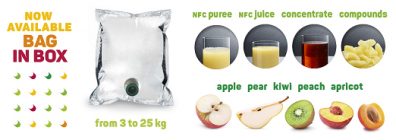
Direct juice, concentrate, purée or chunky products can now be filled into small containers of 3 to 25 kg. (Photo: VOG Products)
That principally applies to the company’s products, but includes packaging as well: VOG Products now has its own aseptic filling plant for small containers (“bag-in-box”). After all, bakeries, pastry shops, ice cream manufacturers, catering companies, cafeterias and many others often require small packages in order to produce desserts, ice cream or other products and dishes based on fruit.
After successfully completed tests and product validations, VOG Products launched the first filling processes in late summer of this year. Direct juice, concentrate, purée or chunky products can now be filled into small containers of 3 to 25 kg.
Alongside apples, VOG Products processes and refines pears, kiwi, peaches and apricots for filling. Depending on customer requirements, all products are available from integrated production or organic cultivation, monovarietal or combined.
Suntory Group announced that, as a crucial step toward its aim to use 100 % sustainable PET bottles globally by 2030 and eliminate all petroleum-based virgin plastic from its global PET supply, the company has successfully created a prototype PET bottle made from 100 % plant-based materials. The prototype has been produced for the company’s iconic Orangina brand in Europe along with its best-selling bottled mineral water brand in Japan, Suntory Tennensui. This announcement marks a breakthrough after a nearly decade-long partnership with the US-based sustainable technology company Anellotech.
PET is produced using two raw materials, 70 % terephthalic acid (PTA) and 30 % mono ethylene glycol (MEG). Suntory’s prototype plant-based bottle is made by combining Anellotech’s new technology, a plant-based paraxylene derived from wood chips, which has been converted to plant-based PTA, and pre-existing plant-based MEG made from molasses which Suntory has been using in its Suntory Tennensui brand in Japan since 2013.
“We’re delighted with this achievement, as it brings us one step closer to delivering this sustainable PET bottle to the hands of our consumers,” said Tsunehiko Yokoi, Executive Officer of Suntory MONOZUKURI Expert Ltd. “The significance of this technology is that the PTA is produced from non-food biomass to avoid competition with the food chain, while MEG is also derived from non-food grade feedstock.”
This innovation is an additional step towards achieving Suntory Group’s ambition to eliminate use of all petroleum-derived virgin PET plastic bottles globally by transitioning to 100 % recycled or plant-based PET bottles by 2030. The fully recyclable prototype plant-based bottle is estimated to significantly lower carbon emissions compared to petroleum derived virgin bottle.
“This achievement is the result of over ten years of thorough and painstaking development work by Anellotech’s dedicated employees, together with Suntory and other partners,” said David Sudolsky, President and CEO of Anellotech. “The competitive advantage of Anellotech’s Bio-TCat generated paraxylene is its process efficiency (it uses a single-step thermal catalytic process by going directly from biomass to aromatics (benzene, toluene and xylene)), as well as the opportunity it creates for a significant reduction in greenhouse gas emissions as compared to its identical fossil-derived paraxylene in the manufacture of PET, especially as it generates required process energy from the biomass feedstock itself.”
This technology is one of the latest investments from Suntory in the company’s long history of addressing the social and environmental impacts of containers and packaging. In 1997, Suntory established its “Guidelines for the Environmental Design of Containers and Packaging.” For plastic bottles specifically, it has used its 2R+B (Reduce/Recycle + Bio) strategy to reduce the weight of containers, including labels and caps, and actively introduce recycled or plant-based materials in its plastic bottles used globally. Most significantly, it has created the lightest bottle cap, the thinnest bottle label, and the lightest PET bottle produced in Japan to date.
“Suntory has been entrenched in the work to create sustainable packaging solutions since 1997. This plant-based bottle prototype honors our historic dedication while shining a light, not only on our path to achieving our 2030 fully sustainable PET bottle goal, but also towards our ambition to net-zero greenhouse gas emissions across the entire value chain by 2050,” said Tomomi Fukumoto, COO of Sustainability Management at Suntory Holdings.
This milestone amplifies the great momentum of Suntory’s continuous work on promoting a plastic circular economy, through the development of sustainable materials, adoption of circular processes, investment to pioneer advanced technologies and promotion of behavioral change for consumers. Suntory aims to commercialize this 100 % plant-based bottle as soon as possible to meet its 2030 fully sustainable PET bottle goal.
Moving beyond the traditional annual colour forecast, GNT has launched groundbreaking research that empowers food and beverage brands to devise tailormade solutions for the modern market.
The growth of the personalization and customization trends is fueling demand for products that appeal to shoppers on a deeper level. Building on more than 40 years’ experience, GNT has developed ‘The Power of Colour’ to help brands create colouring solutions that will connect with their target consumers.
The research combines consumer psychology and semiotics to deliver unique insights into how color generates meaning across products, brands, and categories, enabling manufacturers to create powerful stories and stand out in their category.
Maartje Hendrickx, Market Development Manager at GNT, said: “It’s clear that a one-size-fits-all approach to colour is rapidly becoming outdated. As a service provider, innovation has always been in our DNA and this trailblazing project enables us to help customers find the cutting-edge colouring solutions they need to strengthen their market position and reach new audiences.”
Created alongside professional semioticians, The Power of Colour explores the many ways in which colour sends out messages on a conscious and subconscious level.
For an inside-out perspective, it uses psychology to explore consumer motivations. It examines the tensions that drive product and brand choices, such as the desire for pleasurable yet permissible food and drink.
The second phase uses semiotics to provide an outside-in perspective, showing how colour can help to deliver on these motivations and needs.
Colour codes and cues create a variety of meanings across different cultures, categories, and situations. For example, colour can indicate how to navigate situations and guide decision-making, as in the case of food nutrition labels. It can also signal personal identity, whether through fashion, cosmetics, or even food and drink. Colours evoke moods and emotions, too – red is seen as an energizing shade, for instance, while yellow is associated with joy.
Together, these two perspectives allow brands to build a comprehensive understanding of how colour can be used to cater to different consumer needs and create a compelling narrative.
Jill Janssen, GNT’s Power of Colour lead, said: “Colour can send out any number of messages about brands and products. It might signal a moment of blissful escapism, tell stories about origins and process, showcase powerful ingredients, or help to highlight healthy formulations. The Power of Colour helps brands think about colour in a new way, delving deeper than ever before into its cultural power while also exploring the psychology behind colour trends.”
ADM, a global leader in nutrition and agricultural origination and processing, announced that it has completed its acquisition of Sojaprotein, a leading European provider of non-GMO soy ingredients. The addition represents a significant expansion of ADM’s global alternative protein capabilities and its ability to meet growing demand for plant-based foods and beverages.
Established in 1977, Serbia-based Sojaprotein exports into 65 countries, offering a wide range of non-GMO vegetable protein ingredients for an extensive list of European and global customers in the meat alternative, confectionary, protein bar, pharmaceutical, pet food, and animal feed segments. The company achieved more than $100 million in sales in 2020.
The addition of Sojaprotein to ADM’s portfolio is the latest significant investment as the company continues to grow in alternative proteins; other additions include the company’s soy protein complex in Campo Grande, Mato Grosso do Sul, Brazil; its new pea protein plant in Enderlin, North Dakota; its PlantPlus Foods joint venture; and partnerships with innovative startups like Air Protein.
At its meeting on 1 December, the Supervisory Board of Symrise AG once again extended the contract of Chief Executive Officer Dr Heinz-Jürgen Bertram ahead of schedule. With his confirmation in office until the end of 2025, Symrise is preserving its customary continuity and long-term management approach. Dr Bertram will continue as CEO of Symrise AG for a further three years and will drive forward the profitable growth course of the Group.
“Dr Heinz-Jürgen Bertram has been leading Symrise AG confidently and successfully for more than ten years now. With his entrepreneurial vision, he has further diversified the product portfolio, tapped into high-growth markets and new customer groups, and most recently sovereignly steered the Group through the pandemic. Under his leadership, Symrise AG has developed into one of the 40 largest publicly listed companies in Germany. After 14 successful years in the MDAX, the Company was promoted to the DAX, Germany’s leading index, this year,” said Michael König, Chairman of the Supervisory Board. “This track record demonstrates once again that Dr Bertram enjoys a high level of trust on the capital market as well as among customers and employees. We are delighted to have won him over for another three years as CEO and to continue our successful and trusting cooperation in the upcoming years.”
By 2025 Symrise intends to drive forward its expansion in high-growth business areas as well as the further development of its own base of natural raw materials with targeted investments. The Company is targeting sales of € 5.5 to € 6 billion by 2025. Organic growth is expected to be between 5 and 7 %. With its favorable product mix and efficiency enhancements, Symrise aims to generate an EBITDA margin in the range of 20 to 23 %.
Dr Heinz-Jürgen Bertram (born in 1958), who has a doctorate in chemistry, has performed in various management functions at the Bayer Group, the Haarmann & Reimer Group and Symrise since 1985. Since 2003, he has held several senior positions with Symrise, and was appointed to the Executive Board in 2006. Since August 2009, he heads the Company’s business activities as CEO.
Donaldson Company, Inc., a leading worldwide provider of innovative filtration products and solutions, announced it acquired Solaris Biotechnology Srl. Solaris designs and manufactures bioprocessing equipment, including bioreactors, fermenters and tangential flow filtration systems for use in food and beverage, biotechnology and other life sciences markets. Solaris’ product portfolio ranges from benchtop systems for research and development to pilot and commercial-scale manufacturing systems.
Solaris was founded in 2002 and is headquartered in Porto Mantovano, Italy, with US operations based in Berkeley, CA. The Company has approximately 30 employees. Donaldson acquired Solaris for approximately €41 million. Calendar year 2021 revenue is projected to be approximately €5 million and will be reported within the Donaldson Industrial Filtration Solutions business in the Industrial Products segment.
The current number of flowers in the orange orchards in São Paulo – which will give origin to the fruits from the 2022/23 season – is considered satisfactory in most citrus-producing regions within the state. In general, while in irrigated orchards blooming was observed from September onwards, in non-irrigated orchards, flowers were only observed in October, after the late arrival of rainfall.
Agents have been concerned about the possible effects of the lack of rains this year on the vigor of orange trees, since low moisture may hamper fruit set, increasing the rate of fruitlet fall in irrigated orchards and, largely, in the orchards in dryland.
According to forecasts from the National Oceanic and Atmospheric Administration (NOAA), there is a 90 % chance of La Niña forming in Brazil until the end of 2021. If this is confirmed, rainfall in the coming months may be lower than usual in the southeastern region of the country. However, La Niña is forecast to be weak in Brazil.
This scenario may have a negative influence on the output from the 2022/23 season, since the development stage of plants in the coming months demands good amounts of water. With estimates for low ending stocks of orange juice in the 2021/22 season, the output from 2022/23 needs to be high in order to ensure comfortable inventories for world supply.
Cepea calculations show that, for ending stocks in the 2022/23 season (June 2023) to return to the strategic level of 250 thousand tons, the output next season needs to surpass 330 million boxes of 40.8 kilograms each. In this context, the average productivity would have to be around a thousand boxes per hectare, which has only been observed in seasons favored by the weather.
The processing company VOG Products from South Tyrol continuously invests in new technologies. The most recent examples are the NFC juice line commissioned this year and a new sterile tank storage system that is almost completed.
Each of the six new tanks is six metres in diameter and 25 metres high, and can contain up to 625,000 litres of apple juice.
New NFC juice line
The raw goods are moving through the new production line for premium juices that features particularly careful dry transport and uses a cutting-edge belt press.
The new intake line at VOG Products can receive up to 150 tonnes of fruit per hour. It transports the fruit dry and not in water. Sails are used to enable the apples to roll along for processing, which results in fewer bruises and damaged spots. Dry transport has one additional advantage: the system consumes much less water.
The main element for juice extraction is the new belt press, which VOG Products uses to produce high-quality premium juice that features a long shelf life and more appealing colouration.
VOG Products ensures that the juice’s quality and turbidity are consistently in line with consumer wishes. In the separator (centrifuge), solid material and starches are removed from the juice with high efficiency and 100 % automation – exactly to the extent that meets the specified quality standards or the customer’s requirements.
Avoidance of alcohol is becoming the norm for a growing minority of consumers around the world. While this trend is seen across all age groups, it is most apparent in Generation Z, with as many as a third of consumers aged 18 – 25 now saying that they never consume alcohol.
This trend is creating an entirely new sub-category within the alcoholic drinks market. Younger consumers appear reluctant to turn their backs on either the taste or sophistication of beer, wine and spirits in favour of traditional soft drinks. As a result, alcohol-free choices are flooding the shelves.
According to a new report from Innova Market Insights, four percent of all the beers and spirits launched globally in 2021 contained no alcohol at all, rising to seven percent among flavoured alcoholic beverages (FABs). Launch numbers in each of these areas have grown at CAGRs of 20 – 40 % over the past five years.
Alcohol removal is also becoming far more mainstream. “The big guns are all invested in the alcohol-free movement,” reports Lu Ann Williams, Global Insights Director at Innova Market Insights. “Brands such as Guinness 0.0 alcohol free stout and Freixenet 0.0 sparkling rosé wine offer both familiarity and novelty to young, brand-conscious drinkers.”
It is not all about a ‘no alcohol’ positioning, however, as launches of low-alcohol drinks such as hard seltzers are growing twice as fast. The soft drinks giants have even been exploring this area in partnership with alcohol companies. For example, Coca-Cola (with Molson Coors) already offers the Topo Chico hard seltzers brand, while PepsiCo (with the Boston Beer Co) is ready to roll out Hard Mtn Dew in early 2022. PepsiCo has also applied for a trademark that suggests an alcoholic version of Rockstar could be on the cards.
Whether it is in alcohol reduction or its complete removal, the industry is recognizing that alcohol-shy youngsters are the target audience of tomorrow. Adjusting to their needs is a major focus for right now.
The strategic partnership rapidly expands Beliv’s footprint in the US; new probiotic innovation makes a splash
Beliv, Latin America’s fastest-growing bev-tech company with 40 brands in 35 countries, announced that it has completed the acquisition of Big Easy, a leading manufacturer of all-natural, plant-powered probiotic drinks in the US.
The transaction rapidly expands Beliv’s footprint in the US market and reinforces its commitment to bring exciting new products in high-growth beverage categories to consumers worldwide. Big Easy’s line of wellness-focused drinks will be the first probiotic products in Beliv’s portfolio.
With a manufacturing facility in New Orleans (LA, USA), Big Easy and its approximately 50 employees have built a winning culture centered around innovation, successfully bringing to market trend-forward, easy-to-enjoy beverages with digestive health benefits, including kombucha, functional juice shots, and tepache, a prebiotic pineapple soda with pre-Hispanic roots, which recently debuted in a new 12-oz can in Publix.
“Innovation is key to market growth and to meeting new expectations of consumers across the globe. By adding Big Easy into Beliv’s portfolio, we magnify the strengths and entrepreneurial spirit of both companies to respond to the intense demand for authentic, natural, and sustainable products that focus on functionality, well-being, and nutrition,” said Carlos Sluman, CEO, founder, and partner of Beliv.
Launched in 2014 by Austin Sherman and Alexis Korman, Big Easy delivers authentically crafted drinks with gut-health and immune-supporting benefits to customers who shop at over 3,000 retail accounts and growing in the US, including Publix, Sprouts, Wegman’s, and others. The founders will continue in active roles driving the company’s mission and innovations forward.
“Going big is about to get easy,” says Big Easy founder and CEO Austin Sherman. “We’re fired up to join the diverse and dynamic family of brands at Beliv and see our beverages reach new consumers internationally. Contemplating our brand’s humble origins making one bottle of kombucha at time, the opportunity to bring our products to the world is a dream realized. With access to Beliv’s infrastructure and resources, and new markets to dominate together, we’re confident this partnership will speed our mutual growth.”
The world’s leading trade fair for global fresh fruit trade is being postponed to 5-7 April 2022.
The fourth wave of the coronavirus pandemic is worsening the situation in many European countries. At the same time, the industry’s wish to meet in person remains unwaveringly high. In light of these circumstances, Messe Berlin has decided to postpone FRUIT LOGISTICA to a point on time beyond the fourth wave. FRUIT LOGISTICA 2022 will thus be held from Tuesday, 5 April to Thursday, 7 April.
The fourth wave of Covid infections makes it impossible to achieve the special experience of the Green Week
The International Green Week 2022 (21 to 30 January) will not be taking place. The reason is the rising number of infections in Germany due to the fourth wave of Covid infections, as well as current and anticipated pandemic-related restrictions.
“The International Green Week thrives on people meeting each other and being able to sample, taste and discover things. Under the current circumstances, with face masks and physical distancing, we cannot fulfil the expectations of our visitors to the Green Week“, said Lars Jaeger, the project manager for the International Green Week at Messe Berlin.
Green Week supporting events to take place in a virtual format
The Federal Ministry of Agriculture is extending an invitation to the 14th Global Forum for Food and Agriculture (GFFA). From 24 to 28 January 2022 at this virtual forum, around 2,000 participants representing politics, business, science and society will debate food and farming policy issues. The focus of the GFFA 2022 is on ’Sustainable farming: food security starts with the soil’.
With the 15th Forum on the Future of Rural Development on 26 and 27 January 2022, the Federal Ministry of Agriculture will provide a virtual platform for exchanging views, discussion and exchanging knowledge on ’A strong honorary position – for a good rural life’.
The next International Green Week will take place from 20 to 29 January 2023 on the Berlin Exhibition Grounds.
By Dr. Chris Owens, Lead Plant Breeder at IFG
Climate change has been affecting many different regions around the globe for decades, and the shift in weather is impacting fruit production. Areas that are being impacted most severely have historically seen significant effects from climate change. However, there are other areas also being affected, such as the northwestern United States and Western Canada with this year’s unprecedented heat. There have also been severe wildfires in many regions, threatening entire fields of crops.
Grapes (Photo: IFG)
The regions facing the most issues right now are those that are already battling heat and drought. Some areas in Europe have begun moving wine grape vineyards further north or to a higher elevation, adjusting to the planet’s changing climate. Table grapes themselves are more heat tolerant, and IFG’s breeding program has used the most recent heatwave to screen our varieties for heat tolerance. However, there is still a maximum amount of heat that fruit can tolerate, and as climate change continues to alter the environment, it will affect global agriculture and food production.
Climate change and its impact on the agricultural industry and global food production
Climate change is the shift of average weather conditions over time and has been chiefly caused by human activity. The increase of carbon dioxide in our atmosphere allows for more of the sun’s rays to pass through the atmosphere, increasing the temperature on the planet. The result of these shifts can be severe or extreme weather events, such as more frequent and intense storms, flooding, scorching heat waves, freezing cold snaps, wildfires, and water shortages. Growers are witnessing their entire fields of crops damaged in one swoop.
Climate change has a direct impact on our global food supply. Changes in the weather affect the locations where products can be grown, thereby impacting the capacity for farmers to produce the food necessary to feed the world’s population. Fruits and vegetables are living organisms that respond to warm and cold temperature changes. Anything that will make significant changes to the environment will have considerable impacts on agriculture.
What fruit scientists, horticulturists, and growers are doing differently
From breeding to growing to packing, each area has different courses to cope with climate change. On the breeding side, efforts are being made to develop varieties that can tolerate rain and heat to varying stages of the production cycle. IFG is working on this for our table grape and cherry crops, and other fruit breeders are working on the same for crops such as apples and pears.
Growers are also implementing new irrigation system technology to be more efficient while protecting their crops from the rapidly changing environment. They are utilizing soil humidity sensors, reflective covers to reduce water evaporation, shade nets to protect the crops from excessive sun exposure, and even rain covers to protect the fruit from rainstorms. These efforts may be enough to protect against hot or cold temperatures or drought; however, they will not save crops from being destroyed by extreme weather events such as wildfires, storms, or floods.
Predicting the future of fruit production
Due to climate change and recent developments in fruit-breeding programs, farmers are avoiding planting in higher-risk areas. The industry is seeing increasing growth of planting in regions where certain fruit varieties were not grown in the past. Jalisco in Mexico or Piura in Peru are examples of developing table grape regions. This change in geography is also evident in other crops, such as blueberries and cherries, with the recent introduction of low-chill varieties. Growers will undertake the enormous task of moving their fruit to new areas if the heat or drought is too difficult for production. Conversely, suppose the land cannot provide the necessary chill requirements or secure water supply. In that case, we can expect growers to move to untraditional growing areas, as evident in the regions where IFG’s cherry varieties are currently being grown.
Climate change is at the forefront of many conversations in agriculture, which is why IFG does the work we do: breeding new varieties of fruit that will grow in warmer climates with less water requirements. As the planet changes, there is the possibility that we will see less fruit production. IFG is focused on breeding varieties that ensure consistent cropping in a changing climate.
About Dr. Chris Owens Dr. Chris Owens has been with IFG since 2016 and is now the Lead Plant Breeder, directing the development of improved varieties of table grapes and sweet cherries. He also directs IFG’s research and development efforts supporting the breeding program, including post-harvest evaluations, plant pathology and genetics. Chris interacts closely with the international technical and commercial teams with the goals to accelerate the adoption and maximize the success of IFG’s new varieties. Chris holds a BS in horticulture from the University of Maryland, an MS in pomology from Cornell University, and a PhD in plant breeding and genetics from Michigan State University. Prior to IFG, Chris spent more than 20 years in germplasm development, breeding and genetics of both grapevines and cherries. The author of numerous book chapters and scientific articles, he has presented research results at national and international conferences and served on professional societies’ advisory committees.
Ardagh Metal Packaging (AMP) announced that it plans to build a new state-of-the-art USD200 million beverage can plant in Northern Ireland. The plant will be located near Belfast and will service the growing needs of AMP’s beverage customers in Ireland, the UK and Europe.
This initiative is part of a multi-billion dollar investment programme by AMP involving the construction of new, infinitely recyclable, metal packaging capacity in Europe, North America and Brazil. Metal cans are the most recycled drinks package in the world, contributing to a circular economy and the sustainability requirements of AMP customers and consumers.
AMP plans to build the new plant at Global Point near Belfast, close to key local customers, at a cost of some USD200 million. Though details on precise jobs numbers are still being finalised, the investment by AMP will lead to the creation of a large number of full-time jobs for engineers, technicians and other roles.
AMP is currently at the pre-planning application stage and is actively engaged with local stakeholders on the project. Further details of the plant will be announced over the coming months.
AMP, which is listed on the New York Stock Exchange, is 75 % owned by Ardagh Group the international packaging group which traces its origins back to glass manufacturing in Dublin in the 1930’s.
Dole Sunshine is synonymous with good taste and good health across the world. With its entry into the India market in 2019, the brand now offers a wide array of deliciously guilt-free offerings including dried fruits, Dole juice gels and fruit bowls. Dole Sunshine actively supports the idea of fresh, natural flavours based on real fruits. In keeping with this festival timing, Dole Sunshine India is all ‘juiced up’ to launch Dole 100 % Fruit Juice – a refreshing pineapple drink enriched with Vitamin C.
In a huge market for juices, most of the packed fruit juices contain added sugar and preservatives along with the fruit pulp, whereas Dole is introducing 100 % Pineapple Juice which is all-natural with no added sugar or artificial preservatives. This successfully makes it one of the very few juice offerings in the market that does not contain added sugar. What’s more, its zesty pineapple flavour with vitamin C fortification makes it a terrific choice when looking for a pick-me-up during work, a fresh drink after a workout or if one simply want to pour the kids a tall glass of all-natural fruit juice.
As a brand, Dole Sunshine India has always believed in the wholesome goodness of fruits and this new beverage launch perfectly ties in with their principles. “At Dole, we believe that fruits are real powerhouses of nutrition. As an F&B brand, it is our duty to leverage this goodness for our consumers, so that they can incorporate such healthy changes in their daily lives. Moreover, we’ve always been against the idea of added preservatives or flavours, since our offerings have always been pure and packed with nutrition. And that’s how Dole 100 % Fruit Juice came about. This new beverage is made from fresh fruit concentrate and is an excellent source of Vitamin C. It’s also GMO-free and gluten-free, which makes it a tasty but healthy offering for children, too,” says Mudit Mathur of Dole Sunshine India.
Apart from being nutritious, unadulterated and pure, Dole 100 % Fruit Juice is also a versatile drink. One can sip it as is, serve it in a mocktail or even use it to shake up a cocktail or two, to serve at house parties and get juiced up. Simply put, it’s pure pineapple goodness.
JBT Corporation, a global technology solutions provider to high-value segments of the food and beverage industry, announced it has acquired Urtasun Tecnología Alimentaria S.L., a provider of fruit and vegetable processing solutions. The company is headquartered in Navarra, Spain.
“The acquisition of Urtasun expands our product offering in fruit and vegetable processing, particularly in the fresh packaged and frozen markets,” said Brian Deck, President and Chief Executive Officer. “By integrating Urtasun into FoodTech, we can leverage JBT’s global sales and service footprint to accelerate growth.”
The purchase price was approximately $40 million. Urtasun expects 2021 revenue of approximately $25 million with Adjusted EBITDA margins in the mid to high-teens. The transaction is expected to be approximately four cents dilutive to 2021 GAAP earnings per share and one cent dilutive on an adjusted basis which excludes transaction-related costs and purchase price accounting. In 2022, Urtasun is expected to be accretive to GAAP and adjusted earnings per share by approximately three cents.
The world’s leading trade show for food ingredients will open its doors to vaccinated and recovered attendees
Fi Europe co-located with Hi Europe, which will be held in-person in Frankfurt from November 30 to December 2, will implement the so-called 2G rule to ensure maximum levels of safety for all. Additionally, the Informa AllSecure Health & Safety Standard promises full hygiene and protection in the exhibition halls thanks to a comprehensive number of measures. This means that attendees can network and learn all about the latest food and beverage industry innovations under optimal conditions.
The 2G rule requires attendees to provide a digital EU-approved COVID certificate proving that they are fully vaccinated, or have recovered from COVID-19 within the last six months.
Formnext, the first trade show held under 2G at the Messe Frankfurt venue, took place a few days ago with highly satisfactory results. Wolfgang Marzin, President & CEO of Messe Frankfurt, said: “It is fantastic to have tradeshows taking place again and for us it is important, and encouraging, to see that the 2G protocol works. Spirits are high, attendees feel safe and seem to really take full advantage of what the show has to offer. We are also seeing an increased proportion of decision-makers attending, something I have heard other event organisers are also experiencing.”
For trade fair organizer Informa Markets, it is clear that 2G in combination with high security standards will prove invaluable. Julien Bonvallet, Brand Director at Informa Markets, comments: “To have our attendees feel safe and comfortable while doing business has been a top priority for us at Informa in the last few months. Thanks to the Informa AllSecure Standards, we have recently run a lot of successful events where we saw confidence scores above 96 %.Given the current situation, it was important to make the event even safer and we have therefore opted for the 2G option last week. Meanwhile, the state of Hesse proclaimed the 2G rule as mandatory. We’re incredibly pleased to be back in Frankfurt, and I am confident that this year’s event will once again be all about business, inspiration and, of course, plenty of highly anticipated face-to-face networking.”
IFF announced today that the Company invested a total of USD 87 million in their newly extended flavors manufacturing facility in Karawang, Indonesia during the site’s virtual opening. The facility, located in Karawang International Industrial City, first started operations in 2015 to address the fast-growing demand for flavour technology in the region. Today, as IFF’s largest manufacturing facility in Greater Asia, Karawang houses full manufacturing capabilities, from liquid compounds to powder, emulsions, and spray dry technology, warehousing and quality control.
The newly extended 12,800m2 state-of-the-art facility is equipped with modern infrastructure and technology to ensure efficiency, safety, quality, and traceability. In line with the Company’s dedication to drive sustainability, the site initiatives range from zero waste to landfill, and reductions in greenhouse gas emissions, energy, water, and hazardous waste. The expansion and increased capacity services customers in South East Asia and North Asia. This investment is consistent with IFF’s strategy to capture the growth potential of emerging markets in Asia.
Tate & Lyle PLC, a leading global provider of food and beverage solutions and ingredients, is pleased to unveil six key trends that are shaping consumer product innovation in the food and beverage market both today and tomorrow.
Consumers today expect more from their favourite brands, not only offering them products that are healthier and tastier, but which have been produced in a responsible and sustainable way.
Beth Nieman Hacker, Market Research Director at Tate & Lyle, said: “By understanding how values, behaviours and appetites are changing, and the drivers behind these shifts, food and beverage brands can launch products that meet the needs of consumers today and better anticipate how these will evolve.”
Tate & Lyle’s global market research team has conducted its own proprietary consumer research, studied hundreds of research papers and data points and, together with Tate & Lyle’s commercial teams worldwide, has identified the following key trends driving consumer purchases:
Transparency: increasing numbers of consumers are seeking healthy food and beverage products they can trust and want to know the source of the ingredients in those products. The clean label movement continues to evolve, moving from all-natural claims to communicating how products are made1.
Plant-Based: consumers are focused on health and sustainability, opting for products that are better for them and better for the planet. They are drawn to products that are plant-based because positive health outcomes and environmental impacts are associated with plant-based eating2.
Sugar reduction: consumers are looking for ways to get healthy and stay healthy. One recommendation to achieve better health is to reduce the amount of sugar in their diet. However, consumers are torn between reducing sugar and maintaining a great taste experience3.
Gut Health: globally, consumers are not getting enough fibre daily. Fibre helps support gut health and consumers are interested in getting more of it in their diet. As awareness of gut health and the benefits a healthy gut can provide continues to grow, more consumers will look for products with gut health benefits4.
Convenience: consumers are digitally connected and time poor, seeking ease, efficiency, and instant gratification from the products they buy, including food and beverages. Whilst convenient products meet the needs of global consumers amidst their busier, more stressful lives, this presents formulation challenges for manufacturers5.
Better-for-you snacking: snacking is an important meal occasion; however, consumers are prioritising their health. “Better-for-you” snacking products are an obvious choice to meet consumers’ health needs6.
Natalya Bright, Market Research Manager, at Tate and Lyle, said: “These global trends play to Tate & Lyle’s strengths as an ingredient provider, with our wide range of responsibly-sourced, almost exclusively plant-based solutions that are label-friendly and support healthy living.
“Since millions of people across the world consume products containing our ingredients every day, the heart of our business is about Improving Lives for Generations, and we’re proud to partner with our customers to do just that while helping them to succeed in the marketplace.”
184 % read ingredient labels, globally. Tate & Lyle Proprietary Research, 2020, 14 countries, percentages are “always” or “sometimes” 248 % of consumers say that they have changed their diets in the last two years in order to lead a more sustainable lifestyle. GlobalData 2020 Market Pulse Survey, Asia Pacific and Latin American, September 2020 358 % of consumers say healthfulness has an impact on buying food and beverages. International Food Information Council Foundation, 2021 Food & Health Survey, April 2020 453 % of global consumers plan to eat or drink more fibre. T&L Global Consumer Ingredient Perception Research, 14 countries, 2020 591 % of global consumers are interested in products that save them time and effort. GlobalData Trend Sights 2020 655 % of global consumers say that they expect snacks to offer a nutritional boost. FMCG Gurus, January 2021, Global
A new market study published by Global Industry Analysts Inc., (GIA) the premier market research company, released its report titled “Vegetable Juices – Global Market Trajectory & Analytics”. The report presents fresh perspectives on opportunities and challenges in a significantly transformed post COVID-19 marketplace.
Global vegetable juices market to reach $47.2 billion by 2026
Amid the COVID-19 crisis, the global market for Vegetable Juices estimated at US$34.7 Billion in the year 2020, is projected to reach a revised size of US$47.2 Billion by 2026, growing at a CAGR of 5.2 % over the analysis period. Pure Vegetable Juice, one of the segments analyzed in the report, is projected to record a 5.5 % CAGR and reach US$28.5 Billion by the end of the analysis period. After a thorough analysis of the business implications of the pandemic and its induced economic crisis, growth in the Vegetable Blend Juice segment is readjusted to a revised 4.9 % CAGR for the next 7-year period.
The U.S. market is estimated at $9.7 billion in 2021, while China is forecast to reach $9.8 Billion by 2026
The Vegetable Juices market in the U.S. is estimated at US$9.7 Billion in the year 2021. China, the world`s second largest economy, is forecast to reach a projected market size of US$9.8 Billion by the year 2026 trailing a CAGR of 8.5 % over the analysis period. Among the other noteworthy geographic markets are Japan and Canada, each forecast to grow at 2.9 % and 4.2 % respectively over the analysis period. Within Europe, Germany is forecast to grow at approximately 3.7 % CAGR …
Ocean Spray Cranberries, Inc., announced the launch of Frutas Frescas, a new line of light and refreshing beverages made with real fruit juice in a variety of exciting fruit flavours – all with fewer calories and sugar than leading juice drinks. The launch of Frutas Frescas builds on Ocean Spray’s health and wellness-focused innovation, as well as brings to life the cooperative’s mission of connecting farms to families for a better life.
Available in three flavour offerings rooted in the cranberry – Cranberry Pineapple Passion Fruit, Cranberry Lemon Raspberry, and Cranberry Raspberry Pear – Frutas Frescas is made with real fruit juice, no artificial sweeteners, and 100 % daily value of antioxidant Vitamin C per serving.
In addition, Ocean Spray introduces two new flavours of 100 % Juice – Cranberry Elderberry and Cranberry Watermelon – both a delicious blend of flavours with no sugar added. This marks the first extension of flavours to the 100 % Juice line since 2017. These launches accompany the newly available 64-ounce bottles of Growing Goodness™ product line, all available in Walmart stores across the US this month.
The suggested retail price of Ocean Spray® Frutas Frescas is $2.98 per 64-ounce bottle, Ocean Spray 100 % Juice is $3.28 per 64-ounce bottle, and Ocean Spray Growing Goodness is $2.98 per 64-ounce bottle.
Royal Unibrew A/S has today entered into an agreement with Danone to acquire 100 % of Aqua d’Or Mineral Water A/S – the leading Scandinavian mineral water producer with a strong market presence in Denmark and Sweden. The acquired activities have a strong organization and a modern production facility in Central Jutland, Denmark.
Closing of the transaction is subject to approval from the Danish Competition Authority, which is expected during the first half of 2022.
The acquisition strengthens Royal Unibrew’s market position within water in Denmark, as well as providing access to new sales channels for Royal Unibrew.
Aqua d’Or produces predominantly still and sparkling water and the company’s focus on healthy beverages fits strategically very well with Royal Unibrew’s focus on no/low calorie beverages. Aqua d’Or’s modern production facility in central Jutland, Denmark, provides additional capacity and diversify our production footprint.
Aqua d’Or has around 75 employees and generated revenue of around DKK 180 million in 2020. The company markets its own brands Aqua d’Or, Klar and Denice, as well as supplying private products to selected customers.
CEO Lars Jensen of Royal Unibrew says “I am very pleased to announce that we have entered into an agreement to acquire Aqua d’Or and we look forward to welcoming our new colleagues to Royal Unibrew. Aqua d’Or has built a strong brand in the water category in Denmark, and it fits strategically very well with our own water business in Denmark, as well as with our strategic focus on low/no sugar products”.
The acquisition of Aqua d’Or does not change the full-year EBIT outlook of DKK 1,625-1,700 for 2021.
The World Citrus Organisation (WCO) has released its annual Northern Hemisphere Citrus Forecast for the upcoming season (2021-22). The Forecast, which will be presented during the second edition of the Global Citrus Congress on 16-17 November, is based on data from Egypt, Greece, Israel, Italy, Morocco, Spain, Tunisia, Turkey, the United States and shows that citrus production is projected to reach 29.342.000 T, which represents a 1.27 % decrease compared to the previous season.
The WCO Secretariat has released its annual Northern Hemisphere Citrus Forecast for the upcoming season (2021-22). The preliminary Forecast is based on data from industry associations from Egypt, Greece, Israel, Italy, Morocco, Spain, Tunisia, Turkey, in addition to the United States (based on USDA reports for Arizona, California, Florida, and Texas). Philippe Binard, Secretary General of WCO stated: “The Forecast shows that the 2021-22 Northern Hemisphere citrus crop is projected to reach 29.342.000 T, which represents a 1.27 % decrease compared to the previous season”.
Orange production is projected to decrease by 3.45% to a total of 15.485.106 T. A slight decrease is also expected for grapefruit (-0.34 %, 946.521 T) and soft citrus (-0.70 %, 8.456.112 T) production. Lemon production, on the other hand, is estimated to increase by 5.64 % and reach 4.454.327 T. In Europe Union, citrus production is forecasted to experience a 9.35 % decrease in Greece, a 7.74 % decrease in Spain, and a 2.62 % decrease in Italy. In the Southern rim of the Mediterranean, production is projected to decrease in Tunisia (-21.97 %), remain stable in Egypt (-0.06 %), and increase in Israel (+26.63 %), Turkey (+21.85 %), and Morocco (+5.53 %). The citrus crop in the United States is expected to decrease by 11.79 % compared to last year.
Mr Binard added: “WCO has also engaged for citrus with the China’s Chamber of Commerce for foodstuffs (CFNA) and Ministry of Agriculture (MoA) to collect their estimates. This has overall provided an overview of the Northern Hemisphere covering a grand total of 83.2 Mio T of citrus from the Northern Hemisphere for the next season” This is the result of the forecast in China, for an increase in citrus production by 5.23 %, reaching 53.900.000 T in the upcoming season (volumes not included in NH forecast figures provided in table below).
Natalia Santos-Garcia Bernabe, WCO’s deputy Secretary General stated: “WCO will present its Forecast during the second edition of the Global Citrus Congress, which is organised in cooperation with Fruitnet Media International and the support of CIRAD. The event will stream live on 16-17 November from London, Los Angeles and Melbourne” This is allowing viewers around the globe to pick their most convenient time to take part live or to watch on-demand. Last year’s Congress drew more than 1,300 delegates from 59 countries, bringing together producers, exporters, importers, retailers, and service providers from all over the world. 1075 delegates have already registered to next week’s second edition of the Congress. More information and last minutes’ registration are available on citruscongress.com.
GEA Group AG, as key project partner, has provided innocent, one of Europe’s leading smoothie and juice brands, with the process technology for the world’s first carbon-neutral juice factory. The new factory in the Netherlands will lead the way for future plants in the food industry with a truly sustainable approach. Located at the Rotterdam Food Hub, the production facility is scheduled to open officially in spring 2022.
In the new-build project, GEA is responsible for the process, refrigeration and heating technology. Early involvement in the design planning phase enabled the company to develop numerous innovative process changes that significantly help innocent on the path to reaching its climate goals.
“The innocent project is an outstanding example of how we put our purpose of ‘engineering for a better world’ into practice,” said GEA CEO Stefan Klebert. “Not only have we integrated the most resource-efficient technologies, we have also entirely rethought the processes as well as the heating and refrigeration systems. Together with innocent, we have pushed the envelope beyond standard beverage production practice.”
Energy supply and demand cycle
Since much of the energy used in production is for heat, GEA worked intensively on in-process energy and resource efficiency. The company also applied the sustainable energy solutions (SEnS) approach. This factors heating and cooling requirements into the systems right at the planning stage, instead of after the fact when corrections are virtually no longer possible. For instance, a GEA heat pump will recover waste heat from the refrigeration systems and reuse it in other process steps. GEA and innocent recently won gold in the European Heat Pump Association (EHPA) People’s Choice Award for this smart heat pump design.
The intelligent heat pump design in combination with the process adaptations convinced the audience at the Heat Pump Awards 2021: GEA and innocent drinks jointly won gold in the People’s Choice Award of the European Heat Pump Association (EHPA) for the new juice factory. Every year, the EHPA honors the most efficient and sustainable heat pump solutions with the Heat Pump Award. (Photo: GEA)
Showcase for the entire beverage industry
Taking a 360-degree view of the process chain will allow innocent to substantially cut its carbon footprint while massively influencing other parameters such as water consumption and waste generation.
“I take my hat off to GEA because they have been at our side every step of the way, helping us challenge conventional design approaches. All the little details add up to a great success,” said Andy Joynson, Chief Blender (Site Director) at the new innocent plant. The new solutions implemented go far beyond conventional beverage production processes. “Food and beverage manufacturers can choose to base their future plant designs on our model. We want to inspire and support a broad-based transformation. In line with that, we are consciously inviting the industry to share in our findings—and at the same time to learn from our missteps and our successes.”
Addition significantly expands ADM’s wide array of innovative, groundbreaking products and solutions to help meet $775 billion global demand in health & wellness
ADM, a global leader in nutrition and agricultural origination and processing, announced a significant expansion of its broad portfolio of health and wellness products and solutions with an agreement to purchase U.S.-based Deerland Probiotics & Enzymes.
“The microbiome represents one of ADM’s six strategic growth platforms, and with global demand for health and wellness products estimated at more than $775 billion, today’s investment represents a significant step forward for ADM,” said ADM Chairman and CEO Juan Luciano. “Deerland Probiotics & Enzymes is a leader in probiotic, prebiotic and enzyme technology, with global sales and manufacturing in the U.S. and Europe, and is a perfect fit for our growing portfolio of functional ingredients and solutions for health-conscious consumers. We expect the addition of the Deerland capabilities and portfolio to deliver synergies for our Health & Wellness business and support growth across our Nutrition business unit.”
Deerland Probiotics & Enzymes is a trusted global provider of probiotic and dietary supplements using probiotic, prebiotic, and enzyme technology, including 12 branded product lines serving customers in areas including digestive health, immune health, women’s health, food intolerance, sports nutrition, cellular repair, and systemic and cardiovascular health. The company’s products and solutions include spore probiotics, which offer enhanced stability for a wider use in food and beverage, pet nutrition and supplement applications. Based in Kennesaw, Georgia, U.S., Deerland operates five manufacturing facilities, one fermentation facility, and eight R&D and quality control laboratories globally.
“The hand-in-glove fit of Deerland’s vast portfolio of branded technologies, clinical studies and world-class dosage form production capabilities combined with ADM’s Health and Wellness solutions is strong and unparalleled, allowing us to provide our dietary supplement, food/beverage and companion animal customers with a much broader array of products and capabilities,” said Scott Ravech, Deerland Probiotics & Enzymes CEO. “The Deerland team could not be more excited at the opportunity to be a part of the ADM family.”
The Deerland acquisition is the latest in a series of ADM strategic investments to build a full-scale global Health & Wellness business to help meet fast-growing demand for food, beverages and supplements that enhance health and wellbeing. Growth initiatives have included acquisitions like Protexin and Biopolis, organic capacity investments to expand probiotics production at our Valencia facility, and our recently-announced joint venture and previous partnership with Vland. With the revenue contribution from the addition of Deerland, annualized revenue for Health & Wellness will exceed $500 million.
The transaction, which is subject to regulatory approval, is expected to be completed in the coming weeks; when that occurs, Deerland’s approximately 320 colleagues will transfer to ADM.
Mintel has today announced three trends set to impact global consumer markets in 2022. From technology that predicts the success of potential romances to brands tackling COVID-19 ‘survivor’s guilt’ and eco-anxiety, this year’s trends include:
In Control: In times of uncertainty, consumers crave a sense of control over their lives. Brands can deliver the information and options that consumers need to feel like they’re in the driver’s seat.
Enjoyment Everywhere: Having endured lockdown, consumers are eager to break out of their confines and explore, play and embrace novel experiences, both virtually and in the ‘real’, physical world.
Ethics Check: While many brands have made their voices heard on controversial topics, consumers want to see measurable progress against their goals.
Dana Macke, Director of Mintel Trends, Americas, comments on how the trends were developed, as well as how they will impact markets, brands, and consumers in 2022 and beyond:
“As experts in what consumers want and why, we’re best suited to accurately predict the future of consumer behavior and what that means for brands. In 2019, we took a bold, new approach to predict the future of global consumer markets and expanded our outlook to 10 years. Mintel’s 2030 Global Consumer Trends – known as the seven Mintel Trend Drivers – were developed as a living, growing prediction model that will adapt to the unforeseen. As the COVID-19 pandemic unfolded, impacting nearly every industry worldwide, our consumer expertise and prediction model meant we were well placed to analyze how it would impact markets. Not only did our 2030 predictions hold true, but the pandemic accelerated many of the shifts we foresaw.
“Looking ahead to 2022, our trend analysis and prediction research are grounded by observations of the seven Trend Drivers over the last 18 months and backed by Mintel’s robust consumer and market data, predictive analytics, action-oriented insights and expert recommendations. We put everything into context to better understand what it means for—and how it could inspire—our clients’ business decisions across industries, categories and demographics, and amid global themes and times of uncertainty.”
In Control
“Feelings of precariousness and financial insecurity both created, and exaggerated, by the pandemic mean that consumers are looking for a sense of control over every aspect of their lives. But misinformation is making it harder to carry out the necessary research to make informed decisions. Consumers need clarity, transparency, flexibility and options to make decisions that suit their individual changing needs and circumstances.
“Brands will need to work harder to deliver reliable information and balance censorship and authenticity. The race for the fastest delivery will evolve to focus on being more flexible, giving consumers more control over when products arrive to fit around their schedules or to match their other specific needs. Consumers’ desire to know potential outcomes will manifest in the development of predictive technologies that can anticipate adverse events. From diseases to likely death dates to relationship outcomes using compatibility profiles, technology will evolve to grant consumers the power to plan with peace of mind.”
Enjoyment Everywhere
“Consumers are seeking sources of joy as the continuing pandemic and other local and global crises have caused them anxiety and stress. Many may be feeling a kind of ‘survivor’s guilt’ and, as a result, brands are recognizing the importance of uplifting people by giving them permission to feel happiness once again.
“While the stress caused by the pandemic may no longer be central to consumer needs for fun and escapism, they will continue to seek enjoyment and playfulness. As brand interactions through campaigns, apps and transactions take on more and more gamified elements in response to consumer interest, expect to also see pushback against it and the instant gratification it offers. This tendency will rise from consumers taking a more mindful approach to pleasure and enjoyment.”
Ethics Check
“Consumer demand for, and expectations of, brands’ ethical commitments are evolving. They have moved beyond simply wanting brands to ‘be ethical’ and are demanding to see measurable, transparent and consistent actions from those they choose to support. Consumers will look beyond a brand’s achievements and strengths; businesses will need to be transparent about their weaknesses, too, where and why they fail and how they plan to address these issues in future.
“All the transparency in the world doesn’t necessarily help consumers to understand the impact of a brand, which is why it’s key to use metrics that accurately reflect the problems brands are trying to solve. If a company isn’t properly measuring what they aim to fix or change, it’s difficult to determine whether progress is being made, let alone communicate that progress in a way that consumers will understand,” concluded Macke.
You need to load content from reCAPTCHA to submit the form. Please note that doing so will share data with third-party providers.
You are currently viewing a placeholder content from Turnstile. To access the actual content, click the button below. Please note that doing so will share data with third-party providers.








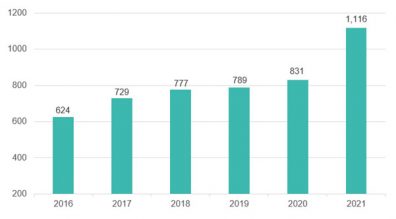
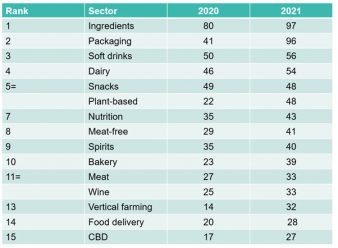
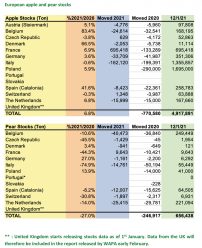
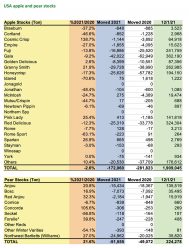
 Sponsored Post – Innovation and development are top priorities at VOG Products. To satisfy customer wishes even more completely, the fruit processing company headquartered in Laives (South Tyrol/Italy) now has an aseptic filling plant for small containers.