Starting in mid-July 2022, GEA and Israeli start-up Better Juice will conduct product tests on behalf of beverage manufacturers looking to lower the sugar content in drinks. To provide the service, the new GEA Better Juice Sugar Converter Skid, which the industrial systems supplier developed based on the Better Juice process, has been installed at the GEA Test Center in Ahaus, Germany. With this innovative solution for the juice industry, GEA is raising the profile of the Ahaus facility as a key hub for piloting aseptic processing and filling of sensitive foods and beverages.
Test Center provides solutions for unique product requirements
“We can now collaborate with our customers at the Test Center to strike the ideal balance between a sweet note and reduced sugar content,” says Gali Yarom, co-founder and joint CEO of Better Juice. To that end, the microbiologists from Better Juice will join forces with GEA’s specialist engineers to support and guide companies in running trials. The GEA Test Center at Ahaus will provide laboratory services dedicated to testing all important analytical parameters.
“It’s often necessary to initially demystify innovative solutions like the Better Juice process. That’s why it’s all the more important to make the case for the technology with manufacturers in person,” says Sascha Wesely who leads the Non-Alcoholic Beverages business at GEA. “The Ahaus trials help us optimize process efficiency right from the outset. By running scalable tests under real-life conditions, we significantly cut the time to market.”
A scalable, enzymatic solution to removing up to 80 percent of sugar from fresh juices
Thanks to a patented enzymatic process, this is the world’s first solution that naturally reduces the sugar content of fruit drinks by up to 80 percent, without affecting its nutritional value or authentic taste. The juice flows continuously through a bioreactor containing GMO-free, immobilized microorganisms which convert simple sugars into prebiotic, non-digestible molecules that benefit the intestinal flora. As a result, the GEA Better Juice Sugar Converter Skid succeeds in removing up to 80 percent of the sugar in natural fruit juices, concentrates as well as fruit-based mixtures, such as purees. At the end of 2021, the partners won their first commercial order from a company in the U.S. where, once integrated into production, the system will create juices with much less sugar.
Leading spore-forming probiotic BC30TM improves protein absorption from plant sources, a new clinical study has shown.
The findings are significant for food and beverage manufacturers because they demonstrate potential to offer an additional benefit in plant-based products containing BC30. There may be opportunities for products targeting seniors – who typically require higher protein intake to maintain muscle mass – as well as vegetarians, vegans, and athletes.
The double-blind randomised study was carried out over a two-week period, with 30 healthy women between the ages of 50 and 70 taking part. Each consumed a daily plant-based beverage containing 20 g of protein, sourced from a combination of pea and rice proteins, either with or without 1 billion CFUs (colony-forming units) of BC30 (Bacillus coagulans GBI-30, 6086®).
After the final dose, blood samples were analysed for amino acid concentrations. Over the whole course of the measurement period, subjects in the BC30 group showed significantly higher values for total amino acids and total essential amino acids, as well as significantly higher than average levels of certain individual amino acids. The BC30 group also showed also showed higher maximum concentrations of total amino acids, essential amino acids, and several individual amino acids.
Part of Kerry’s ProActive Health Portfolio, BC30 is a patented spore-forming probiotic which can be used in a range of food and beverage products. It is backed by over 25 published papers, including a 2020 study demonstrating that it supports protein absorption from milk protein concentrate.
John Quilter, Kerry VP of Global Portfolio – ProActive Health, said: “Previous research has indicated the potential of BC30 to support protein absorption from plant-based sources, but this is the first human clinical study to do so. We’re now able to say that BC30 supports protein absorption from both dairy and plant sources – it’s another benefit that makes it the leading spore-forming probiotic.”
He added: “One of the reasons this research is so exciting is that it’s in line with so many contemporary food and nutrition trends. With demand for high-protein products firmly in the mainstream, consumers in all groups are interested in foods and beverages that offer efficient protein digestion. At the same time, more and more people are following plant-based diets and looking for sustainable nutrition solutions. Many vegetarians and vegans – along with groups like seniors and athletes – could benefit from more efficient absorption of protein to support outcomes such as muscle-building.”
The study was carried out by researchers at the Exercise and Performance Nutrition Laboratory at the School of Health Sciences at Lindenwood University, Missouri, led by Dr Chad Kerksick, Associate Professor of Exercise Science. A research poster was presented on June 17th, 2022, at the annual conference of the International Society of Sports Nutrition (ISSN). The full study is expected to be published in a scientific journal in late 2022 or early 2023.
About BC30TM BC30TM (Bacillus coagulans GBI-30, 6086) is a patented, FDA GRAS probiotic ingredient found in more than 1,000 leading food and beverage products around the world. It is a shelf-stable, science-backed probiotic strain that has been shown to support digestive health, immune health, and protein absorption. Unlike most other probiotic strains, BC30 is a spore-former, which makes it highly stable and allows it to remain viable throughout most manufacturing processes and the low pH of stomach acid. Well-researched and easy to formulate into functional food, beverages and companion animal products, BC30 is backed by over 25 published papers. Part of Kerry’s ProActive Health portfolio, BC30 is natural, and available in vegan, non-GMO Project-verified, organic-compliant and allergen-free versions.
As the first company in the industry, Symrise is sourcing Hibiscus verified at Gold level of SAI Platform’s Farm Sustainability Assessment (FSA). Symrise has committed itself to promoting sustainable agricultural practices in multiple crops and regions, including in its hibiscus supply chain. Its focus lies on working conditions and the sustainable use of water and soil. This brings the company one step closer to achieving its goal of sourcing all strategic biological raw materials sustainably by 2025.
The SAI verification audit took place in December 2021. Now, Symrise can offer the first sustainable hibiscus in the industry. This represents an important milestone in the promotion of sustainable agricultural practices. The plant grows in arid regions and its cultivation requires extensive manual labour. Both the harvest and the separation of seed from calyx for the plant’s reproduction happen by hand.
Symrise sources its hibiscus from the Egyptian region of Aswan. The company has been working with its well-established local partner El Mahaba for over 25 years. Thanks to this long-term cooperation, Symrise has gained direct access to the raw material’s source and can make use of the established practices. It can also identify opportunities that help secure sustainable supply chains. The use of a modern extraction process for the raw material results in an enormous reduction in water consumption and simultaneously increases the yield of the rich hibiscus colour.
Program supports farmers in the region
Symrise wants to use the program to address the needs of the next generation of hibiscus farmers by further advancing its holistic and collaborative approach. The company is involving more farmers in its program and is networking more closely with its customers, thereby increasing the positive effects that the partners can achieve together. “Our collaboration with El Mahaba and the local farmers supports those directly involved and the entire region. In addition, the sustainable cultivation of hibiscus that we promote conserves resources and thus contributes to climate protection,” says Laurence Briand, Sustainable Development Manager at Symrise.
Verified hibiscus promotes the quality of many products such as cosmetics and beverages
To fulfill the criteria for verification and maintain them continuously, independent third parties audit the farms every three years. They ask the farmers and operating groups to evaluate and grade their social, environmental, economic, and general management practices.
With the sustainable cultivation of hibiscus, Symrise is continuing to pursue its goal of sourcing 100 percent of its strategic biological raw materials sustainably by 2025. As part of this goal, the company wants to generate added value along the entire supply chain and expand the portfolio of sustainable raw materials for its customers.
Since December 1, 2021, Alexander John has been strengthening the team of ZIEMANN HOLVRIEKA GmbH, Ludwigsburg as Head of Sales. At the expert for tanks and process technology for the brewing, beverage and liquid food industry, Alexander John will be responsible for sales in Africa. “We are pleased that we were able to win over a brewing technologist with such a profound knowledge of the process and plant industry. Together with him, we will further intensify our activities on this emerging continent. We are convinced that our product and service portfolio is extremely attractive for the given framework conditions there”, says Florian Schneider, Managing Director of Sales and Marketing of ZIEMANN HOLVRIEKA GmbH. For example, on the African continent, other starch sources are often used in addition to the usual raw materials, such as malt, which can be covered in a tailor-made way by the wide range of ZIEMANN HOLVRIEKA’s in-house lautering technologies.
Alexander John is a trained brewer. After graduating as a brewing engineer, John worked as a project engineer and international sales manager for many years. An almost one-year stay in Nigeria for a large brownfield project for a global beverage group strengthened his affinity for the African market. “I am looking forward to supporting the companies in my sales area with my practical knowledge. Together with our customers, we will find the perfect solution for every challenge and plant size”, John summarizes.
Alexander John supports the customers in Africa from the headquarters in Ludwigsburg.
EARI Beverage Group, a diversified beverage and media group, announces the acquisition of the Blossom Botanical Water Brand.
Adding to the EARI Beverage Group portfolio, the acquisition of Blossom Botanical Water expands the footprint in the functional and craft beverage market segments. The Blossom brand fits perfectly with EARI’s strategy of identifying and acquiring brands in high-growth categories that have proven operating models and clear consumer acceptance. Blossom is credited with creating a new sub-category of plant-based waters using botanicals. The brand has distribution along the US East Coast and Midwest and has generated roughly USD 4 million in gross sales since inception.
About Blossom Botanical Water Founded in Massachusetts 10 years ago and inspired by nature, Blossom Botanical Water is distinguished by its use of flower botanicals as a key flavour component across its portfolio of products. At only 20 calories per 16.9 oz bottle, it’s a delicious, healthy alternative to both plain water and high-sugar sodas or juices. Blossom infuses pure spring water with the taste and aroma extracted from real blossoms, then uses a complementary fruit to create five hand-crafted unique flavours of distinctive appeal: Lemon Rose, Plum Jasmine, Mango Hibiscus, Pomegranate Geranium and Grapefruit Lilac. Blossom Water is further enhanced for your health by providing scientifically proven benefit to strengthen immunity, the body’s best defense for maintaining wellness and vitality. Each bottle contains as much immune system support as 1 billion CFUs of probiotic from the strain Bacillus coagulants GBI-30 6086. Blossom Water’s drinks are certified non-GMO and free of gluten, caffeine, and sodium. They have no artificial flavours, sweeteners, colours, or preservatives, and they are kosher and vegan.
The sectors professionalisation is evolving in an ever uncertain and disruptive environment with more and more complex regulatory and business requirements to cope with societal and environmental concerns. In this context, Freshfel Europe is supporting initiatives for the sector such as the SHAFFE Master degree for the global fresh produce sector aiming at continuous training and education of its fresh produce business professionals.
The fresh produce industry is rapidly changing due to different factors. This is evident today, as the sector is affected not only by adverse weather conditions due to climate change, but also by complex logistical situations, the Covid pandemic, the rising production costs and the consequences of the war in Ukraine which has generated shortages of materials to produce and difficulties in accessing these conflicting markets.
In addition to all this, regulatory changes in the markets, and the emergence of more and more sustainability requirements are other aspects to be considered for the professionals of the fresh produce industry. Today the industry faces a more informed and demanding consumer, as well as a lower availability of workers, among others.
Philippe Binard, General Delegate of Freshfel Europe commented: “Freshfel Europe is please to support the Master in Communication, Marketing and International Management for fresh produce professionals designed by SHAFFE. This will fill a gap and respond to the needs of industry professionals involved in global trade in this changing and challenging environment”.
The master’s degree launched by SHAFFE is a unique opportunity to achieve this goal while motivating young talent to be part of a very professional business environment.
The 2021-2022 Florida all orange forecast released today by the USDA Agricultural Statistics Board is 41.0 million boxes. The total is comprised of 18.3 million boxes of non-Valencia oranges (early, mid-season, and Navel varieties), up slightly from the June forecast, and 22.7 million boxes of Valencia oranges, up 1 percent from the June forecast. The forecast of all Florida grapefruit production is up 1 percent at 3.33 million boxes. Of the total grapefruit forecast, 500,000 boxes are white, and 2.83 million boxes are the red varieties. The Florida all tangerine and tangelo forecast remains at 750,000 boxes …
Please download the full citrus crop production forecast: www.nass.usda.gov
The 2022/23 harvesting of early fruits is advancing in São Paulo state. In this scenario, industrial processing activities are following the harvesting pace and requiring more fruits.
According to players from the industry, the ratio of early fruits has improved and practically all fruits have been allowed for delivery, both in the spot market or for contracts. The industrial yield, however, is still low, which is common at the beginning of the crop.
Crushing activities are now taking place in eight processors in São Paulo: Araraquara, Araras, Bebedouro, Catanduva, Colina, Conchal and two in Matão. The companies have already been receiving some volumes of pera orange, but the majority is early fruits – the pera orange availability tends to increase from mid-September onwards.
In the spot market, values are ranging from 27.00 and 28.00 BRL per 40.8-kilo box, on tree, harvested and delivered at the processor. As for contracts, quotations may hit 31.00 BRL per box in big companies. In small processing companies, values are at 35.00 BRL/box.
Refresco Group B.V., the global independent beverage solutions provider for Global, National and Emerging (GNE) brands, and retailers in Europe and North America, announced that the acquisition of a majority stake in Refresco by KKR has been completed, following the receipt of regulatory approvals from the competition authorities.
On February 22, 2022, Refresco and KKR announced that they had entered into a definitive agreement for KKR to acquire a majority stake in the Company, with Refresco’s existing investors, PAI Partners and British Columbia Investment Management Corporation (“BCI”), maintaining a significant minority position.
Hans Roelofs, CEO, Refresco: “I am excited to start the next chapter in the development of our company, with KKR as our new majority owner. We will continue to execute our strategy, focused on growing alongside our customers and expanding into new categories and geographies. We look forward to leveraging KKR’s capabilities, operational expertise and commitment to sustainability to further strengthen our position and achieve our vision of ‘Our Drinks On Every Table’.”
Science and business join forces in Brazil to accelerate innovation in food by focusing on the sustainable use of LATAM’s biodiversity and affordable nutrition for consumers
Three leading global companies, Givaudan, Bühler, and Cargill, have formed a consortium in collaboration with the FoodTech HUB Latam and ITAL, Food Technology Institute, to build a food innovation centre in the city of Campinas, recognised as Brazil’s tech powerhouse. The “Tropical Food Innovation Lab” will be located at the Food Technology Institute, ITAL, in a fully refurbished, 1,300 square metre area.
This new hub will be the go-to place in Latin America to connect and develop sustainable, future food and beverage products. Start-ups, companies, investors, universities and research institutions will have direct access to high-end technologies for rapid prototyping and plugging into the global food tech ecosystem that will foster fast-paced innovation in the food and beverage sector.
The most current generation of wet and dry extrusion systems for plant-based proteins, as well as beverages processing units will add complementary capabilities to the existing facilities of ITAL. When complete, the facility will feature new application labs and a state of the art demo kitchen, where consumers, food scientists, nutritionists, chefs, mixologists and marketers, among other professionals, will work together to create sustainable new products.
In a world facing major challenges from climate change, combined with a population expected to exceed 9.5 billion people by 2050, it is essential for the food industry to take positive action and work towards a regenerative and equitable food system that and provides healthy, safe and nutritious food for all, while staying within the planetary boundaries.
Brazil has the richest plant biodiversity on the planet, distributed in six major biomes and is one of the world’s main food producers. Yet immense potential remains, with regards to healthy and sustainable products, novel food and food waste reduction, contributing to Food Systems Transformation.
The Tropical Food Innovation Lab is planned to open in Q1 2023.
This summer, KeVita®, a leading brand of delicious, probiotic sparkling beverages, is putting a modern twist on the beloved classic taste of childhood lemonade with its new line of light and refreshing Sparking Probiotic Lemonades. The delightfully bubbly summertime drinks, available in flavours Classic and Peach, taste delicious, are packed with billions of live probiotics, and are made with organic ingredients and fermented water kefir culture. Each 15.2-ounce serving bottle of KeVita’s certified non-alcoholic Sparkling Probiotic Lemonade contains 30 calories or less and 6 g of sugar.
KeVita Sparkling Probiotic Lemonades are available now in the US.
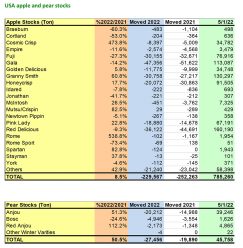
The Prognosfruit Conference is Europe’s leading annual event for the apple and pear sector, gathering growers from across Europe. After two successful online events in 2020 and 2021, Prognosfruit returns as an in-person event in Belgrade, Serbia, from the 3rd to the 5th of August 2022. Registrations are now open, and stakeholders and journalists are welcome to register via the Prognosfruit website. The complete programme of the 3-day event is now available.
Prognosfruit, the leading annual event for the apple and pear sector, will take place in Belgrade, Serbia, from the 3rd to the 5th of August 2022, returning as an in-person event after two successful online editions. Registrations for Prognosfruit 2022, organised by WAPA in cooperation with Serbia Does Apples, are now open on the Prognosfruit website.
Since 1976, Prognosfruit has released the annual apple and pear production forecast for the upcoming season. This year, the three-day event during which the report will be released will see representatives of the sector gather to discuss the Northern Hemisphere situation as well as global perspectives for apples and pears. The complete programme of Prognosfruit 2022 is available below and on the Prognosfruit website, along with the online registration form to attend the conference.
The 3-day event will be structured as follows:
On August 3rd, the Prognosfruit 2022 participants will enjoy a sightseeing tour of the city of Belgrade, followed
by the Welcome Reception, which will take place at Belgrade’s Royal Palace;
The Prognosfruit 2022 Conference will take place on August 4th at the Hyatt Regency Belgrade. In the morning session, the European apple and pear forecast for the upcoming season will be revealed and complemented by an analysis of the market situation in the USA and China and a panel discussion with the major EU producers. The afternoon session will focus on the global perspectives for apples and pears, with an analysis of rising costs and logistical hurdles and an analysis of the sector in the EU neighbourhood;
The Conference will be followed by a Gala Dinner at the Kalemegdanska terasa on the evening of August 4th;
The event will conclude on August 5th with a technical visit to the apple orchard of the company Atos Fructum,
on the southern slope of Fruška Gora.
All the information about Prognosfruit 2022 and the online registration form to attend the conference available on the Prognosfruit website.
GNT has expanded its range of EU organic-certified EXBERRY® colouring foods with new yellow and green shades made from organic safflower.
The organic market is seeing exceptional growth1 as modern consumers pay closer attention to food and drink products’ health and sustainability credentials. In response to the rising demand, GNT has launched two new EXBERRY® organics products.
EXBERRY® organics ‘Fruit & Veg Yellow’ is made from organic safflower and organic apple, while EXBERRY® organics ‘Veg Green’ is made from organic safflower and organic spirulina. Both are compliant with Organic Regulation (EU) 2018/848.
Suitable for a wide variety of food and beverage applications, the new products extend an EXBERRY® organics range that already features red, purple, blue, and orange options.
GNT Europa’s Managing Director, Petra Thiele, said: “EXBERRY® organics can be used to create spectacularly vibrant food and drink while maintaining perfectly clean ingredient lists. We’re delighted to now be able to introduce colouring foods made from organic safflower concentrate to the market, opening up exciting new possibilities for organic brands.”
Based on the principle of colouring food with food, EXBERRY® organics are created from edible fruit, vegetables, and plants using traditional physical processing methods. They are certified organic in accordance with EU regulations and qualify for completely clean and clear label declarations throughout much of the world.
EXBERRY® organics concentrates are also 100 % vegan-friendly, halal, and kosher. In addition, the fully traceable raw materials are grown using sustainable methods by farmers working as part of GNT’s vertically integrated supply chain.
1FiBL & IFOAM ‘The World of Organic Agriculture’ (2022)
Sponsored Post – Does the beverage and liquid food industry also have Olympic aspirations? Manufacturers of beverages and liquid food and machine manufacturers have long since recognised the potential. Digitalisation and digital transformation are one of the four main topics at drinktec 2022, which will be held in Munich from September 12 to 16, 2022. With its range of exhibitors and supporting program, the world’s leading trade fair for the beverage and liquid food industry offers broad views and focused approaches aimed at helping the industry become faster, achieve stronger results and intensify its focus on sustainable plant concepts in the next years.
(Photo: Messe München)
And the strong momentum around data use and process improvement is not only on the manufacturer side; retailers and consumers have long been active in these areas: Merging virtual and real worlds at the point of sale of the future is aimed at improving contact with consumers. One way to achieve that is through automation and networking with supply chain management, multimedia shopping environments for an individualised customer approach or online retailing.
An international study by the consulting firm PWC puts “digitising products and services” in second place among the top ten challenges of the next few years. The study by the German Engineering Federation (VDMA) on the future of food processing machinery also points in this direction: A supporter of the drinktec trade fair, the VDMA identifies digitalisation and concepts for intelligent networking and data use as a major focus for the industry’s future alignment until 2035.
Solutions for different perspectives
Digitalisation in the world of beverages and liquid food offers real added benefits for many users. One area that benefits is process engineering, where precise temperature profiles in the manufacturing process can seamlessly track production and identify quality parameters during the early stages of production. The best example of this is in the brewing process: In collaboration with equipment manufacturers and breweries, researchers used machine learning to model an efficient and more sustainable malt yield, and identify significant influencing factors for the malt yield.
Real time is another keyword. At this fall’s drinktec, machine manufacturers will offer numerous solutions for obtaining real-time information from machines: The online tracking of production and filling processes can yield higher performance, predictive maintenance, efficient conversion processes, an overview of consumption values and clear data on product quality. Providers of software solutions, such as manufacturing execution systems (MES), can already give preliminary estimates of the optimisation potential: Efficiency gains of up to 20 percent are possible for line operations, overall equipment effectiveness (OEE) is improved through maintenance cycles that are up to 30 percent longer, and product changes can be made at the planned time with 99 percent certainty.
While these solutions often require “only” extensive data collection and recording, another supplier goes even further: Thanks to more accurate detection of water droplets, an empty glass inspector trained in deep learning significantly reduces the output of glass bottles identified as defective. Needless to say, this saving can also be directly converted into CO2 savings: Depending on the line output, 25 to 100 t of CO2 can be saved through this improved rejection rate.
The possibilities of machine learning software also raise the expectations for maintenance tasks: One exhibitor at drinktec is already using this digital tool to detect anomalies in separator machinery. Condition-based maintenance with AR data glasses seems to have been taught almost everywhere and has been widely adopted by machine suppliers.
Every digital application is also another checkmark on the sustainability list. This is particularly clear in the case of cleaning technology, which uses optical realtime detection of contamination even inside containers and tanks and enables highly specialised cleaning cycles. A machine learning tool ensures that individual contamination levels are learned, detected and treated correctly.
More inspiration in the supporting program
drinktec 2022 brings together the full scope of innovation for the beverage and liquid food industry: In addition to the exhibitor portfolio, including a directory that lets visitors find providers of solutions to digitise production operations and their supply chain, visitors can also look forward to the supporting program when planning their visit: With presentations on the key topic of digitalisation at the drinktec Inspiration Hub in Halls A3 and B3, exhibitors and visitors will have the opportunity for in-depth interaction: Concentrated expertise and innovative applications offer fresh impetus for the future-oriented alignment of the industry.
More information about drinktec can be found online at www.drinktec.com
The saying ‘an apple a day keeps the doctor away’ is well known but is there any truth in it? There may be according to a major ‘super study’, published in the Journal of the American Heart Association1, which found that not only apples – but orange juice, onions, carrots, broccoli and cabbage – are associated with lower risk of heart disease and stroke.
Scientists at the University of Toronto sifted through more than 80 unique cohort studies which, overall, followed up 4,031,896 individuals for an average of 11 years. During that time, more than 125,000 cardiovascular events e.g. strokes and heart attacks were recorded.
Author, Professor John Sievenpiper, commented: “Public health policies discourage the consumption of certain fruit sources such as 100 % fruit juice, dried fruit, and tropical fruits because of their sugar content and promote vegetables before fruit. However, we found that that different sources of fruit, including 100 % fruit juice, were associated with comparable cardiovascular disease risk reduction as that of vegetables.
“Public health guidance to limit the intake of certain fruit sources because of concerns related to their contribution to sugars may have unintended harm in preventing people from meeting fruit and vegetable targets for cardiovascular disease risk reduction”.
Looking at the detail, the study found that drinking 100 % fruit juice lowered the relative risk of dying from a stroke by 33 percent while eating fruit in general lowered risk by 13 percent. Vegetables cut the risk of stroke deaths by 6 percent. For heart disease mortality, fruit, vegetables and fruit juices were similarly associated with a relative risk reduction of around 13 – 14 percent.
According to the authors, the most important individual fruits and vegetables for lowering the risk of developing cardiovascular disease were citrus fruits, 100 % fruit juices, apples, allium vegetables (garlic, onion, leeks, chives), carrots, cruciferous vegetables (broccoli, cabbage, sprouts) and green leafy vegetables (kale, spinach, watercress).
Professor Sievenpiper concluded: “Higher intakes of fruits and/or vegetables are associated with improvements in all cardiovascular disease outcomes, with fruit associated with the largest risk reductions.
“Greater benefits may be seen for some fruits and vegetables supporting recommendations for emphasizing specific fruit and vegetable sources in dietary guidelines. No fruit and vegetable sources were adversely associated with cardiovascular disease, including fruit sources of concern, such as 100 % fruit juice and dried fruit”.
1Zurbau A et al. (2020) Relation of different fruit and vegetable sources with incident cardiovascular outcomes: A systematic review and meta-analysis of prospective cohort studies. J Am Heart Assoc 9: e017728. DOI: 10.1161/JAHA.120.017728 https://www.ahajournals.org/doi/10.1161/JAHA.120.017728
According to a WWF study, 42 percent of all cultivated fruits and vegetables worldwide are thrown away every year – even though they are eminently suitable for further processing. The Swedish company RSCUED wants to change this and has appointed itself fruit rescuers. Their business concept is as sustainable as it is unconventional and requires a special solution. This has now been delivered to them by the technology group GEA. With the innovative vacuum juicer GEA vaculiq, RSCUED can produce high-quality juices in the shortest possible time from raw materials that would otherwise have fallen victim to waste. The icing on the cake: the waste from production is also recycled into valuable fertilizer.
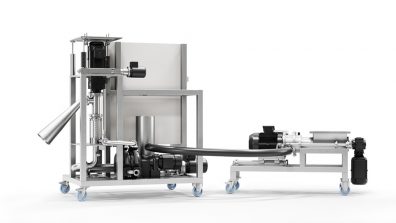
The GEA vaculiq 100 vacuum spiral filter (left) and the GEA MultiCrush milling system are pre-assembled on movable skids and can be used flexibly. (Photo: GEA)
On its way to food recycling, RSCUED has taken a big step forward together with the technical solution from GEA. “The advantages of the GEA skid for us were the very short processing time, efficiency, high product quality and flexibility. We need to be able to respond to seasonal supply just as quickly as to fluctuating incoming goods,” explains Truls Christenson, co-founder of RSCUED. This is because the company receives the fruit and vegetables sorted out for regular trade via donations from wholesalers, supermarkets, farms and delivery services. Private individuals who have larger quantities from their gardens also participate in RSCUED’s appeal.
GEA vaculiq with its vacuum spiral filter delivers the desired flexibility in full measure: The system processes a ton of fruit or vegetables within about twenty minutes and cleaning the system between productions takes just five minutes. Different varieties can thus be turned into high-quality juice in quick succession. And it does so with maximum yield: in the first test phase, RSCUED was able to produce twice as much juice compared to its previously used press. With a capacity of up to 1,800 liters per hour, RSCUED is now able to easily increase its production in the future thanks to GEA vaculiq and is also capable of receiving goods – besides Sweden – from all over Northern Europe.
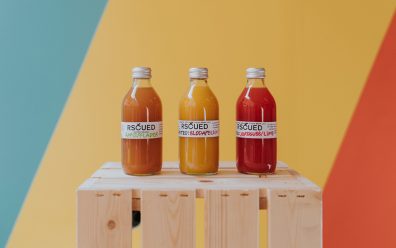
RSCUED juices are becoming increasingly popular with customers. (Photo: RSCUED)
In addition, GEA’s vacuum spiral filter technology was convincing in terms of quality. With this juicing method, the products do not come into contact with oxygen, which is known to have unfavorable effects on vegetables and fruits. In addition, the gentle process preserves all healthy vitamins and secondary plant nutrients. Finally, the juice produced with GEA vaculiq not only looks better, it also tastes fresher and has a longer shelf life. “GEA’s overall concept is therefore an innovative and unique solution for us in the field of sustainable, industrial juice production,” adds Truls Christenson.
All’s well that ends well
And so the circle closes for GEA and RSCUED: The dry mash discharged by the vaculiq plant, together with remaining rejects, is ideally suited as a basis for fertilizer – which, as is well known, promotes the growth of new fruits and vegetables. This fertilizer is finally distributed through a large garden center chain in Sweden.
“When we founded RSCUED as a start-up seven years ago, we had the vision to stop the waste madness. Together with GEA, we have now been able to realize this on a higher level. With the new GEA vaculiq 100 vacuum juicer and the multiCrush milling system from GEA, we are very well positioned and can develop our production excellently”, says Truls Christenson. “And the faster, more flexible and more productive we are at RSCUED – the more we contribute to sustainability for a healthier planet.”
About RSCUED RSCUED was founded in Helsingborg in 2015 as a start-up. The company employs around 15 staff members and expects revenues of EUR 3,2 million in 2022. The company’s purpose is to rescue all kind of fruit and vegetables which would otherwise be wasted. RSCUED receives the fruit and vegetables sorted out for regular trade via donations from wholesalers, supermarkets, farms and delivery services from Sweden as well as Northern Europe. The products are sold via their webshop as well as in selected grocery stores, coffee shops and restaurants and in Sweden. Learn more here: rscued.se.
Nagardo, a new natural preservative from LANXESS, is now approved for use in non-alcoholic beverages in the European Union as well. “EU approval allows us to continue expanding the global footprint of Nagardo. The preservative is already in use in the U.S., Australia, New Zealand, and Canada,” said Monika Ebener, Global Marketing Director for Natural Antimicrobials at LANXESS. “We’re going to be launching in other markets as well. We are now proud to present our natural guardian in our home market, too.”
EU approval is regarded as the gold standard due to its thorough evaluation process. “This registration means that European beverage producers can now make use of a long-awaited natural preservative that not only reliably and efficiently safeguards product quality but also enables manufacturers to transform their product ranges to suit the emerging trend of consumer awareness and demand for natural ingredients. The use of Nagardo can also help companies to achieve their sustainability targets, partly by reducing the amount of plastic needed for packaging and partly because switching from hot filling or tunnel pasteurization to cold filling with Nagardo cuts energy usage.
Nagardo is used in various beverage categories, which means that a wide-ranging market can depend on the protection offered by this natural preservative.
Nagardo is based on glycolipids obtained from edible mushrooms, which were discovered in a comprehensive screening process encompassing more than 100,000 natural substances. It transpired
that they offer the kind of effectiveness that can be found only in nature – all that is needed is a dosage as much as 50 times smaller than is the case with commonly used synthetic preservatives. It is currently the most effective natural preservative for non-alcoholic beverages on the market.
Nagardo will be launched officially in Europe for the first time at this year’s drinktec, a trade show that will be taking place in Munich from September 12 to 16.
The cost of plastics, aluminium, paper and liquids materials used in flexible packaging reached new, record levels in the first quarter of 2022, maintaining the strong upward surge in prices seen throughout 2021, according to Flexible Packaging Europe (FPE). Continued pressure from soaring energy costs, as well as other external factors, means the dramatic increases seen in the last half of 2021 have now been exceeded.
In particular the cost of 20micron BOPP film shot up 45 % during January to March 2022 and has now doubled in price since the first quarter of 2021. Thin aluminium converter foil also jumped by 67 % in the same three months and is now 75 % higher than the end of 2020. Elsewhere, 12micron PET added 47 % in the same period to stand 50 % higher than just over a year ago, while 15m micron BOPA film added 33 %, marking a 44 % increase in 15 months.
LDPE and HDPE prices are still well above the price levels seen at the end of 2020, being 75 % and 54 % more. Both are still well above the price levels seen at the end of 2020, being 75 % and 50+ % more. All figures have been complied by Wood Mackenzie and ICIS.
Commenting on the figures, David Buckby, Senior Analyst at Wood Mackenzie said, “Substrate prices across the board continued to rise sharply in Q1, driven primarily, in many cases, by energy surcharges. Limited availability of materials also propped up prices, made worse by ongoing global logistics challenges. The high cost and unpredictability of offshore sourcing means that European producers were generally busy, with some fully booked and not accepting new orders.”
“Lead times for aluminium foil in Q1 were as long as five months compared to two months previously. For paper, they were often two to three months, up from four to six weeks. The extent of price increases from supplier to supplier depended heavily on the scope of previous hikes – timings do vary. Some producers which pushed through substantial energy surcharges and price rises in Q4 pushed for only moderate hikes or even rollovers in Q1,” he added.
“Russia’s invasion of Ukraine added further uncertainty to an already highly clouded outlook,” Buckby believes.
FPE sees continued strong demand for all flexible materials as growth indices for the markets its members serve all remain positive. However there has been a general slowdown in the pace of growth, which may take some pressure off already stretched supply shortages of raw materials and ancillary products, such as adhesives and inks. Logistics and utilities pricing increases had and will continue to have a large effect on conversion costs to flexibles packaging converters. After a brief pause oil prices are now increasing again, so this may weigh on any respite from continued flexible material price hikes.
Guido Aufdemkamp, FPE’s Executive Director thinks it is difficult to forecast the direction of the market in current circumstances. “Growth in demand in Europe for flexible packaging is almost certain. While the price increases could have an impact on the levels of demand this is unlikely as non-flexible packaging applications are faced with higher absolute increases per pack as more material is used. Add the continuing supply chain disruption and major energy issues to the equation and the outlook is uncertain. The conflict in Ukraine and the economic consequences of it across Europe were not something we could predict or anticipate. However flexible packaging producers have proved resilient in the past, most recently with the pandemic, so we are confident the sector will continue to be able to meet demand for its products.”
Celerant Capital, a specialised private equity sponsor, announced the acquisition of Krier Foods, a fifth-generation family-owned beverage company.
Founded in 1908, Krier is a premier manufacturer of a wide variety of Ready to Drink (RTD) beverages packaged in aluminum cans. Krier has a long history of driving canned beverage innovation through its Jolly Good brand and providing high quality contract manufacturing services for its customers’ portfolio of established and emerging brands. Krier’s production of carbonated sodas dates to the beginnings of the package format in the 1960s. With decades of institutional knowledge and a modern facility, Krier will continue its legacy of quality, service, and enabling its customers’ growth. Krier’s dedicated team and culture of excellence will continue to be the foundation of the Company’s success.
Krier announced the appointment of John Kowalchik, formerly CEO of Baxters North America and a veteran co-manufacturing leader, as its new CEO. Former CEO, John Rassel, who will continue as an advisor to the Company, will transition out of the day-to-day leadership of the Company to pursue charitable and community opportunities in Southeast Wisconsin. The senior leadership team of Krier will continue to lead it from its headquarters in Random Lake, WI (US).
Celerant Capital is a specialised private equity sponsor led by food manufacturing industry veterans that focuses exclusively on investing in food, beverage and enabling technologies. With highly-experienced senior industry professionals, Celerant focuses on acquiring businesses with competitive advantages and significant opportunities for value creation.
For marketing year (MY) 2021/22, Post revises its estimates for fresh lemon production to 1.90 million metric tons (MMT), up by 15 percent, due to favourable weather conditions. Fresh orange production is projected to increase to 920,000 metric tons (MT), and fresh tangerine production is expected to increase to 400,000 MT. Recent relatively favourable weather conditions for both sweet citrus fruits have allowed trees to recuperate from a stressful period characterised by drought followed by heavy rains. Lemon exports are projected to increase to 250,000 MT due to larger production, and sweet citrus exports are expected to increase slightly to 65,000 MT for tangerines and to 88,000 MT for oranges. Container availability shortages and higher fleet costs, due to the COVID-19 pandemic and global inflation, are impacting the activity of the Argentine citrus industry, increasing export costs by 100 percent.
This summer, leading branded soft drinks business Britvic is celebrating the 35th anniversary of its Rugby factory, thanking colleagues for their dedicated service and showcasing the investment and innovation that has become synonymous with the company’s flagship facility.
Based on Glebe Farm Industrial Estate, the site has seen over £125 million of investment since 2018, with the factory most recently benefitting from a £27 million investment in a new state-of-the-art canning line in September 2021.
This is Rugby’s fourth canning line, growing the site’s total capacity by around 20% and creating 20 new jobs at the facility.
Boasting some of the fastest lines in Europe, the site’s new canning line operates at a rate of around 120,000 cans per hour, taking the factory’s total production to an impressive rate of just under half a million cans per hour.
Rugby MP Mark Pawsey said: “Britvic’s 35 years in Rugby represent a great success both for the company and for our town’s local economy.
“Over those years, their flagship factory has grown and created hundreds of jobs, including a vibrant apprenticeships programme which has given many young people a first taste of work.
“I was delighted to see the further investment in their fourth canning line which demonstrates their commitment to the Rugby site for many years to come.”
The investment provided Britvic with the additional capacity to drive agility and exemplary customer service, as well as boost production of some of the country’s most loved brands, including Tango, 7UP and Pepsi MAX.
Importantly, investment has seen the work force increase at the site, helping to bring the total number of employees to more than 340 and reinforcing Britvic’s commitment to the local community.
These roles span numerous disciplines, from engineering to manufacturing, with apprenticeships also a key component of the additional rise in employee numbers.
Paramjeet Pahdi, Director of Operations at Rugby, said: “As we celebrate 35 years of our Rugby site, I’m proud to look back at the journey we’ve been on together to make this facility the beacon of success it is today.
“I would like to thank all our colleagues for their contribution over the decades, without their hard work and dedication I have no doubt that we would not be here celebrating such a milestone.
“Looking to the future, Britvic is focused on ensuring that Rugby continues its success story as we develop the site with further investment, securing our future for generations to come.”
Over the past 35 years, Rugby has become well known for showcasing some of the fastest and best manufacturing technology in Europe.
The Rugby factory has also played a key role in Britvic’s sustainability efforts.
Continuous improvements have seen the factory cut the amount of water it uses – most recently by using the cooling water from its combined heat and powerplant as a source of hot water for the site – helping Britvic work towards its net zero carbon emissions target.
Celebrations for the 35 year anniversary began in May with a family fun day attracting more than 500 people to the site.
Employees and their families enjoyed the day with a resident DJ, fairground rides, a penalty shoot out, mini golf and a Britvic bar.
Reducing sugar levels in everything from carbonated soft drinks and seltzers to dairy shakes has never been a higher priority for beverage brands and their suppliers globally.
Treatt’s sugar reduction capabilities are growing with the introduction of its new Brix Booster products.
The range extension follows the success of the first Brix Booster, and is in response to increasing consumer demand for authentic, sugar-like flavours which meet healthier living needs without compromising on taste.
The expanded range offers unique blends of all natural sweet ingredients, essences and aromas that do not add calories to finished beverages, delivering everything from subtle sugar cane notes, through to bold sugar profiles with rich molasses nuances.
Brix boosting benefits
Increases sweetness perception
Improves mouthfeel
Improves authentic sugar profile when formulating with high intensity sweeteners (HIS)
Lifts overall flavour profile of beverage
The Brix Boosters increase the perception of sweetness within a beverage while improving mouthfeel adding a more authentic sugar like profile. Because they contain the volatile aromas from natural sweet foodstuffs that have been specifically selected, they slot into a beverage formulation without disrupting the overall profile.
Rosie Travers, Health & Wellness Category Manager at Treatt comments: “Our Brix Boosters can be used as a sugar flavour ingredient in sugar free, low and reduced sugar formulations, or in conjunction with natural or synthetic high intensity sweeteners. This natural flavour provides an authentic sucrose impression to the sweetness profile. We have seen success across a wide range of applications in both alcoholic and non-alcoholic beverages. They deliver a sugar-like taste, rounded sweetness, improved mouthfeel, and lasting sugar flavour that works harmoniously within the flavour profile of the beverage.”
Introducing the range: 3 sugar taste profiles for any application
Brix Booster 9884 has a mild sugar flavour profile, reminiscent of unrefined sugar or sugar cane. Works well with flavoured waters, lemonade, citrus and berry flavour beverage applications.
Brix Booster 9885 has a rich sugar flavour profile, reminiscent of light brown sugar. Works well with orangeade, cola, tonic, tropical and berry flavour beverage applications.
Brix Booster 9886 delivers a bold sugar flavour profile, reminiscent of brown sugar with notes of dried fruits and molasses. Works well with iced tea, coffee, cola, ginger beer, brown and robust flavour beverage applications.
Nano Shot is launching their collection of CBD-infused beverages made with real fruit juice, no artificial flavours, zero calories/sugars and no THC. The product line, with its proprietary Nano emulsification technology, allows adult consumers to experience a near instant calm and relaxing sensation unlike most of the other options in the marketplace.
With stress, anxiety, and mental health issues on the rise in the post pandemic era, Nano Shot is launching their collection of CBD-infused beverages made with real fruit juice, no artificial flavours, zero calories/sugars and no THC. The product line, with its proprietary Nano emulsification technology, allows adult consumers to experience a near instant calm and relaxing sensation unlike most of the other options in the marketplace. Nano Shot is the contemporary solution for today’s health and wellness conscious consumer seeking real functionality and is currently available on-line (https://nano-shot.com) and in select markets throughout the US.
The collection is available in ready-to-drink 2oz. bottles and includes four flavours: Blueberry-Pomegranate, Pineapple-Coconut, Mango-Hot Chili, and Citrus.
Larry Harmon, Creator and Founder of Nano Shot developed the brand from a very personal space: “My mother was suffering from Parkinson’s disease and I knew that a 100 % natural CBD formulation, if created with a strict focus on the most scientifically advanced nano-emulsification process, could provide a product that assists with enhancing the quality of her daily life. I am very proud of our science and our team and can’t wait to spread the Nano Shot benefit to consumers across the country and the world.”
The Brazilian orange crop for Marketing Year (MY) 2021/22 is forecast at 414.4 million 40.8-kg boxes (MBx) or 16.91 million metric tons (MMT), an increase of 15 percent vis-à-vis the current season, supported by good weather conditions as of October 2021. Production costs are estimated at over R$ 33,000 per hectare (ha) or US$6,600/ha, up 27 percent compared to the previous crop, supported by high fertiliser, ag chemicals, and diesel prices. Total Brazilian FCOJ 65 Brix equivalent exports for MY 2021/22 are forecast to be relatively stable at 1.04 million metric tons (MT), an increase of 30,000 MT vis-à-vis MY 2020/21 …
South Africa is set for record citrus exports of 2.7 million tons in marketing year 2021/22 despite ongoing challenges. Favourable weather conditions, new areas under production, and higher demand in premium markets, such as the United States, are driving the growth in exports. Duty-free exports of citrus to the United States under the African Growth Opportunity Act reached a historic high of 100,234 MT in 2021. However, several challenges are facing the industry, including, soaring input costs, especially fuel and fertiliser, a major surge in shipping costs, ongoing operational challenges at the country’s ports, and the impact of the Russia-Ukraine conflict on established trading patterns. As a result, profitability and sustainability of the industry are under threat and could limit future investments …
Turkey’s citrus production for MY 2021/22 is forecasted up year-over-year in large part due to improved weather conditions compared to the previous year’s hot weather. While production is up, growers are seeing profit margins shrink as input costs, such as fuel and fertiliser, increase at a faster clip than farm gate prices. To cut losses, some grapefruit, orange and mandarin growers opted to leave their crops unharvested. With the exception of oranges, more than 50 percent of Turkey’s citrus production is expected to be exported in MY 2021/22. Looking ahead to MY 2022/23, citrus production will likely decline because of freezing weather that damaged blossoms in March of this year …
Fermentalg, the French expert in the microalgae bioindustry, announces that it has reached the final technical milestone in the scale-up of Galdieria Blue Extract1 – the acid-stable natural blue food colour developed in partnership with DDW, part of Givaudan. The completion of the industrialisation work allows the partners to engage in the initial commercialisation stage of this new product, an alternative to synthetic blue colours for low pH food and beverage applications.
As part of the partnership agreement signed in June 2020, and in order to support the launch of this new colour, the achievement of this second milestone triggers an additional payment of EUR 1 million from DDW to Fermentalg in the form of a supplier’s advance repayable on future product deliveries. The first pre-commercial orders are expected before the end of the year.
In this context, Fermentalg will initiate the industrial transfer and production with a leading German toll manufacturer, in line with the strategy to increase and diversify its production capacity.
In parallel with the industrial transfer and pre-commercialisation efforts, applications with the European Food Safety Authority and the U.S. Food and Drug Administration are being pursued to obtain regulatory authorisations in the second half of 2023.
1originating from the Blue Origins® joint development program
Oral supplement containing Hydroxytyrosol and Punicalagin could help improve Dyslipidemia in an adult population without co-adjuvant treatment
According to recently published data from a randomised, double-blind, placebo-controlled study1, supplementation with Euromed’s ingredient Pomalive®, a precise combination of standardized olive and pomegranate fruits extracts, could help to improve dyslipidemia, a condition resulting from an unbalanced distribution of different lipids (triglycerides, total cholesterol, HDL cholesterol and LDL cholesterol), and a main risk factor in the development of cardiovascular diseases.
Researchers from the Nutrition Department, University Hospital La Paz (Madrid, Spain) found that oral intake of patent pending combined olives and pomegranate extracts (Pomalive®) for 8 weeks (n = 84) significantly reduced plasma triglycerides (p < 0.05), decreased LDL-C (p < 0.01) and increased HDL-C (p < 0.05) in middle-aged participants with dyslipidemia, without co-adjuvant treatment, and no adverse effects were observed. Currently, statins are the most effective class of drugs for improving lipid profiles but up to 10 % of patients experience side-effects that reduce compliance, thus limiting the risk reduction potential. Therefore, safe and effective alternatives are of great clinical interest.
This new publication further corroborates cardioprotective and antiatherosclerotic effects of combined hydroxytyrosol and punicalagin administration, as previously published. According to the researchers, the described improvements in the plasma lipid profiles of dyslipidemic subjects could contribute significantly to the improvement in endothelial dysfunction, arterial prehypertension and hypertension, as well as circulating plasma levels of oxLDL, as reported in 20192.
Pomalive® is a patent pending precise combination of standardized polyphenols obtained from pomegranate and olive fruits. Processed with an eco-friendly, water-only technology Pure-Hydro Process®, it is free from contaminants, organic solvent residuals and toxins. The raw material of the selected fruits is grown locally in the Mediterranean region — close to the manufacturing plant — according to strict and transparent quality control protocols.
Andrea Zangara, Scientific Marketing Manager at Euromed, says: “In an increasingly ageing society fighting lifestyle diseases such ASCVD, we see our natural, sustainably produced and high-purity product as a real contribution to the enhancement of quality of life in later years. The study results, achieved using gold standard protocols and in collaboration with an authoritative medical institution, provide more evidence on the cardiovascular health-promoting benefits of Pomalive®, making it an ideal inclusion in premium dietary supplements, functional foods and pharmaceuticals.”
1Quirós-Fernández R et al. Nutrients. 2022 Apr 29;14(9):1879 2Nutrients 2019, 11(3), 640; https://doi.org/10.3390/nu11030640
Minute Maid is shaking up the juice drinks category—literally and figuratively—with the launch of Aguas Frescas.
The Latin American-inspired, noncarbonated beverage is made with real fruit juices and natural flavours, delivering a bold, “Refreshing AF” sensorial experience tailored to Gen Z tastes. Minute Maid Aguas Frescas is available in the US in 16-oz. cans in three fruity flavorus: Hibiscus, Mango and Strawberry. Two additional flavours, Limonada and Strawberry Limon, are available on Coca-Cola Freestyle fountain dispensers.
Recognising that the product’s disruptive proposition demands an equally disruptive marketing plan, all Minute Maid Aguas Frescas messaging features the playful double-entendre, “Refreshing AF”, to appeal to Gen Z consumers.
“Minute Maid AF is step one in refreshing this iconic brand and our messaging to bring it into the 22nd Century,” said Alex Ames, creative director, Nutrition. “It’s not every day you’re lucky enough to find a tagline—or two letters—that can serve as a shortcut to cultural and product relevancy. I’m super proud of our team for being truly disruptive and bringing one of Minute Maid’s most provocative marketing concepts ever out of presentations and into market. It only works because of how truly refreshing this product is.”
Minute Maid Aguas Frescas, which was named a Nielsen Superstar product concept, leverages Minute Maid’s position as the No. 1 fruit drinks/ades trademark with a breakthrough entry into the fastest-growing segment in ready-to-drink juice. A multi-generational Latin tradition, Aguas frescas are delicious, fruit-based waters with a strong multicultural following.
The product will fill a void for Gen Z, which until now hasn’t found a juice brand to quench their collective thirst for diverse, adventurous options. Minute Maid Aguas Frescas is a multi-year, multi-channel platform.
The launch will be supported by a robust sampling campaign to get more than 1 million cans in consumers’ hands, as well as PR, digital and social activations including online video, always-on social media content and virtual product placement in two Gen Z-favorite Amazon Prime shows: “Summer I Turned Pretty” and “The One That Got Away”—a first for The Coca-Cola Company. On Cinco de Mayo (May 5), Minute Maid Aguas Frescas debuted on the iconic Coca-Cola digital sign in New York City’s Times Square. In September, NASCAR Driver Daniel Suarez’s car will be wrapped with Minute Maid AF graphics at the Texas Motor Speedway race in Dallas.
“The juice drinks category is growing aggressively overall, but losing traction with younger consumers,” said Jorge Luzio, group director, Minute Maid. “We need to reinvigorate our connection with this next generation, who are seeking authentic, unique and unexpected experiences. With Minute Maid Aguas Frescas, we’re shaking things up in a big way and sending the message that the brand is here to stay.”
Living Wage is embedded within wider set of responsible pay practices aimed at creating equal opportunities and building a more inclusive society
Firmenich, one of the world’s largest privately-owned fragrance and taste companies, announces it has achieved living wage certification across all of its global operations. Firmenich is the second company in the world and the first in its industry to achieve this milestone, ensuring decent living standards for employees globally. Following a rigorous external assessment by Fair Wage Network, a widely recognised international NGO, the Group was awarded this pioneering certification three years ahead of its target completion date.
“I am very proud that Firmenich is one of only two companies worldwide to have succeeded in securing living wage certification,” said Gilbert Ghostine, CEO Firmenich. “As a critical pillar of our inclusive capitalism model, our progressive approach aims at creating a positive impact for all our stakeholders, and our employees are key to making us thrive as a responsible business. Ensuring that people, wherever they are, earn a living wage is a critical step towards building a more equitable and inclusive workplace and society. Fair Wage Network recognizes our concrete achievements in embedding fair compensation across our Group and I am particularly pleased this is raising the standard in our industry. I hope this inspires other organisations to join our efforts.”
“Firmenich continues to set the standard for excellence in the world of work, and our holistic strategy aims at securing equity and inclusion across the entire organisation. Building on achievements such as our EDGE certification, our no gender pay gap policy, equal representation on the Executive Committee, and a culture of diversity and inclusion, this certification will further strengthen Firmenich’s profile as a leading global employer,” said Mieke Van de Capelle, Chief Human Resources Officer at Firmenich. “Having reached this milestone already today, we will now further accelerate our efforts, partnering with suppliers to ensure that fair wage practices become the standard to do business together.”
The notion of a living wage is embedded within a wider set of responsible pay practices and principles already in place at Firmenich, such as fairness, equality and performance rewards. Living wage certification reinforces the Group’s equitable culture and helps to stimulate economic growth with benefits for its employees, and the wider community.
In 2021, Firmenich committed to providing a certified living wage to 100 % of employees globally by 2025. Having achieved this goal already today, Firmenich is engaged in driving strong practices on living wage across the value chain in collaboration with its customers and suppliers. Training for 100 major suppliers on human rights will include 10 new initiatives at source, including focus on women’s empowerment, education, human rights practices and living wage.
Firmenich is an active member in living wage initiatives, including the UN Global Compact Decent Work in Supply Chain platform; IDH (The Sustainable Trade Initiative); Sustainable Vanilla Initiative (SVI); and the Juice Covenant on the juice value chain. The Group has also been recognized by the United Nations Global Compact and will assume from June 2022 a global leadership position at the Labor and Decent Work Global Compact platform.
Azelis, a leading global innovation service provider in the specialty chemicals and food ingredients industry, announces that it has reached an agreement to acquire a majority stake in Ashapura Aromas Private Limited, a leading distributor of ingredients in the flavours & fragrances market in India.
This acquisition provides Azelis with a strong F&F platform in Asia Pacific, creating a global F&F network, following its 2021 acquisitions of Vigon in the US and Quimdis in France, serving the Americas and EMEA regions respectively. Ashapura’s extensive product portfolio strategically complements the group’s lateral value chain in the fast-growing F&F market segment, strengthening the offering and technical expertise Azelis provides to customers.
Founded in 2003 and headquartered in Mumbai, Ashapura is the leading distributor of F&F ingredients in India, representing more than 225 principals with well-established partnerships and serving over 900 customers globally through the breadth and depth of its portfolio of products. Ashapura’s 100 plus employees will join Azelis, along with founders and owners Ajaykiran and Nayan Gudka, who will remain to lead the business post-integration. The transaction is expected to close before the end of the third quarter, after fulfilment of customary closing conditions.
Fi Global’s in-person events and digital platforms will bring together over 250,000 ingredient buyers and suppliers throughout 2022
This year, Fi Global will once again be taking centre stage to bring together international ingredient buyers and suppliers, and connecting the food and beverage community through a series of online and in-person events.
During the year, there will be 11 live events throughout the Americas, Asia and EMEA, and all featuring exhibitors from around the world. These events will cover the industry’s hottest topics, including the ever-growing global trend for plant-based products. Hi and Fi China, for example, is set to launch a plant-based Expo, and Fi Asia is shining the spotlight on plant-based ingredients with a sensory tasting bar and start-up competition, along with other meat-alternative initiatives and opportunities.
Meanwhile, Fi & Hi Europe will once again take place as a digitally enabled event this year. The online show will be delivered in conjunction with the in-person event, offering attendees the best of both worlds, and numerous opportunities to source, connect and innovate. The in-person event will be held for the first time at Paris Expo Porte de Versailles in the city centre of Paris. This impressive venue is within walking distance of many hotels, restaurants and bars – bringing back a touch of Parisian panache and making the event more convenient than ever before.
Deep dive webinar series
In terms of online content, this year’s new Fi Webinar Series focusses on increasingly popular market segments, from Protein, Dairy & Dairy Alternatives, to Snacks & Bakery, Plant-based and Beverages. These free sessions are complemented by Fi Global Insights, a digital platform hosting new and exciting content, from latest trends and insights, to industry reports, interviews with thought leaders and much more.
Another key feature of the Fi Global portfolio is its marketplace solution, Ingredients Network – the leading food ingredients marketplace and directory in the global food ingredients industry, where F&B buyers can find suppliers and do business online.
The Fi Global portfolio is supported by global partners including Innova Market Insights, Mintel and FMCG Gurus, all of whom have unrivalled industry expertise and analysis, and their finger firmly on the pulse when it comes to current and future trends.
Marketing services
Fi Global’s marketing services help ingredients suppliers boost their online performance though effective digital marketing solutions with measurable ROI. They help suppliers of food ingredients to reach their specific business objectives such as lead generation, brand awareness and thought leadership, through specific tailor-made digital solutions.
“More than ever before, the Fi Global portfolio connects the ingredient industry through a number of physical and online offerings, with supporting digital platforms and solutions,” says Julien Bonvallet, Fi Global Brand Director. “All of our offerings allow buyers and sellers of food ingredients to come together to connect, learn and do better business. We believe that close cooperation within the global food ingredients community has the power to positively impact wellbeing, health and the environment.”
Orange supply is expected to gradually increase in June, however, the demand for the fruit is also supposed to be higher, as orange processing rises. This scenario may limit devaluations in the in natura market.
Processing plants are expected to begin activities in June. So far, five plants of the large-sized processors have been operating in São Paulo State, and more plants are supposed to begin activities this month, majorly in the second fortnight.
In the spot market, values have been stable. The processors that are currently purchasing oranges in the spot have been paying from BRL 25 to BRL 27.00 per 40.8-kilo box (harvested and delivered at processor). As for contracts, quotations have hit BRL 32.00/box, however, not all plants are receiving fruits, and some of them have minimum quality requirements, mainly related to ratio.
Premium fruit and vegetable ingredient supplier SVZ announced a strategic investment for its Belgian processing plant in Rijkevorsel. The latest in a series of global growth and sustainability-focused investments, SVZ seeks to expand the facility’s capacity to meet rising consumer demand for fruit and vegetable ingredients – while also boosting its sustainability credentials.
Growing capacity
Demand for naturally healthy, nutritious ingredients is growing as consumers become more aware of the impact what they consume has on their wellbeing. To fulfil this need, SVZ is investing in the capacity and processing technology required to process larger quantities of fruit and vegetable ingredients on-site without compromising on quality. A new pasteuriser in the plant, for example, will allow its Belgium facility to boost its puree production significantly.
This investment follows similar expansions across SVZ’s global processing plants, as the business meets this heightened demand for fruit and vegetable ingredients. In Poland, for example, the Tomaszów facility’s concentrate line has been bolstered, while SVZ’s US-based plant has not only boosted its puree line but is also investing in new automation technology to streamline the production process even further.
Sustainability first
SVZ’s investment in the Rijkevorsel plant also supports the business’ sustainability efforts – and progress towards its 100 % sustainable sourcing goal. The Belgium facility has seen a massive reduction in CO2 emissions over the last two years – and this new effort will aim to build on this by further decreasing heat consumption and exploring new ways of reusing expended energy within the facility. Indeed, the new pasteuriser will reduce emissions by 19 % – a crucial step in SVZ’s journey to low carbon production.
This new investment also contributes to SVZ’s broader mission of boosting the sustainability credentials of all global processing sites. SVZ’s Spain-based plant in Almonte, for example, has been recently fitted with solar panels, and a new cold storage facility has also been constructed to reduce reliance on third party-storage and transportation. Meanwhile, SVZ’s US processing plant has focused recent investment on water treatment, so water can be cleaned and reused.
Growing better, together
“SVZ has its sights set firmly on the future,” says Pieter Spanjers, CEO at SVZ. “This new investment increases our Rijkevorsel plant’s processing capacity and capabilities to ensure future growth. We are working on an agreement that will significantly increase our sourcing capacity, and we need a facility that allows us to efficiently absorb those heightened volumes, as well as serve our customers while keeping the highest standards of quality.
“We’re passionate about creating a healthier, greener planet and we want to do our part in ensuring it for all generations. This investment will enable us to continue our mission effectively and support our customers in creating tomorrow’s food and beverage products.”
Elopak announced the market roll out of the Pure-Pak® eSense carton: a more environmentally friendly aseptic carton made without an aluminium layer.
Designed using technology from our fresh portfolio, as well as our traditional sustainably sourced paperboard, the Pure-Pak® eSense carton is aluminium-free and instead made with a polyolefin blend barrier. This results in up to 50 % lower carbon footprint than a standard Pure-Pak® aseptic carton and full recyclability.
With no aluminium layer, the Pure-Pak® eSense carton unlocks the potential to be fully renewable. It also simplifies the recycling process as the new polyolefin structure enables a one operation separation of the fibers and the polyolefin layers, and the polyolefin material does not contain value reducing elements. Furthermore, the carton is designed with easy folding crease lines, which help consumers to empty all the product inside before folding the carton for more convenient recycling while reducing food waste.
The Pure-Pak® eSense carton is suitable for both low and high acid food & beverage products, including milk, juice and plant-based drinks. The innovative new barrier replaces the aluminium layer while still retaining the classic rigidity of a carton.
The Pure-Pak® eSense carton is available in 500 ml, 750 ml, and 1 l sizes, with 1.5 l, 1.75 l and 2 l and US relevant sizes to be introduced at a later stage. The carton will be available with a range of compatible aseptic caps, as well as a cap-free easy-opening feature which reduces plastic consumption and lowers the carbon footprint even further.
Customers can also opt for polyethylene based on feedstocks from second generation renewable sources, or a carbon neutral version of the Pure-Pak® eSense carton, where the remaining emissions are offset through Elopak’s verified CarbonNeutral® packaging program.
SKNY BTCH manufactures sugar free Vodka Soda in different flavours, that appeal to anyone who craves a refreshing drink with an extra twist and less calories. SKNY BTCH is now launching Vodka Shots for those hot summer nights. The alcohol content is 14,9% and these shots contains 50 – 70 % less sugar in comparison with other sweet & sour shots. Both flavours in Raspberry and Green Apple are now available at Systembolaget in Sweden and can be ordered whith wholesaleprices from Savings Mat & Dryck Ltd. internationally.
Green apple is very fruity and has a sweet character with a hint of vanilla. Raspberry has a sweet and berry character with a distinct taste of raspberry. The shots are to be served chilled and are a good choice both as a social drink and at more festive events and parties.
SKNY BTCH Vodka Shot is a good compliment at restaurants, bars and nightclubs. The drinks are produced by the family business Savings Mat & Dryck Ltd. that produce, distribute and market SKNY BTCH Vodka Soda and Shot. The drinks are produced at Värmdo, located in the Stockholm archipelago.
Aetna Group, leading company in the production of end-of-line packaging machines and systems, has acquired the German company Meypack.
Meypack is a technology leader appreciated mostly for the quality and innovative capacity of its end-of-line products mainly in the food, spirits and home & personal care sectors in Germany and at an international level.
This operation is part of Aetna Group strategic plan to grow externally, to establish a production presence in countries with a manufacturing vocation, and to expand the product range in the food and personal care sector. Meypack’s internationalization will be further enriched by taking advantage of the presence of Aetna Group subsidiaries in the main countries of the world, so that Aetna Group will be able to increase its penetration in German-speaking markets.
On 1 June 2022 World Citrus Organisation (WCO) members gathered for the organisation’s Annual General Meeting (AGM). During the AGM the WCO Secretariat presented the consolidation of the production and export forecasts for the forthcoming Southern Hemisphere citrus season 2022. This preliminary forecast is collected from member industry associations in Argentina, Australia, Bolivia, Brazil, Chile, Peru, South Africa, and Uruguay. Along with citrus market development updates, the meeting also saw the re-election of WCO’s current co-chairs for a second mandate. Both South Africa and Spain, represented by the Citrus Growers’ Association and Ailimpo, were re-elected to head the organisation for another two years.
During WCO’s AGM, the preliminary forecast for the upcoming Southern Hemisphere citrus season was presented to the representatives from the citrus sector. According to the forecast, which is based on information provided by industry associations in Argentina, Australia, Bolivia, Brazil, Chile, Peru, South Africa, and Uruguay, citrus production is expected to increase by 4.85% compared 2021 to reach 24,832,270 tonnes. Exports are also projected to increase to 4,140,547 tonnes, 4.91 % up from the previous season. Philippe Binard, WCO Secretary General, explained, “Following the outbreak of the COVID-19 pandemic, a positive trend of consumers’ demand for fruit and vegetables was noted, in particular for citrus fruit, widely recognised for its high nutritional value, notably in terms of vitamin C content. The large volume available is positive news as it will meet this increased demand”. On the processing side, a total of 13,210,832 tonnes of citrus are expected to be destined to the juice market – an 8.32 % increase compared to 2021.
Orange production is forecasted to increase by 5.01 % compared to 2021, reaching 16,596,973 tonnes. Soft citrus production is expected to remain stable (-0.11 %, 3,044,652 tonnes in total). An 8.28 % growth is projected for lemon production (4,754,260 tonnes in total), while grapefruit production should decrease slightly (-0.58 % compared to 2021, down to 436,386 tonnes). Eric Imbert, CIRAD – Technical Secretariat of WCO, indicated, “The Southern Hemisphere citrus export continues to grow, especially lemons and easy peelers. The Southern Hemisphere today represents 27 % of the global citrus market”. Forecast information was followed by a review of the past season’s results and analysis of the estimations for the current season with a focus on ongoing market challenges, including rising costs and logistics disruptions.
WCO is led by a co-chairmanship of two country full members. Both South Africa and Spain, who have co- chaired the organisation since its inception, were re-elected to head the organisation for a second mandate of two years. South Africa is represented by the Citrus Growers’ Association under the guidance of Justin Chadwick and Spain is represented by Ailimpo under the helm of José Antonio Garcia Fernandez. WCO additionally welcomed new members, with the organisation’s membership now totalling 34 associations and companies.
Novelis Inc., a leading sustainable aluminum solutions provider and a world leader in aluminum rolling and recycling, announced it will invest USD 2.5 billion to build a new low-carbon recycling and rolling plant in Bay Minette, Alabama, US. The highly advanced facility will have an initial 600 kilotonnes of finished aluminum goods capacity per year.
“This investment marks the start of another transformational growth phase for Novelis,” said Mr. Kumar Mangalam Birla, Chairman of the Aditya Birla Group and the Novelis Board of Directors. “We continue to invest in each of the markets Novelis serves – from beverage can to automotive, aerospace and specialties – and in all geographies. Novelis has a track record of success in delivering customers the low-carbon, sustainable aluminum solutions they seek, and we will continue that storied history with this investment and others to come.”
More than half of the capacity of the new facility will be used to serve growing demand for aluminum beverage can sheet in North America, which is driven by consumer preference for more sustainable packaging.
“Through this investment, we are making a demonstrative commitment to continue to grow alongside our customers and meet their needs for low-carbon, highly sustainable aluminum solutions,” said Steve Fisher, President and CEO of Novelis Inc. “In addition, we are well-positioned to efficiently expand capacity at this facility in the future – above the 600 kt announced today – to capture ongoing strong demand. Our readiness to invest to serve growing markets is a perfect example of how we are delivering on our company purpose of shaping a sustainable world together.”
Novelis’ decision to build a fully integrated, greenfield recycling and rolling plant is backed by strong North American demand for flat-rolled, low-carbon aluminum from can makers and beverage companies. Aluminum beverage cans, bottles and cups are the models of sustainable packaging and the circular economy. With an average “can-to-can” lifecycle of just a couple of months, a can that is recycled today can be back on store shelves in as little as 60 days.
“As the world’s leading supplier of infinitely recyclable aluminum beverage packaging, Ball is committed to creating a circular economy within the aluminum industry and decarbonizing the value chain is fundamental to this work,” said Ron Lewis, Ball Corporation’s chief operating officer, global beverage packaging. “Novelis’ new recycling and rolling plant will not only add much needed domestic production of sustainable aluminum here in North America but will do so while decreasing the carbon footprint of the products we create.”
The facility will be the first fully integrated aluminum mill built in the U.S. in 40 years. It is expected to create up to 1,000 high-paying, advanced careers in modern manufacturing. It will also be the most sophisticated and sustainable of its kind. It will aim to be net carbon neutral for Scope 1 and 2, be powered primarily by renewable energy, use recycled water and be a zero-waste facility. It will also rely on railroad transportation, which can reduce logistics-related carbon emissions by up to 70 % compared to road transport. The plant will make significant use of advanced automation and digital technologies, including artificial intelligence, augmented reality and robotics.
With the addition of a new recycling center for beverage cans, Novelis will soon be able to recycle 90 billion cans globally, up from the 74 billion used beverage cans the company currently recycles. To support this, Novelis has been working to develop circular economies for aluminum through state and federal public policies, as well as through partnerships with customers and other stakeholders on new approaches that encourage and incentivise U.S. consumers to recycle more often.
“Aluminum cans are an important form of packaging that, when recycled, play a vital role in our overall efforts to reduce waste,” said John Murphy, Chief Financial Officer of The Coca-Cola Company. “The announcement of this new, low-carbon recycling and rolling facility by our longtime partners at Novelis will benefit the Coca-Cola system, our customers and consumers, while reducing impact on the environment.”
Site work is under way now and the company expects to begin commissioning in mid-2025.
In addition to the beverage can market, the facility will also serve the automotive market, where aluminum is the fastest growing material as automakers make plans to achieve their sustainability goals.
Brown-Forman Corporation and The Coca-Cola Company announced a global relationship to debut the iconic Jack & Coke cocktail as a branded, ready-to-drink (RTD) pre-mixed cocktail option.
Jack Daniel’s & Coca-Cola RTD, inspired by the classic bar cocktail, will be made with Jack Daniel’s Tennessee Whiskey and Coca-Cola. The beverage will be available in markets around the world, with initial launch planned for Mexico in late 2022.
The can and packaging, which will feature two of the world’s most recognizable and valuable trademarks in Coca-Cola and Jack Daniel’s, will include clear responsibility symbols stating that it is to be enjoyed only by consumers of legal drinking age. Jack Daniel’s & Coca-Cola RTDs will adhere to responsible marketing practices held by Brown-Forman and The Coca-Cola Company.
The global benchmark for alcohol beverage volume (ABV) is 5 % but will vary depending on the market. A zero sugar version of the beverage will also be available.
Cutting edge start-ups, technology companies and universities join hands with Tetra Pak to tackle challenges and unlock new opportunities for the Food & Beverage industry.
Ahead of the United Nations World Food Safety Day Tetra Pak announced its new set of research collaborations and programmes to further accelerate efforts to address challenges facing food systems worldwide. The initiative is part of the company’s drive to nurture an innovation ecosystem to open new opportunities in the areas of food availability, safety and sustainability.
According to the Food and Agriculture Organisation UN FAO, the world is in a very different place compared to six years ago, when it committed to the goal of ending hunger, food insecurity and all forms of malnutrition by 2030. The current reality is that we have not been progressing fast enough towards ensuring access to safe, nutritious and sufficient food for all people. As an example, over 2 billion people did not have access to enough safe and nutritious food in 2020.
Laurence Mott, Executive VP Development and Technology at Tetra Pak says: “Tetra Pak has been an early advocate of forming and strengthening links between academia and the food industry. We have several long-standing relationships with universities and research institutions. We’ve also been working with game changing start-ups and tech companies to accelerate innovation. Now more than ever this is vital. The challenges of the global food industry are broad and varied. The only way we can meet these challenges is to pool our expertise. Only together will we secure a better future in the areas of sustainability, food safety and food availability. I’m very happy to see the progress so far and will take this opportunity to thank all our partners”.
In an attempt to address challenges around food and sustainability, Tetra Pak is teaming up with entities across countries such as France, US, Sweden and Italy, among others, to explore different innovations across the food system. These includes a range of development programmes – from exploring new food categories, such as plant based food, to using enzymes that reduce food waste to advancing the insect protein movement.
Rodrigo Godoi, VP Processing Portfolio Management at Tetra Pak, says: “To drive innovation, we need to question status quo and keep pushing our boundaries, working together with external partners who bring fresh ideas and perspectives to the table. At Tetra Pak, we are continuously exploring new concepts, new food ingredients and new production methods that sit outside of our ‘core’ competencies. As an example, we have conducted over 300 screenings that resulted in more than 10 pilot projects to be researched. We encourage start-ups to come to us with their ideas as well as to join cross-industry teams to explore opportunities. We recognise the value in coming together with experts across an ecosystem in food, science and engineering to help identify new solutions and address challenges intensified by the changes in the food supply chain.
Dr Karim Engelmark Cassimjee, CEO at EnginZyme, said “The food industry faces many sustainability challenges, especially the ability to achieve efficient and sustainable production at the same time. The cell-free biomanufacturing that we have pioneered at EnginZyme can meet this need with its broad applicability, low cost of production, short development timelines and predictable scalability. Our collaboration with Tetra Pak is an incredibly exciting opportunity – in particular how we are exploring solutions to unlock the potential of by-products like acid whey”.
Some of the programmes announced include, France’s Paris&Co innovation platforms, Smart Food Paris and Urban Lab, technology start-ups EnginZyme, NuCaps and Tebrito and leading research universities in Italy and Sweden including University of Modena, Reggio Emilia (UNIMORE) and Lund University.
The limited-edition flavour, inspired by the Minions’ love for bananas, is being marketed as “a work of evil genius” and shows how the three-year-old brand is working creatively to go toe-to-toe with the leaders of the USD 38B traditional soda industry.
Functional soda brand OLIPOP announced a partnership with Illumination and Universal Pictures to create a limited-edition Banana Cream flavour, timed to the global theatrical release of the new Illumination film, Minions: The Rise of Gru, on July 1, 2022. The new flavour is now available online at www.drinkolipop.com. Gopuff, the go-to platform for immediate delivery of consumers’ everyday needs, will also be selling single cans in select markets starting June 16, 2022 in the US. The limited-edition flavour will be available for purchase until July 15, 2022.*
This advertising campaign marks a huge milestone for OLIPOP’s better-for-you brand, as they join forces with the biggest global animated film franchise in history. The partnership exemplifies OLIPOP’s growth within the industry as they prove they can compete with the traditional soda companies, not only in terms of elevating taste and nutritionals, but in relevance to mainstream pop culture.
OLIPOP’s delicious product offerings, health benefits, and consistent out-of-the-box marketing tactics have not only attracted powerhouse companies such as Illumination and Universal Pictures, but also celebrity investors including Camila Cabello, Priyanka Chopra Jonas, Nick Jonas, Joe Jonas, Kevin Jonas, Mindy Kaling, Logic, Gwyneth Paltrow and more.
After launching in 2018, OLIPOP has already achieved a striking valuation of USD 200 million, with an anticipated USD 100 million run-rate by the end of 2022. The brand was started by beverage entrepreneurs Ben Goodwin and David Lester who set out to create a functional soda – one with a familiar and delicious taste but with the added benefits of microbiome and digestive health support. In just three years, the brand has disrupted the traditional soda industry and amassed widespread appeal for its tasty, nostalgia-infused flavours, and proprietary gut-friendly formulation. While traditional soda is loaded with sugar and additives, each can of OLIPOP has 35 – 45 calories, contains two to five grams of natural sugars, and provides nine grams of prebiotic plant fiber, which is one-third of the daily recommended amount. The product is eliminating the consequences of the traditional soda category, and making way for a new functional soda with benefits, changing the trajectory of health outcomes for many consumers.
*Actual length of availability will be based on sell-through.
About OLIPOP OLIPOP is a functional soda that offers the experience of enjoying cola without the guilt. OLIPOP was formulated alongside a team of leading scientists who developed a tonic that combines the classic soda taste with the benefits of plant-based fiber, prebiotics, and other botanical ingredients to help balance out the body’s microbiome and promote overall well-being. OLIPOP is available in a variety of flavours including Vintage Cola, Orange Squeeze, Strawberry Vanilla, Cherry Vanilla, Lemon Ginger, Classic Root Beer, Orange Cream, Blackberry Vanilla, Classic Grape, and Tropical Punch. OLIPOP is Non-GMO, paleo, vegan, and gluten-free and is available online at www.drinkolipop.com as well as more than 10,000 grocers in the US including Kroger, Target, Whole Foods, Sprouts, Safeway, and Wegmans.
Participants in the US can Tweet their best blender breakup line for a chance to win USD 621 for National Smoothie Day (6/21) and a year’s supply of Naked Juice
To celebrate National Smoothie Day on June 21st, Naked Juice introduces ‘Blender Breakup.’ The program launched biginning of June to help people end their messy relationship with their countertop blender because, like all relationships, blenders can be complicated and take a lot of work.
Many people buy blenders in the hopes of becoming at-home smoothie pros, but blending smoothies is a real pain. According to a recent survey by Naked Juice, nearly 228 million Americans say they don’t use their countertop blender for one reason or another, many saying it’s too messy, too difficult to clean, or takes up too much space.
The survey also revealed that approximately 112 million Americans regret buying a countertop blender altogether, and more than 109 million Americans who own one said they use it less often than expected*.
Naked Juice is inviting participants to Tweet their best blender breakup line @NakedJuice with #BlenderBreakup and #Sweepstakes to enter to win USD 621 in honour of National Smoothie Day (6/21) and a year’s supply of Naked Juice. With their messy blender relationship behind them, now consumers can enjoy everything they love about a smoothie, with the convenience and delicious taste of Naked Juice.
“We uncovered an interesting tension on social media where people were sharing how they rarely used their blender and experienced epic blender fails when they did,” said Anup Shah, Chief Marketing Officer, Tropicana Brands Group. “Since Naked Juice offers 100 % real fruit and veggie juice smoothies in a delicious convenient format, we knew we could help out.”
Whether smoothie lovers are looking to enjoy the classic flavour of Strawberry Banana, the tropical deliciousness of Mighty Mango, or incorporate more daily greens with Green Machine, Naked Juice’s suite of products offers the delicious benefits of smoothies without the mess.
The Naked Juice Blender Breakup Sweepstakes will run from June 7 through National Smoothie Day on Tuesday, June 21. No Purchase Necessary.
*Source: The Naked Juice Survey was conducted by Wakefield Research among 1,000 nationally representative US adults ages 18+ between April 25th and May 1st, 2022, using an email invitation and an online survey. The data has been weighted to ensure an accurate representation of US adults 18+.
WAPA, the World Apple and Pear Association, released the apple and pear stock figures from 1 May 2022. The figures show that in Europe apple stocks increased by 17.7 % compared to 2021 to reach 1,542,655 T, while pear stocks increased by 2.4 % to 155,401 T. In the USA, apple stocks as of 1 May 2022 stood at 785,260 T (+8.5 % compared to 2021), while pear stocks reached 45,758 T (50.5 % above 2021).
WAPA, the World Apple and Pear Association, collects every month the stock figures for apples and pears from Europe and the United States. WAPA can reveal that European apple stocks stood at 1,542,655 T as of 1 May 2022, which is 17.7 % above the figure of 2021. This trend can be explained by the increases concerning Red Jonaprince (65.6 % up from 2021), Gala (+ 56.1 %), Jonagold (+ 40.8 %), and Golden Delicious (+ 27.7 %), although several varieties reported a decrease compared to 2021, most notably Gloster (- 71.3 %) and Granny Smith (- 19.8 %). On the other hand, pear stocks stood at 155,401 T on 1 May 2022, 2.4 % above the volume of 2021. While the Italian varieties were down to zero, Portugal’s Rocha pears increased substantially (+ 30,678 T above 2021’s levels).
European apple and pear stocks (Photo: WAPA)
In the USA, apple stocks in May stood at 785,260 T (+ 8.5 % compared to 2021). Cosmic Crisp (+ 473.8 % compared to 2021), Granny Smith (+ 60.8 %), and Pink Lady (+ 22.8 %) compensated for the decrease in several major varieties, such as Fuji (- 27.3 %) and Red Delicious (- 9.3 %). Pears stocks in the USA stood at 45,758 T, which is 50.5 % above last year, with Anjou pears increasing by 51.3 %.
USA apple and pear stocks (Photo: WAPA)
All Oranges 40.7 Million Boxes
The 2021-2022 Florida all orange forecast released today by the USDA Agricultural Statistics Board is 40.7 million boxes. The total includes 18.2 million boxes of non-Valencia oranges (early, mid-season, and Navel varieties) and 22.5 million boxes of Valencia oranges …
Please download the full citrus crop production forecast: www.nass.usda.gov
HONEST Kids to remain in company’s portfolio, with HONEST teas product line to be phased out
The Coca-Cola Company is challenging itself to think differently about how its brands help accelerate business transformation, reflect consumer choice and promote growth as a company. This means rationalising its lineup of drinks and prioritising fewer, bigger brands with the greatest potential for scale and profitable growth.
While the HONEST Kids portfolio is quickly growing and will remain a successful part of the business, the HONEST teas product line will be phased out of The Coca-Cola Company’s beverage portfolio at the end of 2022.
Gold Peak, a national brand, and the regional Peace Tea offering will now anchor the company’s ready-to-drink tea (RTD) strategy in North America.
“Shifting from a three-brand tea portfolio to a prioritised two-brand tea lineup will free up investment resources and supply chain capacity to better meet consumer needs and capture share in the category,” said Sabrina Tandon, group director, RTD Tea, Coca-Cola North America Operating Unit. “We believe Gold Peak and Peace Tea are best positioned to meet consumer preferences for high-quality brewed teas with different levels of sweetness and flavour.”
The Coca-Cola system will continue to produce and distribute the HONEST Kids line of organic juice drinks and explore licensing ventures and innovation opportunities for the HONEST brand in other categories. “We are phasing out the HONEST teas product line, but are not selling the HONEST brand,” Tandon clarified.
Gold Peak launched in 2006 and became a billion-dollar brand in 2015. The brand transitioned to a real-brewed formula in 2018, appealing to “tea truists” who value tea-forward taste profiles and high-quality ingredients.
Peace Tea has built a loyal, Gen Z following in the Midwest, Northeast and Southeast with fruit-forward flavours offered in colourful, 23-oz. cans and a fun, free-spirited personality.
Mainstream brands like Gold Peak and Peace Tea are driving growth of the RTD tea category. Sales of both Gold Peak and Peace Tea have increased during the COVID-19 pandemic as shoppers gravitate both to beverages with immune-boosting properties and multi-serve packaging options for at-home consumption. HONEST teas, which are primarily offered in single-serve bottles with a strong concentration in the Northeast and along the West Coast, have been negatively impacted by a drop in immediate consumption sales and limited glass supplies.
“Ongoing supply chain challenges mean we are having to prioritise production and distribution of certain product SKUs, and that we’ve been unable to meet consumer demand for Gold Peak,” Tandon added. “This, among other factors, helped drive this very difficult decision.”
Tandon also cited some overlap among Gold Peak and HONEST tea consumers, adding, “We see endless runway with Gold Peak and are excited to expand the trademark with new product and packaging innovations that will appeal to the HONEST Tea consumer.”
The HONEST brand was founded in 1998 by Seth Goldman and Barry Nalebuff. In 2008, The Coca-Cola Company took a 40 % investment stake in HONEST before fully acquiring the brand in 2011.
Tandon credits HONEST tea with helping the company create a new route to market into the natural foods channel, where brands like Simply, Topo Chico, vitaminwater and smartwater remain.
Company announces hiring of William J. Kelley, Jr. as Chief Financial Officer and Rogier Smeets as Chief Executive Officer, Europe
Tropicana Brands Group, which markets, manufactures and distributes premium juice products across North America and Europe, announced that it has named William J. Kelley, Jr. as Chief Financial Officer (CFO) effective at the end of June and Rogier Smeets as Chief Executive Officer (CEO), Europe effective June 13. These appointments come as the newly formed joint venture between PAI Partners and PepsiCo continues to build out its leadership team.
Kelley brings more than 30 years of experience in the areas of finance, transformation and strategy. He joins from Treehouse Foods where he has spent the last six years, most recently as EVP and CFO. A food industry veteran, he also served in executive leadership roles at The Kraft Heinz Company and The Hillshire Brands Company.
Smeets comes to Tropicana Brands Group via Upfield, the world’s largest plant-based consumer packaged goods company, where he held several leadership positions including President, Europe. Prior to Upfield, he built his career at Unilever in various marketing and commercial functions across Europe, US and Asia.
About Tropicana Brands Group Tropicana Brands Group brings together an exciting, global portfolio of some of the world’s most iconic juice brands including Tropicana, Naked, KeVita, Izze, Dole, Copella, and Punica. Established in 2022 as a joint venture between PAI Partners and PepsiCo, the company aims to promote new growth for its business, opportunities for its people and accelerate a vision to quench the world’s thirst for more delight and nourishment. With a global footprint of more than 2,000 associates that spans North America and Europe, the group is proud of its industry-leading capabilities in areas that include innovation, R&D, manufacturing, distribution, sales, marketing and nutrition expertise.
Naturalness, health, and climate-friendliness play an increasingly significant role in food and beverages. Premium products are also becoming more important. These findings revealed the current version of the Trendscope™ metanalysis, which Symrise conducts regularly. With this trend tool, Symrise provides an overview of current and future developments in food and beverages. The study combines qualitative and quantitative research methods and serves as an important basis for the development of consumer-preferred taste, nutrition, and health solutions.
The Trendscope™ metanalysis provides comprehensive information on trends as well as five dedicated reports for the beverages, culinary, dairy, snacks, and sweet categories. These show items, such as trend manifestations, product examples and emerging flavors and ingredients. “Trendscope™ allows us to continually observe consumer behavior and to examine current trends,” says Leif Jago, Global Marketing Manager Food & Beverages at Symrise. “We consider this very important since consumer wishes for food and beverages change over time.”
Various methods of analysis combined
Trendscope™ relies on a combination of different methods of analysis. The qualitative research contains a metanalysis of consumer reports, start-up screening and social media listening. The quantitative research comprises a metanalysis of existing studies and market reports as well as surveys related to consumer behavior and mindsets. This goes hand in hand with an analysis of global urban hot spots. For this, Symrise conducted twenty-four interviews in twelve locations with selected trendsetters like food bloggers, journalists, and trend scouts.
This combination of analysis makes it possible to precisely decode and validate trends. The tool’s global scope also allows to tailor trends to regional specifics. Based on this, Symrise can develop taste solutions and tailor them to consumer demands in specific categories. This, in turn, helps Symrise customers to respond to these decoded consumer desires with food and beverages.
Twelve consumer trends identified in four clusters
Symrise has identified twelve consumer trends in total, which we can subdivide into four clusters. “Natural Goodness” focuses on consumers who want to make a positive contribution to protecting the environment and the climate with their nutrition. These consumers increasingly value regenerative agriculture and biodiversity. Another cluster relates to “Healthy Lifestyle.” Today, many consumers want to live healthily and to use their nutrition to improve their gut health or immune system. At the same time, they want products that add fun, pleasure, and convenience to healthy eating.
The “Premium Indulgence” cluster represents a third trend. Brands drive it that meet ethical as well as environmental criteria. Personalized offerings are also getting increasingly important. The “Emotional Discoveries” cluster is ultimately concerned with navigating the effects boosted by the pandemic. The coronavirus pandemic has led many people to spend more time at home, and they are looking for ways to elevate this experience. They prefer comforting tastes that provide both a sense of security and taste adventures for their inner child.
“The coronavirus pandemic accelerated the development of trends and strengthened existing consumer wishes,” says Jago. “Trendscope™ allows us to understand the changing demands and to react to them. Using our technological expertise, we can develop the corresponding taste, nutrition, and health solutions for our customers’ products.”
Leading coconut water brand Vita Coco is transporting your tastebuds to the tropics with the launch of its boldest-flavoured coconut water yet. Vita Coco Coconut Juice, the brand’s first juice offering, is available since June 2 right in time for summer sipping.
A refreshing blend of coconut water and a burst of tropical, refreshing flavour, Vita Coco Coconut Juice is a thirst-quenching beverage to help you beat the summer heat. Conveniently canned for consumers who need a quick on-the-go boost, Vita Coco Coconut Juice is available in two bold flavours – Original with Pulp, and Mango – with a sweet, unexpected taste that demands one more sip. It is gluten-free and non-GMO, and 50 calories for Original with Pulp (per 8 fluid ounces) with 10 grams of sugar, and 80 calories for Mango (per 8 fluid ounces) with 17 grams of sugar.
Vita Coco Coconut Juice is sold in 16.9 oz aluminum cans and is available in the US at 7-Eleven stores and other convenience store locations across the East Coast and Southeast for an MSRP of USD 2.49 per unit. Limited 12 pack quantities of Vita Coco Coconut Juice are also available online at www.vitacoco.com.
About Vita Coco Vita Coco is the leading coconut water beverage brand, celebrated for bringing the benefits of coconuts to the world. Championed by informed consumers, health and wellness experts, pro-athletes and celebrities for its nutrient-rich hydration, Vita Coco’s portfolio now includes coconut milk and coconut oil.
Bolthouse Farms, portfolio company of Butterfly, aligns powerhouse juice brands to propel Evolution Fresh forward; Starbucks to focus efforts on the growth of its core business
Starbucks and Bolthouse Farms announced entry into a definitive agreement for Bolthouse Farms to acquire the brand and business of Evolution Fresh. The partners (employees) that support the business will also transition to Bolthouse Farms upon close of the transaction.
Evolution Fresh is a leading producer of primarily organic, cold-pressed, premium juice products. By joining forces with Bolthouse Farms – the No. 1 super premium refrigerated beverage brand and largest carrot supplier to North American retailers1 – Evolution Fresh will have the opportunity to accelerate its growth trajectory while Starbucks focuses its efforts on the growth of the core Starbucks business and its partner and customer experience.
“Evolution Fresh has grown steadily over the last several years as a result of our partners’ hard work and commitment to the brand. We feel there is a great runway and opportunity to take Evolution Fresh to the next level, and Bolthouse Farms’ considerable experience and success in the premium beverage category will allow the brand to continue growing,” said Hans Melotte, Starbucks executive vice president Global Channel Development. “Bolthouse Farms shares the same values and commitment to putting people first in everything they do, which affirms for us that we have found the right opportunity for Evolution Fresh.”
Through this acquisition, Bolthouse Farms will expand its beverage offerings from nutrient-dense, plant-powered juices and smoothies to include a full lineup of primarily organic cold-pressed, premium juices. Starbucks stores in the U.S. will continue to sell Evolution Fresh products.
“Evolution Fresh is a natural extension of the Bolthouse Farms portfolio and we look forward to welcoming the team,” said Jeff Dunn, chairman and chief executive officer of Bolthouse Farms. “At Bolthouse Farms, with the support of Butterfly, we strive to ensure that the acres we grow and beverages we make have a positive impact on the land, on the people who make up our company, and on all people. By bringing Evolution Fresh into our portfolio, we will extend our spirit of ingenuity and innovation, sharing resources and passion for high-quality, nutrient-dense juices to pioneer solutions for today’s food system.”
Butterfly is a leading private equity firm that specializes in the food sector with a particular focus on high-growth, on-trend categories. Through Bolthouse Farms, Evolution Fresh joins Butterfly’s brand portfolio that includes the likes of Chosen Foods, MaryRuth Organics, Orgain, and Pete and Gerry’s Organics.
“We have long admired the Evolution Fresh brand and see tremendous untapped potential in the premium beverage category. By bringing these powerhouse brands together — Bolthouse Farms and Evolution Fresh — we will deliver a robust, high-growth, and consumer-preferred portfolio of juices to market,” said Bill Levisay, president, Consumer Brands, Bolthouse Farms.
The transaction, which is for an undisclosed amount, is expected to close later this year.
About Bolthouse Farms For more than a century, Bolthouse Farms has been known as the innovation leader in growing and distributing carrots and high-quality, nutrient-dense branded products. Employing more than 2,200 people and headquartered in Bakersfield in California’s fertile San Joaquin Valley, Bolthouse Farms is one of the largest carrot growers and distributors in the U.S. and the No. 1 premium refrigerated beverage brand in U.S. retail. Guided by its purpose — Ingenuity Grows Good — the company also produces and sells super-premium juices, smoothies, café beverages, protein shakes, functional beverages and premium refrigerated dressings, all under the Bolthouse Farms® brand name.
1SOURCE: IRI MULO L52 weeks ending May 1, 2022
You need to load content from reCAPTCHA to submit the form. Please note that doing so will share data with third-party providers.
You are currently viewing a placeholder content from Turnstile. To access the actual content, click the button below. Please note that doing so will share data with third-party providers.