The Prognosfruit Conference, Europe’s leading annual event of the apple and pear sector, is right around the corner. On 2-4 August 2023, the Italian region of Trentino (Italy) will welcome an estimated 300 delegates from Europe and beyond. Registration is still open for sector representatives interested in getting the latest updates on the preparations for the upcoming apple and pear season.
Prognosfruit, the leading annual event for the apple and pear sector, will take place in Trentino, Italy, from the 2nd to the 4th of August 2023. Prognosfruit 2023 is organised by WAPA in cooperation this year with APOT (Associazione Produttori Ortofrutticoli Trentini). After more than 20 years, the Italian region of Trentino is ready to welcome back a delegation of 300 leaders from the apple and pear sector from Europe and beyond. Registration is open on the Prognosfruit website until 25 July 2023, along with all the information to book accommodation in Trento.
The complete programme of Prognosfruit 2023 is available on the Prognosfruit website. The three-day event will gather the most important representatives of the sector to learn about the upcoming European apple and pear production and latest market trends, covering as well as the EU neighbourhood and the USA, China, and India. Philippe Binard, Secretary General of WAPA commented: “Prognosfruit is a long-established event for the European apples and pears sector. It has been on the agenda of the sector for 48 years. Besides the session that will reveal the key features for the Northern Hemisphere 2023/2024 apple and pear production forecast and corresponding market analysis, we are pleased this year to complement the programme with insightful new sessions on the demand side with an organic market outlook and a retail panel on adapting to consumer’s expectation. Mr Binard added “Despite on-going challenges of rising costs impacting both the sector and consumers and unpredictable climatic events, the first indicators for both apples and pears look very promising and will lead to interesting exchange during the conference in the middle of one of the most important production places”. To facilitate the debate, simultaneous translation will be available in Italian, English, French, and German.
Intermarché, one of the most popular retail chains in France, demonstrates its relentless commitment to sustainability as it becomes the first in the country to use tethered SIG SwiftCap Linked closures on SIG’s carton packs. This pivotal move covers their entire private label juice portfolio of around 20 SKUs.
The fruit juice for the Paquito own brand distributed in Intermarché outlets is produced by Agromousquetaires, the agro-industrial entity of the Les Mousquetaires group.
Intermarché will also switch to a packaging material from the SIG Terra portfolio, which helps to reduce the use of fossil plastics. The SIG Terra portfolio is a set of more sustainable packaging solutions offering different structural options: without aluminum layer, with renewable materials from the forest, and/or recycled materials.
The polymers in SIG Terra packaging material support the transition to renewable polymers from the forest using a certified mass balance approach. SIG uses tall oil as a forest-based raw material for the production of the polymers. This is a by-product of the paper industry, thus avoiding the use of raw materials from agricultural crops. The polymers are certified according to the certification scheme ISCC PLUS. The ultra-thin aluminum foil used in the packaging material protects the contents from light and oxygen and is certified against ASI (Aluminium Stewardship Initiative) standards.
Intermarché, in its likeminded partnership with SIG, has achieved a first for the French juice market in helping to combat plastic waste leaking into the environment. The move to tethered caps comes well ahead of the EU’s Single-Use Plastics Directive deadline of July 2024 and will also be welcomed by both consumers and regulators. The tethered caps can be easily disposed of and recycled with the rest of the carton pack.
SIG’s tethered caps do not compromise on convenience for consumers, offering an easy pouring and drinking from the pack experience, via a robust double hinge solution. They are also compatible with existing SIG filling machines and closure applicators. This means no major investment is required, demonstrating the flexibility and adaptability needed to reassure customers that SIG’s packaging and filling solutions are a secure investment for the future.
The decision to launch Paquito and MERCI! brand juices with both innovations from SIG, fits perfectly with the company’s priority on responsible action. Intermarché’s socially responsible brand called Les Éleveurs vous disent MERCI! (The Farmers say Thank You!) is all about giving back. Its products offer consumers the opportunity to support farmers with better remuneration. MERCI! is also vehemently committed to the environment, society and animal welfare. MERCI! juices will come in SIG PremiumBloc 1,000 ml carton packs and Paquito in 750 ml and 1,000 ml.
The World Health Organization (WHO) and the UN Food and Agriculture Organization (FAO) have re-affirmed that aspartame is safe. UNESDA Soft Drinks Europe applauds the conclusions of the new, comprehensive safety review of aspartame by the WHO/ FAO Joint Expert Committee on Food Additives (JECFA), the world’s leading food safety body for additives.
Commenting on the release of the WHO/FAO JECFA review of aspartame, Nicholas Hodac, director general of UNESDA, stated:
“Once again, aspartame is assessed as safe by the world’s leading authority on food safety, based on a rigorous review of high-quality evidence. The WHO/FAO JECFA definitive conclusion is of great importance. It strengthens public confidence in the safety of aspartame and will help consumers make well-informed food and beverage choices.’’
Mr. Hodac added: ‘’This WHO/FAO conclusion is also key in further supporting our sector’s sugar reduction efforts. For decades, we have been reducing the average sugar content in our soft drinks, largely through the use of low- and no-calorie sweeteners, such as aspartame. To make further progress in encouraging consumers towards more balanced diets, the continued support of public health authorities on the use of aspartame and other sweeteners is essential.’’
Commenting on the opinion issued by the International Agency for Research on Cancer (IARC), Mr. Hodac said: “IARC is not a food safety body. It has classified aspartame, pickled vegetables and working at night as possibly carcinogenic. The fundamental aspect to consider is the potential risk on human health, which is what WHO/FAO JECFA has assessed with the conclusion that aspartame is safe.”
The WHO/FAO JECFA review of aspartame reiterates similar findings determining the safety of aspartame by over 90 food safety agencies around the world, including the European Food Safety Authority (EFSA) and the US Food and Drug Administration (FDA).
The Brazilian exports of orange juice increased in the 2022/23 season (July/22 – June/23), after fading for two consecutive seasons. According to data from Secex, Brazil exported 1.09 million tons of the product (Frozen Concentrate Orange Juice FCOJ Equivalent) in the 22/23 crop, 9 % up the volume shipped in the previous season. The revenue received from these shipments totaled USD 2.1 billion, a staggering 28 % up, in the same comparison.
Although the consumption of orange juice is not increasing in the major destinations of the Brazilian product – and despite the low national inventories –, the United States had higher import needs in the last years, due to the steep production decrease in Florida – mainly in the current season, 2022/23 –, which had been facing the effects of greening and was hit by hurricanes late last year.
According to Secex, the Brazilian exports of orange juice to the US have increased high this season, totaling 340.9 thousand tons, 69 % higher than the volume shipped in 2021/22. Revenue totaled USD 701.9 million, a staggering 93 % up, in the same comparison. As production is not expected to rise high in Florida in the short term, the US may continue with high imports needs, and Brazil is the number one supplier of orange juice in the world.
In a report released in June, Florida Citrus Department confirmed higher imports to the US: between Oct/22 and Apr/23, the country doubled the volume of FCOJ imported from Brazil compared to that in the previous season; of NFC (Not-From-Concentrate) orange juice, shipments rose 82 %.
EUROPEAN UNION – To the European Union, the number one destination of the Brazilian orange juice, exports totaled 569.6 thousand tons in the 2022/23 season, 8 % less than that shipped in the previous season. Revenue totaled USD 1.13 billion, 9 % up, in the same comparison.
MycoTechnology, a trailblazer in the field of mushroom research and ingredient innovation, has announced the landmark discovery of a natural sweet protein derived from honey truffle.
This first-of-its-kind discovery paves the way for the launch of honey truffle sweetener, a potentially game-changing alternative to sugar and artificial sweeteners that could reduce global sugar consumption and build towards a healthier future.
This breakthrough is the culmination of MycoTechnology’s extensive efforts to investigate the highly sought-after truffle and uncover the source of its sweet taste. The honey truffle has been consumed for centuries and valued for its uniquely delicious properties. In identifying and isolating the sweet protein, MycoTechnology continues to leverage its advanced technology to harness the versatility of fungi and address new food system challenges.
“Our honey truffle sweetener is derived from a protein, which brings an unprecedented level of excitement as proteins are widely recognised as the future of sweeteners,” said Alan Hahn, CEO of MycoTechnology. “This breakthrough ushers in a new era of clean label sweeteners, revolutionising the way we create foods and beverages without relying on traditional sugar or artificial sweeteners.”
A significant development in the sweetener sector, the news is already sparking enthusiasm, with several commercial partners expressing their interest in new collaborations. MycoTechnology is developing a proprietary platform designed to scale production, minimise manufacturing costs, and optimise yield. The result is a clean, intense natural sweetness with an expected cost-in-use competitive with sugar, and absence of aftertaste.
Doehler, a global producer, marketer and provider of technology-driven natural ingredients, ingredient systems and integrated solutions for the food, beverage and lifescience & nutrition industry strengthens its portfolio in red fruit and vegetable ingredients and extends its market presence in the USA and Asia with the acquisition of SVZ.
Doehler, a global producer, marketer and provider of technology-driven natural ingredients, ingredient systems and integrated solutions announces the acquisition of SVZ, subject to regulatory approval. This strengthens Doehler’s portfolio of natural red fruit and vegetable ingredients and its global market presence, expanding the operations in the USA and Japan.
SVZ is known for its high-quality purees, concentrates and ingredients of sustainably sourced vegetables and red berries. With production sites in the USA, Spain, Poland and Belgium, SVZ has established a strong global presence and successfully built a base of premium customers in the food, beverage and lifescience & nutrition industry. SVZ’s experience and operational excellence perfectly complements Doehler’s sourcing, production and supply chain capabilities. With this acquisition, customers will benefit from an even broader ingredient portfolio and larger raw material base.
Consumers’ interest in healthier nutrition creates a rising demand for ingredients that offer better nutritional value and superior sensory experiences from sustainable raw materials. SVZ’s portfolio contributes to this trend by offering a variety of low-calorie, high-fiber and nutrient-rich fruit and vegetable ingredients that enhances the overall nutritional content of food and beverages. SVZ’s products seamlessly integrate with Doehler’s portfolio of natural ingredients and ingredient systems.
About SVZ
SVZ supplies high quality fruit and vegetable ingredients to food and drink manufacturers around the world. Its long heritage in agricultural supply and accredited sustainability initiatives ensure a consistent, premium quality ingredient supply. With more than 100 years’ experience in the global fruit and vegetable agribusiness, SVZ represents quality leadership throughout the whole supply chain. Headquartered in Breda, SVZ has state-of-the-art production facilities in Belgium, Poland, Spain and the US, where it has built strong partnerships with local growers to ensure fruit and vegetables are cultivated, harvested and processed to the highest standards. Strategically positioned at the heart of the fruit and vegetable supply chain, SVZ is committed to enacting positive, sustainable change in the fruit and vegetable ingredient industry by Growing better, together.
The 2022-2023 Florida all orange forecast released by the USDA Agricultural Statistics Board is 15.9 million boxes. The total is comprised of 6.15 million boxes of non-Valencia oranges (early, mid-season, and Navel varieties), unchanged from the June forecast, and 9.70 million boxes of Valencia oranges, up 100,000 boxes from the June forecast. The forecast of all Florida grapefruit production is lowered 10,000 boxes to 1.81 million boxes. Of the total grapefruit forecast, 250,000 boxes are white, and 1.56 million boxes are the red varieties. The Florida all tangerine and tangelo forecast is now 480,000 boxes. …
Please download the full citrus crop production forecast: www.nass.usda.gov
Symrise AG has signed a minority investment agreement with Bonumose. The early-stage food ingredient manufacturer specialises in the affordable production of delicious, good-for-you rare monosaccharides (alternatives to sucrose) such as tagatose and allulose. With this strategic transaction, Symrise will accelerate growth in its sugar reduction initiatives. The area represents a high-priority focus for the North America region within the Taste, Nutrition & Health segment.
“This exciting investment forges a strategic partnership. It will enhance our flavour and taste balancing technologies with Bonumose’s innovative and economical tagatose and other alternative sweetening solutions. Combining our technologies, will enable us to offer our customers new pathways to sugar reduction and taste balancing solutions. In turn, this will allow them to reduce sugar while optimising the taste of better-for-you products for their consumers. This applies especially in the beverage and ice-cream categories. Health forms a growing focus category for Symrise. With the support of Bonumose’s enzymatic expertise, we can bring novel and disrupting ingredients to the marketplace together”, said Nick Russell, Senior Vice President – Business Incubation Group, Symrise AG.
Bonumose opened a new R&D facility and manufacturing plant earlier this year. The facility allows for quality, consistent, and economic production of their growing portfolio of sugar alternatives. Bonumose was founded in 2016 as a start-up. It continues to grow thanks to their patented enzymatic technology. This allows for the sustainable bulk production of healthy ingredients from globally-abundant plant material.
Ed Rogers, Bonumose Chief Executive Officer and Co-Founder, said: “We feel enthusiastic about the future and the growth that the investment and partnership with Symrise enables. Now, we are coupling our expertise in tagatose and other naturally-occurring sugar alternatives with the extensive Symrise flavour proficiency and expansive portfolio across multiple platforms in both human food and animal nutrition. This creates the opportunity to offer unique value to customers. The strength of Symrise as an augmented flavour house paired with Bonumose’s patented enzymatic technology will enable cutting edge solutions to sugar reduction.”
The two most important international trade fairs for the beverage and liquid food industry will join forces to strengthen their positions in the world market. drinktec from Munich (GER), the world’s leading trade fair for the beverage and liquid food industry, and Nuremberg’s (GER) BrauBeviale, the leading capital goods trade fair for the beverage industry in Europe, have joined forces to form the joint venture “YONTEX” as of 1 July 2023. The company is based in Nuremberg and CEO will be Rolf M. Keller, previously divisional director at NürnbergMesse. Both trade fairs will continue to operate as independent brands, retain their names, and keep their events at the respective locations in Munich and Nuremberg, but under the shared umbrella of YONTEX.
The merger of drinktec and BrauBeviale into one company is the largest merger of two trade fair flagships in Germany to date. Both trade fairs will be able to continue their individual growth unimpeded, widen their national and international reach in terms of customer contacts, and bundle their resources to the benefit of their exhibitors and visitors.
The new company YONTEX will present itself for the first time with the BrauBeviale to be held in Nuremberg from November 28 to 30, 2023. Both events will be held as before at their accustomed venues, both will retain their prestigious brand names and their well-known contact persons. Moreover, they will be held in the same cycles as before: drinktec will be held at the Munich Exhibition Centre every four years, the next event being in 2025, and BrauBeviale will still be held annually at the Nuremberg Exhibition Centre, as before, except for the “drinktec years”. In addition to Munich, drinktec is also held at two additional venues: an annual event in India (drink technology India) and a biennial event in China (CHINA BREW CHINA BEVERAGE).
A 19-person team of experienced trade fair professionals from drinktec and BrauBeviale, as well as some new trade fair professionals, will be the foundation of YONTEX in the future. This new team includes CEO Rolf M. Keller and Executive Vice President Petra Westphal, who had previously been a project manager for drinktec and its international exhibitions, Executive Director BrauBeviale Andrea Kalrait, Executive Director drinktec Cluster Markus Kosak and Executive Director Operations Moritz Müller.
Klaveness Digital announces its latest partnership with Citrosuco, a global leader in orange juice concentrate production, as the company adopts CargoValue to optimise supply chain operations. Citrosuco is the latest to join a growing community of industrial companies taking the lead in how they manage their seaborne supply chain.
In today’s highly competitive market, Citrosuco recognises the value of incorporating advanced technologies to support its standing in the global citrus industry. The company’s dedication to creating top-quality products and embracing environmentally responsible practices has encouraged its pursuit of innovative solutions for enhancing its supply chain.
With the adoption of CargoValue, Citrosuco can now efficiently plan and manage their entire shipping and inventory schedule in one solution with a single source of information, from planning to production, allowing the company to reduce risks and costs. Citrosuco currently has 5 marine terminals located in: Santos (BR), Wilmington (USA), Gent (Belgium), Toyohashi (Japan) and Newcastle (Australia), as well as 5 dedicated ships and 1 multi-cargo vessel.
According to Luiz Fernando Ragonha Jr, the Director of Supply Chain Planning at Citrosuco’s Santos Port Terminal, the adoption of CargoValue by Citrosuco reaffirms the company’s prominent position in the global citrus industry. By embracing this cutting-edge technology, Citrosuco demonstrates its unwavering commitment to keeping pace with the latest industry trends and advancements. The implementation of this solution not only enables Citrosuco to streamline its operations and decrease operating costs, but also plays a crucial role in reducing the company’s environmental impact. By identifying opportunities for more sustainable transportation and storage practices, Citrosuco actively contributes to its CO₂ emission reduction targets, thereby aligning itself with a more environmentally conscious future.
Greater efficiency, cost savings, and sustainability in the supply chain
“By incorporating CargoValue into their operations, Citrosuco demonstrates their forward-thinking approach and commitment to excellence,” said Aleksander Stensby, CEO at Klaveness Digital AS. “We’re excited to partner with Citrosuco to help them achieve greater efficiency, cost savings, and sustainability in their global supply chain.”
Rebellious Kids combines great taste with true function. No sugar, no calories, vitamins A, B12, C, D, E, Zinc, plus sea salt for natural electrolytes from the ocean.
Rebellious Beverage Company, the preeminent functional beverage company, launched its first ready-to-drink line of functional beverages, Rebellious Kids, in an 8-ounce bottle with sports cap, made with post-consumer recycled content. Rebellious Kids is an organic, plant-based plus minerals beverage, that delivers key nutritional support children need with no sugar. Rebellious Kids has 40 % of the daily value of vitamins B12, C, and D and 20 % of the daily value of vitamins A and E, plus zinc, and electrolytes.
“Our move into the healthy hydration space for children addresses an unmet need for parents who want refreshing drinks that they can feel good about serving their kids: no sugar, no calories, clean ingredients, that delivers key functional nutrition, and great taste,” said co-founder and CEO Doug DuMars. “We are re-invigorating a category that has basically been forgotten about. Rebellious Kids is a nutritional beverage solution with a holistic approach to foundational wellness supporting our next generation at home, at school, or during their activities.”
Rebellious Kids are available in 8oz bottles with 4 flavours kids love:
Scrappy Strawberry
Wild Wild Wildberry
Outrageous Orange
Wacky Watermelon
Rebellious Kids and Rebellious Infusions are intent on transforming the trend using a little monk fruit. Research from the CDC1 confirms that children and teens are drinking too much sugar from their beverages, two-thirds drink at least one sugary beverage per day. Since added sugar contributes to weight gain, heart disease, cavities and more, Rebellious can play an important role in overall health.
Available across more than 385 Sprouts Farmers Market stores in 23 states. Sprouts is one of the largest and fastest growing specialty retailers of fresh, natural, and organic food in the United States.
About Rebellious Beverage Company: Rebellious is a preeminent functional beverage company with nutritional beverages that have no sugar, no calories, no Crap! Segments include Rebellious Kids and Rebellious Infusions. The Infusion line consists of 10 flavours within pure function, pure performance, and caffeine free. Each portable packet has no more than 5 ingredients, contains L-theanine for brain health, and up to 200 mg of antioxidants for immune system support. Rebellious is the brainchild of former PepsiCo and Kraft Foods industry veteran, Doug DuMars, and his co-founder, Joe O’Connor. Sprouts is the first major push into traditional retail. Rebellious has consumers in all 50 states in the US, plus Australia, United Kingdom, Europe, Middle East, and India. Rebellious’ customers include professional sports teams, NCAA and high school athletic departments, and hotels.
Pat Cummins, captain of the Australian Test Cricket team and international sporting icon, has announced an exclusive partnership with the expanded Nexba business. As part of the collaboration, Pat will embrace his love for Kombucha and become a Nexba shareholder and brand ambassador in Goodness Group Global, the better-for-you company.
The multi-year partnership will see the 30 year old right arm fast bowler become a shareholder in Goodness Group Global, as well as a public face of the Nexba brand, and at the forefront of NEW brands to be built under the Goodness Group Global umbrella.
Nexba is a leading brand in ‘Naturally Sugar Free’ functional soft drinks that has removed more than 6 billion grams of sugar from global diets. This year, Nexba expanded to become Goodness Group Global with the goal of building a house of brands that ‘taste good & do good’ while creating positive change by removing sugar and artificial ingredients from consumption.
Pat’s relationship with Nexba and Goodness Group Global adds to his growing portfolio of off-field business interests which he’s looking to grow for his eventual life after cricket.
Nexba is a leading brand in ‘Naturally Sugar Free’ functional soft drinks and kombucha both in Australia & the UK. All of the Nexba drinks are powered by their Goodsweet® natural sweetener which emulates the taste of sugar without the nasties. Consumers, retailers & governments, locally and internationally, are increasingly focused on health & wellness with rejection of both sugar and artificial sweeteners.
The opportunity to own shares alongside Pat Cummins in Nexba and Goodness Group Global is available via a crowdfunded capital raise campaign on VentureCrowd. Budding investors better be quick, as it closes in less than a month!
On 25 May Freshfel Europe held its Annual Event 2023 in Brussels. The event brought together over 100 participants, including experts from the fresh produce sector, European Commission professionals, Members of the European Parliament and representatives from international organisations and associations. The Annual Event Public Conference focused on building a fresh image for fresh fruit and vegetables was preceded by Freshfel Europe’s Annual General Meeting, where the goals and ambitions for the Association in 2023 were set.
The Annual Event of Freshfel Europe 2023 took place on Thursday 25 May in central Brussels. The event was focused around the theme ‘A fresh face for fruit & vegetables. Rejuvenating fresh produce to stimulate healthy & sustainable consumption and featured top-level speakers from the European Commission, WRAP UK, Trianon Scientific Consulting, Planet Tracker and the OECD. The fresh produce industry is facing several challenges relating to climate change, misleading negative public depictions of products, and a steadily decreasing consumption rate. This year’s annual event focused on how the sector will position itself at the forefront of sustainable change, promoting accountability and responsibility to accurately showcase the many assets and benefits of fresh fruits and vegetables, portraying a ‘fresh face’ and the true qualities of the products.
Salvo Laudani, President of Freshfel Europe states: “We cannot continue to ignore this problem. Just a few years ago, during the pandemic, we were the heroes. Consumers knew we are a sustainable food alternative with high health benefits and low environmental impacts. Now, fruits and vegetables are more and more often being portrayed negatively, with misleading and untrue information on water use, quality and safety and affordability being disseminated in communication outlets.” One of the most common current misconceptions is that fruits and vegetables have become unaffordable, with prices driven up by the high inflation rates of the last year. However, as emphasised by Mr Laudani: “Estimations from Italy show that in 2022, monthly household expenditure increased by EUR 446, out of which grocery expenditure accounted for EUR 35 with 10 % being attributed to fruits and vegetables. That means that the inflation on fruits and vegetables only led to an increased cost of EUR 3,5 more per month, or 0,1 cents per day, for Italian households.”
Fresh produce is essential to the green transition and is central in European strategies such as the Green Deal, Farm to Fork, Fit for 55 and the EU Beating Cancer Plan. Speakers at the event highlighted the urgency to act now to reach these goals and stressed that although fruit and vegetables have the capacity and qualities of taking the lead in sustainability, there is still a lot more work to be done. Innovational efforts, new technologies and farming practices are still in their infancy, and greater attention must be paid to how to efficiently finance the efforts that need to be made for the sector to remain proactive.
While the meeting identified several areas where progress can be made, regulatory and financial hurdles remain. Philippe Binard, General Delegate of Freshfel Europe remarked: “Fruit and vegetables have a key role to play in the move towards a plant diet and sustainable food chains. Yet, policy changes are placing hurdles on the sector’s journey towards these objectives. Restrictions to the use of plant protection products, packaging, efficient labelling requirements and insufficient actions to stimulate innovation projects and consumption are impeding and delaying the move to fully sustainable fresh produce.
Before the Annual Event Public Conference, Freshfel Europe held its Annual General Meeting, during which the Freshfel Europe 2023 Activity Report, covering the Association’s activities in the period June 2022 to May 2023, was presented to the members. The Freshfel Europe 2023 Activity Report is available online here.
In June, the Swiss packaging solution provider SIG marked another milestone in its long history – 170 years of operation. Founded in 1853 and headquartered in Neuhausen, Switzerland, the company took the opportunity to look back on its impressive history of ingenuity and innovation, visit its present, and explore the exciting potential the future holds. Moreover, the event enabled customers and employees to experience firsthand what SIG stands for today and will stand for tomorrow: SIG – for better.
The first celebratory event on June 17th centered on residents from Neuhausen’s local community, who were invited to SIG’s industrial area and headquarters to explore the facility and enjoy a food festival.
On June 20th, customers from all over the world participated in an exclusive event that included a tour through the ages from SIG’s perspective and a celebratory dinner. The final event occurred two days later on June 22nd when SIG leaders arrived for an intensive two-day leadership meeting.
Samuel Sigrist, CEO, SIG: “Being in operation for 170 years is something to celebrate and it was an excellent opportunity for us to showcase the spirit of SIG to our global customers and employees. The events reinforced the fact that while SIG has evolved over time, one aspect of our company has always remained the same, our commitment to delivering better for customers, consumers, and the world.”
Today, SIG is a leading provider of sustainable, innovative, and versatile packaging solutions. The company works in partnership with customers to bring food products to consumers globally in a safe, sustainable, and affordable way. In 1906 its long journey in food packaging began with packaging chocolates.
The first beverage carton and filling machine was launched in Europe in 1930, while it was not until 1955 that Scholle, now part of SIG, invented the revolutionary bag-in-box format that transformed distribution of liquid storage.
In 1975, beverage carton provider PKL introduced its combibloc aseptic packaging and filling system. SIG acquired PKL in 1989, creating a pathway for growth in aseptic packaging. At the beginning of this century, SIG decided to focus entirely on its packaging business and has since become one of the industry’s lead players. Joining forces with Scholle IPN and Evergreen Asia in 2022 extended its range to now include fresh and aseptic carton, bag-in-box, and spouted pouches.
SIG today is a leading sustainable packaging solutions provider and the world’s only system supplier covering carton, spouted pouch, and bag-in-box. The company’s versatile technology and capacity for product innovation means customers benefit from a wide range of solutions across categories and channels, which address consumer, market, and planet needs with responsibility, flexibility, speed, and affordability.
The company is committed to working towards net positivity and has split its sustainability initiatives into four core areas: Climate+, Forest+, Resource+, and Food+. To date, this commitment has seen SIG leading its industry in responsible sourcing and sustainable innovations.
All this reflects the spirit of SIG’s brand promise, “For better”. The phrase inspires its innovation of sustainable solutions and pioneering technology, all to transform its customers’ businesses and the world for better.
In the first quarter of the 2023/24 financial year (the three months ended 31 May 2023), AGRANA, the fruit, starch and sugar company, achieved very significant growth of 23.1 % in operating profit (EBIT) to EUR 63.5 million. Revenue increased by 9.0 % to EUR 966.1 million. “We have made a successful start to the 2023/24 financial year and are especially pleased with the continuing healthy profit trend in the Sugar segment and the good performance in the Fruit segment, where structural measures to boost profitability of the fruit preparations business are already producing results. In the Starch segment, the expectation of a challenging financial year was proved correct in the first three months. EBIT declined significantly in this business segment, due especially to a lower ethanol performance driven by sales prices,” explains AGRANA CEO Markus Mühleisen.
Results in each business segment for the first quarter of 2023/24
Fruit segment
The Fruit segment’s revenue in the first quarter was EUR 401.1 million, up 11.2 % from one year earlier. The revenue expansion both in the fruit preparations and fruit juice concentrate businesses was the result of price changes. EBIT of the segment as a whole increased to EUR 24.4 million in the first three months of the financial year (Q1 prior year: EUR 19.9 million). The earnings result in fruit preparations was significantly above the year-ago level. The improvement was attributable mainly to a positive business performance in the Europe region. The fruit juice concentrate business as well further grew its earnings compared to the already very good year-earlier quarter. This was driven by improved contribution margins of apple juice concentrate made from the 2022 crop.
Starch segment
The Starch segment’s revenue of EUR 317.1 million in the first quarter was steady year-on-year (Q1 prior year: EUR 319.1 million), as lower sales volumes coincided with higher selling prices. Across most product categories, customers now are not fully utilising sales contracts that were concluded in fall and winter 2022 against the backdrop of the then-prevailing tight availability and resulting high market prices. Demand for native and modified food starches as well as saccharification products is more restrained, even in the normally stable food market. Many customers are facing weaker consumption and are increasingly running down their inventories. At EUR 22.1 million, EBIT in the Starch segment was down significantly from one year earlier (Q1 prior year: EUR 29.3 million). A key reason lay in the low-margin ethanol business, as a result of a considerable decline in Platts quotations.
Sugar segment
Revenue in the Sugar segment was EUR 247.9 million, up 20.0 % from the first quarter of the previous year. This growth was driven by a substantial increase in sugar selling prices. EBIT, at EUR 17.0 million, represented a marked improvement from the year-earlier period. The Sugar segment’s very good EBIT in the first quarter of 2023|24 reflected the significantly increased sugar sales prices in particular, as well as many reorganisation measures taken previously.
With a joint investment of around EUR 29 million by Tetra Pak and Stora Enso, a new recycling line for post-consumer beverage cartons is starting operations in Poland. The line has the potential to triple the annual recycling capacity of beverage cartons in the country – from 25,000 to 75,000 tonnes – and provides scope to absorb the entire volume of beverage cartons sold in Poland, as well as additional volumes from neighbouring countries, including the Czech Republic, Hungary, Slovakia, Latvia, Estonia and Lithuania.
Featuring an annual capacity of 50,000 tonnes, the state-of-the-art line at Stora Enso’s production unit in Ostrołęka (Poland) handles solely beverage carton material separation, detaching fibres from polymers and aluminium. The fibres are then recycled into cardboard materials, effectively contributing to material circularity by turning used paper-based packaging into new paper-based packaging materials. This new paper recycling facility is complemented by Czech company Plastigram Industries, that, together with Tetra Pak, is industrialising a solution to recycle polyAl1 into new products.
The new line is set to ramp up recycling of beverage cartons throughout Central and Eastern Europe, signaling the beverage carton industry’s willingness to support the circularity goals of the proposed EU Packaging and Packaging Waste Regulation (PPWR), and showcasing the pivotal role of recycling in helping the green transition of the food packaging sector. The industry has already invested approximately EUR 200 million to increase the capacity for beverage carton recycling in the EU and plans to invest a further EUR 120 million by 2027.2
1The non-fibre component of carton packages is known as polyAl, which designates the layers of polyolefins and aluminium being used as barrier against oxygen and humidity to protect the food content in aseptic carton packages. 2https://www.beveragecarton.eu/wp-content/uploads/2022/03/ACE-Impact-assessment-study-of-an-EU-wide-collection-for-recycling-target-of-beverage-cartons-Roland-Berger.pdf
Prinova research has revealed wide variations in the needs of sports nutrition consumers, with those who exercise less frequently more likely to prioritise goals such as weight management and immune health. The survey also shows that more casual sports nutrition consumers are more likely to value taste and texture.
Prinova, the leading provider of bespoke premixes and blends, surveyed 1277 European consumers of sports nutrition products. Although all were physically active, exercising at least twice a week, their preferred activities, goals, needs and purchasing habits varied significantly by activity level.
Respondents were presented with a list of 15 possible goals and asked to pick the five that were most important to them when using sports nutrition products. The three most common were energy (71 %), post-exercise recovery (51 %) and muscle growth (48 %).
However, the research suggests that the mainstreaming of the consumer base has increased the importance of goals not traditionally associated with the category. Consumers who exercised twice a week were almost twice as likely to prioritise immune health as those who exercised daily (20 % vs 11 %).
The less frequent exercisers were also significantly more likely to target weight management (24 % vs 16 %) and digestive health (11 % vs 7 %), and to list taste and texture as a purchase influencer (33 % compared to 22 %).
Tony Gay, Technical Sales Director, Nutrition, at Prinova Europe, said: “Sports nutrition has emerged from its niche of serious athletes, resulting in a more mainstream consumer base. This research suggests that people who exercise less regularly tend to have different goals from their more ‘hardcore’ counterparts and are more likely to have needs that overlap with other categories, such as immune health and weight management. The key takeaway is that there is no ‘typical’ sports nutrition consumer, and as the market becomes more fragmented, there will be growing demand for innovative bespoke and hybrid products targeting more than one goal.”
Prinova is a leading global supplier of ingredients and premix manufacturing solutions. Its branded products for sports nutrition include:
enduracarb® – a science-backed, slow-release ‘double sugar’ which outperforms other carbohydrate sources over prolonged periods of intense exercise
Aquamin – a range of plant-based, clean label, marine multimineral-complex products supported by more than 40 peer-reviewed scientific publications
EAAlpha™ – a patented, balanced blend of nine essential amino acids (EAAs) with arginine, providing an optimal ratio for muscle protein synthesis.
The survey of 1277 consumers in the UK, France, Germany Italy and Spain was carried out in April 2023. The full results will be published in a Prinova report.
Latest innovation offers added functionality for consumers with great-tasting formula
BODYARMOR Sports Nutrition announced the launch of its first-ever rapid rehydration beverage, BODYARMOR Flash I.V. Designed to deliver the latest in active hydration and functionality for consumers without compromising on taste, BODYARMOR Flash I.V. is scientifically formulated to ensure the perfect balance of carbohydrates and electrolytes for faster absorption and replenishment.
Developed with the same great-tasting, coconut water base as BODYARMOR Sports Drink, BODYARMOR Flash I.V. offers consumers the ability to refuel, replenish and recover with more electrolytes than the competition, added functionality with Zinc, Vitamins B and C to support a healthy immune system, and the same BODYARMOR promise of no artificial flavours, sweeteners, or dyes.
BODYARMOR Flash I.V. comes in a 20 oz, square bottle and contains over 2200 mg of electrolytes – more than traditional sports drinks – for rapid and sustained rehydration for quick recovery. BODYARMOR Flash I.V. will launch in four great-tasting flavours including Grape, Strawberry Kiwi, Orange, and Tropical Punch. New packaging for BODYARMOR Flash I.V. will feature vibrant flavour colours and highlight key functional benefits to create an eye-catching lineup at retail.
Launching in retail stores regionally this May, BODYARMOR Flash I.V. will be available in-stores nationwide and online via Amazon nationally in 2024. In support of BODYARMOR Sport Nutrition’s first new product offering in more than two years, the brand will feature BODYARMOR Flash I.V. in a variety of social media extensions, OOH media, retail activations, and sampling events in local markets across the US.
This year, within the context of the world’s most important packaging event, interpack, the spotlight was focused on Women in Packaging, a panel discussion featuring five industry female leaders. An audience of more than 150 people attended the panel on 8 May, demonstrating that this is a hot topic that will continue to be discussed even after the Düsseldorf trade fair has concluded.
Valentina Aureli, CEO of the Aetna Group together with her brother Enrico, was among the protagonists of the panel. She shared her view on women’s position in the world of packaging and spoke about her career path. In addition to her, other prominent professionals shared their stories at the event: Afsaneh Nabifar, Head of Market Development for Biopolymers at BASF; Australian Nadia Taylor, co-founder and director of TNA Solutions; Marjo Halonen, Vice President of Communications at Metsä Board Corporation in Finland; and Gabi Bauer, Head of Marketing and Communications at Uhlmann Pac-Systeme.
For the first time at interpack, this year’s format was organised with the support of the World Packaging Organization, WPO. Furthermore, it was created to inspire and disseminate the testimonies of women who have made their mark on the packaging industry. In fact, until recently, this sector was dominated mainly by men. However, it is now also being positively valued by many young women who wish to pursue careers in this area.
Valentina Aureli explained to the audience that she gained her experience in international high finance at Rothschild Banking. However, over the past two decades, she and her brother have guided Aetna Group towards steady global growth with the main brands Robopac and OCME. “It is important to be the same person both at home and at work, and to always put yourself out there”, commented the CEO, “but keeping in mind three fundamental coordinates, which have helped me overcome challenges in both my personal and professional lives. Be real, be whole and be innovative”. She stated emphatically: “Essentially, this means being oneself regardless of external influences, being whole by following one’s principles, and finally being innovative by employing not only rational, but emotional and social intelligence as well. All this is very valuable in working environments”.
At Aetna Group, talent development is the basis of a rich and stimulating work system, which knows no cultural or gender differences.
Valentina Aureli commented on the subject, stating: “I am fortunate to be able to say that our Group is filled with talented individuals, many of whom are women. We have several female managers on the front line in China, Mexico, Italy and America, even in sectors and departments in which women have traditionally been under-represented and where specific product knowledge is required. I am referring to engineering, sales engineering, after-sales, sales and spare parts. It is also noteworthy that there are women managers in more traditional roles, such as marketing, human resources, and administration. My choices to place women in certain key roles reflect their ability to coordinate and facilitate processes”.
This was a successful event and a source of inspiration for many young women, as well as a very sensitive topic within the Group. The latter had already proposed and organised it on several occasions through the Robopac USA subsidiary under the same title: the first time in October 2022 at Pack-Expo in Chicago, and then twice more this year in Duluth, home of the American HQ.
Sensegen, the pioneering biotechnology-based solution provider in taste, smell, and beauty, has launched its highly anticipated Exotic Flavours collection.
Sensegen has created a range of captivating flavours for food and beverages. The collection features six unique exotic true-to-fruit flavours: lychee, guava, papaya, yuzu, dragon fruit, and violet.
“We are thrilled to introduce the Exotic Flavours collection to the market, representing a significant milestone in our mission to redefine taste and consumer experiences,” said Natasha D’Souza, VP of Flavours and Consumer Experience at Sensegen.
“Our research has revealed that exotic flavours transcend vacation settings and have become a top preference for various occasions and drink preferences. By leveraging our bio-based solutions, we invite food and beverage companies to explore the immense potential of these flavours across different categories and create truly personalised experiences for their consumers,” said D’Souza.
According to Sensegen’s Sensory and Consumer Insights Center, 48 % of consumers identified exotics as a top flavour. Consumers are open to more adventurous flavours in social settings or when they feel exploratory. In alcoholic beverages, consumers consider unique, exotic, and natural flavours as the top three desired characteristics.
Sensegen will unveil the Exotic Flavours collection at IFT First in Chicago, July 17-19, 2023, at its creative partner Blue California’s booth S1670. In anticipation of the collection, IFT attendees will be the first to taste food and beverage prototypes made with the flavours and complimentary ingredients from Sensegen’s sugar reduction solutions partner Sweegen.
Shelf life of bottled natural fruit juice (BNFJ) provides relevant information on quality and authenticity for consumer protection. However, existing techniques for monitoring the shelf life of BNFJ are destructive and time-consuming. We report on using laser-induced autofluorescence (LIAF) spectroscopic technique in combination with multivariate analysis for shelf life monitoring of BNFJ. The LIAF spectra data were acquired for nine1 continuous days on three batches of BNFJ samples purchased from a certified retailer. Deconvolution of the LIAF spectra revealed underlying peaks representing constituents of the BNFJ. Principal component analysis (PCA) was able to monitor the trend in the changes of the BNFJ as it aged. Partial least square regression (PLSR) predicted the exact day from the production of the BNFJ accurately at 96.6 % and 98.8 % in the training and testing sets, respectively. We, therefore, propose the LIAF combined with multivariate analysis as a potential tool for nondestructive, rapid, and relatively inexpensive monitoring of the shelf life of BNFJ.
1H. W. Yeom, C. B. Streaker, Q. H. Zhang, and D. B. Min, “Effects of pulsed electric fields on the quality of orange juice and comparison with heat pasteurization,” Journal of Agricultural and Food Chemistry, vol. 48, no. 10, pp. 4597–4605, 2000.
Copyright 2023 Peter Osei-Wusu Adueming et al
CCL Industries, a world leader in specialty label, security and packaging solutions, announced it has signed a binding agreement to acquire Pouch Partners s.r.l. Italy (“Pouch Partners”) from Pouch Partners AG Switzerland, a company owned by Swiss headquartered Capri-Sun Group.
Pouch Partners, currently a provider of flexible laminates to the Capri Sun Group to make its iconic Capri Sun pouches, has been operating as a family owned business for the last 50 years and has been part of the Capri Sun Group since October 2017.
Guenther Birkner, President of CCL Label Food & Beverage, commented: “Pouches are a packaging format we’ve looked at for a long time as an adjacency to our label and sleeve decorating technologies with a similar modus operandi. Our common customers see them as an interesting alternative to rigid containers with labels. Pouch Partners has highly focused, deep know-how for these materials, a solid foundation to enter this market. If our investment is successful in Europe, there could be interest to develop the product line globally, alongside our decorative label portfolio”
Since several years there has been a lot of development and innovation in the packaging market with the goal to make packaging more reusable and recyclable to support a circular economy. One major trend has been to provide a refillable solution for the parent packaging. Typically the parent packaging is a more premium bottle or container and the pouches provide the refill option. The new business will then trade as CCL Specialty Pouches and become an integral part of CCL Label’s Food & Beverage division.
“There are opportunities to utilise this technology in the Food & Beverage and the Home & Personal Care spaces and interesting potential to design new, sustainable, barrier films at our sister company Innovia Films who are experts in material science and develop the packaging materials of the future. We see many of our global brand customers turn to alternative packaging solutions to substitute packaging that has a high carbon footprint, pouches provide a lightweight solution.” says Reinhard Streit, Vice President & Managing Director Food & Beverage Europe.
Pouches, made from flexible material, are designed to minimise the use of packaging materials. They are very light and reduce the ecological footprint during transportation and storage. They have an outstanding packaging-to-product ratio compared to rigid packaging types and the shape and the format can be adjusted to exactly fit the product volume resulting in material savings*. CCL is working with its sustainability partners along the whole value chain with organisations like CELAB, Plastic Recycler’s Europe and RecyClass to make sure the pouches can and will be recycled.
“After the development of our recyclable pouch for Capri Sun with the help of Pouch Partners, it was time to focus again on our core business: Beverages. Divesting the business to CCL, a large and successful player in packaging, makes a lot of sense for the future. We are excited to continue to partner with CCL, now as a strategic customer, and will for sure benefit from their deep expertise, R&D resource and worldwide presence”, said Roland Weening, CEO of the Capri Sun Group and Chairman of Pouch Partners AG.
*Source: Flexible Packaging Europe (FPE)
The UK’s favourite squash is launching a new packaging concept, Robinsons Ecopack – a highly concentrated squash in a plant-based carton. The Britvic brand continues to create innovative products that offer consumers more squash, with less plastic.
Launching exclusively in selected Tesco stores across the nation, the Robinsons Ecopack boasts a super concentrated liquid that contains 60 serves per 500 ml carton and is made from 89 % plant-based material. Robinsons’ new packaging innovation aims to reduce packaging waste with 85 % less plastic per serve, compared to a one litre bottle of Robinsons Double Concentrate. With a higher squash concentration compared to its single or double concentrate drinks, the carton is the equivalent of three single concentrate bottles and results in significantly less packaging per serve.
Fiona Graham, Innovation lead for Robinsons, said: “As a brand, Robinsons is continuously innovating and is committed to improving the environmental impact we have. Squash is already a sustainable product due to its concentrated format. Making Robinsons available in this new format allows consumers to feel confident in the knowledge that the pack they’ve chosen has more serves, but used less packaging per serve, and can be recycled once finished. All packaging types have their own unique benefits and challenges, and we know there is currently no one ‘silver bullet.’ That said, we believe that continuing to innovate with products such as Robinsons Ecopack will bring us one step closer to a solution and provide consumers with a range of options. The brand-new Robinsons Ecopack carton will be available via Tesco to begin with, and we are excited to learn what consumers think about the new format.”
Martin Shaw, Market Unit Manager at Elopak UK & Ireland, said: “We’re happy that Robinsons have chosen our Pure-Pak carton for their super strength squash product. Our renewable and recyclable carton packaging makes a great match with their products.”
The launch marks the latest activity for the brand, following a radical rebrand earlier this year and the launch of its new £4 million marketing campaign Get Thirsty. Robinsons Ecopack is one element of Britvic’s positive packaging strategy which seeks to reduce the need for unnecessary plastic, and make sure packaging doesn’t become waste.
Since 2017, Britvic has reduced the amount of virgin plastic it uses by more than 4,000 tonnes through packaging redesign, and it continues to increase the amount of recycled packaging and sustainably sourced materials it uses across its portfolio.
Last year, the company launched the Aqua Libra Flavour Tap – a sleek tap that reduces packaging waste by 99 %. The launch followed London Essence launching the Freshly Infused fount – offering premium tonic on dispense in 1,200 outlets across the UK and cutting packaging by 96 % when compared with traditionally packaged tonic water.
FEVE – the European Container Glass Federation elected its Presidency team for the 2023 – 2025 term of office at its Annual General Assembly on Thursday 15th June.
Martin Petersson, CEO Ardagh Glass Packaging – Europe: one of the world’s leading glass packaging manufacturers – has been elected President of the EU container glass federation.
Commenting on his appointment, Mr Petersson said: “I am honoured to take up this important role and look forward to contributing to FEVE’s work in collaboration with FEVE members, staff, and the national associations. We have challenging and exciting times ahead of us, but we are in a strong position to reach our sustainability goals and strengthen our industry’s Circular Economy model.
He added: “Glass is a material that has unique inherent sustainability benefits: it is a permanent material, endlessly recycled in a closed loop and it is inert, meaning that it protects the quality of products, it preserves their taste, and guarantees safety for consumers’ health. It is also uniquely versatile in adding value and premium positioning to products. However, all these qualities are often taken for granted in the marketplace. We need to be more proactive in defending and promoting glass.”
Martin Petersson succeeds Vitaliano Torno, O-I Glass President Business Operations & O-I Europe, who led the association for the previous two years. “Vitaliano did a great job in navigating the federation through recent years, marked by the global pandemic and unforeseeable market dynamics, but he also managed to maintain a united industry in shaping a common vision to face the major challenge of climate neutrality”, commented Petersson.
The FEVE members also elected Michel Giannuzzi, Chairman of the Board of Verallia, as Vice-President. Mr Giannuzzi commented: “Our industry is at a crucial crossroad on the path to the future. We should not be afraid to invest in the sustainability assets of our business model to secure our future as packaging leaders. I am looking forward to supporting Martin and the sector over the next two years in the drive to address climate change and the sustainability agenda.”
A pair of Quintus Technologies High Pressure Processing (HPP) systems will begin operation in Yiqing Food’s new beverage facility in Danjiangkou, Hubei province, China, later this year. Manufactured at Quintus’s state-of-the-art facility in Sweden, the presses are part of a customised turnkey solution provided by liquid packaging expert Jiangsu Newamstar Packaging Machinery Co., Ltd., with both presses scheduled for handover in Fourth Quarter 2023.
Focusing on integrated solutions for smart factories making liquid products, Newamstar selected the Quintus press model QIF 400L-6100, which features a very large vessel diameter of 18.5-inch (47 cm), for its high capacity, reliability, and lower per unit production cost. Each press will perform 10 cycles per hour to meet Yiqing Food’s target of 18,000 bottles of fresh juice per hour.
High Pressure Processing is the ground-breaking food safety technology that uses pressure instead of chemicals and heat to inactivate dangerous foodborne pathogens without compromising the quality or taste of the end product. HPP significantly extends refrigerated shelf life, producing preservative-free foods and beverages that retain their full nutritional benefits.
Yiqing Food, a state-owned food conglomerate, is one of the largest domestic soft drink producers in China. Its new modern and highly automated plant in Danjiangkou includes a premium juice production line that integrates high pressure processing of its upscale mandarin orange juice.
“The Chinese market is seeing a growing demand for HPP products, as processors seek to bolster food safety and brand protection while consumers grow increasingly concerned with healthy, nutritious eating,” says James He, Newamstar’s Chief Executive Officer. “Consumers appreciate the value of fresh, high-end fruit juices and teas that undergo the HPP process, such as Yiqing’s popular mandarin orange juice, which will be made in the Danjiangkou facility.”
The global leader in high pressure technology, Quintus has long been active in the Chinese market, supporting its customers with a well-established service operation across the APAC region. The company opened a China office in January 2018 to better serve its local customers.
The QIF 400L press family incorporates advanced features like frequency-controlled motor drives for energy conservation; “SmartPress” cloud-based press management software; fewer moving parts for reduced downtime; and easy access to all components requiring regular maintenance or inspection. The press’s wire-wound frame and cylinder design for safety and lighter weight reflect Quintus’s legacy as the HPP pioneer.
“These high-performing solutions illustrate how Quintus has maintained the lead in high pressure for almost 75 years,” Mr. He comments.“The QIF 400L presses are supported by a long legacy and meet Yiqing’s needs seamlessly. It is important for us to select the best quality equipment to meet our customers’ demanding specifications.”
“The new generation of Quintus HPP systems helps processors boost production efficiencies through high system availability and controlled service costs,” Jan Söderström, CEO and President of Quintus Technologies, points out. “We are pleased to embark on this new partnership with Newamstar and look forward to working with them as Yiquing Food continues on its growth trajectory,” he concludes.
FEVE – the European Container Glass Federation elected its Presidency team for the 2023-2025 term of office at its Annual General Assembly on Thursday 15th June.
Martin Petersson, CEO Ardagh Glass Packaging – Europe: one of the world’s leading glass packaging manufacturers – has been elected President of the EU container glass federation.
Commenting on his appointment, Mr Petersson said: “I am honoured to take up this important role and look forward to contributing to FEVE’s work in collaboration with FEVE members, staff, and the national associations. We have challenging and exciting times ahead of us, but we are in a strong position to reach our sustainability goals and strengthen our industry’s Circular Economy model.
He added: “Glass is a material that has unique inherent sustainability benefits: it is a permanent material, endlessly recycled in a closed loop and it is inert, meaning that it protects the quality of products, it preserves their taste, and guarantees safety for consumers’ health. It is also uniquely versatile in adding value and premium positioning to products. However, all these qualities are often taken for granted in the marketplace. We need to be more proactive in defending and promoting glass.”
Martin Petersson succeeds Vitaliano Torno, O-I Glass President Business Operations & O-I Europe, who led the association for the previous two years. “Vitaliano did a great job in navigating the federation through recent years, marked by the global pandemic and unforeseeable market dynamics, but he also managed to maintain a united industry in shaping a common vision to face the major challenge of climate neutrality”, commented Petersson.
The FEVE members also elected Michel Giannuzzi, Chairman of the Board of Verallia, as Vice-President. Mr Giannuzzi commented: “Our industry is at a crucial crossroad on the path to the future. We should not be afraid to invest in the sustainability assets of our business model to secure our future as packaging leaders. I am looking forward to supporting Martin and the sector over the next two years in the drive to address climate change and the sustainability agenda.”
After fading for some weeks, tahiti lime prices increased in the second week of June, due to lower supply. Players surveyed by Cepea reported that farmers have reduced the harvesting pace, expecting higher prices in the coming weeks.
In that scenario, between June 12 – 15, the average price closed at BRL 17.96 (harvested), 33.8 % up compared to that in the previous week. This valuation brought some relief to farmers, since quotations had been low since mid-May and that some producers were working with negative margins.
Players surveyed by Cepea expect supply to decrease even more up until the end of June, which may boost values in the domestic market and export prices. However, weak demand may limit valuations, since the weather is cold, which usually discourages consumption. The weather has also been limiting the quality of tahiti lime.
INTERNATIONAL MARKET – The international demand for lemons and limes from Brazil has been increasing. May is not a month of significant shipments, but, this year, the performance was above-average. Secex indicates that Brazil exported almost 23.1 thousand tons in May, 42 % more than the volume shipped in April and 78 % up from that in May last year.
Turpaz acquires control of the Hungarian flavour company Food Base, a company specialise in the production, development and marketing of flavours, herb extracts and essential oils for the food and beverage industry
Turpaz Industries continues the momentum of its acquisition campaign and the implementation of its growth strategy, announcing today that it has signed an agreement to purchase 60 % of the shares of the Hungarian company, Food Base, for a consideration of 9.5 million dollars, from which 60 % of Food Base’s net debt will deducted at the time of completion of the transaction. Additionally, the Seller will be entitled to future consideration will be based on Food Base’s business performance during the years 2023-2024. The agreement includes a call option for Turpaz to purchase the remaining Food Base shares, exercisable after three years from the expiration date completion of the transaction. Food Base’s sales turnover in 2022 amounted to 5.7 million dollars. The transaction will be financed through bank debt. Completion of the transaction is expected in the coming months, subject to receiving regulatory approvals in Hungary.
Food Base was founded in 2004 by Tamás Győrfi and today is a leading and growing company offering flavours and plant extracts to the Hungarian market, as well as exporting to other European countries. Food Base has a research and development center, a marketing and sales system and owns a modern and efficient production site measuring 4.5 dunams, located on land of 8.3 dunams in Budapest. The factory has a large production capacity with the possibility for significant expansion. Food Base employs 55 people, of which 10 are engaged in research and development and have advanced academic degrees. The main activity of Food Base is the development, production, marketing and sale of sweet flavours and natural herbal extracts for the food and beverage industry, with an emphasis on convenience food, health drinks and snacks, as well as unique raw materials for the nutritional supplement industry.
The acquisition is synergistic for Turpaz’s activities and is expected to significantly increase the circle of customers and the volume of sales, while expanding the product portfolio, deepening its activities and its market share in emerging markets. Turpaz intends to utilise the development, production and sales capabilities of Food Base to develop its business in the area.
About Turpaz: Turpaz was established in February 2011 and operates on its own and through its subsidiaries in the development, production, marketing and sales of scent extracts used in the production of cosmetics and toiletries, personal care products and atmospheric application; flavor extracts used in food and beverage production; unique intermediates for the pharmaceutical industry and unique raw materials for the agro and fine chemical industry; and citrus products and aroma chemicals for the flavour and fragrance industry. The Turpaz group has a wide and diverse portfolio of products, the result of in-house development and manufacture. Turpaz develops, manufactures, markets and sells products to more than 2,000 customers in over 30 countries around the world and operates 13 production sites that include research and development centers, laboratories and sales, marketing and regulatory offices in Israel, the USA, Poland, Belgium, Vietnam, Latvia and Romania.
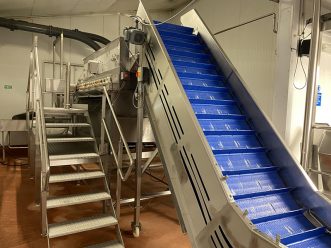
Ambit stainless steel fruit scrubbing machine (Photo: European Valuations)
Sponsored Post – On behalf of Sarah O’Toole, Kevin Coates & Jon Roden of Grant Thornton LLP, the Joint Administrators of Orchard House Foods Ltd, European Valuations present a second auction of late model and high spec fruit and food processing machinery previously used by Orchard House Foods Ltd. Orchard House Foods Ltd was one of the UK’s largest suppliers of prepared fruit, fresh fruit drinks and desserts to retailers, on-the-go food outlets, food service providers and manufacturers throughout the UK. The online auction on June 29th will include: Ishida DACS-G-SO15-24-WP-M-S Metal detector and checkweigher combi unit, Proseal GT1s pot forming machine with stainless steel tooling rack and various tooling, Ambit stainless steel fruit picking line, Ambit stainless steel fruit scrubbing machine complete with infeed conveyor, Hysyco CIP hygienic pipework and production cleaning system, Moody 13000L stainless steel storage tank, Promino 3000L stainless steel storage tank and much more. Viewing is by appointment only on June 27th.
European Valuations has over 130 years of experience in selling assets and providing consultancy advice. They pride themselves on delivering high-quality solutions that provide the best outcomes for our clients. They offer a range of services, from sale and disposal solutions for entire businesses to individual assets such as inventory or plant equipment.
World apple production for 2022/23 is forecast down 4.3 million metric tons (tons) to 78.4 million on weather‐induced losses in China. Exports are estimated down over 1.0 million tons to 5.5 million on significantly reduced shipments from China, Iran, and Moldova.
China production is expected to shrink nearly 5.0 million tons to 41.0 million on reduced output in the top‐producing provinces of Shaanxi and Shandong as high temperatures during bloom reduced fruit set. Low market returns are encouraging tree removals in several northern and western provinces, while an aging farmer population is also impacting management of orchards. Exports are estimated to drop over 20 percent to 770,000 tons as a result of lower supplies. Shipments to Russia have resumed after an August 2019 ban due to pests was lifted in February 2022, but these volumes are expected to only partially offset weaker sales to other markets. Imports are projected up 10,000 tons to 85,000 on greater shipments from New Zealand at the start of the marketing year (July‐June) …
Created with gamers for gamers, the new Coca-Cola® Ultimate Zero Sugar represents a bold, kinetic expression of Experience Points (+XP), the universal unit of rewards players earn as they progress through a game. The latest limited-edition Coca-Cola Creations drop was crafted in collaboration with League of Legends developer Riot Games.
Coca‑Cola® Ultimate Zero Sugar’s striking packaging design fuses elements of both iconic brands, taking visual cues from League of Legends lore – including a bespoke “Ultimate” crest with a blue Hextech backlit glow, a Spencerian Script inspired by Nexus crystals in “Runeterra” and a bold, gold-and-back manifestation of the Coca-Cola Creations logo.
“Coca-Cola Creations is all about creating unique and authentic experiences anchored in youth passions, and gaming is one of the largest and fastest-growing communities in the world,” said Oana Vlad, Senior Director, Global Strategy, The Coca-Cola Company. “We dipped our toes into this space last year with Coca-Cola Zero Sugar Byte and the artist Marshmello’s limited-edition Coca-Cola, but this is the first time we have partnered with a gaming company to develop a Coca-Cola flavour.”
Coca-Cola Ultimate Zero Sugar will be sold for a limited time in the United States, Canada, China, South Korea, Latin America and Africa. A full-sugar version is available in the United States, Canada and Mexico.
“We’re excited for players to taste the new +XP flavour, a unique and bespoke collaboration with Coca-Cola, a globally recognised brand loved by millions,” said David Mulhall, Head of Business Development and Partnerships at Riot Games. “They share many of the player-focused values we have at Riot, and we are honoured to be the first gaming collaboration for Coca-Cola Creations.”
The holistic product experience celebrates every player’s gaming journey. Like the six preceding Coca-Cola Creation drops, Coca-Cola Ultimate Zero Sugar will bridge the virtual and real worlds with a series of disruptive digital and IRL activations. League of Legends players can put their skills to the test via a series of in-game missions that unlock a sequence of limited-edition Ultimate Emotes through July 18.
Fans also can scan an on-pack QR code to access the Coca-Cola® Creations Hub, where they can access a League of Legends-inspired Ultimate Emote Generator Instagram filter, pre-order a custom Coca-Cola Ultimate Zero Sugar mini fridge by Cooluli, and upload a selfie to see themselves in their Ultimate form on a cinematic gaming journey.
“The super-personalised experience lets anyone – not just League of Legends enthusiasts – become the hero of their own Ultimate journey,” said Natalia Suarez, Brand Director, Coca‑ColaTM, North America. “It pays off the idea that Coca-Cola is for everyone.”
Coca-Cola and Riot Games will bring the “Ultimate” experience to life with communities of passionate gamers around the world through League of Legends Nexus Crystals drop events in Los Angeles, Shanghai and Mexico City.
Coca-Cola Ultimate Zero Sugar builds on a longstanding collaboration between Coca-Cola and Riot Games celebrating the power of gaming to unite people around the world in competition and fandom. In 2022, the brands announced a multi-year global partnership to co-create unique fan experiences for League of Legends: Wild Rift and Wild Rift Esports. From 2014-2016, Coca-Cola teamed with League of Legends for its World Championship and created custom viewing experiences with highly coveted collectible merchandise in multiple countries through cinema partnerships.
With hundreds of millions of players globally, League of Legends continues to be one of the most-played competitive games in the world. A unique game that blends speed, strategy and high intensity, it has grown to become a global phenomenon over its decade-long history by hyper-serving its loyal communities.
“The idea that fueled Coca-Cola Ultimate was a celebration of the player’s journey,” said Chase Abraham, Director, Global Content & Creative, Coca-ColaTM. “Riot Games aspires to be the world’s most player-forward gaming company, and we see a lot of harmony between our values. A shared passion to get it right with players first and foremost drove the strategy and nature of what we wanted to deliver.”
Coca-Cola® Creations lends the iconic Coca-Cola brand to new expressions fueled by collaboration, creativity and connection. Each sequential, surprise-and-delight drop includes a limited-edition flavour– complemented by designs and experiences – inspired by music, gaming, sports and other consumer passion points. The Coca-Cola Ultimate Zero Sugar launch follows the six fantasy-flavoured Coca-Cola® Creations drops: Coca-Cola® Starlight, Coca-Cola® Zero Sugar Byte, the artist Marshmello’s Limited Edition Coca-Cola®, Coca-Cola® Dreamworld, Coca-Cola® Soul Blast and Coca-Cola® Move.
The European soft drinks sector achieved an impressive average 7.6 % sugar reduction between 2019 and 2022
The European soft drinks sector, represented by Unesda, announced further progress1 on its commitments to the EU Code of Conduct on Responsible Food Business and Marketing Practices,2 with strong results achieved in 2022 in its actions to create a healthier beverage system in Europe.
Ian Ellington, President of Unesda and Senior Vice-President and Chief Marketing Officer for PepsiCo in Europe, comments: ‘’As a sector, we remain committed to making significant progress on our many EU Code of Conduct commitments. We have achieved impressive results in our health and nutrition actions and, in particular, in our sugar reduction, marketing and advertising practices and school policies.’’
Ellington added: ‘’The journey has not been easy. Rising inflation in 2022 significantly impacted our ability to use more recycled content in our packaging due to the challenges we faced in accessing food-grade feedstock for recycling. We need policy support to deliver fully circular beverage packaging and to continue advancing on our sugar reduction programme.’’
Among Unesda’s achievements are its actions to encourage European consumers towards healthier dietary habits:
The sector delivered a 6% reduction in average added sugars in its soft drinks between 2019 and 2022 across Europe, as indicated by data analytics and consulting company GlobalData. This represents an additional reduction of 4 percentage points within 1 year (between 2021 and 2022). It shows that Unesda is on track towards meeting its commitment to reduce average added sugars in its beverages3 by another 10 % in the EU-27 and in the UK between 2019 and 2025.4 The success of the sector’s reformulation efforts to reduce sugar largely relies on the use of low- and no-calorie sweeteners to increase the offer of low- and no-calorie beverages. These ingredients should continue to be supported by public authorities and regulators to enable the sector to make further progress on sugar reduction.
Unesda corporate members achieved solid results regarding its marketing and advertising commitment, as demonstrated in the audits carried out by independent marketing and media consultancy Ebiquity (television) and the European Advertising Standards Alliance (websites, social media and influencers).5 The sector reached high compliance rates (98.7 % on TV, 92.9 % on company-owned websites, 94.1 % on company-owned social media profiles, and 100 % on influencer profiles), and is committed to continuing to work towards full compliance of its marketing and advertising commitment.
Unesda corporate members also reported to be highly compliant with the sector’s school policies6 in the four selected EU countries for its 2022 monitoring, conducted by third-party auditors BVA-BDRC:7
100 % (primary schools) and 92.3% (secondary schools) in Austria
100 % (primary schools) and 93.4% (secondary schools) in Italy
100 % (primary schools) and 100% (secondary schools) in Slovenia
100 % (primary schools) and 96.2% (secondary schools) in Sweden
Industry faces major challenges to accelerate packaging circularity
Unesda and its corporate members continued their actions to increase the amount of recycled plastic content in their beverage PET bottles to achieve the sector’s objective of using 50% recycled PET by 2025. The cost and availability of this material have been major challenges impacting these efforts. The most effective way to address this issue is to prioritise high-quality recycling in EU and national legislation by granting the sector a priority access right to the feedstock for recycling issued from its PET bottles. This will ensure that PET bottles are recycled into new beverage packaging in a closed-loop system, and are not being downcycled in non-food applications.
The way forward: Policy support is key
The European soft drinks sector remains determined to deliver on all its commitments but needs supportive policies in place to be successful.
In particular, the sector’s further actions to promote healthier lifestyles fully depend on support from EU public authorities and regulators for the use of ingredients assessed as safe by health authorities and on evidence-based dietary recommendations that do not denigrate or discriminate against any ingredient approved for use.
In order to accelerate the transition to full circularity of its packaging, Unesda calls for legislation supporting well-designed, industry-led Deposit Return Systems, the increased collection of beverage packaging across the EU and high-quality recycling through a priority access right to recycling feedstock to ensure a closed-loop system.
In addition, Unesda calls for a realistic regulatory framework on reuse that provides beverage producers flexibility to invest in the packaging mix that makes the most sense from environmental, economic, and consumer perspectives. This also includes considering all available reusable and refill options (at home and on the go) for the achievement of the reuse and refill targets proposed in the proposal for a Packaging and Packaging Waste Regulation.
Unesda will continue to engage with EU decision-makers in a constructive manner to help ensure policy predictability and coherence.
1Read Unesda’s 2022 progress report on its commitments to the EU Code of Conduct here. 2The EU Code of Conduct on Responsible Food Business and Marketing Practices was launched by the European Commission in July 2021 and it is an integral part of the EU Farm to Fork Strategy to create a more sustainable food system in Europe. The EU Code of Conduct aims to encourage the entire food and drink sector to provide more sustainable and healthier food and beverage choices. 3Unesda’s sugar reduction commitment is applicable to all product categories under Unesda’s remit, including still drinks, carbonate drinks, energy drinks, sports drinks, dilutables and iced teas, but excludes bottled water, 100 % juices, milk based and hot beverages. 4This will represent a 33 % overall reduction in average added sugars in soft drinks since 2000, building on past sugar reduction milestones that the sector achieved from 2015 to 2019 (14.6 % reduction on average) and from 2000 to 2015 (13.3 % reduction on average). 5Unesda corporate members started implementing an effective Responsible Marketing Code of Conduct in 2006 with its commitment to no marketing communication in printed media, websites or during broadcast programmes specifically aimed at children under 12. Since then, they have reinforced this commitment by extending the scope of media channels in which they do not market and advertise their soft drinks to the under-12s: cinemas in 2008 and the digital world, including company-owned websites, in 2018 when they also tightened the audience criteria and committed not to market and advertise their beverages when 35 % of the audience or more was under 12 years of age. As of 1 January 2022, Unesda corporate members extended the age range by committing not to advertise and market any of their soft drinks to children under 13 years across all media. This includes TV, radio, in print, in cinemas and online, including social media and other online platforms and sites (company-owned websites and video-sharing platforms such as YouTube). It also includes direct marketing, product placement, interactive games, outdoor marketing, mobile marketing and contracted influencers. Unesda corporate members also committed to lowering the audience threshold from 35 % to 30 % so that fewer young children are directly exposed to advertising for any of its soft drinks. 6Unesda and its members are committed not to sell any soft drinks in EU primary schools since 2006 (through direct distribution), and to only sell low- and no-calorie soft drinks in EU secondary schools since 2017 (through direct distribution), and only in non-branded vending machines. 7The monitoring of Unesda’s school commitment is performed every two years in a group of different countries where there is a voluntary school commitment in place to provide a diversified sample of larger and smaller countries from different parts of the EU.
Bevolution Group, one of most diverse and innovative beverage manufacturers in the US, announced the launch of Dr. Smoothie’s Watermelon Kiwi Refreshers. This is the latest flavour of its widely successful Refreshers line of beverages to help consumers refresh and recharge with a hint of green coffee extract.
Dr. Smoothie Refreshers are crafted from real fruit juice and green coffee extract, which is a natural energy boost that consumers will love any time of the day. These fresh-tasting beverages offer more than just simple refreshment.
The new Watermelon Kiwi Refreshers joins a growing portfolio of Dr. Smoothie Refreshers that include Strawberry Acai; Watermelon Cucumber Mint; Wildberry Hibiscus; Peach Mango; Blood Orange Coconut Ginger; and Dragon Fruit Lychee.
These lightly caffeinated beverages are perfect for smoothie shops, cafes, bars or any foodservice establishment that caters to consumers seeking a unique, premium option for their beverage menu that delivers a blast of refreshment with a great taste.
Just like the other Refreshers beverages, the new Dr. Smoothie Watermelon Kiwi Refreshers is just pure goodness: no artificial colours or preservatives, no HFCS, sweetened with cane sugar and stevia, shelf-stable, made with real fruit juice and natural flavours, gluten-free, lactose-free, vegan and blended in the US.
Dr. Smoothie Refreshers Watermelon Kiwi are available in 46 Fl oz, shelf-stable bottles and are sold to foodservice distributors or direct in the US.
Elopak has announced that it will build a new plant in the USA to better serve its customers in the Americas and accelerate growth in the region. The new plant will allow Elopak to build on an already strong track record of organic and profitable growth driven by high customer demand in the region.
Elopak will invest around USD 50 million (including lease liability) in the new plant over the period 2023 – 2024. The investment will be financed by utilizing Elopak’s existing Revolving Credit Facility. The plant is expected to commence production in the fourth quarter of 2024 and will create more than 100 new jobs.
Lionel Ettedgui, EVP North America says: “Over the last few years, Elopak has delivered very strong profitable growth in Americas. The time has now come to increase capacity to further strengthen our organization and enable us to provide quality service to our customers in Americas faster and more efficiently.”
Thomas Körmendi, CEO says: “I am truly excited about this investment. This is a response to the strong demand that we are seeing for our innovative and sustainable solutions. It is a landmark investment for our company as Americas is one of the key building blocks of our strategy.”
The prices of the main citrus fruits surveyed by Cepea dropped in May in the Brazilian market. The downward trend of quotations was already expected by the agents in the sector, since the supply of oranges and tangerine usually increase at this time of the year, while the demand for fruits in general decrease because of the cold weather.
In the market of ponkan tangerine, although the volume harvested increased slightly last month, demand remained firm – as the supply of ponkan tangerine increases at this time of the year, consumers demand – which was previously for oranges and other fruits, such as apples and bananas – is focused on tangerines. In this scenario, the average price for ponkan tangerine in May closed at BRL 64.09 per 27-kg box (on tree), stable compared to that in April. For June, Cepea collaborators expect supply to increase gradually. Thus, prices may fade along the month.
Oranges devalued in May, as the harvest of early varieties stepped up and some volumes of pear oranges out of the ideal period were harvested too. Besides, consumption decreased, mainly because of the lower temperatures in southern and southeastern Brazil.
Thus, in May, the average price for pear oranges closed at BRL 43.08 per 40.8-kg box (on tree), 7.9 % lower than that in April. For rubi oranges, the average in May closed at BRL 39.47/box, 3 % down in the same comparison. It is important to consider that the slighter devaluation of early varieties is linked to its maturation, which is nearer the ideal compared to pear oranges.
Cepea collaborators reported that orange devaluations were not steeper because of the demand from juice processors. Activities are still low at processors, but farmers had three plants to send fruits to in May, which helped to control supply in the table market. In June, the harvest is expected to increase, however, as processing is supposed to rise too, prices may continue stable in the table market.
As for tahiti lime, quotations dropped steeply in May. According to Cepea collaborators, besides weak demand because of the cold weather, supply was high last month, also due to low exports and processing. The average price for this variety in May closed at BRL 13.95 per27-kg box (harvested). 51.6 % lower than that in April and 2.8 % below that in May/22, in nominal terms.
For June, Cepea collaborators expect supply to be high, which may limit possible valuations if exports continue low. Also, Mexican exports usually increase at this time of the year, which may hamper shipments of the Brazilian fruit to Europe.
The Board of Britvic is announced that Ian Durant has commenced his tenure as Chair of Britvic plc. Ian succeeds John Daly who retired from the Board on 31 May after eight years on the Board, six of which were spent as Chair of the Company.
Ian has many years of experience in consumer facing businesses and in retail. He currently serves as the Chair of Warren Partners Ltd, having recently stepped down as Chair of Greggs plc and has previously served as Chair of DFS Furniture plc and Capital & Countries Properties plc in the last five years. His earlier career included senior leadership roles at Liberty International Plc and Thistle Hotels. Other boards he has served on as a Non-Executive Director include Greene King plc, Home Retail Group PLC and Westbury plc.
Ian was appointed Chair designate on 1 February and since been involved in an orderly handover of responsibilities with John.
According to data released by Fact.MR, a provider of market research and competitive intelligence, the global alcopop market is anticipated to reach a value of USD 8.1 billion by the end of 2033, increasing at a CAGR of 6 % from 2023 to 2033.
Alcopops are Ready to Drink (RTD) beverages that are available in pre-mixed forms containing different flavoured spirits and can be consumed directly. Lesser content of alcohol in alcopops as compared to conventional alcoholic beverages is a key factor driving their consumption.
Increasing per capita disposable income of people around the world is predicted to have a direct impact on the expenditure capacity of individuals. They are spending at a noticeable rate in different lifestyle products, including beverages and food at restaurants & cafés. Increasing inclination for alcoholic and non-alcoholic beverages that impart refreshing and unique flavours are expected to bolster the demand for alcopops around the world.
High concentration on R&D activities has resulted in fortifications and innovations in numerous spirit varieties, which is predicted to support in generating lucrative opportunities for market players. Rising population of young people and their inclination towards a wide variety of premium beverages is projected to stimulate the demand for alcopops over the coming years.
Key takeaways from market study
Worldwide demand for alcopops is estimated at USD 4.5 billion in 2023.
The global alcopop market is predicted to advance at a CAGR of 6 % from 2023 to 2033.
The global industry is expected to reach USD 8.1 billion by the end of 2033.
Europe held more than 35 % share of global market revenue in 2022.
Sales of vodka-based alcopops are anticipated to rise at a CAGR of 4.7 % from 2023 to 2033.
“Rising popularity of alcopops is attributed to the global availability and traction for different flavours. Moreover, increasing popularity of some unique flavours in alcoholic beverages is contributing to the rising share of alcopops in the liquor industry,” says a Fact.MR analyst.
Rising popularity of alcopops among teenagers
In recent years, there is a noteworthy increase in the population of young people. They are inclined to consume premium alcoholic beverages, which are estimated to open up new opportunities for players. Alcopops are sweetened drinks, which are receiving enormous popularity, especially among teenagers worldwide. Youngsters are consuming alcopops due to two main reasons:
Alcopops do not taste like alcohol but rather have a sugary-sweet and fruity taste. Alcopops are made more palatable to new drinkers due to their ability to conceal the bitter taste of alcohol.
Alcopops are available in attractive packaging with colourful and bright labels, which make them appear more attractive to young consumers.
Awareness about danger caused due to excessive consumption of alcopops and implementation of stringent regulations
Alcopops are not entirely safer compared to other alcoholic beverages. Excessive consumption of alcopops can have fatal results. Even, habitual drinking of alcopops can result in life-changing consequences.
Over the years, excessive consumption of alcopops has increased concerns among healthcare professionals, parents, and government agencies. The attractive advertisement manners in which it seems to be promoted as an underage drink is one of the key factors to stimulate sales of alcopops. Therefore, an increase in the consumption of alcopops is expected which can adversely impact individuals’ health.
Respective governing bodies around the world have imposed certain regulations against the consumption of alcoholic beverages. These regulations are predicted to restrict growth opportunities in the target industry.
Key industry players
Key suppliers of alcopops operating around the world include Asahi Group Holdings, Ltd., Halewood International Limited, Suntory Holdings Limited, Mike’s Hard Lemonade Co., United Brands Company, Inc., Bass Brewery, Pabst Brewing Company, and Molson Coors Brewing Company.
Just a few years ago, Krones’ subsidiary Steinecker opened a technology center in Freising (GER) where customers can create and test recipes for beer and plant-based drinks. Now, the group is setting another important milestone in the evolution of beverages and processes. In early May, at the company’s headquarters in Neutraubling (GER), a fully-equipped R&D lab was officially inaugurated and dubbed the “Process Technology Center”.
The new Process Technology Center is designed to support Krones customers in their product development processes and meet the flavour demands of the global markets. It makes no difference whether the customer already has a finished recipe for a future product or is still at the start of the product development journey and would like to leverage Krones’ expertise for those first steps.
Krones itself will use the new technology center to more closely analyse the effects of various process parameters on different products. The results will then go into further developing and refining Krones machines and lines.
Expertise for process technology and water design
The technology center is divided into two sections: process technology and water design.
On the process technology side, various process and treatment steps can be realistically simulated on a pilot UHT system. That makes it possible, for example, to compare the thermal impact of indirect heating using a shell-and-tube heat exchanger versus direct heating. For this, customers can choose between two processes: steam injection and steam infusion. For other trials, the facility is also equipped with systems for mixing, flash pasteurisation, deaeration, homogenisation and filling. The results are then evaluated in-house, for example in Krones’ own microbiological and chemical testing labs.
Optimising the flavour profile of water
In the field of water design, customers can fine-tune the flavour of their water by adding just the right amounts of minerals and flavour compounds. The technological possibilities include deaeration, carbonation, electrodeionisation, ionisation, mineral dosing and filling.
A water sommelier provides support throughout the trials. Customers also have access to Krones’ extensive network of experts, with engineers in a variety of disciplines, including food and process engineering, to collaborate on transforming product ideas into real products.
The Prognosfruit Conference is Europe’s leading annual event for the apple and pear sector, gathering growers from across Europe and beyond. Following last year’s successful return as an in-person event, Prognosfruit 2023 will take place in Trentino, Italy, from the 2nd to the 4th of August 2023. Registration is now open, and stakeholders and journalists are welcome to register via the Prognosfruit website.
Prognosfruit, the leading annual event for the apple and pear sector, will take place in Trentino, Italy, from the 2nd to the 4th of August 2023. Prognosfruit 2023 is organised by WAPA in cooperation with APOT (Associazione Produttori Ortofrutticoli Trentini). Registration is now open on the Prognosfruit website.
Alessandro Dalpiaz (APOT) commented on the event’s return to Trentino: “We are honoured to host in Trentino the most important international conference dedicated to apples and pears. Prognosfruit is certainly an important opportunity to present to the participants the ability of an organised system to deal with environmental issues, geopolitical crises, and market uncertainties. Prognosfruit also represents an occasion to bring the attention of the participants to those understated yet relevant values of mountain areas, with their arts, traditions, stories, and landscapes that attract and make millions of visitors think every year”.
Since 1976, Prognosfruit has released the annual forecast of apple and pear production for the upcoming season. This year, the three-day event during which the report will be released will see representatives of the sector gather to discuss the Northern Hemisphere situation as well as global perspectives for apples and pears. Following the Prognosfruit Conference on August 3rd, the delegates will have the opportunity to participate in technical and cultural visits to Melinda’s Underground Warehouses, San Romedio Sanctuary, and Valer Castle.
WAPA Secretary General Philippe Binard stated: “Last year’s edition reminded us all how important Prognosfruit and its three-day programme are for the apple and pear sector. Prognosfruit provides the opportunity for the delegates to meet up and discuss the latest developments and the future of the market, which is especially important in challenging times like the ones the sector is currently dealing with”.
The draft programme of Prognosfruit 2023 and the online registration form to attend the conference are both available on the Prognosfruit website.
The Scottish Government today announced that it has shelved plans to implement a ban on the sale of energy drinks to children.
Responding to the news, British Soft Drinks Association Director General, Gavin Partington, said: “We welcome this recognition from the Scottish Government that voluntary measures introduced by industry and implemented by many of our retail partners have had a significant impact on stopping the sale of energy drinks to children.
“The BSDA’s voluntary Code of Practice on energy drinks, which was introduced by and for our members in 2010, contains a number of stringent points on responsible marketing, meaning BSDA members do not market or promote energy drinks to under-16s, nor do they sample products with this age group. In addition, their energy drinks carry an advisory note stating ‘not recommended for children’.
“BSDA members remain committed to supporting the responsible sale of energy drinks.”
Tim Berger, CEO of the Eckes-Granini Group, will leave the company at his own request by the end of the year to pursue a new professional opportunity.
Reiner Strecker, Chairman of the Supervisory Board of Eckes AG: “I would like to thank Tim Berger already today for the great contribution he has made in the last three years, especially with the future-oriented transformation of the company. The supervisory board and the shareholders wish Tim Berger all the best for his professional and personal future.”
Tim Berger: “I am thoroughly proud of what we have achieved together for Eckes-Granini in the past three years. I will continue to lead the company with the same commitment and passion in the coming months, until my departure. And already today, I would like to thank my colleages, all of the Eckes-Granini employees, and the entire Supervisory Board as well as the shareholders for their trust, support and strong engagement.”
About the Eckes-Granini Group Eckes-Granini is the leading supplier of fruit juices and fruit beverages in Europe. For the independent family-owned company headquartered in Nieder-Olm, Germany (Rhineland-Palatinate), the focus is on committed and competent employees, strong brands in the areas of juices, fruit beverages and smoothies, and a long-term strategic orientation with sustainable value creation. Today, Eckes-Granini operates mainly in Europe with its own national companies and strategic partners and generates annual sales of 917 million euros with a total of 1703 employees. The company’s foundation is formed by the internationally renowned premium brands granini and Pago together with strong national and regional brands for juices such as hohes C, Joker and God Morgon. Consumers in 80 countries worldwide and especially in Europe know and appreciate our fruit juices and the variety of fruit drinks.
Leading soft drinks business, Britvic, is redoubling its efforts to cut carbon emissions and save energy – with £8 million of investment to improve efficiency at its London factory.
The project, which kicks off this year at its Beckton site, will see the installation of a new heat recovery system – cutting factory emissions by an estimated 1,200 tonnes annually – equivalent to the annual energy usage of around 500 UK homes.
Part funded by a £4.4 million government grant from the Department for Energy Security and Net Zero, the new heat recovery system will see the soft drink manufacturer switching its heating from natural gas boilers to carbon free heat extractors.
Nigel Paine, Supply Chain Director, added: “At our Beckton site we produce 2,000 drinks every minute – including many of the nation’s favourites such as Robinsons, Tango and Pepsi MAX. We are constantly looking at ways to improve the way we create these products and I’m delighted that, as well as our own funds, the Department for Energy Security and Net Zero will be supporting us too. It means we can continue to supply the nation with great tasting drinks, while reducing our carbon footprint.”
With the help of the Department for Energy Security and Net Zero’s Industrial Energy Transformation Fund, this heat recovery system will take waste heat recovered from our existing systems, increase the temperature and redistribute it around the site using a new low temperature hot water network, replacing our carbon intensive steam system. This will decarbonise 50 % of the site’s heat demand by shifting its heat source away from fossil fuels.
Sarah Webster, Director of Sustainable Business, at Britvic, said: “This major investment represents a significant milestone in our journey to reduce our scope 1 and 2 carbon emissions in service of our science-based targets, and our Healthier People Healthier Planet sustainability strategy. The support from the Department for Energy Security and Net Zero has been integral to making this happen and it re-enforces our view that collaboration and partnership is critical to developing long-lasting meaningful solutions to protect the planet.”
With the project set to commence at the end of 2023, the move is a huge step towards Britvic’s commitment to reduce its direct emissions by 50 % by 2025 and to be net zero target by 2050, verified by the Science Based Target initiative. Britvic is making good progress having reduced its direct carbon emissions by 34 % since 2017.
Production lines Gateshead (Photo: European Valuations)
Sponsored Post – On behalf of Sarah O’Toole, Kevin Coates & Jon Roden of Grant Thornton LLP, the Joint Administrators of Orchard House Foods Ltd, European Valuations present a major auction of late model and high spec fruit and food processing machinery. Orchard House Foods Ltd was one of the UK’s largest suppliers of prepared fruit, fresh fruit drinks and desserts to retailers, on-the-go food outlets, food service providers and manufacturers throughout the UK. Over 700 lots will be included in the online auction which closes from 10am on Thursday 1st of June. A great number of the assets were only recently purchased by the client, some lot highlights include: Ishida High speed 12 Head fresh fruit weighing system, Ishida CCW-R2-112WB-2D-15-WP-BE Single head 12 port fresh fruit weighing system, Dohmeyer DOH-TLT-8400-2X28 Cryogenic freezing tunnels, PND PL6M fruit peeling machine, Kronen Tona Rapide Apple Segmenter, Ishida DACS Checkweigher, Proseal GT2S Sealing machine, ICS Refrigeration plant, Proseal GT1S Sealing machine, Twin Head Ishida Potting Machine and much more. More stock is being added in the coming weeks. Viewing is by appointment only on May 30th.
European Valuations has over 130 years of experience in selling assets and providing consultancy advice. They pride themselves on delivering high-quality solutions that provide the best outcomes for our clients. They offer a range of services, from sale and disposal solutions for entire businesses to individual assets such as inventory or plant equipment.
The Eckes-Granini Group concluded the 2022 business year with satisfactory results and is optimistic about the current year 2023. With a + 7.1 % increase in turnover to 917 million euros (2021: 856 million euros), the supplier of fruit juices and fruit beverages achieved 2022 the highest increase in turnover in five years. Volume sales also developed slightly positive compared to the previous year, rising by 3 million to 808 million litres. Eckes-Granini recorded an increase of + 1.3 % in value-based sales at the retail level during the past business year, accompanied by a decline in volume sales (- 2.1 %) compared to the previous year. This resulted in a stable, unchanged market share of 12 % in terms of value, with a slight increase in volume market share of + 0.2 % to 11.3 %. With regard to the largest markets for fruit juices, nectars, and fruit drinks (FJND) in Europe, market shares were gained in France in particular, but also in the Baltic countries, Finland, and Austria.
Eckes-Granini expands market leadership in Europe
Like all companies in the beverage and food industry, Eckes-Granini had to deal with a tense raw materials situation, freight space shortages and supply chain difficulties during the past year. In addition, there was an unprecedented explosion in the cost of raw materials, partly due to poor harvests, as well as packaging materials, energy, and transport. However, these massive cost increases could some of the additional costs through targeted investments in its brands, successful product launches and decisive crisis management. Tim Berger, CEO of the Eckes-Granini Group, comments on the past business year: “Thanks to our rapid and flexible response to the difficult market environment in 2022, we were able to achieve good sales growth and – viewed across the whole business – an increase in market share. We are satisfied with the result in view of the challenging general conditions. We used the challenges of the past year as a catalyst for the optimization and further development of existing processes and structures. For example, we were able to react effectively to raw material shortages and ensure a consistently high delivery capability.”
Weaker economic environment shapes market performance in 2022
In the food retail sector, the FJND market in Europe 2022 showed a positive trend in value sales with + 1.3 % compared to the previous year. Volume sales, on the other hand, declined by – 3.7 %. While the market dynamics in 2021 were still influenced by the Covid 19 pandemic, the Ukraine war and its consequences had a significant impact on market development in 2022. On the one hand, price increases contributed to the rise in value sales. At the same time, however, consumers‘ willingness to purchase declined, with corresponding consequences for volume sales figures.
Innovations and the expansion of new distribution channels as growth drivers
Eckes-Granini benefited in particular from the successful introduction of numerous product innovations in 2022. Overall, the medium-sized family-owned company achieved 30% of its growth through innovations alone, despite reduced marketing investments. One of these innovations are the hohes C Functional Water in the Water Plus category, which were excellently received by the market. Eckes-Granini was also able to expand the market leadership of hohes C Shots in 2022 and successfully establish the Shot concept in additional countries, such as Austria, Hungary, and Spain, in France under the Joker brand and in Denmark, Sweden and Finland under God Morgon. 2022 also marked the most successful Out-of-Home year in the history of Eckes-Granini. The strategically important business segment of hotel, gastronomy and on-the-go consumption made a comeback in many countries, especially in France, where Eckes-Granini grew significantly. Contrary to market dynamics, Eckes-Granini also succeeded in gaining market share in e-commerce and e-retail, doubling its share of sales within three years.
Eckes-Granini remains committed to people and the environment in 2022
Despite all the challenges, a more sustainable business remains a central focus of Eckes-Granini’s corporate strategy. Following an intensive review, the independent Science Based Targets Initiative (SBTi) confirmed in January 2022 that Eckes-Granini‘s greenhouse gas reduction targets are in line with the goals of the Paris Agreement. Eckes-Granini also actively campaigned for the introduction of the juice deposit, made the switch early on and provided extensive information on the advantages of the recycling system in campaigns. In addition, the family- owned company has supported the Team Rynkeby charity cycling initiative for many years as part of its CSR commitment. In 2022, around 10.4 million euros were collected for seriously ill children and their families. Eckes-Granini was also pleased to receive the Top Employer 2023 award in Germany again after 2022.
Positive outlook for the current year
prices and fluctuating availability remain a major issue. In addition, there are uncertainties in consumption regarding the reaction of consumers to inflation. “Overall, the past year with all its challenges has been an opportunity for us to show that we take our responsibility regarding the category, the food retail industry, and our consumers seriously. We succeeded in livin g up to our role as category thought leader. In 2023, we want to build on this and have already made a promising start to the new business year with numerous new beverage concepts and innovations,” says Berger.
About the Eckes-Granini Group: Eckes-Granini is the leading supplier of fruit juices and fruit beverages in Europe. For the ind e- pendent family-owned company headquartered in Nieder-Olm, Germany (Rhineland-Palatinate), the focus is on committed and competent employees, strong brands in the areas of juices, fruit beverages and smoothies, and a long-term strategic orientation with sustainable value creation. Today, Eckes-Granini operates mainly in Europe with its own national companies and strategic partners and generates annual sales of 917 million euros with a total of 1703 employees. The com- pany’s foundation is formed by the internationally renowned premium bran ds granini and Pago to- gether with strong national and regional brands for juices such as hohes C, Joker and God Morgon. Consumers in 80 countries worldwide and especially in Europe know and appreciate our fruit juices and the variety of fruit drinks.
IBC and NewTree Fruit Company to expand access to patented De-Sugaring Technology
InterContinental Beverage Capital and Travers City, MI-based NewTree Fruit Company (NTFC) are taking NTFC’s patented De-Sugaring Technology to the next level. The two companies will be collaborating on ways to bring NTFC’s revolutionary technology into IBC’s Bevnology product development facility in Tyron, GA (US).
Since 2016, IBC and NTFC have been working together to reduce sugar consumption among consumers of all demographics worldwide. With global patent approvals in the US, Europe, and Asia, NTFC’s De-Sugaring Technology has proven successful in reducing sugar to 1 g or less in an 8 oz juice-based product, while delivering great taste and the full nutritional value of two servings of fruit. Now, by integrating their technology into IBC’s client offerings, NTFC and IBC are poised to directly impact the speed-to-market while broadening product offerings for large global brands and businesses seeking a healthier, more flavourful offering with almost 0 sugar.
IBC founding partner, Stephen Horgan added “We have experimented with implementing this on a small scale since February and are extremely encouraged with the results. Working with NTFC, Louis Heinsz, our lead IBC partner at Bevnology Labs has been able to create a broad array of products that deliver these healthy consumer benefits with great taste across non-alcohol and alcohol products alike.”
Less sugar is a top priority for consumers today and there is an increasing expectation of healthier product solutions with reduced sugar which also deliver on taste. NewTree has cracked this code with their patented process that captures the authentic experience of fruit juice and can be utilised in a multitude of formulation applications. Consumers deserve products that meet this expectation and the many beverage and food offerings today, including the most popular brands on retailers’ shelves, fall short of delivering on this. The demand for healthier, low-sugar product solutions is rapidly increasing among consumers, and NTFC’s De-Sugaring Technology has emerged as the leading solution to this problem. By partnering with IBC, NTFC is even better positioned to bring its calorie reducing, de-sugaring technology to the forefront of the beverage industry and help more brands and companies to offer great tasting, healthy products to all consumers.
About InterContinental Beverage Capital, Inc. IBC is a New York-based advisory and investment firm focused on the beverage and consumer packaged goods industries. IBC has a worldwide network of strategic industry contacts, lending institutions, consultants, recruiters, and management teams. These sources provide expertise, industry capabilities, access to new customers, and valuable investment and commercial banking capabilities to partnership companies. IBC is actively seeking investments in its targeted verticals companies, which have unique products and dedicated management that exhibit the ability to develop into category leaders.
About NewTree Fruit Company NewTree Fruit Company is a Travers City, MI-based company dedicated to reducing sugar consumption among consumers worldwide. With its patented De-Sugaring Technology, NewTree has successfully reduced sugar to 1 g or less in an 8 oz juice-based product while maintaining taste and delivering the full nutritional value of two servings of fruit.
First plant engineering company in the market to be certified
On 24 March 2023, ZIEMANN HOLVRIEKA GmbH was named an official Solution Partner of SIEMENS AG for automation systems, drives and the SISTAR BRAUMAT expert module. The company, which specialises in tanks and process engineering for the brewing, beverage and liquid food industry, is thus certified for exceptional expertise in automation. From its base in Ludwigsburg it can provide top-quality future-ready automation solutions anywhere in the world in conjunction with systems from SIEMENS.
In addition, ZIEMANN HOLVRIEKA is celebrating a world first, as Koray Müftiler, Key Account Manager of SIEMENS AG, explains: “I’m very pleased that the certification is now complete and that we can officially announce our Solution Partnership. This makes ZIEMANN HOLVRIEKA the first plant engineering company in the market to be certified for BRAUMAT and SISTAR.”
The Siemens Solution Partner certificate was presented in Ludwigsburg by a SIEMENS delegation comprising Frank Hauber, Koray Müftiler and Dirk Grafe. ZIEMANN HOLVRIEKA was represented at the ceremony by Klaus Gehrig, CEO, Wolfram Hänsel, Head of Process Automation Software, and the staff of the automation team. The certificate was presented at ZIEMANN HOLVRIEKA’s pilot plant, which has operated for years with SIEMENS BRAUMAT. Klaus Gehrig explained his company’s thorough familiarity with BRAUMAT: “Cooperation between our companies in automation began decades ago. ZIEMANN HOLVRIEKA has therefore become an expert in BRAUMAT and created highly efficient module libraries. This knowledge is unique in the market. So it’s appropriate that we should be the first to be certified by SIEMENS for BRAUMAT and SISTAR.”
The International Sweeteners Association (ISA) has called the publication of the World Health Organization’s (WHO) guideline on the use of non-sugar sweeteners a “disservice to public health”.
The WHO guideline, which the body itself admits is a conditional recommendation based on evidence of low-certainty, was published on 15 May 2023. It suggests that non-sugar sweeteners shouldn’t be used as a means of achieving weight control or reducing the risk of non-communicable diseases.
An ISA spokesperson said: “In light of the global effort to address the burden of non-communicable diseases (NCDs), including dental diseases which are the most prevalent NCD globally, and other societal challenges such as the global obesity crisis, the ISA believes it is a disservice to public health to not recognise low/no calorie sweeteners’ role in reducing sugar and calorie intake and aiding in weight control.
“The ISA believes this guideline should have been based on the comprehensive set of available evidence and interpreted considering the hierarchy and weight of scientific evidence. The WHO could only conclude a conditional recommendation, which is not scientifically rigorous, nor based on a robust evidence base or supported by the evidence presented in the WHO-commissioned systematic review itself.
“The ISA joins others, including relevant government agencies around the globe, who have responded to the public consultation on the draft guideline expressing their concerns about the conclusions and rationale used by WHO. The ISA agrees with the UK’s Office for Health Improvement and Disparities that commented ‘the guideline may go too far’ and with the Australian government’s Department of Health and Aged Care who wrote that ‘the recommendation may result in undesirable health outcomes for some individuals.'”
ISA Chairman Bob Peterson added: “Food and beverage companies have reformulated products as part of a comprehensive, global effort to meet public health recommendations (including from the WHO) for sugar reduction. Low/no calorie sweeteners have enabled this innovation and ultimately contribute to the creation of healthier food environments by allowing people to enjoy food and drinks with less sugar and fewer calories, while still meeting their taste preferences.”
Prof Nita Forouhi, MRC Epidemiology Unit, University of Cambridge, said: “The findings of the WHO report are justifiable for general populations of people without diabetes, based on the inclusion of all eligible evidence from multiple research study designs, but are limited by several factors, many of which the report acknowledged. Notably, the WHO recommendation on avoiding the use of non-sugar sweeteners for longer term weight management or chronic disease prevention is conditional, therefore context and country specific policy decisions may be needed rather than necessarily being universally implemented as they stand. The role of non-sugar sweeteners as a way to reduce calories in the short-term is, however, supported by evidence – so using sweeteners can be part of interventions to manage weight in the short term.”
Elopak has unveiled a new film examining the role of beverage cartons in providing a more sustainable future for the packaging industry. The film has been made for Elopak as part of a series presented by FoodDrinkEurope and produced by BBC Storyworks Commercial Productions called Food for Thought. The series highlights sustainable innovations in the food and drink industry that offer fresh solutions to feed the next generation.
(Photo: Elopak)
Elopak’s film examines how cartons can provide a natural and sustainable alternative to plastic bottles. It spotlights one of the company’s most popular innovations, the Pure-Pak® carton made with Natural Brown Board. These cartons are manufactured with unbleached paper fibres, leading to a reduced carbon footprint since unbleached fibres are stronger and so less material is needed to produce the paper board.
Life Cycle Analysis (LCA) studies have repeatedly demonstrated Elopak cartons’ environmental benefits when compared to other types of packaging for liquid food1. For example, an LCA study in 2021 showed that cartons have a 60 % smaller carbon footprint than a PET bottle. This figure increases to 73 % for beverage cartons made with Natural Brown Board2.
The film showcases Elopak’s commitment to leading the plastic to carton conversion, offering consumers a natural alternative to plastic packaging that aims to leave the product unchanged and the planet unharmed.
Speaking in the film, Håvard Grande Urhamar, Senior Manager Board Development at Elopak said: “If you do something you should do it right and we know our product is the most sustainable option compared to plastic.”
The mini documentary also features Elopak’s customer Rørosmeieriet, a renowned organic dairy in Norway that offers high quality, sustainably sourced traditional products. Rørosmeieriet was the first Norwegian Elopak customer to choose Pure-Pak® cartons made with Natural Brown Board, making them an ideal collaborator for the mini-documentary.
Trond Wilhelm Lund, CEO of Rørosmeieriet, says that his company and Elopak have a shared vision for sustainability. “We want to develop Rørosmeieriet every day in harmony with nature… So when Elopak wants to take steps in the right direction, Rørosmeieriet wants to be a part of that,” he explains in a piece to camera.
GEA will invest around EUR 50 million in the modernization of its German centrifuge production facilities in Oelde (North Rhine-Westphalia) and Niederahr (Rhineland-Palatinate) by the end of 2024. The engineering group made the announcement at a press conference marking the 130th anniversary of GEA separation technology at its Oelde site. By investing in sustainable production, digitalisation and automation, GEA is targeting further growth in its key markets, which include the food, beverage and pharmaceutical industries.
GEA centrifuges are used in more than 3,500 different processes in a wide range of industries. Growth drivers include applications for alternative protein production and global demand for dairy products. The investment package for the centrifuge plants is based on four pillars: sustainability, digitalisation, automation and modern manufacturing technologies.
Climate-friendly production through the use of renewable energy
Already today all GEA production sites are powered by green electricity. In the long term the electricity supply for GEA’s sites will come from local renewable energy sources. At the Oelde facility, several large-scale photovoltaic systems will cover about one-tenth of the site’s electricity requirements, including the provision of electromobility. An in-house combined heat and power plant already generates around 30 percent of the electricity required. Since waste heat is also used, 94 percent of the primary energy utilised is recycled. Process heat generation, which is important for production, will also be converted to alternatives such as electric steam generation, which will enable the Oelde and Niederahr sites to operate without gas in the near future.
Freezing tunnel (Photo: European Valuations)
Sponsored Post – On behalf of Sarah O’Toole, Kevin Coates & Jon Roden of Grant Thornton LLP, the Joint Administrators of Orchard House Foods Ltd, European Valuations present a major auction of late model and high spec fruit and food processing machinery. Orchard House Foods Ltd was one of the UK’s largest suppliers of prepared fruit, fresh fruit drinks and desserts to retailers, on-the-go food outlets, food service providers and manufacturers throughout the UK. Over 700 lots will be included in the online auction which closes from 10am on Thursday 1st of June. A great number of the assets were only recently purchased by the client, some lot highlights include: Ishida High speed 12 Head fresh fruit weighing system, Ishida CCW-R2-112WB-2D-15-WP-BE Single head 12 port fresh fruit weighing system, Dohmeyer DOH-TLT-8400-2X28 Cryogenic freezing tunnels, PND PL6M fruit peeling machine, Kronen Tona Rapide Apple Segmenter, Ishida DACS Checkweigher, Proseal GT2S Sealing machine, ICS Refrigeration plant, Proseal GT1S Sealing machine, Twin Head Ishida Potting Machine and much more. More stock is being added in the coming weeks. Viewing is by appointment only on May 30th.
European Valuations has over 130 years of experience in selling assets and providing consultancy advice. They pride themselves on delivering high-quality solutions that provide the best outcomes for our clients. They offer a range of services, from sale and disposal solutions for entire businesses to individual assets such as inventory or plant equipment.
You are currently viewing a placeholder content from Turnstile. To access the actual content, click the button below. Please note that doing so will share data with third-party providers.