The 2022/23 orange season in the citrus belt (São Paulo State and the Triângulo Mineiro) is ending, while the oranges from next season are still green. Thus, the volume of oranges being processed at the plants in SP has been low. Considering large-sized plants, only three of them were processing oranges in March. In the same period last year, the scenario was the same, while in 2021, only one plant was in operation, which confirms that industrial activity is still high for this time of the year.
However, one of these plants is forecast to end activities in April, since orange availability is low. So far, the prices paid by the industry in the spot market have been around BRL 38.00 per 40.8-kg box (harvested and delivered). Considering the oranges from the new season (2023/24), bids have been higher, at BRL 40/box, however, the farmers consulted by Cepea reported some deals at BRL 42/box.
Most of the oranges from the 23/24 season has been sold. Thus, the number of fruits available in the spot market in 2023/24 will be low. However, processors’ needs are high, since their juice inventories are low.
As for the oranges not purchased yet, agents from processors reported that farmers are not rushing to sell them, since quotations have been firm in the table market, which may lead them to send the ripen fruits to this segment. These fruits may also be sent to small-sized plants that produce whole juice, which continue to process fruits and are paying up to BRL 45/box. However, for the production of whole juice, quality requirements are usually higher.
Orange processing in the 2023/24 season is forecast to begin in mid-May at large-sized processors. However, only from June onwards the volume is expected to increase.
Mondi, a global leader in sustainable packaging and paper, has won the coveted PPI Award in the Product Innovation category for its Hug&Hold packaging solution. The Fastmarkets Forest Products PPI Awards are the only global awards dedicated to recognising the achievements of companies, mills and individuals in the pulp and paper sector.
Hug&Hold is a paper packaging solution designed and developed to wrap and transport PET beverage bottles, replacing plastic shrink wrap. It is a recyclable 100% paper-based solution, comprising a kraft paper sleeve and a corrugated clip to secure the bottles and offer a comfortable handle for transportation.
The Product Innovation Award is presented to companies that demonstrate how a newly developed product solves an existing need or problem. Hug&Hold is perfect for FMCG brands and beverage producers, who want more sustainable packaging solutions that appeal to consumers and meet their product protection needs.
A sustainable, functional and fully automated alternative to plastic shrink wrap means that brand owners can safely switch to the recyclable paper-based packaging solution, without any risk to their product or logistics. With Hug&Hold, Mondi is the first to manufacture and market a complete concept, providing a strong and stable solution that is made from renewable and fully recyclable materials, suitable for existing paper waste streams throughout Europe.
Tarik Aniba, Sales & Marketing Director Corrugated Solutions at Mondi, says: “We are committed to making the most sustainable packaging solutions for our customers and we are very proud to see our innovations being recognised by our peers.”
Silvia Hanzelova, Sales Director Specialty Kraft Paper at Mondi, says: “Leveraging Mondi’s team of kraft paper and corrugated specialists, we were able to develop a fully paper-based solution with minimal material usage. Following thorough testing, Hug&Hold has been confirmed in terms of runnability and viability.”
The award ceremony took place in the city of Prague, Czechia, on 8 March 2023. Find out more about Hug&Hold, the responsible way to deliver your beverages.
The climate impact of food is important to Europeans. Three out of five consumers consider climate impact when buying food according to a new survey by Yara.
Yara International announced the findings in a new European survey on sustainable food conducted by leading international market research company IPSOS on behalf of Yara. The report provides an overview of consumer purchasing habits and sustainable food preferences.
“The report shows that Europeans are highly motivated to buy sustainable food to reduce their climate impact. This should be a wake-up call to the entire food industry,” says Birgitte Holter, VP of Green Fertilisers at Yara. “While three out of five Europeans find the climate impact important when buying food, a majority feel it is not easy enough to understand available information about the climate emission to be able to make sustainable choices. More than three out of four consumers would prefer to be able to read the carbon footprint on the food item,” Holter says.
The world’s food production accounts for more than a quarter of global greenhouse gas emissions. This new report shows that 58 % of Europeans consider the climate impact important when buying food and beverages. In addition, 51 % of Europeans are willing to pay more for fossil free food items, meaning food produced without fossil sources. However, most people feel that it is not easy to know which food is climate friendly, as 76 % of Europeans would like the carbon footprint to be visible on the food label.
“Decarbonisation of food is possible and that is why we are developing green fertilisers made from water and air using renewable energy, to support farmers and food companies in reducing their climate impact of their food. These voluntary choices must be supported by adequate policies. The EU’s Sustainable Food System initiative, planned for the end of 2023, should therefore create a set of incentives for food systems’ actors to go beyond the minimum requirements and favor low-carbon footprint solutions such as green fertilisers,” says Holter.
In Porsgrunn, Norway, Yara is building the first production plant to run on renewable energy. From here, Yara will produce green fertilisers made without the use of fossil energy or fossil sources. This will result in crops with an up to 30 % lower carbon footprint and up to 20 % carbon footprint reduction in the food produced, making them a powerful solution to grow a decarbonised and fossil free food future. The first green fertilisers are planned to enter production in the second half of 2023.
The market demand for food made without fossil energy sources is high. More than half of Europeans (51 %) said they are willing to pay more for climate friendly food. A clear majority of Europeans (74 %) say food companies need to work to reduce the emissions from their food production.
Key findings in this survey:
58 % of Europeans consider the climate impact important when buying food and beverage items
69 % of Europeans would choose a climate friendlier food item versus a cheaper option. (26 % would choose a fossil free food item, 43 % would choose a low-carbon item)
51 % of Europeans say they are willing to pay more for food made without fossil fuel sources
31 % of Europeans already make sustainable choices when it comes to their buying habits
More than three out of four (76 %) Europeans want to see the carbon footprint of food items on the label
Nearly three out of four Europeans (74 %) believe food companies should work to reduce emissions in their food production
About the survey The survey on the need for sustainable food was commissioned by Yara International and conducted by IPSOS. The panel consisted of 12,000 consumer respondents in France, Germany, the United Kingdom, Ireland, Italy, Spain, Poland, Romania, Turkey, Norway, Sweden and Denmark (1,000 respondents in each country). The data was collected from online interviews during the period of December 1 – 14, 2022.
According to the scientific study conducted by Professor Christian Fischer of the Free University of Bolzano, the company contributes to a 10% reduction in harvest losses in the apple sector.
An estimated 22 % of fruit and vegetables are lost every year during or immediately after harvest. Much of global food waste therefore occurs at the beginning of the value chain, long before products reach the market.
Through its activities, VOG Products contributes to reducing this phenomenon, thanks to its business model, to efficient planning and the significant technological investments made in recent years. The South Tyrolean producer organisation is one of the largest in the sector in Europe and processes about 70 – 80 % of the Italian industrial apple harvest (20 % of the Trentino-South Tyrol harvest).
The validity of the anti-waste model adopted by VOG Products is demonstrated by a recent scientific study conducted by Christian Fischer, Professor of Agricultural and Food Economics at the Free University of Bolzano, which was also presented at the 2022 International Horticultural Congress in Angers (France).
In the study, titled “The apple processing cooperative VOG Products as a role model for minimising post-harvest crop losses – an empirical case study from South Tyrol, Italy”, Professor Fischer demonstrates how VOG Products significantly contributes to reducing harvest and post-harvest losses in the apple production chain. While internationally apple wastage averages 20 % of the harvest volume, with VOG Products food loss in Italian apples drops to 6 – 10 % (depending on the year).
“Food waste is not inevitable,” comments Christoph Tappeiner, CEO of VOG Products. “With good organisation and investment in innovation along the supply chain, product losses can be significantly reduced, providing a triple win for producers, consumers and the environment.”
The FAO specifically refers to food loss as “the waste of edible food in the production, post- harvest and processing stages of the food chain”. Besides the wastage of the food itself, food loss also entails environmental costs in the form of loss of land, water, factors of production and labour, and leads to greenhouse gas emissions that contribute to global warming.
For VOG Products, food loss already starts with the company’s mission statement: apples destined for industrial processing are those with minor quality defects (too big, too small or not enough colour) or do not meet the quality standards of fresh fruit, and therefore cannot be sold on the table apples market.
“VOG Products is an international model for minimising harvest and post-harvest losses in the apple supply chain,” remarks Prof. Fischer. “VOG Products also generates significant added value for members in the region by giving them a fair and sustainable payout price.”
Growers who deliver their apples to VOG Products’ members (VOG, VIP, La Trentina and 18 cooperatives) receive an average of 4,000 euro per head or 1,400 euro per hectare for their apples for processing. The producer organisation also creates jobs for around 210 employees. The industrial fruit enhancement strategy pursued in recent years strengthens the region’s high-quality image of table apples, based on a win-win approach that rewards all operators along the supply chain. Generating value for the economy, people and the planet.
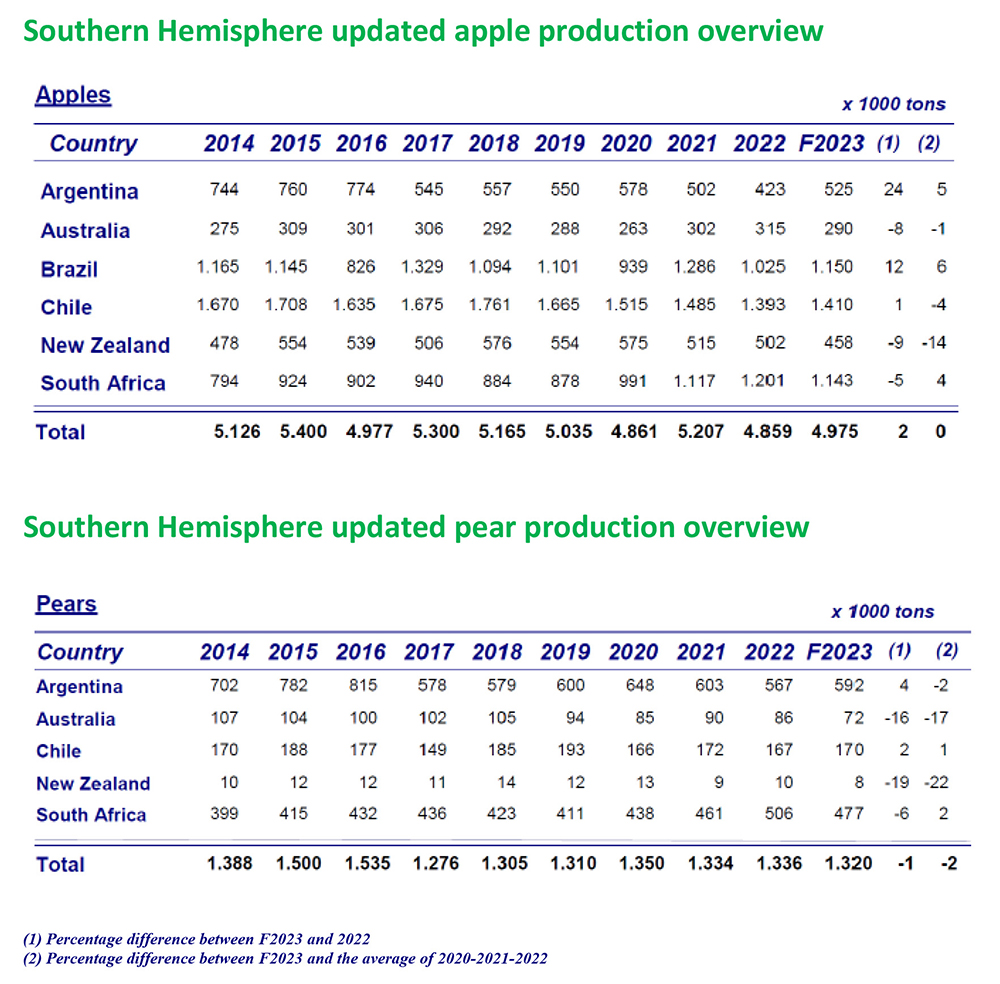
Following the intense weather events that affected several countries in the Southern Hemisphere, the World Apple and Pear Association (WAPA) has released an update of the Southern Hemisphere apple and pear crop forecast that was originally presented during the Association’s latest Annual General Meeting in Berlin’s Fruit Logistica. According to the revised forecast, which consolidates the data from Argentina, Australia, Brazil, Chile, New Zealand, and South Africa, apple production is set to increase by 2,38 % to reach 4.974.990 T, while pear production is expected to decrease by 1,25 % to a total of 1.319.601 T.
During its latest Annual General Meeting in Berlin’s Fruit Logistica, the World Apple and Pear Association (WAPA) presented the Southern Hemisphere apple and pear crop forecast for the upcoming season. The yearly report is compiled with the support of ASOEX (Chile), CAFI (Argentina), ABPM (Brazil), Hortgro (South Africa), APAL (Australia), and New Zealand Apples and Pears, and therefore provides consolidated data from the six leading Southern Hemisphere countries. The initial forecast for the 2023 season, which estimated a 6 % and 1 % increase for apples and pears respectively compared to 2022, has been revised in light of the intense weather events that affected several countries in the Southern Hemisphere. New Zealand’s and South Africa’s apple crop forecasts have been revised downward by 77.902 T and 77.276 T respectively. New Zealand’s pear crop estimates have also been slightly decreased compared to the initial forecast (- 323 T), as well as South Africa’s (- 28.726 T).
Regarding apples, the updated Southern Hemisphere 2023 crop forecast suggests an increase of 2 % to a total of 4.974.990 T compared to last year (4.859.026 T). A smaller apple crop is expected in New Zealand, (457.675 T, – 9 % compared to 2022), Australia (- 8 % compared to 2022, to a total of 290.000 T), and South Africa (1.142.880 T, down 5 %). Chile remains the largest producer (1.409.633 T, in line with 2022), now followed by Brazil (1.150.000 T, + 12 %). Argentina’s apple production should reach 525.000 T (+ 24 % compared to 2022). Exports are also expected to decrease (- 3 % compared to 2022) to a total of 1.556.668 T. Chile remains the largest exporter (604.000 T) followed by South Africa (509.158 T), whose exports are forecasted to decrease by 10 %. Exports from New Zealand (286.823 T) and Australia (2.687 T) are also expected to decrease by 15 % and 1 % respectively. Brazil’s (70.000 T) and Argentina’s exports (84.000 T), on the other hand, are expected to recover from the low 2022 figures. With 1.843.130 T, Gala remains by far the most popular variety, with its production expected to increase by 4 % compared to 2022.
Regarding pears, the Southern Hemisphere growers predict a slight decrease of the crop (- 1 %), which will drop to 1.319.601 T. While Argentina and Chile are expected to increase their production by 4 % and 2 % respectively, South Africa’s (- 6 %), Australia’s (- 16 %), and New Zealand’s (- 19 %) production levels are all expected to decrease. Argentina remains the largest producer in the Southern Hemisphere (592.000 T), followed by South Africa (477.419 T), Chile (170.000 T), Australia (72.016 T), and New Zealand (8.120 T). Packham’s Triumph remains the most produced variety (481.049 T, in line with 2022), followed by Williams’ bon chrétien pears (332.447 T). Export figures are expected to be stable (670.054 T), with a 12 % increase in Argentinian exports and a 13 % decrease in exports from South Africa.
(Photo: WAPA)
Lipton Ice Tea, the number one ready-to-drink tea brand1, is relaunching its range in a modernised design with a packaging makeover for all flavours. The packaging refresh is also accompanied by a reduction in sugar across the core range of Peach, Lemon, and Green Mint & Lime. The reduction will help the brand continue to appeal to the growing number of shoppers on the lookout for lower sugar options without any compromise on taste.
Half of shoppers say they are actively reducing the amount of sugar they consume2, which makes it the perfect time for Lipton’s relaunch. The new and improved drinks will maintain Lipton’s refreshing fruity taste and offer shoppers a lower sugar alternative, without compromising on great flavour.
As the leading brand in ready-to-drink tea3, Lipton Ice Tea’s value grew + 27 % in 20224 with further opportunities to grow as it taps into the 50 % of shoppers who choose food and drink products with reduced or no sugar content5. As a soft drinks segment, ready-to-drink tea represents a trade up opportunity for retailers, holding a price point of £2.43 per litre on average, versus the wider soft drinks’ £1.34 per litre6. This represents a premium option for consumers, and allows retailers to offer a full range of soft drinks which caters to multiple tastes and wallets.
The relaunched range will roll out across all channels from March 2023.
The new Lipton Ice Tea recipes are the latest lower sugar offering from Britvic, with continued innovation and reformulation programmes enabling the company to offer consumers healthier choices as part of ist Healthier People sustainability strategy. In 2022, this meant 96 % of its innovation launches were low or no calorie drinks – with an average of around 14 calories per serve across its Great Britain portfolio.
1NielsenIQ RMS, Total Coverage GB, Ready-To-Drink Ice Tea value sales, Britvic Defined 5Y, 31st Dec 2022 2Mintel – Attitudes towards Sugar and Sweeteners – UK – 2021 3NielsenIQ RMS, Total Coverage GB, Ready-To-Drink Ice Tea value sales, Britvic Defined 5Y, 31st Dec 2022 4NielsenIQ RMS, Total Coverage, RTD Ice Tea value sales, Britvic Defined, MAT we 31.12.2022 5Mintel – Attitudes towards Sugar and Sweeteners – UK – 2021 6NielsenIQ RMS – Total Coverage, Total Soft Drinks Britvic Defined, Average Price Point MAT we 31.12.2022
Pepsi is unveiling a new logo and visual identity system, the first update of the iconic Pepsi globe logo in 14 years. Pepsi will roll out the new look in North America this fall in time for the brand’s 125th anniversary, and globally in 2024, marking the brand’s next era with an eye toward the future. The new design evolves the Pepsi brand to represent its most unapologetic and enjoyable qualities, and will span across all physical and digital touchpoints, including packaging, fountain and cooler equipment, fleet, fashion and dining. Pepsi plays a critical role in achieving the PepsiCo positive sustainable packaging targets and in the U.S., as of 2022, Pepsi has begun to convert all 20oz bottles of Pepsi, including Pepsi Zero Sugar to 100 % recycled PET. The new logo and visual identity pays homage to the brand’s rich heritage while taking a big leap toward the future.
The Association for the Cannabinoid Industry’s novel foods applications (RP126 and RP127) have been validated by the Food Standards Agency (FSA).
The ACI received formal notification from the FSA that both its applications for the authorisation of CBD isolate and distillate ‘fall within the scope of the novel foods regime’ as set out in Regulation (EU) 2015/2283 (as retained) and fulfil the requirements set out in Article 10(2) of that Regulation.
These applications are now regarded as valid, and will now move on to the risk assessment stage to be assessed further.
ACI member applications account for 30 % of the products currently permitted to remain on the market under the novel foods authorisation process.
These applications relate to 320 brands on sale in Britain.
In 2022, the ACI submitted a complete toxicological package and related bioavailability data to the FSA to support the consortium of member applications.
This included the dose range finding study and the OECD408 rodent toxicity study to determine a No Observable Adverse Effect Level (NOAEL), to cover the safety implications of not only CBD, but also the minor cannabinoids and other plant matrices present in these plant-derived products.
Two years on from the novel food application submission deadline, this week’s FSA update comes a year after the food safety body published its first public list of ingestible CBD products deemed temporarily compliant, pending the submission of toxicology data, its risk assessment and acceptance to progress to the validation stage.
Steve Moore, ACI co-founder and strategic counsel, said: “This is a key milestone for the sector and the ACI. The new consumer cannabinoid sector has been set as an important regulatory challenge. Today’s outcome suggests that by collaborating, they are both progressing towards market authorisation for thousands of products but also delivering the safety data the authorities have been crying out for.”
Paul Birch, ACI co-founder, said: “This outcome was only achievable due to the expertise of our regulatory and scientific team led by Dr Parveen Bhatarah and Dr Paul Duffy who have provided exemplary insight and advice throughout this process.”
Provisional, unaudited operating profit of EUR 158 million
The preparation of the consolidated financial statements of the AGRANA Group for the period to 28 February 2023 reveals a provisional, unaudited operating profit of EUR 158 million, which is therefore significantly higher than the Company’s own guidance (“up to + 50 % compared to prior year”).
The provisional consolidated earnings before interest and tax (EBIT)* for the 2022/23 financial year (1 March 2022 to 28 February 2023) amount to EUR 88 million (2021/22: € 24.7 million). EBIT takes into account impairment charges taken against assets and goodwill in the amount of EUR 91 million which were recognised in the half-year financial statements (prior year: net exceptional items expense of EUR 70 million). Group revenue will amount to EUR 3.6 billion (2021/22: EUR 2.9 billion).
AGRANA’s Management Board currently forecasts a very significant improvement in EBIT during the ongoing 2023/24 financial year (more than + 50 %). The assumption is that consolidated revenue will increase significantly (by more than + 10 % and up to + 50 %). Key uncertainties however remain the war in Ukraine and its consequences.
The 2022|23 annual results and the 2022/23 annual report will be published as scheduled on 17 May 2023.
*After exceptional items and share of results of equity-accounted joint ventures
The Brazilian exports of orange juice are on the rise in the current season (2022/23). According to data from Secex (Foreign Trade Secretariat), between July/22 and Feb/23, Brazil exported 776.3 thousand tons of Frozen Concentrate Orange Juice (FCOJ) Equivalent, 14 % more than that shipped in the same period of the previous season. Revenue totaled USD 1.5 billion, 34 % higher, in the same comparison.
The higher increase in the revenue than in the volume exported highlights the higher average price paid for the commodity exported by Brazil. Data from Secex show that the quotations for the national FCOJ Equivalent rose 22 % between the last and the current seasons, and for Not-From-Concentrate juice, 7 %.
Exports to the European Union, the number one destination for the Brazilian orange juice, have decreased 2 % this season, while revenue has increased 16 % because of the recent valuations.
To the United States, exports are on the rise. In the current season, 240 thousand tons of the product have been shipped to this destination, a staggering 82 % up from that last season. Revenue more than doubled (+ 110 %), totaling USD 478.7 million. With shipments to the EU being stable and the increase to the USA, the share of the Brazilian juice in the total imported by the USA rose from 19 % in 2021/22 to 31 % in 2022/23.
It is important to mention that America’s high demand for the Brazilian juice is linked to the fact that the 2022/23 orange season in Florida has been compromised by the high incidence of greening and natural disasters, such as hurricanes and frosts.
The increasing trend of consuming organic food products along with healthy eating habits, especially among the young generation, is driving the demand for smoothies. According to the latest data provided by Fact.MR, a market research and competitive intelligence provider, the global smoothies market is estimated to reach a value of USD 52.5 billion by the end of 2033, expanding at a CAGR of 6.8 % during the forecast period (2023 to 2033).
Smoothies refer to thick beverages that are made by blending assorted vegetables, fruits, and other ingredients such as sweeteners, ice cubes, yogurt, seeds, milk, and herbal and nutritional supplements. They are rich in nutrients, including fibers and vitamins, and are easy to prepare and store for consumption. More people nowadays are also including green leafy vegetables such as lettuce, collard greens, spinach, and kale due to the increasing trend of green smoothies. These green smoothies are consumed to improve digestion, boost immunity, and minimise unhealthy food cravings.
Nutritional deficiencies and malnourishment have been affecting a large part of the population across several countries. However, over the years, due to improving economic conditions, these issues have been largely replaced with chronic diseases such as epilepsy and heart attacks, diabetes, obesity, strokes, and arthritis, especially in developed nations.
According to CDC (Centers for Disease Control and Prevention), chronic diseases are one of the prominent health problems in the United States.
More people are becoming health conscious and are adopting healthier lifestyles by making alterations to their everyday diets. There has been a remarkable shift from carbohydrate-laden food products to healthy protein-enriched meals and snacks, in terms of demand. Furthermore, functional foods and beverages such as smoothies are also consumed by many people to meet their routine nutritional requirements.
Long working hours and hectic lifestyles are stimulating the demand for on-the-go-meal options, which, in turn, is strengthening the growth opportunities for market players. Key manufacturers are focusing on new product launches and strategic initiatives to drive market growth over the coming years.
Vegetables and fruits are used as major raw ingredients in the production of smoothies. Fluctuations in the prices of raw materials due to climatic changes can directly impact the cost of the final product. This is expected to restrain market growth to some extent.
Key Takeaways from Market Study
The global smoothies market is anticipated to reach a value of USD 52.5 billion by the end of 2033.
Demand for smoothies is forecasted to increase at a CAGR of 6.8 % during the forecast period from 2023 to 2033.
The global market for smoothies is valued at USD 27.2 billion in 2023.
The fruit-based segment is expected to account for more than 50 % market share by the end of 2033.
Sales of smoothies in Germany are projected to increase at a CAGR of 4.8 % from 2023 to 2033.
Demand for smoothies in Canada is set to expand at a CAGR of 5.5 % through 2033.
Expert flavorists will enhance sweet and culinary capabilities with cutting-edge modulation technologies
IFF a global leader in solutions for food and beverages, health, biosciences, and scent has increased its innovation capabilities with two new state-of-the-art flavour labs at its facility in Northern Europe. The sweet and culinary flavour creation labs are the latest addition to the company’s expansive campus that has been in operation since 1964, spanning more than 312,150 square feet in Brabrand, Denmark.
The innovation hub is home to more than 400 employees engaged in research, application development, ingredient and flavour creation. The expanded facility will enable local and regional manufacturers to work in close partnership with a new team of flavourists who will introduce the latest modulation technologies and develop solutions for the beverage, bakery, dairy, snacks, culinary, bars and confectionery end markets. Working with an extensive library of proprietary flavor ingredients they will create exciting and unique flavour experiences for consumers, especially in areas such as masking, sweetness and umami.
“This expanded facility is a testament to our continued investment in innovation to meet evolving consumer expectations,” said Jan Bechtel, regional president of Nourish Europe, IFF. “We will continue to build on our deep expertise and scientific knowledge and invest in tools and products to bring what matters most to consumers in the market: creating the next generation of delicious, healthy and experiential food and beverages.”
Expert flavourists will have access to IFF’s latest research innovations, particularly in plant-based and biotechnology, along with resources like pilot plant manufacturing, ingredient expertise and evaluation studios, creating the perfect environment for end-to-end product design.
“We’re thrilled to launch these flavour labs,” said Laurens Reiber, creative director, Nourish Europe, IFF. “Brabrand is already a massive innovation center, and its location helps us better understand local market preferences and deliver trending global flavours. Now we’re investing further to boost our speed-to-market capabilities and to bring greater value to our partners.”
Following the completion of the Culinary Design Center last summer in Denmark, the opening of the new flavour labs is the company’s latest investment in R&D to develop winning solutions that meet customer and market needs with speed, agility and creativity.
vitaminwater® announced the addition of two new flavours – ‘with love’ and ‘forever you’ – to its zero sugar lineup, plus an innovative reformulation for all six zero sugar flavours. The new zero sugar reformulation offers our latest sweetener formula that includes monk fruit and stevia in addition to added vitamins and nutrients. The products are now available in the US at mass retailers, grocery stores and convenience stores.
The new flavours serve as an extension of vitaminwater’s promise to ‘nourish every you.’ Inspired by the notion that multiple sides of “you” have needs, vitaminwater encourages individuals to nourish each and every one. Whether your body, your emotions, or your complexities, vitaminwater has something in its suite of products to celebrate your multifaceted self.
Joining vitaminwater’s zero-sugar rainbow of flavours, ‘with love’ and ‘forever you’ provide new nutrition that can add positivity for each of your “yous”:
‘with love’ is delightfully infused with raspberry and dark chocolate for a unique taste. The nutrient-enhanced water beverage features a liquid boost of magnesium (85 mg) to help support heart health and 100 % antioxidant vitamin C alongside vitamin A (25 %) and vitamin E (30 %).
‘forever you’ contains tropical coconut lime flavours with white curcumin (18 mg) alongside 100 % antioxidant vitamin C, vitamin A (25 %) and vitamin E (30 %). Both drinks are a great source of vitamin b3, vitamin b5, vitamin b6, and vitamin b12.
The pollution of water and soil by waste is one of the biggest problems for our environment. Indonesia is the second-biggest contributor of plastic waste in the world, producing over 5 million tons of plastic waste per year with around 3 million tons disposed to the waters around the country. One of the main reasons is that many small islands have no waste collection and no municipal disposal system for household and other waste. Due to a lack of knowledge about the dangers involved, people dump their waste in landfills, burn it or dispose of it in the sea.
With the Recycle for Good program, SIG and the SIG Way Beyond Good Foundation want to change people’s behavior and promote a mindful use of natural resources. The program is designed to encourage the public to drop off recyclable waste such as beverage cartons, glass, plastic or cooking oil at a collection point and thus return it to the cycle. In return, they receive food vouchers or coupons for other goods and services that they can exchange at Recycle for Good partners. The materials are sorted on site and recycled by a recycling partner.
SIG Way Beyond Good Foundation envisions a future where good nutrition and clean water are available to everyone and natural habitats are preserved for the future generation.
With the experience of SO+MA, a Brazilian social startup that has been working with SIG since 2018 to promote the circular economy through a reward system, the foundation developed its global Recycle for Good program. Indonesia launched the program as the first country in Southeast Asia on March 3, 2023, at Cibubur Junction in East Jakarta, where a Recycle for Good drop point is located. Later, the program will be replicated.
LRQA, a leading global assurance partner, has warned that food and beverage organisations must not lose focus on their sustainability targets amid claims of ‘greenhushing’ expected to rise this year.
Greenhushing is the term given to organisations who are hesitant to share progress on sustainability goals to avoid external scrutiny. It is expected to rise up the agenda for some organisations, as scrutiny increases on sustainability statements.
For example, it was recently reported that the EU plans to crack down on inflated claims around products’ environmental credentials through the introduction of ‘proportionate’ penalties. With accusations of greenwashing being likely to increase as punishments are formalised, LRQA is encouraging organisations to relieve any concerns about sharing updates by adopting independent verification to inform progress against sustainability goals.
Heather Moore (Photo: LRQA)
Heather Moore, Technical Director for Sustainability at LRQA, said: “While greenhushing may seem like a viable option to avoid any potential external scrutiny, it could have a detrimental impact on our collective progress towards a more sustainable future. Organisations have a big role to play in achieving global sustainability targets. As such, they need to feel confident when speaking about progress, so they can share their wins and losses and learn from each other. Third party verification is one way to regain confidence when communicating progress, as it helps to prove the improvements being made.”
According to LRQA, the role of independent verification and certification frameworks will be key to demonstrate more transparent and accurate sustainability commitments, in turn reducing the risk of being criticised for a lack of progress or misrepresenting data. ISO 14064, for instance, is a standard for greenhouse gas accounting and verification for organisations looking to quantify and reduce emissions, helping companies hit projected greenhouse gas reduction targets.
Together with verification from independent third parties, following such standards can help ease the pressure facing organisations and avoid the need to adopt greenhushing processes, as Heather Moore explains: “Greenhushing may be on the agenda for some organisations this year, but it could have a detrimental impact on long-term global sustainability targets. The best way to safeguard sustainability objectives is through independent third-party verification, as it ensures that companies can accurately keep on track to meet their goals. That way, organisations can be safe in the knowledge they are on the best path to success, creating greater transparency and trust with key stakeholders throughout.”
Firmenich introduces Orange NextGen replacers and extenders, its natural alternative to FTNF (From The Named Fruit) orange oils, achieving identical orange flavours at significant economic benefit to customers and enabling sustained supply.
The global orange oil market has been under severe pressure and volatility in recent years due to crop shortages, poor fruit quality, climate-related challenges, and transportation instability. To address these supply disruptions and meet the growing demand for orange citrus oils, Firmenich has developed a range of natural, high-performing Orange WONF (With Other Natural Flavours) solutions, achieving taste profiles identical to orange oils.
“A fundamental part of our commitment to being our client’s unrivaled Citrus Partner means providing great taste and consistent quality, together with supply stability,” said Sonia Botta, Firmenich’s Global Citrus VP. “This is especially relevant in light of the continuing supply challenges facing the orange oil market. By leveraging our strong in-house citrus capabilities, advanced analytical expertise and deep understanding of natural molecules, our experienced Citrus Flavorists have masterfully created Orange NextGen replacers and extenders, allowing us to provide equivalent taste at cost competitiveness.”
For use in a wide variety of applications including waters, juices, alcoholic beverages, sweet goods and savory products, Firmenich’s Orange NextGen is designed to replace or extend orange oils, helping customers avoid product disruptions and delivering the same great flavour their consumers have grown to love.
Happi Glow and Happi Nightcap boast minor cannabinoids paired with functional mushrooms
Cannabis-infused seltzer brand Happi is pioneering a new path in the cannabis beverage space with Happi Glow and Happi Nightcap. These groundbreaking functional beverages are perfect for day and night, respectively. Created with a unique blend of minor cannabinoids and non-psychedelic lion’s mane and reishi mushrooms, these formulas are the first of their kind, with Happi filing a patent application covering the formulation for the products.
Happi Glow is available in a citrusy, bright Blood Orange Ginger flavour. Each can has 5 mg of THC, 5 mg of CBD, 3 mg of CBG, and 2 mg of CBN. Perfect for daytime, Happi Glow boasts the benefit of lion’s mane mushroom, which can help promote calm and focus to keep you clear-headed.
Happi Nightcap is available in Turkish Apple Tea, featuring notes of crisp apple and warm spices. Each can has 5 mg of THC and 5 mg of CBN. Ideal for evening, Happi Nightcap brings together soothing reishi mushrooms with a blend of minor cannabinoids to help you settle into a peaceful slumber so you wake up refreshed.
Each formula is vegan, gluten-free, and made with simple, all-natural ingredients. In addition to Glow and Nightcap, the brand also features two original flavours: Lemon Elderflower and Raspberry Honeysuckle.
Happi Glow and Nightcap are now available at select retailers in Minnesota (US) and online.
SISTO Armaturen S.A., a member of the KSB Group, inaugurated a newly built technology centre in Echternach, Luxembourg, on 27 February 2023. The SISTO TechCenter includes testing facilities specifically tailored to the needs of the pharmaceutical industry and biotechnology. Furthermore, this building also features modern office space for the technical departments.
The testing facilities also include a custom-built test stand for sterile process valves. This allows practical testing of valves for sterile processes. Here, developers are able to simulate all the necessary cleaning (CIP) and sterilisation (SIP) processes under original conditions. All common cleaning products (CIP), ultra-pure steam (SIP), compressed air, and vacuum are used, as well as cold and hot water. The tests can be performed according to ASME BPE standards or according to individual specifications of the end user.
In addition to further function and endurance test stands for diaphragm valves and accessories, a variety of facilities for materials testing and testing of mechatronic assemblies are also available. A vacuum chamber with leak detector is available for leak tests using helium in accordance with ISO 15848-1 or German Technical Guidelines on Air Quality Control (TA Luft).
The building covers an area of 350 square metres and has two floors. As part of its sustainability policy, SISTO Armaturen S.A. has designed the building to be climate-neutral. On completion, the building will require neither heating nor cooling. The inauguration of the multi-million euro building took place on 27 February in the presence of Franz Fayot, the Luxembourg Minister of the Economy.
All oranges 16.1 million boxes
The 2022-2023 Florida all orange forecast released by the USDA Agricultural Statistics Board is 16.1 million boxes, increased 100,000 boxes from the February forecast. If realised, this will be 61 percent less than last season’s final production. The forecast consists of 6.10 million boxes of non-Valencia oranges (early, mid-season, and Navel varieties) and 10.0 million boxes of Valencia oranges. A 9-year regression has been used for comparison purposes. All references to “average”, “minimum”, and “maximum” refer to the previous 10 seasons, excluding the 2017-2018 season, which was affected by Hurricane Irma. Average fruit per tree includes both regular and first late bloom. …
Please download the full citrus crop production forecast: www.nass.usda.gov
FoodTech venture fund Sparkalis has taken a minority stake in Fooditive, a next-gen food technology business specialising in sustainable plant-based ingredients. Fooditive’s innovations include an upcycled calorie-free natural sweetener with the taste and functionality of sugar, which is derived from apple and pear side streams.
Following the investment, Sparkalis Managing Director Filip Arnaut has joined Fooditive’s advisory board. There are now 11 foodtech experts sitting on the board. They will provide advice and insights to support Fooditive’s mission to create plant-based ingredients that are healthier for consumers, better for the planet and kinder to animals.
Fooditive, based in the Netherlands, has risen to prominence for successfully harnessing its precision fermentation technology to produce groundbreaking innovations such as vegan casein and bee-free honey. It also recently became the first food industry signatory to the Washington Compact, a new agreement on conducting business operations in outer space.
About Fooditive BV Based in Rotterdam, The Netherlands, Fooditive is a plant-based ingredient manufacturer committed to making healthy food available for all with its 100% natural ingredients. Since it was established in 2018, Fooditive has used its unique fermentation process to create a world-renowned sweetener, made from side-streams of apples and pears. The sweetener’s unique approach provides not only taste but also functionality and a sustainable impact. As the world begins to recognize the value in veganism and sustainability, Fooditive has also recently launched a new plant-based protein that can be used in the food industry to replace dairy in food and beverage applications.
About Sparkalis Sparkalis is an independent corporate venture fund, and a sister company of PURATOS, the global leader in the B2B bakery, patisserie and chocolate sectors. Sparkalis’s mission is to work with start-up founders, innovative and business-driven entrepreneurs to transform exciting ideas into successful business realities. Sparkalis is committed to investing in innovative solutions to create, with future partners, a healthier and better ‘food print’ for today’s and tomorrow’s generations around the world.
The processing of the oranges from the 2022/23 crop is beginning to slow down in Brazil, but it is still higher than the usual for this time of the year. In February, five plants – of the large-sized processors – were operating, the same as that last year but much more than that in 2020 and in 2021, when only a single plant was processing oranges.
According to Cepea collaborators, last year, the orange harvest was delayed, which explained the higher volume being processed in February. However, in the 2022/23 season, late processing is due to rains, which are hampering crop activities – although workers manage to get into the groves to harvest oranges, transportation is being difficulted.
The end of processing is still uncertain. Agents from processors reported that planning has been postponed because of the difficulties in crop activities. So far, some plants are expected to continue to process oranges in March.
A frequent concern among agents from processors is the yield of the oranges being harvested, majorly in 2023. They reported that, with frequent rainfall, the quality of the fruits for juice production has decreased, raising the number of boxes needed to the produce a ton of concentrated juice – higher moisture raises water absorption by fruits.
As for prices in the spot market, they were up to BRL 38.00 per 40.8-kilo box (harvested and delivered to processor) in February, considering large-sized companies. At smaller-sized processors, the prices paid for pear and late oranges reached BRL 40.00/box.
For the new crop (2023/24), whose processing is expected to begin in May/June, bids from large-sized processors have been up to BRL 38.00/box. Agents from processors reported that, despite the increase compared to the first bids for the 2022/23 crop, farmers expected higher prices, and, thus, many of them postponed deals.
ORANGE JUICE – Despite the valuation of concentrated orange juice at ICE Futures in recent months, there have not been major reflexes on processors’ revenue. According to Cepea collaborators, most of the juice is being sold through contracts with fixed prices. Since Jan. 1st, the contract due in March has valued 19%%, closing at USD 3,543/ton on Feb. 23rd.
TAHITI LIME – Tahiti lime processing was high in February but is expected to slow down in March. The company that processes tahiti lime aims to receive lower volumes of the fruit in the coming weeks. In February, two plants were receiving tahiti lime, but from March onwards, only one of them is expected to keep activities going. The prices paid by large and small-sized processors for tahiti lime are between BRL 12 and BRL 14/box.
Made with 100% fruit juice1 to infuse fun into any part of the day – snack time, meal time, or dessert
(Photo: Dole)
Dole Packaged Foods, LLC, released its latest innovation: Dole® Wiggles™ Fruit Juice Gels. A wholesome take on the classic treat, Dole® Wiggles™ Fruit Juice Gels are crafted with 100 % fruit juice1 to bring a new level of fun to meal or snack time throughout the day – because only the fun fruit wiggles.
The new snacks come in three bright, fruit-forward flavours: strawberry, orange, and cherry. They’re not only good for you – they’re also convenient for busy families on the go. Unlike many processed and sugary gelatin snacks currently found on shelves, each Dole® Wiggles™ cup delivers an excellent source of Vitamin C with no added sugar2 and no artificial flavours. Dole® Wiggles™ cups contain no high fructose corn syrup, no artificial preservatives, and are non-GMO and gluten-free.
Dole® Wiggles™ Fruit Juice Gels are sold in packs of four individual 4.3oz cups for an MSRP of $2.99. Wiggles are available at select retailers in the US and online.
1With natural flavors and other ingredients. 2Not a low calorie food. See nutrition facts for sugar and calorie content.
The Danish aroma company, EvodiaBio, secured 6.4 million dollars in a recent capital raise. Their goal is to become a global industry leader in sustainable aroma production for the food and beverage industry.
EvodiaBio recently introduced a ground-breaking technology platform that uses precision fermentation to produce sustainable aromas for the food and beverage industry. Now, the ambitious company has secured 45 million Danish kroner in additional funding, equaling approximately USD 6.4 million.
EvodiaBio, founded just one-and-a-half-years ago, received 14 million kroner in financial support from the BioInnovation Institute, a Danish accelerator funded by the Novo Nordisk Foundation. The remaining 31 million kroner stem from several international industry players, including the German flavour house Symrise that steps in as strategic investor, and Nordic Foodtech VC is lead investor.
Jarne Elleholm, co-founder and chairman of EvodiaBio, sees the capital raise as a crucial step in reaching the company’s soaring ambitions. “Our vision is to create a sustainable, global company within the development, production, and commercialisation of natural aromatic substances and this funding is our opportunity to realise this vision. The funding was made possible by a strong support from the BioInnovation Institute and by the great progress we have made during our only one-and-a-half-year lifetime”, says Jarne Elleholm.
Non-alcoholic beer is the first segment that EvodiaBio will address, says Jarne Elleholm, as getting the taste of the beer right has been a major challenge for the brewing industry. The company’s newly developed aroma blend, called Yops, can improve the taste of non-alcoholic beer, and serves as a sustainable alternative to cultivated aroma hops. In the long term, the bio-industrial company will develop aromas for other beverages, perfume, and a range of other segments.
EvodiaBio’s monoterpenoid aromas are produced using yeast cells that secrete the individual aroma components and are then combined to mimic the aroma profiles of different hops. The result is a natural, pure, and sustainable product. The technology has been developed after years of research by the scientific co-founders, Prof. Sotirios Kampranis, Dr. Simon Dusséaux and Dr. Victor Forman. EvodiaBio’s approach surpasses all other methods and enables, for the first time, a cost-effective and sustainable biotechnological production of the volatile aroma molecules from hops. Using EvodiaBio’s solution, the brewer avoids depleting limited plant resources, while water and CO2 emissions are reduced by more than 90 percent.
Next step in EvodiaBio’s far-reaching plans is the establishment of the company’s own offices, laboratories, and pilot-production in Denmark. They are now preparing for the launch of Yops in 2023, where they also expect an increase in staff.
Kerry announced details on the consolidation of its distributor network across Europe. The company has chosen Azelis and Caldic as distribution partners for Kerry products* to selected customers in the European region.
The appointment of these two well-recognised and experienced distributors will extend the reach of Kerry’s portfolio in market, enabling the supply of more customers with Kerry’s industry-leading products and technologies.
Caldic will operate in South Europe, the United Kingdom, Ireland, the Nordics and Benelux while Azelis will have responsibility for Germany, Austria, Switzerland and Eastern Europe, within the food, beverage and meat sectors.
Kerry will continue to operate direct sales across the region to its established and target customer base.
*Kerry Dairy Ireland, condensed smoke, food service products, retail butchery in UK and Ireland, pharma products and supplements are not included.
SIG will construct its first aseptic carton plant in India, the world’s largest milk market, and one of the largest juice producing countries globally. The plant will be in Ahmedabad, in the state of Gujarat. SIG entered the Indian market in 2018 and has seen a rapid expansion of its business. The plant will supply its growing filler base, which now serves all leading dairy and non-carbonated soft drink players.
The investment will cover state-of-the art production capacity, for the printing and finishing of aseptic carton packs with high environmental standards. Construction will commence in Q1 2023, and commercial production is expected towards the end of 2024. Phase one of construction is expected to create around 300 jobs.
SIG will invest approximately EUR 60 million over the period 2023–2025, to reach production capacity of up to 4 billion packs per annum. Subsequent investments could increase capacity up to 10 billion packs per annum. Land and buildings will be financed through a long-term lease with an NPV of approximately EUR 30 million.
On the 7 February 2023, the World Citrus Organisation (WCO) held a meeting for members of the Organisation’s global citrus community to exchange on citrus consumption and market developments. The meeting gathered leading citrus stakeholders from across the world to analyse the citrus sector’s place in current fruit and vegetable consumption trends, as well as market evolutions in Europe and in particular Germany, the home of Fruit Logistica. The meeting was part of WCO’s commitment to provide a platform for dialogue and action for the global citrus sector.
On the eve of the 30th anniversary of Fruit Logistica, WCO members met in Berlin to exchange on citrus consumption and market developments. On the back of challenging climatic conditions across many countries for citrus, the sector, like others in fresh produce, is grappling with quickly changing consumption trends. With consumers moving into a post-COVID mindset and priority shifting to the price of a shopping basket, purchasing decisions are shifting across demographics. WCO’s meeting at Fruit Logistica featured a guest presentation by Helwig Schwartau (AMI) on market and consumption evolutions in Europe, with particular focus on Germany. This was complemented by a presentation on the latest fresh produce consumption trends by WCO Data Analyst Gil Kaufman as well as a presentation on the Organisation’s priority areas for action by WCO Policy Advisor Nicola Pisano.
Uniting citrus-producing countries and citrus stakeholders for collective action in the citrus sector, the WCO is holding meetings for members to better understand market developments and demand dynamics to best position the sector. WCO Secretary General Philippe Binard, commented, “Through the WCO the citrus sector is staying abreast of market evolutions. Thanks to the active involvement of its members from around the globe in sharing supply and demand observations and forecast data in a pre-competitive format along with informative market insights presentations at meetings, the sector is better positioning products not only on domestic markets but also further afield”. Mr Binard added that, “Citrus is still a prominent category in Europe with oranges and mandarins together as the second most popular fruits after apples with consumption at 12.43kg per capita per year. However, despite most citrus products now returning to pre-pandemic consumption levels, younger generations are showing slightly higher purchasing volumes overall. Although households are increasingly shopping according to more limited budgets, citrus is remaining a key element in fresh fruit and vegetable selection”.
Over the past decades, bubble tea or “Boba” has become a global sensation for consumers of all ages, backgrounds, cultures, beliefs, and genders. The sweet Taiwanese treat has created a buzz so large that customers are willing to wait in lines for hours on end just to get their hands on their favourite flavours. However, one company stands out among the rest for making authentic Taiwanese boba accessible anytime, anywhere, and not just in overpriced specialty tea shops.
Orbitel International has long been regarded as one of the original pioneers in creating the viral trend surrounding boba – and now they’re gearing up to launch a brand new product line. Under its exclusive O’s Bubble Tea Brand, Orbitel International is proud to unveil a new line of Jelly Popping Boba guaranteed to send any boba lover’s tastebuds popping with just one sip.
Available in two sizes, 240 ml & 480 ml, O’s Bubble Tea’s New Jelly Popping Boba with Aloe Vera comes in three unique flavours:
Lychee Oolong Tea with Popping Boba and Aloe Vera
Strawberry Peach Oolong Tea with Popping Boba and Aloe Vera
Melon Lemonade with Popping Boba and Aloe Vera
Each of the Jelly Popping Boba flavours have been strategically created to exude an unparalleled burst of flavour unlike anything else on the market. The Jelly Popping Boba is infused with real fruit juice and contains aloe vera, which combines the perfect contrast of flavour and texture, taking consumers on a rollercoaster of sensations. With each sip, crunch and burst of real fruit flavour, the O’s Bubble Teas’ new line of Jelly Popping Boba are packed with the exclusive patent pending BOBA CRAFT, giving all the summer vibes in a can to make any occasion pop!
“O’s Bubble wants to create a whole new boba drink like never before, for you to pop open whenever the mood strike”
Through proof of concept, dedication to the craft, and unwavering commitment to community, Orbitel International’s purpose-driven vision has come to fruition with the launch of the new line of Jelly Popping Boba.
Orbitel International will be debuting the Jelly Popping Boba at the Natural Products Expo West (NPEW) 2023 from March 7-11th in Anaheim, California, USA. Throughout the conference, a free tastings will be provided to guests, samples will be given away, and business opportunities and conversations will be welcomed.
The demand for oranges in the in natura market has been increasing since mid-January. The supply, in turn, is low, especially for out of season pear oranges, which present higher quality compared to others. Therefore, pear orange prices are moving up, operating above BRL 50.00 per 40.8-kilo box (on tree). The average price for pear oranges was at BRL 47.59 per box (on tree) between Feb 13 and 16, for an increase of 3.4 % from that in the week before.
The supply of late fruits is also low, but slightly higher than that for pear oranges, and the ripening level is more advanced, which is leading some purchasers away from trades.
Concerning the tahiti lime, prices are at low levels and have not been enough to cover production costs for most citrus growers. However, in mid-February, players surveyed by Cepea reported a slight price rise because of the firm demand (as the carnaval period was close in Brazil, the demand to prepare drinks usually increases) and of the quality improvement in some areas – fruits that are close to the ideal standard have higher prices. In spite of that, tahiti prices may not recover significantly up to the end of February, since the supply is expected to continue high.
ORANGE JUICE EXPORTS – Brazilian shipments of orange juice continue to increase in the partial of the 2022/23 season (from July/22 to January/23). Secex data indicate that the volume totaled 707.7 thousand tons, 15% up compared to the same period in 2021/22. The revenue totaled USD 1.3 billion, for an increase of 35% in the same comparison.
On January 1, 2023, Axel Zügel took over the management of the operational areas of ZIEMANN HOLVRIEKA GmbH as COO. In his new function, he relieves Klaus Gehrig, who was both CEO and COO of the company until the end of 2022. As COO, Axel Zügel is responsible for the operational business areas of order processing, purchasing, project management, assembly, logistics and engineering at the Ludwigsburg site. “We’re delighted that Axel Zügel has taken over this important position,” says CEO Klaus Gehrig. “He’s the right man for the job too, because he’s ‘lived’ ZIEMANN HOLVRIEKA for the past nineteen years,” he adds. Thanks to his long affiliation with the company, Axel Zügel has acquired comprehensive know-how in the brewing, beverages and liquid foods industry – and that knowledge will make it easier for the new COO to continue optimizing internal processes and act as a competent contact person for customers.
Axel Zügel is a trained industrial clerk. After completing his training, he worked for a plant manufacturer for several years before moving to ZIEMANN HOLVRIEKA GmbH in 2004. After gaining a Master of Science degree in Strategic Management, he initially held the position of Purchasing Manager in the company. In this position, he was responsible for ensuring that the supply chain ran smoothly. As Director of Projects EPC, he was subsequently in charge of the order processing, project management, assembly and logistics divisions at the Ludwigsburg site. Commenting on his new position as COO, he said: “I’ll continue to be 100 percent committed to strengthening our global capabilities and expanding our worldwide connectivity. My many years of working with our company, employees and partners will contribute to our continued handling of high-quality projects and our punctual adherence to deadlines.”
BIOFACH and VIVANESS returned to their February slot with an impressive first in-person show following the one-off Summer Edition in 2022. During the four-day event from 14 to 17 February 2023, they attracted almost 36,000 trade visitors from 135 countries. ‘Strong’ and ‘confident’ describe the start to the year’s international events for the organic foodstuffs and natural and organic personal care sector. The focus was on variety, networking and professional interaction, and the highly topical Congress theme of “Organic. Food Sovereignty. True Prices”. The organic sector and the combined trade fair event proved crisis-resistant, as they demonstrated with revenues of €15.3 billion for the German organic market in 2022 (BÖLW) and €125 billion globally in 2021 (IFOAM/FiBL), in addition to an impressive total of 2,765 exhibitors from 95 countries at BIOFACH and VIVANESS 2023.
Tina Andres, Chair of the Bund Ökologische Lebensmittelwirtschaft (German Federation of the Organic Food Industry, BÖLW): “We are caught between a paradigm shift and a polycrisis, and we need to provide the right answers now to deal with the crises affecting energy, the climate and biodiversity. Organics offers direct, functional and trailblazing answers to achieve a social and environmental transformation, and thus an agricultural and food industry that is suitable for the coming generations without overstretching the planet’s resources. With its slogan Paving the Path, BIOFACH is showing the way as the World’s Leading Trade Fair for Organic Food.
It sets the tone and serves as an anchor and a model for the entire sector. It is a place for innovative, committed business operators and visionaries to network, with a clear focus on ‘30 percent organic’ by 2030, and using positive, powerful examples to illustrate how we can shape the future differently.”
Petra Wolf, Member of the Executive Board, NürnbergMesse: “BIOFACH and VIVANESS are not only back in their February slot but also impressively demonstrated their role as an international sector gathering and a launch pad for the year’s activities during the past four days. The industry players here in Nuremberg showed themselves to be full of strength and strategies for the future. The positive atmosphere that was palpable in the exhibition halls was deeply moving and filled me with joy at a personal level. It is remarkable how rich, inspiring, solution-focused and forward-looking this sector is. Organic is the future!”
BIOFACH and VIVANESS Congress: Organic. Food Sovereignty. True Prices
The BIOFACH and VIVANESS Congress, with a total of 120 professionally polished individual sessions and high-calibre participants, attracted almost 8,000 delegates and once again proved to be a forward-looking forum for the sector. In addition to the keynote theme of “Organic. Food Sovereignty. True Prices”, with up to 125 interested listeners and participants in the individual sessions, the focus was also on questions of current market developments and trends, as well as the political and legal framework. The session on the international market situation, “Global Organic Market Overview”, as part of the BIOFACH Forum, drew the highest attendance in 2023 with 242 participants.
Extending the trade fair experience digitally
Around one in four of the participants in BIOFACH and VIVANESS 2023 also made use of the services offered by the digital event platform, most of them as hybrid participants. They attended in person, but also used the platform as a digital add-on before and during the combined trade fair. The Congress content will continue to be available after the event.
Save the date: BIOFACH and VIVANESS 2024, the next event in the series, will take place at the Exhibition Centre Nuremberg from 13 to 16 February 2024.
The outlook for consumption of fresh fruit and vegetables remains under pressure in the European Union. These are the conclusions from the latest consumption trends discussed in Freshfel Europe through a review of trends in Member States, covering 75 % of the EU population. Despite a very positive momentum for consumption growth, many barriers are severely impacting the move towards a healthier and more sustainable diet for European consumers.
The latest findings from the Freshfel Europe Consumption Monitor reveal that the average consumption for fresh produce stands at an average of 364 g/capita/day for 2021, a figure that could decline by ca 10 % in 2022 once the final data for last year is known. This is particularly worrying at it stays well below the minimum 400 gr. recommendation of WHO. These figures are driven by the low level of consumption by millennials and the youngest generations, which are tomorrow’s consumers. Under the difficult economic conditions, the consumption among the low-income population is also of particular concern. Informing and engaging with consumers to choose healthy, affordable and sustainable diets was identified as a priority not only for Freshfel Europe but also for retailer organisation EuroCommerce and the consumer organisation BEUC who attended the meeting to share their perspectives.
The economic crisis impacting all Member States following the war in Ukraine and growing protectionism in the world is severely impacting consumer purchasing power and limiting their food expenditure. In times of crisis, these consumers tend to move towards a less healthy diet, which is perceived to be more energy satisfactory and a cheaper food option. Freshfel Europe General Delegate Philippe Binard underlined, “Consumers have a basic misperception about fruit and vegetable prices on the shelf in supermarkets. Fruit and vegetables are the most affordable products and have also undisputed health and environmental assets. Price and value of fresh produce are both very attractive in the food assortment”. He added, “Compared to other food categories, rises in fruit and vegetable prices have been lower than the average inflation. A diet with 5 portions a day or half of the plate with fruit and vegetables can be achieved by EUR 1 or EUR 2 per person per day. Comparatively, for public expenditure of social security, the cost of unhealthy diets results to be twice as high of the total food market value, corresponding to EUR 6 trillion expenditure for social security in the EU according to the World Economic Forum”.
There is a need for the sector to bridge the gap between awareness of the benefits of fresh produce and concrete actions to be undertaken by authorities as well as by consumers. According to Eurostat survey, only 12 % of consumers across the EU reach their 5 portions per day and alarmingly 33 % do not eat fruit and vegetables every day. It is important now to build on the renewed interest of consumers during the COVID-19 pandemic to take time to prepare, cook and eat a wide diversity of fruit and vegetables.
Fresh produce has been demonstrated to be an essential segment of the food assortment and is part of the solution to the objectives of the European Green Deal (contribution to carbon neutrality and low CO2 emissions), the Farm to Fork Strategy (move towards a plant diet) and the EU Beating Cancer Plan (preventive role of fruit and vegetables for non-communicable diseases).
Mr. Binard commented, “Regretfully, policy makers fail to be coherent in the implementation of these strategies and lack ambition in their measures, which should use fresh produce as an essential driver for success for their strategies”. Efficient promotion policy towards generation Y (millennials) and Z as well as education programmes in schools for generation alpha are crucial. The sector also has an important role to play in accompanying consumers to convert their awareness of the health benefits of fresh produce into concrete eating behaviours. In addition, better communication with consumers on expectations regarding societal concerns, price and image misperception will remain key while providing attractive tastes, diversity and convenience of products. This is an essential sector’s responsibility to compete with other food categories.
The latest consumption trends indicate that consumption levels are in decline. The purchasing power of consumers is under pressure due to inflation and high household energy bills. This is changing purchasing patterns away from premium quality and organic products, towards searching for promotions and discount prices, as well as reducing purchase quantities. Mr. Binard emphasized, “In this changing environment it is important to continue to build value for our products despite price becoming the sole priority of consumers. The affordability of fresh produce needs to be reminded to consumers and put in perspective of other food as being a cheap and healthy option. Consumers will have also to take their share of the rising costs for producers and other stakeholders in the supply chain to guarantee profitability and survival of the essential fruit and vegetable sector.”
In 2021, the market size for fresh fruit and vegetables amounted to 75 Mio T out of which comprises 11,6 Mio T in Italy, 11 Mio T in Germany, 10 Mio T in France, 9 Mio T in Spain and 7,2 Mio T in Poland. The most consumed fruit in Europe are apples, bananas, oranges, tables grapes and peaches/nectarines, while blueberries is the segment that is experiencing the most dynamic growth in many members states such as Germany and Poland. For vegetables, tomatoes, cabbages, carrots, cucumbers and sweet peppers are the most consumed products respectively.
In their review of the latest drivers of consumption, Freshfel Europe members confirmed that price is predominantly influencing the decision of consumers in recent months across Europe and consumers are buying less alimentary items. Mr. Binard further clarified, “This trend is impacting the frequency and place of buying, where a concentration of purchase is occurring in the beginning of the month along with a reduction of ingredients and items purchased. Premium labels and organic sales are those segments declining more”. Besides, Association members also reconfirmed that consumers remain adamant to buy local and seasonal, are eager to be informed about origin, variety, method of production, sustainable practices and when appropriate preparation or consumption tips.
Freshfel Europe members remain confident that fresh produce consumption can be stimulated in the coming months by building partnerships across the supply chain with all actors, providing quality and affordable products, and giving confidence to retailers to build the share of the category as an essential part of a sustainable and healthy diet for European consumers in 2023.
Study reveals environmental benefits of StePac’s modified atmosphere packaging
Addressing the need for extensive reduction of greenhouse gas (GHG) emissions, StePac, L.A. Ltd. analysed supply chains it is closely involved with to assess how its advanced packaging preserves quality of fresh produce during handling, shipping, and storing, and by doing so reduces waste and saves GHG emissions.
The sustainable shelf-life extension packaging experts commissioned researchers at Wageningen Food & Biobased Research facility, Netherlands, to quantify the GHG emissions associated with the use of its Modified Atmosphere (MAP) products across numerous supply chains worldwide. Results exceeded expectations, with the MAP products demonstrating abilities to reduce CO2 emissions dramatically.
The recent spate of global weather events, from crippling droughts to European heat waves, has pushed climate change worries to the very forefront of consumer concerns. CO2 emissions are recognised as the leading GHG implicated in climate change. Moreover, food waste is a second major concern of today’s eco-savvy consumers, yet few discussions of food waste focus on its negative impact on GHG emissions.
“Food waste contributes c. 8 % of all GHG emissions associated with climate change, the biggest threat to our planet,” states Gary Ward, PhD, Business Development Manager for StePac. “By creating sustainable modified atmosphere packaging solutions which extend produce freshness often by 50 – 100 %, StePac has demonstrated through this research, that it helps lower GHG emissions by reducing waste in the fresh produce supply chain and often facilitating sea transport instead of air transport of produce to distant destinations. The reduction in GHG emissions far exceeds those generated in the full lifecycle of the packaging itself.”
Jan Broeze, PhD, Senior Scientist of Sustainable Food Chains at the Wageningen Food & Biobased Research, has developed a “field to fork” calculator to estimate greenhouse emissions associated with different aspects of fresh produce production and shipping. Calculations took into consideration the GHG emissions associated with the different plastic packaging solutions throughout the lifecycle including the end-of-life (incineration, landfill and recycling). It also included data provided by StePac pertaining to waste reduction based on research and commercial experience. Nine scenarios were examined, including melons from Honduras to the UK (Xtend® Bulk), blueberries from Peru to China (XflowTM), stone fruit from Spain to Brazil (Xtend bulk), and broccoli shipped domestically in Brazil (XgoTM Retail).
Foremost, the results showed that GHG emissions related to plastics production, use and end-of-life are relatively small compared to other GHG emissions along the food supply chain. For example, in the shipping of melons from Honduras to UK, the cultivation, harvest, and postharvest handling represented 41 % of the total GHG emissions of 701 kg CO2/ton of melons. Transportation represented 48 % of the GHG emissions. On the other hand, Xtend packaging represents only 3 % of the total CO2 emissions and the end-of-life represents only 1 % of the total CO2 emissions yet contributed significantly to reducing CO2 emissions by minimising waste. This was typical of all of the scenarios evaluated.
In one example, shipping unwrapped Galia and Cantaloupe melons from Honduras to the UK in 25 + days, resulted in a high waste of nearly 18 %. Due to its low water-vapor transmission rate (WVTR), polyethylene packaging with MAP properties is unsuitable and can result in waste levels of 12.5 % or greater, mainly due to microbial decay. The use of Xtend packaging with relatively high WVTR levels that eliminate excess moisture plays a key role in reducing the waste in sea freight to a minimum of less than 3.5 %. This reduction in waste, when compared to polyethylene packaging, represents a reduction in 6 % of the GHG emissions or 940 kg CO2 equivalents per container loaded with 20 tons of melons. In tangible terms, shipping four containers of melons in Xtend saves the equivalent annual CO2 emissions produced by an average vehicle, estimated at 3020 kg.
“Global warming poses some of the greatest risk to the health of the planet we live on,” states Ward. “In order to combat it, we need to reduce GHG emissions. The outcome of this research demonstrates the value of our bulk and retail packaging in doing so by reducing waste in the fresh produce supply chain and facilitating sea as an alternative to air freight. Based on the research, StePac estimates that across all supply chains in which its packaging is used, it saved in excess of 100,000 tons CO2 emissions in 2022—equivalent to the annual amount produced by 31,000 automobiles.
“This research clearly shows that StePac’s MAP solutions for fresh produce can contribute to reducing global GHG emissions by facilitating sea freight and by reducing waste in the supply chain,” attests Broeze. “The savings associated with their use far exceed the emissions generated in the life cycle of the packaging, establishing that they have a positive environmental impact.”
FruitSmartTM has identified rising demand for fruit juice and botanical combinations as a major new trend in the healthy beverage space, and will highlight its capability to blend them at Natural Products Expo West (8th to 10th March 2023).
Usage occasions for fruit juice are changing, with consumers increasingly viewing it as a permissible indulgence, and looking for new experiences. They are also seeking out products with additional wellness benefits, a need that micronutrient-rich juices are able to meet, particularly if fortified with other healthy ingredients. Mintel has highlighted functional benefits as a possible key to growth in the juice and juice drinks market.1
Meanwhile, in an increasingly stressful world, consumers are turning to natural ingredients for self-care, with the global botanical-infused drinks market predicted to grow at a CAGR of 6.4% over the next ten years.2 By formulating with botanicals, juice manufacturers can meet multiple needs, offering benefits such as energy and stress reduction, as well as novel flavors.
Working with 31 fruits, FruitSmart is a leading producer of juice concentrates and Not From Concentrates. It also has access to a wide range of botanical extracts, vegetable powders and flavors through its sister companies, Shank’s and Silva International.
At Natural Products Expo West, the Washington State-based company will highlight its capabilities to blend juices with botanicals, as well as other ingredients. Beverage concepts on show at the company’s booth (#N1447) will include:
An immunity drink combining apple, raspberry, cherry and blueberry juices with turmeric, ginger, acai and vanilla extracts
A blend of apple and beetroot juice with red and black pepper
A raspberry smoothie with protein and fiber
Wayne Lutomski, President of FruitSmart, said: “The positioning of fruit juices has undergone a fascinating journey. They were once seen as the ultimate health product, before concerns about sugar content and ultra-processing removed a little shine from the halo. In the new phase of their evolution, we’re going to see more products that combine a novel experience with sought-after wellness benefits. Blending juices with botanicals is a great way to meet this need and FruitSmart is the ideal partner to help you do it. We have the expertise and the resources to combine juices with botanicals, juices with flavors, juices with vegetable powders, and juices with other juices.”
1Mintel ‘The Future of Juice and Juice Drinks: 2022’ 2Fact.MR, 2023
Oranges
Global orange production for 2022/23 is estimated 5 percent lower to 47.5 million tons as lower production in the European Union and the United States is only partially offset by a larger crop in Egypt. Consumption and fruit going into processing are both down with the lower production. …
IFF announced it has entered into an agreement to sell its Flavour Specialty Ingredients (FSI) business to Exponent, a leading UK-based private equity firm, for USD 220 million in cash proceeds. FSI reports through IFF’s Scent division and is a leading manufacturer of synthetic and natural base aroma chemicals used in the flavour market. Cash proceeds from the transaction, net of taxes and expenses, will be used to reduce outstanding debt.
“Aligned with our strategy, we’re continuously evaluating our portfolio to identify opportunities to strengthen our financial profile,” said IFF CEO Frank Clyburn. “The sale of FSI will improve our capital structure while allowing us to focus on our core businesses to enhance growth and returns. We appreciate the contributions of our FSI colleagues, who have shared our commitment to quality and customer service. We will work closely with Exponent to have a successful transition and look forward to FSI’s bright future.”
IFF’s FSI is a leading manufacturer of specialty base aromas with a broad range of more than 1,000 aroma chemicals and natural extracts, which provide inputs primarily to the flavour market. FSI includes four dedicated manufacturing and distribution facilities at Teesside and Hartlepool, United Kingdom; Cincinnati, United States; and Pucheng, China, with additional points of distribution in Mexico, Brazil and Hong Kong. With approximately 340 employees, IFF’s FSI business serves more than 970 customers and generated more than USD 100 million in revenue over the last 12 months.
IFF and Exponent expect to close the transaction by the end of Q3 2023, subject to customary closing conditions. Centerview Partners LLC acted as financial advisor to IFF, and Cravath, Swain & Moore LLP provided legal support.
Updated orange production1 forecast totals 316.23 million boxes
The third 2022-2023 orange crop forecast for the São Paulo and West-Southwest Minas Gerais citrus belt, published on February 10, 2023 by Fundecitrus in cooperation with Markestrat, FEA-RP/USP and FCAV/Unesp2 amounted to 316.23 million boxes of 40.8 kg each, a volume 0.7 % higher than the projected scenario in December 2022. This increase is mainly due to the production of the Pera Rio variety, whose harvest is close to the end with higher-than-expected yield. The heavy rains that occurred in the last two months could have further expanded the crop yield, since they contributed to the growth and weight increase of oranges. However, the highly frequent and intense rainfall (many in the form of storms), also significantly intensified the premature fruit drop, offsetting the positive effect of weight gain. This was especially true for the late varieties, as most of these cultivars had not been harvested when the heavy rains started …
1Hamlin, Westin, Rubi, Valencia Americana, Seleta, Pineapple, Alvorada, Pera Rio, Valencia, Valencia Folha Murcha and Natal. 2Department of math and science, FCAV/Unesp Jaboticabal Campus.
Fooditive, the precision fermentation specialist, has become a signatory to a new agreement outlining non-binding principles for how businesses should conduct themselves in outer space.
The Washington Compact on Norms of Behavior for Commercial Space Operations was formalised on Wednesday 8 February 2023 in Washington D.C. and has been signed by 53 individuals, organisations and companies. The compact is similar to the Artemis Accords, which were drawn up to ensure governments behave responsibly in space, but is applicable to companies and civilians instead.
Fooditive, which develops innovative, sustainable plant-based ingredients, is the first, and currently the only, signatory from the global food production sector. CEO and Founder Moayad Abushokhedim travelled to the US to sign the compact, which has now been submitted to the United Nations Committee on Peaceful Uses of Outer Space.
Fooditive has taken an interest in the future of space exploration for several years already. It is currently developing a 3D printing technology which can produce food from waste plastic, called BioPrint. It is planned to be ready for use in time for the first mission to land humans on Mars, which is expected to launch in the late 2030s or early 2040s.
Creation of the Washington Compact was spearheaded by the Hague Institute for Global Justice, a non-profit organisation that promotes peace, security and justice. Its President, Lady Sohair Salam, also sits on Fooditive’s Advisory Board.
Mintel, the experts in what consumers want and why, has announced Global Packaging Trends for 2023, featuring a PESTEL analysis* that explores the macro-environmental factors impacting the packaging industry in 2023 and beyond.
David Luttenberger, CPPL, Global Packaging Director at Mintel, examined the political, economic, social, technological, environmental, and legal factors impacting global packaging evaluations, planning, and decision-making: “The decision to use a PESTEL analysis was based on the fact that currently there are so many extraordinary outside influences on package innovation and the packaging supply chain. Pressures from the environmental perspective, the conflict in Ukraine, global inflation, social issues, legal challenges, extended producer responsibility, and other forces mean packaging must navigate new and more challenging routes to market. The PESTEL format enables us to succinctly identify the opportunities and present clear recommendations to retailers, brand owners, and package manufacturers.”
Economic factors impacting packaging
“Economic uncertainty and the associated rising cost of goods have forced consumers to rethink budgets and discretionary spending. Across categories, brands are tapping messaging, technology, and retail strategies to show consumers how packaging can stretch a budget.
“Consumers will look to brands to help them overcome economic-induced stresses with products and packaging that mesh with purchasing abilities and reflect value without compromise. Offering packaging that represents financial value propositions, while not compromising quality, convenience, freshness, safety, and environmental responsibility, will be a differentiator in 2023 and beyond.”
Social factors impacting packaging
“From food shortages and ethical sourcing to responsible water and land use, consumers want to know more about the products they buy and the brands that produce them. In addition to achievements, brands and package manufacturers must be transparent about their weaknesses. Consumers are pursuing transparency through clearer labeling and what those claims mean for the greater good.
“In the future, packaging will paint a picture of a brand’s equity, which increasingly includes social and environmental capital. Consumers want to hear what companies have to say on controversial topics related to diversity, inclusion, and equity.”
Legal factors impacting packaging
“A myriad of laws have been enacted to protect consumers from deceptive or fraudulent business practices. New rules around the use of plastics and pollution-causing materials, as well as protecting human and planetary health, will greatly affect consumers. To get ahead and stay competitive, companies must get a firm grip on current and future legislation around plastics, PFAS, and EPR.”
“Consumers will rally behind legislation that benefits the environment. Their support will spur additional bans which will put significant cost pressures on manufacturers in their quest to meet mandates and find suitable, though more costly, alternatives.”
Packaging perspective of Mintel’s 2023 Global Trends
also discusses the packaging industry implications of the 2023 Global Food and Drink, Beauty and Personal Care, and Household Care Trends, including the future of packaging within these industries.
“The macro factors impacting packaging are universal across all end-use categories, including what my colleagues outline in Mintel’s 2023 Global Food and Drink, Beauty and Personal Care, and Household Care Trends. How the challenges manifest within each category varies, but the data, insights, and expert recommendations are applicable and actionable across all end-use categories, package formats, and regional markets,” continued Luttenberger.
Food and drink packaging trends
“Although costs of living are rising globally, consumers will not be motivated solely by low prices in 2023. They will find value in affordable food and drink that promises clarity, nutrition, and versatility. Package manufacturers must enable clear communication of added-value nutritional content and provide efficient portioning and product preparation. Clean packaging designs that highlight natural ingredients and health benefits will stand out to shoppers. In the future, brands seeking to be trusted partners in the kitchen need to take energy consumption into account and deliver packaging that enables energy-efficient cooking.”
Beauty and personal care packaging trends
“Post-pandemic consumers are seeking experimentation, social responsibility, and value from brands in-store and online. Package manufacturers must deliver physical, emotional, visual, digital, and environmental attributes that mesh with consumers’ changing lifestyles. Packaging remains not only a constant but an integral part of the beauty consumer experience—whether through new eco-responsible structures and materials, 100 % product evacuation dispensing systems, messaging about eco-attributes, or messaging about a brand’s values. Companies must create strategies that embrace next-generation package technologies to connect with consumers at retail, at home, and in any/all channels they prefer.”
Household care packaging trends
“The inward focus on one’s self and the planet has become intertwined with saving money in the household care space. That triad of forces has created new opportunities that will redefine the definitions of responsibility and value. Companies must invest in innovations that optimise such parameters as cube efficiency, weight reduction, materials management, extended shelf-life, and end-of-life or second-life scenarios. The key to delivering the next generation of household care packaging will be simple design, convenient dispensing, and an overt display of environmental and social responsibility.”
*A PESTEL analysis is a framework used to analyse and monitor the macro-environmental factors that have an impact on an organisation, company, or industry examining the Political, Economic, Social, Technological, Environmental and Legal factors impacting global packaging evaluations, planning and decision-making.
One of the leading plant-based food and beverage companies expands footprint for innovation and to increase manufacturing capabilities, double business by 2025 compared to 2020
SunOpta, a U.S.-based, global pioneer fueling the future of sustainable, plant-based and fruit-based food and beverages, announced the opening of its new plant-based beverage production facility in Midlothian, Texas, bringing up to 175 new jobs to the area. The new mega facility will manufacture the company’s entire suite of plant-based milks and creamers, along with tea and other products. Various package sizes and configurations will be produced including 16-ounce and 32-ounce packages typically used in food service, shelf-stable retail, and e-commerce for plant-based milk products, and 330-milliliter packages used primarily in high-protein nutritional beverages.
“This plant is an important part of SunOpta’s long-term goals and a powerful next step in our company vision,” said Joe Ennen, CEO of SunOpta. “The fully-equipped and state-of-the-art facility will enhance our manufacturing and supply chain capabilities. In addition, through innovation and our dedication to sustainability, we can respond to the increasing nationwide demand for plant-based food and beverages.”
By 2025, SunOpta aims to double its plant-based business and has invested nearly USD 200 million in its plant-based production capacity in the last three years to support the accelerated growth and developing demand for plant- based milk alternatives. This new Midlothian plant will add capacity and new capabilities to accelerate growth and reduce production costs to serve and meet the growing needs of SunOpta’s customers.
Designed with SunOpta’s sustainability objectives in mind, the new Midlothian plant will reduce carbon emissions, conserve water, effciently utilise power and use recycled materials. With the plant strategically placed in Texas, SunOpta will significantly reduce emissions through lower transportation usage. The plant’s regional location will reduce more than 15 million freight miles annually and save 59 million pounds of carbon emissions. In addition, the facility is equipped with water reuse equipment that can save up to 20 million gallons of water a year, an energy-effcient HVAC system that reduces energy consumption by 45 %, LED lights and water heaters that reduce power usage by 95 %, and offces and labs constructed with at least 40 % recyclable materials.
As of now, the new production facility has 285,000 square feet, with the capacity to expand to 400,000 square feet to take on future growth. When fully expanded, the facility will be SunOpta’s largest plant for plant-based food and beverages. The new Midlothian site is located at 4126 Power Way, Midlothian, Texas 76065. In combination with SunOpta’s plants in California, Minnesota, and Pennsylvania, the Texas location creates a competitively advantaged, ‘diamond-shaped’ national network for national distribution.
SunOpta works closely with the City of Midlothian and other key partners to minimise the environmental footprint of the manufacturing process.
SIG announced another industry first for responsible sourcing by purchasing 100 % of the aluminium for SIG aseptic carton packs with certification to the Aluminium Stewardship Initiative (ASI) standards globally from January 2023. SIG is the only packaging provider to offer aseptic cartons with ASI-certified aluminium and enable customers to include the ASI label on its packs.
SIG has led the way in offering the world’s first packaging materials without an aluminium layer for aseptic cartons since 2010, including a full barrier solution without an aluminium layer launched in 2022. But these are not yet available in all formats and many of SIG’s aseptic carton packs still require an ultra-thin layer of aluminium foil to protect the food inside.
Through ASI certification, SIG is demonstrating its commitment to source aluminium for its packs responsibly. ASI sets leading standards for responsible aluminium production and sourcing, covering a broad range of ethical, environmental and social topics, including specific limits on carbon emissions in the production of aluminium.
By requiring all its aluminium suppliers to meet ASI standards, SIG is helping to improve performance in supply chains and drive lower-carbon aluminium production. This in turn supports reductions in the value chain carbon footprint for SIG and its customers.
All Oranges 16.0 Million Boxes
The 2022-2023 Florida all orange forecast released by the USDA Agricultural Statistics Board is 16.0 million boxes, down 2.00 million boxes from the January forecast. If realised, this will be 61 percent less than last season’s final production. The forecast consists of 6.00 million boxes of non-Valencia oranges (early, mid-season, and Navel varieties) and 10.0 million boxes of Valencia oranges. A 9-year regression has been used for comparison purposes. All references to “average”, “minimum”, and “maximum” refer to the previous 10 seasons, excluding the 2017-2018 season, which was affected by Hurricane Irma. Average fruit per tree includes both regular and first late bloom …
Please download the full citrus crop production forecast: www.nass.usda.gov
Aiming to provide fresh insights towards the company’s journey to develop the most sustainable food package
Tetra Pak has commenced ground-breaking research towards advancing fibre-based sustainable food packaging, in collaboration with MAX IV – the most modern synchrotron1 radiation laboratory in the world. The research aims to uncover fresh insights into the nanostructure of fibre materials, with the first application to optimise the composition of materials used for paper straws.
This is the very first industrial research and development experiment at ForMAX, a brand new research station dedicated to studying materials from the forest, located at the MAX IV Laboratory in Lund, Sweden.
As the global demand for safe, nutritious food intensifies, and the scarcity of raw materials increases, the need to develop more sustainable packaging solutions that use less of these scarce resources has become urgent. New materials based on paper will bring novel opportunities, but they need to remain food safe, recyclable, be more durable against liquids and humidity, while meeting the increased sustainability demands.
Eva Gustavsson, Vice President Materials & Package, Tetra Pak, says: “A fundamental understanding of the structure and properties of materials is crucial as we work towards developing the package of the future. Our ambition is to provide the world’s most sustainable food package, and experiments at ForMAX will clearly support us in this mission.
“The package of the future needs to be fully recyclable and have a low environmental impact. Using renewable materials and increasing the use of fibre-based material within packages will be vital. With this research, Tetra Pak is helping to uncover fresh insights into plant-based materials as a basis for future innovations.”
Kim Nygård, Manager, ForMAX beamline, MAX IV says: “The experiment conducted at ForMAX is a milestone for both academia and industry. The research station is the first of its kind and will facilitate both fundamental and applied industrial research on how new, sustainable materials can be used going forward. We are proud to support Tetra Pak in its development of sustainable packaging materials for the future.”
About Tree search The construction of ForMAX has been funded by the Knut and Alice Wallenberg Foundation, and the operating costs are funded by the industry through Treesearch, a national collaborative platform for academic and industrial research in new materials from the forest. As an industrial partner in Treesearch, Tetra Pak is one of the initiators and facilitators of ForMAX.
1Synchrotron radiation is the electromagnetic radiation emitted when charged particles travel in curved paths perpendicular to their velocity
The Sidel Group expands its offering in state-of-the-art labelling technologies and broadens its reach in key market segments. This will ignite a further phase of international development for Makro Labelling Srl, an innovator and leader in the field.
We are excited to be able to offer enriched labelling expertise and even greater flexibility to our customers, strengthening our position in labelling solutions and broadening our reach in dynamic markets such as wine, spirits, food, home and personal care. We will capitalize on the success already reached by Makro Labelling built on expertise, innovation and operational agility. The low and medium- speed modular labelling machines made by Makro will complement our leading higher-speed technologies that are manufactured in our factory in Mantova, Italy and integrated into Sidel’s packaging lines. We extend a very warm welcome to all Makro Labelling employees now joining the Sidel Group”, said Monica Gimre, CEO & President at Sidel.
Sidel has been developing labelling solutions for the past 40 years. It is present in Mantova with its own labelling plant where it has advanced its labelling technologies, reaching speeds of 90,000 containers per hour, that are well-integrated into Sidel’s complete lines and Super Combi series.
New phase of development and growth
“Joining forces with Sidel is an opportunity for further development and growth for Makro Labelling. After the acquisition, Makro will maintain its full autonomy as a unit of the Sidel Group and will continue to operate independently from its current headquarters. At the same time, we will be able to leverage and develop interesting synergies, exchange best practices, and offer an even richer experience for our employees and a broader portfolio to our customers. We are excited to embark on this new chapter of our adventure”, said Simone Marcantoni, Managing Director at Makro Labelling.
Makro Labelling is a modular labelling machine company that was founded in 2009 by five partners who are still forerunners in the company today and bring 30 years of experience to the table. Makro’s machines can label up to five items per bottle in cold glue, hot glue, self-adhesive, and combination versions. Sidel’s pairing with Makro, a company which has grown rapidly with worldwide reach, offers a key opportunity for both parties. The company is based in Goito (Mantova, Italy) and employs over 120 people.
The use of vitamins, minerals, and dietary supplements (VMS) among Americans is on the rise. According to new research from Mintel, among the 78 % of Americans who are vitamin1 users, a third (34 %) have increased their usage since the start of the COVID-19 pandemic, including nearly half (47 %) of Millennials. In line with consumers overall, Millennials say supporting their overall physical health (66 %) and immune system (62 %) are the top two reasons for VMS use. However, Millennials (43 %) prioritise VMS use to support their mental well-being more than consumers overall (34 %).
While sales of VMS surged during the pandemic, increasing an impressive 22 % between 2019-20 to reach USD 31.52 billion in 2020, growth leveled out in 2022 when sales grew an estimated 4.1 % to reach USD 35.64 billion. Sales are set to grow a further 5 % in 2023 when the market is expected to hit an estimated USD 37.44 billion.
Dorothy Kotscha, Health and Wellness Analyst, Mintel Reports US, said: “While the pandemic negatively impacted multiple areas of consumers’ lives, the shift it created in how consumers view and approach their health has benefitted health and wellness brands, particularly within the vitamin, mineral, and dietary supplements (VMS) space. Immune health concerns no longer only hold seasonal significance and consumers have a heightened focus on the importance of both physical and mental well-being. As greater attention is placed on one’s mental health, VMS brands can tap into this trend by focusing on formulas that contain brain-boosting and mood-regulating ingredients such as magnesium, vitamin D, curcumin, and L-theanine.
“Our research shows that consumers are taking lessons learned from the pandemic to create health routines around VMS products; however, there are signs of fatigue within the market. Usage of multivitamins, for example, has remained flat over the past year, indicating that interest is being directed elsewhere. Brands will need to focus on innovation and emerging health concerns in order to embrace changing consumer sentiment. Ingredient transparency will be increasingly important as consumers seek to understand the role ingredients play in their VMS products.”
Consumers show interest in single-letter vitamins and supplements
The majority of consumers take some sort of vitamin or supplement: 78 % take a vitamin and 64 % take a supplement. While use of vitamins remained flat over the past two years (77 % in 2021), usage of supplements increased by 13 percentage points, up from 51 % in 2021. Specifically, single-letter vitamins and mineral supplements have seen a gradual uptick in usage over the last five years: single-letter vitamin use increased from 47 % in 2018 to 52 % in 2022, while mineral supplement use increased from 33 % to 42 %. Mintel research shows that consumers are looking to optimise their health by focusing on vitamins and minerals they may be lacking for a more personalised approach, rather than a one-size-fits-all multivitamin.
“Customisation and personalisation are more important than ever as consumers are increasingly interested in broadening their approach to health. Single-letter vitamins may erode the widespread usage of multivitamins as consumers desire greater control over their VMS regimens. Major VMS players should take a close look at ways to offer customised products in a variety of formats and distribution channels in order to optimise the way that they meet their customers’ unique needs,” concluded Kotscha.
1Including multivitamins (products that contain a combination of vitamins in one), and one- and two-letter vitamins (products that contain only one or two specific letter vitamins such as vitamin C tablets)
The free annual Trend Report published by FRUIT LOGISTICA provides expert analysis of the industry’s most important trends and key developments and is now available for download on the website.
One day before the start of FRUIT LOGISTICA, which takes place in Berlin from 8 to 10 February, the leading trade show for the fresh produce business publishes ist Trend Report. It discusses the challenges of the fruit and vegetable industry and contains free and valuable information about the future and what it means for businesses.
Entitled “What next for fresh produce? Key trends for the fruit and vegetable business in 2023”, the report contains a series of interviews about important topics like cost inflation, climate change, ethical trade, food waste, branding, category growth, and the application of new and exciting technologies.
The exclusive, in-depth interviews feature experts who understand the industry’s most significant trends, the challenges those trends present, and how companies can take advantage of them.
The outlook for consumption of fresh fruit and vegetables remains under pressure in the European Union. These are the conclusions from the latest consumption trends discussed in Freshfel Europe through a review of trends in Member States, covering 75 % of the EU population. Despite a very positive momentum for consumption growth, many barriers are severely impacting the move towards a healthier and more sustainable diet for European consumers.
The latest findings from the Freshfel Europe Consumption Monitor reveal that the average consumption for fresh produce stands at an average of 364 g/capita/day for 2021, a figure that could decline by ca 10 % in 2022 once the final data for last year is known. This is particularly worrying at it stays well below the minimum 400 gr. recommendation of WHO. These figures are driven by the low level of consumption by millennials and the youngest generations, which are tomorrow’s consumers. Under the difficult economic conditions, the consumption among the low-income population is also of particular concern. Informing and engaging with consumers to choose healthy, affordable and sustainable diets was identified as a priority not only for Freshfel Europe but also for retailer organisation EuroCommerce and the consumer organisation BEUC who attended the meeting to share their perspectives.
The economic crisis impacting all Member States following the war in Ukraine and growing protectionism in the world is severely impacting consumer purchasing power and limiting their food expenditure. In times of crisis, these consumers tend to move towards a less healthy diet, which is perceived to be more energy satisfactory and a cheaper food option. Freshfel Europe General Delegate Philippe Binard underlined, “Consumers have a basic misperception about fruit and vegetable prices on the shelf in supermarkets. Fruit and vegetables are the most affordable products and have also undisputed health and environmental assets. Price and value of fresh produce are both very attractive in the food assortment”. He added, “Compared to other food categories, rises in fruit and vegetable prices have been lower than the average inflation. A diet with 5 portions a day or half of the plate with fruit and vegetables can be achieved by EUR 1 or EUR 2 per person per day. Comparatively, for public expenditure of social security, the cost of unhealthy diets results to be twice as high of the total food market value, corresponding to EUR 6 trillion expenditure for social security in the EU according to the World Economic Forum”.
There is a need for the sector to bridge the gap between awareness of the benefits of fresh produce and concrete actions to be undertaken by authorities as well as by consumers. According to Eurostat survey, only 12 % of consumers across the EU reach their 5 portions per day and alarmingly 33 % do not eat fruit and vegetables every day. It is important now to build on the renewed interest of consumers during the COVID-19 pandemic to take time to prepare, cook and eat a wide diversity of fruit and vegetables.
Fresh produce has been demonstrated to be an essential segment of the food assortment and is part of the solution to the objectives of the European Green Deal (contribution to carbon neutrality and low CO2 emissions), the Farm to Fork Strategy (move towards a plant diet) and the EU Beating Cancer Plan (preventive role of fruit and vegetables for non-communicable diseases).
Mr. Binard commented, “Regretfully, policy makers fail to be coherent in the implementation of these strategies and lack ambition in their measures, which should use fresh produce as an essential driver for success for their strategies”. Efficient promotion policy towards generation Y (millennials) and Z as well as education programmes in schools for generation alpha are crucial. The sector also has an important role to play in accompanying consumers to convert their awareness of the health benefits of fresh produce into concrete eating behaviours. In addition, better communication with consumers on expectations regarding societal concerns, price and image misperception will remain key while providing attractive tastes, diversity and convenience of products. This is an essential sector’s responsibility to compete with other food categories.
The latest consumption trends indicate that consumption levels are in decline. The purchasing power of consumers is under pressure due to inflation and high household energy bills. This is changing purchasing patterns away from premium quality and organic products, towards searching for promotions and discount prices, as well as reducing purchase quantities. Mr. Binard emphasized, “In this changing environment it is important to continue to build value for our products despite price becoming the sole priority of consumers. The affordability of fresh produce needs to be reminded to consumers and put in perspective of other food as being a cheap and healthy option. Consumers will have also to take their share of the rising costs for producers and other stakeholders in the supply chain to guarantee profitability and survival of the essential fruit and vegetable sector.”
In 2021, the market size for fresh fruit and vegetables amounted to 75 Mio T out of which comprises 11,6 Mio T in Italy, 11 Mio T in Germany, 10 Mio T in France, 9 Mio T in Spain and 7,2 Mio T in Poland. The most consumed fruit in Europe are apples, bananas, oranges, tables grapes and peaches/nectarines, while blueberries is the segment that is experiencing the most dynamic growth in many members states such as Germany and Poland. For vegetables, tomatoes, cabbages, carrots, cucumbers and sweet peppers are the most consumed products respectively.
In their review of the latest drivers of consumption, Freshfel Europe members confirmed that price is predominantly influencing the decision of consumers in recent months across Europe and consumers are buying less alimentary items. Mr. Binard further clarified, “This trend is impacting the frequency and place of buying, where a concentration of purchase is occurring in the beginning of the month along with a reduction of ingredients and items purchased. Premium labels and organic sales are those segments declining more”. Besides, Association members also reconfirmed that consumers remain adamant to buy local and seasonal, are eager to be informed about origin, variety, method of production, sustainable practices and when appropriate preparation or consumption tips.
Freshfel Europe members remain confident that fresh produce consumption can be stimulated in the coming months by building partnerships across the supply chain with all actors, providing quality and affordable products, and giving confidence to retailers to build the share of the category as an essential part of a sustainable and healthy diet for European consumers in 2023.
Bayer announced a partnership with French company M2i Group to supply fruit and vegetable growers around the world with pheromone-based biological crop protection products. Through the agreement, Bayer will become the exclusive distributor of select M2i products targeting lepidoptera pests in crops that include stone and pome fruits, tomatoes, and grapes.
M2i Group is the leader in pheromone production in Europe and has expertise in developing, formulating, and manufacturing complex molecules. Bayer will integrate M2i’s pheromone products, including M2i’s innovative press application technology, into a complementary system of digitally enabled solutions that include pest monitoring tools to advise growers on pest pressures and application timelines, and other synthetic and biological products tailored to grower needs.
“Tailored solutions that meet growers’ demands for safe and effective products with low or no residue are an important part of Bayer’s biological portfolio,” said Jens Hartmann, Regional Head for Europe, Middle East, and Africa (EMEA). “Bringing together M2i’s pheromone products with digital monitoring applications and Bayer’s existing biological portfolio will enable growers to apply the right product at the right time within a holistic approach that benefits their operations.”
M2i’s expertise in pheromone crop protection has allowed the company to utilise biomimicry to develop innovative methods that fight pests by attracting and trapping them or interrupting mating behaviors. These integrated pest management products ensure that pest populations are maintained at manageable levels.
“M2i Group is excited to work with Bayer and to bring our sustainable crop protection products to more growers around the world,” said Phillippe Guerret, CEO of M2i. “Pheromones present an efficient and economical method of crop protection, as they are selective, non-toxic, and naturally avoid the development of resistance. M2i’s patented technology leverages innovative application devices, and reliable linear release to bring the potential of pheromones to fields across the world.”
Bayer launched Vynyty Citrus®, its latest biological and pheromone-based crop protection product in 2021. Vynyty Citrus® is the first such product on the market that is formulated with pheromones and natural pyrethrum to control pests in citrus fruits. M2i’s products will continue to build on Bayer’s pheromone-based biologicals product line.
With the recent appointment of Frédérique Ries MEP as rapporteur for the Packaging and Packaging Waste Regulation revision, ACE sets clear industry asks for their sustainable packaging
The Alliance for Beverage Cartons and the Environment, ACE, welcomes the appointment of Frédérique Ries MEP (Renew Europe, Belgium) as rapporteur for the Packaging and Packaging Waste Regulation (PPWR). While the beverage carton industry supports the European Commission’s vision that by 2030 all packaging should be recyclable and/or reusable – as demonstrated by the sector’s Roadmap to 2030 and Beyond – we consider the following additions to the draft legislation as essential to meet the goals of an ambitious PPWR revision and look forward to an open dialogue with our stakeholders in the EU institutions:
1. The need for a 90 % mandatory collection target
The first step to recycling is collection. The industry needs enabling conditions to ensure beverage cartons are recycled at scale by 2035. A mandatory collection target for packaging formats would provide predictable packaging waste flows that would incentivise investments in recycling infrastructure and technologies.
2. Exemption from reuse targets for microbiological sensitive products
Microbiological sensitive products that cannot maintain their qualities through the addition of preservatives (i.e. 2011 juice directive) need to be packed in aseptic packaging to maintain the hygiene and nutritional value of the product. This is especially important for products with a long shelf life. ACE believes mandatory reuse targets should exempt sensitive beverages with these specific needs.
3. Feasibility assessment of the recycled content targets for contact sensitive packaging The European Commission’s proposal defines recycled content targets for contact sensitive packaging of respectively 10 % and 50 % by 2030 and 2040. ACE members are keen to include recycled plastic in their cartons provided it is available on the market at an economically viable price and authorised for use in food contact applications. These two conditions are currently not met at scale. ACE expects that ambitious recycled content targets included in the PPWR will make market availability even more challenging, therefore, we encourage the European Commission to re-assess the availability of such recycled content prior to the enforcement of these targets.
To help mitigate the challenge of the availability of recycled content on the market, an equivalent should be established between biobased/renewable plastic content and recycled plastic content as sustainably sourced renewable materials are a low-carbon, circular and food safe solution.
4. Design for Recycling (DfR) Guidelines – need for sound, technical input by industry
DfR Guidelines are technical documents that need to be evidence-based, robust and take account of industry innovation. The beverage carton industry’s latest DfR Guidelines1 provide expert recommendations to optimise their recyclability. To ensure DfR Guidelines duly reflect in-depth technical knowledge and latest innovation, it is important to include experts from the industry and technical institutes in the development of the DfR Guidelines.
We call for The European Commission to mandate CEN (The European Committee for Standardisation) to develop the DfR Guidelines. As an alternative, the creation of a stakeholder/industry advisory body to help with the development of the delegated acts would be necessary.
Beverage cartons are a sustainable and essential packaging solution allowing the safe transport, storage and use of sensitive products such as milk, plant-based products and juice (beverage cartons pack ca. 75% of milk and 59% of juice in the EU2). Their composition and lightness allow easy transport and long shelf life. Beverage cartons have the lowest carbon footprint in their category of milk and juice as demonstrated by several LCA studies, including by NGOs.3
1 Beverage carton industry guidelines, 2022
2 Roland Berger: Impact assessment study of an EU-wide collection for recycling target of beverage cartons (2022); 2018 Liquid Fruit Market Report
3 Supporting evidence – Environmental performance of beverage cartons, Circular Analytics, https://www.beveragecarton.eu/news-and-resource-centre/publications/); ZeroWaste Europe https://zerowasteeurope.eu/wp-content/uploads/2020/12/zwe_reloop_report_reusable-vs-single-use-packaging-a- review-of-environmental-impact_en.pdf.pdf_v2.pdf?utm_source=POLITICO.EU&utm_campaign=edf8c1d17b- EMAIL_CAMPAIGN_2022_10_24_02_44&utm_medium=email&utm_term=0_10959edeb5-edf8c1d17b-190996081
You can learn more about the benefits of beverage cartons on ACE’s website.
As per the report by Global Market Insights, Inc. “Worldwide Processed Fruits & Vegetables market was valued USD 320 billion in 2022 and will surpass a revenue collection of USD 585 billion by 2032 with an annual growth rate of 5.5 % over 2023 to 2032.”
In addition, the accelerating consumer inclination towards a healthy lifestyle and the subsequent rise in the popularity of veganism globally are likely to propel market growth over the forecast period.
The COVID-19 pandemic impacted the industry quite negatively due to stringent lockdowns and supply chain disruptions. However, the potential side effects of SARS-COV-2 on the human immune system encouraged many people to increase their fruit and vegetable intake, which, in addition to the flourishing retail sector, is helping the industry’s revival.
Moreover, the major players in the industry have been focusing on diversifying their product ranges by strategically associating themselves with leading food manufacturers to meet consumer expectations and strengthen their business standing in the market, thus creating a positive growth outlook for the processed fruits and vegetables industry.
For instance, in February 2022, Sysco Corporation, a premier food distribution & marketing firm, completed the acquisition of The Coastal Companies, a leading distributor and processor of fresh produce to extend the company’s customer reach while bolstering its ready-to-eat capabilities.
The processed fruits & vegetables market has been bifurcated in terms of type, product, processing equipment, and region.
Based on type, the industry has been bifurcated into fruits and vegetables. The vegetables segment is estimated to amass substantial gains by 2032 on account of the increased cognisance of the benefits of consuming nutrient-rich healthy food on human health and well-being. Also, significant demand for organic vegetables among the vegan population is fueling segment growth.
With respect to the product, in 2022, the frozen fruits & vegetables segment garnered about USD 14 billion in revenues. The segment growth can be attributed to the convenience, freshness, sensory quality, nutrient retention, and extended shelf-life associated with frozen fruits and vegetables. Besides, the expanding cold storage infrastructure due to the increasing rollouts of food security initiatives is set to boost frozen fruits & vegetables demand.
Under processing equipment, the processing equipment segment was valued at USD 99 billion in 2022 and is foreseen to depict remarkable growth through 2032. Processing equipment helps maintain the flavour, colour, texture, and nutrition while increasing the shelf-life of perishable fruits and vegetables. The surging availability of fully automatic and semi-automatic equipment used in the fruit and vegetables processing industry is also driving the segment growth.
In the regional context, in 2022, the processed fruits & vegetables market in Europe clocked more than USD 95 billion. The imports of processed fruit and vegetable are anticipated to grow substantially in the European region. Also, the positive outlook of the retail sector in the UK has resulted in an increased demand for packaged and ready-to-eat food, thus, fostering the regional market growth.
Meanwhile, the processed fruits & vegetables industry in Latin America exceeded USD 30 billion in revenue in 2022 as a result of rising urbanization and snowballing organised markets in the rural sector of developing economies of the LATAM region.
The Processed Fruits & Vegetables market consists of U.S. Foods, Sysco Corporation, Total Produce, Dole Foods, Bonduelle, and Agrana
Indena’s Quercefit® is an innovative 100 % food-grade delivery system of quercetin based on Phytosome® technology, which optimises quercetin bioavailability (up to 20 times and in the range of a diet rich in vegetables and fruits) with dose linearity. It has been proven to be an effective natural help to manage early stage conditions of COVID-19, in combination with standard care.
Although the emergency due to the pandemic is luckily decreasing at a global level, COVID-19 continues to be the focus for several scientific analysis. Quercetin Phytosome® has been the object of several human studies in the last two years1 – the most recent one issued in January 20232 – which demonstrated that this ingredient, in combination with standard care, when used in early stage of COVID-19, could aid in ameliorating the early conditions and helps keeping the immune system strong, mildening the symptoms and optimising the timing of molecular test conversion from positive to negative.
The most recent study involved a larger group of subjects (100 subjects consisting of 50 people in the quercetin group and 50 ones in the control group) completing the preliminary data anticipated and published in 2021.
Antonella Riva, Head of Product Innovation and Development & LCM of Indena S.p.A, commenting the study “Quercetin as a possible complementary agent for early-stage COVID-19: Concluding results of a randomised clinical trial” by Di Pierro et al., explains: “This randomised clinical trial investigated the possible adjuvant effect of an oral quercetin supplementation in mild to moderately symptomatic COVID-19 outpatients. The results revealed that subjects who received quercetin in addition to standard care, cleared the virus better (tested negative for SARS-CoV-2) and had milder symptoms as compared to the people who received the standard care alone. Moreover, participants in the quercetin group also showed statistically significant improvement in the serum levels of inflammatory biomarker LDH. Also the outcomes of our last study then – adds Riva – suggest possible quercetin supplementation effectiveness in the early-stage mild to moderately symptomatic COVID-19 outpatients and may help in optimising the clearance of the SARS-CoV-2 infection, mildening of the symptoms and modulation/control of the host’s inflammatory response. The study also supports the safety of quercetin supplementation in subjects with COVID-19 which has an unpredictable and complex course and hence may be potentially used as an adjuvant alongside routine care in the management of mild to moderate symptoms of COVID-19”.
“We keep devoting resources to clinical research with the aim to get stronger and stronger scientific evidences about Indena’s ingredients. We’re very happy and proud to see such results from our Quercefit® and to give our contribution in helping people’s health which has had to face one of the most serious pandemics in recent years” adds Stefano Togni, Chief Commercial Officer of Indena S.p.A.
Quercetin, a flavonol not naturally present in the human body, is the most abundant polyphenol in fruits and vegetable and is widely used as a dietary supplement to boost the immune system and in general to promote a healthy condition. Quercetin is characterised by crucial pharmacological properties including, antioxidant and immune-protective effects, which allows it to be a potential candidate to support all unpleasant conditions.
1Di Pierro et al., Possible Therapeutic Effects of Adjuvant Quercetin Supplementation Against Early-Stage COVID-19 Infection: A Prospective, Randomized, Controlled, and Open-Label Study, International Journal of General Medicine 2021:14 2359–2366. https://www.dovepress.com/possible-therapeutic-effects-of-adjuvant-quercetin-supplementation-aga-peer-reviewed-fulltext-article- IJGM https://pubmed.ncbi.nlm.nih.gov/34135619/ Di Pierro et al., Potential Clinical Benefits of Quercetin in the Early Stage of COVID-19: Results of a Second, Pilot, Randomized, Controlled and Open-Label Clinical Trial, International Journal of General Medicine 2021:14 2807–2816. https://www.dovepress.com/potential-clinical-benefits-of-quercetin-in-the-early-stage-of-covid-1-peer-reviewed-fulltext-article-IJGM Rondanelli et al., Promising Effects of 3-Month Period of Quercetin Phytosome® Supplementation in the Prevention of Symptomatic COVID-19 Disease in Healthcare Workers: A Pilot Study 2022: 12 66 https://pubmed.ncbi.nlm.nih.gov/35054459/ 2Di Pierro et al., Quercetin as a possible complementary agent for early-stage COVID-19: Concluding results of a randomized clinical trial, Front. Pharmacol. 13:1096853. doi: 10.3389/fphar.2022.1096853
You need to load content from reCAPTCHA to submit the form. Please note that doing so will share data with third-party providers.
You are currently viewing a placeholder content from Turnstile. To access the actual content, click the button below. Please note that doing so will share data with third-party providers.