Together they continue to revolutionise the fruit preparation industry
Aran Group, a leading manufacturer of bag-in-box solutions, announces the successful completion of the acquisition of a majority stake in IBA Germany from previous owner Liquid Concept GmbH (LC). This strategic acquisition marks a significant milestone in Aran’s growth journey, providing an exceptional opportunity for developing 1000-liter IBC (Intermediate Bulk Containers) and a strong foothold in the large German market. The acquisition also positions Aran to penetrate nearby markets, including Scandinavia. The Aran-IBA operation is led by Managing Director Dan Abraham alongside Sascha Siebel, COO & Chief Engineer and a worldwide expert in BIB and food packaging.
(Photo: Aran)
Lior Mor, CEO of Aran Group, conveyed his excitement about the new acquisition: “This is a tremendous commercial, managerial, and leadership opportunity for all of us at Aran and IBA. With the support of the board and management and Aran staff, we aim to achieve significant milestones in the near future. Welcoming the latest addition to our group, IBA is officially part of the Aran Group as of January 2024, enhancing our presence in Europe. This strategic acquisition joins our existing plants in Spain, the USA, and Israel, further solidifying our global footprint. Congratulations and success to all of us at Aran and IBA on this exciting new chapter.”
“This acquisition will allow the Aran Group to become a significant player in 1000-liter aseptic packaging solutions for transporting sensitive food products”, says Dan Abraham. “It will also serve as a base of activity for the entire group in the German market and neighboring countries.
Revolutionary partnership drives industry advancements
IBA is known for its innovative solutions, based on the creative innovation led by Sascha Siebel. Headquartered in Luhne Germany IBA is a key player in the production and sale of flexible IBCs for transporting high-quality food products. The IBA Tainer aseptic IBC is a patented 1000-liter container designed for transporting liquid food. Featuring a protective cage and a disposable flexible bag. This inventive solution offers a cost-effective alternative to traditional stainless-steel containers and ensures an aseptic environment with excellent barriers to safeguard the product. This eliminates the need for complex washing and sterilisation processes, mitigating the risk of contamination and preserving the integrity of the valuable contents. Beyond its economic advantages, IBA Tainer is a significantly lighter solution, reducing the required energy during the entire value chain.
Aran’s partnership with IBA, spanning 10 years, has facilitated mutual growth. The acquisition of IBA by Aran is expected to intensify market penetration in Europe, particularly in Germany, where the bag-in-box market generates 45-50 million euros. It will enable Aran to leverage its global network for exporting IBA products beyond Germany, using both the unique tap and IBA Tainer. The deal also lays the groundwork for expanding into neighboring markets.
Aran and IBA’s combined capabilities and technology are expected to drive substantial growth in the coming years.
Following the continued success of Tango’s rotational flavour series Tango Editions, Britvic is bringing its latest ‘Edition’, Tango Mango, to shelves and chillers this February. Tango Editions combine bold tastes, liquids and pack designs to produce striking products that stand out on shelves and in chillers. Succeeding Tango’s popular Paradise Punch flavour, this latest rotation is set to meet the demand for Mango flavoured drinks, giving shoppers more sugar-free options without compromising on taste.
Tango has more than doubled in sales in the last three years1, now worth over £96m RSV, and is still in double digit growth (+ 24 %).2 The brand’s successful rotational flavour series has seen Tango Paradise Punch become the number one flavoured fruit carbonate new product development of 20233, now worth over £13.6m RSV,4 with the year before seeing Tango Berry Peachy crowned the number one fruit flavoured carbonate new product development of 20225. What’s more, following its launch last June, Tango Apple Sugar Free is now worth £23.5m RSV6. These results demonstrate the brand’s well-placed position to grow the fruit flavoured carbonates category further with its latest flavour, particularly with mango flavoured drinks in double digit growth versus last year (+ 26 %).7
Ben Parker, Britvic’s Retail Commercial Director in Great Britain, said: “Our next big flavour launch, Tango Mango, drives appeal among new and existing Tango fans, generating additional sales opportunities for retailers. We understand retailers don’t have infinite space for new products, but the Tango Editions range has already proven to drive additional sales, and the rotational change seasonally maintains excitement and engagement with the brand. In addition, Tango Mango aims to attract a broader range of shoppers including Gen Z and families, expanding sales opportunities for retailers. Innovating in the fruit flavoured carbonates category will always be important to Tango – with new and exciting sugar free flavours, which play on the brand’s bold, fun tone and personality, helping to increase consumer purchases.”
Tango Mango is the latest sugar free flavour from Britvic, with the company’s continued innovation and reformulation programmes meaning an average of just 22 calories per 250 ml serve across its drinks portfolio globally. All activity is enabling the company to offer consumers healthier choices as part of its long-term Healthier People sustainability strategy.
Available from 1 February for 12 months, the fruit flavoured carbonate will be available to enjoy in formats to be consumed at home or on the go, helping retailers to tap into this market and drive soft drink sales with a popular flavour. The latest Edition is expected to be another success following consumer research8 and features a bold, modern pack design that is sure to catch shoppers’ attention and encourage them to Get Tango’d. The flavour will be available in a variety of formats: 330 ml can, 500 ml bottle, 2 litre bottles, 8 can multipack and 24 can multipack. The launch of Mango Tango will be supported by social media and influencer activity to increase awareness.
1NielsenIQ RMS, Total Coverage GB, Fruit Flavoured carbonates Britvic Defined, Product Range, Value Sales, Latest 52 Wks 3YA – w/e 09/01/21 (£46,393,571) vs Latest 52 Wks – w/e 06/01/24 (£96,161,604) 2NielsenIQ RMS, Total Coverage GB, Fruit Flavoured carbonates Britvic Defined, Product Range, Value Sales, Value % Chg vs YA, Latest 52 weeks to 30.12.23. 3NielsenIQ RMS, Total Coverage GB, Value/Volume sales, Fruit Flavoured Carbonates, Britvic Defined, YTD Calendar year 2023- w/e 30.12.23 4NielsenIQ RMS, Total Coverage GB, Value sales, Fruit Flavoured Carbonates, Britvic Defined, Latest 52 wks w/e 30.12.23 5NielsenIQ RMS, Total Coverage GB, Value/Volume sales, Fruit Flavoured Carbonates, Britvic Defined, YTD Calendar year 2022- w/e 31.12.22 6NielsenIQ RMS, Total Coverage GB, Fruit Flavoured carbonates Britvic Defined, Product Range, Value Sales, Latest 52 weeks to 30.12.23. 7NielsenIQ RMS, Total Coverage GB, Value sales, Total soft drinks, Mango flavoured drinks, Latest 52 wks w/e 30.12.23 8MMR Consumer Research 2023 Base, rep sample n=159
Flow Beverage Corp. and BioSteel Sports Inc. have entered into a manufacturing agreement whereby Flow will manufacture and package BIOSTEEL-branded sport hydration beverages in the Tetra Prisma® format. Flow has been a manufacturer of BIOSTEEL-branded beverages since 2020. On December 1, 2023, BioSteel Sports, a recently incorporated company controlled by Dan Crosby, acquired from DC Holdings LTD certain assets that were previously owned by BioSteel Sports Nutrition Inc.
The Agreement has a term of three years, with commitments from BioSteel Sports to purchase minimum annual volumes (the “Minimum Annual Volumes”) which equate to approximately $19.3 million in revenue over the Term. Additionally, the Agreement has a take-or-pay provision requiring that BioSteel Sports pay Flow the equivalent of 80 % of the value of the difference between the applicable Minimum Annual Volume and the actual volume purchased during the relevant 12-month period over the Term. The Agreement provides for the committed purchase of 12 million units within the first 4 months of the Agreement, 1,062,500 averaged minimum committed purchases of packs per month for the remainder of current calendar year, and a cumulative minimum production of 24,000,000 packs for each subsequent calendar year under the Term.
All Oranges 20.5 Million Boxes
The 2023-2024 Florida all orange forecast released by the USDA Agricultural Statistics Board is 20.5 million boxes, unchanged from the December forecast. If realised, this will be 30 percent more than last season’s final production. The forecast consists of 7.50 million boxes of non-Valencia oranges (early, mid-season, and Navel varieties) and 13.0 million boxes of Valencia oranges. An 8-year regression was used for comparison purposes. All references to “average”, “minimum”, and “maximum” refer to the previous 10 seasons, excluding the 2017-2018 season, which was affected by Hurricane Irma, and the 2022-2023 season, which was affected by Hurricanes Ian and Nicole. Average fruit per tree includes both regular bloom and the first late bloom. …
Please download the full citrus crop production forecast: www.nass.usda.gov
The AIJN (European Fruit Juice Association) announced a change in the Presidency. Javier Lorenzo Benavides, CEO of Eckes-Granini Ibérica, representative of the Spanish Fruit Juice Federation, member of the AIJN Board of Directors since April 2016, took over the Presidency on 1 January 2024 for a two-year term. Javier was born in Madrid in 1962. He has a degree in Psychology and a Postgraduate Degree in Psychology for Industrial and Business Organisations. He has been working in the consumer goods industry for more than 30 years. He worked throughout his professional career in companies such as P&G, Gillette and Reckitt Benckiser before joining Eckes-Granini in 2011.
The position of treasurer has also been handed over. Thomas Brandstaetter, current Managing Director of the company Zipperle and representative of the Italian Fruit Juice Association has taken over from Thomas Mertens from the German Fruit Juice Association.
As part of the business expansion strategy in the global market, Duas Rodas Industrial SA announces the acquisition of tropextrakt GmbH, headquartered in Frankfurt (Germany). The German company, founded in 2002, also has an office in Poland. Specialising in the import and distribution of extracts and juices used in the food, beverage and nutritional supplement industries, tropextrakt GmbH will continue its operations as normal.
The transition process will use the same principles of integrity and transparency that have guided the commercial partnership between the two companies for more than 20 years, ensuring maintenance and synergy of the activities.
Founded 98 years ago by a German immigrant couple in Brazil, Duas Rodas Industrial is a Latin American leader in the manufacture of ingredients for the food and beverage industry, with a customer base of more than 10 thousand customers and a portfolio of more than 3 thousand items. The company currently has three factories in Brazil – in Jaraguá do Sul/SC, São Bernardo do Campo/SP and Estância/SE -, three manufacturing units in other Latin American countries – Chile, Colombia and Mexico – and commercial offices in the USA and China.
Duas Rodas Industrial´s goal is to enhance the partnerships, strengths and portfolios of both companies and transform tropextrakt GmbH into a Research and Innovation Center for expansion in the European market, creating new opportunities in products and technologies.
The non-pretentious, 100 % juice that’s disrupting the status quo in the juice aisle.
Introducing Revl Fruits™, a new premium juice brand. Revl Fruits was born to fill the “joy gap” in the premium juice market – a market that often asks consumers to compromise value and taste. Revl Fruits is the joyful, bright, flavour-bursting antidote to its dusty counterparts with attributes consumers desire – 100 % juice, 25 % less sugar* no GMOs or added sugar.
Crafted with a splash of coconut water, Revl Fruits’ 100 % juice range is meant to be enjoyed morning, noon, and night, served chilled, or included in your favourite concoction. The four flavours include:
Boldly Cran™: Packed with cranberries’ bold, tangy essence and naturally low sugar, Boldy Cran spotlights the naturally rich flavour of cranberries.
Tart Cherry: Tart Cherry is a celebration of this vibrant fruit. Each sip delivers the distinctive tartness that cherry enthusiasts crave.
Berry Wild: A fusion of nature’s most vibrant superfruits, cranberry, pomegranate, and açaí, Berry Wild is crafted to perfection and straight-up yum.
Truly Tropical: Featuring an enchanting blend of pineapple and mango, Truly Tropical will take you on a vacation with each sip.
Revl Fruits was designed with the planet in mind; it’s one of the only shelf-stable juices available in a 32 oz. Tetra Pak® carton. More than 70 % of the weight of the carton is made of paperboard, and the cap is made of bio-based plastic derived from plant-based renewable materials.
“For a long time, consumers have been forced to choose between products that fit their wellness lifestyle and meet their sustainability values while conceding on taste, joy, and value,” said Christina Zwicky, Head of Brand Marketing for Revl Fruits. “Revl Fruits believes that premium juice doesn’t have to mean heavy glass bottles, excessive pricing, a boring experience, or lackluster taste. Revl Fruits allows consumers to celebrate the joy of juice without the compromise.”
Recently, Revl Fruits flexed its brand ethos in a way that was as bold as its fruit. In LA, a town known for constantly changing health and wellness fads, Revl Fruits launched two billboards that declared that “good juice shouldn’t cost $15.” The billboards remarked on the cultural truth that good-for-you premium juices are becoming prohibitively expensive to the average consumer, further widening the compromise shoppers must make between value and wellness.
Depending on flavour, Revl Fruits SRPs are between $4 – $8. All flavours are available on Amazon.com, select Save Mart locations, and Gelson’s Market, and will be rolling out to additional retail stores in the US throughout 2024.
*Revl Fruits juices have at least 25 % less sugar (21 g sugar per 8 FL OZ) compared to the leading brand of 100 % juice (28 g sugar per 8 FL OZ)
About Revl Fruits™ Revl Fruits™ is a premium juice brand designed to be refreshingly different. The premium juices are available in four varieties: Boldly Cran™, Tart Cherry, Berry Wild, and Truly Tropical. Revl Fruits™ was designed with the planet in mind, with Tetra Pak® packaging made from mostly plant-based materials. All products contain a splash of coconut water, are 100 % juice, have 25 % less sugar than leading competitors, and have no GMOs or added sugar. Revl Fruits™ is a product of Ocean Spray Cranberries, Inc.
The beverage can industry’s ongoing efforts to move to products free from materials of concern are being boosted by the launch of next generation coatings technology from AkzoNobel – while a new production plant is also being constructed in Spain.
The company’s Packaging Coatings business has just launched the first two products in its new AccelstyleTM range. Designed for the exterior of conventional two-piece aluminum beverage cans, both are free from bisphenols, styrene and PFAS (per- and polyfluoroalkyl substances). They follow on from the May 2023 launch of AccelshieldTM 700 – the first BPx-NI* (free of intentionally added bisphenols) internal coating for beverage can ends – which complies with US Food and Drug Administration (FDA) and EU regulations.
At the same time, AkzoNobel is investing EUR 32 million in a new plant at its Vilafranca site, which will produce bisphenol-free coatings for the metal packaging industry in EMEA (Europe, Middle East and Africa). The facility will use advanced automation and has been designed according to high eco-efficiency standards, enabling the company to make a step-change in energy and material efficiency. It’s expected to be operational by mid-2025 and will create around 40 jobs.
Commenting on the new facility, Jim Kavanagh, Director of AkzoNobel’s Industrial Coatings business, says it will help the company respond to a strong need from the packaging industry. “The Vilafranca plant will allow us to offer leading-edge products to any customer and country in EMEA, responding to the most stringent bisphenol regulations in force in Europe. The investment is in line with our view that bisphenols are no longer required to create safe food contact coatings for the metal packaging industry.”
He adds that the new Accelstyle products further illustrate the company’s commitment to giving customers the tangible support they need to transition to a new future. “Both new products – Accelstyle 100 and 200 – can be seamlessly introduced into existing production processes, allowing can makers to transition to coatings that are free from certain important materials of concern, while remaining as commercially viable as possible.”
Continues Kavanagh: “The bisphenol-free products we’ve developed have a lower carbon footprint, compared with those we previously supplied. For example, the carbon footprint of the products for can interiors that we’ll manufacture in the new facility will be 26 % lower than our earlier offerings, which were epoxy-based. And it’s important to point out that bisphenol-free metal packaging isn’t just circular, it also meets consumer expectations for more sustainable packaging.”
Accelstyle 100 (a waterborne gloss overprint varnish) has already undergone multiple successful large-scale trials and qualifications with key major European can makers, while Accelstyle 200 (a waterborne matt overprint varnish) is currently undergoing trials to optimise the prototypes for different gloss levels, from “soft touch” high matt to a “grippy feel” mid-matt effect.
AkzoNobel’s approach to the bisphenol transition of metal cans prioritises consumer safety and sustainability with responsible material substitutions, while taking care to limit disruption to the value chain. The company is continuing to work closely with customers to help accelerate the adoption of bisphenol alternatives.
*The BPx-NI designation indicates that bisphenol or bisphenol compounds were not intentionally added to, or used, in the manufacture of the product.
Ingredion leads investment round to accelerate start-up’s advanced technology for naturally reducing sugar
FoodTech start-up Better Juice, Ltd., announced its collaboration with Ingredion, Inc., a leading global provider of specialty ingredients to the food and beverage industry. Ingredion Ventures, Ingredion’s venture investment arm, will lead the Series A funding round for Better Juice which will fast-track penetration of its breakthrough sugar reduction solution into the US juice market.
Better Juice’s innovative sugar reduction technology removes simple sugars in juice-based beverages, concentrates and other natural sugar-containing liquids. The Company developed an enzymatic technology, which converts sugars into non-digestible compounds, such as dietary fibers and non-digestible sugars, while maintaining the natural profile of vitamins, minerals and organic acids in the final product.
“This important partnership step is truly exciting,” enthuses Gali Yarom, co-founder and co-CEO of Better Juice. “It dovetails perfectly with the Better Juice strategy to penetrate the North American market. Ingredion was impressed by our non-GMO technology, and its uses in a wide variety of applications. This move will open doors to leading food and beverage companies seeking sugar-reduction solutions for their products.”
“The Better Juice technology adds a completely new dimension to our portfolio of sugar reduction solutions for food and beverage brands on a mission to meet increased consumer demand for less sugar,” says Nate Yates, Sugar Reduction Business Leader at Ingredion. “This technology also provides manufacturers with more options to successfully reduce sugar without compromising on great taste or nutrition.”
Clean-label conversion
The environmentally friendly clean-label conversion process applies proprietary beads composed of non-GMO microorganisms which produce enzymes. These enzymes convert the juice’s composition of fruit sugars including sucrose, glucose, and fructose into better-for-you prebiotic fibers and other non-digestible molecules. This enables sugar reduction by 30 to 80 percent.
“This alliance will accelerate our go-to-market journey,” explains Eran Blachinsky, PhD, co-founder and co-CEO of Better Juice. “Ingredion’s capital support will allow us to extend the technology to other liquids with natural sources of sugar, such as milk, beer, and wine.”
This achievement follows Better Juice’s well-established partnership with GEA Group, one of the largest suppliers of food processing technology.
Better Juice primed for commercialisation
Better Juice’s solution has successfully advanced to commercial scale in the U.S. In recent years, it demonstrated its full proof of concept in collaboration with juice manufacturers in the U.S. and Asia. These companies are now poised to progress to the next stage of commercialisation. Better Juice is now fully prepped for market entry, with a capacity to process 250 million liters of sugar reduced juice per year.
Since 2022, the groundbreaking GEA Better Juice Sugar Converter Skid is included in GEA’s test center in Ahaus, Germany. Better Juice collaborates with GEA for manufacturing the bioreactor, and together they install the technology in customers’ facilities.
“Better Juice has achieved important milestones in the past two years and has positioned itself as the leading company for reducing simple sugars from natural sources,” notes Amir Zaidman, VP of The Kitchen Hub. “The timing is perfect for serving the rapidly expanding trend of consumers striving to cut down on simple sugars in their diet.”
About Ingredion Ingredion, Inc. (NYSE: INGR), headquartered in the suburbs of Chicago, is a leading global ingredient solutions provider serving customers in more than 120 countries. With 2022 annual net sales of nearly $8 billion, the company turns grains, fruits, vegetables, and other plant-based materials into value-added ingredient solutions for the food, beverage, animal nutrition, brewing, and industrial markets. With Ingredion Idea Labs® innovation centers located around the world, and approximately 12,000 employees, Ingredion co-creates with customers to fulfill its mission of bringing the potential of people, nature, and technology together to make life better.
In 2024, orange prices paid to citrus growers in São Paulo/Triângulo Mineiro may remain at high levels. The supply may continue to be lower than the industrial demand, keeping the availability limited in the in natura market.
So far, there are no solid aspects that allow to project the volume that will be harvested in the 2024/25 season; however, the orange juice supply may not be enough to meet the demand, especially because of the expectation of low juice stocks in June 2024.
CitrusBR says that the volume in stocks by the end of the 2022/23 season (in June/23) was only 84.745 thousand tons equivalent to concentrate juice. Cepea calculations based on the orange production forecast by Fundecitrus indicate that the volume in stocks by the end of the current season (2023/24, in June/24) may not be higher. This scenario may be reinforced in case exports continue intense and the productivity remains below-average.
Therefore, it would be important if the orange volume harvested in São Paulo and in Triângulo Mineiro is above the average over the last years in order for the processed volume to meet exports and allow a recovery in stocks by June 2025. However, challenges faced in the second semester of 2023 (greening and heat waves) may bring difficulties for a good harvest in 2024/25.
It is worth noting that Brazil does not have major competitors regarding the global orange juice supply. Mexico, an important supplier for the US market, has been facing difficulties in the production, especially because of the dry weather, while Florida has been facing the impacts of greening. In this scenario, a decrease in the Brazilian availability might affect the world orange juice supply.
Investments
Although the profitability scenario had been positive in 2023, major investments in São Paulo are not expected for 2024, due to the high incidence of greening. The planting can continue firm in Triângulo Mineiro, but the availability of soil and water for irrigation are limited.
Prinova has identified growing demand for ingredients for the mind as one of nine emerging food, beverage and nutrition “mega-trends”. In a new report on functional health trends, it also spotlights the increasing prominence of branded ingredients, and growing demand for “real foods”.
The leading provider of ingredients and premixes commissioned expert researchers to analyse patterns in retail and food service and to conduct social media listening. This allowed it to build a framework of nine macro-trends that will shape the industry in 2024 and beyond.
The report highlights the growing number of products containing adaptogens and nootropics, which it attributes to factors such as enduring concerns around performance, focus and “brain fog” in the wake of the pandemic. It also notes growing demand for natural sources of caffeine, such as yerba and matcha, as consumers seek “an antidote to boom and bust caffeination”. Meanwhile, ongoing talk about the stress of modern life, coupled with research on the importance of sleep and rest, has led to “an array of adaptogenic ingredients” being included in everyday food and beverage products.
The Prinova report also notes that “branded ingredients are emerging from the depths of the ingredient list, with logos making their way to the front of product packaging, “particularly in categories like plant-based and performance nutrition. Prinova’s range of branded ingredients includes enduracarb® , a science-backed, slow-release ‘double sugar’ for endurance, and Bacopin®, a bacopa monniera ingredient which, studies show, may help improve memory and attention.
Other mega-trends identified in the report include:
‘Real Food Rules’: A shift away from complicated ingredient lists as consumers embrace ingredients in their most natural, unprocessed form. This includes recognising the benefit of animal-based products again, including previously maligned elements such as full fat.
‘Hack my Health’: With growing interest in the way products interact with our genotypes, phenotypes and lifestyles, companies are increasingly offering personalised services to cater for unique needs.
‘Targeted Nutrition’: Consumers are increasingly aware of the nutritional interventions they can make to improve their wellbeing at different life stages. More knowledgeable than ever, they are looking for products with detailed claims.
James Street, Marketing Director, EMEA & APAC at Prinova, said: “Consumers are looking to food, beverage and nutrition products to meet a growing number of needs. To identify where the opportunities are, and to help our customers create innovative, new products, we’ve created a future-facing framework that identifies the most important emerging trends. We’ve seen how consumers are looking for nutritional ‘hacks’ in areas like cognitive performance and emotional wellbeing, while also yearning for a return to products with ‘real food’ or ‘natural’ credentials. And our research also shows that manufacturers are recognising branded ingredients as one of the best ways to communicate science-backed benefits and bolster credibility.”
FoodChain ID, a pioneer in global sustainability certification, and ReSeed, the first provider of full lifecycle carbon credit traceability, have announced a partnership to increase transparency in measurement and verification of sustainable practices in the agri-food supply chain. With the goal to support a healthy planet, the partnership will leverage each company’s unique, world-class expertise to incentivise, measure and verify the progress of carbon sequestration through regenerative agriculture practices under a new carbon credit verification standard.
The food and agriculture industry currently contributes over one-third of the total global greenhouse gas emissions, according to the United Nations. However, less than 1 % of carbon credits on the market are sourced from agriculture.1 As consumer awareness of the industry’s role in accelerating global warming has grown, food companies have responded with more sustainable products and product claims. In fact, on-pack carbon emission contribution claims for new products grew at 33 % CAGR between July 2018 and June 2023,2 making such claims one of the fastest growing sustainability claim categories in food and beverage. In response to the claim proliferation, the carbon credit verification partnership is designed to increase measurement transparency and accountability for sustainability progress and carbon credit offsets in the agri-food supply chain.
Additionally, the carbon credit verification partnership incentivises farmers to invest more in regenerative agriculture practices while complying with European Union deforestation-free regulatory requirements (EUDR). Finally, by combining the program with other farm-level audits, such as Organic (EU, USDA and others), GLOBALG.A.P., RTRS, RSPO, Bonsucro or ProTerra, the program offers efficiencies for farmers. The first joint programs have launched with close to a thousand farmers in Brazil to implement deforestation-free, regenerative practices.
ReSeed, with its AI-powered digital ledger transparency platform, will collect and process data for carbon credit measurement protocols to allow monetisation and incentivisation for farmers deploying sustainable practices in the field. ReSeed’s team will also leverage their legal and technical knowledge to validate carbon estimates under international standards and provide field technical assistance to sort eligible farmers based on sustainability standards for farming activities.
FoodChain ID, with over 25 years of experience in global sustainability certifications, will serve as the exclusive verifier for the carbon credit partnership under ISO 14065 accreditation. FoodChain ID’s independent technical experts will perform yearly audits of farm practices under international sustainability standards, adding third-party credibility to the measurement of carbon sequestration in soil.
1Ivy S. So, Barbara K. Haya, Micah Elias. May 2023. Voluntary Registry Offsets Database, Berkeley Carbon Trading Project, University of California, Berkeley. 2Innova Insights/Nutrition Insights, July 2018 to June 2023.
2023 was a very positive year for the citrus activity in São Paulo state and in Triângulo Mineiro concerning prices received by citrus farmers. Orange values were at firm levels during the year in both the in natura market and at the industry – in this segment, quotations hit record levels in real terms, allowing a year of good profitability.
This scenario is explained by the lower supply compared to the demand, despite the fact that the 2023/24 production is on average. Orange juice stocks started the season at low levels, and there was the need to purchase the raw material in order to prevent a significant decrease of stocks at the end of the current season. Moreover, the orange juice demand is firm in the international market, especially from the US, country that has been registering limited production for years due to greening (HLB) impacts.
In November, prices of orange to the industry hit real records, considering Cepea historical series, which has started in October 1994 (monthly values were deflated by IGP-DI October/23).
Orange production
The 2023/24 orange season in São Paulo state and in Triângulo Mineiro may decrease 2.2 % compared to the previous, according to Fundecitrus. The total volume is forecast at 307.22 million boxes, 0.7 % smaller in relation to the first estimate, released in May.
The decrease is related to above-average rains, which increased the incidence of blossom-end rot, to the negative biennial cycle (except in the north), the lower volume of flowers verified in some late variety trees and to the intensity of greening.
It is important to mention that this volume is below the need of the industry to meet the international demand and increase juice stocks, which are very low. According to CitrusBR, the volume in stocks hit the lowest level in 12 years, totaling only 84.745 thousand tons of volume equivalent to concentrate juice by the end of the 2022/23 season (June/23), downing 40.7 % compared to the previous crop. These critical numbers arise serious concerns about the global orange juice supply.
Family-owned spirits company, Bacardi has successfully completed the world’s first commercial production of a glass spirits bottle fueled by hydrogen in a trial that took place in December 2023.
Bacardi worked with premium glassmaker, Hrastnik1860, to pioneer new technology that powered a glass furnace with hydrogen as its primary energy source and in doing so cut the Greenhouse Gas (GHG) emissions typically produced as a byproduct of glass bottle production.
The bottle, which for the purposes of the trial was the iconic ST-GERMAIN® elderflower liqueur bottle, is identical in appearance to the bottle produced using traditional methods and will reach bars and stores in the coming weeks.
Over the course of the trial, which produced 150,000 of the brand’s 70 cl glass bottles, hydrogen contributed more than 60 % of the fuel for the glass furnace, cutting GHG emissions by more than 30 %.
To achieve its ambition of becoming the most environmentally responsible global spirits company, Bacardi is continuously investing in new innovations and exploring opportunities to use pioneering new technology to help achieve its ultimate goal of Net Zero.
About Hrastnik1860 Hrastnik1860, a member of the Vaider Group, has more than 160 years of expertise in glass and is a global partner in the development and manufacturing of world-class engineered glass products. The company is known for creating technically demanding bottles, primarily for the spirits industry, and is a full-service solution partner—from R&D and consulting to innovative design, prototyping, manufacturing, decoration, and delivery. Hrastnik1860’s products are acclaimed for their perfect crystal shine and are entirely free of heavy metals. They range from traditional designs to innovative solutions that have won many prestigious awards.
Tropicana introduces “Tropcn”, a new limited-edition packaging – now with the letters “AI” removed from their name – to celebrate the leading orange juice brand’s1 natural ingredients, highlighting the fact that there is nothing artificial, and never has been anything artificial, in Tropicana Pure Premium orange juice. America’s favourite OJ2 has been made from natural oranges, picked at the pinnacle of ripeness, and squeezed within 24 hours to create 100 % juice for more than 75 years.
Each week, there seems to be a new development in artificial intelligence. Each new AI advancement seemingly brings us closer to the artificial world and further from the natural. Consumer intrigue, and even concern, is high. In fact, searches for “What is AI?” increased by 643 % from 2022 to 20233. So, to celebrate the natural ingredients and nothing artificial in Tropicana Pure Premium orange juice, Tropicana is heading to the biggest consumer electronics event, CES 2024 (January 9-11), to release a limited-edition package of “Tropcn” Pure Premium orange juice.
“Our limited-edition run of ‘Tropcn’ orange juice bottles represents our ongoing commitment to delivering the highest quality 100 % orange juice to Americans,” said Monica McGurk, CEO of Tropicana Brands Group’s North American business unit. “Since 1954, Tropicana has been at the forefront, innovating ways to bring fresh-tasting orange juice from natural oranges to breakfast tables nationwide. Artificial just isn’t in our DNA.”
Not attending CES 2024 in Las Vegas? Tropicana has hidden bottles of “Tropcn” across participating Kroger Family of Stores in the US. If you find a bottle in the wild, scan the code and enter for a chance to win a trip to the original orange juice state, Florida.
Tropcn was created in partnership with Tropicana’s creative agency of record, Cramer-Krasselt, PR agency of record, MullenLowe PR, and social agency of record MullenLowe US.
1Source: IRI MULO+C, L52 Weeks, YE 2Source: IRI MULO+C, L52 Weeks, YE 11/26/23 11/26/23 3Mason Frank International
FDL, with USD 120 million in projected 2023 sales, offers significant innovation capabilities along with strong presence in USD 900 billion European foodservice channel
ADM, a global leader in human and animal nutrition, announced that it has reached an agreement to acquire UK-based FDL, a leading developer and producer of premium flavour and functional ingredient systems.
FDL, with projected 2023 sales of approximately USD 120 million, operates three production facilities and two customer innovation centers, all in the United Kingdom. The company’s approximately 235 colleagues, which include about 40 dedicated innovation specialists, have created more than 10,000 proprietary flavour formulations that enable accelerated speed to market. FDL’s customers span channels, and include a significant presence in the USD 900 billion European foodservice segment.
ADM is continuing to add to its broad portfolio of flavour ingredients and solutions as it builds a global leader in nutrition. Since acquiring WILD Flavors in 2014, ADM has added multiple new offerings to its flavours portfolio through acquisitions, including dairy via yesterday’s announcement of Revela Foods; savory via Eatem Foods; citrus via Florida Chemical Company and Erich Ziegler Citrus; and vanilla via Rodelle. The company has also expanded its flavours capabilities globally with acquisitions like Flavor Infusion South America; organic investments like its Pinghu, China, flavour production facility and the expansion of its Berlin flavour facility; and its growing network of innovation centers spanning Europe, Asia, Latin America and North America.
The acquisition is subject to customary closing conditions. ADM intends to complete the transaction by end of January 2024.
The Board of Directors of The Coca-Cola Company announced the election of Manuel “Manolo” Arroyo as an executive vice president of the company, effective since Jan. 1, 2024. There are no changes to Arroyo’s duties as global chief marketing officer, a role he has held since January 2020.
Arroyo is responsible for global category teams; Integrated Marketing Experience, including media, digital marketing, design, marketing assets, human insights and marketing performance; marketing operations and capabilities; and the marketing transformation office.
Tate & Lyle renews partnership with the China Foundation for Rural Development for a third year to help improve children’s diets and nutrition education
Tate & Lyle PLC, a world leader in ingredient solutions for healthier and tastier food and beverages, is delighted to announce that it has renewed its partnership with the China Foundation for Rural Development for a third year. This partnership is part of Tate& Lyle’s ‘Healthy Eating, Happy Learning – Child Health Improvement Programme’ in China which works to improve children’s diets, support healthier lifestyles, and provide education on nutrition.
Through this partnership, children in schools in underdeveloped areas of China’s Yunnan and Guizhou provinces will receive a nutritious daily snack throughout the school year. In addition, schools in Guizhou province will benefit from the installation of modern kitchen equipment in their canteens, and Tate & Lyle will work with nutrition experts from the Chinese national authorities to provide nutrition education for students and teachers.
Since its establishment in September 2021, Tate& Lyle’s partnership with the China Foundation for Rural Development has provided:
Over 400,000nutritional snacks to 3,000 children in 12 schools.
Over 200 pieces of new kitchen equipment to 11 schools, benefiting 3,000 children.
Working with experts from the Chinese Nutrition Society, produced customised nutrition and health education booklets and posters for children, and held nutrition classes for 500 students and 700 teachers.
This is one of many partnerships Tate & Lyle operates in communities across the world, including in the US, UK and Brazil, to support healthier living and help build thriving communities.
bound4blue and Louis Dreyfus Company (LDC) announced a commercial agreement for the manufacture and installation of four eSAILs® on LDC’s chartered juice vessel, MV Atlantic Orchard, in collaboration with Wisby Tankers AB, Sweden.
Chartered by LDC and owned by Wisby Tankers, MV Atlantic Orchard will be retrofitted with four 26-meter-high eSAILs®. The installation of the eSAILs® is planned for 2024 and, depending on vessel routing, is expected to reduce annual fuel consumption and CO2 emissions by at least 10 %.
Being one of the key actors in the advancement and execution of maritime decarbonization solutions, bound4blue developed its cutting-edge eSAIL® system based on wind-assisted propulsion technology known as a suction sail. By harnessing wind power to propel vessels, this technology achieves a substantial reduction in fuel consumption and pollutant emissions. The eSAIL® system leverages a thick aerodynamic profile and intelligent suction mechanisms to enhance propulsive efficiency, yielding seven times more lift than an airplane wing.
The decision to implement this technology was based on a third-party assessment study carried out by Lloyd’s Register, which evaluated a range of solutions and identified bound4blue’s suction sails as the most promising.
Collaboration will unlock food emotions and offer a new window into the consumer mind
Givaudan announced an agreement with neuroscience company Thimus, the developer of the exclusive TBox platform that provides an integrated collection of explicit and implicit data for exploring how humans experience food. Givaudan’s collaboration with Thimus is the first extensive use of the TBox platform in the world of food, resulting in Givaudan’s new programme, Food Emotions powered by Thimus. The agreement adds to Givaudan’s growing set of digital capabilities designed to deliver unique consumer insights and shape the future of food.
Food products are being redesigned to meet new expectations and sustainability, health, quality and emotion are crucial considerations in this re-invention. Understanding and responding to consumer preferences has never been more important, but there’s often a gap between what consumers say and their actual experience and behaviour. Neuroscience may be the key to closing that gap. A portable tool developed by Thimus is used to gain a fuller understanding of the consumer experience.
In addition to only having consumers participate in a focus group or answer a questionnaire, Thimus’ TBox provides participants with a headset to wear during taste tests.
The headset records brain signals, which are then processed by validated algorithms to measure four key mental states including frontal asymmetry, engagement, cognitive workload and relaxation.
Using proprietary software and a cloud-based database for data analysis and retrieval, the tool is able to deliver insights that were previously unavailable or unreliable.
Givaudan has used the Thimus technology extensively in several customer projects with very successful results. For example, Givaudan used Thimus technology in recent consumer tests on botanical soft drinks, comparing two prototypes. The results revealed that consumers implicitly found one concept significantly more satisfying than the other. The implicit data gathered from Thimus was used to pinpoint a negative reaction during the taste phase in the second product. The team was then able to identify a successful route to optimise the soft drink by improving mouthfeel. In this instance, the problem and its resolution could not have been uncovered by examining declarative data alone.
Years of research led White Claw Seltzer Works to develop the first authentic-tasting, non-alcoholic drink with the elusive and satisfying complexity of a “real drink”
White Claw®, which changed the way adults drink when it pioneered the innovative, refreshing Hard Seltzer beverage category, is now redefining drinking itself with the launch of an entirely new beverage category: White Claw™ 0 % Alcohol. It’s a one-of-a-kind premium seltzer for adults, with a depth of complexity that tastes, feels, and looks like no other non-alcoholic drink.
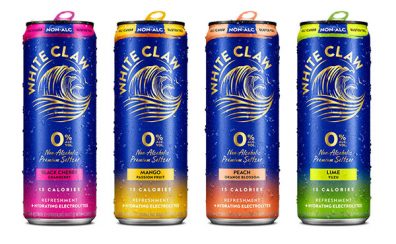
White Claw™ 0 % Alcohol is a breakthrough that redefines drinking. Whether you’re pacing yourself during an afternoon or night out with friends, or taking a day, a week, or a month off from alcohol, White Claw™ 0 % Alcohol provides a delicious, low-calorie, hydrating non-alcoholic choice that lets you to say “yes” to any Drinking invitation. (Photo: White Claw)
Alcohol gives adult drinks a distinct taste and flavor complexity that no one has been able to replicate—until now. When alcohol is stripped out of alcoholic beverages, like with non-alcoholic beer, then taste, flavour, and the complexity that alcohol provides goes with it. For adults seeking the same depth of flavour that they get in alcoholic drinks, still or sparking seltzers with added flavour are no substitute—they’re bland liquids that fall flat by comparison to real drinks.
After years of research and breakthroughs including development of our proprietary plant-based sweetener technology, White Claw has found a unique way to make beverages that have all the taste and complexity you expect in an alcoholic beverage, made non-alcoholic from the start, so it’s not a lesser version of anything, it’s more.
As a leading-edge beverage company with a culture of innovation, White Claw Seltzer Works spent decades researching how taste and alcohol work together. Our investment resulted in patents and proprietary beverage technologies. Our new-to-world approach led us to develop our own iconic flavours found in no other drinks. As a result, White Claw® Hard Seltzer pioneered the most significant new alcohol category since prohibition. The craft and science that went into White Claw Hard Seltzer led us to create White Claw 0 % Alcohol, a fundamentally new kind of drink for every kind of adult drinker that could only come from White Claw.
Created with ultra-refined seltzer, White Claw 0 % Alcohol not only combines iconic White Claw flavours with elevated new secondary beverage alcohol drinks notes, but uniquely adds hydrating electrolytes—half as many as you’d find in some leading sports drinks, with only a fraction of the sugar and calories – 15 per 12 oz. can. It’s a radically new way to drink.
White Claw 0 % Alcohol arrives at a time when consumer drinking culture, once synonymous with drinking alcohol, has fundamentally changed. A new survey from White Claw found that the majority of people who drink alcohol (69 %), Gen Z (81 %), and Millennials (78 %) are interested in exploring a “sober curious” or “damp” lifestyle. However, 63 % of consumers say feelings of expectations and pressure from others, along with the fear of being judged, are making it challenging for them to avoid drinking alcohol during drinking occasions. It’s a gap for consumers that no one has addressed until now.
White Claw 0 % Alcohol is a way to say “yes” to more drinking invitations and enjoy more adult drinking get-togethers without pressure to fit in. Whether you’re wanting the complexity of a real drinking experience where alcoholic beverages might not be appropriate—like a business lunch—or pacing yourself during an afternoon or night out with friends, or taking a day, a week, or a month off from alcohol, White Claw 0 % Alcohol provides a delicious, low-calorie, hydrating non-alcoholic choice that doesn’t make you seem like an outsider. The majority of consumers agree that non-alcoholic drink options help them feel more confident in social situations where they didn’t want to drink alcohol (57 %), make it easier for everyone to enjoy social occasions together (74 %), and help them prioritise their physical health while not missing out on social opportunities (67 %).
“The industry is ripe for disruption as demand for flavourful, non-alcoholic drinks is on the rise, but current options like excessively sweet mocktails, bland waters, and near-beers are disconnected from what today’s adult drinkers want. White Claw 0 % Alcohol paves the way for an entirely new adult beverage,” said Phil Rosse, President, Mark Anthony Brands Inc. “Our newest breakthrough completely reimagines the idea of drinking by delivering the first ever elevated non-alcoholic choice with the complex taste and feel of a real drink that only White Claw can deliver.”
The survey by White Claw found that the majority (64 %) of consumers wish there were better non-alcoholic options available. In fact, consumers would be more likely to choose non-alcoholic drinks if they have flavors they like (83 %), were from brands they know (72 %), had electrolytes (72 %), and were low in sugar (71 %).
“White Claw 0 % Alcohol is made non-alcoholic from the start, so it’s not a lesser version of anything, it’s more. The result is a bold, refreshing choice that tastes like no other adult drink available,” added Rosse. “White Claw 0 % Alcohol is a drink for all drinkers, that empowers you to say ‘yes’ to more adult drinking occasions. We’re proud to continue to bring new news and meaningful innovations that make a difference in people’s lives.”
White Claw 0 % Alcohol features four bold flavours for a delicious, refreshing tasting adult drink with 2 grams of sugar and 15 calories per 12 oz. can and will be available in variety 12-packs and single flavour 6-packs:
White Claw 0 % Non-Alcoholic Premium Seltzer Black Cherry Cranberry: The perfect balance of natural ripe Black Cherry and a hint of tart Cranberry flavour give this an extremely refreshing depth of flavour. Available in 12-ounce slim cans included in variety 12-packs and single flavour 6-packs.
White Claw 0 % Non-Alcoholic Premium Seltzer Mango Passion Fruit: Natural mango and hint of tropical passion fruit perfectly complement each other to deliver an authentic and refreshing taste. Available in 12-ounce slim cans included in variety 12-packs and single flavour 6-packs.
White Claw 0 % Non-Alcoholic Premium Seltzer Peach Orange Blossom: Tastes just like a ripe peach picked off a tree with just a hint of floral orange blossom, creating an amazing, uniquely refreshing sensation like no other. Available in 12-ounce slim cans included in variety 12-packs.
White Claw 0 % Non-Alcoholic Premium Seltzer Lime Yuzu: Exquisite natural juicy Lime comes to the fore, accented by a hint of zesty yuzu citrus complexity for unmatched taste and refreshment. Available in 12-ounce slim cans included in variety 12-packs.
Just in time for Dry (or Damp) January, which the majority (62 %) of people who drink alcohol are interested in participating in according to the survey by White Claw, White Claw 0 % Alcohol will begin rolling out in the U.S. on January 1, 2024.
Survey Methodology The survey was conducted online within the United States by Edelman Data and Intelligence on behalf of White Claw from November 1 – November 13, 2023, among a nationally representative sample of 1,048 Americans ages 21 and up, with additional oversamples to total 1,010 Gen Z (ages 21 – 26), 1,005 Millennials (27 – 42), 943 Sober Curious Gen Z (ages 21 – 26) and 960 Sober Curious Millennials (27 – 42). Sober Curious consumers are defined as those who drink alcohol, but exhibit behaviors or general interest in mindful drinking and non-alcoholic beverages. The main nationally representative sample of 1,048 has a margin of error of ± 3.0 % at the 95 % confidence level.
EUR 10 million center will speed up new packaging and product developments
SIG is celebrating the official opening of its EUR 10 million Packaging Development Center Europe, located at the site of the company’s packaging plants in Linnich, Germany. The center will accelerate new and most sustainable packaging developments and offer SIG customers added value.
The new center features state-of-the-art extrusion and finishing technology, coupled with advanced quality measurement systems and testing equipment. It will significantly increase packaging processability in serial production, system validation and capacity for future digital technologies.
As demand for more sustainable packaging options increases, the new Packaging Development Center Europe will speed up the development of innovative packaging formats and materials to further expand SIG’s leading position in sustainable packaging solutions. It is built according to the latest and most effective energy standards.
Brand new innovations set to make their international debut at the leading trade show for the global fresh produce business from 7 to 9 February. 20 startups and the first Spotlights including many world premieres have now been announced.
Innovation is the lifeblood of FRUIT LOGISTICA whose motto this year is “The heartbeat of the Fresh Produce Business”. From 7 to 9 February 2024, the leading trade show for the global fresh produce business returns to Berlin with a brand new lineup of young startup companies, each one ready to enrich the industry with their groundbreaking new ideas.
Under the slogan ’Disrupt Agriculture’, the FRUIT LOGISTICA Startup Day takes place in Hall 5.1 on 9 February 2024. 20 startups will showcase their trailblazing products and solutions. Robots that monitor plant health; labels that automatically change colour with the temperature; AI-based irrigation systems that know how thirsty plants are. Just three examples of how those startups plan to harness new technologies and improve the business.
There are innovations aplenty elsewhere at FRUIT LOGISTICA 2024, and these include several world premieres, many of which are already present on its dedicated Spotlight page. This year’s innovations include packaging and labels with a reduced plastic content that can be easily recycled or are even biodegradable. AI-based technologies are being used in agricultural and sorting machines. New fruit varieties not only appeal to consumers’ tastes; they also make work easier for producers, as they are resistant to common plant diseases, for example.
To learn more about the event’s more than 2,600 exhibitors from 90 countries, as well as its extensive programme which offers expert knowledge on five stages, trade visitors can use FRUIT LOGISTICA Online, the exhibitor and event database.
There are new ways to attend FRUIT LOGISTICA 2024. Trade visitors can upgrade their ticket with a Gold Upgrade and enjoy access to a special lounge and post-show refreshments. And a new Friday Ticket grants access to the final day of the show at a reduced rate. The FRUIT LOGISTICA 2024 ticket shop is now open.
Over 270 non-alcoholic beverage brands, which include many globally recognised brands, have active sponsorship deals in place with sports properties based mainly across Europe, as of October 2023. Many of these deals are highly lucrative, with seven non-alcoholic beverage brand deals worth over USD 5 million annually. Among these brands, Red Bull is the biggest spending brand in the Europe, the Middle East, and Africa (EMEA) region, with over USD 63.31 million being invested by it in 2023, according to GlobalData, a leading data and analytics company.
GlobalData’s latest report, “EMEA Non- Alcoholic Beverage Sports Sponsorship Landscape,” reveals that Red Bull is estimated to have 10 deals in place that are worth USD 1 million or more annually. Its deals include many esports teams such as OG, Team Spirit, and G2 eSports.
Tom Subak-Sharpe, Sport Analyst at GlobalData, comments: “Red Bull across the EMEA region is the biggest spending non-alcoholic beverage brand thanks to many lucrative deals, which include a primary front-of-shirt agreement with soccer club RB Leipzig. The brand’s investment in Leipzig has contributed massively in allowing the club to be one of the best-performing clubs in German soccer over the last 10 years.”
Red Bull’s biggest spending rival in the sector is Coca-Cola. GlobalData estimates the brand will spend nearly USD 60 million on sponsorship deals across the EMEA region in 2023. The brand’s biggest annual deal in the region is with FC Barcelona. Its one-year deal with the Spanish soccer giants is estimated to be worth USD 5.25 million.
Subak-Sharpe concludes: “In 2023, Coca-Cola continued to be associated with many athletes, with current deals ongoing with Neymar, Blake Griffin, Anthony Davis, Kris Bryant and Justin Barcia. Of these five deals, the one with the Brazilian soccer player Neymar is the most lucrative. Over a long period of time, Red Bull has associated itself with some of the world’s most recognisable athletes. These associations are not expected to decline, with the brand constantly identifying new top talent to partner with.”
Over 110 non-alcoholic beverage brands, which include many globally recognised brands, have active sponsorship deals in place with sports properties based mainly in the US. Many of these deals are title or main sponsorship deals, which allow brands to receive substantial brand exposure opportunities, often from sports properties that have substantial global fanbases. With many of the deals being highly lucrative, eight non-alcoholic beverage deals are worth over USD 10 million annually. PepsiCo is the biggest spending brand in the Americas region, with an estimated expenditure of USD 322.96 million, according to GlobalData, a leading data and analytics company.
GlobalData’s latest report “Americas Non-Alcoholic Beverages Sports Sponsorship Landscape,” estimates that the American multinational food, snack, and beverage corporation PepsiCo has 55 deals in place, which are worth USD 1 million or more annually. In 2023, over USD 100 million is being invested by PepsiCo in team deals, which include many NFL teams such as the New England Patriots, Washington Commanders, and Miami Dolphins.
PepsiCo’s biggest competitor in the sector is Coca-Cola. In 2023, Coca-Cola is estimated to spend close to USD 277 million on sponsorship deals across the Americas region, according to GlobalData. The brand’s biggest annual deal in the region is with US Soccer. The current five-year agreement between the two parties is estimated to be worth USD 100 million.
Tom Subak-Sharpe, Sport Analyst at GlobalData, comments: “It is not surprising that PepsiCo and Coca-Cola dominate the region of all the competing non-alcoholic beverage brands due to the vast amounts of funding that these two powerhouse organisations have to spend on developing their sponsorship portfolios.”
In 2024, it is unlikely that any other non-alcoholic beverage brands will come close to competing with these two brands. However, a brand to keep an eye on who may increase their sponsorship spend and deal volume count is PRIME, the brand that is currently serving as the official sports drink of the Los Angeles Dodgers.
Subak-Sharpe concludes: “The meteoric growth experienced by PRIME in 2023 may allow the brand to invest more finances into securing more sponsorship deals with globally recognised sports properties based in the Americas region.
Coca-Cola Europacific Partners plc (CCEP) announces it has, together with Aboitiz Equity Ventures Inc. (AEV), entered into a definitive agreement to jointly acquire Coca-Cola Beverages Philippines, Inc. (CCBPI) from The Coca-Cola Company (KO).
The acquisition will build on CCEP’s successful expansion into Australia, Pacific & Indonesia (API) in 2021, further strengthening the partnership with its significant shareholder KO, and positioning CCEP as the world’s largest Coca-Cola bottler by both revenue and volume while supporting its long-term growth strategy and focus on driving shareholder value.
CCEP’s acquisition of CCBPI, with AEV, one of the leading conglomerates in the local market, offers a great opportunity to co-own an established, well-run business with attractive profitability and growth prospects.
The transaction is a further step for CCEP to create a more diverse footprint within its existing API business segment. It will also provide the opportunity to leverage best practice and talent, including supporting Indonesia’s transformation journey. It is therefore aligned with CCEP’s aim of driving sustainable and stronger growth through diversification and scale, and underpins the company’s mid-term strategic objectives.
The Mintec Benchmark price (MBP) for apple juice concentrate medium acidity is currently assessed at EUR 1900/MT, up 8.5 % m-o-m and 28.8 % y-o-y.
Apple production in Europe has been revised by The World Apple and Pear Association (WAPA) to be no more than 11 million tonnes down 4 % from the initial forecast. Poland, Europe’s top apple producer, is expected by the industry to yield around 3.3 million tonnes in 2023, 700 000 tonnes lower than WAPA’s August forecast.
Processing is reaching completion with most processors finished for the season. Market sources said that Polish apple juice concentrate production will be around 230,000 tonnes. Demand is strong throughout Europe, but supply is limiting trade and subduing the market, according to market sources, most apple juice is concluded under contracts. Many buyers were expecting a drop in price as the processing season came to an end, yet this never occurred.
China has also had a challenging apple season with a lower crop than normal. According to market sources, the industry expects apple juice concentrate production in China to reach approximately 300,000 tonnes in 2023, which is well below typical levels that often exceed 500,000 tonnes. Market sources have said that some of China’s juice has been imported into Turkey and blended domestically. Market sources suggest bullish expectations for the industry in upcoming months as supply and demand dynamics tighten.
All Oranges 20.5 Million Boxes
The 2023-2024 Florida all orange forecast released by the USDA Agricultural Statistics Board is 20.5 million boxes, unchanged from the October forecast. If realised, this will be 30 percent more than last season’s final production. The forecast consists of 7.50 million boxes of non-Valencia oranges (early, mid-season, and Navel varieties) and 13.0 million boxes of Valencia oranges. An 8-year regression was used for comparison purposes. All references to “average”, “minimum”, and “maximum” refer to the previous 10 seasons, excluding the 2017-2018 season, which was affected by Hurricane Irma, and the 2022-2023 season, which was affected by Hurricanes Ian and Nicole. Average fruit per tree includes both regular bloom and the first late bloom …
Please download the full citrus crop production forecast: www.nass.usda.gov
Döhler, a global producer, marketer and provider of technology-driven natural ingredients, ingredient systems and integrated solutions for the food, beverage and life science & nutrition industry acquires Frikos and strengthens its product portfolio of freeze-dried fruits.
Döhler, leading global producer, marketer and provider of technology-driven natural ingredients, ingredient systems and integrated solutions for the food, beverage and life science & nutrition industry has acquired Frikos, a Serbian company renowned for its expertise in premium quality freeze-dried fruits. This acquisition marks a significant step in enhancing Döhler’s strategic product portfolio, particularly in the area of organic red berries.
Located two hours southwest of Belgrade, Serbia, in the heart of the raspberry cultivation region, Frikos has been at the forefront of innovation in the freeze-dried berries sector for many years. In partnership with Friko’s management, Döhler will build on this success and strengthen its global market position, for example, with their state-of-the-art technology in the production of organic raspberries.
With their strong focus on organic products, Frikos demonstrates their commitment to sustainable farming practices and support for the local agricultural community. The strategic location of Frikos, coupled with their in-house technology and robust quality management systems, leverages the expertise of local farmers and supports continuous improvement of their product quality.
Frikos will have access to all of Döhler’s cutting-edge technologies, and together with Döhler’s application labs, global and local customers can expect prime services and a more extensive product portfolio.
Customers worldwide, especially in North America and Europe, will now benefit from a broader range of premium quality freeze-dried berries as well as a reliable supply chain. This strategic acquisition further strengthens Döhler’s commitment to meeting the evolving needs of customers and consumers worldwide for excellent, tasty, healthy and sustainable solutions in the food and beverage industry.
About Frikos Frikos is a company specializing in the production of premium frozen and freeze-dried fruits, particularly in red berries, with a focus on organic locally grown products, like organic raspberries and blackberries. Located in the heart of Serbia’s raspberry cultivation region, the company has established a strong reputation for premium quality products and innovation especially in developing own freeze-drying technologies. With their strong focus on organic products, dedication towards market trends and customer needs, Frikos demonstrates their commitment to sustainable farming practices and support for the local agricultural community.
Total forecast production of oranges1 updated to 307.22 million boxes
The second forecast for the 2023-2024 orange crop in the São Paulo and West-Southwest of Minas Gerais citrus belt, published by Fundecitrus, in cooperation with Markestrat, FEA-RP/USP, and FCAV/Unesp2, is 307.22 million boxes of 40.8 kg each. Of this total estimated production, approximately 27.60 million boxes are expected to come from the Triângulo Mineiro region.
In this update, the initial projection is reduced by 2.12 million boxes, corresponding to 0.7 %. This adjustment reflects the balance considering all varieties. The oranges from early varieties, already harvested almost entirely, benefited from abundant rains at the beginning of the year, resulting in a production exceeding the estimated 2.27 million boxes …
1Hamlin, Westin, Rubi, Valencia Americana, Seleta, Pineapple, Alvorada, Pera Rio, Valencia, Valencia Folha Murcha and Natal. 2Department of math and science, FCAV/Unesp Jaboticabal Campus.
Avantium N.V., a technology company in sustainable chemistry, is collaborating with Albert Heijn to make packaging more sustainable. To this end, Avantium’s 100 % plant-based and circular material PEF (polyethylene furanoate) is being used for various forms of packaging. Refresco, a global independent beverage solutions provider for Global, National and Emerging (GNE) brands, and retailers, produces Albert Heijn’s new fruit juice bottle made out of PEF. This will be the first PEF application to be introduced in Albert Heijn stores, once Avantium’s commercial plant for PEF is operational. Albert Heijn is the first supermarket chain in the world to introduce PEF packaging for own-brand products.
“As a beverage solutions provider, we are continuously looking for innovative ways to produce soft drinks, fruit juices and other drinks. Reducing, recycling and making packaging more sustainable is an important element of our strategy. With PEF we are able to offer an alternative sustainable packaging solution to our customers. We are therefore pleased that Refresco, Avantium and Albert Heijn are now working together to bring this new fruit juice bottle to market.”, says Alexander van Assouw, Managing Director Refresco Benelux.
Avantium’s PEF is a 100% plant-based and fully recyclable polymer with a wide range of applications including bottles and packaging, films and textiles. In addition to its sustainable packaging benefits, Avantium’s PEF has superior barrier properties, extending the shelf life of beverages and food. Avantium is currently constructing the world’s first commercial plant in Delfzijl for 5 kilotons of FDCA (furandicarboxylic acid), the key building block for PEF, with commercial production expected to start in the second half of 2024. Thereafter, PEF production will be further scaled up to plants of 100 kilotons and more for large-scale production of FDCA and PEF through technology licensing.
dsm-firmenich, a leading innovator in health, nutrition, and beauty, announces Peach+ as the 12th annual “Flavour of the Year” for 2024. Peach+ was inspired by PANTONE® 13-1023 Peach Fuzz, the 2024 Colour of the Year from PANTONE®, a global colour authority and provider of professional colour language standards and digital solutions for the design community. The selections were based on emerging signals in the cultural and consumer landscape where trends in kindness, community, goodness, and comfort have all been identified as having increasing relevancy. For more than 20 years, both companies have observed many of the same trend sources, drawing inspiration from a wide variety of influences, including culinary, fashion, hair and beauty, packaging and multimedia design, home decor and interior design, architecture, art, and the cultural zeitgeist.
Peach+ is an invitation to dsm-firmenich customers to innovate with this beloved flavour, to go beyond the traditional juicy sweet aspects to also consider softer, smoother, lighter, more refreshing, textural elements.
“Now in its 12th year, the announcement of the Flavour of the Year is an eagerly anticipated event,” said Maurizio Clementi, EVP Taste for Taste, Texture & Health at dsm-firmenich. “The delicate and natural qualities of Peach+ call for diverse applications across multiple food and beverage industries, and we are excited to see the innovations of our clients upon receiving this news.”
Empowering customers with insights into trends
The peach is one of the oldest cultivated fruits in the world, with a 4,000-year-old history that began in China and continues to this day. China is the world leader in peach production and exportation, with over 400 varietals under cultivation.
“Our research reveals that peach has many multifaceted meanings,” said Jeffrey Richard Schmoyer, VP of Human Insights for Taste, Texture & Health at dsm-firmenich. “And peach is incredibly emotional. While the peach has a long history, it also has an innovative future.” According to Emotions 360™, a proprietary dsm-firmenich consumer study that measures consumer emotions associated with ingredients, the peach is somewhat unique in that it has many innate qualities that contrast, such as being both indulgent and pampering, but also refreshing and revitalising, and youthful, but nostalgic.
Peach has been an evergreen fruit flavour in many categories for decades with a steady share of presence in innovations in most regions. Today, peach is growing in popularity in some regions and categories both as the primary tonality and in combination with others. The most prevalent areas of growth for peach new product development are carbonated soft drinks, nectars, candies, ready-to-drink teas, teas, flavoured alcoholic drinks, yogurt and fruit preparations, dairy drinks, juices containing peach, and fruit preserves. Other areas showing promise for growth are functional drinks and powdered soft drinks, as well as more savory opportunities for peach including side dishes, noodles, processed cheeses, and protein analogs. Peach in combination also spiked in favour of passion fruit plus peach, mango plus peach, peach plus tea, and apricot plus peach.
’’Flavour of the Year showcases emerging trends in flavour through proactive sensory experiences and creations, and completes its mission year after year, which is to empower our customers to be leaders in global trends,” says Mikel Cirkus, Global Creative Director for Taste, Texture & Health at dsm-firmenich. The company identifies countless possibilities to put the Plus in Peach for 2024, and confidently envisions how customers can lead with these emerging trends to ultimately create products with high impact and superior business relevancy.
The World Citrus Organisation (WCO) has released its annual Northern Hemisphere Citrus Forecast for the upcoming citrus season (2023-24). The Forecast was released on the occasion of the Global Citrus Outlook conference organized by WCO. The forecast is based on data from Egypt, Greece, Israel, Italy, Morocco, Spain, Tunisia, Turkey, and the United States. This year, the Forecast shows that citrus production is projected to reach 28,976,001 T, which represents a 12.2 % increase compared to the previous peak low season. The 2023/2024 forecast is 1.48 % higher than the average of the last 4 seasons.
WCO, the World Citrus Organisation, released its annual Northern Hemisphere citrus forecast for the upcoming season (2023-24). The preliminary Forecast is based on data from industry associations from the Mediterranean region and the United States. Total citrus exports are expected to follow a similar trend at 9,483,770 T, up by 11.4 % from last season and 4.5 % from the last four seasons’ average.
Philippe Binard, WCO Secretary General, summarised the outcome of the Forecast. “The market insights we received indicate a recovery from the low point of last season. The growth is mainly influenced by growth in Turkey and Egypt while other countries are stable or only recorded marginal gains”. Eric Imbert from CIRAD added, “While this year’s forecast shows a recovery with variable conditions across the producing countries and citrus categories, many parameters have to be taken into account for the market analysis”. He added: “Climatic issues, such as late frost, drought, heat waves, or new pests and diseases influenced the quality, colouring, or harvest date for the production. The market will still be impacted by geopolitical instability while consumer demand is under pressure due to limitation of purchasing power and inflation”.
Looking at the country-specific figures for the largest producers in the EU, Spain’s citrus production at 5.9 MT is up by 2 % to previous seasons, with stable soft citrus compared to last year, fewer oranges (- 6 %) and more lemons. Italy is up by 6 % at 2.6 MT, with more oranges (+ 20 %) and less soft citrus and lemons (- 10 % each), while Greece is down by 7 % to 1.1 MT. In the other Mediterranean countries, Turkey is now the market leader with a first production estimate of 6.5 MT (+ 45 %), with strong growth across all categories. The Turkish production forecast could even exceed 7 MT. This results from the increased acreage and productivity, alternance, and favourable climatic conditions. Egypt at 5.4 MT is up by 10 % from the previous season and 15 % from the average of the last 4 years. The main category is oranges with 3,7 MT (+ 5 %) while soft citrus’s double-digit growth should almost reach 1.3 MT. Morocco’s production is expected to partially recover, bouncing back to just over 2 MT, with 1 MT of soft citrus (+ 11 %) and 930,000 T of oranges. Israel’s production is estimated at 365,000 T, but the recent conflict and attack on the country is a source of multiple challenges regarding supply, logistics, and human resources for harvesting and packing. The production in the United States will be up by 1 % at 4.5 MT with more oranges ( + 10 % at 2.4 MT) but less soft citrus (- 2 % at 856,000 T) and even less so for lemon ( – 12 % at 889,000 T).
Philippe Binard added: “WCO is also setting some trends for the expected utilization of citrus for the upcoming season. The global citrus exports will be up by 11 % to reach 9,4 MT, while processing will increase by 8 % to reach 4,7 MT, leaving 14.7 MT for domestic sales (+ 14 %.). Next April, the WCO will release the 2024 production and export forecast for the Southern Hemisphere.
The revision aims to help consumers make informed and healthier decisions on agri-food products such as honey, fruit juice, jam, jellies and marmalades.
On 12th December, Parliament adopted its position on the revision of the so-called ‘breakfast’ directives with 522 votes in favour, 13 against and 65 abstentions. The proposal updates rules on the composition, name, labelling and presentation of certain ‘breakfast’ foodstuffs.
Clear labelling of country of origin
MEPs agree that the country where honey has been harvested must appear on the label. They add that for fruit juices, jams, jellies, marmalades and sweetened chestnut purée the country of origin of the fruit used must also be indicated on the front-label. If the honey or fruit used originates in more than one country, MEPs want the countries of origin to be indicated on the label in descending order according to the proportion they make up of the final product.
To limit fraud, MEPs want to set-up a traceability system for the honey supply chain to track product origin. They also want the EU to form a reference laboratory for honey to improve controls and to detect adulteration through systematic testing.
Sugar content labelling
MEPs propose that the label ‘contains only naturally occurring sugars’ should be allowed for fruit juices. To meet the growing demand for low-sugar products, reformulated fruit juices may be labelled ‘reduced-sugar fruit juice’.
New techniques that remove naturally occurring sugars in fruit juices, jams, jellies or milk should not lead to the use of sweeteners to compensate for the effect of sugar reduction on the taste, texture and quality of the final product, MEPs say. They add that labels of the reduced-sugar foodstuff must not contain claims regarding positive properties, such as health benefits.
Next steps
Parliament is now ready to begin talks with EU governments on the final shape of the law.
Background
The revision of EU marketing standards for certain ‘breakfast’ directives was proposed by the European Commission on 21 April 2023 to update current standards that are more than 20 years old.
This year’s Fi Europe embodied all the ingredients of a successful event, showcasing a winning combination of sourcing, innovation, networking and education.
In a milestone year for benchmarking organised event success, Fi Europe 2023 has shown that there is more demand than ever for a dynamic platform uniting the international ingredients industry. This year’s event, which attracted 23,149 attendees from 135 countries around the globe, was a resounding success, reaffirming its positive contribution to F&B industry innovation, collaboration and dialogue.
The build-up started on 20 November, when the event platform went live, enabling attendees to access exclusive content previews, coordinate meetings and stream a live keynote session. Then, on 27 November, the Future of Nutrition Summit kicked off a carefully curated in-person content programme designed to inspire and inform whilst facilitating networking and discussion. Speakers from Nestlé, Microsoft, Deloitte and the United Nations Global Compact gave their takes on the trends and technologies reshaping the food industry landscape.
On 28 November, Fi Europe opened its doors to reveal a vibrant show floor that was to become a hive of networking activity for the next three days. Over 1400 exhibition stands occupied four halls packed with ingredients and solutions from all over the world, providing a sensory spectacle and a wealth of sourcing opportunities. Many attendees also took advantage of the additional inspiration offered by the Innovation Tours, New Product Zone and Innovation Hub.
The first day culminated with the announcement of the Fi Europe Innovation Awards and Startup Innovation Challenge winners. Honoured at a special ceremony, the recipients were chosen by an expert judging panel for their outstanding contributions to the F&B ingredients industry.
The two-day Fi Europe Conference, which ran in parallel to the exhibition, provided a further forum for exchanges on the latest advancements and future trends in the F&B industry. The agenda revolved around four topical themes: plant-based, health & wellbeing, alternative ingredients & protein, and reformulation & ingredient innovation. Speakers from a broad cross-section of commercial, academic and research organisations, including Mintel, Euromonitor, NIZO, Wageningen University, Rabobank and Cultivated Biosciences, made for a varied and insightful programme.
Sustainability as an industry challenge was a thematic thread throughout this year’s event, with dedicated features such as the Sustainability Hub and content that focused on ethical sourcing, transparency, regulatory compliance, ESG and gender equity, creating a forum for constructive discussions in this important area.
The industry’s challenge of cultivating a strong pipeline of emerging talent was addressed at Fi Europe 2023 through the introduction of a new programme designed to facilitate connections between students and businesses. The Future Food Leaders Day, which took place on 30 November, gave university students valuable insight into the potential trajectory of a career in the F&B industry.
Yannick Verry, Brand Manager, Food ingredients Europe & Americas, at Informa Markets, says: “For me, feeling the buzz of this year’s show reinforced the important role that Fi Europe fulfils for the global food & beverage community. Not only does it provide a forum for making meaningful connections and discovering new ingredients and technologies, it also makes an important contribution to advancing discussions and thinking around innovation, sustainability and the future of the industry. We are already looking forward to 2024, when Fi Europe will return to Frankfurt, from 19-21 November.”
Plant protein powder is no longer exclusive to vegans and athletes, with significant numbers of mainstream consumers now shopping the category, according to new research commissioned by MycoTechnology, Inc., the mushroom mycelial fermentation specialist.
The survey of 725 plant protein powder users, carried out by Brightfield Group in Q1 2023, found that just 17 % of them identified as vegan. Furthermore, 38 % of the respondents in the survey who declared that they purchase only plant-based protein powders said they mixed them with dairy milk, indicating that they buy such products for reasons other than dietary lifestyle choices.
Meanwhile, fewer than half of the respondents in the survey (46 %) identified as athletes, even though as many as 77 % of them said they exercised at least three times a week. The vast majority (93 %) stated that they exercise to support their mental health.
When asked to describe themselves, 34 % of respondents were identified as ‘early adopter’ consumers. Another 31 % were ‘early majority’ shoppers, indicating a shift for plant protein powder into a more mainstream demographic.
When it comes to product quality, plant-based protein powder consumers are in broad agreement. Nearly all of them (92 %) said they would find a product more appealing if it offered higher quality protein, with 91 % attracted by a protein that is more complete. Beyond nutritional factors, 91 % of respondents said they favour products that promise a better taste.
MycoTechnology’s Marketing Director, Jonas Feliciano, commented: “These findings demonstrate that plant protein is smashing apart outdated stereotypes and is now earning strong support among mainstream consumers. The fact that so many blend their plant protein powder with milk is a strong sign that non-vegans consider plant protein to be a conventional product and a key part of a healthy diet. Most notably, all but a few of the respondents to our survey said that they considered protein quality and flavour to be of the utmost importance. The successful plant proteins of the future will be those which are able to tap into the needs and preferences of these highly discerning consumers.”
Bethany Gomez, Managing Director at Brightfield Group, added: “Plant-based protein users are a young, affluent group that prefers cleaner eating–no sugar added, all natural, preservative free–and they’re willing to pay for high quality products with that strong health profile. This group is also more likely to be using functional ingredients, like mushrooms and adaptogens, so we know they’re open to new and alternative ways to get the types of sustenance and nutrition they’re looking for. Brands that strive to offer high quality products, using cutting edge ingredients, will find a group of users ready and willing to dig in.”
A trailblazer in the development of next-generation plant proteins, MycoTechnology offers a line of plant proteins including FermentIQ™ PTP – a pea and rice protein blend fermented by mushroom mycelia to deliver superior performance and nutrition. Providing all essential amino acids, it has a PDCAAS (Protein Digestibility Corrected Amino Acid Score) of 1.0 for ages 3 and above. Its unique fermentation process also enhances digestibility, enabling 99.9 % of the protein consumed to be easily digested. As a result, FermentIQ™ PTP offers a nutritional value competitive with animal and soy proteins.
MycoTechnology’s proprietary process also deodorises and de-flavours the plant proteins, offering better tasting, more neutral solutions with superior functionality in a range of applications. For those looking to take the taste of their products to the next level, MycoTechnology also offers ClearIQ™ – a natural, clean-label bitter blocker and flavour clarifier.
The combination of low orange supply and firm demand over the last weeks, due to high temperatures, has been keeping prices on the rise in both the in natura market and at the industry.
Orange prices have been hitting records in both segments – as for fruits to the industry, the current average is a real record, considering the Cepea series, which started in October 1994 (monthly prices were deflated by IGP-DI October). Even with an average crop, orange juice stocks at processing companies are low, resulting in a fruit supply that is lower than the demand.
In November, pear oranges are traded in the in natura market at BRL 58.90 per box, 45.9 % higher than in November last year (in real terms) and the highest of Cepea series, in nominal terms. In real terms, the current average is the highest since March 2019 and the fourth biggest considering the months of November.
Prices for pear orange and late varieties sent to the industry, in turn, have averaged BRL 49.04 per box in November, soaring 60.3 % compared to November/22, in real terms, and the highest of the series.
The supply in Brazil is expected to be lower than the demand at least until the end of the crop. The following season can still register a limited availability, considering that current OJ stocks may not recover at the end of the 2023/24 crop. In case the 2024/25 season continues on the average, stocks may present a new decrease. Therefore, if the crop is below-average, the situation can be critical.
Change of leadership at AGRANA Beteiligungs-AG: CFO Stephan Büttner (50) was appointed as the new CEO: On 1 January 2024 he will be taking over the role of Markus Mühleisen (57), who will leave the company at the end of the year before the scheduled end of his term in office as CEO on 31 May 2024. Furthermore, Stephan Büttner’s existing term of office, scheduled to conclude on 31 October 2024, has been extended until 31 October 2028.
Stephan Büttner has already held various management roles as part of the AGRANA organisation since 2012 and has played a decisive role in its success to date. As CFO on the Management Board, he is currently responsible for the areas of Finance, Equity Investment Management, Legal Affairs, Compliance, Procurement, IT, Organisation and Investor Relations as well as for the Fruit Division. As the new CEO, he will also be taking on responsibility for the areas of Strategy and Business Policy, Sales Coordination, Public Relations, Human Resources and Corporate Secretariat.
After graduating in commercial sciences from the Vienna University of Economics and Business, Stephan Büttner initially worked at KPMG AUSTRIA GmbH. After moving on to Raiffeisen Ware Austria AG in 2001, he worked as CEO at its subsidiary Ybbstaler Fruit Austria GmbH from 2004. He has worked for the AGRANA Group since 2012. As CEO of AUSTRIA JUICE GmbH, a joint venture of AGRANA Beteiligungs-AG and Raiffeisen Ware Austria-AG, he successfully managed the merger of AGRANA Juice GmbH and Ybbstaler Fruit Austria GmbH. In 2014, he became CFO of AGRANA Beteiligungs-AG and has also been CEO of AGRANA Fruit since May 2021.
Premix solutions for holistic “Beauty From Within”
Men or women, Gen Z, Millennials or Baby Boomers, everybody wants to look good, regardless of gender and age. According to a worldwide survey by Euromonitor International, more than half of respondents see beauty primarily in a healthy appearance. And this comes mostly from within. More and more consumers are becoming aware of how important nutrition is for healthy skin, hair, and nails. They understand that a healthy, balanced lifestyle has an effect on their appearance, and so they look for foods, beverages, and nutritional supplements that support holistic beauty. To meet this demand, SternVitamin has developed the new “Beauty From Within” premix line.
Holistic beauty combines wellness, health, and beauty
For many years wellness, health, and beauty were separate categories, but now they are increasingly merging into one another. Holistic beauty has established itself as a long-term trend. Consumers are looking for beauty products that alleviate stress, boost wellbeing, help with sleep issues and thus support a healthy appearance. With SternHolisticBeauty, SternVitamin has developed a unique premix that follows this holistic approach.
This premix for instant drink powders is specially tailored for holistic beauty. Its micronutrients and other functional ingredients support the gut immune system and the microbiota that work through the gut-skin-brain axis to strengthen the skin barrier and improve skin health. The lavender extract it contains helps with relaxation and stress reduction, while its pantothenic acid supports mental performance.
The skin as a calling-card
SternVitamin’s new premix line is centred on solutions for various skin needs. After all, glowing skin is the very essence of a healthy appearance. But unfortunately, the process of skin ageing starts as early as at age 25. External influences like environmental pollution and sunshine, as well as individual factors like stress, lack of sleep, and unbalanced nutrition, further exacerbate the natural ageing of the skin. It is no wonder that dark eye circles, lines, and wrinkles are among the most frequently mentioned skin problems. With combinations of selected vitamins, minerals, and functional ingredients, SternVitamin’s premix solutions support the natural beauty of the skin. A key factor, for example, is optimal moisturisation. This is exactly what SternHydroSkin helps with. The premix for capsules contains vitamins C and D that help maintain the skin barrier and counteract skin dryness. Vitamin B3 has a stimulating effect on ceramide synthesis, which is important for a healthy skin barrier. Moreover, hyaluronic acid and pomegranate extract have positive effects on skin elasticity, hydration and wrinkles.
SternSolarGuard protects against the skin’s worst external enemy – the sun. UVA radiation is a major cause of skin ageing, wrinkling, and roughness. This is due to oxidative stress and the damaging effects of free radicals. The vitamins C and E and trace elements zinc and selenium in the premix protect the skin from UV-induced oxidative stress. Vitamins C and E have also been demonstrated to counteract UV damage and skin ageing. The combination of citrus flavonoids and rosemary extract in the premix can provide additional protection against the sun’s harmful radiation. This premix was designed for capsules, and like SternHydroSkin, it is suitable for products targeting men and women in all age groups.
“Beauty sleep” is not just an expression – the skin regenerates during sleep. SternBeautySleep supports restful sleep and skin renewal. This premix for capsules contains the minerals zinc, magnesium, calcium, and selenium, which boost sleep duration. Beyond that calcium is involved in the skin’s cell cycle. Like zinc, the vitamins C and E in the premix reduce UV-induced skin ageing. Valerian, hops, and passionflower reduce the time it takes to fall asleep and improve sleep duration. SternBeautySleep is ideal for women and men under stress.
For beautiful skin, hair, and nails
The Beauty From Within range is completed by SternGlow and SternBeautyGummy. Both premixes contain micronutrients and functional ingredients that provide for beautiful skin, hair, and nails. SternBeautyGummy is specially intended for the trendy gummy application. All SternVitamin premixes can be incorporated into different applications. SternVitamin tailors each premix to customer order. The micronutrient specialist also develops customised concepts for individual foods and food supplements in close cooperation with the customer.
Selecta, Europe’s leading route-based, self-service FoodTech provider, and Vitamin Well, a leading provider of functional beverages and protein bars, announce an exciting collaboration across European markets.
Embarking on a dynamic partnership, Selecta and Vitamin Well have joined forces to offer a selection of healthier and great-tasting offerings, enriching Selecta’s vending Solution globally. In this venture, Vitamin Well’s vitamin water and Barebells protein bars take center stage, aiming to provide consumers with better alternatives on-the-go.
Vitamin Well has a range of distinct great-tasting flavours, all non-carbonated, low-calorie, and enriched with versatile combinations of vitamins and minerals. The beverage comes in bottles made of 100 percent recycled plastics. Vitamin Well is the market leader in Sweden and has become a consumer favourite in many other European markets.
Vitamin Well also provides Barebells, protein-enriched snacks that never compromise on flavour or texture. Barebells’ wide range of protein bars is available in 40 markets around the world and has quickly assumed a leading position in several countries. Through Selecta’s leading self-service machines, the brand’s iconic Original Protein Bars will be available to consumers on-the-go all over Europe.
Jens van Beusekom CPO at Selecta Group commented: “We strongly believe in fostering collaboration with Vitamin Well and Barebells as the brands have earned widespread popularity worldwide. We are thrilled to introduce a range of nutritional snacks that cater to the needs of our young on-the-go consumers.”
Joost Kroeb, Head of International Accounts at Vitamin Well, added: “Selecta has a unique position on the market, both when it comes to international spread and number of locations. As such, this cooperation will increase consumer awareness of Vitamin Well and Barebells both in our mature markets and markets where we see great potential going forward.”
The partnership covers products in Selecta solutions all over Europe, as well as point-of-sale marketing on the machines to increase awareness of the new offerings.
Selecta and Vitamin Well look forward to a successful partnership that reshapes the vending landscape, bringing healthier and better-tasting alternatives to consumers in the public-, private-, and semi-public sectors, delighting consumers in major European cities, airports, train stations and more.
Elopak has announced plans to build its first U.S. production plant with the latest state-of-the-art technology for better and more efficient production. The plant will produce Pure-Pak® cartons for liquid dairy, juices, plant-based products and liquid eggs. The new production facility will be located in Little Rock, Arkansas and is expected to start production in H1, 2025.
It represents a significant investment for the region of around USD 70 million including the land, the building and the equipment.
Following the investment announcement in June 2023, the company has evaluated different financing opportunities and concluded to own and fully finance the plant on the balance sheet. Hence, the nominal cost of the investment will be recognized in the balance sheet instead of the discounted value of the lease payments, increasing the reported investment by around USD 15 million. This is economically more profitable for Elopak compared to partly leasing, which was assumed in June. Further, around USD 5 million is added to the investment to further optimize the scope of the project and support further long term growth.
Since the announcement in June, we have signed contracts with some of our existing customers in the region, further strengthening the investment case.
The new plant will create more than 100 permanent jobs in the region for engineers, printers, operators, logistics specialists and other support groups.
“This is our first converting plant in the U.S. and a landmark investment for our company. North America is a key building block for our future growth and we are very excited to expand our presence in the region. I would like to thank all parties involved for enabling the next step in our North American growth journey” says Thomas Körmendi, CEO of Elopak.
Azelis, a leading innovation service provider in the specialty chemicals and food ingredients industry, is delighted to announce its new distribution agreement with BENEO, a prominent manufacturer of functional ingredients for the food, feed, and pharmaceutical industries. Effective immediately, Azelis will be the exclusive distributor for inulin, oligofructose, scFOS, texturised wheat proteins, faba beans, Beta-glucans, meatless solutions, and specialty rice ingredients in India and the entire portfolio in Bangladesh. This new agreement strengthens Azelis’ existing and successful partnership with BENEO in EMEA.
BENEO is a leading expert in developing and producing functional ingredients derived from natural sources such as chicory roots, sugar beet, rice, and wheat. In Food & Nutrition, BENEO’s plant-based functional ingredients help improve the nutritional and technical properties of a wide variety of products, while maintaining or even improving taste or texture.
This new mandate reinforces Azelis’ offering in India and Bangladesh; this partnership completes its advanced product offering for food and beverages, including bakery, confectionery, meat, and dairy products, as well as plant-based alternatives for the latter two applications. Moreover, BENEO’s strong commitment to sustainability aligns with Azelis’ strategy to provide innovative and sustainable formulations to its customers.
Majority of Künzel Maschinenbau GmbH shares acquired
Ziemann Holvrieka has expanded its capabilities for providing complete brewery solutions with the acquisition of Künzel Maschinenbau in Mainleus, Germany. Künzel is a leading manufacturer particularly known for its expertise in malt handling and grist mills, which are crucial components for breweries. Künzel has been a major player in the raw material handling sector since 1922.
This acquisition reflects Ziemann Holvrieka’s strong commitment to excellence in the brewery equipment industry. Künzel’s specialisation in the upstream phase of brewing process aligns perfectly with our existing product portfolio. It enables us to enhance our range of products and turnkey solutions. Furthermore, we will harness Künzel’s expertise within our group of companies, including Ziemann Holvrieka, to explore new opportunities for Künzel in other sectors.
The site in Mainleus will continue to operate as it always has, with the same management team, with the same dedication to all its customers and with their committed employees. Künzel will retain its company name, brands, and organisational culture.
BrauBeviale 2023 in Nuremberg can look back on three successful days. With Thursday’s final day, Europe’s leading trade fair for the brewing and beverage industry got back on track after a four-year break. Rolf Keller, Managing Director of organiser YONTEX, is appropriately satisfied: “With strong visitor demand from over 120 countries and from all sectors of the beverage industry, our three-day show once again scored highly: The technical exchanges between experts, the wide range of exhibitors and the specialist topics addressed in the supporting programme were extremely well received by visitors. BrauBeviale once again confirmed its position in the industry when it comes to delivering answers to current challenges.”
Well-frequented halls and intensive, high-quality discussions were the major take-aways for many exhibitors: key topics included energy saving in the manufacturing process, new filling systems and optimising efficiency through increased automation. Furthermore, exhibitors delivered answers to the requirements of European packaging legislation and showed awareness of the need to consistently align manufacturing processes with sustainability criteria.
Excellent response to the supporting programme
The supporting programme also provided a strong impetus for the entire industry: THE LOGISTIK LOUNGE, for example, demonstrated numerous reusability solutions and made positive suggestions for the future direction of the logistics chain during its discussion forums. This offering in particular was perceived as an important addition to the overall BrauBeviale programme.
The Young Talents Camp got off to an equally promising start: The new networking lounge concept aimed at attracting young Gen Z talent to all areas and levels of the beverage industry was a complete success. “We had excellent responses to this offer. I can already say that we will be stepping up our activities in this interdisciplinary area for the benefit of the whole industry,” says Executive Director Andrea Kalrait.
With the special “Grape processing and Cellar Management”, area BrauBeviale 2023 broke new ground. Exhibitors there were able to present their products specifically for the wine industry. It was a new platform in which winegrowers could learn about solutions for their own specific businesses. The additional benefit for this group of visitors was that bottling technology and packaging as well as solutions for product equipment could simply be ‘taken away’ following a visit to the trade fair in the nine BrauBeviale halls.
Expert meetings and presentations covering a wide range of topics
The well-proven and broad-based programme of the BrauBeviale Forum once again presented a wide range of ideas, ranging from securing raw materials in the face of climate change, to best practice examples from marketing. On the last day of the show the ExportForum German Beverages supplied valuable ideas for sales development of German beverages in attractive international markets. What influence do today’s multiple challenges and changes have on the food and beverage industry? This question was addressed in an introductory presentation by specialists from the food and beverage sector.
High level of interest from an international audience
BrauBeviale 2023 once more positioned itself strongly as a platform for the industry – predominantly in other European countries. Around 45 per cent of exhibitors came from abroad. The show’s potential has also been recognised by representatives of other nations. During the visit by the Italian Consul General Sergio Maffettone and the American Consul General Timothy Liston, the BrauBeviale team was able to document the consistent development of the trade fair into an international meeting place. The visit of the Italian Consul General was particularly focussed on the Italian exhibitors, who made up the second largest group of exhibitors after the German exhibitors. The American Consul General informed himself about suppliers with innovative solutions as well as some suppliers with complete offers for brewery operations. In addition, by visiting the Young Talents Camp, he focussed his attention on the topic of recruiting young talent – one of the most pressing tasks for the industry in the near future.
The show organiser YONTEX considers this high level of interest, which also comes from official representatives of some major market players in the beverage sector, as confirmation that the company is on course to further develop the specialisation of its product portfolio for the brewing and beverage industry.
SIG is celebrating the official opening of its €10 million Packaging Development Center, located at the site of the company’s packaging plants in Linnich, Germany. The center will accelerate new and most sustainable packaging developments and offer SIG customers added value.
The new center features state-of-the-art extrusion and finishing technology, coupled with advanced quality measurement systems and testing equipment. It will significantly increase packaging processability in serial production, system validation and capacity for future digital technologies.
As demand for more sustainable packaging options increases, the new Packaging Development Center will speed up the development of innovative packaging formats and materials to further expand SIG’s leading position in sustainable packaging solutions. It is built according to the latest and most effective energy standards.
Back to his old domain: on January 1, 2024, Tobias Wetzel will become the new managerial head of Sales and Service at KHS. This has now been confirmed by the company’s supervisory board. The 50-year-old switches from the Mannesmann Stainless Tubes group, one of the world’s leading manufacturers of seamless stainless steel and nickel-based alloy tubes and pipes, to the systems provider. Between 2011 and 2020 Wetzel already held various managerial positions at KHS, most recently as head of the Service Division. He joins Kai Acker (CEO), Martin Resch (CFO Finance, Procurement and IT) and Beate Schäfer (CHRO) to complete the KHS Executive Management Board.
After finishing his Bachelor of Business Administration (BBA) in general management at what is now the Zeppelin University in Friedrichshafen, Wetzel gained a Master of Business Administration (MBA) from FOM International University for economy and management. His studies complete, he then started his career at Coca-Cola where he remained for over three years, amassing extensive experience in the beverage industry.
Prior to his starting in his new post, Wetzel held a number of managerial positions for the Dortmund systems provider over a period of ten years, first as head of RC Service Sales Support, then as executive vice-president of Corporate Controlling and finally as head of the Service Division until his departure. Between April 2015 and August 2019 he also assumed the management of the production site in Hamburg, then active under the name of KHS Corpoplast GmbH (now KHS GmbH). Before his time with the turnkey supplier, the graduate business economist spent around ten years in various functions at and companies of Mannesmannröhren-Werke – and has thus been working for Salzgitter AG, to which both companies belong, for over 20 years.
Sweegen, a global leader in wellness ingredient and taste modulation technologies, is addressing the pressing issue of mislabeling within the stevia industry, specifically concerning Reb M stevia sold under false claims intentionally.
Sweegen is the primary producer of the highly sought-after non-GMO Bestevia® Reb M, made with a proprietary clean bioconversion method. Through independent testing, the company has determined that certain third-party Reb M products sold to food and beverage companies under label claims of “Reb-M 95 %,” “Bioconversion Reb-M 95 %,” or “Stevia (Organic) Extract Reb-M 95 %” are not made through extraction or bioconversion.
These false claims have significant implications for stakeholders, including food and beverage companies, consumers, and the stevia technology community.
Food and beverage companies are confronted with significant challenges arising from mislabeling, particularly the erosion of consumer trust and brand reputation. The authenticity of products is paramount to maintaining consumer confidence and loyalty, and any discrepancy between product labeling and actual content can significantly undermine trust. For companies that prioritize transparency and integrity, the risk of reputational damage is particularly acute if their products become associated with false claims. This underscores the critical importance of accurate labeling practices in preserving the trustworthiness of brands.
Protecting consumer rights through transparency and honesty
Consumers rely on accurate food labeling for making informed choices, especially when it comes to health-related decisions. False claims can lead to misjudgment, and consumers may unknowingly consume products that don’t meet their dietary preferences or health needs.
Some consumers may choose products made through specific processes for environmental sustainability or naturalness. False claims undermine consumers’ ability to make choices aligned with their values.
Respecting and protecting Intellectual Property (IP)
Sweegen places a high value on IP and innovation on its high-purity Bestevia Reb M made through bioconversion within the stevia technology community. The company is committed to upholding the integrity of its IP and respecting others’ innovations. By and large, Sweegen is dedicated to IP protection, ensuring a fair and competitive landscape and encouraging continued advancements in sweetener technologies.
Reiteration of Reb-M patent for non-alcoholic applications
Sweegen emphasizes its patent rights, particularly regarding its Bestevia Reb M for non-alcoholic applications. The company upholds its patents and ensures that ist non-GMO Bestevia Reb M innovations are appropriately recognized and protected. Sweegen believes in fostering a climate that rewards genuine advancements and respects the IP rights of all industry stakeholders.
Offering authenticity testing for Reb-M samples
To further enhance transparency and provide assurance to the food and beverage industry, Sweegen is extending an offer to test all Reb-M samples for authenticity. This initiative aims to assist companies in verifying the integrity of their stevia products and reinforces Sweegen’s commitment to maintaining the highest stevia quality standards in the industry.
Mislabeling on purpose threatens market differentiation and creates confusion about investing in cutting-edge technologies. Innovators in the industry risk losing their competitive edge if competitors intentionally make false claims about similar products. Recognizing and rewarding genuine innovations becomes crucial in fostering a marketplace that values and encourages technological advancements. Ensuring accurate labeling practices is not only a matter of compliance but also fundamental to sustaining a fair and competitive market landscape.
Continued investigation into adulterated Reb-M
Sweegen is actively investigating reports of adulterated Reb M originating from China and entering the U.S. and EU markets directly or indirectly. The company is committed to thorough research and plans to collaborate with relevant authorities to report findings to U.S. and EU customs. Sweegen is determined to address any issues related to product authenticity and maintain the highest standards in the stevia industry.
In addition to consumer trust, regulatory compliance is a central concern for food and beverage companies. Regulatory bodies establish specific guidelines and standards for labeling food products, especially those incorporating novel ingredients such as stevia produced through various methods. Companies found to violate these regulations may face legal consequences. Adhering to established guidelines is a legal imperative and key to ensuring consumer safety and maintaining the industry’s integrity.
It is essential to note that bioconversion stevia holds the advantage of claiming non-GMO verification. Sweegen believes that accurately labeling products as bioconversion stevia aligns with regulatory approval and provides consumers with clear information about this innovative sweetener’s unique characteristics and benefits.
False claims undermine the scientific integrity of the industry. Accurate representation of research and development is crucial for advancing knowledge within the community.
Sweegen remains steadfast in its commitment to innovation, transparency, and consumer safety. The company will continue collaborating with industry stakeholders, regulatory bodies, and customs authorities to uphold the highest standards in producing and labeling stevia products.
Growth of the functional beverage market is driven by its adaptability to diverse consumer preferences and dietary needs, catering to various proiles, including plant-based, low-sugar, caffeine-free, and customised nutritional demands
The functional beverage market size is projected to surpass USD 164,058 million in 2023 and is likely to attain a valuation of USD 277,744 million by 2033. The functional beverage market share is expected to rise at a CAGR of 5.4 % from 2023 to 2033.
Functional drinks have firmly established themselves in the sports and fitness market, providing great performance enhancers, post-workout recovery aids, and pre-activity nourishment. These items have become essential components of fitness programs, effortlessly harmonising with the desire for optimum physical performance and adequate nutritional consumption.
The functional beverage industry is benefiting from increased public awareness of health issues. These beverages address a wide range of conditions, including stress management, anxiety, inflammation, and digestive health. As consumers seek solutions to these problems, the market seizes the chance to solve real-world health issues with focused, practical solutions.
Effective marketing and branding initiatives significantly impact the growth of the functional beverage sector. Engaging narrative, eye-catching packaging, and targeted endorsements all captivate customers’ attention and allegiance. Branding is critical for establishing long-term consumer relationships and differentiating items in this crowded industry.
The advent of e-commerce platforms and direct-to-consumer sales channels is substantially propelling the functional beverage market’s expansion. These channels enable manufacturers to reach a larger audience while incurring fewer distribution expenses and providing consumers with quick access to a bigger range of product selections.
Personalisation is emerging as an increasingly important motivator. Customisation possibilities are available from functional beverage providers, allowing customers to customise their beverages to specific health requirements or flavour preferences. This increases brand loyalty and customer engagement.
CBD (cannabidiol) and hemp-based compounds have been gaining popularity in the functional beverage industry. These substances are linked to possible health benefits and relaxing effects, attracting a niche audience interested in holistic well-being.
“The functional beverage market is undergoing a substantial shift, which is being driven by innovation, scalability, strategic alliances, and a greater emphasis on sustainability. This shifting landscape confronts organisations with both problems and possibilities, forcing them to adapt to changing customer demands and regulatory needs while promoting development and resilience in a highly competitive market”, – Nandini Roy Choudhury, Client Partner at Future Market Insights (fmi)
Following successful commercial consumer testing in 2022, Tetra Pak and Lactogal have now launched an aseptic beverage carton featuring a paper-based barrier. This is part of a large-scale technology validation, involving around 25 million packages and currently ongoing in Portugal. Made of approximately 80 % paperboard, the package increases the renewable content to 90 %, reduces its carbon footprint by one third (33 %1) and has been certified as Carbon Neutral by the Carbon Trust™.2
Greenhouse gas emissions, food waste and plastic littering are cited as the top three environmental sustainability concerns facing food and beverage (F&B) businesses today, and this is expected to remain the case over the next five years.3 Packaging solutions like these, that expand the amount of paper and lower the carbon footprint, while ensuring food safety, can help the industry overcome these challenges.
In 2015, Tetra Pak was the first in the industry to introduce a package made fully from plant-based renewable materials – paperboard and sugarcane-based plastic. The Tetra Rex® Plant-based package, suitable for cold chain distribution, is fully renewable, and the company has delivered approximately 6.5 billion of these packages to customers around the world to date.
Now, the launch of the Tetra Brik® Aseptic 200 Slim Leaf carton with paper-based barrier, together with Lactogal, provides a package that can be distributed under ambient conditions, while hitting the 90% renewable content mark. This brings Tetra Pak one step closer to its ambition of a beverage carton made solely from responsibly sourced renewable or recycled materials, fully recyclable and carbon neutral. The company is aiming for industrial scale production of the solution by 2025.
1Certified by the Carbon Trust™ – benchmark: Tetra Brik® Aseptic 200 Slim Leaf carton package with aluminium foil layer. 2“Carbon neutral” means that, after reducing the CO2 emissions by converting the package’s fossil-based polymers into plant-based polymers to the highest possible extent, the residual CO2 emissions associated with the packaging manufacture are offset by funding Gold Standard-certified climate projects around the world. 3Tetra Pak B2B research on Planetary Challenges and their impact on F&B manufacturers’ operations (2023).
SET Flavors™ by Symrise help create unique taste, nutrition, and health solutions. They use superior separation technologies to access and enrich the characteristics from food essentials or valuable product side streams. The Selective Enrichment Technologies of the SET Flavors™ brand combine efficient processes and advanced technologies that enable Symrise and its partners to capture nature´s complexity, creating both signature and authentic taste profiles.
Consumers today place great focus on sustainability. Caring for planetary health is driving their consumption habits and demands, especially in food and beverages. Avoiding food waste with concepts like ‘reuse, reduce, recycle or re-engineer’ form the dominating trends. At the same time, taste continues to drive their preferences. Important buying criteria for food and beverages include signature, rich taste as well as authentic, natural ingredients. Consequently, food and beverage manufacturers must combine both consumer wishes with great tasting, authentic products while ensuring sustainable development processes.
“Consumers want to know and understand what their food consists of, where the ingredients come from, how they get processed, and how the planet and people throughout the production process benefit,” says Leif Jago, Global Marketing Manager Food & Beverage at Symrise.
Valorisation of natural product side streams for flavour creation
Symrise SET Flavors™ addresses these consumer wishes and matches the future’s ecosystem deployment. It supports the innovation network with strategic partners to source, enrich, decode, and optionally transform nature’s complexity for the creation of taste solutions by using selected natural raw materials.
SET Flavors™ makes natural raw materials accessible with a smart combination of extraction, separation, and concentration technologies. This includes adsorption, nano- and ultra-filtration, fractional distillation, and osmosis based on advanced membrane developments. These technologies enable Symrise to access the enriched and authentic essentials needed to deliver nature´s full complexity in its product solutions.
In addition, SET Flavors™ links closely to the technical research platforms of Symrise: Sensory Guided Analysis, AgroScience, Biotechnology, and Separation Technologies. They combine the objective to identify, enrich and reconstitute side stream materials. This aims at degrading or eliminating undesired odor and taste actives from complex raw materials and enriching the pleasant components of raw materials.
SET Flavors™ covers the utilisation of solid or liquid side streams from the food industry – including pomaces, sift outs, materials from the preservation process, vegetable processing, fermentation, and cell materials. This approach helps Symrise identify value adding components. By using natural conversion processes – such as biotransformation via enzymes or fermentation – SET Flavors™ generates signature profiles for use in beverage and culinary applications, which contribute to culinary complexity and pleasant taste profiles.
Authentic, signature taste for food and beverage manufacturers
“Our new brand SET Flavors™ is championing a dedicated combination of technologies to source, enrich, decode and transform value from nature,” explains Stefan Brennecke, Master Technologist and Head of Separation Science in Research & Technology Food & Beverage at Symrise. “In doing so, it generates a unique value proposition for our products and customers to serve superiority and consumer preferred market products.”
The technologies enable a better use of existing specialties and solutions to achieve a certain taste or aroma effect, including juiciness, masking, complexity, and authenticity. Their deployment enables Symrise to provide uniqueness and added value to its taste solutions, delivering signature food and beverage products for customers. SET Flavors™ deploys various principles of circular economy and contributes to a more sustainable food system by processing materials from side streams.
The SET Flavors™ technologies are established in production or pilot scale. Based on the composition of the new raw materials, the Research & Technology and Production teams use their expertise to modify and optimize processes. Using this as a base, the research platforms are continuously exploring new technological approaches and processes to reduce costs, energy and avoid waste materials.
“As a new brand, SET Flavors™ strongly align with the core competencies of Taste, Nutrition and Health – supporting sustainability as an integral part of our company philosophy,” adds Uwe Schäfer, Director Applied Research in Research & Technology Food & Beverage at Symrise. “With the combination of great, authentic taste and sustainable practices, SET Flavors™ contributes to our approach towards naturalness in the Symrise code of nature™ platform. The brand supports manufacturers to develop unique food and beverage products, while responding to the consumer need for sustainable and planet-friendly consumption.”
You need to load content from reCAPTCHA to submit the form. Please note that doing so will share data with third-party providers.
You are currently viewing a placeholder content from Turnstile. To access the actual content, click the button below. Please note that doing so will share data with third-party providers.