Pomegranate Fiber offers added nutrients to a variety of food applications, continuing POM Wonderful’s commitment to better-for-you ingredients
POM Wonderful, a worldwide leader of California-grown pomegranates and No. 1 pomegranate juice in North America, announced the addition of Pomegranate Fiber to its growing specialty ingredients lineup. The Pomegranate Fiber, which is upcycled from POM Wonderful pomegranate husks after juicing, is a GRAS, fiber-dense powder that can be used in a variety of food applications, including crackers, sauces, dressings, baked goods and plant-based food.
Pomegranate Fiber is made under POM Wonderful’s growing Specialty Ingredients division, which provides raw ingredients to suppliers across the food and beverage industry. Pomegranate Fiber has numerous culinary benefits — it can help draw out flavour and colour, and in baked goods, the powder enhances browning, which ultimately reduces cook times. It has soluble and insoluble fiber plus antioxidant goodness and polyphenols.
Pomegranate Fiber is made from upcycled materials using the husk of pomegranate fruit. POM Wonderful uses a proprietary method to press whole pomegranates to create POM 100 % Pomegranate Juice. After the initial press, the husks are then pressure extracted to create POMxL, a concentrated liquid extract that is also part of POM’s specialty ingredient line-up — the remaining pomegranate husk is dried and milled to create Pomegranate Fiber.
“We are thrilled to add another specialty ingredient to our line-up that is versatile and upholds our commitment to nourishing naturally,” said Jason Horvath, sales manager for POM Wonderful Specialty Ingredients. “With the Pomegranate Fiber, we are providing better-for-you options to the food and beverage industry while continuing our work towards a zero-waste future.”
The addition of the Pomegranate Fiber comes on the heels of POMxL’s Upcycled Certification, further underscoring POM Wonderful’s commitment to sustainability and product innovation.
Sustainability is at the forefront for POM Wonderful. In 2020, POM Wonderful launched the Innovation Challenge, offering $1 million in funding and development resources to innovators who could develop an economical and environmentally friendly solution to upcycle its 60,000 tons of pomegranate husks. In 2022, POM Wonderful transitioned all its 16oz bottles of POM Wonderful juices to 100 % rPET (recycled plastic)* and completed work on its solar farm, which provides more than 90 % of the company’s electricity needs for its Del Rey, California processing facility.
To date, The Wonderful Company and its owners, Stewart and Lynda Resnick, have invested more than $1.3 billion in environmental sustainability initiatives to help fight climate change. This commitment includes the historic $750 million gift from the Resnicks to the California Institute of Technology (Caltech) in support of the school’s environmental sustainability research.
*Excludes cap
Arla Foods Ingredients has launched a fermented beverage concept that demonstrates how dairies can reduce waste and increase yield by upcycling whey.
Raw material waste is a major problem for dairies. After processing, many are left with large whey side streams, which can cause environmental damage if discharged with wastewater.
Meanwhile, sustainability is a growing focus in Latin America. Over 50 % of consumers in the region say they have changed their behaviors based on environmental concerns, a figure projected to reach 70 % by 2025. More than four in ten (44 %) say they have already stopped buying products due to their impact on the environment.1
Now Arla Foods Ingredients has launched a fermented beverage concept based on upcycled acid or sweet whey. It also contains Nutrilac® whey proteins, which provide a light texture and refreshing taste, as well as protein content as high as 8 %, so that a 200 ml bottle would contain 16 g of protein.
Nutrilac® also offers superior heat stability to standard milk protein concentrate or whey protein concentrate. This allows the development of creamy low-viscosity beverages without sedimentation, sandiness or dry mouthfeel. Low in fat and containing no added sugar, the beverage can be produced on standard yoghurt lines with minimal investment.
Ignacio Estevez, Application Manager, South America at Arla Foods Ingredients, said: “Consumers hate the idea of waste, especially if it’s environmentally harmful. Reflecting this, we’re starting to see more and more products that make use of upcycled ingredients and communicate it on their packaging. Getting value out of whey is a significant challenge in dairy production but, as this concept demonstrates, it can be used to create on-trend new products that appeal to both sustainability-conscious and protein-focused consumers. The fact that it can be produced easily and with minimal investment provides an additional incentive to innovate.”
Arla Foods Ingredients is showcasing the new concept in a series of videos in Portuguese and Spanish. They highlight its benefits from sustainability, technical, regulatory, and consumer trends perspectives, and can be viewed at https://br.arlafoodsingredients.com/ and https://la.arlafoodsingredients.com/.
1Kantar, November 2023
Americans are increasingly longing for the “good old days” amid rapid social and economic changes in the aftermath of the COVID-19 pandemic, including the pressures of modern life, inflation, and the current cost-of-living crisis. Brands are looking to cash in on consumer inclination for nostalgia by bringing pack products and packaging from the bygone era to evoke a sense of familiarity, says GlobalData, a leading data and analytics company.
Meenakshi Haran, Lead Consumer Analyst at GlobalData, comments: “Nostalgia is often a sensory experience for consumers who are sentimental about a period or place that they have experienced before. They seek familiar flavours, fragrances, or products that take them back to that time or place. Americans, in particular, are feeling nostalgic about the “good times” and looking for familiarity in the food & drinks products they choose, as affirmed by 67 % of respondents in GlobalData consumer survey*.
“By bringing back old-style flavors and products, brands are hoping to tug at the heartstrings of consumers looking for comfort in fond memories. Olipop, for instance, claims to be a new kind of soda in retro cans, reminiscent of nostalgic packaging designs, while Spindrift a sparkling water brand introduced two new variants inspired by the 1990s when purple grape-flavoured products were popular. Similarly, Oreo debuted its new limited-edition “dirt cake” flavour that claims to be a spin on the classic childhood-favourite, mud-pie dessert.”
Haran continues: “Given the plethora of new product launches that are trying to differentiate themselves and gain a share of the consumer’s wallet, companies should try to differentiate their products and make them stand out on retail shelves. The launch of retro-themed products and packaging reflects an effort to attract consumers. This is corroborated by as many as 29 % of American respondents who claim that new experiences with product purchases are essential, while an additional 24 % state unique/novel features are essential*.”
Haran concludes: “While the desire for retro products is high among American consumers, brands must strike a balance between nostalgia and sensory expectations of visual and taste experiences to keep consumers coming back and drive sales. They need to ensure that there is a right mix of novelty and nostalgia to entice consumers.”
*GlobalData 2023 Q4 Consumer Survey – US, published in December 2023, 500 respondents
Symrise is expanding its traditional citrus taste solution offer with increased sustainable and innovative solutions. Incorporating novel citrus taste ingredients contributes to an increased security of supply that also helps balance price fluctuations. With this, the company is diversifying its offer from other than citrus sources which maintains authentic taste profiles and strengthens its positioning in taste, nutrition, and health solutions.
Consumers are increasingly seeking ways to benefit nature and make a positive impact with their food and beverage choices. As one of the global leaders in taste solutions, Symrise innovates to address fluctuating quality and availabilities.
Innovative technologies for improved sustainable solutions
Symrise leverages technologies for example distillation, extraction, selective enrichment technologies (SET FlavorsTM), industrial and university partnerships, as well as sensory-guided analysis. This continuously evolves and develops its captive ingredients to create more sustainable citrus taste solutions. Also, it significantly contributes to the authentic aroma profile of the final product. Building on its comprehensive expertise in taste, Symrise offers versatile citrus taste solutions and tailors them to suit specific recipes across all applications. They cover beverages, baked goods, confectionery, dairy, and savory dishes.
A solution with versatile benefits
“Our citrus taste solutions offer improved reliability in terms of quality, and availability,” said Richard Hartfall, Citrus Platform Director at Symrise. “We are dedicating ourselves to supporting our customers navigate the challenges of price and supply fluctuations in the citrus market while providing sustainable and high-quality solutions.”
In total, the citrus taste solutions by Symrise offer the following key benefits:
A significant broader product palette for the industry in addition to traditional citrus ingredients with secure availability.
The use of Symrise captive ingredients creates a more unique, authentic, and outstanding true to nature taste character.
Provide a cushion against the volatile fluctuations inherent in agricultural crops
Solutions offering a longer-term price stability
Adaptable for a wide range of applications
“In a world where the price and availability of traditional citrus continue to fluctuate, Symrise’s Citrus Taste Solutions offer a practical, sustainable, and economically sound alternative,” Hartfall concludes. “We are dedicating ourselves to support our customers, maintain their competitive edge while contributing to a more sustainable future for the food and beverage industry.”
ADM, a global leader in sustainable agriculture supply chains, is advancing its commitment to fostering sustainable farming practices and enhancing community resilience through a strategic partnership with Swayam Shikshan Prayog (SSP), a non-governmental organisation dedicated to empowering women in low-income, climate-threatened communities. The core of this collaboration is SSP’s innovative Women-led Climate Resilient Farming (WCRF) model—an empowering force that enables women to act as influential change agents, driving the adoption of food-secure practices on their farms.
Funded by ADM, the project kicked off last December and is scheduled to run for a year, supporting some 1,500 women farmers across 30 villages in Maharashtra district. In the face of climate change in India, where erratic weather conditions have wiped out crops across an area of 9.4 million hectares in Maharashtra1, small farmers in the region, especially women, face struggles, including crop failures and limited resources. Yet even among adversity, women’s roles in agriculture remain crucial and transformative.
“While the WCRF model is centred on Marathwada in the Indian state of Maharashtra, we recognise the broader challenges across India and have incorporated our philosophy and practises into various corporate social responsibility programmes since 2019,” said Amrendra Mishra, Country Manager of India and Managing Director of Oilseeds at ADM. “Recognising the profound impact of climate change on the livelihoods of small and marginal farming households in the region, ADM is committed to driving positive change and resilience. Through comprehensive training and the promotion of economic and social resilience, we aspire to contribute to the enduring sustainability of women and their households. Our efforts focus on improving productivity, increasing income, enhancing family health and nutrition, and building resilience for a more robust and secure agrarian community.”
Through the WCRF model, ADM aims to equip women farmers with the necessary tools and knowledge for climate-resilient farming practices. The project not only addresses environmental concerns but also empowers communities from within, paving the way toward a sustainable and food-secure future for all involved. The WCRF model centers around four key components: empowerment, food security,
livelihoods, and natural resources.
To implement this model effectively, SSP has established a supportive network that involves collaboration with the government, agro-tech partners, training partners, and knowledge and resource partners. On the ground, Krishi Samvad Sahayak (KSS), an agriculture conversation facilitator, plays a pivotal role, serving as a bridge between the model’s network and women farmers by disseminating the model, ensuring constant communication, and providing support for the women farmers involved.
“SSP has been working closely with ADM for the past two years, and together we have embarked on meaningful initiatives that brought positive results,” said Mr. Upmanyu Patil, Director of Programs at SSP. “In our first year, we built 100 farm ponds in Dharashiv District and developed water conservation plans for 100 villages. In the current year, we are dedicated to promoting climate-smart agriculture reaching out to 30 villages and 1,500 farmers in the Marathwada region. Leveraging ADM’s ability to implement and scale as an industry leader, we believe that the potential for collaboration is vast. Collectively, we can support market linkages, ensure access to government schemes, and advance water-efficient irrigation practices and crops, supporting and empowering local female farmers to become change- makers in agriculture.”
1ISAS: The Climate Emergency Situation in Maharashtra: A Big Challenge for Uddhav Thackeray
Anuga FoodTec 2024 has once again reinforced its position as a primary supplier trade fair and a central platform of the global food and beverage industries. ‘Responsibility’ was the top theme of the trade fair and its extensive trade programme, which provided answers to questions from the fields of alternative protein sources, energy and water management, digitalisation and artificial intelligence. New technologies and concepts for sustainable management of natural resources along the entire value creation chain were presented. The participation of 1,307 companies and nearly 40,000 trade visitors from 133 countries reinforces the position of Anuga FoodTec as a pioneer for future- related solutions in food technology.
“At this year’s Anuga FoodTec, it became clear that true responsibility extends well beyond daily business; it is the driving force for sustainable and long-term growth. In every discussion, every presentation and every new product, we saw how decisive it is to make brave decisions today for our common future”, Oliver Frese, Chief Operating Officer of Koelnmesse, reflected.
“The networking of science and entrepreneurial practice and interdisciplinary networking on the whole were achieved in an exemplary manner. This creates synergies that present the basis for overarching innovations. And it is these that we will increasingly need for a viable food system of the future, in which Anuga FoodTec is a central element as a B2B innovation and networking platform”, Prof. Katharina Riehn, Chairwoman of the DLG Food competence centre and Vice President of the DLG, emphasises.
Opening speech by The Club of Rome
Sandrine Dixson-Declève, Co-President of The Club of Rome, opened Anuga FoodTec with an impressive lecture that emphasised the pressing needs of sustainable developments. Her keynote was closely oriented to the top theme of ‘Responsibility’, and to the indispensable importance of environmentally-friendly production processes. With her address, Dixson-Declève provided a decisive impulse in the direction of sustainable transformation. At Anuga FoodTec, the exhibitors already presented what practical implementation of the discussed ideals might look like.
Commitment of the industry: a rethinking is noticeable
Anuga FoodTec demonstrated impressively: core themes such as responsibility, value creation, climate neutrality and food security are decisively shaping the direction of the food and beverage industries – far away from short-term trends. The exhibited machines thus offered, among other things, insights into innovative strategies for the minimisation of food losses and the treatment of waste water. In addition to this, they presented procedures like high pressure processing, which keeps food fresh longer without preservatives. Another area of focus was on the reduction of the use of plastic and the use of alternative packaging materials. Progress in the production of plant-based foods, which serve as pioneering solutions for more sustainable diets, was also presented. A system was presented for the first time that makes it possible to produce cultivated food on an industrial scale. The presentations on site impressively illustrated how the companies are facing the challenges of a both economically and ecologically sustainable future.
An innovative point of focus was set with the new ‘Environment & Energy’ exhibition area. This area was dedicated to progressive energy solutions, which play a growing role in the food industry. The focus was thereby on technologies like solarthermics, heat pumps, biogas and biomass, which not only advance the energy transformation but also contribute to significantly reducing the CO₂ emissions of companies and comprehensively increasing energy efficiency.
One highlight was the presentation of the International FoodTec Award. The focus was on 14 innovative projects from the global food and supplier industries.
Anuga FoodTec 2024 in figures
A total of nearly 40,000 trade visitors from 133 countries was registered, with a foreign share of over 60 percent. The largest visitor groups from outside of Europe came from China, the USA, South Korea, Israel and Japan. 1,307 exhibitors took part in Anuga FoodTec 2024. Thanks to an increased average area, visitors could this year look forward to an even greater variety of exhibits and live demonstrations. With a length of 35 metres, the longest exhibit at the trade fair was particularly impressive.
Anuga FoodTec is the leading international supplier fair for the global food and beverage industries. Organised by Koelnmesse, the next trade fair will take place in Cologne from 23.- 26.02.2027. The professional partner and industry sponsor is the DLG, the German Agricultural Society.
Brazilian orange juice processors finished 2023 with low stocks. A report released by CitrusBR in March indicates that the volume was 463.94 thousand tons (equivalent to concentrate juice) on December 31, 2023, being 6.7 % higher than that on the same day last year, but the second lowest in history (the series has started in 2011).
Considering that the industry is practically in the offseason period, and, therefore, they have been using stocks to supply the international market, the stocked volume is likely to decrease month after month. This scenario brings concerns about the global supply, since Brazil is the biggest world exporter, and, although there are no forecasts for the next crop (2024/25) yet, the orange production may not increase compared to the current season.
CitrusBR has not projected the ending stocks for the orange juice industry this season. However, data from Cepea indicate that stocks may finish the season higher than in the previous, especially because of the decrease in exports.
Taking 2023/24 initial stocks, of 84.75 thousand tons (CitrusBR), processing of 267 million boxes (discounting the 40 million boxes of the in natura market of the total volume projected by Fundecitrus), the same juice yield of the previous crop and the 6 % decrease of exports (from July/23 to February/24), the amount in stocks by the end of the 2023/24 season (on June 30, 2024) would be only 94.5 thousand tons, 11 % more than in the same period last year.
In spite of the projection of an increase compared to the last season, it is worth noting that 2022/23 ending stocks were the lowest in recent history.
Production
The rainfall in orange producing areas in São Paulo state has been favoring the 2024/25 season. Players surveyed by Cepea say that the good humidity has been positive for the fruits, allowing to anticipate the harvest of early varieties, which have started to be offered in the in natura market in February and may be intensified in March.
Artificial intelligence is revolutionising the food and beverage industry by translating abstract flavour concepts into tangible realities. Recent advancements in Japan showcase how brands leverage AI to infuse ideas and emotions into product development, creating unique culinary experiences. This innovation not only enhances consumer engagement but also underscores AI’s role in driving sustainable food production and aligning with consumer preferences. However, building trust in AI-assisted choices remains imperative for ongoing industry transformation, says GlobalData, a leading data and analytics company.
Earlier this year, Japanese tech giant NEC Corporation, in partnership with Kimuraya Sohonten Co. and Abema TV, pioneered an innovative approach to food creation, leveraging AI technology to craft bread flavours aimed at captivating new demographics, particularly younger consumers.
By analysing cultural cues from TV and social media, they have created innovative offerings like “First Date” and “Mutual Love,” infusing emotions into culinary experiences. This pioneering endeavor showcases AI’s potential to revolutionise food innovation by bridging the gap between sensory and emotional realms.
Katrina Diamonon, Principal Consumer Analyst at GlobalData, comments: “More brands are taking greater liberties with the concept of flavour, by using intangible elements such as ideas, experiences, and moods to describe flavour. This recent example from Japan takes the consumption experience beyond the sensorial and into the emotional realm. We have already seen this kind of innovation from more progressive beverage companies, but its expansion into bakery suggests that a wider array of food and drink brands will explore more whimsical and abstract flavours.
“It also underscores the wider impact of AI technology on consumer goods innovation. Not only is it making food production smarter and more sustainable; it is also changing how food products are conceived and designed, aligning them even more closely with consumer preferences. Significantly, we are already seeing a degree of confidence in AI-assisted food and drink choices; however, consumer trust in such technologies needs to continue to grow.”
A survey* conducted by GlobalData found that one third (33 %) of global consumers would be very or quite likely to trust recommendations from a virtual assistant (e.g. using AI) to buy food and drinks.
Diamonon concludes: “The notion of translating human emotions into tangible flavours may seem far-fetched but is certainly not beyond the realm of possibility for AI, which has only scratched the surface in terms of its ability to use predictive analytics to transform ideas into reality.
“As more brands make the move into the metaverse, flavour has the potential to become a more abstract term as physical and digital worlds merge. AI will prove invaluable in helping brands develop flavours and scents that bring an emotion to life.”
*GlobalData 2023 Q4 Consumer Survey – Global, published in December 2023, sample size – 21,000
Louis Dreyfus Company (LDC) announced the exclusive launch in the French market of its new fresh fruit juice brand, Montebelo Brasil, in collaboration with Laiterie de Saint-Denis-de-l’Hôtel (LSDH) for commercialisation, bottling and distribution. This initiative aims to establish Montebelo Brasil as a market reference among fresh (or chilled) fruit juices in France, while ensuring traceability of oranges, from Brazilian groves to selected retail shelves.
Inspired by its eponymous Brazilian plantation, certified by the Rainforest Alliance, the development of the Montebelo Brasil brandis part of LDC’s strategic vision to extend its reach further downstream in the value chain, while offering distribution solutions to its customers and partners. It also reflects LDC’s focus to further diversify its Juice Platform portfolio with sustainable, traceable and high-quality products directly to end consumers.
“Our ambition for this project is twofold: to offer a 100 % natural product while ensuring traceability of the oranges, thereby establishing a connection between LDC as citrus producer in Brazil and the end consumer. Our commitment also addresses the demands of increasingly discerning consumers who are concerned about the origin and journey of the products they consume,” said Aurélien Grisval, Head of Downstream Market for Juice, LDC.
The Montebelo Brasil line includes eight fresh fruit juices:
Two pure orange juices (with and without pulp);
Two lemonades (yellow lemon, and a blend of yellow and green lemon); and
The following product range developed in collaboration with renowned Brazilian chef Tabata Mey: Pure mango, pineapple and lime juice; Coconut water, mango, pineapple, lime pure juice; Orange, maracuja, lime nectar ; and a lime maté beverage.
“We are proud to launch this new brand, which embodies our expertise as a global agricultural merchant dedicated to serving our customers, and our commitments as a responsible citrus grower in Brazil for over 35 years,” said Georges-Edouard Duriez, Head of Development and Strategy for Juice, LDC.
France was a natural choice for the brand launch, with its dynamic retail juice market that, per capita consumption, ranks second globally, with approximately 1.1 billion liters consumed annually, and for the opportunities offered by the chilled juice category in terms of value.
“Beyond the clear commercial opportunities, this launch in France, birthplace of the Group and homeland of its founder, Léopold Louis-Dreyfus, has profound significance for LDC. Making this launch a success will be a wonderful way to honor this legacy,” concluded Georges-Edouard Duriez.
Montebelo Brasil fruit juices are already available throughout France at Monoprix stores and Carrefour hyper and supermarkets in 1-liter and 250-milliliter bottles, and will soon be available at over 2,000 other outlets.
The pioneer of organic, cold-pressed beverages expands into a new category with plant-based protein shake line
Suja Organic, a leader in cold-pressed, organic beverages in the U.S., announced the launch of Suja Organic Protein Shakes, a new line of elevated ready-to-drink (RTD) protein. It offers 16 g of plant-based pea, rice and hemp protein, and convenient, transparent nutrition from plants. Available in three varieties including Vanilla Cinnamon, Chocolate and Coffee Bean. The new product offering marks Suja Organic’s entry into the fast-growing RTD protein market.
Suja Organic’s purposeful protein blends combine powerhouse whole foods, functional ingredients, essential vitamins (Vitamins A, B, C, D and E), minerals (iron, calcium and potassium), and macro-nutrients for foundational nutrition. Each shake is 200 calories, blended with almond milk and coconut cream for rich smoothness, with 3 – 4 grams of Acacia fiber.
Additional flavour details include:
Vanilla Cinnamon – The perfect balance of vanilla with a swirl of cinnamon and a smooth finish. Think of the milk you look forward to drinking at the end of a bowl of cereal.
Chocolate – Cocoa and salt support a bold chocolatey flavour. A mix of memorable flavours like chocolate pudding and chocolate milk comes through with each sip.
Coffee Bean – Subtle coffee flavour with underlying notes of creamy, smooth vanilla and cocoa in a plant-based offering.
Suja Organic was founded in 2012 with a mission to provide foundational nutrition. With the introduction of Suja Organic Protein Shakes, the company aims to further its purpose by providing customers with a healthy, convenient beverage as part of a well-balanced diet. The high-quality, plant-rich concentrated blends harness nutrition straight from nature with protein from real organic plants, vitamins, and nutrients that recharge, balance, and fuel the body.
Suja Organic Protein Shakes will retail for $4.99 per 12oz. bottle and are available in the U.S. in Target stores and on target.com.
About Suja Organic: Suja Organic is a leading organic, Non-GMO, cold-pressed juice brand and among the fastest growing beverage companies in the U.S. Suja began from a shared dream to help people transform their lives through conscious nutrition and is notably one of the first juice companies to offer organic, cold-pressed juice. Each of Suja’s handcrafted lines are certified organic, Non-GMO project verified and cold pressured to preserve maximum nutrition and taste. With cold-pressed juices and functional shots, there’s a product for every lifestyle. Suja is available for purchase at most major grocery and natural foods stores in the U.S. and select products can be purchased online at SujaOrganic.com.
Ziemann Holvrieka, a leading German provider of tanks and process technology for the beer, the beverage and food industry, has broken ground on a new facility in the Amistad Chuy María Industrial Park, located in Ramos Arizpe, Coahuila, near the capital city of Saltillo. The ceremonial groundbreaking event, attended by the Governor of Coahuila, Manolo Jiménez Salinas, marks a significant milestone in the company’s expansion efforts and underscores its commitment to the region.
With a projected total investment of 20 million dollars, Ziemann Holvrieka’s new production plant is poised to generate 150 new jobs in the Southeastern region of Coahuila. The facility will specialise in the manufacturing of stainless steel tanks, execution of EPC-Projects and overall customer services tailored to the needs of the liquid food industry and to serve our existing huge installed base, bolstering local employment opportunities and contributing to the economic growth of the area.
Speaking at the event, Governor Manolo Jiménez Salinas expressed his enthusiasm for the project, emphasising the importance of collaboration between government and industry in fostering economic development. “We are delighted to welcome Ziemann Holvrieka to Coahuila,” remarked Governor Jiménez. “Our state is committed to supporting businesses that seek to invest, innovate, and create jobs within our borders.”
Ziemann Holvrieka’s decision to establish a presence in Ramos Arizpe reflects its strategic vision for serving the growing demand for liquid processing solutions in Mexico. Klaus Gehrig, the company’s CEO, highlighted Mexico’s significance as the largest market of the group over the past decade and underlines their dedication to providing exceptional service to the clients from their new facility in Coahuila. Additionally, the company will extend its services and supplies to support the operations of its sister companies, DME and Briggs of Burton, catering to their customers in Mexico.
The new production plant, spanning 48,000 square meters, will feature state-of-the-art manufacturing facilities covering 6,500 square meters and accommodate 1,404 square meters office area across a three-story building. This investment underlines Ziemann Holvrieka’s long-term commitment to delivering high-quality products and services to its customers while leveraging the region’s skilled workforce and favorable logistical advantages.
Ziemann Holvrieka’s expansion represents a testament to Coahuila’s attractiveness to international investors, particularly from Europe. Governor Jiménez reaffirmed the state’s commitment to fostering an environment conducive to investment and job creation, emphasising Coahuila’s status as a prime destination for businesses seeking to thrive and succeed.
The ceremony was attended by distinguished guests, including local government officials, representatives from industry associations, and key stakeholders, underscoring the collaborative effort to drive economic prosperity in the region.
Nuritas, a global leader in AI-based peptide discovery, announced a strategic collaboration agreement with Givaudan, a global leader in Taste & Wellbeing. Together, the companies aim to revolutionise food system solutions by leveraging AI-discovered peptides found in natural plant resources and advance their shared commitment to improve the lives of people worldwide.
“In forging this groundbreaking collaboration with Givaudan, we were meticulous and intentional in identifying the ideal company to work with,” said Dr. Nora Khaldi, CEO of Nuritas. “We look forward to employing our AI Magnifier technology to identify new, natural peptide solutions that will undoubtedly advance flavor and taste innovations by Givaudan.”
Fabio Campanile, Head of Taste & Wellbeing Science & Technology at Givaudan added, “This collaboration represents a significant step forward in our collective mission to address the desires and expectations of consumers around the world that are constantly changing. We strongly believe that working together with Nuritas will help to advance ingredient innovation in the short term.”
“Nuritas is excited to collaborate with Givaudan on this transformative venture,” “said Neil Foster, Head of Strategic Partnerships at Nuritas. “We look forward to igniting systemic change within this industry with our combined expertise and efforts.”
This announcement underscores the power of collaboration between industry leaders with shared values to positively impact the industry. Collaborative efforts are currently underway with additional details and project updates to be announced at a later date.
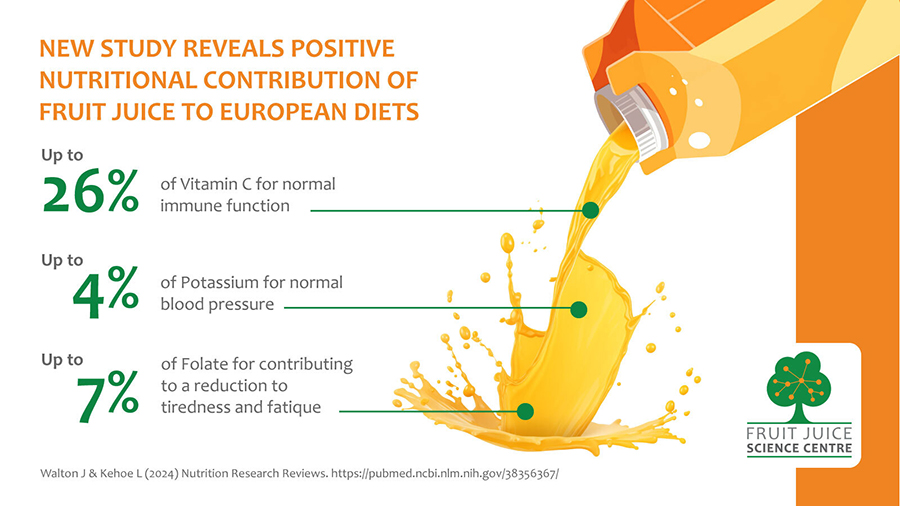
New study finds that 100 % fruit juice:
Accounts for up to 26 % of children’s vitamin C intake, and up to 19 % in adults
Contributes up to 4 % of daily potassium, which supports normal blood pressure
Provides up to 7 % of daily intake of folate which supports a healthy pregnancy
Only contributes up to 14 % of free sugar in people’s daily diets, compared with up to 92% from products containing added sugar such as soft drinks, biscuits, sweets, chocolate and cakes
(Photo: Fruit Juice Science Centre)
Drinking 100 % fruit juice has a negligible impact on daily calories but accounts for up to a quarter of children’s vitamin C intake and is an important source of other vital nutrients, according to a new study1 which highlights the importance of juice in a healthy diet.
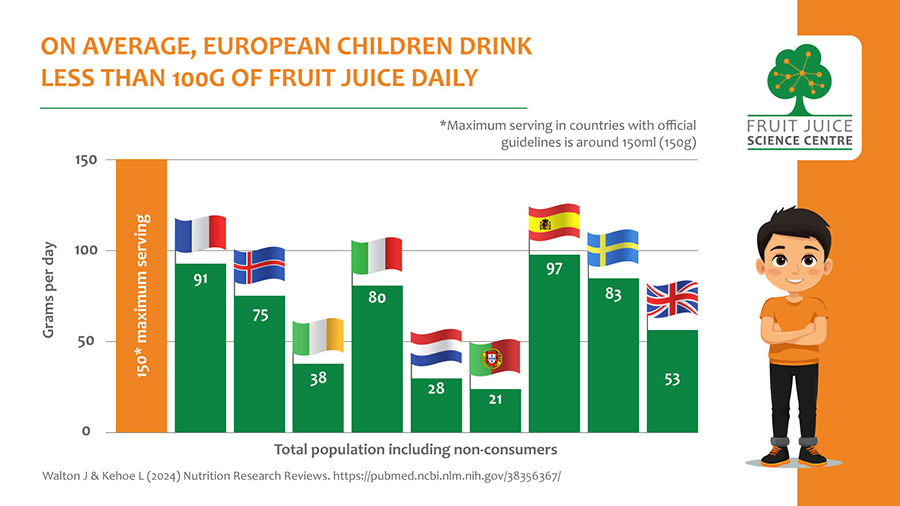
Because fruit juice contains natural sugar, some policy makers and researchers have expressed concern that it could lead to weight gain, if consumed regularly. But a new analysis of national dietary surveys across 14 European countries for which data were available, found that people who drink fruit juice consume on average just 137 g per day, lower than the recommended serving size of 150 – 200 ml2 that exists in some countries.
This equated to just 20 – 40kcal per day, or 1 – 2 % of a child’s or adult’s average daily energy intake, which would not be expected to have an impact on body weight.
In contrast, the average daily serving of 100 % fruit juice across each age group across Europe was enough to make a significant contribution to daily intakes of vitamin C, which is vital for immune function and boosts iron absorption.
The study, published in the journal, Nutrition Research Reviews, found that fruit juice was responsible for 4 – 20 % of daily vitamin C intake in infants, 6 – 26 % in children, 8 – 20 % in teenagers, 8 – 19 % in adults and 6 – 19 % in older adults.
The study’s lead author, Dr Janette Walton from Munster Technological University in Cork, said: “Fruit juice is a major contributor to vitamin C intakes in children and adults. Given that too few people eat the recommended 5-a-day of fruit and vegetables, fruit juice is a convenient and nutritious food in the diet”.
The researchers also found that fruit juice accounted for 2 – 4 % of daily potassium, which supports normal blood pressure and has been found to be lacking in people’s diets according to the European Food Safety Authority (EFSA), and 1 – 7 % of daily intake of folate which supports a healthy pregnancy and is commonly too low in the diets of most women of childbearing age.
Meanwhile, the natural sugar in 100 % fruit juice, which comes entirely from the fruit, contributed to just 2 – 14 % of free sugar in people’s daily diets, compared with 48 – 92 % which is estimated to come from “optional” products containing added sugar such as soft drinks, biscuits, sweets, chocolate and cakes.
(Photo: Fruit Juice Science Centre)
Unlike sodas, nectars or other drinks, 100 % fruit juice never contains added sugars and cannot be diluted with water under European law.
Dr Walton continued: “Our findings showed only a modest contribution of fruit juice to free sugars. In contrast, a recent review found that sweet foods and drinks with added sugars are the major sources of added sugars across Europe, contributing half to more than 90 % of intakes).
“This highlights the importance of targeting sugar reduction strategies for discretionary/’top-shelf’ foods which are not recommended in food-based dietary guidelines. Unlike fruit juice whose composition is controlled by law, these types of products can be legally reformulated to reduce their sugar content”.
More broadly, the authors of the study highlighted the lack of data on 100% fruit juice consumption in many countries in Europe, such as Germany, which they said makes it difficult to set Europe-wide policies without an accurate view of normal consumption levels.
1Walton J & Kehoe L (2024) Current perspectives and challenges in the estimation of fruit juice consumption across the lifecycle in Europe – PubMed (nih.gov) 2Equivalent to 150 – 200 g since 1 gram = 1 ml.
SIG has teamed up with the social enterprise Plastic Bank and an experienced partner in development cooperation, Deutsche Gesellschaft für Internationale Zusammenarbeit (GIZ) GmbH, to unveil a project set to reshape Egypt’s recycling landscape while increasing security for waste collection members.
Egypt generates more than 95 million tons of waste annually and currently only 60 % of this waste is collected, with less than 20% of that being properly disposed of or recycled*. At present there is no formalized system for waste collection and recycling. The partnership between SIG, GIZ Egypt, and the social enterprise Plastic Bank aims to address this pressing issue and achieve positive change. In a three-year initiative, the partners are on a mission to collect 700 metric tons of beverage cartons, while also aiming to improve the livelihood for around 1,000 local waste collection members via blockchain.
The PlasticBank® app, backed by the social enterprise’s proprietary blockchain-secured platform, provides traceability and transparency in waste collection, empowering waste collectors to convert every piece of discarded material into a source of revenue. Waste collection members will be able to log each collected product via the app to earn incentives deposited directly into their digital wallets and gain access to social benefits, including health, work and life insurance, digital connectivity, grocery vouchers, school supplies, and more. Furthermore, the waste collection members will undergo training and receive personal safety equipment for their well-being at work.
By streamlining and tracking the collection and recycling of waste, including used beverage cartons, this project also takes a broader role for laying the groundwork for an extended producer responsibility (EPR) model in Egypt. It aligns closely with the Egypt Waste Management Regulatory Authority to weave recycling into the legislative framework and underscores the important role of packaging manufacturers in environmental stewardship.
Abdelghany Eladib, President & General Manager India, Middle East and Africa at SIG: “Our new partnership goes one step further in accelerating our progress towards a circular economy. Extending social waste collection and recycling programs like this one in Egypt will help to achieve our goals and is a blueprint for future programs. By establishing a recycling system for beverage cartons in the Greater Cairo area and beyond, SIG is focused on reducing the environmental impact und creating a market for recycled paper.”
This project is supported by the German Federal Ministry for Economic Cooperation and Development (BMZ) funding program “develoPPP” and its special initiative “Decent Work for a Just Transition”.
Consumers are turning to tea, coffee and energy drinks as they reduce their alcohol intake, Prinova research has shown. The report also suggests that even more drinkers – younger ones in particular – would cut back if a wider range of healthy non-alcoholic beverages were available.
To explore current trends in the beverage space, Prinova, the leading provider of bespoke premixes and blends, surveyed 1277 physically active European consumers.* More than four in ten (42.5 %) said they had reduced their alcohol intake over the past three years, compared to just 15 % who reported drinking more. Consumers aged 25-34 were the most likely to say they were consuming less alcohol.
Among those who had cut down on alcohol, most were turning to healthier beverage options including coffee, tea, still water and juices/smoothies, with preferences varying by age, gender, and location. Consumers over the age of 65 were five times more likely than average to have increased their consumption of dairy beverages, while alcohol-free beer was significantly more popular with older age groups than Gen Z.
Over a third (35 %) of men who had cut down on alcohol were drinking more energy drinks as a result. Energy also emerged as the top wellness benefit sought in healthy beverages, ahead of hydration and post-exercise recovery.
In the cohort who had not reduced their alcohol intake, over half said they would be likely to do so if a wider range of healthy beverages were available. This was particularly true of millennials (64 %).
When asked which ingredients they most looked for in healthy drinks, 65 % of respondents picked vitamins and 48 % chose minerals. Plant protein also scored highly as a desirable beverage ingredient, ahead of both fruit and whey protein. Other purchase drivers for healthy beverages included affordability, natural ingredients, trusted brand, and scientifically proven ingredients.
James Street, Global Marketing Director at Prinova, said: “Consumers are increasingly re-evaluating their relationship with alcohol, whether that means embracing the ‘sober-curious’ trend, or simply moderating their intake. However, our research also suggests that many more would be persuaded do so if they could replace booze with appealing healthy alternatives. Given the scale of this market need, and the increasingly wide range of on-trend functional ingredients available, it’s clear that there are still huge opportunities for innovation in the functional beverage space.”
With the world’s largest inventory of food-grade single vitamins, and as the leading supplier of vitamins B and C, Prinova can help manufacturers create beverages with premium micronutrients. Its other solutions include enduracarb®, a slow-release “double sugar” which is ideal for energy drinks and sports nutrition beverages, and AlphaTeaTM, a 100 % natural solution for functional beverages derived from green tea extract.
*Online survey of consumers in France, Germany, Italy, Spain and the UK.
BENEO, a leading manufacturer of functional ingredients for food, feed and pharma announced the appointment of Dr Mike Eberle as the newest member of its Executive Board of Directors at BENEO GmbH, effective from 1st March 2024. In his new role, Eberle will be responsible for overseeing Operations at BENEO.
Eberle, who holds a PhD in Chemistry from the Technical University of Darmstadt, Germany, brings nearly three decades of experience within the international food and beverage sector to the new role. He started his career with positions at Unilever in both Germany and The Netherlands. Following this, he has held leadership roles in production, supply chain, logistics, and operations at leading food and drink manufacturers. Most recently, Eberle was positioned as the Chief Operations Officer at Rotkäppchen, a sparkling wine producer based in Germany.
As part of the new role at BENEO, Eberle will be responsible for Operations including production, technology, supply chain management, quality, raw material, health, safety and environmental protection, as well as sustainability. His appointment comes at a pivotal time as BENEO continues to focus on the sustainable development of its plant-based functional ingredients portfolio.
Pepsi® steps into a dynamic new era with a new look and exciting culture-first experiences across sports and music
Pepsi®‘s new look takes flight worldwide, taking over iconic global locations as its first major global redesign in fourteen years was unleashed across over 120 markets. To mark the moment, digital installations – each featuring the re-designed and refreshed Pepsi® globe logo – rose above landmarks worldwide for a digital showcase of Pepsi®‘s new visual identity in a blaze of pulsing electric blue and black, carrying the brand into its new era.
In London, a Pepsi digital installation appeared beside The O2 arena in the east of the city, appropriate to the brand’s long and storied support of international music acts. The view from the nearby cable cars saw an inflatable Pepsi can rise from the water, shortly followed by a light show of drones forming a pulsating dynamic composition in the sky.
A hot air assembly, forming a giant Pepsi logo, took over skylines in Warsaw, Poland and Ho Chi Minh, Vietnam, each comprised of over 70 balloons.
Elsewhere worldwide, Pepsi put on vast shows in AlUla in Saudi Arabia, on the Nile in Egypt and Ain Dubai, each harnessing innovative technology – giving consumers cutting-edge experiences to discover. Meanwhile, the Gaddafi Cricket Stadium in Pakistan saw a giant Pepsi can land mid-game, to the audible delight of the onlooking crowd.
The new logo thoughtfully borrows equity from Pepsi’s past whilst incorporating modern elements to create a look that is unapologetically current and undeniably Pepsi. The updated colour palette introduces electric blue and black to bring a contemporary edge to the classic Pepsi colour scheme, whilst the signature Pepsi pulse evokes the “ripple, pop and fizz” of Pepsi-Cola – moving in time to the beat of the music, the roar of the crowd, the heartbeat of culture. The logo was first unveiled in the US and is now launching in over 120 countries worldwide through various consumer touchpoints – spanning digital, experiential and retail.
The international takeover marks the first step in Pepsi’s new, bold era across design, storytelling, and partnerships. Pepsi will continue to drive culture forward in 2024 by delivering one-of-a-kind experiences, all deeply connected to fan passions and desire to live “Thirsty for More”, the brand’s philosophy, which champions anyone who challenges conventions in pursuit of enjoyment, whilst celebrating people’s thirst for the unexpected and eagerness to discover, experience and do more.
Eric Melis, VP, Global Brand Marketing, Carbonated Soft Drinks at PepsiCo, said: “We wanted to show how Pepsi, through this visual identity change, brings to life its brand platform “Thirsty for More”, which is the attitude and mindset our target audience has of always trying new things and living new experiences. What better way to showcase the brand’s transformation than through these iconic installations. We’ve always been a bold brand that challenges conventions, challenges the status quo and always puts enjoyment first. Our new visual identity is bold, unapologetic, modern, and iconic. Our fans can expect the same great taste they’ve come to love with even more of the immersive and entertaining experiences we’re known for across music, sport and culture.
“People worldwide were asked to draw the Pepsi logo as part of the design process and the majority included the Pepsi name as part of our globe – remarkable given that the name and the globe have been separated for the past fourteen years. When we reviewed our new look, we responded to that deep love of our history and tapped into that nostalgia with a firmly modern twist.”
“We have an exciting 2024 ahead of us with our next stop bringing awe-inspiring entertainment to the UEFA Champions League Final Kick Off Show in June in Wembley and more.”
Pepsi continues to move at the speed of culture, delivering on what people are thirsty for – innovative products and iconic collaborations. In 2024, fans globally can expect to see more from Pepsi’s existing partnerships with ambassadors, including Baby Monster (Asia–Pacific), Uraz Kaygilaroglu (Turkey), G.E.M., Dylan Wang and Leo Wu (China).
As a champion of those who like to step out of their comfort zone and enjoy more of what they really like, Pepsi fans across the globe are urged to keep their eyes peeled for more unforgettable experiences that will land later this year.
Elopak rounded off a highly successful 2023 with yet another strong quarter, delivering on the mid-term targets set by the company during its IPO in 2021.
2023 was a year of significant progress and achievements for Elopak, extending the many successes of previous years in implementing the company’s sustainability driven growth strategy. The Board proposes a dividend of NOK 1.46 per share for the year 2023, in line with dividend policy.
Fourth quarter 2023 highlights
Revenues increased by 7.5 %, to EUR 287.2 million
Organic growth was 8.4 %, or EUR 22.4 million, adjusted for currency translation effects
Adjusted EBITDA was EUR 40.0 million, an improvement of EUR 4.1 million, reflecting a 13.9 % margin
Strong cash flow generation and down-payment of debt. Leverage ratio reduced to 1.9x
Commenting on Elopak’s performance, CEO Thomas Körmendi said: “I am happy to report yet another quarter of strong performance and I am pleased to confirm that the Elopak team has delivered on all the 3-5 year targets set in the IPO in 2021.”
“I would like to say a big thank you to all our colleagues, customers, suppliers and partners for their fantastic contributions and collaboration throughout the year. We are entering 2024 from a strong position and I look forward to further strengthening our contribution to a more sustainable society while continuing to create shareholder value in the years to come,” Körmendi added.
Full Year 2023 highlights
Revenues increased by 10.6 %, to EUR 1,132.0 million
Organic growth was 9.4 %, adjusted for currency translation and acquisition effects of EUR 11.9 million
Adjusted EBITDA was EUR 170.9 million, an improvement of EUR 51.5 million, reflecting a 15.1 % margin
Adjusted profit attributable to Elopak shareholders was EUR 68.3 million, up 55 % compared to 2022
Proposed dividend of NOK 1.46 per share for the year 2023, in line with the dividend policy
A survey carried out by independent audits firms with each of CitrusBR members, and subsequently consolidated confidentially by an external audit, found that the global inventories of Brazilian orange juice, converted into FCOJ Equivalent, held by CitrusBR members on December 31st, 2023 were 463,940.92 tons. Although representing an increase of 6.7 % in comparison to the 434,943 tonnes from the previous season, this number is the second lowest figure in the historical series. The disclosure of final processing data and industrial yield on fruit will be done by CitrusBR later in 2024.
The next ERBSLÖH Juice and Fruit Wine Seminar is just around the corner and there are still a few places left!
From Thursday, 21 March to Friday, 22 March 2024, the ERBSLÖH Juice and Fruit Wine Seminar will take place in Rotenburg an der Fulda (Germany) – this year in cooperation with Bucher Unipektin AG!
Please download the full programme. (Photo: Erbslöh)
ERBSLÖH Geisenheim GmbH is a medium-sized and internationally active company in the Rheingau. Since 1964, the company has focussed on beverage technology. With its innovative products and processes, ERBSLÖH focuses on the needs of its customers. In addition to the fruit juice processing sector, the company also offers solutions for the wine, beer and spirits industries. Yeasts, nutrients or enzymes – ERBSLÖH is up to any challenge.
Bucher Unipektin AG is a competent partner and supplier of individual machines and complete systems for solid-liquid separation, filtration, juice treatment and concentrate production. The beverage technologies are mainly used for the production of fruit juices and purees as well as in beer filtration.
The seminar’s lecture programme will cover various interesting topics, with experts from theory and practice talking about their experiences in the industry. Among others, Dr Michael Welte from Bucher Unipektin AG will report on dealcoholisation technology. Stefan Wenghoefer from ERBSLÖH Geisenheim GmbH will give an overview of plant proteins as a gelatine alternative. Dr Christof Steingaß from Hochschule Geisenheim University will speak about the production of pineapple juice using innovative technologies and Petros Kapasakalidis from Hellenic Juices will talk about the different quality aspects in the production of citrus essential oils.
The full programme, all information about the two-day seminar and the opportunity to register can be found on the ERBSLÖH website at www.erbsloeh.com
Treatt announced the appointment of David Shannon as Group Chief Executive Officer and a Director effective on 3rd June 2024.
David joins Treatt from Croda International Plc where he has held several senior roles, recently as President of Consumer Care and an Executive Committee member. He has extensive experience in selling specialty ingredients in the B2B environment for the Flavour and Fragrance, Personal Care, Pharmaceutical, and Agricultural industries worldwide.
David has a proven track record of sustainably growing businesses in dynamic markets. He has spent 13 years in various roles in the USA, a key market for Treatt, and has recently overseen a new manufacturing project in China. David’s experience includes global business management, setting and delivering strategy, optimising science and innovation to drive revenue growth, identifying new ways to maximise revenue and attracting, retaining, and developing employees. He has a degree in chemistry from Edinburgh University.
Dr Heinz-Jürgen Bertram is handing over the CEO position at Symrise AG to Dr Jean-Yves Parisot. In its meeting end of February, the company’s Supervisory Board, appointed Dr Jean-Yves Parisot, currently Member of the Executive Committee and in charge of the segment Taste, Nutrition & Health, as new CEO effective March 31, 2024. The Supervisory Board also renewed the contract of Dr Jean-Yves Parisot for another four years until the end of September 2028. Dr Heinz-Jürgen Bertram is retiring in the best mutual consent and agreement after 21 years of service at Symrise, of which 19 as a Member of the Executive Committee and 15 as CEO.
Dr Jean-Yves Parisot joined Symrise in 2014 and became Member of the Executive Committee in 2016. He oversees the segment Taste, Nutrition & Health and will continue to do so on an interim basis until a successor for this role has been identified. Dr Jean-Yves Parisot has been President of the International Organization of the Flavor Industry (IOFI) since 2023. Prior to his time at Symrise, he had global leadership roles at Pfizer, Rhone Poulenc/Rhodia, Danisco, Air Liquide and the Diana Group prior to its merger with Symrise. He studied veterinary medicine and holds a MBA degree from HEC Paris.
The Cartersville plant expansion is a pivotal step for Döhler North America. Doubling capacity and introducing advanced production lines for Compounds, Liquid Flavours, Extractions, and Syrups, this initiative underlines the company’s commitment to the Americas. With AI developments and automated flavour compounding system, Döhler aims to deliver agility and quality to the flavour industry. The recent groundbreaking ceremony signifies a dedication to transformative growth in the year ahead.
Döhler North America is gearing up for an exciting start to 2024 with the launch of the Cartersville, GA, plant expansion. Following a 2023 filled with significant achievements and partnerships, the company is ready for continued success, underlining its commitment to research, and enhanced production capabilities. The expansion demonstrates Döhler’s dynamic approach to shaping the future of the food and beverage industry and bringing ideas to life.
Last year, Döhler achieved remarkable milestones that strengthened their commitment to make the life of their customers better and easier. Including a strategic US-based global partnership with Ixora Scientific, an innovative hub in New Jersey, and the global acquisition of SVZ made a substantial impact in North America, broadening Döhler’s reach and capabilities.
Now, building on the successes, Döhler embarks on the expansion of its Cartersville plant, a key player in the company’s North American operations. The first phase of the expansion not only addresses immediate growth needs but lays the foundation for future expansions. The Cartersville facility will host advanced production lines and technologic R&D labs, with a specific focus on Compounds, Liquid Flavours, Extractions, and Syrups.
Paul Graham, General Manager Regional Cluster Americas, emphasises the strategic significance of the expansion, stating, “The Cartersville plant has been an integral part of Döhler’s success in North America for over a decade. This expansion reflects our dedication to meeting the evolving needs of our customers, and it positions us for even greater accomplishments in the future.”
Charles Spenceley, Head of Operations Regional Cluster Americas, adds, “We are excited about the potential this expansion brings. It enlarges our capacity for hot fill bottling and increases our flavour production capacity. This significant boost in capability enables us to better serve our customers and solidify our position as industry leaders.”
Looking ahead, Döhler plans to continue its investment across the Americas region adding an automated flavour compounding and sampling system to their taste innovation hub in North Brunswick, NJ, and a bigger version of it to their Cartersville plant. This system, capable of transforming raw materials into flavour samples in just a minute, will be complemented by AI developments from Germany.
To mark the initiation of the Cartersville plant expansion, a ceremony was conducted in January, signifying Döhler’s commitment to fortify its presence in the North American flavour industry.
GNT has launched a new range of plant-based EXBERRY® concentrates that enable manufacturers to achieve clean-label brown shades in low-pH soft drinks.
EXBERRY® Shade Autumn Brown and EXBERRY® Shade Golden Brown can deliver clear reddish-brown and caramel-brown hues in still and carbonated soft drinks.
There is a growing demand for natural brown colours that do not pose any health concerns to consumers or contain any of the 14 allergens specified under the EU Labeling Regulation.
Made using caramelised sugar syrup, the new EXBERRY® browns offer a clean-label solution that is also naturally free from gluten. They can provide an excellent alternative to caramel (E150) in applications including natural colas, energy drinks, and iced lattes.
Helen Vine, Key Account Manager at GNT Group, said: “This new EXBERRY® range was created to meet the rising demand for natural, plant-based browns that can deliver clear shades in beverages. Our concentrates allow brands to maximise their drinks’ appeal with eye-catching colours alongside clean and clear ingredient lists.”
The liquid-based colours are created from edible, non-GMO fruit and vegetables and are suitable for vegan, kosher, and halal diets. EXBERRY® Shade Autumn Brown contains carrot concentrate in addition to the caramelised sugar syrup while EXBERRY® Shade Golden Brown also includes apple concentrate.
Both products provide high-performing, clear solutions with no formation of turbidity or sediment even in acidic beverages with pH levels below 3.0. In addition, they offer excellent light and heat stability and are easy to pump and dose.
Pear orange prices in the in natura market hit a new record in February, considering Cepea historical series, which has started in October 1994 – values were deflated by IGP-DI December/23. Quotations are likely to continue at high levels in March, since the volume of early varieties in the spot market in São Paulo is still small.
In February, pear orange prices averaged BRL 87.40 per 40.8-kilo box, on tree, 9.29 % up compared to January/24 and an increase of 83 % in relation to February/23 (in this case, in nominal terms). Price rises are linked to the lower supply in this offseason period, while the supply of late and early varieties is also limited. It is worth noting that the firm industrial demand reduced even more the fruit availability in the domestic market during the entire season.
TAHITI LIME – Prices have started February in a downward trend; however, they rose during the month, leading to an increase of the monthly average. Although it is the peak season, frequent rains limited the harvest and, consequently, the supply. Moreover, weather conditions have been favoring the fruit quality.
In this scenario, the tahiti lime price average in the in natura market was BRL 20.11 per 27-kg box (harvested) in February, moving up 46.36 % and 104 % in relation to January/24 and February/23, respectively, in nominal terms.
Values are likely to remain firm in March because of the lower volume that will be harvested. Moreover, exports may increase, especially due to the proximity of Easter, which can influence to flow the product.
Nuritas, a global leader in AI-based peptide discovery, announced a strategic collaboration agreement with Givaudan, a global leader in Taste & Wellbeing. Together, the companies aim to revolutionise food system solutions by leveraging AI-discovered peptides found in natural plant resources and advance their shared commitment to improve the lives of people worldwide.
“In forging this groundbreaking collaboration with Givaudan, we were meticulous and intentional in identifying the ideal company to work with,” said Dr. Nora Khaldi, CEO of Nuritas. “We look forward to employing our AI Magnifier technology to identify new, natural peptide solutions that will undoubtedly advance flavor and taste innovations by Givaudan.”
Fabio Campanile, Head of Taste & Wellbeing Science & Technology at Givaudan added, “This collaboration represents a significant step forward in our collective mission to address the desires and expectations of consumers around the world that are constantly changing. We strongly believe that working together with Nuritas will help to advance ingredient innovation in the short term.”
“Nuritas is excited to collaborate with Givaudan on this transformative venture,” “said Neil Foster, Head of Strategic Partnerships at Nuritas. “We look forward to igniting systemic change within this industry with our combined expertise and efforts.”
This announcement underscores the power of collaboration between industry leaders with shared values to positively impact the industry. Collaborative efforts are currently underway with additional details and project updates to be announced at a later date.
Scientists in Germany have discovered a new ‘super’ apple juice which has the potential to improve heart health by boosting blood flow1.
Researchers at Hochschule Geisenheim University, near Frankfurt, have found a way to maximise polyphenols in apple juice by using a novel squeezing method called a spiral filter press which actively takes out oxygen by vacuum-driven pressing. Moreover, they ensured that oxygen is excluded from all other processing steps, therefore reducing nutrient deterioration.
The new study, published in Food Research International, found that this new method boosted polyphenol content by four times as much as regular apple juice. Polyphenols are natural plant compounds found in fruit, red wine, and cocoa which are known to have a range of health benefits for the heart and brain.
A 280 ml serving of the new apple juice would be enough to provide 100 % of the ideal intake for a key group of polyphenols, called flavan-3-ols, which help promote a healthy blood flow. The ideal intake of 400 – 600 milligrams per day for cardiovascular health was proposed by an international consortium of scientists in 20222.
The British Heart Foundation estimates that there are 7.6m people living in the UK with heart or circulatory diseases3. Meanwhile, data from the 2021 census show that 32 % of adults suffered from high blood pressure (hypertension) and 3 in 10 of those (29 %) were undiagnosed; equating to approximately 4.2 million adults with undiagnosed hypertension4.
Lead author of the paper, Professor Ralf Schweiggert, commented: “Apple juice is already a source of polyphenol compounds, but you would need to drink several glasses to reach the levels recommended by scientists for heart health effects. The new juicing method that we’ve investigated takes the polyphenol content to a new level by minimising the nutrient losses we typically see during juicing.”
Co-Researcher of the study, Stefan Dussling, said: “Nutrient losses are commonly due to the presence of oxygen which quickly degrades some of the nutrients in apple juice like flavan-3-ols or vitamin C. This would happen when we juice apples at home or buy a ready-made product. We hope that the new juicing method will be used more widely in the future to help people get more of these beneficial natural compounds simply by drinking one glass of juice”.
The global energy drinks market has presented itself as one of the most stable in recent times, registering continued growth over the past five-year period while many other drinks industries have stalled. Red Bull, Monster, and Rockstar have maintained their dominant share in the high-performing market at the global level over the past decade, resisting disruptive new entrants for the most part of the period. However, the big exception to this has been HELL Energy, which is now aiming to tap consumers’ growing interest in tech-augmented experiences, says GlobalData, a leading data and analytics company.
Ayoub Khalil, Consumer Analyst at GlobalData, comments: “Since its launch in the early 2000s, HELL Energy has established itself as the market leader in eastern Europe and more significantly found itself as the major player in India recently. It is now looking for continued growth from launches in high growth potential economies. India’s growth, especially in terms of disposable income, remains solid with economic growth being revised upwards to a solid 6.44 % in 20231, while eastern European countries are also showing good signs despite recent stagnation.”
With its distinctive commitment to technology, HELL Energy has now embarked on a new AI drink, which it presents as being entirely made across every part of its value chain by artificial intelligence (AI). This is a unique step to ride the trend of a new fascination with tech-augmented experiences, a trend evidenced by a survey of GlobalData showing how over 86 % of global consumers’ buying choices are shaped by how digitally influenced the product is2.
Khalil adds: “The big question, however, with the release is whether it serves to be more than a marketing ploy or a genuine innovation that draws on AI’s powerful capabilities to produce true value that satisfies nuanced consumer preferences. This question comes in light of the most recent quarter GlobalData survey affirming the general benefits that integrating AI can bring in production with 83 % of surveyed consumers claiming that how much a service is tailored to their preferences and personalities has a positive effect on their purchases2, which is something the new drink states it brings in AI’s ability to analyse vast data to boil down to what consumers exactly want.”
In the broader view of the commercial landscape, the release brings to market an interesting case study for firms in and outside the industry of the benefits that can be brought by involving AI in the production process. Again, such methods are already being leveraged elsewhere without the gimmick of companies naming their products an AI release. The biggest of these examples is how the major player Coca-Cola has moved into this new space with its newly released Y-3000 drink, which it claims to have been developed with the help of AI.
Khalil concludes: “HELL Energy, however, does state that what makes its drink truly AI generated compared to other products is the complete use of AI in everything from packaging to evaluation to marketing elements; where the company needs to be clearer is in how much they’ve been able to completely strip away any subjective human choice in the configuration that every AI system is adjusted with, which still remains undisclosed by the company.”
1GlobalData Database-Economy-Macroeconomic Database updated Jan 2024-India 2GlobalData’s Global Consumer survey published in December 2023 was conducted with 21,000 respondents globally
Lithios and BrandVault360 unveil a new era of mineral seltzers in New York City
Lithios, a brand at the forefront of health and wellness innovation, in collaboration with the esteemed BrandVault360, formerly Gotham Beverage, introduce its unique range of lithia-infused mineral seltzers to New York City, USA. This launch signifies a major step in Lithios’s journey, bringing a new health-focused beverage option to the market and marking the beginning of an expansive distribution plan.
“Our collaboration with BrandVault360 is a pivotal moment for Lithios. We are combining our vision of health and wellness with their 20+ years of market expertise to revolutionise the beverage industry,” said Alexander Genzer, co-founder of Lithios. “This partnership enables us to launch Lithios in 2500 locations across New York City, making our products accessible to a wide audience from the start.”
Lithios’s product line, featuring flavours such as Orange Mango, Mixed Berry, and Electric Lime, offers a unique blend of over 71 minerals, with the added benefit of lithia. Known for its mood-enhancing, neuroprotective, and anti-inflammatory properties, lithia brings a healthful twist to the refreshing seltzer.
This launch is supported by extensive research highlighting the positive effects of lithia in drinking water, including improved mental well-being, enhanced brain function, and overall physical health benefits. Lithios is poised to offer these scientifically supported benefits in a delicious, accessible format.
The initial rollout of Lithios in New York City is just the beginning, with plans to expand into key areas, ensuring that a wider audience can enjoy the unique combination of taste and health benefits.
Lithios, available in flavours Orange Mango, Mixed Berry, and Electric Lime, is now offered in 12-pack configurations and can be found at select retail locations across New York City and online at www.drinklithios.com.
Neste is partnering with two new distributors in France to make Neste MY Renewable Diesel™ available for the first time in the market and to contribute to the reduction of greenhouse gas emission in the transport sector.
“We are very proud to start our collaboration with two new fuel distribution partners, Altens and Bolloré Energy in the French market. In France, transportation is the single largest source of greenhouse gas emissions, accounting for 30 % of all emissions. With Neste MY Renewable Diesel, greenhouse gas emissions can be reduced by as much as 75 – 95%* over the life cycle of the fuel compared to fossil diesel,” says Peter Zonneveld, VP Sales EMEA, Renewable Road Transportation at Neste.
Many French truck transportation companies, public fleets, construction companies and large fleet operators are in the process of switching to more sustainable energy sources, but a large part of the French road transport is still powered by fossil diesel. Neste’s collaboration with two new fuel distributors help French companies to significantly reduce greenhouse gas emissions with their existing fleet by switching fossil diesel to renewable diesel. Neste MY Renewable Diesel is an immediate solution for significantly reducing greenhouse gas emissions, suitable for all diesel engines without any need to invest in new vehicle fleets or modifications to the vehicles or their engine.
Neste, Altens and Bolloré Energy wish to emphasize that if France wants to reach the goals set by the French government through the energy climate law and the national low-carbon strategy, while also meeting the European targets, its energy-climate strategy must include the use of biofuels and low-carbon liquid fuels alongside electric and hydrogen. All solutions should be considered when addressing climate change.
*The GHG emission reduction percentage varies depending on the region-specific legislation that provides the methodology for the calculations (e.g. EU RED II 2018/2001/EU for Europe and US California LCFS for the US), and the raw material mix used to manufacture the product for each market.
Alfa Laval just published a brand new edition of the company’s renowned Pump Handbook. The 375-page handbook is free and contains scholarly information on basic pump functionality and in-depth guidelines for sizing and selecting the right pump type for optimum efficiency. The handbook is packed with real-life examples to increase its user-friendliness.
The first edition of the Alfa Laval Pump Handbook was published 25 years ago and soon became part of the syllabus at engineering schools around the world. The book also found its way into manufacturing sites, serving as a reference work to technicians in the daily operation of fluid handling processes.
Up-to-date on pump technology
Over the years, the handbook has gone through minor revisions, and in 2023, a major overhaul was undertaken to make the handbook up-to-date on the most recent technologies.
“We have worked hard to provide the global pump community with the most recent knowledge about pump functionality and leading-edge technologies that enhance pump efficiency to meet the sustainability agenda of societies and industries. Pumps are among the most power consuming devices in fluid handling processes, and the potential for energy savings is big, when you select the right pump from the start and maintain it along the way,” says Lars Sørensen, Manager, Product Management at Alfa Laval.
The authors of the book are all experienced pump engineers with extensive theoretical knowledge and hands-on experience from pump installations and training of technical staff in fluid handling industries.
Available online
The handbook is free and available online. It can be downloaded from www.alfalaval/PumpHandbook and contains a series of videos on for instance pump functionality, troubleshooting and maintenance guidelines.
The main chapters of the handbook comprise:
• Basic theory on pumping applications
• Pump types for different applications
• Pump sizing for maximum efficiency
• Pump specification
• Pump motors
• Troubleshooting
• Technical data and formulas
The trade fair duo reached around 35,000 trade visitors in 2024, with the focus on product diversity as well as dialogue, interaction and cooperation.
From 13 to 16 February 2024, the international organic food and natural and organic cosmetics community met in Nuremberg for BIOFACH and VIVANESS. Around 35,000 trade visitors from 128 countries attended the World’s Leading Trade Fair for Organic Food and the International Trade Fair for Natural and Organic Personal Care. They were inspired by the diverse range of products and services offered by a total of 2,550 exhibitors from 94 countries. In addition to the products, the focus was primarily on the numerous dialogue formats. Ask questions and find answers for a sustainable future: Participants were able to play an active role for example in the congress, the new meeting point HoReCa – GV & Gastro1, or the SustainableFutureLab.
“Coming together and entering into dialogue is essential, especially in turbulent times – the last four days have shown this impressively. The players discussed and interacted in the exhibition halls, at the congress and in other dialogue formats such as the new meeting point HoReCa – GV & Gastro with a focus on the future and a great deal of creative drive,” summarises Petra Wolf, Member of the Executive Board, NürnbergMesse. “Politicians have already paved the path for more organic food in out-of-home catering. We are delighted that the relevant players have responded so positively to our newly created range of formats. Not least in the sessions of the interactive and collaborative SustainableFutureLab, it became clear that we can only shape the future together as a community!”
BIOFACH & VIVANESS Congress
171 well-founded and high-calibre individual sessions demonstrated the future-oriented focus of the congress. Targeted questions, for example on current market developments and trends or political and legal framework conditions, were answered here for the almost 8,000 interested visitors. In the congress rooms, the participants discussed and jointly developed solutions for an ecological transformation. The focus topic “Food for the Future: Women and Sustainable Food Systems” was discussed by almost 700 listeners.
BIOFACH and VIVANESS digital
“In 2024, more than 10,000 participants took advantage of the hybrid trade fair and registered at BIOFACH and VIVANESS digital. Over the past three years, we have continuously developed the hybrid aspects of the trade fair. Now we are all the more pleased about the growing popularity, which confirms that we are on the right track. The community is increasingly benefiting from the added value and, above all, utilizing the opportunities for interaction,” explains Dominik Dietz, Digital Product Manager, NürnbergMesse. Much of the content from the congress will continue to be available after the trade fair.
Best New Product Awards BIOFACH and VIVANESS
For three days, visitors had the opportunity to vote for their favorite product in seven categories for the Best New Product Awards at both trade fairs. In 2024, voting was possible both at the novelty stands on site and on the digital event platform.
Winner of the Best New Product Award BIOFACH Drinks: Riegel Bioweine: „PFANDtastico – Italian and Spanish organic wines in 0.75 litre returnable bottles
After the return of rains in São Paulo, orange producers surveyed by Cepea said that flowers have been blossoming since early February in some areas, and they may refer to out-of-season fruits.
In general, players say that the volume of fruits originated from these flowers may not be high, which can be insufficient to compensate the fruitlet abortion verified in the last quarter of 2023. These new flowers bring a positive expectation, since the remuneration of oranges in the next season is expected to be good.
The orange supply was very limited in the in natura market in São Paulo in mid-February, since it is considered the offseason period. Therefore, the market has been supplied mainly by out-of-the-season pear oranges and remaining volumes of late fruits. However, some producers were already harvesting early varieties (especially hamlin and westin), in order to increase the supply.
Fundecitrus has released the third update on the 2023/24 orange crop in the citrus belt in São Paulo and Triângulo/Sudoeste Mineiro, keeping the projection of 307.22 million 40.8-kilo boxes, stable compared to the previous report, but downing 0.7 % in relation to the initial forecast and 2.2 % against the 2022/23 season.
According to market insights provided by Fact.MR, a renowned market research and competitive intelligence provider, the global apple juice concentrate market is anticipated to reach a valuation of USD 4.67 billion in 2024. The market is poised to witness a steady growth with a projected Compound Annual Growth Rate (CAGR) of 5.5 % between 2024 and 2034.
Apple juice concentrates, known for their versatility, have become a prevalent ingredient in a wide range of food and beverage products. The rising consumer inclination towards natural and healthier beverage options is fueling a robust demand for apple juice concentrates on a global scale. Noteworthy within the market is the ongoing trend of continuous product innovation. Leading manufacturers are actively engaged in developing organic and non-GMO variations of apple juice concentrates. Additionally, they are exploring novel flavors and blends to cater to the diverse preferences of consumers.
The key segments highlighted in the Apple Juice Concentrate Industry Research Report include growing consumer awareness and an increasing demand for clean-label products. Manufacturers are responding to these trends by placing a strong emphasis on environmentally friendly and transparent supply chain practices in the production of apple juice concentrates. This reflects a broader industry commitment to sustainability and responsible sourcing.
Key takeaways from market study
The global apple juice concentrate market is forecasted to reach USD 8.01 billion by the end of 2034.
Apple juice concentrate sales in the United States are predicted to rise at a CAGR of 4.9 % from 2024 to 2034.
Preference for organic products and a rich culinary culture is generating lucrative opportunities for apple juice concentrate producers in Germany.
Demand for apple juice concentrates in Japan is estimated at a market value of USD 120.6 million in 2024.
Organic apple juice concentrate sales are projected to reach USD 3.06 billion by the end of 2034.
“Rising trend of healthy food habits is boosting the demand for apple juice concentrates as natural and nutritious food ingredients,” says a Fact.MR analyst.
Winning strategy
Leading apple juice concentrate companies are focusing on continuous product innovations and forming strategic alliances to stay competitive. Product differentiation, sustainable practices, and agility in responding to market trends are key factors shaping market competition.
The landscape of the apple juice concentrate industry is marked by a diverse array of participants vying for substantial market shares and consumer attention. This includes not only prominent multinational corporations but also regional producers.
Established brands with a rich history command a strong presence in the market. Their enduring reputation, expansive distribution networks, and dedicated consumer following contribute to a competitive advantage and significant revenue streams.
In 2019, Coca-Cola India, a subsidiary of the renowned beverage conglomerate Coca-Cola, introduced a groundbreaking beverage product called Minute Made Apple Sparkle. This innovative addition was meticulously crafted using the finest Kashmiri apples and fell under the overarching brand name Minute Maid.
Key manufacturers of apple juice concentrate are Juice Generation, Hain Celestial, CEDAR Juice, Juice Warrior, Rauch Fruit Juice, Tree Top, and Huiyuan Juice.
Many German consumers highly value product quality and authenticity, creating an opportunity for apple juice concentrate producers to cater to this preference. By emphasizing premium quality and transparent sourcing practices, producers can tap into the demand of a consumer base that appreciates genuine and traditional appeal.
In Germany, the environmentally conscious consumer demographic actively seeks products with sustainable and eco-friendly production practices. The trend towards sustainability is particularly evident in the rising demand for organic apple juice concentrate products. Producers meeting this preference for organic options are not only aligning with consumer values but also securing substantial profit shares in the German market.
In the United States, an increasing awareness of health and wellness is fueling a demand for natural and healthier beverage choices. Apple juice concentrates, being versatile and widely used ingredients, align with consumers’ preferences for nutritious options.
The adaptability of apple juice concentrates in various food and beverage applications is another factor contributing to their steady demand. These concentrates serve as sweetening agents, extracts, flavor enhancers, and base ingredients in a wide range of products, including juices, sauces, and bakery items.
Critical challenges arise in the citrus industry as demand outpaces supply chain capabilities. Shortages of fresh fruit caused by environmental factors and greening create uncertainties about future availability. Leading the sustainable citrus movement, Döhler offers innovative citrus taste solutions, assisting customers and driving market resilience.
In a world where trends come and go, one flavour continues to outstand: CITRUS. However, the citrus industry is currently facing a crisis as it struggles to meet the high global demand and faces unprecedented challenges within its supply chain. Population growth, environmental factors, greening disease and most parts of the production being destined for fresh fruit consumption have triggered a shortage of citrus fruit for processing, intensifying concerns about its availability in the future. The ingredients industry is urgently seeking innovative ingredient solutions to meet the surging demand for citrus products.
In response to these uncertainties, Döhler as a leading provider of natural ingredients, ingredient systems and integrated solutions supports their customers in navigating the challenges of the industry with a comprehensive portfolio and services. Providing a unique and personalised citrus experience, Döhler’s deep understanding of citrus allows them to work seamlessly with each variety and ingredient, whether it’s grapefruit juice, orange oil or lemon peel. What sets Döhler apart is its commitment to stability and sustainability amidst market fluctuations. The company’s unique backward integration model positions it not just as a participant but as a primary source in the industry. Emphasising the mindful use of natural resources, Döhler offers innovative solutions that deliver the multi-sensory excellence of citrus, without necessarily relying on citrus fruits themselves.
Through the combination of biotechnology and natural ingredients, Döhler ensures its products are 100 % natural and sustainable. The company’s approach includes the use of non-citrus alternatives, processed gently to maintain quality and performance, aligning with consumer expectations. This strategy demonstrates Döhler’s commitment to resource-efficient alternatives, underlining its role as a responsible and innovative leader in the citrus sector.
According to Marc Pessers, Global Citrus Team Lead at Döhler, “Our unwavering commitment is to enable your consumers to savour the vibrant essence of citrus even during periods of limited raw materials. It is our mission to nourish the world better. As the demand for citrus products continues to surge, the market conditions become increasingly volatile, resulting in overall price fluctuations. Recognising this, Döhler has developed a full range portfolio of citrus ingredients – folded oils, fractions, signature building blocks – and natural flavours such as 100% FTNFs, 95/5 and WONF as well as nature identical solutions.”
Döhler provides direct access to the finest natural raw materials through full vertical integration, enabling their customers to overcome supply challenges and maintain a sustainable citrus portfolio. By conducting fair and transparent business practices, promoting regenerative agriculture and embracing circular economy principles, Döhler guarantees their customers the highest quality citrus solutions while reducing environmental impact.
Recognising the complexity of the current citrus market, Döhler stands ready to collaborate with customers, offering innovative and sustainable solutions. Their extensive expertise and global reach position them as trusted partner in navigating the ever-changing citrus landscape. The company is committed to supporting customers with tailored citrus solutions, ensuring a continuous supply of prime quality products.
GHOST® HYDRATION launches with four flavours and contains zero caffeine
GHOST®, a lifestyle brand of sports nutrition products, energy drinks, dietary supplements, and apparel, introduces the first-ever authentically licensed ready-to-drink (RTD) hydration beverage that can be sipped on throughout the day (or night). With four flavours – ORANGE SQUEEZE, LEMON LIME, KIWI STRAWBERRY, and SOUR PATCH KIDS® “REDBERRY®” – GHOST® HYDRATION is elevating the hydration experience.
GHOST® HYDRATION stands out from other hydration products on the market by proudly declaring zero caffeine and transparently showcasing the dosage of each active ingredient on the GHOST® Full Disclosure Label. The epically flavoured drink has 996 mg total electrolytes and is designed to replenish the five electrolytes lost in sweat. From classic citrus flavours to the mouth-puckering SOUR PATCH KIDS® “REDBERRY®,” there is an option ready to quench thirst 24/7, bringing a whole new level of flavour and refreshment to a daily routine. In addition to kicking caffeine and sugar to the curb, the beverage is vegan-friendly, gluten-free and naturally coloured.
“The sports drink category has been on fire the past year, and GHOST® couldn’t be more excited to bring additional efficacy and some of our authentic flavour collaborations to the shelf,” said Dan Lourenco, Co-Founder and CEO of GHOST®. “Expanding on the success of our powdered hydration product, we can’t wait for the legends out there to get their hands on our RTD hydration product. It’s a flexible and functional anytime thirst quencher with 996 mg total electrolytes, 100 % RDA of Vitamins B6, B12, and Vitamin C, and additional premium trademarked ingredients such as Aquamin® and Senactiv®.”
GHOST® HYDRATION is available in-store at 7-Eleven, Kroger, Walmart, Target, and more in the US.
Mupy, a reference brand for soy drinks with fruit juice, and SIG, a leading solutions provider of packaging for better, recently signed a partnership for SIG to provide carton packs and filling services to Mupy via a copacker.
Mupy is projecting growth for the coming years and packaging solutions from SIG will play an integral part in achieving their target of doubling turnover by 2025. Mupy, under the new management of Alexandre Moreno, had revenues of 115 million reais and produced 11.7 million liters of soy drinks with fruit juice in 2023.
In order to achieve future growth with soy and juice beverages, Mupy relies on the high speed and flexible filling machines from SIG. The efficiency rate in the production process is very high, with a waste rate of just 0.5 %. In addition, SIG’s filling machines provide maximum flexibility and make it possible to fill products of different categories and viscosities in different volume sizes on one and the same filling machine.
Mupy offers its soy and juice drinks in the flavours grape, pineapple, apple, passion fruit, strawberry, orange, and peach in two SIG carton formats: SIG MiniBloc 200 ml and SIG MidiBloc 1,000 ml.
The combination of juice and soy milk allows Mupy to diversify its product offerings within the juice or plant-based drinks category, catering to a health-conscious market while at the same time tapping into the growing demand for plant-based alternatives, thereby enhancing market competitiveness and meeting the evolving preferences of consumers.
The South American market for plant-based products has been growing in recent years, according to The Good Food Institute Brazil (GFI). The plant-based drinks market grew by 15 % in 2022 and is expected to have an average annual expansion of almost 12 % by 2027. According to data from Bloomberg Intelligence, Brazil is the largest consumer of plant-based foods in Latin America, followed by Mexico, Chile and Argentina.
Today’s consumers are seeking more balanced and nutritious beverage options. The beverage blend of soy and juice offers a unique fusion of fruity flavours from the juice, the creamy texture of soy milk and notable health benefits of soy. Soy is a rich source of plant-based protein, making the beverage an excellent option for individuals looking to increase protein intake. Additionally, soy contains essential amino acids, fiber, and various vitamins and minerals, contributing for instance to immune health. The combination of the nutritional advantages of soy reinforces the appeal of the juice for both health-conscious consumers and producers aiming to offer a wholesome beverage option.
Renata Kasahara, Head of Marketing America South at SIG: “With our agile and flexible filling system, customers are well positioned to respond efficiently to any trend that is shaping the market.”
Consumer demand for plant-based products has been driven by the search for a healthier diet and products that are more sustainable. “Carton packaging is among the most sustainable packaging options. 75 % of its composition is paperboard from renewable sources and at SIG, 100 % of the paperboard we source is FSCTM-certified. All of the aluminum we purchase for SIG aseptic carton packs is certified against the Aluminium Stewardship Initiative Standards and we produce all our cartons with 100 % renewable electricity. In other words, opting for SIG means responsibly sourced and sustainably produced packaging to meet the demands of Mupy’s consumers”, Renata adds.
With success in 2023, Mupy’s ambitions for the coming years are high. Alexandre Moreno, the company’s CEO, is optimistic about 2024: “In 2023 we grew by more than 22 % compared to 2022 and our plan is to double our turnover by 2025. For this, the partnership between Mupy and SIG is fundamental.”
Total forecast production of oranges1 remains at 307.22 million boxes
The third forecast for the 2023/24 orange crop in the São Paulo and West-Southwest of Minas Gerais citrus belt, published on February 09, 2024 by Fundecitrus, in cooperation with Markestrat, FEA-RP/USP and FCAV/Unesp2, maintains the projection of 307.22 million boxes of 40.8 kg each, unchanged in total volume from the previous forecast. This represents a reduction of 0.7 % when compared to the initial forecast for the season. Of the total estimated production, approximately 27.76 million boxes are expected to come from the Triângulo Mineiro region …
1Hamlin, Westin, Rubi, Valencia Americana, Seleta, Pineapple, Alvorada, Pera Rio, Valencia, Valencia Folha Murcha, and, Natal. 2Department of math and science, FCAV/Unesp Jaboticabal Campus.
Tate & Lyle and Cryptobiotix’s breakthrough ex-vivo* study shows that sucralose does not impact the gut microbiota, while other low and no calorie sweeteners have potentially beneficial health effects
A new, first-of-its-kind study has identified unique and potentially beneficial interactions between certain low and no calorie sweeteners, including stevia, and the human gut microbiota. Tate & Lyle PLC, a world leader in ingredient solutions for healthier food and drink, partnered with Cryptobiotix, pioneers in preclinical gastrointestinal research, on the study.
Dr. Davide Risso, molecular biology specialist and Tate & Lyle’s Head of Nutrition Research, led the project to explore the potential impact of certain low and no calorie sweeteners on the gut environment in both healthy individuals and those with type 2 diabetes. The research involved taking samples from co-living adults consuming a similar diet – to lower the potential variation introduced by differences in long-term diet, a major driver of microbiota composition. The doses of low and no calorie sweeteners used were based on actual intakes, regulations and amounts that are generally included in foods and beverages during different timepoints.
Results from the pre-clinical study, published in the leading peer reviewed, open-access journal the International Journal of Food Sciences and Nutrition, found that some of the studied low calorie and no calorie sweeteners had no impact on the gut microbiota, while others had potential beneficial health effects.
Using Cryptobiotix’s cutting-edge SIFR® (“cipher”) technology to recreate the gut environment outside of the human body, the research partners found that sweeteners, such as sucralose, do not impact the microbial composition of the gut. Furthermore, other sweeteners, including stevia, have a beneficial impact on the gut microbiota as they were found to be easily fermented and increase the density of certain health-supporting bacteria, with the production of short-chain fatty acids.
The study adds to the strong scientific evidence demonstrating the beneficial role low and no calorie sweeteners can play when used as a part of a balanced diet. Assessments of additional low and no calorie sweeteners, including allulose and erythritol, are being completed and details will be shared in due course.
Dr. Davide Risso, Tate & Lyle’s Head of Nutrition Research, said:
“In this study, the low and no calorie sweeteners we have assessed are shown to have either no impact on the gut microbiota or to offer potential health benefits beyond their established sugar and calorie reduction benefits. Human clinical trials will be required to confirm the potential health benefits. At Tate & Lyle, we’re committed to advancing understanding around the role of low and no calorie sweeteners in the diet and sharing knowledge in this emerging field as a purpose-led, science-driven company.”
Dr Pieter Van den Abbeele, Cryptobiotix’s Chief Scientific Officer, said:
“Cryptobiotix was founded with the ambition of providing accurate insights into the impact and behaviour of ingredients in relation to the gut microbiome. This study provides much-needed evidence to consider the potential benefits of sweeteners individually, rather than as a uniform whole. The robustness and validation work that went into the SIFR® technology used, allowed us to pinpoint specific health-promoting pathways in relation to specific low and no calorie sweeteners.”
*In ex vivo studies, living tissues are directly taken from a living organism and studied in a laboratory with minimal alterations to the organism’s natural conditions.
Health-Ade, the makers of bubbly beverages with gut health benefits, has launched a new beverage brand called SunSip by Health-Ade, a prebiotic soda with benefits that will hit stores in the US. Known for their kombucha, this move positions the brand to become the next leader in the rapidly expanding functional beverage industry, which is estimated to reach USD 62 B in 2027*. While Health-Ade Kombucha has long been a top choice for consumers looking for a better-for-you soda alternative, SunSip by Health-Ade is designed with this exact usage occasion in mind, to better meet new consumers looking for soda alternatives.
SunSip delivers craveable, nostalgic soda flavours while staying true to Health-Ade’s mission to make gut health more delicious and accessible. The brand touts “Life’s Sweeter When You Sip Better,” inspiring consumers to ditch the sugary sodas for this better-for-you upgrade, jam-packed with the delicious flavours they love while also delivering prebiotics, vitamins, and minerals.
The launch of SunSip responds to overwhelming demand for better beverage options, as the traditional soda market has steadily declined, selling 1.7 billion fewer units over the past two years, and as existing better-for-you alternatives are under heat for the use of sweeteners like stevia and erythritol. SunSip by Health-Ade was strategically formulated to deliver on consumer demands for a full-flavoured, better-for-you soda with added benefits and no artificial sweeteners. Each flavour has 5 grams of sugar and uses fruit juice, monk fruit, and a touch of cane sugar to sweeten its bubbles without stevia and includes what other functional sodas do not: prebiotics from agave inulin fiber to nurture a happy gut, vitamins (it’s a good source of Vitamins C, B6, and B12) and minerals (10 % daily value of Zinc and Selenium) to support your everyday immunity and energy, as well as promote your inner and outer glow.
SunSip launches under the Health-Ade master brand, which retails in 65,000 stores in the US and is well known to be a leader in the gut health beverage industry. After its debut in the Los Angeles farmer’s markets in 2012, the kombucha giant rapidly gained a cult following with celebrities and consumers and continues to lead the industry as the #1 growth contributor. The launch of SunSip marks the first non-kombucha product offered by Health-Ade in the refrigerated premium digestive health category and is part of the brand’s mission to make delicious gut-healthy products for every consumer and drinking occasion.
SunSip by Health-Ade will feature a colourful, bold brand and package design, perfectly capturing the pure joy and refreshment of a summer day, so consumers can keep summer in their step, all year long. Brightly designed SunSip will launch in convenient, take-anywhere 11.5 oz aluminum cans, which in addition to cueing delight and refreshment, are 100 % recyclable and a further step in Health-Ade’s commitment to making a positive impact both on gut health and the planet.
The new soda with benefits will launch with four mouthwateringly tasty flavours: Raspberry Lemonade, Cherry Cola, Strawberry Vanilla and Root Beer — mirroring nostalgic soda flavours to transport you back to those sweet summer days — and will be available exclusively at Whole Foods in the US this month and expanding into multiple retailers from April 2024 and onwards.
Today, the proposed combination of the legacy companies Novozymes and Chr. Hansen is successfully completed, establishing the company Novonesis. Novonesis is a world-leading biosolutions partner for better business, healthier lives, and a healthier planet. The combined company brings together 10,000 people worldwide and an expertise that spans more than 30 different industries. Novonesis is already assisting companies around the world in meeting both business needs and the needs of the planet.
On December 12, 2022, Novozymes and Chr. Hansen entered into an agreement to create a leading global biosolutions partner through a statutory merger of the two companies. All regulatory approvals and registrations are now in place and the proposed combination is successfully completed following the final registration with the Danish Business Authority today.
The combination of Novozymes and Chr. Hansen will create a leading global biosolutions partner with a broad biological toolbox and a diversified portfolio in attractive markets. The combined group will have annual revenue of approximately EUR 3.7 billion1 with solid profitability and cash generation.
Half of the portfolio will focus on enabling healthier lives and producing better foods. The other half will address reducing chemical use and targeting climate neutral practices.
The combined group will operate a global network of R&D and application centers as well as manufacturing sites and will employ around 10,000 talented and purpose-driven employees who are inspired by the power of biosolutions.
1Combined financials are based on Chr. Hansen’s unaudited Q4 Interim report 2022/23 and Novozymes’ unaudited interim reports for 9M 2023 and Q4 2022. Novozymes figures have been converted from DKK to EUR using a single FX rate of 7.44 for purposes of translation only.
Britvic announced the appointment of Rémy Sharps as the Managing Director of Britvic Teissiere International, Britvic’s business unit which includes all operations in mainland Europe and all export markets. Rémy will succeed Hessel de Jong who will be stepping down from the company at the end of February, to focus on other opportunities.
Rémy spent 10 years with the Carlsberg group, working across numerous sales roles before being appointed Chairman and Chief Executive Officer of Kronenbourg SAS, France’s leading brewer and subsidiary of the Carlsberg Group. With his team, he successfully led the company’s turnaround, accelerated the premium development of the brand portfolio, the widespread success of alcohol- free beers, including the launch of Tourtel Twist, and also initiated a real agroecological transition through the launch of the first responsible barley sector, for the 1664 brand.
Before this he acted as Chief Sales Officer for Carlsberg Group globally working across over 80 markets to transform sales and revenue growth, especially in China and Western Europe. Prior to joining the Carlsberg Group, he spent 19 years with the Colgate Palmolive Group in various sales and marketing roles.
All Oranges 19.8 Million Boxes
The 2023-2024 Florida all orange forecast released by the USDA Agricultural Statistics Board is 19.8 million boxes, down 700,000 boxes from the January forecast. If realised, this will be 25 percent more than last season’s final production. The forecast consists of 6.80 million boxes of non-Valencia oranges (early, mid-season, and Navel varieties) and 13.0 million boxes of Valencia oranges. An 8-year regression was used for comparison purposes. All references to “average”, “minimum”, and “maximum” refer to the previous 10 seasons, excluding the 2017-2018 season, …
Please download the full citrus crop production forecast: www.nass.usda.gov
On the occasion of its Annual General Meeting in Fruit Logistica, the World Apple and Pear Association (WAPA) has released the Southern Hemisphere apple and pear crop forecast for the upcoming season. According to the forecast, which consolidates the data from Argentina, Australia, Brazil, Chile, New Zealand, and South Africa, apple production is set to grow by 1,1 % compared to 2023, while the pear crop is expected to decrease by 2,3 %.
On Friday 9 February 2024, the World Apple and Pear Association (WAPA) held its Annual General Meeting. During the Meeting, which took place during Fruit Logistica in Berlin, WAPA presented the Southern Hemisphere apple and pear crop forecast for the upcoming season. This report has been compiled with the support of CAFI (Argentina), APAL (Australia), ABPM (Brazil), Fruits from Chile (Chile), New Zealand Apples and Pears (New Zealand), and Hortgro (South Africa), and therefore provides consolidated data from the six leading Southern Hemisphere countries.
Regarding apples, the Southern Hemisphere 2024 crop forecast suggests an increase of 1,1 % to a total of 4.775.530 t compared to last year (4.725.574 t). South Africa is expected to maintain its lead as the largest producer with 1.396.659 t (+ 4,6 from 2023), followed by Brazil (1.100.000 t, in line with 2023), Chile (912.000 t, – 8,4 %), New Zealand (557.871 t, + 14,7 %), Argentina (501.000 t, – 4,8 %), and Australia (308.000 t, + 5,8 %). With 1.578.148 t, Gala is by far the most popular variety, with its volume remaining in line with 2023 although 11,4 % below the average of the previous 3 years. Exports are also expected to increase (+ 8 %) to reach 1.551.696 t. South Africa (+ 5,1 %) and Chile (+ 5,3 %), the two largest exporters, are both expected to increase their export volumes, reaching 572.280 t and 493.000 t respectively. Exports from New Zealand should grow by 22,2 % (381.729 t in total), while lower export quantities are forecasted for Argentina (70.000 t, – 4,1 %) and Brazil (32.000 t, – 10,6 %).
Regarding pears, the Southern Hemisphere growers predict a slight decline in the crop (- 2,3 %), bringing the total to 1.465.800 t. Argentina (614.000 t), Chile (203.000 t), and Australia (72.000 t) are expected to decrease their production by 6 %, 5,4 %, and 2,7 % respectively. South Africa’s production levels are forecasted to increase to 567.334 t (+ 3,4 % from 2023), as well as New Zealand’s (+ 8,4 %, with 9.066 t in total). Packham’s Triumph remains the most produced variety (508.000 t, with a slight 1,3 % decrease compared to 2023), followed by Williams’ bon chrétien pears (300.082 t). Export figures are expected to be in line with 2023 with a total of 654.323 t.
European apple stocks stood at 3.851.098 t as of 1 January 2024, which is 4,6 % lower than in 2023. Similarly, the total of 582.587 t for European pears is 4,4 % below the figures from the previous year. On the other hand, stock figures are higher in the USA, both for apples (2.138.376 t, + 33,6 %) and for pears (169.474 t, + 14,9 %).
During the Annual General Meeting, Jeff Correa (Pear Bureau Northwest – USA) was elected as the President of the association, taking over from Dominik Woźniak (Society for Promotion of Dwarf Fruit Orchards / Rajpol – Poland). Nick Dicey (Hortgro – South Africa) will join him as the Vice-President. Regarding his new role, Mr Correa commented: “I’m honoured that I have been elected as the next Chairman of WAPA. I look forward to working with the WAPA staff and membership to advance the data sharing, market insights, and explore new avenues that will benefit the organization and its members”. Finally, the Annual General Meeting confirmed that the next edition of Prognosfruit will be held in Budapest, Hungary, on 7-9 August 2024.
Pear orange prices have been moving up since the beginning of the 2023/24 season in the in natura market. In January, values hit the record of Cepea series, which has started in 1994. In the first month of 2024, the price average was BRL 78.89 per 40.8-kilo box, moving up 16% compared to December/23 and 90% in relation to January/23, in real terms (values were deflated by IGP-DI Dec/23). Up until January/24, the highest value in real terms had been BRL 74.92/box, in November 1994.
This scenario of high prices is related to the limited supply. The production in the current crop is on average; however, low orange juice stocks increase the need to buy the raw material, reducing the orange supply in the in natura market.
As for the demand, players surveyed by Cepea say that it is firm, since temperatures are high, favoring the consumption of the fruit.
The pear orange supply is expected to continue limited in February, which is still considered offseason.
Industry
Prices for pear orange and late varieties for the industry had hit a real record in November. Since then, they have been renewing the record level of Cepea series, which has started in 1994. However, values are now moving down, considering the closing of new trades.
The price average for pear orange and late varieties for the industry was BRL 57.68 per 40.8-kilo box, harvested and delivered, in January, increasing 10% against the month before and 76% in relation to January 2023, in real terms.
Tahiti lime
Prices finished January at low levels, due to the peak season. The price average in January 2024 was BRL 13.56 per 27-kg box (harvested), for a decrease of 28% compared to the last month of 2023.
The tahiti lime supply is expected to continue high in February, due to rains in January, which can favor both the fruit development and the quality.
Contrary to concerns – oft repeated on social media – that the manufacturing process destroys the nutritional value of shop bought 100 % orange juice, researchers from leading universities in Spain and Italy have found levels of polyphenols – valuable bioactive compounds linked to health – are similar in home-squeezed and shop-bought juice.
The study, published in the International Journal of Food Sciences and Nutrition*, compared the most popular shop bought orange juices in the UK, Germany, France and Spain against freshly squeezed ‘Navelina’ oranges. It found that while home squeezed juice contains more vitamin C than shop-bought equivalents, this degrades significantly over time and is expected to reach shop bought juice levels after a week.
The study also established that shop bought orange juice contains 94 % of European recommendations for daily vitamin C intakes – set at 90 mg for men and 80 mg for women – meaning only a minor impact on consumers from a nutritional standpoint.
Vitamin C, found in fruits and vegetables, is essential for human health since it can’t be synthesised by the body and is involved in many biochemical functions including immunity, neutralising free radicals, iron absorption, bone formation and synthesis of collagen. Low intakes can be noticed as poor wound healing and gum inflammation.
Lead scientist in the study, Dr Cristina Viguera from the Department of Food Science and Technology at CEBAS-CSIC, said: “Our research indicates that there’s limited nutritional advantage to spending time home squeezing oranges when you can obtain similar levels of polyphenols and most of the vitamin C you need from a good quality shop bought version.
“We also found that shop bought orange juices preserve their bioactive compounds during storage and the brand, country or manufacturing process made little difference to the polyphenols or vitamin C. Overall, orange juice is still a rich source of vitamin C whether it’s freshly squeezed or purchased”.
*Salar et al. (2024) Comparison of vitamin C and flavanones between freshly squeezed orange juices and commercial 100 % orange juices from four European countries. https://pubmed.ncbi.nlm.nih.gov/38230429/.
From today, 75 % of the electricity used to make Britvic soft drinks in Great Britain – from Fruit Shoot to Tango, Robinsons to J2O – is coming from a 160-acre solar farm in Northamptonshire.
Providing clean energy to factories in Rugby, London and Leeds, the ten-year solar power agreement covers three quarters of Britvic’s electricity needs in this country – with the aim of reaching 100 % solar powered operations in the near future.
The solar site, commissioned in January 2024 and operational from today, will generate 33 Gigawatt hours (GWh) of energy, enough to power the equivalent 11,500 homes. This could cut as much as 1,113 tonnes of carbon dioxide from the drink manufacturer’s supply chain each year – the equivalent of planting 260,000 trees.
Working with renewables provider Atrato Onsite Energy, the 650,000 square metre solar installation, will scale up to produce 28 MWp. This initiative is part of Britvic’s long-term commitment to achieve net zero carbon emissions by 2050.
Sarah Webster, Britvic’s Director of Sustainable Business, said: “This is an exciting opportunity to ensure that the some of the country’s most recognisable and much-loved soft drinks are powered by renewable energy.
“We know consumers want to buy more sustainable products, and this is another step towards reducing carbon emissions and our long-term sustainability targets.”
The project makes use of a former quarry site that is unsuitable for farming, with double-sided solar panels that use tracking devices to follow the sun, increasing efficiency by 10 %. The site will provide opportunities for allowing nature to flourish – a rewilding approach that will increase biodiversity.
The announcement is the latest milestone in Britvic’s Healthier People, Healthier Planet sustainability strategy. Last year Britvic signed an agreement to produce Ballygowan Mineral Water using 100 % renewable electricity from wind energy. The company also launched an £8 million project to improve energy efficiency and cut carbon emissions by 50 % at its Beckton site.
Gurpreet Gujral, Managing Director, renewable energy at Atrato Group said: “We are thrilled to complete this landmark and unique agreement with Britvic, reducing carbon emissions while delivering attractively priced energy. Our business model is all about designing unique structures for clients tailored to their energy consumption needs and real estate site constraints, while delivering on sustainability targets and lower energy costs.”
Chris Bowden, Managing Director of Squeaky Clean Energy, said: “Having pioneered the use of corporate power purchase agreements in the UK it has become abundantly clear that new and innovative contracting structures are needed to accelerate the transition to clean energy. The Squeaky team is incredibly proud to have scored another clean energy first with a unique power purchase agreement arrangement that enables Atrato to de-risk the financing of its project and Britvic to deliver on its Healthier People, Healthier Planet sustainability mission.”
About the data, originally provided by Britvic: Carbon dioxide reduction is calculated based on the CarbonFund’s assessment that a single kWh is responsible for 0.3712 kg of carbon dioxide.
Uncle Matt’s Organic®, one of the #1 selling brands of organic orange juices in the US, announced the launch of Uncle Matt’s Organic® Ultimate Athlete® Pre-Workout Shot, aimed to boost athletic performance, hydrate and reduce oxidative stress – all in one gulp. The 2 oz shot was formulated in collaboration with the Denver Broncos’ in-house chef and is a proprietary blend of organic beets, orange juice, coconut water, ginger, and lemon juice designed to support peak performance. The shots are available on https://shop.UncleMatts.com and will be rolling out to select retailers in the US in the next few months.
Uncle Matt’s Organic® Ultimate Athlete® Shot starts with the highest quality OJ, using only 100 % organically grown fruit that is free from synthetic fertilisers, pesticides, and GMOs. The juice is blended with powerfully proven multi-functional ingredients like:
Organic Beet Juice & Powder: This ingredient can’t be “beet” for a boost in athletic performance as well as reduced muscle soreness.
Organic Coconut Water: Coconut water is a naturally sweet source of hydration without any added sugar. It contains electrolytes like potassium and sodium that help your body maintain fluids and sustain performance.
Organic Ginger Juice: Scientific studies say strenuous physical activity can lead to increased oxidative stress and inflammation. Ginger contains antioxidant compounds like gingerols that have anti-inflammatory properties to combat that.
Organic Lemon Juice: Lemons, an abundant source of Vitamin C, have been studied for their potential impacts on lowering stroke risks and preventing asthma.
The pioneer of organic, cold-pressed beverages expands into a new category with plant-based protein shake line
Suja Organic, a leader in cold-pressed, organic beverages in the U.S., announced the launch of Suja Organic Protein Shakes, a new line of elevated ready-to-drink (RTD) protein. It offers 16 g of plant-based pea, rice and hemp protein, and convenient, transparent nutrition from plants. Available in three varieties including Vanilla Cinnamon, Chocolate and Coffee Bean. The new product offering marks Suja Organic’s entry into the fast-growing RTD protein market.
Suja Organic’s purposeful protein blends combine powerhouse whole foods, functional ingredients, essential vitamins (Vitamins A, B, C, D and E), minerals (iron, calcium and potassium), and macro-nutrients for foundational nutrition. Each shake is 200 calories, blended with almond milk and coconut cream for rich smoothness, with 3 – 4 grams of Acacia fiber.
Additional flavour details include:
Vanilla Cinnamon – The perfect balance of vanilla with a swirl of cinnamon and a smooth finish. Think of the milk you look forward to drinking at the end of a bowl of cereal.
Chocolate – Cocoa and salt support a bold chocolatey flavour. A mix of memorable flavours like chocolate pudding and chocolate milk comes through with each sip.
Coffee Bean – Subtle coffee flavour with underlying notes of creamy, smooth vanilla and cocoa in a plant-based offering.
Suja Organic was founded in 2012 with a mission to provide foundational nutrition. With the introduction of Suja Organic Protein Shakes, the company aims to further its purpose by providing customers with a healthy, convenient beverage as part of a well-balanced diet. The high-quality, plant-rich concentrated blends harness nutrition straight from nature with protein from real organic plants, vitamins, and nutrients that recharge, balance, and fuel the body.
Suja Organic Protein Shakes will retail for $4.99 per 12oz. bottle and are available in the U.S. in Target stores and on target.com.
About Suja Organic: Suja Organic is a leading organic, Non-GMO, cold-pressed juice brand and among the fastest growing beverage companies in the U.S. Suja began from a shared dream to help people transform their lives through conscious nutrition and is notably one of the first juice companies to offer organic, cold-pressed juice. Each of Suja’s handcrafted lines are certified organic, Non-GMO project verified and cold pressured to preserve maximum nutrition and taste. With cold-pressed juices and functional shots, there’s a product for every lifestyle. Suja is available for purchase at most major grocery and natural foods stores in the U.S. and select products can be purchased online at SujaOrganic.com.
In the U.S. the share of Gen Zers born between 1997 and 2002 who say they plan to drink less alcohol in 2024 jumped 53 % year over year. Sixty-one percent say they plan to cut back on their alcohol consumption, compared to 40 % who said they planned to drink less in 2023.
The findings are from the latest consumer sentiment survey about the sober curious movement, a follow-up to a similar survey conducted in January 2023. Both surveys were commissioned by NCSolutions (NCS). The findings also include an analysis of NCS’ proprietary consumer purchase data. NCS is the leading company for improving advertising effectiveness for the consumer packaged goods (CPG) ecosystem.
More millennials (born between 1981 and 1996) said they’d drink less in 2024 (49 %), an increase of 26 % from those surveyed a year before. Overall, 41 % of all Americans plan to drink less in 2024, up from 34 % the year before. Together, these findings indicate the sober curious movement gained strength over the last year, largely due to interest from younger generations.
“Nonalcoholic alternatives, once a niche category, are becoming more mainstream,” said Alan Miles, chief executive officer, NCSolutions. “Younger consumers are increasingly expressing a growing interest in healthier options for social drinking. Beverage brands have a real opportunity to engage and build brand loyalty with the next generation of consumers by focusing on the right combination of creative, product, placement and timing.”
Tap into Gen Z with sober curious lifestyle messages
Younger consumers say saving money and improving physical health are the top reasons they switch to a sober lifestyle. More than one-third (36 %) of Gen Z say they’re going alcohol-free for their mental health.
This impacts the type of advertising most likely to influence purchases: over one-third of Gen Zers (34 %) say they’re more likely to try a new beverage product if it’s aligned with the sober curious lifestyle, compared to 17 % of all Americans. The finding adds further nuance to the marketing preferences of Gen Z, who are known to have an affinity for brands whose missions align with their values.
Nearly half (45 %) of Gen Zers say social media is the most effective advertising channel to help them learn about new nonalcoholic beverage options, followed by internet searches (16 %) and streaming TV (15 %). In addition, nearly one in four (24 %) have tried a nonalcoholic beverage because a celebrity or influencer endorsed it.
Mocktails are twice as popular as nonalcoholic beer
Sober curious consumers surveyed are twice as likely to choose a mocktail than a nonalcoholic beer. One in five (19 %) Americans said they drank a mocktail in 2023, compared to one in 10 who drank nonalcoholic beer. More than one-third (37 %) said they drank mocktails most often.
Mocktails were especially popular among younger generations in 2023. Thirty-seven percent of Gen Z said they drank mocktails last year, compared to 16 % who said they had nonalcoholic beer and 10 % who said they drank nonalcoholic wine.
Among millennials, 30 % said they drank mocktails in 2023, compared to 15 % who drank nonalcoholic beer and 9 % who had nonalcoholic wine.
Seventeen percent of both millennials and Gen Z said they had tried THC and CBD-infused drinks in 2023.
December leads for nonalcoholic beverage sales
Interest in Dry and Damp January continues to expand. Consumers purchased the least amount of alcoholic beverages in January 2023 (down 24 % from December 2022) and August 2023 (down 10 % from July 2023), according to NCS purchase data. This follows a 19 % drop in January 2022 compared to December 2021.
December was the most popular month of the year to buy alcohol in 2023, followed by May and March. Month-over-month purchases of alcohol in December increased 16 % over November. This increase was two times higher than the 8 % month-over-month increase in December 2022 and rose 8 % in May, compared to April. By contrast, in 2022, the summer and winter holidays saw the highest increase in purchases of alcoholic beverages.
“Alcohol consumption is traditionally seasonal. Consumers purchase significantly more during December in preparation for the holidays,” Miles said. “In the past, we’ve seen alcohol sales rise during summer months, but now the peak is as early as May. Beverage brands have the opportunity to leverage the sober curious trend beyond January and into the summer months, targeting younger consumers with new summer-focused nonalcoholic products and health-oriented creative.”
You need to load content from reCAPTCHA to submit the form. Please note that doing so will share data with third-party providers.
You are currently viewing a placeholder content from Turnstile. To access the actual content, click the button below. Please note that doing so will share data with third-party providers.