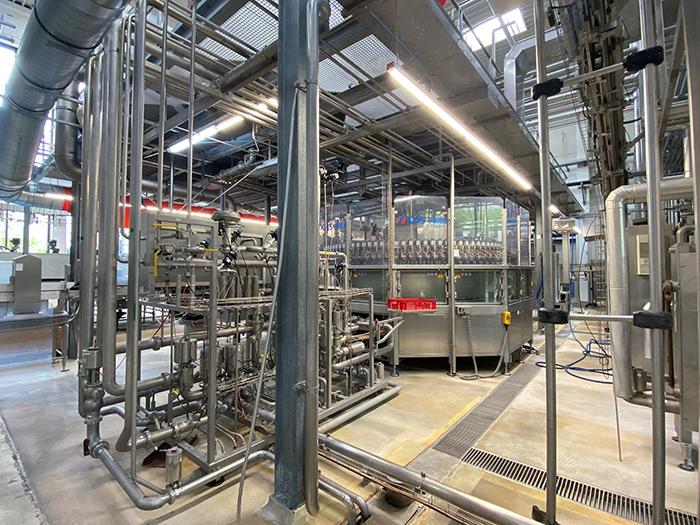
As of January 1, 2025, Ferrum Packaging AG, leading manufacturer of can seamers for the beverage industry, and KHS GmbH are to take over H.F. Meyer Maschinenbau GmbH & Co. KG. H.F. Meyer has particular strengths in specific canning technology segments, including can turners and rinsers and vacuum bridges, and will contribute its specialist expertise to the merger that perfectly supplements Ferrum’s and KHS’ areas of competence. It will remain an independent company within the consortium.
Beat Bühlmann, chairman of the board of directors at the Ferrum Group, emphasises the added value of the takeover for the customers of the participating companies. “H.F. Meyer’s special expertise gives us a significant wealth of know-how that we’ll be able to apply to joint further developments. The integral approach and pooled knowledge of the three companies will enable us to provide even more precise, customized equipment and solutions from a single source.”
Targeted expansion of technological expertise
By integrating H.F. Meyer into the Ferrum Group, a competence center for canning technology will be formed that is specialized in the development of innovative systems and solutions. “The aim is to supply the best canning lines in the world. In working together with H.F. Meyer and Ferrum, the efficiency and quality of our plant machinery will continuously increase,” says Martin Resch, managing director of the KHS Group.
The mechanical engineering company from Schleswig-Holstein, with a second facility in Bavaria, employs around 100 people, with whom H.F. Meyer has earned itself an excellent reputation over the years as a supplier of canning technology to the beverage industry. “We’ll of course continue to be a reliable partner to our customers and shall meet all obligations up to and including service with the customary quality,” adds Bühlmann.
The World Citrus Organisation (WCO) has released its annual Northern Hemisphere Citrus Forecast for the upcoming citrus season (2024-25). The Forecast was released on the occasion of the 2024-2025 Northern Hemisphere Citrus Forecast Outlook, organised on 15 November by WCO. The Forecast is based on data from Egypt, Greece, Israel, Italy, Morocco, Spain, Tunisia, Turkey, the United States, and, for the first time, Portugal. The Forecast shows that citrus production is estimated at 27.297.216 T, which represents an 8,73 % decrease compared to the previous season. The 2024/2025 Forecast is also 5,88 % lower than the average of the last four seasons.
WCO, the World Citrus Organisation, released on 15 November its annual Northern Hemisphere Citrus Forecast for the upcoming season (2024-25). The preliminary Forecast is based on data from industry associations from the Mediterranean region and the United States. Citrus production for 2024/2025 is estimated at 27.297.216 T, an 8,73 % decrease compared to the previous season. Total citrus exports are expected to follow a similar trend at 8.379.831 T, down by 8,94 % from last season and 9,78 % from the last four seasons’ average.
Philippe Binard, WCO Secretary General, summarised the outcome of the Forecast: “The market insights we received indicate a decrease from last year’s high volumes. This is mainly driven by Turkey returning to regular production levels after last season’s record figures as well as Egypt’s expected decrease.” He added: “Climatic issues, such as late frost, drought, heat waves, or new pests and diseases are constant threats to the quality, colouring, or harvest date for the production. The market will still be impacted by geopolitical instability while consumer demand is under pressure due to limitation of purchasing power and inflation.”
Looking at the country-specific figures for the largest producers in the EU, Spain’s citrus production at 6,18 MT is down by 3,30 % from the previous seasons, led by the 21,01 % decrease in lemons from last year’s record season. The dramatic weather events in Spain are not expected to have a significant impact on the overall supply, which overall remains as predicted. Italy is down by 12,32 % at 2,77 MT, with a 17,51 % decline in oranges, while Greece remains stable at 1,09 MT. In the other Mediterranean countries, Turkey is set to decrease its production by 17,57 % with 4,95 MT, after last season’s record figures. Egypt at 4,35 MT is down by 19,55 % from 2023/2024. Morocco’s production, on the other hand, is expected to grow to 2,14 MT (+11,97 %). Israel’s production is also estimated to recover to 0,56 MT (+18,50 %). Portugal, which contributed to the Forecast for the first time, estimates a 3,37 % decrease in the upcoming season (0,38 MT in total). The production in the United States is expected to shrink to 4,55 MT (-4,28 %), continuing to decrease compared to the average of the previous seasons (-11,52 %).
Philippe Binard added: “WCO is also setting some trends for the expected utilization of citrus for the upcoming season. The Northern Hemisphere citrus exports will decrease by 8,94 % compared to last season to 8,38 MT, while processing will decline to 5,16 MT (-4,15%), leaving 13,76 MT for domestic sales (-10,21 %.). Next April, the WCO will release the 2025 production and export forecast for the Southern Hemisphere.
Sponsored Post – A sterile process chain from preform sterilisation to sealing – this summarises the principle of the Contipure AseptBloc. A system that has proven its worth: At Krones, almost 90 per cent of aseptic fillers are currently integrated into this block solution. While this type of system was previously used primarily in the medium and high output range, there is now also a compact version that can be used to economically fill outputs as low as 8,000 containers per hour.
The basis for expanding the portfolio was laid by a further development in stretch blow-moulding technology: two years ago, Krones launched a new generation of its Contiform blow-moulding machine, which for the first time also enabled configurations of four, six and eight cavities. Similarly, the filling technology team further developed its existing aseptic filler, also with a view to low outputs – and finally combined both systems in a compact version of the Contipure AseptBloc.
The small footprint of the block is particularly noteworthy: the smallest version contains a four-cavity blow-moulding machine and a filler with a pitch circle of 1,080 millimetres – and currently only requires around 100 square metres of installation space – with potential for further space savings. This extremely small footprint can be achieved, for example, through a revised cleanroom concept, optimised positioning of peripherals such as media supply or valve manifolds and integration of the piping directly into the system. ‘Thanks to its well thought-out layout, the compact version of the Contipure AseptBloc is ideal for those companies that have little space available in production – whether installing a new line or modernising the blow-moulder and filler in an existing aseptic system,’ says Thekla Osswald, who is leading the project on the Research and Development side.
Apart from the space requirement, the compact version of the Contipure AseptBloc is in no way inferior to the tried-and-tested standard version: Here too, only one sterilisation medium is used, namely gaseous hydrogen peroxide. Furthermore, since the preform and not the bottle is sterilised first, lightweight containers can also be used. Compared to conventional aseptic processes with container sterilisation, the Contipure AseptBloc enables material savings of around two grams per bottle.
And as usual, the compact version of the Contipure AseptBloc is also suitable for a wide range of different product categories: Whether distributed at ambient temperature or within the cold chain, whether in the low- or high-acid range, whether with or without chunks of up to 5 x 5 x 5 millimetres – all non-carbonated beverages such as juice or dairy products can be processed on the system. And lightweight containers too The smallest version of the advanced Contipure AseptBloc incorporates a Modulfill Asept filler with a pitch circle of 1,080 millimetres, enabling up to 20,000 containers per hour to be aseptically produced, filled and sealed.
The escalating food waste crisis in the Asia-Pacific region presents a significant challenge that demands urgent attention from stakeholders across the supply chain. To combat this, foodservice operators are increasingly adopting recycling as a cornerstone of sustainable practices. Sustainability initiatives in the food and beverage industry include ethical sourcing, food waste reduction, and implementing composting programs and efficient waste management systems, reveals GlobalData, a leading data and analytics company.
Shravani Mali, Consumer Analyst at GlobalData, comments: “As awareness around sustainability grows, consumers increasingly prioritise ethical considerations in their purchasing decisions. Consumer demand for sustainability efforts among food service establishments and the food and beverage industry is accelerating, pushing restaurants to use more recycled materials, reduce waste and decrease their carbon footprint.
Governments across Asia have launched various initiatives to act against the crisis. These efforts reflect a growing recognition of the environmental, economic, and social implications of food waste, which is a persistent challenge across the region.
For instance, according to the Department of Climate Change, Energy, the Environment and Water in Australia, food waste is a persistent issue in the country, with an estimated 7.6 million tons of food discarded each year. Under the National Food Waste Strategy, the Australian government aims to halve the country’s food waste by 2030. Approximately 4 % of Australian food waste comes from the hospitality and foodservice sector1.
Moreover, in the Chinese municipal waste structure, approximately 50 % accounts for food waste2. As a sign of hospitality in the Chinese culture, people tend to order more food than they can eat. Prompted by these concerns, the Chinese government issued the Anti-Food Waste Law (AFWL), which aims to alleviate food waste.
Tim Hill, Key Account Director, SE Asia at GlobalData adds: “As a result of rapid urbanisation, population growth, and a complex food supply chain in APAC, there is a rising need to implement strategies to reduce food waste, thereby enhancing sustainability.”
For instance, food waste that is unsuitable for human or animal consumption such as fruit/vegetable peels and eggshells can be used to enrich the soil or as a natural fertiliser for landscapes.
Hill adds: “Additionally, redistributing excess food in collaboration with nonprofit organisations and food banks will foster a sense of responsibility towards food resources. Hence, such initiatives are expected to reflect a considerable decrease in the environmental footprint.”
Mali concludes: “The growing food waste problem in the APAC region demands immediate action and collaborative efforts across sectors to establish sustainable practices, enhance resource efficiency, and establish a resilient and responsible food system. Tackling this issue is crucial not only for environmental sustainability but also for bolstering the economic and social welfare of the APAC region.”
1CSIRO, November 2023 2Environmental Change and Security Program – Woodrow Wilson International Center for Scholars, December 2023 3GlobalData 2024 Q3 Consumer Survey – Asia & Australasia, with 6,000 respondents, published October 2024
Most American consumers are now aiming to reduce their sugar intake, and continue to look for new, better-tasting, non-caloric alternatives. Recent consumer research commissioned by food and beverage ingredient innovator, MycoTechnology, Inc., examines attitudes toward sugar reduction and high-intensity sweeteners, uncovering key opportunities in the market.
MycoTechnology partnered with Brightfield Group to gather proprietary, AI-driven insights among a sample of US adult consumers, finding that sugar is the top item people want to reduce in their diets. However, 75% also wish there were better-tasting non-caloric options, highlighting taste as a major pain point in the current market.
Of those who are actively reducing their sugar intake, 71 % report that they do so by eating fewer sweet foods, versus only 31 % that are using products with non-caloric sweeteners, indicating room for improvement across reduced sugar formulations. Additionally, 7 in 10 consumers that use non-caloric, naturally derived sweeteners report that they would be interested in new options. The survey also showed widespread interest in clean label ingredients, combined with negative perceptions of artificial sweeteners.
“This research demonstrates clear demand in the market for new, appealing sweeteners that are derived from nature,” said Caroline Schwarzman, MycoTechnology’s Head of Business Development. “Sugar reduction is top of mind for consumers, but many feel that achieving this goal requires sacrifice—on taste, price or perceived health risks. This trade-off is preventing the reduced sugar market from reaching its full potential.”
In response to this critical food system challenge, MycoTechnology is developing the first ever sweet protein from honey truffles, offering an unparalleled solution for sugar reduction. Following the achievement of several technical and safety milestones, the company continues to scale production and is collaborating with food and beverage innovators to bring Honey Truffle Sweetener to market.
“Innovative fermentation technologies have allowed us to target common challenges, establishing a clean sweetness profile with proven safety and digestibility performance, and low cost-in-use,” added Ranjan Patnaik, Ph.D., MycoTechnology’s CTO. “This new solution is designed to address the top concerns of consumers, presenting an opportunity for food and beverage innovators to meet demands and stand out on the shelf.”
koalimo is the latest energy drink innovation, combining the naturally energising qualities of guarana and the sustainable sweetness of cocoa fruit juice.
koawach, specialists in organic, fair trade, and climate-neutral cocoa and guarana products, have created a one-of-a-kind beverage. The result is koalimo – the first caffeinated soft drink made with cocoa fruit juice, available in three refreshing flavours that redefine the energy drink experience:
Sun Burst – a tangy and refreshing taste of grapefruit
Citrus Wave – a zestful lime infusion for a rejuvenating kick
‘At koawach, we’re thrilled to launch koalimo as a sustainable and refreshing alternative to traditional energy drinks, harnessing the unique potential of the cocoa fruit,’ says Daniel Duarte, Founder of koawach. ‘This is a drink that brings together bold flavor, natural energy, and real impact for both people and the planet.’
Each flavour is lightly sweetened with cocoa fruit juice, an upcycled product that benefits both people and the planet. By using the often-overlooked cocoa fruit pulp, koalimo helps provide an extra income stream for small-scale farmers in Ghana and promotes upcycling – making a sustainable impact in the cocoa industry.
The refreshing essence of cocoa fruit is complemented by the energising kick of guarana, delivering 75 mg of natural caffeine per can – comparable to leading energy drinks but with a much simpler, cleaner ingredient list. Moreover, koalimo contains significantly less sugar than typical energy drinks (up to 3g per 100ml), making it a more natural and healthier choice.
koawach has teamed up with Koa, a Swiss-Ghanaian startup that upcycles cocoa fruit pulp, to create the innovative beverage—an effort born from two distinct but aligned brands.
‘We’re incredibly excited for this new koa-llaboration between koawach and Koa—a true match made in heaven!’ says Anian Schreiber, Co-Founder and Managing Director of Koa. ‘With koalimo, koawach has created a drink that brings together exquisite flavour, energising functionality, and a positive, sustainable impact on people and the planet.’
Koalimo will be available in over 1,100 dm stores across Germany and online at koawach.de starting in late November 2024.
Refresco, the global independent beverage solutions provider for retailers and global, national, and emerging (GNE) brands in Europe, North America, and Australia, today announces the successful closing of its acquisition of Frías Nutrición (“Frías”), a leading manufacturer of plant-based drinks in Spain. This transaction, first announced on July 22, 2024, strengthens Refresco’s position in the rapidly growing plant-based beverage category.
Frías, located in Burgos, Spain, employs approximately 250 people and specializes in producing private label plant-based drinks, including almond, rice, hazelnut, and soy options for key retailers in Spain and beyond. This acquisition complements Refresco’s existing operations in Spain and significantly expands its capabilities in the plant-based drinks sector.
CEO Refresco, Hans Roelofs, commented: “As part of our proven Buy & Build strategy, we are looking to expand our capabilities in existing and adjacent beverage categories. The acquisition of Frías not only enhances our footprint in the plant-based drinks market, but it also allows us to better serve our European customers and accelerates our product innovation capabilities. We are excited to welcome the talented Frías team and are dedicated to a seamless integration process that will drive mutual growth.”
With this acquisition, Refresco reaffirms its commitment to delivering high-quality, innovative beverage solutions to its customers, while also further enhancing its service offerings.
Although it is the offseason period for the tahiti lime, quotations decreased in early November. The downward trend is related to both the size and the quality of the fruit, which are below expected by the sector. However, it is worth noting that price levels are still high.
According to data from Cepea, tahiti lime prices averaged BRL 95.59 per 27.2-kg box in mid-November, downing 16.17 % against late October.
It is worth noting that the price average for the tahiti lime was at BRL 117.94/box last month, 72.2 % more than in September and moving up 71 % against October last year, in nominal terms.
Season in Florida
The 2023/24 orange season finished in September in Florida. The Citrus Department of that state in the Unites States indicated in October that local juice stocks, as observed in Brazil, finished the season at low levels.
The limited orange supply has been frequent in the US, considering that the country has become majorly an orange juice importer since the advance of greening in Florida.
It is worth noting that Brazil is the major orange juice supplier for the US market. The fact that the Brazilian industry faced both low supply and high prices in the 2023/24 season (which limited exports) might have prevented a recovery of stocks in Florida.
Annual cost savings potential: € 80 – 100 million
AGRANA Beteiligungs-AG’s Supervisory Board approved AGRANA NEXT LEVEL, the new Group strategy presented by the Management Board. The implementation of the measures it details will significantly increase AGRANA’s competitiveness in the future and is the company’s response to challenges such as economic uncertainty, geopolitical crises, high raw material volatility and increasing cost pressure. The strategy focuses on system change and profitable growth, and aims to reduce the company’s dependency on market volatility as well as increase its basic profitability.
The core element of AGRANA NEXT LEVEL is the transformation of the AGRANA Group into a streamlined, strategic holding company with two strategic business units: “Agricultural Commod- ities & Specialities” and “Food & Beverage Solutions”. This reorganisation will enable the Group to pool its expertise in a targeted manner and make greater use of existing synergy potential both in terms of markets and costs. The resulting annual savings potential, which will be fully effective from the 2027|28 financial year onwards, amounts to approximately € 80 – 100 million and is an integral part of AGRANA NEXT LEVEL.
All the details required to realise the savings effects resulting from AGRANA NEXT LEVEL will be worked out in detail by the end of the current financial year 2024|25 and then implemented step by step.
Stephan Büttner (Photo: AGRANA)
AGRANA CEO Stephan Büttner: “AGRANA NEXT LEVEL is our roadmap through a multitude of challenges that will affect our employees, customers, suppliers and owners alike. The trans- formation of our company is designed to make our organisation more effective and agile in future. With this new strategy, we’re responding to current challenges while also proactively shaping our future. We’ll achieve cost and market synergies, which will strengthen our profit- ability and increase our scope for future profitable growth. By systematically implementing our portfolio strategy and focusing on innovation, we’ll lead AGRANA into a successful future.”
In addition to structural transformation, sustainability remains a central component of AGRANA’s NEXT LEVEL strategy. We’re on track to achieve net-zero emissions (Scope 1+2) by 2040; and Scope 3 by 2050 at the latest. “This commitment is not only part of our social responsibility, but also a strategic imperative to remain competitive in the long term. We’ll have invested more than € 600 million in sustainable technologies and energy efficiency by 2040 to ensure that AGRANA meets the requirements of the Paris Agreement on climate change,” emphasises CEO Büttner.
The new role of the holding company
In future, AGRANA Holding will focus on the strategic direction of key areas, including strategy and transformation, human resources management, IT, procurement and operations excel- lence. Operational services are being combined to ensure efficient management of the Group. Consolidating similar functions and streamlining structures avoids redundant processes and ensures simpler, more efficient workflows.
A new role for the divisions
In order to combine the competencies of the AGRANA Group effectively and to align them with the market as well as create cost synergies, the company’s structure will be transformed into a more functional and permeable business model. While four companies (divisions) will remain under the holding company, they will be strategically combined into two business units, “Ag- ricultural Commodities & Specialities” (sugar, starch, fruit juice concentrate) and “Food and Beverage Solutions” (fruit flavour, brown flavour & spicy preparations, flavourings, syrups, sauces) to better meet the different management requirements.
“Agricultural Commodities & Specialities” will focus on cost efficiency, from raw material pur- chasing to production due to the broad standardisation of products and high competitive pres- sure. This business unit will build on its strength of having a regional footprint with its proximity to raw materials and proven expertise in raw material management.
In future, the low margins resulting from the dependence of raw material processing on agri- cultural cycles, climate and market conditions will be counteracted by optimising processes and technologies. The structural similarities between sugar and starch production offer great synergy potential, which AGRANA will be exploiting by aligning production and maintenance processes, as well as by intensifying technology transfer (for example, in emission-reducing energy systems).
In “Food and Beverage Solutions”, management focuses on developing innovative solutions for and with industrial customers. Here, AGRANA can draw on its market leadership in fruit preparations with a global footprint, worldwide customer proximity and innovative strength. The focus is on customer-specific, value-added products and the co-creative development of customised solutions with customers in the food and beverage industry. This higher level of innovation will lead to products with stronger margins and better opportunities for differenti- ation in global markets. In particular, the “Ice Cream”, “Food Service” and “Flavours” customer segments will be further promoted. The existing collaboration between AGRANA Fruit and AUSTRIA Juice in product development will be intensified, for example by using AUSTRIA Juice’s flavour expertise for dairy products.
“AGRANA NEXT LEVEL is not just the name of our new strategy; it’s the philosophy for the future of our entire organisation. The strategy was developed by the AGRANA management team with the support of external expertise and the diligent work of an internal project team, to whom I’d like to express my sincere thanks. We’re taking many valuable things with us from our almost forty-year company history and we’re leaving some things behind us as we enter a new era. Knowing that we have a strong team of many outstanding colleagues, we’re confident that the transformation we’ve begun will be a success story and that we’ll continue to succeed as we chart our course into the future,” concludes CEO Stephan Büttner.
Ball Corporation, a leading global provider of sustainable aluminum packaging for beverages, personal care and home products, announced the acquisition of Alucan, a European leader in extruded aluminum aerosol and bottle technology. The acquisition complements Ball’s existing global extruded aluminum aerosol and bottle business with the addition of manufacturing facilities in Llinars del Vallés (Barcelona), Spain, and Lummen, Belgium.
This acquisition aligns with Ball’s business strategy to simplify sustainability for its customers by delivering scalable aluminum packaging solutions. The new plants will enable the company to meet the growing demand for sustainable packaging across Europe. Both facilities are equipped with cutting-edge technology and aim to minimise their environmental footprint, aligning Ball’s dedication to sustainability and operational excellence.
Ball continues to serve new categories and offer reuse, refill bottle innovations to a broader set of customers and occasions. Acquisition of Alucan will add large-diameter aerosol can and impact extruded bottles capabilities to support Ball’s existing reusable bottles customers. This acquisition allows the company to diversify its customer base, cross-sell with food and beverage manufacturers, and expand its bottle offerings to include personal and home care products.
This acquisition allows Ball to enhance its efforts in innovation and reduce its carbon footprint. The company will lightweight and increase the recycled content in Alucan cans, while being in close proximity to its customers will help optimise truck capacity, ultimately reducing CO2 emissions.
Acquisition of Alucan is an important step forward for Ball Corporation as it looks to better serve the growing aerosol and impact-extruded bottle market in Europe.
New Prinova concepts at FiEurope 2024 will demonstrate how manufacturers can tap into the latest food and nutrition mega-trends.
Over the past year, Prinova’s bespoke market research has identified the major consumer trends shaping the future of food and nutrition. At FiEurope, the premix expert will showcase a range of concepts that demonstrate how manufacturers can tap into them with innovative new products.
They have been created to provide an example of a possible “good for you” range:
Good Guts: In Prinova’s most recent research, gut health emerged as the concern most likely to affect consumers’ purchase decisions. This light and refreshing lemon ginger tea for immune support and digestive health is designed as the perfect addition to their daily routines. It includes two powerful prebiotics, Aquamin® and inulin, as well as L-Glutamine – a primary fuel source for immune cells in the gut. They are combined with an expertly formulated blend of vitamins and minerals to help support the digestive tract, immunity and energy levels.
Good Mind: Prinova identified demand for cognitive wellbeing as one of nine mega-trends for 2024. Flavoured with cherry and grapefruit, this tasty drink offers consumers clean and sustained alertness without the jitters. It contains a blend of well researched ingredients associated with improved concentration and cognitive function, including vitamins, minerals and natural caffeine from green coffee beans.
Good Game: With consumers turning to healthier beverages as they reduce their alcohol intake, this refreshing kiwi lime beverage offers a convenient way to replenish and energise. Natural electrolytes from Aquamin® aid hydration, which is combined with amino acids for recovery, and B-vitamins and minerals for energy.
Workout Cookies: Botanicals are one of the ingredients consumers most look for in sports nutrition products. These cookies contain a blend of pomegranate, panax ginseng root and lychee extracts for recovery, oxidative stress reduction and endurance capacity.
Gaming Gummies: As gaming continues to grow in popularity, players are increasingly recognising the impact that intense sessions can have on their physical and mental performance, as well as the importance of enhanced reaction times. This has increased demand for products with functional ingredients such as nootropics. Containing L-Tyrosine, taurine and natural caffeine, these gummies are designed to address focus, memory and attention.
James Street, Global Marketing Director at Prinova, said: “Prinova’s in-house expertise and research insights have helped us to identify the key trends shaping the future of food and nutrition. At FiEurope, it’s all about inspiring manufacturers to tap into them. Whether it’s the rising demand for cognitive wellbeing, the ‘sober-curious’ trend in beverages, or innovative new sports nutrition solutions, we’re continually tracking the many ways that consumers’ needs are changing. And as these new concepts demonstrate, we have the portfolio of ingredients and the expertise to help you meet them.”
FiEurope will take place between the 19th and 21st of November 2024 at Messe Frankfurt. Prinova will exhibit at Stand 3.1K70, where visitors will also be offered a sneak preview of pre-workout ingredient CitraPeakTM . Set to launch in Europe in 2025, the clinically supported product is the first 100 % soluble form of hesperidin – a flavonoid that occurs naturally in citrus fruits.
dsm-firmenich, innovators in nutrition, health and beauty, will introduce its latest advances and ambitions to support a healthier, more delicious and sustainable food system at this year’s Food ingredients Europe (Fi Europe). A selection of next-generation solutions will be on display at booth 3.1 F62 in the beverage, baking, confectionery, cheese, plant-based, fresh dairy and savory categories – with an opportunity to sample the latest delicious prototypes. Visitors can also learn directly from dsm-firmenich’s experts at four speaking slots throughout the show, covering important trends in sugar reduction, health benefits, AI-powered fermentation and bakery.
Boosting nutrition in consumer favourites
Today’s consumers have a lot on their plate. Two in three are concerned about their health, two billion are deficient in essential vitamins and minerals and 40 % of adults worldwide are overweight,1 so there’s an urgent need for high-quality food and drink products that support people’s health and well-being.
Maaike Bruins, Lead Scientist Nutrition & Health and Martin Mei, Senior Director Health Benefits & Solutions, both from dsm-firmenich, will address these health concerns head-on with a not-to-be-missed presentation on November 19 at 1:30 PM. They will discuss the best approach to nourish the growing and aging population by adding more of the essential nutrients we need as well as reducing sugar, salt and saturated fats. Additionally, on November 20 at 11 AM, Judith van Peij Innovation Manager Baking & Confectionery, dsm-firmenich, will explore how innovative enzymes can be used to enhance whole wheat bread quality, from better dough stability to improved volume, helping to meet evolving consumer demand in taste, texture and health.
Visitors will be able to experience the dsm-firmenich team’s expertise in action through a range of healthy prototypes including a lactose-free Nutrimilk concept in strawberry and banana flavours – with no added sugars – and a recovery drink made with PeptoPro®, crafted to replenish and recharge.
Reducing sugar – without reducing flavour
There’s no single-ingredient replacement for sugar; if there were, the industry would be using it already. dsm-firmenich understands the real solution is far more nuanced if the industry is to captivate consumers with reduced sugar creations.
Francesc Puerto, Technical Sales Manager Sugar Reduction Europe, dsm-firmenich, will share a novel approach to reducing sugar in applications in a forward-thinking presentation on 19 November at 12 PM. The session will dive into the innovative solutions that can restore the full sensory experience in low-sugar products without compromising on vibrant tastes – for a healthier, tastier and more sustainable future in food and beverages. For those with a sweet tooth, dsm-firmenich has created chewy apricot-flavoured gummies and a flavourful BBQ sauce – both boasting reduced sugar formulations and an appealing taste profile.
Cutting-edge food science meets AI
Bringing together the latest taste, texture and health solutions, dsm-firmenich is highlighting its portfolio of all-in-one cultures developed using its leading AI-powered Dairy Culture Co-Creation platform. Claire Price, Innovation Manager Dairy, dsm-firmenich, will be sharing her R&D expertise on developing flavourful fresh fermented creations on November 19 at 11 AM. She will take to the stage to showcase how fermented milk manufacturers can use this technology to design cultures for dairy applications, sharing a case study based on a real-life scenario.
Taste is king: live cooking demo
People often put healthiness and tastiness in two separate boxes, but dsm-firmenich understands that the overlap is where the magic happens. After all, people only want to eat healthy food if it also tastes good. Demonstrating the potential of great taste without nutritional compromise, dsm-firmenich will host a smoke demonstration of mini ‘Frankfurters’ – in Frankfurt – with a side of sugar reduced ketchup for delegates to try.
All eyes on sustainability
Food production is estimated to be responsible for 25 % of global carbon dioxide emissions.2 Adopting more plant-based foods is a powerful step toward a more sustainable future. To meet the growing demand for plant-based options, dsm-firmenich will showcase its sustainable plant protein, Vertis™ CanolaPRO®, in a range of innovative applications, including a tortilla and breakfast cereals. Visitors can also try plant-based smoked ‘salmon’ with cream cheese and pulled ‘beef’ in tortillas for a satisfying plant-based experience. Visitors interested in helping consumers reduce food waste can also enjoy a smooth vanilla yogurt that lasts longer on the shelf while maintaining its taste and texture.
The latest FRUIT LOGISTICA Trend Report is now available for download
Annual report’s in-depth information and expert analysis help industry representatives understand how fruit and vegetable supply is changing across the globe.
FRUIT LOGISTICA’s latest annual trend report provides the fruit and vegetable sector with free and valuable information about the future of the global fresh produce trade. Entitled ‘Future trends in fresh produce supply’, this year’s report highlights the emerging supply chains, new sources of supply, and market trends that are set to change the business in the next few years.
With this free report, industry representatives can do the following:
Access exclusive insights from industry leaders like Fruitnet, RaboResearch, AgTools, EastFruit, and Sensonomic
Discover new growth opportunities that can drive future expansion of the international fruit and vegetable trade
Explore the emerging supply potential in the southern Mediterranean and how it can reshape global markets
Dive deep into the booming intra-Asia trade and its rapidly evolving dynamics
Spotlight fast-evolving categories with detailed reports on the freshest trends in produce
Unlock sourcing strategies from emerging and high-potential supply countries poised to transform certain trades
The FRUIT LOGISTICA Trend Report is available to read now as a free download.
AGRANA Group recently confirmed its annual guidance on 10 October 2024 in the context of publishing its results for the first half of 2024/25. Significantly lower EBIT* was forecast for the 2024/25 financial year compared to the prior year (2023/24: € 151.0 million), with a decline of 10 % to 50 %.
It had already been communicated that, due to higher sugar inventories and sharply falling sugar prices (in the EU and globally), AGRANA’s Sugar segment in particular would continue to face very challenging times in the coming months. Since the full-blown start of the sugar beet processing campaign in October 2024, it has also become evident that the campaign costs of the new 2024/25 sugar marketing year will be higher than expected. In the meantime, the evaluation of September’s flooding damages (primarily in Austria) has also been largely completed. The negative impact on earnings in the current financial year has been higher than originally forecast, mainly due to the production stoppage at the plant in Pischelsdorf, Austria, in the Starch segment.
These developments are primarily responsible for the forecast now that the 2024/25 financial year will be characterised by a very significant decline in EBIT* of more than 50 % at the Group level. The operating profit before exceptional items and results of equity-accounted joint ventures is expected to be in the range of € 55 million to € 75 million.
The publication of the results for the first three quarters of 2024/25, including details of the outlook for all segments in the remainder of the 2024/25 financial year, will be on 14 January 2025 as scheduled.
*EBIT: operating profit after exceptional items and results of equity-accounted joint ventures
HealthTech BioActives (HTBA), a science-based global leader in the manufacture of citrus flavonoids and active forms of vitamin B12, is pleased to announce Miura Partners as its new majority shareholder, a move aligned with the company’s ongoing growth strategy across its four business areas: Functional Health, Pharmaceutical Active Ingredients (APIs), Taste Modulation, and Animal Nutrition.
HTBA successfully pursued a major international expansion and modernization project over five years under its previous owner, The Riverside Company. Thanks to Miura’s commitment to innovative and sustainable development, HTBA begins its new chapter with an annual revenue of 80 million Euros, a figure up 66 % since 2019, and with a 200-strong international workforce, which has doubled in that same time frame. Headquartered in Barcelona, with a subsidiary in Cincinnati, Ohio, today HTBA also operates a research, development, and production center in Beniel (Murcia).
“The agreement of our new shareholder structure with Miura Partners is an important milestone for HTBA, reinforcing our position as a rising star in the health and nutrition industry,” comments Alexandre Valls-Coma, Chief Executive Officer of HTBA. “We remain fully focused on our mission of unlocking the power of nature through our proprietary processes and high-purity ingredients, with a genuine commitment to sustainability. Staying true to these principles has enabled us to enhance the health and well-being of both people and animals for over 40 years, and made us a global leader in the manufacturing and distribution of flavonoids and active forms of vitamin B12. Now, as we begin our partnership with Miura, we can’t wait to take our ambitious growth plans to the next level.”
About HTBA HTBA is a science-based global leader in the manufacturing and commercialization of citrus flavonoids and active forms of vitamin B12 for the pharmaceutical, nutraceutical, food and beverage, and animal nutrition sectors. For over forty years, the company has pioneered the development of new processes to create high-quality, naturally derived ingredients that support the health of people and animals, all while protecting the environment. Headquartered in Barcelona, Spain, HTBA produces ingredients of unsurpassed quality at its state-of-the-art manufacturing facility in Murcia, Spain. Plus, with ideation centers located in Spain and at its North American operations center in Ohio, the company is well-positioned to understand and quickly respond to global end-user consumer demand.
Sponsored Post – Looking to expand your production capabilities? Get high-quality equipment at a fraction of the original cost with two premium used machinery lines from Assets For Sale.
Our partner Assets For Sale has two used machinery lines for sale for a fraction of the original price:
Refurbished KHS Aseptic Filling line: Overhauled in 2021, this aseptic solution meets the highest standards for safe, hygienic filling processes, perfect for juice and soft drink manufacturers focused on quality.
(Photo: Assets For Sale)(Photo: Assets For Sale)(Photo: Assets For Sale)
Asiros Complete Fruit Juice Concentrate and Puree Production Plant: High quality and complete production process equipment for Fruit Juice, Concentrates and Purees, for semi-finished bulk and powder production and/or bottled ready end product.
(Photo: Assets For Sale)(Photo: Assets For Sale)(Photo: Assets For Sale)
Visit AssetsForSale.com for full specifications or to connect with our team for further inquiries.
Regular rains and mild weather were registered in late October in the citrus belt of São Paulo state and Triângulo Mineiro, the biggest orange producer for the juice industry. This scenario has helped to bring a relief for trees that were affected by the lack of rains and high temperatures.
2024/25 season
Even with the return of rainfall, the current orange crop has presented low quality. Still, rains in October may improve the quality of fruits that are still on the trees. It is worth noting that the orange crop has started in June this year and may finish between December and January/25. As for tahiti lime (the main season starts between November and December), weather conditions may favor the development, since fruits are currently below the standard.
Exports
The revenue obtained by Brazilian exporters with orange juice shipments in the partial of the 2024/25 crop (from July/24 to September/24) totaled USD 905.3 million, for an increase of 42.3 % compared to the same period of the last season (USD 636.1 million), according to Comex Stat.
The volume of orange juice exported by Brazil, in turn, continues decreasing, as it has been verified since the 2023/24 crop. From July to September/24, Brazil shipped 207.5 thousand tons of orange juice, downing 27 % in relation to the same period in 2023.
The lower volume exported is linked to the limited supply. Weather adversities have been hampering the production for five consecutive seasons, which resulted in restricted inventories of juice.
Döhler, a world-leading producer and provider of natural ingredients, ingredient systems and integrated solutions, has announced a joint venture with FGF Trapani, a renowned specialist in citrus farming and processing. This partnership aims to revolutionise the use of citrus fibres as natural texturisers in food and beverage applications. Thus, customers get access to premium, cost-effective and minimally processed citrus fibre solutions that address market trends for healthier and environmentally friendly ingredients.
Döhler’s extensive experience in natural ingredients and ingredient systems as well as their application in F&B, combined with FGF Trapani’s lifelong heritage and expertise in citrus farming and processing, provides innovative alternatives to traditional hydrocolloids that excel in gelling, thickening and stabilising applications. As key provider in the F&B industry, Döhler now expands its product range with an advanced portfolio of citrus fibres that is developed for high-performing product textures, enhancing both consumer appeal and product differentiation.
Focus on customer benefits and application expertise
Customers all over the world will benefit from this collaboration having direct access to high-quality and minimally processed citrus fibres. In response to the increasing demand for health-promoting ingredients, this collaboration provides natural fibres that support dietary goals, including fibre enrichment and reduced use of artificial additives. This empowers brands to develop products that cater to health-conscious consumers.
The joint venture’s citrus fibres offer versatile applications across various product categories, from beverages and dairy to bakery and sauces. This versatility allows manufacturers to innovate across their portfolios, creating new and exciting products with improved texture, mouthfeel and health promoting claims.
Strategic benefits of vertical integration and sustainability
FGF Trapani’s production facility, strategically located in one of the world’s largest lemon-growing regions, ensures a reliable supply of premium raw materials. By processing citrus fibres directly from fresh lemon peels, the joint venture guarantees access to a pectin-rich product that combines the benefits of both soluble and insoluble fibres. This vertical integration allows for maximum quality control and sustainability throughout the supply chain, supporting the production of highly functional ingredients that meet stringent industry standards.
With a focus on sustainable production practices, the partnership delivers environmentally friendly citrus fibres that align with consumer values. By utilising by-products of citrus processing, this initiative is contributing to a more sustainable food and beverage production.
Meeting consumer demand for healthier and organic ingredients
The joint venture between Döhler and FGF Trapani is timely, as consumers increasingly demand cleaner, minimally processed and organic-quality ingredients. Citrus fibres, derived from natural raw materials, are well-aligned with these market trends, offering a functional and sustainable ingredient that meets the needs of health-conscious consumers.
Tetra Pak and Lactalis have unveiled a carton package that uses certified recycled polymers linked to used beverage cartons, marking a first for the beverage carton industry and a significant step towards a circular economy.
This material has been certified by ISCC PLUS as originating from the recycling process of used beverage cartons in Spain and is allocated to the package based on a mass balance attribution method. This means that the certified recycled polymers are made up of a mix of recycled and non-recycled, virgin fossil feedstock, ensuring the corresponding volume of recycled material is sourced and tracked throughout the supply chain. This is verified by a third-party auditor, according to the ISCC Chain of Custody Procedure.2 The chemical recycling process ensures that the certified recycled polymers do not compromise the package’s quality, food safety or any other attributes, further demonstrating the circular potential of cartons.
The advancement keeps quality resources in circulation and reduces the industry’s dependence on virgin, fossil-based materials, which aligns with both companies’ ambitions to further enhance the environmental profile of packaging. Tetra Pak plans to invest €100 million annually for the next five to ten years to achieve this, while Lactalis has made responsible packaging and the circular economy one of its global environmental priorities, together with animal welfare across their partner farms and decarbonisation of all their activities by 2050.
Joël Llovera, Purchasing Director of Lactalis Iberia, says: “Our collaboration with Tetra Pak is rooted in a shared vision and commitment to environmental stewardship for future generations, facilitated by circular economy principles. Packaging innovation plays a crucial role in this endeavor. We are dedicated to sustainable progress. Transitioning from fossil-based polymers to recycled ones, certified by ISCC PLUS as linked to used beverage cartons, represents a significant stride towards our objective.”
Marco Marchetti, Vice President Packaging Materials, Sales and Distribution Solutions, Tetra Pak, adds: “Increasing the usage of renewable and recycled resources in packaging is critical if we are to help food and beverage producers realise material circularity, turning waste into new resources and lowering reliance on virgin, fossil-based materials. To scale up the adoption of certified recycled polymers in food packaging, we need collective action across the entire system and enabling legislation. Scientists, policymakers, recyclers, industry players and others must work together to turn challenges into opportunities, as shown by our world-first introduction with Lactalis.”
This innovative initiative by Lactalis involves packing its Puleva dairy range sold in Spain – including calcium skimmed, semi-skimmed, whole and lactose-free milk – in Tetra Brik® Aseptic 1000 Slim cartons featuring the HeliCap™ 23 Pro closure. Following the market introduction under the Puleva brand, Lactalis aims to gradually expand its range of dairy products in packaging that uses certified recycled polymers. This step also aligns with expectations from consumers across the globe, who demand greater commitment from brands in terms of sustainability and are beginning to adapt their own behaviors to match. Tetra Pak research indicates that 78 % of consumers are concerned about the environmental impact of plastic waste, with 29 % reporting an increase in purchasing products packaged in recycled materials in the last year.3
1The certified recycled polymers are made of a mix of recycled and non-recycled, virgin fossil feedstock. Mass balance certification ensures the corresponding volume of recycled material is sourced and tracked throughout the supply chain. This is verified by a third-party auditor, according to the ISCC Chain of Custody Procedure. 2The material has been certified by ISCC PLUS as originating from the recycling process of used beverage cartons in Spain and is allocated to the package based on a mass balance attribution method. Mass balance is one of the chain of custody options eligible for ISCC certification. 3Tetra Pak’s latest Sustainable Packaging consumer research, run in 2023, comprised a total of 14,500 consumer interviews based on an online questionnaire in 29 markets: Germany, France, UK, Italy, Belgium, Denmark, Netherlands, Poland, Portugal, Romania, Spain, Sweden, Saudi Arabia, Turkey, South Africa, Egypt, China, India, Japan, Australia, Indonesia, Philippines, South Korea, Vietnam, Brazil, USA, Mexico, Colombia, Argentina.
Twellium Industrial Company, West Africa’s fastest-growing manufacturing company, has partnered with Sidel to develop a new ultra-modern facility in Kumasi, Ghana – a greenfield project housing two complete PET packaging lines for still and carbonated beverages.
Twellium Industrial Company (Twellium) specialises in the production of non-alcoholic beverages, including its flagship product, Verna Mineral Water. The company also manufactures signature brands such as Rush Energy Drink, Original American Cola, Planet Range, and Bubble Up Lemon Lime under licence from Monarch Beverage Company.
Twellium already operates two well-established production facilities in Accra, Ghana and Bobo-Dioulasso, Burkina Faso, and has now commissioned its third ultra-modern site in Kumasi, Ghana.
The Kumasi site began as a greenfield project, with Twellium constructing it entirely from the ground up. This included all civil works, infrastructure, and utilities, with Sidel assisting in the installation of two cutting-edge processing and packaging lines.
Cutting-edge PET packaging lines
At the Kumasi site, diversity in manufacturing—utilising different sizes of PET bottles, as well as producing a variety of beverages including water, carbonated soft drinks (CSD), non-carbonated drinks, and energy drinks—was crucial to its development. This enabled flexibility in production and catered to broad market demand.
Twellium’s Kumasi site now features Africa’s fastest complete PET water line, with a production output of 80,000 bottles per hour, utilising Sidel’s signature Combi solution which combines blow moulding, filling, and capping into a single, compact, and integrated solution.
The set-up also includes a state-of-the-art water treatment room and automated cleaning-in-place (CIP) system, ensuring the highest levels of hygiene and food safety.
Sidel has also installed a complete line for carbonated soft drinks (CSD) at the Kumasi plant. Capable of bottling at speeds of 65,000 bottles per hour, this high-speed line with a Sidel Combi was the perfect solution for Twellium to meet the region’s booming CSD market.
As part of the project, Sidel also installed a customised EvoDECO Roll-Fed labeller featuring an integrated system which enables the application of QR codes on the bottle cap, allowing maximum traceability and meeting Ghanaian regulations.
Leader in Ghana’s thriving beverage industry
“Sidel’s complete PET packaging lines for Twellium ensure that beverage production volume meets affordability, allowing us to keep up with the constant increase in demand. This partnership not only drives efficiency but also creates more regional job opportunities, reinforcing Twellium as a proud leader in Ghana’s thriving beverage industry,” comments Ali Ajami, Twellium Marketing Director.
Themed “Make joy through science and creativity”, concepts will focus on transforming megatrends and innovations into opportunities for the industry
IFF is set to unveil a series of groundbreaking food and beverage innovations at Gulfood Manufacturing 2024 leveraging cutting-edge technologies and deep consumer insights. This year’s theme, “Make joy through science and creativity,” underscores IFF’s focus on transforming megatrends into tangible opportunities for the industry.
“We aim to revolutionise the food and beverage industry with innovative solutions that exceed market demands,” said Helga Moelschl, regional president, AMETI, Nourish, IFF. “Our approach combines scientific expertise with a relentless spirit of creativity and agility. We are excited to present concepts that embody these principles. Visitors will experience firsthand how our sustainable and affordable solutions deliver unparalleled sensory delight and functional health benefits.”
IFF will showcase a diverse range of new concepts inspired by key consumer trends like Experiential Delight, Health, and Affordability across various categories, including beverages, dairy, snacks, bakery, culinary, bars and confectionery. These innovations highlight IFF’s technical expertise and creativity in helping manufacturers create products with sensory appeal and functional health benefits, while also reducing costs.
Visitors to the double-story booth can experience the following beverage concepts:
Cost-efficient dairy drink: Concepts containing IFF’s unique system of specialty stabilisers, emulsifiers, patented flavour technology, and innovative top notes offers impactful savings on the full product composition without compromising on the sensory profile and stability compared to standard milk. Solutions are showcased in plain milk and sweetened flavoured versions, all offering higher calcium levels than standard milk.
Fizzy beverage with innovative flavours: Designed to connect with consumers’ emotions while offering the benefits of an energy drink, IFF researchers developed IFF Beyond Hedonics™, a toolbox of proprietary consumer research methodologies, to align flavours with functional benefits (IFF Ingredient HealthScape™) and affective states such as energy, happiness, focus and fun (IFF Flavor Feelings™). By leveraging these insights, IFF can help manufacturers build a stronger connection between their brands and consumers.
Reduced tomato paste in tomato-based sauces: Powered by IFF CURE™, IFF’s Core and Uncommon Replacements & Extenders, this system blend reduces tomato paste by 30 percent or more in ketchup, tomato paste and tomato-based sauces, maintaining flavour, texture, and quality while offering a cost-effective and sustainable alternative for manufacturers.
Cocoa reduction in chocolate drinks: IFF’s innovative flavours and ingredient solutions can help mitigate the impact of cocoa price fluctuations, ensuring that the taste and functionality of chocolate drinks are preserved even with reduced cocoa content. This approach addresses cost concerns and maintains the high-quality sensory experience that consumers expect.
Around 450 industry leaders discussed innovation, sustainability, and collaboration in the global juice sector.
The Juice Summit 2024, held in Antwerp on 16-17 October, concluded with great success, bringing together around 450 participants from around the world. Jointly organised by AIJN (European Fruit Juice Association), IFU (International Fruit and Vegetable Juice Association), and SGF International (SAFE- GLOBAL-FAIR), this year’s summit once again reinforced its reputation as the premier global platform for the fruit juice and nectar industry. With dynamic discussions, insightful keynotes, and forward-looking sessions, the summit explored the critical challenges and opportunities shaping the future of the juice industry.
Key themes addressed during Juice Summit 2024
At the Juice Summit 2024, keynote speakers offered valuable insights into the industry’s future. Elwin De Groot from RaboResearch addressed global economic challenges, emphasising the need for innovation and adaptability. Following him, Elopak CEO Thomas Körmendi focused on the growing importance of sustainable packaging, urging the industry to make strategic, eco-friendly choices for long-term success. Following the keynotes, four panel discussions tackled key issues. The first a session focused on consumer behaviour, including an analysis of psychological drivers, particularly during times of crisis such as inflation and health concerns. Leaders shared actionable insights on how businesses can adapt to emerging consumer trends, providing fresh opportunities to revitalise product offerings and better meet evolving consumer needs.
Another key issue addressed was the citrus greening disease affecting the orange industry in South America with consequences on availability and price. The session stressed the importance of collaborative efforts between growers, researchers, and industry stakeholders to safeguard the future of orange juice production.
Sustainability was another key theme at the summit, particularly during the session on the evolving Packaging and Packaging Waste Regulation, exploring how the juice sector can thrive in a circular economy, and analysing both the challenges and opportunities presented by this regulation.
The final session took a broad view of emerging markets of apple juice production and global citrus industry trends. The summit ended with a presentation on building resilient food systems, outlining adaptive strategies for handling climate change, economic volatility, and global disruptions in agriculture.
Looking ahead: a united industry for a sustainable future
The Juice Summit 2024 concluded with a strong emphasis on adaptability, innovation, and sustainability as critical drivers for the future of the juice industry. Kees Cools, President of IFU, remarked, “The Juice Summit offers a great information and dialogue platform to all segments of the global juice supply chain in support of solutions for the many challenges the industry faces today.” Joachim Tretzel, President of SGF, added, “The unique blend of commercial and technical subjects during the Juice Summit offers many opportunities to jointly exploit new routes to future success.” Javier Lorenzo, President of AIJN, echoed these sentiments, stating, “The future of the juice industry lies in our ability to work together, share knowledge, and drive innovation”.
The next edition of the Juice Summit is scheduled for early October 2025, before Anuga 2025, with further details to be announced in the coming months.
For more information and to stay updated on future events, please visit The Juice Summit Website.
Tate & Lyle PLC, a world leader in ingredient solutions for healthier food and beverages, announced the launch of its new ‘Automated Laboratory for Ingredient Experimentation’, known as ‘ALFIE’, at its Customer Collaboration and Innovation Centre in Singapore. Through the pioneering use of automated robotics, ALFIE represents a revolution in the delivery of mouthfeel solutions for customers, providing faster and more accurate ingredient design and accelerating speed-to-market for new products.
ALFIE, which represents a multi-million pound investment in innovation by Tate & Lyle, has the ability to run characterisation tests at around 10 times the current rate, and provides enhanced predictive modelling. It comprises two robotic systems with complete connectivity and seamless data flow for fast ingredient and solution design. By accelerating sample production, characterisation and modelling, the company will be able to trial new ingredients more efficiently and create new solutions for customers at greater pace.
This major investment makes the Singapore lab Tate & Lyle’s Asia Pacific hub for mouthfeel R&D and customer solutions. While ALFIE will be operated by Tate & Lyle’s on-site scientists in Singapore, it is also connected to Tate & Lyle’s Customer Collaboration and Innovation Centre in Hoffman Estates, near Chicago, US, where scientists will be able to operate ALFIE virtually.
Keeping plant pests out by profiling geographical areas at risk
When new plant pests like insects, fungi, bacteria and viruses arrive in Europe they threaten our local plants and our biodiversity. Climate suitability analysis is a tool to assess the likelihood of this happening to help decision-makers keep them out. How does it work?
Global distribution of pests
We collect data on the global geographical distribution of specific pests and their biology, including the effects of climatic actors such as temperature, humidity and precipitation.
Data analysis
We analyse the data collected using mathematical models and climate indicators. These help to assess whether there are areas with climates suitable for the development of plant pests.
Risk assessment
The analysis is used to assess the likelihood of pests establishing and thriving in particular areas, taking into account both climatic suitability and the presence of host plants. The results help to determine where the pest could have an impact and where pest management efforts should be focused.
As part of its work on plant health, EFSA carries out pest categorisation and risk assessment, evaluates climate and habitat suitability, develops surveillance tools, and performs other technical tasks to support the European Commission, the European Parliament, and EU Member States.
(Photo: EFSA)
Elopak ASA reports all-time high quarterly revenues in Q3-2024 with EBITDA margin at 15.5 %. The revenue growth comes from Pure-Pak® carton and closure volume growth in Europe and Americas, both through new business and increased market share, as well as strong filling machine sales. Revenue for the full year is expected to be in line with the current run rate, with an EBITDA margin above 15 %.
Q3 2024 highlights:
All-time-high quarterly revenues of EUR 292.8 million (EUR 283.5 million) with an organic revenue growth of 3.6 %
Continued strong profitability with EBITDA of EUR 45.4 million and margin of 15.5 %
“Repackaging tomorrow” strategy and new mid-term targets presented at Elopak’s first Capital Markets Day in September
Decision to invest additional USD 25 million in second production line in the new US plant
Commenting on Elopak’s performance, CEO Thomas Körmendi said: “I am pleased to see that we continue to deliver profitable growth through new business and increased market share across our core markets, as well as strong filling machine sales. Recording all-time high quarterly revenue in a quarter with challenging market conditions where consumer spending is strained in many markets and capacity constraints and supply chain challenges in the Americas, demonstrates the resilience of our revenue run rate. Also in the quarter, we have decided to double the production capacity in the US already now, prior to starting production during the first half of next year. The investment in a second line in the production plant is a direct response to the continued strong demand for our solutions”.
Martina Steinberger-Voracek will take over the position of Chief Executive Officer (CEO) at AGRANA Zucker GmbH with effect from 1 November 2024.
Following her MBA at the University of Graz, Martina Steinberger-Voracek began her professional career at Henkel AG, where she held various top positions in marketing, sales and management, including Sales Director Austria, General Manager Austria, Vice President Sales and CEE Manager as well as Corporate Vice President Global Sales. She then embarked on an entrepreneurial career step as a start-up founder and also worked as a business consultant focussing on innovation, sales and trading strategy.
“We are delighted to have been able to attract Martina Steinberger-Voracek to our sugar division as CEO. With over 30 years of professional experience and an in-depth understanding of international sales management, go-to-market strategies and the management of transformation processes, she brings considerable expertise to AGRANA”, says Stephan Büttner, CEO of AGRANA Beteiligungs-AG.
Mintel, the experts in what consumers want and why, has announced three key trends that will shape consumer behaviour in the years ahead. In 2025 and beyond, we’ll witness the human mind, nature and technology aim to find harmony, though not always achieve it. Consumers and brands will live in a pendulum that constantly swings between a sense of control and a loss of control. Mintel’s objective for 2025 is to delve into the nuances of all seven Mintel Trend Drivers (Value, Wellbeing, Identity, Rights, Technology, Surroundings and Experiences) across three different contexts: Home, Community and Globe.
The three consumer trends for 2025 are:
The Home: Under Construction
In an unpredictable housing market, true comfort and authenticity in our homes will come from celebrating imperfections and individuality rather than chasing an ideal that often eludes us.
The Community: Linked Lives
Communities will exist in a collaborative space that defies physical limits, inspired by what brands and consumers can imagine together.
The Globe: Tradition in Transition
The way things have always been done is changing by force as much as choice. Brands will need to embrace this inevitability to sustain progress and relevance.
The Home: Under Construction
Daniel Takacs, Mintel Associate Director, Consumer Trends, said: “The purpose of ‘home’ is evolving, and brands are being put at the forefront to inspire pieces of a home—not a complete home. Consumers are no longer waiting for the perfect functional space to start living. As people rebalance their routines and habits, they are doing so through a lens of optimising their time (e.g. multitasking) and their well-being (e.g. rituals). This contradiction of harmonising productivity with self-care is shaping the future of the home.
“As individuals grapple with the challenges of securing a stable home and accept that ownership expectations don’t always align with reality, familiar comforts will become even more vital. The growth of childless couples, new relationship models and ageing in your own home and communities, will all influence how people want to live. Concurrently, remote work will reshape family dynamics, impacting how children develop attachment bonds in environments where parents are constantly present. Modern home life, where emotional, practical and economic factors all play critical roles, will result in a reevaluation of defined household roles. In the envisioned future, home is not merely a place to live; it is a hub of health, efficiency and personalised comfort.”
The Community: Linked Lives
Daniel Takacs, Mintel Associate Director, Consumer Trends, said:
“In the face of inevitable change, people are looking to form stronger, sustainable and long-lasting connections to help them grow resilient to whatever life throws at them. Driven by a need to prepare for everything from climate change events to political shifts, the complexity and unpredictability of these issues make it neither logical nor desirable to tackle them alone. Consequently, social groups have become a necessary part of how people plan for the future, seeking out intentional companionship and collective support.
“Despite a fear of growing loneliness and isolation, there’s optimism in the fact that self-expression invites community, whether it’s Swifties or coffee enthusiasts. A brand’s tone can foster a sense of belonging and empowerment with its audiences, shaping a space where individuals can thrive and engage positively with each other.
“Ultimately, brands will have to adopt a balanced approach to AI, ensuring it supports human self-expression to mitigate the risk of increased social isolation. Brands will not only be viewed as a resource for products, but they will be central to creating spaces where individuals feel valued and supported.”
The Globe: Tradition in Transition
Daniel Takacs, Mintel Associate Director, Consumer Trends, said: “Consumers can no longer go about their daily lives without an awareness of the global changes at play, from extreme weather to advancing technology. Brands must be acutely aware of the evolving consumer sentiment that swings between moral values and basic needs. Environmental change, technological advancement and ageing populations will cause significant challenges for consumers. Tensions will arise between generations as Baby Boomers (born 1946-1964) remain active well into old age, and Gen Alpha (born 2010-25) demand attention.
“In addition, the norms around health and beauty will see a notable shift, with the use of weight-loss drugs and cosmetic surgery becoming normalised. While these trends reflect shifting attitudes towards body image, as consumer expectations evolve, there will be a growing emphasis on transparency, safety and efficacy in health and beauty products. Brands will be called on to address immediate aesthetic desires and also prioritise long-term health, setting the stage for a future where wellness is accessible.”
Arla Foods Ingredients is demonstrating how acid whey can be transformed into a valuable raw material for high-protein dairy products with an ‘upcycled’ positioning.
The new ‘Upcycle Your Whey to Value’ concept offers a solution to a long-standing sustainability challenge for the dairy industry. Two thirds of the milk used in the production of Greek yoghurt and other strained fermented dairy products ends up as waste.
Disposing of acid whey, the main side-stream from the process, is both expensive and associated with environmental risk. However it is nutrient-rich and, with the right expertise, can be transformed into a nutritious ingredient, opening up new opportunities for innovative food and beverage products.
Now Arla Foods Ingredients has created three new ambient dairy concepts that demonstrate the potential of acid whey to be used in products with an ‘upcycled’ positioning:
An 8 % protein drinking yoghurt with pineapple / coconut flavours
An 8 % protein creamy dessert with pineapple / coconut flavours
An 8 % protein beverage with strawberry flavour.
In each of the recipes, acid whey, which accounts for between 50 % and 73 % of the full product, is combined with ingredients from the Nutrilac® ProteinBoost range of patented microparticulated whey proteins.
As well as offering a mild dairy taste and smooth and creamy mouthfeel, the recipes are all suitable for processing on a standard dairy line, and offer good viscosity control and stability through shelf life.
The new concept is designed to help manufacturers meet a growing market need, with climate change and waste increasingly top of mind for dairy consumers. Over eight in ten are aware of sustainability issues in the category, and 20 % are actively changing their behaviour when buying dairy products.1
Claus Bukbjerg Andersen, Senior Dairy Category Manager at Arla Foods Ingredients, said: “The use of upcycled side-streams can help brands reduce waste and increase their appeal to climate-conscious consumers. Additionally, acid whey is nutrient-rich and in combination with the right ingredients can be used to create exciting new products that offer indulgence as well as nutritional value. Allowing all the goodness of milk to be kept in the food chain is good for the planet, good for consumers and good for manufacturers, who can position products as upcycled, in line with a growing dairy industry trend.”
Arla Foods Ingredients will showcase the ‘Upcycle Your Whey to Value’ concept at Gulfood Manufacturing in Dubai (November 5th to 7th). Exhibiting at Stand R-K3 in Shk Rashid Hall, it will also demonstrate how Nutrilac® ProteinBoost can be used to overcome technical challenges in high-protein dairy production, and highlight solutions for high-protein cheese.
1New Nutrition Business, 10 Key Trends, 2023
SAMBAZON, a leading supplier of certified fair trade and organic Açaí, announced that its Açaí Superfruit Juice is now available with 50 % less sugar. Responding to consumer demand for lower sugar alternatives, SAMBAZON reformulated its popular juice using natural sweeteners like Agave Inulin to maintain its signature taste while significantly reducing the sugar and calories.
“Consumer feedback was clear-even loyal SAMBAZON buyers like the new product just as much as the original,” said Vicki Isip, Chief Marketing Officer at SAMBAZON. “We’ve optimised the flavour and sweetness to match our best-selling Original Açaí Juice while using natural ingredients to deliver a great-tasting product with all the nutritional benefits.” The new formulation retains all the antioxidants and vitamins of the original, but with 50 % less sugar and 29 % fewer calories. The relaunch also features a refreshed look, including the new SAMBAZON logo and transparent packaging that showcases the quality of the juice.
SAMBAZON’s revamped Açaí Superfruit Juice with less sugar is available in 32oz bottles at Whole Foods Market, Publix, and other retailers in the US in the refrigerated juice section.
About SAMBAZON® Founded in 2000, SAMBAZON, an acronym for Sustainable Management of the Brazilian Amazon, was the first company to introduce “Certified Açaí” to the world, supplying Organic and Fair Trade certified Açaí products such as Smoothie Packs, Ready-to-Eat Açaí Bowls, Juice, Energy drinks and Açaí Bites from a proprietary supply chain, and pioneering transparency from the “Palm of the tree to the Palm of your Hand.” SAMBAZON’s Fair Trade certification has helped to protect the Amazon Rainforest and its rich biodiversity and has helped to positively impact thousands of local growers by donating over $1 million to build or renovate healthcare centers, community centers, and schools. SAMBAZON Açaí Bowls retail concepts are available for franchising and licensing, transforming quick-serve restaurants for various segments such as Universities, Healthcare, Stadiums, Airports, and Neighborhoods.
Symrise continued its profitable growth trajectory in the first nine months of the year, achieving organic sales growth of 11.1 %. Considering portfolio and exchange rate effects, Group revenue rose to EUR 3,824 million in the first nine months (9M 2023: EUR 3,610 million), a plus of 5.9 % compared to the year-ago period. Both segments contributed to the positive development and increased sales in a global economic environment that remained challenging. In the third quarter, overall sales increased organically by 10.2 %. Despite negative exchange rate effects of 4.0 %, sales grew by 5.2 % in the reporting currency. Against the backdrop of robust organic growth, Symrise has specified its organic growth target, sales expected to come in at around 7 %.
Jean-Yves Parisot, CEO of Symrise AG: “Symrise was able to seamlessly continue the positive business development of the past months in the third quarter. Despite the current volatile market environment due to geopolitical tensions and continued inflation pressure, we are confident for the rest of the year and expect robust demand. Our diversified portfolio and broad, international footprint will continue to help us realise our growth potential and create sustainable value this year. We are firmly convinced that we have set the right course for the future.”
Sales development by region
The strongest organic growth was recorded in the Latin America region with 27.4 %, followed by the Asia/Pacific region with 11.2 % and EAME (Europe, Africa, Middle East) with 11.1 %. The main growth drivers were the Food & Beverage, Fragrance, Aroma Molecules and Pet Food business units. The North America region achieved organic growth of 2.3 %, driven primarily by the Food & Beverage and Aroma Molecules business units.
High growth in food, beverages and pet food
The Taste, Nutrition & Health segment increased sales organically by 10.4 % in the first nine months of the current fiscal year. In the third quarter, organic growth was 11.3 %. Taking into account portfolio and currency effects, the segment’s revenue rose to EUR 2,349 million in the first nine months (9M 2023: EUR 2,267 million). The portfolio effect from the sale of the beverage trading business in the UK within the Food & Beverage business unit had a negative impact of EUR 27 million on sales development.
The Food & Beverage division achieved double-digit organic growth in percentage terms. Strong growth impulses came from the application areas for sweet and savory products and beverages. All four regions, especially the EAME region, achieved high growth. The Naturals application area increased its revenues, especially in the North America and EAME regions.
The Pet Food division also achieved double-digit organic growth in percentage terms in the first nine months. Sales development was particularly dynamic in the Asia/Pacific and Latin America regions, with double-digit organic growth.
Sales development in the Aqua Feed business unit recorded declining organic growth. As part of the further portfolio streamlining with a focus on high-margin growth areas, Symrise intends to sell the business.
The probiotics business, which includes the majority stake in the listed company Probi AB, Lund, Sweden, generated slight growth, driven by the EAME region.
Strong sales growth in Consumer Fragrance and significant recovery in Aroma Molecules
The Scent & Care segment, which manages the fragrances, perfumery applications and cosmetic active ingredients business, achieved organic sales growth of 12.2 % in the first nine months and 8.4 % in the third quarter respectively. Taking into account portfolio and currency effects, revenue for the first nine months amounted to EUR 1,475 million (9M 2023: EUR 1,343 million).
The Fragrance division increased its sales organically in the double-digit percentage range in the first nine months. In particular, the Consumer Fragrance application area achieved double-digit percentage growth. The EAME, Asia/Pacific and Latin America regions in particular experienced very high market dynamics. The Fine Perfumery application area also continued its very positive development and achieved high single-digit percentage organic growth. Here, the Latin America and Asia/Pacific regions recorded good growth. The Oral Care application area achieved single-digit percentage organic growth, with good growth especially in the North America and Asia/Pacific regions.
Sales in the Aroma Molecules division recovered significantly in the first nine months of the current year. While the market environment continues to prove challenging, the resumption of production in Colonels Island, USA has resulted in a significant year-on-year increase in revenue. High double-digit growth figures were achieved in all regions.
Sales in the Cosmetic Ingredients division continued to develop strongly with high single-digit percentage organic growth. Revenues increased significantly in the EAME, Asia/Pacific and Latin America regions. Only the North America region showed just a slight year-on-year growth. The application areas for micro-protection and actives and botanicals also recorded very strong growth impulses.
Symrise specifies growth target for 2024
Based on the good business performance in the first nine months, Symrise is specifying its sales target for the full year 2024. The Group is now aiming for organic sales growth of around 7 %. The Group’s long-term organic growth expectation of 5 % to 7 % (CAGR) remains unchanged. The long-term EBITDA margin is expected to be in the range of 20 % to 23 %.
One of the world’s top agribusinesses, which handles approximately 10 % of global agricultural trade, along with a leading global citrus producer, is set to implement drip irrigation across 2,400 hectares of orchards in São Paulo, Minas Gerais, and Mato Grosso do Sul, Brazil. The partnerships were signed with multinational Rivulis, one of the market leaders with the broadest and most complete portfolio of localised irrigation solutions on the market, with over 30 years of experience in Brazil and almost 100 years worldwide.
Drip irrigation is a method of localised irrigation that saves water and nutrients. This technique is based on applying water and nutrients at a low flow rate and high frequency. Water droplets are applied at short intervals, allowing application closer to the root in an efficient manner and avoiding wetting other parts of the plant.
Drip irrigation is particularly beneficial for citrus trees, which are highly sensitive to water stress. Accurate application of water at all stages of crop development, especially during the critical fruiting period, can significantly improve fruit size, quality, and uniformity, leading to higher yields and sustainability of farming practices.
According to Eran Ossmy, president of Rivulis’ Micro Irrigation Division, this strategic move by major citrus players is proof of the companies’ commitment to sustainability and the efficiency of their processes, such as optimising resources and water together with increasing productivity. “We are strongly positioned to support these challenges, as we offer comprehensive micro irrigation services, including design, installation, and support in the field. These systems are recognised for their efficiency in the use of resources and ability to distribute nutrients through fertigation,” he said.
Challenges and opportunities
The citrus industry, which is crucial to the national economy, generating around USD 2 billion annually and supporting around 200,000 jobs in the state of São Paulo alone, is expected to see a drop in production this year. Brazil is projected to record a 24 % reduction in its citrus harvest compared to the previous season.
Among the factors behind this downturn is an old enemy of the sector, the Asian citrus greening. Also known as Huanglongbing (HLB), the disease is a bacterial infection that seriously affects plants, becoming one of the two most serious problems worldwide due to its rapid spread and destructive impact on fruit.
Another challenge facing the sector is climate instability, with severe droughts and irregular rainfall throughout the harvest. “The use of advanced irrigation solutions helps to reduce these impacts, generating more security in production. That’s why the big companies in the sector are adopting this technology to help the country remain at the forefront of world production,” concludes Ossmy.
PulPac licensee, Stora Enso, announces the opening of a groundbreaking Dry Molded Fiber Production Unit in Skene, Sweden. The facility is the largest and most advanced of its kind, marking a significant milestone in sustainable packaging technology. Production is set to begin in Q4 2024 after successful large-scale testing.
Stora Enso’s Skene Production Unit utilises PulPac’s innovative Dry Molded Fiber process to produce high-performance formed fiber products, such as cup lids, designed to replace traditional plastics in food and beverage packaging. Unlike conventional wet forming, the dry process reduces water and energy consumption significantly, thus offering an even more sustainable manufacturing method for fiber-based packaging. Additionally, any excess material is recaptured and reused, ensuring a circular process with minimal waste.
At the heart of this innovation is the advanced technology developed by PulPac, the leading company in the field. Their Dry Molded Fiber technology provides efficient production at high speeds, enabling Stora Enso to meet growing market demand for fully renewable, recyclable, and biodegradable fiber-based packaging solutions.
The products produced with Dry Molded Fiber offer a significantly lower CO2 footprint compared to single-use plastics. The dry forming process offers also flexibility in barrier additives for customised functionality as well as an excellent surface finish with the option to advanced decoration possibilities.
Sustainability is at the core of Stora Enso’s operations. Implementing Dry Molded Fiber is an example how they continue to lead the transition to circular, low-carbon solutions in the packaging industry, making a lasting impact on both the environment and the communities it serves.
Mintel, the experts in what consumers want and why, has announced four key trends that will shape the global food and drink industry in the years ahead. In 2025 and beyond, expect to see more focus on blood sugar and hormone health, while food and drink will play an increasing role in mental health management. There will be an increase in diversified ingredient sourcing, while the humanisation of technology will be essential for consumers who are apprehensive about technology being used to create, modify and produce the food they put into their bodies. The Mintel 2025 Food and Drink Trends are:
Fundamentally nutritious: The emergence of weight-loss medications like Ozempic will redefine consumer perceptions of ‘food as medicine’ from being an added functional ingredient, to necessary to meeting daily essential nutrient needs.
Rule rebellion: Embrace consumers as ‘perfectly imperfect’ beings who are hungry for brands that help them ‘break the rules’ in food and drink.
Chain reaction: As disruptions to the food supply become more frequent, the industry will need to encourage consumers to welcome and trust the new origins, ingredients and flavours that will emerge locally and globally.
Hybrid harvests: Food and drink companies will need to illustrate how technology and agriculture work together to benefit consumers, farmers and the environment.
Fundamentally nutritious
Alex Beckett, Mintel Food & Drink Director, said: “The emergence of GLP-1 weight-loss medications will inspire consumers to reevaluate the relationship between food and medicine. Starting in 2025, brands must streamline their health claims to the critical nutrients they contain. Simplified claims that highlight protein, fibre, vitamins and mineral content will appeal to people who are using weight-loss drugs, as well as the majority of consumers who define their diets based on their individual needs and how food makes them feel. Expect to see an increase in nutrient-dense product innovations to improve short- and long-term health.
“Increased adoption of personal data collection will happen at the same time as consumers paying more attention to two metrics that are key to how GLP-1 weight-loss drugs work in the body: blood sugar and hormone health. Rising interest in blood sugar could increase the demand for low-glycemic formulas, as well as blood sugar monitoring beyond just diabetics. For hormone health, brands can support men and women as they navigate hormonal changes brought on by ageing.”
Rule rebellion
Alex Beckett, Mintel Food & Drink Director, said: “As society increasingly accepts imperfections, food and drink brands can target these ‘perfectly imperfect’ consumers with innovation that breaks the invisible rules around food and drink consumption. Brands can lean into how consumers want to, or actually, consume food and drink rather than how they feel they ‘should’. By supporting these rebellious tendencies, brands can help consumers feel more represented by the outside-the-norm food and drink choices available to them.
“In the near future, brands will seek to break down continued social stigmas surrounding lesser-talked-about health issues. For example, currently less-seen on-pack and marketing messaging that directly mentions the role of food and drink in mental health management will become more commonplace. Meanwhile, there is further potential for ‘rule-breaking’ innovation from food and drink brands that are feeling the pressure to be sustainable, despite knowing that consumers won’t necessarily pay more for eco-credentials. Innovative brands can create new norms by developing products with unfamiliar sustainable ingredients that can be marketed on their unique taste.”
Chain reaction
Alex Beckett, Mintel Food & Drink Director, said: “More frequent climate-related production challenges and geopolitical events are increasing consumers’ food bills and awareness of how distant world events can affect their meal plans. In an increasingly volatile world, food and drink brands must clearly communicate how adjustments from local to global sourcing were made to benefit consumers. Cross-industry, multinational collaboration and scalable tech solutions will be required, but they are not without complications. More importantly, consumers will feel the consequences of these challenges personally, and brands must be ready with solutions.
“Looking ahead, more ingredients will be sourced from alternative and potentially more reliable growing regions, such as olive oil from Algeria or Peru. Brands can highlight the benefits of diversified sourcing, such as nuanced flavour variations. Many consumers’ local-centric identities will be transformed by social media, immigration and travel.”
Hybrid harvests
Alex Beckett, Mintel Food & Drink Director, said: “A greater use of technology in food and drink production is inevitable to meet current food supply challenges, yet many consumers are not ready to embrace it. Despite this resistance, brands can tap into consumers being open to technological advances that, for example, enhance convenience. They will need to tell consumers how nature and technology complement – or better yet, enhance – each other.
“Over the next few years, food and drink brands must prioritise how these technological advancements benefit the consumer first through better taste, greater nutrition or consistent supply—and the environment second. It will be imperative that new technology is humanised, particularly AI. For example, German juice brand Eckes-Granini’s marketing video announcing its partnership with Microsoft draws attention to how this technology makes a positive difference in their producers’ lives, not just making production more efficient.”
Zotefoams, a world leader in cellular materials, announced that ReZorce, its sustainable mono-material barrier packaging range, has been named winner in the Product Innovation category at the 2024 Reuters Sustainability Awards.
This year, 700 entries from 50 countries contested 17 categories judged by an international panel of business leaders, academics, designers and changemakers in the field of sustainability. ReZorce won the Product Innovation category ahead of 13 other shortlisted entrants including other aseptic liquid packaging board (LPB) beverage cartons and packaging innovations.
Currently available aseptic beverage cartons – used for products such as fruit juices which are not refrigerated – are produced from composite layers of wood fibre, aluminium and polymer bonded together (LPB). Unlike ReZorce, these composite materials cannot be recycled through mainstream processes. ReZorce on the other hand has a mono-material design which leads to excellent performance in standard Material Recovery Facilities (MRFs). The resulting recyclate can be reused, including in the core of ReZorce cartons, bringing the prospect of circularity to the 250 billion unit-per-annum beverage carton market for the first time.
Zotefoams is currently in the latter stages of developing ReZorce for beverage carton applications and is preparing for trials with a north European supermarket chain.
During the Awards ceremony on October 1, judge Danielle Holly, Associate Director of the Aspen Institute, commented, “The judges thought [ReZorce] was an excellent and practical step towards fully recyclable packaging for widely used food and beverage formats. It’s exciting, it’s disruptive and it will really deliver an immense impact in everyday lives. Well done for pioneering it!”
Ronan Cox, Zotefoams Group CEO, comments, “We are delighted that ReZorce has been recognised on the global stage in this way. Entrants to the Reuters Sustainability Awards include some of the world’s best-known and most-admired companies and it is an honour for Zotefoams to stand alongside them.
“It is also telling that the judges recognised the need for wholesale change rather than incremental improvement in pack formats such as aseptic beverage cartons.
“This award which follows recent success in the Deutsche Verpackungsinstitut’s German Packaging Awards, serves as further confirmation that ReZorce is a much-needed product with a bright future. We are 100 % focussed on translating these award achievements into on-shelf success, as ReZorce looks to finally bring a truly sustainable solution to the aseptic carton industry and beyond.”
Grupo Jumex and AriZona Beverages Company, both leading brands in the beverage industry, announced the launch of Jumex Hard®, a malt-based ‘Hard Nectar’ inspired by consumers’ growing trend of mixing Jumex® fruit nectars with alcohol.
This launch represents a significant milestone as Grupo Jumex ventures into the alcoholic beverage category, expanding its product portfolio into new markets that align with the evolving preferences of its consumers. By branching into this new segment, Grupo Jumex stays true to its mission of offering innovative products to satisfy emerging moments of consumption.
Jumex Hard® will be manufactured and distributed in the U.S. in collaboration with AriZona Beverages Company through its affiliates and distributor network. It will be available in four initial offerings using some of the Grupo Jumex most beloved fruits and fruit combinations: Mango, Guava, Strawberry, and Pineapple-Coconut. These have long been popular in Jumex® nectars line and bring the brand’s signature natural taste and authenticity into an exciting new category – allowing consumers to enjoy a refreshing twist on a familiar favorite.
“This launch reflects our commitment to offering products that combine fruits, authenticity, and the best quality, staying true to our brand’s heritage and values,” said Salvi Folch, CEO of Grupo Jumex. “We are thrilled to expand our partnership with AriZona Beverages Company and introduce an innovation like Jumex Hard® to the market.”
Abid Rizvi, CEO of AriZona Beverages Company, expressed his excitement about the new product: “Our collaboration with Grupo Jumex has been incredibly productive over many years, and as AriZona expands further into the alcohol category, with successful launches of Arnold Palmer Spiked and AriZona Hard, we are excited to introduce Jumex Hard®. This product combines the best of both brands – Grupo Jumex’s expertise in fruit and AriZona Beverages’ experience in the U.S. beverage market – to create something truly unique for consumers.”
Döhler, a global producer, marketer and provider of technology-driven natural ingredients, ingredient systems and integrated solutions, has announced a strategic partnership with Nukoko, the innovative company behind the world’s first cocoa-free ‘bean-to-bar’ chocolate. Together, Döhler and Nukoko will scale up the production of Nukoko’s patent-pending chocolate alternative, made from fava beans, in response to the growing challenges facing the global cocoa supply chain. With this partnership, Nukoko aims to revolutionise the chocolate industry with a sustainable, low-emission alternative.
This partnership will enable both companies to scale Nukoko’s innovative fermentation process to an industrial level by 2025. Nukoko’s unique process transforms fava beans into a sustainable chocolate alternative, addressing critical issues in the chocolate industry, including rising cocoa prices, environmental impact and socio-economic concerns surrounding cocoa production.
The collaboration between Döhler and Nukoko marks a major milestone in the evolution of chocolate manufacturing. Nukoko’s cocoa-free chocolate is made possible through its patent-pending fermentation technology, which mimics traditional cocoa fermentation to create chocolate’s characteristic flavours from fava beans. This breakthrough offers a sustainable alternative to conventional chocolate, reducing carbon emissions by up to 90 % compared to traditional cocoa-based products.
As the global cocoa industry faces unprecedented challenges—cocoa prices surged by 89 % in 2023 alone, driven by climate change and declining yields—Nukoko’s cocoa-free solution offers a viable and eco-friendly alternative. Cocoa production has long been associated with deforestation, child labour and high carbon emissions, ranking among the top five food sources contributing to CO2 emissions. Nukoko’s fava bean-based chocolate eliminates these issues by using a domestically grown, nitrogen-fixing crop that promotes soil health and reduces the need for fertilisers.
In addition to its environmental benefits, Nukoko’s chocolate alternative boasts 40 % less sugar and higher levels of protein, fiber, and antioxidants, offering a healthier choice for consumers without compromising on taste.
With the support of Döhler’s expertise in fermentation scale-up and ingredient systems, Nukoko will transition from pilot-scale production to full industrial-scale batches by 2025. This process will involve producing in 10,000-litre fermentation batches, significantly increasing output while maintaining high efficiency.
Döhler’s deep knowledge in regulatory processes and food safety will also be instrumental as Nukoko approaches its market launch.
High temperatures in São Paulo state in early October reinforced producers’ concerns, since this scenario can affect both fruits that are on the trees (from the current season, 2023/24) and the production of the next crop (2024/25), especially non-irrigated areas. Therefore, in mid-October, citrus growers were waiting for the rainfall in major producing regions.
So far, the biggest challenge for the current season (2023/24) has been the fact that fruits have wilted, which affects directly the quality, according to players surveyed by Cepea. In normal conditions, this quality loss would press quotations down; however, due to the limited supply this season, prices remain firm.
As for the 2024/25 crop, scenarios are distinct between irrigated and non-irrigated areas. In irrigated regions in São Paulo state, the fruit development is more advanced, but producers were still concerned with high temperatures.
On the other hand, most trees in non-irrigated areas have not blossomed yet. Thus, the return of rains is essential to mitigate the lack of soil humidity and encourage the blossoming.
All oranges 15.0 million boxes
The 2024-2025 Florida all orange forecast released by the USDA Agricultural Statistics Board is 15.0 million boxes, down 16 percent from last season’s final production. The total includes 6.00 million boxes of non-Valencia oranges (early, mid-season, and Navel varieties) and 9.00 million boxes of Valencia oranges. The Navel orange forecast, at 190,000 boxes, accounts for 3 percent of the non-Valencia total.
The estimated number of bearing trees for all oranges is 30.3 million. Trees planted in 2021 and earlier are considered bearing for this season. Field work for the latest Commercial Citrus Inventory was completed in June 2024. Attrition rates were applied to the results to determine the number of bearing trees used to weigh and expand objective count data in the forecast model.
An 8-year regression was used for comparison purposes. All references to “average”, “minimum”, and “maximum” refer to the previous 10 seasons, excluding the 2017-2018 season, which was affected by Hurricane Irma, and the 2022-2023 season, which was affected by Hurricanes Ian and Nicole. Average fruit per tree includes both regular bloom and the first late bloom …
Please download the full citrus crop production forecast: www.nass.usda.gov
VOG Products guarantees certified organic apple products year-round thanks to its unique regional supply chain. The organic raw materials come directly from the producer organisation’s members, among which are some of the largest organic apple organisations in Europe.
Sustainable origin and processing
Established in 1967 by apple farmers, today VOG Products – the fruit processing company from South Tyrol (northern Italy) – is a key partner of the international food and beverage industry – especially in the organic sector. The raw material is exclusively procured from the Trentino-South Tyrol region, which ensures sustainable, regional processing.
Year-round availability and strict control
Alongside continuous product availability, VOG Products offers seamless traceability and strict quality controls. Coupled with the highest certification standards, these measures safeguard customer trust around the globe.
Christoph Tappeiner (Photo: VOG Products)
Direct procurement creates trust
“We procure organic raw material directly from our members – two producer organisations and 17 fruit cooperatives – to ensure maximum reliability in terms of the origin, traceability and identity of our products,” stated Christoph Tappeiner, CEO of VOG Products.
Diversity and quality in the organic range
The organic portfolio of VOG Products has constantly expanded. The company supplies high-quality products with the seal of the Bioland and Demeter organic farming associations and also has Bio Suisse and Naturland certifications. The guidelines of these associations go above and beyond those of the EU regulation and include specifications for social sustainability.
VOG Products processes between 300,000 and 400,000 tonnes of fruit every year – pears, apricots, peaches, kiwis and cherries in addition to apples. The raw material in certified organic quality is also available monovarietal in order to fulfil customer requirements.
According to a recent industry analysis conducted by Future Market Insights, Inc., a leading market research and competitive intelligence provider, global hydration boosters market is projected to grow significantly, with an estimated valuation of USD 8.8 billion in 2024 and a forecasted rise to USD 19.5 billion by 2034, driven by a CAGR of 8.3 % over the period. This growth is fueled by changing consumer preferences, a focus on health-conscious products, and innovative marketing strategies, such as influencer partnerships and social media campaigns.
Key industry trends include the increasing popularity of calorie- and sugar-free hydration solutions, particularly flavoured options like apple, citrus, and watermelon, which enhance both taste and health benefits. The market is also benefiting from the demand for convenient, portable product formats, such as powdered solutions, liquid concentrates, and single-serving packets, which cater to busy consumers and athletes.
“Analyse the projected growth of the global hydration boosters market, focusing on the impact of innovative product development, changing consumer preferences, and the increasing demand for sugar-free and calorie-free options on the market’s CAGR of 8.3 % over the 2024-2034 period.”- says Nandini Roy Choudhury, Client Partner at Future Market Insights.
The sector is evolving with the introduction of multifunctional hydration products that support energy boosts, immune health, and skin wellness, incorporating ingredients like collagen, caffeine, and vitamins. The rising consumer interest in holistic wellness is driving the popularity of these products.
As global temperatures rise and active lifestyles become more common, the need for effective hydration solutions is growing, particularly in regions like the U.S., Germany, and India. In the U.S., for example, the market is expected to reach USD 3.4 billion by 2034, driven by trends in fitness and preventive healthcare. Germany is also seeing increased demand for hydration products, particularly among its elderly population.
Competition outlook
The global business landscape of hydration relief products revolves around the rising consumer appetite, the trend of preventive healthcare, and product innovation. Attractive packaging, the infusion of natural healthy ingredients, and the widespread distribution network attract companies to increase their market share.
These strategies are not only helping the companies to increase their revenue but also increasing their consumer base and brand attraction among consumers. Key companies in the global industry are narrowing down their product strategy by including clean-label solutions in their portfolio to attract health-conscious consumers. These companies emphasise sustainability and infuse unique ingredient formulations into their products.
These marketing strategies and product innovations help the key players to increase their sales across the globe. Increasing investment in research and development and widespread online distribution attract manufacturers and brands to increase their sales in the global industry. Companies are coming up with different solutions for different applications to gain consumer attraction.
For instance
In October 2023 BODYARMOR Sports Nutrition company launched the “Bodyarmor Flash I.V.” in powder and bar form in the rapid rehydration category. According to the company, this product with added minerals and vitamins will help the consumers to stay hydrated.
In April 2024, Evocus company launched the four popular flavours of the products to keep them competitive in the global business landscape.
Leading manufacturers
MOONFREEZE FOODS PRIVATE LIMITED
SEEverse
HydroMate
Liquid I.V.
Espri Life
Venture Pal
Drip Drop Hydration Inc
EVLUTION NUTRITION
Adapted Nutrition
Hydralyte
Equalan Pharma
OFFSPRING BEAUTY CO
Lipoid-Kosmetik
These insights are based on a report on Hydration Boosters Market by Future Market Insights, Inc.
Parry Nutraceuticals has been issued with a European Union import licence for organic Spirulina – the first to be granted to an Indian company in nearly two years.
In October 2022, the European Commission delisted a number of Indian organic certification bodies after detecting traces of the EU-banned pesticide ethylene oxide in a shipment of organic sesame seeds from India. Among the organisations affected by this move was the sole control body in the world authorised to certify organic microalgae from India, putting an indefinite stop to imports of organic Spirulina into the EU from India.
Following the European Commission’s decision, Chennai-based Parry Nutraceuticals – which produces only Spirulina that is certified organic – began the search for a Europe-based body willing to develop the capacity to certify organic Spirulina from India. Having successfully identified a recognised, credible European partner, and after more than a year of hard work behind the scenes, Parry Nutraceuticals is in a position to resume exports to the EU with immediate effect.
Baburaj Lakshmi Kanthan, Parry Nutraceutical’s Head of Business, welcomed the news. “It was a long process – much longer than we’d hoped for – but we are delighted to be back in the EU,” he said. “We thank our customers for their loyalty and patience during this delay and we look forward to working with them again.”
During its absence from the EU in the past two years, Parry Nutraceuticals has invested considerably in research and development and will re-enter the European market with new, improved versions of its organic Spirulina powders and tablets. These are manufactured using the innovative Tuymai filtration process. This preserves Spirulina’s cell structure, in turn enhancing its purity and organoleptic profile, and increasing the levels of phycocyanin in the powder. Phycocyanin is a powerful bioactive associated with health benefits including muscle recovery and immunity.
Rajendran Lingan, Head of Quality Assurance at Parry Nutraceuticals, commented: “We have been very busy during our temporary absence from the EU market, and we are excited to offer the latest version of our superior quality Spirulina to our European customers. We are one of only two Spirulina producers worldwide with two separate Organic Certifications. In addition to EU Organic status, we also now hold certification from the even more stringent Naturland, which is a gold-standard European scheme demonstrating that we are compliant with the most exacting ecological and social sustainability standards. We are also the only microalgae producer with USP verification – and our contaminant levels are three to five times lower than current EU regulatory requirements.”
Parry Nutraceuticals supplies Spirulina in a range of forms, including granules, which are a flexible option for a variety of applications such as food and beverage, food supplements, and cosmetics and personal care. The company is also a leading manufacturer of white-label Spirulina tablets, which are supplied ready for health and wellness companies to package, brand and sell as their own supplements. Parry Nutraceuticals’ sales to the US and Asia were unaffected by the EU’s decision and have continued to perform strongly during its absence from the European market.
Sofia Hoffmann de Mendonça, European Business Development Manager for Parry Nutraceuticals, said: “The absence of our organic Spirulina from the European market has been frustrating not only for the Parry team but also for our customers and distributors. They previously had access to organic Spirulina products with the best quality-price ratio in Europe but found themselves left with no comparable alternative. We are delighted that we can now return to the EU market to serve our current customers – and new ones – and once again deliver the great-quality, unique, and competitively priced Spirulina that we are well known for.”
Parry Nutraceutical’s Spirulina is produced in a natural, rural environment in the south of India, in compliance with the strictest certifications. The company has also invested extensively in research to support health claims specific and exclusive to its own Spirulina, offering an added-value selling proposition in the global market.
Caliwater™, the plant-based hydration innovator founded by celebrity mom Vanessa Hudgens, launches Watermelon and Wild Prickly Pear Kids Pouches at Albertsons in the US.
(Photo: Caliwater™)
Caliwater™ announced the launch of its signature Kids Pouches, featuring Watermelon and Wild Prickly Pear flavours, at Albertsons Company stores in the US – just in time for the back-to-school season.
Caliwater™ offers a functional cactus water derived from the prickly pear fruit, containing half the sugar and calories of coconut water. Not only does it taste delicious, but it also supports hydration, immunity, and digestion, making it an ideal choice for kids. The brand is backed by celebrity moms Roselyn Sanchez, Brooke Burke, Nikki Reed, and founder Vanessa Hudgens.
Since its debut in January 2022, Caliwater™ has seen remarkable growth as the ultimate super hydration solution. The launch of Caliwater™ Kids Pouches in Albertsons aims to promote healthy, eco-friendly options for families. The new pouches come in vibrant 6-packs with spill-proof 4.2 oz designs, perfect for on-the-go hydration at USD 6.99 per carton.
Caliwater™Kids pouches provide a delicious option that kids love, addressing the common challenge parents face in keeping their little ones hydrated throughout the day – without the excessive sugar found in leading juice boxes.
Caliwater™ Kids Pouches not only taste great, but they also provide a range of health benefits thanks to the prickly pear cactus. Rich in antioxidants and naturally occurring electrolytes, they support hydration, immunity, and digestion. With five electrolytes, including potassium, magnesium, and sodium, Caliwater helps with rapid hydration and muscle recovery. It also contains dietary fiber, which aids digestion and promotes overall well-being, making it a great choice for the entire family.
Two iconic Australian businesses with household brands that have been in the pantries of Australian families for decades are merging, together with the powdered milk business of a third Australian founded business Nature One Dairy to create a market leading Australian food and beverage company with significant scale.
Former Asahi Beverages Group CEO and current SPC Director Robert Iervasi has been appointed the Managing Director of the merged business, which will own and operate three business divisions, namely SPC, The Original Juice Co. and Nature One Dairy.
SPC is an iconic Australian brand and is the largest producer of fruit, tomato, baked beans and spaghetti processing, packaging, and canning in Australia. It holds some of Australia’s most recognisable household food brands such as SPC, Ardmona, Goulburn Valley, ProVital, Pomlife, the Good Meal Co, and Street Eats – feeding Australian families for more than 100 years.
The Original Juice Company is a well-known Australian food processing company specialising in chilled fruit and vegetable juices. Founded in 1988, it has maintained a commitment to sourcing local fruit and producing fresh juice daily for over 30 years. Using a mix of conventional and custom-developed equipment, OJC manufactures high-quality juices, fibres, infused fruits, and fruit waters for both domestic and international markets.
Nature One Dairy is a Singapore registered, Australian-founded dairy company that manufactures and sells premium infant formula, nutritional formula and milk powder products. With an established sales and marketing footprint in Australia, China and other Asia Pacific markets, products are sold under the Nature One Dairy brand. The Nature One Dairy international market presence provides a platform for further inorganic growth for the combined business through product diversification and access to the Asian distribution market.
Together the three businesses create a substantial Australian based and owned global food and beverage companies that will continue to support Australian producers and execute on a global growth strategy.
The 2024/25 orange crushing was moving at a good pace at juice processing companies in São Paulo state at the end of September. According to players, the pear orange has been the most processed variety; however, the harvesting pace has been progressing, and the participation of late fruits (such as valencia and natal) has been increasing.
The harvesting is more advanced due to the higher share of fruits from the first blossoming. Data from Fundecitrus (Citrus Defense Fund) indicate that 64 % of oranges produced in this season account for the first blossoming, higher than the last four crops (36 % of the fruits, at most). Thus, the crushing pace is likely to reduce earlier this year – the second blossoming considers fruits that will be harvested from October on, according to Fundecitrus.
In addition to that, greening (HLB – Huanglongbing), above-average temperatures and the dry weather also accelerate the harvesting. As for greening, one of the symptoms of the disease is the early fruit drop, and producers may harvest in advance to avoid losses. Weather conditions, in turn, accelerate the ripening and may result in early fruit drop.
The share of late fruits in processing activities is likely to be higher in October, but the amount of pear oranges allocated to juice production can still be relevant.
Stocks
Cepea calculations, based on data released by CitrusBR on Sept. 19, indicate that Brazilian orange juice stocks may not recover during the current crop (2024/25), ending this season technically zero. Not even the forecast of improvement in industrial yield (due to below-average rainfall) and limited exports will be enough to compensate for the decrease in the volume of fruit processed.
According to CitrusBR, the stocked quantity of the commodity was 116.7 thousand tons at the end of 2023/24 crop (on June 30, 2024), being 37.7 % higher than that on the same period last year, but the third lowest in history (the series has started in 1988/89).
Having joined Tetra Pak more than 24 years ago, Sara has delivered countless innovations across solutions development, programme management, and equipment engineering for the company and its food and beverage customers. Her mandate in the new role is to develop and deliver innovative solutions with the highest value for customers, collaborate across the business to accelerate their deployment, and fast-track the work to realise the company’s ambition to deliver the world’s most sustainable paper-based food and beverage package1.
Sara De Simoni (Photo: Tetra Pak)
She is based in Lausanne, Switzerland, and is a member of the Tetra Pak Executive Leadership Team, reporting to Adolfo Orive, President & CEO.
Holding a Master’s Degree in Industrial Design from the University of Florence and a Post-graduation Master’s in Technology and Innovation Management from the University of Bologna, Sara joined Tetra Pak in 2001 as an industrial designer for carton packaging opening systems. Her technical, relational and collaborative skills led her to become Managing Director for Tetra Pak Packaging Solutions S.p.A. in Modena, Italy, a research and development centre, and Vice President of Programme Management in D&T.
Sara De Simoni, Executive Vice President Development & Technology (D&T) at Tetra Pak, comments: “Tetra Pak D&T brings together an exceptionally talented team of designers, of doers, of people who make things happen. I am proud to be leading them in our journey to shape the future of food packaging, and I see this as an opportunity to drive forward our pursuit of innovation, design excellence and groundbreaking sustainable solutions. We will continue to focus on delivering those solutions for our customers, who are at the centre of everything we do.”
1A carton package made of renewable or recycled materials, which are responsibly sourced, therefore helping protect and restore our planet’s climate, resources and biodiversity; contributing towards low carbon production and distribution; convenient and safe, therefore helping to enable a resilient food system; fully recyclable.
Ziemann Holvrieka and partners receive project funding
How can production systems in the food industry be made more efficient? Automation is often the only solution. Ziemann Holvrieka is now contributing its engineering know-how to the virtASI project. Its goal is to make digitalisation of process engineering faster and simpler. The Bavarian Research Foundation is providing support with a grant of some 703,000 Euros.
Plant engineers and plant operators in the food industry are facing steadily rising prices for raw materials and energy. They also have to deal with increasing complexity and shortages of skilled labor. Moreover, variable market demands are creating problems for producers by requiring greater product variety and reducing lifecycles. The remedy for these problems is automation, because it ensures flexibility and efficiency. Automation also accelerates the development and commissioning of production facilities.
In order to promote faster and simpler digitalisation, Ziemann Holvrieka is participating in a project led by the Chair of Brewing and Beverage Technology at the Technical University of Munich. The project, known by its German abbreviation virtASI (virtual facility planning, simulation and commissioning), is being supported by a grant of approximately 703,000 Euros from the Bavarian Research Foundation. “The purpose is to facilitate automated, model-assisted, virtual engineering in the food industry 4.0 based on modular planning data,” says Tobias Becher, Head of Technology, Research and Development at Ziemann Holvrieka. “Our solution, ‘Module Type Packages’ (MTP), is making a substantial contribution to establishing a standard for automation.” The other participants in the project are the simulation service provider SimPlan from Munich and the technology company Gimbio from Freising.
BrauBeviale has put together a complete package for its new edition which will take place from 26 to 28 November 2024 in Nuremberg. In addition to an exhibitor portfolio with brewery, beverage, as well as wine sector technology, the conference programme will once again provide a wealth of inspiration.
The forums in Halls 1 and 9 will become the stages for experts from research and industry. The topics of raw materials & marketing, as well as technology & packaging, will be highlighted there. Visitors can also take in the special areas on Start-ups & Young Talents, Logistics and Wine & Spirits. A special place at the show is the dedicated Craft Drinks Area, which is the destination par excellence for all craft brewers. The well-known address in Hall 6 is also back on the programme for home and hobby brewers. The latest status of the programme, with all confirmed topics and speakers, will be available from the end of August at www.braubeviale.com.
Hall 1 offers everything related to raw materials & marketing
In keeping with the exhibitor portfolio in Hall 1 it has become a tradition that the forum located there should answer important questions on raw material topics. For example, new climate-resilient barley varieties or the challenges facing malt production in the light of climate change.
Up-dated information on new hop varieties, which are proving to be very promising in this context, points in a similar direction. Of course, hop cultivation will also be discussed in the broader scenario of environmental protection and economic efficiency, as will future scenarios for yeast cultivation by fermentation specialists. These raw material topics will be offered on 26 and 28 November 2024.
How much marketing and how much technology does it take for a beer to become a success in the market? The programme of presentations does not take a specific position on this considering all the fine adjustments needed in order to ultimately secure a place for beer, with or without alcohol, in consumers’ shopping baskets and guarantee the profitability of breweries. Some examples from the marketing focus of the conference programme, e.g: “New, different, successful: about innovative thinking. Revitalising beer!” or “Key points to learn: What makes beverage innovation successful.” In addition, best practice examples from cult brands and newcomers will provide new ideas for one’s own positioning. All these marketing impulses and more will be presented on 27 November 2024 in the Forum in Hall 1.
Hall 9 with a comprehensive programme based on technology and packaging
Under the auspices of the Verband Private Brauereien Bayern e.V., the conceptual sponsor of the exhibition, this year’s BrauBeviale will offer a programme tailored to current brewery topics as part of the technology programme in Hall 9. On Tuesday, 26 November 2024, the focus will be on “Energy efficiency for SMEs”. Topics that will be rolled out here include sustainability in new building projects, energy management systems and the use of heat pumps. There will also be an overview of integrated energy concepts for SMEs. On Thursday, 28 November 2024, the association is planning a broad information programme on the topic of “Non-alcoholic beers”. Firstly, the role of yeast in the production of non-alcoholic beers and the product development of a non-alcoholic beer in practice will be highlighted. By looking at examples of best practice, from European Beer Star winners, brewers will be given a broad overview and the opportunity to discuss the processes employed in this beer segment with experts.
Beverage manufacturers interested in current packaging issues will be well served on Wednesday, 27 November 2024, also in Hall 9. One example of “Glass – metal – composites? The packaging preferences of young consumers’.
The programme will of course also address the implementation of the PPWR in individual markets at this point: “The EU has decided – what now? The PPWR for beverages in Europe.” The main aim here will be to provide an assessment of the implications and solutions in various markets. Marketing specialists should therefore plan their visit to BrauBeviale on Wednesday in particular, as this is when they will also be able to take in the key areas of marketing and packaging in the lecture programme.
Special areas – which have now become standard
Wine@BrauBeviale are important keywords that are relevant to all wine producers: In Hall 4A, BrauBeviale has integrated a platform for winegrowers. A varied programme will be offered here on all three days of the show with a focus on cellar technology/sustainability/quality assurance as well as wine marketing/distribution/operations management and digital developments.
To this end, the organisation team relies on the expert support from important and relevant players in the wine sector, such as the German Winegrowers’ Association, the LWG, the Geisenheim University of Applied Sciences and the HBLA Klosterneuburg, Austria. In addition, the programme is also dedicated to the next generation: An innovations-forge for young winemakers: with this approach, concepts for the next generation will be urgently debated, since they are already waiting in the wings.
Following the successful launch in 2023, there will once again be a LOGISTICS LOUNGE at BrauBeviale this year. YONTEX as organiser, along with pool operator LOGIPACK as the organiser and host of the special themed area, are thus taking account the increasing importance of logistics in the entire beverage industry.
On an area twice as large as last year’s, the new motto is “The efficiency of reusable logistics”. The location of the lounge has been moved further into the centre of the show and an additional area has been added, where a wide range of digital solutions, particularly for the digitalisation of logistics processes, will be presented directly adjacent to the LOGISTIK LOUNGE. The concept includes the participation of as many different and complementary partners from the logistics and digitalisation sector as possible.
The package offered by the special areas will once again be rounded off with the Craft Drinks Area, where visitors can experience new concepts in professional tastings, exchange ideas and discuss with like-minded people. Of course, the presentation of the winning beer from the Maisel & Friends hobby brewing competition will again take place there. The winner has already been chosen – his beer will be brewed soon!
While home and hobby brewers tend to follow events in the brewing industry from the sidelines, for many manufacturers and machine producers, the issue of young talent is a pressing one. The recruitment of young people, whether in the beverage production scene or among machine manufacturers, remains highly topical. This is why BrauBeviale has again integrated a Start-up Area as well as a Young Talents Camp into the 2024 edition. This year, these two special areas will be located adjacent to each other and share a forum in Hall 6, once again linking the efforts and offers for young talent and creating a clear address as part of the overall exhibition programme.
Coca-Cola Europacific Partners (CCEP) has announced an investment in Pipeline Organics, a climate tech startup hoping to revolutionise the generation of clean and renewable energy.
Pipeline Organics’ technology uses advanced chemistry and manufacturing processes to convert sugar-rich wastewater into a continuous supply of renewable electricity.
This breakthrough technology has the potential to power essential processes across CCEP’s sites, from lighting to powering production lines.
CCEP aims to scale this innovative technology by providing Pipeline Organics with access to its sites where the technology can be trialled, using the sugar-rich wastewater that is created as a by-product of drinks manufacturing.
CCEP has been steadily progressing towards its renewable electricity goals, with renewable electricity already used in 78% of its operations in 2023. By investing in breakthrough solutions like Pipeline Organics, CCEP aims to accelerate the adoption of clean energy technologies and drive positive change in the industry.
The Supervisory Board of Symrise AG has appointed Walter Ribeiro to the Executive Board with effect from September 15, 2024. Ribeiro will take over the management of the Taste, Nutrition & Health (TN&H) segment, which was previously headed by CEO Dr. Jean-Yves Parisot. At the same time, Dr. Jörn Andreas steps down as a member of the Executive Board of Symrise AG as of September 30, 2024 to pursue his professional career outside Symrise. Until a successor is decided, Dr. Parisot will temporarily lead the Scent & Care (S&C) segment, for which Dr. Andreas was previously responsible.
Michael König, Chairman of the Supervisory Board of Symrise AG: “With Walter Ribeiro, another internationally experienced manager from within the company’s own ranks has been appointed to the Executive Board. As global head of our Food & Beverage division, Walter Ribeiro has played a significant role in Symrise’s successful transformation into a leading provider in the field of nutrition in recent years. With him, the TN&H segment will be in the very best hands.”
At the same time, Dr. Jörn Andreas has decided to leave Symrise on his own request to continue his career outside the company. With his departure, Dr. Jean-Yves Parisot will temporarily take over the management of the Scent & Care segment. The search for a successor for the management of the segment has already been initiated.
Ribeiro (53) comes from Brazil and has lived with his family in Holzminden, the headquarters of Symrise AG, for many years. He has spent almost his entire professional career at Symrise in various management positions in Germany and abroad, including cross-segment management positions. Most recently, Ribeiro was responsible for the global Food & Beverage division in the Taste, Nutrition & Health segment.
Arla Foods Ingredients has launched a new campaign to inspire dairy manufacturers to create innovative high-protein products.
Over four in ten consumers globally say protein is the most important ingredient.1 However, conversations around the vital nutrient are changing, with health-focused shoppers increasingly focusing not just on how much protein they consume, but also its nutritional quality. Manufacturers of high-protein products can also face challenges around differentiation, processing, taste and texture.
The ‘Go High in Protein’ campaign showcases the Arla Foods Ingredients Nutrilac® ProteinBoost range of patented microparticulated whey proteins, which are rich in all the essential amino acids. It demonstrates how they can be used to overcome technical challenges and create high-protein dairy products with appealing taste and texture.
At the heart of the campaign is a new virtual protein seminar, featuring presentations from expert speakers and a ‘Test your protein knowledge’ quiz.
Visitors can also explore five concepts featuring Nutrilac® ProteinBoost. They include two new recipes – an ambient spoonable yoghurt, and an ambient drinking yoghurt which recently won a World Dairy Innovation award for best manufacturing/technology innovation. They demonstrate the potential for high-protein dairy products that do not require refrigeration, creating opportunities for convenience, long shelf life and easier transportation.
The three other recipe concepts are a 10 % protein ice cream, a high-protein non-fat drinking yoghurt with fruit, and a 12 % protein spoonable yoghurt.
Claus Bukbjerg Andersen, Senior Category Manager at Arla Foods Ingredients, said: The high-protein trend is as powerful as ever, but it’s evolving. Consumers now want high-quality, complete proteins – and they want them in products with masses of appeal. Our aim is to make it as easy as possible for manufacturers to meet these dual needs. The ‘Go High in Protein’ demonstrates how our Nutrilac® ProteinBoost solutions can help you overcome technical challenges and create high-protein dairy products that stand out in an increasingly crowded market.”
You are currently viewing a placeholder content from Turnstile. To access the actual content, click the button below. Please note that doing so will share data with third-party providers.