Flottweg has officially opened its new Process Center at its headquarters in Vilsbiburg, Germany. With an investment of around €15 million, the company has created a central platform for customer trials, process development, and application-focused testing on an industrial scale.
During the inauguration ceremony, the Executive Board welcomed numerous guests from politics, industry, and project stakeholders to mark the official commissioning of the new technology center. Among the distinguished guests were Hubert Aiwanger, Bavarian State Minister for Economic Affairs, Regional Development and Energy, and Sibylle Entwistle, First Mayor of the City of Vilsbiburg.
In their addresses, they emphasised the investment as a clear commitment to the location and the innovative strength of the region. Aiwanger described the new Process Center as a driver for “a fast track to the future,” while Mayor Entwistle highlighted the company’s strong ties to the local community and the active involvement of its employees in civic life.
From concept to process
Stefan Bichelmeier, Head of Process Engineering, provided insights into the development and technical concept of the Process Center. The facility serves as a key interface between laboratory-scale work and industrial applications. He explained how the Process Center has been specifically designed to test customer applications under realistic conditions on a larger scale.
“Very often, everything starts here in Vilsbiburg – in the laboratory,” said Dr. Kersten Christoph Link, CEO of Flottweg SE. “The Process Center creates the conditions needed to turn an idea into a viable, robust, and economically feasible solution.”
For these trials, customers bring their own materials – ranging from mineral oils and plastics to food products. After initial laboratory analyses, these materials are processed, separated, tested, and optimised in the Process Center using decanter centrifuges, separators, and other technologies. This provides a reliable basis for well-founded investment decisions.
A key role in future applications
Covering approximately 2,000 square meters, the Process Center combines modern laboratory, testing, and office facilities. The focus is on developing efficient, customer-specific solutions for a wide range of industrial applications. One growing area of application is the extraction of plant-based proteins, for example from peas for use in food products and alternatives.
Acknowledgment of project partners
The inauguration ceremony also provided an opportunity to thank all project stakeholders, as well as regional partners and suppliers, for their support. Their commitment played a significant role in the successful realisation of the construction project.
With the official commissioning of the Process Center, Flottweg strengthens its position as a development partner for tailor-made separation solutions and further expands its expertise in application-oriented process development.
The global fruit powders market is projected to grow from USD 3.4 billion in 2026 to USD 7.1 billion by 2036, expanding at a CAGR of 7.6 % during the forecast period. According to Future Market Insights (FMI), rising demand for shelf-stable fruit ingredients, clean-label formulations, and functional food applications is significantly transforming the global fruit powder industry.
As beverage manufacturers, supplement brands, and food processors seek efficient alternatives to liquid fruit inputs, fruit powders are increasingly being integrated into beverages, dietary supplements, bakery products, dairy applications, sports nutrition, and functional foods. Manufacturers are investing in advanced drying technologies, customised blends, and application-specific formulations to improve solubility, flavour retention, and batch consistency across commercial food systems.
An FMI analyst notes: “Fruit powders are moving beyond basic flavour inclusion toward performance-led ingredient selection. Buyers increasingly prioritise drying methods, formulation compatibility, and processing stability as powders become central to beverage, nutrition, and functional food innovation.”
Market Drivers and Strategic Shifts
The market’s expansion is being driven by increasing use of fruit powders in beverages, supplements, bakery products, and functional nutrition systems where storage stability and easier handling are critical.
Manufacturers are also focusing on advanced spray-drying and freeze-drying technologies to enhance flavor retention, texture performance, and commercial-scale blending efficiency.
Key growth drivers include:
Rising demand for shelf-stable fruit ingredients in beverages and nutrition products
Growing use of fruit powders in dietary supplements and functional foods
Increasing preference for clean-label and natural ingredient positioning
Expansion of customized blends for application-specific performance
Rising adoption of spray-dried powders in cost-sensitive industrial food production
However, the market also faces challenges including ingredient qualification complexity, variability in batch consistency, moisture-management issues, and performance differences across drying technologies and applications.
Segment and regional insights
Spray-dried powders are expected to dominate the market with a 30 % share in 2026, supported by broad compatibility with beverage, bakery, and dairy manufacturing systems.
Meanwhile, beverages are projected to remain the leading application segment, accounting for 28 % market share due to growing demand for powdered drink mixes, flavoured waters, smoothie bases, and nutrition beverages.
B2B channels are expected to lead distribution with a 26 % market share because ingredient buyers continue to rely on technical validation, documentation support, and repeat supply agreements.
Regionally:
Asia Pacific remains the fastest-growing region driven by expanding packaged food and beverage processing industries
North America benefits from strong clean-label and functional nutrition demand
Europe continues to see steady adoption across bakery, supplement, and premium food applications
Countries such as India, China, the United States, Brazil, Germany, the United Kingdom, and Japan are leading growth and formulation innovation across the sector.
Competitive landscape
The market remains fragmented, with global ingredient suppliers and specialty processors competing through drying expertise, formulation support, sourcing consistency, and application-specific customisation.
Key players include: Döhler, Kanegrade, Batory Foods, Givaudan, FutureCeuticals, Van Drunen Farms, and Paradise Fruits.
Competitive strategies are increasingly focused on:
Development of customised fruit powder blends for industrial applications
Expansion of freeze-dried and premium sensory-retention product portfolios
Investment in organic and clean-label ingredient positioning
Strengthening technical support for beverage and nutrition formulators
Enhancing sourcing stability and repeat batch consistency
Global coffee chains, including Starbucks and Costa Coffee, have rolled out ube ranges, tapping into trending flavours and social media buzz. Ube, a Southeast Asian root vegetable also known as a purple yam, has recently drawn global attention for its vivid purple colour and distinctive taste. The ingredient has gone viral online on social media, accelerating its rise as the “next matcha”. This is substantiated by a Q1 2026 survey1, in which over 60 % of Gen Z and millennials stated that they use social media to discover products in new flavours, and over half say that when they find a new flavour they like, they enjoy sharing it on social media, says GlobalData, a leading intelligence and productivity platform.
Ube is an “Instagrammable” ingredient (Photo: pexels-kirowang-7463309)
Brands are responding by building shareability into product launches. Starbucks, for example, introduced its Ube Vanilla Velvet Latte, Ube Vanilla Velvet Matcha, and Ube Vanilla Macchiato – promoted with multiple TikTok posts (via Starbucks and Starbucks UK) featuring pour shots and seasonal lines such as “spring is purple this year” and “ube vanilla, a new way to sip this spring.” This social-first playbook helps Starbucks reach younger consumers where they discover, evaluate, and recommend new drinks.
Jessica Butler, Consumer Analyst at GlobalData, comments: “Ube’s bold hue is instantly recognisable in feeds, and its highly “Instagrammable” look lends itself to sharing, especially in trendy café settings. It is an “Instagrammable” ingredient in every sense – high-impact visuals, easy to recognise, and made to be shared. That matters because social platforms are now a primary route to discovery for younger consumers. Brands should treat a launch as a content strategy as much as a product release – building in scroll-stopping visuals, creator partnerships, and easy-to-share moments that turn trial into amplification.”
Curiosity is powering trial
Ube also taps into younger consumers’ appetite for novelty. Many Western consumers haven’t tried it before, which makes it feel new – and worth a test. In Q1 2026 survey, 64 % of Gen Z and 65 % of millennials said curiosity motivates them to try new flavours. With trends moving fast – iced coffee, then matcha, now ube – brands can win by innovating at pace. Costa Coffee is doing this by adding ube to familiar formats on its UK spring menu, including a Sweet Ube Hot Chocolate and Sweet Ube Frappe, making the trend feel approachable.
Wellness cues add extra pull
Ube’s “better-for-you” halo is another tailwind. It contains vitamins, minerals, and antioxidants, and has been linked to benefits such as supporting blood pressure and blood sugar. As health-led decision-making rises, this matters: 68 % of Gen Z and 70 % of millennials say health and wellbeing always or often influence their choices. That gives brands permission to position ube as natural and plant-based – while keeping claims credible and compliant.
Innovative at-home formats a powerful opportunity for brands
Ube is beginning to transfer into retail. UK superfood-infused beverage brand Revibed recently launched ube powders in Holland & Barrett, positioned for smoothies, lattes, and baking, and marketed as a “simple, versatile single ingredient format.” That points to a wider opportunity for powders, syrups, concentrates, and RTDs.
Butler concludes: “The next step is turning ube from a viral café moment into an everyday staple. Brands should build social-first launches, introduce ube in ‘safe’, familiar formats, and expand into at-home and functional options – while getting sourcing and authenticity right.”
1GlobalData 2026 Q1 global consumer survey was conducted with 21,000 respondents across 42 countries
Pop & Bottle, the organic RTD coffee and tea brand known for its clean, functional lattes, is expanding into hydration with the launch of a new Matcha Coconut Water product line. As the #1 brand in the ready-to-drink matcha category, this launch builds on Pop & Bottle’s leadership and innovation in the matcha space. The new product collection, combining vibrant ceremonial-grade matcha with refreshing coconut water, delivers effortless hydration with a calm, focused lift.
Now available at Sprouts in the US and expanding to additional retailers later this year, the line features three refreshing flavours made with organic ingredients and without added sugar. By bringing together two ingredients consumers know and love (matcha and coconut water), Pop & Bottle has created a clean, craveable functional beverage that hydrates, energises and refuels, in one refreshing sip. Flavours include:
Matcha Coconut Water – Lightly earthy, naturally sweet, and perfectly balanced with 25 mg of caffeine and 640 mg of natural electrolytes
Pomegranate Berry Matcha Coconut Water – Sweet blackberry and tart pomegranate with 25 mg of caffeine and 600 mg of natural electrolytes
Citrus Matcha Coconut Water – Bright citrus and a hint of fresh ginger with 25 mg of caffeine and 640 mg of natural electrolytes
In addition to the hydration line, Pop & Bottle is introducing two new ready-to-drink Matcha Almond Milk Lattes this month, also available at Sprouts and soon expanding:
Vanilla Bean Matcha Almond Milk Latte – Lightly sweetened with coconut nectar and full of rich vanilla flavor, this creamy plant-based latte is designed to uplift and delight.
Blueberry Matcha Almond Milk Latte – Vibrant matcha meets fruity blueberry juice in this indulgent sweet treat that will make you feel as good as it tastes.
In all its matcha products, Pop & Bottle uses organic, ceremonial-grade matcha sourced from the highest quality green tea leaves. This pure matcha is naturally rich in antioxidants and polyphenols while providing balanced, slow-release energy without the crash. Combined with 600+ mg of natural electrolytes from coconut water and no added sugar, Matcha Coconut Water reflects the brand’s continued commitment to clean ingredients, functional benefits, and supporting the precious daily rituals consumers can’t imagine living without.
interpack 2026 made the energy of an entire industry truly tangible. Once again, it became the global meeting place for the processing and packaging industry and impressively demonstrated how concrete transformation is already being implemented in technology, materials and processes.
interpack 2026 sent a clear signal: the packaging industry is more closely connected, more innovative and more dialogue-oriented than ever before. This momentum was immediately visible in the exhibition halls. High visitor traffic, intensive discussions and a consistent international presence shaped the atmosphere. Everywhere, it was possible to experience the determination with which companies are working on solutions for the future. Ideas were discussed, tested and decisions were made. The entire value chain was presented in live.
From 7 to 13 May, 2,804 exhibitors from 65 countries and trade visitors from 161 countries came together in Düsseldorf on the fully booked exhibition grounds. Of all visitors, 75 percent came from outside Germany, including 28 percent from outside Europe. Around 100 additional companies were represented at components, the supplier trade fair held in parallel. This made interpack 2026 the largest edition in its history in terms of exhibitors, underlining what was clearly felt in the halls: this was an event with exceptional impact.
“That was a top interpack. Busy halls, intensive exchange and concrete projects showed the strength of this global community. interpack is the most important meeting place for the industry worldwide, and this edition impressively confirmed that,” said Thomas Dohse, Director of interpack, at the close of the trade fair.
For seven days, concrete solutions and partnerships took centre stage. Many discussions led to projects and investment decisions. The trade fair thus confirmed its role as the leading platform for the global processing and packaging industry – with strong visitor attendance, particularly from the food and pharmaceutical industries, as well as a high quality and density of leading and innovative suppliers.
Market growth – industry under pressure
interpack 2026 took place at a time when the industry is undergoing transformation. Demand for packaged products continues to rise, but requirements for materials, production systems and supply structures are changing. A key focus at the trade fair was the European Packaging and Packaging Waste Regulation (PPWR), which marks a turning point for the industry in many respects.
interpack made one thing clear: companies are not responding in isolation, but systemically. Exhibitors presented solutions in which materials, machines and processes are increasingly considered together and coordinated with one another. In this way, interpack confirms its role as an economic driver for the industry: this is where projects are initiated, investments prepared and economic momentum generated.
Systems, materials, skills
Automation, data-based applications and flexible plant concepts have arrived in industrial practice and were presented at interpack as concrete applications of smart manufacturing. In the field of materials, the focus was on innovative solutions that work under real-world conditions and meet regulatory requirements. Future skills became tangible wherever connected and data-driven systems require new competencies in production. Personal proximity, shared experiences and open dialogue gave interpack a special intensity.
Specials provide additional impetus
interpack also set important accents beyond the exhibition stands. The enhanced specials complemented the trade fair activities and brought in additional perspectives. The interpack Spotlight Forum, SAVE FOOD Expert Talks, Women in Packaging, the Start-up Zone and Young Talents Day showed how broadly the industry’s transformation is being discussed – from technology and sustainability to diversity, start-up culture and the promotion of young talent, as well as qualification and future skills.
What remains is more than a successful trade fair. It is a clear signal: the industry faces major challenges and is meeting them with innovative strength, cooperation and the will to actively shape the future. Added to this is a special combination of international density, technical depth and a palpable spirit of new beginnings that characterised this interpack.
The next interpack will take place in 2029. The date will be announced shortly.
New findings show younger generations are reshaping the category by choosing drinks that signal identity, emotion and intent
Keurig Dr Pepper released its State of Beverages 2026 Trend Report, highlighting how beverage consumption is evolving in an era of more choice than ever. Released in celebration of National Beverage Day in the US, the report shows Gen Alpha and Gen Z (Gen A/Z) leading a shift toward more expressive and experience-driven beverage choices. In fact, 58 % say they choose beverages that reflect their identity.
“The beverage industry has always been dynamic, but Gen Z and Gen Alpha are driving a more profound shift in the role of beverages in everyday life,” said Tim Cofer, CEO of Keurig Dr Pepper. “Increasingly, beverage choices signal identity, mood and values. As a result, occasions are becoming more social and intentionally curated, with drinks helping to define experiences, express individuality and bring people together in new ways.”
The data also reveals that younger consumers are rotating across more flavours, functions and categories, reflecting greater exploration and higher expectations for beverages that meet different emotional and functional needs.
“Younger consumers don’t think in terms of a single ‘go to’ drink anymore,” said Katie Webb, Senior Vice President of Marketing Transformation, Innovation & Insights at Keurig Dr Pepper. “Younger generations are exploring more unique flavours, switching between beverages throughout the day and seeking options that can balance both function and feel-good.”
The report highlights these five big trends in beverages:
Drinks as Self-Expression
For younger consumers, what’s in their cup is becoming a statement of identity. Nearly six in ten Gen A/Z consumers say their drink reflects who they are (58 % vs. 41 % of Millennials+), and they’re twice as likely to choose brands that signal something about them. That’s fueling a surge in exploration, with strong interest from younger generations in unexpected flavours (58 %), globally inspired options (57 %) and limited-edition drops (56 %).
Drinks Are Setting the Mood
Beverages are no longer just part of the moment – they’re helping define it. Gen A/Z consumers are 58 % more likely to choose drinks based on mood or occasion. Their moments are more social and on-the-go, with Gen A/Z more likely than Millennials+ to enjoy beverages with food (65 % vs. 57 %), with others (59 % vs. 50 %) and away from home (42 % vs. 30 %). As beverages increasingly shape the moment, 63 % of Gen A/Z want beverages that feel entertaining or inspiring (vs. 54 % Millennials+).
Go-To Drinks Are Out. Rotation Is In.
One go-drink no longer does it all. Gen A/Z have more emotional and functional needs per drink occasion (5 vs. 4 Millennials+) and rotate across more categories each week (6 vs. 5). Flavor is a major draw, with strong preferences from younger generations for fruity or juicy options (81 %), sweet or indulgent choices (75 %), citrus-forward flavours (72 %) and bold profiles (64 %). Even coffee is evolving, with nearly three-quarters of Gen A/Z coffee occasions including flavour – almost double that of older generations.
A New Definition of Wellness
Among Gen A/Z, wellness is less about restriction and more about what drinks can deliver, with 71 % looking for function-forward beverages. By contrast, Millennials+ are 48 % more focused on reducing sugar and 51 % more focused on managing intake. Younger generations are especially drawn to options that support mental focus and sustained energy and over-index across functional and performance categories, including being 60 % more likely to consume enhanced water in the past day, 50 % more likely to consume protein beverages weekly, 2x more likely to consume energy drinks weekly and 75 % more likely to consume sports drinks weekly compared with Millennials+.
Social Media Is the New Beverage Aisle
Digital channels are playing a larger role in trial and discovery. 63 % of Gen A/Z say what they see friends, creators and social feeds drinking influences their choices (vs. 48 % Millennials+). They’re also nearly twice as likely to buy from brands that personalise recommendations (51 % vs. 29 % Millennials+), signaling rising expectations for curated, algorithm-driven choices.
Cofer continued: “At KDP, we’re not just tracking the evolution of the category, we’re helping define it. That means designing brands that invite expression, fuel discovery, expand the idea of wellness beyond health claims and show up in moments that go far beyond the physical shelf.”
The KDP State of Beverages 2026 Trend Report was derived from a variety of quantitative and qualitative data sources, including national surveys from YouGov, Ipsos and Morning Consult, as well as KDP’s own proprietary data. For the purposes of this report, generations are grouped as Gen A/Z (ages 13–29) and Millennials+ (ages 30+).
With legally binding deadlines fast approaching, 2026 marks a watershed for consumer packaging regulation, particularly in the European Union, as the bloc’s Packaging and Packaging Waste Regulation (PPWR) takes full effect in August. As sector priorities are defined by recycling and broader sustainability trends, mono-material packaging solutions will become more important as efforts continue to make packaging more easily recyclable at scale, says GlobalData, a leading intelligence and productivity platform.
Mono-material packaging – based on a single material type, in preference to using several different packaging materials – reduces complications for recyclers and consumers alike. It removes recycling challenges such as separating disparate materials in laminated packaging and simplifies consumers’ waste disposal decisions. As regulatory targets tighten, mono-materials are increasingly becoming a critical innovation focus and a clear pathway to compliance.
Richard Parker, Principal Consumer Analyst at GlobalData, comments: “Regulators around the world are including elements into packaging legislation that promote mono-material solutions, particularly as a function of driving recycling rates and efficiency.”
GlobalData’s latest report “Top Trends in Packaging 2026: Industry Insights,” explores mono-material solutions and reveals the upcoming top trends that are shaping the packaging industry. It provides an overview of major packaging regulation announcements across the world, from the new EU PPWR to state-level regulation updates in the US. Drawing on these developments, the report identifies five emerging trends, namely, mono-materials, smart packaging, biobased packaging, hyper-personalised packaging with AI, and refillables and reusables.
Mono-material solutions deliver recyclability
In addition to the EU’s PPWR, California has legislated that all single-use packaging must be recyclable or compostable by 2032, while several other US states’ extended producer responsibility (EPR) regulations create similar impetus to move to mono-material solutions. China’s Single-Use Plastic Control Roadmap reached key milestones in 2025, including the elimination of non-recyclable, multi-material laminates while encouraging polyolefin-based (PP/PE) mono-material solutions, which in effect means “recyclable” is achieved by using mono-material paper or plastic.
Recycling packaging a mainstream consumer impulse
According to GlobalData’s Q4 2025 consumer survey1, a quarter of consumers globally now consider that recyclable packaging is an essential characteristic in the products they buy, and almost half see it as a nice-to-have, showing the extent to which that measure of sustainability and a commitment to environmentally-friendly behavior has penetrated consumers’ routines. Consequently, there is a double incentive for packaging producers to look at mono-material solutions – regulatory pressure and a supportive consumer base looking for quicker, simpler recyclables. Simplicity is a key element in both contexts.
As regulations increasingly penalise hard-to-recycle formats, mono-material packaging helps brands improve recyclability scores, reduce EPR fees, and simplify compliance reporting. Regulation is also targeting the wastage associated with oversized packaging, which increases space used in transportation and storage while wasting it inside the packaging. Simple, mono-material, and correctly sized packaging helps to evade regulatory pressure, while also appealing to consumers, who are increasingly critical of the space and recycling challenges that they can face when dealing with oversized packaging.
Mono-material performance comparability challenge
The challenge for packaging producers adopting mono-material approaches is to deliver performance comparable to the multi-material packaging they are seeking to replace. Traditional packaging works because it leverages the complementary properties of multiple materials to solve problems such as securing product longevity, hygiene, and packaging durability. Relying on one material to achieve the same can be difficult, necessitating continued materials research and acceptance of the limitations of and unsuitability of mono-materials in some cases.
Parker concludes: “For brands, mono-materials are no longer a niche innovation but a baseline expectation for future packaging strategies. To remain competitive and compliant, brands should prioritize redesigning packaging portfolios around mono-material solutions, invest in material and barrier innovation to maintain product performance, and ensure packaging choices align with local recycling infrastructure and evolving sustainability regulations.”
1GlobalData 2025 Q4 global consumer survey, 21,000 respondents across 42 countries
The Prognosfruit Conference is Europe’s leading annual event for the apple and pear sector, gathering growers from across Europe and beyond. Prognosfruit 2026 will take place in Constance, Germany, from the 5th to the 7th of August 2026, with a milestone for the event, celebrating 50 years of uninterrupted editions of Prognosfruit. Registration is now open, and stakeholders and journalists are welcome to register via the Prognosfruit website.
Prognosfruit, the leading annual event for the apple and pear sector, will take place in Constance, Germany, from the 5th to the 7th of August 2026. Prognosfruit 2026 is organised by WAPA in cooperation with BVEO (Bundesvereinigung der Erzeugerorganisationen Obst und Gemüse e.V.). Registration is now open on the Prognosfruit website.
Since 1976, Prognosfruit has released the annual forecast of apple and pear production for the upcoming season, with a conference organised in a different country each year. In 2026, the three-day event during which the report will be released will see representatives of the sector gather to discuss the Northern Hemisphere situation as well as global perspectives for apples and pears. Following the Prognosfruit Conference on August 6, the delegates will have the opportunity to participate in juice production and fruit research visits.
“We are proud to host Prognosfruit in one of Europe’s important fruit-growing regions. Lake Constance offers the perfect surroundings to discuss the future of the apple and pear sector.” BVEO Managing Director Dr. Christian Weseloh stated.
The programme of Prognosfruit 2026, the online registration form to attend the conference, and the link to book your accommodation in Constance are all available on the Prognosfruit website. Register by 7 June 2026 to take advantage of the Early Bird Fee and book your accommodation by 22 June 2026 to take advantage of the discount rates for selected hotels in Constance! Due to the “Konstanzer Seenachtfest”, the renowned lakeside festivals taking place on 8 August 2026, the city of Konstanz experiences a high demand for accommodation at the beginning of August.
Overview of Prognosfruit 2026
Wednesday, 5 August 2026: Welcome reception at Castle Mainau, Island of Mainau by Lake Constance
Thursday, 6 August 2026: Prognosfruit 2026 Conference, at the Bodenseeforum Conference Centre in Constance
Thursday, 6 August 2026: Gala Dinner at the Konzil Constance
Friday, 7 August 2026: Technical visits to the Widemann Bodensee-Kelterei in Barmatingen for juice production and to the Kompetenzzentrum Obstbau Bodensee (fruit research station) in Ravensburg/Bavendorf
In its eighth voluntary sustainability report, the Dortmund specialist for filling and packaging systems transparently discloses the progress it has made in corporate governance, social responsibility and environmental protection. Based on the European Sustainability Reporting Standards (ESRS), the report was independently audited and granted limited audit assurance.
“In 2025, we reached further important milestones regarding our ambitious environmental targets,” says Kai Acker, CEO of KHS GmbH. “Here, we take our responsibility as a globally active company extremely seriously and believe in providing full transparency.” For the very first time, the current report therefore now includes a concise dashboard reliably mapping the progress the Dortmund company has made in key areas such as climate protection, working conditions at its own facilities and throughout the value chain.
Clear alignment with EU reporting standards
KHS has further developed its sustainability report to meet the requirements set out by the European Sustainability Reporting Standards (ESRS). “Our main aim is to create maximum transparency and enable our customers to directly compare our performance with that of others,” explains Nicole Pohl, senior ESG manager and human rights officer at KHS. “Although we’re not legally obliged to do so as a Group company, we consistently align our voluntary report with the standards and requirements specified by the European Union.”
KHS thus had a business audit performed for the first time in 2025 in order to obtain limited audit assurance. “For us, this independent limited assurance review is an important step towards ensuring transparency. It officially confirms the customary high credibility of our sustainability data for our stakeholders,” Pohl continues.
Important milestones in environmental protection
Last year, KHS considerably intensified its sustainability efforts towards better climate protection. One of the measures completed was to commission two large-scale photovoltaic systems at its sites in Bad Kreuznach and Worms, following on from the example set by Dortmund in 2023. Further PV systems have supplied KHS’ international locations in Kunshan (China) and Ahmedabad (India) with green electricity since the end of 2025 and March 2026 respectively. In 2025, EcoVadis honored the company’s sustainability achievements by presenting KHS with its first platinum award. This places the Salzgitter subsidiary among the top 1 % in the EcoVadis rating across all assessed branches of industry worldwide. The next step is to join the UN Global Compact and in doing so clearly position KHS as an endorser of the United Nations’ 2030 Agenda. “We want to stringently continue our drive for decarbonisation and are aiming for net zero in scopes 1 and 2 by 2045. In addition to protecting our climate, we also focus just as clearly on the needs of our employees and actively shoulder our holistic corporate responsibility in the context of ESG,” claims Kai Acker.
SummerStar Ruby builds on 2025 momentum with new markets, retail partnerships and an elevated digital campaign
SummerStar Ruby Grapefruit growers have officially launched the 2026 European summer campaign, expanding into new European markets — France and the Netherlands — and scaling retail and digital activity following a strong debut season.
Backed by a coalition of growers within the Citrus Growers’ Association of Southern Africa (CGA), the initiative aims to reposition grapefruit in Europe. Last year the group launched a new brand – SummerStar Ruby Grapefruit – with a clear mandate: to shift perceptions from bitter and old-fashioned, to sweet and tangy and relevant for young and modern consumers. Participating growers contribute voluntarily to a collaborative marketing fund to drive long-term category growth.
Building on a breakthrough 2025 season
The 2025 campaign targeted Germany and focused on digital brand-building, growing awareness through influencer marketing and public relations, and building strong partnerships within the supply chain.
“Last year was about fundamentally changing how consumers see grapefruit through clear, consistent messaging,” says Nicci Stewart, SummerStar Ruby marketing lead. “We positioned SummerStar Ruby as sweet, tangy and incredibly versatile. It’s not just a breakfast fruit, but something consumers can enjoy throughout the day, from post-workout snacks to salads and cocktails.”
Early indicators suggest the strategy is gaining traction, with positive sentiment across media and social platforms, and increased engagement from retail and supply chain partners.
The campaign also coincided with a strong export season. South Africa packed 15.3 million cartons of grapefruit in 2025, a 7 % increase on the previous year, supported by favourable growing conditions and stable pricing.
Scaling up: new markets and stronger retail integration
This year the growers are expanding in Germany, while also setting their sights on France and the Netherlands. The team will ramp up last year’s efforts and introduce new ways to grow awareness and demand.
Retail partnerships will play a central role, with in-store promotions across all three markets designed to establish SummerStar Ruby as a recognisable consumer brand. QR-coded stickers have been pasted on individual fruits — linking shoppers to a language-specific landing page containing recipes and product information. All promotional activity will be tracked to measure sales impact and optimise future campaigns.
“We’re moving from awareness to action. This year is about converting interest into consistent purchase behaviour,” says Stewart. Digital activity will also scale, with even more engaging content on our owned channels and an increased investment in high-performing content creators across food, health and lifestyle. Last year our influencer content received over 9 million views and tens of thousands of engagements and likes.”
A user-generated recipe competition has also been launched on social media to encourage consumers to experiment with grapefruit in multiple ways over the summer.
The expansion comes as export volumes are expected to rise by a further 16 % in 2026, providing the supply needed to support growing demand.
Looking ahead
While it remains early to quantify the full commercial impact of the campaign, growers believe the category is at an inflection point.
“We’re seeing meaningful shifts in perception, alongside growing engagement across the value chain,” says Barry Landman, Chairman of the Grapefruit Variety Focus Group. “From the outset, the growers aligned around a single goal: urgently change how grapefruit is perceived, particularly among younger consumers. What started as a bold repositioning effort is now evolving into a scalable growth platform for grapefruit in Europe. I’m pleased with the direction and believe that the foundations are in place for SummerStar Ruby to become a staple of the European summer.”
1 – 2026-2027 orange crop forecast
The 2026-2027 orange crop forecast for the São Paulo and West-Southwest Minas Gerais citrus belt, published on May 08, 2026, by Fundecitrus in cooperation with full professor (retired) at FCAV/Unesp1, is 255.2 million boxes of 40.8 kg (90 lbs) each. This production is divided as follows (figures in parentheses indicate the variation in production as compared to the previous crop):
47.38 million boxes of the Hamlin, Westin, and Rubi varieties (+2.4 %);
19.25 million boxes of the Valencia Americana, Seleta, Pineapple and Alvorada varieties (+9.1 %);
83.20 million boxes of the Pera variety (-4.8 %);
80.71 million boxes of the Valencia and Folha Murcha varieties (-22.8 %);
24.66 million boxes of the Natal variety (-33.5 %).
Approximately 26.77 million boxes are expected to be produced in the Triângulo Mineiro (+4.2 %).
Overall, the projected volume represents a decrease of 12.9% compared to the previous crop season, whose final number was 292.94 million boxes, maintaining production within a small range of the last ten years, as shown in Graph 1. Compared to the average volume produced in the last decade, the current crop shows a decrease of 14.6%.
The outlook for a smaller crop compared to the previous crop season is due to the lower number of fruits per tree and to the increase in the premature fruit drop rate, which outweigh the positive effect of the higher fruit weight and the larger number of bearing trees …
1José Carlos Barbosa, full professor (retired) at FCAV/Unesp.
Döhler presented its portfolio of natural ingredients, ingredient systems and integrated solutions for functional nutrition and nutraceuticals at Vitafoods Europe 2026.
As demand for healthier products continues to grow, consumers increasingly expect solutions that support mental and physical wellbeing while delivering great taste and convenience. Consequently, the food and nutraceutical industries are increasingly focusing on providing better nutrition by combining proven health benefits with appealing sensory experiences.
Powered by science, technology and consumer insights, Döhler translates these requirements into innovation-led, market-ready concepts. By combining Nutritional Excellence with Multi-Sensory Experience, Döhler supports customers in developing winning products.
At Vitafoods, Döhler showcased ingredient solutions across key growth areas in functional nutrition, supported by the Döhler Natural SuperHEROES®, the protein portfolio and the customised taste modulation system MultiSense®:
Health & Wellness Concepts: Solutions targeting key consumer needs such as mental wellbeing, gut health, weight management, immunity, performance, recovery and hydration – delivered through application concepts including supplement powder blends, holistic health syrups, GLP-1 meal drinks, functional drops and plant-based sports nutrition formats such as drinks, bars and powders
Functional Ingredients & Blends: A comprehensive portfolio including proteins, prebiotic fibres, postbiotics, botanicals and cereals, nuts & pulses, complemented by functional blends for performance nutrition and advanced taste modulation technologies
SternVitamin, a global supplier of micronutrient premixes, is celebrating 20 years of innovation, expertise, and impact in food fortification with micronutrient premix solutions. To highlight this anniversary, SternVitamin presented a new longevity premix at Vitafoods Europe in Barcelona.
Over the past twenty years, SternVitamin has built a strong technical expertise combined with in-depth market, trend, and consumer insights. This, together with its customer-centered approach, positions the company as an experienced and reliable partner in the food fortification industry.
SternVita Longevity for slower aging and a longer life
At Vitafoods Europe 2026, SternVitamin introduced its anniversary premix: SternVita Longevity, a science-based premix developed in response to the growing longevity trend. The formulation is intended for use in products targeting adults aged 25 and above. It features a grapefruit-yuzu flavour developed by OlbrichtArom and combines selected micronutrients and other ingredients aligned with the three longevity pillars: cellular vitality, physical resilience, and cognitive well-being.
Cellular vitality: A synergistic blend of B vitamins, vitamin C, and pantothenic acid supports efficient energy metabolism and cellular function. Vitamin C and selenium provide antioxidant protection against oxidative stress. Coenzyme Q10 contributes to energy production and helps sustain cellular vitality. Together, these nutrients lay the foundation for cellular longevity.
Physical resilience: Vitamins D3and K2, together with calcium and magnesium, help maintain strong bones and normal muscle function. At the same time, vitamin C supports immune health, while performance-oriented ingredients such as taurine contribute to physical strength and cardiovascular function, helping the body stay active and resilient.
Cognitive well-being: Key nutrients, including vitamins B6, B12, and folic acid, support normal psychological and nervous system function, while magnesium helps reduce fatigue. Green tea extract provides antioxidants that support cognitive performance. Coenzyme Q10 and taurine contribute to brain energy metabolism and neurological balance, promoting overall balance and well-being.
The SternVita Longevity premix follows the “Active Years — Daily Formula” concept, offering one premix with only one daily serving. This simplifies routine adherence and provides a convenient, time-efficient way for customers to consistently meet their nutritional needs without consuming a variety of products for multiple purposes.
Two classic warm-weather favourites, now in frozen ready-to-drink cocktail pouches – no blender required
As consumers 21+ look for refreshing, affordable ways to enjoy cocktails at home, Daily’s Cocktails, the leader in frozen ready-to-drink cocktail pouches, is introducing two refreshing additions – Spiked Strawberry Lemonade and Spiked Iced Tea Lemonade.
Lemonade and tea-flavoured ready-to-drink beverages remain at the forefront of the category, with lemonade representing 11 % of dollar sales and tea at 5 %, both continuing to gain traction as consumer demand for refreshing flavour profiles grows.1
Daily’s takes those familiar favourites and transforms them into bold, flavour-forward frozen cocktails all in its signature, single-serve pouch format.
Each 10 oz. pouch (MSRP $1.99) delivers 5 % ABV and slushy-style enjoyment without the blender, ice, or mess. Simply freeze, massage, and enjoy.
Spiked Strawberry Lemonade balances bright citrus with juicy strawberry flavour for a sweet-tart finish, while Spiked Iced Tea Lemonade pairs smooth tea notes with crisp lemonade flavour for a refreshing twist on a backyard classic.
At a time when consumers are increasingly value-conscious, Daily’s frozen cocktail pouches offer an accessible way to enjoy a frozen cocktail experience at home – no expensive bar tab or equipment required.
Spiked Strawberry Lemonade and Spiked Iced Tea Lemonade will be available in the US beginning spring 2026.
1Source: Circana Multi Outlet+, Latest 52 Weeks ending 2-15-2026
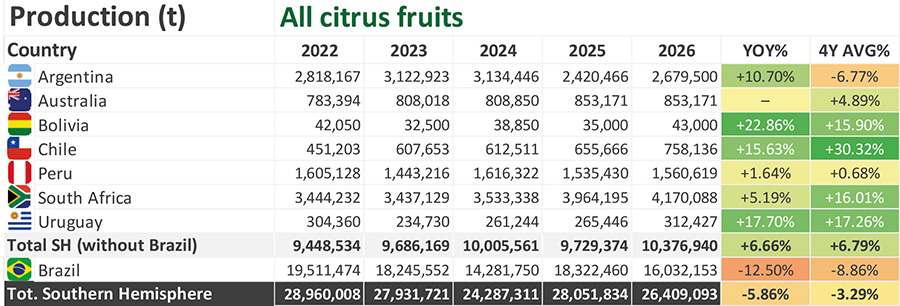
On 30 April 2026, WCO members gathered for its seventh Annual General Meeting (AGM). During the AGM, WCO presented the consolidated data of the production and export forecasts for the forthcoming Southern Hemisphere citrus season 2026. The preliminary forecast was collected thanks to the WCO network in Argentina, Australia, Bolivia, Brazil, Chile, Peru, South Africa, and Uruguay. In addition, the Association also confirmed its leadership with the two Co-Chairs who will guide its work in the upcoming two years.
During WCO’s AGM, the preliminary forecast for the upcoming Southern Hemisphere citrus season was presented to representatives from the citrus sector in Argentina, Australia, Bolivia, Brazil, Chile, Peru, South Africa, and Uruguay. Citrus production is expected to decrease 5.86 % compared to the previous year, with an estimated production of 26,409,093 tonnes. Exports, however, are expected to continue increasing, with a projected growth of 3.96 % compared to 2025 to reach 4,742,014 tonnes. These first estimates will be revised following the publication of the Fundecitrus forecast for Brazil on 8 May 2026.
Orange production is forecasted to decrease by 8.37 % compared to 2025, with 17,517,898 t in total. Soft citrus production is expected to decrease slightly (-0.84 %, 3,416,432 t in total). A 2.36 % increase is projected for lemon production (3,168,541 t in total), while limes should decline by 9.64 % (1,738,745 t in total). On the other hand, grapefruits are forecasted to reach 567,477 t, which is 21.21 % above the 2025 figure.
(Photo: The World Citrus Organisation)
There is great concern in the citrus community on the direct or indirect impact of the Middle East crisis in the region and beyond, regarding logistics costs, availability, as well as access and costs of agricultural inputs such as fertilisers. Consumption trends remain a point of concern. Last year’s trade boom, namely from the Southern Hemisphere, was not reflecting a stronger demand for citrus but rather a shortage of supply in the Mediterranean basin, which was filled by the Southern Hemisphere. For the new Southern Hemisphere season, a more careful approach to the supply is recommended in Europe as well as in the Middle East, where consumption drivers will have to be monitored.
After its first leadership transition in 2024, the WCO confirmed its team of Co-Chairs formed by Sergio del Castillo (for the South Hemisphere) and Badr Bennis (for the North Hemisphere), who will guide the work of the Association over the upcoming two years.
The team of Co-Chairs highlighted WCO’s notable achievements since its founding, reaching a record number of members, confirming the WCO as a notable forum for citrus sector actors to exchange perspectives and data on matters of common concern. WCO has launched over the last seven years new instruments like common data reporting formats and interactive databases for members with the latest production and trade forecast data, dedicated working groups to explore ways to boost the marketing and the promotion of all citrus categories, hosting of physical and online events allowing the sector to discuss and interact, helping to further the knowledge of actors, and liaising with the media to help promote the visibility of the sector.
With distractions at an all-time high, Pure Leaf helps Americans find focus with a new functional iced tea and partnership with digital wellness tool Brick
Pure Leaf introduces Pure Leaf Mental Focus, the brand’s first line of sparkling, real brewed iced teas, made with naturally occurring caffeine from black tea and added L-theanine, to help support attention and focus.
In a world full of notifications, texts and endless to-dos, it has become increasingly difficult to focus on the projects that matter – a reason why more than 80 % of Americans say they’re looking for ways to unplug and take a break from the digital world1. To introduce Pure Leaf Mental Focus, Pure Leaf is teaming up with two-time Olympic gymnast Jordan Chiles and digital wellness tool Brick to highlight the importance of finding focus when it’s needed most.
Pure Leaf Mental Focus key features
Product: New Pure Leaf Mental Focus, real brewed sparkling iced teas made with naturally occurring caffeine from black tea and added L-theanine (an amino acid found in tea leaves)
Benefit: Formulated to help support attention and focus amid everyday distractions
Availability: In the US including all major retailers, convenience stores, gas stations and online
“Functional drinks are no longer niche. People want products that keep up with their lives,” says Zach Harris, Vice President and General Manager, Pepsi Lipton Tea Partnership North America. “Pure Leaf Mental Focus delivers great flavour, plus added benefits. It’s a real brewed iced tea with naturally occurring caffeine from black tea and added L-theanine, making it a smart option for busy days, especially as packed schedules and constant distractions have become the norm.”
How Jordan Chiles finds her focus
Jordan Chiles knows what it takes to stay focused while juggling elite training, gymnastics competitions, school, and touring. Her ability to stay locked in under pressure reflects the mindset required to keep pace with a demanding schedule. Anchored by a consistent pre-competition routine that includes unplugging and meditating, Chiles prioritises getting into the right headspace for whatever challenge comes next, big or small. Pure Leaf Mental Focus iced teas complement that routine, helping support focus throughout her day, from schoolwork to training to her daily to-do list.
“My days move fast, and distractions can add up quickly,” says Chiles. “I’ve learned the biggest game changer is protecting my focus. Whether I’m heading into practice, studying, traveling, or preparing for a competition, I try to be intentional about where my energy goes and make sure I’m in the right headspace. Pure Leaf Mental Focus helps support my attention so I can lock in on what matters and take on whatever comes next.”
The Mental Focus Dock
In an era of nonstop notifications, texts, and endless scrolling, Pure Leaf is partnering with Brick, a digital wellness tool designed to temporarily block distracting apps and websites on phones. Together, they created the Mental Focus Dock, a custom coaster that holds a can of Pure Leaf Mental Focus and a Brick device. The dock’s base houses the Brick to enable blocking selected apps, while the top keeps Pure Leaf Mental Focus close at hand to help support focus and enable people to power through their to-do lists.
Beginning April 28, 2026, consumers can enter for a chance to win a limited-edition Mental Focus Dock by visiting http://www.PureLeafMentalFocus.com. Winners will receive a Pure Leaf Mental Focus kit that includes both flavours of the new Pure Leaf Mental Focus iced tea – Raspberry and Peach, a Brick, and a limited-edition Mental Focus Dock.
GORGIE, the better-for-you energy brand redefining the category for a new wellness generation, announced the launch of its newest, sweetest flavour yet, Candy Twist, a bold, nostalgic twist designed to deliver clean energy with a fun, cravable edge.
Known for blending function with flavour, GORGIE’s Candy Twist captures the sweet, vibrant taste consumers love, without the crash or compromise. The launch marks the brand’s continued expansion as it builds on rapid growth and strong demand from a community of health-conscious, modern consumers.
The new Candy Twist flavour reinforces GORGIE’s belief that energy and wellness should never come at the expense of taste, vibe, ingredient quality, or aesthetic. Inspired by classic candy flavours but crafted with GORGIE’s better-for-you formula, the new flavour is designed for modern routines, from morning pick-me-ups to afternoon slumps and everything in between. Each can of GORGIE features 150 mg of green tea caffeine, plus functional wellness and beauty benefits, including Biotin, B Vitamins, and L-Theanine for a smooth, energising boost without the jitters. GORGIE is also gluten-free, vegan, and free of artificial sweeteners.
Candy Twist will roll out on GETGORGIE.com and at Target locations in the US.
Pear orange prices remained virtually stable in April, averaging BRL 43.00 per 40.8-kilo box (on-tree, in natura market), down 1.7 % from March (BRL 43.76/box). Year on year, however, prices fell sharply by 56.1 %, from BRL 97.90/box in April 2025.
Although supply remains limited at the end of the 2025/26 season, price stability in April reflects competition from early-season fruit and subdued demand, with holidays during the month weighing on trading activity.
Industry
The average price of pear oranges delivered at the industry was at BRL 27.67 per 40.8-kilo box in April, down 11% compared to the BRL 31.00/box in March and 46.6% below the BRL 51.81/box verified in April 2025.
Following the announcement of Thomas Körmendi’s resignation, Elopak’s Board of Directors has appointed Chief Financial Officer Bent K. Axelsen as interim CEO, effective from May 8, 2026. Director Finance & Tax, Ola Buarøy has been appointed as interim CFO. The strategic direction and priorities remain unchanged.
Chair of the Board, Dag Mejdell, says: “Bent K Axelsen joined Elopak as CFO in 2019 and brings deep knowledge of the business and a strong financial record as CFO in Elopak. The Board is confident that he will provide direction and stability during the transition towards a permanent CEO for Elopak.”
The Board thanks Thomas Körmendi for his leadership and contributions over the past years, including strengthening Elopak’s market position, accelerating sustainability initiatives, and guiding the company as a listed company. The recruitment process for a permanent CEO is progressing well and is expected to be completed by Q2 2026.
Elopak ASA reports stable revenues of EUR 298.2 million for the first quarter on a constant currency basis and EBITDA of EUR 41.0 million, after adjusting for restructuring costs.
First quarter 2026 summary:
Group revenue for Q1 2026 remained stable on a constant currency basis, but declined by 3.9 % in EUR terms, as currency headwinds and lower equipment sales outweighed volume growth in Americas
Americas achieved 6.0 % constant currency revenue growth and an EBITDA margin of 22.3 %, driven by the plant in Little Rock
Adjusted EBITDA amounted to 41.0 million in the quarter, corresponding to an adjusted EBITDA margin of 13.8 %, compared to 14.4 % in the same quarter last year, mainly reflecting currency impacts and one‑off items
Net profit attributable to Elopak shareholders was EUR 16.9 million, in line with prior year, and the financial position remained solid with a leverage ratio of 2.2x and ROCE at 15.1 %
Commenting on Elopak’s performance, CEO Thomas Körmendi said: “The ongoing geopolitical situation poses challenges for all global businesses; however, we remain confident in our ‘Repacking tomorrow’ strategy and in delivering on our mid-term targets”.
Refresco, a leading independent beverage solutions provider for preeminent global and local beverage brands in North America, Europe, and Australia, announced the successful completion of its acquisition of SunOpta Inc., a North American supply chain solutions provider. With the transaction now complete, SunOpta becomes a wholly owned subsidiary of Refresco and its shares will be delisted from Nasdaq and the Toronto Stock Exchange.
Steve Presley, Chief Executive Officer of Refresco, said: “This is an exciting moment for both organizations. SunOpta brings exceptional capabilities in plant based and nutritional beverages, tea, broth, and better for you fruit snacks, supported by strong customer partnerships and a highly skilled team. Their expertise complements our existing platform and strengthens our ability to serve customers across more categories, channels, and packaging formats. I look forward to working closely with Brian and the rest of the SunOpta leadership team as they continue to lead the business within Refresco. All of us at Refresco are excited to build on SunOpta’s momentum and to welcome our new colleagues into the company.”
Brian Kocher, Chief Executive Officer of SunOpta, added: “Joining Refresco marks the start of an important new chapter for SunOpta. Over the past several years, our team has built a strong, high-growth platform across a broad portfolio of beverages, broths and better-for-you snacks. As part of Refresco, we will benefit from greater scale, broader capabilities, and expanded opportunities to better support our customers. I am incredibly proud of what our team has accomplished and confident this combination positions us well for the future.”
Strategic rationale
The acquisition significantly expands Refresco’s presence in North America and strengthens its position in fast growing beverage categories. SunOpta adds:
Deep expertise in plant based and nutritional beverages
Strong aseptic manufacturing and product development capabilities
A complementary customer base across retail, club, foodservice, and out of home channels
A proven track record of innovation and growth
The combination supports Refresco’s long term strategy and positions the company to accelerate growth, expand its customer offering, and strengthen its role as a leading beverage solutions provider.
Prodalim, a global leader in juice and specialty ingredients solutions, announced the acquisition of Better Juice, an innovative food-tech company specialising in natural sugar reduction technologies, bringing proprietary enzymatic capabilities to Prodalim’s portfolio. The acquisition strengthens Prodalim’s ability to support health-driven reformulation across beverages and adjacent food categories.
The global sugar reduction and taste modulation market is estimated at approximately USD 1.8 billion in 2025, with expected annual growth of 6 – 7 %, driven by regulatory pressure and shifting consumer preferences.
Better Juice is a food-tech company specialising in natural sugar reduction, with a proprietary enzymatic process that converts fruit sugars into non-digestible components such as dietary fibers, enabling calorie reduction while preserving the fruit’s natural characteristics. The technology enables significant sugar reduction without artificial sweeteners or sugar substitutes, while maintaining flavour, mouthfeel, and nutritional integrity.
Beyond beverages, the technology supports innovation across adjacent categories including confectionery, dairy and others, areas where sugar reduction has traditionally been difficult to achieve without impacting sensory quality.
Prodalim plans targeted expansion into the U.S. market, including implementation of a production line at its Winter Garden, Florida facility, with manufacturing expected to begin in the second half of 2026. Prodalim will continue investing in advancing the technology to broaden its application range and commercial impact across its global platform, with a focus on health-driven and value-added food and beverage solutions.
The acquisition reflects Prodalim’s broader transformation into a purpose-driven, vertically integrated ingredient solutions, expanding its capabilities across taste, functionality, processing innovation, natural sugar reduction, and high-value, better-for-you and nutritional ingredient solutions.
As part of its recent transformation, Prodalim has reorganised its operations into three purpose-driven divisions:
Juice Solutions – a one-stop-shop for juice producers, covering sourcing, logistics, formulation and blending
Specialty Ingredients & Solutions – delivering taste and functional ingredients such as FTNF, flavours, essential oils, citrus fibers and natural colours, supported by in-house R&D
SOLOS – a premium, patent-based de-alcoholisation platform serving the fast-growing NoLo segment
All divisions are supported by Prodalim’s vertically integrated, regenerative supply chain, anchored in circular economy principles, enabling customers to innovate with sustainability and performance at their core.
Operating income grew 19 %; comparable currency neutral operating income (Non-GAAP) grew 12 %
Operating margin was 35.0 % versus 32.9% in the prior year; comparable operating margin (Non-GAAP) was 34.5 % versus 33.8 % in the prior year
EPS grew 18 % to $0.91; comparable EPS (Non-GAAP) grew 18 % to $0.86
The Coca‑Cola Company reported first quarter 2026 results. “We’ve had a strong start to the year,” said Henrique Braun, CEO of The Coca‑Cola Company. “Our performance this quarter reflects our unwavering focus on staying close to the consumer, executing locally and managing complexity. Yet there’s so much more we can do as we navigate a dynamic environment. Our team is motivated by the opportunity to build on the company’s great foundation.” …
Eight cities, one topic: how Europe’s beverage markets are evolving – and how manufacturers can respond
Exclusive tour across eight European locations
Stable markets, shifting consumption patterns
BrauBeviale 2026: solutions for a beverage industry under pressure to adapt
Before Europe’s beverage sector gathers in Nuremberg from 10 to 12 November 2026, BrauBeviale is heading out on the road: from April onwards, the organising team will visit eight European cities as part of the “BrauBeviale meets Europe” tour – from Copenhagen via Budapest, Warsaw and Milan through to Madrid. The aim is to discuss current market developments directly on site and to gather input from industry stakeholders. The focus is on what works in existing production environments and where manufacturers need to act to remain competitive.
Across the eight stops of the tour, market analysis, industry perspective and consumer insight come together. Markus Kosak, Executive Director at YONTEX GmbH & Co. KG, outlines current developments in the European beverage industry – both in an international context and with regard to local conditions. Representatives of the conceptual sponsor contribute the industry perspective: Kilian Kittl, Managing Director of Private Brauereien Bayern e.V., will accompany the opening stop in Copenhagen. This is complemented by insights into changing consumer behaviour.
European beverage markets: stable base, shifting consumption
In 2025, consumption and market volumes across beer, wine, spirits and non-alcoholic beverages in Europe remained at a largely constant level. “Growth and opportunities are less about increasing volume and more about developments within categories, such as different use cases and new products,” says Kosak. “This is where the dynamics lie – and where both the tour and the trade fair are focusing on this year.”
A key driver is changing consumer behaviour alongside stable volumes. According to Statista Market Insights, per capita consumption of non-alcoholic beverages reached almost 177 litres in 2025, while alcoholic beverages stood at around 73 litres. A study by Private Brauereien shows that the volume of alcohol-free beer is increasing from 2.29 to 2.5 billion litres by 2030, while alcoholic variants are declining.
Europe remains a key production location. Many companies are adapting existing facilities and expanding their product range. According to a VDMA/Euromonitor market overview, global trade in machinery for food and beverage processing and packaging totalled around 52.6 billion euros in 2023, with approximately 41 per cent accounted for by Europe.
At product level, demand is shifting towards offerings with a clear practical benefit. “Consumers increasingly expect more than just refreshment or traditional enjoyment,” says Kosak. “What matters is practical benefit. This means products that fit specific use cases and consumption occasions.” Research by market analyst thefoodpeople highlights examples from international markets, including flavoured sparkling water with new taste profiles, sugar-free or reduced-sugar energy drinks, and RTD iced tea and cold brew variants with caramel, mocha or vanilla notes. Trends such as Dubai-style creations – for example chocolate lattes with pistachio topping and kadayif garnish – are already present in the market.
BrauBeviale 2026: solutions for today’s production reality
Under the claim “All Beverages. One Future.” and with an international exhibitor share of around 50 per cent, BrauBeviale 2026 brings together all steps of beverage production. “The focus is on applications across all beverage segments that provide manufacturers with solutions they can implement in existing operations to expand their portfolios and utilise facilities more effectively,” explains Kosak.
These developments are also reflected in the supporting programme in Hall 9: on the Main Stage, Charles Nouwen will deliver a keynote on the role of beer in the context of changing consumption habits. The Pilot Area will showcase concrete projects, including systems for flexible process energy supply and data-based approaches to utilising by-products. The Discovery Bar in Hall 6 will present new beverage concepts, particularly in the non-alcoholic segment. The Wine Area in Hall 7 provides a dedicated special-interest space for exchange within the wine sector.
The programme is complemented by formats such as the European Beer Star awards ceremony, hosted by Private Brauereien, on 11 November, and the FoodBev Award on 10 November.
The exhibitor and product database will go live on 7 May 2026, offering an initial overview of the range on display. Visitor registration via the ticket shop will open at the same time as the launch of the “BrauBeviale meets Europe” tour.
Archaea Active™ unlocks a new class of bioactive ingredients – naturally stable, clean-label, and derived from Earth’s most resilient organisms.
ArchaeaLife, LLC, a biotechnology venture pioneering the use of archaea-fermented biowater, announced the expansion of its platform into food and beverage applications. Drawing on a class of ancient microorganisms, the company has developed a proprietary fermentation process that imbues water itself with a spectrum of bioactive compounds – creating a functional ingredient substrate unlike anything currently available to formulators.
The Archaea Active™ platform generates structured water enriched with novel metabolites, enzymes, and biofilm-derived compounds that exhibit broad functional activity. In food and beverage contexts, this translates to a versatile ingredient that can serve simultaneously as a processing aid, a natural preservative enhancer, a fermentation accelerant, and a source of bioactive nutritional compounds – all within a single, water-miscible input.
Key food & beverage applications
Functional Beverages: Archaea Active™ serves as a base ingredient delivering archaeal metabolites linked to cellular hydration optimisation, electrolyte balance, and gut-microbiome modulation – supporting the growing market for evidence-based wellness drinks.
Fermentation Enhancement: The archaea-conditioned substrate accelerates and diversifies microbial fermentation in applications ranging from kombucha and kefir to sourdough and cultured dairy, improving yield consistency and flavour complexity.
Natural Preservation: Archaea-derived antimicrobial compounds incorporated via the biowater matrix extend shelf life in clean-label formulations without synthetic additives – directly addressing regulatory and consumer pressure for transparency.
Ingredient Stability: Extremophile-origin bioactive compounds demonstrate exceptional thermal and pH stability, retaining functional activity through pasteurisation, retort, and high-pressure processing conditions where conventional bioactives degrade.
About ArchaeaLife, LLC ArchaeaLife, LLC is a biotechnology company developing commercial applications for Archaea Active™ across six bioscience verticals: human health, pharmaceuticals, agriculture, food science, environmental biotechnology, and diagnostics. The company’s proprietary fermentation platform converts water into a structured, bioactive substrate using extremophile archaea cultivated under controlled conditions. ArchaeaLife, LLC’s technology represents a convergence of water science, microbiology, and metabolomics with broad commercial implications.
SIG and partners join forces to deliver systemic solutions to ocean-bound packaging waste
SIG and its project partners Plastic Bank, the Wuppertal Institute for Climate, Environment and Energy, and decision context have launched “Recycle for Good – Prevent Marine Litter”, an ambitious initiative to reduce packaging waste littering in Southeast Asia. The project targets to prevent at least 10,000 tons of waste from entering the ocean and is funded through ZUG (Zukunft – Umwelt – Gesellschaft), on behalf of the German Federal Ministry for the Environment, Climate Action, Nature Conservation and Nuclear Safety (BMUKN).
The 3-year project is designed to prevent ocean-bound plastic by strengthening collection and recycling systems for all types of packaging, including beverage cartons and plastics, in Thailand, Indonesia and the Philippines.
Implementation across Southeast Asia with clear targets
The project is running until November 2028. It aims to prevent at least 10,000 tons of packaging waste from entering the ocean while directly engaging around 100,000 people, including students, teachers, households, and informal waste collectors, in improved waste segregation and recycling practices. Implementation takes place in close cooperation with local recyclers, Producer Responsibility Organisations (PROs), schools, and public authorities.
Driving behaviour change through education
A core pillar of Recycle for Good – Prevent Marine Litter is behaviour change, with a strong focus on schools as catalysts for community action. By empowering pupils as change agents, the project promotes waste segregation at source and responsible disposal practices, extending beyond schools into households and local communities and helping to establish long-term recycling habits.
Digital tools to support long-term engagement
This behavioural approach is supported by Plastic Bank’s digital platform, which is being further developed and tailored specifically for use in schools. Through gamification features such as rewards, challenges, and collective goals, the platform incentivises correct segregation and collection of packaging waste across all relevant material streams, including beverage cartons and flexible packaging. The solution is designed to support habit formation, collaboration, and sustained engagement rather than short-term behavioral change.
Scientific, analytical and strategic expertise
The Wuppertal Institute for Climate, Environment and Energy contributes scientific expertise through sustainability research and analysis, environmental impact evaluation, and the development of policy and system insights related to plastic waste management.
Decision context provides strategic analysis and data-driven decision support for behaviour change initiatives and in modelling of their impact, helping to inform evidence-based decision-making and maximising the project’s effectiveness.
The SIG Foundation contributes its social-impact expertise as a strategic, non-operational partner. It strengthens the project’s social dimension, provides administrative support, and contributes to project-related communication.
Strengthening infrastructure and inclusive value chains
In parallel, the project invests in local recycling infrastructure, including the upgrading and establishment of facilities capable of processing used beverage cartons and flexible plastics. By strengthening recycling capacity and integrating informal waste collectors into formal value chains, Recycle for Good improves the economic viability of recycling and supports inclusive livelihoods within local waste management systems.
Advancing systemic solutions and policy frameworks
The initiative also contributes to the advancement of Extended Producer Responsibility (EPR) systems by demonstrating practical, scalable recycling models and sharing data and learnings with Producer Responsibility Organisations and policymakers in the focus countries. This helps create the conditions for long-term, system-level solutions that extend beyond the project’s duration.
Funding and joint commitment
“Recycle for Good – Prevent Marine Litter” is funded through the “Marine Debris Framework – Regional hubs around the globe” (Marine:DeFRAG) initiative, managed by ZUG (Zukunft – Umwelt – Gesellschaft), on behalf of the German Federal Ministry for the Environment, Climate Action, Nature Conservation and Nuclear Safety (BMUKN). The project is co-implemented by the partners and reflects a shared commitment to strengthening circular economy solutions, reducing marine litter, and building resilient recycling ecosystems in Southeast Asia.
Gen Z is reshaping grocery shopping with a strong appetite for “newstalgia” – nostalgic flavour memories reinvented with bold, modern “weirdness,” such as bright colours, unexpected textures, and global mashups. They’re also driving demand for “swangy” flavour profiles that combine sweet, spicy, and tangy notes in surprising ways. A Q4 2025 consumer survey1 underscores this push for innovation, with 65 % of Gen Z consumers worldwide saying that uniqueness or novelty is either essential or nice to have when buying a product, according to GlobalData, a leading intelligence and productivity platform.
Sainul Abidin, Consumer Analyst, GlobalData, comments: “Gen Z is treating the grocery aisle like a discovery platform – seeking familiar flavours that feel emotionally comforting, but only if they come with a twist. Newstalgia and swangy profiles are winning because they combine memory, intensity, and surprise, often with global cues and multi-sensory textures. As a result, brands are elevating classic snacks, filling aisles with mashups like hot honey, spicy caramel, and chili mango, and reimagining comfort foods through a global lens – creating fertile opportunities for manufacturers to innovate.”
Gen Z, who are looking for novel and unique experiences, prefers mid-level heat paired with sweetness, seeks out global spices, and increasingly purchases food that tells a story beyond taste. Labels like “sweet + spicy + tangy,” heritage flavours, and clean-label ingredients are now central in Gen Z-influenced product development. For brands, this means indulgence now comes with authenticity, texture, and surprise. Products that evoke warm memories – from childhood or past decades – while adding zesty finishes or tropical accents are seeing traction. From revamped retro packaging to flavour drops that mix cardamom, black currant, chili, or citrus, the trend is transforming what Gen Z picks up on a weekly grocery run.
Manufacturers and key players are responding with a bold alignment between sentiment and offerings. In 2026, Kerry launched its Global Taste Charts, revealing that “swicy” (sweet + spicy) flavours are evolving into “swangy,” as hot honey and spicy mango drive double-digit growth in bakery and confectionery products. These charts, backed by deep consumer and scientific insights, are helping brands anticipate flavour preferences and shorten product development cycles.
Abidin adds: “In snack and confectionery, new product development is seeing a strong rise in flavours that combine heat, sweetness, and tang (chamoy- or Tajín-inspired offerings). One company, Snak Club, expanded into chocolate products infused with Tajín seasoning, while Latin America continues to lead globally in launches marrying sweet and spicy profiles.”
Among nostalgic reinventions, Otis Spunkmeyer has introduced cookies infused with classic dessert flavours like Birthday Cake, Double Chocolate Caramel, and Pumpkin Spice Chocolate Chip, aiming to tap into consumers’ memories while elevating traditional formats through premium ingredients. The Graceful Cookie Co. is similarly offering flavours like Blueberry Pie, Lemon Cheesecake, and Strawberry Milkshake alongside heritage staples. Citrus flavours like lemon burst and yuzu are often used as the “twist.”
In beverages, classic soda profiles are being revived with better-for-you twists: Poppi released a Shirley Temple variant with lower sugar and added prebiotics; legacy soda brands such as RC Cola and Mr. Pibb are leaning into their simpler, nostalgic flavour profiles. Meanwhile, in global flavour ingredients, star anise, botanical and floral notes, tart tropical fruits such as guava, passionfruit, and woodsy berries are increasingly appearing, often paired with heat or acid to amplify their impact.
Abidin concludes: “For manufacturers, winning with Gen Z means moving beyond one-note flavour; growth will come from layered profiles – sweet, spicy, and tangy – delivered through credible ingredients, global inspiration, and playful formats. Brands that modernise comfort foods without losing authenticity and treat innovation as a repeatable pipeline through limited drops and remixable flavour platforms will be best positioned to build loyalty and stay culturally relevant.”
1GlobalData’s 2025 Q4 global consumer survey was conducted with 22,613 respondents across 42 countries.
Capri Sun, the iconic brand that helps unleash peak kid with every poke, is expanding its portfolio with Capri Sun Hydrate – one of the first-to-market drinks with electrolytes designed specifically for kids. Rolling out to major retailers in the US, Capri Sun Hydrate delivers an essential blend of electrolytes and Vitamin E, with 50 percent less sugar than the leading regular sports drinks* and no artificial flavours, colours or preservatives. Available in three thirst-quenching flavours – Fruit Punch, Tropical Punch and all-new Lemon Lime, Capri Sun Hydrate is designed to support kids’ hydration from little league sports to outdoor play and fits seamlessly into the everyday rhythms of today’s families.
As parents increasingly look for hydrating, lower-sugar beverage options for their kids, current offerings are aimed at adults and either don’t taste great to kids, are too high in sugar or contain artificial ingredients. Capri Sun Hydrate is designed to answer those frustrations, bringing together what families have been missing in the aisle: a flavourful, kid-friendly hydration option that delivers the functional benefits parents want without compromising on the taste kids love. Launching just in time for summer, Capri Sun Hydrate arrives at a moment when demand for lower-sugar beverages with benefits is surging.
“Today’s parents are looking for beverage options that keep up with their kids’ active lifestyles, without the sugar and extra ingredients they don’t feel good about serving,” said Kristina Hannant, Director, Ready to Drink Marketing. “With Capri Sun Hydrate, we saw an opportunity to bring something brand new to the kids beverage aisle – a beverage made specifically for kids that delivers the fun and flavor kids love with the functional benefits parents are looking for.”
With 94 percent of Capri Sun households already purchasing sports drinks,1 and with hydration among the fastest-growing segments in beverages,2 the brand is uniquely positioned to expand into hydration with functional benefits. The launch also builds on the brand’s broader portfolio expansion following the first-ever multi-serve format and the subsequent rollout of Capri Sun single-serve bottles, which expanded Capri Sun into convenience and on-the-go channels.
Capri Sun Hydrate also reflects Kraft Heinz’s broader commitment to investing in innovation that meets evolving consumer needs. Capri Sun Hydrate underscores how Kraft Heinz is building superior consumer experiences across its portfolio through product innovation grounded in convenience, new occasions and nutrition.
Capri Sun Hydrate will roll out to major retailers in the US including Walmart, Target, Amazon and more.
*Per 12fl oz of Capri Sun Hydrate 10g total sugars, leading regular sports drink 20g total sugars 1Numerator OmniPanel L52-FMCG 8/26/25 2Mintel, Functional Drinks 2004, Refreshment Category Growth Story, Kids’ Impact on HH Decisions – US, 2022, Ipsos Concept Results – January 2025
SwoonBerry Lemonade with Magnesium is a newly launched sugar-free functional beverage from Swoon featuring Compound Solutions’ Mag41™, the Daily Energy Magnesium. The drink is available now online and is expected to expand into select retailers in the US including Whole Foods Market, Fresh Thyme, FreshDirect, Misfits Market and Thrive Market.
SwoonBerry Lemonade with Magnesium is designed as a simple, health-forward replacement for sugary drinks. It’s a sugar-free, non-carbonated magnesium drink that fits the growing demand for functional beverages that deliver benefits without excess sweetness or complexity.
Magnesium is arguably the most important and relied-on mineral in the body. Magnesium supports more than 300 processes tied to energy, mood, muscle, nerve activity and relaxation. This is why magnesium has become such a universal wellness essential, and it’s why Mag41™ is becoming the go-to magnesium in functional beverages.
The inclusion of Mag41™ in SwoonBerry Lemonade with Magnesium underscores Compound Solutions’ commitment to helping brands bring approachable, science-backed wellness products to market. As functional hydration and everyday health beverages continue to grow, CSI remains focused on enabling the next wave of innovations.
Unprecedented demand for natural colours spurs significant capital investment in Sensient’s natural colour manufacturing capacity, including expansion of largest production site in St. Louis, Missouri (USA)
Sensient Food Colors, a division of Sensient Technologies, officially celebrated the commencement of a major expansion at its largest natural colour plant, which is located in St. Louis, Missouri (USA). The expansion, coined Project Prism, is one of the many capital investments planned by Sensient to support the food and beverage industry’s rapid transition away from artificial colours in the United States. Sensient expects to spend up to $250 million in the coming years to expand its natural colour manufacturing capacity, supply chain, and personnel.
The St. Louis natural colours plant expansion is being done in partnership with Burns & McDonnell and will add 28,800 square feet of specialised processing and production capacity onto Sensient’s existing 500,000 square foot manufacturing facility.
“Sensient has taken a defining role in accelerating the industry’s transition to natural colour solutions. We are reinforcing our leadership position by making significant investments in capacity and infrastructure to facilitate the natural colour conversion in the United States. The groundbreaking ceremony marks a pivotal milestone in our mission to better serve customers and lead this industry-wide change,” stated Sensient Colors President, Steve Morris.
In the first quarter of 2026, the Italian packaging and processing machinery sector reported a 2.0 % increase in turnover compared to the same period in 2025, driven mainly by the domestic market, while foreign demand remains weak. This is according to UCIMA’s quarterly economic survey referring to March and the first three months of the year.
Between January and March, overall turnover growth was the result of a 15.2 % increase in domestic sales, offsetting a slight decline in exports, which recorded a -0.2 % decrease.
Order intake shows the opposite trend and is beginning to raise concerns among Italian packaging machinery manufacturers. In the first quarter of 2026, overall orders declined by 5.8 %, mainly due to a contraction in foreign demand (-6.8 %), while domestic orders increased (+3.9 %).
The level of production already secured remains within normal ranges, stable at 7.7 months, in line with the previous quarter.
However, a closer look at March highlights a more critical trend in terms of orders. Total order intake fell by 9.3 % compared to March 2025, with contrasting dynamics across markets: positive performance on the domestic market (+18.2 %) and a decline in foreign markets (-12.6 %).
From a sectoral perspective, the best results in March were recorded in the Food, Pharmaceutical and Chemical segments, while Beverage, Cosmetics and other industrial sectors showed weaker dynamics.
Despite the slowdown in foreign orders observed in the first months of the year, the sector continues to demonstrate solid resilience. Operators’ expectations for the second quarter of 2026 point to an overall stable scenario, with signs of growth anticipated both in the domestic and international markets.
Prinova will focus on consumers’ everyday health and wellness needs at Vitafoods Europe in Barcelona, as it showcases a range of new whole body wellness concepts.
The leading supplier of functional ingredients and manufacturing solutions will highlight its capabilities in categories including sports nutrition, gut health and women’s health. New concepts on show at the Prinova stand will include:
An Everyday Radiance beverage targeting longevity and women’s health. Flavoured with maracuja and pineapple, it includes marine collagen and bioactive minerals from the Aquamin range. This balanced blend brings a ‘beauty from within’ concept into an everyday wellness format.
An Everyday Harmony gut health beverage with a ginger lime mojito flavour featuring prebiotic plant fibres enhanced with vitamins D, B6 and B12. This refreshing functional drink is the perfect addition to daily routines to support digestive health and immunity.
An Everyday Protein beverage based on clear pea protein and flavoured with dragon fruit and kiwi. The crisp, juice-like drink is ideal for post-workout recovery, and for consumers seeking a plant-based solution to boost their daily protein intake.
Prinova will also highlight its branded products, including clinically supported ingredient CITRAPEAK™, a 100 % soluble form of hesperidin to unlock your pre-workout pump.
James Street, Global Marketing Director at Prinova, said: “Consumers no longer compartmentalise health and wellness, but incorporate them into their daily lives. Whether it’s maintaining gut health, sharpening cognitive wellbeing, or upping daily protein intake, the key is making it as easy as possible for people to achieve their wellness goals by combining high-quality functional ingredients that taste great in a convenient way. With these new concepts, we’re demonstrating what’s possible when you identify the trends, then work hand-in-hand with R&D and in partnership with customers to focus on the everyday consumer.”
Following approval from the international anti-trust authorities at the end of March, the food and industrial group AGRANA has now successfully closed the acquisition of Mercator-Emba d.o.o. (EMBA) in Slovenia and assumed management of the production activities. This is the first time that AGRANA has operated a production facility in Slovenia. The site is located about 30 kilometres south-west of Ljubljana, employs around 100 staff and generates annual revenues of approximately 30 million euro. EMBA is among Slovenia’s leading food producers for out-of-home caterers (food service), food processors and retailers, and is also renowned for its expertise in the production of cacao instant products, syrups and dessert toppings. These products are primarily shipped to Central, Southern and Eastern Europe.
“The new production facility in Slovenia plays a particularly important role in achieving our goal of boosting growth in Europe. The purchase of EMBA opens up additional sales markets for AGRANA and provides access to further customer segments in the booming food service sector. This is entirely attuned to our NEXT LEVEL corporate strategy, which focusses on profitable growth in the Food & Beverage Solutions business area. Our top priority is the development of customised solutions for our customers in the food and beverages sector,” stresses AGRANA CEO Stephan Büttner.
“For 70 years, Emba has been a trusted and leading supplier to the food service and retail sectors across Central, Southeast and Eastern Europe. Today, we are entering a new era — one in which Emba will be empowered and renewed as a valued member of the Agrana Group. We are confident in our ability to realize our long-term vision and growth strategy, and to make a lasting contribution to the success of the entire group,” explains Mercator-Emba CEO Darja Jamnik.
AGRANA’s broad food and beverage solutions portfolio includes formulations such as fruit preparations, brown flavours, savoury preparations, flavours, syrups and sauces. For example, these products are shipped to dairies for use in yoghurt applications, to the ice cream and bakery sector, to beverage producers and to food service companies such as quick service restaurants. AGRANA operates 37 production sites worldwide in its Food & Beverage Solutions business area, of which 20 are in Europe.
Rising consumer demand for convenient, high-protein, and multifunctional beverages is reshaping the global coffee market, with the proffee trend, coffee blended with protein, emerging as one of the fastest-growing developments in functional drinks. The shift is supported by a 2025 Q4 consumer survey1, which found that 66 % of global respondents stated that their food and drink purchases are always or often influenced by a product’s impact on health and wellbeing, while 61 % said that time and budget considerations shape their choices, according to GlobalData, a leading intelligence and productivity platform.
Originally popularised through social media and fitness communities, proffee has rapidly evolved from a niche lifestyle habit into a commercially significant category. Health-conscious consumers and fitness enthusiasts are increasingly adopting protein coffee as a practical way to boost daily protein intake while maintaining coffee’s familiar taste and energising benefits.
Nishitha Ranga, Consumer Analyst at GlobalData, comments: “Consumers are redefining coffee’s role in their daily routines, moving beyond caffeine toward beverages that support broader wellness and performance goals. The proffee trend reflects a growing preference for ‘all-in-one’ drinks that deliver energy, nutrition, and convenience, particularly among younger, health-conscious consumers balancing fast-paced schedules with fitness and wellbeing priorities.”
The rise of proffee reflects a broader convergence between traditional beverage categories and sports nutrition. Coffee is increasingly being used as a functional delivery system for protein, vitamins, and other performance-oriented ingredients, mirroring the wider shift toward hybrid beverages that combine multiple health benefits in a single product.
This convergence is being driven by the growing popularity of high-protein diets, the expansion of the fitness economy, and consumer interest in products aligned with weight management, muscle recovery, and sustained energy.
Ranga adds: “Convenience is emerging as a key driver of the proffee trend. With busy lifestyles, beverages that combine caffeine and protein are increasingly used as breakfast replacements, mid-morning snacks, or post-workout recovery drinks. Proffee aligns perfectly with the needs of time-pressed consumers, offering portable, nutritionally balanced, and satisfying options.”
Social media and fitness culture accelerate adoption
Social media platforms and fitness communities have played a critical role in scaling proffee, with influencers promoting it as a convenient post-workout or on-the-go breakfast solution. Viral recipes and lifestyle content have helped normalize adding protein to coffee, expanding the trend’s appeal beyond athletes to office workers, students, and busy professionals seeking sustained energy and improved satiety.
Brands respond with new launches across cafés and retail
The growing popularity of proffee has prompted coffee operators and functional beverage brands to introduce protein-enhanced offerings across both café and ready-to-drink formats.
In September 2025, Starbucks introduced protein-enhanced lattes and cold foam options across stores in the US and Canada, allowing customers to customise beverages with 15–36 g of protein. In the same month, Bulletproof introduced High Protein Iced Coffee, an instant iced coffee mix designed for busy, health-focused consumers, offering 12 g protein per serving from premium whey protein and formulated with no artificial flavours or sweeteners.
In August 2025, Tim Hortons launched hot and iced protein lattes made with a lactose-free, high-protein dairy base, delivering up to 20 g of protein per serving. Beyond major chains, challenger brands have also entered the space. In July 2025, Javy Coffee launched a protein-fortified coffee concentrate aimed at digital-first consumers seeking convenient, clean-label nutrition, delivering 10 g protein per serving.
These launches highlight how the proffee trend is being shaped by both global operators and niche wellness-focused innovators, signalling strong cross-category momentum.
Ranga concludes: “The proffee trend illustrates how consumer expectations around beverages are evolving from single-purpose refreshment to multifunctional nutrition. Brands that successfully balance taste, texture, and credible protein delivery will be best placed to capitalise on this shift. As the functional beverage market continues to diversify, proffee is likely to remain a key driver of innovation within the global coffee industry.”
1GlobalData 2025 Q4 global consumer survey was conducted with 22,613 respondents across 42 countries.
New research highlights consumers’ desire for brands to lead with transparency – strengthening credibility and deepening audience trust
Meltwater, a global leader in media, social, and consumer intelligence, and YouGov, the international research and data analytics group, released Trust in the Age of Generative AI, a new report exploring how the rapid rise of AI-generated video, audio, images and text is shaping consumer trust in brands and content. The study analysed consumer attitudes toward generative AI (GenAI) and the media environments influencing those perceptions, offering insights for brands navigating this emerging landscape.
As GenAI becomes more integrated into marketing and communications, the report’s findings reveal a pivotal moment for brands, not only in how they adopt AI, but in how it redefines their approach to building trust with audiences. Drawing on insights from nearly 10,000 consumers across seven global markets, the research explores what the expectations are around transparency, authenticity, and credibility as AI adoption increases.
Rather than signaling risk alone, the findings also point to a meaningful opportunity: consumers want brands to be transparent, intentional, and audience-first in their use of AI – and those that are could differentiate themselves and build stronger, more trusted relationships with their audiences.
Key findings from the report include:
A clear path to trust: 86 % of consumers say AI-generated content should be disclosed, signaling a strong opportunity for brands to lead with transparency.
Closing the trust gap through intention: While 32 % say they would trust brands less if content is AI-generated, 15 % would trust them more, highlighting the importance of how AI is used and communicated.
Skepticism outweighs excitement: While 39 % of consumers are excited about AI, 51 % disagree.
AI awareness is rising: 58 % believe they can identify AI-generated content, while online mentions have risen 53 %, with media driving 34 % of coverage.
Misinformation is a key concern: While 73 % are concerned about misinformation, this creates space for brands to stand out as trusted, reliable sources.
Context matters: Acceptance of AI is higher in entertainment (53%) and advertising (47%), but very low in news (21%) and influencer content (28%).
Driving the conversation: Most high-impact conversations around AI are driven by individual creators on social media (92 % of top posts), rather than traditional news media (8 %).
AI video leads engagement and growth: Posts referencing AI video tripled and engagement surged (557 %) from March ’25 to Feb ’26, outperforming other formats in positive sentiment and engagement.
“These insights show that trust is not being lost, it’s being redefined,” said Chris Hackney, Chief Product Officer at Meltwater. “Generative AI gives brands a powerful new way to connect with audiences, but success will depend on how transparently and thoughtfully it’s used. The brands that lead with clarity and accountability have a real opportunity to build deeper trust than ever before.”
“Generative AI has moved from novelty to normality at remarkable speed,” said Andrew Farmer, Global Head of PR and Editorial at YouGov. “PR and brand professionals now operate in a landscape where the line between human and machine-generated content is increasingly blurred. It is important for comms teams and brand insight analysts to understand how Generative AI is shaping how audiences interpret authenticity, credibility and trust. YouGov’s data suggests that ultimately, the brands that succeed in the generative era may not simply be those that adopt AI fastest, but those that earn and maintain the trust of the audiences they serve.”
Arla Foods Ingredients has developed new solutions to meet the needs of users of GLP-1 anti-obesity medications. The high-protein, nutrient-dense application concepts will be showcased at Vitafoods Europe in Barcelona.
Originally developed to treat diabetes, GLP-1 receptor agonists (commonly known as GLP-1s) have re-shaped the weight management market. Among consumers actively trying to lose weight in 2025, 11 % globally1 and 18 % in the US2 reported using them. These numbers are expected to rise significantly as GLP-1 availability increases, tablet formats emerge and prices fall.3
However, GLP-1 medications are associated with side effects. Following traditional weight management interventions, such as diet or bariatric surgery, lean muscle typically comprises 25 % of the total mass lost, but this can increase up to 40 % with GLP-1 use.4,5,6 Additionally, up to 76 % of GLP-1 consumers experience gastric discomfort such as stomach pain, nausea, constipation, diarrhoea and loss of appetite.7
To demonstrate how manufacturers can meet the growing demand for GLP-1 companion nutrition that helps manage these side effects, Arla Foods Ingredients has developed new high-protein, functional concepts.
Featuring the high-quality Nutrilac® and Lacprodan® BLG-100 protein solutions, they deliver all the essential amino acids for muscle health in nutrient-dense formats. The concepts also incorporate probiotics / cultures from Novonesis, a global leader in bio-solutions, to support digestive well-being.
The concept includes the following great-tasting formats suitable for reduced appetites:
A fermented, high-protein shot featuring Nutrilac® ProteinBoost, offering 10 g of protein per 70 ml serving. Low in fat and lactose-reduced, it has no added sugar
A fermented, high-protein drinking yoghurt featuring Nutrilac® ProteinBoost and Nutrilac® MFGM. The lactose-reduced recipe provides 20 g of protein per 200 ml serving
A fermented, high-protein spoonable yoghurt featuring Nutrilac® ProteinBoost, Nutrilac® YO-7700, and Capolac® milk minerals. Delivering 20 g of protein per 120 g serving, it is high in calcium, low in fat and lactose-reduced
A high-protein water-based shot for ambient storage targeting health and medical nutrition. Featuring Lacprodan® BLG-100, it provides 21 g of protein per 100 ml serving, and is free from fat and sugar and low in lactose.
Anne Widart, Chief Commercial Officer of Arla Foods Ingredients, said: “GLP-1 companion nutrition is a rapidly growing category, with considerable untapped opportunities for dairy manufacturers. Anti-obesity medications are creating a market for more nutrient-dense foods that are high in protein to protect lean muscle mass and are easy to digest. Featuring our specialty proteins, these new concepts can help manufacturers realise that potential. Delivering all the essential amino acids vital for muscle health, they also support gut comfort, and the small serving sizes and great taste appeal to smaller appetites.”
Arla Foods Ingredients will showcase the GLP-1 companion nutrition solutions at Vitafoods Europe in Barcelona alongside two additional concepts:
An aerated protein bar solution delivering a light, indulgent eating experience and high‑quality milk proteins. Made with Nutrilac® PB‑8420, AirBar showcases exceptional whipping capacity for stable air incorporation, creating a soft, fluffy texture that stays stable during processing and shelf life
Ready-to-stir medical nutrition powder solutions with a refreshing taste, no bitterness and low astringency. Made with Lacprodan® BLG-100 Acidic, they offer low viscosity without gelling, even at high protein concentrations, and excellent solubility in cold or warm water or regular foods and drinks.
1Euromonitor International, The GLP-1 revolution: insights for food and beverages, 2025 2Innova Market Insights, The GLP-1 effect: redefining food, weight & health in the US, 2025 3Euromonitor International, The GLP-1 revolution: insights for food and beverages, 2025 4Chaston et al. Changes in fat-free mass during significant eight loss: a systematic review. International Journal of Obesity, 2007;31:743 5Wilding et al. (2021). Once-weekly semaglutide in adults with overweight or obesity. New England Journal of Medicine, 2021;384(11):989 6Jastreboff et al. (2022). Tirzepatide once weekly for the treatment of obesity. New England Journal of Medicine, 2022;387(3):205 7Blundell et al. Effects of once-weekly semaglutide on appetite, energy intake, control of eating, food preference and body weight in subjects with obesity. Diabetes, Obesity and Metabolism, 2017;19(9):1242-1251
New agreement strengthens collaboration between Novelis and Norway’s deposit return system, ensuring continued high-quality aluminium recycling and efficient logistics
Novelis Inc., a leading sustainable aluminium solutions provider and the world leader in aluminium rolling and recycling, and Infinitum, a leading foundation in depositing and recycling beverage cans and non-refillable plastic bottles in Norway, announced the renewal of their successful partnership through a new long-term agreement. This milestone reinforces their shared commitment to recycle all aluminium beverage cans used in Norway.
Each year, tons of aluminium are sent from Infinitum’s facilities in Norway to Novelis’ recycling plant in Latchford, UK, where the material is processed into new beverage cans. This direct loop illustrates a functioning circular economy.
The renewed agreement provides long-term stability and creates opportunities to further improve logistics and reduce environmental impact.
The partnership supports Novelis’ 3×30 vision, which targets increasing average recycled content to 75 %, reducing emissions intensity to below 3 tonnes CO2e per tonne of flat rolled product shipped, and leading circularity through first‑mover investments by 2030.
GHOST®, the lifestyle sports nutrition brand known for its authentic collaborations and fully transparent formulas, is introducing its latest flavour: GHOST® Energy x 7UP® Lemon Lime. Created in partnership with Keurig Dr Pepper (KDP), the limited-time release marks GHOST®‘s first licensed flavour with KDP and delivers the iconic lemon-lime taste of 7UP® in a refreshing, energy and focus-fueling format.
The new flavour is a completely original formula, developed in collaboration with 7UP® to deliver a true-to-brand lemon-lime experience that stands on its own within the GHOST® Energy lineup. Built from the ground up, the release reflects GHOST®‘s commitment to bringing recognisable, iconic flavours to life in a way that feels both authentic and distinctly its own.
The launch underscores GHOST®‘s continued commitment to partnering directly with leading brands to create culturally relevant, true-to-taste products. By working hand-in-hand with Keurig Dr Pepper, GHOST® ensures the flavour experience delivers on the classic 7UP® profile consumers know and love.
In addition to the flavour, GHOST® Energy x 7UP® features a standout metallic can design inspired by classic soda packaging, reinforcing the nostalgic connection while delivering a modern, shelf-ready look.
The 7UP® Lemon Lime flavour joins GHOST®‘s growing lineup of brand partnerships that blend nostalgia, flavour innovation, and performance. Fans can also look forward to more coming soon from GHOST®, with additional flavour news on the horizon within the Keurig Dr Pepper family of brands.
GHOST® Energy x 7UP® flavour is now available for a limited time at select retailers in the US, including Target, Walmart, Circle K, CVS, and more.
Freshfel Europe, the European Fresh Produce Association, held on 15-16 April 2026 its statutory annual general assembly meeting (AGM) in Sicily, marking a moment of transition, reflection, and renewed ambition for the sector after 25 years of activities while appointing its 2026-2028 term Board.
The AGM marked the 25th Anniversary of Freshfel Europe. It was the opportunity to review achievements, pending duties and set direction for the upcoming years. This year’s event also concluded the four-year mandate of Freshfel Europe President Salvo Laudani, who led the association through a particularly challenging period shaped by climate volatility, economic pressures, regulatory complexity and geopolitical instability.
During Salvo Laudani’s presidency, the sector faced and adapted to multiple challenges. Freshfel Europe strengthened the position of fresh produce as part of the solution to major societal challenges, notably in health and sustainability. Freshfel Europe also relentlessly called for rectifying some fresh produce image misperceptions while seeking greater recognition by policymakers and consumers of the unique and essential assets of fresh produce. Reflecting on his 4-year mandate, Salvo Laudani stated: “It has been a privilege to serve this great and fascinating sector. I leave my position as President with pride in what we have accomplished together in Freshfel Europe. Given the unique value of fresh produce, the sector must look ahead with optimism.”
Freshfel Europe’s General Delegate, Philippe Binard, presented the association’s Activity Report, outlining key achievements and the measurable impact of the Association’s work over the past year and in the context of the last 25 years. The report highlighted Freshfel Europe’s role in delivering transparent, accountable, and member-driven actions aligned with sector priorities. Commenting on the association’s work, Philippe Binard emphasised the importance of continued engagement of the sector with a single voice: “Freshfel Europe’s actions were driven by clear priorities and capacity to adapt as the sector is operating in a context of constant uncertainty, from climate pressures to geopolitical disruption or regulatory complexity and rising costs impacting competitiveness. In this environment, Freshfel Europe has intensified its activity to ensure the sector is not only protected, but also better positioned to move forward and remain competitive to focus primarily on the main priority which is to significantly increase consumption”.
The General Assembly approved the appointment of a new Presidency and Board for the 2026–2028 term, ensuring continuity while reflecting the diversity of the sector across business segments and geographical areas. Frédéric Rosseneu (Greenyard) was elected as President of the Association and will be accompanied by Anders Lind (COOP Trading) as Treasurer, José Antonio Garcia (Ailimpo) and Richard Schouten (Dutch Fresh Produce Center) as Vice-Presidents. A board-at- large was also confirmed for the next two years to steer the association in the best interests of the sector from a supply chain perspective.
A key milestone of the AGM was the adoption of the Freshfel Europe Manifesto 2026–2030, setting out strategic priorities for the next five years. The Manifesto positions the fresh fruit and vegetable sector as a central solution for healthy diets, sustainable food systems and aims at strengthening the sector’s role within very competitive food markets. The Manifesto is also calling for stronger political recognition of fresh produce in policymaking through increased coordinated action within the fresh produce sector.
The Manifesto outlines key policy priorities including among other placing fruit and vegetables at the centre of EU policies based on a “fresh first” approach, driving consumption in line with health and sustainability guidelines, safeguarding competitiveness with the right toolbox for production within science-based and harmonised regulation. The Manifesto also underlines the need to strengthen the Single Market and ensuring fair trade conditions for international trade.
Freshfel Europe new President Frédéric Rosseneu stated: “This Manifesto provides clear and ambitious priorities to strengthen the role of the fresh produce sector in Europe, ensuring it delivers on health, sustainability and competitiveness in an increasingly complex business landscape.”
With a new leadership team and strategic priorities in place for Freshfel Europe’s leadership, Frédéric Rosseneu added: “Freshfel Europe enters its next chapter with renewed momentum. I look forward to collaborating with the Presidium, the newly elected Board and all the members implementing the Manifesto, mobilising the necessary resources to increase fruit and vegetable consumption and deliver impact for the sector in the years ahead”.
SIG announced that it has been formally recognised by the Association of Plastic Recyclers (APR) for meeting the highest criteria under the APR Design® Guide for Plastics Recyclability. This recognition applies to SIG Terra RecShield BD spouted pouch, marking another milestone in SIG’s journey to create designed for recycling packaging solutions across multiple formats and applications.
With the spouted pouch now recognised, SIG continues to expand its leadership in APR Design® for Recyclability Recognition beyond bag-in-box and into an additional packaging substrate. This latest innovation joins SIG’s growing portfolio of APR Design® Recognized solutions, including bag-in-box packaging for water (SIG Terra RecShield PE-42B, 2021), post-mix syrup (SIG Terra RecShield D, 2024), and wine (SIG Terra RecShield BD with SIG Terra FlexTap, 2025).
APR Design® for Recyclability Recognition provides third-party validation that a package or packaging component’s design is compatible with the North American recycling system.
The newly recognised spouted pouch was evaluated using the most stringent, industry-accepted criteria and validated through the APR’s Critical Guidance Protocol (FPE-CG-01), confirming compatibility of both the flexible film and rigid spout within the polyethylene recycling stream. For spouted pouches, all components must perform together as a single system to be considered recyclable.
Building on its success across the Baltic countries, Germany, and Finland, Chill Spritz announced its launch in the UK market. At the heart of the product is Ashwagandha (500 mg), a botanical ingredient widely used in traditional practices, known for:
reducing stress,
enhancing mental clarity, and
promoting relaxation.
Chill Spritz stands out from traditional soft drinks as a functional, alcohol-free beverage with a distinctive position in the growing wellness and mindful drinking category. With increasing consumer interest in balance and lifestyle-led choices, the brand taps into a strong cultural shift, particularly among Gen Z and Millennials, many of whom are reducing alcohol consumption.
Chill Spritz is a great-tasting sparkling drink crafted with zero calories, zero alcohol, and zero sugar, vegan and caffeine-free appealing to health-conscious consumers. Available in four flavours: Green Apple, Dark Peach, Citrus Root and Raspberry Thorne.
The brand’s attractive, contemporary design reinforces its modern positioning. Bold shelf presence and clean aesthetics make it visually impactful in cafés, co-working spaces, hotels, wellness studios and forward-thinking hospitality venues. Its design language speaks to younger, experience-driven consumers who prioritise wellbeing, authenticity and intentional living.
Designed for convenience, Chill Spritz is a ready-to-drink sparkling beverage suitable for a wide range of occasions, from hospitality venues to on-the-go consumption. Produced in Sweden, it reflects high-quality manufacturing standards and is already available across multiple European markets and online channels.
As functional beverages continue to gain traction across the UK and Europe, Chill Spritz offers a forward-looking proposition for retailers and hospitality operators seeking to meet the needs of mindful drinkers with a premium, design-led and purpose-driven soft drink.
The 43rd edition of Macfrut, the international fruit and vegetable trade fair, opened at the Rimini Expo Centre, in the presence of Francesco Lollobrigida, Italy’s Minister of Agriculture, Food Sovereignty and Forestry. Ministers from four countries – Cameroon, Lebanon, Senegal and Syria – also attended the opening ceremony.
“Macfrut is more than a trade fair: it is a platform to build relationships and strengthen ties with countries worldwide. It showcases Italy’s ability to lead innovation and to represent an opportunity for the development of other countries, such as those in Africa and the Middle East.” With these words, Minister Francesco Lollobrigida inaugurated the 43rd edition of Macfrut, scheduled at Rimini Expo Centre from today to Thursday 23rd April. Present at the opening ceremony were Ministers from four foreign countries: Cameroon (Achille Bassilekin III), Lebanon (Nizar Hani), Senegal (Mabouba Diagne), and Syria (Amjad Bader).
Francesco Lollobrigida, Minister of Agriculture, Food Sovereignty and Forestry: “We are here at Macfrut, the leading trade fair for the fruit and vegetable supply chain, a sector for which we have made available direct funding exceeding €2 billion through supply chain initiatives and the National Recovery and Resilience Plan (PNRR), generating nearly €3 billion in investments, alongside additional measures in energy, agrisolar, and logistics. We will continue to work in this direction because this is a high-quality supply chain capable of generating wealth, employment, and development. Events like this are essential for promoting the Italian system and strengthening our presence in international markets. Macfrut demonstrates Italy’s ability to be at the forefront and to offer development opportunities to other nations, particularly in Africa and the Middle East. Macfrut is more than a trade fair; it is an opportunity to build relationships and strengthen ties worldwide.”
Lorenzo Galanti, Director General of Agenzia ICE: “This year, Agenzia ICE has brought 920 qualified international operators from more than 80 countries – more than double last year’s figure. Over 5,000 B2B meetings are already scheduled between international buyers and Italian exhibitors. This marks a significant step forward for an already highly international event, showcasing a supply chain that is crucial for Italian exports and highlighting the latest trends in innovation and sustainability. Together with MAECI and MASAF, our goal is to support export market diversification and help Italian excellence remain competitive globally.”
Patrizio Neri, President of Macfrut: “This edition stands out for its strong international participation, confirming the global nature of the event. The fruit and vegetable sector is strategic for Italy, accounting for around a quarter of national agricultural production. Macfrut is where the entire supply chain meets to do business and identify key trends shaping the future of the sector – driven by innovation, sustainability and connectivity.”
Italian Fruit & Vegetable Sector: Insights from Nomisma
According to a study presented at the opening conference by Nomisma, Italy’s fruit and vegetable sector includes more than 150,000 companies across 887,000 hectares, with a production value of €17 billion (26 % of the national agri-food sector). Exports of fresh and processed fruit and vegetables reached €12.9 billion in 2025, accounting for 18 % of total agri-food exports.
Between 2020 and 2025, exports grew significantly for both vegetables (+38.1 %) and fruit (+37.1 %). Fresh produce exports are largely concentrated within the European Union, representing 83 % for vegetables and 76 % for fruit.
The report highlights two major challenges: geopolitical instability, impacting logistics costs and supply chain continuity, and climate change, along with phytosanitary risks, which particularly affect fruit and vegetable production.
A Global Hub for the Fruit & Vegetable Industry
Macfrut confirms its role as a key international hub for the fruit and vegetable supply chain, bringing together exhibitors from five continents. This year’s international focus is on the Caribbean, with participation from the Dominican Republic, Cuba, Costa Rica, Colombia and Ecuador. South America is also strongly represented, with Chile and Argentina joined for the first time by Brazil and Peru. More than 20 countries are participating from Sub-Saharan Africa.
The fair hosts over 900 top buyers worldwide, thanks to the support of Agenzia ICE, with strong representation from Northern and Eastern Europe, Brazil and China, including major delegations from Guangzhou and Shanghai.
Macfrut’s distinctive feature is its thematic exhibitions, focused on key industry areas: water management with Acqua Campus; nursery innovation with Plant Nursery; natural products for crop protection, nutrition, and biostimulation in Biosolutions and Digital Technologies; the berry sector in the Berry Area; minimally processed healthy products in the Healthy Food Area; medicinal plants, spices, and herbal products in Spices & Herbs Global Expo; and agrivoltaics technologies in Agrisolar.
The exhibition also includes two open-field demonstration areas (2,500 sqm) showcasing innovations in fruit growing and horticulture, along with a Start-up Area featuring 26 companies from across the globe. Around 100 events and conferences will take place over the three days, addressing key topics for the sector in collaboration with the event’s Technical-Scientific Committee.
Brazilian orange juice exports in the current season (from July 2025 to March 2026) are virtually stable compared to the same period of the 2024/25 season, declining by just 0.3 %, according to Secex data. Revenue from international sales, however, fell by 27.1 %, reflecting lower prices this season.
Exports to the US have been maintaining the stability scenario. Between July 2025 and March 2026, the volume shipped to the country totaled 293.24 thousand tons, up 17.6 % compared to the previous season. Despite the higher volume sent to the US, revenue declined by 16.4 %, according to Secex data.
Shipments to the European Union, however, remain a concern for market players in Brazil. Although volumes increased by 49.3 % between February and March, totaling 36.9 thousand tons, this pace is not sufficient for exports in the 2025/26 season to reach the levels seen in the previous season.
The global food and beverage industry is entering a new phase of protein innovation as next-generation proteins such as RuBisCO, microbial, and fermentation-derived proteins gain regulatory traction and scale-up readiness. Recent regulatory approvals and pilot-to-commercial scale transitions are accelerating confidence in these proteins. This momentum is firmly supported by a 2025 consumer research1, which highlights that 46 % of consumers globally are motivated to try plant-based alternatives due to perceived health benefits, while 30 % are driven by curiosity to explore new options, according to GlobalData, a leading intelligence and productivity platform.
Unlike earlier plant-based proteins, next-generation proteins are being developed with a strong focus on functionality, including emulsification, solubility, and texture enhancement. These attributes enable broader application across categories such as beverages, dairy alternatives, baked goods, and meat analogues.
Mani Bhushan Shukla, Consumer Analyst at GlobalData, comments: “The protein landscape is moving beyond substitution toward optimisation. The shift reflects growing industry efforts to address supply volatility, improve functional performance, and diversify protein sources beyond soy and pea. Next-generation proteins are being designed to deliver both nutritional and functional value, making them more adaptable for mainstream food applications. Regulatory approvals are playing a critical role in enabling commercialisation by reducing uncertainty for manufacturers.”
Approvals accelerate commercialisation
A notable development is the regulatory progress of RuBisCO protein. In February 2026, US-based Plantible Foods received a “no questions” letter from the US Food and Drug Administration for its Rubi Protein, confirming its Generally Recognised as Safe status and enabling broader use in food formulations.
In parallel, microbial and fermentation-derived proteins are also advancing through regulatory and commercialisation pipelines. In December 2024, Solar Foods introduced Solein, a fermentation-derived protein produced from air and electricity, in the US, marking a significant step toward scalable, resource-efficient protein production. Similarly, in July 2023, US-based Meanwhile, The EVERY Company expanded the commercial use of its precision-fermented egg protein following earlier regulatory clearances, supporting applications in bakery and beverage formulations.
Interestingly, GlobalData’s 2025 consumer research1 highlights that a majority (52 %) of global respondents express a positive or reassuring perception of the health impact of precision-fermented ingredients, a sentiment likely to strengthen as familiarity rises.
Innovation pipelines expand across ingredient platforms
Beyond individual approvals, the broader innovation ecosystem is gaining momentum. Companies are increasingly investing in diverse protein platforms, including leaf-based proteins, microbial fermentation, and biomass-derived ingredients. For example, in March 2024, ENOUGH (UK) expanded production of its mycoprotein ingredient ABUNDA through a partnership with DSM-Firmenich, targeting large-scale food manufacturing applications.
Shukla adds: “These developments highlight a shift toward multi-source protein strategies, where manufacturers integrate different protein types to optimise cost, functionality, and supply resilience.”
From niche innovation to scalable solutions
Next-generation proteins are transitioning from niche innovations to scalable solutions as production technologies improve and investment flows increase. Advances in fermentation, extraction, and bioprocessing are enabling more consistent quality and higher yields, addressing earlier challenges related to cost and scalability.
At the same time, these proteins are increasingly positioned as tools for improving formulation efficiency. Their ability to replace or complement traditional ingredients such as eggs and dairy proteins provides manufacturers with greater flexibility in managing input costs and supply risks.
Functional and scalable proteins shape future innovation
Shukla concludes: “Next-generation proteins are moving closer to mainstream adoption as regulatory clarity and production scale improve. The companies that succeed will be those that integrate these ingredients into familiar formats while maintaining taste, affordability, and functionality. As the industry shifts toward more diversified protein systems, these ingredients are set to play a critical role in future product development.”
1GlobalData 2025 Q1 global consumer survey was conducted with 22,090 respondents across 42 countries
Innovative ingredient solutions drive cognitive performance and hydration across celebrity-backed and performance-focused RTD beverages
NNB Nutrition, a leading innovator in functional ingredient solutions, announced its role in powering a new wave of ready-to-drink (RTD) beverages featuring GeniusPure™, its premium alpha-GPC ingredient known for enhancing cognitive performance. These launches include high-profile collaborations and cutting-edge formulations from Update, Bucked Up: Drive Hydration, and Life Cider X.
As consumer demand accelerates for beverages that deliver both physical and mental performance benefits, NNB Nutrition continues to lead with science-backed ingredients designed for modern lifestyles.
Elevating everyday performance with GeniusPure™
GeniusPure™ is a next-generation choline source designed specifically for functional beverages, offering:
Clinically supported 108 % increase in focus with a single dose, enabling brand-friendly claims such as “double your focus”
99 % purity, ideal for RTD applications
Soy-free formulation, meeting clean-label demands
Support for alertness, cognitive function, and mental clarity
Featured product launches
Update — with Kim Kardashian
A refreshed take on a beverage originally favored by Kim Kardashian, Update returns to market with an upgraded formulation featuring GeniusPure™. This relaunch delivers enhanced cognitive benefits alongside hydration in a sleek, modern RTD format.
Bucked Up: Drive Hydration — with Bryson DeChambeau
Developed in collaboration with professional golfer Bryson DeChambeau, Drive Hydration was created to meet the demands of high-performance athletes seeking both hydration and mental sharpness. With the inclusion of GeniusPure™, the product offers a powerful combination of physical and cognitive support – ideal for sport and everyday performance.
Life Cider X
Life Cider X sets a new category standard as the first functional apple cider vinegar beverage to also deliver energy and cognitive benefits. Powered by GeniusPure™, this innovative drink bridges wellness and performance, offering consumers a versatile solution for energy, focus, and metabolic support.
Qura Creatine, a challenger ingredient brand offering a unique combination of ultra-purity, solubility and transparency, is promising a “long overdue” alternative in the market for premium creatine monohydrate.
As well as rapidly growing, the global creatine supplements market is diversifying. In addition to traditional benefits for performance, creatine consumers are now targeting areas like brain health, cognition and women’s health, and seeking modern product formats.
But despite its increasingly broad customer base, the B2B market for premium creatine is currently dominated by a single player. For many years brands and formulators seeking high-purity creatine monohydrate backed by comprehensive documentation had to rely on a well known German supplier.
The launch of Qura Creatine, a next generation creatine monohydrate, is set to disrupt this status quo. It promises not just a credible alternative to the current market leader, reducing risks resulting from supply shortages, but also a step change in the category.
Designed for brands seeking to exceed consumer expectations and offer innovative new formats, Qura Creatine is built on three pillars:
Ultra-purity: Qura Creatine offers the highest purity currently available on the market (>99.95 % as supported by independent verification).
Transparency: Each batch is fully traceable and independently tested in the EU and USA to support safety, provide anti-doping assurance, and meet global regulatory requirements.
Solubility: Modern creatine delivery systems like stick packs and beverages require high solubility. Unlike traditional creatine monohydrate products, Qura Creatine is specially engineered for excellent solubility and rapid dispersion.
Michael Hekking, Co-Founder of Qura Creatine, said: “With demand for high-quality creatine rocketing and consumers crying out for innovative new products, it’s unsustainable for the market to be a near-monopoly. Qura Creatine will introduce long overdue choice in a segment that has been static for too long, reducing the risk of supply being unable to keep up with demand. But more than that, its combination of purity, effortless solubility, transparency and independent verification represents an evolutionary leap forward in the category. We’re going to redefine what ‘premium creatine’ truly means.”
Qura Creatine is carefully designed to meet the parameters required for modern manufacturing. In controlled internal testing (available to view at https://tinyurl.com/yx7urvy4) it has demonstrated faster dispersion than a leading premium creatine. Grit and bitter aftertaste have been eliminated, and its mesh size makes it ideal for multiple formats, including sachets as well as tablets and capsules.
Michael Hekking, Co-Founder of Qura Creatine, added: “In today’s creatine monohydrate market, where consumers want greater choice and brands are moving towards new formats, purity alone is not enough. The future of the category has to be about innovation and demonstrable utility: we’re focusing on how creatine actually performs. As well as offering formulators the quality, scientific substantiation and transparency they now expect, Qura Creatine is specially engineered for the next generation of creatine formats.”
Qura Creatine is produced and co-packed in FSSC 22000 and IFS-certified facilities, and is vegan, kosher and halal-compliant. It will be showcased at Vitafoods Europe in Barcelona.
In a world shaped by filters, pressure, and constant comparisons1, Mike’s Hard Lemonade is championing what’s real.
The brand unveils “Made with Real Character,” a new platform celebrating individuality, imperfection, and the power of showing up as you are. Leading the launch are Sonny, Cal, and Tina: three unique lemons, one unmatched taste – representing the character of Mike’s itself. They’re bold, zesty, and a little rough around the edges but unapologetically themselves. And while they may be fantastical, their attitudes are dead-on refreshing. Not polished. Not pretending. Just real.
The campaign connects with a generation that values authenticity but navigates spaces that often reward performance2. Gen Z is increasingly drawn to what feels genuine, unfiltered, and true to self – making character, not perfection, the new standard.
At the center of the launch is Mike’s Dirty Lemonade (4.5% alc/vol), the boldest innovation yet from the original hard lemonade that created the category 27 years ago, on April 1. Inspired by the viral dirty soda trend, Mike’s Dirty Lemonade is a smooth, non-carbonated take on hard lemonade that blends unexpected flavours with a do-it-your-own-way attitude.
Available in the US, Mike’s Dirty Lemonade comes in four standout varieties:
Dirty Lemon Secret: Bright citrus with a tart snap, balanced by just the right touch of sweetness and hot honey flavour.
Dark Cherry Brew: Lush cherry and citrus layered with warm cherry spice flavours and a cola-like finish for added depth.
Very Berry Grape: Juicy grape and bright lemon, blended together with a medley of tangy berry flavours.
Pineapple Haze: Ripe pineapple and lemon rounded out with creamy coconut notes.
Each flavour delivers more personality, more originality — and zero interest in the same old tastes.
“We’re ushering in a new era for Mike’s that reflects how people want to show up today,” said Kevin Brady, VP of Marketing, Mike’s Hard Lemonade. “This is about embracing individuality and creating something that feels real – in every sense of the word.”
“Made with Real Character” will roll out across digital, social, and streaming, supported by a long-term campaign spanning culture, content, and real-world activations across the U.S. Developed in partnership with VCCP, the platform introduces a more playful, culturally connected world for the brand – one where character always comes first.
Sonny, Cal, and Tina will lead the campaign across channels, bringing the platform to life and reminding people that the best version of you isn’t the most polished – it’s the most real.
Freshfel Europe convenes its Annual General Meeting in Sicily on 15–16 April, bringing together over 100 leading figures from across the European and international fresh produce sector. This year’s gathering marks a significant milestone: the 25th anniversary of the association’s annual event, celebrating a quarter century of service to the fruit and vegetable industry. It is also the conclusion of the mandate of Salvo Laudani (Fruitimprese/Oranfrizer) as President of the Association.
Hosted by outgoing President Salvo Laudani, the Freshfel Europe annual event is moving to Sicily to celebrate the conclusion of his four-year presidency, capping a much longer period of dedicated engagement within the association. Welcoming participants to his home region, Mr. Laudani described the occasion as “a special edition” of the Annual General Assembly, reflecting both the sector’s achievements and the challenges it continues to face. Over the past years, the industry has navigated a complex landscape shaped by climate pressures, the global pandemic, economic uncertainty, and geopolitical instability.
The annual event is also marking 25 years of Freshfel Europe servicing the fresh produce sector at the European level and beyond. Over the past quarter century, Freshfel Europe has built a strong reputation as the unified voice of the fresh fruit and vegetable supply chain, promoting collaboration across stakeholders and advocating for the sector at European and global levels. The Association has conducted advocacy on the European regulatory environment for the sector and guided the industry in an evolving landscape. Despite these challenges, the fresh produce sector has demonstrated a strong capacity of adaptation and leadership, positioning itself as part of the solution to major societal concerns. Fruits and vegetables remain central to both public health and environmental sustainability, offering high nutritional value with a relatively low ecological footprint.
“As I come to the end of my mandate, I do so with deep gratitude” said Mr. Laudani. “It has been a true honour to serve a sector that is vital not only to Europe’s economy, but to the well-being of its citizens and the planet.” He added: “Celebrating this milestone, we must also raise the strength of our collective voice. Fruits and vegetables are uniquely positioned at the intersection of health and sustainability. Their contribution must be recognised more clearly in policy, markets, and by consumers alike.”
The anniversary provides an opportunity not only to reflect on achievements but also to look ahead. Freshfel Europe will present a forward-looking manifesto developed by its Board, outlining priorities and ambitions for the next five years. The roadmap aims to strengthen advocacy efforts, enhance the sector’s visibility, and ensure that fresh produce is fully recognised in shaping future European policies.
The two-day event will also mark the transition to new leadership, with Mr. Laudani expressing confidence in the incoming team’s ability to build on the association’s achievements and guide the sector forward.“It has been a privilege to serve this remarkable sector,” he concluded. “I leave with pride in what we have accomplished together, and with optimism for what lies ahead”.
The EU-funded BioSupPack project has successfully demonstrated that brewery waste can be transformed into high-performance bioplastics for sustainable packaging. Over five years, the consortium has developed and validated innovative polyhydroxyalkanoate (PHA and PHB) materials and production processes that offer viable alternatives to fossil-based plastics while supporting compliance with the EU Packaging and Packaging Waste Regulation (PPWR).
The BioSupPack project concludes its activities today with an online event, bringing together 18 high-level organisations across the PHA- and PHB-based bioplastics supply chain. The project has been funded by the Circular Bio-based Europe Joint Undertaking (CBE JU, formerly BBI JU) with 7.6 million euros under the European Union Horizon 2020 research and innovation programme (Grant Agreement No. 101023685).
The 18 partners have joined forces under the coordination of AIMPLAS, the Plastics Technology Centre based in Valencia, Spain.
Rosa González Leyba (AIMPLAS), project coordinator, emphasises: “BioSupPack has demonstrated that we can create a true circular economy by turning brewery waste into valuable packaging materials and by recycling the packaging waste through innovative recycling technologies like enzymatic recycling. Our consortium has successfully scaled up innovative biorefinery processes and developed biobased materials for rigid packaging for food and non-food applications, obtaining packaging prototypes which are very close to the current counterparts on the market.”
Six key innovation results achieved
At a demonstrative scale and in real operational environments, BioSupPack has developed and validated six key innovations that address critical challenges in the packaging industry:
1.Biorefinery Process for PHB Production from Brewery Spent Grains: BioSupPack has developed a scalable bioprocess that efficiently converts brewery spent grains into high-purity PHB via an innovative plasma pretreatment followed by microbial fermentation. This innovation transforms a low-value waste stream into a functional biopolymer while creating industrial symbiosis between breweries and bioplastics producers. The process has reached TRL 6, demonstrating feasibility in industrially relevant environments.
2.PHA-Based Coating Formulations and Compostable Fibre-based Packaging: BioSupPack has developed PHA plastisol coatings that are 99% biobased and fully biodegradable. These coatings can be applied to paperboard as alternatives to PE coatings and to textiles as replacements for PVC. The innovation is protected by Centexbel’s patent and has reached TRL 6, ready for licensing to coating manufacturers.
3.Compostable Fibre-Based Packaging: The consortium has created industrially compostable, fibre-based packaging with barrier properties comparable to fossil-based plastics. Applications include ice cream cups and trays. This solution enables companies to meet sustainability goals while offering dual end-of-life options. The innovation has reached TRL 7.
4.PHB-Based Formulations for Rigid Packaging: SABIOMATERIALS has developed PHB-based materials optimised for rigid packaging, such as bottles and retail displays. The materials are produced from renewable waste streams, are fully biodegradable, both mechanically and enzymatically recyclable, and have been specifically formulated to improve processability for extrusion blow moulding and injection moulding. The innovation has reached TRL 7, with industrial-scale production.
5.Rigid Packaging for different sectors: The Logoplaste Innovation Lab has obtained bottles for dressings and personal care products, and AIMPLAS has developed and produced a beer bottle display for the retail sector.
6.Sorting prototype for the novel biobased and enzymatic recycling process: The sorting prototype for packaging waste from IRIS will enable the recovery of new packaging waste streams for subsequent enzymatic recycling, which has been shown to be an effective end-of-life option for these packaging materials due to the development of novel selective enzymes.
Hasso von Pogrell, Managing Director of European Bioplastics e. V. indicates that “BioSupPack shows in a very tangible way what innovation can deliver today: turning brewery side streams into high-performance & sustainable packaging solutions with real industrial relevance. This is particularly important as the implementation of the PPWR will push many sectors to seek more sustainable alternatives. Projects like BioSupPack demonstrate that the science is moving fast and that circular, biobased packaging is no longer just a future ambition, but an increasingly practical reality.”
Market relevance and industrial impact
BioSupPack’s innovations directly address the packaging industry’s transformation driven by the EU Packaging and Packaging Waste Regulation (PPWR). With the requirement that all packaging must be recyclable by 2030, and growing demands for sustainability from consumers and regulators, the project’s results provide validated pathways for industry to transition from fossil-based to biobased, circular packaging solutions. The technologies developed can be integrated into existing manufacturing infrastructure, reducing technical and economic barriers to adoption.
The project provides critical evidence for European policy frameworks, including the European Green Deal, the EU Bioeconomy Strategy, and the Clean Industrial Deal. By demonstrating that high-performance bioplastics can be produced from industrial waste streams at scale, BioSupPack supports Europe’s industrial resilience, resource autonomy, and climate objectives while creating new value chains and economic opportunities in the circular bioeconomy. The results achieved by BioSupPack are now available for uptake by industry stakeholders, including biopolymer producers, biorefineries, packaging manufacturers, and brand owners in the food, cosmetics, and consumer goods sectors.
Total orange production1 for the 2025-2026 crop season ended at 292.94 million boxes
The 2025-2026 orange crop for the São Paulo and West-Southwest Minas Gerais citrus belt, published by Fundecitrus, carried out in cooperation with full professor (retired) from FCAV/Unesp2, concluded with 292.94 million boxes of 40.8 kg each (90 lbs), divided as follows:
46.23 million boxes of the Hamlin, Westin and Rubi early-season varieties;
17.65 million boxes of the Valencia Americana, Seleta, Pineapple and Alvorada early-season varieties;
87.44 million boxes of the Pera mid-season variety;
104.53 million boxes of the Valencia and Folha Murcha late-season varieties;
37.09 million boxes of the Natal late-season variety.
Of the total, about 25.69 million boxes were produced in the Triângulo Mineiro region.
Production this season was 26.9 % higher compared to the previous crop, which reached 230.87 million boxes, and 6.9 % lower than the initial forecast released in May 2025. Climatic and phytosanitary factors, within the context of a more delayed harvest, contributed to higher fruit drop rates and to reduced fruit weight compared to the initial forecast. The 2025-2026 crop was marked by a later harvest pace compared to previous crop seasons due to the high proportion of second-bloom fruit and to harvesting at optimal maturity. In this context, most of the Pera variety was expected to be harvested after the onset of heavier spring rains; however, nearly half of its production was harvested under dry conditions, as rainfall only intensified midway through October. Moreover, below-average rainfall throughout the period also adversely impacted the weight of the late varieties Valencia, Folha Murcha, and Natal, which were harvested through mid-January and did not reach the expected weight of the initial forecast. Furthermore, the premature fruit drop rate in this crop reached the highest level observed over the past 11 crop seasons, driven by increased greening severity, higher incidence of citrus leprosis, water deficit, and the occurrence of strong wind gusts throughout the production cycle …
You are currently viewing a placeholder content from Turnstile. To access the actual content, click the button below. Please note that doing so will share data with third-party providers.