



BrauBeviale 2026: Focusing on what’s feasible
New workshop formats, practical pilot projects, beverage concepts to taste and a programme of talks with plenty to offer: from 10 to 12 November 2026, BrauBeviale at the Nuremberg Exhibition Centre will showcase …
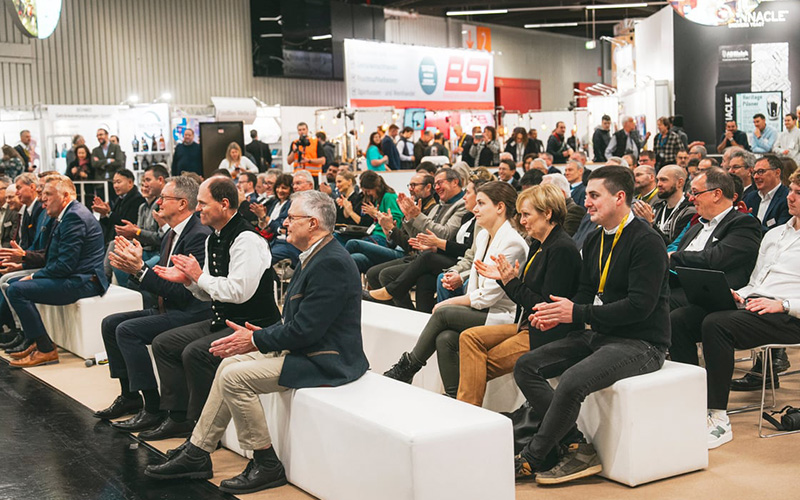
New workshop formats, practical pilot projects, beverage concepts to taste and a programme of talks with plenty to offer: from 10 to 12 November 2026, BrauBeviale at the Nuremberg Exhibition Centre will showcase what is possible in the beverage industry. For beer as well as wine and non-alcoholic beverages.
Whether the market is changing is no longer a question. What is interesting is who makes use of this change. Changing consumer behaviour, non-alcoholic beverages, energy costs and regulation are challenging the beverage industry while at the same time opening up scope for new products and processes.
This is precisely what the key theme “Time for Opportunities”, under which BrauBeviale 2026 presents its supporting programme, is aimed at. The focus is on specific practical questions: How can resources be used more effectively, from energy to water treatment? How can an existing system be optimally used with regard to the product scenario? And which technologies are ready for day-to-day operations?
“Time for Opportunities means not only talking about changes in the market, but showing what opportunities they create,” says Markus Kosak, Executive Director of YONTEX GmbH & Co. KG. “At BrauBeviale, concrete challenges meet technologies, ideas and experience that can make a difference today.”
Visitors will find answers in Hall 9 on the Main Stage, in the new Focus Corner and Pilot Area, as well as in the Discovery Bar in Hall 6.
Main Stage in Hall 9: Smart energy management, robotics & alternative beverages
On the Main Stage in Hall 9, the programme offers a broad spectrum: for brewery professionals as well as for winegrowers and soft drinks manufacturers. When it comes to resources, topics include smart energy management and balancing peak loads, the comparison of glass, PET and plasma technologies for wine bottles between carbon footprint and sustainable taste, as well as an irrigation tool for speciality crops in wine and hop growing.
Technology topics include robotics and AI to reduce energy and operating costs, international benchmarks for brewery KPIs and the question of how data can be used to develop optimised solutions for day-to-day operations. On the product side, the focus is on producing alternative beverages on existing systems, special yeasts for these very beverages and alcohol reduction through sugar removal from must.
Three days, three keynotes, three perspectives
Three keynotes, each at 11.30 am, will set different accents. On Tuesday, 10 November, Charles Nouwen of Peer to Beer asks, under the title “Going Beyond Beer or Taking Beer Beyond?”, how adaptable beer needs to be. Because consumers today choose from an unprecedented variety of beverages, it is important to look beyond one’s own category without giving up what has made beer the world’s most popular alcoholic beverage.
On Wednesday, Charles Banks of thefoodpeople follows with “The Beverage Foresight Play Book: Trends, Tensions, and Untapped Opportunities”. His observation: the biggest shift is not about the what, but the why. Wellbeing, moderation, functionality, sustainability and experience are currently reshaping every category. The boundaries between them are becoming increasingly blurred.
Thursday will turn to regulation. Under the title “The PPWR and its impact on the beverage industry in the coming years”, Peter Désilets of pacoon Sustainability Concepts will explain what manufacturers need to prepare for. With regard to the declaration of conformity, 2030 is already coming into focus, although individual stages will take effect earlier for the beverage industry.
On the panel: sugar tax and non-alcoholic beer
On Wednesday, 11 November, from 2.30 to 3.30 pm, the panel “Sugar Tax/Sugar Levy: Different Approaches Across Europe” on the Main Stage will examine how differently European markets deal with the sugar tax. The focus will be on reformulation, consumer reactions, retail and pricing, as well as the economic implications for manufacturers. The emphasis will not be on the pros and cons, but on the experiences of producers and association representatives from Germany, the UK and Lithuania.
At the same time on Thursday, the panel discussion will turn its attention to successful strategies for small and independent breweries in Europe. Private Brauereien Bayern e. V. as well as stakeholders from Italy, Greece, Poland, Austria, the UK and the Czech Republic will provide a picture of their respective markets and make forecasts about where, for example, the non-alcoholic beer segment is heading.
New format: Focus Corner in Hall 9
New to the programme is the Focus Corner in Hall 9. It breaks with the presentation format: in 90-minute workshops, a maximum of 30 participants work on a topic together with the speakers. The focus here is on exchange on an equal footing – entirely in keeping with BrauBeviale’s character as a working trade fair. Participation is free of charge but requires advance registration.
The list of topics includes a sustainability assessment for breweries, logistics processes as a driver of productivity, non-alcoholic enjoyment in the hospitality sector, appreciation and value creation with beer as a product for enjoyment, the new regulations on environmental labelling under the EmpCo Directive, as well as an offering from the women4beverages network focusing on “Commercial Leadership in Motion”.
Pilot Area in Hall 9: what is already running today
The Pilot Area in Hall 9 directly contributes to the theme of the supporting programme. Pilot projects along the value chain show what is already working today and what potential the new solutions offer the industry. The area is deliberately designed as an invitation to dialogue.
The topics in detail: several project partners are working on the utilisation of side streams, from processing spent grain into proteins for meat substitute products or biopolymers for new packaging to data-based waste-to-value concepts. Further topics include an ultra-dynamic high-temperature heat storage system that flexibly provides process steam from renewable energy, or a multiplex rapid test that detects spoilage organisms in fermented beverages on site in under an hour, with evaluation via a smartphone app.
New beverage ideas in the Discovery Bar in Hall 6
More than 50 beverages in one area, served by those who created them: the Discovery Bar in Hall 6 is launching with a new tasting format and makes the creativity of the industry directly tangible. Behind the bar are start-ups as well as career changers and established beverage manufacturers who are bringing unusual impulses to the beverage industry.
The range extends from beverages with electrolytes, probiotics, collagen or protein to fermented non-alcoholic beverages, infused water and drinking vinegar, as well as premium cocktail bitters, mate liqueur, non-alcoholic aperitifs, Lion’s Mane soda and RTDs with and without alcohol. The focus is clearly on the non-alcoholic segment.
On Wednesday evening, from 5.00 to 7.00 pm, the Discovery Bar will become a meeting point: at a get-together, beverage wholesalers, specialist beverage retailers and food retailers will meet precisely those manufacturers that are newly entering the market.
The full programme, including all speakers, will be published continuously on www.braubeviale.com from the end of August. Registration for the Focus Corner workshops will start in September via the ticket shop.
Specialised exhibitor areas in Hall 7
The Wine Area shows exhibitors who specialise in products and solutions for wine production and wine packaging. It is the central point of contact for winegrowers at the trade fair and is supported by Deutscher Weinbauverband e.V.
The Startup Zone brings together the industry’s newcomers: young companies with fresh concepts, technologies and products that are looking for partners, investors and new customers at the trade fair.
The Logistics Area covers the part of the part of the value chain that begins after filling and, in practice, has a direct impact on costs and delivery capability. Here, visitors will find experts covering topics such as reusable packaging and empty-container solutions, warehouse and transport organisation, and process digitalisation.