The 2022-2023 Florida all orange forecast released by the USDA Agricultural Statistics Board is 15.9 million boxes. The total is comprised of 6.15 million boxes of non-Valencia oranges (early, mid-season, and Navel varieties), unchanged from the June forecast, and 9.70 million boxes of Valencia oranges, up 100,000 boxes from the June forecast. The forecast of all Florida grapefruit production is lowered 10,000 boxes to 1.81 million boxes. Of the total grapefruit forecast, 250,000 boxes are white, and 1.56 million boxes are the red varieties. The Florida all tangerine and tangelo forecast is now 480,000 boxes. …
Please download the full citrus crop production forecast: www.nass.usda.gov
2023 -2024 orange crop forecast
The 2023 – 2024 orange crop forecast for the São Paulo and West-Southwest Minas Gerais citrus beltby Fundecitrus in cooperation with Markestrat and full professors at FEA-RP/USP and FCAV/Unesp, is 309.34 million boxes (40.8 kg). Total orange production includes:
56.11 million boxes of the Hamlin, Westin and Rubi varieties;
18.22 million boxes of the Valencia Americana, Seleta, Pineapple and Alvorada;
98.95 million boxes of the Pera Rio variety;
105.23 million boxes of the Valencia and Valencia Folha Murcha varieties;
30.83 million boxes of the Natal variety.
Approximately 27.02 million boxes are expected to be produced in the Triângulo Mineiro region.
The projected volume is lower only by 1.55 percent as compared to the previous crop, which totaled 314.21 million boxes. That minor difference maintains the production at the same level as in the previous crop season and within the average range for the last ten years, as shown in Graph 1. As compared to the average volume produced in the last decade, the current crop shows a slight increase of 1.04 percent …
Orange production for the 2022-2023 crop season totaled 314.21 million boxes1
The 2022-2023 orange crop for the São Paulo and West-Southwest Minas Gerais citrus belt, published on April 10, 2023 by Fundecitrus – performed in cooperation with Markestrat, FEA-RP/USP and FCAV/Unesp2 – is 314.21 million boxes of 40.8 kg each (90 lbs), divided as follows …
1Hamlin, Westin, Rubi, Valencia Americana, Seleta, Pineapple, Alvorada, Pera Rio, Valencia, Valencia Folha Murcha and Natal. 2Department of math and science, FCAV/Unesp Jaboticabal Campus.
Following the intense weather events that affected several countries in the Southern Hemisphere, the World Apple and Pear Association (WAPA) has released an update of the Southern Hemisphere apple and pear crop forecast that was originally presented during the Association’s latest Annual General Meeting in Berlin’s Fruit Logistica. According to the revised forecast, which consolidates the data from Argentina, Australia, Brazil, Chile, New Zealand, and South Africa, apple production is set to increase by 2,38 % to reach 4.974.990 T, while pear production is expected to decrease by 1,25 % to a total of 1.319.601 T.
During its latest Annual General Meeting in Berlin’s Fruit Logistica, the World Apple and Pear Association (WAPA) presented the Southern Hemisphere apple and pear crop forecast for the upcoming season. The yearly report is compiled with the support of ASOEX (Chile), CAFI (Argentina), ABPM (Brazil), Hortgro (South Africa), APAL (Australia), and New Zealand Apples and Pears, and therefore provides consolidated data from the six leading Southern Hemisphere countries. The initial forecast for the 2023 season, which estimated a 6 % and 1 % increase for apples and pears respectively compared to 2022, has been revised in light of the intense weather events that affected several countries in the Southern Hemisphere. New Zealand’s and South Africa’s apple crop forecasts have been revised downward by 77.902 T and 77.276 T respectively. New Zealand’s pear crop estimates have also been slightly decreased compared to the initial forecast (- 323 T), as well as South Africa’s (- 28.726 T).
Regarding apples, the updated Southern Hemisphere 2023 crop forecast suggests an increase of 2 % to a total of 4.974.990 T compared to last year (4.859.026 T). A smaller apple crop is expected in New Zealand, (457.675 T, – 9 % compared to 2022), Australia (- 8 % compared to 2022, to a total of 290.000 T), and South Africa (1.142.880 T, down 5 %). Chile remains the largest producer (1.409.633 T, in line with 2022), now followed by Brazil (1.150.000 T, + 12 %). Argentina’s apple production should reach 525.000 T (+ 24 % compared to 2022). Exports are also expected to decrease (- 3 % compared to 2022) to a total of 1.556.668 T. Chile remains the largest exporter (604.000 T) followed by South Africa (509.158 T), whose exports are forecasted to decrease by 10 %. Exports from New Zealand (286.823 T) and Australia (2.687 T) are also expected to decrease by 15 % and 1 % respectively. Brazil’s (70.000 T) and Argentina’s exports (84.000 T), on the other hand, are expected to recover from the low 2022 figures. With 1.843.130 T, Gala remains by far the most popular variety, with its production expected to increase by 4 % compared to 2022.
Regarding pears, the Southern Hemisphere growers predict a slight decrease of the crop (- 1 %), which will drop to 1.319.601 T. While Argentina and Chile are expected to increase their production by 4 % and 2 % respectively, South Africa’s (- 6 %), Australia’s (- 16 %), and New Zealand’s (- 19 %) production levels are all expected to decrease. Argentina remains the largest producer in the Southern Hemisphere (592.000 T), followed by South Africa (477.419 T), Chile (170.000 T), Australia (72.016 T), and New Zealand (8.120 T). Packham’s Triumph remains the most produced variety (481.049 T, in line with 2022), followed by Williams’ bon chrétien pears (332.447 T). Export figures are expected to be stable (670.054 T), with a 12 % increase in Argentinian exports and a 13 % decrease in exports from South Africa.
(Photo: WAPA)
All oranges 16.1 million boxes
The 2022-2023 Florida all orange forecast released by the USDA Agricultural Statistics Board is 16.1 million boxes, increased 100,000 boxes from the February forecast. If realised, this will be 61 percent less than last season’s final production. The forecast consists of 6.10 million boxes of non-Valencia oranges (early, mid-season, and Navel varieties) and 10.0 million boxes of Valencia oranges. A 9-year regression has been used for comparison purposes. All references to “average”, “minimum”, and “maximum” refer to the previous 10 seasons, excluding the 2017-2018 season, which was affected by Hurricane Irma. Average fruit per tree includes both regular and first late bloom. …
Please download the full citrus crop production forecast: www.nass.usda.gov
The processing of the oranges from the 2022/23 crop is beginning to slow down in Brazil, but it is still higher than the usual for this time of the year. In February, five plants – of the large-sized processors – were operating, the same as that last year but much more than that in 2020 and in 2021, when only a single plant was processing oranges.
According to Cepea collaborators, last year, the orange harvest was delayed, which explained the higher volume being processed in February. However, in the 2022/23 season, late processing is due to rains, which are hampering crop activities – although workers manage to get into the groves to harvest oranges, transportation is being difficulted.
The end of processing is still uncertain. Agents from processors reported that planning has been postponed because of the difficulties in crop activities. So far, some plants are expected to continue to process oranges in March.
A frequent concern among agents from processors is the yield of the oranges being harvested, majorly in 2023. They reported that, with frequent rainfall, the quality of the fruits for juice production has decreased, raising the number of boxes needed to the produce a ton of concentrated juice – higher moisture raises water absorption by fruits.
As for prices in the spot market, they were up to BRL 38.00 per 40.8-kilo box (harvested and delivered to processor) in February, considering large-sized companies. At smaller-sized processors, the prices paid for pear and late oranges reached BRL 40.00/box.
For the new crop (2023/24), whose processing is expected to begin in May/June, bids from large-sized processors have been up to BRL 38.00/box. Agents from processors reported that, despite the increase compared to the first bids for the 2022/23 crop, farmers expected higher prices, and, thus, many of them postponed deals.
ORANGE JUICE – Despite the valuation of concentrated orange juice at ICE Futures in recent months, there have not been major reflexes on processors’ revenue. According to Cepea collaborators, most of the juice is being sold through contracts with fixed prices. Since Jan. 1st, the contract due in March has valued 19%%, closing at USD 3,543/ton on Feb. 23rd.
TAHITI LIME – Tahiti lime processing was high in February but is expected to slow down in March. The company that processes tahiti lime aims to receive lower volumes of the fruit in the coming weeks. In February, two plants were receiving tahiti lime, but from March onwards, only one of them is expected to keep activities going. The prices paid by large and small-sized processors for tahiti lime are between BRL 12 and BRL 14/box.
The demand for oranges in the in natura market has been increasing since mid-January. The supply, in turn, is low, especially for out of season pear oranges, which present higher quality compared to others. Therefore, pear orange prices are moving up, operating above BRL 50.00 per 40.8-kilo box (on tree). The average price for pear oranges was at BRL 47.59 per box (on tree) between Feb 13 and 16, for an increase of 3.4 % from that in the week before.
The supply of late fruits is also low, but slightly higher than that for pear oranges, and the ripening level is more advanced, which is leading some purchasers away from trades.
Concerning the tahiti lime, prices are at low levels and have not been enough to cover production costs for most citrus growers. However, in mid-February, players surveyed by Cepea reported a slight price rise because of the firm demand (as the carnaval period was close in Brazil, the demand to prepare drinks usually increases) and of the quality improvement in some areas – fruits that are close to the ideal standard have higher prices. In spite of that, tahiti prices may not recover significantly up to the end of February, since the supply is expected to continue high.
ORANGE JUICE EXPORTS – Brazilian shipments of orange juice continue to increase in the partial of the 2022/23 season (from July/22 to January/23). Secex data indicate that the volume totaled 707.7 thousand tons, 15% up compared to the same period in 2021/22. The revenue totaled USD 1.3 billion, for an increase of 35% in the same comparison.
Updated orange production1 forecast totals 316.23 million boxes
The third 2022-2023 orange crop forecast for the São Paulo and West-Southwest Minas Gerais citrus belt, published on February 10, 2023 by Fundecitrus in cooperation with Markestrat, FEA-RP/USP and FCAV/Unesp2 amounted to 316.23 million boxes of 40.8 kg each, a volume 0.7 % higher than the projected scenario in December 2022. This increase is mainly due to the production of the Pera Rio variety, whose harvest is close to the end with higher-than-expected yield. The heavy rains that occurred in the last two months could have further expanded the crop yield, since they contributed to the growth and weight increase of oranges. However, the highly frequent and intense rainfall (many in the form of storms), also significantly intensified the premature fruit drop, offsetting the positive effect of weight gain. This was especially true for the late varieties, as most of these cultivars had not been harvested when the heavy rains started …
1Hamlin, Westin, Rubi, Valencia Americana, Seleta, Pineapple, Alvorada, Pera Rio, Valencia, Valencia Folha Murcha and Natal. 2Department of math and science, FCAV/Unesp Jaboticabal Campus.
All Oranges 16.0 Million Boxes
The 2022-2023 Florida all orange forecast released by the USDA Agricultural Statistics Board is 16.0 million boxes, down 2.00 million boxes from the January forecast. If realised, this will be 61 percent less than last season’s final production. The forecast consists of 6.00 million boxes of non-Valencia oranges (early, mid-season, and Navel varieties) and 10.0 million boxes of Valencia oranges. A 9-year regression has been used for comparison purposes. All references to “average”, “minimum”, and “maximum” refer to the previous 10 seasons, excluding the 2017-2018 season, which was affected by Hurricane Irma. Average fruit per tree includes both regular and first late bloom …
Please download the full citrus crop production forecast: www.nass.usda.gov
All oranges 18.0 million boxes
The 2022-2023 Florida all orange forecast released by the USDA Agricultural Statistics Board is 18.0 million boxes, down 2.00 million from the December forecast. If realised, this will be 56 percent less than last season’s final production. The forecast consists of 7.00 million boxes of non-Valencia oranges (early, mid-season, and Navel varieties) and 11.0 million boxes of Valencia oranges. A 9-year regression was used for comparison purposes. All references to “average”, “minimum”, and “maximum” refer to the previous 10 seasons, excluding the 2017-2018 season, which was affected by Hurricane Irma. Average fruit per tree includes both regular bloom and the first late bloom.
Please download the full citrus crop production forecast: www.nass.usda.gov
The first 2022-2023 orange crop forecast update for the São Paulo and West-Southwest Minas Gerais citrus belt published by Fundecitrus – performed in cooperation with Markestrat, FEA-RP/USP and FCAV/Unesp1 –, is 314.09 million boxes of 40.8 kg each. That figure represents a decrease of 2.86 million boxes in relation to the initial estimate published in May this year and corresponds to -0.9 %. Approximately 22.97 million boxes of the total crop are expected to be produced in the Triângulo Mineiro …
Please download the full orange crop forecast update under www.fundecitrus.com.
1Department of math and science, FCAV/Unesp Jaboticabal Campus.
Prognosfruit’s 2022 European apple and pear crop forecast reveals that apple production is set to increase by 1 % compared to 2021, while the upcoming pear crop is estimated to increase by 20 % compared to last year’s record low crop of the decade and by 5 % compared to the 3-year average. On 4 August 2022, more than 200 international representatives from the apple and pear sector joined Prognosfruit 2022 in Belgrade, Serbia, the first in-person Prognosfruit event after two online editions, to discuss the 2022 production forecast for apples and pears.
The World Apple and Pear Association (WAPA) released the 2022/2023 European apple and pear crop estimate on the occasion of the 47th edition of the Prognosfruit, which took place on August 3-5 in Belgrade, Serbia, returning as an in-person event after two years of online editions. Philippe Binard stated: “The apple production in the EU27 and UK is estimated to increase by 1 % to reach 12.167.887 T compared to last year. This year’s crop is also forecasted to be 9 % above the average of 2019-2020- 2021”. The European crop continues its adaptation to the varieties and quality specifications demanded by consumers. Dominik Wozniak, President of WAPA, indicated: “The prospects for the upcoming season are positive, although the sector will have to be prepared to face a variety of challenges including significant rising costs impacting the competitiveness of the sector, intense weather conditions, logistical issues, inflation, and difficulty to secure seasonal workers, with the ultimate goal of increasing consumption thanks to the quality of the products of the season and reverse the recent negative trend”.
Philippe Binard added: ”The EU pear crop for 2022 is estimated to increase by 20 % compared to last year’s record low crop of the decade and by 5 % compared to the 3-year average, rising to 2.077.000 T, mainly due to Italy and France more than doubling their production compared to 2021 (reaching 473.690 T and 137.000 T respectively), although, in the case of the former, the crop remains below its full potential.”. WAPA will continue to monitor the developments of the Northern Hemisphere crop and will issue updates when available.
The 2022 Prognosfruit Conference gathered more than 200 apple and pear sector experts from 23 countries. The event, organised by WAPA and Serbia Does Apples, featured the forecast and market analysis for the European apple and pear market as well as an overview of the latest trends in processing, organic, and the cider market. Luc Vanoideek (COPA COGECA-VBT) commented: “ The Belgrade meeting was the ideal opportunity to learn more about the development in the EU neighbourhood, including Serbia, Moldova, Ukraine, Turkey, as well as the Central Asia and Caucasus region” He further explained: “The additional contributions from representatives of China, India, and the USA provided to the conference a global outreach with the full picture of the whole Northern Hemisphere crop forecast.”
Prognosfruit is the compass for the apple and pear sector. Philippe Binard concluded: “The strong attendance at this first in-person Prognosfruit Conference after two years of online meetings is a clear sign that the sector representatives also very much appreciate the sense of community and networking opportunities that Prognosfruit provides. We look forward to continuing this tradition next year in Trento, Italy from 2 to 4 August 2023”.
Citrus Forecast
The 2021-2022 Florida all orange forecast released today by the USDA Agricultural Statistics Board is 41.0 million boxes. The total is comprised of 18.3 million boxes of non-Valencia oranges (early, mid-season, and Navel varieties), up slightly from the June forecast, and 22.7 million boxes of Valencia oranges, up 1 percent from the June forecast. The forecast of all Florida grapefruit production is up 1 percent at 3.33 million boxes. Of the total grapefruit forecast, 500,000 boxes are white, and 2.83 million boxes are the red varieties. The Florida all tangerine and tangelo forecast remains at 750,000 boxes …
Please download the full citrus crop production forecast: www.nass.usda.gov
The 2022/23 harvesting of early fruits is advancing in São Paulo state. In this scenario, industrial processing activities are following the harvesting pace and requiring more fruits.
According to players from the industry, the ratio of early fruits has improved and practically all fruits have been allowed for delivery, both in the spot market or for contracts. The industrial yield, however, is still low, which is common at the beginning of the crop.
Crushing activities are now taking place in eight processors in São Paulo: Araraquara, Araras, Bebedouro, Catanduva, Colina, Conchal and two in Matão. The companies have already been receiving some volumes of pera orange, but the majority is early fruits – the pera orange availability tends to increase from mid-September onwards.
In the spot market, values are ranging from 27.00 and 28.00 BRL per 40.8-kilo box, on tree, harvested and delivered at the processor. As for contracts, quotations may hit 31.00 BRL per box in big companies. In small processing companies, values are at 35.00 BRL/box.
The Brazilian orange crop for Marketing Year (MY) 2021/22 is forecast at 414.4 million 40.8-kg boxes (MBx) or 16.91 million metric tons (MMT), an increase of 15 percent vis-à-vis the current season, supported by good weather conditions as of October 2021. Production costs are estimated at over R$ 33,000 per hectare (ha) or US$6,600/ha, up 27 percent compared to the previous crop, supported by high fertiliser, ag chemicals, and diesel prices. Total Brazilian FCOJ 65 Brix equivalent exports for MY 2021/22 are forecast to be relatively stable at 1.04 million metric tons (MT), an increase of 30,000 MT vis-à-vis MY 2020/21 …
The 2022-2023 orange crop forecast for the São Paulo and West-Southwest Minas Gerais citrus belt, published on May 26, 2022 by Fundecitrus in cooperation with Markestrat, FEA-RP/USP and FCAV/Unesp, is 316.95 million boxes (40.8 kg). Total orange production includes:
59.48 million boxes of the Hamlin, Westin and Rubi varieties;
17.52 million boxes of the Valencia Americana, Seleta, Pineapple and BRS Alvorada;
93.95 million boxes of the Pera Rio variety;
106.78 million boxes of the Valencia and Valencia Folha Murcha varieties;
39.22 million boxes of the Natal variety.
Approximately 22.99 million boxes are expected to be produced in the Triângulo Mineiro.
The projected volume is 20.53 % higher than the previous crop that totaled 262.97 million boxes and represents an increase of 1.11 % in relation to last ten years’ average, …
Orange production for the 2021-2022 crop season totaled 262.97 million boxes1
The 2021-2022 orange crop for the São Paulo and West-Southwest Minas Gerais citrus belt, published on April 11, 2022, by Fundecitrus – performed in cooperation with Markestrat, FEA-RP/USP and FCAV/Unesp2 is 262.97 million boxes of 40.8 kg each. Approximately 23.35 million boxes were produced in West Minas Gerais.
This final figure was 10.61 % smaller than the initially expected volume published in May 2021, corresponding to a significant crop loss of 31.20 million boxes. Although this was an “on-year” for the alternate-bearing, when plants produced a larger amount of fruit, a sharp decrease in rainfall and more intense atypical frosts inhibited the growth of oranges and contributed to an increased early fruit drop, therefore reducing the number of oranges at harvest. Under those conditions, there was a yield loss in groves, which made the crop decrease 2.11 % as compared to the previous one, resulting in a small crop for the second consecutive year. Total orange production included:
47.16 million boxes of the Hamlin, Westin and Rubi early-season varieties;
14.85 million boxes of the Valencia Americana, Seleta and Pineapple early-season varieties;
74.78 million boxes of the Pera Rio mid-season variety;
96.59 million boxes of the Valencia and Valencia Folha Murcha late-season varieties;
29.59 million boxes of the Natal late-season variety.
The May 2021 forecast considered that the yield of groves would be affected due to the lower rainfall volume that was already forecast for 2021. However, forecasts did not point to climate conditions as extreme as those observed, which brought greater than expected damage. The prolonged dry spell turned out to be the worst drought in almost a century, with water shortage in practically all regions of the citrus belt. That critical situation severely impacted rainfed groves, which encompass approximately 70 % of the total area and inevitably rely on rainfall. But even irrigated groves were affected by drought. In many locations, rivers and reservoirs reached the most critical levels ever recorded, restricting water use for irrigation. This crop’s most critical period was from May to September 2021, when accumulated rainfall was almost 70 % below historical average. The scenario started to improve in late September and early October when spring came …
1Hamlin, Westin, Rubi, Valencia Americana, Seleta, Pineapple, Pera Rio, Valencia, Valencia Folha Murcha and Natal. 2Department of math and science, FCAV/Unesp Jaboticabal Campus.
In late February, the large-sized processors in São Paulo made their first purchase proposals for the oranges from the 2022/23 crop. Of the three companies in the state, two of them are interested in closing deals, bidding from BRL 30 – BRL 32.00 per 40.8-kilo box, harvested and delivered. The third processing plant was only renewing existing contracts. However, the number of deals closed is still low, since farmers expect prices to rise higher, due to both firm demand from the industry and, largely, higher production costs.
Indeed, data recently released by CitrusBR show that the volume of orange juice stocked by the end of the current season (in June 2022) will not be enough to supply the international market until the middle of next season. According to CitrusBR, ending stocks of Frozen Concentrate Orange Juice (FCOJ) Equivalent in the 2021/22 season are expected to total 126.574 thousand tons – possibly ranging between 115 and 135 thousand tons. It is important to mention that previous estimates (from September 2021) pointed to stocks between 170 and 190 thousand tons, but bad weather conditions (drought and frosts) reduced processing and hampered fruits development and ripening (influencing industrial yield).
If CitrusBR’s forecasts are confirmed, the volume stocked is expected to be much lower than the strategic level, of 250 thousand tons, scenario that may be observed at least until the end of the 2022/23 season (in June 2023) if the number of oranges produced is not high.
Cepea calculations show that, for stocks to surpass the strategic level by the end of next season, the number of boxes harvested in the citrus belt in São Paulo and the Triângulo Mineiro needs to be over 340 million – and of this total, 300 million need to be allocated to the industry. For these results were considered sales of a million tons (slightly lower than the average) and the average industrial yield of the past five crops.
Although it seems juice supply in Brazil will be tight for at least one more season, agents from processors have not reported any significant valuations for the commodity yet. This would be the major reason why bids for the new season have not been higher. On Feb. 23, the May contract at ICE Futures closed at USD 1,993/ton, 2 % down from that on December 30. However, it is important to mention that values at ICE Futures do not reflect real sales prices of processing plants.
One of the facts that may be constraining juice valuations abroad is the fear of bottling plants as for the negative effects of higher prices in Brazil. In the major destinations for the Brazilian orange juice, the United States and the European Union, demand for the product has been fading for some years, majorly because of the wide variety of other beverages, such as flavoured water, energy drinks and other types of juice, for instance.
On the occasion of its Annual General Meeting, the World Apple and Pear Association (WAPA) has released the Southern Hemisphere apple and pear crop forecast for the upcoming season. According to the forecast, which consolidates the data from Argentina, Australia, Brazil, Chile, New Zealand, and South Africa, apple and pear production is estimated to decrease by 7 % and 6 % respectively in 2022 compared to the previous year.
On 24 February 2022, on the occasion of its Annual General Meeting, the World Apple and Pear Association (WAPA) has released its 2022 apple and pear crop estimate for the Southern Hemisphere. This report has been compiled with the support of ASOEX (Chile), CAFI (Argentina), ABPM (Brazil), Hortgro (South Africa), APAL (Australia) and New Zealand Apples and Pears, and therefore provides consolidated data from the six leading Southern Hemisphere countries. WAPA’s Secretary General Philippe Binard commented “This forecast is released for the global apples and pears sector on the background of many uncertainties, including the geopolitical tension, the increasing costs for production, the impact of the rise of logistic costs and limited container availability, labour shortage and the increasing concerns of declining consumption due to economic situation”
The 2022 Southern Hemisphere apple crop forecast suggests a decrease of 7 % to a total of 4.864.000 T compared to last year (5.217.000 T), mainly due to the 30 % decrease in Brazil and the 11 % decrease in Argentina. Australia and Chile are also forecasted to decrease their production by 3 % and 2 % respectively. New Zealand and South Africa are the only countries where apple production is expected to increase (15 % and 4 % respectively). Chile is expected to remain the largest Southern Hemisphere apple producer in 2022 (1.455.000 T), followed by South Africa (1.163.000 T), Brazil (900.000 T), New Zealand (590.000 T), Argentina (445.000 T), and Australia (311.000 T). With 1.706.000 T, Gala remains by far the most popular variety, although its production is expected to decrease by 7 % compared to 2021. Despite the decrease in production, exports are forecasted to remain stable overall at 1.744.762 T, with the larger volumes exported by New Zealand (+ 17 %) and South Africa (+ 6 %) compensating for the 65 % decrease in Brazilian apple exports.
Regarding pears, the Southern Hemisphere growers predict a 6 % decrease of the crop, which will drop to 1.229.000 T. This is mainly due to the 13 % decrease in Argentina, the 11 % decrease in Chile, and the 6 % decrease in Australia. New Zealand and South Africa, on the other hand, are expected to increase their production by 31 % and 5 % respectively. Argentina remains the largest producer in the Southern Hemisphere (522.000 T), followed by South Africa (492.000 T), Chile (122.000 T), Australia (81.000 T), and New Zealand (11.000 T). Packham’s Triumph remains the most produced variety (444.000 T, despite a 4 % decrease compared to 2021), followed by Williams’ bon chrétien pears (306.000 T). Export figures are expected to decrease by 6 % compared to 2021 to a total of 641.207 T, mainly because of a 14 % decrease in Argentinian exports.
In the Northern Hemisphere, the stocks in the USA stood at 1.478.180 T (- 1 % compared to last year) for apples and 149.553 T for pears (+ 32 % compared to last year) on the 1st of February. In Europe, apple and pear stocks stood at 3.606.980 T (7 % up from last year) and 408.340 T (30 % down from last year). Philippe Binard commented: “Season developments clearly demonstrate the impact of logistics and costs on international trade also for Northern Hemisphere suppliers, with the USA concentrating sales for apples and pears in North America. European markets continue to be affected by the Belarus embargo, while the recent developments in Ukraine will also impact sales to all the destinations in Eastern Europe, including Russia, for all global apples and pears suppliers. It is important to continue building efforts to stimulate the consumption”. WAPA’s Annual General Meeting also hosted a discussion on CO2 emissions and how apple and pear production can reach carbon neutrality or even have a positive contribution to the environment. WAPA will continue to cooperate on this topic with its members in a dedicated working group based on the input and expertise of the University of Bolzano (Italy).
Finally, the Annual General Meeting also confirmed that Prognosfruit will return as an in-person event in the first half of August 2022 in Belgrade (Serbia). The exact date of the event will soon be announced.
Orange prices increased in the Brazilian in natura market in the first fortnight of February. According to Cepea collaborators, frequent rains in the citrus belt (São Paulo State) favoured the quality (majorly the size) of oranges, making them suitable for sale in the in natura segment and allowing farmers to raise asking prices. Besides, rainfall also hampered the harvesting, limiting supply. In that scenario, values remained firm.
Usually, orange availability is not high in February – a month that may even be considered offseason –, however, as the 2021/22 season is late, supply is currently higher. Still, there is not an orange surplus in the domestic market, since processing at industries has been faster than usual this month.
So far, the number of early varieties to be harvested is not high – activities are expected to step up only from March onwards. However, supply may be constrained by the low flower set in the first blooming. Thus, the oranges currently available in the in natura market are mostly late varieties and pear oranges out of the ideal period.
TAHITI LIME – The production of tahiti lime is also being favoured by rains, however, farmers reported difficulties to harvest the fruits, which underpinned prices in the first fortnight of February, although it is currently the peak of harvest for tahiti lime in Brazil.
Despite the recent valuations for oranges and tahiti lime, Cepea collaborators have reported that the current economic scenario in Brazil is still constraining higher price rises. With high unemployment and inflation rates and lower income, the purchase power of many consumers is weak.
ESTIMATES – Although rains have favoured the quality of part of the fruits in orchards, they have not been enough to reverse all the damages caused by the drought to the oranges from the 2021/22 season.
According to data from Fundecitrus released on Feb. 10, the orange output (São Paulo + Triângulo Mineiro) in the 2021/22 season is still estimated at 264.14 million boxes of 40.8 kilograms, the same as that estimated in December, but 10 % below that forecast at the beginning of the season.
According to Somar/Climatempo (weather forecast agency), rainfall in SP between May/21 and Jan/22 was 25 % below the average for the period. In the Triângulo Mineiro, rains were 5 % higher than the average. Thus, orange growth was hampered, and the average fruit weight decreased. However, it is important to consider that the oranges harvested in February and in March 2022 are expected to be slightly larger, since they have been favoured by recent rains.
The volume harvested is still enough to replenish ending stocks at the processing plants in SP. According to CitrusBR, by the end of the 2021/22 season (in June 2022), the volume of Frozen Concentrate Orange Juice (Equivalent) stocked is expected to total 170 – 190 thousand tons, lower than the strategic level (250 thousand tons). It is important to consider that new estimates are supposed to be released until the end of February.
In this scenario, the harvest in 2022/23 needs to be large enough to raise stocks at least to the strategic level and thus prevent a world shortage of orange juice. Cepea calculations show that the orange output next season needs to total, at least, 330 million boxes in order to raise juice stocks to 250 thousand tons.
PROGRESS OF THE 2021/22 HARVESTING – According to Fundecitrus’ report, 82 % of the orange orchards had been harvested by mid-January/22, similar to that in the same period last season (81 %).
WAPA, the World Apple and Pear Association, released the updated Northern Hemisphere Apple and Pear Crop Forecast. As crops have now been fully harvested since the first figures were released in August 2021, minor adjustments were made in different countries, although the new estimates are still in line with the original forecast. As the Northern Hemisphere season is getting into full swing, stocks depletion figures will be provided as well by the Association.
During the month of December, WAPA has been consolidating the forecast of apples and pears production for the Northern Hemisphere released during the month of August. As the season is now in full swing and harvest is completed, WAPA is reporting on the latest development for apples and pears in the Northern Hemisphere, while already looking to prepare the Southern Hemisphere 2022 forecast, which will be announced during the last week of February on the occasion of the WAPA Annual General Assembly. Overall, the countries survey by WAPA covers a production of 81 Mio T of apples and 23 Mio T of pears.
The updated estimates for European apple production of the 21 top EU producing countries and the United Kingdom increased by 160.000 T to stand at 11.895,000 T, which is 1,36 % more than what originally forecasted at 11.735,000 T. The forecast for the season is ultimately 11 % (or 1.195,000 T) up from the last year. The new figure is influenced by an increase in Poland (+ 130.000 T to 4,3 Mio T) as well as in Belgium (+ 48.000 T to 240.000 T) and Austria (+ 5.000 T to 120.000 T) but compensated by a decrease in France (- 12.000 T to 1.363.000 T) and the Netherlands (- 5.000 T to 245.000 T). Italy remains stable at 2.044.000 T, with 2.000 T less compared to the initial forecast of August. On the varieties side, the main changes concern Red Jonaprince (+ 53.000 T to 475.000 T), Jonagold (+ 26.000 T to 444.000 T), Idared (+ 24.000 T to 709.000 T), Red Delicious and Pinova (+ 14.000 T each, reaching 654.000 T and 197.000 T respectively), and Cripps Pink (+ 7.000 T to 240.000 T). On the other hand, Gala decreased (- 10.000 T to 1.553.000 T). Other EU countries and Switzerand represent around 200.000 T. In the USA, the apple crop is confirmed to be stable at 4,644.000 T (6 % down to last year), despite some readjustment within the breakdown by states and varieties. The major varieties in the USA are Gala (863.000 T), Red Delicious (625.000 T), and Honey Crisps (542.000 T). Varietal shift continues in the US orchards, with positive development with new varieties such as Ambrosia and Cosmic Crisp. In the US neighbourhood, Mexico’s production in 2021 was down by 2 % at 700.000 T, while Canada’s production dropped 11 % to 360.000 T. The Chinese apple crop was estimated in August just below 45 Mio T, dominated by the Shaanxi (12,5 Mio T) and Shandong (9,5 Mio T) provinces, which together account for close to 50 % of the Chinese apples production. The crop in EU neighbourhood was set at 8 Mio T, covering Turkey (4 Mio T), Russia (1,4 Mio T), Ukraine (1,3 Mio T), Moldova (600.000 T), Serbia (535.000 T), and North Macedonia (140.000 T). In Central Asia, the apple crop is around 2,5 Mio T, out of which 50 % is in Uzbekistan (1.250.000 T), followed by Azerbaijan (300.000 T), Tajikistan (250.000 T), Kazakhstan (200.000 T), and Kyrgystan (150.000 T). Production in India is forecasted at 2,65 Mio T. In the Southern Hemisphere, the final apple crop was set at 5.230.000 T.
In regard to pears, the European pear production is estimated to reach 1.666,000 T in 2021/2022, which is 3,87 % (or 61.000 T) above the August forecast. This increase is resulting from an increase in Belgium (+ 59.000 T to 354.000 T) and the Netherlands (+ 15.000T to 340.000 T) but compensated among others by a decrease in France (- 1.000 T to 56.000 T) and a further decline in the Italian crop due to the severe consequences of the climatic havocs experienced in the main producing regions (- 11.000 T to 202.000 T, while the orchard potential is over 700.000 T). On the varieties, Conference is set to increased by 68.000 T to 873.000 T while Abate should decrease by 12.000 T to
53.000 T. Regarding USA pear production, there is a slight increase from 525.000 T to 529.000 T, driven by Oregon and Washington State, while production in California is severely impacted by the lack of water and labour shortage . The main varieties for the seasons are Williams BC (270.000 T), Anjou (170.000 T), and Bosc (60.000 T). Elsewhere in the Northern Hemisphere, China reported a forecast of pear production of 18,5 Mio T, Turkey of 539.000 T, and India of 89.000 T. In the Southern Hemisphere, the 2021 pears crop ended with a total volume of 1.346.000 T.
Philippe Binard, Secretary-General of WAPA commented: “This year, given the difficult climatic conditions, forecast of production was not easy to be made, in particular regarding the uncertainties on the impact of frost and other spring weather conditions for the quality and the size of products. Looking back, the work undertaken in the different countries was rather precise, as only limited variations were noted. Those were primarily influenced by the good conditions during the summer months in the Northern Hemisphere”. Mr Binard added: “In addition to the apple and pear production forecast, WAPA collects stock figures from the major producing countries throughout the season. As of December, WAPA is resuming the collection of data for the stocks as now the crop is fully harvested and stocks data are now able to be calculated in a reliable manner”.
WAPA can reveal that EU apple stocks stood at 4,865,028 T as of 1 December 2021, which is 6.9 % above the figure of 2020, which reflects the 11 % increase in the crop. On the other hand, pear stocks stood at 654,484 T on 1 December 2021, 26,9 % below the volume of 2020, mostly because of the large decrease in Italy. In Europe, the final pear crop is 26 % lower than a year ago. For the USA, apple stocks in December stand at 1,909,045 T, down 2,58 % compared to 2020. This level is reflecting the lower crop in Washington States this year, which stands at just below 3.000,000 T, 4 % less than last year. Pears stocks in the USA stand at 224,278 T, which is 21,6 % above last year.
In regard to the current season, Domink Wozniak, President of WAPA commented: “Several factors influence the development of this Northern Hemisphere season. The rise in costs for production input, packaging, energy or labour as well as the predicted inflation will have an impact on prodcuer’s margins and competitiveness. Moreover, logistics challenges in terms of availability and costs are some of the new factors influencing trade patterns. Mixed fortune is also expected on market access considering for the European exporters the Belarus embargo as of January 1st combined with the on- going Russian embargo. For the USA, the effects of counter-sanctions in the Steel and Aluminium dossiers are affecting in particular US exports to distant markets such as India . USA trade is expected to primarily focus in North America to the Mexican and Canadian neighbours. In Asia, all exporters are confronted with increased burdens to access China due to increased COVID related controls and logistics hurdles in the port”. On the global stage, one should consider the role of new players such as Serbia, Moldova, Ukraine, Turkey, or Iran. China is also developing its export potential with exports now exceeding one million tons on apples, primarily to South East Asian neighbour. Mr Wozniak added: “Overall in the Northern Hemisphere, the local sourcing will remain a priority in many places considering on-going uncertainties on the world market. However, the growth of apple and pear production in the North Hemisphere, in particular in EU neighbourhood and Central Asia, makes it important to continue diversify the variety assortment for taste expected by consumers. Raising the quality and meeting new sustainability expectations of policy and consumers would facilitate a new boost of the consumption of apples and pears. At the same time, the global apple and pear community should continue searching for new opportunities for the apple and pear consumption in many markets around the world”.
WAPA is slated to host Prongosfruit in Belgrade (Serbia) on 10 and 11 August 2022, in cooperation with Serbia Does Apples. Information will be provided end of March 2022 on the Prognosfruit website (www.prognosfruit.eu).
All oranges 46.0 million boxes
The 2021-2022 Florida all orange forecast released by the USDA Agricultural Statistics Board is 46.0 million boxes, down 1.0 million boxes from the October forecast. If realized, this will be 13 percent less than last season’s final production. The forecast consists of 18.0 million boxes of the non-Valencia oranges (early, mid-season, and Navel varieties) and 28.0 million boxes of the Valencia oranges. A 9-year regression was used for comparison purposes. All references to “average”, “minimum”, and “maximum” refer to the previous 10 seasons, excluding the 2017-2018 season, which was affected by Hurricane Irma. Average fruit per tree includes both regular bloom and the first late bloom …
Please download the full citrus crop production forecast: www.nass.usda.gov
Estimates about the 2021/22 orange season in the Brazilian citrus belt (São Paulo and the Triângulo Mineiro) have been revised down, due to weather issues in Brazil. Data released by Fundecitrus (Citrus Defense Fund) in September estimated the harvest to be 8.9 % lower than that forecast in the first report, released in May, at 267.87 million boxes. In light of that, the output may be similar to that in the previous season (268.63 million boxes). Although the 2021/22 season is a positive biennial cycle, oranges have been smaller, which explains lower production.
Although the estimates from May considered rainfall below the average, weather issues have increased since then, with frosts and severe drought. Between May and August, rainfall accounted for 30 % of the usual for the period, according to data from Somar/Climatempo Meteorologia (weather forecast agency).
The lack of rains has been damaging majorly the plants in dryland, however, agents from Fundecitrus highlight that even irrigated orchards (which account for 30 % of the trees in the citrus belt) have been debilitated by the drought, due to the limited availability of water at reservoirs. It is important to mention that the scenario has worsened since the frosts in late July.
Besides the smaller size of the oranges, the rate of premature fall of fruits is one of the highest. As the weather is forecast to continue unfavourable until the end of the season, the scenario is not expected to change, raising expectations for low production in 2021/22. Also, the chance of La Niña phenomena to occur until late 2021 is high, which may result in lower rainfall in southeastern Brazil in the second semester. This scenario would limit the growth of late varieties.
INDUSTRY – With the probable lower harvest of oranges in the 2021/22 season, the number of fruits allocated to processors is supposed to be lower too. CitrusBR (Brazilian Association of Citrus Exporters) has not revised processing estimates yet, but Cepea forecasts the industry to purchase around 225 million boxes of oranges (40-8 kilograms each) this season. If this is confirmed and sales of orange juice are near the usual, juice inventories are expected to decrease steeply, to less than 200 thousand tons (Frozen Concentrate Orange Juice Equivalent), even with higher yield at processing plants, which usually happens in years of low rainfall.
This context will demand high orange production in the 2022/23 season (higher than 330 million boxes) so that ending stocks are replenished with no risk of world shortages. This situation may favor the prices paid to farmers in Brazil.
Orange1 production forecast update totals 267.87 million boxes
The first 2021-2022 orange crop forecast update for the Sao Paulo and West-Southwest Minas Gerais citrus belt by Fundecitrus – performed in cooperation with Markestrat, FEA-RP/USP and FCAV/Unesp2 – is 267.87 million boxes of 40.8 kg each, differently from the 294.17 million estimated in May this year. The reduction of 26.30 million in relation to the initial expectation corresponds to – 8.9 %. The main reason for this crop loss is the poorer rainfall regime constituting the most severe water crisis ever to hit Brazil for the last 91 years3. The combination of this drought never before experienced by citriculture and successive frosts in July culminated in a gradual crop decline that has been seen as harvests progress and disclose totally atypical figures. Field surveys also show results other than expected for this time of the year for orange planted areas yet to be harvested. In general, oranges are excessively small, and early fruit drop reaches one of its highest rates. These factors make production go back to the same levels of last crop season that totaled 268.63 million boxes, despite fruit load being 12.50 % larger since this is an “on” year. In view of this data and the perspective of climate conditions remaining adverse until harvests end, fruit should present the most critical size and drop rate in historical data. If this scenario is confirmed, there will no longer be an increase in this crop in relation to the previous season, estimated at 9.51 % in May, but rather a smaller volume than the production in the last season (- 0,28 %). …
1Hamlin, Westin, Rubi, Valencia Americana, Seleta, Pineapple, Pera Rio, Valencia, Valencia Folha Murcha and Natal. 2Department of math and science, FCAV/Unesp Jaboticabal Campus. 3National operator of the energy system – ONS. Data for the Parana River basin, encompassing the states of São Paulo, Minas Gerais, Paraná, Santa Catarina, Rio Grande do Sul, Mato Grosso do Sul, Goiás and Distrito Federal.
While the COVID-19 pandemic has tested the apple industry up and down the supply chain, it has also presented unique opportunities, according to a new report released by the U.S. Apple Association at the organization’s 126th annual Outlook Conference. Considering these opportunities, and despite a challenging 18 months, apple production is expected to exceed 11 billion pounds this crop year.
USApple’s “Industry Outlook 2021” provides the most up-to-date data and analysis on U.S. and global apple production, utilization and trade. Authored by USApple Director of Industry Analytics Chris Gerlach, the report takes an in-depth look at the many trends and forces – from H-2A labor issues to online grocery shopping – helping to shape the U.S. apple industry.
Production
According to a USApple analysis of Agriculture Department data, total U.S. apple production for the 2021-22 crop year will exceed 11.1 billion pounds or 265.4 million bushels. This represents a 2.7 percent increase compared to 2020-21 crop year production of 258.6 million bushels and is 1.3 percent less than the five-year production average.
Gerlach noted that these figures are more comprehensive than USDA data, which only looks at the top seven apple-producing states. “We’ve analyzed the production from states outside of the top seven and added that back to USDA’s figure,” explained Gerlach.
At the varietal level, Gala is expected to retain the top spot with almost 49.3 million bushels produced, accounting for around 19 percent of the U.S. apple market. Rounding out the top five are Red Delicious (35.7 m bu), Honeycrisp (31 m bu), Fuji (29.1 m bu) and Granny Smith (27.2 m bu). In comparison, the 2020 top five produced apple varieties were: 1) Gala 2) Red Delicious 3) Fuji 4) Honeycrisp and 5) Granny Smith.
Trade
With respect to fresh apple imports and exports, the U.S. still retains a healthy positive trade balance. In the 2020-21 crop year. the U.S. exported almost 41 million bushels of fresh apples while only importing around 5.2 million bushels. These net exports (35.6 m bu) are valued at almost $773.8 million.
“On a year-over-year basis, while the balance of trade has declined with respect to quantity, it has increased in value,” said Gerlach. “This is primarily being caused by a rapid decline in the value of imports from the 2019-20 crop year, but is also due to some resilience in export values which have not decreased as much relative to export quantities.”
Labor
“Any assessment of the U.S. apple industry must consider the agricultural employment situation,” said Gerlach. “We are losing domestic workers faster than we can replace them and so, increasingly, growers have had to turn to seasonal migrant labor, or H-2A workers, to meet their needs.”
This is a critical issue for the U.S. apple industry because this source of labor is expensive and getting more so. In the Pacific Northwest, for example, the Adverse Effect Wage Rate (AEWR), the minimum compensation rate for H-2A labor, has been increasing by more than 5 percent annually for the last 10 years.
From 2014 to 2020, average annual crop production employment fell by 3 percent and, in apple orchards specifically, it declined by 20 percent.
Consumer Trends
“Fortunately, throughout the disruptions brought on by COVID-19, the U.S. apple industry has not seen any considerable decrease in domestic demand,” said Gerlach.
Throughout the pandemic, apple packers and marketers have been quick to respond by offering bagged apples that give consumers added peace of mind by reducing the handling needed to stock and pick the fruit. Also, notes Gerlach, the most significant consumer trend to come out of the pandemic was the rate at which shoppers embraced e-commerce grocery shopping, which also aided the sale of apples. By the first quarter of 2021, e-commerce had grown to account for 3.5 percent of food and beverage store sales at $6.9 billion (up from $1.5 billion in Q1 of 2018 – an increase of more than 377 percent).
“All of these external forces, from labor costs to consumer grocery trends, will continue to shape apple production and utilization throughout the coming years,” said Gerlach.
Prognosfruit’s 2021 European apple and pear crop forecast revealed that while apple production is set to increase by 10 %, the upcoming pear crop is expected to decrease by 28 %. On 5 August 2021, more than 150 international representatives from the apple and pear sector joined the Prognosfruit 2021 Online Conference, the second virtual edition of the event in its 46 years, to discuss the 2021 production forecast for apples and pears.
Philippe Binard (Photo: freshfel)
The World Apple and Pear Association (WAPA) released the 2021/2022 European apple and pear crop estimate on the occasion of the 46th edition of the Prognosfruit. WAPA Secretary General Philippe Binard stated: “The apple production in the EU for the 21 top producing countries contributing to this report is estimated for the 2021/2022 season to be 11.735,000 T. Overall, this year’s crop is estimated to be 10 % higher than last year, but 1 % only up from the 3-year average. It is therefore perceived to be a season with a balanced outlook”.
Philippe Binard added ”While the EU apple crop is larger, the EU pear crop for 2021/2022 is estimated to decrease by 28 % compared to last year to 1.604.000 T and by 27 % compared to the three-year average. This is the smallest decade crop for pears” On the varieties, this translates into a decrease of Conference pear by 18% to 805.000 T. Abate is also impacted with a crop reduced to 66.000 T, down by 73 %”.
WAPA will continue to monitor the developments of the Northern Hemisphere crop and will issue updates when available.
The Brazilian orange crop for Marketing Year (MY) 2020/21 is forecast at 390.8 million 40.8-kg boxes (MBx) or 15.94 million metric tons (mmt), an increase of seven percent relative to the current season. Although citrus trees are in the on-year of the production cycle, adverse weather notably affected the production potential for the upcoming season. Total Brazilian FCOJ 65 Brix equivalent exports for MY 2020/21 are forecast relatively stable at 1.050 million metric tons (mt), an increase of 18,000 mt vis-à- vis MY 2019/20 …
The 2020-2021 Florida all orange forecast released by the USDA Agricultural Statistics Board is raised 1.0 million boxes to 52.7 million boxes. The total includes 22.7 million boxes of the non-Valencia oranges (early, mid-season, and Navel varieties) and 30.0 million boxes of Valencia oranges. …
Please download the full citrus crop production forecast: www.nass.usda.gov
The 2021-2022 orange crop forecast for the São Paulo and West-Southwest Minas Gerais citrus belt, published on May 27, 2021 by Fundecitrus, in cooperation with Markestrat, FEA-RP/USP and FCAV/Unesp, is 294.17 million boxes (40.8 kg or 90 lb). Total orange production includes:
51.37 million boxes of the Hamlin, Westin and Rubi varieties;
16.87 million boxes of the Valencia Americana, Seleta and Pineapple varieties;
84.66 million boxes of the Pera Rio variety;
107.07 million boxes of the Valencia and Valencia Folha Murcha varieties;
34.20 million boxes of the Natal variety.
Approximately 26.09 million boxes are expected to be produced in the Triângulo Mineiro.
As compared to the final forecast of 268.63 million boxes in the previous crop, the current projection represents an increase of 9.51 % although it is still below the average of 35 million boxes for the last ten crop seasons, which corresponds to a drop of 10.53 % …
The 2020-2021 Florida all orange forecast released by the USDA Agricultural Statistics Board is unchanged at 51.7 million boxes. If realized, this will be 23 percent less than last season’s revised final production. The forecast consists of 22.7 million boxes of non-Valencia oranges (early, mid-season, and Navel varieties) and 29.0 million boxes of Valencia oranges. …
Please download the full citrus crop production forecast: www.nass.usda.gov
On 12 May 2021, the World Citrus Organisation celebrated its first Annual Meeting online, following the official creation of the organisation last year. During the AGM, the WCO Secretariat presented the consolidation of the production and export forecasts for the forthcoming Southern Hemisphere citrus season 2021. This preliminary forecast is collected from member industry associations in Argentina, Australia, Bolivia, Brazil, Chile, Peru, South Africa, and Uruguay.
The WCO held its Annual meeting ending a first year of activities. The Co-chairs of the association, Jose Antonio Garcia (Ailimpo) and Justin Chadwick (CGA) agreed to state: “The full first year of operation allowed the organisation to quickly build a representative association and provide the benefits and value to the members”.
During the meeting, the preliminary forecast presented shows that the 2021 citrus Southern Hemisphere crops is expected to reach 22.7 million tons, which represents an increase of 3.18 % compared to the 2020 crop. Export is expected to increase by 12.72 % to 3.8 million tons. Philippe Binard, Secretary General of WCO stated while presenting the data : “following the outbreak of the COVID-19 pandemic, a positive trend of consumers’ demand for fruit and veg. was noted, in particular for citrus fruit, widely recognised for its high nutritional value, notably in terms of vitamin C content. The large volume available is positive news as it will meet the increased demand”. On the processing side, a total of 13.4 million tonnes of citrus are expected to be destined to the juice market, which constitutes a slight increase of 1.26 % compared to the previous year. It is however worth noting that Brazil’s data provided for the forecast remains preliminary, with the official Brazilian data expected to be confirmed in the coming weeks.
By citrus categories, the soft citrus showed the greatest increase in production, by 10.57 %, with a significant increase in export volumes of over 20 % to 1 million tonnes of export. Orange production remained broadly stable (+ 1.93 %), whilst lemon (+ 2.37 %) and grapefruit (+ 6.44 %) showed greater increases. Exports are also expected to increase for all varieties, orange (+ 11.55 %), lemon (+ 7.20 %) and grapefruit (+ 9.56 %). Eric Imbert (CIRAD- Technical Secretariat of WCO) indicated: “The Southern Hemisphere citrus export continues to grow in particular for lemons and easy peelers. The Southern Hemisphere today represents 27 % of the global citrus market.” During WCO’s AGM, members also reviewed the past season’s results with a focus on the impact of the covid pandemic, and analysed the estimations for the current season.
In addition, during the meeting, Natalia Santos, Deputy Secretary General of WCO announced that: “Members decided to set-up a formal working group on health & nutrition. This will enable better knowledge- exchange among members on citrus nutritional assets and will also contribute towards a better understanding of the health attributes of citrus. The first meeting of WCO’s Health & Nutrition focus group will take place in the second semester of 2021”, she added.
Orange production for the 2020-2021 crop season totaled 268.63 million boxes1
The final 2020-2021 orange crop for the São Paulo and West-Southwest Minas Gerais citrus belt, published on April 12, 2021 by Fundecitrus – performed in cooperation with Markestrat, FEA-RP/USP and FCAV/Unesp2 – was 268.63 million boxes of 40.8 kg each (90 lb), which represents a decrease of 6.65 % in relation to the first crop forecast published in May 2020, accounting for a reduction of 19.13 million boxes. This crop had a decrease of 118.16 million boxes in comparison to the previous season, which is equivalent to a volume 30.55 % smaller than that of the 2019-2020 cycle, confirming a record crop loss for all the years in which the crop suffered the physiological effects of the negative biennial production cycle of orange trees since the beginning of the historical series in 1988. Total orange production included:
47.00 million boxes of the Hamlin, Westin and Rubi early-season varieties;
13.85 million boxes of the Valencia Americana, Seleta and Pineapple early-season varieties;
81.45 million boxes of the Pera Rio mid-season variety;
91.95 million boxes of the Valencia and Valencia Folha Murcha late-season varieties;
34.38 million boxes of the Natal late-season variety.
Approximately 19.33 million boxes were produced in West Minas Gerais.
One of the reasons that explains this substantial crop loss is the fact that orange trees started flowering in the spring of 2019, when reserves were lower because they had been used in the previous crop season when there was a significant yield increase. Decreased reserves led to a significant reduction in the number of fruits per tree in this season, a phenomenon known as alternate bearing. The other reason is the strong negative influence of the climate throughout the season. …
1Hamlin, Westin, Rubi, Valencia Americana, Seleta, Pineapple, Pera Rio, Valencia, Valencia Folha Murcha and Natal. 2Department of math and science, FCAV/Unesp Jaboticabal Campus.
All Oranges 51.7 Million Boxes
The 2020-2021 Florida all orange forecast released by the USDA Agricultural Statistics Board is down 3.80 million boxes to 51.7 million boxes. If realized, this will be 23 percent less than last season’s revised final production. The forecast consists of 22.7 million boxes of non-Valencia oranges (early, mid-season, and Navel varieties) and 29.0 million boxes of Valencia oranges. A 9-year regression has been used for comparison purposes. All references to “average”, “minimum”, and “maximum” refer to the previous 10 seasons, excluding the 2017-2018 season, which was affected by Hurricane Irma. Average fruit per tree includes both regular and first late bloom. …
Please download the full citrus crop production forecast: www.nass.usda.gov
SHAFFE – The Southern Hemisphere Association of Fresh Fruit Exporters will launch its very first Annual Southern Hemisphere Fresh Fruit Trade congress at the 25th of March 2021. With the defining theme “Keeping the world supplied”, this first edition will be dedicated to give exclusive insights and market intelligence on the current production & trading situation for key temperate fruit crop under pandemic conditions with contributions from all eight Southern Hemisphere suppliers: Argentina, Australia, Brazil, Chile, New Zealand, Peru, Uruguay and South Africa. Southern Hemisphere exporters contribute with 11 million T of exported temperate fruit with a market value of $ 14 billion USD to nearly ¼ of global fruit supply and play a significant role to the availability of healthy food choices.
The 1st virtual Southern Hemisphere Fresh Fruit Trade congress will be taking place at the 25th of March 2021, providing for the first time in the associations history exclusive market insights from all eight big Southern Hemisphere exporting nations with regard to crop trends, production and trade outlook for the year ahead. “We want to contribute towards more predictability and market know-how during these difficult times – and allow our trading partners in the Northern Hemisphere countries better planning for the year ahead”, says passing SHAFFE president Anton Kruger, Fresh Produce Exporters’ Forum (FPEF), South Africa. He adds “We receive many requests to share our market intelligence with a broader public – something we normally had done individually during one of the many annual trade shows throughout the year. This year we are teaming up, to show our common value and how we ensure supply security in our countries!”
“In order, to allow as many of our trading partners in the Northern Hemisphere to participate to the congress, we have decided to run two passages in one day, one at 11.00 am, to target our Asian trading partners and one run-up at 5.00 pm, to allow Northern American and European partners to join. With its globalized trading network, SHAFFE operates in an incredibly unique and international environment – a challenge we are happy to take for the congress!”, says SHAFFE Secretary General Nelli Hajdu. The program will encompass outlook reflections from all SHAFFE member associations (Fedecitrus, Argentinan Blueberry Committee, CAFI, Citrus Australia, Abrafrutas, Chilean Fruit Exporter Association (ASOEX), New Zealand Apple and Pears, ProCitrus, Upefruy, Fruit SA), detailed analysis of global temperate fruit trade developments and insights on changing consumer patterns for fruit consumption and purchase in key markets such as the U.S., China, Germany, U.K. and Russia. The secretariat is working with high speed towards the launch of the program. The registration-link is already open and participation will be free.
The World Apple and Pear Association (WAPA) has released the Southern Hemisphere apple and pear crop production forecast for the upcoming season. According to the forecast, which consolidates the data from Argentina, Australia, Brazil, Chile, New Zealand, and South Africa, apple production is estimated to increase by 6 % in 2021 compared to the previous year, while pear production is projected to stabilise.
The World Apple and Pear Association (WAPA) has released its 2021 apple and pear crop estimate for the Southern Hemisphere. This report has been compiled with the support of ASOEX (Chile), CAFI (Argentina), ABPM (Brazil), Hortgro (South Africa), APAL (Australia) and New Zealand Apples and Pears, and therefore provides consolidated data from the six leading Southern Hemisphere countries. WAPA’s Secretary General Philippe Binard commented on the usefulness of gathering the insights from these major producers: “Elaborating this collective data has previously proved a valuable exercise for the global apple and pear industry and a reliable source of information when the season progressively shifts from the Northern to the Southern Hemisphere”.
Regarding apples, the aggregate Southern Hemisphere 2021 crop forecast suggests an increase of 6 % (5.090.000 T) compared to last year (4.818.000 T), with increases in Australia, Brazil, and South Africa of 23 %, 20 % and 6 % respectively, a decrease in New Zealand of 5 %, and stable figures in Argentina and Chile. The aggregate increased by 2 % compared to the average of crops between 2018 and 2020. Chile remains the largest Southern Hemisphere apple producer in 2021 with 1.512 million T, with Brazil in second place (1.130 million T), followed by South Africa (1.013 million T), Argentina (617 million T), New Zealand (547 million T), and Australia (271 million T). Gala remains the main variety (39 %), followed by Fuji (14 %) and Red Delicious (13 %). Export figures are estimated to stabilise at 1.691.562 T, with stable figures for Chile (650.773 T), a 4 % increase for South Africa (476.000 T), and a 7 % decrease for New Zealand (372.000 T).
Southern Hemisphere 2021 apple production (Photo: WAPA)
Regarding pears, the Southern Hemisphere growers predict a stabilisation of the crop at 1.346.000 T and an increase of 2 % compared to the overall average of years 2018-2020. The increase in South Africa, Australia, and Argentina of 3 %, 2 %, and 1 % respectively are expected to compensate for the 3 % and the 10 % decrease in Chile and New Zealand. As in previous years, Packham’s Triumph and Williams BC/Bartlett are the major varieties, with 36 % and 28 % respectively. Forecasted export figures for pears are reported to increase by 6 % compared to the previous year and reach 708.690 T, with a 12 % increase for Argentina (373.996 T), a 2 % increase for South Africa (214.361 T), and a 3 % decrease for Chile (108.315 T).
Updated orange1 crop forecast totals 269.01 million boxes
The 2020-2021 orange crop forecast update for the São Paulo and West-Southwest Minas Gerais citrus belt, published on February 10, 2021 by Fundecitrus – performed in cooperation with Markestrat, FEA-RP/USP and FCAV/Unesp2 – is 269.01 million boxes of 40.8 kg each (90 lbs). Approximately 19.27 million boxes of the total crop should be produced in West Minas Gerais.
In this third update on a downward trend, the crop accumulates a decrease of 6.52 % in relation to the initial estimate. In comparison to the previous crop, the reduction is 30.45 %, the worst index of all years in which the crop also withstood the physiological effects of the negative biennial bearing. This crop loss, unprecedented in the history of citriculture, evidences the severity of climatic issues in this season, although production losses due to orange trees that died from drought before harvest have not yet been included. The number of dead trees and fruit unharvested is being determined by a sample survey encompassing 5 % of plots distributed throughout the citrus belt, aiming to update the tree inventory for the next crop season. The reduction in production of the 2020-2021 cycle, caused by this atypical tree mortality, will be presented on the final crop estimate of April 12, 2021. …
1Hamlin, Westin, Rubi, Valencia Americana, Seleta, Pineapple, Pera Rio, Valencia, Valencia Folha Murcha and Natal. 2Department of math and science, FCAV/Unesp Jaboticabal Campus.
In general, citrus prices were high in São Paulo State in 2020. With the lower orange production in the Brazilian citrus belt (São Paulo and the Triângulo Mineiro) in the 2020/21 season due to bad weather conditions, the demand from processors for fruits continued high along the year, which underpinned prices.
According to a report released by Fundecitrus on December 10, crop failure in the citrus belt (SP and the Triângulo Mineiro) should be the worst since 1988/1989, when the series began. In total, orange production should be 30 % lower in the 2020/21 season, totaling 269.36 million boxes of 40.8 kilos each.
INDUSTRIAL PRICES – Although processors began the 2020/21 season with high volumes of juice stocked – 471 thousand tons of Frozen Concentrate Orange Juice (FCOJ) Equivalent, according to CitrusBR –, low orange supply kept the demand for fruits high, which reflects on bidding prices.
On the average of the 2020/21 season, prices in the spot market between July and November closed at 23.51 BRL/box, 17.8 % up from that in the same period of 2019 and 7 % above that in the same period of 2018, in nominal terms.
IN NATURA MARKET – Higher demand from the industry lowered the availability of fruits in the in natura market, since some farmers who usually sell to the in natura market preferred to allocate their fruits to processors, due to the uncertainties caused by the covid-19 pandemic and the attractive prices bid by processors. This scenario added to the weather issues and high demand pushed up orange prices (in natura) all the year. For the variety pera rio, prices hit the highest level of the year in November, when the average was 43.35 BRL/box, on tree, 54.6 % up from that in Nov/19, in nominal terms.
All Oranges 56.0 Million Boxes
The 2020-2021 Florida all orange forecast released today by the USDA Agricultural Statistics Board is 56.0 million boxes, down 2 percent from the October forecast. If realized, this will be 17 percent less than last season’s final production. The forecast consists of 22.0 million boxes of the non-Valencia oranges (early, midseason, and Navel varieties) and 34.0 million boxes of the Valencia oranges. A 9-year regression was used for comparison purposes. All references to “average”, “minimum”, and “maximum” refer to the previous 10 seasons, excluding the 2017-2018 season, which was affected by Hurricane Irma. Average fruit per tree includes both regular bloom and the first late bloom. …
Please download the full citrus crop production forecast: www.nass.usda.gov
Updated orange1 crop forecast totals 269.36 million boxes
The 2020-2021 orange crop forecast update for the São Paulo and West-Southwest Minas Gerais citrus belt, published on December 10, 2020 by Fundecitrus – performed in cooperation with Markestrat, FEA-RP/USP and FCAV/Unesp2 –, is 269.36 million boxes of 40.8 kg each. The first forecast update, published in September, already showed a drop as compared to the initial projection, but the expected production was significantly hindered by late rainfall in the spring and intense heat. In this second forecast update, a decrease of 18.40 million boxes represents a drop of 6.39 % in relation to the initial forecast. Should this new projection hold true until harvest ends, it will result in the largest crop loss for the citrus belt since the beginning of the historical series in 1988-1989 and a downturn of 30.36 % in comparison to the previous crop season. Approximately 19.35 million boxes of the total crop should be produced in West Minas Gerais.
A poor outlook for rainfall was expected in 2020 due to the possibility of the climate event La Niña forming, which was officially confirmed in September. However, other phenomena, such as the so-called Atlantic Multidecadal Oscillation, simultaneously contributed to less rainfall and increased temperatures that reached unprecedented levels in several regions of the citrus belt. Consequently, the effects on groves resulting from adverse weather conditions this year were much worse as compared to those observed during the last La Niña, between November 2017 and April 2018. …
1Hamlin, Westin, Rubi, Valencia Americana, Seleta, Pineapple, Pera Rio, Valencia, Valencia Folha Murcha and Natal. 2Department of math and science, FCAV/Unesp Jaboticabal Campus.
There is a saying among those who have been in the industry for a long time: “there is no harvest like the other”. The current one is overcoming itself; such are the difficulties faced.
The first signs that the season would be different were given by last year’s bloom. Blooming in August and September 2019 was very good. However, a period with no rain in the following months accompanied by intense heat has caused an expressive fruitlet fall. The fruits developed until a 2-3 cm diameter size but were overturned by excessive heat. Rains came up in the end of October and a new flowering is expected.
The harvest season was preceded by the arrival of the COVID-19 pandemic. The great demand for labor, much of it coming from northeastern states in the country, concerned everyone and made us take extraordinary care to preserve the health of workers involved in the harvest and of other collaborators from other sectors of the properties.
Thus, the current harvest has been one of great surprises and has presented unusual challenges to citrus growers of the Brazilian citrus belt. The main consequences are presented below.
The period without rain, from May of this year until this last month of October, was one of the most extensive ever recorded in the state of São Paulo, according to the graphs and tables below. In addition to drought, very high maximum temperatures were recorded, even at night, causing considerable weight loss and lower fruit quality. The water deficit was very significant in all regions. This is the main reason for the significant decrease in the volume of fruit produced in the “citrus belt”. The losses are more accentuated in the north of the state of São Paulo and in the Triângulo Mineiro, warmer and drier regions.
However, even further south in the state, losses were above normal. The first harvest estimate released by Fundecitrus, last May, brought an amount of 287.8 million boxes, 25% less than the previous harvest (2019/2020). What you see in the field is a volume of oranges quite below that number. The common perception among consulted technicians and citrus growers is that the final figure is expected to be below 250 million, perhaps below that.
The period without rain and with temperatures well above the average resulted in extremely withered orchards – plants even died in orchards without irrigation. Another aggravating factor this year was the scarcity of water for irrigation. There are properties that have an installed irrigation structure; however, they do not have enough water available to meet the needs of the plants.
Due to the flowering in non-traditional months (December and January) there are a large number of “green”, not yet ripe fruits mixed with ripe fruits from the normal flowering (August-September 2019). This brings an additional difficulty to the harvesting operation that has to be carried out in at least two different times, resulting in an increase of the production cost for the citrus growers.
This mix of fruits with different level of ripeness, impair the quality of the juices, especially due to the greater amount of limonin present in the green peels of oranges. On the other hand, in the northern regions of the citrus belt, the fruits are getting ripe much faster than normal, producing juices with a ratio (ratio between the amount of sugars divided to acidity) much higher than the average for the period of the year. Industrial income has been better this year than in the previous two years, at least until this time of the harvest (November 2020).
As a further consequence of this year’s climate events, we will see an increase in the effects of HLB or greening. The symptoms of the disease, such as early fruit fall and low production, usually express themselves more strongly when there is a water deficit. In addition, the psilideo, vector of the disease, presented very high rates even in winter, indicating that we will have a greater number of infected plants in the next years. This has probably occurred because of the warmer climate which resulted in a very irregular or uneven plant vegetation.
What can we expect from the next crop?
The northernmost regions only flourished after the rains that fell in the last days of October. This late blooming should not have a good fruit set because they will be still small in the higher summer temperatures. Moreover, the loss of leaves was very great in the recent drought period, and this will not allow for a large amount of fruit for the next season, since the plant will not be able to provide the metabolites necessary for an expressive fruit set. A good 21/22 harvest is not to be expected for these regions.
In the most southern regions, which suffered less from water deficit, the flowering came in the normal period, between August and September. However, irregular rainfall and high winter temperatures (table 2), after flowering, have worried producers. What they see in their orchards does not indicate a good harvest for the second year in a row. My experience shows that the harvest after a year as irregular as this one is also not usually good.
Price of juice should go up
Although it is common for citrus to have alternate crops, i.e., smaller crops followed by larger crops, the climatic factors presented in this article should result in two “small” crops in a row, the current and the next seasons.
Thus, Brazilian orange juice industries should process fewer oranges for two consecutive years. This reduction in supply, combined with the growing demand for juices in times of pandemic, should cause increases in the price of juices on the international market.
Mauricio Mendes is a citrus consultant sine 1980 and Citrus grower since 1988. Has worked to major Citrus Farms in Brazil. Is COO of a 6.000 ha Citrus Farms operation in the SW od Sao Paulo State. Mauricio is also Beachead Advisor for New Zealand Trade and Enterprise (NZTE) . Also has been partner and CEO, for 14 years, of Informa FNP which is one of the most important Agribusiness consultant company in Brazil. FNP was recently acquired by IHS Markit. Mauricio is also member of GCONCI (Citrus Farming Consultants Group) which gathers 17 Consultants. GCONCI provide direct technical assistance to over 40 million citrus plants (25 % of the Brazilian Citrus Belt)
*Araraquara and Itapetininga are major production citrus regions in São Paulo State.
The WCO Secretariat has released its first crop production forecast for the forthcoming Northern Hemisphere citrus season 2020-21. The preliminary forecast is collected from industry associations in Egypt, Greece, Israel, Italy, Morocco, Spain, Tunisia, Turkey and the United States (California and Florida).
The preliminary forecast shows that the 2020-21 citrus Northern Hemisphere crop is expected to reach 28.737.570 T, which represents a decrease of slight decrease of 1 % compared to the 2019 crop. This decreased volume is the result of alternance in some countries compared to last year, as well as the impact of the droughts recorded in several production regions in the Northern Hemisphere.
By citrus categories, most categories showed decreases in production. Orange is expected to decrease by 2 %, lemon by 7 % and grapefruit by 9 %. The only category increasing production volumes compared to the previous year is soft citrus (+5 %). Looking at production by region, European production is expected to experience an increase in volume, with 12 % increases recorded for both Italy and Spain, respectively, and a 1 % decrease for Greece. In the Southern rim of the Mediterranean, crop forecasts for Egypt (-8 %), Israel (- 4 %) and Turkey (-15 %) have been lowered compared to 2019 volumes. On the other hand, Morocco and Tunisia forecast increases in their citrus crops this year, by 13 % and 20 % respectively compared to 2019 figures. On its side, the United States production is expected to decrease by 9 % compared to the precedent year, with California lowering its forecast by 5 % and Florida by 14 %.
WCO will present this forecast during the first edition of the Global Citrus Congress, which the World Citrus Organisation is co-organising with Fruitnet. The Congress with an expected attendance of more than 1.000 delegates will be the perfect opportunity to presents these latest global production figures and trade trends, as well as the importance of sustainability in citrus production and of nutrition and promotion to increase global citrus consumption.
WCO Members are ABCM- Associação Brasileira de Citrus de Mesa (Brazil), Ailimpo – Asociación Interprofesional de Limón y Pomelo (Spain), AKIB – Mediterranean Fresh Fruit and Vegetables Exporters Association (Turkey), Citrus Australia (Australia), Citrus Growers’ Association (South Africa), Chilean Citrus Committee (Chile), Fruitimpresse (Italy), Moroccan Interprofessional Citrus Federation – Maroc Citrus (Morocco), Plant Production Marketing Board (Israel), Procitrus – Asociacion de Productores de Citricos del Peru (Peru), Upefruy – Unión de Productores y Exportadores de Fruta del Uruguay (Uruguay). WCO Associated Members are AgroFresh (Spain), AM FRESH Group (Spain), Citrusvil (Argentina), Easyfresh Logistics (Spain), FruitOne (South Africa), G.F. Marketing (South Africa), Janssen Preservation and Material Protection (Belgium), MAFA-Magrabi Agriculture (Egypt), Morocco Foodex (Morocco), Oranfrizer (Italy), PCN (USA), River Front Packing (USA), San Miguel Global (South Africa) and Zalar Agri-Agricole Centre (Morocco).
Prognosfruit’s 2020 European apple and pear crop forecast revealed that most European countries are expecting an overall stable apple and pear crop for the coming season. On 6 August 2020, more than 150 international representatives from the apple and pear sector joined the Prognosfruit 2020 Online Conference, the first ever virtual version of the event in its 45 years to discuss the 2020 forecast.
During the conference, the World Apple and Pear Association (WAPA) released the 2020 European apple and pear crop estimate. In 2020, the apple production in the EU for the 21 top producing countries contributing to this report is estimated to be just slightly below last year’s result, with a 1 % decrease and a crop of 10.711,000 T. Overall, this year’s crop is estimated to be 4 % lower than the 3- year average. On the other hand, the EU pear crop for 2020 is estimated to increase by 12 % compared to last year to 2.199.000 T. However, a revision of some of the figures presented at Prognosfruit is to be expected in the upcoming weeks. WAPA will continue to monitor the developments of the Northern Hemisphere crop and will issue updates when appropriate.
The virtual conference featured a presentation of the forecast for apples and pears by WAPA Secretary General Philippe Binard, a market analysis by AMI Market Analyst Helwig Schwartau, an overview of the latest trends in processing by Austria Juice CEO Franz Ennser and for organic by Europäisches Bioobst-Forum President Fritz Prem, as well as two panel discussions for apples and pears respectively.
Earlier this year, the Prognosfruit 2020 organisers announced the cancellation of the event, scheduled to take place in Belgrade (Serbia), due to the uncertainties of the COVID-19 pandemic. However, due to popular demand the event was rescheduled as a a virtual conference. Belgrade will now host Prognosfruit in 2021 instead.
(Photo: WAPA)
All Oranges 67.7 Million Boxes
The 2019-2020 Florida all orange forecast released today by the USDA Agricultural Statistics Board is 67.7 million boxes, down 3 percent from the May forecast. The total includes 29.7 million boxes of the non-Valencia oranges (early, midseason, and Navel varieties) and 38.0 million boxes of Valencia oranges.
Please download the full citrus crop production forecast: www.nass.usda.gov
All Oranges 69.7 Million Boxes
The 2019-2020 Florida all orange forecast released by the USDA Agricultural Statistics Board is 69.7 million boxes, down 1 percent from the April forecast. If realized, this will be 3 percent less than last season’s revised final production. The total includes 29.7 million boxes of the non-Valencia oranges (early, midseason, and Navel varieties) and 40.0 million boxes of Valencia oranges.
Please download the full citrus crop production forecast: www.nass.usda.gov
Crop loss of 25.6 % in relation to previous crop is due to lower nutrient reserves in plants and adverse climatic conditions
The 2020-2021 orange crop for the São Paulo and West-Southwest Minas Gerais citrus belt is estimated at 287.76 million boxes of 40,8 kg, according to the online announcement made May 11 by Fundecitrus. This number is 25.6 % smaller than the previous crop of 386.79 million boxes, and 12.5 % below the average crop size for the last 10 years. Approximately 20.56 million boxes are expected to be produced in the Triângulo Mineiro.
Expected yield is estimated at 790 boxes per hectare, as compared to the 1,045 boxes per hectare in the previous crop.
“It is a small crop, considering the productive potential of groves, but that is due to the biennial production cycle of orange trees”, explains Fundecitrus general manager Juliano Ayres. “Since the previous crop was large, nutrient reserves this year are smaller. In addition, climatic conditions were adverse during fruit setting and the first phase of fruit growth”, he states.
Influence of the climate and late blooms
Crop loss was caused by a reduced number of fruits per tree in comparison to the previous crop. The large production in the previous season increased the consumption of nutrient reserves in plants, which became scarce and triggered the phenomenon known as alternate bearing. Furthermore, the climate was also a negative influence: high temperatures in September and October 2019 affected the setting of newly formed fruit.
Adverse climatic conditions were also seen in March and April 2020, affecting fruit at a more advanced stage of development. According to data from Somar Meteorologia, the accumulated rainfall volume in that period was not even half the historical average (1981-2010), which restricted fruit growth.
245.15 million boxes of the estimated production are of fruit from the first and second blooms (85.2 % of the total), 34.64 million boxes are of fruit from the third bloom (12 %) and 7.97 million boxes are of fruit from the fourth bloom (2.8 %).
Dry weather in March and April 2020 restricted the growth of fruits that should still be small at harvest. Oranges are expected to weigh 159 grams at harvest.
Alternate bearing in regions
Yield per sector this crop season, as compared to last year’s, shows significant variations among locations. The Northwest sector, encompassing the regions of Votuporanga and São José do Rio Preto, ranks first in yield drop. 492 boxes per hectare expected to be produced in that sector represent a drop of 46.7 % in relation to the 2019-2020 crop. Next comes the North sector (regions of Triângulo Mineiro, Bebedouro and Altinópolis), with an expected yield of 686 boxes per hectare (-35.9 %); then the Central sector (regions of Matão, Duartina and Brotas), with 721 boxes expected per hectare (-30.1 %); the South sector (regions of Porto Ferreira and Limeira), with 781 boxes expected per hectare (-16.5 %); and the Southwest (regions of Avaré and Itapetininga), where 1.185 boxes should be harvested per hectare (-2.7 %) (see the graph below).
“The greater drop in yield expected for this current crop, the larger the increment observed in the previous crop. This is one evidence of the biennial production cycle of orange trees, showing that usually the fruit load one year is inversely proportional to the fruit load in the previous year, causing variations in yield per hectare that alternate with the crop seasons”, analyzes PES coordinator Vinícius Trombin. “But the main reason for crop fluctuations is the climatic change that often occurs from one year to the next. In regions with more stable climate, such as Avaré and Itapetininga, yield variations are smaller”, adds the survey coordinator.
Recovery of orange juice consumption
The São Paulo and West-Southwest Minas Gerais citrus belt is the largest worldwide producer of orange for processing. According to PES methodological coordinator and Professor at USP and FGV Marcos Fava Neves, the 2020-2021 crop and the inventory volume are now balanced due to the recovery of the demand for juice, heated up in major markets as a result of the COVID-10 pandemic.
“In view of an attempt to boost immunity, the citrus sector sees an increasing consumption of orange juice. It is an extremely nutritious liquid food”, he states.
Citriculture and sustainability
This year, based on methodology developed by Embrapa Territorial, PES has estimated the area of conserved woods on citrus farms: 182 thousand hectares throughout the citrus belt. On average, there is one hectare dedicated to conservation on farms for every 2.52 hectares of citrus groves. Data was obtained from cross-checking the information collected in the field by Fundecitrus with data from the Rural Environmental Registry (CAR).
“This work shows the important role of citriculture in environmental conservation and biodiversity, with large conserved areas integrated within farms”, says Trombin.
Methodology
For the estimate, orange trees were counted one by one in 2,557 plots and fruits from 1,590 trees were harvested throughout the citrus belt. “The reduced number of samples due to COVID-19 caused minor impact in the general survey result, which can be verified by the error of ±2.65% in the average number of fruits per tree”, PES methodology analyst and Professor at the department of engineering, math and science at FCAV/Unesp José Carlos Barbosa states.
The Crop Forecast Survey is carried out by Fundecitrus in cooperation with Markestrat, school of economics, business administration and accounting (FEA) of the university of São Paulo (USP) and the “Júlio de Mesquita” school of agricultural science and veterinary medicine (FCAV) of the São Paulo state university (Unesp).
Orange supply should continue to increase in São Paulo State in April. Although some oranges among the early varieties were traded in March, this month, availability should grow, offsetting the low supply of pear oranges in the market. Still, supply should not be considered high, since flower settlement in the first flowerings was reduced.
Thus, the upward trend of orange prices, observed until March, has been interrupted. Demand, in turn, should be affected (positively and negatively) by the covid-19 pandemic – on the one hand, citrus fruits are supposed to strengthen immunity, on the other hand, the demand for school meals, company meals and from food services should continue low.
It is also important to mention that the oranges from SP should reach the ideal maturation stage this month, which may allow these fruits to stay longer on trees while demand is low. However, growers tend to opt for closing deals at this time of the year, before availability grows too much (possibly pressing down quotes), from May.
Besides, crushing is currently at a slow pace at the processing plants from SP, and should step up again only in May, when early varieties start to be crushed. Thus, this month, oranges should be allocated exclusively to the in natura market and small-sized processors. However, as the market has been oscillating and uncertain, due to the changes caused by the pandemic, orange prices may rise again, changing the scenario forecast by growers.
TAHITI LIME – As the fruits from the second flowering have ripened, supply should continue high between April and early May. Quality should be high, reflecting the regular rains in March. Still, it should be lower than that available in the first quarter of the year (crop peak period). In this scenario, a considerable supply with fruits within the required standard may continue to favor exports if international demand keeps firm.
In the first quarter of 2020, the Brazilian exports of lemon and lime were records for the period. According to data from Secex, Brazil shipped 34.7 thousand tons of these fruits, a staggering 46 % up compared to that in the same period last year. Revenue, in turn, totaled 25.9 million USD in January, February and March, 42 % higher in the same comparison.
Orange production for the 2019-2020 crop season totals 386.79 million boxes1
The final 2019-2020 orange crop forecast for São Paulo, Triângulo Mineiro and West-Southwest Minas Gerais citrus belt, published on April 09, 2020 by Fundecitrus – performed in cooperation with Markestrat, FEA-RP/USP and FCAV/Unesp2 – is 386.79 million boxes of 40.8 kg each, which represents a decrease of 0.54 % in relation to the first crop forecast carried out in May 2019 of 388.89 million boxes. This crop is 35.3 % larger in comparison to the previous season (2018-2019), when 285.98 million boxes were produced, evidencing the biennial production cycle of orange trees, that is, larger crops alternated with smaller ones. …
1Hamlin, Westin, Rubi, Valencia Americana, Seleta, Pineapple, Pera Rio, Valencia, Valencia Folha Murcha and Natal. 2Departament of Math and Science at FCAV/Unesp Campus Jaboticabal.
Orange crushing in the 2019/20 crop slowed down in the first fortnight of March at most of the processors in São Paulo State, due to the low supply in the Brazilian citrus belt. Currently, only one plant (in Araraquara) among the three large-sized processors is crushing oranges, primarily early pera rio and late varieties (natal and folha murcha). As usual, this plant should keep activities going until the crushing beginning for the 2020/21 crop.
Besides the lower orange supply, the quality of the fruits allocated to the industry is below the expected. Although yield is considered satisfactory this season, it has been affected by the frequent rains in the first two months of 2020.
BRAZILIAN SPOT MARKET – As both supply and quality decreased in the first fortnight of March, the prices paid for oranges dropped – the quotes paid for the fruits harvested and delivered at processing plants averaged 18.00 BRL per 40.8-kilo box in the first half of the month, against 20.00 BRL/box in February.
At smaller-sized processors, remuneration ranged from 18 BRL to 24 BRL per box, according to yield and quality (the processors that make fresh juice were paying higher prices for the fruits).
As regards the oranges from the 2020/21 crop, sales have not started yet – opposite to the scenario in the two previous seasons, when, between October and November, agents from plants started to bid in order to close deals. Uncertainties about the output in the 2020/21 season may be hampering price fixing by processors – it is worth to mention that production estimates should only be released in May.
MARCH – The firmer weather in tahiti lime producing regions favored the harvesting of the variety in the first fortnight of March, which, added to the lower demand from both the international market and domestic processing plants (since a large-sized processors has ended activities), pressed down quotes in that period. Between March 2 and 13, tahiti lime prices averaged 9.86 BRL per 27-kilo box, harvested, 7.9 % down compared to that in the first half of February.
As regards oranges, sales increased in that period, while supply decreased. The growers consulted by Cepea reported the harvesting end for late oranges, which should increase the share of early oranges in the total volume traded this month. In general, the harvesting pace is expected to be slow for these varieties, which may underpin orange quotes in the in natura market. In the first fortnight of March, pear orange prices averaged 34.86 BRL per 40.8-kilo box, on tree, 6.7 % up compared to that in the same period of the previous month.
PONKAN TANGERINE – The harvesting of ponkan tangerine started in late February in the citrus producing regions from São Paulo State – despite the slow pace. Supply (mainly of higher quality ponkan tangerine) should only increase from the second fortnight of March, when the variety starts to reach the ideal maturation to be traded in the in natura market.
Some growers harvested ponkan tangerine before the ideal maturation for trading, aiming to take advantage of the attractive price levels and the offseason period for pear and late oranges from the 2019/20 crop.
Agents expect the volume of ponkan tangerine to be lower than that in the previous season, based on the dry weather between September and October – when fruits were developing – and on the lower vegetative vigor of plants, after a large crop. In general, production was low in the last years, with well-distributed and sparse crops.
This season, fruits quality should be lower than in 2019, due to the weather. Frequent and high rains in the first two months of 2020 favored the incidence of fungal diseases and rotting after the harvesting.
All Oranges 71.0 Million Boxes
The 2019-2020 Florida all orange forecast released by the USDA Agricultural Statistics Board is lowered 1.00 million boxes to 71.0 million boxes. If realized, this will be down 1 percent from last season’s final production. The forecast consists of 30.0 million boxes of the non-Valencia oranges (early, midseason, and Navel varieties) and 41.0 million boxes of the Valencia oranges. A 9-year regression has been used for comparison purposes. All references to “average”, “minimum”, and “maximum” refer to the previous 10 seasons, excluding the 2017-2018 season, which was affected by Hurricane Irma. Average fruit per tree includes both regular and first late bloom. …
Please download the full citrus crop production forecast: www.nass.usda.gov
Updated orange1 crop forecast totals 384.87 million boxes
The 2019/2020 orange crop forecast update for São Paulo and Triângulo Mineiro/Southwest Minas Gerais citrus belt, published by Fundecitrus – performed in cooperation with Markestrat, FEA-RP/USP and FCAV/Unesp2 – is 384.87 million boxes of 40.8 kg each. This figure corresponds to a decrease of 0.11 % in relation to the previous forecast update published in December 2019 and is 1.03 % smaller as compared to the first crop forecast announced in May 2019. Approximately 26.85 million boxes of the total crop should be produced in the Triângulo Mineiro region.
Rainfall remained below normal for most of the citrus belt from May 2019 to January 2020, according to data from Somar Meteorologia. Accumulated rainfall in this period averaged 836 millimeters for all regions, which is 14% or 139 millimeters below the historical average of 975 millimeters (1981-2010). Rainfall shortage was more pronounced in the Central, South and Southwest sectors, including regions such as Limeira, where the accumulated amount was only 690 millimeters, that is, 33% or 341 millimeters below normal. …
1 Hamlin, Westin, Rubi, Valencia Americana, Seleta, Pineapple, Pera Rio, Valencia, Valencia Folha Murcha and Natal. 2 Departament of Math and Science at FCAV/Unesp Campus Jaboticabal.
You need to load content from reCAPTCHA to submit the form. Please note that doing so will share data with third-party providers.
You are currently viewing a placeholder content from Turnstile. To access the actual content, click the button below. Please note that doing so will share data with third-party providers.










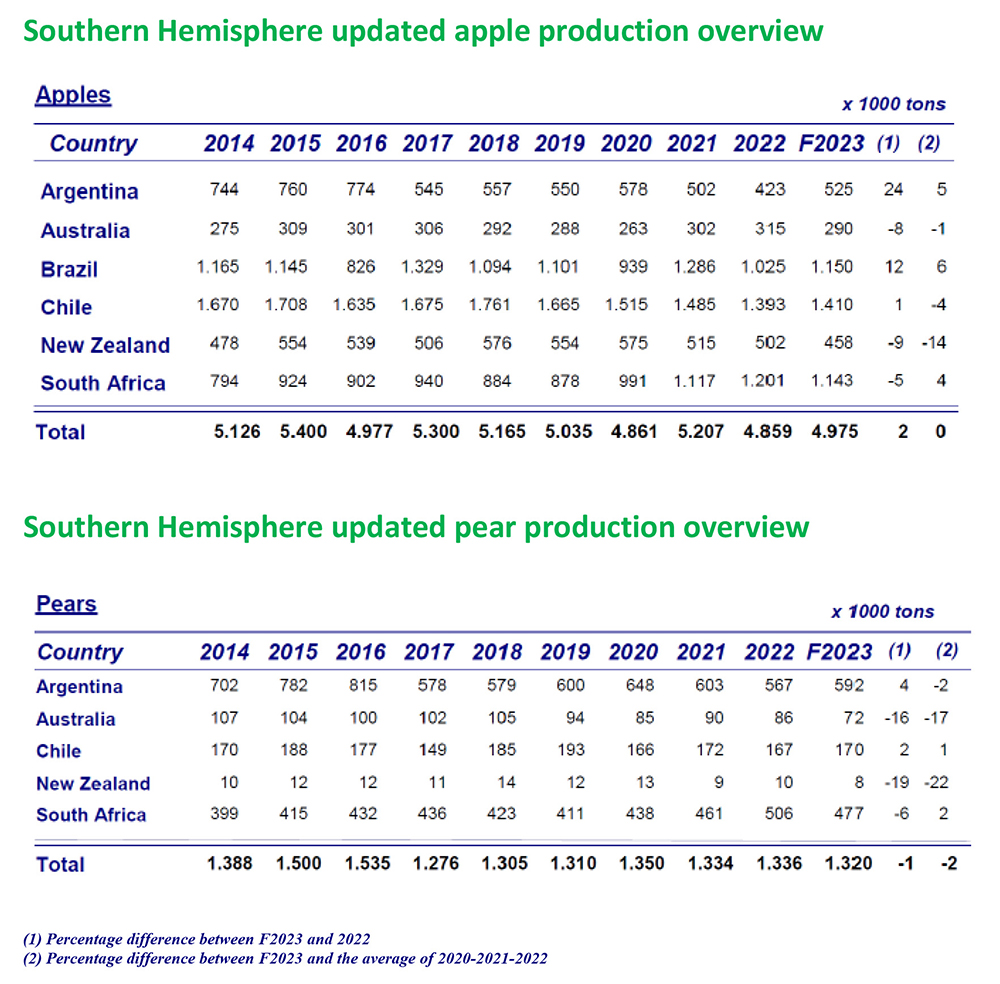

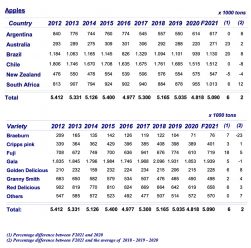
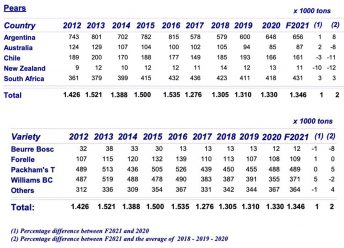
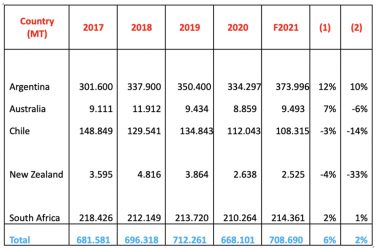
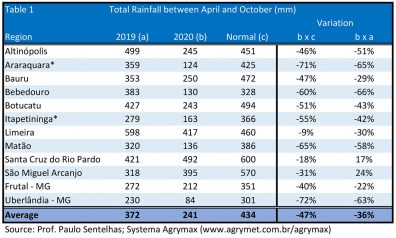 Due to the flowering in non-traditional months (December and January) there are a large number of “green”, not yet ripe fruits mixed with ripe fruits from the normal flowering (August-September 2019). This brings an additional difficulty to the harvesting operation that has to be carried out in at least two different times, resulting in an increase of the production cost for the citrus growers.